


Hi readers! Shayla Love here, science journalist and longtime fan of Your Mileage May Vary. I’m honored to be subbing for Sigal while she’s out on parental leave. I’m diving into your questions as a way to help understand human nature and our choices through multiple lenses: philosophical, psychological, and beyond. Please send in any emotional, body/brain, sociological, perceptual, or other kind of life quandaries you might have.
Tech
Privacy & data security will remain tantamount for Apple’s AI


Apple will relaunch Apple Intelligence and Siri platforms with new Apple Foundation Models. Despite Google’s involvement, Apple will maintain its privacy stance.
When Apple Intelligence was revealed during WWDC 2024, Apple had a hybrid system in place that would ultimately fail to deliver. Delays ensued, and it seems that the long wait is over for Apple’s true AI strategy to emerge.
According to the Power On newsletter, Apple won’t be compromising on privacy with its new AI efforts. While the report is colored with suppositions and conjecture about what is coming, it lays out a fairly clear picture.
Apple will not be compromising on privacy for the sake of better artificial intelligence.
There aren’t any new details about Apple’s AI efforts. It repeats everything we know about the upcoming strategy and paints a picture of loss, shortcomings, and desperation on Apple’s part.
Of course, I don’t see it in quite the same light.
Apple’s place in the AI race
The AI industry lurched ahead of Apple with increasingly powerful models that could perform seemingly amazing tasks. The demos have always been something spectacular, like out of science fiction, but the real-world use has been something a little more mundane.

Apple doesn’t need to win the race if it controls the track
People have become upset that their sacrifice of the world’s knowledge and data has led to very little. Some AI is great and accelerates human workflows, but the cost to our financial markets, component availability, and environment has been incredible.
Apple has missed out on the hype cycle around AI, but has thrived in spite of it. It keeps having record quarterly results without any significant updates to its AI systems, which contradicts the grifts being sold to investors.
Apple doesn’t need AI, but AI needs Apple.
With ChatGPT set to become cash-poor by 2028 without an influx of cash and the general public becoming increasingly angry at AI companies, Apple’s position couldn’t be stronger. It isn’t one of desperation and failure, but one of success due to patience.
I’m not saying that Apple wouldn’t have been happy to see its initial launch go more smoothly. Nor am I saying Apple wouldn’t have released upgraded AI sooner if it could have.
It all just seems to be a happy accident. But instead of wallowing in self-pity, Apple is doing what it does best.
Apple is about to bust into the industry late with a solution that actually meets people where they are.
Apple’s privacy stance will hold
Expect WWDC 2026 to reveal a lot of what Apple hopes to accomplish through the following year with AI. However, it won’t reveal everything, like explicit details about working with Google Gemini.

Apple isn’t replacing its models with Gemini
Apple partnered with Google to get a version of Gemini that could run on Private Cloud Compute servers. No, it isn’t replacing Apple Foundation Models with Gemini no matter how often it is repeated, but being used to distill knowledge and train.
There are also rumors of Apple renting AI compute space from Google, which is likely given the state of the market. However, users don’t need to worry that Apple is sending data to Google servers.
Whatever servers and GPU clusters Apple uses, they will be operated no differently than Private Cloud Compute with data privacy protections in place. It is no different than Apple renting data servers from Google or Amazon for iCloud.
Those companies don’t have access to the data. Period.
Apple’s AI strategy
Anyway, the new Apple Foundation Models will be the central backbone of Apple’s new AI strategy. They will run both on-device and in Private Cloud Compute to parse data and complete tasks on behalf of the user.
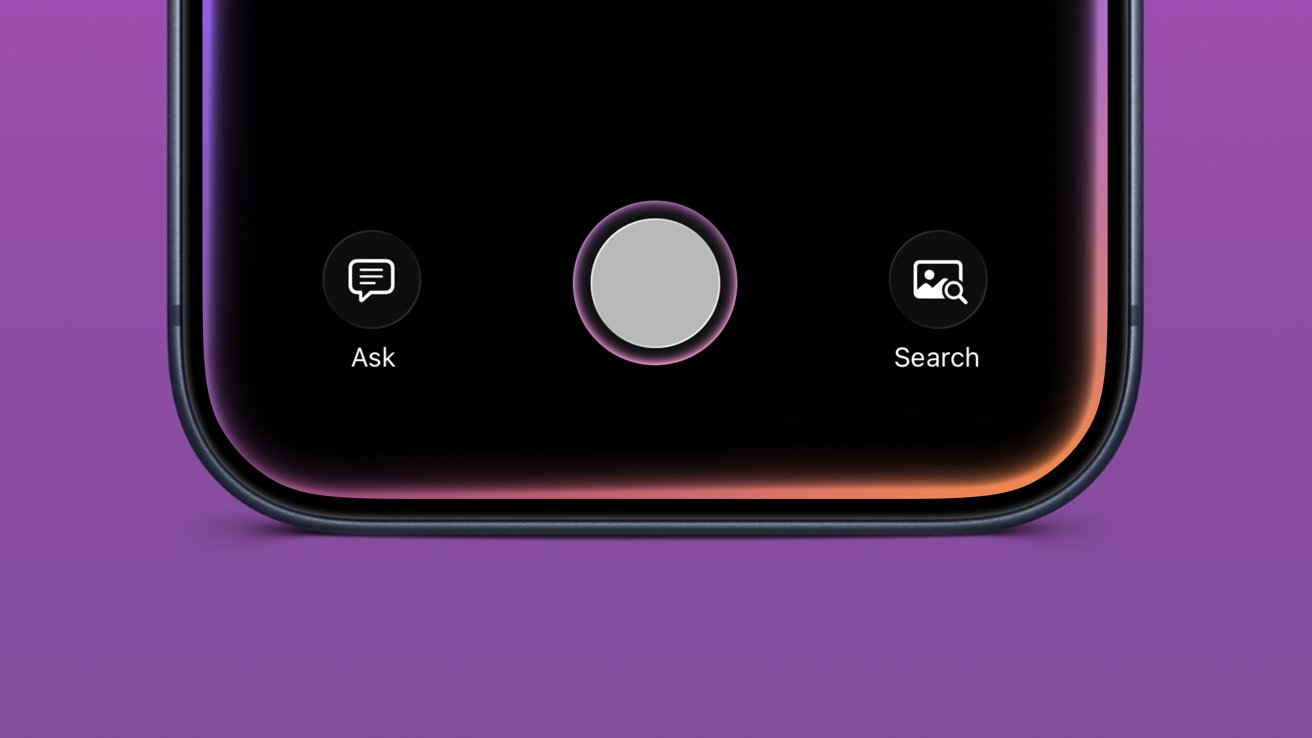
An on-device AI that stays out of the way
Most users will likely interact with Apple’s AI systems and Siri using these base models and nothing else. It will be the default, and after the Gemini training, will likely be more than enough for the features Apple will reveal during WWDC.
Anyone who wants to ignore AI on Apple platforms will be able to do so.
For those who want other options, Apple is providing developers with an API. The OpenAI relationship is fraying, and Apple will likely boot them from their privileged positions with iOS 27.
Instead, apps like ChatGPT, Gemini, or Claude will be able to be installed from the App Store and become endpoints for Apple Foundation Models. That means whether you’re invoking Siri or general Apple Intelligence programs, you can send data to third-party AI for parsing and execution.
Such integrations will maintain user privacy through the use of the API. Apple will likely establish that developers must adhere to strict privacy rules to access the API or face being revoked from access.
If Apple doesn’t go that route, then at the least, Apple will warn users of the privacy risks of using third-party models.
Apple has spent over a decade telling users that their iPhone is private and secure
The end result is a new set of (hopefully) capable Apple Foundation Models powering every AI interaction on iPhone with privacy and security intact. Users will also be able to tap into their favorite, arguably more capable, AI models as they need or want to.
Apple won’t need to be the best in the AI space. Instead, it will have a strong enough base offering with the option of supporting external AI models as an expansion of its ecosystem.
Sure, Apple is late in doing this, but coloring it as some kind of desperate move seems odd. It’s Apple doing what Apple does best, and that’s disrupting an established market with a better business model targeted at user needs above profits and grift.
Apple will own the AI ecosystem by playing host to every model on its powerful hardware while offering good-enough models on-device.
WWDC 2026 will begin on June 8 with a keynote address. Expect it to be an AI-focused event considering the amount that will need to be covered in the space.
Continue Reading

Being online is extremely stressful and unpleasant, and on days I don’t use Twitter, or Bluesky, or any other social media, I typically feel much better mentally — less stressed about the posts I see and less upset about the state of the world.
There’s two problems: The first is that I think it’s pretty irresponsible to put yourself and your emotional comfort above being informed and active in debates about the future. I have a non-insignificant following on both sites, and it would be a bit of a dereliction of duty to give up my influence over my followers for it. The other part is that this non-insignificant online presence has helped me in my non-professional writing career pretty significantly, and I wouldn’t have either source materials or similar opportunities if it wasn’t for my online presence.
So, all in all, there’s pretty strong reasons to not be there. There’s pretty strong reasons to be there. There’s pretty strong personal benefits from leaving and pretty strong personal benefits from staying. Should I stop being online?
Have a question you want answered in the next Your Mileage May Vary column?
Fill out this anonymous form! Newsletter subscribers will get my column before anyone else does and their questions will be prioritized for future editions. Sign up here!
Dear Wishfully-Off-the-Grid,
I feel you. In late June, throughout New York City, I started noticing posters appearing for the “Summer of Ludd” — a series of very offline events organized by a group trying to bring back the philosophy of the Luddites, the 19th-century movement against automated machinery. I attended one of their lectures recently in Manhattan, and I have a hunch that the Luddites could help you with your concerns about becoming detached from the world if you leave social media.
The word “Luddite” has, for the most part, become an insult (even if deployed for self-deprecation), used to describe a person who won’t keep up with the advancements of their time — rejecting innovation in favor of older, slower, and less effective products. There is a hint of this in your question: You’re worried that social media is the more potent way to be informed and to communicate with others. If you leave these platforms, will you lose that ability?
First, the real Luddites were more complex than how we refer to them colloquially. They were English clothmakers who saw how machines owned by wealthy merchants resulted in lower wages and worse working conditions. After trying to organize in support of workers’ rights failed, Luddites broke the looms that were automating their labor. “They would sneak in through the windows or hold up the overseer at gunpoint, and methodically smash just those machines that were de-skilling their work,” wrote journalist Brian Merchant, author of the excellent book Blood in the Machine: The Origins of the Rebellion Against Big Tech.
Luddites weren’t against all technology, Merchant notes, just the tech that took away resources from humans or gave too much power to those at the top. The British government retaliated against the Luddites, and laws were passed that made it punishable by death to break a machine.
The neo-Luddites that I saw and met at The Luddite Conference on Participatory Futures event were bound by a similar distrust and antagonism towards, in this case, big tech. But there was another question they grappled with that was even more closely aligned with your concerns. “This week is just sort of an experiment, right?” said one of the organizers during opening remarks. “Can we get a bunch of people together in a room without using any of these platforms?”
Based on the turnout, the answer was a resounding yes. The large auditorium was standing-room only. It was filled with young people in their 20s in cool outfits who I heard giving each other advice about switching to flip phones.
These neo-Luddites would say to you that learning about the world is an act that is better done offline. In fact, in-person meetings are not only the superior medium through which to express your politics — it is the politics. The act of organizing IRL creates deeper relationships unfettered by algorithms, which build stronger foundations for talking about or acting on any issues that you may care about. This applies to finding sources and opportunities for your writing career, too. The neo-Luddites would challenge you to imagine the rich and exciting people you might meet if you seek out and spend time in what they described as “social infrastructure”: public places where people meet face-to-face — not only for political solidarity, but also for learning, support, play, and rest.
This resonates with me; I only felt connected to my community once I spent a lot less time online and got involved in local organizing a few years ago. As part of my neighborhood’s mutual aid group, I help run our community garden, which teaches people about the area’s environmental history, food justice, and climate change and grows hundreds of pounds of produce for free fridges. I rarely post about this publicly, but I’ve met dozens of neighbors and local politicians and feel much more agentic as a result.
I also should mention the limitations of making a difference through online posting.
Many of us, of course, are trapped in echo chambers in our online communities. Even if you break through, the likelihood of online discourse being the most effective way to share your values is low. I think often about an experiment researchers from Princeton and Stanford did to see if people would change their minds if they saw posts on their Facebook or Instagram that differed from their own perspectives. In the end, they found very little effect on altering people’s opinions or political behaviors.
Not only that, but the more likely, and more disturbing, outcome of a lot of posting is the impact it can have on your own views. In the book The Chaos Machine: The Inside Story of How Social Media Rewired Our Minds and Our World, reporter Max Fisher explains that when you get feedback in the form of likes and replies, it provides powerful positive reinforcement that gives you the signal that your beliefs are good, and you should hold onto them even more tightly. If someone starts contradicting you or pushing back, you’re likely to double down to further emphasize your point. This means that you yourself may end up with even more extreme opinions than you started out with — all without swaying anyone else’s beliefs (potentially even pushing the other person further into more entrenched versions of their views). That doesn’t sound like a very effective technology, does it?
This might seem like I’m telling you to go off social media entirely and join the neo-Luddites. But, actually, I’m not. I do think there are compelling reasons to be on social media platforms, but they are human ones, not political.
Researchers have described our access to the internet and social media as a “mobile connectivity paradox.” Even though we are able to, in unprecedented ways, connect with anyone at any time, it can make us feel isolated. Yet, I haven’t been able to fully give up on the “connection” piece of the paradox; I like seeing pictures of my friend’s baby who lives far away from me! I got a lot out of posting pictures of my wedding party! I’ve tried to (lovingly) cull my followers to only people I really know, but whom I might not get to see as much as I’d like in person. Going on Instagram feels more joyful as a result.
You say that being on social media makes you feel terrible, and you should pay attention to that signal. People respond differently to social media, and it could be a reflection of other aspects of your life. For those who are already feeling vulnerable, lonely, or depressed, spending time on social media tends to make them feel worse.
Where and in what contexts you use social media can also affect how it makes you feel. People feel more lonely when they use social media while in transit, around people they have close relationships with, and when they are in nature. In contrast, when people use social media for shorter periods when they are alone at home or in study locations, it doesn’t have as much of a negative effect. And when people share big life events, like weddings or births, it can even increase their happiness.
Reclaiming social media for quieter and more intimate uses could make you feel lighter. At the same time, perhaps you can redirect some of your activism energy away from the digital sphere and see what happens if you take it offline.
That doesn’t mean, of course, that your IRL life should become unduly heavy either. During the Q&A at the Luddite talk, a person from San Francisco, who was part of a group organizing to get Mark Zuckerberg’s name removed from a local hospital, asked how best to reduce personal social media use. Bill Hartung, a political scientist there, didn’t suggest guilt or recrimination. “I think we just need to make real life more attractive,” he said.
Anyone dabbling in Luddism today is lucky; this is a more enjoyable call to action than meeting up to smash looms in the middle of the night. One of the best ways for you to be invested in the future is to make sure that at least part of yours takes place offline.
Bonus: What I’m reading
- Now that summer is in full swing, I’m re-reading chapters of my copy of How to Be Idle, a book by Tom Hodgkinson, the founder of the similarly themed publication The Idler. Each of the book’s chapters documents an hour of the day and how to be as lazy as possible during that time. Fun to read as inspiration, even when you’re not able to loaf.
- At the Folk Art Museum in midtown, I saw a group exhibition of American self-taught artists as part of the celebration of the country’s semiquincentennial. I was riveted by paintings of pastel, layered, topological landscapes by Joseph E. Yoakum, who was a Chicago-based artist. I recommend this 2021 New York Times profile of him, which explains how his drawings don’t represent real places but figurative terrains from his mind.
- Not something to read, but a fun game called Anthropeum that gives you 10 objects to assess per day. Try to guess where and when they were made and see how you compare to other players. I’ve learned I’m much better at guessing where things are from than their time period!


He was born into a storm, lightning split the summer sky, in a
village the world had not yet heard of.
The midwife called it a bad omen, his mother called it a sign. Your first
life began in a storm, under open sky.
One winter night you ran your hand along a cat’s back, and the
darkness cracked open with sparks.
Your mother warned the house could burn.
You were already chasing what you learned: Light would return.
Your second life came underwater, in the current deep. No light,
no air, the river pulling you under,
the surface closing above you without a sound, and
something in you refused to sink or sleep.
Your third life came at the dam.
The water rose. The wall held you in place.
One flash, you turned your body and rose back into air, and left
the weight of water without a trace.
Your fourth life came in stone and dark. Entombed for a
night in a mountain chapel,
visited by no one. Only silence and the memory of a spark. You called
it an awful experience and left it there, untold.
Your fifth life came in fever,
nine months cholera held you down,
until your father said: Survive, and choose your own ground. You rose.
Not from the prayer, but from the promise he made.
Your sixth life came in silence, and it stayed.
Every sound cut through you, a clock three rooms away,
a ringing that would not leave, a noise you learned to bear, until you
lived inside that noise and made a home in there.
Your seventh life burned on Fifth Avenue, not your body, but your work. Not a thief
of fire, but one who stayed with the blaze.
A modern Prometheus, your life’s work turned to ash,
“I must begin again,” you said, and turned to new ways.
Your eighth life came in the street.
No storm. No warning. A taxi struck without a sign. A
sudden impact: ribs breaking, breath gone.
No diagram this time. Only the body, slow to keep up.
The ninth life came on quiet wings.
That dove found you in the dark, and your spirit rose. She did
not move. A beam of light fell from above.
The life you would not return from, the one you loved.
Your mother thought you had nine lives, nine close
brushes with death.
Each close call, a lesson. A hand that would lead you out of the
darkness and into the dynamo of eternal light. The world profits
from the mystery of your mind,
Upon your imagination we stand.
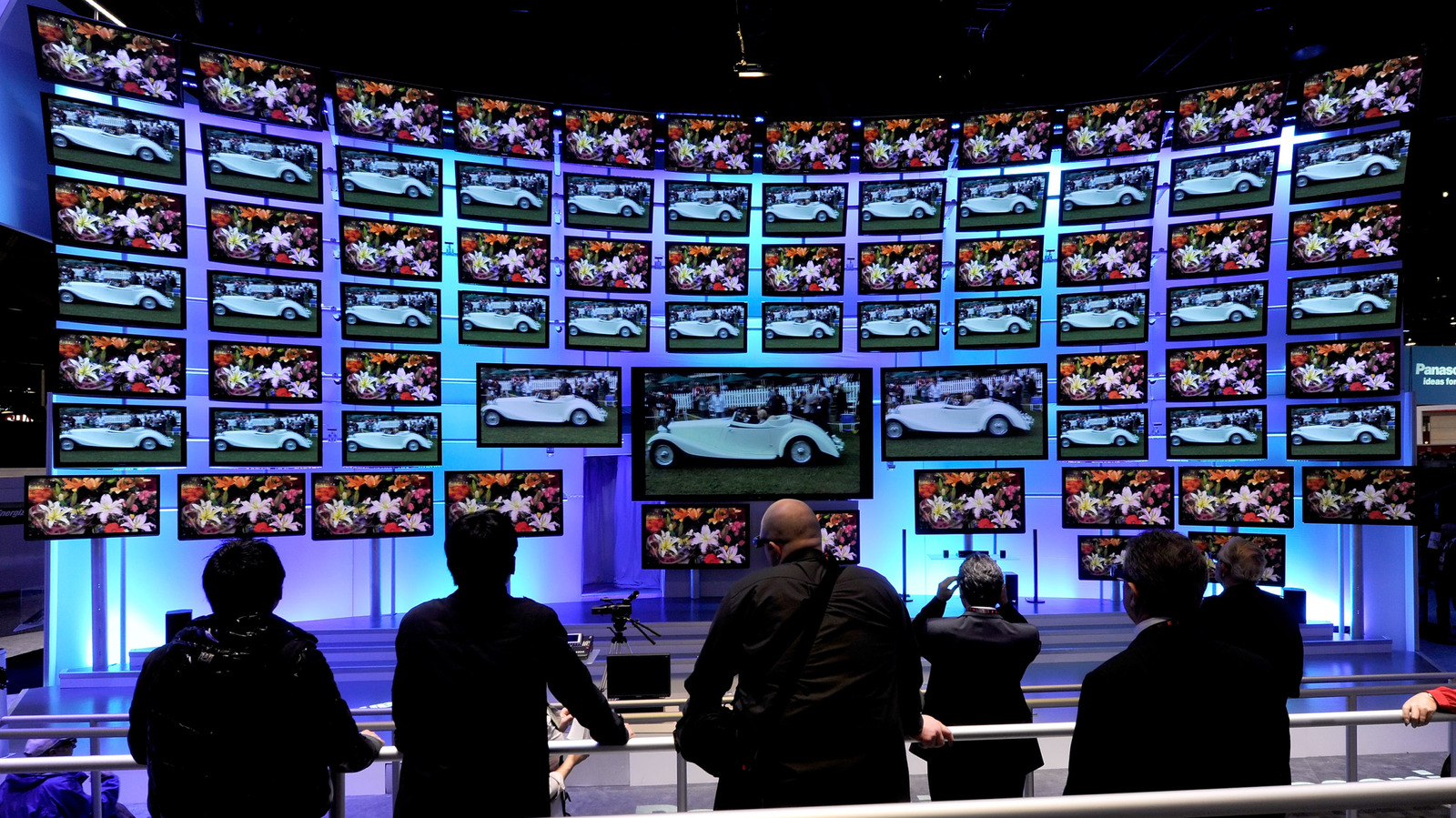
While many TVs released between 2010 and 2015 supported 3D, using the feature required clearing a series of annoying hurdles. You had to buy 3D glasses, which ranged from $10 to $20 for passive frames, to upwards of $50 for active glasses that required constant charging. You had to make sure your Blu-ray player supported 3D discs. And you had to pay a premium for those 3D Blu-rays, assuming you could find them in stock.
For the niche media geeks who cleared those roadblocks, 3D Blu-rays did a decent job of replicating the theatrical 3D experience. But the results depended heavily on the size and viewing distance of your TV. If you’re too far away from a 42-inch or even 50-inch set, you won’t really be immersed by Avatar’s world of Pandora. It was also extra annoying if you wanted to have a 3D watch party with a crowd — you’d either have to buy a ton of extra glasses, or hope your nerdy friends had their own.
Worst of all, 3D TVs with passive glasses effectively halved the resolution of 1080p, since they had to deliver a separate image. 3D projectors and higher-end TVs avoided that issue since they relied on active glasses, but the expense and battery limitations of those frames made viewing parties all but impossible.
Outside of 3D Blu-rays, it was also tough to find much 3D content. Networks like the BBC and ESPN broadcast a handful of 3D shows and games, but they both gave up on the format in 2013. “I have never seen a very big appetite for 3D television in the UK,” Kim Shillinglaw, the BBC’s head of 3D, said in a 2013 interview with Radio Times (via The Independent). “Watching 3D is quite a hassly experience in the home. You have got to find your glasses before switching on the TV. I think when people watch TV they concentrate in a different way. When people go to the cinema they go and are used to doing one thing. I think that’s one of the reasons that take up of 3D TV has been disappointing.”
As the hype around 3D TVs waned, 4K sets with HDR started to crop up with more immediate benefits. They looked noticeably sharper and brighter than earlier HDTVs, and they were buoyed by a ton of 4K content from Netflix and other streaming services. There was no need to buy a Blu-ray player, no need to put on glasses and no need to look hard for special content. It’s no wonder 4K took off. (And even if you’re not viewing 4K content, those newer TVs still made your older SD and HD shows look better than ever.)
According to a recent study by Precision Reports, around 25 percent of households with 3D TVs actually used the technology during the peak period between 2010 and 2018. Less than 10 percent of households kept using the technology after three years. The same report also found that 65 percent of users stopped using 3D because of a lack of content, 50 percent noted discomfort for long viewing sessions and 42 percent gave up due to high equipment costs.
Despite the many issues, though, Precision Reports also predicts that the 3D TV category will grow by 15 percent by 2036 thanks to the rise of glasses-free 3D sets, commercial implementations and gaming. I’ve yet to be impressed by any glasses-free 3D TVs, personally, and they typically don’t support multiple viewers since they rely on sophisticated eye tracking to function.

These may be the last days of Amazon’s Mechanical Turk.
An announcement on the Mechanical Turk website says that on July 30, 2026, the crowdsourcing service will close to new customers. Amazon Web Services says the decision was made after “careful consideration,” adding, “Existing customers can continue to use the service as normal. AWS continues to invest in security and availability improvements for Mechanical Turk, but we do not plan to introduce new features.”
In other words, Amazon isn’t completely pulling the plug, but the service is very much on life support.
First launched in 2005, Mechanical Turk was a marketplace where people were paid tiny amounts to perform simple tasks that resisted full automation — things like completing CAPTCHA challenges or identifying the basic sentiment in a sentence.
In its heyday, the service was at the center of debates around the ethics of crowdsourced labor, and it even played a small role in the early stages of the Facebook-Cambridge Analytica scandal.
Beginning in 2018, Amazon also began billing it as a way for companies to annotate data to train neural networks as part of its SageMaker AI service.
Less overtly, Mechanical Turk has also been described as the hidden enabler for companies taking a fake-it-till-you-make-it approach to AI, where products marketed as Ai are actually being performed by the Mechanical Turk workforce — all the more fitting since the original Mechanical Turk was itself a hoax, with a hidden human chess player pretending to be a chess-playing machine
Over time, the relationship between Mechanical Turk and AI models grew even more complicated. In a snake-eating-its-own-tail irony, a 2023 analysis found that between 33% and 46% of workers on the platform were using large language models to complete their tasks, raising questions about the reliability of data annotated on the platform and also about whether humans needed to be in the loop at all.
This week, after Amazon’s decision became public, one Reddit user suggested the platform died “years ago,” with workers and researchers abandoning it due to bots and fraud. The user predicted, “Someone at Amazon is going to decide keeping the Mturk servers running is a waste of time and resources and pull the plug entirely.”
When you purchase through links in our articles, we may earn a small commission. This doesn’t affect our editorial independence.
Why you can trust TechRadar
We spend hours testing every product or service we review, so you can be sure you’re buying the best. Find out more about how we test.
Apolosign 32-inch Smart Portable TV: 30-second review
Products that fuse technology to create something interesting aren’t a new concept, and with the advent of the Smart TV, most of us have one or more in our homes.
But the Apolosign 32″ Smart Portable TV takes the technology crossover idea to a whole different level, as it combines a 4K display, an Android 16 tablet and a battery backup into a single roll-anywhere solution.
This is perfect for promotional signage, but I could also see this as being the perfect way to explain mobile apps in an educational setting.
If there is a caveat to lumping this much technology together, it’s the weight, and this product is 22kg in the box, and not much less out of it. Therefore, getting it assembled is probably a two-man job, and should it fall over and hit anything, there will be breakage.
Also, at nearly $1000 / £1000, it isn’t cheap for what on the surface looks like a 32-inch TV, but that doesn’t account for all the technology underneath.
If you need a huge 4K Android tablet that can run all the standard apps and be operated by touch or voice while on battery power, then the options are limited.
And, while there are a few places where it might have been a little better, overall Apolosign has done a decent job making this fusion product design work.
Apolosign 32-inch Smart Portable TV: Price and availability

- How much does it cost? $820/£1000/€1100
- When is it out? Available now
- Where can you get it? Direct from the maker or via an online retailer
The Apolosign 32″ Smart Portable TV is $819 from its maker, although it can be found on Amazon.com for almost exactly the same price plus 99 cents. UK customers pay £999.99 at Amazon.co.uk, and in Europe, €1,099.99.
Therefore, Americans get a much better deal here than anyone else, for no obvious good reason, since the hardware is made in China.
If you want to save some money but still like the concept, Apolosign also makes a version with a 1080p screen for $719. And, for $619, you can have a 1080p model with a 24-inch panel. While these are cheaper, saving a few hundred dollars might not provide the best experience, and that’s what this device is all about.
I did notice a few other brand names selling what looked like similar hardware, but their prices were typically higher. Although I did find one on Amazon.co.uk selling what seemed to be similar equipment for only £699.99. But, I did note that the product only had 128GB of storage, a 10500 mAh battery and no HDMI input.
So, you get what you pay for.
When you factor that with the Apolosign 32″ Smart Portable TV, you get an Android tablet, a 32-inch 4K display, a 4K webcam, a remote control, a battery system that can power everything and a high stand, the asking price even outside America isn’t excessive.
And, for those in the US, it might even be a bargain.
Apolosign 32-inch Smart Portable TV: Specs
Swipe to scroll horizontally
|
Item |
Spec |
|
Processor |
Rockchip RK3576, 8nm, octa-core (4x Cortex-A72 @ up to 2.2–2.4 GHz + 4x Cortex-A53) |
|
GPU |
Mali-G52 MC3 |
|
RAM |
8GB |
|
Storage |
256GB |
|
Display |
32-inch 4K 10-point capacitive touchscreen, IPS technology, 300 nits |
|
Main Camera |
4K Webcam (provided) |
|
Battery |
15000Ah dual-cell |
|
Charging |
Charges from PSU |
|
OS |
Android 16 |
|
5G |
N/A |
|
Networking |
Wi-Fi 6, BT5.3 |
|
Dimensions |
18 x 32 x 151 cm |
|
Weight |
22kg in a box |
|
Colours |
White |
Apolosign 32-inch Smart Portable TV: Design

- Assembly fun
- Power options
- Dual-purpose design
In the box, this hardware weighs an impressive 22kg, and the box isn’t a huge part of that weight.
That mass is mostly because of the construction of the base, which has some intentional extra weight, and also a battery, to increase the stability once fully assembled. Assembly starts with the base, connecting it to a two-part pillar, and then, once that’s together, attaching the monitor using a VESA 100 mounting.
I’d strongly suggest that, unlike me, anyone doing this have a second support person handy, because some of the parts and the assembly are heavy.
The added complication of this design is that the PSU plugs into the base, and power is passed via a series of connectors up the support arm to the display.
My install was made extra fun because on the inside of the box lid was a set of instructions that I decided to follow. To connect the base to the bottom half of the pillar, I was told to use the screws labelled B3x16, and this was the only screw bag that had a label.
Except someone in the packing department had taken B3 to be the number of screws, and put three screws in there that were for the VESA connection stage, and they weren’t anywhere near 16mm long. I found those in an unmarked bag, give of them, four to attach and one spare. But anyone following the box instructions to the letter would be stuck because the VESA screws aren’t long enough for that attachment.
Once I realised the mistake, it was all plain sailing, and soon the support arm and screen were treated as one item.
For those wondering, there is a panel you can remove on the screen that provides access to the USB ports and an HDMI port for those wanting to use a PC or smart stick with it. And, also in that location is a place to directly power the system with the PSU. However, if you use that power input, the battery in the base won’t be charged, and it will need to be plugged in to use. It’s a choice, but it does allow the display to be used on a different VESA support, like one on a table.
The support column can tilt, rotate, and swivel, and there is 18cm of vertical movement. And, as the base is on casters, it can spin completely around.

Included in the box is a webcam, and there are two points to connect it to the display, depending on whether you are using it in landscape or portrait mode.
My only concern is that, given the size and mass of the monitor and how it’s supported, it wouldn’t be impossible for this whole thing to go over, especially if someone pushed it onto a slope, like the one designed for wheelchair access. And, if that happens, the chance of the panel surviving seems remote.
If the screen doesn’t need to be moved around, a set of rubber feet is included to go over the casters, making it less mobile.
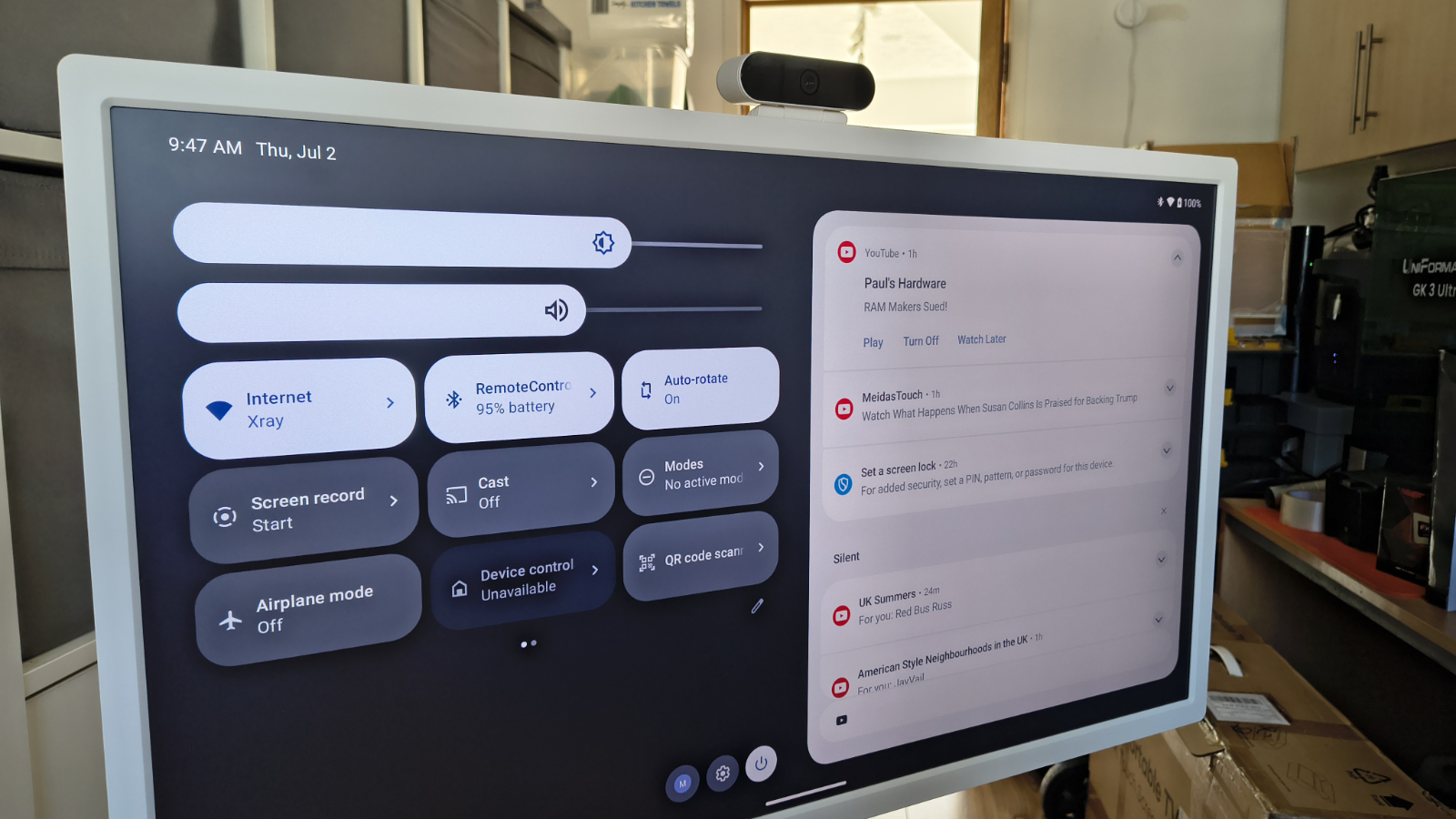
On the back of the display are a power button and a volume rocker, and pressing the power button will launch the Android installation routine, which anyone with a phone or tablet will be familiar with.
There are two accessories included with the display: a remote control and a webcam, but you can’t use either of those until Android is fully operational. When I first did that, the tablet part of this device was using Android 15, not the Android 16 that the maker’s page promises. However, a system upgrade was ready, which converted it to Android 16 and also fixed a few limitations, such as adding Widevine L1 encryption.
I wouldn’t call the The Apolosign 32″ Smart Portable TV a unique design, but there aren’t many hardware makers offering anything like this. It combines a monitor, tablet, mobile signage, information kiosk and presentation tool into a single device. And, for those who want all those things, it might be ideal.

Apolosign 32-inch Smart Portable TV: Hardware
- Rockchip RK3576
- VA display
- 15000 mAh battery
When I saw that this Android device used a Rockwell chip, I was initially discouraged, but that might have been a mistake on my part.
The Rockchip RK3576 first appeared on Rockchip roadmaps in late 2023, alongside the smaller RK3506. At the time, it looked like a cheaper sibling to the mighty RK3588, and that reading turned out to be correct. Rockchip officially launched the RK3576 in the second quarter of 2024, built on an advanced 8nm process, with low CPU junction temperature that allows fanless designs in many applications.
The RK3576 uses the familiar octo-core layout, and in this design, the cores are split 50/50 between performance and efficiency. Four ARM Cortex A72 cores handle heavy lifting, and four Cortex A53 cores manage lighter tasks, with an additional M0 co-processor for background duties. Together, they deliver around 58,000 DMIPS of computing power, which isn’t a huge number, but it’s enough to build an Android tablet around.
Graphics and media are where this chip earns its keep. Video decoding stretches up to 8K at 30fps or 4K at 120fps, and it supports H.264, H.265, VP9, AV1 and AVS2. Encoding covers H.264 and H.265 up to 4K at 60fps, with JPEG encoding and decoding also reaching 4K at 60fps. The embedded GPU supports OpenGL ES up to 3.2, OpenCL up to 2.0 and Vulkan 1.1, so it copes comfortably with modern display demands, although it’s not got the sort of GPU power that games like.
A new sixteen megapixel image signal processor adds real muscle for camera work, with accelerators for HDR, noise reduction, sharpening and lens distortion correction. Rockchip also built in a 6 TOPS NPU for on-device AI, enabling things like facial recognition and voice interaction without needing the cloud. Rockchips
The chip supports dual-channel LPDDR4, LPDDR4X, and LPDDR5; later revisions added LPDDR5X support, giving manufacturers plenty of flexibility depending on cost targets.
In this implementation, it’s got 8GB of memory, but try as I might, I couldn’t discover what it is, and, in the same vein, it has 256GB of storage, but the type is unclear.
As this device is mostly bought for the 4K screen, that’s the one part of this that was clearly under the most price-saving pressure.
I’m reasonably confident that this is IPS, not VA or AMOLED, it has only a brightness level of 300 nits, and a refresh of 60Hz. The quoted response time is 8ms, and it supposedly has a contrast ratio of 1:3000.
When I get into the performance weeds, I’ll return to the screen, but my initial view was that while it’s workable, it’s the one part that Apolosign needed to probably make better to justify the cost of the ensemble.

The final hardware part I want to discuss is the battery, something I wasn’t actually expecting, that turned out to be genuinely useful.
Deep in the base, but replaceable is a 15000 mAh dual-cell Lithium-ion battery rated at 14.8 Volts. This is charged when the base is connected to power, although it charges much faster when the unit isn’t in use. Apolosign states that if the unit is in use and the battery is flat, it could take 6 hours to fully recharge. If you turn the screen and tablet off, it charges faster, probably in less than two hours.
The moral of this tale is to provide a PSU with enough umph to both charge and power, not do only one of those things effectively.
Makers quoted discharge is also six hours, but that longevity is dependent on the brightness set on the monitor and what the tablet is doing. But, during that time, you can wheel it around without any connected wires, and it remains fully functional.
Overall, the hardware in the tablet part of this design is decent if a bit underwhelming. I do wonder if a more modern SoC at 4nm might be more power efficient and an even better performer, allowing for more time on battery. But then, given that most of the power in the battery will be used on the 4K display, there might not be much of an advantage to gain.
Apolosign 32-inch Smart Portable TV: Performance

- Modest SoC
- Display is of good quality
- 95% AdobeRGB
Swipe to scroll horizontally
|
Phone |
|
Apolosign 32″ Smart Portable TV |
|
SoC |
|
Rockchip RK3576 |
|
GPU |
|
ARM Mali-G52 MC3 |
|
NPU |
|
Integrated 6 TOPS |
|
Memory |
|
8GB/256GB |
|
Weight |
|
20kg |
|
Battery |
mAh |
15,000 |
|
Geekbench |
Single |
344 |
|
|
Multi |
1228 |
|
|
OpenCL |
1438 |
|
|
Vulkan |
1436 |
|
PCMark |
3.0 Score |
6164 |
|
|
Battery |
8h 23m |
|
Charge 30 |
% |
15% |
|
Passmark |
Score |
7180 |
|
|
CPU |
3704 |
|
3DMark |
Slingshot OGL |
1941 |
|
|
Slingshot Ex. OGL |
1473 |
|
|
Slingshot Ex. Vulkan |
1694 |
|
|
Wildlife |
864 |
|
|
Wldlife Extreme |
241 |
|
|
Nomad Lite |
100 |
Since this is a unique product to me, I’ve not put it in comparison to any other.
However, this, under the skin, is a tablet, so I’ve used the same benchmarks I’d do if it were one I could carry around.
Compared to the typical rugged tablet I cover, this is probably one of the slowest I’ve ever tested. Looking back at my data, the only tablet I’ve tested that was remotely similar in performance was the Ulefone Armour Pad Pro, which uses the MediaTek Helio G88, and the Ulefone Armour Pad 3 Pro, which uses the MediaTek Helio P60.
This arrangement is slightly quicker than those tablets, but the difference isn’t huge.
If the numbers don’t speak for themselves, the graphics performance here is fine for block puzzles and Candy Crush, but it’s not amazing when asked to do 3D.
The makers had predicted six hours of running, but it exceeded that amount by some way, running the PCMark battery test for 8 hours and 23 minutes. That’s not enough for the full day at a trade show, but it’s acceptable. It’s worth remembering that the battery here is not only running the tablet but also the 4K display set to 120 nits of brightness.
For anyone wondering why I didn’t hook this display up to a PC and run a full Datacolor analysis on it, initially, there was a snag. Due to its integration with the tablet components, this monitor doesn’t have OSD, so selecting the various brightness settings I needed for analysis proved challenging.
What I was ultimately forced to do was swap back to Android, alter the brightness when required, and then go back to the PC HDMI input. Not impossible, but the process took much longer than it normally would.
Here are my results:
Swipe to scroll horizontally
|
Colour Gamut |
Percentage |
|
sRGB |
95% |
|
AdobeRGB |
79% |
|
P3 |
80% |
|
NTSC |
74% |
|
Rec2020 |
57% |
|
Gamma |
2.1 |
|
Brightness/Contrast |
|
|
Maximum Brightness |
287.8 |
|
Maximum Contrast |
1860:1 |
For an IPS panel, the one used here is decent, especially in Gamut and Tone Response.
It’s also strong on colour uniformity and contrast, even if it doesn’t hit the maker’s quoted 3000:1 levels.
Its weaknesses are colour accuracy and luminance uniformity, with the latter being quite poor. This is an edge-lit design, and most of the light seems to come from the upper left, making the bottom centre and right much darker than the rest of the display. At its worst, we are talking 22% darker at 50% brightness.
The viewing angles on this screen are 178 degrees, so that’s not an issue for people viewing content at an angle.
Overall, the tablet part of this package isn’t anything special, but the display is better than anticipated.
Apolosign 32-inch Smart Portable TV: Final verdict

As a solution, I enjoyed the Apolosign 32-inch Smart Portable TV, since it delivered in a small but important niche.
Signage, presentation and educational rolls are all satisfied by this product, and for marketing companies needing show stand equipment, the price isn’t crazy.
In retrospect, a bigger battery to deliver a whole working day might have been worthwhile, and a high-end model with an AMOLED screen would be an eye-catching option.
The only question any prospective buyer needs to answer is whether they need 4K or if one of the 1080p models would do the job just as effectively.

Apolosign 32-inch Smart Portable TV: Report card
Swipe to scroll horizontally
|
Value |
Limited choices make for good value |
4 / 5 |
|
Design |
Awkward to assemble but nice when together |
4 / 5 |
|
Hardware |
Modest SoC, but decent spec otherwise |
4 / 5 |
|
Performance |
Mediorcre tablet and decent screen |
3.5 / 5 |
|
Total |
Not cheap, but useful for so many jobs |
4 / 5 |
Should you buy a Apolosign 32-inch Smart Portable TV?

Buy it if…
Don’t buy if…
For more options, we’ve tested the best business monitors.

Erling Haaland’s Viking warriors set sail for New Jersey as Norway battle five-time winners Brazil for a place in the FIFA World Cup 2026 quarter-finals — and you can live stream the last-16 clash around the world for free.
Unsurprisingly, Stale Solbakken’s men have relied heavily on the goals of talismanic striker Haaland on their run to the last 16. The Manchester City star bagged an 86th-minute winner against Ivory Coast in the round of 32 and remains the Vikings’ biggest attacking threat, scoring exactly half of their 10 goals at the tournament. How Haaland fares against Brazil’s defence – particularly Arsenal defender Gabriel, who he has clashed with in the Premier League – could well be the defining storyline of this match. Interestingly, Norway have never lost to A Selecao in men’s international football and secured a famous 2-1 victory at the 1998 World Cup.
Brazil manager Carlo Ancelotti will once again look to Vinicius Jr, who scored four goals across his side’s three group-stage matches. The Real Madrid forward almost added a brilliant solo strike against Japan in the last 32, but Gabriel Martinelli was the hero as he popped up with the winner six minutes into second-half stoppage time to seal a dramatic 2-1 turnaround victory. There remains plenty of uncertainty surrounding Neymar, who continues to struggle with fitness issues. The Santos forward has played just 15 minutes at the tournament so far, although Ancelotti suggested he would have featured against Japan had it gone to extra-time.
So, read on as we show you exactly how to watch Brazil vs Norway for free from anywhere in the FIFA World Cup 2026.
How to watch Brazil vs Norway for free
Brazil vs Norway is available to watch for free in multiple countries, including the UK, Australia, Brazil, Belgium, Ireland, Netherlands, Switzerland and Turkey.
Abroad? Can’t access your free stream? Unblock your free World Cup stream with Norton VPN – more on that below.
Use a VPN to watch Brazil vs Norway live streams
It’s the World Cup, and if you’re traveling, you might discover your usual Brazil vs Norway stream is suddenly unavailable due to geo-restrictions.
Don’t worry, that’s exactly where a VPN can help. A virtual private network lets you connect to servers around the world so you can securely access your usual World Cup coverage as if you were back home.
We recommend Norton VPN. Here’s why:
How to watch Brazil vs Norway in the US

US viewers can watch Brazil vs Norway on Fox and Telemundo (Spanish comms).
You can watch every World Cup game on Fox, FS1 and Telemundo, which are available on cord-cutters like YouTube TV (free trial), Hulu+Live TV, Sling (select markets), Fubo or DirecTV.
Those looking for a streaming service instead can watch Brazil vs Norway on Fox One (3-day free trial). Telemundo is available via Peacock as well.
Visiting the US from the UK? You can still watch your World Cup stream for free thanks to Norton VPN (try for 60 days).
How to watch Brazil vs Norway in the UK

UK customers are in luck as they can stream Brazil vs Norway for free on ITV. Live coverage is on ITV1 and ITVX.
You require a TV license and a valid UK postcode for an account (e.g. SE1 7PB).
Norton VPN can unlock your stream if you’re abroad today.
How to watch Brazil vs Norway in Australia

Brazil vs Norway will be shown for free in Australia on SBS On Demand.
The streaming platform has every game of the tournament for free, making it the perfect place for your World Cup viewing.
Traveling for work or on holiday? A VPN like Norton VPN can help unlock your free stream.
How to watch Brazil vs Norway in Canada

In Canada, TSN and free-to-air channel CTV will be broadcasting Brazil vs Norway.
You can live stream via the TSN+ streaming platform, which costs CA$8 per month or CA$80 per year.
CTV will require your TV provider login details, but is also available via pay-TV streaming platform Crave if you want an alternative.
Outside of Canada? Use Norton VPN whilst you’re traveling away from home to unlock your stream.
Brazil vs Norway: Match Information
What time does Brazil vs Norway start?
Brazil vs Norway kicks off at 9pm BST / 4pm ET on Sunday, July 5. That’s 6am AEST on Monday, July 6 in Australia.
What are the squads for Brazil vs Norway?
Brazil
Goalkeepers: Alisson (Liverpool), Ederson (Fenerbahce), Weverton (Gremio).
Defenders: Alex Sandro, Danilo, Leo Pereira (Flamengo), Bremer (Juventus), Ibanez (Al-Ahli), Ederson (Atalanta), Marquinhos (Paris St-Germain), Gabriel (Arsenal), Douglas Santos (Zenit St. Petersburg).
Midfielders: Bruno Guimaraes (Newcastle), Casemiro (Manchester United), Danilo Santos (Botafogo), Fabinho (Al-Ittihad), Lucas Paqueta (Flamengo).
Forwards: Endrick (Lyon), Gabriel Martinelli (Arsenal), Igor Thiago (Brentford), Matheus Cunha (Manchester United), Vinicius Junior (Real Madrid), Luiz Henrique (Zenit St. Petersburg), Neymar (Santos), Rayan (Bournemouth).
Norway
Goalkeepers: Orjan Nyland (Sevilla), Egil Selvik (Watford), Sander Tangvik (Hamburger SV).
Defenders: Kristoffer Ajer (Brentford), Julian Ryerson (Borussia Dortmund), Leo Ostigard (Genoa), Marcus Holmgren Pedersen (Torino), David Moller Wolfe (Wolverhampton Wanderers), Fredrik Andre Bjorkan (Bodo/Glimt), Torbjorn Heggem (Bologna), Sondre Langas (Derby County), Henrik Falchener (Viking).
Midfielders: Martin Odegaard (Arsenal), Sander Berge (Fulham), Patrick Berg (Bodo/Glimt), Kristian Thorstvedt (Sassuolo), Morten Thorsby (Cremonese), Antonio Nusa (RB Leipzig), Fredrik Aursnes (Benfica), Oscar Bobb (Fulham), Jens Petter Hauge (Bodo/Glimt), Andreas Schjelderup (Benfica), Thelo Aasgaard (Rangers).
Forwards: Alexander Sorloth (Atletico Madrid), Erling Haaland (Manchester City), Jorgen Strand Larsen (Crystal Palace).
Swipe to scroll horizontally
|
Stage |
Brazil |
Norway |
|---|---|---|
|
Group stage |
Group C: 1st, 7 points |
Group I: 2nd, 6 points |
|
Last 32 |
Beat Japan (2-1) |
Beat Ivory Coast (2-1) |
Can I watch Brazil vs Norway on my mobile?
Of course, most broadcasters have streaming services that you can access through mobile apps or via your phone’s browser.
You can also stay up-to-date with all of the key World Cup moments on the official social media channels on X/Twitter (@FIFAWorldCup), Instagram (@FIFAWorldCup), TikTok (@FIFAWorldCup) and YouTube (@FIFA).
We test and review VPN services in the context of legal recreational uses. For example: 1. Accessing a service from another country (subject to the terms and conditions of that service). 2. Protecting your online security and strengthening your online privacy when abroad. We do not support or condone the illegal or malicious use of VPN services. Consuming pirated content that is paid-for is neither endorsed nor approved by Future Publishing.

US control over the most cyber-capable AI models, led by Anthropic’s Claude Mythos, looms over the NATO summit in Ankara on 7-8 July. Washington has whipsawed between export controls and expanded allied access via Project Glasswing, frustrating European allies who are demanding access while building their own defence AI. Officially, the summit will barely mention it.
TL;DR
Donald Trump arrives at next week’s NATO summit in Ankara holding unusual leverage, because the US decides which allies get access to the world’s most advanced AI, Politico reports. The alliance meets on 7 and 8 July with AI security questions hovering over the agenda.
A new wave of models from Anthropic and OpenAI can find and exploit security flaws better than most human specialists. Anthropic’s Claude Mythos surfaced vulnerabilities in classified US systems within hours during a government test.
“AI is fundamentally changing the threat landscape, and NATO needs to adapt accordingly,” Estonian cyber ambassador Helen Popp told Politico. Every capability available to adversaries is also available to allies, she argued, if they move first.

The 💜 of EU tech
The latest rumblings from the EU tech scene, a story from our wise ol’ founder Boris, and some questionable AI art. It’s free, every week, in your inbox. Sign up now!
US agencies including the NSA and CISA have been testing Mythos for cyber defence and digital espionage. European allies have clamoured for access, and EU institutions have openly demanded it, with only a few countries, including the UK, initially allowed to run evaluations.
Anthropic expanded its Project Glasswing programme in June to around 150 organisations across more than 15 countries, including the EU. The scramble followed weeks of whiplash from Washington.
In early June, the Trump administration imposed export controls on Anthropic’s most cyber-capable models, banning foreign nationals from using them and forcing a worldwide shutdown. The controls were lifted on 30 June after an 18-day blackout.
The White House has also limited the rollout of OpenAI’s latest model to a small group of approved US firms, per Politico. The push and pull has frustrated allies, prompted a rare Five Eyes warning on AI cyber threats, and left frontier models moving between governments faster than regulators can follow.
Quiet corridors, loud subtext
The summit agenda includes a track on emerging and disruptive technologies, but an official told Politico that AI and cyber will get only brief mentions in the closing statement. Former NATO cyber policy leader Heli Tiirmaa-Klaar said allies avoid formally discussing topics that lack consensus, predicting talks in the margins instead.
The US State Department’s cyber bureau is not sending a representative amid an internal reorganisation, Politico reports. Senator Jeanne Shaheen said she will attend partly to reassure allies that the US will not “alienate them” over access to AI models.
Trump has separately signed NSPM-11, ordering the US military to adopt AI faster and shield models from China. Europe is hedging by building its own capability, including the defence AI alliance between Helsing and Mistral.
The war in Ukraine, now past its fourth year, keeps the stakes concrete, and allies have pledged 1.5% of GDP to protecting critical infrastructure. Laura Galante of the Center for European Policy Analysis called Ukraine the blueprint for operating in AI-fuelled warfare.
A State Department spokesperson said every ally must adopt “trusted leading-edge AI capabilities”. Which capabilities count as trusted, and who grants the trust, is precisely what Ankara will not quite discuss.
I’ve been a CNET journalist for over 15 years and I’ve tested everything from the latest electric cars and bikes to cameras and, er, TV-controlling magic wands. I’ve even compared drones to barn owls. My main focus focus has always been the latest, greatest phones and I’ve seen a lot of them in my time. Names like Apple and Samsung have remained stalwarts in the industry during my time, but I’ve also seen the rise of brands like Xiaomi, Huawei and OnePlus. Meanwhile once-dominant names like BlackBerry, HTC and LG have vanished from the mobile space. Even Sony doesn’t make much of a fuss over its phones these days.
I’ve seen phones arrive with such wild fanfare that they changed the entire mobile industry, while others quietly trickled into existence only to vanish just as uneventfully. But it’s the weird ones that stick in my memory. Those devices that tried to be different, that dared to offer features we didn’t even know we wanted or simply the ones that aimed to be quirky for the sake of being quirky. Like someone who thinks an unusual hat is the same thing as having a personality.
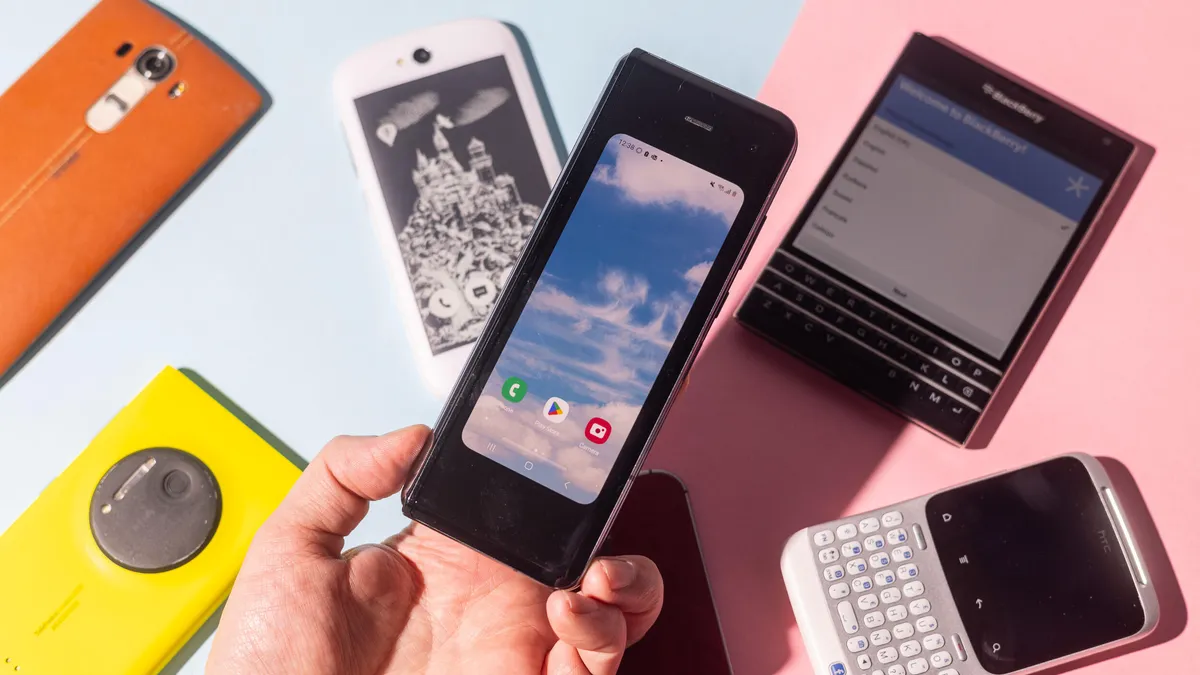
Here then are some of the weirdest phones I’ve come across in my mobile journey at CNET. Better yet, I still have these phones in a big cardboard box in my office, so I was able to dig them out and take new photos — though not all of them still work. Let’s start with a doozy.
BlackBerry briefly tried to convince us that it’s hip to be square.
BlackBerry Passport
At the height of its power RIM’s BlackBerry was one of the most dominant names in mobile. It was unthinkable then that anything could unseat the goliath, let alone that it would fade into total nonexistence. But the once juicy, ripe BlackBerry withered and died on the bush, but not without a few interesting death rattles on its way.
My pick from the company’s end days is the Passport from 2014, notable not just for its physical keyboard but its almost completely square design. The rationale behind this, according to its maker, was that business types just really love squares. A Word document, an Excel spreadsheet, an email — all square (ish) and all able to be viewed natively on the Passport’s 4.5 inch display with its 1:1 aspect ratio. Let’s not forget that all Instagram posts at that time were also square so it had that going for it too. YouTube, not so much.
In theory it’s a sound idea. In practice the square design made it awkward to use, as the physical keyboard was too wide and narrow. Its BlackBerry 10 software, especially the app availability, lagged behind what you’d get from Android at the time. BlackBerry quickly ditched the new shape. After trying to claw back some credibility with its Android phones — including the stupidly named Priv, a phone I quite liked — and by bringing on singer Alicia Keys as Global Creative Director (because BlackBerry phones had keys, get it?) the company stopped making its own phones in 2016.
The Russian YotaPhone 2
YotaPhone 2
You’d be forgiven for having never heard of this phone or its parent company, Yota. Based in Russia, Yota made two phones: the creatively named YotaPhone in 2012 and the similarly inspired YotaPhone 2 in 2014, pictured above. Both were unique in the mobile world for their use of a second display on the rear. From the front, these phones looked and operated like any other generic Android phone. Flip them over though and you’d get a 4.3-inch E Ink display.
The idea was that you’d use your Android phone as normal for things like web browsing, gaming or watching videos, but you’d switch to the rear display if you wanted to read ebooks or simply have it propped up to show incoming notifications. E Ink displays use almost no power, so it made a lot of sense to preserve battery life by viewing “slow” content on the back.
The reality though is that beyond ebooks — which aren’t great to read on such a tiny screen anyway — there’s very little anyone might want to use an E Ink display for when out and about. It was difficult to operate, too, thanks to a slow processor and clunky software. After just two generations of YotaPhones, the company went into liquidation.
The HTC ChaCha and its Facebook button
HTC ChaCha
Remember when Facebook was the cool spot to be instead of just the place your parents and their friends go to publicly air their most troubling of opinions? When I was at university, instead of trading phone numbers when you met someone, the default thing was to add each other on Facebook before you began poking each other. Facebook was so ubiquitous at the time that it was simply the way every single person I knew communicated.
Keen to capitalise on Zuckerberg’s social media success, HTC brought out the ChaCha in 2011. The phone came with an utterly ludicrous name and a dedicated Facebook button on the bottom edge. Tapping this would immediately bring up your Facebook page, allowing you to post the lyrics to Rebecca Black’s Friday, ask what Fifty Shades of Grey is about or do whatever else it was we were all up to in 2011.
Facebook might still be around in one form or another, but HTC abandoned its phone-making business back in 2018. Unsurprisingly, phones with dedicated hardware buttons tied to social media haven’t caught on. Though if I’m being generous there is strictly speaking an X button on every keyboard.
The Finney’s pop-up screen is ideal for crypto bros.
Sirin Labs Finney U1
“Bro!” I hear you shout, all-too loudly. “BRO! You’ve got to check out what my Bitcoin is doing!” You’d then show me your phone and I’d watch while your crypto account plummeted, rebounded and plummeted again over the course of 12 seconds. The phone you’d be showing me, of course, would be the Sirin Labs Finney, a 2019 phone specifically targeted at crypto bros who wanted a device that would perfectly match their high-living, high-fiving crypto-trading lifestyle.
At its core, the Finney is just another Android phone, but a hidden second screen pops up from the back of the phone, with the sole purpose of giving you secure access to your crypto wallet. The phone had a whole host of security features to ensure that only you could access your Bitcoin or Etherium, and it allowed you to send and receive cryptocurrency without having to use a third-party online platform. Apparently that was a good thing.
If you were entrenched in the crypto world, this phone might have been the dream. But the wallet wasn’t easy to use and the phone was expensive, thanks to the cost of that second screen. Sirin Labs stopped making phones soon after and the mobile industry learned an important lesson about not developing hyper-niche devices that aren’t even that well-suited for the handful of customers that might be interested.
The Gemini PDA was part phone, part laptop.
Planet Computers Gemini PDA
Half phone, half laptop, all productivity. The Gemini PDA by UK-based mobile startup Planet Computers was a clamshell device in 2018 with a large (at the time) 5.99-inch display and a full qwerty keyboard. It was basically a slightly more modern interpretation of a PDA, like 1998’s Psion 3MX, in that it was effectively a tiny laptop that would fold up and fit in your pocket. The full keyboard allowed you to type away comfortably on long emails or documents while the regular Android software on the top half meant it also functioned like any other phone — apps, games, phone calls, whatever.
It had 4G connectivity for fast data speeds and a later model even got an update to 5G. But, like the BlackBerry Passport, its focus on business-folk and productivity above all else meant it was a niche product that failed to garner enough appeal to succeed. It didn’t help that it was utterly enormous and fitting it in a jeans pocket was basically impossible, so it didn’t impress either as a laptop or as a phone.
LG’s G5 was a nice idea, but it didn’t last. Nor did LG’s phones.
LG G5
LG remains a huge name in the tech industry today, thanks to its TVs and appliances, but it also tried to be a big player in the phone world, too. I liked LG’s phones — they were quirky and often tried weird things which kept my days as a reviewer interesting, perhaps none more so than the LG G5 in 2016.
LG called the G5 “modular,” meaning that the bottom chin of the phone snapped off allowing you to attach different modules such as a camera grip or an audio interface. Like many items on this list I can say that it’s a nice idea in theory, but in practice the phone fell short. Swapping out modules meant removing the battery, which of course meant restarting your phone every time you wanted to use the camera grip.
It was an inelegant solution to a problem that never needed to exist. But its bigger issue was that the camera grip and audio interface were the only two modules LG actually made for the phone. It’s as though the company had this fun notion in creating a phone that can transform according to your needs but then forgot to assign anyone to come up with any ideas on what to do with it. As a result, the end product was uninspiring, over-engineered and expensive.
What once was big now seems small.
Samsung Galaxy Note
Samsung’s Galaxy Note series helped transform the mobile industry. It literally stretched the boundaries of phones, encouraging larger and larger screens — even creating the unpleasant and mercifully short-lived term “phablet.” But the first-generation model in 2011 was controversial, mostly due to what was then considered its enormous size.
At 5.3 inches, it was significantly bigger than almost any other phone out there, including Samsung’s own Galaxy S2 — which, at a measly 4.3 inches, paled into insignificance against the mighty Note. It was mocked for being so huge, with memes appearing online poking fun at people holding it up when making calls. And while times have changed and we now have Samsung’s 6.9-inch Galaxy S25 Ultra, the original Note’s boxy aspect ratio meant it was actually wider than the S25 Ultra. So even by today’s standards it’s big.
It was also among the first phones to come with its own stylus shoved into its bottom. It’s a feature that few mobile companies have mimicked, but Samsung kept it as a differentiator on its later Note models before incorporating it into its flagship S line starting with the S22 Ultra.
Nokia may have been well ahead of its time.
Nokia Lumia 1020
Nokia’s Lumia 1020 was my absolute favorite phone for quite some time after its launch in 2013. And it’s because of its weirdness.
Nokia had an amazing history of bonkers mobiles — 2004’s 7280 “lipstick phone,” for example — and while the Lumia range was much more sedate, the 1020 had a few things that made it stand out. First, it ran Windows Phone, Microsoft’s brief and unsuccessful attempt to launch a rival to Android and iOS. A rival that I happened to quite like.
It was also made of polycarbonate, with a smoothly rounded unibody design that strongly contrasted the angular metal, plastic and glass designs of almost all other phones launching at that time. Its look was unlike anything else on sale, and I loved it.
But the main thing I loved was its camera. With a 41-megapixel sensor, Carl Zeiss lens, raw image capture and optical image stabilization, the Lumia 1020 packed the best camera specs of any phone I’d ever seen. It made the phone a true standout product, especially for photographers like me who wanted an amazing camera with them at all times, but didn’t want to have to carry both a phone and a compact digital camera.
While incredible image quality from a phone is a given in almost all camera phones in 2026, the Lumia 1020 was an early pioneer in what could be achieved from a phone camera.
The LG G5 was the love child of a phone and a handbag.
LG G4
LG, twice in one list? Oh yes, my friend, because the G5 seen above was not the first time LG went weird. Launched in 2015, the LG G4 had two main features that raised a few eyebrows. Most notably was LG’s decision to wrap the phone in real leather. Yes, real actual leather. Like what you’d get when you peel a cow. It even had stitching down the back, making it look like a handbag or a boot.
While it’s not a phone for vegans, I actually liked the look, especially as real leather — even the really thin stuff LG used on the G4 — naturally wears over time, gaining scuffs and scratches that give each phone a unique patina. It’s why I love my old leather Danner boots, and it’s why a vintage, worn-in leather jacket will almost always look better than a brand new one. Still, with leather being an expensive — and arguably controversial — material to use on a phone, it’s no surprise LG didn’t return to this idea.
But it’s not the only weird thing about the phone — the G4 was among a small number of phones released around that time that experimented with curved displays. It’s gently bent into a banana shape, the theory being that it makes watching videos more immersive, as is the case with curved screens in movie theaters. The problem is that movie screens are immense, so that curve makes sense. On a 5.5 inch phone like the G4, that curve is barely noticeable and only really served to push the price up.
I designed this custom phone. You can’t do that anymore.
Motorola Moto X and Moto Maker
I’ve just pointed out how weird the LG G4 was for using leather and now I’m pointing out another phone that, as you can see in the image above, is also wrapped in leather. But the weird thing here isn’t that the Motorola Moto X came in leather — it’s that I personally got to choose that it came in leather.
With the Moto X in 2013, Motorola launched a service called Moto Maker that allowed you to customize your phone in a wild variety of ways. From different-colored backs and multicolored accents around the camera and speakers through to using materials including leather and even various types of wood, there were loads of options to make your Moto X look unique. Each phone would then be made to order and you could even have it personalised with lazer etching and provide your Google account for it to be prelinked on arrival.
If custom-making phones with a vast number of potential options en mass sounds like an absolute logistical nightmare then you’re on the same page as Motorola eventually found itself. Moto Maker only existed for a few years before the company retired its customization service.
It was a weird time back then.
Samsung Galaxy Fold
I’m ending on a wildcard addition with the original Galaxy Fold. It’s a wildcard because Samsung’s Fold and Flip range are now up to number seven and we’ve got foldable devices from almost all major Android manufacturers. Though still not Apple.
While the original Fold might have kicked off the foldable revolution, there’s no question it was a weird phone. I was among the first to test it in the world when it launched in 2019 and while I was certainly impressed by the bendy display, its hinge felt weird and “snappy” to use. The outer display was, let’s face it, terrible.
On paper its 4.6-inch size is reasonable, but it’s so tall and narrow that it was borderline unusable for anything more than checking incoming notifications. Trying to type on it meant whittling down your thumbs to pointy nubs so I spent most of my time interacting with the phone’s much bigger internal screen. Cut to today when the Galaxy Z Fold 7’s outer screen measures a healthier 6.7 inches and as a result can function like any regular smartphone, with the bigger inside screen only required when you want more immersive content.
Looking back at the original Fold and its bizarre proportions, it’s honestly a surprise that Samsung persisted with the format. But I’m glad it did.
Watch this: The Galaxy S26 Ultra Could Be Samsung’s Best Yet, With These Changes


Ferrari answered requests from longtime customers who wanted more direct involvement with their cars. The 12Cilindri Manuale adds a physical gated shifter and clutch pedal to the front-engined V12 grand tourer while preserving strong performance and modern reliability. Ferrari will build only 1,499 examples worldwide. That exact number recalls the displacement of the company’s first V12 engine from 1947 and forms part of the car’s identity from the start.
Each example goes through the Tailor Made program. Owners can choose from 25 heritage hues, including the launch shade Rosso Rubino, and match them with unique leather and Alcantara combinations. Subtle external elements distinguish these vehicles without yelling. Pinstripes run over the front splitter and rear wings, an homage to the iconic 365 GTB/4. Special five-spoke forged wheels come in a variety of finishes. The front fenders include laser-etched shields, and the model logo is inscribed into the aluminum door sills.
Sale

LEGO Technic Ferrari FXX K Toy Car – Building Toy for Girls & Boys, Ages 10+ – Cool Birthday Gift for…
- LEGO FERRARI MODEL CAR KIT – Builders ages 10+ can create the legendary Technic Ferrari FXX K with authentic details and working mechanical features
- AUTHENTIC RACE CAR DETAILS – This supercar building set features working butterfly doors, opening hood, and an engine cover that reveals the…
- CAR MODEL KIT – Young engineers explore real automotive concepts with this educational learning toy as they build the working differential and watch…
The driving controls provide real involvement. Ferrari retained the efficient eight-speed dual-clutch transmission from the standard 12Cilindri, but eliminated the steering wheel paddles entirely. The typical six-speed H-pattern shifter is now housed in a machined metal gate on the center console. The reverse sits to the left side of the pattern. The lever is topped by a spherical metal knob with a lighted gear diagram and LEDs to show the active mode. In a typical triangular configuration, a clutch pedal sits between the accelerator and brake. Sensors on the lever and pedal detect every movement. Electronics then control the transmission and engine. Mechanical parts within the system—springs, cams, and rollers—generate resistance, clicks, and shifting loads, making the operation feel natural and predictable. If the driver mishandles the clutch when coming to a halt, the automobile may stall. Downshifting with your heels and toes works properly. Clutch drops are achievable given the correct conditions. Automatic mode is still available for easier driving and allows full use of all eight speeds.

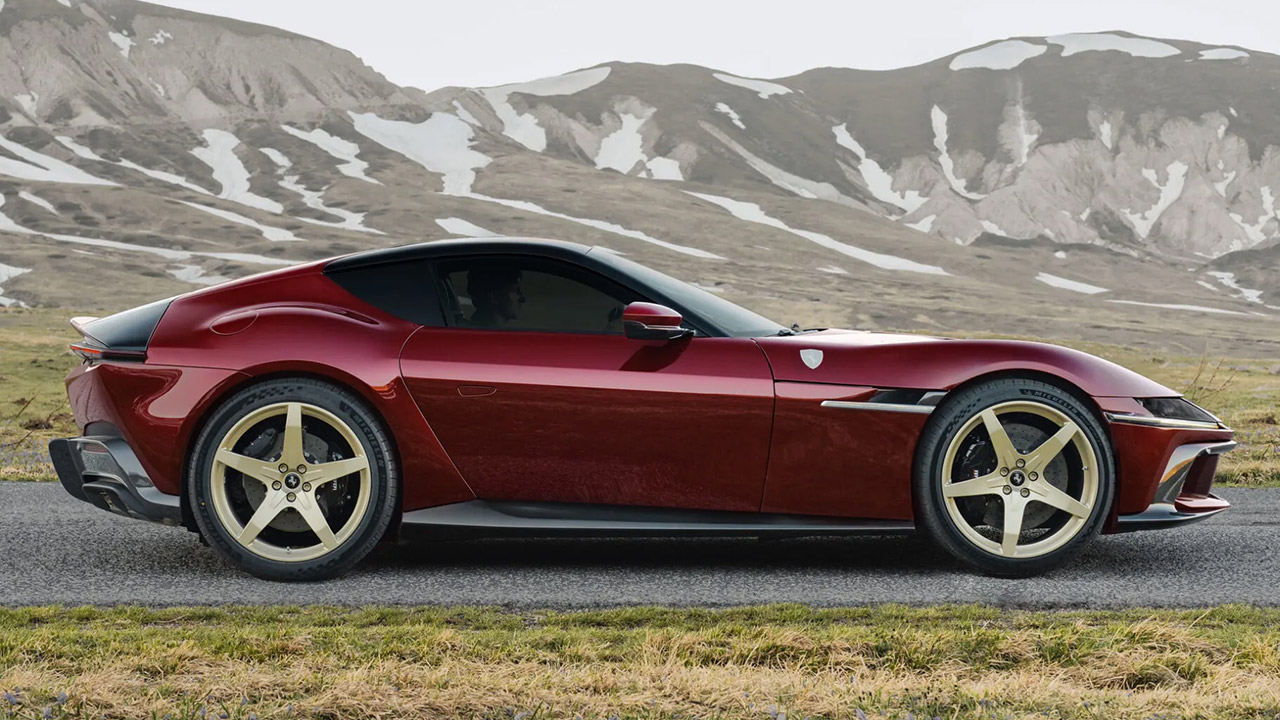

The power comes from the same 6.5-liter naturally aspirated V12 found in the standard vehicle. It produces 830 metric horsepower at 9,250 rpm and 678 Nm torque at 7,250 rpm. The engine revs cleanly to a redline of 9,500 rpm, with linear delivery and the unmistakable V12 sound. Official performance figures show a 2.9-second sprint to 100 km/h and a top speed of over 340 km/h. In full manual mode, shifts take longer than the dual-clutch’s quickest action, so certain drivers may experience somewhat longer acceleration times. When necessary, launch control can still activate automatic shifting for the quickest escape.
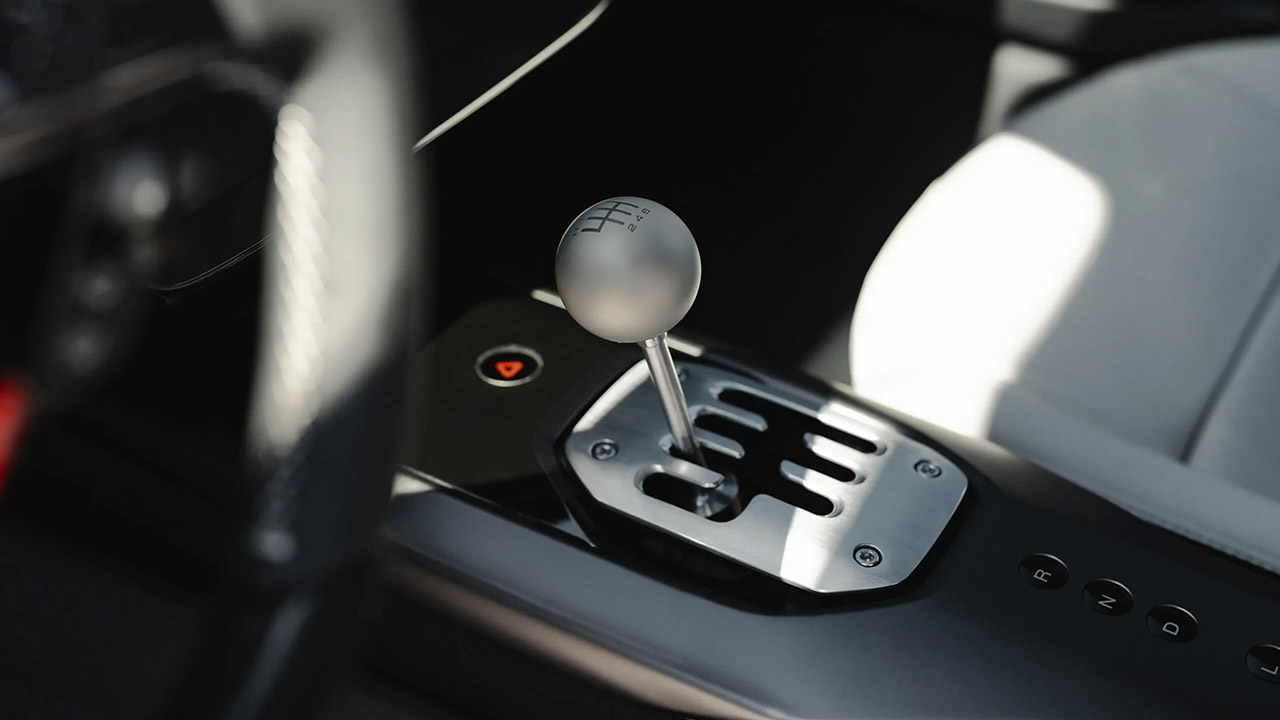
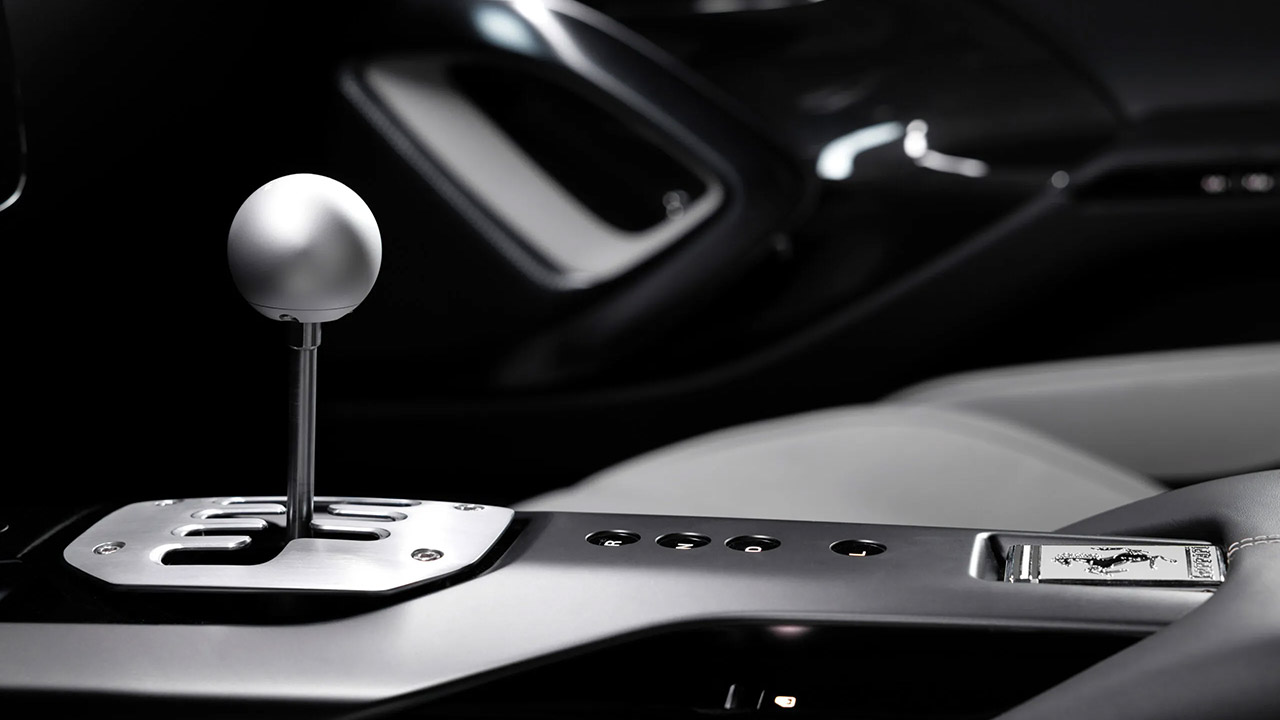
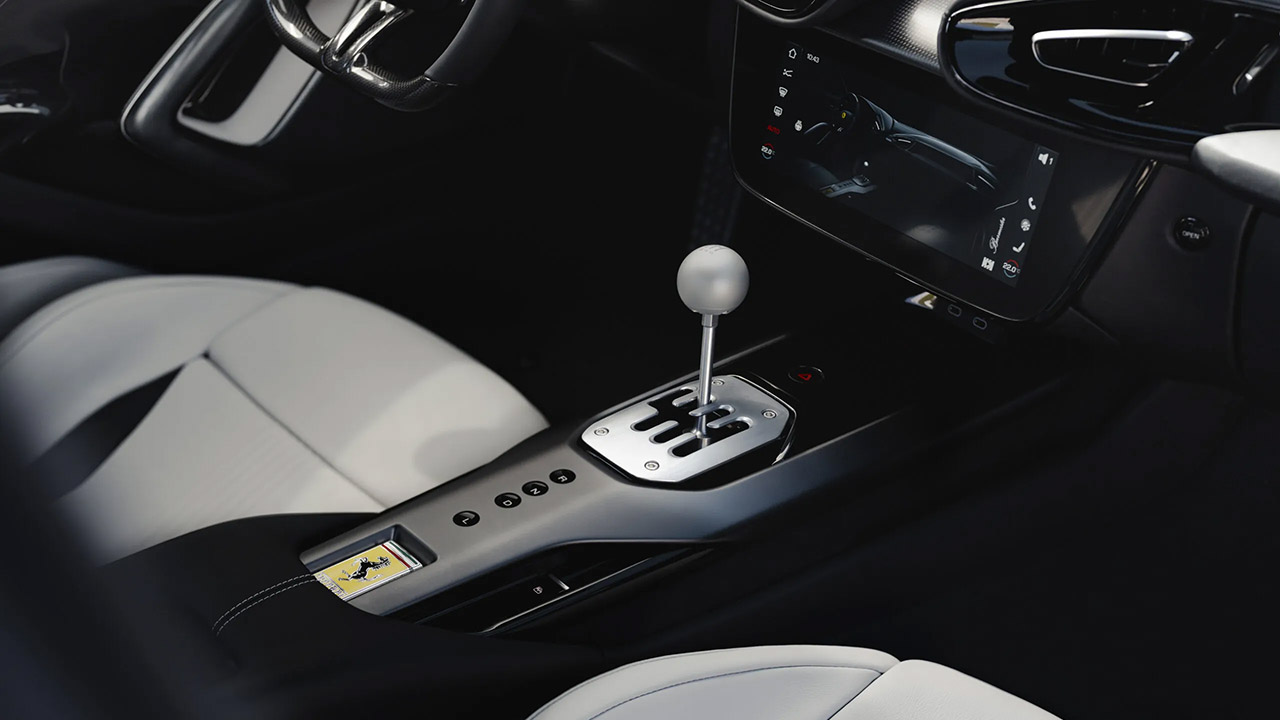
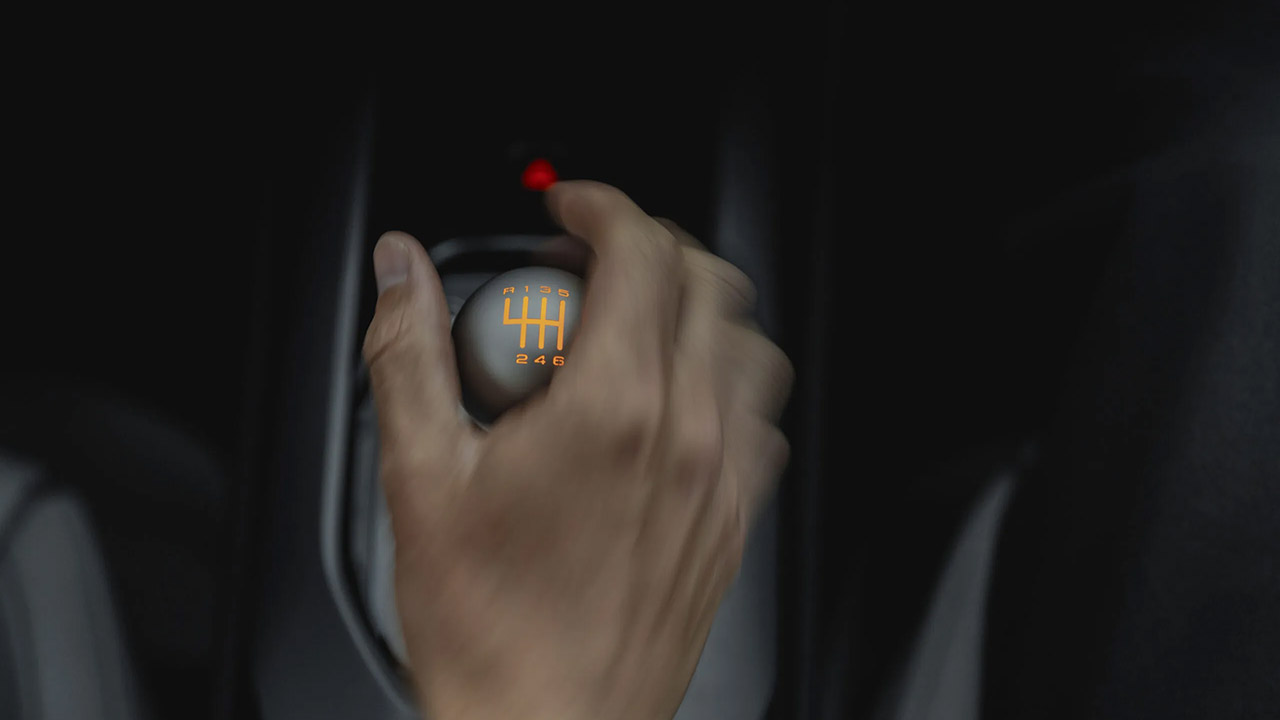
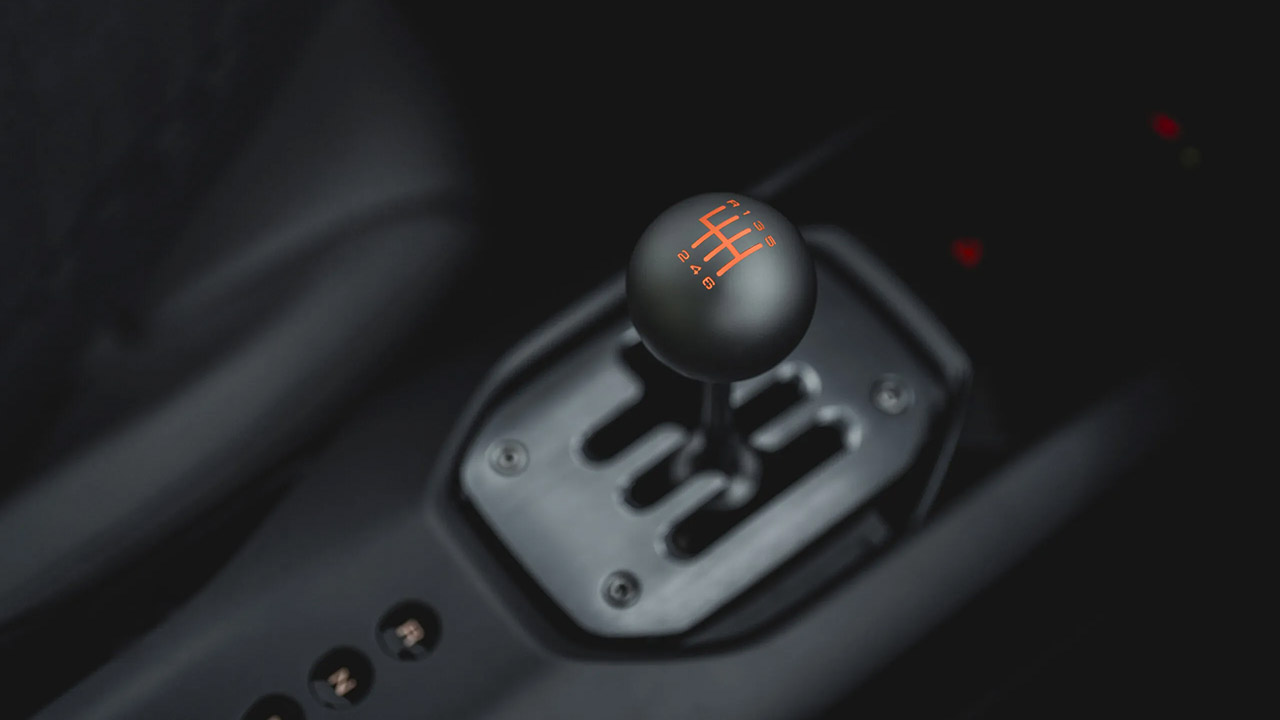
Styling modifications maintain focus and functionality. The center tunnel and console were rebuilt to accommodate the new shifter assembly. Steel and aluminum gear gates echo the six-speed configuration. Seats are available in Comfort or Racing versions and have six vertical grooves that correspond to the forward gears. Each car’s Tailor Made status is marked by a specific silver or carbon fiber plate.
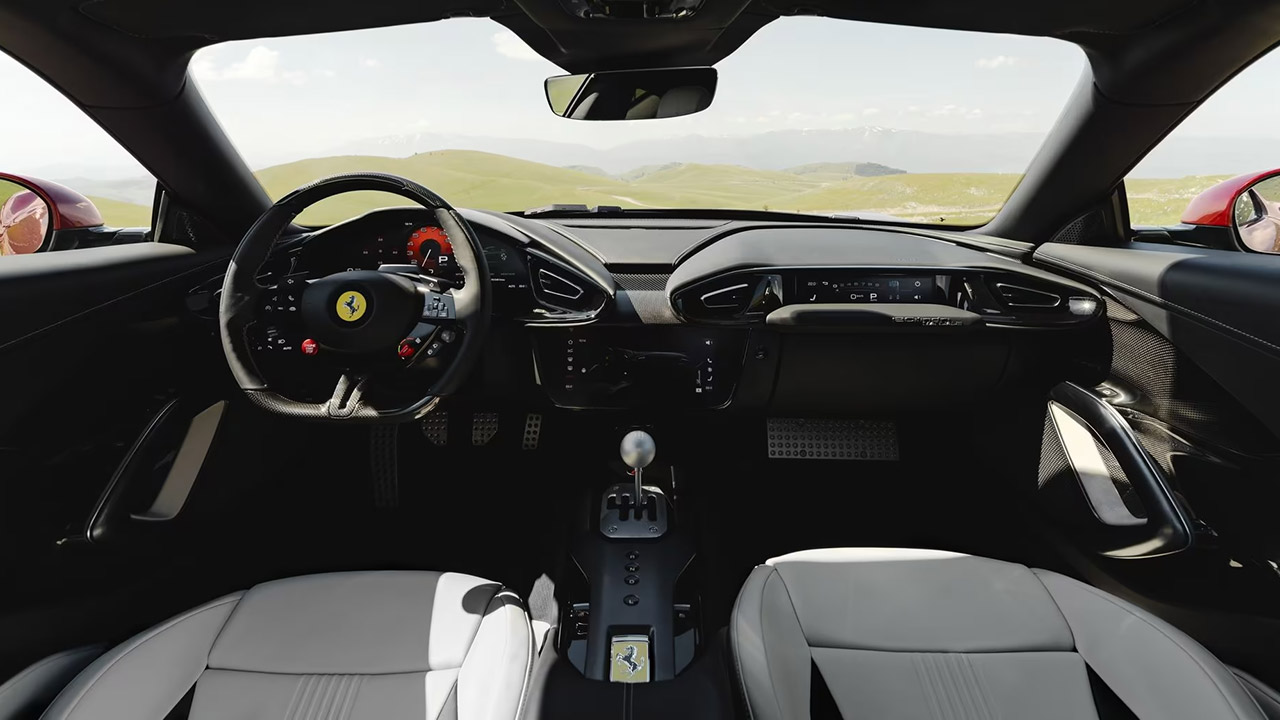
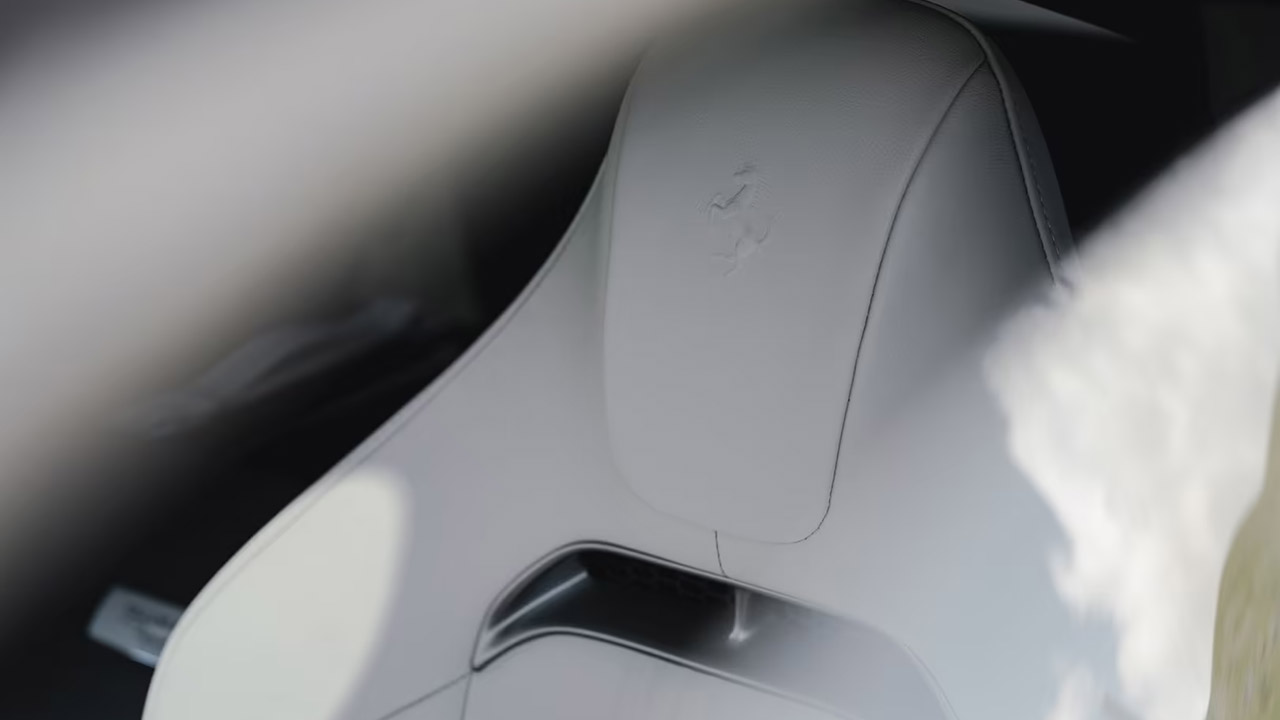
In Italy, prices start at 590,000 euros before taxes and options. In the United States, the figure exceeds $680,000 when the limited-run premium and equipment are factored in. First deliveries will begin in the first quarter of 2027. All cars are coupes, with no spider versions joining the series. This special version appeals to owners who already own paddle-shift Ferraris and desire a vehicle that takes greater physical effort on their favorite roads. The technical team researched previous manuals, particularly the one from the 599 GTB, to recreate the proper shifter travel, clutch feel, and mechanical character. The by-wire technology adds constancy that older, purely mechanical gears could never achieve despite temperature variations or wear.
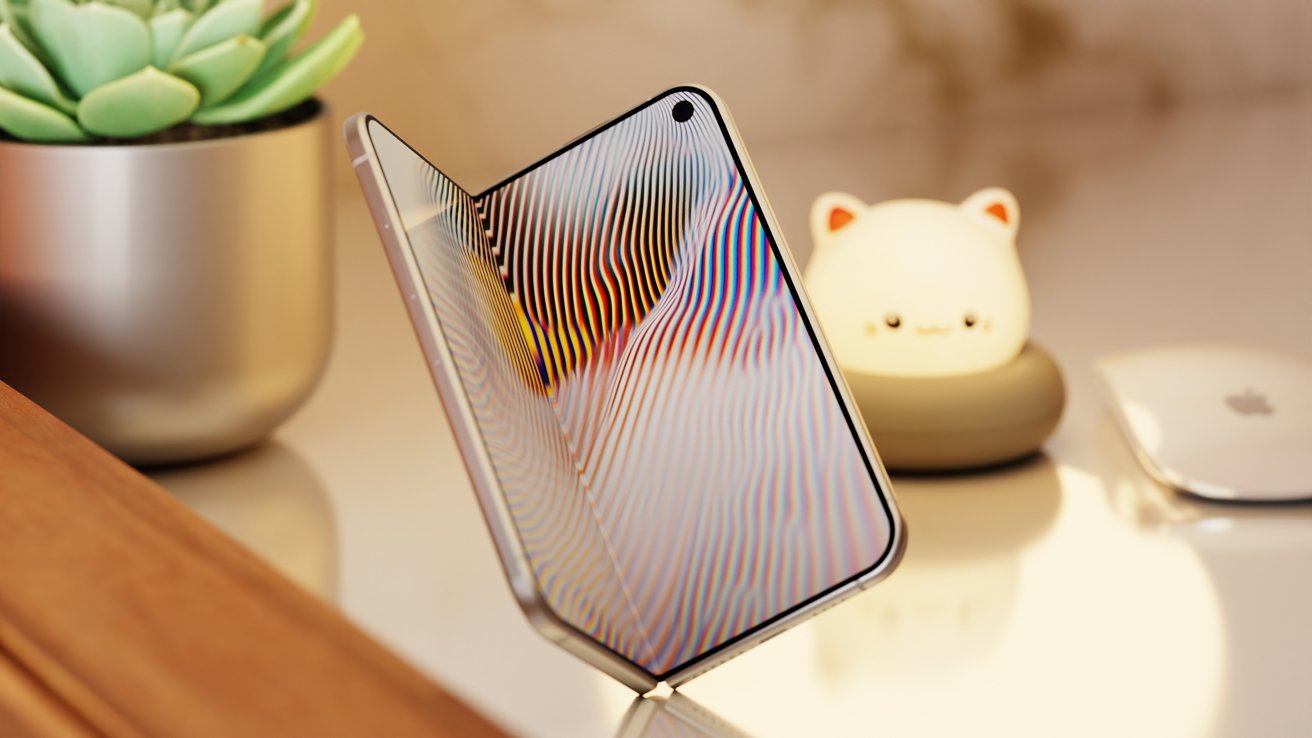
Apple may be pulling an iPhone X for the iPhone Fold, by launching it in September but actually selling it months later.
Apple is widely expected to launch the iPhone Fold this fall, alongside the iPhone 18 Pro. However, the schedule of when it goes on sale could be completely different.
According to a Sunday X post by TF Securities analyst Ming-Chi Kuo, the supply chain indicates there may not be enough inventory for the iPhone Fold to go on sale immediately after launch.
In his view, it seems that the iPhone Fold could repeat what happened in 2017 for the iPhone X.
Back then, the milestone model was introduced as usual alongside the other main releases, the iPhone 8 and iPhone 8 Plus. But preorders began late in October, with sales in early November.
To Kuo, the supply chain has a target of producing about 7 to 8 million iPhone Fold units in the second half of 2026. But for the third quarter, there will apparently only be a production run of between half a million and a million units.
By comparison, the iPhone 18 Pro and Pro Max will get about 20 million units produced.
Evidently, the supply chain is spelling out a similar launch pattern for the iPhone Fold as for the iPhone X.
Production history repeating itself
One of the reasons for the delay back with the iPhone X was production issues. Something followers of the iPhone Fold will be familiar with, too.
Back in 2017, the production of the iPhone X was at a similarly low 1 million units for the third quarter. This was due to the model introducing many new features that earlier models didn’t have, that the supply chain had to account for.
That included the OLED all-screen design as well as Face ID biometric security.
The iPhone Fold, naturally, has similar new-tech issues to deal with. That includes the folding display, as well as the well-documented rumors about the problematic hinge.
Ming-Chi Kuo has a documented history of accuracy when it comes to Apple, in part due to his in-depth supply chain checks. While we have dealt with rumors and claims about the iPhone Fold being delayed in the past, Kuo’s reports are generally considered to be closer to reality than the rest of the rumor mill.

Tech1 minute ago
The moral case for being less online

News Videos2 minutes ago
FINANCIAL ACCOUNTING-2 || UNIT-3 || PART-1|| GUN SHOT IMPORTANT METHOD FOR EXAMINATION
Business4 minutes ago
Fed Minutes, Home Sales, Pepsi, Delta, and More to Watch This Week


-

 Fashion2 days ago
Weekend Open Thread: High Hopes
-

 Politics2 days ago
The House | “Reframing the debate from a binary discussion of winners and losers”: Yuan Yang reviews ‘We Are Not Machines’
-

 Crypto World6 days ago
Strategy authorizes up to $1.25B in Bitcoin sales under new capital plan
-

 News Videos5 days ago
How to Build INSANE Live Financial Dashboards With Claude
-

 Tech6 days ago
Anonymous researcher drops 0-day ‘exploitarium’ repo
-

 Business6 days ago
Australia treasurer says alleged access of prime minister’s bank data ’incredibly concerning’
-
 NewsBeat16 hours ago
Taylor Swift and Travis Kelce wedding staffer hilariously struggles to keep her cool while checking in megastars
-

 Sports4 days ago
Broncos roster: OL Ben Powers (No. 74) entering final year of contract
-
 Business6 days ago
The AI boom won’t burst all at once. It will pop in ‘rolling bubbles’: Macquarie
-

 NewsBeat5 days ago
Presenter Caroline Flack’s brother Paul Flack dies aged 55
-

 Crypto World4 days ago
Binance stock trading tops $1B in first month after launch
-
 Crypto World4 days ago
Airdrop Registration Becomes Key Focus For Remittix As RTX Launch Updates Approach
-

 Crypto World4 days ago
Alibaba-affiliate Ant Group enters the humanoid robot market with 12 deals
-
 NewsBeat3 days ago
New exhibition reflects five decades of movement between island of Ireland and GB
-

 Crypto World5 hours ago
South Africa proposes crypto tax guidance under existing rules
-

 Crypto World2 days ago
Standard Chartered Secures MiCA License as ESMA Adds 37 New Crypto Firms
-

 Tech8 hours ago
Lenovo laptops are now shipping with YMTC SSDs, a sign of Chinese NAND entering the mainstream
-

 Business4 days ago
Meta Platforms Stock Jumps 7% Today as Bloomberg Reports Company Plans to Enter the Cloud Business
-

 Business3 days ago
What a 10 Percent Drop Means for Buyers, Sellers and Renters
-

 Crypto World3 days ago
Binance Re-Enters Philippines As EU MiCA Rules Restrict Access
You must be logged in to post a comment Login