
Politics
“You are getting ahead of yourself” – Tice refuses to confirm Reform UK shadow cabinet plans

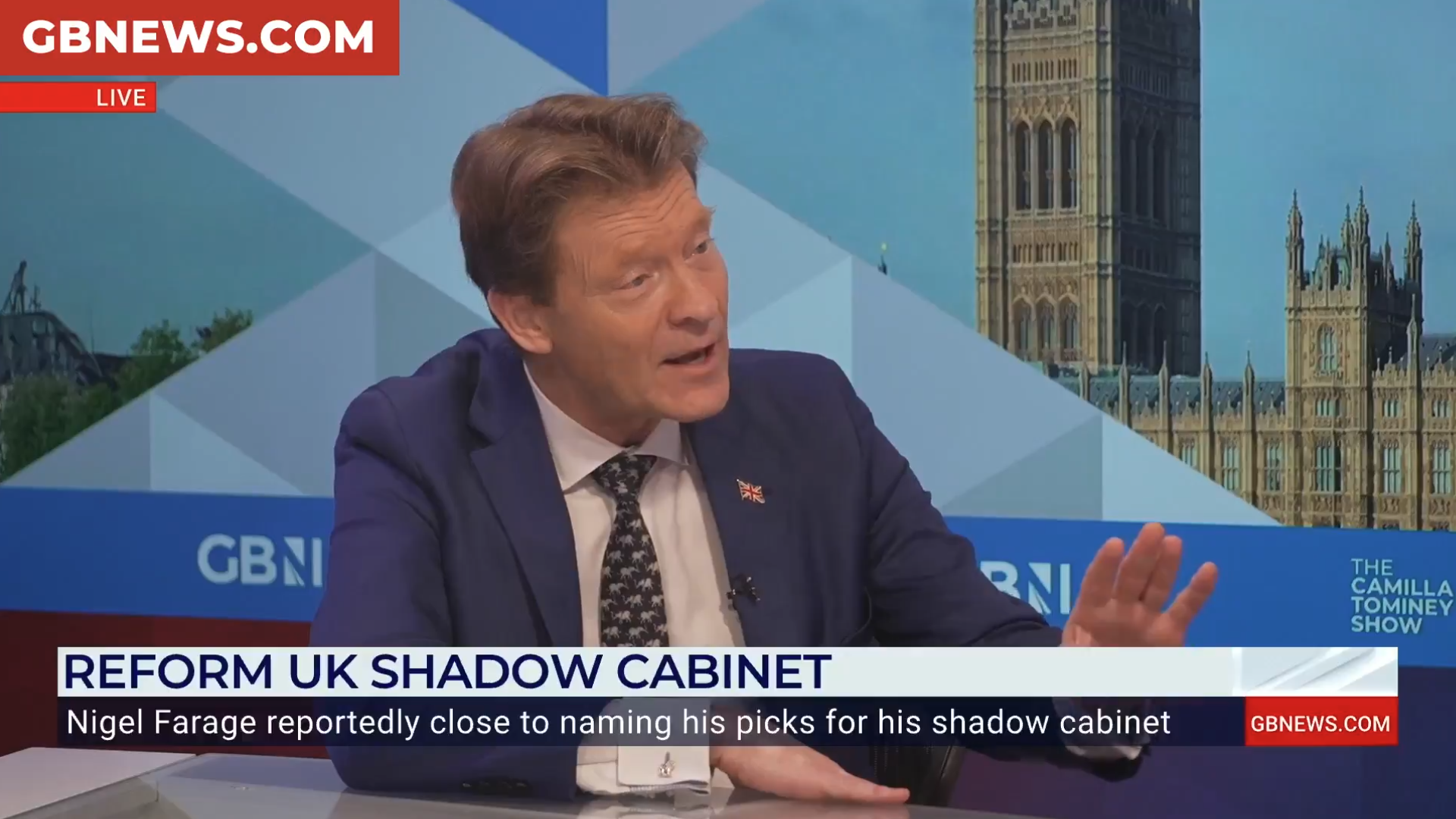
‘Have you accepted that now?’
‘We would all be delighted to help Nigel as Prime Minister.’
Camilla Tominey questions Richard Tice about Reform UK’s potential unveiling of cabinet roles. pic.twitter.com/0wJOIRWsH5
— GB News (@GBNEWS) February 8, 2026

Politics
‘A trend that can’t be ignored’: Dems have made up ground in nearly every election since Trump took office


In some other year, Analilia Mejia’s 20-point win in New Jersey’s 11th Congressional District might have been a stunning result.
But the progressive organizer’s romp on Thursday elicited little shock, despite the margin in a district former Vice President Kamala Harris had carried by just 8 points.
It was the latest in a long string of Democratic overperformances in elections since President Donald Trump took office last year, and nowhere near the biggest.
A POLITICO analysis of 229 state and federal elections since Trump’s inauguration shows Democratic candidates outperformed Harris in 193 of them. On average, Democratic candidates overperformed Harris by 5 points. In a handful of special elections, they have pulled more than 20 points to the left.
It is a warning sign for Republicans that has continued to flash across the country every few weeks. Consistent overperformances in special elections have been an indicator of midterm shifts in the past, and the trend over the last 15 months is particularly strong. In the two-year cycle of special elections heading into 2018, margins shifted to the left in about two-thirds of special elections, according to The Downballot. In November of that year, Democrats netted 40 seats.
This cycle, Democrats have shifted races left in close to 85 percent of special elections.
“The overperformance across the country in special election after special election is a trend that can’t be ignored and proof that the American people are souring on Republicans’ broken promises,” Democratic Congressional Campaign Committee spokesperson Aidan Johnson said in a statement.
Of course, eye-popping double-digit shifts in some special elections don’t mean every seat that Trump won by 10 points is going to be in play in November. And part of the strong numbers comes from comparing candidates to Harris, who did worse in 2024 than down-ballot Democrats on the same ballot. For example, in New Jersey’s 11st District, then-Rep. Mike Sherrill won by just shy of 15 points while Harris won by 8. Mejia, in the special election, won by 20.
“Outperforming the most unpopular Democratic presidential nominee in history is an abysmally low bar, and touting it as an achievement is embarrassing,” National Republican Senatorial Committee spokesperson Bernadette Breslin said.
And turnout in the special elections is generally much lower than in a midterm or presidential election. National Republicans argue the midterms will be different when turnout is higher.
“Democrats are cherry-picking low-turnout special elections to spin a narrative that falls apart the second you look at the full picture,” National Republican Congressional Committee spokesperson Mike Marinella said in a statement. “Republicans have the money, the message, and the momentum heading into 2026, and we are outpacing Democrats where it counts in the battlegrounds that will decide the majority.”
But Democrats’ improvements compared to 2024 extend across races and districts that are very different from one another, including special elections for the House and state legislative seats, as well as regular gubernatorial and legislative elections in Virginia and New Jersey last year. The consistent progress for Democrats has come across red and blue districts, swing and safe states — and is a signal going into the midterms that the political environment has shifted since 2024.
Morgan Bonwell, an Iowa-based Republican strategist, said Trump’s victory catalyzed Democratic voters to turn out.
“That fired Democrats up. They had a big loss,” she said. “They had an opportunity right there again to come out and turn out.”
The data reveals that Democrats’ improvements are not just a product of partisan voters in deep-blue areas: Most were in districts where Trump beat Harris. The largest gain was in a Trump-won Brooklyn state Senate district where the Democratic candidate improved on Harris’ vote share by 45 percentage points, followed by state legislative races in Rhode Island and Oklahoma that swung 28 and 27 points, respectively.
Republicans’ largest gain was in a February special election for an Alabama state legislative seat, where the GOP candidate ran 13 points ahead of Trump.
Democratic strategist Fred Hicks said he’s encouraged by voters reengaging with the party after an uninspiring 2024 that saw former President Joe Biden drop out from the presidential race and Harris’ abbreviated campaign fail to prevent Trump’s reelection.
“Trump’s decisions and his announcements sobered up Democrats and Democratic-leaning voters right away, so that people realized they didn’t have the luxury of sitting in their feelings,” Hicks said.
Another encouraging sign for Democrats is that some of the state legislative elections have overlapped with congressional battlegrounds. Three state legislative special elections in Iowa, for example, occurred within the bounds of the state’s 1st and 3rd Congressional Districts — top Democratic targets held by GOP Reps. Mariannette Miller-Meeks and Zach Nunn. In each of those special elections, the Democratic candidate outperformed Harris’ 2024 margin by between 12 and 13 percentage points.
Bonwell, the Iowa-based Republican strategist, warned that Miller-Meeks, Nunn and the rest of the GOP slate in Iowa will need to coordinate closely to match Democrats’ turnout in November, especially with strong candidates like Democratic gubernatorial candidate Rob Sand, who she says “has the ability to drive turnout.”
“They need to be a united front, and they need to pool resources, in my opinion, to bring them all up,” she said. “I think it’ll be challenging for sure.”
Other special elections have occurred in some of the biggest Senate battlegrounds. Since last year, there have been six state legislative special elections in Georgia, and all shifted between 2 and 10 points toward Democrats. The congressional special election for former Georgia Republican Rep. Marjorie Taylor Greene’s seat saw a Democrat surpass Harris’ margin in the district by 13 points. Two other special elections were in Maine — one swung 6 points toward Democrats, and the other moved by less than a point toward the GOP.
Democrats’ overperformance comes despite consistently low favorability for the party since 2025. North Carolina-based Democratic strategist Doug Wilson credited that to a focus on kitchen-table issues — the blueprint of the “affordability” playbook used by successful Democratic campaigns over the past year.
“I know that the party’s brand is still not where it once was, but at the same time, I think the Democrats have done a good job of getting back to what I call Democratic roots,” Wilson said. “Remembering what it was like to be that man or that woman that’s keeping themselves up at night worrying about how they’re going to feed their families, how they’re going to put gas in the car, how they’re even going to save for retirement.”
There are still unknown factors that could shape the midterm environment. In the 2022 election cycle, Democrats struggled in special elections until the Dobbs decision brought abortion rights to the forefront, then went on a winning streak, culminating in a midterm that had mixed results for both parties.
But for now, the trend has Democrats raising their expectations for November. Democratic strategist Alex Kellner said they could be heading for a massive wave of victories reminiscent of Republicans’ huge win in the 2010 midterms.
“The ceiling is higher for Democrats than it has been in a long time for a big pickup,” Kellner said.

The post ‘Starmer has sold out Britain’ appeared first on spiked.
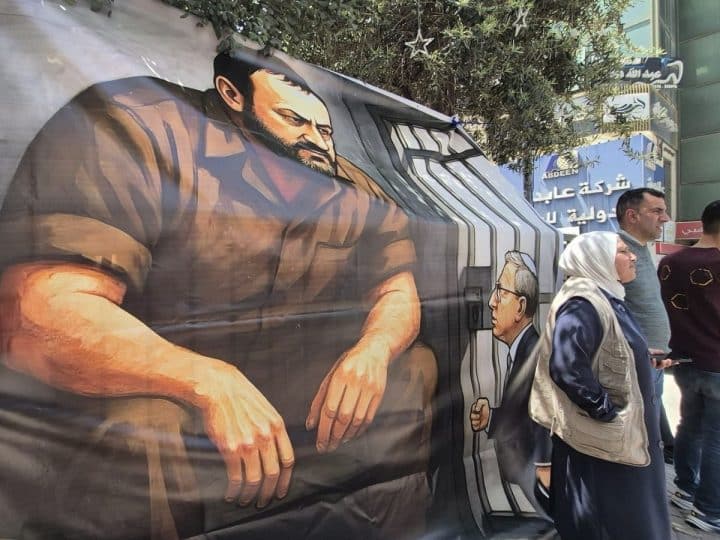

Palestinian Prisoners’ Day is marked every year on 17 April. It began in 1974, after the Palestinian National Council chose the date to honour the first Palestinian prisoner exchange, linked to Mahmoud Bakr Hijazi’s release in 1971. Hijazi was the first Palestinian to be captured by Israeli occupation forces (IOF).
The Israeli occupation has now legalised the murder of Palestinian prisoners
Over time, the day became much more than a memorial. For Palestinians, it is now a national day of protest against arrest, prison abuse, and the suffering of families whose loved ones are behind bars.
2026 Palestinian Prisoners’ Day was marked across the occupied territory with rallies, public gatherings, demonstrations and messages of support. But this year, it was not only a demonstration against the occupation’s prison system, and the continuing use of detention as a way to control Palestinian life.
It was also a protest against the prisoner execution law recently approved by the Knesset. This racist and apartheid law makes the death penalty mandatory for Palestinians who kill their occupiers. But it does not apply to the growing number of illegal settlers or the occupation’s military who murder Palestinians. Although the killing of Palestinian prisoners inside Israeli occupation happens daily — through torture, medical neglect and starvation — this prisoners’ execution law has now legalised “Israeli” state killings of Palestinians.
Residents of Hebron talk of the unknown fate of their loved ones locked up inside Israeli occupation prisons
In the city of Hebron, in the southern occupied West Bank, residents not only experience daily raids from Israeli occupation forces (IOF), but also violence from the illegal settlers living amongst the population. Here, families of detainees, former political prisoners, local residents, and activists gathered together at Ibn Rushed Roundabout. They raised photos of loved ones, and held banners which condemned the violence experienced by Palestinian prisoners.


They also demanded the reinstatement of prison visits by the International Committee of the Red Cross (ICRC), which the Israeli occupation has prevented since October 2023.

In a country where one in five Palestinians have been arrested, the day has personal as well as political meaning, as every Palestinian family has suffered in some way.
Some of those attending Hebron’s event spoke with the Canary. Here is what they told us:
Imprisonment is just one of the many forms of control the occupation practices against Palestinians
Imprisonment is not an isolated issue. It is part of the wider system of occupation, where surveillance, checkpoints, movement restrictions, military raids and detention all affect daily life. Families often live with repeated court delays, travel limits, and long periods without knowing what will happen to a son, daughter, father, or mother. This is all part of the Israeli occupation’s system of control over the lives of Palestinians.
Only days before Palestinian Prisoners’ Day, on 14 April, Israeli occupation forces detained Sheikh Hatem al-Bakri, a former Waqf Minister from Hebron, during a raid on the headquarters of the Islamic Charitable Society. Soldiers broke into the building, detained him, and held others inside, including a journalist. This is part of a pattern of ongoing pressure on religious, civic, and public institutions in Hebron.


In late January 2026, Israeli occupation police arrested an imam in Hebron in an overnight raid.
Raids, arrests, and detention are not exceptions in Palestinian life. They are the machinery of control, reaching from prisons into Palestinian homes, mosques, charities, and communities.
More than 9600 Palestinian prisoners, 350 children, 86 women, more than 3530 without charge or trial
According to a new report by the Palestinian Prisoner’s Society, Commission of Detainees’ Affairs, and Addameer Prisoner Support and Human Rights Association, the number of Palestinian and Arab political prisoners in Israeli occupation prisons has exceeded 9,600 people. This is more than an 80 percent increase from the 5,250 prisoners before the Gaza genocide. More than 3530 of these detainees are being held under “administrative detention“, without charge or trial.
350 children are currently detained, 180 without charge or trial, while 86 females are currently behind bars, including two children. 25 of these women are held under administrative detention.
Palestinians arrested from the occupied Gaza Strip, who are held without trial or charge are known as “unlawful combatants”. More than 1250 Palestinians are currently being held under the “Unlawful Combatants Law”. This figure excludes those held in secret military torture camps since 7 October, 2023.
According to the report, the vast majority of prisoners are now sick, either due to existing health conditions becoming worse, or from injuries and diseases from their time behind bars, where denial of medical care is intentional, and abuse and torture is systematic. Unsanitary conditions have also enabled the rapid spread of diseases amongst detainees.
336 Palestinians killed in prison by the occupation since 1967, more than 25 percent of these have died since the start of Israel’s genocide in Gaza
336 Palestinians have died at the hands of the occupation, while in prison. Almost 90 of these killings have occurred since October 2023, although this figure includes only those who have been identified. Dozens remain forcibly disappeared, and unaccounted for in Gaza.
Occupation authorities continue to withhold the bodies of almost 100 martyred Palestinian prisoners. This is compared to the withholding of 11 martyred prisoners’ bodies before the genocide.
The report also states that eight Palestinians detained from before the Oslo Accords, in 1993, remain behind bars. These include Ibrahim Bayadsa and Ahmad Abu Jaber, who have both been detained since 1986.
118 Palestinians are currently serving life sentences, with the longest sentence being Abdullah Barghouti, who has been given 67 life sentences.
Featured image provided by author
By Charlie Jaay


Students of the Open University (OU) have started a series of coordinated digital protests against the OU’s ‘partnerships’ with arms makers and other firms enabling Israel’s genocide. The ‘virtual protests’ are targeting the university’s online recruitment events.
The OU is the UK’s largest distance-learning university and is used by students from across the UK and around the world. Many of them choose online learning because of health conditions or caring responsibilities. But they are not letting this stop them from standing in solidarity with Palestinians facing Israel’s crimes and protesting against their university’s ties with arms companies.
Nancy, an OU student with disabilities who is taking part in the protests, said:
As a disabled student, my ability to take part in activism has often been limited by my health. Being involved in the BAE Systems event was the first time I could meaningfully engage in activism from my own bed. The OU Friends of Palestine group has given me the opportunity to be part of a movement I care deeply about.
In February 2026, BAE Systems hosted its annual online “Capture the Flag” event. This is a two-day careers programme focusing on cybersecurity. But the event did not run smoothly. Over 20 students affiliated with Open University Friends of Palestine (OUFP) registered to take part. They messaged around 170 participants to challenge the presence of BAE Systems and other death merchants at the university:
The students who took part said their actions were driven by the company’s role in supplying weapons to governments accused of human rights abuses, including in conflicts where civilians and infrastructure have been harmed. Colette, a military veteran who was removed from the event after speaking up, wrote about the experience:
I should know enough about this – I experienced PTSD symptoms because of my role in the illegal Iraq war. It is morally incomprehensible that the Open University is facilitating those profiteering from conflict, war, and genocide.
Participants say that event moderators removed those who raised pro-Palestinian or anti-war views, while allowing participants to express support for Israel or make offensive remarks — including a joke about ethnic cleansing using “bath bombs”. Some students have since filed a formal complaint with the university and are calling on members of the public to support them by writing to the institution using an email template they published online.
More Open University protests
On 18 February students also protested an Open University careers event hosted by Cisco, with help from current and former Cisco employees affiliated to the Bridge to Humanity campaign. The OU is described as one of the world’s largest ‘Cisco Networking Academy’ support centres. Students allege that the company provides infrastructure linked to Israel’s occupation of Palestinian territory and maintains operations in areas considered illegal under international law. As with the BAE event, protesters say organisers restricted critical discussion, disabling the chat and Q&A and removing participants who raised inconvenient questions.
Former Cisco employees supporting the protest have said these repressive actions mirror the way their concerns were handled internally by the company. They pointed to an open letter signed by more than 1,700 employees calling on the company to clarify and reconsider some of its contracts related to Israel.
One said:
Seeing Cisco silence Open University students for asking simple and reasonable questions came as no surprise to us Cisco employees. We experienced the same internally when over 1700 of us signed an open letter to our leadership asking for transparency.
OUFP is a student-led group made up of OU students and alumni, and affiliated to the university’s student union (OUSU) and its Palestine Solidarity group. It campaigns on issues related to Palestine and the arms industry and advocates for changes to the university’s partnerships and investment policies. The groups have opposed the Open University’s collaboration with Israel lobby pressure group UK Lawyers for Israel (UKLFI) and are working to push for divestment from companies linked with Israel and the arms trade.
The group is now appealing to the public to write to the university supporting OUFP’s actions, using an online form on its website.
Featured image via the Canary
By Skwawkbox


Keir Starmer’s craven X post welcoming the ‘re-opening’ of Iran’s Strait of Hormuz has been massively ratioed — and deservedly so.
A ‘ratio’ refers to the number of responses compared to the number of likes and shares. A post with many more replies than likes or shares is considered a disastrous one and a sign of the unpopularity of the views shared, the poster or both. And Starmer’s is way up there. With, at the time of writing, the more than 27,000 comments towering over the number of positive actions:
It’s good news that the Strait of Hormuz has now reopened.
This must be a long lasting and workable solution, without tolls or restrictions on routes.
Today we announced our joint plan with France and other international partners to protect freedom of navigation.
We need to…
— Keir Starmer (@Keir_Starmer) April 17, 2026
This is even more striking given the long record of ‘dark’ operations trying to pad Starmer’s likes and follower count. And no wonder, given the massive issues with his statement in both content and backbone.
Starmer misleading
First, the Strait of Hormuz has not ‘re-opened’ — Iran is allowing through the ships it chooses and still denying passage to those linked to the US, Israel and their enablers. This is pointed out in a ‘community note’ linking to a statement from the Iranian parliament’s speaker:
The claim the strait is open is simply untrue. The official speaker of the Iranian parliament has stated no ships are allowed through without Iranian authorisation. Keir Starmer is ignoring this. x.com/i/status/20452…
۴- عبور و مرور در تنگهٔ هرمز بر اساس «مسیر تعیین شده» و با «مجوز ایران» انجام خواهد شد.
۵- باز یا بسته بودن تنگه و مقررات حاکم بر آن را میدان مشخص میکند نه شبکههای اجتماعی.— محمدباقر قالیباف | MB Ghalibaf (@mb_ghalibaf) April 17, 2026
Second, Starmer ignores the fact that the US-Israel war of aggression — itself considered the supreme war crime because all other war crimes flow from it — is the cause of the war. It also ignores that neither Israel nor the US have even tried to look like they are honouring the supposed ‘ceasefire’, or are even serious about negotiations. It ignores that when Hormuz did look like it might be opened, Israel escalated its attacks on Lebanon to intentionally collapse the deal, too. All of this makes Starmer’s closing comment that “We need to see a return to peace and stability, and a permanent ceasefire” cowardice and collaboration.
What joint plan?
And his claim that his ‘joint plan’ would ‘protect freedom of navigation’ is a lie. The supposed plan, if it ever happens, is only designed to happen when Iran decides to stop shooting — and that will only happen when the US and Israel stop their attacks on Iran, lift sanctions and put in place meaningful barriers to them simply resuming their attacks. Since that is a long way off — and hard to even imagine what the world’s leading terror states could do to make assurances meaningful — Iran is going to be controlling Hormuz for a long time to come, probably decades.
In reality, the only protection Starmer and his (probably soon) successors can give UK ships to pass Hormuz is to stop being the US and Israel’s arse-noser in chief. And that’s not anywhere on the horizon either.
Ratioed and rightly so. He deserves much more, like a decade or two behind bars in the Hague.
Featured image via the Canary
By Skwawkbox
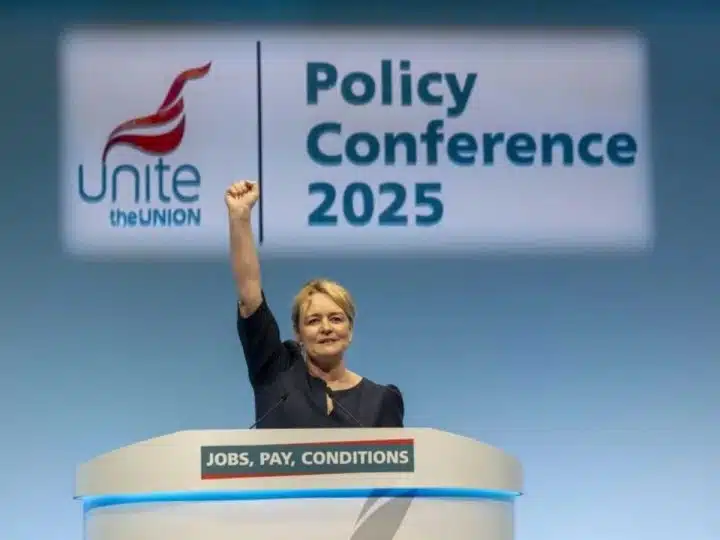

Unite’s anti-worker general secretary Sharon Graham has been slammed by the union’s grassroots activists for ‘betraying workers’ by holding “secret talks” with the far-right Reform UK over the Birmingham bin strike.
The strike, which has dragged on for more than a year, was triggered by another attack by Labour-run Birmingham council on the wages of some of its lowest-earning workers. However, Graham’s tactics have been criticised by union insiders and have failed to win the dispute. The union is also hampered by the collapse of its strike fund since Graham took over the union. She now faces both a personal re-election battle in 2026 and elections for Unite’s ‘exec’, of which her allies are trying to maintain control.
The ‘Reunite the union’ group said Graham’s talks with Reform were “desperate and politically reckless”. It also quoted Birmingham organisers saying they “never see her” and that by cosying with the far-right she has undermined their battle for fair treatment:
Courting Farage is a betrayal of our members already under attack by Reform and the thousands more in the party’s sights. It’s time to reunite, to end Sharon Graham’s appeasement of the far-right, and to stop Reform.
… This is an industrially desperate and politically reckless move. Labour is set to lose control of Birmingham, one of the largest councils in Europe. Latest polling shows that the council is highly likely to be led by Reform.
The union movement has rallied behind the Birmingham bin workers for a year now, including solidarity pickets from other unions. With local elections pending it is legitimate to put demands on parties to expose those who do not support the strikers and to demonstrate that Reform is not the party of workers.
It is politically reckless and industrially naïve to then meet with Reform, gifting them political cover and allowing Nigel Farage to launder himself through Sharon Graham’s tacit endorsement. This sends a dangerous message to our members, suggesting it is ok to vote Reform as a way to end (note “end” not “win”) the dispute.
Importantly, Graham did not bother to ask reps and members in Birmingham about this dangerous stunt. As our reps in Reform-controlled councils know well, if Reform take control of Birmingham they will immediately go on the attack against workers.
“Sharon Graham has no mandate from Birmingham council workers or the bin yards to hold talks with Reform. She hasn’t spoken to us about it at all. That isn’t a surprise as she has only been to all the pickets once in the last year. We never see her.” A Unite rep from Birmingham told Reunite.
“We have to support the dispute, but we also have to prepare for the attacks we’ll all face if Reform take over the council. That has now been totally undermined. It isn’t acceptable.”
For months, Sharon Graham has refused to directly criticise Reform. This is despite Reform’s leadership openly announcing attacks on our members and our union – from repealing new workplace protections, to scrapping protections against discrimination, and plans to create a Trump-style ICE force to attack migrant workers. Now we know why.
In September, Graham claimed she would “talk to the devil himself” when asked by Sky News about potential talks with Nigel Farage. Now she appears to have done just that.
This is an issue far beyond Birmingham. Building resistance to Reform and the far-right is an existential question for the trade union movement. It is outrageous hypocrisy for Sharon Graham to attend the March 28th Together demonstration in London, only to then authorise talks with Reform behind the backs of members. It is scab behaviour to break away from the wider trade union movement and to try and curry a special relationship with Reform.
For our members in Local Authorities.
For our thousands of migrant worker members.
For every member facing attacks from the far-right and Reform.
We must end this appeasement.
Graham’s move might surprise some, but she has a long and awful record in Unite, facing repeated strikes from workers both because of her husband Jack Clarke’s behaviour toward staff and her own attacks on attempts of the union’s workers to organise.
Graham and Clarke vs workers
Clarke was promoted shortly after Graham took over the union in 2021, overseeing the newly-created Bargaining and Disputes Unit (BDSU). Union insiders point out that Unite’s approval procedures for the promotion had not been followed. Prior to his promotion, Clarke was on a final warning from Unite for his behaviour.
BDSU staff were soon in dispute with the union and Clarke over alleged bullying by Clarke and his cronies. However, their complaints were not the first such allegations against Clarke.
In 2018, before Graham became Unite’s general secretary, she asked colleagues to destroy evidence of bullying and misogyny gathered by staff working under him in his previous role. In a stunning December 2024 development, Graham’s lawyers admitted that, following her takeover, the union destroyed the evidence.
Graham and Unite have also spent huge amounts of members’ money on lawyers’ fees, most recently to sue barely-followed and anonymous X accounts on behalf of Clarke.
Unite the anti-union union?
Staff have also accused Graham and her management team of employing intimidation, suspension and anti-union tactics against staff in the dispute. This outraged Unite’s National Industrial Sector Committee (NISC) for the print and graphics sector, and the leaders of two unions representing Unite staff and officers.
So bad has this alleged conduct been that more than 90% of Unite staff working at the union’s Holborn HQ voted for strike action. Three — some say four — of the five women who worked in Clarke’s department since Graham formed it and put him in charge of it have left. Union sources say they also alleged bullying and abuse.
Unite’s staff branch unanimously condemned the union’s abuse of its staff. The influential Officers National Committee (ONC) accused Graham of using Murdoch-style anti-union tactics against workers and officers unionising and taking collective action.
After fighting Graham’s moves to undermine their attempts to organise since the beginning of 2025, Unite’s officer group will soon begin strike action. That and Graham’s “desperate and reckless” cosying with Reform are likely to impact her attempts to get herself and her hangers-on re-elected.
Featured image via MorningStar
By Skwawkbox
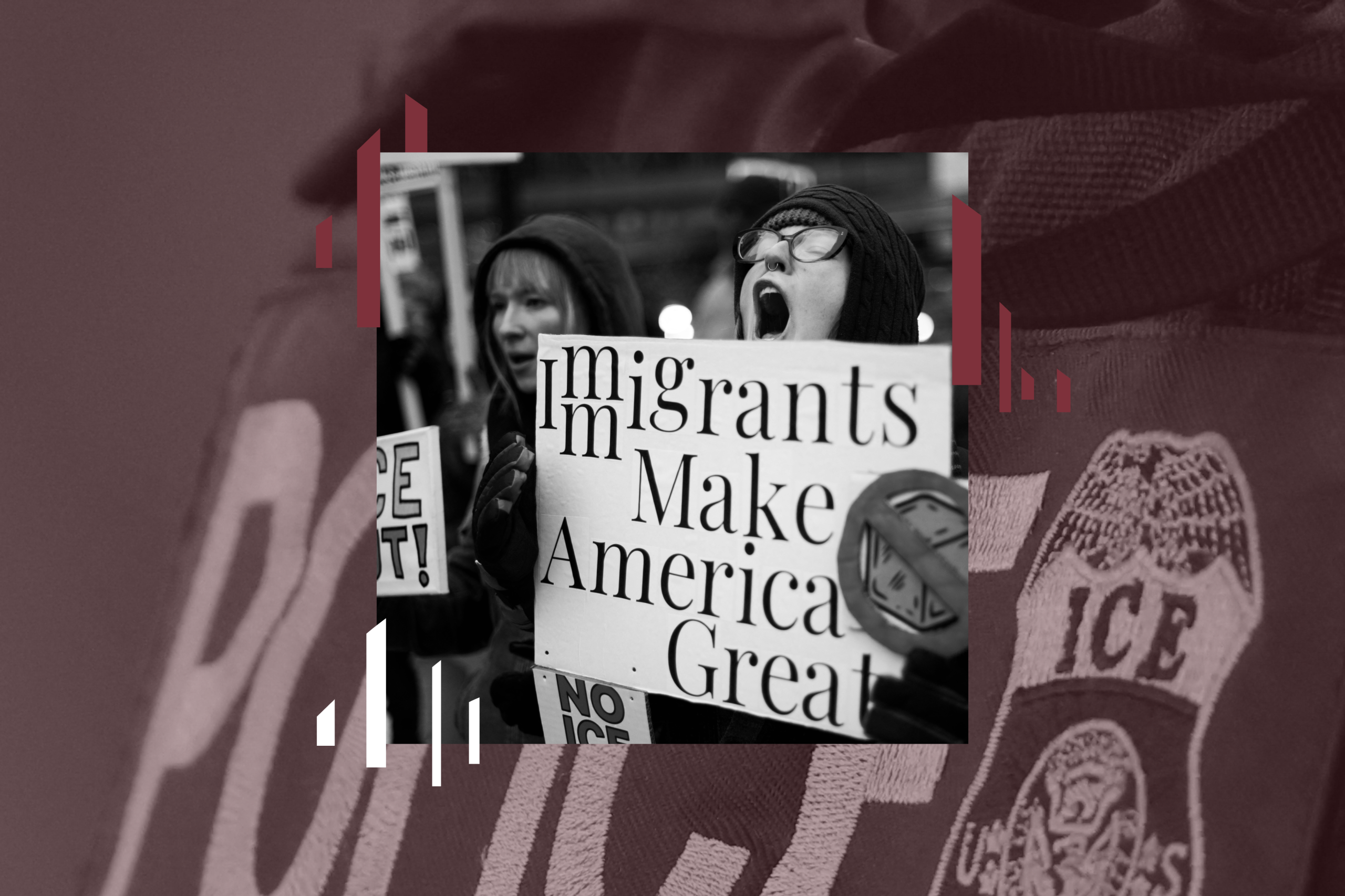

The White House recalibrated its approach to immigration in the wake of the backlash against the death of two Americans at the hands of federal officials in Minneapolis, shifting leadership and softening its rhetoric. Yet three months later, Americans’ views of President Donald Trump’s deportations campaign remain broadly negative.
New results from The POLITICO Poll show that even as the spotlight has moved away from Trump’s mass deportations campaign and onto issues such as the economy and the war in Iran, public opinion has hardly changed, underscoring how difficult it will be for the administration to reset the immigration narrative.
In the poll conducted April 11 to April 14, half of Americans — including one quarter of his 2024 voters — said Trump’s mass deportations campaign, including his widespread deployment of ICE agents, is too aggressive. Roughly a quarter said his immigration posture is about right, while 11 percent say it is not aggressive enough.
The findings offer a warning for the Trump administration — and the GOP — as Republicans look to regain ground on immigration ahead of the midterms.
The once dominant advantage Republicans and Trump held over Democrats on immigration is imperiled, a casualty of the president’s robust enforcement efforts, aggressive crackdowns hundreds of miles from the southern border and images of federal officials detaining children.
The political vulnerability is especially acute among Hispanic voters, a crucial bloc that helped Republicans up and down the ballot in 2024.
While Trump won 46 percent of the Latino vote, the highest share of any GOP presidential candidate in modern history, a majority of Latino voters now disapprove of the president’s handling of immigration (67 percent) and the economy (66 percent),according to a recent poll commissioned by Third Way and UnidosUS.
“The extent of the bottom falling out on Latino voter support for Trump is pretty staggering,” said Lanae Erickson, senior vice president at Third Way. “I think we realized it had softened, but it has really just absolutely eroded any gains that he and his party had made through 2024.”
The April POLITICO Poll similarly found broad dissatisfaction, with 37 percent of Americans opposing Trump’s mass deportations campaign and its implementation — a figure largely unchanged from January despite intense public attention on enforcement operations and clashes between protesters and federal officials at the time.
A majority also continue to view the increased presence of ICE agents negatively, with 51 percent saying it makes cities more dangerous, similar to the 52 percent who said the same in January, even as the administration ended its immigration surge in Minneapolis and has avoided flashy ICE deployments to other cities in the months since.
The lack of improvement in public sentiment comes despite the administration’s efforts to alter its approach after widespread backlash to the killings of Alex Pretti and Renée Good in Minnesota earlier this year. Trump last month ousted Homeland Security Secretary Kristi Noem, replacing her with former Sen. Markwayne Mullin of Oklahoma, and officials have moved away from high-profile raids, in addition to toning down “mass deportations” in public messaging.
White House aides and allies have instead emphasized arrests, public safety and the president’s success in securing the southern border, as Republicans seek to remind voters why they preferred the GOP on immigration for so long. The shift comes amid a broader fight over immigration enforcement funding, with Republicans now looking to steer billions more to ICE and Border Patrol through the budget reconciliation process after failing to reach a deal with Democrats on policy changes.
The White House maintains its strategy is working. Spokesperson Abigail Jackson said the president was elected to “secure the border and deport criminal illegal aliens, and that he “has done both.”
“The totally secure border means there have been zero releases of illegal aliens for 11 straight months, and the administration remains focused on removing the worst of the worst criminal illegal aliens to secure American communities,” she said. “These commonsense policies are supported by countless Americans.”
But if the polling is the rock, Trump’s base is the hard place. Those who backed Trump in 2024 are much more likely to support his immigration posture. Two-thirds of these respondents say Trump’s mass deportations campaign is either about right or not aggressive enough — levels of support significantly higher than among those who voted for former Vice President Kamala Harris or did not vote.
And there are further divides between those Trump 2024 voters who identify as ‘MAGA’ and those who do not. A strong majority of self-identifying MAGA Trump voters — 82 percent — say his deportation campaign is either about right or not aggressive enough, while 58 percent of non-MAGA Trump voters say the same.
The White House’s messaging pivot on immigration has already drawn ire from some Trump allies. The Mass Deportation Coalition, a group of former Trump administration officials and immigration restrictionist groups, released a white paper earlier this month urging the administration to get to 1 million removals this year. This week, the group spent five figures on ads at bus stops across Washington.
“Mass deportation is broadly supported, both by Trump voters and just everyday Americans,” said Mike Howell, president of the Oversight Project, which commissioned polling last month that suggested deportations are popular among U.S. voters. “When we continue to call out that it’s not happening, it could happen, and it should happen, we think ultimately we’re going to win.”
But at the same time, the crackdown is taking a toll on the Latino voters key to Trump’s 2024 coalition. In South Texas, the construction industry faces a labor shortage as workers are deported — or worried they might be. Across the heartland, farmers entering planting season fret about a lack of workers. In urban centers, businesses in Latino-heavy areas have seen a dropoff in sales, as some people are too scared to shop or dine.
The dropoff was so severe in Minneapolis during Operation Metro Surge that the U.S. Hispanic Chamber of Commerce started GoFundMe fundraisers for small businesses that were on the verge of closing, said Ramiro Cavazos, president and CEO of the USHCC. Some of the businesses closed after sales plummeted 70 percent, he said.
“It’s hard to recover from the sales that they lost, and there’s nobody there to help repair or restore them, due to the fears,” Cavazos said. “Customers have stopped coming into their regular places to visit, for fear of being picked up illegally, not because they themselves might not be legal.”
Irayda Flores, a seafood wholesaler in Arizona, estimated that 80 to 90 percent of Hispanic-owned small businesses have been affected adversely by the immigration enforcement, either due to workforce issues or a dropoff in sales.
“I was not expecting these results from the Republican side, from this new administration,” Flores said.
The dwindling support among Hispanic voters opens the door for Democrats to capitalize in this fall’s midterms, said Clarissa Martinez De Castro, vice president at UnidosUS. “The president and his party are taking a big eraser to the support they had gotten from Latino voters,” she said. “To put it in World Cup terms, [Republicans] are scoring an own goal. And now we’ll see what the opposing team does.”
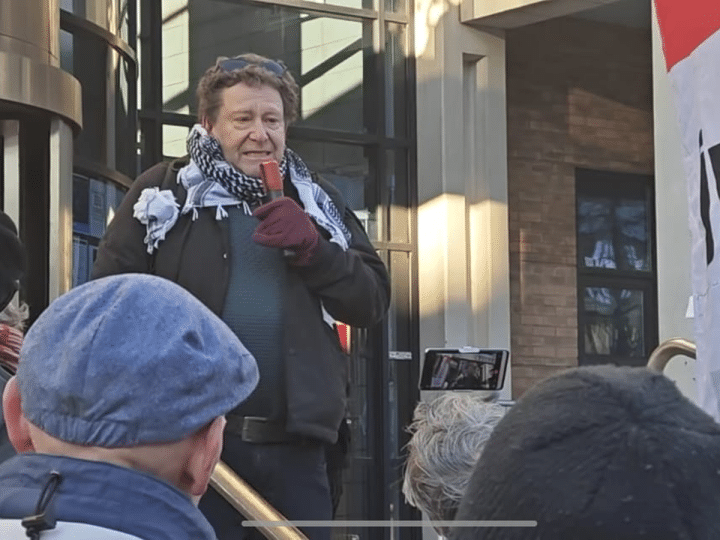

The Green party has suspended well-known Brighton-based Jewish anti-Zionist Tony Greenstein, in response to complaints from Israel lobbyists.
Greenstein is one of the UK’s most fearlessly outspoken anti-genocide activists. Panicked by the Green surge, the lobby has been targeting him for some time and trying to pressure the party into taking action against opponents of Israel’s genocide. So far, Greens leader Zack Polanski has treated the pressure with the contempt it deserves, but the party bureaucracy — at best — has caved in to the smears of Israel’s supporters against Greenstein.
Greenstein was a critic of the Greens for allowing their conference to be filibustered out of passing a key resolution rightly declaring Zionist to be inherently racist. He then warned that Israel’s supporters were about to try to start something similar to the ‘Labour antisemitism’ scam. Now, the party has told him that he has been suspended by a vote of the party’s regional council — shamefully, by a vote of 11 to 1:

Even more shamefully, the notification does not inform Greenstein of the nature of any complaint against him, though it’s clear it was triggered by complaints from local Zionists. Instead, the grounds for the suspension treat historic smears against Greenstein as if they were already judged factual:
Basis of the decision
Documented history of antisemitism, including court decisions and recent terrorism charges.
Greenstein’s supposed “recent terrorism charges” consist of state action for his comments opposing Israel’s genocide and supporting the Palestinians’ legally-watertight right to resist its illegal occupation. It would take a party official maybe a minute to establish that through a simple web search.
Green Party falls for the same destructive trap
Greenstein has sent a detailed response to the party challenging its decision and the false assumptions on which it is based, and reminding it how the antisemitism scam destroyed the Labour party. And, in typically uncompromising fashion he told the party functionaries that, even after two and a half years of Israel’s genocide in Gaza, “The racist press barked and you jumped”:
Accusations of ‘anti-Semitism’ in the GP have begun to mushroom. The same Corbyn playbook is being rolled out. with the active connivance of Zionist members of the GP who counterpose their Jewish identity to the genocide in Gaza and war on Lebanon and Iran.
It will be interesting to see if Zack Polanski reacts as Jeremy Corbyn did and appease the Zionists until he too falls victim. These are early days but the signs are not promising. Council candidates are being targeted on the basis of their social media posts, not for anything they have done or said
I am not surprised that you have suspended a prominent Jewish anti-Zionist. The only surprise is that you capitulated so soon and that you have done it on the basis of lies and disinformation.
Why was I not informed of the allegations and asked for a response? This is what occurred in the Labour Party where, if you were Jewish, you were 5 times more likely to be expelled than if you were not Jewish. Zionists. like anti-Semites. equate being Jewish with being Zionist. Anti-Zionist Jews pose a problem because they are living proof that this is a lie.
This campaign began. as it did against Corbyn, with the racist Jewish Chronicle on March 27: ‘Notorious antisemite’ Tony Greenstein joins the Green Party. It was followed by The Telegraph on April 8 ‘Greens open door to anti-Zionist who said Israel was ‘Hitler’s bastard offspring”
The difference between what happened under Corbyn and my suspension today is the small matter of the extermination of 200.000 Palestinians in Gaza. The racist press barked and you jumped.
Subsequently, in an exchange of emails with the party’s ‘complaints and governance officer, Greenstein pointed out why it was clear that, far from being an issue raised by the local Green party as the regional party office had stated, it had been driven by local Zionist lobbyists:
I have just been assured by the local Brighton Party chair that he had no involvement in my suspension. In other words that the complaint came from an individual or individuals.
The form you sent me therefore which says that the origin of the complaint is the local party is highly misleading and dishonest.
I want to know who made this complaint and a copy of the complaint.
Furthermore I am formally submitting a Subject Access Request for all information held on me by the Green Party.
I look forward to hearing from you.
The situation continues to develop.
Greenstein told Skwawkbox:
I have been suspended by the Green party as part of their ‘no fault suspensions’. This is clearly an abuse of process and a political suspension. It is part of the wave of attacks being made by the media, Telegraph etc. against Black and Asian Green candidates.
What we are seeing is an onslaught by defenders of Israel’s genocide against those seen as responsible for the Zionism is Racism motion. It is somewhat ironic that the first scalp is that of a Jewish Anti-Zionist. The allegations are laughable. They mention a ‘Documented history of antisemitism, including court decisions’. This is simply a gross lie.
The reference to terrorism is even more outrageous but what it does is show that the civil liberties commitment of Green Zionists is no different from that of Labour and Tory Zionists.
The Starmer government is using the allegation of ‘terrorism’ against supporters of the Palestinians and here are Green racists adding their support.
Whoever has made this allegation should be expelled from the Green Party as they clearly don’t belong there.
Polanski needs to take the party machine by the proverbial scruff of the neck. Years of genocide have completely exposed Zionism as not just racist but murderous and innately dishonest. There was never any excuse for Labour under Corbyn to fall for the antisemitism scam. There is absolutely none whatever for the Greens, who have the benefit of hindsight, to even humour it for a second.
Antisemitism allegations against Jewish members of the community are a disgrace.
Featured image via the Canary
By Skwawkbox
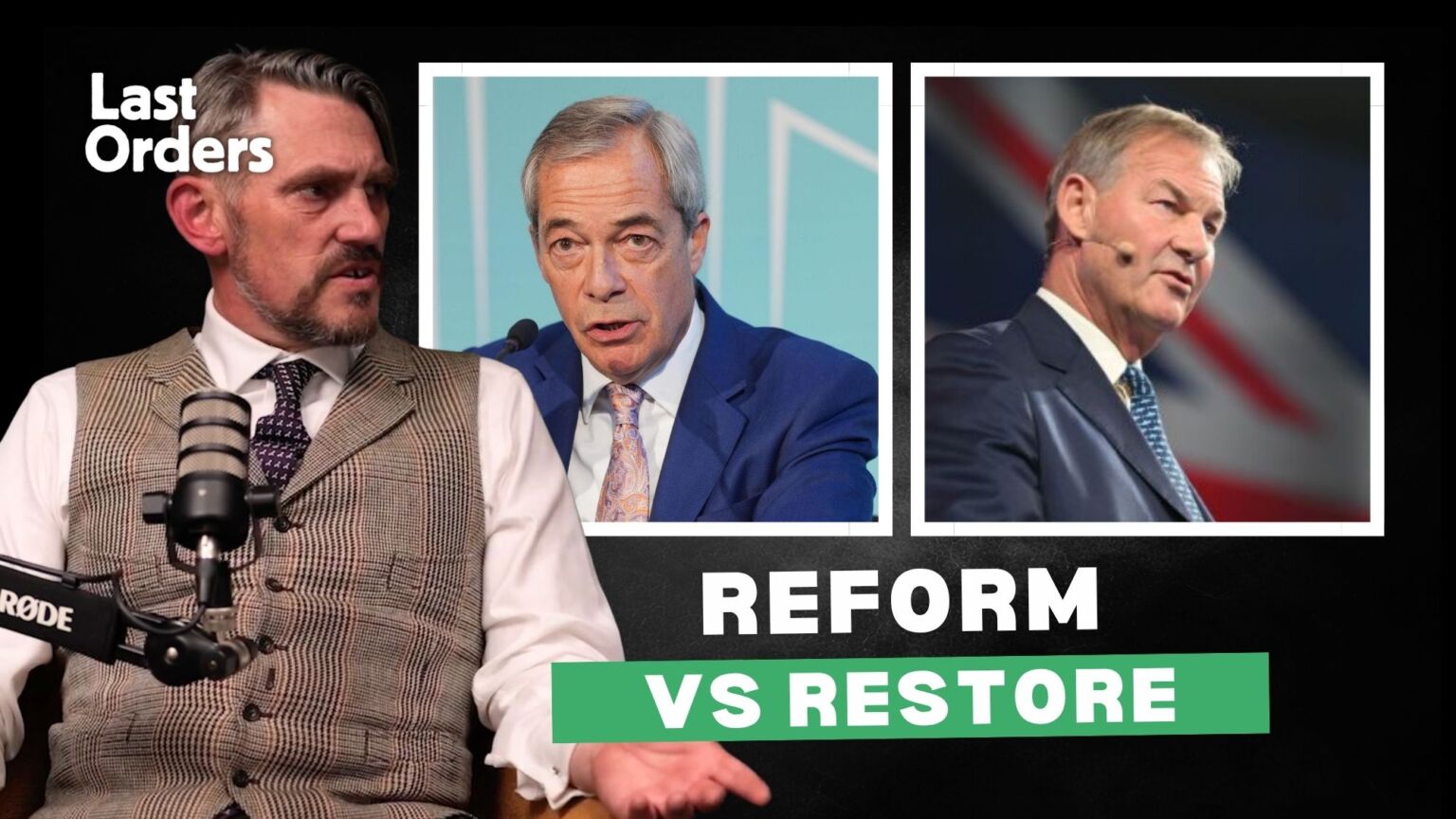
The post Is Restore a threat to Reform? | Gawain Towler appeared first on spiked.
Politics
Politics Home | Labour MP Calls For Pension Triple Lock Reform To Fund Defence Spending Boost



4 min read
A Labour backbencher has called for the pension triple lock to be reformed to help fund a rise in defence spending.
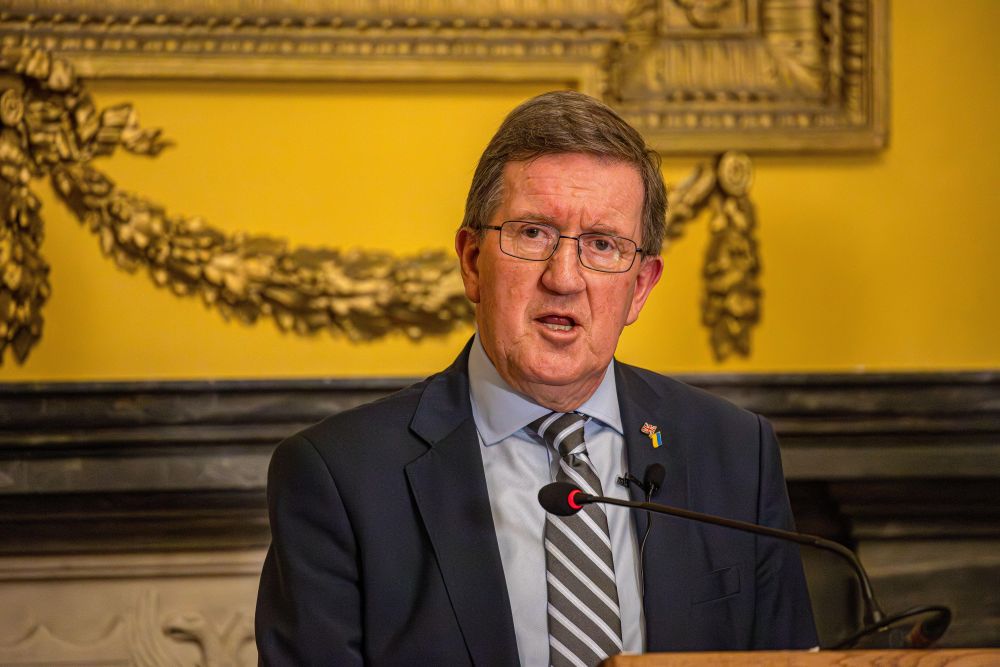
Graeme Downie, who was elected as the Labour MP for Dunfermline and Dollar in 2024, wrote in The House this weekend that the government should be brave enough to ask older people who “benefited financially from peace” to make a greater contribution to future national security.
“If there is to be a true whole of society approach to defence, and younger people could be expected to die, what are older people willing to sacrifice?” he wrote.
Prime Minister Keir Starmer is under pressure to expedite plans to raise defence spending amid warnings that international conflicts pose an increasing threat to the UK.
As things stand, the government is committed to spending 2.5 per cent of GDP on defence by 2027, with the target of reaching 3 per cent in the next parliament.
Starmer has recently indicated that he is willing to go further, but is facing growing calls, including from senior Labour figures, to detail how he will boost Britain’s military and defences in the face of Russian aggression and other threats.
This week, Lord George Robertson, the former Labour defence secretary whom Starmer asked to carry out the Strategic Defence Review, accused the government of “corrosive complacency” and was particularly critical of “non-military experts” in the Treasury for not giving the Ministry of Defence the money it needs.
There have been calls for the Labour government to reduce welfare spending as a way of raising defence spending.
Downie agrees that welfare should be looked at as a way of raising additional funding for national security, but said the focus should be on changes to the pensions triple lock.
Under current policy, pensions are guaranteed to rise by the highest of inflation, average earnings and 2.5 per cent.
The triple lock has enjoyed cross-party support for many years, partly because older people are seen as a key voter group.
Chancellor Rachel Reeves this week said Labour was “not changing” its triple lock policy, while Nigel Farage’s Reform UK recently said that it would keep the guarantee in place following suggestions that it would be willing to reform the policy if elected to government.
However, there are warnings that factors like people living longer, falling birth rates and high inflation levels mean the policy is unsustainable in the long term. There is also an argument that to maintain the triple lock in its current form would be unfair, given the financial challenges faced by younger generations.
“If ‘tough’ choices are needed, then we must not duck from the most difficult,” wrote Downie.
“We must be brave enough to ask those who benefited financially from peace to contribute to the future security of their grandchildren and great-grandchildren.”
The Labour MP wrote that not increasing defence spending is not an option for the UK in an increasingly dangerous world, but the government “must be creative in finding routes” to greater funding, arguing that further borrowing or tax rises are not the answer.
He added that it would be unwise to focus on welfare cuts that impact young people, as the health and skills of young people will be “vital” to improving Britain’s defensive capabilities.
“History teaches us that armies don’t win wars, economies do, and poverty harms our economy by reducing the numbers for a capable workforce as well as fighting soldiers,” he said.
The Labour MP wrote that welfare reductions like reinstating the two-child cap would raise around £3bn a year by 2029-2030, “barely touching the sides of what is needed” while “harming people in poverty”, while the OBR estimates that the pension triple lock will cost upwards of £15bn more per year by this point than when it was created.
“If that means reforming, not abolishing, sacred cows such as the pensions triple lock while still protecting pensioners living in poverty, or accessing wealth built up in housing or other assets accumulated during these years of peace, then surely that is a sacrifice worth it for our future freedom?”

Bruno Fernandes fury explained as potential red card missed in Man United win vs Chelsea

MEGA XRP FLARE BOMBSHELL! THIS LITERALLY CHANGES IT ALL!

Friend in search of Alan Wong of York – can you help?


-
 NewsBeat6 days ago
Pep Guardiola and Gary Neville agree over Arsenal title problem that benefits Man City
-

 Crypto World6 days ago
The SEC Conditionalises DeFi Platforms to Be Avoided for Broker Registration
-

 Fashion2 days ago
Weekend Open Thread: Theodora Dress
-

 Politics7 days ago
World Cup exit makes Italy enter crisis mode
-

 Crypto World5 days ago
SEC Signals Exemption for Crypto Interfaces From Broker Registration
-

 News Videos4 days ago
Secure crypto trading starts with an FIU-registered
-

 Sports2 days ago
NWFL Suspends Two Players Over Post-Match Clash in Ado-Ekiti
-

 Crypto World5 days ago
SEC Proposes Certain Crypto Interfaces Don’t Need to Register as Brokers
-

 NewsBeat5 days ago
Trump and Pope Leo: Behind their disagreement over Iran war
-

 Politics2 days ago
Palestine barred from entering Canada for FIFA Congress
-

 Crypto World1 day ago
Russia Pushes Bill to Criminalize Unregistered Crypto Services
-

 Sports6 days ago
NWFL opens Pathway for new Clubs ahead of 2026 Season
-

 Crypto World6 days ago
Trump whales load up ahead of Mar-a-Lago luncheon.
-
 Business2 days ago
Creo Medical agree sale of its manufacturing operation
-
Business6 days ago
Kering slides after Morgan Stanley downgrade, Gucci woes loom
-
 Crypto World6 days ago
Sei Network Enters Quiet Reset Phase as On-Chain Metrics Signal a Slowdown in 2026
-

 Tech6 days ago
Google adds E2E encryption to Gmail for iOS and Android enterprise users
-
 Entertainment5 days ago
Brand New Day’ Footage Reveals the Devastating Impact of ‘Now Way Home’
-

 Tech6 days ago
Apple glasses won’t go brand shopping like Meta did with Ray-Ban and Oakley
-
 Entertainment5 days ago
Karol G’s ‘Ultra Raunchy’ Coachella Set Gave ‘Satanic Vibes’
You must be logged in to post a comment Login