Google‘s March Pixel drop included a bunch of new features for its smartphones. One feature that wasn’t mentioned is a new Pixel Desktop mode when you connect your phone to an external display.
The idea of connecting a smartphone to a monitor to instantly transform the interface into a desktop-like experience is nothing new, though. Samsung‘s phones and tablets have had DeX for years. Motorola phones offer Smart Connect, which turns even its low-end phones into a desktop experience.
Samsung and Google teamed up to make the Pixel Desktop mode possible, though. I’ve been using it for the last week, and you know what? It’s definitely a feature you should be using if you have a Pixel.
Advertisement
Latest Videos From
It’s surprisingly basic, but in a good way
(Image credit: Future/Jason Cipriani)
The first time I connected my Pixel 10 Pro XL to the same Thunderbolt dock I normally use with my MacBook Pro, I was prompted to connect to an external display. I checked the box next to “Don’t ask me again” and tapped the Desktop button. A few seconds later, my display flashed, and I was greeted with a bland desktop, lacking any picture, app icons, or shortcuts. My keyboard instantly connected and worked without issue, though I had to pair my mouse with the Pixel.
At the bottom of the screen is the taskbar, which uses the same apps I have placed there on my Pixel. To the right are three navigation buttons that used to be the standard way to navigate Android before it went gesture-only. That’s it. It reminds me a lot of the early days of ChromeOS, or of using an early Android beta on a tablet.
(Image credit: Future/Jason Cipriani)
Then I began clicking on app icons, and instead of watching miniaturized phone-like apps populate the screen, to my surprise, I saw what looked like full-fledged desktop apps open. Chrome is probably the best example as it looks very similar to the browser on a desktop, complete with a row of tabs along the top of the window; the same tabs I’d all but forgotten I had open on my Pixel.
Advertisement
In reality, all of the apps I’ve been using for the last few days are nothing more than beefed-up tablet apps. Only, instead of being locked to specific window sizes or even a column that’s similar to the size of a phone app, I have complete freedom to resize each window to whatever shape or format I want. You can have up to five open apps at a time on the external display, plus another running on your Pixel phone — for a grand total of six apps.
Sign up for breaking news, reviews, opinion, top tech deals, and more.
When you open a new app on the desktop, and you’re at the limit, the app that’s been sitting idle the longest is closed.
Advertisement
Everything you need to use the Pixel’s Desktop mode
(Image credit: Future/Jason Cipriani)
To use the new Desktop mode, you’ll need some extra hardware. You’ll, of course, need a compatible Pixel phone, which means the Pixel 8 or newer, including foldables. Plus, you’ll need some sort of display, be it a TV in a hotel room, a portable USB-C display, or a computer monitor. A keyboard and mouse are also required, and so is a way to connect them all to your phone.
If you have a Bluetooth keyboard and mouse, you can pair them with your phone just like you would any other Bluetooth device.
Connecting your phone to a screen is done through its USB-C port. If you have a screen with a USB-C connection, then you’re set. However, if you only have an HDMI cable for your monitor, you’ll need an inexpensive USB-C hub. The USB-C hub also allows you to connect a hardwired keyboard and mouse, power for your phone, and, if you’re so inclined, an Ethernet connection.
Advertisement
Don’t leave your laptop at home yet
The Pixel’s Desktop feature isn’t perfect, though. For example, it’s annoying that I can’t lock my Pixel while using Desktop mode — the screen has to stay on, which in turn produces heat and potentially drains the battery faster.
That said, I’ve spent a lot of time using the new Desktop mode to reply to emails sitting in my inbox, answer texts, stream music (albeit through the phone’s speaker), and even watch some YouTube Shorts.
And my favorite part? At the end of any work session, I unplug my phone, and everything I was just doing on a 32-inch display in front of me is now in the palm of my hand. I don’t have to manage multiple devices, wonder where I put a file, or wait for stuff to sync over.
Advertisement
One day, a mobile phone that converts into a full-fledged desktop experience or laptop replacement will be the norm — but until then, I’ll keep experimenting and have the confidence in knowing that my phone can pinch-hit for a laptop when needed.
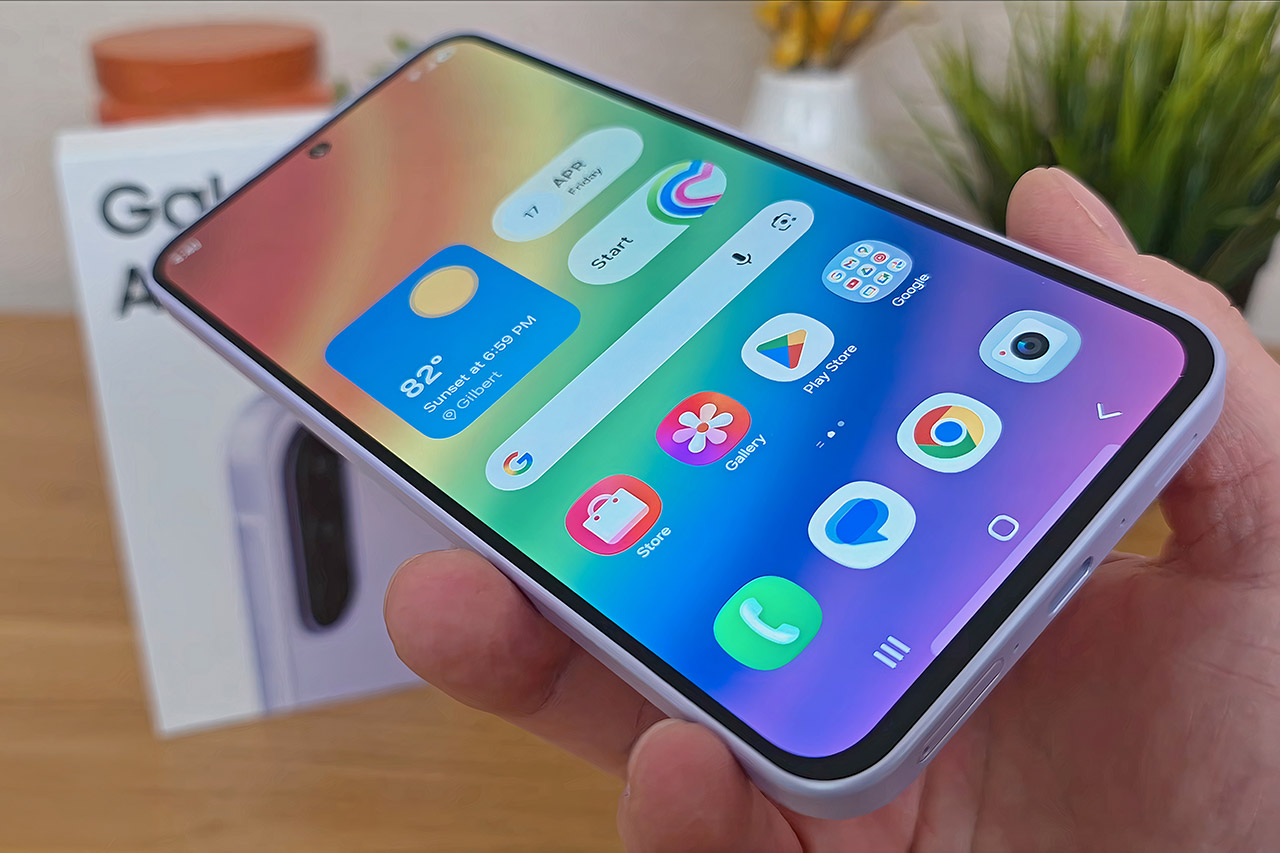
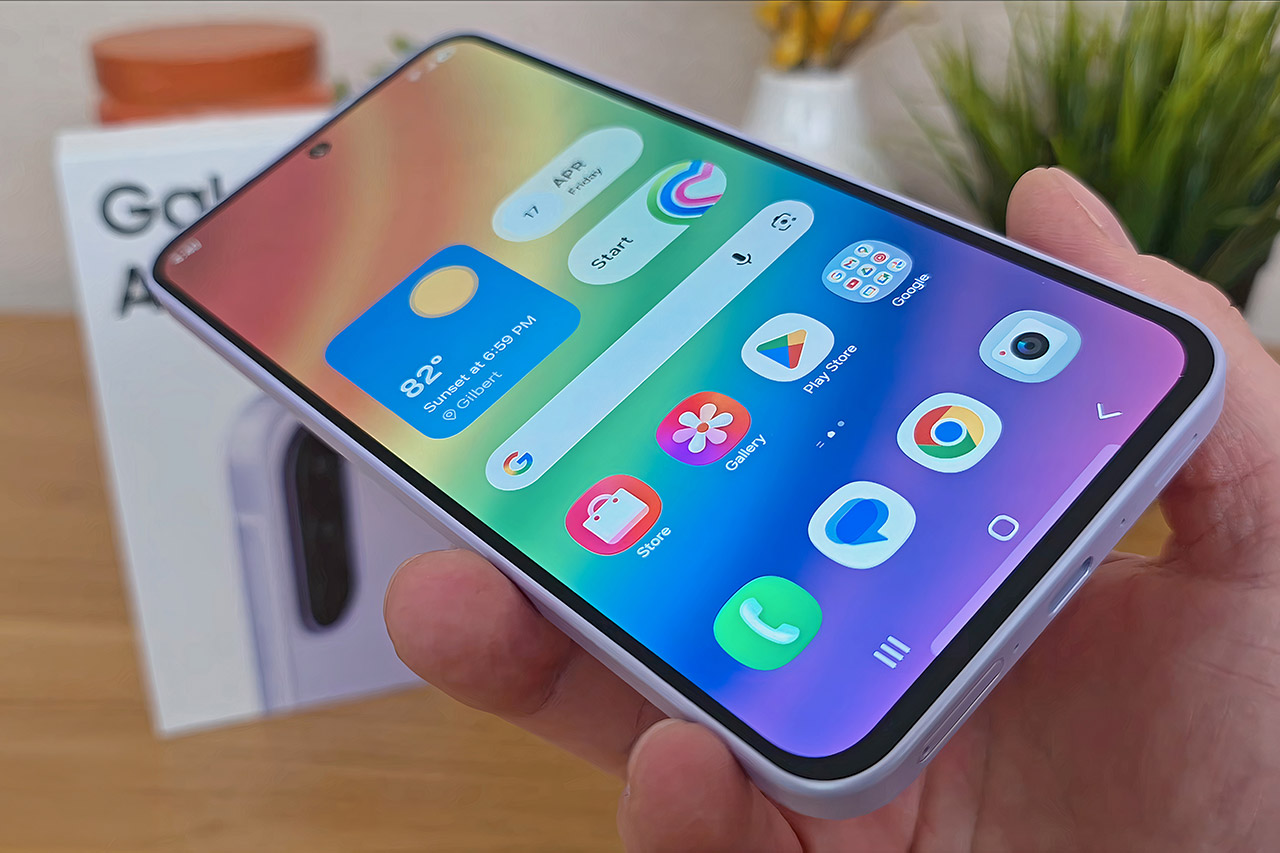
Many smartphone shoppers today simply want a device that manages their routines smoothly. They need reliable calls, zippy apps, clear photos for everyday moments, and enough battery to last without constant worry. Samsung built the Galaxy A37 5G, priced at $399.99 (was $539.99), around those priorities.
Samsung delivers the Galaxy A37 5G in a compact package, measuring just 7.4 millimeters thick and weighing only 196 grams. A layer of glass coated with Corning Gorilla Glass Victus+ protects both the front and back, making it more than capable of withstanding the wear and strain of everyday living. The phone also has an IP68 rating, so it will easily recover from an accidental drop in water.
AWESOME SCREEN. ENDLESS POSSIBILITIES: Elevate your content no matter where you are with the 6.7″ Super AMOLED display¹ of the Galaxy A37 5G. Enjoy…
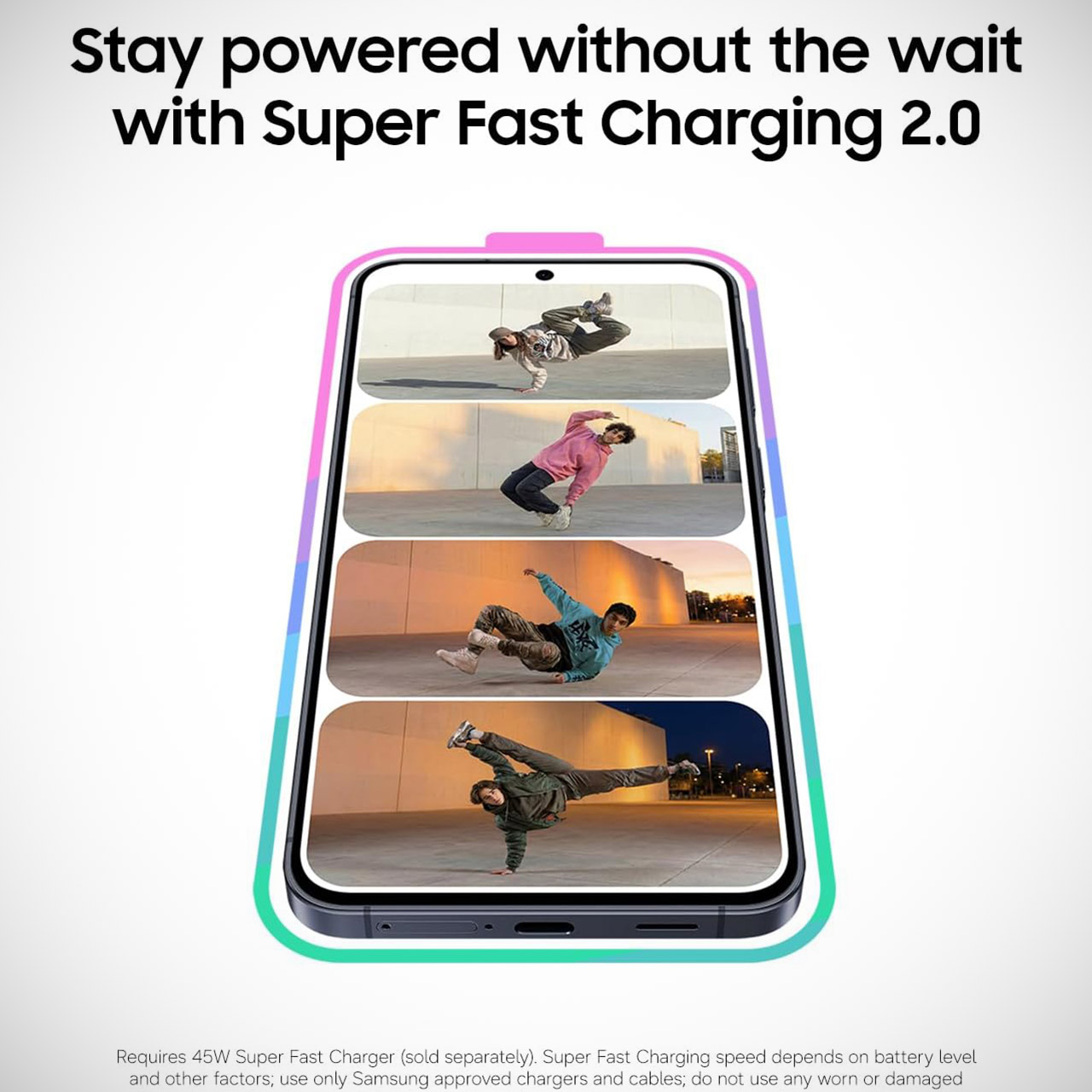
LONG-LASTING BATTERY: Whether it’s family moments or important calls, stay powered without the wait with Galaxy A37 5G. Super Fast Charging…
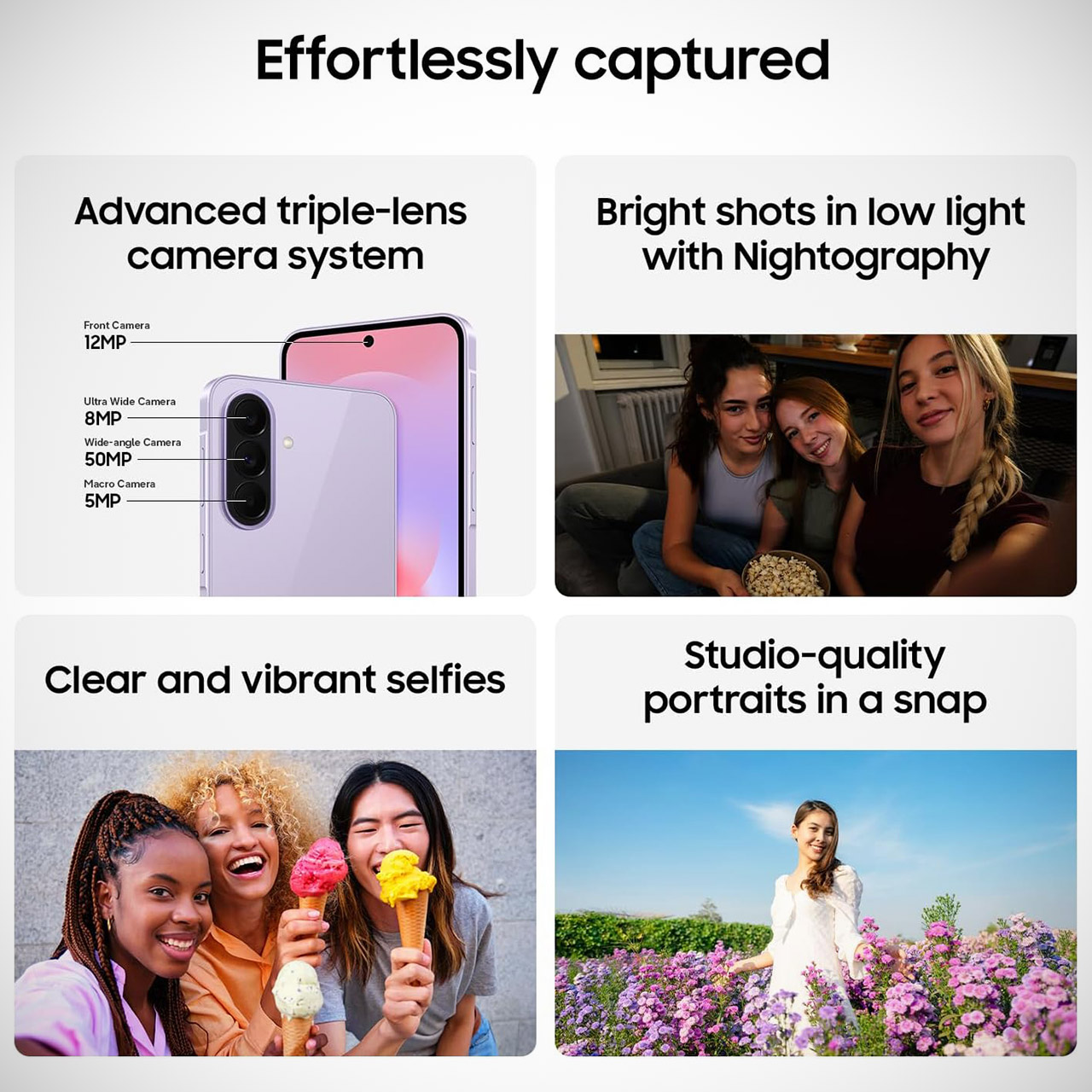
NEVER MISS THE SHOT, EVEN IN LOW LIGHT: With effortless Nightography, you can capture clear high-quality photos and videos on your phone automatically…
The Galaxy A37 5G’s impressive screen quality is thanks to a 6.7-inch Super AMOLED panel that delivers full high-definition resolution with a smooth 120-hertz refresh rate. This means you’ll be able to easily cycle through feeds and enjoy your apps with silky smooth animation. Furthermore, it is quite bright, allowing you to see what is going on in the sunshine. Let’s not forget about the colors, which are brilliant and natural, as one would expect from a high-quality display. The same Gorilla Glass protection that shields the screen from scratches and drops also protects you from pocket detritus.
Advertisement
The Galaxy A37 5G features an Exynos 1480 processor with 6GB of RAM. This combination results in a very responsive interface that works continuously throughout the day. To top it all off, you get 128GB of internal storage, which will greatly improve your load times and multitasking capabilities. A 5000-milliamp-hour battery provides plenty of juice to go through the day and typically has plenty left over for the next one, as long as you don’t push it too hard. If you’re doing a little bit of everything, including calls, social applications, navigation, and the occasional video, this power consumption is quite efficient. If you run low, simply plug it in and the 45-watt charging will bring it back up to speed in about 30 minutes, or a full recharge in around 70.
The Galaxy A37 5G’s rear cameras are based on a 50-megapixel primary sensor with optical stabilization. It does an excellent job of capturing detailed photos throughout the day and even outperforms expectations in low-light circumstances. However, the 8-megapixel ultra-wide lens allows you to record a wider image, while the 5-megapixel macro lens is available for close-up shots. With video recording at 4K and great steady stabilization, you’ll be able to shoot some extremely smooth footage. A 12-megapixel camera on the front is in charge of taking selfies and video calls, and it does a pretty good job with the added punch of Super HDR.
Android 16 is preloaded with Samsung’s One UI, which is quite simple to use. As a bonus, Samsung will keep the phone updated with new software and security patches for at least six years, ensuring that it remains safe and current for a long time to come.
The company’s robotaxi roadmap mentions future expansions to Orlando and Tampa.
Miami residents are getting another option for autonomous taxi services, at least for those who live in a specific portion of the Floridian city. As posted on X, Tesla has expanded its Robotaxi service to a small section of West Miami.
Like we saw with the robotaxi rollout for Dallas and Houston earlier this year, Tesla is limiting its initial Miami availability to outside of the busy downtown. However, customers were already seen riding in unsupervised Tesla robotaxis in videos circulating on X. Notably, the Teslas are seen operating without a safety monitor in the car, which was a controversial inclusion when the company first rolled out its autonomous ridehailing service in Austin, Texas. We’re expecting Tesla to expand the geographic scope of its Miami robotaxi service eventually, considering it expanded availability to the entirety of the Austin metro last month.
Advertisement
For those wondering why Tesla is expanding to Miami, the city is already home to Waymo’s autonomous robotaxis that kicked off in January. Similarly, Zoox is targeting an expansion to Miami and has begun testing its fleet with its employees as of this year. Beyond Miami, Tesla’s roadmap includes introducing its robotaxi service to more cities across the US, including Phoenix and Las Vegas along with Orlando and Tampa, Fla.
Xbox at a gamescom briefing in 2014. Microsoft is pressing its games division to turn a profit. (Microsoft Photo)
In 2007, Microsoft’s Xbox 360 consoles started dying — overheating until three lights on the front blinked red, a defect gamers came to call the “red ring of death.” Microsoft’s response was to extend the warranty on every machine and take a charge of more than $1 billion to fix the problem, making it one of the costliest product failures in the company’s history.
Microsoft could afford it financially, but the bigger factor was strategy. Xbox was a bet on the living room, and for a company minting money on Windows and Office at the time, losing a billion or so was a justifiable cost of staying in the game.
Nearly two decades later, that patience has run out.
“Going forward, this cannot continue,” the new Xbox CEO Asha Sharma wrote in a memo to employees last month, offering a blunt assessment of a business that has spent more than $20 billion over five years, only to see its core revenue fall by nearly half a billion dollars, running at a thin 3% profit margin, by Microsoft’s own internal measures.
Asha Sharma took over as CEO of Microsoft’s Xbox business in February. In a memo to employees last month, she wrote that the division’s heavy spending and shrinking revenue “cannot continue.” (Microsoft File Photo)
With thousands of layoffs expected to be announced across Microsoft as soon as next week, the Xbox division is likely to be among the hardest hit.
The cuts reach across the company — including sales and consulting — part of a restructuring that has become routine around the close of Microsoft’s fiscal year. But for Xbox, they’re an early step in a broader effort to reset the business, rein in costs, and position the division for healthier profits.
Advertisement
Microsoft CEO Satya Nadella has been blunt about it: the company has spent years subsidizing Xbox rather than profiting from it, and that era is over. The videos and livestreams of people playing Xbox games that fill YouTube generate more money than Microsoft makes from the games themselves, he noted in an appearance on the Hard Fork podcast.
“No one can accuse Microsoft of not having invested for the last 25 years,” Nadella said. “And now we have to turn this into a sustainable business.”
Long-term strategic bet
Turning it around means breaking a pattern that runs through Xbox’s entire history.
Xbox launched in 2001 and lost money for most of its first decade. Microsoft absorbed the losses and stayed in — going up against Sony’s PlayStation and Nintendo — because it saw a strategic prize in owning a piece of the living room, and later of mobile. Online gaming also gave the company early experience running services at scale, which fed its cloud ambitions.
Advertisement
Over time, the goal shifted from selling hardware to selling subscriptions.
Xbox Live, launched in 2002, turned online play into recurring revenue. Game Pass, which arrived in 2017, let players pay a monthly fee — the top tier is about $23 — for a library of games, including Microsoft’s own new releases the day they come out. The idea was to get people paying for Xbox everywhere: consoles, PCs, phones and the cloud.
And when growth stalled, Microsoft doubled down. It paid $7.5 billion in 2021 for Bethesda, the studio behind Fallout and The Elder Scrolls, then $69 billion in 2023 for Activision Blizzard (whose games include Call of Duty, World of Warcraft, Diablo and the mobile hit Candy Crush) the largest acquisition in Microsoft’s history.
A series of economic headwinds
Microsoft could afford to be patient through all of it. Now it’s not so simple. In recent years, almost everything about the economics of gaming has turned against Xbox at the same time.
Advertisement
Hardware loses money, and AI is making it worse. Microsoft sells consoles at or below cost, banking on games and subscriptions to make up the difference. But AI data centers are consuming so much memory and storage that chip prices have spiked. That has forced Microsoft to raise Xbox console prices, most recently a $100-to-$150 hike this summer that it blamed directly on component costs.
Xbox lost the console war. By most estimates, Sony’s PlayStation 5 has outsold the Xbox Series X and S more than two to one. A smaller base means fewer game sales and subscriptions to offset the upfront hardware losses. That has left Xbox a distant second for the entire generation.
Revenue is shrinking. Even setting aside the games it gained from Activision, Xbox’s annual revenue has fallen nearly $500 million over five years — while the money going into the business keeps climbing. It has been investing more to earn less.
Microsoft’s most recent quarterly filing shows gaming revenue of $16.8 billion for the nine months through March, down about $1.1 billion, or 6%, from a year earlier.
Advertisement
Game Pass cuts into sales. Handing subscribers a new game the day it launches undercuts the roughly $70 they would have paid to buy it. The service delivers steady subscription income, but thinner economics on the games themselves.
Activision didn’t fix the margins. Even with one of gaming’s most profitable businesses folded in, Xbox earns only about 3 cents of profit on every dollar — well under the 17 to 22 cents typical in the industry. If the biggest acquisition in company history can’t move the margin, little will.
Every spare billion is flowing to AI. Microsoft is pouring more than $100 billion a year into the data centers and chips behind its AI push, trying to capitalize on the boom. Against a risk and payoff that big, a gaming business that barely breaks even feels like yesterday’s strategic bet.
What’s next for Xbox
The cuts have already started. In recent weeks, Microsoft has signaled plans to close or sell some studios, including Ninja Theory, maker of the acclaimed “Hellblade” series.
Advertisement
Shedding staff, studios and marketing will lift Xbox’s profit margins in the near term. What it won’t do is fix the underlying problem: a business can trim its way to a better number only so much before it has to generate more revenue.
Sharma’s plan, so far, is to concentrate on Xbox’s biggest franchises, funding blockbusters like Halo and Fallout while pulling back elsewhere. It’s leaning on Game Pass and releasing most of its games on PCs and rival consoles from Sony and Nintendo, reaching players well beyond Xbox’s shrinking base, even as it holds back a few new exclusives like Gears of War to give owners a reason to stay.
Microsoft is also rethinking the console itself. In her memo, Sharma described a “hardware component crisis” that has left the company unable to make as many consoles as players want, and called for “a new business model and partnerships” for its hardware.
How far the reset ultimately goes is an open question. The Information reported that Microsoft has weighed making Xbox a standalone subsidiary, a joint venture, or a spin-off, though nothing is imminent.
Advertisement
Microsoft’s response to the Xbox 360 “red ring of death,” July 6, 2007. (Seattle Post-Intelligencer / NewsBank)
Whatever happens next, it’s clear that times have changed. In 2007, as the red ring of death crisis emerged, Peter Moore, who ran the Xbox business at the time, and his boss Robbie Bach went to then-CEO Steve Ballmer to ask for the money to repair and replace the failing consoles.
Told it was $1.15 billion, Ballmer said, simply: “Do it.”
Moore credits that decision with saving Xbox. There would have been no Xbox One, he said, without Ballmer’s willingness to spend more than a billion dollars to protect the brand.
Advertisement
But nearly two decades later, Microsoft is done writing that kind of check for Xbox.
A US government entity paid about $1m to the Kairos extortion group to keep stolen files private, according to a Ransom-ISAC case study based on a leaked negotiation chat and blockchain analysis. The clues point to Union County, Ohio, though neither party has confirmed it. The case illustrates how much of today’s “ransomware” involves no encryption at all.
A US government entity paid around $1m to stop stolen files from being published, according to a case study by researcher Rakesh Krishnan for Ransom-ISAC. The analysis draws on a leaked negotiation chat and the blockchain trail the payment left behind.
Advertisement
The group behind the deal calls itself Kairos, but it may not be a ransomware gang in any traditional sense. Krishnan reportedly found no encryptor, no locker, and no demand for a decryption key, just stolen files and a price for keeping them private.
The case study does not name the victim, but file names in the proof-of-theft samples, including an archive called union.rar, point to Union County, Ohio. Neither the county nor Kairos has confirmed the connection, and The Hacker News says it has contacted the county for comment.
The clues do line up with a real incident. In May 2025, Union County detected ransomware on its network and later notified 45,487 people that data including Social Security numbers, fingerprints, and passport details had been taken.
If the identification holds, a county of roughly 70,000 residents made a $1m payment it never publicly disclosed. The attacker reportedly leaned hardest on a folder marked “prosecutors office”, warning that a leak would help criminals evade charges.
Advertisement
Anatomy of a $1m deal
The negotiation ran for about a month, according to the case study. Kairos opened at $3m and claimed to hold more than 2TB of data across some 1.6 million files.
The county reportedly countered at $100,000 and inched up to $430,000, while Kairos dropped to $2m before fixing a final $1m deadline. The victim paid on 13 June 2025, ten times its opening offer.
The payment of roughly 9.44 bitcoin matched about $1m at that week’s market prices. Within hours it was reportedly split and routed through a chain of wallets towards deposits at Bybit, OKX, and BELQI, a Russian service that recalls earlier ransomware laundering through WEX and BTC-e.
What the money bought is another question. Kairos handed over a “proof of deletion” file, but a list of file names only proves the attacker once held the data, and promises to delete stolen data have unravelled before.
Ransomware without the ransomware
Union County described the incident as ransomware, yet nothing in the Kairos case was ever encrypted. A growing share of what still carries that label now skips lockers entirely and uses the stolen data itself as the pressure point, a playbook that recent extortion-only breaches have aimed at the private sector too.
Sophos reported in 2025 that only around half of ransomware attacks involved encryption, down from 70% a year earlier and the lowest rate in six years. Silent Ransom Group, an offshoot of the Conti ecosystem, has spent years running encryption-free extortion against US law firms, drawing repeated FBI warnings.
The bargaining arc is familiar too. When Black Basta’s internal chats leaked in February 2025, one deal moved from a $1.5m demand to a $100,000 counter and a $1m payment, almost the same curve.
Advertisement
Kairos itself has gone quiet, with its leak site offline and its last known victim posted in June 2026, per the case study. A linked wallet was reportedly still moving funds in May, so a dark leak site should not be read as a retired crew.
Unglamorous lessons
For small government networks, the takeaways are deliberately dull. Kairos claimed it got in by guessing a password, so multi-factor authentication and alerts on repeated failed logins would have raised the cost of entry considerably.
Defenders should also watch outbound transfers and throwaway file-sharing links, such as the temp.sh addresses the attacker used, and keep legal and citizen records segmented from the wider network. Above all, a thief’s receipt for deleted data is worth exactly what it cost to type.
Meta is planning to sell access to its AI computing power to outside customers, in a move that would see it compete directly with AWS, Azure and Google Cloud.
Meta is developing plans to enter the cloud computing market by building a business that would sell access to AI computing power and models to external customers, according to Bloomberg.
Bloomberg cited sources that say the social media giant is forming a unit to generate revenue from excess computing capacity, putting it in direct competition with established cloud providers such as Amazon Web Services, Microsoft Azure and Google Cloud.
The plans are being developed under an internal initiative called Meta Compute, led by Santosh Janardhan, Meta’s head of infrastructure, alongside Daniel Gross from the Meta Superintelligence Labs AI unit and Meta president Dina Powell McCormick.
Advertisement
One option reportedly under consideration is a service similar to AWS’s Bedrock offering, where developers would pay to access AI models hosted on Meta’s infrastructure, including its own Muse Spark models. The company is also weighing the sale of raw computing capacity, in a model comparable to neocloud providers like CoreWeave.
SiliconRepublic.com has reached out to Meta for comment. Bloomberg said the company’s plans are still in development and could yet change. The news sent Meta shares up 9.3pc yesterday, while potential rival neocloud player CoreWeave dropped as much as 14pc.
A possible move into the cloud infrastructure business was flagged by Mark Zuckerberg himself as recently as May. Speaking at Meta’s annual shareholder meeting, he told investors that launching a cloud service was “definitely on the table”, as CNBC reported at the time. He noted that outside companies had been approaching Meta “almost every week” to either use its API services or purchase excess compute capacity.
“We haven’t done that yet because we think that we have a use for the compute,” Zuckerberg said. “Obviously if we get to a point where we feel that we have overbuilt, then that is an option that we have.”
Advertisement
Meta has committed between $125bn and $145bn in AI-related capital expenditure for 2026, a level of spending that has made investors nervous about returns. A cloud business would certainly offer a direct route to monetise that infrastructure investment.
Don’t miss out on the knowledge you need to succeed. Sign up for the Daily Brief, Silicon Republic’s digest of need-to-know sci-tech news.
The Lenovo Yoga Slim 7x Gen 11 is a lovely Windows laptop with a lot of power with its Snapdragon X2 Elite SoC, plus it comes with a comfortable keyboard, dazzling OLED screen and immense endurance. It is rather expensive in the top configuration, though, and the port selection feels a bit one dimensional.
Lightweight and stylish finish
Increased grunt from Snapdragon X2 Elite chip
Excellent battery life
Dearer than rivals in top-spec
One-dimensional port selection
Squirrel Widget
Advertisement
Key Features
Review Price:
£1669.99
Advertisement
Snapdragon X2 Elite inside
The new Yoga Slim 7x Gen 11 packs a lot of power into a small chassis with its use of Qualcomm’s new Snapdragon X2 Elite processor.
Advertisement
14-inch 3K 120Hz OLED screen
It also has a high-res and high refresh rate OLED screen for added razzle-dazzle.
Advertisement
70Whr battery
This Lenovo laptop also has a large battery inside to help you power through work over multiple days.
Introduction
The Lenovo Yoga Slim 7x Gen 11 updates its longstanding line of excellent all-round ultrabooks with quite a boost in power.
Advertisement
The headline here is Qualcomm’s new Snapdragon X2 Elite SoC that touts a large boost in overall power against the original model, which comes alongside 32GB of RAM and a generous 2TB SSD in my sample. That comes built around a fetching blue metal chassis with a 14-inch 3K 120Hz OLED screen and large 70Whr battery.
It all sounds very promising, although Lenovo has quite the competition to overcome with its latest model. The Asus Zenbook A14 (2026) has a similar spec sheet and has been out and about for a few weeks, while there’s also the Acer Swift Edge 14 AI and of course the Apple MacBook Air M5 to worry about. Prices start at £1050/$1199 for a Snapdragon X2 Plus-equipped base model, with my tricked out sample costing £1669.99/$1899.99, making things very interesting indeed.
Advertisement
I’ve been putting the Yoga Slim 7x Gen 11 through its paces for the last couple of weeks to see if it’s one of the best laptops we’ve tested.
Advertisement
Design and Keyboard
Gorgeous and sturdy construction
Meagre port selection
Responsive keyboard and trackpad
One area about the Yoga Slim 7x Gen 11 I’m both relieved and surprised that hasn’t shifted too much is its overall design. I like the dark blue finish it retains, plus a metal chassis that provides a quality finish. If you’re after a Windows laptop that looks like a midnight blue MacBook Air, then this is a dead cert.
At 1.17kg, it’s quite light for a 14-inch laptop, and its compact form factor makes it especially easy to carry around. I am splitting hairs a little bit, but it isn’t quite as light as the Asus Zenbook A14 (2026) and Acer Swift Edge 14 AI, both of which push towards the sub-1kg mark, and you can feel it when you pick the laptop up.
Image Credit (Trusted Reviews)
Advertisement
The Yoga Slim 7x Gen 11 is just 13.9mm thick, which makes it slender and svelte, but has the unintended consequence of reducing its port selection down. We’ve got three USB4-capable Type-C ports in total, with two on the left and one on the right. It’s modern and fast, but a bit too one-dimensional.
This comes at a time when Asus’ rival is slightly thinner at 13.3mm, and manages to pack in a pair of USB-C ports, a full-size HDMI, a USB-A port and a 3.5mm headphone jack. As I said then, the Zenbook A14 (2026) is more Pro than Air, and it’s clear to see which side Lenovo has opted for.
Image Credit (Trusted Reviews)
The Yoga Slim 7x Gen 11 excels with its keyboard in typical Lenovo fashion, though. It’s a quiet, tactile scissor-actuated offering with Lenovo’s typical deep-dish keycaps that feel brilliant to use for extended periods, while its bright white legends are big and easy to read. The smaller form factor is fine, too, while its white underglow backlighting provides vibrancy for after-dark working.
As for the trackpad, it’s got a glossy, smooth texture to it in a similar vein to a lot of modern ultrabooks, while it’s also quite large for a laptop of its size, providing your fingers with a lot of real estate.
Advertisement
Display and Sound
A couple of different screen choices
Excellent brightness, contrast and black level
Surprisingly competent speakers
Advertisement
Lenovo is offering the Yoga Slim 7x Gen 11 with a couple of different display variants, both of them OLED, and both of them 14-inches in size.
The base model comes with a 1920×1200 resolution 60Hz touch-enabled panel, while the higher-end variant I have ups the resolution to 2880×1800 (or 3K), the refresh rate to 120Hz and its rated peak brightness. Weirdly, though, it eschews touch capabilities but retains a lay-flat hinge for collaborative working.
In practice, though, it’s a capable screen with deep blacks and lovely contrast, as measured by my colorimeter. Here, I measured a 0.03 black level and 17250:1 contrast ratio. A 6700K colour temperature is also right where it should be.
Image Credit (Trusted Reviews)
We’re also seeing sharp brightness, with a measured peak SDR of 480.2 nits, making it a capable panel for indoor and outdoor work, while also helping displayed images pop, given the black level and contrast ratio results. Lenovo also touts this screen to offer up to 1000 nits of HDR brightness alongside DisplayHDR 1000 True Black certification.
The Yoga Slim 7x Gen 11’s panel also impresses with its excellent colours. I saw perfect 100% coverage of both the sRGB and DCI-P3 spaces, plus an excellent 92% coverage of the trickier Adobe RGB gamut. This makes this screen suitable for productivity and more colour-sensitive workloads alike.
Advertisement
Advertisement
Image Credit (Trusted Reviews)
Lenovo has opted for an upward-firing four-speaker array for this laptop, with two woofers and two tweeters. This helps to provide a full and quite rich sound for a set of laptop drivers with decent mids and good volume.
Performance
Beefier Snapdragon X2 Elite processor
Improved integrated graphics
Capacious RAM and SSD arrangement
Lenovo’s last Yoga Slim 7x laptop I tested came with one of Qualcomm’s first-gen Snapdragon laptop SoCs, and it’s arguably inside where the biggest gains have been made with this latest model.
For 2026, the Yoga Slim 7x Gen 11 I have is supplied with Qualcomm’s new Snapdragon X2 Elite processor, the second-in-command to the Snapdragon X2 Elite Extreme. There are two variants of this processor available to manufacturers, with 12-core and 18-core options – the variant I have ships with the latter. For the base model, Lenovo is also offering the Snapdragon X2 Plus, which we haven’t tested just yet.
Image Credit (Trusted Reviews)
Advertisement
The difference between this chip and the Snapdragon X2 Elite Extreme you’ll find in the likes of the Asus Zenbook A16 (2026) appears to be clock speeds, with this chip rated for a max boost clock across single or dual cores of 4.7GHz (against the Elite Extreme’s 5GHz) and a max multi-core frequency of 3.4GHz (against the Elite Extreme’s 3.6GHz).
Qualcomm is touting major gains in both single and multi-core performance with this new 18-core chip, which I’d certainly wager is true in comparing it to laptops with the Snapdragon X Elite chip.
Advertisement
Image Credit (Trusted Reviews)
As you’d expect, the numbers here aren’t quite as strong as with the Snapdragon X2 Elite Extreme SoC, but the difference is only a few percentage points in the synthetic benchmarks in real terms. It is much the same story, though, with especially high single-core scores in Geekbench 6 that push this laptop into Apple Silicon territory for comparison, plus much-improved multi-core scores, too.
The improvements in Cinebench R23 are slightly more modest and peg this laptop back a smidgen, but there are nonetheless some substantial improvements to be proud of in synthetic terms against the original Snapdragon X Elite chip.
Image Credit (Trusted Reviews)
Advertisement
There is also a major improvement to the Adreno iGPU with the Snapdragon X2 Elite, which provided a doubling in the 3DMark Time Spy test and brings it more into line with more recent iGPUs fitted to x86-based laptop chips from Intel and AMD.
My sample of the Yoga Slim 7x Gen 11 came quite a generous RAM and storage configuration, with 32GB of fast DDR5 RAM provided and a hefty 2TB SSD. In testing, it also proves to be a brisk PCIe Gen 4 option, with reads and writes of 7144.32 MB/s and 6721.86 MB/s, respectively.
Software
Clean Windows 11 install with Copilot+ PC AI smarts
Minimal Lenovo-specific software
Small compatibility issues, being Arm-based
For its software situation, the Yoga Slim 7x Gen 11 comes with a reasonably clean Windows 11 install with minimal pre-installed apps, including McAfee antivirus. There are some Lenovo-specific system apps here, including the catch-all system app Lenovo Vantage in the taskbar, but that’s about it.
There is also enough AI horsepower from the Snapdragon X2 Elite chip inside to mark this laptop as a Copilot+ PC, providing access to Microsoft’s AI functionality for generative powers and filters in the Photos and Paint app, as well as the clever Windows Studio webcam effects for background blurring, auto framing and maintaining eye contact. With the latest version of Windows 11, there is also the controversial Microsoft Recall feature.
Advertisement
Image Credit (Trusted Reviews)
Advertisement
Being Arm-based, the Yoga Slim 7x Gen 11, also has the problem of having minor issues with some compatibility.
This is because Windows is traditionally run on x86-based systems, so to work on Arm, apps have had to be translated through Microsoft’s Prism translation software. For the most part, I had little in the way of issues with compatibility in running a range of benchmark software, as well as Photoshop and similar apps. Qualcomm has also worked with lots of brands to increase overall app compatibility with its latest Arm-based laptop chips against the original run from last year.
As with other Arm-based Windows laptops I’ve looked at, the PCMark 10 benchmark app doesn’t run fully, but that’s an issue we’ve seen on other Arm-based Windows systems
Battery Life
Lasted for 19 hours 42 minutes in the battery test
Capable of lasting for two to three working days
Lenovo has put a hefty 70Whr battery inside the Yoga Slim 7x Gen 11, which, combined with the excellent efficiency that these Qualcomm chips have traditionally yielded, should result in some fantastic battery life.
In dialling the brightness down to the requisite 150 nits and running a video loop test in PCMark 10, this Lenovo laptop lasted for 19 hours and 42 minutes – that’s just about enough for three working days with some hypermiling. For reference, that’s one of the best results I’ve seen in recent times, matching the likes of the Acer Swift Edge 14 AI and the Asus Zenbook A14 (2025). The new Zenbook A14 (2026) is nearly three hours ahead, though, and uses the same SoC as this Lenovo choice.
Advertisement
Advertisement
The Yoga Slim 7x Gen 11 comes with a reasonably compact 65W charger that’s also quite fast at getting charge back into the laptop. It took around 40 minutes to get it back to 50%, while a full charge took 75 minutes or so.
Squirrel Widget
Should you buy it?
Advertisement
You want oodles of power in a lightweight chassis
The Yoga Slim 7xGen 11 packs a lot of performance with its Snapdragon X2 Elite processor into a slender and lightweight chassis.
Advertisement
The three USB-C ports Lenovo provides are okay, although it feels quite one dimensional against rival choices from Acer and Asus that are much more rounded.
Final Thoughts
The Lenovo Yoga Slim 7x Gen 11 is a lovely Windows laptop with a lot of power from its Snapdragon X2 Elite SoC, plus it comes with a comfortable keyboard, dazzling OLED screen and immense endurance. It is rather expensive in the top configuration, though, and the port selection feels a bit limited.
Advertisement
The Asus Zenbook A14 (2026) is the closest competitor, as it ships with the same SoC as Lenovo’s choice, albeit at a slightly lower £1599 price tag. There is a compromise with a 1920×1200 OLED screen being lower-res, although it gains against the Yoga Slim 7x Gen 11 in battery life and port selection.
The Acer Swift Edge 14 AI offers similar computing power with its Intel Lunar Lake SoC, plus a similarly high-res OLED screen and a richer port selection, and is actually the cheapest of the three at £1399, making it a quietly unsung hero in the range of modern ultrabooks.
WIth this in mind, I think the Lenovo Yoga Slim 7x Gen 11 is a lovely laptop, and a lot of it is in part due to the Snapdragon X2 Elite chip inside, but rising costs mean it suffers the same price-driven criticism as the Samsung Galaxy Book6 Pro and the Asus Zenbook A14 (2026), not least with the other options offering similar spec sheets for less money. For more options, check out our list of the best laptops we’ve tested.
How We Test
This Lenovo laptop has been put through a series of uniform checks designed to gauge key factors, including build quality, performance, screen quality and battery life. These include formal synthetic benchmarks and scripted tests, plus a series of real-world checks, such as how well it runs popular apps and extensive gaming testing.
Advertisement
FAQs
What’s different between the Lenovo Yoga Slim 7x Gen 11 and the Lenovo Yoga Slim 7x Gen 10?
The Lenovo Yoga Slim 7x Gen 11 comes with a newer and faster Snapdragon X2 Elite processor, plus a stronger OLED screen, webcam and better battery life. It’s also a lot more expensive in terms of RRP.
A new NYT Connections puzzle appears at midnight each day for your time zone – which means that some people are always playing ‘today’s game’ while others are playing ‘yesterday’s’. If you’re looking for Saturday’s puzzle instead then click here: NYT Connections hints and answers for Saturday, July 4 (game #1119).
Good morning! Let’s play Connections, the NYT’s clever word game that challenges you to group answers in various categories. It can be tough, so read on if you need Connections hints.
What should you do once you’ve finished? Why, play some more word games of course. I’ve also got daily Strands hints and answers and Quordle hints and answers articles if you need help for those too, while Marc’s Wordle today page covers the original viral word game.
Advertisement
SPOILER WARNING: Information about NYT Connections today is below, so don’t read on if you don’t want to know the answers.
Latest Videos From
NYT Connections today (game #1120) – today’s words
(Image credit: New York Times)
Today’s NYT Connections words are…
WIN
OATS
GREEN
WIRE
WEST
CARD
WITH
HONEY
GOLD
TUNGSTEN
CHECK
SEEDS
CASH
PLATINUM
NUTS
CENTURION
NYT Connections today (game #1120) – hint #1 – group hints
What are some clues for today’s NYT Connections groups?
Advertisement
YELLOW: Healthy breakfast components
GREEN: Ways to pay
BLUE: A brand’s various levels
PURPLE: A letter before X in common
Need more clues?
We’re firmly in spoiler territory now, but read on if you want to know what the four theme answers are for today’s NYT Connections puzzles…
Sign up for breaking news, reviews, opinion, top tech deals, and more.
Advertisement
NYT Connections today (game #1120) – hint #2 – group answers
What are the answers for today’s NYT Connections groups?
YELLOW: GRANOLA INGREDIENTS
GREEN: PAYMENT METHODS
BLUE: AMEX CARD TYPES
PURPLE: WHAT “W” MIGHT STAND FOR
Right, the answers are below, so DO NOT SCROLL ANY FURTHER IF YOU DON’T WANT TO SEE THEM.
Advertisement
NYT Connections today (game #1120) – the answers
(Image credit: New York Times)
The answers to today’s Connections, game #1120, are…
PURPLE: WHAT “W” MIGHT STAND FOR TUNGSTEN, WEST, WIN, WITH
My rating: Easy
My score: Perfect
I used to work for American Express at their UK headquarters back in the day doing what is no doubt a fully automated task of authorising payments. It was the easiest and most boring job I’ve ever done, but the downside was I was on the night shift — which led to all manner of downsides, not least a poor diet.
That said, this is not why I got AMEX CARD TYPES; that would be a guess. With eight tiles left, it wasn’t too much of a stretch.
GRANOLA INGREDIENTS should have been my first foursome, seeing as that’s my regular breakfast, but instead the easy win of CARD, CASH, CHECK and WIRE was hard to resist.
Advertisement
Yesterday’s NYT Connections answers (Saturday, July 4, 2026, game #1119)
YELLOW: PERSIST CONTINUE, LAST, LINGER, STAY
GREEN: KINDS OF POEMS BALLAD, EPIC, ODE, VILLANELLE
NYT Connections is one of several increasingly popular word games made by the New York Times. It challenges you to find groups of four items that share something in common, and each group has a different difficulty level: green is easy, yellow a little harder, blue often quite tough and purple usually very difficult.
On the plus side, you don’t technically need to solve the final one, as you’ll be able to answer that one by a process of elimination. What’s more, you can make up to four mistakes, which gives you a little bit of breathing room.
It’s a little more involved than something like Wordle, however, and there are plenty of opportunities for the game to trip you up with tricks. For instance, watch out for homophones and other word games that could disguise the answers.
It’s playable for free via the NYT Games site on desktop or mobile.
When Databricks claimed to have cracked an age-old database problem, it came with a clear marketing message: “One data, zero compromises, zero copies.” Inevitably, that led engineers to search for clarity. After all, the company claimed to have unified OLTP and OLAP with “no data duplication.”
Databricks, which was founded around the open source unified analytics engine Apache Spark, called its invention LTAP, which stands for lake transactional/analytical processing. It works with Reyden – a new compute engine – and Lakebase, its serverless PostgreSQL on open object storage.
Databricks is attempting to address a fundamental database challenge. OLTP (online transactional processing) performs small, row-oriented reads and frequent writes, while OLAP (online analytical processing) performs large, column-oriented reads and batch writes. Down to the physical level, it is challenging to get the two to coexist in a single system. The issue is seen as more pressing now as the database market chases workloads created by the booming deployment of AI agents, both in software development and business applications.
What did Databricks claim? The publicity material said that rather than forcing both OLTP and OLAP workloads into one engine or concealing the pipeline, it unifies data at the storage layer, thereby unifying transactions, analytics, streaming, and operational data on a single copy of storage in the data lakehouse, a concept Databricks created to describe the marriage of data lakes and data warehouses.
Advertisement
Does that mean there are “zero copies” of the data, as claimed in several promotional LinkedIn pieces and a Forbes CEO interview? Well, not quite.
The transactional side of LTAP is based on Databricks’ first fully managed PostgreSQL database, Lakebase, which in turn is based on technology from Neon, which Databricks bought last year to provide copy-on-write branching and autoscaling serverless compute.
In his search for clarity, one data engineer in financial services posted that LTAP proposes that the current PostgreSQL data stays in the pageserver format as local storage then is propagated to object storeage for long-term durability in the Parquet file format, where it can be queried in a columnar format. PostgreSQL/Lakebase can retrieve data from the object store and reconvert the Parquet data to a pageserver if it needs data from cold storage. In this way, Databricks has “unified” the OLTP storage and OLAP storage.
“Two copies of data, not one,” quipped one commenter from a Databricks rival.
Advertisement
Slides made available at a PostgreSQL conference in May make the link clear. Under the header “Analytics directly on OLTP data,” Databricks engineers Hristo Stoyanov and Jonathan Katz said that pageserver provides storage while the Spark analytics executor pulls layer files containing full page images from the image layers in object storage.
On a private messaging community seen by The Register, one Databricks engineer responded to the question about whether there was one copy of the data or two copies in object storage and pageservers respectively. Technically two, they responded, since pageservers act as a cache or materialization layer in the Neon architecture. PostgreSQL reads from pageservers, while the analytics engine reads PostgreSQL pages from object storage (Apache Parquet or Iceberg table format) and pageservers.
Databricks is far from alone in trying to crack this nut. Unifying OLTP and OLAP has been tried before, and solved, according to some companies. For example, in 2014, SingleStore began working on an in-memory row store and an on-disk column store with tiered storage, “meaning transactions hit memory first and then they roll off to disk storage,” allowing analytics and transactions on a single system. It launched a cloud database service (on AWS, Azure, or GCP) in 2020, which “automatically manages data across a three-tiered storage architecture comprised of memory, local cache, and storage.” It moves data “seamlessly” between memory, persistent cache, and object storage without the user being aware, the company says.
Not surprisingly, SingleStore was quick to post its reaction to Databricks’ claim that hybrid transactional/analytical processing (HTAP) had effectively failed.
Advertisement
“You don’t get to call HTAP a failure and then spend the next 20 minutes describing why the world needs exactly what HTAP promised. Unifying OLTP and OLAP so an agent can read and write in one place is the HTAP goal, whatever you print on the slide. Renaming it LTAP changes the marketing. It doesn’t change the physics, and it doesn’t retire the questions,” SingleStore CTO Nadeem Asghar said in a blog post.
He pointed out that Databricks’ claim of “one copy” of the data is about storage, not about the engine. “Three engines still sit on top, each with its own cache, its own sense of how fresh the data is, and its own way of failing at the worst possible moment. Databricks’ own framing: a row layout and a columnar layout are different things. If a write lands in a row representation for Postgres and analytics reads a columnar representation, then you have two physical shapes of the same data, and something has to keep them in step,” Asghar said.
There are other examples of efforts to bring together analytics and transactional systems. MongoDB offers column-store indexes to help developers build analytical queries into their applications. Oracle’s HeatWave for MySQL runs on Oracle Cloud Infrastructure and helps customers run analytics on transactional applications without having to export data to a specialist analytics system such as Teradata, Snowflake, or AWS Redshift. SAP has talked about real-time analytics since 2011, and bases its concept around its in-memory database, HANA, which supports the latest iteration of SAP’s enterprise applications.
Databricks maintains its “zero copy” claim is true because it avoids having two authoritative copies of the data that need to be kept in sync.
Advertisement
In a statement to The Register, a Databricks spokesperson said: “In LTAP, the user only operates on one authoritative copy of the data. [It has] one source of truth data in Iceberg (an open source table format which contains Parquet files). Yes, any database system, even a single individual database, always has many intermediate internal copies of data, ranging from memory L1/L2/L3 cache, to DRAM memory, to non-volatile storage, to blob storage etc. This is referred to as ‘the database storage hierarchy.’”
In presentations at its recent conference, Databricks qualifies the claim in several ways. There’s only one “authoritative” copy of the data, or there is one copy of the data “in storage” or “in the lake.” In effect, it is the same approach SingleStore employs when it says its storage tiers are “transparent to the user.”
Regardless of the marketing ding-dong, Databricks has done some impressive engineering in the way its new Lakehouse execution engine, Reyden, can read PostgreSQL pages, according to Andy Pavlo, associate professor of databaseology at Carnegie Mellon University.
“They are copying data out eventually,” he told The Register. “But initially Databricks is able to have the Neon/PostgreSQL front end read the writes as it normally would, but then the Reyden engine can read those writes, and that part is not easy.”
Advertisement
“The Reyden analytics engine has the ability to now interpret the contents of the PostgreSQL pages, which is a non-trivial thing to do, because the pages are not entirely self-contained, meaning that information about what you’re allowed to see, or even what the data is, is stored in separate pages, so they have the mechanism to then go back into Neon/PostgreSQL and get that metadata from the catalog.”
“Anybody can go and read a PostgreSQL page. It’s not hard to write code to read a single page of data. The challenging part is being able to understand what you’re allowed to see or what the query is allowed to read from that page, because they intermix all the different versions, then [Databricks] has got to resolve that as well. All that is not trivial.”
“Basically, it allows you to do faster analytics, or more timely analytics, without the delay of waiting for things to get shoved out to S3 and you do it in a transaction-safe manner.”
Meanwhile, the Reyden analytics engine is stateless and can scale horizontally “very well” by adding more compute, Pavlo said.
Advertisement
Databricks might have produced some impressive technology by bringing transactional and analytic workloads closer together. But in the way it presents its work, critics might argue it should be careful what it wishes for. It would be a shame if its overzealous marketing claims cast a shadow over its significant engineering achievements. ®
Renders of Samsung’s long-rumoured Galaxy Glasses have appeared in a short video that gives us an interesting look at the company’s first Android XR smart glasses.
Shared by SamMobile, the 27-second clip focuses on the glasses’ design rather than their software. Nevertheless, it shows hardware details that previous leaks haven’t shown this clearly before. This doesn’t look like an official video, more likely a generated video based on leaks.
The video shows a fairly understated design with square lenses and slim arms. This look is closer to a regular pair of glasses than many existing smart glasses.
A touch-sensitive area appears on the right temple, alongside a dedicated power button, while an LED indicator is also visible.
Advertisement
On the opposite side sits what appears to be a built-in camera. Consequently, this suggests Samsung is leaning into both mixed reality and everyday photography features.
Advertisement
While the leaked video doesn’t reveal any new specifications, it lines up with previous reports about what will power the wearable. The Galaxy Glasses are expected to use Qualcomm’s Snapdragon AR1 platform and pair with Wi-Fi and Bluetooth 5.3 connectivity to link with compatible devices.
Advertisement
The timing of the leak is also notable. Samsung will likely unveil – or at least tease – the Galaxy Glasses during its next Galaxy Unpacked event in London on July 22, alongside its latest foldable phones and wearables. This will also see the launch of the much-rumoured wide Galaxy Fold.
Although Samsung has yet to officially confirm the smart glasses, the appearance of this video suggests the launch isn’t far away. If the leaks are accurate, the Galaxy Glasses could become one of the first mainstream devices to showcase Google’s Android XR platform.
This would give Samsung a direct competitor to the growing number of AI-powered smart glasses entering the market.
KPMG finds nearly a third of execs struggle to understand costs as companies rethink deployments
Nearly a third of corporate leaders report difficulty understanding and controlling operating costs when implementing business AI at scale, according to a survey from KPMG.
In recent months, Anthropic, OpenAI, and GitHub have shifted some services away from flat-rate subscriptions toward usage-based billing.
Advertisement
“As usage-based pricing models become more common, many organizations are still building the capabilities required to forecast, monitor, and manage AI spending effectively,” KPMG said.
The survey of 2,145 senior leaders across 20 countries found that 29 percent struggle to understand their operating costs as they scale their enterprise AI deployments.
A third of senior corporate leaders also identified limited understanding of AI costs and economics as a challenge to deploying AI agents.
Businesses are rethinking their AI plans in the face of changing cost structures and rising fees. The research also found nearly half of organizations have rephased AI deployments when costs have outweighed the expected value. Lower-cost, high-fidelity models are the fastest-growing influence on AI strategy, up 7 percentage points from Q1.
Advertisement
“These actions do not signal reduced confidence in AI. Rather, they suggest a growing willingness to evaluate where AI creates meaningful value and where it does not. Organizations appear increasingly focused on concentrating investment where expected returns are strongest,” the report said.
Amazon plans capital expenditure of around $200 billion this year, largely to provide capacity for AI in its AWS datacenters, an increase of 50 percent on a year earlier. Microsoft’s total capex is expected to reach $190 billion, up 61 percent from the previous year.
Both companies are now investing significantly in forward-deployed engineering to help customers develop AI applications that will generate demand for the capacity being built.
Microsoft is providing $2.5 billion in funding for a new operating entity called Microsoft Frontier Company, “enabling customers to amplify their IQ with AI while refining their differentiated value in the markets that they serve.”
In the KPMG report, challenges remain around AI governance: the question of who takes responsibility for decisions made by statistical models prone to erroneous outputs – or “hallucinate,” as tech vendors would prefer.
KPMG said executive accountability is important, but “governance ultimately succeeds or fails through day-to-day operating practices.”
“Organizations need clear rules for when employees can intervene, who owns AI-related costs, how AI outputs are reviewed and what happens when systems fail. While most organizations report having at least some governance mechanisms in place, relatively few describe these practices as fully embedded,” the report said.
Advertisement
Perhaps the tech consultancy and services giant speaks from experience. Last month, research outfit GPTZero claimed a forensic review of KPMG’s October 2025 report, “Total Experience: Redefining Excellence in the Age of Agentic AI,” found that only five of its 45 citations pointed accurately to the cited source. The rest contained errors ranging from misleading or invented details to references that were too vague to verify.
KPMG later removed the report from some of its websites and issued a statement.
“KPMG International takes the accuracy and integrity of its published content seriously. The report has been removed and we are reviewing the circumstances surrounding its publication. We expect all our people to follow our guidelines on the responsible use of AI, including human oversight to validate content and verify independent sources,” a spokesperson said. ®

































































You must be logged in to post a comment Login