



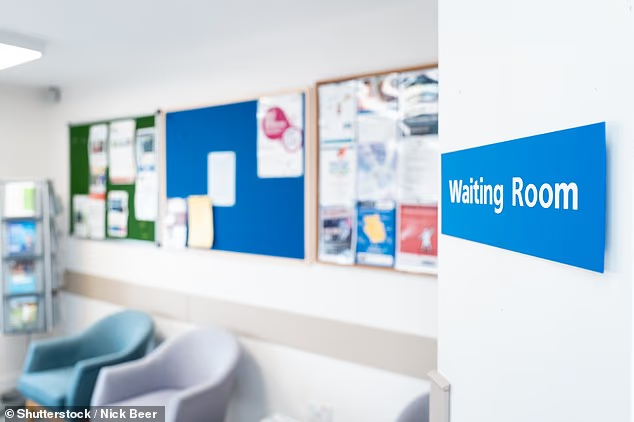
GP practices could close if temperatures continue to climb to sweltering highs, fresh guidance suggests.
The Royal College of GPs has made the extreme recommendation to keep doctors and patients safe in the ongoing heatwave.
The UK is currently battling its fourth spell of scorching weather, with temperatures reaching 34C on Wednesday.
The heat is expected to ease off slightly before picking up again next week and reaching 27C in some parts of the country.
The medical body has published a series of guidelines on its website for family doctors, advising ‘closure or relocation if indoor temperatures reach 30C (86F) inside’.
It comes amid scores of accounts from patients who say they’re struggling to see their GP. Around a third of all appointments take place over the phone, NHS data shows.
A recent poll found that one in three elderly patients were forced to fill in online forms by their doctors surgery, which put many off booking an appointment.
Patients have told of waiting months to see a GP, with some claiming their health deteriorated as a result.
GP practices should consider closing or relocating if indoor temperatures reach 30C, health leaders have advised
As well as potential closures, the Royal College guidance advises clinic staff to ‘use thermometers to check room temperatures frequently – for comfort, temperatures should be below 26C.’
High indoor temperatures in sweltering conditions can leave staff dehydrated, stressed and more likely to make errors in judgment, the RCGP said.
Vulnerable patients are also more susceptible to the adverse effects of heat, increasing the risk of dehydration, stroke and organ failure.
As such, the college is advising practices to take extra measures to keep their premises cool, and fast track high-risk patients for same-day appointments in hot weather.
GP surgeries should also consider earlier start times to avoid the hottest part of the day, the RCGP’s guide reads.
It comes as the Doctors’ Association UK called for a maximum legal working temperature in GP surgeries in June, after a survey of NHS staff saw 83 per cent of staff describe their workplace as ‘very’ or ‘dangerously hot’.
Earlier this month, surgeons admitted they were having to stop operations part way through due to dehydration, dizziness and risk of fainting.
‘There is nothing extraordinary, nor is it an isolated incident,’ Dr Tim Lane, president of the Royal College of Surgeons, said.
‘It is a symptom of a deeper problem: too many of our hospitals are no longer equipped to deal with the hot summers Britain now experiences.’
The latest guidance comes amid the cancellation of blood tests due to the hot weather and restrictions on air-conditioning units.
Blood samples are susceptible to degradation in the heat, resulting in unreliable test results.
But guidance states that GP surgeries should explore every other avenue to reduce indoor temperatures before using air conditioning units, making it extremely difficult for surgeries to keep room temperatures below the 25C required to store blood samples safely.
Meanwhile, the NHS faces a ‘summer onslaught’, with record A&E attendances in June.
Shocking figures today revealed deaths in Britain linked to soaring temperatures in May and June this year are already nearly double the entire figure for 2025.
Across these two months there have already been 2,877 heat-related fatalities. Last year, there were just 1,504 total heat deaths recorded.
‘These figures highlight the significant danger that very hot weather can pose to people’s health,’ Dr Ross Thompson, Principal Environmental Public Health Scientist at UKHSA said.
The total of 2,877 deaths is almost double the 1,504 across the UK heatwaves over the three months from June to August last year.
Health Secretary Yvette Cooper added: ‘The sweltering heat has had a serious impact this summer on people’s health and on our NHS.
‘For many years, we have been used to winter pressures in our NHS and the need to support those who are vulnerable in the coldest weather.
‘But now we are seeing the summer heat have an increasingly serious impact on the health of thousands of people, and on the pressures facing our NHS too.’



















































You must be logged in to post a comment Login