

Crypto World
Georgia Primary Probes Crypto PAC Campaign Donations Compliance


The Protect Progress political action committee, linked to the Fairshake PAC, has deployed a substantial media spend in Georgia’s 13th Congressional District, targeting the Democratic primary contender for a U.S. House seat. Data filed with the Federal Election Commission show the group and its affiliates have spent more than $4 million to influence the outcome of Jasmine Clark’s bid for elected office, signaling how crypto-aligned interest groups are expanding their electoral footprint ahead of midterm cycles. The development arrives amid heightened scrutiny of crypto lobbying in public policy and the regulatory environment surrounding digital assets.
As Georgia voters head to the polls in the primary race for the state’s 13th district, Clark faces competition within her party. The spending by Protect Progress amounts to a sizable portion of the primary-era media campaigns and underscores the ongoing strategy by crypto-adjacent groups to push policymakers toward legislative and regulatory outcomes favorable to digital assets. According to data from the Federal Election Commission, Clark has been the beneficiary of more than $4.2 million in media spending tied to Protect Progress ahead of the primary, illustrating the scale at which crypto-aligned groups seek to influence elections in pivotal districts.
Clark’s public messaging on digital assets has attracted attention. She appears to have deleted a March social media post that framed digital assets as a future tool for unbanked communities, a post referencing the U.S. Congress’s consideration of a crypto market structure bill. In parallel, she completed a questionnaire from Stand With Crypto, a Coinbase-aligned organization that has asserted she is “a candidate who expressed strong support for establishing clear legislative and regulatory frameworks for digital assets in the United States.”
Protect Progress and its affiliates Fairshake and Defend American Jobs project continued and enhanced spending in 2026 to back candidates seen as friendly to crypto policy, while opposing those who are not. In 2024, Fairshake reportedly invested more than $130 million in media and advertising, a figure Coinbase Chief Executive Officer Brian Armstrong cited as contributing to what he called the “most pro-crypto Congress ever.” Coinbase has been a backer of Fairshake as part of its broader engagement with crypto advocacy groups.
Related reporting shows crypto-focused PACs have intensified activity in multiple states. A Cointelegraph feature highlighted ongoing spending in five states ahead of midterm elections, illustrating how crypto-aligned groups mobilize across jurisdictions. Not all efforts yield victories; for example, in Illinois, Fairshake-backed spending opposed Lieutenant Governor Juliana Stratton in a U.S. Senate primary, yet Stratton secured the nomination with substantial voter support. Stand With Crypto’s public stance remains that robust advocacy and voter information efforts can shift outcomes toward candidates perceived as pro-crypto, though results remain mixed across races.
“From a Stand With Crypto perspective, we are going to do everything we can to give our advocates the tools they need to make sure that they make an informed vote and they’re able to cast their ballot on election day for the candidate that is pro-crypto they care about,” Stand With Crypto executive director Mason Lynaugh told Cointelegraph. “If everyone makes their voices heard […] we will have a more pro-crypto Congress than we did this past year.”
Cointelegraph sought comment from Fairshake ahead of the Georgia voting but did not receive an immediate response. The conversation around crypto-influenced advertising and candidate support continues to illustrate the pragmatic alignment between political action committees and policy advocates seeking to shape the regulatory landscape for digital assets.
Key takeaways
- Crypto-aligned PACs have deployed multi-million-dollar media campaigns in state primaries, with Protect Progress reporting over $4 million in Georgia to influence Jasmine Clark’s candidacy for the U.S. House.
- Clark’s public statements and a Stand With Crypto questionnaire point to an alignment with pro-crypto regulatory frameworks, highlighting the interplay between candidate positioning and crypto advocacy groups.
- Affiliates Fairshake and Defend American Jobs have signaled continued substantial spending in 2026 to back pro-crypto policymakers while opposing those perceived as unsupportive of the industry.
- Past performance by Fairshake—over $130 million in media spending in 2024—has been cited by industry observers as contributing to a highly favorable congressional environment for crypto policy, attracting both support and skepticism from regulators and lawmakers alike.
- In other races, crypto-focused spending has produced mixed outcomes; the broader strategy remains to influence regulatory direction, licensing, and enforcement through legislative outcomes.
Georgia and beyond: policy context and regulatory implications
The Georgia primary case underscores a broader trend in which crypto-affiliated committees deploy significant media budgets to shape political trajectories and policy debates around digital assets. The spending intersects with a complex regulatory backdrop at the U.S. federal level, where federal agencies such as the Securities and Exchange Commission, the Commodity Futures Trading Commission, and the Department of Justice assess enforcement and compliance with evolving asset-class rules. While U.S. policy remains fragmented relative to some international frameworks, ongoing debates around licensing, AML/KYC requirements, and disclosure obligations continue to affect how crypto firms engage with political actors and the public sector.
Separately, a Texas run-off in the 18th Congressional District has highlighted parallel dynamics. In March, Protect Progress reportedly spent more than $1.5 million opposing Representative Al Green in the primary. Federal filings show Protect Progress allocated more than $2.8 million on media opposing Green—who voted against certain industry-supported measures—while roughly the same amount was spent in support of Christian Menefee, who has publicly endorsed blockchain technology. The Texas contest mirrors Georgia in illustrating how PACs with crypto affiliations calibrate messaging and candidate alignment to advance preferred policy outcomes, particularly around digital-asset regulation and industry access to banking services.
The regulatory implications extend beyond house races. The involvement of crypto-linked PACs in candidate selection and policy advocacy raises questions about disclosure, campaign finance integrity, and the degree to which industry interests can shape regulatory conversations. Analysts and compliance teams within exchanges, banks, and crypto firms increasingly monitor these developments to assess risks related to policy risk, licensing requirements, and the potential for enforcement actions tied to political activity disclosures. The evolving policy environment, including cross-border considerations and the potential synchronization with broader regulatory initiatives, remains a critical uncertainty for market participants and policymakers alike.
Closing perspective
As crypto advocacy and political influence converge, the focus for regulators and industry participants will be on transparency, compliance with disclosure obligations, and the practical implications of policy shifts on licensing, AML/KYC programs, and cross-border operations. The Georgia and Texas examples illustrate a persistent trend: well-funded, crypto-aligned committees are actively pursuing policy outcomes in a landscape where enforcement priorities and regulatory definitions continue to evolve. Monitoring forthcoming regulatory moves, enforcement actions, and legislative developments will be essential for institutions seeking to navigate this dynamic environment.



AI Financial, formerly known as Alt5 Sigma, is in talks to sell its core payments business to Tokyo-based blockchain firm Perpetuals.com. The Wall Street Journal reported that the deal could be worth up to $15 million.
Summary
- AI Financial may sell Alt5 Sigma Canada after WLFI losses wiped out most shareholder value.
- The possible deal remains non-binding, with Perpetuals.com still reviewing terms and due diligence.
- Trump-linked World Liberty remains under scrutiny as crypto.news reports rising political and ethics questions.
The possible sale would cover Alt5 Sigma Canada, a payments subsidiary owned by AI Financial. Perpetuals.com said in a July 7 filing that it had signed a non-binding term sheet to explore the acquisition.
The filing said, “No decisions have been made,” while Perpetuals.com reviews the business. The company also said it is carrying out due diligence before any final agreement.The talks mark a sharp turn for AI Financial. Less than a year ago, the company became tied to World Liberty Financial, the Trump-linked crypto project behind the WLFI token and USD1 stablecoin.
WLFI deal weighs on AI Financial shares
AI Financial’s earlier deal with World Liberty made WLFI a central part of its balance sheet. crypto.news reported in August 2025 that World Liberty Financial invested 7.5% of the total WLFI token supply in ALT5 Sigma’s $1.5 billion capital raise.
The company later raised about $750 million to buy more WLFI tokens. After the transaction, WLFI fell about 70%, according to the WSJ report cited by Wu Blockchain.
AI Financial’s shares also dropped more than 90%, leaving the company with a market value near $80 million. The decline placed pressure on a company that had promoted its World Liberty link as part of a wider crypto payments plan.
The WSJ report said AI Financial also faced losses tied to the fall in WLFI holdings. The proposed sale would remove one of the company’s main operating businesses if the parties reach a final deal.
Trump-linked proceeds face renewed attention
World Liberty Financial remains closely tied to the Trump family. crypto.news reported that the project issues the WLFI governance token and the USD1 stablecoin, and that it made up a large share of Trump’s reported crypto income in 2025.
The WSJ report said the Trump family is entitled to 75% of proceeds from WLFI token sales. It also said AI Financial’s WLFI purchases generated about $540 million in cash for Trump-related entities.
crypto.news also reported that Trump’s 2025 financial disclosure showed more than $1.4 billion in crypto-related income. The report said crypto earnings outpaced income from real estate, golf and resort businesses that year.
The White House has denied conflict claims in earlier coverage. Critics, including Democratic lawmakers and public interest groups, have called for tighter rules around officeholders and crypto-linked businesses.
Perpetuals.com review keeps deal uncertain
Perpetuals.com has not agreed to a final purchase. The company said the term sheet is exploratory and that due diligence is still underway.
Its filing identified Alt5 Sigma Canada as a profitable AI Financial subsidiary. Perpetuals.com said the possible deal could fit its product roadmap, which includes AI-powered trading products and prediction markets.
Earlier report in June indicated that World Liberty was nearing possible OCC trust bank approval while facing conflict concerns. That report also noted public disclosures showing that 75% of WLFI token sale proceeds go to DT Marks DEFI LLC, an entity controlled by Trump.
For AI Financial, the sale talks place new focus on what remains of its business after the WLFI bet. Any final outcome will depend on price, due diligence, board approval and whether both companies sign binding terms.


Nexo launched the Nexo Card in Argentina, giving eligible users a way to spend digital assets or borrow against them through one product. The card supports debit mode for direct spending and credit mode for borrowing against crypto collateral without selling holdings.
- Nexo’s dual-mode card lets eligible Argentine users spend crypto or borrow against holdings without selling.
- Buenos Aires now anchors Nexo’s Latin America strategy after Buenbit acquisition and Argentina football partnership.
- Andres Ondarra’s appointment gives Nexo a local lead with finance, fintech and crypto experience depth.
The company said users can switch between both modes inside one interface. Nexo also said the card supports purchases in Argentine pesos and U.S. dollars, with cashback on eligible spending and interest on idle in-app balances.
Nexo said the product is available through its app and website for eligible clients in Argentina. The launch gives the company a local payments tool in a market where crypto use remains tied to saving, payments and access to dollar-linked assets.
Incoming Argentina general manager Andres Ondarra said, “Argentine clients have spent a decade making digital assets part of how they manage wealth.” He added that the card lets users spend, borrow and earn “without having to sell.”
Ondarra takes over Argentina operations
The card launch came with Nexo’s appointment of Andres Ondarra as General Manager of Nexo Argentina. Ondarra will oversee local operations from Aug. 1, according to the company.
Ondarra has more than 25 years of experience across traditional finance, fintech and crypto in Latin America. Nexo said he will focus on client trust and the company’s growth in the country.He succeeds Federico Ogue, who led Nexo’s Argentina expansion and is moving to a new venture. Ogue had also been tied to Buenbit, the Argentine crypto platform acquired by Nexo.
crypto.news reported in April that Nexo became the official regional digital asset partner of Argentina’s national football team across South America. That report also said Nexo was building its local presence after the Buenbit deal.
Buenos Aires becomes Nexo’s Latin America hub
Nexo said Buenos Aires now serves as its regional hub for Latin America. The company plans to use the city as a base for client support, partnerships and local infrastructure.
Argentina has become a key market for crypto firms because many users already hold digital assets. Nexo said the country processed about $93.9 billion in digital-asset transactions over three years, ranking behind Brazil in Latin America.
The card fits that market by turning crypto balances into a spending and borrowing tool. Users do not need to sell assets before using credit mode, though access may depend on eligibility and account terms.
Nexo also says the card offers fee-free ATM withdrawals up to $1,000 and fee-free foreign-currency spending up to $2,000 each month. These features target users who want to connect crypto balances with daily spending.
Crypto cards gain ground in high-inflation markets
The launch comes as more companies test crypto-linked cards in Latin America and other inflation-hit markets. crypto.news reported that Western Union plans a stablecoin-backed prepaid card for countries facing currency pressure.
crypto.news also reported that Nubank wants to test stablecoin use within its credit card system. That plan shows how large fintech firms are looking at dollar-linked digital assets as a payment and settlement tool.
For Nexo, Argentina gives the company a market where crypto already has strong use among retail users. The Nexo Card adds a local product that connects payments, borrowing and yield features in one app.
The rollout may also test how users respond to hybrid crypto cards. Nexo’s next stage in Argentina will depend on user demand, local rules and how well the product works for everyday payments.
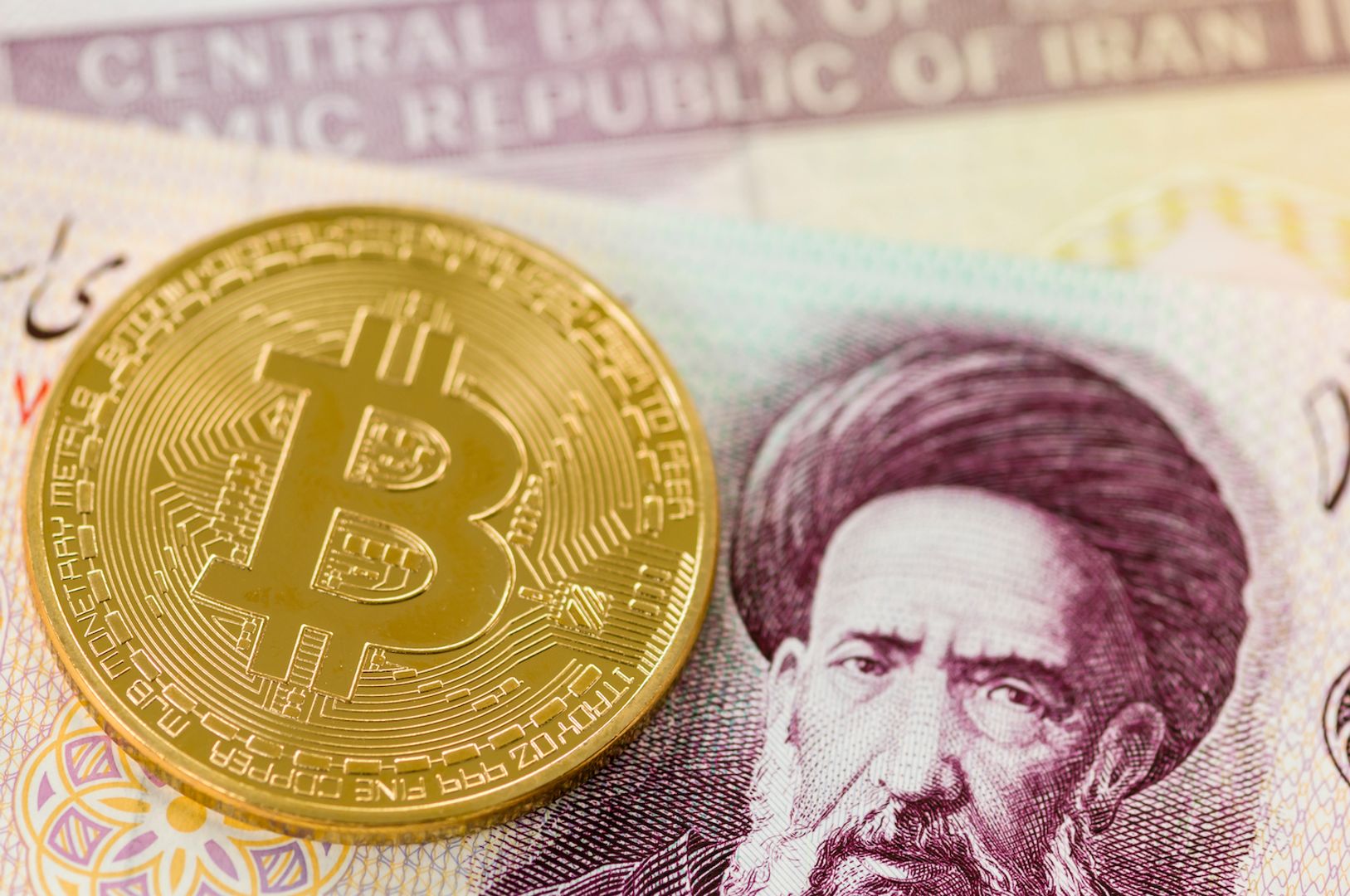
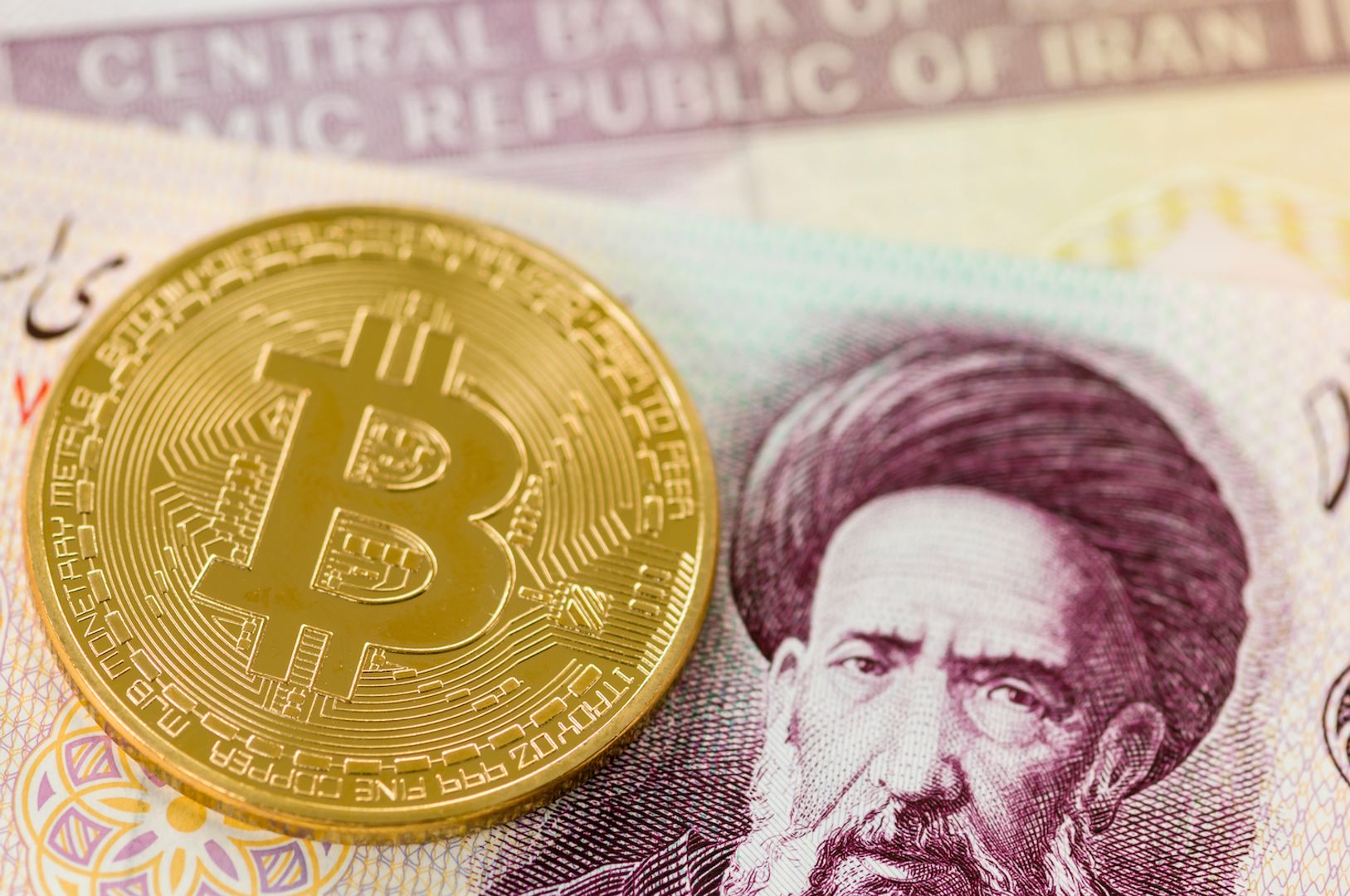
Bitcoin held above $62,000 on Thursday while the assets that are supposed to absorb a war premium moved in opposite directions.
Brent crude climbed 1% to $78.80 a barrel, a third consecutive session of gains, after the U.S. military completed another round of strikes against Iran and both sides raised the prospect of closing the Strait of Hormuz.
Gold extended its slide to a fourth day at around $4,060 an ounce. Government bonds in Japan, Australia and New Zealand fell, extending Wednesday’s global selloff, with two-year Treasury yields pushing toward their 2026 high.
Bitcoin traded at $62,009, down 1.2% over 24 hours and up 1.6% on the week. Ether was at $1,730, also off 1.2% on the day but up 5.7% over seven sessions. Solana was the laggard at $77.25, shedding 1.8% and 1.7% on the week. XRP slipped 0.7% to $1.09, TRON added 4% over seven days, and hyperliquid’s HYPE gained 5.9% on the week despite a 1.2% daily dip.
The escalation reignited inflation concerns and pulled forward rate expectations.

Federal Reserve officials were divided last month on whether to raise interest rates or keep them steady, as meeting minutes released Wednesday pointed to accelerating demand for artificial intelligence infrastructure as a factor sustaining inflation.
The minutes cover the first Federal Open Market Committee (FOMC) meeting under Chair Kevin Warsh and highlight how strong AI-driven spending may keep prices elevated for certain technology inputs—especially chips—and for electricity used to power data centers.
Key takeaways
- FOMC meeting minutes cited “ongoing strong demand for AI infrastructure” as likely to sustain upward pressure on prices for technology products and electricity.
- Officials expected inflation to stay “elevated in the near term,” with risks still “tilted to the upside.”
- Projections implied a hawkish path: the “dot plot” showed hikes, not cuts, with many members expecting at least one increase before the end of 2026.
- The Fed’s year-end PCE inflation projection rose, reinforcing the view that policy may remain restrictive for longer.
AI demand enters the Fed’s inflation discussion
According to the minutes, many participants argued that demand for AI infrastructure is acting as an inflation support rather than a one-time impulse. They specifically noted that continued demand for technology products and electricity could keep price pressures from fading quickly.
In practice, the minutes’ logic points to the economics of AI buildouts: higher demand for semiconductors used by data centers, combined with competition for energy, can lift consumer prices across a wide range of electronic goods, devices, and power-related costs. This process is often described in policy and financial circles as “chipflation.”
For crypto and other risk-sensitive assets, the implication is straightforward: higher inflation tends to reduce liquidity and spending power while supporting higher interest rates—conditions that can weigh on speculative exposure.
Near-term inflation expected to remain sticky
Fed participants anticipated inflation would remain “elevated in the near term.” They also discussed the possibility that disinflation could improve if the Middle East conflict eases, but they judged that the overall balance of risks to inflation was still skewed upward.
AI played a dual role in these deliberations. The minutes state that strong AI-related investment can lift growth above potential output, which can in turn contribute to more persistent inflationary pressure—essentially keeping demand strong while costs remain elevated for critical inputs.
“Most participants remarked that growth in economic activity that exceeded that of potential output, owing in part to strong AI business investment, could contribute to more persistent inflationary pressures.”
Dot plot and projections reinforce “higher for longer”
While the minutes reflect a split among officials, the broader policy signal leaned hawkish. The Fed’s dot plot, as cited in the report, suggested rate increases rather than cuts. Nine of 18 voting members projected at least one rate hike before the end of 2026, while six expected two 25-basis-point increases.
Inflation expectations also moved in the minutes’ framing: the central bank’s PCE inflation projection for year-end increased from 2.7% to 3.6%. Together, those changes point to an outlook where the Fed may need to tolerate a longer period of restrictive policy to bring inflation back toward target.
At the Fed’s June meeting, rates were held steady at 3.5% to 3.75%. In parallel, CME futures markets indicated a roughly 70% probability that rates would remain unchanged at the next meeting scheduled for July 29, according to the CME FedWatch tool.
Why AI infrastructure may complicate monetary policy
One notable theme in the discussion was how AI infrastructure buildout can produce near-term inflation pressure even while promising longer-term productivity improvements. Nick Ruck, director of LVRG Research, told Cointelegraph that the Fed’s recent meeting underscores this tension: massive AI infrastructure expansion can lift inflation through surging demand for semiconductors, energy, and data centers, even as it sets the stage for productivity gains over time.
That mix matters because it challenges a common policy assumption that technological investment uniformly improves efficiency quickly enough to ease inflation. If the cost of deploying AI systems remains concentrated in specific supply chains and energy systems, the benefit to productivity may arrive later than the price pressure created by demand for the underlying infrastructure.
Ruck’s comments also framed the issue as one that may require solutions beyond traditional monetary tools—particularly approaches that improve how resources are allocated and reduce bottlenecks in the digital economy. While the minutes focused on conventional price dynamics, the investor takeaway is that AI-driven inflation can interact with monetary policy in ways that are harder to neutralize quickly.
What it could mean for crypto market conditions
In general, elevated inflation and restrictive rate expectations tend to tighten financial conditions, which can reduce risk appetite and liquidity. The minutes’ emphasis on technology and electricity price pressures strengthens the case that inflation may not fall as quickly as some investors might hope, especially if AI-related capex continues expanding.
At the same time, investors are also watching for how the Fed’s approach could evolve if inflation pressures prove to be structural rather than transitory. That question is likely to remain central for markets, including crypto, where broader liquidity conditions often play an outsized role in determining price behavior.
Readers should watch the next phase of Fed communication for signs that officials see AI-related inflation as temporary supply bottlenecks or as a more persistent feature of the pricing environment—because that distinction could shape how long “higher for longer” expectations last and, by extension, how supportive macro conditions remain for risk assets.


Offchain Labs co-founder Steven Goldfeder said fees from Robinhood Chain and other Arbitrum Layer 2 networks will send 10% of net protocol revenue back to the Arbitrum ecosystem. He said the split sends 8% to the tokenholder-controlled Arbitrum DAO treasury and 2% to development funding.
Summary
- Robinhood Chain gives Arbitrum a direct revenue stream as enterprise L2 adoption expands quickly.
- The split sends 8% to tokenholder treasury and 2% to developer funding inside the ecosystem.
- Robinhood Wallet support adds bridges and swaps, widening access to the Arbitrum-built network for users.
Goldfeder said, “as enterprise adoption accelerates, Arbitrum is ready to capture revenue.” He also said 100% of fees collected on Arbitrum One will go to the Arbitrum treasury. The update gives Arbitrum a clear revenue route from external chains that use its technology stack.
The Arbitrum DAO factsheet describes the fee base as protocol net revenue. That wording shows the model focuses on revenue after network costs, rather than a simple share of every user payment. The split applies to chains deployed outside Arbitrum One under the Arbitrum Expansion Program. Such reporting may also help the DAO compare revenue across partner chains.
Robinhood Chain goes live in Wallet
Robinhood Chain is now live in Robinhood Wallet, according to the update shared by Wu Blockchain. Users can bridge assets from Solana, Ethereum, Arbitrum and other networks to Robinhood Chain, then make swaps inside the app.
The rollout follows Robinhood’s public mainnet launch earlier this month. crypto.news reported that Robinhood Chain is an Ethereum Layer 2 network built with Arbitrum technology and designed for tokenized stocks, real-world assets and DeFi tools.
The network moved from testnet to mainnet after months of development. crypto.news previously reported that the first testnet week processed more than 4 million transactions, as developers tested tokenized stock assets and finance tools before the public rollout.
Tokenized stocks anchor the new network
Robinhood has made tokenized stocks a central product on its new chain. The company said eligible users in more than 120 countries can trade tokenized equities through Robinhood Wallet and supported decentralized exchanges.
crypto.news reported that Robinhood also launched perpetual futures tied to commodities, ETFs and currencies for eligible European users. The same rollout included Stock Tokens, Robinhood Earn and plans for AI-linked trading accounts.
Those products give Robinhood Chain early activity across trading, lending and liquidity venues. Uniswap supports a dedicated automated market maker, while other infrastructure partners support data, custody and on-chain routing.
Revenue model may shape Arbitrum’s next phase
The Arbitrum DAO factsheet said Robinhood Chain went live on July 1 as a dedicated Arbitrum chain that settles to Ethereum. It said the chain returns 10% of protocol net revenue under the Arbitrum Expansion Program license.
The same factsheet said 8% flows to the Arbitrum DAO treasury and 2% goes to the Arbitrum Developer Guild. That structure gives tokenholders and builders a share of fees from chains built outside Arbitrum One.
Crypto.new reported that Robinhood Chain forms part of a wider corporate chain trend, alongside Base and other branded networks. The report said Robinhood uses its own tokenized equity business as the anchor for the chain.
For Arbitrum, the fee plan links enterprise adoption to ecosystem funding. The next test will be real usage. If Robinhood Chain handles steady trading, swaps and lending activity, the Arbitrum treasury and developer funds may receive a recurring revenue stream from the network.
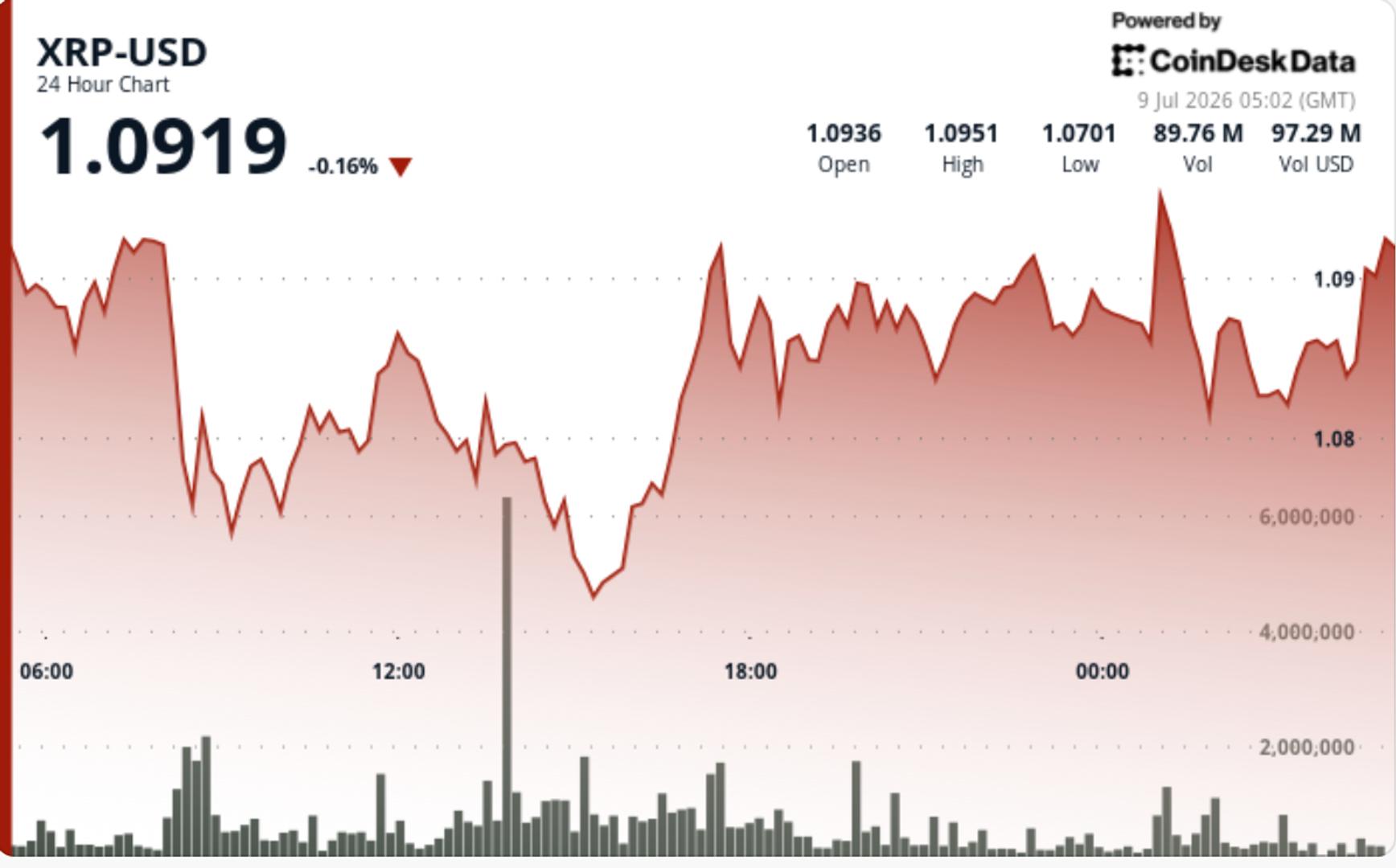
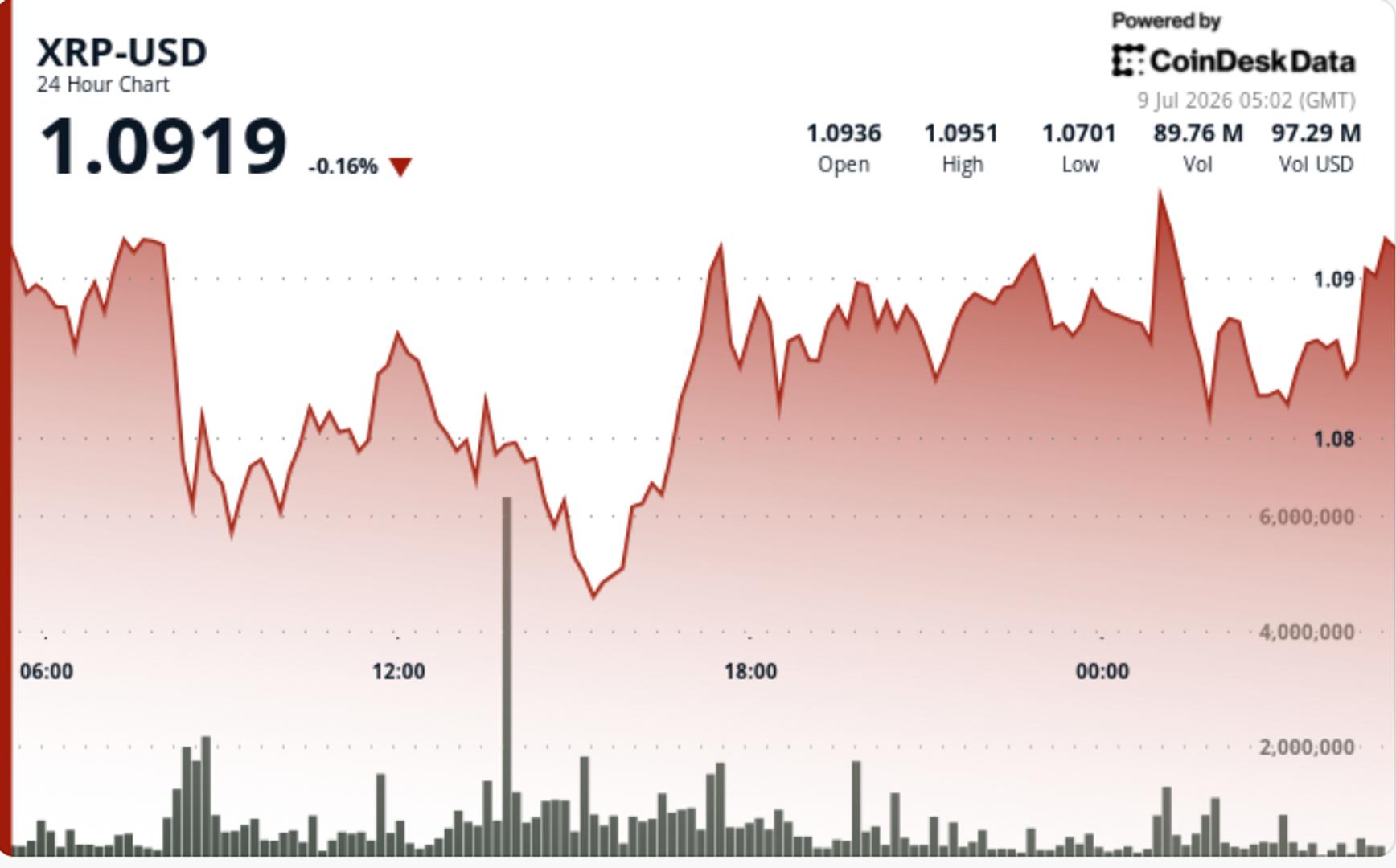
• Volume during that move reached 688,000 XRP, about 120% above the session average, before momentum faded.
• Earlier selling took XRP to a session low near $1.0742 after volume rose to 80.2 million, about 83% above the 24-hour average.
Technical Analysis
• The key development is that XRP continues to defend the $1.00-$1.05 support zone, which analysts say aligns with longer-term moving average and trendline support.
• The near-term chart remains weak despite the small bounce. Lower highs at $1.1133, $1.0993 and $1.0932 show sellers are still capping recovery attempts.
• XRP needs to hold above $1.088-$1.091 to build a cleaner move toward $1.093-$1.095.
• The larger setup remains a compression trade rather than a breakout. Monthly wedge and channel patterns may point to higher targets, but confirmation requires a sustained move above nearer resistance first.
• Relative weakness against bitcoin remains a risk, with the XRPBTC pair testing support near 1,700 sats.
What traders should watch
• $1.00-$1.05 remains the key support zone. Losing it would put $0.90 and then $0.80 back in focus.
• $1.088-$1.091 is the immediate resistance area after capping the latest breakout attempt.
• $1.20-$1.25 is the next major zone, where candle resistance and the 100-day moving average sit.
• A move above $1.40 would be the first stronger sign that XRP is breaking out of its broader compression.
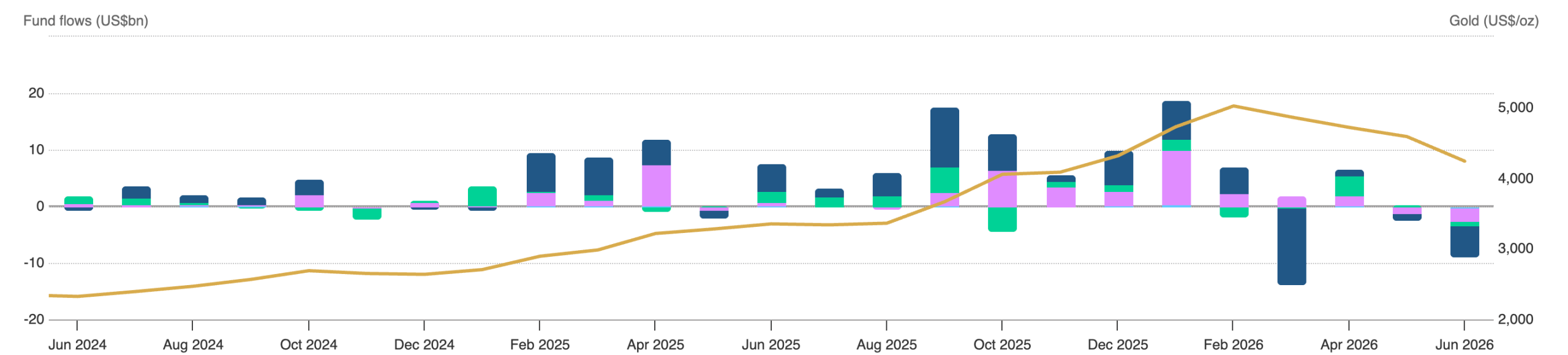
Investors pulled $8.9 billion from gold exchange-traded funds (ETFs) in June, with North American products accounting for $5.5 billion of the withdrawals as bullion’s price slide deepened.
The monthly retreat came as gold recorded its fourth straight losing month. The metal fell 11.7% as a hawkish Federal Reserve and Middle East tensions steered investors away from the metal.
Gold ETF Outflows Accelerated in June
According to the World Gold Council report, total assets under management fell 13% to $526 billion in the month. In addition, holdings dropped 74 tonnes to 4,047 tonnes. The selling followed a sharp price pullback that reset investor allocations.
During the month, New Fed Chair Kevin Warsh signaled a hawkish stance, and the US-Iran conflict lifted inflation fears. Together, they raised expectations of higher rates ahead. Rising real yields and a stronger dollar increased the opportunity cost of holding non-yielding gold.
North American funds recorded $7.7 billion in outflows across the first half, the region’s weakest start to a year since 2013. European funds lost $818 million in June after the European Central Bank hiked rates 25 basis points, its first increase since September 2023.
Follow us on X to get the latest news as it happens

Markets outside the big three regions also turned negative. Combined outflows totaled $262 million in June, bringing their 2026 net buying to $106 million. Australia accounted for most of that drop at $197 million, and South Africa gave up $36 million.
“Looking ahead, regional gold ETF flows could stabilise…Meanwhile, uncertainties surrounding geopolitics, economic growth and financial markets linger. This backdrop may continue to support investor demand for portfolio protection and sustain interest in gold ETFs as a strategic safe-haven allocation,” the report read.
A Positive First Half Despite the June Drop
Nonetheless, global flows were still positive at $8 billion over the first half of 2026. Asia led with $12 billion in additions, its strongest first half on record. That came despite a $2.3 billion June outflow, the region’s worst month ever, driven mainly by Chinese funds.
India bucked the trend, drawing inflows as local investors treated the price dip as an entry point. Collective global holdings rose 18 tonnes across the half, though assets under management fell 6% on the lower price.
Subscribe to our YouTube channel to watch leaders and journalists provide expert insights
The post Gold ETFs Lose $8.9 Billion in June as Global Outflows Accelerate appeared first on BeInCrypto.


Bitcoin remains in deep value territory after trading below two major on-chain cost-basis levels for about five months, according to Glassnode. The firm said BTC is still below the True Market Mean near $76,600 and the short-term holder cost basis near $72,200.
Summary
- Bitcoin trades below key cost-basis levels, keeping deep value conditions active but still technically unconfirmed.
- ETF outflows have slowed, yet weak volumes show institutional demand has not fully returned.
- Long-term holder losses remain elevated, leaving sell-side pressure as Bitcoin’s main recovery barrier.
These levels matter because they track the average price paid by active investors and recent buyers. When Bitcoin trades below both, many market participants hold coins at a loss. Glassnode said this phase can support long-term accumulation, but it has not yet confirmed a market bottom.
Bitcoin recently bounced from about $58,300 to $64,400. The move showed short-term strength, but it did not bring BTC back above the main recovery levels. Glassnode said, “The evidence suggests this process is approaching its later stages,” but it also warned that the realized price near $53,000 cannot be ruled out.
The setup keeps the focus on whether Bitcoin price can reclaim the $72,200 and $76,600 areas. Until then, BTC remains exposed to selling pressure and weak risk appetite.
Long-term holders are still realizing losses
Glassnode data shows that long-term holder loss realization has increased sharply since February. The share of total realized value from long-term holder losses rose from 15% in early February to 43%.
This group includes investors who bought near cycle highs and held through months of drawdown. Some are now exiting as the bear market lasts longer than expected. Glassnode said these sellers have become a major force stopping Bitcoin from reclaiming higher levels.
Daily long-term holder realized losses recently reached about $280 million. That was the highest level since December 2022. The firm said this pressure has not yet cooled enough to confirm that sellers are exhausted.
The next few weeks may be key for this metric. A steady drop in realized losses would show that long-term holders are selling less. Without that change, Bitcoin’s recovery may remain limited.
ETF outflows keep institutional demand weak
Bitcoin ETF flows remain another weak point. Glassnode said the 30-day average of spot Bitcoin ETF netflows has improved from about $193 million in daily outflows to $88.9 million. Still, flows remain negative.
crypto.news reported that U.S. spot Bitcoin ETFs recorded about $4.5 billion in net outflows in June. The same report said June became the worst month for the products since their January 2024 launch.
There has been some relief since then. crypto.news reported that spot Bitcoin ETFs recorded $221.7 million in net inflows on July 2, ending a 10-day outflow streak. That followed nearly $2.7 billion in withdrawals during the prior 10 trading sessions.
However, Glassnode said ETF trading volume remains weak. Daily ETF trading volume sits between $650 million and $950 million, about 80% below the October 2025 peak. This shows that institutional demand has not fully stabilized.
Options data shows caution despite reduced shorts
Derivatives data gives a mixed picture. Glassnode said the options open-interest put/call ratio has dropped to 0.56, its lowest level of 2026. This means traders are holding far fewer puts than calls.
That shift suggests short demand has eased. It also shows that traders have reduced some defensive positions after Bitcoin’s recent bounce. Still, the options market continues to price demand for downside protection.
crypto.news reported that BlackRock’s Bitcoin ETF flow drought recently eased while Bitcoin flashed a fresh rally signal. The update added to signs that parts of the market are trying to stabilize after heavy selling.
Glassnode said Bitcoin may be in the later stage of a bear-market bottoming process. But it said confirmation still needs three conditions: lower long-term holder selling, stable ETF flows, and a recovery above key cost-basis levels. Until those signals appear together, Bitcoin’s bottom remains unconfirmed.


Kraken leads MiCA-regulated crypto exchanges in liquidity, according to DefiLlama’s MiCA exchange dashboard. The data cited by Wu Blockchain showed Kraken with $399.71 million in spot liquidity and $206.90 million in perpetual liquidity, placing it first in both categories.
Summary
- Kraken leads MiCA exchanges in liquidity, giving larger traders deeper order books across regulated European markets.
- Coinbase remains the closest rival, but DefiLlama data shows Kraken ahead across core liquidity metrics.
- MiCA licensing has changed Europe’s exchange race, making liquidity and market coverage key user factors.
DefiLlama’s live MiCA-regulated exchanges dashboard later showed Kraken still ahead, with more than $400 million in spot liquidity and more than $220 million in perpetual liquidity. The live figures may change because liquidity data moves with market depth, prices and exchange activity.
Coinbase ranked second in the figures cited by Wu Blockchain, with $305.23 million in spot liquidity and $167.39 million in perpetual liquidity. DefiLlama’s live page still placed Coinbase among the top regulated venues, but behind Kraken in the main liquidity table.
The gap matters for traders who need deeper order books. Higher liquidity can help reduce slippage when users place larger orders. It can also make an exchange more useful for active traders, market makers and institutional clients.
Coinbase and Crypto.com remain close rivals
Coinbase remains Kraken’s closest large rival among MiCA-regulated exchanges. The exchange has built its European base in Luxembourg, where it uses a MiCA license to serve users across the bloc.
crypto.news reported that Coinbase opened its Luxembourg MiCA hub as the EU deadline approached. The exchange said Luxembourg became its MiCA home for all 27 EU member states.
Crypto.com also ranked among the larger MiCA exchange venues by spot liquidity. Wu Blockchain cited $130.84 million in spot liquidity for Crypto.com, while DefiLlama’s live dashboard showed a similar range.
Bitstamp, Bybit, OKX, Gate and Backpack showed smaller liquidity pools. Bitstamp and Bybit stood near $50 million in spot liquidity in the cited data. OKX, Gate and Backpack were lower in spot liquidity, though Backpack and OKX had recorded perpetual liquidity.
Market coverage gives Kraken another lead
Kraken also leads the listed exchanges in market coverage. Wu Blockchain cited 1,704 markets for Kraken, followed by Coinbase with 1,074 markets and Crypto.com with 883 markets.
Market coverage shows how many trading pairs and products a platform supports. It does not guarantee better prices by itself, but it gives users more routes to trade assets under one regulated platform.
Gate, Bitstamp, Bybit, Backpack and OKX showed smaller market counts. The cited data listed Gate at 303 markets, Bitstamp at 298, Bybit at 133, Backpack at 125 and OKX at 65.
For European users, the mix of liquidity and market coverage may shape where activity moves after MiCA. Exchanges with deeper liquidity and more markets may attract users who left platforms without full authorization.
MiCA changes Europe’s exchange race
MiCA has changed how crypto exchanges operate in Europe. The framework requires crypto asset service providers to hold approval if they want to serve users under the bloc’s unified rules.
crypto.news reported that Kraken secured its MiCA license from the Central Bank of Ireland in June 2025. The license allows Kraken to offer regulated services across the European Economic Area.
Other exchanges also moved before the July 1 deadline. crypto.news reported that OKX expanded services across 28 EEA markets after securing MiCA approval through Malta.
The new data shows that licensing alone does not decide the race. Liquidity, trading products and market coverage now separate regulated exchanges from each other. Kraken currently leads those metrics among the listed MiCA platforms, while Coinbase, Crypto.com and other venues continue to compete for European users.
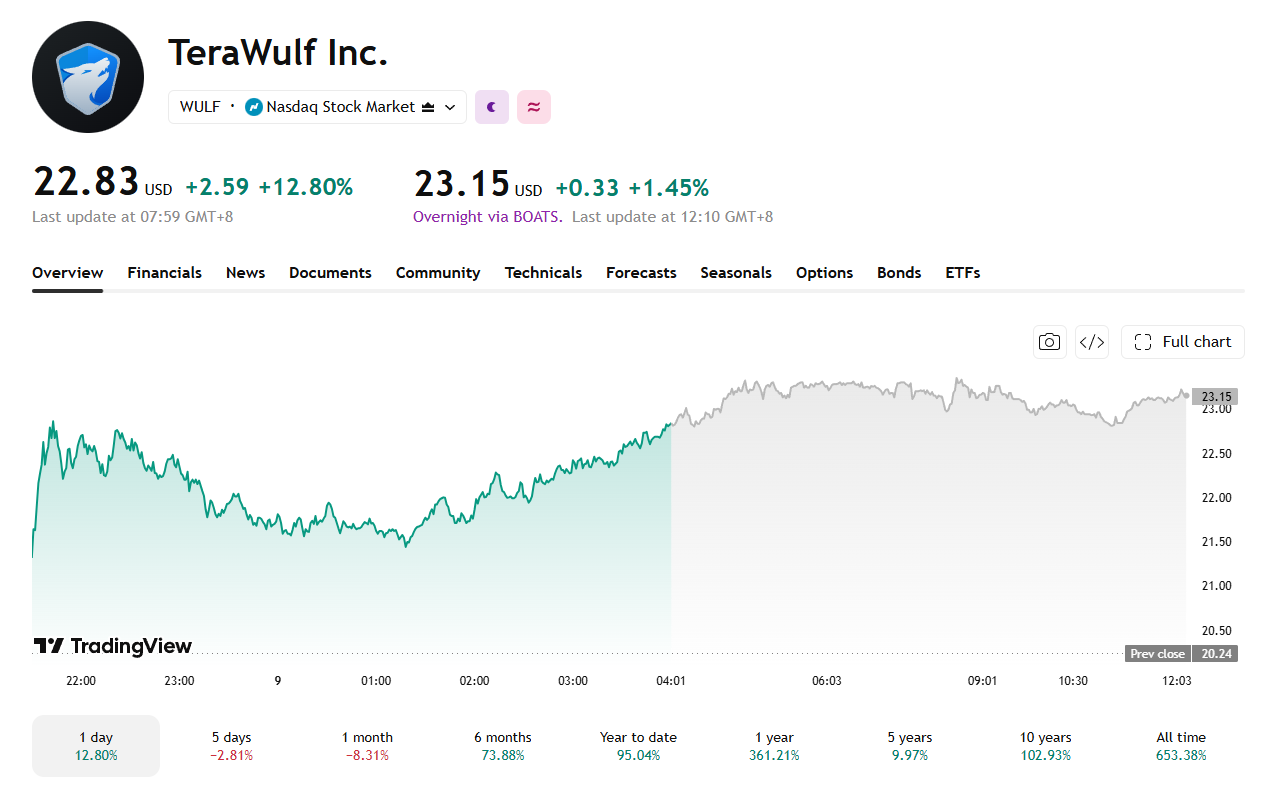
TeraWulf (WULF), IREN, and Hut 8 (HUT) all rallied yesterday, July 8, but Bitcoin’s price had nothing to do with it. Each saw their stock prices continue to rally on separate AI infrastructure news.
All three companies were in the top 16 best performing stocks for Wednesday, July 8 as investors reward their shift no matter what Bitcoin does on the day.
TeraWulf’s Anthropic Deal Set the Tone
TeraWulf stock rose more than 12.8% after signing a 20-year lease with Anthropic for a Kentucky data center. The site will support 401 megawatts of critical IT load, online by early 2028.

Analysts project roughly $19 billion in revenue over the lease’s term. Compass Point raised its price target to $40 from $28 after the deal and kept its buy rating.
CEO Paul Prager said the lease confirms the company’s AI infrastructure pivot and locks in a long-term revenue stream. TeraWulf also sold its stake in a Texas project, freeing cash for AI infrastructure investment elsewhere.
IREN and Hut 8 Caught the Same Bid
IREN climbed 8.01% after Freedom Capital Markets upgraded the stock to buy. The firm argued the recent pullback had created more upside than the market recognized. A Nvidia keynote appearance on July 8 also lifted sentiment around Bitcoin miner stocks.
Hut 8 jumped 9.69% in a single session after joining several Russell growth and small-cap indexes. Index inclusion suggests institutions are noticing the shift toward AI. The stock is up 383% over the past year.
The pattern is clear across the sector, visible in crypto stocks to watch beyond these three names. Miner valuations now track AI leasing headlines more closely than bitcoin mining stocks ever tracked Bitcoin’s price.
Whether that holds once AI capex slows is the question for the second half of 2026.
The post Bitcoin Miners Bet Big on AI Infrastructure and Win. TeraWulf, IREN, Hut 8 Surge appeared first on BeInCrypto.

‘I Am Old, I Can Barely Walk’: Internet Decodes MS Dhoni’s Gesture During 3rd India vs England T20I

Microsoft patches RoguePlanet Defender zero-day vulnerability

Mad Money 07/08/26 | Audio Only


-

 Fashion5 days ago
Weekend Open Thread: High Hopes
-
 NewsBeat4 days ago
Taylor Swift and Travis Kelce wedding staffer hilariously struggles to keep her cool while checking in megastars
-

 Fashion3 days ago
Open Thread: What Great Books Have You Read Recently?
-

 Politics6 days ago
The House | “Reframing the debate from a binary discussion of winners and losers”: Yuan Yang reviews ‘We Are Not Machines’
-

 Crypto World6 days ago
Standard Chartered Secures MiCA License as ESMA Adds 37 New Crypto Firms
-

 News Videos2 days ago
Whats Hidden Inside This Cash Register? #treasure #reselling #money
-
 Tech2 days ago
Anthropic’s new “J-lens” reveals a silent workspace inside Claude that mirrors a leading theory of consciousness
-

 Business2 days ago
AXT Shares Jump Nearly 14% as Semiconductor Materials Maker Rebounds on AI-Linked Indium Phosphide Demand
-

 Sports2 days ago
Joshua Pacio ‘more complete’ ahead of ONE rematch vs Malachiev
-
 Crypto World5 days ago
ESMA Expands Crypto Register by 37 Firms Following MiCA Transition Period
-
Crypto World2 days ago
SK hynix (000660.KS) Stock Dips as $28B Nasdaq ADR Offering Drives AI Memory Expansion
-

 Crypto World4 days ago
South Africa proposes crypto tax guidance under existing rules
-

 News Videos3 days ago
Best Time to Enter Small Caps Right Now? Another Bull Run? | Financially Free
-

 Tech4 days ago
Lenovo laptops are now shipping with YMTC SSDs, a sign of Chinese NAND entering the mainstream
-
 NewsBeat7 days ago
New exhibition reflects five decades of movement between island of Ireland and GB
-

 Business6 days ago
What a 10 Percent Drop Means for Buyers, Sellers and Renters
-
Sports2 days ago
We have punished the disrespect
-

 Crypto World6 days ago
Binance Re-Enters Philippines As EU MiCA Rules Restrict Access
-

 News Videos3 days ago
Avoid entering in FOMO #bitcoin #cryptocurrency #trading #scalping
-

 Crypto World6 days ago
Alibaba bans Claude Code over alleged backdoor security concerns
You must be logged in to post a comment Login