Connect with us
DAPA Banner
DAPA Coin
DAPA
COIN PAYMENT ASSET
PRIVACY · BLOCKDAG · HOMOMORPHIC ENCRYPTION · RUST
ElGamal Encrypted MINE DAPA
🚫 GENESIS SOLD OUT
DAPAPAY COMING

NewsBeat

Emmerdale star confirms Kammy’s secret – and he’s not the fire starter

Published

on

Daily Mirror

Emmerdale’s Kammy Hadiq star Shebz Miah has revealed all about his character’s secret turmoil as he faces accusations over the recent farm fires next week on the ITV soap

Emmerdale star Shebz Miah has reacted to a new storyline being revealed for his character Kammy Hadiq.

Next week, spoilers have revealed we find out what Kammy has been hiding, as he’s accused of being the fire starter. It seems he’s innocent of this though, and us as viewers find out the character is homeless.

We will finally find out about Kammy’s backstory, and his life away from the village. We learn more about his family, and soon fans will be let in on what has led to Kammy having nowhere to live.

Advertisement

Speaking to The Mirror and other press, Kammy actor Shebz spilled all on his excitement to finally explore more about his character.

READ MORE: Emmerdale summer spoilers: Caleb’s revenge on Joe, stunt horror and two arrivalsREAD MORE: Coronation Street spoilers: Megan’s comeuppance, Carl’s fate and Jodie’s sad past

Are you excited to finally delve into Kammy’s backstory?

100%. It’s that thing of peeling back the layers and just learning more about the character. One thing about Kammy is that he is the first Pakistani Muslim we’ve had on Emmerdale, and that itself is a big thing. And I think now we can finally start to truly understand what that looks like, especially in British soap as well. It’s not really common.

Advertisement

So, I am so excited and stoked to be able to finally tap into that. But also, the beauty is that I get to show Kammy as just a normal British Bradford lad as well. And it’s amazing that I’m able to blur the lines ever so slightly. But also show myself, as Shebz. I am also sort of Muslim, and South Asian background, I get to show that as well, and it’s a big thing. I am so glad. I went to the producer, I was like, ‘Please, please let it happen.’ So yeah, I’m truly excited.

And you know, a lot of the fans constantly are asking me, ‘When are we ever going to learn more about Kammy?’ And I think now’s the perfect time. I think from when I first came in to now, it’s been a slow burner, but I think we are starting to learn more about Kammy and see that there is more to him than this cheekiness that he’s got and this bravado that he puts on. I’m super excited.

Would you like to see it maybe lead to some family members coming in?

100%, of course. I mean, we need a bit of spice and drama, you know? I think at the moment, it is obviously heavily orientated around the iconic families that Emmerdale has, which is completely fair and valid, but I think we do need something new to shake it up a bit.

And with Kammy’s introduction, obviously coming in and stealing the quad and getting up to mischief, I think there’s a lot of unanswered questions, and I feel like all of that does stem from his upbringing and potential trauma, potential lost relationships, all sorts of stuff behind the mask.

Advertisement

It’s going to be exciting to actually uncover all of that. So, yeah, I’m super excited and I’m excited to see who they bring in and what happens, and see where it goes from there.

What’s the secret with his sister?

The secret is that Kammy does take the rap. However, there are further consequences as well, as a result of this situation. There’s a whole box of worms there. I don’t know fully yet how accurate it is, but I do know it’s teasing into something bigger.

The exciting thing is you become an honorary Dingle

Yeah, it is so mad. For myself growing up, I never, ever imagined a brown kid like me would be part of the Dingles. So, I think to be in that chaotic mix is iconic. I think it’s going to be amazing for the fans to see.

Advertisement

Not only am I a part of it, but I am sat there and people in Bradford or wherever will be watching it. Kids who look like me will think the exact same thing, thinking, ‘What the f*** is going on here?’ They’ll get to see this chaotic kid in the middle of people who aren’t his family by blood, but, you know, he’s there. So, it’s a beautiful feeling to be part of it. And if I had to pick out of all the families on Emmerdale, it would 100% be the Dingles.

Why do you think it’s taking him so long to reach out to someone?

I think it comes down to that thing that we were talking about previously, about the mask. I think Kammy has got a lot of pride, and I think due to the trauma that he’s had, showing signs of weakness isn’t a thing for him. It’s not in his dictionary. I think he’s the type of person who would rather cry behind closed doors and never show it.

And I think that’s down to trauma. I think he’s had a lot of hardship in his life, where he doesn’t want to be seen as that. And I think it’s that status thing as well. He will overcompensate just to be on the same level. And that could be down to numerous things, things that we’ve not even touched upon yet in Emmerdale.

But, the most obvious being he is a South Asian kid in the middle of this white English farm. There’s automatically an imbalance, and therefore, Kammy doesn’t want his obstacles or anything to put him behind. He wants to be seen and accepted equally as everyone, and he has been so far, but I guess that’s his thinking. He doesn’t want to be seen as an outcast and I think he really does value relationships because he’s quite lonely and upset.

Advertisement
His relationship with Belle is back on. Could his reluctance to open up impact that?

There are consequences, and it’s not a smooth ride for them, but it’s worth it. There is a somewhat happy ending for both of them. So yeah, I think they both balance each other out so far, and it’s an unexpected duo. But I think it is working so far.

Were you happy to see them reunite?

Yeah, I think everyone was really shocked at how abrupt it was. Even me and Eden [Taylor Draper]were like, ‘What? Why have we just had a kiss and now we’re just nowhere to be seen?’ We were quite surprised, however, when we had the conversations with the producers, when we were looking at the bigger picture, it made sense.

And I think it’s that saying, less is more. So yeah, we were both so excited to be finally working together again. And she’s, she’s an amazing dance partner. We get on really well. So it’s nice to be involved with Eden. And also, I think her character, Belle, has not had an easy ride as well.

Advertisement

She’s had a lot of bad experiences with previous frogs, and now that she finally gets the right frog, Prince Charming and all of that. Fans are going to enjoy seeing this chaotic yet innocent duo.

How does he feel when he’s accused of being the arsonist and is taken away by the police?

It’s that thing where he’s obviously really annoyed by it because of the situation he’s put in. It brings back a lot of trauma for him, mixed with shame and anger. He’s not had an easy ride, and all of this is bringing back a lot of unpleasant memories for him.

And it’s just one of those things where, because he’s got no one, he’s got no leg to stand on. And I think it’s that right person, wrong time thing, and he sort of accepts it, but it’s just one voice against the rest of the village, and there’s nothing you can do about that, unfortunately.

But I also imagine it’s not the first time that Kammy has been in a position like that. He has been against the majority quite often before.

Advertisement
Is there any point where Kammy may consider letting Belle in on his secrets?

Yeah, there does come a turning point. I think when Kammy realises he is backed into the corner and he’s got no way out, I think he does submit, which we will see when it comes out later on, and that’s when, as I say, the stakes are very high for him. So, yeah, there does come that turning point, and I think because he’s backed into a corner.

But I think he also does see the innocence, and he does really, really like her. I think the connection he’s had with her so far is really genuine, and he’s not really had anyone care for him sincerely like that. And I think because of that, he just puts his hand up and he waves the white flag and confesses everything, which we’ll see later on.

It is traumatic for him, because we do talk about things that have happened previously. However, he’s doing it because deep down, he genuinely has submitted to Belle and he just wants to address it now.

Do you think viewers will see a new side to Kammy with this storyline?

Yeah. It’s been challenging for me as well. Coming in to set, everyone’s like, ‘Oh my god, who is this? This is not Shebz.’ It’s been hard for me, but as I say, we are going to peel back the layers. The mask comes off, and we get to see this different version of what we’ve seen so far.

Advertisement

Uncomfortable at times, but at the end of the day, he’s human, and there’s only so long you can keep the bravado for. But yeah, fans won’t expect it, and it will snowball into other things as well, but we start to see why and where it all came from. A different version.

Emmerdale airs weeknights at 8pm on ITV1 and ITVX. * Follow Mirror Celebs and TV on TikTok , Snapchat , Instagram , Twitter , Facebook , YouTube and Threads .

Source link

Advertisement
Continue Reading
Click to comment

You must be logged in to post a comment Login

Leave a Reply

NewsBeat

US and Iran exchange fire after American patrol helicopter downed in Hormuz

Published

on

US and Iran exchange fire after American patrol helicopter downed in Hormuz

According to US officials, Iran used a drone to launch the attack on the helicopter. But it’s not clear whether the Iranian drone had deliberately attacked, an unnamed US official told CBS News, the BBC’s US partner. The semi-official Mehr News Agency reported that Iran had not claimed responsibility for the downed aircraft.

Source link

Continue Reading

NewsBeat

How gaps in education, work and welfare support can push neurodivergent people into homelessness

Published

on

How gaps in education, work and welfare support can push neurodivergent into homelessness

Homelessness in the UK is reaching critical levels, with more than 380,000 people estimated to be without a home in England alone as of late 2025.

There is also a growing recognition that neurodivergent people are over-represented among homeless populations. But much of this comes from anecdotal reports from service providers or localised research projects looking at specific neurodivergences like autism or attention deficit hyperactivity disorder (ADHD).

So, our new research explored why this may be so. Our findings demonstrate how neurodivergent people may face exclusion at various points throughout their social lives, education and employment. In turn, this can lead to increased financial hardship and a higher chance of homelessness.

As homelessness rises across the UK, public debate tends to focus on housing supply or personal responsibility. For example, housing and homelessness charity Shelter highlights the chronic shortage of social housing and an increasingly unaffordable private rented sector.

Advertisement

We spoke at length with six neurodivergent people, from one local authority area, who had experienced homelessness or insecure housing. To structure the interviews, we asked participants to create a life map.

This is a visual timeline of important events that were meaningful to them, such as education, employment, becoming homeless, seeking support and diagnosis. We analysed the life maps and the participant accounts, identifying three central themes across their stories.

First, ambiguity around diagnosis often confused things and delayed or blocked access to support. Second, participants often seemed to have fallen through the gaps at critical points across their lives, where support should have been available. And third, once in crisis, navigating services was often experienced as inaccessible, slow and demoralising.

A lifetime of missed support

There were a number of points in our participants’ lives where support had been needed but was ultimately missed. This had knock-on effects on their ability to remain in education or employment. In turn, this created a lack of opportunities and affected financial security.

Advertisement

For some participants, these challenges began in school. Most described being bullied – an experience that is unfortunately common for many neurodivergent children. Faced with a lack of support for the bullying, participants took their own action, by changing schools, moving areas, or even leaving school altogether.

Those who went on to higher education experienced a lack of specialist neurodivergent support, alongside challenges with living away from home for the first time. Some turned to alcohol in order to manage social anxiety.

Neurodivergent people may face unique pathways into homelessness.
Travers Lewis/Shutterstock

Neurodivergent adults are known to experience significant employment gaps. Our participants also outlined numerous challenges to securing and keeping a job. One described being unable to find a placement for some work experience required to complete a qualification. They believed that this was due to stigma associated with their diagnosis.

For others, jobs that may be considered entry-level, such as customer service or retail jobs, presented unanticipated difficulties, including sensory overwhelm and social anxiety. UK employers are required by law to make changes to remove or reduce potential disadvantage faced by disabled employees, which are known as “reasonable adjustments”. But most participants reported a lack of these in practice.

Advertisement

When our participants hit a crisis point and sought help for their housing needs, many experienced the services as confusing or unsupportive of their needs. Most described long waits for various supports and services, often in unsuitable, temporary accommodation.

Sensory and social challenges in these environments contributed to mental health deterioration. Long waiting lists to access therapy or diagnostic assessments also left participants feeling trapped and unable to move forward with their lives.

‘Society doesn’t care about you’

Respondents described patterns of persistent exclusion, starting in early life, that had paved the way to homelessness. Once in need of housing support, they found significant barriers to accessing services that had been designed by and for neurotypical people.

When offered temporary accommodation, in many cases this did not meet their neurodivergent needs. For example, most participants described being placed in busy, “chaotic” hostels that they were desperate to leave. In one case, a person with significant sensory sensitivities was living in shared temporary accommodation next-door to a nightclub which played loud music throughout the night, affecting their sleep.

Advertisement

We also noticed that participants appeared to have internalised these experiences. For example, they blamed themselves and felt like “society doesn’t care about you”, as one described. This affected both their self-esteem and their engagement with services.


À lire aussi :
‘Dehumanising policies’ leave autistic people struggling to access health, education and housing – new review


Many people may face similar circumstances yet do not necessarily find themselves homeless. For our participants, however, hardship was heightened by reduced social networks to fall back on during hard times. They described difficulties in maintaining regular contact with friends. They were sometimes rejected by their family and others, due to a lack of understanding of their differences.

The stories we heard were powerful and hard-hitting. They show the serious effects of exclusion which may build up over a person’s life.

Advertisement

There were also many points at which early support or prevention could have been put into place, for example, in education, workplaces and when accessing health and social care. There are now a growing number of toolkits and guidance for services working with neurodivergent people facing homelessness.

Taken together, our findings show how neurodivergent people may face unique pathways into homelessness. It demonstrates why earlier, more joined-up inclusion and support is vital for prevention.

Source link

Advertisement
Continue Reading

NewsBeat

The hidden discounts that could reduce your monthly bills

Published

on

The hidden discounts that could reduce your monthly bills

A new report from the National Audit Office (NAO) has revealed that many customers are unaware of support schemes for broadband, water and energy bills, even though they could qualify for lower prices because of their income, benefits or personal circumstances.

The findings suggest checking what help is available could be one of the easiest ways to reduce household costs this year.

The bill discounts many people never claim

The watchdog found that only around one in three eligible broadband customers know about social tariffs – discounted broadband packages designed for people on benefits or lower incomes.

Advertisement

Awareness is also low among water customers, with fewer than four in 10 people who qualify knowing help is available.

These schemes can offer significant savings, but millions are missing out simply because they don’t know they exist.

How you could save on broadband

If you’re claiming certain benefits, you may qualify for a broadband social tariff.

These discounted deals are often substantially cheaper than standard packages and are available from many major providers.

Advertisement

The NAO found that awareness remains surprisingly low despite the potential savings.

Water bill help many households overlook

Water companies also offer support schemes for customers struggling with bills.

Depending on your circumstances, you may qualify for:

  • Reduced water bills
  • Payment support schemes
  • Hardship funds
  • Debt assistance programmes

Yet the report suggests many eligible households never apply.

Energy customers could save by asking for help

The watchdog found energy debt has surged by 118% since 2021. However, customers who agreed repayment plans with suppliers owed around £1,000 less on average than those who did not.

Advertisement

This follows Energy Secretary Ed Miliband’s promise to cut energy bills, but rising electricity and gas costs are making this more difficult.

Support can include:

  • Affordable repayment plans
  • Payment breaks
  • Debt support schemes
  • Priority customer services

Experts say contacting suppliers early can prevent debts growing out of control.

Check if you’re missing out

You may want to see what support is available if you:

  • Receive Universal Credit
  • Receive Pension Credit
  • Claim disability benefits
  • Are on a low income
  • Have long-term health conditions
  • Are struggling with household bills

Many schemes are available directly through providers, but are not automatically applied.


Recommended reading:


Why millions are paying more than necessary

According to the report, one of the biggest problems is that people simply don’t know what support exists.

Advertisement

The watchdog said regulators need to do more to promote discounts and make it easier for customers to access help.

Gareth Davies, head of the NAO, said it was “more important than ever” that people know what support is available as financial pressures continue to grow.

Have you saved on your household bills? Tell us in the comments below…

Advertisement

Source link

Continue Reading

NewsBeat

Scotland heroes record custom alarms to wake Tartan Army up for World Cup

Published

on

Daily Record

Steven Naismith, Ryan Christie and Gordon Durie have recorded the custom alarms to help wake supporters up ahead of Scotland’s World Cup opener.

Scotland heroes give the ultimate wake-up call for World Cup games!

Scotland heroes have recorded unique wake-up calls for those in the Tartan Army thinking of having a quick nap before the national team’s 2am World Cup kick off.

Steven Naismith, Ryan Christie and France 98 hero, Gordon Durie, have teamed up with Tennent’s Lager to wake supporters up prior to Scotland’s return to the world’s stage for the first time in 28 years. They have recorded custom messages which fans can set as alarms to help them get up for the game versus Haiti on Sunday morning.

Scotland Assistant Manager Steven Naismith, who will be helping to rally the players ahead of their Group C crunch opener, is heard in his custom message telling fans “Haw you! Time to get up!”

Meanwhile former Scotland ace, Gordon Durie who starred in the last World Cup in 1998, is heard brazenly telling fans “Get OOT your bed!”.

And goal-hero of Serbia, Ryan Christie, has also sent his own Wake-Up call all the way from the US, telling fans back home to “Come on!!”.

While an expected 20,000 fans are travelling to Boston for the game, and pubs all over the country have been granted extended licenses to show the match, not every Scot is expecting to pull an all-nighter.

Advertisement

Scotland fan Chris Blackwood, 48, who followed Scotland to France in 1998, said he’s gutted not to be making the journey to Boston this week, but he’ll be cheering the boys on from home with his family.

He said: “I’d love to be over in Boston for the game, but couldn’t make it this time. In my younger days, I might have been able to last the pace but realistically, I’ll be trying to get a few hours kip before the game starts at 2am.

“And with these wake-up calls, I doubt I’ll need to worry about sleeping through the alarm. I’ll be springing out of bed, ready to cheer the boys on.”

The dad-of-two also thinks the alarm could work well in helping get his daughters up for their first experience of the World Cup.

Advertisement

He added: “I’ve got two daughters, and I struggle to get them up on a school day, so there’s nothing like Gordon Durie shouting ‘get oot yer bed’ to get them up and ready for their first World Cup.”

“He made us well up in Belgrade, now he’s helping us wake up for Boston,” said Hazel Alexander of Tennent’s Lager, recalling Ryan Christie’s emotional 2020 interview after Scotland qualified for the Euros, their first major tournament since 1998.

“While thousands will be planning all-nighters to watch the match, we know that doesn’t suit everyone and we thought some well-kent voices of Scottish football might make it that little bit easier for fans to get up and into the spirit of the game.

“It’s perfect for those pals who always sleep in, or that flatmate that will want ‘another 5 minutes.

Advertisement

“The nation has been waiting 28 years for this moment and nothing’s going to get in the way of us watching Scotland’s bid for World Cup glory – this isn’t an alarm we’ll be hitting ‘snooze’ on.”

Accompanied by Fonejacker-style animations, the recordings have been released on Tennent’s Instagram and are available to download as audio files from Tennent’s.com.

Get Daily Record Premium for just £1 per month in exclusive offer to celebrate the world cup. Click HERE.

Source link

Advertisement
Continue Reading

NewsBeat

Could the war in Ukraine bring political change to Russia?

Published

on

Could the war in Ukraine bring political change to Russia?

Volodymyr Zelensky recently suggested that the war in Ukraine was beginning to turn in his country’s favour. The Ukrainian president insisted that Russia was “losing the initiative each day”.

These comments came days after Zelensky wrote an open letter to his Russian counterpart, Vladimir Putin, in which he called for direct talks to end the war. Zelensky concluded the letter by stating: “when Russia grows tired, change comes”.

There is truth to Zelensky’s claim. As journalist Gideon Rachman pointed out recently in the Financial Times, Russia has experienced dramatic political change four times in the past 100 years or so after defeat in a war or a serious foreign policy miscalculation.

The 1905 revolution that led to the imposition of limits on the power of the ruling Tsars was sparked by Russia’s humiliating loss in the Russo-Japanese war. The Bolsheviks then came to power in 1917, laying the foundations for the Soviet Union, after Russia’s disastrous military performance in the first world war.

Advertisement

Nikita Khrushchev’s decision to place Soviet nuclear missiles in Cuba in 1962 brought the world to the brink of disaster and convinced other leading figures in the Kremlin that he had to go. And in 1991, just two years after withdrawing Soviet troops from Moscow’s failed war in Afghanistan, Mikhail Gorbachev faced an attempted coup that led to the collapse of the Soviet Union itself.

Public humiliation on the world stage was an important element in each of these cases. It focused attention on Moscow’s weaknesses, demonstrating that Russia was not as strong as it appeared. This display of weakness emboldened those who wanted change.

But more was needed. A real sense of hardship and grievance experienced by society or political elites – or both – was necessary to deepen and broaden that desire for change and provide an impetus for action. The leaders of political change also had opportunities to organise, gain support and establish a power base.

Afghan children playing on the wreckage of Soviet tanks in the outskirts of Kabul, Afghanistan, in 2019.
Jawad Jalali / EPA

So, will the war in Ukraine cost Putin his position as Russia’s leader? Some signs point in that direction. The war is increasingly becoming a public humiliation for Russia. When the so-called “special military operation” began in February 2022, Russian officers leading the invasion were told to pack dress uniforms to wear in a victory parade in the Ukrainian capital of Kyiv.

Advertisement

But more than four years later, Russia is struggling to achieve its far more limited goal of taking and holding the Donbas region of eastern Ukraine. During 2026, Russia’s rate of advance has slowed to a crawl and has even been reversed in some places. Meanwhile, Ukraine’s effective use of drones has given Kyiv the initiative.

There are now signs that the Russian government realises it cannot achieve its war aims in Ukraine. In May, a leaked document revealed that the Kremlin is making plans for a propaganda campaign to spin the war in a way that avoids conceding that none of its stated goals have been fulfilled.

The war is also unpopular among ordinary Russians. An April opinion poll, which was carried out by Russia’s Levada Center, showed 62% of Russians want the war to end. The poll found that only 27% of Russians favour continuing it.

Considering the pressure to give “the right” responses in such surveys out of fear of retribution from the state, it is remarkable that such a high proportion of those surveyed were willing to express dissatisfaction with the war. It also suggests that the true extent of war weariness among Russians could be even greater.

Advertisement

This desire for an end to the war may stem from the fact that the conflict is becoming increasingly real to Russians. While economic sanctions against Russia have been an inconvenience to most citizens, Ukraine’s ability to manufacture drones that can strike deep in Russian territory is truly bringing the war home. Russian oil refineries and depots have been particular targets, driving up prices and creating shortages and petrol rationing in several regions.

Limited signs of change

However, while there is a widespread desire among Russians for the war to end, there are no signs of mass protests that might put pressure on the state to end the war quickly or, indeed, bring about real political change.

Legislation rushed through days after the start of the mass invasion of Ukraine made it an offence to spread “false information” about the military or “discredit” the armed forces. And although some individuals continue to protest as “single pickets”, most Russians are discouraged from taking a public stance by the prospect of arrest and fines or custodial sentences.

Another factor that prevents large-scale protests or uprisings in Russia is the absence of any political opposition to the state. Russia’s remaining prominent opposition leaders are either in exile or in prison. The state also makes extensive use of legislation that allows it to declare individuals, organisations or groups that are critical of the state as “foreign agents” or “undesirable organisations”.

Advertisement

Those who are designated foreign agents face financial penalties and lose a number of legal rights, including the right to stand for election. Undesirable organisations face even harsher restrictions. They are not permitted to conduct financial transactions or spread information in the media or on the internet.

Mikhail Khodorkovsky attends a roundtable discussion in Brussels.
Mikhail Khodorkovsky, an exiled Russian opposition activist, pictured in June 2023.
Olivier Hoslet / EPA

The extent of legal restrictions on society and opposition figures mean that political change is most likely to come from inside the ruling regime. This happened in 1964 when Khrushchev was removed from power. A group of fellow political leaders confronted Khrushchev, who agreed to step aside when he found that no powerful institutions were willing to support him.

Putin is well aware of this precedent and has been careful to avoid naming a successor. He has also been very effective at keeping the various competing interests in Russian politics at odds with each other while ensuring that the country’s intelligence and security forces are loyal to him personally.

The obstacles to a coup are significant. But if Putin continues his refusal to consider making any concessions to end the war in Ukraine, those who surround him might decide that their own interests are better served by removing him from power.

Advertisement

Source link

Continue Reading

NewsBeat

Major car brand recalls 1,834 motors over ‘electrical fault’

Published

on

Daily Mirror

Owners are being warned that their cars may burst into flames even while parked, with motorists urged to park the affected vehicles outside and away from buildings

Thousands of cars already on British roads have been the subject of a mass recall amid fears they may catch fire, with the same issue impacting a staggering total of 1.3 million vehicles in total worldwide.

The fire risk has seen global carmaker Stellantis forced to recall more than one million Jeep vehicles globally, with many pulled from UK roads amid fears of spontaneous combustion, caused by overheating. The fire risk is caused by faulty wiring in electric hydraulic power steering pumps in the cars.

Advertisement

The cars at risk were made between 2021 and 2025, with Jeep Wrangler and Jeep Gladiator models impacted. Jeep has been aware of the fault since 2023, but closed an investigation into multiple cases of cars catching fire “due to the low rate of occurrence”. Investigations were reopened in August 2024 after “an increase in incidents”.

It then took the carmaker two years of investigation to confirm the fault in April of 2026, One person has been injured as a result of the fault, but documents indicate that Jeep is unaware of the fire fault causing any accidents.

Owners are being warned that their cars may burst into flames even while parked, with motorists urged to park the affected vehicles outside and away from buildings and other cars to allow time for an appointment.

Advertisement

Owners of vehicles at risk will be contacted so that an appointment at a Jeep retailer can be arranged.

Stellantis told The Sun that the global revall notice has impacted 1,834 Jeeps in the UK – a drop in the ocean, compared with the 1.07 million vehicles being recalled in the US, 106,000 from Canada, 23,000 from Mexico and a fruther 12,000 worldwide.

The global carmaker added that recalled models will undergo repairs or have the dangerous parts replaced. Stellantis hopes to have the issue rectified by July.

A Stellantis spokesperson said: “Having customer safety and satisfaction at the core of its values, Stellantis is voluntarily recalling 1,834 Jeep Wrangler in the UK to inspect, and if necessary, repair or replace the wiring harness and/or electric hydraulic power steering pump.

Advertisement

“An internal investigation determined that certain model-year 2021-2025 Jeep Wrangler and Jeep Gladiator vehicles may have an electrical connection issue in the electric hydraulic power steering pump wiring,” the representative added.

“In rare circumstances, this may cause combustible materials to overheat, potentially leading to a vehicle fire.

“As a precautionary measure, Stellantis is taking this action and advising owners of these vehicles to park away from structures or other vehicles until the remedy is obtained.”

Jeep owners with the models at risk of fire will be contacted by their retailer to arrange a remedy appointment.

Advertisement

This isn’t the first time this year Stellantis has issued an urgent vehicle recall amid fears their cars may catch fire.

Thousands of drivers in the UK were warned to stop driving their vehicles as it could set on fire after the manufacturer issued a major safety recall back in April.

Prominent brands like Peugeot, Jeep, Fiat, Citroen and Vauxhall have been affected but one expert is concerned that people won’t act on the warning.

Advertisement

Most car manufacturer’s websites will have a tool where people can check if their car has been part of a recall. Louise used an example of the Vauxhall website where people will need their vehicle identification number which can be found in your logbooks and various places around the car.

The other way to check if your car has been part of the recall is using the Government’s checker tool. There’s two ways of using this tool depending on what information you have about the car.

You can use the car’s registration number to check if it has been involved in safety recalls that have not been checked or fixed. Or if you don’t know the registration number you can check using the manufacturer, model and year of manufacture.

Source link

Advertisement
Continue Reading

NewsBeat

‘I visited Belfast food court and found Northern Ireland’s best burger’

Published

on

Belfast Live

YouTuber Sam Wilder is on a mission to find the best burger in the UK, and he thinks he’s found the best Belfast has to offer, revealing he loves one of the burgers he tasted

A burger enthusiast thinks he has discovered Belfast’s best burger, calling the meal “fantastic”.

With the weather set to improve this weekend, thoughts will be turning to barbecues once more. If you don’t want to fire up your own though, one YouTuber recommended a burger that he “loved”.

Advertisement

Sam Wilder is on a mission to find the best burger in the UK. His gut-busting challenge will see him visit 54 locations in total, and he will try two burgers in each venue – the bog standard offering and one burger recommended by his subscribers or a member of staff.

The latest leg of the burger odyssey saw him visit Northern Ireland, where he spoke very highly of Smash Bros in Belfast’s Common Market.

There was one item on the menu that he loved and said he would eat again – the burger joint’s Chipotle Smash.

He described it as “basically the same” as the original urger except they included chipotle mayo instead of the company’s special sauce. It also came with pickled jalapeños and pickled onions.

Advertisement

Sam said: “That is a damn beautiful looking burger. It’s everything I loved about the first burger but then that chipotle mayo really packs a punch, then you’ve got pickled onions in there as well. And then those pickled jalapenos which give a really nice, hot tang to your mouth.

“It definitely adds a lot to it. The sheer amount of cheese I love, the sheer amount of sauce I love, it’s really, really well balanced, a nice amount of heat to it, it’s not too overpowering like one of the other hot burgers I had.”

He went on to give the “solid” burger 8.4 out of 10, placing it at the top of the Northern Ireland leaderboard, before finishing the clip by thanking Smash Bros and lauding them for an “epic name”.

Advertisement

Smash Bros, which opened in the market in 2022, has become a hugely popular spot. The menu contains just four burgers but Sam also spoke highly of the bog standard burger.

It comes with a double patty, double cheese, onion, lettuce, pickle and Smash Bros’ special sauce.

Sam said: “And this looks like an absolutely phenomenal smash burger. A lot of smash burgers we find don’t seem to put the lettuce inside them so I’m intrigued to see how this actually helps it. You’ve got these incredibly nice caramelised edges, loads and loads of cheese.

Advertisement

“I really like the sauce first of all. The sauce is definitely mustard-based. The pickles and the lettuce add so much too much and those caramelised edges are gorgeous. Fantastic bun, fantastic beef, the pickles in there really help cut through it, this is a very very good burger.”

He concluded by saying that it was one of the best standard burgers he has had so far on his quest, scoring it 7.5 out of 10.

Smash Bros was up against Bunsen, with the firm’s double cheeseburger scoring 7.6 and the standard cheeseburger earning just 6.3 out of 10.

Source link

Advertisement
Continue Reading

NewsBeat

Direct Manchester Airport flights to Riyadh announced

Published

on

Direct Manchester Airport flights to Riyadh announced

Riyadh Air has announced the launch of a service connecting Manchester to the Saudi capital, Riyadh, with flights beginning July 23 this year.

The service will operate three times a week, reflecting the growing demand for stronger travel links and economic cooperation between Saudi Arabia and the UK.

Tony Douglas, chief executive of Riyadh Air, said: “The launch of our new service to Manchester marks another milestone in our journey to connect Riyadh to the world and the world to Riyadh.

The new Dreamliners include ergonomic seats (Image: JB McCabe)

“This route has been carefully selected to serve a key market for connecting the North of England to the Middle East, aligning with our ambition to become a global airline and a significant contributor to Vision 2030.

Advertisement

“We look forward to welcoming our guests aboard to experience our distinctive Saudi hospitality as we connect these two great cities and continue to redefine the future of air travel.”

Flights will operate on Riyadh Air’s Boeing 787-9 Dreamliners, which feature a four-class cabin configuration: Business Elite, Business, Premium Economy, and Economy.

Services from Manchester to Riyadh (flight RX0418) will depart at 8.40am and arrive in Riyadh at 5.20pm.

The return flight (RX0417) departs Riyadh at 1.30am and arrives in Manchester at 6.40am.

Advertisement

The route is expected to benefit the significant Asian communities in the North of England and support longstanding educational connections, including the large population of Saudi students living in the region.

It will also provide convenient onward connections from Riyadh to destinations such as Jeddah, Dubai, Cairo, and additional cities across Asia that will be announced soon.

Riyadh Air plans to offer passengers a “world-class travel experience” both on the ground and in the air.

The new Dreamliners include ergonomic seats made with premium materials, advanced in-flight entertainment, Bluetooth audio connectivity, and multiple charging options across all classes.

Advertisement

Flights will operate on Riyadh Air’s Boeing 787-9 Dreamliners (Image: JB McCabe)

Business Elite and Business cabins feature a fully flat-bed 1-2-1 layout, immersive audio in the headrests.

Sfeer members will benefit from a “Best Offer Guarantee,” no points expiry, and the ability to share level points with family and friends.

Early members, known as “The Founders,” will receive priority access to new routes and other exclusive perks.

Passengers will also enjoy Saudi-made Kayanee wellness products, Disney amenity kits for children, and premium bedding by John Horsfall.

Advertisement

Business Elite and Business travellers will also receive Kayanee loungewear, while Premium Economy guests will be provided with a Kayanee top.

Bookings for both routes are now open through the Riyadh Air app, website, and approved travel agents.

Source link

Advertisement
Continue Reading

NewsBeat

Why impressionists loved to paint gardens

Published

on

Why impressionists loved to paint gardens

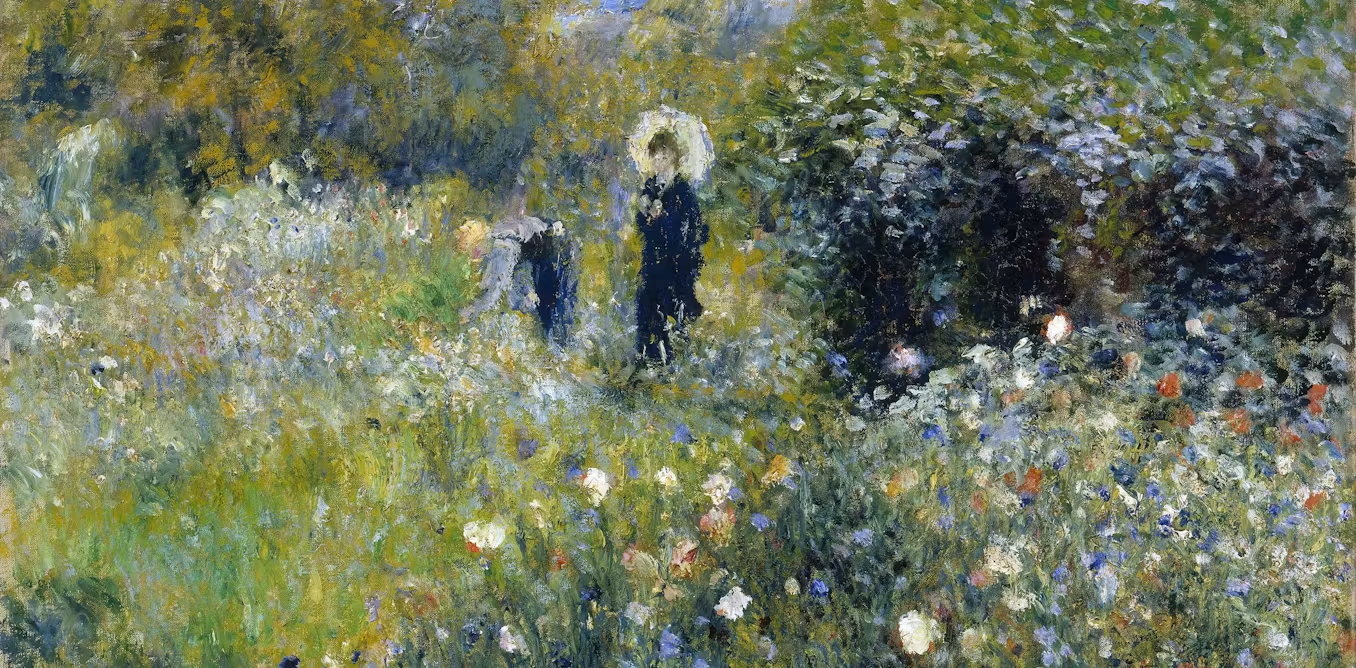
Dahlias thrust their colours skywards; hollyhocks frame a child at play; peasants tend cabbages; water lilies dot the surface of a pond. The “impressionist garden” captures all of these moments and more.

But why were Monet, Renoir, Morisot, Pissarro and their colleagues so attracted to gardens? It’s a subject I sought to answer in my book In the Gardens of Impressionism.

One answer lies in the sheer ubiquity and sensory intensity of gardens by the second half of the 19th century, when impressionism came into being. Social change that made leisure gardens accessible to all (no longer just kings and aristocrats) combined with “the great horticultural movement” – the introduction of new and exotic plants, trees and flowers as a result of imperial expansion, international trade and developments in technology.

Advertisement

Monet Painting in His Garden by Pierre-Auguste Renoir (1873).
Wadsworth Atheneum Museum of Art

“Ward cases”, named after their British inventor, botanist Nathaniel Bagshaw Ward, facilitated the transportation of live plants across the world. Glass and iron construction gave rise to greenhouses that allowed exotic and tender plants to be overwintered. New understanding of hybridisation, fuelled by Charles Darwin’s discoveries, made flowers ever bigger, more scented or overtly decorative, while also boosting commercial vegetable growing.

Gardens, in short, were central to the “modern life” that the impressionists radically pursued – answering powerfully their desire to capture the sensations of the present moment in spontaneous brushwork and vibrant palette.

Green lungs

In Paris, the new parks introduced by Napoleon III from the 1850s were essential to public hygiene: green lungs above ground complementing the new sewer-arteries below ground, as part of France’s fight against cholera.

The city’s trees and lavish corbeilles (floral display beds) were also undeniably alluring. Yet the impressionists’ response was highly selective and often trod a delicate balance between the old and new.

Advertisement
A lively crowd of elegantly dressed Parisians gathers among trees in a sunlit garden, capturing a bustling social scene in Music in the Tuileries Gardens by Édouard Manet

Music in the Tuileries Gardens by Édouard Manet (1862).
The National Gallery

Édouard Manet subversively chose an old park, the Tuileries Gardens, for his pioneering depiction of modern life in 1863. Its fashionable figures listening to an off-scene band recede into a mass of trees that seems more like primal forest than cultivated green space.

And Pierre-Auguste Renoir recalled in old age how, before the modern tree-lined boulevards, manicured squares and English-style parks, there was “behind every house … a garden … Plenty of people still knew the pleasure of eating freshly-picked lettuce.”

Evicted in childhood to make way for the “new Paris”, Renoir had reason for his regret. Already in 1867, he had naughtily plonked a not-yet-in-bloom corbeille in the foreground of his painting of the Champs-Élysées. Napoleon’s prefect Baron Haussmann’s famous “bedding out” regime, intended to ensure continuous floral colour, here experiences an embarrassing glitch.

Advertisement
A bustling boulevard filled with crowds, carriages and festive displays along the tree-lined avenue in The Champs-Élysées during the Paris Fair of 1867 by Pierre-Auguste Renoir.

The Champs-Élysées During the Paris Fair of 1867 by Pierre-Auguste Renoir (1867).
WikiCommons

In 1875, Renoir made an old, overgrown garden in Montmartre, full of “poppies, convolvulus and daisies”, the subject of Woman with a Parasol in a Garden, in which nature seems to return to its original, uncultivated state.

Claude Monet likewise eschewed the arterial path newly driven through the Parc Monceau, capturing instead the play of light and shade on figures chatting under tall trees in a secluded corner of the former aristocratic garden appropriated by Haussmann for public use and speculative building.

It was, rather, in his private gardens at Argenteuil in the 1870s that Monet seemed – at least to some extent – to have echoed Haussmannian horticulture, by cultivating display beds and trying out new flowers. But even here, in the 1873 painting The Artist’s Garden in Argenteuil, his novelty giant dahlias surge across the picture surface like some colourful, organic riptide.

The private garden

If the impressionist garden was both outdoor studio and motif, what strikes the viewer in images like this is the evocation of what art experts nowadays call an attachment environment – a place imbued with personal significance, because it was cultivated by the artist himself.

Monet often inscribed his wife and young son within his Argenteuil artist’s garden. These paintings project familial pride and even hope for national renewal.

Advertisement
A young child stands amid tall blooming hollyhocks in a softly rendered garden scene, capturing light and innocence in Child Among the Hollyhocks by Berthe Morisot.

Child Among the Hollyhocks by Berthe Morisot (1881).
Wallraf–Richartz Museum

After the horror of the Franco-Prussian war and Paris Commune of 1870-1, when Monet and Camille Pissarro had taken refuge with their young families in London, the very act of growing a garden was inherently symbolic. It was a celebration of French soil following the loss of Alsace-Lorraine to Germany.

Pissarro’s multiple depictions of kitchen gardens near his home at Pontoise, meanwhile, asserted his utopian socialist vision of a better future based on working off the land – just as Berthe Morisot’s airily brushed images conflate the growth of her young child with that of cultivated nature.

Such images suggest that, for all their modernity, the impressionists shared the nostalgia for rural existence that accompanied urban expansion and industrialisation.

At rural Vétheuil, where he lived from 1879-81, Monet planted sunflowers almost obsessively in his steep, terraced garden overlooking the Seine. Their late-summer gold and yellow seems almost elegiac after Monet’s wife Camille’s tragic death in 187.

Advertisement
A vibrant garden path overflowing with colorful flowers leads toward a sunlit house, painted with lively brushstrokes in The Artist's Garden at Vétheuil by Claude Monet.

The Artist’s Garden at Vétheuil by Claude Monet (1881).
National Gallery of Art

Monet’s most ambitious garden was in turn at Giverny in Normandy, his near-sole painting motif for the last third of his life.

The new, scented and coloured hybrid water lilies he grew there were showpieces of modern horticultural invention – yet his serial paintings of his pond, capturing successive effects of light and atmosphere, construct a profoundly poetic vision of nature as a perpetually unfolding harmony. Coordinates disappear leaving only water, flowers and the reflected sky; the garden now embraces the cosmic.

It was only logical that Monet used this motif for his Paris Orangerie murals, which he gave to France as a first world war memorial. Water lilies open to the light, defeating darkness.

Though often called precursors of abstraction, the Orangerie’s Water Lilies offer the ultimate logic of the garden as attachment environment – encircling the viewer, placing us physically within the impressionist garden’s better world.

Advertisement

Do you have a favourite impressionist garden painting? Let us know in the comments below.


This article features references to books that have been included for editorial reasons, and may contain links to bookshop.org. If you click on one of the links and go on to buy something, The Conversation UK may earn a commission.

Source link

Advertisement
Continue Reading

NewsBeat

Breightmet residents raise concerns as Travellers remain on field

Published

on

Breightmet residents raise concerns as Travellers remain on field

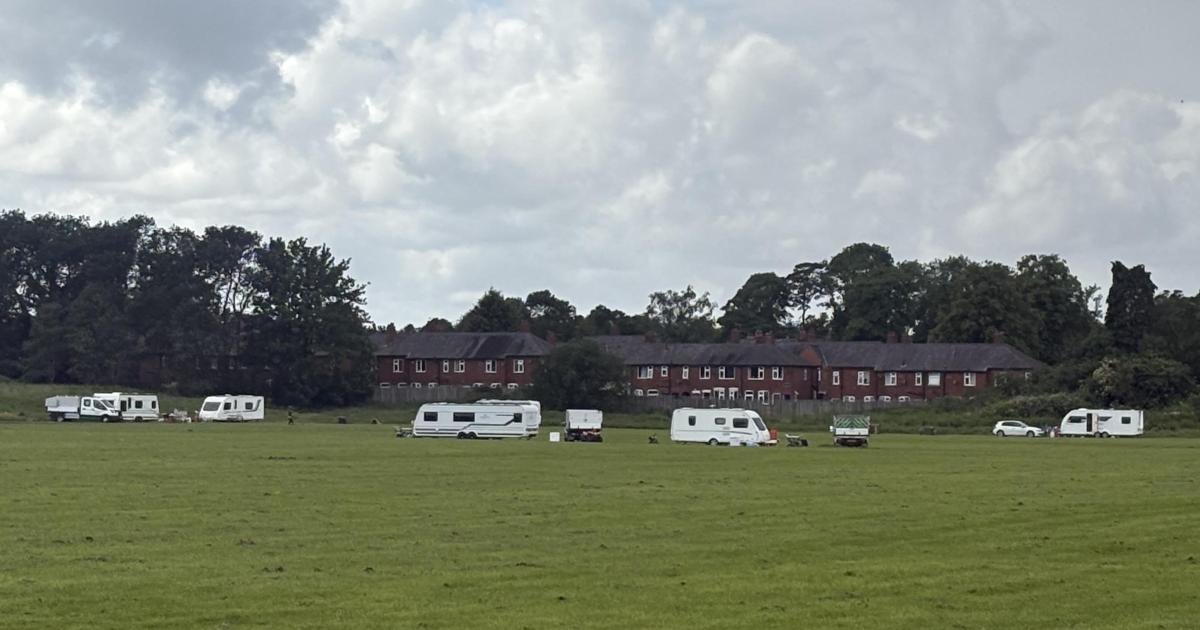
More than a dozen caravans have camped on New House Farm playing field, near Blenheim Road.

A resident said the group arrived on Thursday, June 4, with cars and caravans parked around the edge of the field.

The Bolton News approached individuals at the site last week, where two women and their children were present.

One woman said: “We’re just here for a few days.

Advertisement

“We won’t be here for long, and we’re not here to cause any trouble.”

Today (June 9), we returned to the playing field, where the travellers remain.

Most of the caravans are still on the field, however, it appears the family we spoke to last week have moved on.

Rubbish on New House Farm playing field, near Blenheim Road.New House Farm playing field, near Blenheim Road (Image: NQ)

The ground was littered with rubbish, a single tyre, a pair of shoes, a small TV and items of clothing.

Advertisement

Muddy tyre tracks were visible across the pitch, cutting through the grass and soft ground.

A Breightmet resident told The Bolton News: “Portable toilets have been emptied on the field.

“My kids are stuck inside, it smells so bad and they can’t play on the field.

“My autistic son can’t cope with the noise and being stuck inside, it’s a joke.”

Advertisement

New House Farm playing fieldNew House Farm playing field (Image: NQ)

This comes just weeks after human waste was found at Longsight Park after a traveller encampment left the area.

In May, eight caravans had been parked there before Bolton Council served a legal notice ordering those on the site to leave.

The litter left behind, believed to have been left by the travellers, resulted in a “major clean-up operation” involving councillors, volunteers and community groups.

The traveller encampment in BreightmetThe traveller encampment in Breightmet (Image: NQ)

The Gypsy and Traveller way of life can involve travelling across the country and staying in different locations for varying periods in order to earn a living.

Advertisement

They are protected from discrimination under the Race Relations Act 1976 and the Human Rights Act 1998, alongside all ethnic groups with distinct cultures, languages or values.

When Gypsies park their caravans and vehicles in public places, such as car parks or on land where they should not be, it is classed as an “unauthorised encampment”.

Bolton Council has been contacted for comment regarding the encampment in Breightmet.

Shoes and rubbish left on the playing fieldShoes and rubbish left on the playing field (Image: NQ)

The illegal dumping of larger rubbish items is referred to as fly-tipping.

Advertisement

Under new government reforms aimed at tackling illegal waste dumping, fly-tippers could face up to five years in prison.

A new and tougher permit-based system will be brought into force in 2027, and those caught mishandling waste could face serious prison sentences.

Supporting the crackdown, Labour MP for Bolton West, Phil Brickell, said: “One of the issues raised with me time and time again on the doorstep is the issue of fly-tipping.

“It’s simply not good enough that some think it’s acceptable to dispose of their rubbish however they like.”

Advertisement

Source link

Continue Reading

Trending

Copyright © 2025