

Crypto World
Ethereum Price Slips 10% Behind Bitcoin as DeFi Engine Loses $43 Billion

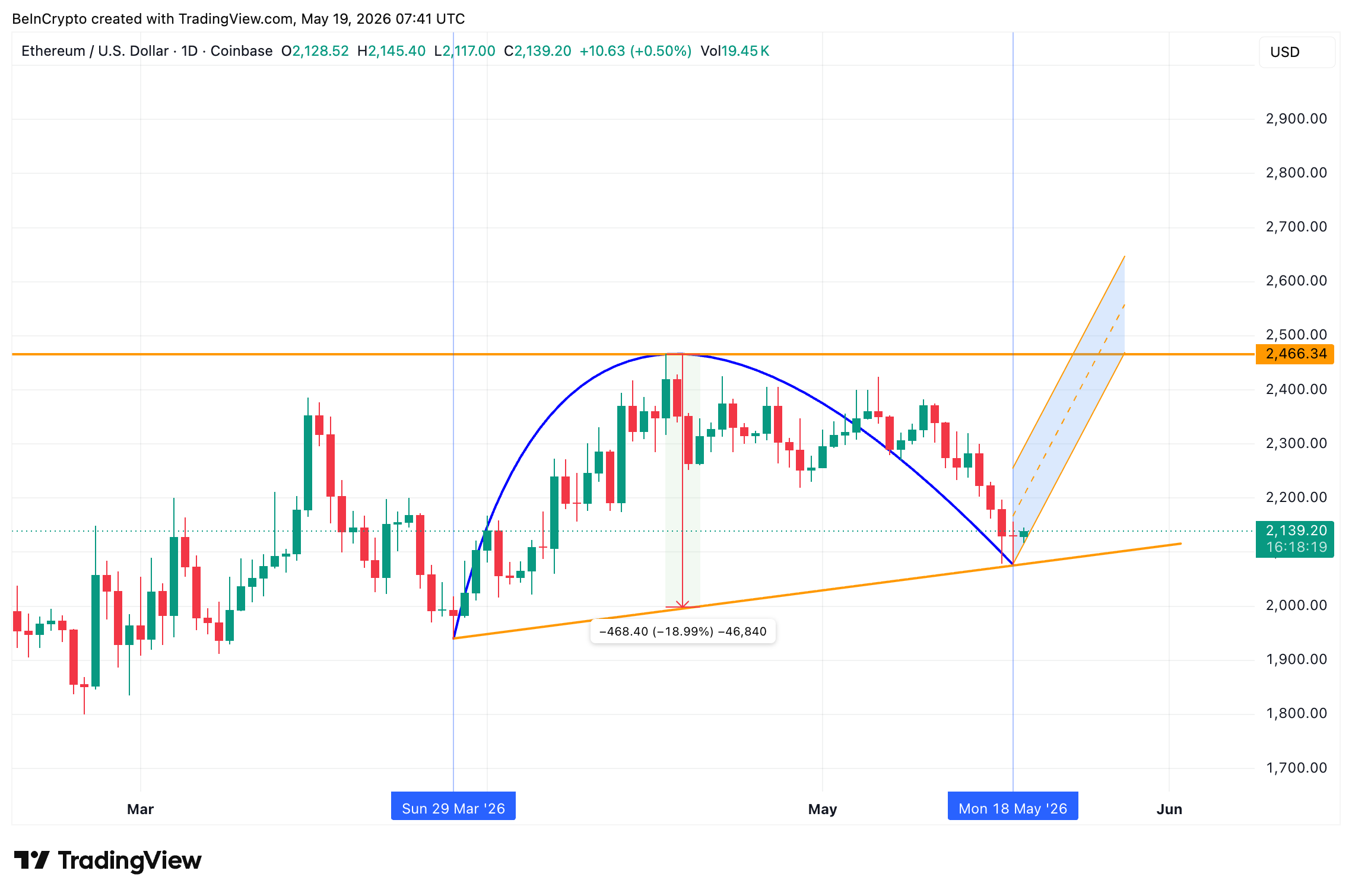
Ethereum (ETH) price is stalling near $2,140 as a sharp DeFi erosion since January now matches a bearish chart structure carved out over the past seven weeks.
The lag against Bitcoin and a sliding holder cohort suggest the price weakness may be more than a routine pullback. The structure on the daily chart and the on-chain data tell the same story from different angles.
Ethereum Price Mirrors DeFi TVL Collapse Since January Peak
Ethereum has carved an inverted cup pattern on the daily chart between March 29 and May 18. The current rebound looks more like a handle of the inverted cup.
Want more token insights like this? Sign up for Editor Harsh Notariya’s Daily Crypto Newsletter here.
The formation is a bearish setup where price peaks in the middle of a rounded top and then forms a brief recovery handle. The pattern signals continuation lower if the cup’s neckline breaks.

The price structure tracks the network’s deteriorating DeFi position. Ethereum DeFi TVL has fallen from $106.687 billion on January 15 to $62.957 billion as of May 18, a drop of nearly 41% in four months.
The damage extends into the same window that produced the bearish pattern. Around late March, just before the inverted cup began forming, the network’s DeFi TVL stood near $80.32 billion. It has shed roughly $17 billion since, mirroring the cup’s descent on the price chart. This fundamental erosion could be the reason why Bitcoin is up 2% month-on-month but ETH is down 8%. That explains the 10% lag between the top two cryptocurrencies.

The handle now forming shows a brief bounce. Whether this rebound has legs depends on whether the underlying network activity stabilizes, or whether other holder cohorts confirm the same caution.
Mid-Term Holders Cut Stake as DeFi Stress Spreads
On-chain data from Glassnode reinforces the weakness. The HODL Waves indicator, a metric that tracks the share of Ethereum supply held across different age buckets, shows the 3-month to 6-month cohort has dropped sharply.
The cohort held 18.63% of total ETH supply on April 7, when the inverted cup was still forming its right side. As of May 18, the same cohort holds just 12.73%, a roughly six-percentage-point decline in six weeks.
The drop matters because the 3m-6m bucket captures mid-term holders, often a steadier base than short-term speculators. Their decision to either spend ETH or let them age out without rebuilding the bucket suggests possible loss of conviction, tied to the same DeFi erosion playing out across the network.

With both Ethereum DeFi TVL and a steady holder cohort sliding together, the case for a deeper move has built quietly underneath an ETH price chart that still looks indecisive. The chart now becomes the decider.
Ethereum Price Levels That Decide the 19% Risk
Ethereum price needs to clear $2,132 immediately to keep the handle’s bounce alive. A break above $2,210, the 0.382 Fibonacci level drawn from the $1,799 swing low to the $2,464 swing high, would mark the first sign of returning strength.
The pattern only begins to weaken if ETH reclaims $2,307. It is fully invalidated above $2,464, the prior peak that defines the cup’s rim.
On the downside, a failure at $2,132 exposes $2,087, the neckline of the formation. A daily close below $2,087 would confirm the breakdown.
The measured-move target then sits at $1,690. This level is roughly 19% below neckline and carries the full risk built up by the cup’s depth.

The pattern nuance worth flagging is that inverted cup and handle setups only confirm on a clean break below the neckline. Until that happens, the handle bounce remains in play. The $2,087 floor separates a recovery toward $2,210 from a measured slide toward $1,690.
The post Ethereum Price Slips 10% Behind Bitcoin as DeFi Engine Loses $43 Billion appeared first on BeInCrypto.

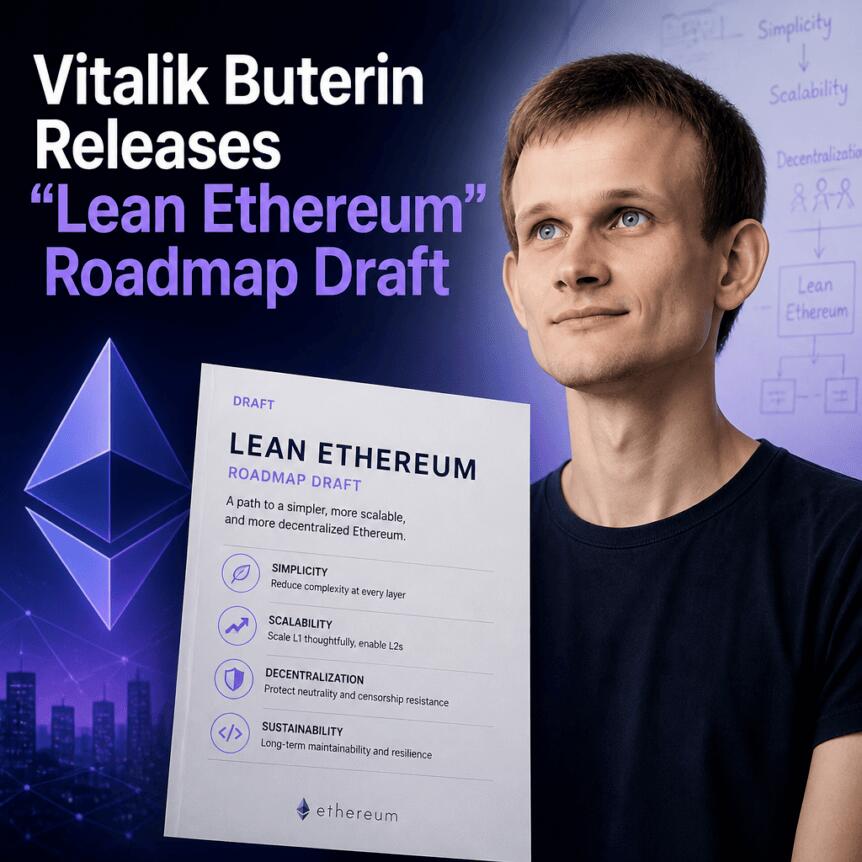
Ethereum co-founder Vitalik Buterin has laid out a new long-term technical direction for the network under a “Lean Ethereum” strawmap, prioritizing quantum resistance, scalability, and privacy. In a post shared on X, Buterin said the upgrade effort is expected to roll out over the next three to four years, spanning nearly every layer of Ethereum.
Buterin framed the proposed transformation as comparable in magnitude to Ethereum’s September 2022 “Merge,” which moved the network away from energy-intensive mining. He also said that “quantum safety has shifted up a LOT in priority,” and that arriving at a quantum-safe approach for “blobs” has become urgent. Privacy, meanwhile, was described as a “first class goal.”
Key takeaways
- Buterin’s “Lean Ethereum” strawmap targets quantum resistance, scalability, and privacy as top priorities.
- The roadmap envisions deployment over roughly the next three to four years, affecting multiple Ethereum layers.
- Quantum-safe protection for “blobs” is highlighted as an urgent item to finalize.
- Privacy is treated as a core objective rather than a secondary enhancement.
- Critics question whether the Ethereum Foundation can deliver the timeline, and note missing items such as ETH tokenomics.
A wider overhaul beyond a single upgrade
In his X post, Buterin described “Lean Ethereum” as a strawmap for technical work across the remainder of the decade. While the exact list of upgrades isn’t fully detailed in the coverage provided, the thrust is clear: the roadmap aims to unify improvements that span security, throughput, and user protections.
Quantum readiness is now positioned at a higher tier of urgency. Buterin specifically pointed to the need for quantum-safe solutions related to blobs—an element of Ethereum’s scaling design that supports data availability for rollups. If implemented on schedule, these changes would aim to reduce the risk that future quantum computing advances could undermine cryptographic assumptions used across parts of the system.
Roadmap timeline and why it matters for users
Buterin’s stated expectation is that the upgrades will be delivered over the next three to four years. The comparison to the 2022 Merge matters because it signals that the update plan is intended to be more than incremental tuning. The Merge wasn’t just a software revision—it reshaped Ethereum’s consensus mechanism, changing its operating model for years to come.
For developers and ecosystem participants, a roadmap that touches “nearly every layer” implies coordination across execution, data handling, and privacy-related tooling. For users and applications, improvements in scalability and privacy can directly affect transaction costs, throughput, and the strength of protections around sensitive activity.
Buterin also advocated for building a new virtual machine concept—described as being like “leanISA or RISC-V”—with an emphasis on programmable privacy and improved scalability. If this direction accelerates, it could influence how future smart contract execution and privacy primitives are designed and integrated across the stack.
Foundation restructuring adds pressure to execute
The roadmap arrives at a time when the Ethereum Foundation has been undergoing organizational changes. Cointelegraph previously reported that the foundation cut roughly 20% of staff as part of an effort to become leaner and reduce its budget by 40%. That restructuring follows executive departures mentioned in recent months, including Hsiao-Wei Wang and Tomasz Stańczak, while protocol contributors Tim Beiko and Barnabé Monnot also left in May.
In that context, the “lean” theme of Buterin’s plan has an added layer of significance. A technical roadmap spanning years typically depends on sustained contributor capacity, research throughput, and execution discipline. Budget and staffing reductions can either sharpen focus—or make delivery timelines harder—depending on how workstreams are reorganized.
Both Buterin’s technical goals and the foundation’s operational shift will therefore be read closely by builders who need predictability for roadmaps such as rollup integrations, privacy tooling, and core protocol changes.
Pushback on delivery speed—and on what’s missing
Not everyone agrees with the practicality of the proposed three-to-four-year window. Dankrad Feist, a researcher behind the payments-focused layer-1 Tempo blockchain, praised the direction but argued the timeline is too slow. He suggested that AI could help developers ship the upgrades within a year, an assertion that highlights the debate over whether the bottleneck is fundamentally technical complexity, coordination, or resourcing.
Crypto analyst Ignas Fiodorovas also supported the overall plan while expressing doubt about the Ethereum Foundation’s ability to deliver within the stated timeframe. His reasoning, as reported, pointed to the organization’s history of missing deadlines—an issue that matters because credibility around timing affects investor expectations, developer planning, and the broader ecosystem’s willingness to align product timelines to Ethereum core changes.
Fiodorovas also said the only key feature missing from the roadmap was improved tokenomics for Ether (ETH), noting that ETH has continued to slide in price amid broader market weakness. That critique underscores a recurring tension in crypto governance and roadmap setting: technical upgrades may improve the network’s functionality, but participants often also expect clearer signals on economic incentives and value capture mechanisms.
What to watch next
Readers should watch for concrete milestones tied to quantum-safe handling for blobs, as well as any detailed proposals for privacy-focused execution and the proposed “lean” virtual machine direction. Just as importantly, the ecosystem will want clarity on resourcing and sequencing—especially after recent foundation restructuring—as timing, coordination, and deliverable scope will determine whether “Lean Ethereum” becomes a coordinated execution plan or remains a broad intent statement.
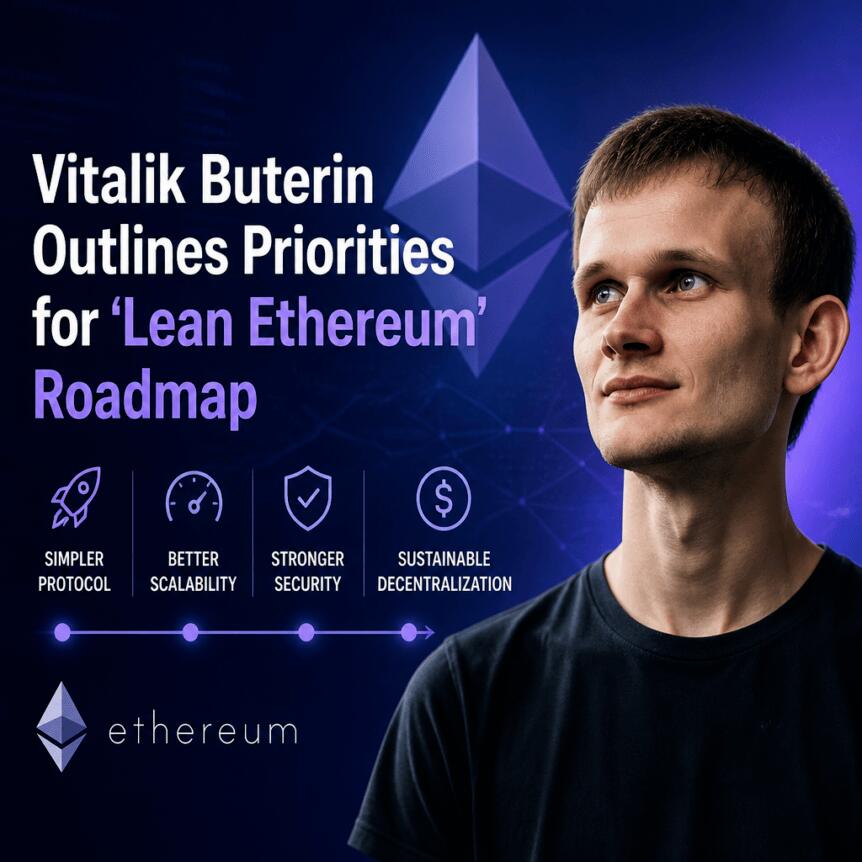
Ethereum co-founder Vitalik Buterin has outlined a renewed technical direction for the network in a new “Lean Ethereum” strawmap, placing quantum resistance, scalability, and privacy at the top of Ethereum’s priorities for the coming years. In a post on X, Buterin said the roadmap is designed to be rolled out over the next three to four years and to span “nearly every layer” of the ecosystem.
Buterin compared the expected breadth of change to the September 2022 “Merge,” when Ethereum shifted away from energy-intensive mining to a proof-of-stake consensus mechanism. The updated plan also comes as Ethereum Foundation restructuring efforts are ongoing, following recent staffing cuts intended to reduce spending and streamline operations.
Key takeaways
- “Lean Ethereum” prioritizes quantum safety, scaling improvements, and stronger privacy, with changes planned across most parts of the stack.
- Buterin says quantum safety has become a much higher priority and that finalizing a quantum-safe approach for “blobs” is now urgent.
- Privacy is described as a “first class goal,” alongside efforts to expand programmable privacy and scalability.
- Several Ethereum Foundation departures and a reported ~20% staff reduction have raised questions about delivery timelines.
- Critics argue the three-to-four-year window may be too slow and question whether the Ethereum Foundation can meet the proposed schedule.
Quantum safety and “Lean” upgrades across Ethereum
Buterin’s post frames “Lean Ethereum” as a long-running technical roadmap that begins in 2026 and extends through 2029, according to the strawmap hosted on Strawmap.org. The thrust is not a single upgrade, but a coordinated sequence of work meant to address multiple categories of risk and performance constraints.
One of the most urgent elements, according to Buterin, is quantum safety. He stated that “quantum safety has shifted up a LOT in priority,” and specifically flagged the need to finalize a quantum-safe solution for Ethereum’s “blobs.” While the details of that solution were not described in the article, Buterin’s emphasis suggests Ethereum is accelerating preparation for a future in which quantum computing could threaten today’s cryptographic assumptions.
Scalability remains another central theme. Buterin linked the roadmap to architectural improvements that touch the network broadly, echoing the scale of the Merge as an analogy for how disruptive but necessary the coming work could be.
Privacy moves from feature to priority
Alongside quantum safety and scalability, privacy has been elevated to the top tier of Ethereum’s objectives. Buterin said privacy has become a “first class goal,” signaling that privacy considerations are no longer expected to be an optional add-on for niche use cases.
Buterin also pushed for work on a new virtual machine design—described as similar to “leanISA or RISC-V”—intended to support programmable privacy and improve scalability. The thrust of this idea is to make privacy-related logic more adaptable at the protocol level, while continuing to address throughput and efficiency constraints that have historically shaped Ethereum’s upgrade path.
Ethereum Foundation restructuring adds delivery pressure
The timing of “Lean Ethereum” matters as Ethereum Foundation operations are undergoing changes. Earlier coverage noted that the Ethereum Foundation cut roughly 20% of its staff last month as part of an effort to become leaner and reduce its budget by 40%. The broader reorganization has also included executive departures in recent months, including Hsiao-Wei Wang and Tomasz Stańczak.
Protocol contributor exits were also reported. In May, Tim Beiko and Barnabé Monnot left, adding to a recent pattern of personnel changes.
From an investor and developer perspective, the key issue is not the concept of a new roadmap—Ethereum has repeatedly used multi-year upgrade plans—but the practical question of execution capacity. Roadmaps often collide with staffing, coordination bandwidth, and cross-client implementation realities, especially when multiple layers are expected to evolve in parallel.
Debate over whether the timeline is realistic
While some researchers praised the direction, the proposed three-to-four-year window drew immediate skepticism from others. Dankrad Feist, a researcher behind the payments-focused layer-1 Tempo blockchain, said the plan was positive but argued that the schedule may be too slow. He suggested that AI could help developers ship upgrades within a year.
Crypto analyst Ignas Fiodorovas also supported the general goals but raised doubt about whether the Ethereum Foundation can deliver within Buterin’s timeframe, citing what he described as a history of missed deadlines. Importantly, his critique focused less on the technical ambition and more on execution risk—how likely teams are to complete complex protocol changes on schedule.
Fiodorovas also pointed out a perceived omission from the strawmap: improved tokenomics for Ether (ETH). In the article’s reporting, he connected that gap to ongoing downward pressure on ETH’s price amid a broader market downturn, implying that even a technically successful roadmap may not directly satisfy market expectations in the near term.
These tensions highlight a recurring dynamic in large-scale blockchain roadmaps. Technical upgrades can strengthen the network’s long-term security and usability, but token performance, governance priorities, and deliverable milestones often remain coupled in traders’ minds—particularly when the community expects ecosystem-wide “leaning” to translate into clearer value capture or incentives.
Looking ahead, readers should watch for clarification on how Ethereum intends to finalize a quantum-safe approach for blobs and what specific milestones are attached to the 2026–2029 strawmap. The next signal to monitor will be whether the Foundation’s reorganized structure—and the teams implementing across multiple clients and layers—can convert the roadmap into measurable, time-bound deliverables.
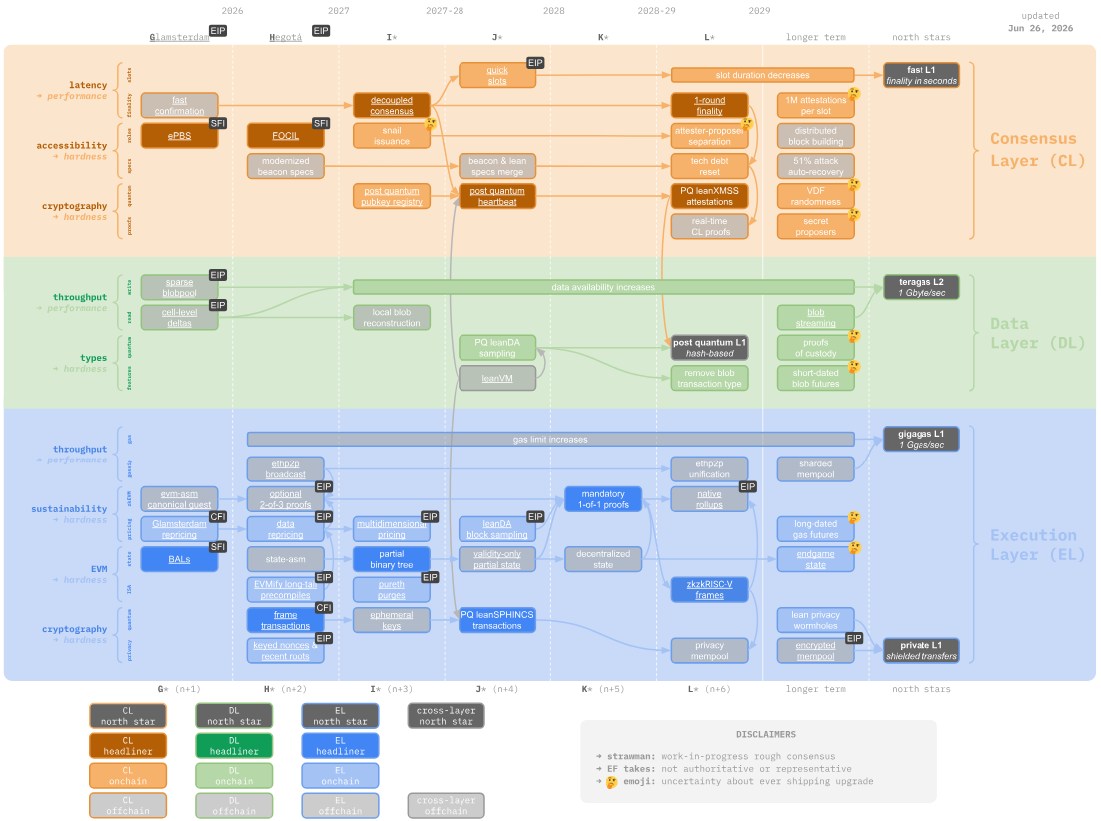
Ethereum co-founder Vitalik Buterin has named quantum resistance, scalability and privacy as three of Ethereum’s top priorities under a new “Lean Ethereum” strawmap, which lays out the network’s technical direction for the remainder of the decade.
In a post to X on Saturday, Buterin said the collection of upgrades will roll out over the next three to four years, touching nearly every layer of Ethereum in a transformation he compared in scale to the September 2022 Merge, which shifted the network away from energy-intensive mining.
“Quantum safety has shifted up a LOT in priority,” he said, adding that finalizing a quantum-safe solution for blobs has “become urgent.” Enhancing privacy is another priority, Buterin said, stating that it has become a “first class goal.”
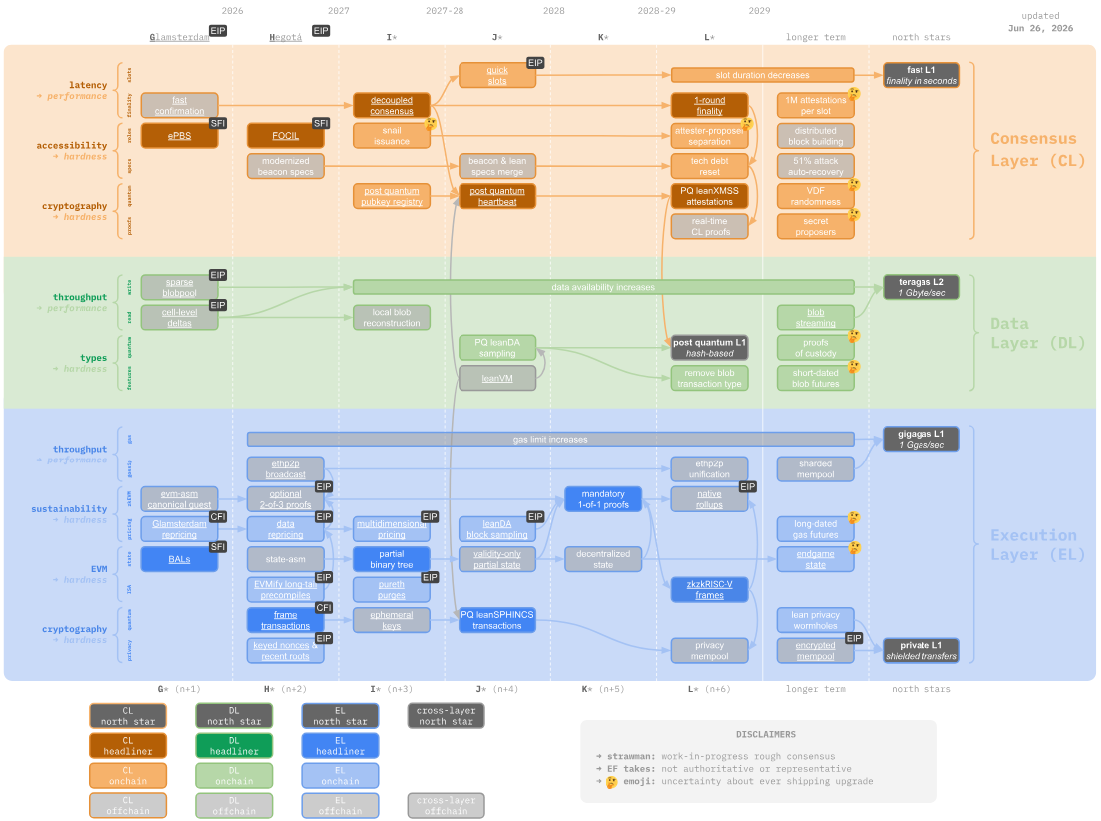
The “Lean Ethereum” strawmap timeline from 2026 through to 2029. Source: Strawmap.org
The change in roadmap comes amid a series of changes at the Ethereum Foundation, which laid off roughly 20% of its staff last month in a bid to become leaner and reduce its budget by 40%.
The leaner structure comes on top of several executive departures in recent months, including Hsiao-Wei Wang and Tomasz Stańczak, while protocol contributors Tim Beiko and Barnabé Monnot also left in May.
Buterin is also pushing for the development of a new virtual machine like leanISA or RISC-V to support programmable privacy and better scalability.
Questions remain over Buterin’s timeline
Dankrad Feist, a researcher behind the payments-focused layer-1 Tempo blockchain, praised the new plan but argued the 3-4 year timeline is too slow, stating that AI could help developers ship the upgrades within a year.
Related: Ethereum Foundation leadership exodus continues with director’s departure
Crypto analyst Ignas Fiodorovas was also in favor of the plan but cast doubt on the Ethereum Foundation’s ability to deliver the upgrades within the stated timeline, citing the organization’s history of missing deadlines.
Fiodorovas said the only key feature missing from the roadmap was improved tokenomics for Ether (ETH), which has continued to slide in price amid a broader market downturn.
Magazine: Bitcoin decouples from tech stocks, Ether eyes ‘selling wave’: Market Moves

Bitcoin (BTC) closed June near its weakest level in almost two years after falling to around $58,000 on June 30, while spot Bitcoin ETFs extended a weeks-long run of heavy outflows.
The month, according to a Santiment market report, was less about one single crash and more about capital quietly leaving crypto for AI stocks while whales sat on their hands.
Bitcoin Struggles as ETF Outflows and Institutional Caution Weigh on Sentiment
Per Santiment’s July 2 report, June saw a growing divide between retail traders and large investors, with wallets holding less than 0.01 BTC increasing their holdings in the final two weeks of the month, while those with between 10 and 10,000 BTC reduced their exposure. This, in the firm’s opinion, suggested that large investors remain unconvinced that the market has found a bottom.
Another source of pressure came from ETFs. Since May 6, the last time there were consecutive days of inflows, spot Bitcoin ETFs have recorded about $8.9 billion in net outflows.
In June alone $4.51 billion went out of the funds, marking their worst month since launch, and Santiment argued that such heavy selling, pushing cumulative withdrawals ever closer to the psychologically significant $10 billion mark, can also reflect capitulation, with weaker hands leaving the market after a long decline.
The analytics platform also pointed to Strategy and its preferred stock as adding another layer of uncertainty after they fell well below par in June, hitting the $70s at one point and raising concerns about the company’s financial model, especially given the weakening state of BTC at the same time.
However, executive chairman Michael Saylor responded by introducing a Digital Credit Capital Framework designed to improve liquidity and support the company’s preferred stock obligations. He also defended Strategy’s recent sale of 32 BTC, saying that the world’s biggest corporate holder of Bitcoin had bought about 175,000 BTC this year and that he had not sold any of his personal stash.
The Santiment report had one theme recurring throughout: that money that might previously have flowed into crypto has instead moved into AI and semiconductor stocks. The firm’s analysts described AI equities as one of the biggest competitors for investor attention during June, leaving BTC without the institutional demand it had enjoyed earlier in the cycle.
That same point was made by HashKey researcher Tim Sun, who told CryptoPotato that capital was reallocating across risk assets rather than that investors were losing their appetite for risk altogether. According to him, there’s a chance that Bitcoin can pull that capital back if the AI trade gets overcrowded and corrects.
Market Still Found Bright Spots Despite a Difficult Month
The weakness described above was not universal, as Santiment highlighted that Hyperliquid was one of the strongest performers last month after its HYPE token climbed to new highs, supported by growing derivatives activity and new product launches.
Another that attracted attention was Lighter’s LIT, which announced tokenomics changes including buybacks, token burns, and staking incentives.
Elsewhere, Pump.fun generated substantial revenues even as it was reportedly in the market for a chief legal officer with a salary of up to $5 million, leading to speculation that it is getting ready for increased regulatory scrutiny.
Solana’s meme coin ecosystem also came back into the spotlight, with a number of influencer-backed launches, including The Black Bull (ANSEM), fronted by popular crypto figure Ansem, whose value at the time of writing had skyrocketed by nearly 88,000% in seven days per CoinGecko data.
Bitcoin itself has also shown some sign of stabilization, trading back above $61,000, but according to Santiment, June may be remembered less for the sell-off than for exposing which narratives are still attracting capital.
The post June 2026 Market Recap: Bitcoin Hits 2-Year Low as ETFs Bleed $8.9B appeared first on CryptoPotato.
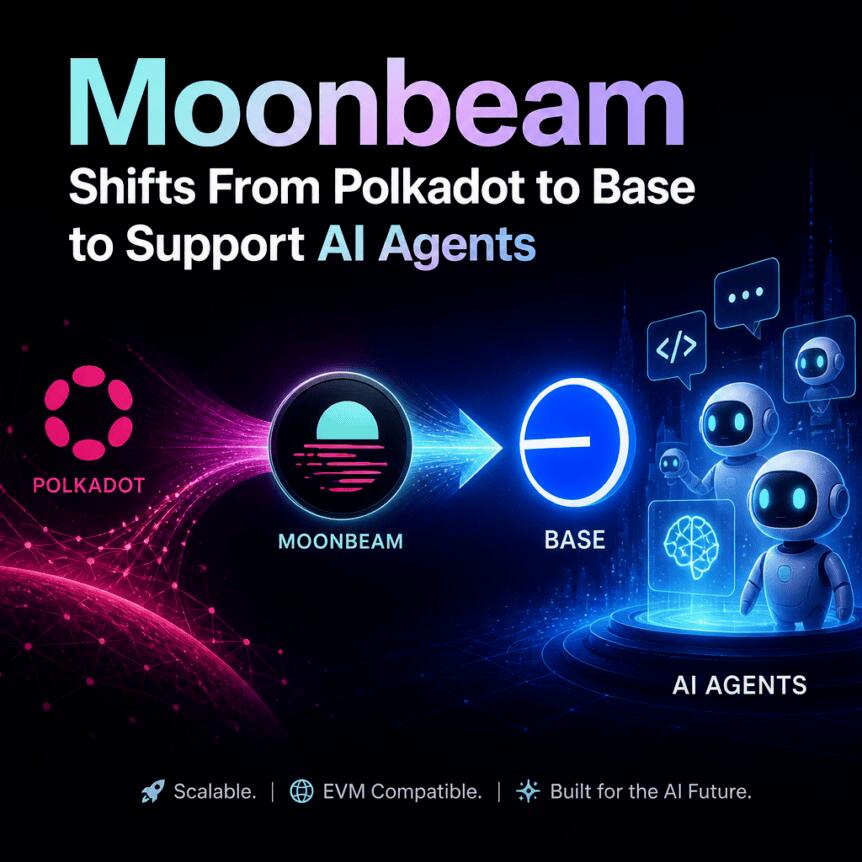
Moonbeam, an interoperability network originally built for Polkadot, says it is shifting its development focus to Ethereum’s Layer 2 Base. The company’s new plan centers on launching the “Moonbeam Protocol” as an AI agent communication and settlement network—an architecture it believes can benefit from growing interest in agent-driven, on-chain payments.
In a strategic update released Friday, Moonbeam framed the move as a pivot toward what it calls “autonomous AI agents” that can coordinate with one another, negotiate for work, and settle payments directly on-chain “without a middleman.” Moonbeam did not disclose a launch date for the Moonbeam Protocol.
Key takeaways
- Moonbeam says it is pivoting from its current Polkadot-centered roadmap to building an AI agent communication and settlement layer on Base.
- The company provided no timeline for the Moonbeam Protocol launch.
- Moonbeam tokenholders will need to bridge GLMR from Moonbeam’s Polkadot parachain to Base before July 31, 2026.
- Moonbeam says it will keep supporting its existing cross-chain interoperability services on the Polkadot parachain during the transition.
- The announcement lands as the broader “agentic” trend gathers institutional attention, but adoption in on-chain agent payment infrastructure remains limited.
Why Moonbeam is moving to Base for agent settlement
Moonbeam’s stated objective is to build an on-chain network designed for agent-to-agent coordination and settlement. The company argues that autonomous agents—programs that can locate each other, bargain over tasks, and execute payments—represent a “long-term opportunity” for blockchain infrastructure.
By relocating development resources to Base, Moonbeam is effectively betting that the practical bottleneck for agent-based ecosystems is moving from pure experimentation toward execution: enabling systems to transact reliably and automatically on-chain. The company didn’t specify the technical design of the Moonbeam Protocol, but its positioning suggests it intends to become a coordination layer for agent activity rather than just another cross-chain bridge.
Institutional and industry leaders have echoed similar expectations for agent-driven payments. Cointelegraph previously highlighted predictions from executives such as Coinbase CEO Brian Armstrong and Circle CEO Jeremy Allaire that AI agents could become major users of blockchain-based payments in the coming years.
At the same time, real-world adoption has not yet matched the narrative. Cointelegraph cited Artemis data indicating that only $2 million in trading volume had been facilitated through Coinbase’s x402 protocol over the prior 30 days, underscoring how early the space still is despite high-profile backing.
Polkadot concerns after Moonbeam’s pivot
The shift is also reverberating within the Polkadot community. Multiple voices on social media characterized Moonbeam’s pivot as a setback for Polkadot’s ecosystem, with at least one user calling it the network’s “flagship project.”
Moonbeam originally launched as a Polkadot parachain in January 2022, providing developers with the ability to build Ethereum Virtual Machine (EVM)-compatible applications inside the Polkadot environment. That origin is central to why the move is being seen as more than a simple product upgrade: it signals a reorientation of Moonbeam’s flagship direction away from its parachain-centric identity.
That said, Moonbeam’s statement also implies continuity during the transition period. The company says it will continue operating cross-chain interoperability services on the Polkadot parachain rather than immediately ceasing Polkadot-linked support.
How the GLMR migration works—and who must act
For existing users and decentralized finance participants, the most immediate question raised by the announcement is operational: what happens to GLMR tokens tied to Polkadot-based deployment.
Moonbeam said that GLMR holders will need to bridge their tokens from Moonbeam’s Polkadot parachain to Base before July 31, 2026. The update includes GLMR held in or connected to lending markets, staking contracts, and other DeFi protocols. That means many token balances that are not held in a simple wallet could require additional migration steps to preserve positions across chains.
Moonbeam also clarified that users who hold GLMR on a centralized exchange will not need to take action, suggesting exchanges will handle the process on behalf of customers.
Importantly, Moonbeam stated that it is not abandoning its existing builders or infrastructure providers. It intends to keep cross-chain interoperability running on the Polkadot parachain during the transition period, which may reduce the operational risk for teams and services that rely on ongoing interoperability rather than a clean cutover.
Still, for participants in lending, staking, and protocol integrations, the July 31, 2026 deadline effectively becomes the point by which on-chain and integration plans should be re-validated for Base. Investors and developers will likely want to track whether Moonbeam’s migration tools, cross-chain routing, and any protocol-level configuration changes are sufficient for complex DeFi positions—not just spot token transfers.
Agent hype meets slow infrastructure adoption
Moonbeam’s move reflects a broader push across crypto infrastructure to support agentic applications, but it also highlights the gap between expectations and current usage.
Coinbase’s x402 protocol has been one of the prominent catalysts in the “agentic payments” narrative, yet Cointelegraph’s cited Artemis figures indicate that activity remains comparatively small in dollar terms over a 30-day window. This suggests that even with major industry support, agent-driven on-chain payment flows are still early—and may depend on better consumer-facing products, clearer developer tooling, or stronger demand from actual agent deployments.
Outside crypto, progress is also uneven. Cointelegraph noted that Meta CEO Mark Zuckerberg said agent technology hadn’t accelerated the company’s workflows as quickly as expected, signaling that adoption cycles in the broader tech industry may be more gradual than early forecasts.
Within that context, Moonbeam’s strategy can be read as an attempt to move from agent experimentation toward an infrastructure layer that could standardize communication and settlement. Whether that standardization can translate into meaningful on-chain usage will be clearer only after the Moonbeam Protocol is deployed and used by developers and real agent systems.
For now, the key watchpoints are Moonbeam’s unspecified launch timeline, the execution details of the GLMR bridging process ahead of July 31, 2026, and whether early agent settlement activity grows enough to justify a full pivot to Base.
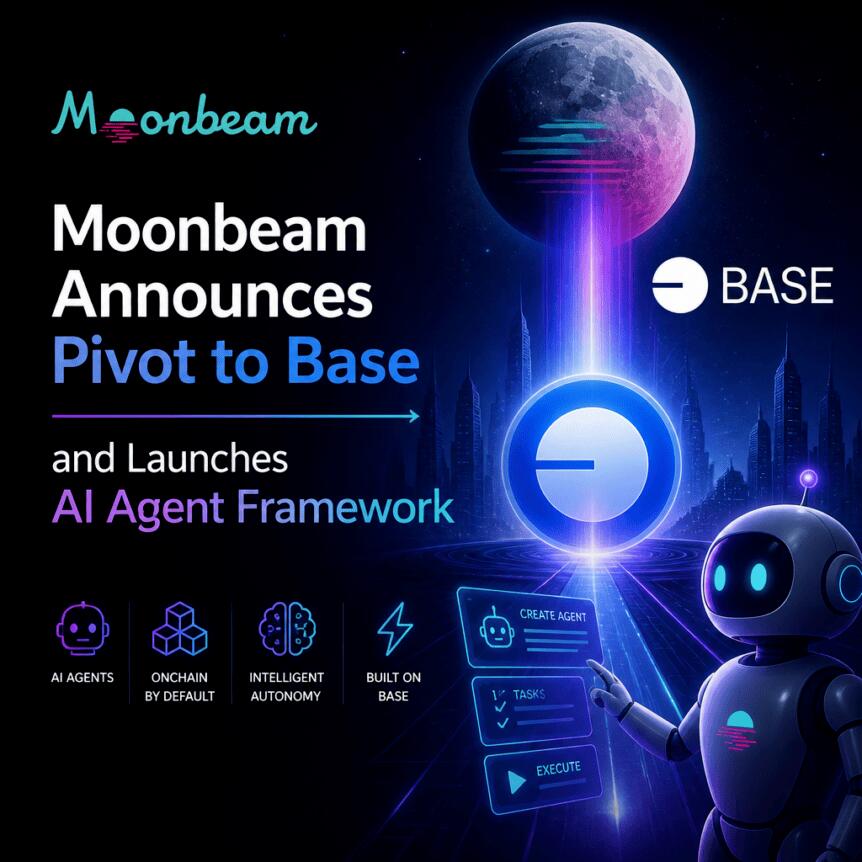
Moonbeam Network says it is shifting its focus from Polkadot to Ethereum layer 2 Base in order to build what it calls an “AI agent communication and settlement network.” The interoperability project framed the move as a strategic bet on autonomous, on-chain coordination between AI agents that can negotiate work and transact directly—without relying on a middleman.
In a Friday announcement, Moonbeam said the initiative is part of the “Moonbeam Protocol” and described the pivot as a reallocation of resources toward what it sees as the next major crypto frontier: agent-to-agent discovery, negotiation, and fully on-chain payments. The company did not provide a launch timeline for the Moonbeam Protocol.
Key takeaways
- Moonbeam is pivoting from Polkadot to Base to support an AI agent communication and settlement network.
- Moonbeam did not specify a launch date for the Moonbeam Protocol.
- GLMR token holders are instructed to bridge from Moonbeam’s Polkadot parachain to Base before July 31, 2026.
- Moonbeam says it will continue interoperability support on Polkadot during the transition and will not abandon existing builders or infrastructure providers.
Why Moonbeam is betting on Base for “agent settlement”
Moonbeam’s statement positions the Base pivot as more than a chain migration. The company argues that the most compelling long-term use case for blockchain is the emergence of autonomous AI agents that coordinate with each other on-chain and settle payments end-to-end.
That framing aligns with broader industry momentum around “agentic” workflows—an area where executives have repeatedly suggested that AI agents will become major users of blockchain-based payments. Cointelegraph previously reported on expectations from leaders including Coinbase CEO Brian Armstrong and Circle CEO Jeremy Allaire that AI agents could drive demand for on-chain payments in the coming years.
Still, adoption has been uneven. Cointelegraph noted earlier that while Coinbase’s x402 payments protocol has been a high-profile catalyst for the agent-payments narrative, Artemis data indicated only about $2 million in trading volume facilitated through x402 over the past 30 days. In parallel, Big Tech experimentation has not always translated into faster production deployment; Meta CEO Mark Zuckerberg said on Thursday that agent tools had not accelerated the company’s workflows as quickly as expected, according to Cointelegraph coverage.
Against that backdrop, Moonbeam’s move to Base suggests a strategic attempt to connect agent functionality with a more established Ethereum scaling ecosystem—while positioning its interoperability expertise as the connective tissue for cross-chain agent activity.
Community backlash and Polkadot ecosystem concerns
Not everyone welcomed the shift. Several community members characterized Moonbeam’s pivot as a setback for Polkadot, with some referring to Moonbeam as a flagship project for the ecosystem.
Moonbeam originally launched in January 2022 as a Polkadot parachain. At the time, it offered developers the ability to build Ethereum Virtual Machine-compatible applications within the Polkadot environment—an approach designed to lower the friction for Ethereum-native tooling and developer workflows while still benefiting from Polkadot’s broader interoperability vision.
Moonbeam’s new direction therefore changes the practical center of gravity for its future roadmap. Even if existing functionality remains supported for a transition period, the messaging implicitly signals that Moonbeam intends to prioritize agent-native settlement and coordination on Base going forward.
Bridging instructions for GLMR before mid-2026
The most immediate operational change concerns token movement. Moonbeam said holders of its token, GLMR, will need to bridge assets from Moonbeam’s Polkadot parachain to Base before July 31, 2026. This includes GLMR exposure in lending markets, staking contracts, and other DeFi protocols connected to the parachain.
Moonbeam also clarified that users who hold GLMR through a centralized exchange will not need to take action, implying that the exchange layer will handle the migration on their behalf.
Importantly, Moonbeam said it will keep providing cross-chain interoperability services on Polkadot through the transition period. The company added that it is not abandoning existing builders or infrastructure providers—an assurance intended to reduce the risk that the shift could leave teams stranded on Polkadot immediately.
For participants, the decision raises a practical set of questions that will matter as the deadline approaches: how bridge support will be maintained across different contract types, how long existing integrations will remain fully functional on the parachain, and what future liquidity and settlement patterns will look like once the activity concentrates on Base.
What investors and builders should watch next
Moonbeam did not provide a Moonbeam Protocol launch schedule, which leaves timelines and implementation details open. The next key items for market participants are likely to be: updates on the bridging process and user-facing tooling ahead of the July 31, 2026 deadline; clarification on how DeFi and staking setups will evolve during the transition; and—critically—whether Moonbeam’s agent-focused settlement network attracts real on-chain usage, particularly in light of past reports suggesting that agent payment adoption has been slow even where the concept has momentum.

Polkadot-based interoperability protocol Moonbeam said it is pivoting to Ethereum layer 2 Base to launch an AI agent communication and settlement network, aimed at capturing a share of the emerging market.
“This is a pivot to the most exciting frontier in crypto: autonomous AI agents that find each other, negotiate work, and pay each other entirely on-chain, without a middleman,” Moonbeam said in a statement announcing the Moonbeam Protocol on Friday.
“We believe AI-native on-chain coordination represents a significant long-term opportunity. This transition allows us to focus resources around that direction,” Moonbeam added.
Moonbeam didn’t provide a launch timeline for the Moonbeam Protocol.

Source: Moonbeam
Agentic development has seen considerable adoption in the crypto industry, with Coinbase CEO Brian Armstrong and Circle CEO Jeremy Allaire among the executives predicting that AI agents will become the dominant users of blockchain-based payments in the coming years.
Coinbase’s x402 payments protocol has been one of the biggest drivers behind that push, while layer 1 blockchains Aptos and Near have also rolled out infrastructure to support agent-driven onchain activity.
Adoption in blockchain-based payments space has struggled to take off, however, with data from Artemis showing that only $2 million in trading volume has been facilitated through the x402 protocol over the past 30 days.
AI agent development is progressing slowly in Big Tech too, with Meta CEO Mark Zuckerberg stating on Thursday that the technology hasn’t accelerated the firm’s workflows as quickly as expected.
Moonbeam pivot a blow to Polkadot
Several members of the crypto community said Moonbeam’s pivot marked a major setback for the Polkadot ecosystem, with one X user calling Moonbeam Polkadot’s “flagship project.”
“That’s a real pain in the ass for Polkadot,” another X user said.
Moonbeam launched as a Polkadot parachain in January 2022, providing developers the ability to build Ethereum Virtual Machine-compatible applications directly in the Polkadot ecosystem.
Moonbeam users instructed to migrate tokens
Moonbeam (GLMR) holders will need to bridge their tokens from Moonbeam’s Polkadot parachain to Base before July 31, 2026, including GLMR tied in lending markets, staking contracts and other decentralized finance protocols, Moonbeam said.
Related: Why a ‘safe’ AI can turn dangerous in the wrong company
Those holding the token on a centralized exchange won’t need to take any action, Moonbeam said.
Moonbeam said it will continue providing its cross-chain interoperability services on the Polkadot parachain through the transition period and is not abandoning its existing builders or infrastructure providers.
Magazine: Bitcoin decouples from tech stocks, Ether eyes ‘selling wave’: Market Moves

As confidence gradually returns to the cryptocurrency market, one question continues to dominate investor conversations: what is the best crypto to buy now? For some, the answer lies in established blockchain giants like Ethereum or XRP, two projects that have spent years building their ecosystems and communities. For others, the biggest opportunities are often found much earlier, before a project reaches exchanges and the wider market begins paying attention.
That shift in mindset has placed crypto presales back in the spotlight.
While blue-chip cryptocurrencies continue to attract long-term investors, many market participants are once again researching emerging projects that offer something established assets simply can’t: the opportunity to invest at the earliest possible stage. Among the projects attracting increasing attention is IceBull, an Ethereum-based meme coin that has officially launched Stage 1 of its crypto presale.
Rather than competing directly with Ethereum or XRP, IceBull offers investors a different opportunity altogether, participating while the project is still in its earliest growth phase.
 Ethereum Continues to Set the Standard for Blockchain Innovation
Few cryptocurrencies have influenced the industry as much as Ethereum. Since introducing smart contracts, Ethereum has become the foundation for decentralised finance, NFTs, blockchain gaming and thousands of Web3 applications. Millions of users interact with Ethereum every day, making it one of the most widely adopted blockchain ecosystems in the world.
Its transition to Proof-of-Stake also transformed the network, allowing holders to stake ETH while significantly reducing energy consumption. For investors seeking long-term exposure to blockchain technology, Ethereum remains one of the strongest and most established assets available.
However, its maturity also means many investors now complement their portfolios with smaller projects that may offer greater upside if they successfully execute their roadmaps.
XRP Remains One of Crypto’s Most Recognisable Payment Networks
XRP has built its reputation around one core objective: making international payments faster and more efficient.
Over the years, it has remained among the cryptocurrency market’s largest digital assets despite periods of regulatory uncertainty. Its transaction speed, relatively low fees and established global community continue attracting investors looking for exposure to payment-focused blockchain technology.
As institutional interest in digital assets continues evolving, XRP remains firmly on many investors’ watchlists.
Like Ethereum, however, XRP is already a mature project. While it continues developing, much of today’s attention is centred around adoption, regulation and ecosystem growth rather than early-stage discovery.
IceBull Offers Something Different
Unlike Ethereum and XRP, IceBull isn’t trying to replace existing blockchain infrastructure. Instead, it’s building an Ethereum-based community token centred around transparency, participation and long-term growth.
With IceBull Crypto Presale now officially live, investors can participate in Stage 1, where the lowest presale pricing is currently available before prices increase throughout the remaining stages.
The project features a structured 16-stage presale, allowing token pricing to gradually increase as demand grows while giving participants complete visibility throughout the fundraising campaign.
Alongside its Ethereum foundation, IceBull also offers:
- Audited smart contracts
- Team allocation vesting
- Up to 80% APY staking
- Community-driven development
- 10% referral rewards for both referrer and buyer on qualifying purchases
- Transparent tokenomics
For investors looking beyond established cryptocurrencies, Stage 1 provides the earliest opportunity to join the project before future presale price increases and exchange listings.
Why Crypto Presales Continue Attracting Attention
Presales have always occupied a unique position within the cryptocurrency market. Rather than buying after public trading begins, participants can evaluate a project while it’s still in its earliest phase. That doesn’t eliminate risk, but it does create opportunities that no longer exist once a token reaches exchanges.
Experienced crypto investors typically focus on several key areas before considering any presale:
- Transparent token supply
- Clearly explained tokenomics
- Realistic roadmap
- Community engagement
- Smart contract security
- Long-term development plans
Projects that communicate these fundamentals clearly often inspire greater confidence than those relying purely on marketing.
With IceBull Crypto Presale now live, investors can purchase tokens directly through the official website during Stage 1. As the presale progresses through each stage, token prices increase according to the published pricing schedule, rewarding those who participate early.
IceBull, Ethereum and XRP Compared
| Feature | IceBull | Ethereum | XRP |
| Current Status | Stage 1 Presale Live | Live | Live |
| Blockchain | Ethereum | Ethereum | XRP Ledger |
| Exchange Listed | No | Yes | Yes |
| Entry Stage | Stage 1 Presale | Established | Established |
| Smart Contract Platform | ERC-20 | Native | Native |
| Community Focus | High | High | High |
| Staking | Up to 80% APY | Available | Limited |
Each project appeals to a different type of investor. Ethereum continues driving innovation across decentralised applications. XRP focuses on improving digital payments and financial infrastructure. IceBull, meanwhile, is aimed at investors looking to discover projects while they remain in the earliest stages of development.

Why Timing Matters
One of the biggest differences between established cryptocurrencies and crypto presales is timing. Ethereum and XRP are both available on major exchanges today. IceBull Crypto Presale, however, is currently in Stage 1, giving early participants access before future presale price increases and the project’s planned exchange listings.
For investors who enjoy identifying opportunities early, Stage 1 represents the earliest public entry point currently available. As with any cryptocurrency investment, carrying out independent research and understanding a project’s roadmap and tokenomics remains essential.
Final Thoughts
There is no single answer to the question of the best crypto to buy now because every investor has different goals and risk tolerance. Ethereum continues to lead the smart contract ecosystem with one of the strongest developer communities in blockchain. XRP remains a significant player within digital payments and cross-border settlement.
Meanwhile, IceBull offers something different. With IceBull Crypto Presale now live in Stage 1, investors have the opportunity to participate while the project remains in its earliest phase. Featuring a structured 16-stage presale, audited smart contracts, staking rewards, referral incentives and an Ethereum foundation, IceBull is becoming one of the emerging crypto projects many investors are watching as the next market cycle approaches.

For More Information:
Website: https://www.icebull.com/
Telegram: https://t.me/IceBullCoin
Frequently Asked Questions
What is the best crypto to buy now?
The best crypto to buy now depends on your investment strategy. Some investors prefer established assets like Ethereum or XRP, while others are exploring early-stage opportunities such as IceBull Crypto Presale, which is currently live in Stage 1.
Is IceBull live?
Yes. IceBull is now live, and Stage 1 of the crypto presale is officially open. Investors can participate through the official website.
Why are investors watching IceBull?
IceBull combines a structured 16-stage presale, audited smart contracts, up to 80% APY staking, referral rewards, Ethereum-based infrastructure and a community-first approach, making it one of the emerging crypto projects attracting early attention.
How can I join the IceBull Crypto Presale?
You can participate by visiting the official IceBull Crypto Presale, connecting a supported wallet and purchasing during Stage 1 before future presale price increases.
Disclaimer
This article is for informational purposes only and should not be considered financial advice. Cryptocurrency investments involve risk, and readers should always conduct their own research before making any investment decisions.
Disclaimer: This is a Press Release provided by a third party who is responsible for the content. Please conduct your own research before taking any action based on the content.


The FIFA World Cup’s round of 16 matches are set to kick off on July 4, and football, or soccer as it’s known in the United States, has become the biggest driver of activity on prediction platforms, diverting attention from the political and macroeconomic markets they were originally built around.
This is according to data from research firm CryptoRank, which shows that the tournament has pushed prediction market volumes from just $65 million on June 1 to a monthly peak of $5.6 billion on June 22.
World Cup Drives Record Activity Across Prediction Platforms
Per CryptoRank’s data, throughout June, total trading volume across major prediction venues rose rapidly, from the aforementioned $65 million on June 1 to $340 million on June 8, just days before the World Cup started. A week later, on June 15, the volume had jumped to $2.2 billion, with 15 matches played, including the USA’s memorable 4-1 win over Paraguay in Los Angeles.
By the time 42 games had been played on June 22, trading on the platforms had gone up even higher, with CryptoRank reporting that volume had hit a high of $5.6 billion before showing a slight reduction seven days later, when about $5.4 billion in trades was recorded on June 29.
In a post on X on July 2, the firm said that Kalshi had accounted for much of that June activity, with its dashboard at the time of writing showing open interest, or the total value of active positions that have yet to be settled, standing at $1.84 billion. Of that amount, roughly $1.45 billion was on Kalshi while Polymarket held about $390 million.
During the previous week, open interest remained relatively stable on Kalshi at around $1 billion, while on Polymarket, it peaked at $475 million on June 30, the day Norway, Sweden, and the Netherlands were knocked out of the competition in dramatic style.
BitMart pointed to similar trends on its own platform. With multiple research institutions projecting that the total global trading volume on prediction markets could reach $10 billion, the crypto exchange said that most of that traffic has so far been directed to centralized platforms like it, given their lower barriers to entry compared to on-chain prediction products that require private keys and gas fees as well as contract approvals that need several steps to complete.
As such, the CEX reported that its monthly prediction market volumes skyrocketed 1,500% from May after the World Cup started. It also said active users increased 4.6 times, while completed orders went up nearly 9 times.
Furthermore, according to the exchange, nearly 44% of newly registered users placed their first trade through its prediction markets, with football markets being the main attraction for the newcomers before some of them expanded into crypto price predictions.
An Industry With Some Baggage
Polymarket’s more subdued performance in the World Cup month compared to Kalshi has come against a backdrop of criticism on several fronts. For instance, a Wall Street Journal (WSJ) investigation published in June alleged that the platform has been using staged winning bets in promotional videos.
There was also a recent dispute that made headlines, in which a user accused Polymarket of changing the rules of a market tied to Strategy’s Bitcoin sale, raising questions about how such firms resolve contested outcomes.
The post World Cup Fever Fuels $5.6B Explosion in Prediction Markets appeared first on CryptoPotato.
MicroStrategy chief executive Phong Le has called Bitcoin (BTC) the “United States of money.” On-chain tracker Arkham says the $1 million bet he made on the firm’s preferred stock is back to break-even.
The purchase, in a securities filing, doubles as a personal wager on the company Le runs. Strategy, formerly MicroStrategy, is fighting to hold its Stretch preferred stock (STRC) near par after a Bitcoin slump.
$1 Million Bet Back at Break-Even
A June 22 filing shows Le bought 11,000 STRC shares through his family trust. He paid a weighted-average $90.80 apiece, or about $998,756. He framed it as a long-term hold, not a trade.
That price was below STRC’s stated $100 value. Strategy designed the stock to trade near that $100 par value, adjusting its dividend monthly to defend the peg.
The company has since lifted STRC’s annual dividend to 12%, up from 9% at its July 2025 debut. That has pulled the shares back toward par. Arkham now pegs Le’s position at break-even.
The recovery matters because STRC anchors a preferred-stock stack now worth more than $13 billion. MicroStrategy recently outlined a new Bitcoin sales policy that could fund those dividends by selling some of its holdings.
“I bought $1 million of $STRC today. Will hold it until it reaches par, likely longer,” Le described the buy in a June post.
Follow us on X to get the latest news as it happens
Why Le Calls Bitcoin the United States of Money
Le laid out his case for Bitcoin, describing it as money set by transparent rules and a fixed supply that no government can inflate away. The asset, he argued, shields wealth from inflation, censorship, and political pressure.
“Bitcoin is the United States of money. It aspires to do for money what the American Constitution aspired to do for government: create a system governed by transparent rules rather than the discretion of individuals…But beyond that, Bitcoin is hope,” he stated.
He tied the view to his own past. He linked his family’s refugee journey from Vietnam to the belief that people should control their own money. Le has predicted Bitcoin could become a global reserve asset within a decade.
The conviction carries weight because Le runs Strategy, the largest corporate Bitcoin holder at 818,334 BTC.

Founder Michael Saylor pioneered that treasury model in 2020. Le points to banks like Goldman Sachs and Citi adding Bitcoin services as proof that the shift is real.
Not everyone shares the optimism. Bitwise has said Strategy is no longer Bitcoin’s dominant buyer. The firm also booked a $12.5 billion quarterly loss as bitcoin fell. Rival corporate Bitcoin treasuries have kept accumulating through the slump.
Whether the break-even holds depends on how STRC and Bitcoin’s bear market play out from here. For now, Le’s balance sheet and his personal account are pointing in the same direction.
The post MicroStrategy CEO Calls Bitcoin ‘United States of Money’ appeared first on BeInCrypto.

Marcus Rashford U-turn, Sandro Tonali theory, midfield nightmare – Man United transfer questions answered

NYT Strands hints and answers for Sunday, July 5 (game #854)

TALK OF THE TOWN: Kate Winslet is tipped to join the cast for season two of hit Netflix series Adolescence


-

 Fashion1 day ago
Weekend Open Thread: High Hopes
-

 Politics2 days ago
The House | “Reframing the debate from a binary discussion of winners and losers”: Yuan Yang reviews ‘We Are Not Machines’
-

 Crypto World5 days ago
Strategy authorizes up to $1.25B in Bitcoin sales under new capital plan
-

 News Videos6 days ago
MAJOR BITCOIN & MARKET UPDATE!!!! (MUST WATCH ASAP!!!)
-

 Tech5 days ago
Anonymous researcher drops 0-day ‘exploitarium’ repo
-

 Business5 days ago
Australia treasurer says alleged access of prime minister’s bank data ’incredibly concerning’
-
 Business5 days ago
The AI boom won’t burst all at once. It will pop in ‘rolling bubbles’: Macquarie
-

 Sports4 days ago
Broncos roster: OL Ben Powers (No. 74) entering final year of contract
-

 NewsBeat4 days ago
Presenter Caroline Flack’s brother Paul Flack dies aged 55
-

 Crypto World3 days ago
Binance stock trading tops $1B in first month after launch
-

 Crypto World3 days ago
Alibaba-affiliate Ant Group enters the humanoid robot market with 12 deals
-

 News Videos5 days ago
How to Build INSANE Live Financial Dashboards With Claude
-
 NewsBeat3 days ago
New exhibition reflects five decades of movement between island of Ireland and GB
-

 Business3 days ago
Meta Platforms Stock Jumps 7% Today as Bloomberg Reports Company Plans to Enter the Cloud Business
-

 Business2 days ago
What a 10 Percent Drop Means for Buyers, Sellers and Renters
-

 Crypto World2 days ago
Binance Re-Enters Philippines As EU MiCA Rules Restrict Access
-

 Tech5 days ago
The attack that hijacked Claude Code came through Sentry. Datadog, PagerDuty, and Jira have the same exposure.
-
 Business5 days ago
PRISM’s IPO filing mentions Zostel case, CCI investigation
-
 Crypto World4 days ago
Airdrop Registration Becomes Key Focus For Remittix As RTX Launch Updates Approach
-

 Crypto World2 days ago
Standard Chartered Secures MiCA License as ESMA Adds 37 New Crypto Firms
You must be logged in to post a comment Login