
Crypto World
BTC/JPY Surges After Japan’s “Iron Lady” Sanae Takaichi Wins

Japan’s Prime Minister Sanae Takaichi, often dubbed the country’s “Iron Lady,” has secured a historic landslide victory in the February 8, 2026, snap parliamentary elections. Her Liberal Democratic Party (LDP) is projected to win between 274 and 326 of the 465 seats in the lower house, marking the largest post-war electoral margin for any Japanese party.
The decisive result consolidates Takaichi’s authority and positions her to pursue ambitious economic and regulatory reforms.
Sponsored
Sponsored
Japan’s Sanae Takaichi Secures Landslide Win, Sets Stage for Crypto Tax Reform
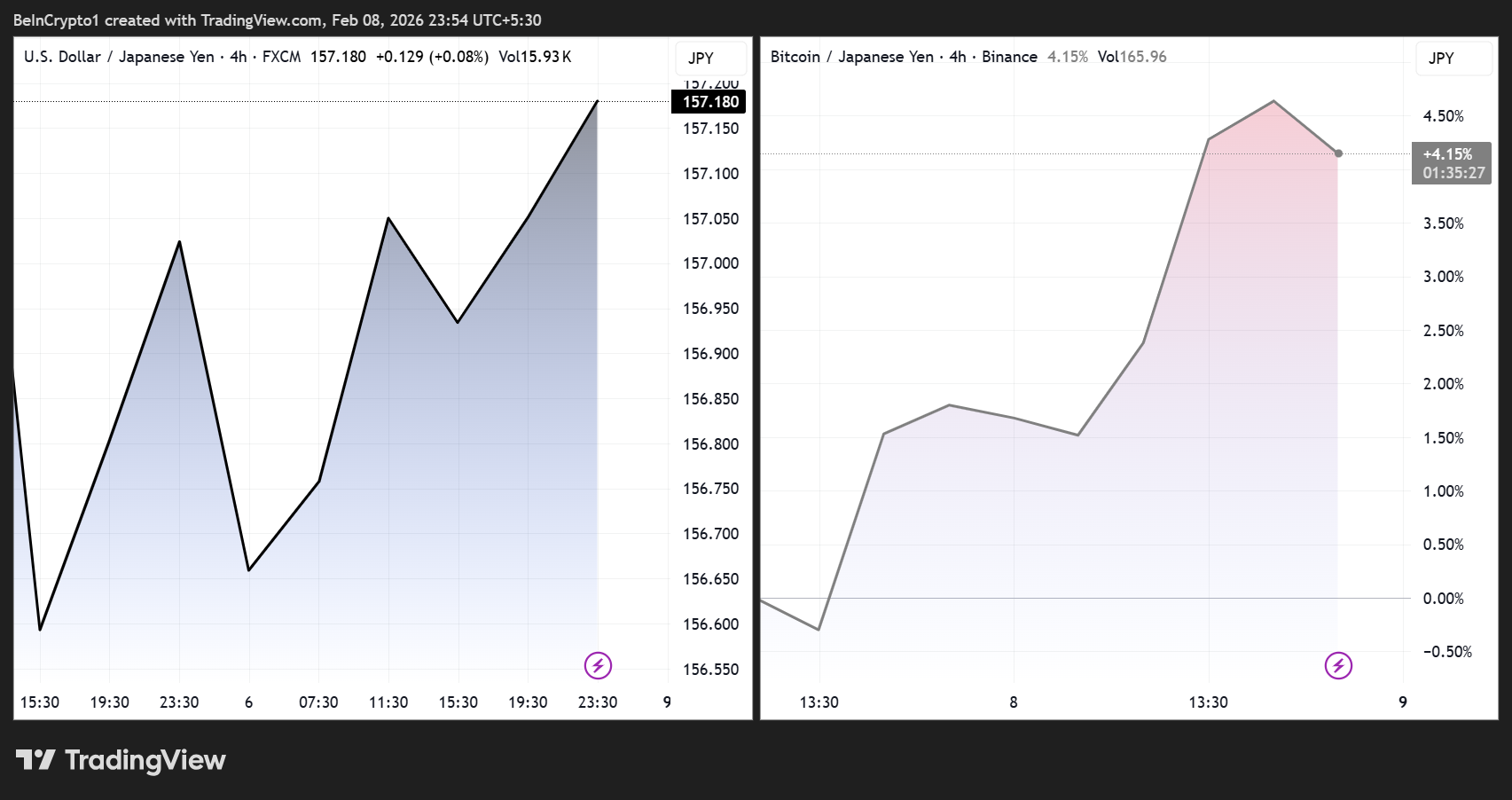
Markets reacted swiftly to the outcome. The dollar/yen climbed 0.2% to 157, while the BTC/JPY trading pair rose almost 5%, signaling investor confidence in Takaichi’s pro-growth agenda.
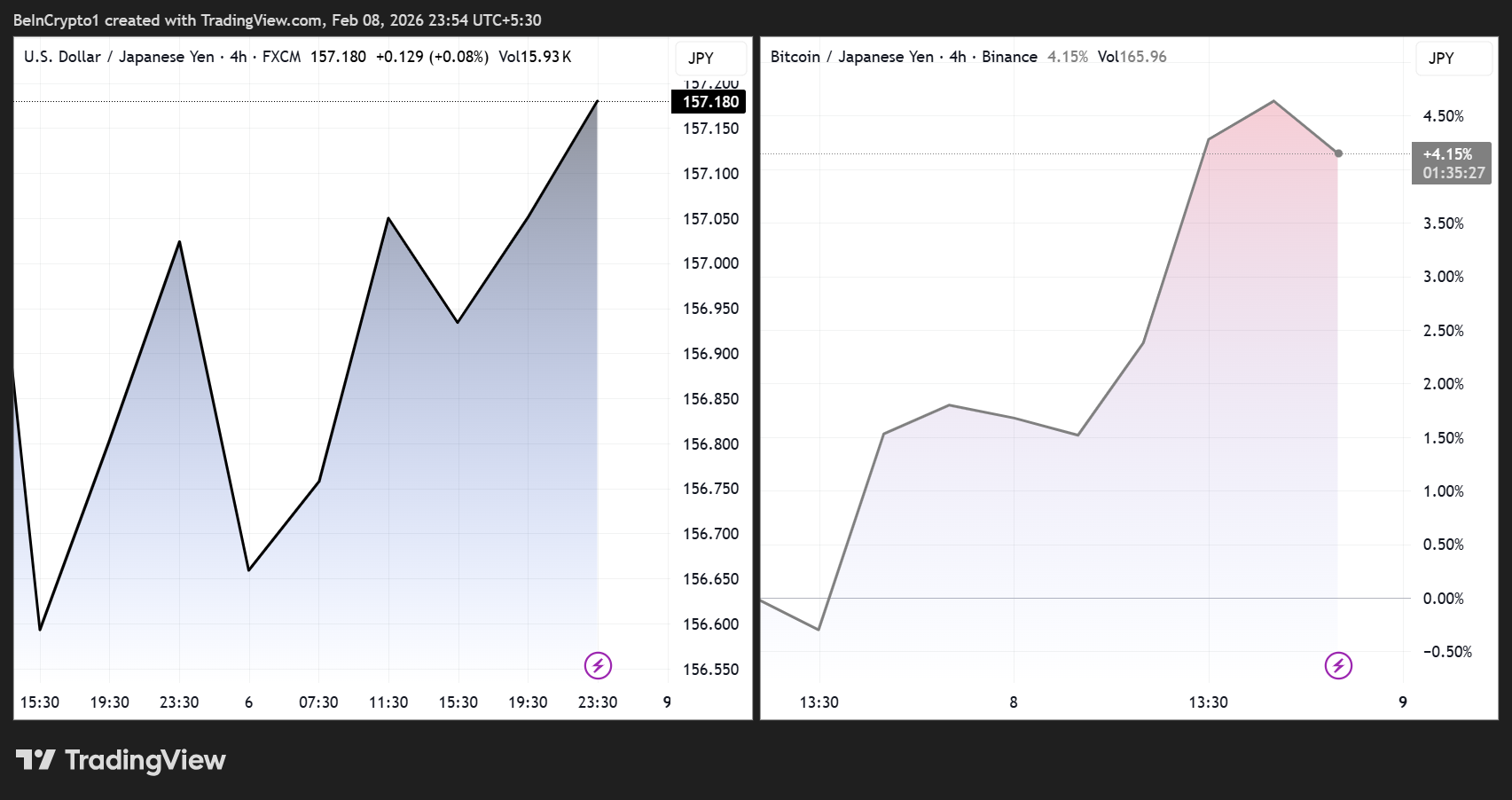
This so-called “Takaichi trade” draws momentum from expectations of fiscal stimulus, loose monetary policy, and increased liquidity.
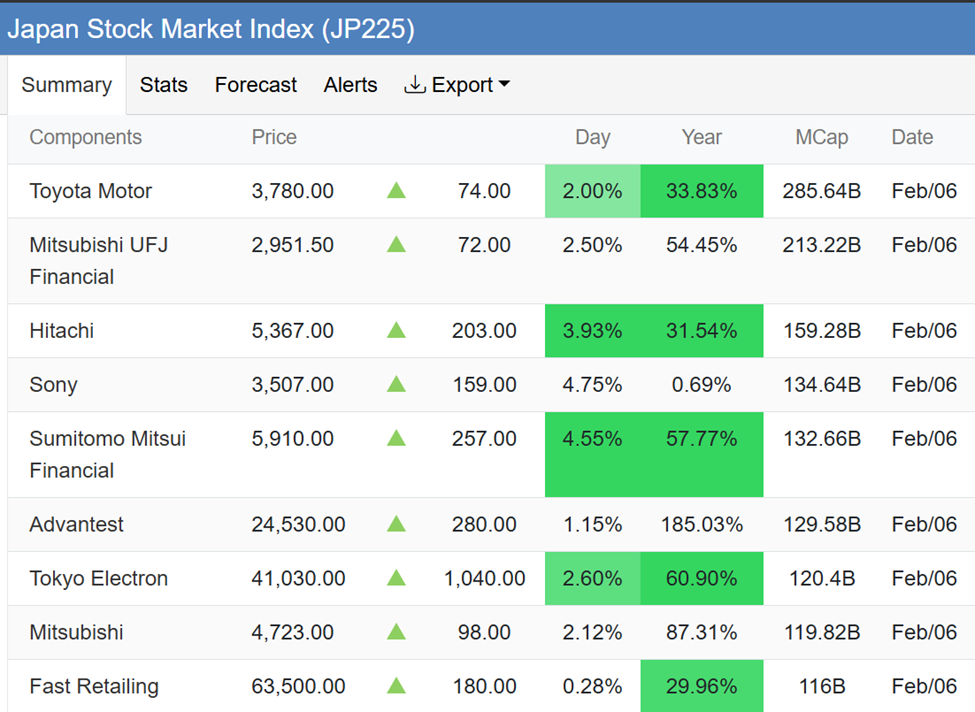
It has already lifted Japanese equities to record highs, while government bonds and the yen have faced pressure.
US officials quickly weighed in on the result, with Treasury Secretary Scott Bessent calling the victory “historic” and emphasizing the strength of US-Japan relations under Takaichi’s leadership.
Days before, President Donald Trump also offered a full endorsement, highlighting her leadership qualities and recent trade and security successes.
Sponsored
Sponsored
In turn, Takaichi expressed gratitude, reaffirming plans to visit the White House in spring 2026 and describing the US-Japan alliance as having “unlimited potential” built on deep trust and cooperation.
Takaichi’s Mandate Signals Potential Crypto Tax Overhaul and Blockchain-Friendly Policies
Takaichi’s electoral mandate is widely seen as a green light to accelerate Japan’s crypto reforms. The country currently taxes crypto gains as miscellaneous income at rates up to 55%.
This framework has driven some investors abroad despite Japan’s leading position in blockchain adoption.
Sponsored
Sponsored
Under discussion for fiscal year 2026 are reforms that could:
- Reduce gains tax to around 20%
- Allow loss carryforwards for three years, and
Reclassify certain digital assets as financial products.
The general sentiment is that her pro-growth policies and willingness to collaborate with crypto-friendly opposition parties, such as the Japan Innovation Party and the Democratic Party for the People, could finally push these long-awaited measures through by 2028.
Earlier in her tenure, Takaichi endorsed policies supporting technology, innovation, and economic security, aligning with broader blockchain and Web3 development.
While she has not made crypto a central campaign issue, her aggressive fiscal stance, modeled after her mentor Shinzo Abe’s “Abenomics,” could create an economic environment that favors risk assets, including Bitcoin, Ethereum, and Japan-related digital projects.
“Takaichi has pledged aggressive fiscal policy funded largely through bond issuance…will her electoral momentum fuel even larger stimulus, or give her the political cover to proceed more cautiously, as investors remain uneasy over Japan’s massive debt load and recent spikes across the JGB yield curve,” posed Rob Wallace.
Sponsored
Sponsored
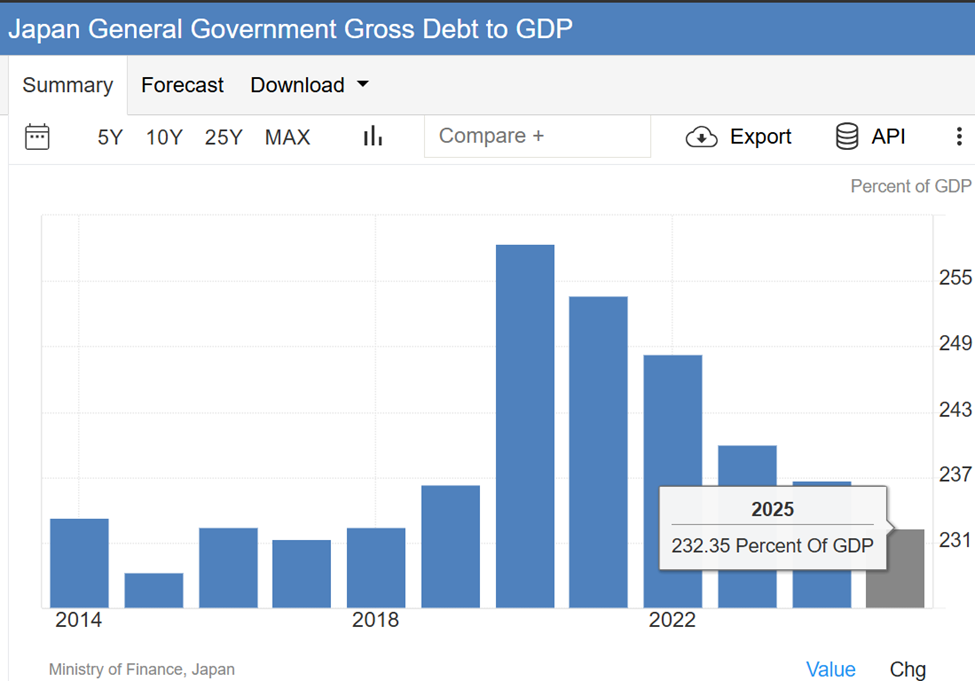
Indeed, uncertainties remain. Japan’s national debt exceeds 250% of GDP after topping out at 232.35% in 2025. Meanwhile, recent spikes in government bond yields have raised investor concerns about fiscal sustainability.
Key cabinet appointments and regulatory priorities will be critical in shaping the pace and scope of crypto reform. Finance Minister Katsunobu Kato’s continued role could maintain policy continuity, though his limited engagement on crypto issues may temper ambitious changes.
Digital Minister Masaki Taira has yet to articulate specific positions on crypto or Web3.
Nevertheless, the Financial Services Agency’s ongoing proposals, combined with Takaichi’s strong political mandate, suggest a turning point for Japan’s digital asset sector.
If successful, reforms could provide clearer regulatory frameworks, tax relief, and legal recognition for crypto, laying the groundwork for a more innovation-friendly ecosystem.



Roughly $46.9M in ZORA, KMNO, OP and SUI unlocks are hitting thin markets this week, with SUI’s $37.2M tranche posing the biggest short‑term risk.
Summary
- Around $46.9M worth of Zora, Kamino, Optimism and Sui tokens are unlocking into already fragile market conditions.
- Sui’s $37.2M unlock is the largest, while Zora, Kamino and Optimism releases range from 1.55% to 3.70% of supply.
- The batch underscores how token unlock schedules can drive short‑term volatility across DeFi and L1 ecosystems.
A fresh wave of token unlocks hitting Zora, Kamino, Optimism and Sui this week is adding tens of millions of dollars in potential sell pressure to a market that has already seen liquidity thin out across majors and mid‑caps. According to figures compiled by PANews and MEXC, roughly 167 million ZORA tokens, or 3.70% of circulating supply, are set to unlock, with the tranche valued at about $2.5 million at current prices.
Kamino’s KMNO will see about 229 million tokens, representing 3.37% of supply, come onto the market in a roughly $4 million event, while Optimism’s OP will release around 31.34 million tokens on March 31, equal to 1.55% of supply and valued at about $3.2 million. Sui’s SUI, an L1 smart‑contract platform token, faces the largest single unlock: 42.94 million tokens worth an estimated $37.2 million on April 1.
These four assets span a mix of infrastructure and DeFi exposure. SUI is a base‑layer (L1) network token competing with chains such as ethereum and solana for developer and user activity. OP powers the Optimism Layer‑2 scaling stack for ethereum, putting it in direct comparison with arbitrum and other rollup tokens. ZORA is tied to a protocol focused on creator and NFT‑adjacent tooling, while KMNO is a DeFi‑centric governance asset linked to Kamino’s liquidity and lending products. In each case, the unlocks represent between 1.55% and 3.70% of total token supply, a range that historically can be meaningful for order books if spot volume is muted, even when headline dollar figures—$2.5 million for ZORA or $4 million for KMNO—appear modest.
Unlock events typically release previously locked tokens held by teams, early backers or ecosystem treasuries, shifting the supply‑demand balance in ways that can amplify volatility over short windows. When liquidity is thin or sentiment is fragile, even single‑digit percentage unlocks of supply can translate into steeper intraday swings if large holders decide to sell into bids rather than rotate into staking, liquidity provision or long‑term custody. Conversely, when demand is healthy, unlocks can be absorbed with limited price impact as new participants take the other side of distribution.
In the broader market, similar dynamics have played out repeatedly across DeFi and L1 tokens. Past unlocks for projects in the optimism and arbitrum ecosystem, as well as earlier Sui releases, have often lined up with spikes in derivatives funding, whale transfers to exchanges and short‑term price drawdowns before stabilizing as supply is re‑absorbed. Against that backdrop, this week’s roughly $46.9 million in combined unlock value for ZORA, KMNO, OP and SUI acts as a stress test for current liquidity conditions and risk appetite across NFT infrastructure, DeFi governance and L1 smart‑contract platforms.
Within this landscape, traders will be watching on‑chain flows and exchange inflows closely—particularly around SUI’s $37.2 million event—looking for signs of whether large holders treat the unlock as a cash‑out opportunity or a chance to reposition within their respective ecosystems.


Google Antigravity is a new development environment designed specifically for the era of software built alongside autonomous AI agents. Unlike traditional IDEs, which integrate artificial intelligence as an auxiliary assistant, Antigravity introduces a fundamentally different paradigm: agent‑first development.
In this model, developers no longer interact solely with files and syntax. Instead, they collaborate with intelligent agents capable of planning, generating, refactoring, testing and maintaining entire software systems.
For frontend engineers, backend developers, full‑stack specialists, software architects and technical teams working with AI‑assisted workflows, understanding Google Antigravity is not optional. It represents an early signal of how modern engineering productivity is about to change.
This article explains what Google Antigravity is, how it works conceptually, how it differs from current AI‑enhanced IDEs, and why it could reshape software development over the coming years.
What is Google Antigravity
Google Antigravity is an agent‑native integrated development environment built for collaboration with autonomous coding agents rather than traditional editor‑centric workflows.
Where environments such as VS Code or JetBrains products embed AI as contextual support layers, Antigravity positions agents as active participants across the entire development lifecycle.
This includes:
- technical task planning
- structured code generation
- automated refactoring
- assisted debugging
- orchestration of complex workflows
- continuous project maintenance
The result is a shift in abstraction level. Developers move from writing every component manually to supervising systems that co‑develop software alongside them.
What agent‑first development actually means
Agent‑first development describes a model in which AI agents operate as collaborators rather than passive assistants.
In a traditional IDE workflow:
the developer writes → the AI suggests
In an agent‑first workflow:
the developer defines intent → the agent executes strategy
This transition allows engineers to operate at a higher architectural level.
Instead of issuing narrow implementation commands such as:
“create a REST endpoint with validation”
Developers can express broader objectives like:
“implement a complete authentication system compatible with the existing architecture”
The agent interprets repository structure, dependencies, conventions and constraints before generating coherent solutions.
This fundamentally changes how programmers interact with codebases.
Conceptual architecture behind Google Antigravity
Although Google has not yet published full technical documentation for Antigravity, its behaviour aligns with emerging agent‑native development environment architectures.
These systems typically operate across several coordinated layers.
Intent interpretation layer
At this stage, the agent analyses:
- natural‑language instructions
- repository structure
- active dependencies
- project history
- architectural conventions
This enables context‑aware execution rather than isolated code generation.
Planning layer
Before producing code, the agent structures an execution strategy.
Typical responsibilities include:
- decomposing complex tasks
- identifying dependency conflicts
- proposing structural improvements
- estimating architectural impact
This reduces the risk of incremental inconsistencies common in manual workflows.
Execution layer
The agent then generates concrete artefacts such as:
- new source files
- refactored modules
- automated test suites
- migrations
- technical documentation
All changes remain synchronised with the active repository context.
Validation layer
Finally, the system evaluates:
- code coherence
- module compatibility
- architectural alignment
- runtime stability assumptions
This moves development closer to a semi‑autonomous engineering model.
How Antigravity differs from traditional IDEs
Google Antigravity is not simply another editor enhanced with AI capabilities.
It represents a structural change in how developers interact with software systems.
Key differences include the following.
From autocomplete to autonomous execution
Conventional IDEs suggest lines of code.
Antigravity executes complete implementation strategies.
From files to intent
Traditional editors operate at file level.
Antigravity operates at goal level.
From reactive assistance to active collaboration
Most AI tools respond only when prompted.
Agent‑native environments participate continuously in solution design.
From incremental productivity gains to exponential workflow acceleration
Automating entire development segments transforms how quickly complex systems can evolve.
This becomes especially relevant in large‑scale or fast‑moving projects.
Practical use cases for developers
Google Antigravity is designed to integrate naturally into modern engineering workflows where iteration speed is critical.
Several scenarios illustrate its immediate value.
Rapid prototyping
Developers can generate functional architectures in minutes rather than hours.
This accelerates:
- idea validation
- technical experimentation
- early product iteration
Legacy codebase refactoring
Agents can analyse internal dependencies and propose structural improvements across large repositories.
This is particularly useful in long‑lived enterprise projects.
Automated test generation
Testing remains one of the most persistent bottlenecks in professional development.
Agent‑native environments help maintain:
- continuous coverage
- regression protection
- incremental validation cycles
Living technical documentation
Agents can maintain documentation aligned with evolving codebases.
This significantly improves onboarding efficiency across engineering teams.
Comparison with other AI‑powered IDE environments
Google Antigravity enters an ecosystem that already includes tools such as Cursor, Copilot Workspace and emerging agent‑centric development platforms.
However, its positioning introduces important distinctions.
Compared with VS Code plus Copilot
Copilot enhances editing.
Antigravity transforms execution workflows.
Compared with Cursor
Cursor improves contextual editing interactions.
Antigravity restructures the development model itself.
Compared with experimental autonomous coding systems
Many current agent tools operate as external orchestration layers.
Antigravity integrates agents directly into the core environment.
This allows deeper architectural alignment and stronger repository awareness.
How Antigravity may reshape developer workflows
The most important impact of Antigravity is methodological rather than purely technical.
Developers shift from implementation‑centric roles towards supervision‑centric engineering.
In practice, engineers increasingly act as:
- system designers
- agent supervisors
- architectural strategists
This evolution enables smaller teams to deliver larger systems with fewer coordination bottlenecks.
It also encourages higher‑level thinking about structure, scalability and maintainability.
Strategic advantages for development teams
Adopting agent‑first environments can produce measurable improvements across engineering organisations.
Key advantages include:
Reduced development time
Automating repetitive implementation tasks frees cognitive capacity for higher‑value problem solving.
Improved architectural consistency
Agents help maintain structural patterns across repositories.
Easier technical scalability
Complex structural changes can be planned and executed more reliably.
Faster experimentation cycles
Teams can validate architectural decisions without significant upfront implementation investment.
These benefits are especially valuable in startup environments and innovation‑driven product teams.
Current limitations of agent‑native development environments
As with any emerging technology category, Antigravity introduces new challenges alongside its advantages.
Important considerations include:
Dependence on repository structure quality
Agents perform best when working within clearly organised projects.
Continued need for human oversight
Autonomy does not replace engineering judgement.
Expert review remains essential.
Organisational adaptation requirements
Transitioning to agent‑first workflows requires a shift in team mental models.
This adjustment can take time in traditionally structured engineering organisations.
Why Google Antigravity matters for the future of software development
Google rarely introduces developer tooling without a broader strategic trajectory.
Antigravity signals a shift from intelligent text editors towards collaborative engineering environments built around autonomous agents.
This transition implies:
- shorter development cycles
- reduced technical friction
- increased experimentation capacity
- new professional engineering skill profiles
Developers who understand this shift early gain a meaningful competitive advantage.
This is particularly true in environments where continuous innovation defines technical success.
Conclusion
Google Antigravity represents one of the first serious attempts to design an IDE from the ground up for agent‑assisted software engineering.
Rather than adding artificial intelligence to existing workflows, it redefines the relationship between developers and code.
Working within agent‑first environments enables teams to operate at higher abstraction levels, accelerate iteration cycles and reduce repetitive implementation effort.
As software engineering moves towards collaborative human‑agent systems, Antigravity is not simply another tool.
It is an early indicator of how professional development environments are likely to evolve over the coming years.
On Tuesday, March 19, the SEC issued joint guidance with the CFTC to “finally” provide clarity about how the securities laws apply to digital assets. On many issues, including staking and meme coins, the SEC’s new guidance is a welcome development and a marked improvement from the Gensler days. It also rightly acknowledges that the agency’s “regulation by enforcement” campaign under Chair Gensler had muddied compliance obligations and stifled the industry. But in important ways, the guidance stops short of the full course correction the crypto industry needs.
The biggest shortcoming is the SEC’s articulation of the Howey test for “investment contract” securities. All agree that most digital assets are not, on their own, investment contracts. Even the Gensler SEC (eventually) admitted as much, and the SEC’s new guidance reiterates that position. The key question, though, is when a digital asset is sold as part of an investment contract such that the sale becomes subject to the securities laws.
The statute provides the answer. As a matter of text, history and common sense, an “investment contract” means a contract – an express or implied agreement between the issuer and investor under which the issuer will deliver ongoing profits in return for the purchaser’s investment. Most digital assets are not investment contracts because they are not contracts. A digital asset can be the subject of an investment contract (like any other asset), but it can still be sold separately from the investment contract without implicating the securities laws. In the suits brought by Gensler, crypto companies vigorously defended that proper interpretation of the law.
Yet the SEC’s new guidance is silent about whether an investment contract requires contractual obligations. Instead, it says an investment contract travels with a digital asset (at least temporarily) when the “facts and circumstances” show the digital-asset developer “induc[ed] an investment of money in a common enterprise with representations or promises to undertake essential managerial efforts,” leading purchasers to “reasonably expect to derive profits.” That does not clearly confirm a clean break from the SEC’s former view that Howey eschews “contract law” and demands “a flexible application of the economic reality surrounding the offer, sale and entire scheme at issue, which may include a variety of promises, undertakings and corresponding expectations.”
The Gensler SEC’s know-it-when-I-see-it approach to Howey was deeply problematic. It allowed the agency to piece together an “investment contract” from various public statements by digital-asset developers — tweets, white papers, and other marketing materials — even absent concrete promises by the issuers. And it failed to distinguish securities from collectibles like Beanie Babies and trading cards, the value of which depends heavily on their maker’s marketing and attempts to create scarcity. The SEC missed an important opportunity to clearly reject that approach and restore a key statutory dividing line between assets and securities — a contract.
The SEC can still fix this problem, but to do so, it will need to further clarify how the agency intends to apply Howey going forward — and to finally make a clean break with Gensler’s overbroad interpretation of the securities laws. For example, the Gensler SEC repeatedly cited various “widely distributed promotional statements” as a basis for pushing a digital asset into the realm of investment contracts. The SEC’s new guidance puts some guardrails on that approach by requiring a developer’s representations or promises to be “explicit and unambiguous,” to “contain sufficient details,” and to occur before the purchase of the digital asset. But even that improved approach leaves too much room for interpretation. It could be expansively applied by private plaintiffs, the courts or a future SEC. Rather than continue down the path Gensler trod, the SEC should make clear that mere public statements affecting value are insufficient and that promises and representations must be made in the context of the specific sale at issue — not strung together from whitepapers or social-media posts that many purchasers likely never considered.
The SEC also should clarify its approach to secondary-market trading. Helpfully, the agency now recognizes that digital assets are not investment contracts “in perpetuity” just because they once were “subject to” investment contracts. But the agency also says that digital assets remain “subject to” investment contracts traded on secondary markets (like exchanges) so long as purchasers “reasonably expect” issuers’ “representations and promises to remain connected” to the asset. The SEC says little about how to assess those reasonable expectations, providing only two “non-exclusive” examples of when an investment contract “separates” from a digital asset. And it says nothing about whether a secondary-market purchaser must have a contractual relationship with the token issuer. That leaves it unclear whether the SEC has really moved on from the Gensler-era view that investment contracts “travel with” or are “embodied” by crypto tokens.
Instead of those mixed messages, the SEC should impose meaningful restraints on the application of the securities laws to secondary-market transactions by adopting Judge Analisa Torres’s approach in Ripple. Judge Torres recognized that it is unreasonable to infer an investment contract in the context of “blind bid-ask” transactions — that is, transactions where the counterparties do not know each other’s identities (as is common in secondary-market trading). Because buyers have no idea whether their money goes to a token’s issuer or to some unknown third party, they can’t reasonably expect that the seller will use the buyers’ money to generate and deliver profits. The SEC should endorse Judge Torres’s analysis expressly.
These are not academic quibbles. The current SEC might not read or enforce its new guidance in a manner that threatens the viability of the crypto industry in the United States. But by failing to clearly reject the excesses of the Gensler era, the SEC’s new guidance leaves the industry exposed to a future SEC that could leverage ambiguities in the SEC’s current guidance to resume regulation by enforcement. Private plaintiffs could try to do the same in lawsuits against key industry players (such as the leading exchanges). And in the meantime, the SEC’s interpretations could distort the securities-law baseline during negotiations over market-structure litigation.
The SEC invited comments on its guidance, and the industry should oblige. The SEC should get credit where credit is due. But the industry should not hesitate to highlight the lingering flaws and ambiguities in the agency’s approach and advocate for clear, meaningful, and permanent restraints to ensure regulatory clarity and stability. Simply giving the legal architecture of the last enforcement campaign a facelift is not enough.
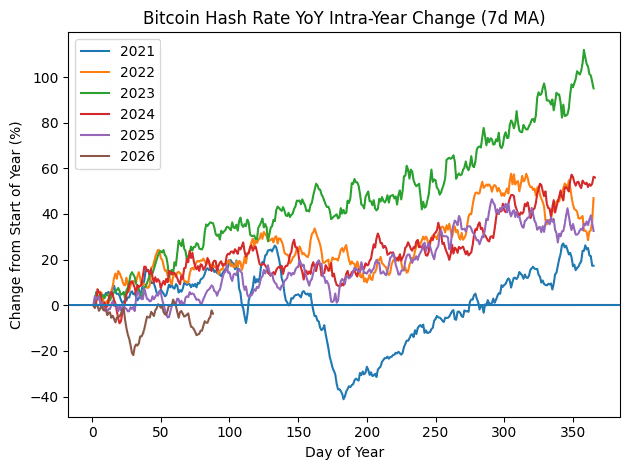
For the first time in six years, the bitcoin hashrate, the total computational power securing the network, fell during the first quarter. It is currently down around 4% year to date, hovering around 1 zettahash per second (ZH/s).
Over the past five years, the rate has surged from roughly 100 exahashes per second (EH/s), a 10-fold increase, according to Glassnode data. Each year, the metric rose during the first quarter and ended with strong full-year growth in excess of 10%. In 2022, the figure almost doubled.

The AI Pivot
The shift in 2026 reflects changing economics across the bitcoin mining sector. With production costs near $90,000 per bitcoin and the spot price closer to $67,000, margins are negative. In response, many publicly listed miners are switching to artificial intelligence and high-performance computing infrastructure, where returns are higher and more predictable.
This transition is being funded through debt issuance and bitcoin sales, reducing reinvestment into bitcoin mining. As a result, hashrate growth is becoming more sensitive to the cryptocurrency’s price, with weaker prices likely to trigger further declines as smaller operators exit.
While a falling hashrate may raise concerns about network security, decentralization may matter more than absolute size. Publicly listed U.S. miners have accounted for over 40% of the global hash rate, and a reduction in their influence could lead to a more geographically distributed network. In that sense, the current shift may ultimately support decentralization.
Despite the slowdown, CoinShares still forecasts hashrate growth to around 1.8 ZH/s by the end of 2026, conditional on bitcoin recovering toward $100,000.
Read More: End of bitcoin ‘HODL’: public miners going all-in on AI, signaling more BTC selling


DeFi risk curator Steakhouse Financial has been hacked and its website and app are now being used to host a phishing scam.
Steakhouse disclosed the breach Monday morning and warned that any new users interacting with the website or app are likely interacting with a malicious version implemented by the hackers.
The attack appears to have affected just the front-end of operations, as Steakhouse assured users, “No deposits are at risk. No contracts are affected. All Steakhouse depositors are safe.”
Read more: Fake Uniswap phishing ad on Google steals trader’s life savings
“We are working to restore the frontend as soon as possible,” the firm said.
Steakhouse co-founder, Sébastien Derivaux, warned crypto users to avoid the website until further notice.
Various crypto firms offered alternative services and safety assurances for customers with funds at Steakhouse.
Others found humor in the incident, with one user asking, “Does phishing on Steakhouse make this a surf and turf attack?”
At the time of writing, neither Steakhouse Financial or its CEO have shared any further updates on the incident.
Steakhouse Financial housing a crypto drainer
Crypto security firm Blockaid claims that the Steakhouse attackers are utilizing code from one of the “largest active wallet drainer operations onchain” known as Angelferno, or Angel Drainer.
Read more: Fears of $27M Venus Protocol hack turn out to be phishing attack on power user
Earlier this month, AI crypto firm GAIB fell victim to a social engineering scheme that gave hackers access to its domain, where they implemented a copycat website kitted with Angelferno.
Drainers work by stealing a user’s crypto after they sign a malicious transaction that gives hackers full access to withdraw their funds.
Blockaid was able to help GAIB detect the malware, and the malicious site was gone in roughly seven hours, with no apparent user losses.
Got a tip? Send us an email securely via Protos Leaks. For more informed news and investigations, follow us on X, Bluesky, and Google News, or subscribe to our YouTube channel.
This month, Bitcoin’s hashrate fell 6% after the US and Israel attacked Iran, highlighting Iran’s significant crypto mining activity.
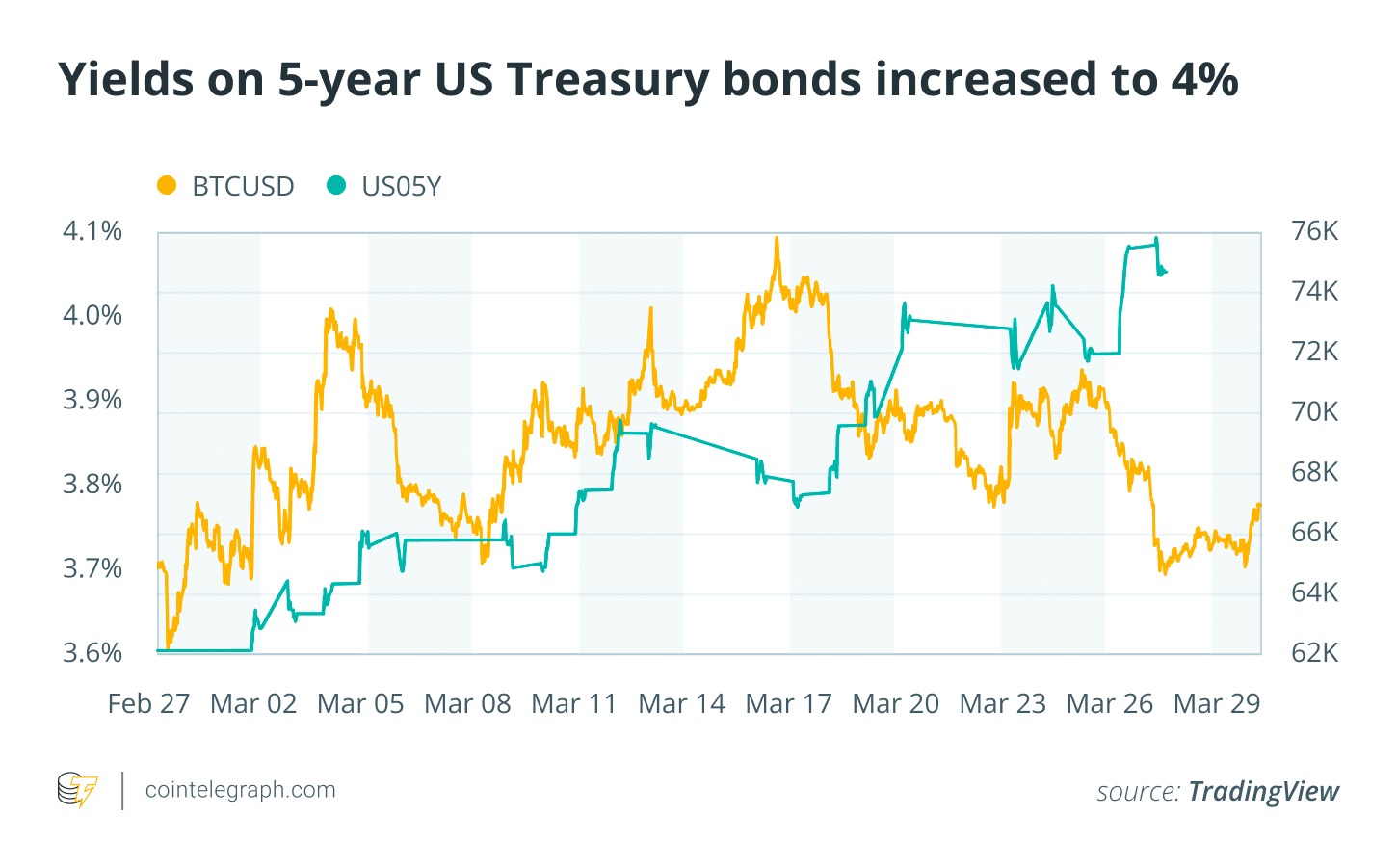
Bitcoin price, meanwhile, remains lackluster. Higher 4% yields on US Treasury bonds have added pressure, and investors are seeking less risky prospects amid geopolitical tension.
Less appetite for crypto trading has proven problematic for Robinhood. The trading platform’s stock is down 16% on the month, and leadership has announced a stock buyback program.
Prediction markets marked a record number of transactions, representing a more than 2,800% increase since this time last year.
Here’s March by the numbers:
Bitcoin lacks momentum as 4% US Treasury bond yields put pressure on price
Yields on five-year US Treasury bonds are up 4% in March, putting pressure on Bitcoin price. While showing some gains in mid March, the asset ended the month much where it started, around $67,000.

As per an analysis from Cointelegraph, fears of a drawn-out conflict between the US and Israel against Iran have led investors to cut out risk. A sell-off in bonds, along with a nine-month high of 4% in yields, suggests that traders are building cash positions.
Bitcoin hashrate falls nearly 6% after US and Israel attack Iran
On Feb. 28, the United States and Israel launched a joint special military operation in Iran called “Operation Epic Fury.” One month later, the Bitcoin (BTC) hashrate is down almost 6%.

Bloomberg crypto and digital assets strategist Dushyant Shahrawat said in a recent interview that Iran is one of the world’s largest Bitcoin miners, accounting for some 6-8% of global hashrate, and 70% of mining activities are conducted by the military.
Disruptions to the country’s energy infrastructure and diversion of military priorities to defense have thus hit Iran’s ability to mine Bitcoin.
Prediction market transaction top 192 million
Transactions on prediction markets like Polymarket and Kalshi topped 192 million in March. That represents a 24% increase from last month and a 2,880% increase compared to the same time last year, according to Dune analytics.

Related: Lawmakers push another bill to curb prediction market insider trading
Prediction markets are growing in popularity, but in the United States, they face state regulators who say they facilitate a form of gambling. At least 11 states have taken legal action against them.
On March 20, Carson City District Court Judge Jason Woodbury upheld a regulator’s move to temporarily ban prediction market Kalshi in Nevada.

Arizona has brought criminal charges against Kalshi for allegedly “running an illegal gambling operation and taking bets on Arizona elections, both of which violate Arizona law.”
Other states like Utah and Pennsylvania are currently considering legislation that would bring prediction markets under state gambling or gaming laws. Kalshi says that it answers only to federal regulation under the Commodity Futures Exchange Commission (CFTC).
Euro-denominated stablecoins account for 85% of non-dollar volume
Stablecoins backed by the euro have emerged as a favorite alternative to assets backed by US dollars. Some 85% of non-dollar stablecoin volumes occur in euros, according to a March report from Dune.

While euro-denominated coins initially only represented some 50-70% of the non-dollar market, they began expanding significantly in 2024. Now they represent 85% of total transferred volume. Euro stablecoins are also dominant in regard to participation, with user share rising to over 78%.
Dune attributes this increase to more confidence in stablecoins among institutions, thanks in large part to the Markets in Crypto-Assets regulatory package (MiCA).
Robinhood stock down 16% on month
Robinhood stock has decreased over 16% in March, from nearly $80 to $66 as of publishing time.

The stock and crypto trading company’s share price has been struggling in recent months. Over the last six months, it dropped over 50%. Uncertainty over the regulation of new verticals like prediction markets and social trading, along with a collapse in crypto trading revenues are creating structural obstacles for the company.
Revenue from crypto transactions reportedly dropped 38% year-over-year as of Q4 2025. Crypto app volumes dropped 58%.
To address the problem, Robinhood has approved a $1.5 billion share buyback program in March, which will execute over the next three years.
Strategy’s Bitcoin holdings are 11% in the red
Amid a lackluster price action on the month, Strategy’s Bitcoin portfolio is at an 11% loss. The average cost of Bitcoin in its portfolio is $75,669. Bitcoin is trading around $67,800 at publishing time.

Still, the company has continued its regular Bitcoin purchases. It made two this month: one for 17,994 Bitcoin on March 9 and another for 22,337 Bitcoin on March 16, amounting to roughly $2.7 billion at publishing time.
The software company has financed most of its Bitcoin purchases through high-yield stock offerings, like Stretch (STRC). This allows the company to buy Bitcoin without diluting its MSTR common shares.
The company’s chair, Bitcoin bull Michael Saylor, said recently that 80% of STRC buyers are retail investors. “Retail investors prefer low-volatility, high-yield digital credit,” he said.
Magazine: XRP yet to ‘price in’ 3 bullish catalysts, Bitcoin to $80K? Trade Secrets
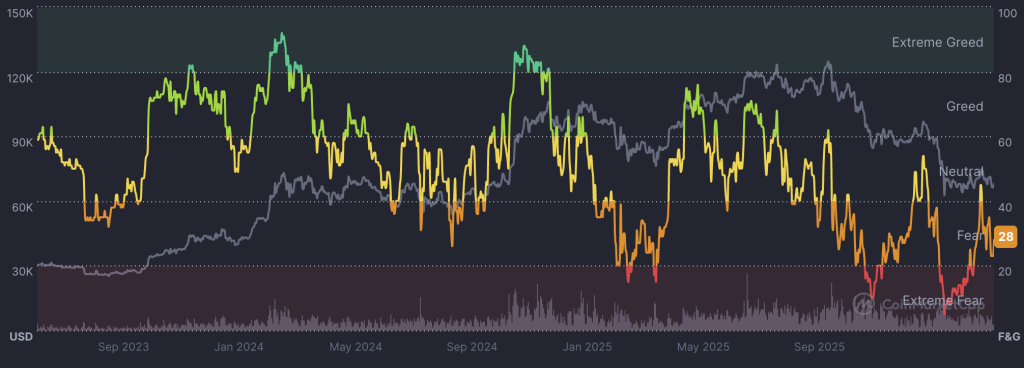
Brent crude punched through $116 a barrel on March 30, 2026 – a 60% monthly surge driven by escalating US-Iran tensions after Tehran accused Washington of preparing an invasion, compounding Houthi strike disruptions, and Bitcoin is now sitting in the crosshairs of the resulting institutional risk-off rotation.
The oil price spike is not hitting crypto directly; it’s hitting it through three compounding channels: inflation re-acceleration, delayed Fed rate cuts, and a geopolitical risk premium that is draining leveraged long exposure across every risk asset class.
Bitcoin dropped to weekly lows between $63,000 and $65,700, over $500 million in derivatives liquidations hit the tape, and 84% of that came from long positions.
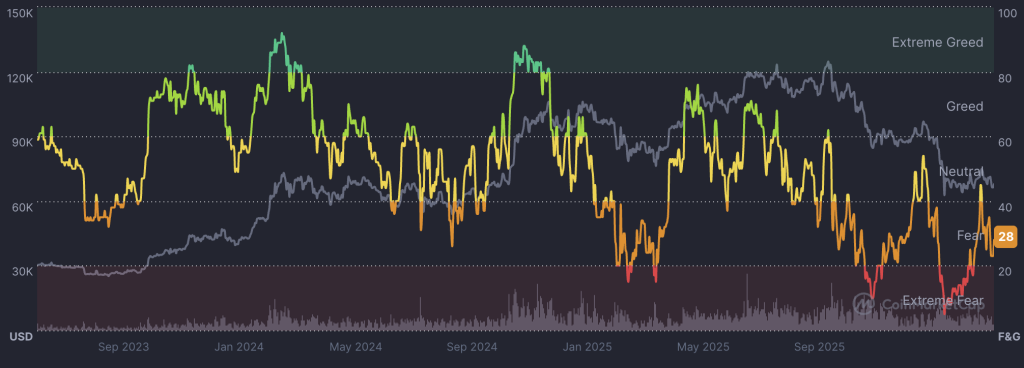
The Fear & Greed Index collapsed to 28 – Extreme Fear – while a record $14 billion options expiry amplified the volatility.
Discover: The best crypto to diversify your portfolio with
Bitcoin Faces Structural Deleveraging as Oil-Driven Inflation Rewrites the Fed Playbook
$63,000 is the line Bitcoin cannot afford to lose.
That level has capped the downside through the prior 2 macro shock episodes. The 200-day moving average sits just below at $62,400.
A close beneath it would be the first since the October 2025 rally began and would likely trigger a second wave of systematic deleveraging from quant funds running momentum strategies. Resistance above is layered at $67,500 and $71,000, both former support zones that flipped during the February selloff.

The oil correlation matters more than usual right now. Binance Research puts the Bitcoin-WTI correlation near zero across most market regimes.
The 30-day rolling correlation currently sits at just 0.15. But that changes during extreme disruption events. The Strait of Hormuz is flowing at roughly 4 million barrels per day against a normal 20 million. That is not a tail risk. That is an active structural supply shock, exactly the kind that produces temporary correlation spikes.
If US-Iran tensions de-escalate and Hormuz flows normalize, Brent retreats below $100 and the Fed signals patience at its April 1 to 2 meeting. Bitcoin reclaims $67,500, BlackRock’s IBIT builds on its $225.2 million inflow during the dip, and institutional rotation flips back into accumulation mode.
If tensions persist without full escalation, Brent holds $110 to $116 and the Fed stays hawkish through Q2. Bitcoin grinds between $63,000 and $68,000 with elevated volatility, ETF flows stay choppy, and mining costs for operators like Marathon Digital rise 15 to 25%.
“The United States of America is in serious discussions with A NEW, AND MORE REASONABLE, REGIME to end our Military Operations in Iran.” – President Donald J. Trump
pic.twitter.com/0MWL2hSNmK
— The White House (@WhiteHouse) March 30, 2026
A full Hormuz blockade is the scenario nobody wants to price. Oil above $130, 10-year Treasury yields breaking above 5%, and the Fed forced to choose between fighting inflation and supporting growth.
That combination could send Bitcoin to $55,000 to $57,000 in a full risk-off liquidation wave, mirroring February 2022 when WTI hit $115 and BTC fell from $45,000 to $39,000 in days.
The inflation channel is what most traders are underweighting. Sustained oil above $100 does not just pressure sentiment. It mechanically delays rate cuts.
Bitcoin’s slide below $67,000 alongside rising Treasury yields already showed how directly that linkage bites. BTC’s 0.9 correlation to the IGV tech index means it trades like a rate-sensitive growth asset in the short run, not an inflation hedge.
Watch the Fed’s April 1 to 2 meeting. Any language signaling a longer hold is the catalyst for the next leg down. Congressional votes on Iran sanctions expected mid-April carry equal weight. Further Hormuz disruption sends another shock through energy markets and straight into institutional risk appetite.
Discover: The best pre-launch token sales
The post Oil at $116: Why This Macro Shock Could Trigger a Bitcoin Risk-Off Deleveraging appeared first on Cryptonews.
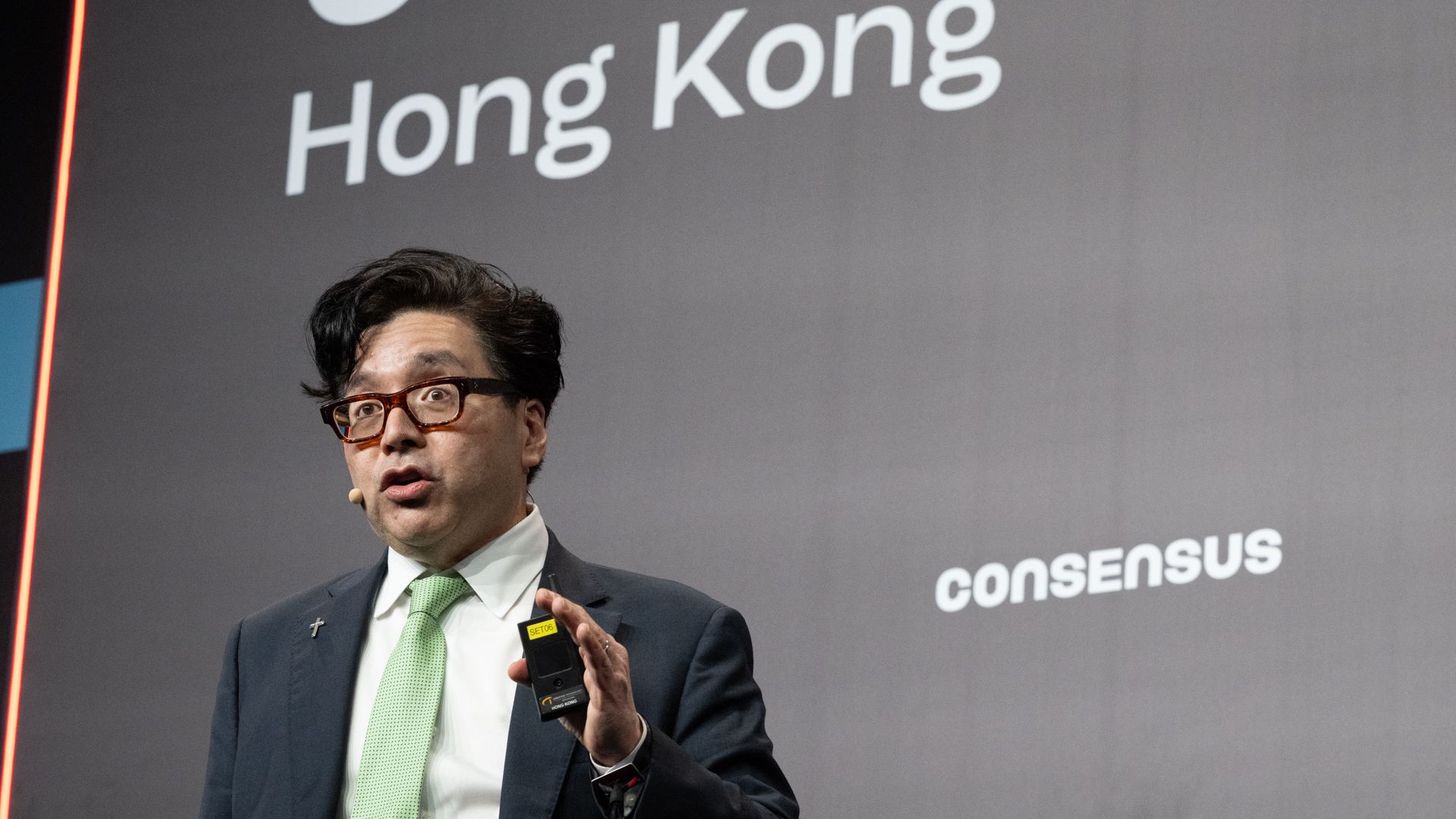
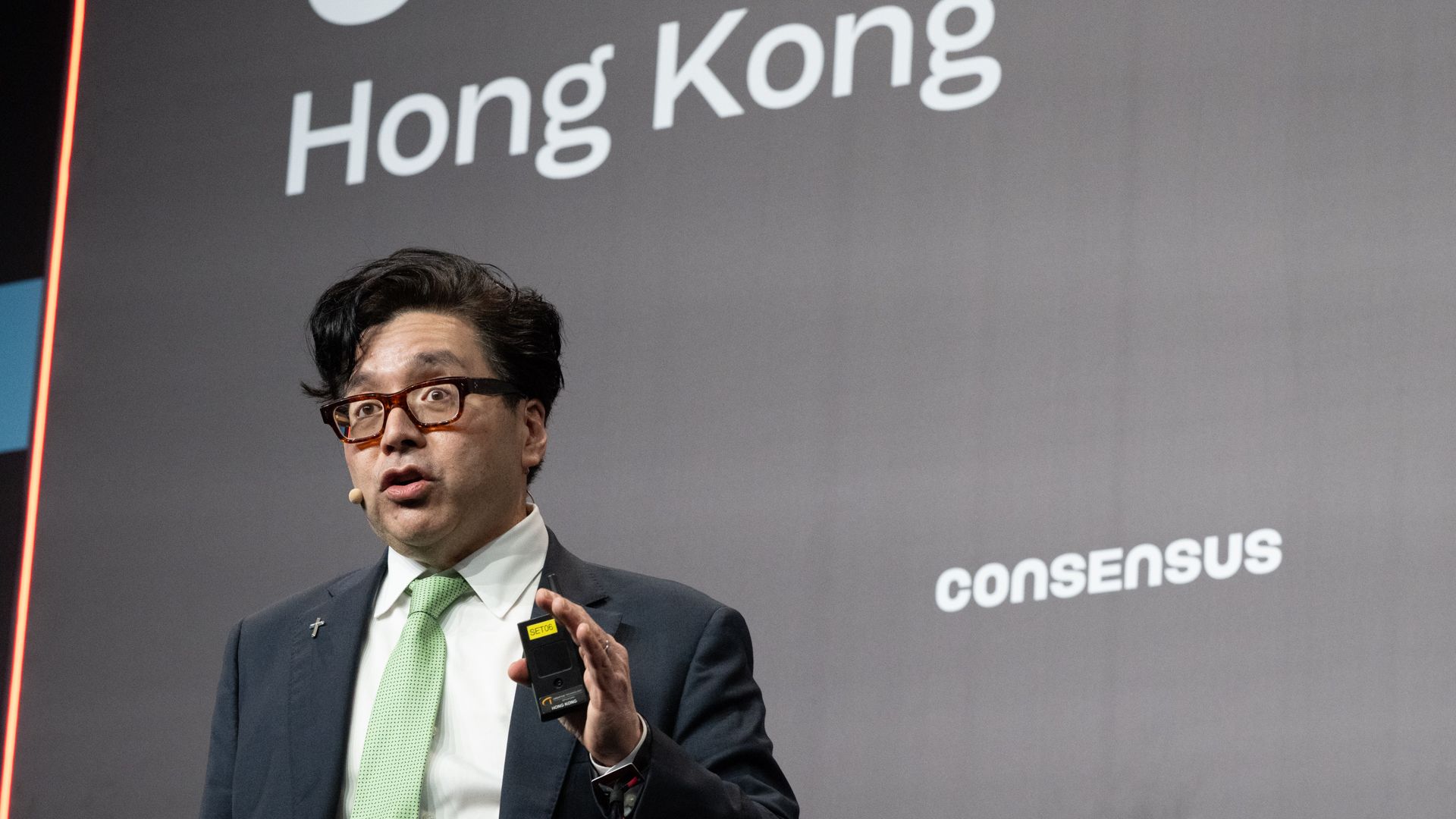
BitMine Immersion Technologies (BMNR) made its largest weekly purchase of either (ETH) this year, adding 71,179 ETH and extending a month-long ramp-up in buying even as crypto prices remain under pressure.
The purchase, worth roughly $143 million at current prices, lifted the company’s total holdings to over 4.73 million ETH, about 3.92% of the token’s supply, according to a Monday update. BitMine has now increased its buying pace for four straight weeks, stepping up from a prior average of 45,000 to 50,000 ETH.
The move stands out as most other large digital asset treasuries (DAT) halted crypto accumulation or even sold tokens during the crypto market downturn. Strategy (MSTR), the largest corporate bitcoin owner, was the only other major buyer in the recent months, and even the Michael Sayler-led company refrained, breaking a 13-week buying streak.
Bitmine Chairman Thomas “Tom” Lee said the firm continues to see the current market as the final phase of a downturn as rising oil prices and geopolitical tensions keep risk assets under pressure.
The company’s total crypto and cash holdings stood at $10.7 billion. In addition to its ETH treasury, BitMine held 197 bitcoin, and $961 million in cash and equity stakes, including $102 million in Eightco Holdings.
Digital asset investment products posted their first weekly outflows in over a month, as a mix of geopolitical tensions and shifting monetary policy expectations rattled investor confidence.
According to the latest data, crypto funds saw $414 million in net outflows, marking a sharp reversal after five consecutive weeks of inflows.
Crypto Funds Lost $414 Million Last Week
The pullback coincided with rising tensions tied to the Iran conflict and a notable shift in expectations around the Federal Reserve, as markets pivot from anticipating rate cuts to pricing in potential hikes.
The US accounted for the bulk of the outflows, with $445 million exiting digital asset funds, highlighting a decisive risk-off stance among American investors.
In contrast, European markets showed signs of opportunistic buying. Investors in Germany and Canada added $21.2 million and $15.9 million, respectively, suggesting confidence in long-term valuations despite short-term volatility.
Among individual assets, Ethereum was hit hardest, recording $222 million in outflows. The move pushed its year-to-date flows into negative territory, reflecting sustained pressure that analysts link in part to regulatory uncertainty surrounding the Clarity Act.
Bitcoin also faced headwinds, shedding $194 million during the week. However, it continues to show resilience, maintaining a strong $964 million in net inflows for the year so far.
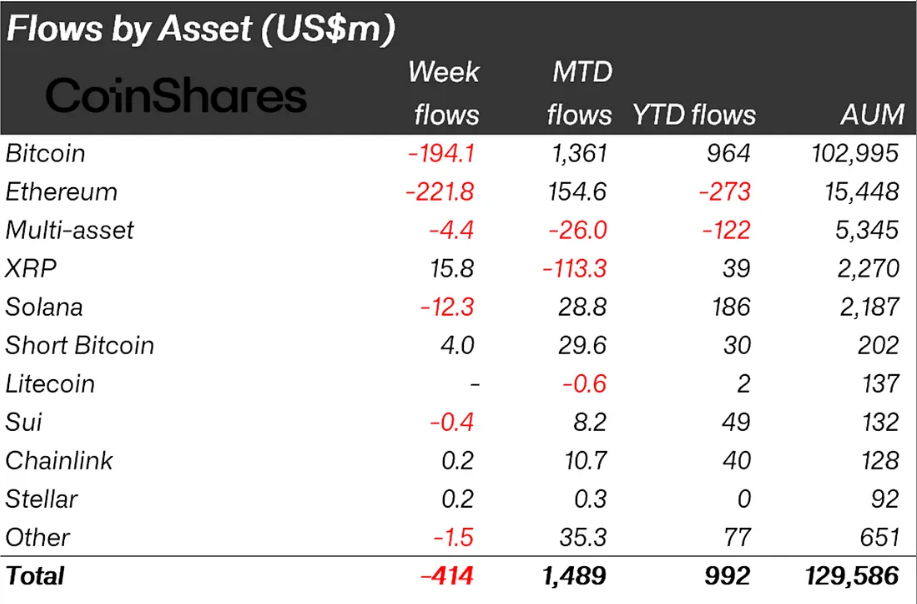
This suggests that while short-term sentiment has weakened, institutional conviction in Bitcoin remains intact.
In contrast, XRP stood out as a rare gainer, attracting $15.8 million in inflows. Its performance positions it as a relatively safe haven within the digital asset space during periods of broader market stress.
The latest fund flow data shows how quickly sentiment in crypto markets can shift when macroeconomic and geopolitical risks converge, leaving investors to reassess their exposure in an increasingly uncertain environment.
The post Geopolitics and the Fed Flush $414 Million From Crypto Funds in a Week appeared first on BeInCrypto.
Key takeaways
-
Hong Kong’s 2026-27 budget marks a shift from experimental digital bond projects to the direct integration of tokenized issuance and settlement into the city’s regulated financial market infrastructure.
-
CMU OmniClear, a subsidiary of the Hong Kong Monetary Authority, will build a digital asset platform to support tokenized bond issuance and settlement. This embeds digital securities within Hong Kong’s established clearing and post-trade framework.
-
Hong Kong has issued multiple tokenized government bonds, including a HK$10 billion digital bond in 2025. Authorities plan to make such offerings a regular feature to deepen market participation and improve liquidity.
-
Hong Kong is introducing stablecoin licensing, digital asset dealer and custodian regulations and compliance rules aligned with global tax transparency standards to support a fully regulated digital asset market.
For years, tokenized bonds were discussed as a future upgrade to capital markets. In Hong Kong, that transition is now moving into practice.
The city’s 2026-27 budget marks a pivotal turning point. Tokenization is no longer confined to isolated experiments but is being integrated into the heart of Hong Kong’s financial ecosystem. By embedding issuance and settlement directly into its post-trade systems, the city is moving beyond one-off digital deals to create a standardized, regulated environment.
This article explores how Hong Kong is integrating tokenized bonds into its financial infrastructure through a new digital platform developed by CMU OmniClear, a subsidiary of the Hong Kong Monetary Authority (HKMA), regular government issuances and supportive regulations. This development reflects a shift from experimental pilots to scalable, institutional-grade digital capital market systems.
Hong Kong’s advancing tokenized bond program
Hong Kong has already completed several rounds of tokenized government bond issuances. In Q4 2025, the government launched its third series, valued at HK$10 billion, approximately US$1.28 billion. Authorities have since confirmed that these tokenized bond offerings will continue on a regular basis.
The 2026-27 budget, however, marked a significant escalation.
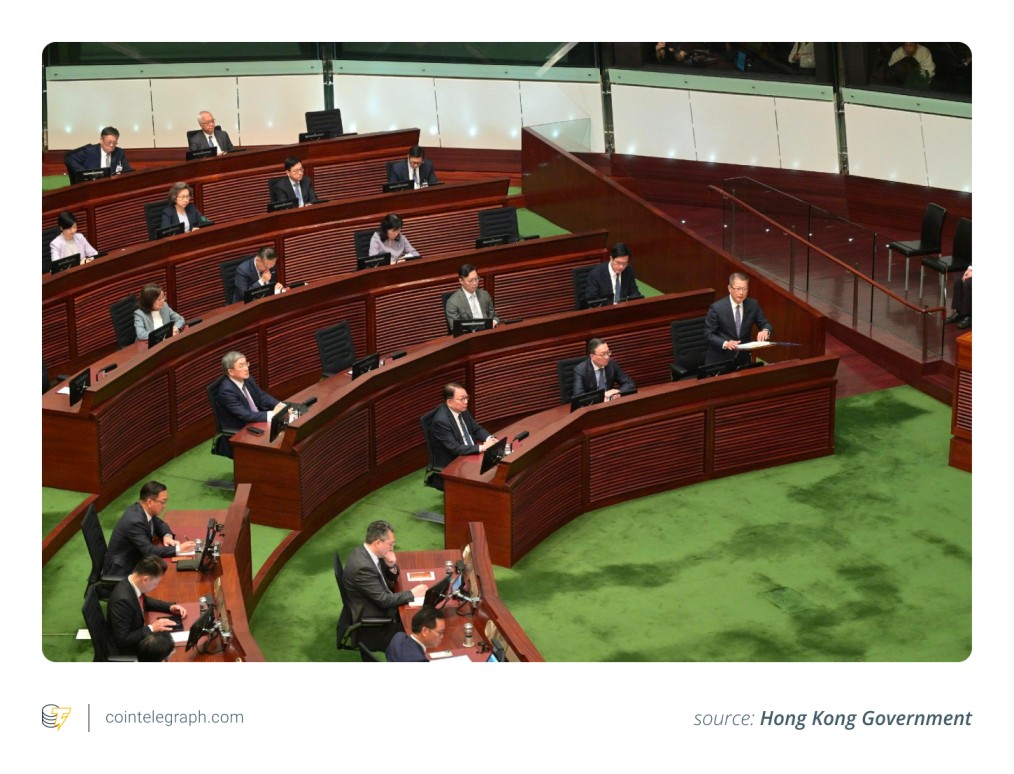
Financial Secretary Paul Chan stated that CMU OmniClear Holdings, a wholly owned subsidiary of the HKMA, will develop a dedicated digital asset platform. The platform is designed to handle both the issuance and settlement of tokenized bonds.
Importantly, the system is being built with long-term expansion in mind. It will:
-
Be progressively extended to support a wider range of digital assets beyond government bonds
-
Establish interoperability with tokenization platforms in other regional jurisdictions
-
Become fully integrated into Hong Kong’s broader post-trade financial ecosystem
This final aspect, deep integration into core market infrastructure, is what elevates tokenization from experimental pilots to a foundational element of the financial system.

CMU OmniClear: From experiment to core infrastructure
CMU OmniClear is far from a standalone startup or proof-of-concept project. It operates as an integral part of Hong Kong’s established clearing and settlement framework. Regulators have entrusted tokenized bond settlement to an entity directly linked to the HKMA. They have integrated digital securities into the same system that already processes conventional financial instruments.
This strategic move reshapes the tokenization story in three key ways:
-
Standardization replaces experimentation: Rather than relying on custom-built, one-off digital bond structures, issuance and settlement can now follow uniform regulatory rules and proven operational protocols.
-
Clear regulatory oversight: With supervision anchored directly under the central banking authority, legal and compliance uncertainty is significantly reduced.
-
Built-in scalability: Core market infrastructure is designed to handle institutional-scale volumes, not just small-scale trials or limited pilots.
Tokenization is no longer an add-on or side project. It is becoming embedded in the core plumbing of Hong Kong’s financial system.
Did you know? The concept of tokenized bonds builds on the broader idea of tokenizing real-world assets (RWAs). Trillions of dollars’ worth of traditional financial assets, such as bonds, real estate and funds, could eventually move onto blockchain-based infrastructure.
Government issuance: Already scaling
Hong Kong’s tokenized bond program is already demonstrating meaningful scale. Rather than building infrastructure in anticipation of future demand, Hong Kong is responding to existing market interest.
The government’s third tokenized bond issuance, completed in late 2025, reached a record size of HK$10 billion, approximately US$1.28 billion to US$1.3 billion, marking the world’s largest digital bond offering to date. This followed earlier digital bond issuances that also attracted strong investor demand. Authorities have now pledged to make tokenized bond issuance a regular practice rather than relying on occasional pilots.
This steady approach delivers several key benefits:
-
Builds investor comfort and familiarity with tokenized products
-
Draws participation from conventional asset managers
-
Reinforces that tokenization has strong official policy support, moving it beyond experimental status
Consistent and predictable issuance is essential to developing deeper, more liquid markets.
Beyond bonds: Building a digital asset ecosystem
Hong Kong’s ambitions extend well beyond tokenized bonds. The 2026-27 budget outlines additional regulatory steps to foster a broader digital asset ecosystem.
Stablecoin licensing regime
The HKMA is moving toward issuing its inaugural set of licenses for fiat-referenced stablecoins, with the first approvals expected in early 2026.
The licensing assessments emphasize:
-
The strength and quality of asset reserves
-
Robust risk management practices
-
Effective anti-money laundering (AML) and compliance controls
-
Well-defined, legitimate use cases
Stablecoins are not inherently tied to bond settlement. However, the introduction of regulated digital fiat equivalents could enable compliant and efficient settlement mechanisms for tokenized securities and other digital assets.
Did you know? The first blockchain bond issued by a multilateral institution was launched by the World Bank in 2018. Called “Bond-i” (Blockchain Operated New Debt Instrument), it used distributed ledger technology to manage bond issuance and settlement.
Licensing for digital asset dealers and custodians
Hong Kong is advancing its regulatory framework by introducing dedicated licensing regimes for key digital asset service providers.
The government plans to table legislation in 2026 establishing licensing requirements for:
-
digital asset dealing platforms, including over-the-counter (OTC) brokers, block traders, and other intermediaries involved in buying, selling, or exchanging virtual assets
-
custodian service providers focused on safeguarding private keys, segregating client assets, and ensuring strong security and operational controls
These measures will bring a broader range of participants under formal supervision. Dealers will face standards comparable to those applied to conventional securities firms, while custodians will be subject to stringent requirements for asset protection and key management.
By covering issuance, trading, custody, and reporting activities, the regime creates a fully supervised ecosystem for tokenized bond markets and other digital securities, enhancing investor protection and market integrity.
Alignment with global tax transparency standards
To reinforce its commitment to international compliance, Hong Kong is amending the Inland Revenue Ordinance to adopt the Organisation for Economic Co-operation and Development’s (OECD) Crypto-Asset Reporting Framework (CARF).
The implementation will apply to reporting by crypto-asset service providers (CASPs), starting in 2027. Information exchanges would begin in 2028, enabling the automatic exchange of tax-related data on crypto transactions with partner jurisdictions.
The move underscores a clear policy stance. Hong Kong’s tokenized and digital asset markets are being designed to be fully interoperable, transparent, and aligned with global standards. These are essential prerequisites for attracting and retaining institutional capital on a sustainable basis.
Did you know? Traditional bond settlement often takes two business days (T+2) in many markets. Tokenized bonds could potentially enable near-instant settlement, reducing counterparty risk and freeing up capital more quickly.
The liquidity layer: Building deeper regulated crypto markets
In early 2026, the Hong Kong Securities and Futures Commission (SFC) issued new guidance enabling licensed virtual asset brokers to provide margin financing for digital assets. Initially, the framework focused on Bitcoin (BTC) and Ether (ETH) collateral, with safeguards for creditworthy clients. The SFC also published a high-level framework allowing licensed virtual asset trading platforms (VATPs) to offer leveraged perpetual contracts.
These developments significantly enhance market liquidity in a controlled manner while preserving strong investor protections and risk management standards. They form part of a multilayered strategy to:
-
Broaden the scope of regulated digital asset markets
-
Uphold institutional-grade guardrails and compliance
-
More seamlessly bridge digital and traditional finance
Tokenized bonds are not standalone experiments. They sit within a comprehensive, integrated digital financial architecture designed for scale and sustainability.
How tokenized bond infrastructure operates in practice
Tokenized bond infrastructure combines several interconnected layers built on blockchain or distributed ledger technology:
-
Issuance: The issuer originates the bond as a digital token directly on a permissioned or regulated ledger, embedding coupon terms, maturity and covenants into smart contracts or digital records.
-
Primary allocation: Subscriptions and allocations occur through regulated intermediaries, such as banks, brokers or platforms, ensuring Know Your Customer (KYC) and AML compliance and orderly distribution to qualified investors.
-
Settlement and custody: True delivery-versus-payment (DvP) is achieved through integrated systems managed by recognized market infrastructure providers, including central securities depositories or clearing houses adapted for tokenization. Custody is handled by licensed providers with segregated assets and secure key management.
-
Post-trade lifecycle: Ongoing events, such as coupon or interest payments, principal redemptions at maturity, and the handling of corporate actions, are automated through programmable logic. This reduces manual intervention, settlement risk and operational costs.
The critical distinction between early pilots and true infrastructure lies in repeatability, institutional integration, and scale. Mature infrastructure enables frequent, large-volume issuances while interfacing smoothly with existing clearing, settlement, custody and reporting systems. This creates the foundation for liquid, efficient secondary markets.
Why this matters for global markets
Hong Kong’s strategy reflects deliberate, long-term positioning in the changing financial sector.
By integrating tokenized bond issuance and settlement into infrastructure closely aligned with the central bank, and by fostering connectivity with regional platforms and counterparties, Hong Kong is working to:
-
Solidify its status as Asia’s leading regulated digital asset and tokenized securities hub
-
Channel meaningful cross-border institutional capital flows into and through the city
-
Offer institutional investors a compliant, scalable and well-regulated tokenization ecosystem
Hong Kong is competing on regulated reliability, predictable rule-making and institutional-grade infrastructure. These factors matter significantly to large asset managers, banks and sovereign wealth funds.
Prevailing risks and challenges
Implementing ambitious infrastructure does not automatically eliminate structural challenges. Several significant hurdles remain:
-
Achieving genuine interoperability across different tokenization platforms, protocols and ledgers
-
Securing legal and regulatory harmonization with other major jurisdictions to enable smooth cross-border issuance, trading and settlement
-
Keeping AML, KYC, sanctions and broader compliance frameworks aligned with the rapid pace of technological change
-
Avoiding liquidity fragmentation, where trading volumes are split inefficiently across siloed digital systems, undermining market depth
Building the digital financial rails is only the first phase. Sustained market adoption, active secondary trading, broad institutional participation and organic liquidity growth will determine whether Hong Kong’s vision translates into lasting global relevance.
Cointelegraph maintains full editorial independence. Guides are produced without influence from advertisers, partners or commercial relationships. Content published in Guides does not constitute financial, legal or investment advice. Readers should conduct their own research and consult qualified professionals where appropriate.

Upstart: Bank Charter Is The Future (NASDAQ:UPST)

Major token unlocks for ZORA, KMNO, OP and SUI test thin crypto market liquidity

Caster Semenya calls out Olympics


-
 NewsBeat5 days ago
Manchester United reach agreement with Casemiro over contract clause amid transfer speculation
-

 News Videos5 days ago
Parliament publishes latest register of MPs’ financial interests
-

 NewsBeat3 days ago
The Story hosts event on Durham’s historic registers
-

 Business4 days ago
Instagram, YouTube Found Responsible for Teen’s Mental Health Struggle in Historic Ruling
-
 NewsBeat5 days ago
Tesco is selling new Cadbury Dairy Milk bar and people can’t wait to try it
-

 Tech7 days ago
Samsung will soon let you control smart home devices from your car’s dashboard
-
 Entertainment2 days ago
Lana Del Rey Celebrates Her Husband’s 51st Birthday In New Post
-

 Fashion6 days ago
Does It Matter What You Wear When You’re Laid Off and Looking?
-

 Business6 days ago
More women enter wealth management, but few in advisory roles: study
-
 NewsBeat7 days ago
Colombian military plane with 110 soldiers onboard crashes following takeoff
-

 Politics7 days ago
How Media Platforms Balance Performance and Accessibility in Image Delivery
-
 NewsBeat6 days ago
NASA Artemis II Astronauts enter 14-Day quarantine as moon rocket reaches launchpad
-

 NewsBeat6 days ago
Entrepreneurs Forum survey reveals optimism in North East
-

 Business6 days ago
Late-paying firms face multimillion-pound fines under new crackdown
-
 Tech4 days ago
Intercom’s new post-trained Fin Apex 1.0 beats GPT-5.4 and Claude Sonnet 4.6 at customer service resolutions
-

 Sports5 days ago
Fantasy Baseball Week 1 Preview: Top sleeper hitters for both five- and 12-day period led by Munetaka Murakami
-

 Tech5 days ago
US FCC Prohibits Approval Of New Foreign-Made Consumer Routers
-
 Crypto World6 days ago
BTC gives up $70,000 level as markets mull higher interest rates
-

 Tech6 days ago
Embedding compliance in AI adoption
-

 Fashion6 days ago
Coffee Break: Korean Skincare Set
You must be logged in to post a comment Login