

Business
CEO Greg Abel Takes Up Berkshire’s Passion for Airlines


Warren Buffett had a tortured relationship with airline investments as the conglomerate’s longtime chief executive. Now his successor, Greg Abel, is showing an early fondness for them, too. Berkshire declined to comment. It is possible the conglomerate has exited from or changed its Delta position, because its regulatory filing last week disclosing the stake reflected investments in the first quarter. Read more:



The sparkling beverage is intended to be enjoyed as a standalone drink or as a mixer.


With a professional background spanning multiple industries, from ecnomocis to logistics and construction to retail, I bring a diverse perspective to investing. My international education and career experiences have provided me with a global outlook and the ability to analyze market dynamics from different cultural and economic perspectives. I have been actively investing for over a decade, honing a strategy that focuses on cyclical industries while maintaining a diversified portfolio that includes bonds, commodities, and forex. My interest in cyclical sectors stems from their potential for significant returns during periods of economic recovery and growth. However, I also recognize the importance of balancing risk, which is why I incorporate fixed-income investments (long or short).
Analyst’s Disclosure: I/we have no stock, option or similar derivative position in any of the companies mentioned, and no plans to initiate any such positions within the next 72 hours. I wrote this article myself, and it expresses my own opinions. I am not receiving compensation for it (other than from Seeking Alpha). I have no business relationship with any company whose stock is mentioned in this article.
Seeking Alpha’s Disclosure: Past performance is no guarantee of future results. No recommendation or advice is being given as to whether any investment is suitable for a particular investor. Any views or opinions expressed above may not reflect those of Seeking Alpha as a whole. Seeking Alpha is not a licensed securities dealer, broker or US investment adviser or investment bank. Our analysts are third party authors that include both professional investors and individual investors who may not be licensed or certified by any institute or regulatory body.

The rupee closed at 95.2650 per dollar, up marginally compared to its close of 95.35 in the previous session.
The local currency oscillated between 95.11 and 95.56 over the course of the trading session. State-run banks were spotted offering dollars and conducting dollar-rupee buy/sell swaps, most likely on behalf of the Reserve Bank of India, traders said.
Brent oil prices steadied near $90 per barrel on Wednesday after swinging between $98 and $89 per barrel over the previous two sessions.
Iran’s Revolutionary Guards said they had carried out missile and drone attacks on U.S. military bases in Jordan, Kuwait and Bahrain on Wednesday in retaliation for American strikes on Iranian targets around the Strait of Hormuz.

“The initial market response to renewed military strikes between Iran and the U.S. has been relatively muted suggesting confidence that the fallout will be contained,” MUFG said in a note.
The escalation in violence though deepens doubts about the prospects for a deal to end the war that started on February 28 and has sparked the most severe oil supply disruption in history, clouding the outlook for energy importing economies like India.Later in the day, the focus will turn to the release of U.S. consumer inflation data for May. The data is expected to show that CPI rose 4.2% year-on-year last month, up from 3.8% in April.
“With the distribution of outcomes unusually wide, today’s CPI release carries heightened potential for outsized market moves relative to recent data prints,” per MUFG.

Norwegian defense group Kongsberg Gruppen KOG -4.27%decrease; red down pointing triangle aims to more than quadruple its revenue in the coming years, buoyed by the development of new products and the continued rise in global military spending.
Presenting its new targets at an investor day, Kongsberg said it is aiming to increase revenue from 33 billion Norwegian kroner ($3.47 billion) in 2025 to 100 billion kroner in 2029 and 150 billion kroner in 2033. It targets an operating margin of over 16%, from 15.1% in 2025.
Copyright ©2026 Dow Jones & Company, Inc. All Rights Reserved. 87990cbe856818d5eddac44c7b1cdeb8


KUWAIT CITY, Kuwait — Kuwait International Airport was open on Tuesday, June 10, with flights operating after a phased reopening that has gradually restored service at the country’s main aviation hub. Official departures information remained live, and flight-status pages showed active departures along with some delays and cancellations.
The reopening marks a return to service after the airport was disrupted by regional conflict and then brought back online in stages. Terminal 1 reopened June 1, according to an Associated Press video report, while other terminals had already resumed limited traffic before that. The result is an airport that is functioning again, though not all operations appear to have returned to pre-disruption levels.
AP’s June 1 report quoted Mansour Al-Hashemi, director of operation at Kuwait airport civil aviation, saying: “Kuwait Airport has resumed flights from terminal one”. He also said, “Flights will resume today, with each airline operating one flight per day,” as the airport moved to restart service under tighter conditions. The same report said passengers were seen checking in and moving through the terminal as the airport resumed operations.
Live flight listings on Tuesday showed departures from Kuwait International Airport, including Kuwait Airways and Jazeera Airways flights, along with some canceled and delayed services. That mix suggests the airport is open today, but airline operations remain somewhat uneven as the system normalizes. Travelers with flights through Kuwait should verify terminal and gate details directly with their carrier before heading to the airport.
Airport officials had earlier said service would return in phases, and the current flight boards reflect that approach. The airport’s official departures page is currently active, reinforcing that operations are ongoing. For now, the clearest answer for travelers is straightforward: Kuwait International Airport is open today, but passengers should still expect schedule changes and airline-specific restrictions.

The Dow Jones Industrial Average fell more than 330 points on Wednesday, closing at 50,541.18 as investors navigated mixed economic signals, persistent interest rate uncertainty and ongoing geopolitical developments that weighed on sentiment across major U.S. indexes.
The blue-chip index declined 330.93 points, or 0.65%, ending a recent stretch of gains. The broader S&P 500 and technology-heavy Nasdaq also posted losses, reflecting a cautious tone as traders assessed fresh data and global risks. Volume remained elevated as markets digested the latest batch of corporate earnings and macroeconomic updates.
Market Drivers and Economic Backdrop
Analysts pointed to several factors contributing to the pullback. Lingering concerns over the Federal Reserve’s interest rate path continued to influence trading, with stronger-than-expected jobs data from earlier in the month keeping expectations for near-term easing in check. Treasury yields edged higher, pressuring rate-sensitive sectors.
Geopolitical tensions, including developments in the Middle East, added another layer of caution. While direct impacts on energy markets fluctuated, broader uncertainty prompted defensive positioning among investors. Oil prices showed modest movements amid these dynamics, influencing energy components within the Dow.
Corporate earnings provided a mixed picture. Several major Dow constituents reported results that met or exceeded expectations, but forward guidance in certain sectors highlighted ongoing cost pressures and uneven demand. Technology and industrial names faced particular scrutiny as investors weighed capital spending plans against higher borrowing costs.
Sector Performance and Leadership
Defensive sectors such as consumer staples, healthcare and utilities outperformed, offering relative stability amid broader weakness. Financials showed resilience in some cases due to net interest margin support, though overall bank stocks faced pressure from yield curve movements.
On the downside, technology and growth-oriented names within the Dow lagged as rotation into value continued. Industrial and materials stocks also felt the pinch from global growth concerns. The Dow’s 30 components reflected this divergence, with declines in high-profile names contributing significantly to the point drop.
Broader Market Context
The S&P 500 and Nasdaq followed suit with more pronounced percentage losses, underscoring the market’s sensitivity to macro headlines. Small-cap stocks, as measured by the Russell 2000, also retreated, highlighting risk-off sentiment across market capitalizations.
Year-to-date, the Dow remains in positive territory but has given back some recent highs. The index had been testing record levels earlier in the month before encountering resistance. Analysts note that markets remain near all-time highs overall, with the current pullback viewed by many as a healthy consolidation rather than the start of a deeper correction.
Investor Sentiment and Technical Outlook
Market participants appeared to take profits following a strong run, with technical indicators showing overbought conditions in several indexes. Options activity reflected heightened hedging, while institutional flows suggested selective buying in defensive areas.
Looking ahead, traders will focus on upcoming inflation readings, retail sales data and speeches from Federal Reserve officials. Any signals regarding the central bank’s policy intentions could sway sentiment significantly in the near term.
Corporate and Sector Highlights
Earnings season continues to provide individual company catalysts. Firms reporting this week offered insights into consumer spending trends, supply chain dynamics and pricing power. Sectors tied to discretionary spending showed varied results, reflecting uneven economic recovery.
International markets also influenced U.S. trading, with European and Asian indexes posting mixed performances overnight. Currency fluctuations, particularly in the dollar, played a supporting role in multinational earnings outlooks.
Longer-Term Perspective
Despite Wednesday’s decline, many strategists maintain a constructive outlook for equities, citing resilient corporate profits, moderating inflation and potential policy support. The Dow’s climb above the 50,000 milestone earlier this year marked a significant psychological achievement, with analysts projecting further upside if economic soft-landing scenarios materialize.
Volatility is expected to persist as markets digest incoming data. Investors are advised to maintain diversified portfolios and focus on fundamentals amid short-term swings. The current environment rewards selectivity, with opportunities in both growth and value segments depending on risk tolerance.
Market Technicals and Closing Summary
At the close, the Dow stood at 50,541.18 after trading in a range throughout the session. Declines were broad-based but orderly, with no signs of panic selling. Advancers and decliners on the New York Stock Exchange reflected the defensive tilt, with more stocks finishing lower than higher.
The session’s activity underscores the market’s ongoing balancing act between optimism over corporate resilience and caution over macroeconomic variables. As the week progresses, fresh data points will likely set the tone for the remainder of June trading.
Wall Street will continue monitoring developments in Washington, corporate boardrooms and global hotspots. The Dow’s performance remains a key barometer for investor confidence, with Wednesday’s move illustrating the delicate interplay of factors shaping current market dynamics.
Analysts will parse the details in coming sessions, looking for confirmation of trends or potential reversals. For now, the blue-chip index’s modest decline reflects measured profit-taking rather than a fundamental shift in outlook. Investors remain focused on the path ahead, balancing risks and opportunities in an evolving economic landscape.
The Dow’s movement serves as a reminder of the market’s sensitivity to incoming information. With earnings season in full swing and policy decisions on the horizon, volatility around key levels like 50,000 is to be expected. Market participants will watch closely for signs of stabilization or further weakness as additional data emerges.
On Friday, the Reserve Bank of India unveiled steps to attract dollar inflows, including fully subsidising hedging costs on foreign currency deposits raised from non-resident Indians.
The subsidy covers non-resident deposits with maturities of three to five years raised until September 30.
Short-term Indian government bond yields have dropped to their lowest in three months. This move steepens the yield curve significantly. Expectations are high that banks will invest funds from the RBI’s dollar inflow measures into this segment. The Reserve Bank of India’s steps to attract foreign currency deposits are expected to lower funding costs for banks.
With the RBI absorbing hedging costs, banks can convert dollar deposits into rupees more cheaply, giving them access to lower-cost funding that is expected to flow into investments, including government bonds.
Yields on two- to five-year bonds have fallen by up to 30 basis points, led by the 6.36% 2031 bond, which has accounted for about $500 million of the roughly $1 billion in foreign purchases over the past three days.
“The rally is being driven by expectations that a portion of funds raised by banks under the RBI’s scheme will be channeled into shorter-duration bonds,” said Binod Kumar, managing director and CEO at Indian Bank.
The gap between five- and 10-year yields has widened to a one-year high of 40 basis points, more than double its pre-policy level. The five-year yield has fallen more sharply than the 10-year.Ashwin Patni, head of wealth management solutions at Julius Baer India, said the short to medium end of the curve currently offers a more favorable risk-reward trade-off compared to the longer end, which remains more sensitive to global factors and fiscal dynamics.
Investors expect a further steepening of the curve, with more inflows likely in the coming days and the up-to-five-year segment remaining in favor.
“We expect incremental inflows to the tune of around $5 billion in the immediate future in response to these announcements, aided by tax exemptions and expectations of improved performance of INR vs other Asian currencies,” Parul Mittal Sinha, head-markets, India and South Asia at Standard Chartered Bank, said.
Business
SpaceX wants regular investors to help its stock launch. Here’s what to know before clicking ‘buy’

Elon Musk’s rocket company, formally known as Space Exploration Technologies Corp., is steering some of its initial public offering of stock directly to what are called “retail” investors. These are people who buy stocks in a brokerage account on their phone, not pension funds or other big “institutional” investors routing orders to their professional trading desks.
Here are some things to keep in mind as the IPO approaches:
A chunk of SpaceX stock will go to regular investors
Most IPOs offer only 5% to 10% of the total offering to retail investors, according to Fidelity. In this case, though, it could be up to 30%. SpaceX expects retail investors to participate in its IPO through Charles Schwab, Fidelity, Robinhood, SoFi and E-Trade by Morgan Stanley.
At Fidelity, investors with as little as $2,000 in their accounts could potentially snag SpaceX shares in the IPO. That’s down from account minimums of $100,000 or even $500,000 that Fidelity has for other equity offerings.
Demand from investors may be so high in this IPO that not everyone indicating interest will actually get a share.Trying for a short-term flip has risks
Given all the hype around SpaceX, temptation could be high to grab shares in the IPO and sell them quickly if a frenzy sends its price spiking. But brokerages have policies to block investors from future offerings if they dump shares bought in an IPO quickly, like within a couple weeks.
Big swings in price may be possible
Potentially high interest from retail investors following the IPO is one reason SpaceX is warning that its stock price could be volatile. These investors aren’t known for moving as meticulously as a pension fund, which is trying to build money for payments it must make years or decades in the future.
It’s retail investors, after all, who helped drive GameStop and other “meme stocks” to market-bending heights in 2021 that professional investors called irrational.
IPOs can see a big first-day bounce, but that may not last
The typical IPO has seen a 7% jump in its first day of trading, from 1980 through 2025, according to Jay Ritter, an IPO expert and a professor at the University of Florida‘s Warrington College of Business.
But IPOs tend to lag similar-sized peers in the ensuing five years, not including their first day of trading. They do so by an average of 3.6% per year, according to Ritter.
SpaceX has debt and has been losing money
It’s very expensive to launch things out of the earth’s atmosphere and to construct huge AI data centers, and SpaceX has built up $29.1 billion in debt, as of the end of March.
The company also lost $4.9 billion last year and another $4.3 billion through the first three months of 2026. It acknowledges that it “may not achieve profitability in the future.”
Over the long term, a stock’s price tends to track with how much profit the company is making.
You don’t have to buy SpaceX to own it
You could end up owning some of SpaceX even if you never intended to. Consider the many people who own shares of the popular QQQ exchange-traded fund, which tracks the Nasdaq 100 index and has roughly $460 billion in total assets.
Historically, the Nasdaq 100 index would wait until each December to add new members in an annual reconstitution to make sure it includes the 100 largest non-financial companies on the Nasdaq. But Nasdaq recently made changes to allow some big companies to enter the Nasdaq 100 index after just 15 trading days.
That means if SpaceX’s IPO is as successful as expected, it could quickly join both the Nasdaq 100 and QQQ fund, all while QQQ holders do nothing on their own.
The company behind the more popular S&P 500 index, though, is not making changes that would allow SpaceX faster entry.
Any shares bought would take a back seat to Musk’s in influence
In its IPO, SpaceX is offering 555.6 million shares of its “Class A” stock. Each of these shares gives an investor one vote on matters that shareholders decide. That includes such weighty things as who is on the board of directors overseeing the CEO.
This IPO is not offering what are called “Class B” shares, each of which give its holder 10 votes. Musk, meanwhile, owns so many of those shares that he by himself could control more than 82% of all the stock’s voting power following the IPO.
In filings with U.S. securities regulators, SpaceX acknowledges the potential for conflicts of interest between it and Musk, along with other companies he owns, such as Tesla.
Some big investors really disagree with the ownership structure
Officials from pension funds for firefighters, teachers and other workers in California and New York sent a letter to SpaceX last month decrying some of the provisions in its IPO, including “super voting shares,” mandatory arbitration of shareholder claims instead of the possibility of lawsuits and how much power Musk will hold over the company.
They said they could become owners of SpaceX stock because they hold index funds, which automatically buy stocks after they get included in certain indexes.
If Musk is able to control so much of the voting power on the board of directors, it would make him tremendously powerful atop SpaceX, “essentially making him unfireable without his own consent,” the CEO of California Public Employees’ Retirement System, the New York state comptroller and the New York City comptroller wrote in their letter.
“This level of insulation from accountability is virtually unheard of among any other large U.S. issuer whose governing documents foreclose accountability to public owners on these terms.”
Don’t confuse SpaceX with other companies with similar names
SpaceX plans to trade under the ticker symbol “SPCX.” That’s very close to “SPCE,” which is the symbol for Richard Branson’s Virgin Galactic Holdings.

TUCSON, Ariz. — The disappearance of Nancy Guthrie, the 84-year-old mother of NBC “Today” show co-anchor Savannah Guthrie, has entered a somber new phase as authorities have reclassified the case as a “no-body” murder investigation more than four months after she vanished from her home on Feb. 1, 2026.
Pima County Sheriff’s Department officials and federal partners have shifted focus from a missing person or potential kidnapping recovery to building a homicide case based on forensic evidence and circumstantial indicators suggesting a violent crime occurred at the residence. No remains have been recovered despite extensive searches of the surrounding desert area, prompting prosecutors to prepare for potential charges without a body.
The development marks a significant turn in one of the highest-profile missing persons cases in recent Arizona history. Investigators continue to describe the probe as active, with every available resource dedicated to determining exactly what happened during the early morning hours when Guthrie was last seen.
Timeline and Evidence Shift
Guthrie vanished from her Tucson-area home under suspicious circumstances. Security footage captured a masked individual at the property around the time of her disappearance. Blood evidence was reportedly found near the scene, and she left behind essential heart medication, raising immediate concerns for her well-being.
For the first several months, authorities treated the case primarily as an abduction. Thousands of tips flooded in, and large-scale searches involving deputies, volunteers and specialized teams combed the region. Despite these efforts, no definitive trace of Guthrie has emerged, leading investigators to conclude that the likelihood of a safe recovery has diminished substantially.
Legal experts note that “no-body” murder prosecutions, while challenging, have succeeded in numerous jurisdictions when strong circumstantial and forensic evidence establishes both the fact of death and the identity of the perpetrator. In this instance, prosecutors appear confident that accumulated evidence meets the threshold for pursuing homicide charges.
Family Impact and Public Statements
Savannah Guthrie has continued her professional responsibilities while navigating profound personal loss. Colleagues have described her arriving at the studio in visible emotional distress, with reports indicating she often breaks down during her morning commute as the agonizing wait persists.
The family has maintained a public appeal for information while offering a $1 million reward for details leading to Nancy Guthrie’s recovery. Their statements have reflected a measured balance of hope and realism as the investigation evolves.
Ongoing Law Enforcement Efforts
The Pima County Sheriff’s Department, in coordination with the FBI, continues processing technical evidence and pursuing leads. Recent enforcement actions in the neighborhood, including arrests of individuals disrupting the area with unauthorized filming and camping, aimed to restore order and protect the integrity of the investigation.
A memorial near the home was removed, reportedly by the homeowners association. Officials have stressed that the case has not gone cold, with tens of thousands of tips still under review. Anyone with information is urged to contact the FBI at 1-800-CALL-FBI or the Pima County Sheriff’s Department.
Legal and Investigative Challenges
Building a no-body murder case requires meticulous documentation of evidence showing that a crime occurred and that the victim is deceased. Forensic analysis, digital records, witness statements and behavioral patterns all contribute to the evidentiary foundation. Prosecutors must convince a jury beyond reasonable doubt without the benefit of direct physical remains.
Legal analysts following the case indicate that the reclassification signals sufficient progress in these areas to justify the shift. However, the absence of a body inherently raises the burden of proof, making successful prosecution dependent on comprehensive circumstantial narratives.
Community and Media Attention
The case has drawn sustained national interest due to Savannah Guthrie’s prominent role in morning television. Public fascination has led to an influx of amateur sleuths and true crime content creators to the neighborhood, prompting law enforcement to issue repeated warnings against interference and trespassing.
Recent arrests of YouTubers for public nuisance and trespassing underscored authorities’ determination to maintain focus on professional investigation rather than spectacle. Officials established designated media areas early on to balance transparency with operational needs.
Broader Context of Missing Persons Cases
Nancy Guthrie’s disappearance highlights challenges in long-term missing persons investigations, particularly those involving vulnerable adults. Statistics from the National Missing and Unidentified Persons System indicate thousands of similar cases nationwide, with resolution rates varying based on initial evidence quality and community cooperation.
In Arizona’s desert environment, factors such as extreme temperatures and vast terrain complicate searches. The transition to a homicide framework often occurs when all reasonable explanations for a voluntary disappearance have been exhausted.
Family’s Ongoing Ordeal
For the Guthrie family, the reclassification brings a painful acknowledgment of likely outcomes while maintaining determination to seek justice. Savannah Guthrie’s public platform has helped keep attention on the case, potentially generating new leads even as the focus shifts toward prosecution.
The emotional toll on families in such situations is well-documented by victim advocates, who note prolonged uncertainty can be particularly devastating. Support networks and counseling resources remain crucial during these transitions.
Investigation Status and Next Steps
Authorities emphasize that the case remains highly active despite the classification change. Digital forensics, financial records, neighborhood canvassing and potential suspect analysis continue unabated. The $1 million family reward stands as a significant incentive for information.
Prosecutors are expected to move deliberately, ensuring all evidentiary elements align before any formal charges. The timeline for potential court proceedings remains unclear, as building a robust no-body case often requires additional months of preparation.
Public Cooperation Still Sought
Law enforcement continues to appeal to the public for any information, no matter how seemingly minor. Tips can be submitted anonymously through multiple channels. Officials stress that even small details could prove pivotal in connecting disparate pieces of evidence.
The neighborhood around the Guthrie residence has seen increased security measures to deter interference while the investigation proceeds. Residents have expressed hope for resolution and a return to normalcy after months of intense scrutiny.
As the case enters this new phase, the focus remains on uncovering the truth about what happened to Nancy Guthrie. The reclassification to a no-body murder investigation represents a somber acknowledgment of the evidence gathered thus far, even as authorities maintain commitment to a thorough and professional inquiry.
For the family and the broader community, the coming months will test resilience as the search for answers continues through legal and investigative channels. The Nancy Guthrie case serves as a reminder of the complexities surrounding missing persons investigations and the enduring hope for closure in the face of profound uncertainty.
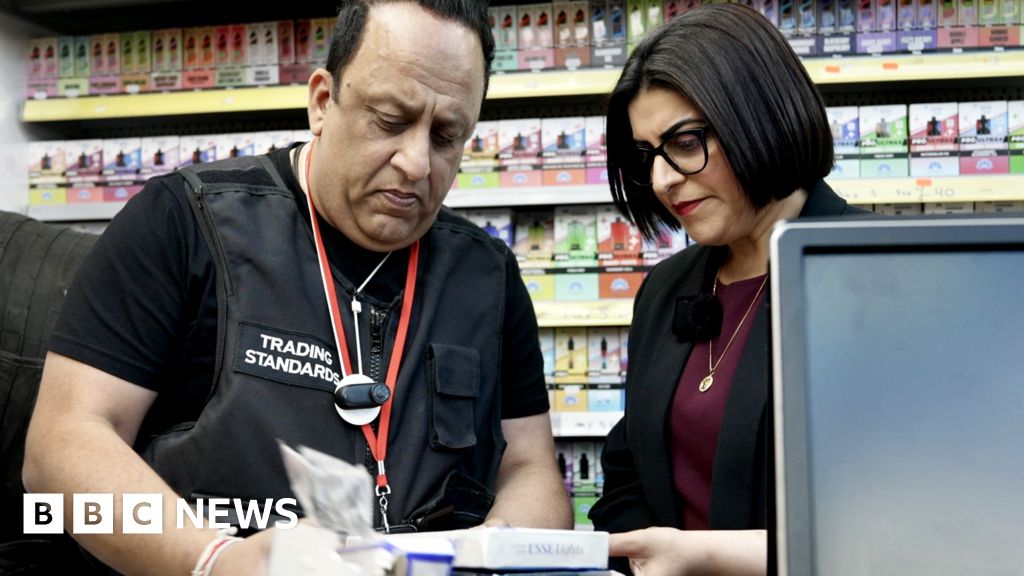
Under current rules, shops breaking the law can only be closed for up to six months in England and Wales.

Travala launches first agentic AI travel protocol for autonomous bookings

Kandi Burruss Sheds Light on Her ‘RHOA’ Exit

West Ham co-owner, nicknamed ‘Sultan of Sleaze’, banned from being alone with women and girls



-

 Fashion5 days ago
Weekend Open Thread: Evereve – Corporette.com
-
 Crypto World5 days ago
Jensen Huang Approves Samsung, SK Hynix, and Micron for NVIDIA (NVDA) HBM4 Memory Supply
-

 Crypto World2 days ago
Anatomy of the June crypto crash: Fed, Iran, Saylor
-
 Entertainment4 days ago
The Best Mystery Series of All Time Is Surging on Streaming 30 Years After It Ended
-

 NewsBeat3 days ago
Alexander Zverev wins the French Open to finally earn a 1st Grand Slam title
-

 Tech4 days ago
Suspicious Polyfill login prompts pop up on Toshiba, Muji websites
-
 Crypto World4 days ago
Senator Cynthia Lummis Calls CLARITY Act the Most Consequential Financial Legislation of This Generation
-

 Tech3 days ago
Microsoft unveils seven homegrown AI models in new bid for ‘long term self-sufficiency’
-

 Tech5 days ago
Microsoft launches MXC, an OS-level sandbox for AI agents, with OpenAI and Nvidia already on board
-

 Business5 days ago
(VIDEO) Justin Bieber Delivers Surprise Happy Birthday Serenade to Diners at Los Angeles Mexican Restaurant
-
 Business4 days ago
The Pain Points Taking a Fragile Tech Rally Down a Notch
-
Crypto World5 days ago
LBank Surpasses 25 Million Users Worldwide as AFA Partnership Continues to Drive Global Growth
-

 Crypto World3 days ago
Trump’s AI Ownership Plan Could Benefit Anthropic at OpenAI’s Expense
-

 Tech5 days ago
Meta steals a tactic from Tesla and builds data centers in tents
-

 Tech5 days ago
Von der Leyen’s AI envoy pick draws conflict-of-interest fire
-
 Crypto World2 days ago
Eli Lilly (LLY) Stock Surges 4% Following Breakthrough Sleep Apnea Trial Results
-
 Sports22 hours ago
Bangladesh beat Australia after 20 years in ODIs, register only their second win over six-time world champions | Cricket News
-

 Business2 days ago
High Stakes for Wembanyama as New York Pushes for 3-0 Lead
-

 Tech4 days ago
Hackers now exploit SolarWinds Serv-U flaw to crash servers
-

 Tech3 days ago
Notion restores access to Anthropic after service disruption
You must be logged in to post a comment Login