

Crypto World
Amundi Solana UCITS fund marks European first

Amundi Solana UCITS fund SAFO launches as Europe’s largest asset manager brings €2.4 trillion AUM to the chain.
Summary
- Amundi, Europe’s largest asset manager, and Spiko Finance launched SAFO, a UCITS-compliant fund on Solana, making it the eighth chain in their strategy.
- SAFO is a tokenized sub-fund under the SPIKO SICAV structure, backed by total return swaps with BNP Paribas as a Tier 1 banking counterparty.
- The launch coincides with US Solana spot ETFs crossing $1 billion in assets under management and Goldman Sachs reducing its SOL exposure.
Amundi, managing €2.4 trillion in assets, and Spiko Finance announced the launch of SAFO on Solana, bringing their UCITS-compliant tokenized fund to its eighth blockchain. Spiko Finance acts as transfer agent, tokenization platform and broker, while CACEIS, Amundi’s custody affiliate, handles depositary and fund administration.
SAFO is formally constituted as a tokenized sub-fund under the legal entity of SPIKO SICAV and subject to French regulatory oversight by the AMF. The fund implements total return swap contracts with full backing from Tier 1 banking entities including BNP Paribas. Subscriptions and redemptions are denominated in EUR, USD, GBP, and CHF, with a minimum investment of one unit per currency class.
Why Amundi’s Solana entry signals a structural shift
The launch arrives as US Solana spot ETFs have crossed $1 billion in assets under management, compressing the institutional adoption narrative from US-only to transatlantic. Crypto.news has tracked about 30 institutions holding roughly $540 million in Solana ETF exposure as of March 2026, a figure that the Amundi move now supplements from the European side.
The timing creates a notable divergence. Goldman Sachs recently reduced its SOL exposure while Amundi is going long, creating the kind of two-sided institutional narrative that tends to build structural demand over time. Crypto.news has also noted institutional endowments adding Solana ETF positions as regulated wrappers lower the barrier for conservative allocators.
What SAFO adds to the existing UCITS product landscape
The UCITS framework allows SAFO to be distributed across all EU member states under a single regulatory structure, removing the cross-border compliance friction that has historically kept European institutional allocators from on-chain products. At the March 2026 expansion, the fund had roughly $100 million in committed AUM across its existing seven blockchain deployments.
Solana was chosen for its transaction throughput and growing institutional infrastructure base. Crypto.news has reported on Morgan Stanley refiling its own staked Solana ETF application, with the Amundi UCITS entry now representing simultaneous pressure from both the US and European institutional channels.

MoonPay is launching MoonPay Trade, a new institutional platform that promises banks and fintechs unified access to tokenized assets, DeFi protocols and stablecoin liquidity across more than 200 blockchains.
Summary
- MoonPay Trade targets banks, fintechs and enterprises with one interface for tokenized assets and DeFi
- The platform will serve as the execution layer for MoonPay Institutional
- It supports tokenized fund subscriptions, collateral transfers and on-chain lending via Aave, Morpho and Maple
According to CoinDesk, MoonPay introduced on May 21 MoonPay Trade as a dedicated trading and execution stack for its institutional clients. The platform is aimed at banks, fintech companies and enterprise clients, offering a single gateway to tokenized assets, DeFi protocols and stablecoin liquidity that spans more than 200 blockchain networks.
According to Keith Grossman, President of Moonpay, the new layer of crypto payments will contain built in execution layers able to seamlessly integrate and provide the ability to make retail payments.
The President recently posted on social media a Fox News anchor making the argument that “stablecoins are the future.”
Accordingly, MoonPay said MoonPay Trade will act as the core execution layer for its newly launched MoonPay Institutional business, which the company built on top of its recent acquisition of Israeli digital asset security firm Sodot.
In this way, MoonPay Institutional is designed to serve financial institutions, asset managers, trading firms and exchanges, providing secure key management, cross‑chain collateral management and access to digital asset markets and DeFi.
From retail on‑ramps to institutional rails, where does Moonpay stand?
Since its inception, MoonPay has been best known as a retail fiat‑to‑crypto on‑ramp embedded in wallets, exchanges and consumer apps. MoonPay Trade marks a shift toward deeper infrastructure: rather than just selling crypto to end users, the company now wants to power banks and fintechs as they plug into tokenized capital markets and DeFi liquidity.
MoonPay now says Trade will support tokenized fund subscriptions, allowing institutions to buy into tokenized funds and structured products directly on chain, using stablecoins and tokenized cash equivalents as rails.
The platform also supports collateral transfers, enabling institutions to move tokenized collateral across chains and venues, and integrates with DeFi protocols such as Aave, Morpho and Maple Finance so that clients can lend, borrow and generate yield directly on chain through a single interface.
Under the hood, MoonPay is leaning on the multi‑party computation (MPC) wallet technology it acquired with Sodot to secure institutional keys and automate complex on‑chain workflows without exposing private keys or requiring clients to manage raw wallets. The company says it now serves more than 30 million customers across 180 countries and works with over 500 enterprise clients, experience it plans to leverage as it pivots toward being an institutional DeFi access layer.
Competing for institutional DeFi flow, how do other DeFi players stack up?
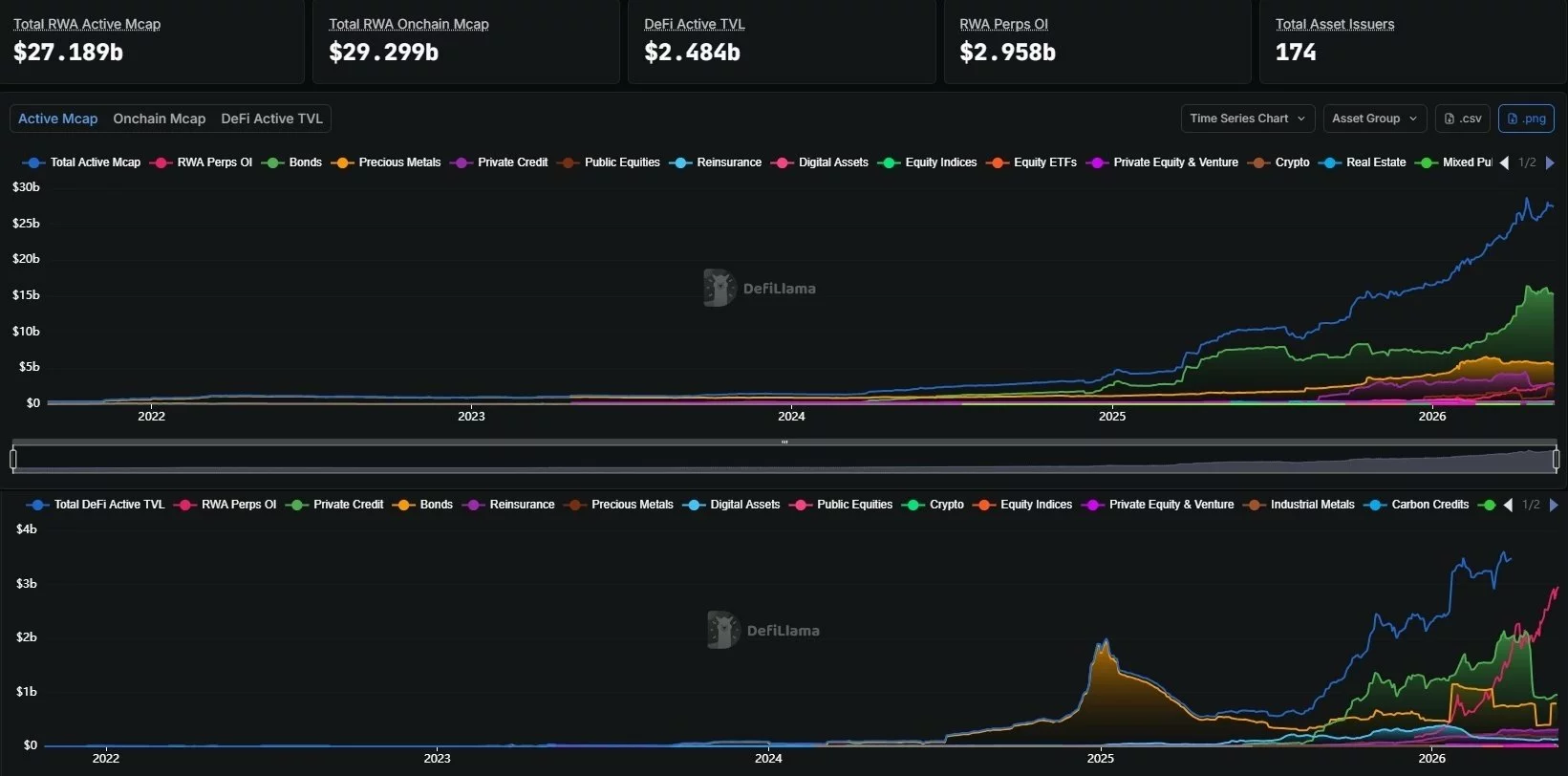
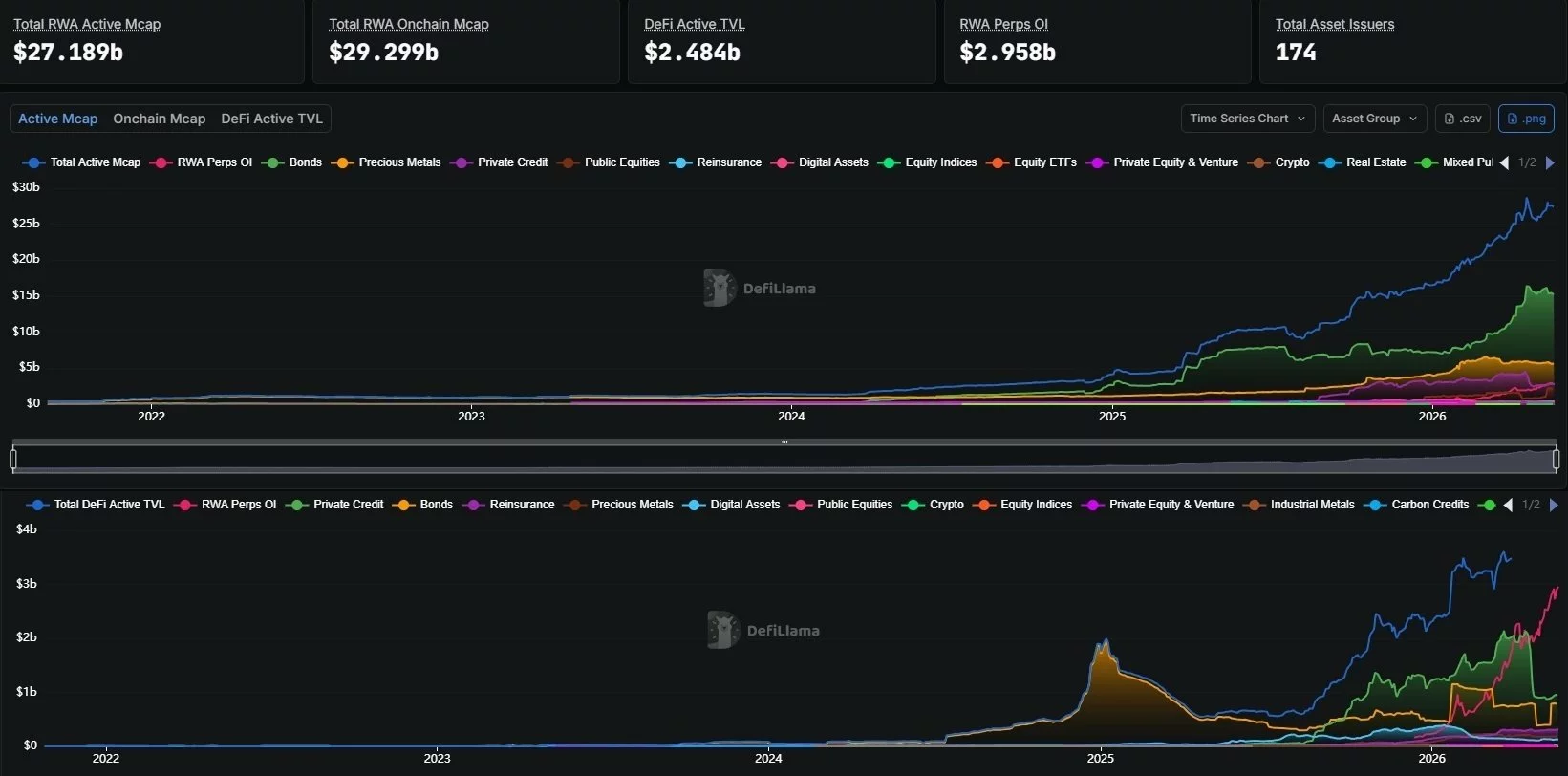
This all comes as only an estimated 10% of RWA Liquidity is active in DeFi protocols. As of May 21, research by Tanaka shows the RWA market is exploding, but DeFi is barely participating: only about 10% of tokenized assets sit in DeFi, and of roughly 7 billion dollars in tokenized gold and commodities on-chain, just 184 million dollars is actually deployed in DeFi protocols.
MoonPay Trade thus drops into an increasingly crowded field of institutional DeFi access platforms, where players like Fireblocks, Circle, Coinbase and BitGo are all vying to become the default pipes into tokenized funds and on‑chain credit markets.
The company’s pitch now seems to be a combination of consumer reach, stablecoin infrastructure, and new institutional custody and execution stack can make it an all‑in‑one gateway for banks and fintechs that do not want to stitch together multiple vendors.
In that sense, MoonPay Trade is both a product launch and a strategic reorientation, signaling that the company intends to compete not just as a retail checkout button, but as a full‑stack infrastructure provider for the era of tokenized and composable finance.

Harvard Management Company, which oversees Harvard University’s endowment, disclosed in its first-quarter 2026 filing with the U.S. Securities and Exchange Commission that it has exited Ethereum exposure and reduced its Bitcoin holdings. The filing shows Harvard no longer holds approximately $87 million worth of BlackRock iShares Ethereum Trust ETF shares that were active in Q4 2025. By contrast, Harvard trimmed its Bitcoin ETF stake by about 2.3 million shares in Q1 2026, while continuing to own more than 3 million shares of BlackRock’s iShares Bitcoin Trust ETF, valued at around $117 million.
These moves unfold amid a period of volatility for Ethereum, which price-wise has pulled back from late-2025 peaks, and as the Ethereum ecosystem faces leadership changes. In March, the Ethereum Foundation published a mandate outlining priorities around decentralization, privacy, open-source software, and censorship resistance—a framework that sparked a mixed reception within the crypto community.
Key takeaways
- Harvard fully exited its Ethereum exposure via the BlackRock iShares Ethereum Trust ETF, removing a position previously valued at about $87 million.
- The endowment reduced its Bitcoin ETF exposure by roughly 2.3 million shares in Q1 2026, but still holds more than 3 million shares of the iShares Bitcoin Trust ETF, worth about $117 million.
- Ethereum’s price action has cooled after its August 2025 highs, with a decline of more than 50% from the all-time peak, as the ecosystem undergoes organizational changes at the Ethereum Foundation.
- Eight Ethereum Foundation departures were recorded in 2026 to date, including researchers Julian Ma and Carl Beek, with Josh Stark leaving earlier in April, signaling ongoing governance and staffing pressures.
- The Foundation’s March mandate outlining decentralization, privacy, open-source code, and censorship resistance drew debate about whether the EF should broaden its focus to tokenomics and price signaling to sustain ecosystem growth.
Harvard’s ETH exit and BTC position rebalancing
According to Harvard Management Company’s Q1 2026 13F filing with the SEC, Harvard eliminated its Ethereum-related exposure through the BlackRock iShares Ethereum Trust ETF. The stake, previously reported as about $87 million in Q4 2025, no longer appears in the latest disclosure. At the same time, Harvard reduced its exposure to Bitcoin by selling roughly 2.3 million Bitcoin ETF shares in Q1 2026.
Despite the reductions in ETH and BTC ETF positions, Harvard’s portfolio maintains a sizable stake in crypto via the BlackRock iShares Bitcoin Trust ETF—more than 3 million shares valued at around $117 million. The portfolio shift suggests a tilt away from single-asset crypto sleeves toward broader, issuer-backed ETF exposure and potential liquidity considerations amid volatile price action.
For readers tracking the SEC filings, the ETH-focused holding is documented in Harvard’s Q1 2026 13F filing here: Harvard’s Q1 2026 13F (ETH), and the BTC-focused filing is here: Harvard’s Q1 2026 13F (BTC).
Ethereum Foundation: leadership changes and a charged mandate
Beyond Harvard’s portfolio moves, the Ethereum Foundation (EF) has faced a sustained wave of departures in 2026. Two researchers, Julian Ma and Carl Beek, announced their exit, joining Josh Stark, a longtime EF researcher and former project manager, who left in April. Together with other departures since early 2026, the EF has seen eight exits this year, underscoring ongoing governance and staffing pressures that intersect with broader ecosystem dynamics.
The EF’s March mandate laid out core ambitions for the foundation, emphasizing decentralization, privacy, open-source software, and censorship resistance as enduring pillars. Public reception within the crypto community was mixed: while some observers highlighted the aspirational value of these principles, others urged a stronger emphasis on tokeneomics and the price trajectory of Ethereum to sustain ecosystem momentum. In commentary on the mandate, journalist Laura Shin characterized the pillars as “great” and “worth fighting for” but suggested the EF should not overlook practical strategy, including tokenomics and market signals, as competition intensifies in the sector. See Shin’s remarks here: Laura Shin on the EF mandate.
The broader narrative around EF leadership underscores a tension: maintaining decentralized governance and openness while remaining relevant in a market where developers, users, and capital are competing for traction. The March mandate signals a reaffirmation of foundational ideals, even as market participants and scholars debate how these ideals translate into real-world incentives for developers, validators, and investors.
Context and what to watch next
Harvard’s retreat from ETH and the EF’s ongoing staffing shifts come against a backdrop of crypto market volatility and evolving regulatory scrutiny. The endowment’s actions suggest a cautious stance toward crypto exposure, favoring bundled, institutionally backed vehicles over direct single-asset bets in a landscape where policy developments and market sentiment can swing quickly. For investors and builders, the next few quarters will be telling: will large, traditional endowments continue to recalibrate crypto allocations in favor of diversified ETF access, or will they re-enter targeted bets as liquidity and regulatory clarity improve?
As for the Ethereum ecosystem, observers will be watching how EF leadership decisions align with the network’s development roadmap, ecosystem health, and tokeneconomics, especially given the price dynamics since the August 2025 peak. The coming quarterly filings and ongoing EF governance developments will help gauge whether the foundation’s stated principles translate into tangible incentives for network growth and participant engagement.
Readers should monitor Harvard’s next SEC filing and any further shifts in EF leadership or policy direction to determine whether the current trend signals a broader institutional recalibration of crypto exposure or a temporary repositioning within a longer-term strategic framework.


Kraken has launched AVAX staking for eligible users globally, offering up to 10% APY on bonded positions.
Summary
- Kraken launched AVAX staking on May 21 with three options: Bonded Staking up to 10% APY, plus Auto Earn and Flexible Staking each at up to 3.5% APY.
- The 10% bonded rate is promotional and will drop to 7% APY after the introductory period, with all rewards automatically restaked to compound returns.
- Kraken manages all validator operations and infrastructure; the service is available in the US, UK, EU, Canada and Australia at launch.
Kraken announced AVAX staking on May 21 with three earning options: Bonded Staking up to 10% APY for a limited time, then 7% APY. Auto Earn and Flexible Staking each offer up to 3.5% APY.
“Staking AVAX has always been possible, but for most holders it’s meant managing validators and technical complexity. We made it simple for clients to participate in protocol staking across various Earn offerings. Kraken runs the infrastructure,” said John Zettler, Kraken Director of Earn Products.
What Kraken’s three-tier AVAX staking structure offers
Rewards across all three products automatically restake, compounding holdings over time without user intervention. Kraken handles all validator operations, infrastructure management and reward distribution.
“Making staking simple and accessible is core to expanding participation in the Avalanche ecosystem,” said John Nahas, Ava Labs Chief Business Officer. “Kraken’s integration removes the technical barriers that have historically limited users from engaging directly with the network, enabling more AVAX holders to contribute to Avalanche’s security while earning rewards.”
Why the Kraken launch matters for Avalanche’s institutional reach
Crypto.news has reported on Bitwise’s BAVA ETP launching on NYSE in April 2026, targeting a 5.4% staking yield. Crypto.news has also tracked Grayscale’s GAVA Avalanche Staking ETF going live in March 2026 with zero fees and embedded staking.
Staking on Avalanche returned roughly 7% on average in 2025, with Kraken’s 10% promotional bonded rate representing a premium above baseline network yield for the introductory period.
Avalanche is deployed by BlackRock, Franklin Templeton, Apollo, FIFA and the state of Wyoming for enterprise blockchain infrastructure. The Avalanche ( AVAX) price page shows the token near $9.39, down 58.7% over the past year, as expanded staking access attempts to rebuild demand alongside the ETF products.

The Commodity Futures Trading Commission headquarters in Washington, Dec. 23, 2022.
Ting Shen | Bloomberg | Getty Images
As prediction markets’ volumes grow at a ruthless pace, their businesses are being challenged by states across the country. The federal government is fighting a multifront battle to stop the state actions and assert its regulatory authority.
Sixteen states are involved in legal proceedings against prediction market platform companies, while one state has moved to ban them entirely.
The Commodity Futures Trading Commission argues it’s the only entity that can regulate these platforms, and the agency has sued six states to defend what it describes as its “exclusive jurisdiction” over prediction markets.
Minnesota became the latest in the government’s crosshairs Tuesday, when the commission sued the state after Gov. Tim Walz signed a law as part of a broader online safety package that would ban prediction markets from operating in the state — a first in the country.
Jeff Le Riche, a former chief trial attorney at the CFTC and now a partner at Husch Blackwell, said the aggressive strategy isn’t typical of the federal agency. “The suing of states is unusual,” he said. “That’s definitely a different tactic.”
CFTC Chair Michael Selig has been clear since his confirmation by the U.S. Senate in December about his views on the agency’s oversight of prediction markets. He also is, for now, the only member on the commission, which typically is a body of five.
“States cannot circumvent the clear directive of Congress,” Selig said in an April press release announcing a lawsuit against Wisconsin. “Our message to Wisconsin is the same as to New York, Arizona, and others: if you interfere with the operation of federal law in regulating financial markets, we will sue you.”
Scrambling partisan divides
Michael Selig, President Donald Trump’s nominee to lead the Commodity Futures Trading Commission, is sworn in during a Senate Agriculture, Nutrition, and Forestry Committee hearing on Capitol Hill, in Washington, Nov. 19, 2025.
Andrew Harnik | Getty Images
The battle between states and the federal government for oversight of prediction markets has scrambled typical partisan divides.
Eleven states that have ongoing legal proceedings against prediction markets have Democratic attorneys general, while five have Republican ones. Minnesota, where state legislators moved to ban prediction markets, passed the law in both its state House and Senate by wide majorities, despite those chambers being divided narrowly by party.
“I wouldn’t say that it’s that surprising just because of the state versus federal issues,” said Jon Ammons, a partner at law firm Reed Smith who focuses on regulatory matters related to commodities, derivatives and digital assets. “I think that states have this idea that they are the ones who regulate gaming and things that look like gaming.”
While regulators in the 16 states involved in legal proceedings over prediction markets come from both sides of the aisle, the six states the CFTC has sued so far — Wisconsin, New York, Connecticut, Illinois, Arizona and Minnesota — all have Democratic attorneys general.
“I cannot answer for the Trump Administration as to why they would have chosen to sue only certain states with Democratic leadership, bypassing others who have taken similar enforcement postures,” said Connecticut Attorney General William Tong, a Democrat, in a statement to CNBC.
The only action the CFTC has taken against a state with a Republican attorney general is in Ohio, where it filed an amicus brief defending its sole jurisdiction rationale.
Richie Taylor, a spokesperson for Arizona Attorney General Kris Mayes, said in an email he is limited in his ability to comment due to the ongoing litigation but noted the bipartisan nature of the action by states.
Arizona Attorney General Kris Mayes attends a press conference in Nogales, Arizona, March 18, 2024.
Rebecca Noble | Reuters
“Like red states and blue states alike, AG Mayes believes the CFTC is improperly encroaching on the right of states to enforce their gambling laws,” Taylor said.
The battle for oversight of events contracts
States argue that prediction market platforms are running illegal sports betting operations, thanks to their related event contracts, which drive the majority of volume on the platforms. The CFTC argues that its right to regulate swaps and derivatives places all event contracts, no matter the content, under its purview.
A spokesperson for the CFTC denied that there’s anything involved in the commission’s legal strategy beyond an attempt to defend its regulatory power.
“These states sought to regulate or prosecute lawful, CFTC‑regulated exchanges that were operating fully in accordance with federal statutes, requiring the CFTC to intervene,” an agency spokesperson said in a statement. “It is based solely on the CFTC’s responsibility to ensure that states do not interfere with the trading of event contracts regulated under federal law.”
In its lawsuits so far, the CFTC won a preliminary injunction in Arizona to stop the state from pursuing criminal charges against Kalshi, the largest domestic prediction market platform. In the other five states, cases are still ongoing and no initial rulings have been made.
Separately, the U.S. Court of Appeals for the Third Circuit ruled that New Jersey can’t enforce gambling laws on prediction markets. But the legal battles are in the early days, and many of those who follow them say the final verdict will likely be determined at the nation’s highest court.
“It has the makings of a real circuit split, which does seem to indicate a high likelihood that this would go to the Supreme Court,” Ammons said.
Disclosure: CNBC and Kalshi have a commercial relationship that includes customer acquisition and a minority investment.

[PRESS RELEASE – BELIZE City, Belize, May 21st, 2026]
The 2026 football season is expected to draw strong betting interest. For crypto players, the experience goes beyond pre-match picks, extending to live odds, promotions, casino games and entertainment content within one platform.
As a crypto casino and sportsbook, BC.GAME brings football betting, crypto payments, casino games, live dealer tables, crash games and BC Originals into one account and wallet system.
Football Betting Markets to Watch in 2026
Football bettors can follow a wide range of markets in 2026, including pre-match odds, outright markets, player props, goal totals and in-play betting.
France, Spain, England, Brazil and Argentina are likely to remain key teams in early betting conversations, while Portugal, Germany, Morocco, Colombia, Japan, the United States and Norway may attract attention across value picks and stage-specific markets.
Beyond predicting the final winner, players can follow match winner, draw no bet, double chance, over/under goals, top scorer, player props and live betting, with in-play markets responding to goals, red cards, substitutions and shifts in momentum.
BC.GAME’s Crypto Sportsbook Experience
BC.GAME places sports betting inside a broader crypto casino environment.
Players can follow pre-match and in-play odds while also accessing casino games, live dealer tables, crash games, BC Originals and other platform content through the same account and wallet. For players already familiar with digital assets, this creates a more direct path into football betting and wider gaming activity.
A player may start with a pre-match market for a key fixture, track in-play odds during the match, and then continue into casino or BC Originals after the final whistle.
That integrated structure is central to BC.GAME’s 2026 football campaign: football markets, crypto payments and casino entertainment sit within one connected platform experience.
Football Promotions With a Crypto-Native Layer
BC.GAME’s 2026 football campaign will include football-themed promotions, sportsbook activity and tournament-style rewards, including leaderboards, boosted odds, free bets, prize pools and other activities connected to the football season.
The campaign is designed for different participation styles. New users can look at entry-level offers and free bets to start exploring football markets more easily. More active sportsbook players may focus on boosted odds, leaderboards and ongoing prize pools. For players planning to follow the full season, leaderboard and staged campaign formats can offer more sustained engagement than one-off bonuses.
Campaign rewards will also cover a broader range of prize categories, including luxury cars, final match ticket packages, tech products, football collectibles and other tournament-linked rewards.
Beyond Campaign Rewards: BC Engine and $BC
Beyond campaign prizes, BC.GAME also extends its rewards mechanism into the platform’s everyday experience through $BC and BC Engine.
Players can earn $BC rewards when participating in casino games and eligible platform activities, with those rewards automatically entering BC Engine. Built around real yield and hourly settlement, BC Engine distributes crypto rewards based on the amount of $BC held by users at the time of settlement.
The BC Engine reward pool is supported by revenue from different products and partners across the platform, including profits from in-house games such as BC Originals, as well as revenue share from partner products such as Croco and Betby.
BC.GAME also supports the $BC ecosystem through its daily burn mechanism. Under the staking unlock rule, if users unstake within seven days of staking, 1% of the unstaked amount is burned; after seven days, staked $BC can be fully unlocked.
This makes $BC more than a one-off campaign reward. It becomes part of BC.GAME’s crypto-native rewards system.
Final Take
BC.GAME’s 2026 football campaign brings football betting, crypto payments, casino entertainment and platform rewards into one connected experience. Players can start with football markets and related promotions, then continue into casino games, live games, crash games, BC Originals and the rewards system supported by $BC and BC Engine.
As the 2026 football season develops, BC.GAME aims to make football betting part of a broader crypto-first entertainment environment, rather than a standalone sportsbook activity.
About BC.GAME
BC.GAME is a crypto entertainment platform offering a wide range of online gaming experiences, including casino games, sports, live casino, poker, and proprietary titles. The platform supports multiple cryptocurrencies and continues to expand its product offering through new game releases, feature development, and international brand partnerships.
Disclaimer: Gambling involves risk. Players must be of legal gambling age in their jurisdiction and should gamble responsibly. Campaign availability, rewards and sportsbook markets may vary by region and are subject to BC.GAME’s terms and conditions.
The post BC.GAME Brings a Crypto-First Betting Experience to the 2026 Football Season appeared first on CryptoPotato.

TLDR
- The US government committed over $2 billion to accelerate quantum computing development across nine companies.
- IBM will receive $1 billion to build a quantum wafer manufacturing facility in Albany, New York.
- The funding includes CHIPS Act incentives matched by IBM’s investment in assets and expertise.
- Several quantum firms, including D-Wave and PsiQuantum, will each receive $100 million awards.
- Officials said the investment aims to strengthen domestic technology capabilities and create jobs.
The U.S. government has committed more than $2 billion to advance quantum computing as concerns rise over risks to crypto security. The funding targets several companies, including IBM, to accelerate quantum chip manufacturing. Officials say the move aims to strengthen national technology leadership while addressing future threats to Bitcoin and blockchain systems.
Quantum Computing Investment Targets Crypto Security Risks
The Department of Commerce announced the funding across nine companies on Thursday. IBM will receive $1 billion for a quantum manufacturing initiative.
IBM plans to build a facility called Anderon in Albany, New York. The project will focus on producing advanced quantum wafers at scale.
The government will provide $1 billion through CHIPS incentives. IBM will match that amount with cash, assets, and expertise.
Commerce Secretary Howard Lutnick said the investments will expand domestic capabilities. He stated they will also create thousands of high-paying jobs.
GlobalFoundries is set to receive $375 million under the program. Several other firms will each receive $100 million awards.
These firms include Atom Computing, D-Wave, Infleqtion, PsiQuantum, Quantinuum, and Rigetti. Startup Diraq will receive $38 million in funding.
The government will take equity stakes in participating companies. Officials say this ensures long-term returns and oversight.
Quantum Computing Raises Concerns for Bitcoin and Blockchain
Experts warn that quantum computing could threaten current encryption methods. This includes systems used by Bitcoin and Ethereum.
Quantum machines use qubits instead of traditional bits. These qubits can exist in multiple states at the same time.
This capability allows quantum systems to solve complex problems faster. It also raises concerns about breaking cryptographic protections.
Researchers highlight risks to blockchain due to its public structure. Exposed public keys could allow attackers to derive private keys.
A report from Project Eleven suggests such capabilities may arrive by 2030. Google researchers also indicate fewer qubits may be needed than expected.
Citi analysts recently warned about Bitcoin’s exposure to these risks. They said governance challenges may slow protocol upgrades.
The bank estimates 6.7 million to 7 million Bitcoin have exposed keys. This represents up to one-third of the total supply.
IBM CEO Arvind Krishna said quantum manufacturing will drive future innovation. He added that wafer fabrication remains critical for scaling the technology.
IBM aims to build a fault-tolerant quantum computer by 2029. The company outlined this goal in its latest quantum roadmap.

Harvard University's endowment reduced its exposure to Bitcoin and Ethereum spot ETFs during the first quarter of 2026, according to SEC filings. Harvard Management Company cut its holdings in BlackRock's spot Bitcoin ETF (IBIT) by approximately 43% and completely liquidated its position in… Read the full story at The Defiant
Crypto World
5 Cryptos for Massive May Gains – Why Waiting Until Monday Will Cost You More on $DOGEBALL

May is heating up to be an absolute thriller for the digital asset market. With institutional interest solidifying and decentralized ecosystems scaling at record speeds, finding the best crypto to invest in May requires looking past pure speculation. Investors are shifting focus toward concrete utility, making this month the perfect time to evaluate projects that solve real-world problems. Today, we are diving deep into the breakout DOGEBALL crypto presale 2026, alongside market heavyweights Stellar (XLM), Bitcoin Cash (BCH), Hedera (HBAR), and Litecoin (LTC) to see which assets deliver genuine technical value.
Exploring DOGEBALL: The Best Crypto to Invest in May
DOGEBALL ($DOGEBALL) is building a dual-engine crypto ecosystem on its own custom Ethereum Layer 2 blockchain called DOGECHAIN. By merging GameFi and PayFi into a singular platform, it addresses major pain points in cross-border remittances and interactive entertainment. Instead of relying on traditional financial intermediaries, the platform allows users to send digital assets globally while enabling receivers to collect local fiat currency directly into their bank accounts. It supports over 30 global currencies with zero FX fees, near-instant settlement finality, and complete removal of traditional banking delays.
This crypto presale stands out because the $DOGEBALL token sits at the absolute center of this infrastructure. It acts as the exclusive utility token used to power all transaction fees on DOGECHAIN, sparking organic buy pressure as global payment volumes grow. For investors searching for the best crypto to invest in May, the project delivers audited security with a 100% smart contract score, multi-platform gaming integration featuring a $1M prize pool, and immediate staking rewards, providing clear utility metrics rather than empty speculative promises.
Unpacking the DOGEBALL Presale Mechanics and Math
The DOGEBALL crypto presale 2026 is moving at an incredibly rapid pace, having already secured 292K+ in funding from over 1000+ distinct global participants. The momentum structural design shifted on Monday 11th May 2026, when the development team executed a massive burn of 4bn tokens—wiping out 20% of the initial presale supply to enhance scarcity. The project is currently at Stage 4 with a token price sitting at just $0.0006. Since the launch price is mathematically locked at $0.015 via a tier-one Web3 launch partnership, securing tokens at today’s $0.0006 entry point unlocks a projected 2400% ROI. A baseline investment of $600 at the current rate yields 1,000,000 tokens, which would hold an implied value of $15,000 upon exchange listing. The presale now utilizes a timed 22-stage structure where each stage lasts a maximum of 7 days, ending every Sunday. New stages launch every Monday at 21:00 UTC with an automatic price bump, meaning today’s entry point disappears fast.
Stellar (XLM): Driving Institutional Asset Tokenization
Stellar continues to anchor its position as a dominant infrastructure layer for cross-border financial networks. Built inherently to move money quickly and cheaply, XLM operates as the friction-reducing medium for global enterprises and central banking pilots.
Recent network upgrades have expanded Stellar’s smart contract capabilities through its Soroban platform. This allows institutional entities to build compliant decentralized applications directly on top of Stellar’s high-throughput architecture, significantly increasing the long-term utility demand for XLM.
Bitcoin Cash (BCH): Scaling On-Chain Peer-to-Peer Payments
Bitcoin Cash remains focused on fulfilling the original vision of decentralized digital cash by prioritizing block size scalability and minimal transaction fees.
The network’s recent technical upgrades have introduced enhanced smart contract functionality, enabling token creation directly on the BCH chain without sacrificing transaction speed. This technical improvement bolsters its competitive positioning against other payment-centric networks, drawing renewed interest from merchants seeking reliable transactional utility.
Hedera (HBAR): Enterprise-Grade Consensus Innovation
Hedera utilizes a unique hashgraph consensus mechanism rather than a traditional blockchain structure, offering unparalleled security, asynchronous Byzantine Fault Tolerance, and predictable, micro-cent transaction fees.
The network is experiencing heightened transaction volumes driven by its massive enterprise steering committee, which includes major global tech corporations. The ongoing expansion of Hedera’s asset tokenization frameworks makes HBAR a core asset to monitor as real-world asset deployment accelerates across corporations.
Litecoin (LTC): The Network of Pure Transactional Liquidity
Litecoin maintains an immaculate uptime track record, positioning itself as one of the most reliable networks for daily digital asset transactions. Its structural integration with global payment processors keeps liquidity high.
The recent surge in Litecoin processing volumes is heavily supported by the growing adoption of MWEB (MimbleWimble Extension Block) privacy features, giving users optional transactional confidentiality. LTC remains a premier choice for cost-effective asset transfers across exchanges globally.

The Final Verdict: Finding Your Best Crypto to Invest in May
Navigating the market this month requires balancing the reliable, enterprise-focused architectures of Stellar, Bitcoin Cash, Hedera, and Litecoin with high-growth token models. While major networks offer established safety, the DOGEBALL presale introduces unmatched structural upside by combining Layer 2 scalability with zero FX global cross-border payments. With the timed weekly price increases resetting every Monday at 21:00 UTC, entering the DOGEBALL crypto presale 2026 during its current low-priced stage represents an asymmetric growth opportunity for forward-thinking portfolios.

Find Out More Information Here
Website: https://dogeballtoken.com/
X: https://x.com/dogeballtoken
Telegram Chat: https://t.me/dogeballtoken
FAQs for Best Crypto to Invest in May
Is May a good month for crypto?
Yes, May historically acts as a pivotal month for market adjustments and volume consolidation. It is a fantastic time to discover early-stage utility assets like the DOGEBALL presale before widespread institutional exchange listings drive up entry prices.
Which crypto is best to invest now?
DOGEBALL represents the strongest risk-to-reward investment right now. Unlike legacy assets, its custom Layer 2 payment architecture and current low presale pricing of $0.0006 provide a clear mathematical route to high-multiple returns upon launch.
Which crypto coin will give 1000x?
While no project can guarantee 1000x returns, DOGEBALL holds the fundamental infrastructure to achieve explosive exponential growth. Its combination of zero FX fee payments, GameFi microtransactions, and aggressive token-burning mechanisms builds genuine, long-term asset scarcity.
Which crypto is growing fast?
The DOGEBALL crypto presale 2026 is expanding rapidly, securing 292K+ from 1000+ investors. Coupled with a recent 4bn token burn and ramped-up global marketing campaigns, its community momentum is outpacing standard market averages.
Which crypto will reach $1?
While large-cap tokens struggle with high circulating supplies, DOGEBALL’s systematic token burns and locked $0.015 launch price position it for an aggressive upward trajectory toward major dollar milestones as global payment adoption scales.
Disclaimer: This is a Press Release provided by a third party who is responsible for the content. Please conduct your own research before taking any action based on the content.

A SpaceX Falcon 9 rocket is displayed outside a Space Exploration Technologies Corp. facility in Hawthorne, California, on March 26, 2026.
Patrick T. Fallon | Afp | Getty Images
A slew of tech mega-IPOs are ahead and traders expect they’ll push Warren Buffett aside on their first day of trading.
SpaceX on Wednesday officially filed to go public on the Nasdaq. On the same day, reports circulated that OpenAI will file for an IPO confidentially as soon as Friday.
After the OpenAI reports, traders on prediction market platform Kalshi now see a 92% chance that the ChatGPT owner files for an IPO this year. Traders also think its chief private rival, Anthropic, has 69% odds it will officially go public this year.
And according to traders on Polymarket, all are expected to trade on their first days at valuations north of $1 trillion, which would be records for a public debut.
SpaceX was valued at $1.25 trillion in February, and Polymarket traders think there’s a 56% chance it closes its first trading day above $2.2 trillion. OpenAI was last valued at $852 billion, and traders think there’s a 65% chance it ends its first public trading day above $1.4 trillion.
Meanwhile, traders place 47% odds that Anthropic on its first day of public trading will close above $1.8 trillion. The company reportedly is in talks for a new funding round at a $900 billion valuation.
Those valuations would place the companies firmly in the $1 trillion club, and likely above Berkshire Hathaway’s market cap, currently at $1.03 trillion. They’d even challenge Meta and Tesla’s around $1.5 trillion market caps.
Deutsche Bank analyst Adrian Cox pointed out in a Thursday note that Berkshire Hathaway had over $350 billion in revenue last year. That compares to SpaceX’s $18.67 billion in revenues during 2025. OpenAI reportedly generated $13.1 billion of revenue last year.
Anthropic’s revenues for 2025 aren’t as clear, but reports Wednesday said that the company is pacing for a second-quarter profit, a first for the Claude owner, at nearly $11 billion in revenue. SpaceX and OpenAI are unprofitable companies, despite their massive valuations.
The massive valuations come as companies have stayed private for longer, partially thanks to the growing number of ways to raise capital outside of public markets. But the rush of these IPOs in a row have created concerns there won’t be enough buyers to sustain these high valuations.
Cox threw cold water on those fears.
“While there may be concerns about the capacity of the market to absorb a number of IPOs valued at several hundred billion dollars this year, they would slot into an US stock market worth about $70trn overall,” he wrote. “That is five times larger in nominal terms than it was even at the peak of the dot-com bubble in the late 1990s. At that time, there was an average of almost 500 IPOs a year, compared with about 120 this decade.”
Disclosure: CNBC and Kalshi have a commercial relationship that includes a CNBC minority investment.

Strategy weighs Bitcoin sales with equity and credit funding options
STRC dividend changes aim to strengthen digital credit stability goals
Michael Saylor projects long-term Bitcoin growth despite market pressure
Michael Saylor signaled a shift in Strategy’s capital management approach as Bitcoin traded near $79,000 on Thursday. The company may sell part of its Bitcoin holdings before year-end while continuing equity and credit financing activities. Meanwhile, Strategy maintained its focus on increasing Bitcoin per share and long-term enterprise value.
Strategy Adjusts Treasury Structure With Flexible Funding Methods
Strategy reviewed multiple funding options during a retail investor discussion hosted by Natalie Brunell. The company assessed cash reserves, equity issuance, credit products, and selective Bitcoin sales. Management said mixed funding structures produced stronger long-term results than single-source financing models.
Saylor explained that the company evaluates liabilities continuously and responds quickly to market conditions. He said Strategy studies credit risks, shareholder value, and balance sheet efficiency before making funding decisions. The company also intends to maintain flexibility while expanding its Bitcoin-focused financial structure.
Strategy currently holds Bitcoin purchased across different market cycles and price levels. Saylor noted that some holdings carry cost bases between $10,000 and $125,000 per coin. Therefore, the company could sell higher-cost holdings if market conditions support that strategy.
STRC Remains Central to Strategy’s Digital Credit Business
Strategy executives also discussed plans to strengthen STRC, the company’s preferred credit product known as Stretch. The company proposed changing dividend payments from monthly schedules to semimonthly distributions. Management believes the move could support STRC’s target trading level near $100.
Saylor described STRC as the company’s flagship digital credit product with lower volatility than common equity. He added that Strategy raised dividends, expanded dollar reserves, and repurchased senior debt to improve product stability. The company also seeks shareholder approval for the revised dividend structure.
Phong Le said Strategy reviewed similar adjustments for other preferred products but prioritized STRC first. He stated that STRC remains the company’s largest and most innovative financial product. Meanwhile, Strategy plans to keep other preferred securities, including STRF, STRD, and STRK, within its capital structure.
Bitcoin Outlook Supports Strategy’s Long-Term Expansion Plans
Saylor maintained a bullish stance on Bitcoin despite recent market weakness and macroeconomic pressure. He said institutional demand and digital credit products could absorb future Bitcoin supply for decades. The company also expects long-term growth in tokenized finance and regulated digital asset markets.
During a CNBC interview, Saylor stated that Bitcoin entered a new market recovery phase after stabilizing near $60,000 earlier this year. He argued that long-term interest rates, geopolitical tensions, and miner selling created temporary pressure across digital assets. However, he believes market conditions will improve as regulation advances.
Saylor also highlighted the proposed Clarity Act and regulatory discussions around tokenized securities in the United States. He said these developments could strengthen digital asset adoption and support broader market activity. Additionally, he stated that Strategy may continue acquiring mined Bitcoin through 2140 under its long-term treasury model.
The company also addressed concerns surrounding quantum computing and Bitcoin network security. Saylor said Bitcoin developers could upgrade the network if credible technological risks emerge in the future. He compared potential upgrades with software updates commonly used across financial and technology systems.

Peabody Energy Corporation (BTU) Presents at B. Riley Securities 26th Annual Institutional Investor Conference – Slideshow

MoonPay launches MoonPay Trade to pull banks into DeFi and tokenized assets

Star Trek’s Most Ambitious Director Humiliated A Cast Member In His Very First Scene


-

 Crypto World6 days ago
BloFin War of Whales 2026 Grand Prix opens registration for $5M trading championship
-

 Fashion6 days ago
Weekend Open Thread: Theory – Corporette.com
-

 Crypto World6 days ago
E-Estate Announces 1 Year Live: Washington DC Summit as Real Estate Tokenization Enters Its Next Phase
-

 Tech7 days ago
Tech Moves: Microsoft AI leader jumps to OpenAI; former AI2 exec joins Meta; and more
-

 Tech6 days ago
Google reimburses Register sources who were victims of API fraud
-
 Business6 days ago
H&R Real Estate Investment Trust (HR.UN:CA) Q1 2026 Earnings Call Transcript
-

 Sports6 days ago
Napoleonic enters 2026 Doomben 10,000 field via Abounding withdrawal
-
 Crypto World6 days ago
BeInCrypto 100 Institutional Awards Nomination: KAST for Best Digital Assets Neobank and Best Digital Assets Fintech
-
 Crypto World6 days ago
Bitcoin Battles US Bond Nerves With BTC Price Dip Toward New May Lows
-

 Crypto World6 days ago
ICE and CME urge US regulators to curb Hyperliquid energy trading
-
 Crypto World6 days ago
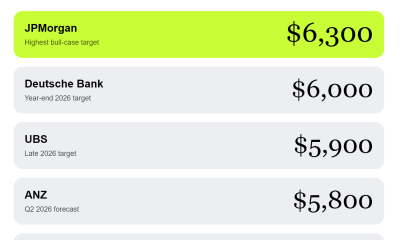
Wall Street’s Boldest Gold Prediction Has Russians Rushing to Buy
-

 Fashion5 days ago
On the Scene at Gucci’s Cruise Show in New York City: Mariah Carey, Kim Kardashian, Lindsay Lohan, Iman, and More!
-

 Entertainment6 days ago
David Letterman Returns to Late Show, Blasts Cancellation
-

 Crypto World6 days ago
IREN closes $3 billion convertible notes deal amid AI infrastructure expansion
-

 Fashion6 days ago
Trending Western Style Vests Perfect for Summer
-

 Politics7 days ago
DWP PIP Timms review continues to be an absolute farce
-

 Politics6 days ago
Watch: far-right flag-fanatics run over victim, attack locals – Setup By the Left wing for your entertainment
-
Crypto World7 days ago
Lido Finance Selects Chainlink CCIP as the Official Cross-Chain Infrastructure for wstETH Security
-

 Fashion6 days ago
Creative Ideas for Custom T-Shirts
-

 Fashion5 days ago
Amazon Sundays: Memorial Day Hosting
You must be logged in to post a comment Login