

Crypto World
BeInCrypto 100 Institutional Awards Nomination: KAST for Best Digital Assets Neobank and Best Digital Assets Fintech



Stablecoins are starting to look less like a crypto trading tool and more like financial infrastructure for people who earn, spend, and move money across borders. KAST is building directly around that shift.
The firm is nominated for Best Digital Assets Neobank and Best Digital Assets Fintech at the BeInCrypto Institutional 100 Awards 2026.
Neobank Metric
Last Verified Data
Users
1M+
Annualized transaction volume
About $5B
Active footprint
170+ countries
Card acceptance
150M+ merchants
Yield product
KAST Earn with Gauntlet and USD Prime Vault
The nomination reflects KAST’s efforts to build a consumer and business finance platform around stablecoin rails from the start.
The company serves users across 170+ countries, integrates a real-time cross-border settlement layer with Fedwire and SWIFT, offers cards accepted at 150 million merchants, and supports USD accounts, global payouts, card spending, and yield products from a single app.
In March 2026, KAST raised $80 million in Series A funding, co-led by QED Investors and Left Lane Capital, with Peak XV Partners, HSG, and DST Global Partners also participating. The company said it had crossed 1 million users and reached about $5 billion in annualized transaction volume.
Fintech Metric
Last Verified Data
Series A funding
$80M announced in March 2026
Core architecture
Stablecoin-native financial app
Business product
KAST Business waitlist/live access waves
Custody and security
Fireblocks, BitGo, and enterprise security partners
Product surface
USD accounts, cards, payouts, yield, business accounts
Built Around Stablecoins From Day One
KAST’s nomination for Best Digital Assets Neobank centers on its stablecoin-native account model.
Most neobanks began with traditional banking rails and later added crypto features. KAST started with stablecoins as the operating layer. The account balance, cross-border movement, card spend, and yield products are all built around digital dollars.
In a nomination interview with BeInCrypto, Founder and CEO Raagulan Pathy described the difference.
“The first generation of neobanks did a great job giving a slick interface, but they still operated within the traditional financial system. Being stablecoin native, we can be in 150-plus countries very early. That’s what we’ve done from day one,” Pathy said.
That architecture gives KAST its global reach. Users can hold USD, spend through Visa card products, move funds across borders, and access stablecoin-based yield without relying on a traditional bank account in their country of residence.
KAST also emphasizes institutional-grade security. Its website says the platform partners with Fireblocks, BitGo, and enterprise security providers for asset protection, while financial services are provided through licensed and regulated partners.
Turning Stablecoin Rails Into Fintech Infrastructure
The second nomination, Best Digital Assets Fintech, reflects KAST’s wider product buildout.
KAST Earn allows users to put idle USD to work through vault products. Its Gauntlet Alpha Vault deploys funds across DeFi strategies managed by Gauntlet, while the USD Prime Vault uses USDKY, a stablecoin backed by short-term US Treasury bills through M0.
KAST says users can withdraw without lockups, with returns reflected in the value of their vault balance.
Pathy framed trust as central to the business model.
“Financial services is ultimately a trust game. Users will use you more if they trust you. It’s not always about being the absolute cheapest; it’s about being the safest and the best,” he said.
KAST is also moving into business finance. KAST Business is designed for global teams, founders, agencies, and operators who need payouts, payroll, virtual cards, and cross-border spending in a single platform. The company says it is opening access in phases and reviewing applications manually.
That expands KAST beyond a consumer card product. It gives the company a path into stablecoin payroll, contractor payments, business spending, and embedded financial services.
The BeInCrypto Institutional 100 Awards recognize firms building the systems that could define the next phase of digital finance. KAST’s nomination reflects its role in turning stablecoins into a usable banking-like experience for consumers and a financial infrastructure layer for global businesses.
The post BeInCrypto 100 Institutional Awards Nomination: KAST for Best Digital Assets Neobank and Best Digital Assets Fintech appeared first on BeInCrypto.

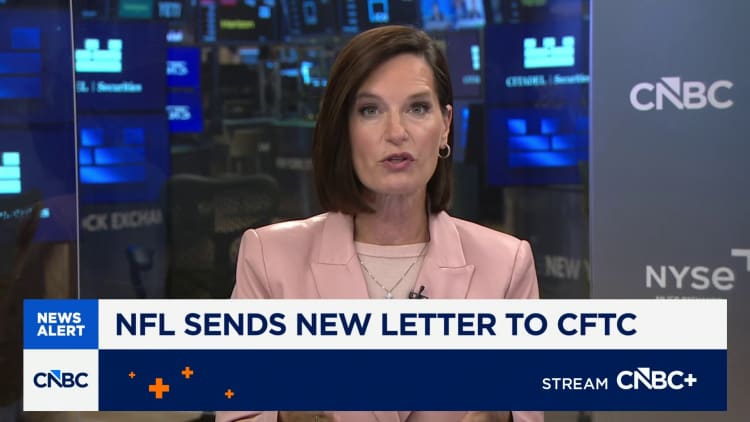

The National Football League outlined to the Commodities and Futures Trading Commission its views on how sports-related prediction markets should be regulated as the industry continues to experience massive growth, according to a letter reviewed by CNBC.
Recommendations include banning certain event contracts and raising the age requirement for participation.
Senior vice president for government affairs and public policy for the NFL Brendon Plack penned the letter on Friday to CFTC Chairman Michael Selig, where regulators are currently in a rulemaking process regarding the markets. Plack said the slew of recommendations are to preserve the ethics of the league.
“These suggestions are aimed at (i) protecting the integrity of the sporting events to which the prediction contracts relate, and (ii) protecting participants in these prediction markets from fraudulent or manipulative behavior,” he wrote.
The NFL wants a number of contracts they deem to be easily manipulable by a singular person banned, like on if a kicker will miss a field goal or a quarterback’s first pass will be incomplete. Contracts on things that are “knowable in advance” like the first play of the game or trading on “inherently objectionable” events like injuries should also be restricted, the NFL said.
Plack also wrote that the league wants “mentions” contracts for broadcasters, where participants put money on different words they think an individual will say on television, prohibited too.
The NFL also called for raising the age requirement for participants in sports-related prediction markets to 21 years old. That would align with typical age requirements for online sports betting, but prediction markets currently allow users starting at 18 years old to trade on their platforms.
Plack consistently refers to state-level gambling regulations as a model to follow when developing guardrails for sports-related prediction market contracts. He even recommends the National Futures Association enter agreements with state gaming regulatory authorities to share data and improve enforcement mechanisms to catch individuals who shouldn’t be allowed to trade.
Michael Selig, President Donald Trump’s nominee to lead the Commodity Futures Trading Commission speaks during a Senate Agriculture, Nutrition, and Forestry Committee hearing on Capitol Hill on Nov. 19, 2025 in Washington, DC.
Andrew Harnik | Getty Images
However, Selig views these markets, including the sports-related ones, as different from gambling. He reiterated to Axios this week that sportsbooks and these contracts are “two separate things.”
The CFTC has taken several states to court over their legal interventions with prediction market platforms. States argue their power to regulate sports betting means they have jurisdiction over these platforms, while the commission argues these contracts are swaps and thus fall under its regulatory power.
Other recommendations from the NFL include a request for the CFTC to create a unique certification process for contracts that are related to an individual player’s performance or susceptible to manipulation. Currently, most event contracts are approved through a self-certification process by the prediction market platforms.
It’s not just public sector regulators struggling with the arrival of these platforms. Sportsbook companies DraftKings and FanDuel parent Flutter have seen their stocks suffer in the past year as prediction markets’ sports business has grown.
Plack also writes the league believes prediction market platforms should enter agreements with sport governing bodies to establish and enforce a list of prohibited participants in sports event contracts, including league employees to minimize chances of insider trading.
The league also believes platforms should be required to ban margin trading, a risky practice where borrowed money is traded, to protect consumers. “The permittance of event contracts that are not fully collateralized, as some have suggested, particularly related to sports markets, could amplify addictive behavior and loss risk,” Plack wrote.
— CNBC’s Contessa Brewer, Jessica Golden and Ananya Chetia contributed reporting
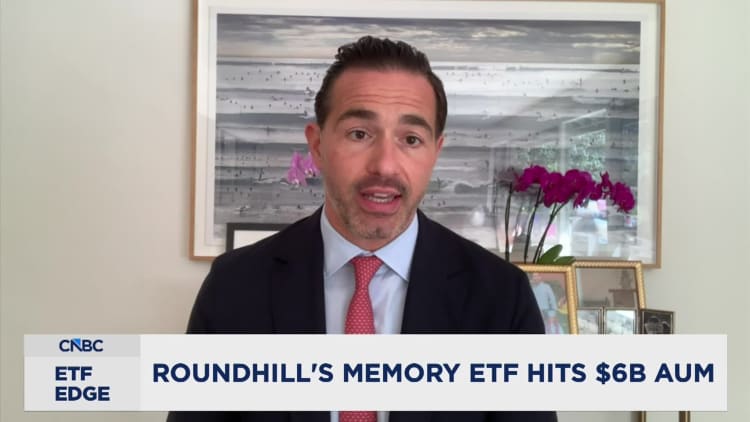

The Roundhill Memory ETF (DRAM) just hit $9.8 billion in assets under management in 43 days— the fastest pace ever for an exchange-traded fund, according to TMX VettaFi.
Ahead of Thursday’s milestone, the CEO of Roundhill Investments told CNBC’s “ETF Edge” the rapid growth is tied to the limited number of companies involved in producing high-bandwidth memory or DRAM chips. They’re considered integral to the artificial intelligence revolution.
“Investors are waking up to the fact that the biggest bottleneck in the AI build-out is actually memory chips,” Dave Mazza said Monday. “There’s an incredible amount of supply and demand imbalance with memory which is one of the reasons why the stocks have been performing so well.”
Mazza notes just a small number of companies are involved in making high-bandwidth memory chips.
“This is an area where memory has historically been incredibly cyclical. We’ve seen boom-and-bust cycles. And, one of the reasons why it was so cyclical is memory is actually found everywhere — in your smart TV to your phone in your car,” he said. “What’s changed is actually data centers and the growth and build-out of AI.”
Mazza estimates the supply and demand imbalance could extend into 2028 due to AI demand and the data center hyperscaler build-out.
‘I’m shocked’
In a special note to CNBC, TMX VettaFi’s Todd Rosenbluth reacted to the DRAM’s popularity, which is considered the hottest ETF since bitcoin mania.
“I’m shocked by the rapid adoption of the ETF, as memory stock demand through an ETF was not pent up like it was for bitcoin exposure,” the firm’s head of research and editorial wrote on Thursday. “Thematic ETFs continue to gain traction by offering exposure to fast-growing companies.”
Citi Research’s Drew Pettit is confident that the strong run will continue.
“The price momentum has earnings momentum backing. So, this is the place where we have seen the best earnings revisions this year in the United States and globally,” the firm’s research director of U.S. equity and ETF strategy told “ETF Edge” in the same interview Monday with Mazza. “If we’re up 300%, but your earnings expectations are up six-to-eightfold for the next few years, it still comes back reasonably priced to us.”DRAM is under pressure during Friday’s trading. But it’s up more than 80% since its inception.
DRAM is under pressure during Friday’s trading. But it’s up more than 80% since its inception.


Key takeaways
- Sui is down 10% on Friday, extending its decline for the fifth consecutive day.
- The technical outlook for SUI is bearish, with a risk of a steeper decline toward $1.00.
Sui (SUI) is down roughly 10% on Friday, continuing a five-day decline this week as retail interest in the token wanes.
The broader market is shifting focus away from underperforming layer-1 assets, and technical indicators suggest a potential double-digit drop toward $1.00.
Weakness in derivatives signals sell-side dominance
SUI is also losing traction in the derivatives market. According to CoinGlass, SUI futures Open Interest (OI) fell 10.5% over the past 24 hours to $727.97 million, reflecting a reduced notional value of outstanding contracts.
In the same period, $7.2 million in positions were liquidated, with $7. million coming from long positions—indicating strong sell-side pressure.
Technical outlook: Will SUI drop below $1?
The SUI/USD 4H chart is bearish and efficient as Sui is down by 10% in the last 24 hours. At press time, SUI is trading below the 50-period Exponential Moving Average (EMA) at $1.1558 and the lower Bollinger Band at $1.1442, showing short-term bearish bias.
The token remains above the 200-period EMA at $1.0270, suggesting that the broader recovery structure is still intact despite waning momentum.
Momentum indicators indicate that the bears are still in play. The Relative Strength Index (RSI) has slipped to 46, below the midline, while the MACD histogram remains in negative territory, implying that rebounds may face persistent selling pressure.
If the bearish trend persists, the bulls would encounter the first support at the 200-day EMA at $1.0270 and the 78.6% Fibonacci retracement at $0.9972.
A daily close below this level could see SUI approach the prior cycle low near $0.8815.

However, if the bulls regain control, SUI could rally towards the first resistance level at $1.2171. An extended rally could see SUI hit the upper Bollinger Band near $1.2900, and the 23.6% Fibonacci retracement at $1.2947.
SUI’s technical structure shows deteriorating momentum, and traders should monitor both spot and derivatives markets for signs of further downside or potential relief rallies.

Regulators are being drawn into a dispute between traditional energy markets and Hyperliquid, the DeFi exchange behind the HIP-3 platform. Intercontinental Exchange (ICE) and the Chicago Mercantile Exchange (CME) have urged U.S. authorities to rein in Hyperliquid’s expansion into commodity markets. Bloomberg, citing unnamed sources familiar with regulatory discussions, reported that executives from ICE and CME view Hyperliquid’s energy-linked on-chain derivatives as exposing energy markets to insider trading, price manipulation, and other risks.
The concerns highlighted by ICE and CME center on the platform’s anonymous and unregulated structure, which Bloomberg describes as a potential vector for sanctions evasion in critical markets such as oil and gas. The report underscores a broader tension: as traditional markets increasingly flirt with on-chain infrastructure, regulators are weighing how to preserve market integrity while not stifling innovation.
Key takeaways
- ICE and CME are pressing regulators to curb Hyperliquid’s foray into energy-linked on-chain derivatives, citing insider trading and price manipulation risks.
- Hyperliquid’s HIP-3, launched in January 2025, enables builder-deployed perpetual futures for any electronically traded asset class by staking 500,000 HYPE tokens.
- Open interest in HIP-3 markets surpassed $2.5 billion by May, signaling growing participation in on-chain commodity instruments.
- The HYPE token has seen notable momentum, rising from roughly $20 to around $44 at the time of publication, with notable short-term upside touted by market observers.
HIP-3 and the floodgates of on-chain commodities
Hyperliquid introduced HIP-3—referred to as “Builder-Deployed Perpetuals”—in January 2025. The model lets any user who stakes 500,000 HYPE, the platform’s native token, construct perpetual futures markets for virtually any electronically traded asset class. In practice, this framework accelerates the migration of traditional market mechanics onto the blockchain, extending the reach of on-chain derivatives into energy-linked products that previously existed only in centralized venues.
The move aligns with a broader industry trend: significant portions of traditional finance are exploring or migrating to on-chain infrastructure, challenging the clear boundary between centralized exchanges and decentralized platforms. HIP-3 markets have drawn substantial attention from traders and liquidity providers, as evidenced by rising open interest and sustained activity, with DeFi data aggregators noting growth through May. The upshot for the market is twofold: expanded access to on-chain derivatives for energy-related assets, and heightened scrutiny from regulators wary of opacity and cross-border implications.
Market response and investor sentiment
Investor reaction to HIP-3 has been pronounced. After HIP-3’s launch, the HYPE token posted significant appreciation. The token surged by more than 58% within three days of the market’s expansion, moving from a roughly $20 threshold to around $38, and was trading near $44 when this report was prepared. Market observers have pointed to the token’s structure, including a 97% allocation of trading fee revenue back into HYPE buybacks, as a driver of demand and price strength over time.
In March, well-known market commentator and investor Arthur Hayes forecast that HYPE could reach as high as $150 per token by August, driven by sustained demand for commodities-linked, on-chain derivatives and the potential to siphon volumes from centralized exchanges. While such forecasts reflect a particular bears-and-bulls perspective, they underscore the degree to which HIP-3 and the broader Hyperliquid ecosystem have captured attention from traders seeking exposure to energy-market dynamics via decentralized channels.
Open interest for HIP-3 markets has continued to climb since inception, with figures showing more than $2.5 billion at the height of May activity, according to DeFiLlama data. This level of liquidity suggests growing confidence among participants in the viability of builder-deployed perpetuals as a mechanism to access energy and other commodity exposures on-chain, even as regulators deliberate how such platforms should be overseen within the broader financial system.
What this means for the crypto and energy markets
The clash between Hyperliquid’s expansion and the concerns voiced by ICE and CME highlights a decisive moment for the intersection of crypto, DeFi, and traditional energy markets. On one hand, HIP-3 represents a deliberate attempt to democratize the creation of perpetual futures, enabling market participants—from retail traders to sophisticated institutions—to design and access new liquidity pools for asset classes previously confined to fiat-native markets. On the other hand, the reliance on a decentralized, semi-anonymous framework raises legitimate questions about market integrity, price discovery, and sanction risk in essential sectors such as oil and gas.
Regulators, for their part, appear poised to weigh potential safeguards or restrictions as Hyperliquid continues to grow. The Bloomberg report suggests that conversations are ongoing, with no immediate regulatory consensus in sight. For investors and builders, the key questions are how HIP-3 markets will be regulated going forward, what risk controls, disclosure standards, or licensing requirements might emerge, and how these dynamics could affect liquidity, funding rates, and on-chain hedging capabilities in energy markets.
Meanwhile, the broader market will be watching how Hyperliquid balances growth with compliance, and whether other traditional financial players will follow the same path toward on-chain commodity exposure. The next developments—regulatory guidance, potential policy shifts, and updates from Hyperliquid about risk controls—will likely shape the pace and shape of continued innovation in on-chain derivatives.
As Hyperliquid’s HIP-3 experiment unfolds, readers should monitor regulatory updates and platform-rules disclosures, as well as metrics on open interest, trading volumes, and the health of the buyback program. The outcome will influence not only the viability of builder-deployed perpetuals but also the broader narrative around the integration of real-world assets with decentralized finance.
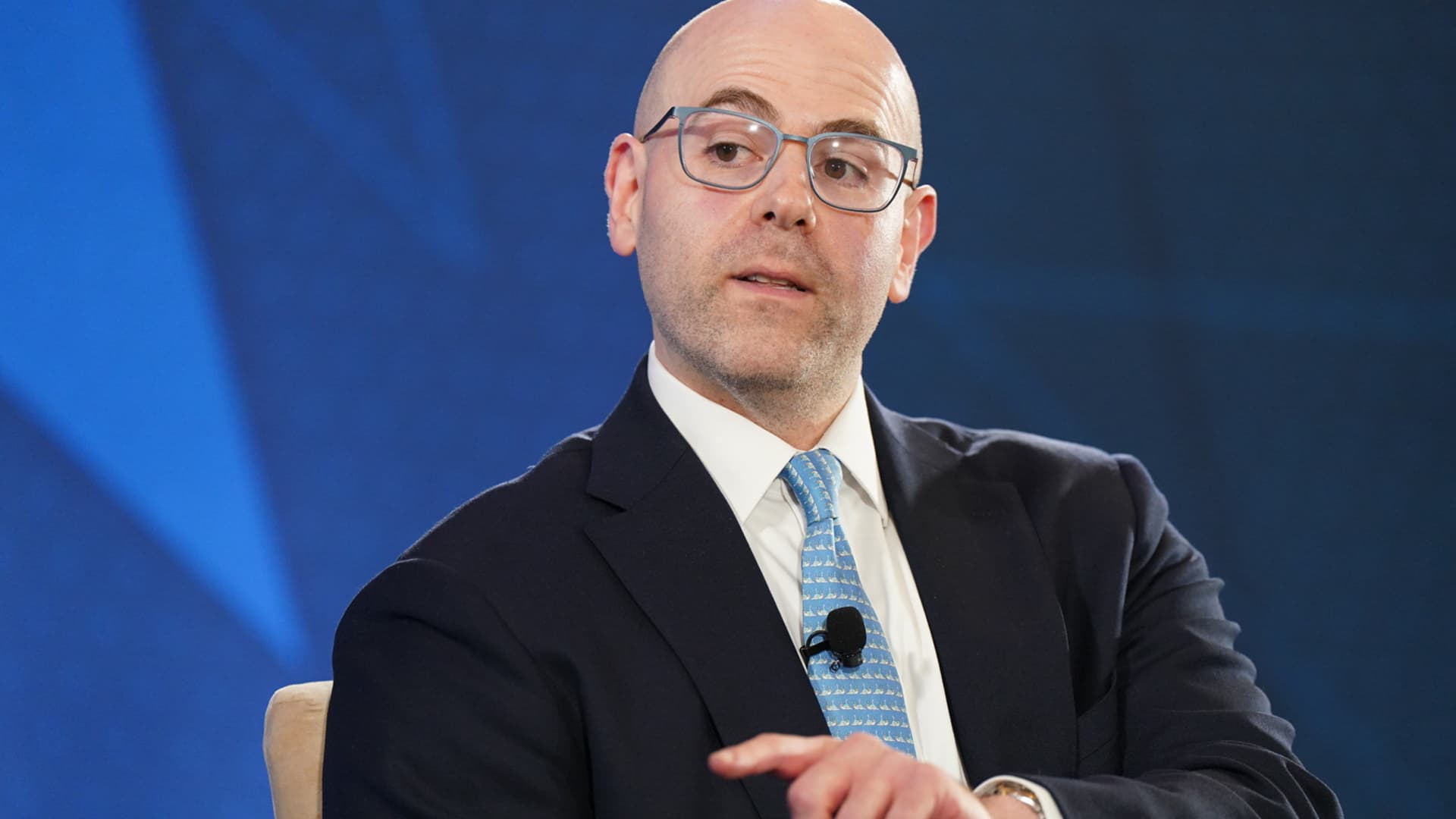
Federal Reserve Governor Stephen Miran speaks with CNBC during the Invest i America Forum on Oct. 15, 2025.
CNBC
Federal Reserve Governor Stephen Miran entered with big ideas about how the central bank should change— radically so, in some cases. As he prepares to step down in the coming days from what will have been the shortest tenure as a governor in 71 years, he appears convinced his ideas are right.
But in a CNBC interview, Miran, 42, made clear that the reality of working at the Fed has tempered his views about how fast those changes can be made. Change is slower than he envisioned.
The Fed is “really a committee,” Miran said. “It’s different than an agency where there’s a very clear executive who just runs the show, and what he or she says goes, and if you don’t like it, you’re out.”
That observation is important for two reasons: First, Miran could return as a governor, potentially before the end of President Donald Trump’s term. Second, incoming Chair Kevin Warsh shares some of Miran’s big ideas.
Warsh was confirmed as the next chair on Wednesday and will take the board seat Miran is vacating. The two won’t overlap.
But Warsh will be forced to reckon with the reality Miran has encountered: a Federal Reserve full of people with their own economic ideas and where institutional change is often glacial.
“You’ve got to convince people,” said Miran, who took his seat in September 2025, filling a position vacated by Adriana Kugler.
Miran said the Fed’s policymakers and staff treated his ideas with an open mind, despite sharp criticisms from outside the building that he represented a threat to Fed independence.
He initially chose not to resign his position as chair of the White House Council of Economic Advisers under Trump while serving at the Fed. He described that as aimed at saving himself the trouble of what could have been a third Senate confirmation in a brief span, but the decision landed poorly amid Trump’s campaign to undermine Powell.
Miran resigned the White House position in February and has no immediate plans to return.
He argues his critics have it backward. He was valuable to the president because he looked at the economic evidence and concluded that interest rates were too high. “I’ve laid out my math,” he said. “I’ve always done what I think is right.”
Miran will end his tenure on the Fed with a rare record of dissenting at every one of the six Fed meetings he attended. That lines up with Trump’s demands for sharply lower interest rates. Even when the Fed cut rates, Miran dissented in favor of larger cuts.
Holding fast
As he exits the Fed, Miran has not much altered his views that rates can and should be much lower.
“If I were writing down dots today, I might have one fewer cut than I did in the last summary of economic projections,” he said. That “dot” on the Fed’s grid of individual members’ rate expectations called for a full percentage point, or 100 basis points, of cuts this year, or three more quarter-point cuts than the median of his colleagues on the Fed.
Miran says he would eliminate just one quarter-point cut now — in other words, calling for rates to be three-quarters of a point lower — because of the cuts the Fed has made already and because “the data has made me a little bit more concerned about inflation.” But he adds, “I still think it’s important to frontload those cuts, because I still don’t think that we should be exerting restraints in the labor market.”
Miran’s push for cuts is based on several other factors, many of them the result of administration policies that he believes will drive down inflation and allow the Fed to run the economy with lower rates.
First is his belief in the positive impact the administration’s deregulation will have on the economy.
“I think that regulations are still underappreciated in terms of how determinative they are for the supply side,” he said. “Saying you’re not allowed to build versus you are allowed to build is night and day … Deregulation pushes up the supply side by allowing producers to produce more with less is disinflationary.”
He estimates deregulation could lop a half a point of future inflation rates, even while he acknowledges the uncertainty created by tariff inflation could hold back some of those gains.
Convincing colleagues
While some of his colleagues still want to take their time studying the concept before incorporating it into policy, he believes he’s made a few converts. “I still think it’s more important than everyone else does, but they’re a lot closer to my view now than they were in September,” he said.
Those colleagues have likely not heard the last word on the potential benefits of deregulation. Fed Chair designee Warsh has called Trump’s deregulatory plans “the most significant since President Ronald Reagan’s.”
Miran’s views on the veracity of the inflation data are another key plank in his arguments for lower rates. In a forthcoming paper, Miran will argue along with two Fed economists that recent software inflation has been artificially inflated by technical factors, distorting headline and core numbers.
Perhaps the most significant of Miran’s ideas is his approach to how he believes a central bank should think about the appropriate policy response to a surge in inflation for a supply shock, such as soaring oil prices now. He says it takes roughly 12 months to 18 months for changes in Fed policy to affect the economy. That sets limits on the kind of price changes that the Fed should be concerned about today, he says.
Consider a clothing company that has had to bump up prices to account for the cost of tariffs, Miran said.
“If you think that a higher tariff is going to boost clothing prices today, there’s nothing you can do about that with monetary policy,” Miran said. The same goes for Iran war’s oil shock, he said. It may push up individual prices today, but the kind of inflation the Fed should care about is an ongoing, upward trend in prices, not one-off events.
“That’s the thing with supply shocks, is that you need to be forecasting more supply shocks,” he said.
The Warsh view
A concern with Miran’s approach is that, if the Fed keeps looking through supply shocks, markets and the public will doubt its inflation-fighting credibility.
It isn’t clear Miran if has persuaded his fellow Fed members to come around to his view. Three dissenters at the most recent meeting said they were worried about inflation.
But they will soon find a louder voice making the same argument around the boardroom table.
Warsh shares Miran’s view that the Fed has gotten tripped in over analyzing micro-level prices, Warsh said at his April 21 confirmation hearing.
“I’m most interested in what’s the underlying inflation rate, not what’s the one time change in prices because of a change in geopolitics or change in beef, but what’s the underlying generalized change in prices in the economy?” he said.
It seems likely Miran will remain an active participant in the Fed debate even after he leaves. He wrote often on monetary policy before he joined the Fed and worked on his research paper on software inflation into the last weeks of his short term.
“I’d love to be back,” Miran said. “But it’s not up to me.” The White House declined to comment on whether Trump is considering it.
Outgoing Chair Jerome Powell has said he will retain his governor’s seat at least until an investigation into renovations at the Fed’s headquarters is completed. Though Powell has not put an end date on when he will leave, and his term runs until January 2028, an early exit would open a board seat.
Were he to return, it would be consequential for Warsh, whom, as Miran has found, will need allies around the table at the Fed.

Warren Buffett and Greg Abel during the Berkshire Hathaway Annual Shareholders Meeting in Omaha, Nebraska on May 4, 2024.
CNBC
Berkshire Hathaway added a sizeable stake in Delta Air Lines, marking the conglomerate’s return to the airline industry after exiting the sector entirely during the Covid-19 pandemic in 2020.
The Omaha-based company built a position worth more than $2.6 billion, making Delta Berkshire’s 14th-largest holding at the end of March, according to a new regulatory filing.
Warren Buffett stunned investors six years ago when he sold Berkshire’s entire equity portfolio of U.S. airlines, including stakes worth more than $4 billion across United, American, Southwest and Delta Air Lines. Buffett said at the time that the pandemic had fundamentally altered consumer behavior and travel patterns.
Among Berkshire’s largest holdings, the firm trimmed its stake in Chevron during the quarter while significantly increasing its relatively new position in Alphabet. The Google parent is now Berkshire’s seventh-largest holding.
Berkshire also initiated a small position in Macy’s, valued at roughly $55 million at the end of the first quarter.
Unwinding Todd Combs positions
Meanwhile, the conglomerate sold a slew of stocks last quarter, likely as part of an effort to unwind positions tied to departed lieutenant Todd Combs.
The longtime investment manager and Geico chief left for JPMorgan at the end of 2025. Combs had been one of two portfolio managers recruited by Buffett to help oversee Berkshire’s equity portfolio. Ted Weschler, the other investment manager, continues to oversee about 6% of the holdings.
Among the most notable sales were Mastercard and Visa, the first stocks Combs purchased after joining Berkshire and positions that mirrored major holdings from his former hedge fund, Castle Point Capital.
The conglomerate also fully exited Amazon after trimming the position late last year. The investment had long been viewed by some investors as a Combs-driven bet.
Other stocks Berkshire sold included UnitedHealth Group, Aon, Pool Corporation, Domino’s Pizza and Charter Communications.
Not ideal environment
Buffett, who stepped down as CEO after more than six decades at the helm, remains chairman of the Omaha, Nebraska-based company and continues to come into the office five days a week.
New CEO Greg Abel has said he consults Buffett, 95, on investments and capital allocation, including the recent resumption of buybacks in the first quarter.
Buffett recently acknowledged displeasure with the investing backdrop as Berkshire’s cash hoard swells to a record nearing $400 billion.
“It isn’t our ideal surrounding area — or environment, I should say — in terms of deploying cash for Berkshire,” the former CEO said.


Bitcoin fell to $78,600 on May 15 as bond yields surged to a 12 month high, rattling risk markets.
Summary
- Bitcoin fell to $78,600, down roughly 4% from Thursday’s $82,000 high, as bond yields hit their highest since May 2025.
- The 10-year Treasury yield reached 4.54% while Fed rate hike probability surpassed 44% according to CME FedWatch data.
- Crypto-linked equities including Coinbase, Circle and Strategy fell between 5% and 7% in the same session.
The US 10-year Treasury yield surged to 4.54% on May 15, its highest point since May 2025, after hotter than expected CPI and PPI data stoked fears of a Federal Reserve rate hike. The 30-year yield crossed 5% while the 2-year broke above 4%.
Inflation and yields hit crypto and equities
Bitcoin fell as low as $78,600, down roughly 4% from Thursday’s $82,000 high, before stabilising slightly above $79,000. The selloff spread to equities, with the Nasdaq 100 opening 1.7% lower and the S&P 500 falling 1.2%.
“The 10Y Note Yield is now above 4.50% for the first time since June 2025,” the Kobeissi Letter noted on X. “Rate hikes are now the base case for the Fed’s expected next move.”
Crypto-linked equities were hit harder. Coinbase dropped nearly 6%, Circle fell 7.4% and Strategy slid 5.4%. Bitcoin miners MARA Holdings and Hut 8 each lost around 7%, while Cipher Mining fell nearly 9%.
CME FedWatch showed more than 44% probability of a Fed rate hike by December, a sharp reversal from expectations of multiple rate cuts at the start of 2026. Gold fell 2.5% while oil rose 3%, crossing $100 per barrel as energy inflation compounded yield pressure.
April CPI came in at 3.8% while PPI matched 2022 levels at 6%, according to official data. Futures traders who began 2026 pricing two or more Fed cuts now expect rates to stay elevated through at least the first half of 2027.
Bitcoin remains below its 200-day moving average heading into the weekend, caught between a regulatory tailwind from the Clarity Act’s Senate progress and a macro headwind from rising yields and accelerating inflation.
Intercontinental Exchange (ICE) and the Chicago Mercantile Exchange (CME), the two biggest exchanges for energy-linked commodities, are pressuring US regulators to clamp down on the Hyperliquid decentralized exchange’s expansion into commodity markets.
Executives from both companies say that Hyperliquid’s energy-linked onchain derivatives create insider trading and price manipulation risks, according to Bloomberg, which cited unnamed sources familiar with the ongoing talks with US regulators.
ICE and CME cited the “anonymous” and “unregulated” nature of Hyperliquid as major risks to critical energy markets, like oil and gas, which could be used by state actors to circumvent sanctions, the report added.
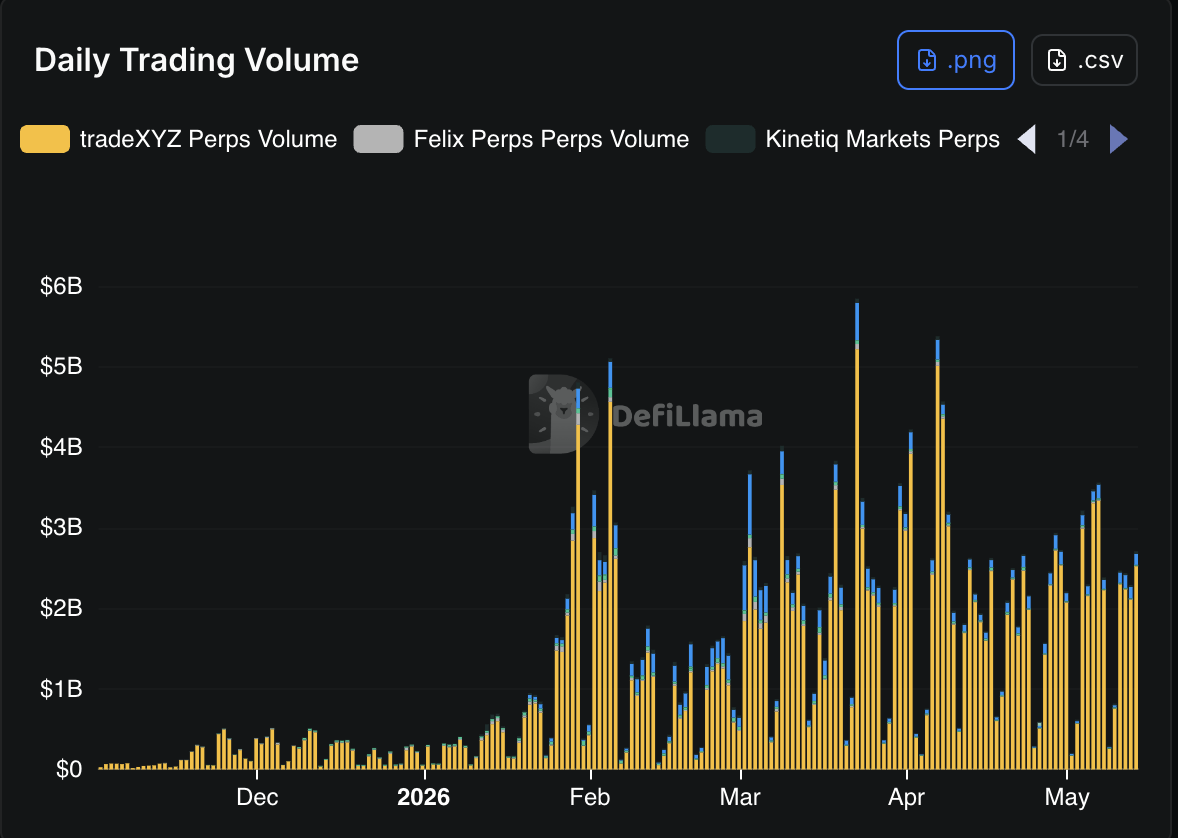
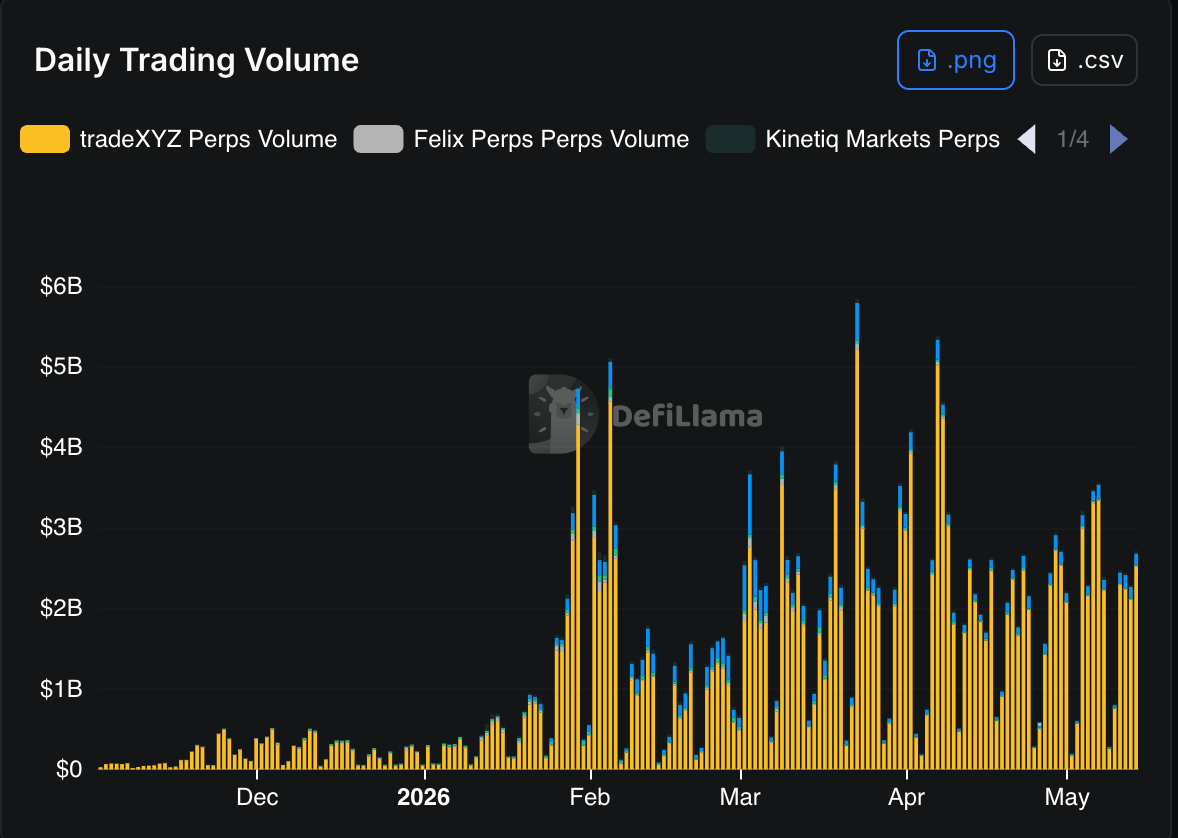
Daily trading volume for HIP-3 perpetual futures markets. Source: DeFiLlama
Hyperliquid introduced HIP-3, also known as “Builder-Deployed Perpetuals,” in January 2025, which allows anyone who stakes 500,000 HYPE tokens, the platform’s native cryptocurrency, to build perpetual futures markets for any electronically traded asset class.
The deployment of HIP-3 represents a broader trend of traditional financial markets coming onchain, as the line between blockchain-based infrastructure and traditional market architecture continues to erode.
Related: Why is Hyperliquid’s HYPE token price up 23% in one day?
Hyperliquid’s token price surges following the introduction of HIP-3
The price of HYPE jumped by over 58% within three days of the launch of HIP-3. The token rose from a low of about $20 to over $38, and is trading at about $44 at the time of publication.
In March, market analyst and crypto investor Arthur Hayes forecast that HYPE could hit $150 per token by August, driven by demand for commodities-linked onchain derivatives instruments.
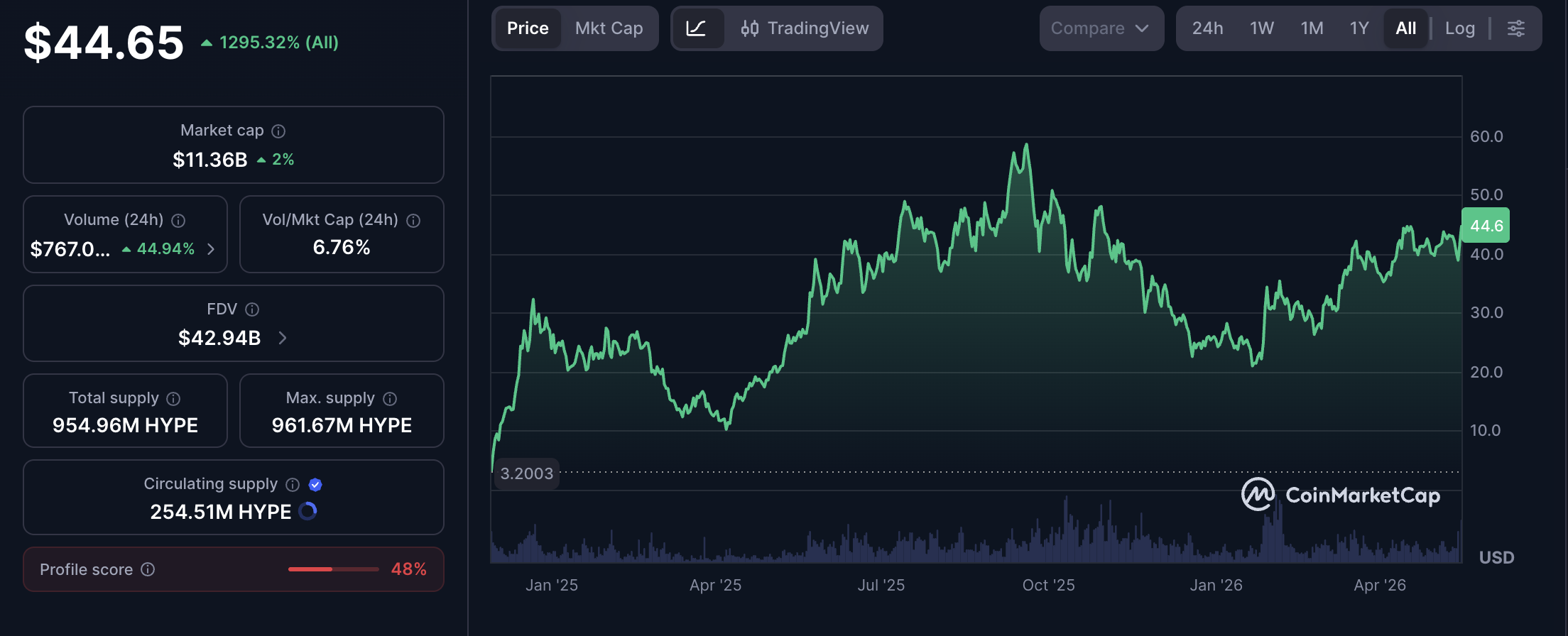
The HYPE token’s price action. Source: CoinMarketCap
“Hyperliquid, the dominant perp DEX, is the largest revenue-generating project that isn’t a stablecoin,” he said.
The exchange also dedicates 97% of trading fee revenue to HYPE token buybacks, which boosts demand and raises the token’s price over time, according to Hayes.
“If the market believes that HYPE can continue siphoning volumes away from centralized exchanges and add new features to accelerate revenue growth, then HYPE can pump in absolute terms,” he added.
Open interest for HIP-3 markets has continued to rise since their inception, climbing to over $2.5 billion in May, according to data from DeFiLlama.
Magazine: Guide to the top and emerging global crypto hubs: Mid-2026


HYPE’s surge is being fueled by Bitwise’s new spot Hyperliquid ETF and Coinbase’s expanded role as Hyperliquid’s official USDC treasury deployer.

TLDR
- ENPH reached a new 52-week peak at $52.95 on Thursday, climbing more than 10% intraday
- The solar technology company’s shares have climbed 32% over the last seven days and 50% since January
- Robust interest in the company’s latest GaN-powered IQ9S-3P commercial microinverter is capturing market attention
- A brief suspension of reciprocal solar tariffs between the U.S. and China provided tailwinds for renewable energy stocks
- Emerging speculation about Enphase’s role in AI data center infrastructure is fueling additional bullish momentum
Enphase Energy (ENPH) shares reached a 52-week pinnacle of $52.95 during Thursday’s trading session, vaulting more than 10% higher in just one day. This surge propelled the stock’s year-to-date performance to approximately 50%, with an impressive 32% advance coming in the past week alone.
Multiple factors aligned to fuel this remarkable ascent. Chief among them: surging demand for the company’s innovative GaN-based IQ9S-3P commercial microinverter, engineered to accommodate solar panels rated up to 770 watts and integrate with three-phase electrical systems.
Buyers are accelerating equipment purchases to capitalize on critical federal tax incentive deadlines. This sense of urgency is directly converting into robust order volumes and heightened investor enthusiasm.
Enphase recently finalized a safe harbor arrangement with a prominent U.S. solar and battery financing firm. This partnership is projected to deliver approximately $52 million in revenue from IQ9 Microinverter sales spanning both residential and commercial installations.
The broader renewable energy market also provided momentum. A temporary suspension of reciprocal solar tariffs between Washington and Beijing alleviated supply-chain anxieties and elevated sentiment throughout the solar industry.
Additionally, Nextpower released impressive quarterly results. That performance created positive ripple effects across the solar sector and provided Enphase with extra upward momentum.
AI Data Centers Enter the Picture
Among the emerging narratives surrounding Enphase is its potential expansion into powering AI data centers. Investors are viewing this opportunity as a significant long-term growth catalyst, prompting reassessments of the company’s earnings trajectory.
While no official announcements regarding specific data center partnerships have materialized, the concept is building momentum and appears to be influencing how analysts evaluate the stock’s prospects.
Analysts are reexamining their financial models. Several market observers suggest that current consensus price projections may not adequately capture the company’s evolving growth narrative, although widespread formal target revisions haven’t yet emerged.
Analyst Views Remain Mixed
The Street isn’t unanimously optimistic. Barclays maintained an Underweight stance and reduced its price objective, referencing lower shipment projections. Jefferies similarly decreased its target amid softer second-quarter revenue expectations, while preserving a Buy recommendation.
Enphase projected Q2 revenue in the $280 million to $310 million range, with energy storage systems accounting for roughly $85 million. Management acknowledged an anticipated $25 million shipment shortfall during the second quarter.
InvestingPro identified the stock as trading beyond its Fair Value, positioning it among the more stretched valuations in the current market according to their metrics. The price-to-earnings multiple currently registers at 50.78.
The trailing 1-year return remains negative at -3.45%, indicating the recent rally hasn’t completely offset prior-year declines.
Average daily trading activity hovers around 6.17 million shares, with the company’s market capitalization now approaching $6.89 billion.
The technical sentiment indicator continues to flash a Sell signal, despite the compelling short-term price momentum.

The 16 best World War I movies of all time, ranked

David Skaith reacts to Keir Starmer and Labour lastest

Lion Corporation 2026 Q1 – Results – Earnings Call Presentation (OTCMKTS:LIOPY) 2026-05-15

Manchester United reach agreement with Casemiro over contract clause amid transfer speculation

US brings back mandatory military draft registration

Steven Gerrard disagrees with Gary Neville over ‘shock’ Chelsea and Arsenal claim | Football


-

 Fashion4 days ago
Coffee Break: Travel Steam Iron
-

 Politics7 days ago
Politics Home Article | Starmer Enters The Danger Zone
-

 Fashion5 days ago
What to Know Before Buying a Curling Wand or Curling Iron
-

 Politics4 days ago
What to expect when you’re expecting a budget
-

 Tech6 days ago
Auto Enthusiast Carves Functional Two-Stroke Engine from Solid Metal
-
 Business6 days ago
Ignore market noise, India’s long-term story intact, say D-Street bulls Ramesh Damani and Sunil Singhania
-

 Fashion5 hours ago
Weekend Open Thread: Theory – Corporette.com
-

 Tech5 days ago
GM Agrees To Pay $12.75 Million To Settle California Lawsuit Over Misuse Of Customers’ Driving Data
-

 Crypto World6 days ago
CZ says US crypto rivals tried to block Trump pardon
-

 Crypto World7 days ago
PROS explodes 48% as Upbit and Bithumb listings ignite demand
-

 Tech4 days ago
GM agrees to $12.75M California settlement over sale of drivers’ data
-
Crypto World3 days ago
Bitcoin Suisse expands with Digital Asset License and Investment Business Act Registration Approval in Bermuda
-

 Crypto World5 hours ago
E-Estate Announces 1 Year Live: Washington DC Summit as Real Estate Tokenization Enters Its Next Phase
-
 Crypto World7 days ago
Solana UFO Meme Coins Surge After Pentagon Reveals Alien Files
-

 Entertainment7 days ago
Bethenny Frankel Says She Loves ‘Torturing’ Men
-

 Politics3 days ago
Pakistan to enter Chinese capital market as war inflation bites
-
 Crypto World7 days ago
Pi Network Hits 421K Mainnet Nodes Ahead of Protocol 23 Smart Contract Launch
-
 Crypto World1 day ago
Google’s Gemini AI Predicts Incredible Solana Price by the End of 2026
-
 Sports7 days ago
‘Not bothered’ – Michael Carrick gives update on Manchester United head coach role
-

 Entertainment7 days ago
Pooh Shiesty Pleads Not Guilty In Gucci Mane Kidnapping Case
You must be logged in to post a comment Login