Connect with us
DAPA Banner
DAPA Coin
DAPA
COIN PAYMENT ASSET
PRIVACY · BLOCKDAG · HOMOMORPHIC ENCRYPTION · RUST
ElGamal Encrypted MINE DAPA
🚫 GENESIS SOLD OUT
DAPAPAY COMING

Business

Gold, Art, Private Markets, and the Governance Needed to Manage Risk

Published

on

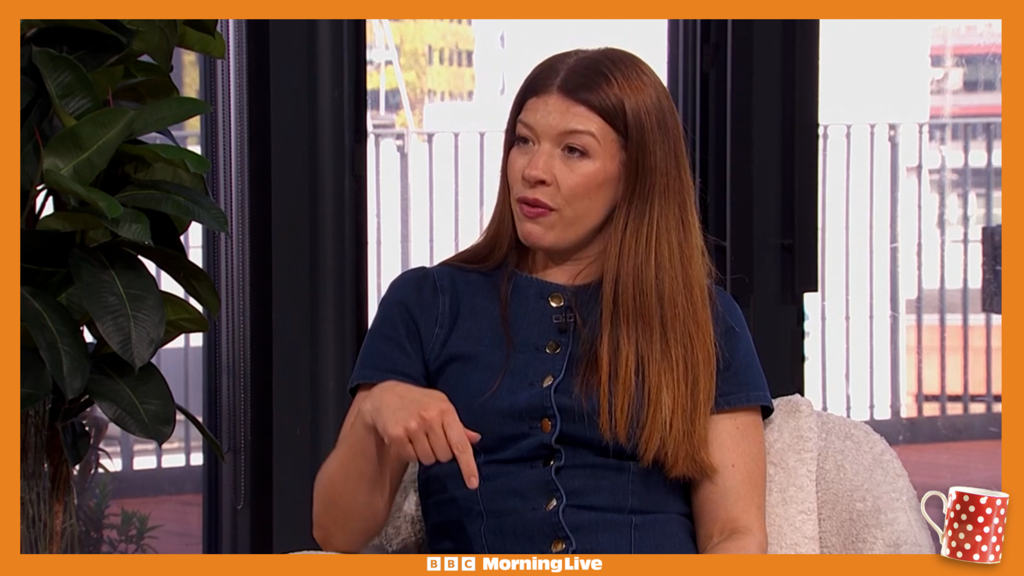
The UK economy is losing as much as £3.5 billion a year as tens of thousands of women leave the technology sector amid stalled career progression, unequal pay and weak leadership pipelines, according to a new landmark report released to mark Ada Lovelace Day.

Family offices in 2025 and beyond face a more complex investment environment than at any point in recent decades.

Rising geopolitical uncertainty, persistent inflation, and the digital transformation of financial markets have prompted leading family offices to rethink their asset allocation frameworks. Gold, art, private equity, and private credit are commanding larger allocations, while governance and human capital strategies are becoming as important as the investment decisions themselves.

Quick Summary

The most resilient future family office structures combine diversified alternative allocations with robust human capital programmes and data-driven decision-making. In 2025, the top alternative asset classes for family offices are private equity, private credit, gold and commodities, art and collectibles, and infrastructure.

Top picks for alternative investment strategies:

  • Best overall: Multi-alternative mandate with dedicated governance committee
  • Best for inflation hedge: Gold and commodity allocation of 5-10% of AUM
  • Best for uncorrelated returns: Art and collectibles allocation through a specialist advisory
  • Best for long-term returns: Private equity fund-of-funds with co-investment rights
  • Best value: Private credit with floating-rate instruments

“The family offices that will thrive in the next decade are those that invest as seriously in their people and governance as they do in their portfolios.” (Campden Wealth Global Family Office Report 2024)

Comparison Table (Last updated: April 2026)

Asset Class 2024 Average Allocation (Family Offices) Expected Return (5yr) Liquidity Key Risk Last Verified
Private equity 18% of AUM 12-15% net IRR Illiquid Market cycle, manager Apr 2026
Private credit 11% of AUM 8-12% net IRR Semi-liquid Credit default Apr 2026
Gold and commodities 5% of AUM 4-8% annually Liquid Price volatility Apr 2026
Art and collectibles 3% of AUM 6-10% annually Illiquid Valuation, liquidity Apr 2026
Infrastructure 8% of AUM 8-11% net IRR Illiquid Regulatory, political Apr 2026
Hedge funds 6% of AUM 6-9% net returns Semi-liquid Strategy, fees Apr 2026

How to Build an Alternatives Allocation for Your Family Office

The starting point for any alternatives strategy is the family office’s investment policy statement (IPS). The IPS should define maximum illiquidity tolerance, minimum return expectations, and ESG or ethical exclusions. Without a documented IPS, alternatives allocations risk being opportunistic rather than strategic.

Advertisement

Human capital is an equally critical variable. The future family office requires professionals who can evaluate complex, illiquid investments, manage manager relationships, and conduct ongoing monitoring across a diverse portfolio. According to the Agreus Group 2024 Compensation Report, the median salary for a family office investment analyst in Singapore is SGD 120,000-180,000 per annum, while a CIO commands SGD 500,000-800,000.

Data resilience is the third pillar. Family offices managing diversified alternatives portfolios must invest in reporting technology that aggregates data across custodians, fund administrators, and direct holdings. Real-time consolidated reporting is no longer a luxury; it is a governance requirement for responsible stewardship of multi-generational wealth.

Families new to alternatives should begin with a fund-of-funds or a managed account with an established manager, before progressing to direct deals or co-investments as internal expertise develops.

Q: How are family offices building and retaining human capital to ensure continuity and leadership across generations?

Human capital is the most underdiscussed risk in family office management. A portfolio of alternatives, private equity, and tokenised assets is only as good as the team managing it, and talent in the family office sector is scarce, competitive, and mobile.

Advertisement

The most successful future family office structures approach talent with the same rigour applied to investment selection. This means: formal job descriptions and reporting lines (not informal family relationships), compensation benchmarked annually against the Agreus Group or equivalent surveys, and career development plans that give investment professionals a visible pathway within the organisation.

Retention is the harder challenge. Family offices compete with private equity firms, hedge funds, and banks for the same talent pool, and cannot always match base compensation. The most effective retention tools are co-investment rights (giving professionals exposure to the upside of deals they originate), a genuine meritocratic culture, and the intellectual freedom that a family office offers relative to a large institution.

For generational continuity specifically, the transition from a founder-led to a professionally managed family office is a critical inflection point. Families that plan for this transition five to ten years in advance, by building institutional processes that are not dependent on any single individual, consistently navigate it more smoothly than those who treat succession as a single event rather than a multi-year programme.

The 7 Best Alternative Investment Strategies for Family Offices in 2025

  1. Private Equity: Core Alternatives Allocation

Best for: Family offices with 7+ year investment horizons seeking return premium over public markets

Quick Facts

Advertisement
  • Global private equity AUM reached USD 5.8 trillion in 2024 (Preqin, 2025) | Top-quartile PE funds delivered 15-18% net IRR over 10 years | Family offices represent 10% of global PE LP capital

Pros

  • Illiquidity premium over public equities
  • Access to high-growth companies before IPO
  • Co-investment opportunities reduce fee drag

Trade-offs

  • 10-year lock-up periods | Capital calls require liquidity planning

Source: Preqin Global Private Equity Report 2025

Last verified: April 2026

  1. Private Credit: Floating-Rate Yield Enhancement

Best for: Family offices seeking income above investment-grade fixed income

Quick Facts

  • Global private credit AUM exceeded USD 2.1 trillion in 2024 (Preqin, 2025) | Average net yields: 10-12% in senior secured, 12-15% in mezzanine | Default rates for senior secured private credit: 1.2% in 2024 (S&P, 2024)

Pros

  • Floating-rate instruments provide natural inflation protection
  • Senior secured structures offer downside protection
  • Semi-liquid structures (3-5 years) suit medium-term planning

Trade-offs

  • Illiquidity relative to investment-grade bonds | Credit underwriting expertise required

Source: Preqin Global Private Debt Report 2025; S&P Global 2024

Last verified: April 2026

  1. Gold and Commodities: Inflation Hedge and Safe Haven

Best for: Family offices seeking portfolio protection against inflation and geopolitical risk

Quick Facts

Advertisement
  • Gold reached an all-time high of USD 3,100/oz in April 2026 (Bloomberg, April 2026) | Average family office gold allocation: 4-6% in 2024 | Gold has delivered a 10-year annualised return of 9.2% in USD terms (World Gold Council, 2024)

Pros

  • Negative correlation to equities in risk-off periods
  • Liquid: can be held via ETFs, futures, or physical bullion
  • Creditor-proof store of value for estate planning

Trade-offs

  • No income yield
  • Storage costs for physical gold | Currency effects can dilute returns

Source: World Gold Council Annual Return Data 2024; Bloomberg April 2026

Last verified: April 2026

  1. Art and Collectibles: Uncorrelated Returns and Cultural Legacy

Best for: Family offices seeking uncorrelated returns and intergenerational wealth transfer vehicles

Quick Facts

  • Global art market reached USD 65 billion in 2024 (Art Basel/UBS, 2025) | Blue-chip art indices delivered 7.6% annualised returns over 10 years (Artprice, 2024) | Art is increasingly used as collateral for private bank lending

Pros

  • Low correlation to traditional financial markets
  • Cultural and aesthetic value alongside financial return
  • Can be lent to museums for reputational benefits

Trade-offs

  • Illiquid with transaction costs of 15-25% (auction house commissions) | Valuation opacity requires specialist advisers

Source: Art Basel/UBS Art Market Report 2025; Artprice Global Index 2024

Last verified: April 2026

  1. Infrastructure: Inflation-Linked Long-Duration Returns

Best for: Family offices with 10+ year horizons seeking stable, inflation-linked cash flows

Quick Facts

Advertisement
  • Global infrastructure fundraising reached USD 120 billion in 2024 (Preqin, 2025) | Infrastructure assets delivered 9.8% net IRR over 10 years on average | Singapore’s infrastructure fund market includes MAS-regulated core infrastructure funds

Pros

  • Inflation-linked cash flows from regulated assets
  • Government concessions provide revenue visibility
  • Low correlation to equity market cycles

Trade-offs

  • Very long lock-up periods (10-15 years) | Political and regulatory risk in emerging markets

Source: Preqin Global Infrastructure Report 2025

Last verified: April 2026

  1. Build Human Capital as a Core Strategic Asset

Best for: Family offices preparing for generational leadership transitions

Quick Facts

  • Staff retention in Asian family offices is the top operational challenge cited by 61% of respondents (Campden Wealth, 2024) | Average tenure of family office investment professionals: 3.2 years | Structured talent development programmes reduce turnover by 25% (Mercer, 2024)

Pros

  • Institutional knowledge retained across generations
  • Investment quality improves with experienced teams
  • Strengthens governance and compliance capabilities

Trade-offs

  • Competitive compensation required to attract institutional-quality talent | Cultural integration of external professionals takes time

Source: Campden Wealth 2024; Mercer Talent Strategy Report 2024

Last verified: April 2026

  1. Invest in Data Resilience and Portfolio Analytics

Best for: Family offices managing complex, multi-asset, multi-custodian portfolios

Quick Facts

Advertisement
  • 68% of family offices cite reporting fragmentation as a top operational risk (Family Office Exchange, 2024) | Implementation costs for integrated FO platforms: USD 100,000-500,000 | Real-time consolidated reporting platforms reduce monthly close time by 40-60%

Pros

  • Single view of all assets, liabilities, and risk exposures
  • Supports regulatory reporting in multiple jurisdictions
  • Enables faster, more informed investment decisions

Trade-offs

  • Significant upfront investment and implementation timeline | Requires data governance policies to maintain quality

Q: How are family offices developing an entrepreneurial mindset and data resilience strategies to future-proof their wealth across generations?

The future family office that will thrive across multiple generations is not simply a wealth preservation vehicle; it is an entrepreneurial organisation that treats capital deployment as an active, innovation-driven discipline. This means cultivating an internal culture where new ideas are welcomed, investment theses are challenged rigorously, and the next generation is empowered to pursue conviction-driven opportunities, not just inherit a static portfolio.

Data resilience is the operational backbone of this entrepreneurial mindset. A family office managing diversified alternatives across multiple custodians and jurisdictions is operationally vulnerable if its data infrastructure cannot keep pace with portfolio complexity. The failure modes are well documented: reconciliation errors between custodians, delayed identification of margin calls or covenant breaches, and an inability to produce consolidated performance reporting for the family council.

Building data resilience means investing in an integrated portfolio management platform, establishing data governance policies that define how information is collected, stored, and verified, and conducting annual operational risk reviews. Families that treat technology infrastructure as a strategic asset, rather than a back-office cost, are significantly better positioned to make fast, well-informed investment decisions and to onboard new asset classes such as tokenised securities as they mature into mainstream allocations.

Source: Family Office Exchange Technology Survey 2024

Last verified: April 2026

Advertisement

Best for Specific Use Cases

Best for Inflation Protection

Gold allocation of 5-10% combined with infrastructure and private credit with floating-rate features.

Best for Uncorrelated Returns

Art and collectibles with a specialist advisor, targeting blue-chip works with a 5-10 year hold horizon.

Best for Long-Term Return Premium

Private equity fund-of-funds with co-investment rights, diversified across geography and vintage year.

Best for Income Generation

Senior secured private credit with 3-5 year duration, targeting 10-12% net yield.

Advertisement

Best for Human Capital Development

Structured talent programme with competitive compensation benchmarking, mentorship, and career development plans.

FAQs

How much should a family office allocate to alternative assets?

There is no universal answer, but the Campden Wealth 2024 Global Family Office Report found that top-performing family offices allocated an average of 46% of AUM to alternatives, compared to 38% for the broader survey group. The appropriate allocation depends on the family’s liquidity needs, investment horizon, and risk tolerance, and should be documented in the investment policy statement.

Is art a mainstream investment for family offices?

Art is not mainstream in the sense of being held by all family offices, but it is a well-established allocation for UHNW families. The Art Basel/UBS 2025 Art Market Report estimates that collectors with net worth above USD 50 million allocate an average of 5-7% of their wealth to art and collectibles. Professional art advisers and specialist art finance products from private banks make the asset class more accessible.

How should family offices approach talent retention given competitive markets?

Retention requires a combination of competitive compensation (benchmarked annually against the Agreus Group or equivalent surveys), career development pathways, and a strong organisational culture. Family offices that offer co-investment rights or profit-sharing arrangements to senior investment staff report significantly higher retention rates, according to a 2024 Mercer study.

Advertisement

Where can I learn more about the future of family offices?

DBS Private Banking publishes the Future of Family Offices series, which covers emerging trends, governance best practices, and investment insights for family offices in Asia. Visit the DBS Future of Family Offices page for access to the latest research and events.

Learn more about DBS Private Banking family office services at https://www.dbs.com/private-banking/wealth-planning/future-of-family-offices-series.page

This article is for informational purposes only. It does not constitute financial, legal, or investment advice. Readers should verify all information with qualified professionals and consult official regulatory sources before making any financial or wealth management decisions.

Last updated: April 2026

Advertisement
Continue Reading
Click to comment

You must be logged in to post a comment Login

Leave a Reply

Business

Roy Tears Achilles in OTA Practice, Out for 2026 Season

Published

on

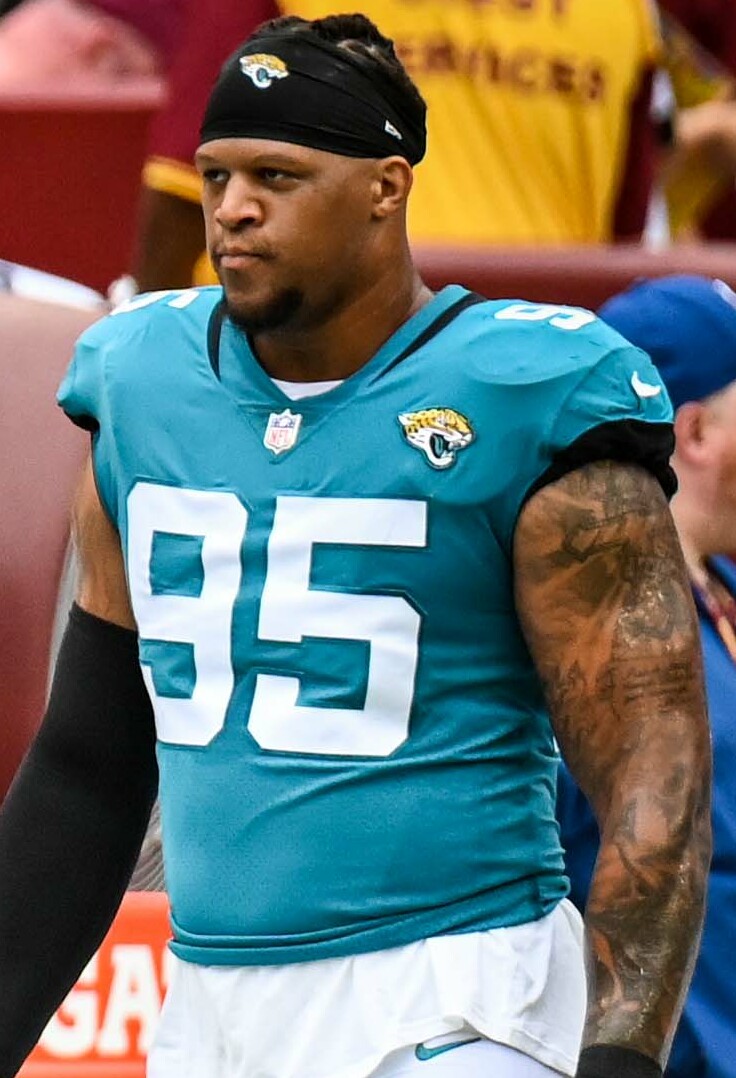
Roy Robertson-Harris

EAST RUTHERFORD, N.J. — New York Giants defensive lineman Roy Robertson-Harris tore his Achilles tendon during Thursday’s organized team activity workout and is expected to miss the entire 2026 NFL season, a source told ESPN.

The injury occurred early in the indoor practice session at the Quest Diagnostics Training Center as the team worked inside due to rain. Robertson-Harris, who was taking first-team reps, reached for the back of his right leg before leaving the field.

The 32-year-old veteran was entering his 10th professional season and his second year with the Giants. He started all 17 games in 2025, recording 35 tackles, including three for loss, and six quarterback hits.

Robertson-Harris signed a two-year, $9.25 million contract with New York prior to the 2025 season. He has appeared in 134 career games with 79 starts across stints with the Chicago Bears, Jacksonville Jaguars, Seattle Seahawks and Giants. His career totals include 246 tackles and 19 sacks.

Advertisement

Impact on Defensive Line Rebuild

The injury represents a setback for the Giants’ defensive line, which underwent significant changes after the team traded All-Pro defensive tackle Dexter Lawrence II to the Cincinnati Bengals last month. Robertson-Harris was viewed as one of the primary remaining veterans in the interior rotation.

In response to the Lawrence trade, the Giants signed several veteran defensive linemen following the 2026 NFL Draft, including DJ Reader, Shelby Harris and Leki Fotu. The team also selected Bobby Jamison-Travis in the sixth round out of Auburn and is counting on second-year player Darius Alexander.

Coach John Harbaugh addressed the defensive line construction earlier in May. “I’m very happy about it,” Harbaugh said. “I felt like it was part of our process. It’s not that we wouldn’t have drafted a defensive tackle or signed one sooner if they had become available or kept Dexter if that was something we could do. Those were all things that were on the table. But as it went, I thought we did a good job of kind of responding to the situation as it unfolded, and now we feel really good about our group in there. It looks good to me. I’m excited about it. I think we have the guys we need.”

Advertisement

This marks the second Achilles tear for a Giants player in the past week. Undrafted rookie cornerback Thaddeus Dixon also suffered the injury during recent workouts.

Career and Role With Giants

Undrafted out of UTEP in 2016, Robertson-Harris developed into a reliable rotational and starting defensive lineman. He played primarily as a defensive end in the Giants’ 3-4 scheme in 2025, often aligning in the B-gap or as a 5-technique. At 6-foot-7 and 300 pounds, he provided size and experience in the trenches.

His 2025 season with the Giants marked a career high in starts. Prior to joining New York, he spent time with the Seahawks in 2024 and earlier stints in Chicago and Jacksonville.

Advertisement

Current Giants Defensive Line Depth

With Robertson-Harris sidelined, the Giants’ interior defensive line group includes newly signed veterans Reader, Harris and Fotu. Darius Alexander, who showed flashes as a rookie in 2025, is expected to see an expanded role along with sixth-round pick Jamison-Travis. Other depth pieces include Sam Roberts, Chauncey Golston and additional practice squad candidates.

The team has emphasized building depth through free agency and the draft following the Lawrence trade. General Manager Joe Schoen and Harbaugh have focused on creating competition and versatility across the defensive front.

Broader Offseason Context

Advertisement

The Giants are in the early stages of the 2026 offseason program under new head coach John Harbaugh. OTAs continue this week with voluntary sessions focused on installation and conditioning. The team recently agreed to a multiyear extension with Schoen.

Injuries during the spring program are not uncommon across the NFL, but Achilles tears typically require 9 to 12 months of recovery, making a 2026 return highly unlikely for Robertson-Harris.

The defensive line was already transitioning after the departure of Lawrence, a cornerstone player. The group now relies more heavily on recent additions and developing talent as the team prepares for the 2026 season.

Historical Giants Injury Notes

Advertisement

Achilles injuries have affected several NFL players in recent years, often impacting veteran linemen due to the demands of the position. The Giants have managed multiple significant injuries during previous offseasons while continuing preparations for training camp, which begins in late July.

Robertson-Harris’ absence adds urgency to the evaluation of younger players and potential future roster moves. The Giants hold additional depth at other positions but must navigate the loss in their front seven as they install Harbaugh’s defensive scheme.

As of May 22, 2026, the Giants have not issued an official statement on the injury beyond practice observations. Further medical evaluations will confirm the timeline, though sources indicate a season-ending prognosis.

The team continues OTA sessions with remaining defensive linemen taking increased reps. Preseason games begin in August, providing additional opportunities to assess the revamped unit.

Advertisement

This development comes as the Giants focus on building around quarterback Jaxson Dart and integrating new defensive pieces. The organization has prioritized depth and competition throughout the roster during the Harbaugh era’s start.

Continue Reading

Business

Harper Questionable With Adductor Injury for Spurs-Thunder Game 3

Published

on

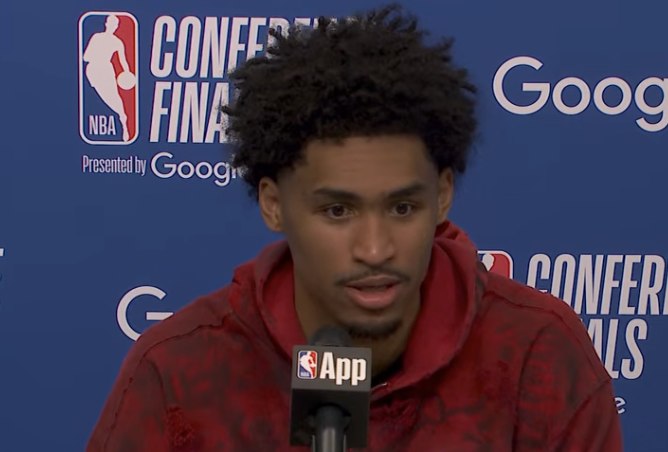
Dylan Harper

SAN ANTONIO — San Antonio Spurs guard Dylan Harper is listed as questionable for Game 3 of the 2026 Western Conference Finals against the Oklahoma City Thunder due to right adductor soreness.

Harper suffered the injury in the third quarter of Game 2 on May 20, 2026, at Paycom Center in Oklahoma City. He recorded 12 points, two rebounds and three assists in 25 minutes before exiting and not returning in the Thunder’s 122-113 victory that tied the best-of-seven series at 1-1.

The 20-year-old rookie tried to return after treatment in the locker room but was held out by Spurs staff. He had started in place of De’Aaron Fox, who missed Game 2 with a right ankle sprain.

Harper was named to the All-Rookie First Team after the regular season. In Game 1, a double-overtime Spurs win, he posted 24 points, 11 rebounds, six assists and seven steals.

Advertisement

Injury Report for Game 3

The NBA’s official injury report for May 21 listed Harper as questionable with right adductor soreness. De’Aaron Fox remained questionable with a right ankle sprain.

For the Thunder, Jalen Williams was questionable with a right hamstring strain. Thomas Sorber was ruled out with right ACL recovery.

Spurs coach Mitch Johnson did not provide a definitive update on Harper’s status immediately after Game 2. Sources indicated Harper would undergo further evaluation, including a potential MRI.

Advertisement

Game 3 is scheduled for Friday, May 23, 2026, at Frost Bank Center in San Antonio. If both Harper and Fox are unavailable, Harrison Barnes and Jordan McLaughlin could see expanded roles in the backcourt.

Context of Harper’s Season

The former Rutgers standout was selected No. 2 overall in the 2025 NBA Draft. He stepped into a larger role during the playoffs with Fox sidelined. His performance in Game 1 drew attention across the league for his speed, athleticism and defensive impact.

Harper averaged 14.6 points, 5.6 rebounds and 2.5 assists per game during the regular season. In the Western Conference Finals, his availability has become a central storyline as the Spurs face the defending champion Thunder.

Advertisement

The Spurs entered the series without Fox, who re-aggravated his ankle injury. Harper started both games in his absence. The team lost Game 2 after leading earlier in the contest.

Thunder’s Position

Oklahoma City tied the series with a strong second-half performance in Game 2. Jalen Williams exited early in that game with his own hamstring issue but remains questionable for Game 3.

The Thunder, as the top seed, have home-court advantage but split the first two games on their floor. Shai Gilgeous-Alexander and the Thunder’s defense have been key factors.

Advertisement

Broader Spurs Injury Situation

The Spurs have dealt with multiple injuries throughout the 2026 postseason. Fox has not appeared in the Western Conference Finals. His status for Game 3 will be monitored closely alongside Harper’s.

If both guards are out, the Spurs will rely more heavily on Victor Wembanyama in the frontcourt and other bench players. The team has emphasized depth in recent seasons under its current management.

Achilles and lower leg injuries have been a league-wide topic in 2026, with several high-profile players affected during the playoffs. Recovery timelines for adductor strains typically range from days to weeks depending on severity.

Advertisement

Series Outlook

The Western Conference Finals feature two young, talented rosters. The Spurs pushed the series to a split in Oklahoma City, showing resilience despite the absences. Home-court advantage shifts to San Antonio for Games 3 and 4.

Further updates on Harper and Fox are expected closer to tip-off on Friday. The Spurs have not provided additional details beyond the official injury report as of May 22.

Harper’s development has been a bright spot for San Antonio. His ability to impact both ends of the floor as a rookie has drawn comparisons from analysts. The team will assess his condition daily as it prepares for a pivotal home game.

Advertisement

The Thunder lead the league in defensive rating during the regular season and have maintained that intensity in the playoffs. San Antonio’s offense has shown flashes but has been hampered by turnovers and injuries.

As the series progresses, medical updates and player availability will likely dictate the outcome. Both teams continue preparations with Game 3 approaching.

This article is based on official NBA injury reports, team announcements and game summaries available through May 22, 2026.

Advertisement
Continue Reading

Business

Why is Merck stock surging today?

Published

on


Why is Merck stock surging today?

Continue Reading

Business

Dell Technologies DELL Stock Surges 15% on AI Server Momentum and Analyst Upgrades in 2026

Published

on

Dell Cuts Its Workforce as Part of Broader Initiative to Reduce Costs After Sluggish Demand in PC Market

NEW YORK — Dell Technologies Inc. shares rose more than 15% on May 22, 2026, reaching around $292.41 in morning trading as multiple analysts raised price targets amid continued demand for AI-optimized servers.

The Round Rock, Texas-based company has seen its stock climb significantly in 2026, driven by growth in its Infrastructure Solutions Group. Dell reported fiscal 2026 full-year revenue of $113.5 billion, up 19% year-over-year, with servers and networking contributing substantially.

Recent Analyst Actions

Wells Fargo maintained an Overweight rating on May 22 and raised its price target. Other firms, including Morgan Stanley, BofA Securities, JPMorgan, Citi and Mizuho, have issued upward revisions in recent weeks. Morgan Stanley raised its target to $170 from $110. BofA increased to $280 from $246. JPMorgan lifted to $280 from $205. Citi moved to $290 from $235, and Mizuho to $300 from $260.

Advertisement

Consensus ratings stand at Moderate Buy or Buy, with average 12-month price targets ranging from approximately $203 to $228 across 20-29 analysts, though some individual targets reach $300.

Financial Performance

Dell reported first-quarter fiscal 2026 revenue of $23.4 billion, up 5% year-over-year. Non-GAAP diluted earnings per share were $1.55, up 17%. Servers and networking revenue hit a first-quarter record of $6.3 billion, up 16%. The company generated $12.1 billion in AI orders in the quarter, leaving a $14.4 billion AI backlog.
For the full fiscal year 2026, Dell guided revenue between $101 billion and $105 billion. It raised its full-year non-GAAP EPS outlook to $9.40.

Advertisement

Infrastructure Solutions Group revenue reached $10.3 billion in Q1, up 12%. Client Solutions Group revenue was $12.5 billion, up 5%. The company reported record Q1 cash flow from operations of $2.8 billion.

AI and Product Developments

Dell has positioned itself as a key partner in AI infrastructure, collaborating closely with Nvidia. The company introduced the PowerStore Elite storage platform and Dell Deskside Agentic AI solutions in May 2026. It added 1,000 new enterprise AI customers recently.

CEO Michael Dell and Nvidia CEO Jensen Huang discussed agentic AI, memory demand and market opportunities at Dell Technologies World in Las Vegas in mid-May.

Advertisement

Dell maintains a strong order book with $43 billion in server backlog reported in recent updates. AI-optimized server revenue showed triple-digit growth in prior quarters.

Market Position and Risks

Dell operates in a competitive environment with exposure to PC markets through its Client Solutions Group and high-growth AI server demand. The company has faced margin pressures from competitive pricing and memory costs.

It announced AI-driven layoffs in March 2026 as part of operational adjustments. The stock has shown volatility, trading in a 52-week range that includes lows near $106 and highs approaching recent levels.

Advertisement

Upcoming earnings are scheduled for May 28, 2026, with analysts expecting significant year-over-year EPS growth. Options data suggests potential movement of around 11% following the report.

Broader Context

Dell has benefited from sector tailwinds in AI infrastructure. President Donald Trump previously commented positively on Dell products, contributing to earlier stock movement in May. The company continues to invest in storage, networking and hybrid solutions.

Market capitalization stood near $177 billion as of May 22. Shares have posted strong year-to-date gains, reflecting investor interest in its AI server backlog and partnerships.

Advertisement

Dell ended fiscal 2026 with record operating cash flow of $11.2 billion. The company has highlighted differentiation in AI-optimized systems and full-stack offerings.
Analysts note the transition beyond traditional PCs, with infrastructure now a major growth driver. Storage revenue reached $4.0 billion in Q1 fiscal 2026.

Valuation and Outlook

The stock trades near the upper end of recent ranges. Forward estimates project continued revenue and earnings expansion tied to AI adoption. Dell has maintained guidance for sequential growth in key segments.

Advertisement

The company faces typical industry risks, including supply chain dynamics for components like memory and GPUs, geopolitical factors affecting China exposure, and competition from other server providers.

Dell continues quarterly product launches and ecosystem partnerships to address enterprise and research demand for AI capabilities. Further details on Q2 performance and full-year execution will come with the May 28 report.

This report is based on company financial releases, analyst notes and market data available through May 22, 2026. Stock prices and projections remain subject to market conditions and future results.

Advertisement
Continue Reading

Business

Vallourec: I Moved To The Sidelines On Valuation (Rating Downgrade)

Published

on

Vallourec: I Moved To The Sidelines On Valuation (Rating Downgrade)

Vallourec: I Moved To The Sidelines On Valuation (Rating Downgrade)

Continue Reading

Business

Nebius: A Superior Growth Story In Four Dimensions

Published

on

Nebius: A Superior Growth Story In Four Dimensions

Nebius: A Superior Growth Story In Four Dimensions

Continue Reading

Business

Marine engineering firm Avantis eyeing expansion on equity boost

Published

on

Business Live

It has secured investment from funds advised by Leon Capital LLP

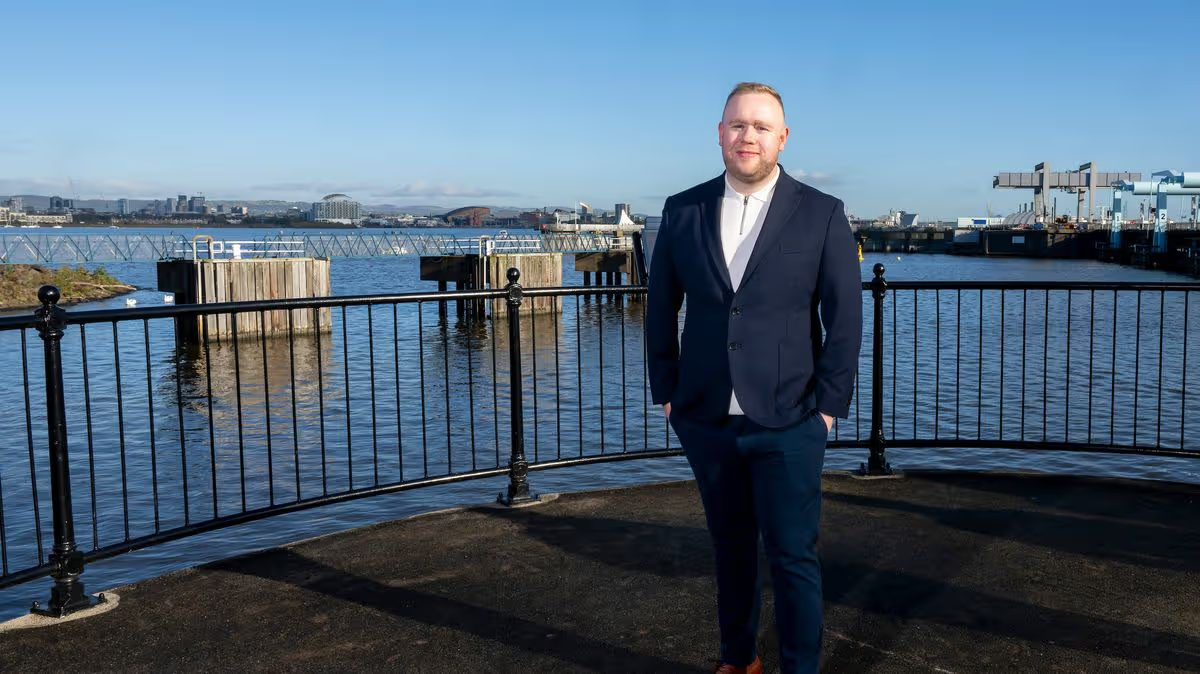
Thomas David chief executive of Avantis Marine.

Provider of specialist engineering services to the maritime and energy industries Avantis Group has been boosted with a major investment to support its international expansion plans.

The Cardiff-based firm has secured strategic investment from funds advised by Leon Capital LLP, the London-based European private equity investment firm.

Advertisement

Thomas David, chief executive, Chris David, chairman and the existing leadership team of Avantis will retain a controlling interest and operational control of the business. They took over the business in 2022 following a management buy-out that was part-funded by the Development Bank of Wales.

READ MORE: The Open University warns that student demand in Wales is outstripping fundingREAD MORE: Law firm Knights confirms location for new permanent office in Cardiff

The latest investment reflect confidence in Avantis Group’s market position, experienced management team, and proven ability to deliver engineering solutions in complex and mission-critical environments.

Thomas David said: “This strategic investment marks an important milestone for Avantis Group. We were deliberate in selecting a partner that understands our industries and aligns with our long-term vision. This capital strengthens our platform and enables us to pursue growth opportunities while maintaining the independence and culture that define our company. We remain grateful for the support provided by the Development Bank of Wales in funding our management buyout in 2022, which gave us the opportunity to build the foundations for this next stage of growth.”

Advertisement

The raised capital will be used to support organic growth initiatives, operational expansion, and strategic opportunities, including investment in staff, technical capability, and infrastructure to better serve customers across maritime and energy markets. It will also supporte expansion into digital infrastructure and defence markets.

Christos Lavidas, managing partner, and Jean-Christophe Napoleon Bonaparte, managing partner, at Leon Capital, said: “Tom and the team have built a truly differentiated specialist engineering platform, centred around client trust, as well as technical and delivery excellence. We are particularly excited to help the company grow its leadership position in green technologies and life cycle management services, as well as its further expansion into digital infrastructure and defence.”

Leon Capital was supported by its senior advisor network in making this investment, notably Henrik Madsen, former chief executive of Det Norske Veritas (DNV), Bjarte Boe, previously head of shipping finance and investment banking at SEB and current supervisory board member of CMB.TECH, and Michael Lavidas, former managing director of Alpha Gas, Pantheon Tankers and Alpha Bulkers.

Leanna Davies, portfolio development manager for the Development Bank of Wales said: “Having been part of Avantis Group’s journey, I am proud of what the business has achieved and confident in its future. This investment from Leon Capital provides strong support for the next phase of growth, and we leave the business with a successful exit knowing it is in excellent hands under the leadership team.”

Advertisement

The transaction was advised by Acuity Law, Reed Smith and Blake Morgan as legal advisors to the parties, and AMA Capital Partners as corporate finance advisor to Avantis Group.

The terms of the investment were not disclosed.

Continue Reading

Business

Bank boss sorry after describing workers as ‘lower value human capital’

Published

on

Bank boss sorry after describing workers as 'lower value human capital'

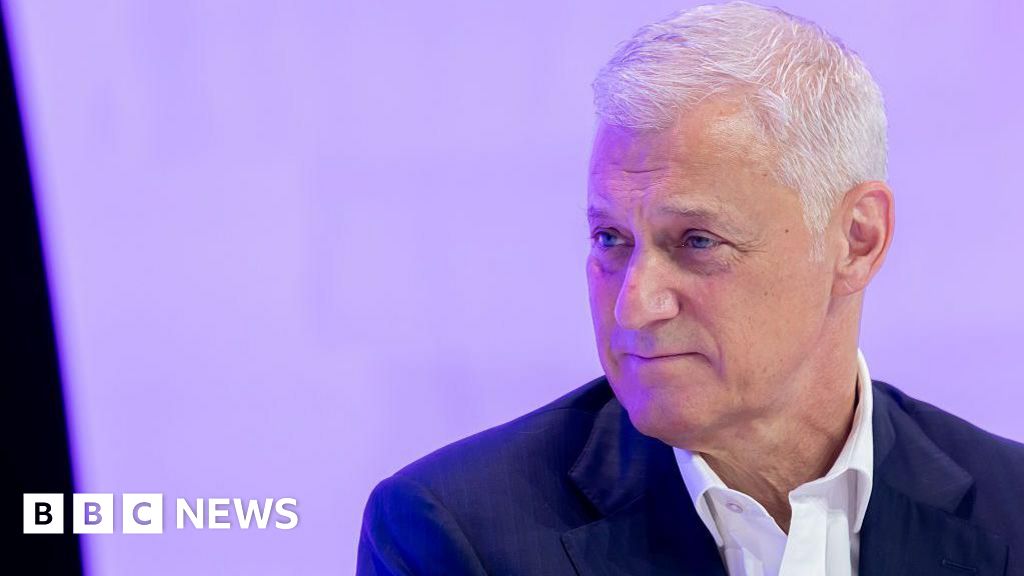
Discussing how automation was likely to lead to thousands of job cuts at the bank at a recent conference, Bill Winters said it wasn’t about cost cutting but “replacing, in some cases, lower value, human capital, with the financial capital and the investment capital that we’re putting in”.

Continue Reading

Business

Why are unpaid debt court cases rising?

Published

on

Why are unpaid debt court cases rising?

Why are unpaid debt court cases rising?

Continue Reading

Business

Texas Instruments stock hits all-time high at 310.53 USD

Published

on


Texas Instruments stock hits all-time high at 310.53 USD

Continue Reading

Trending

Copyright © 2025