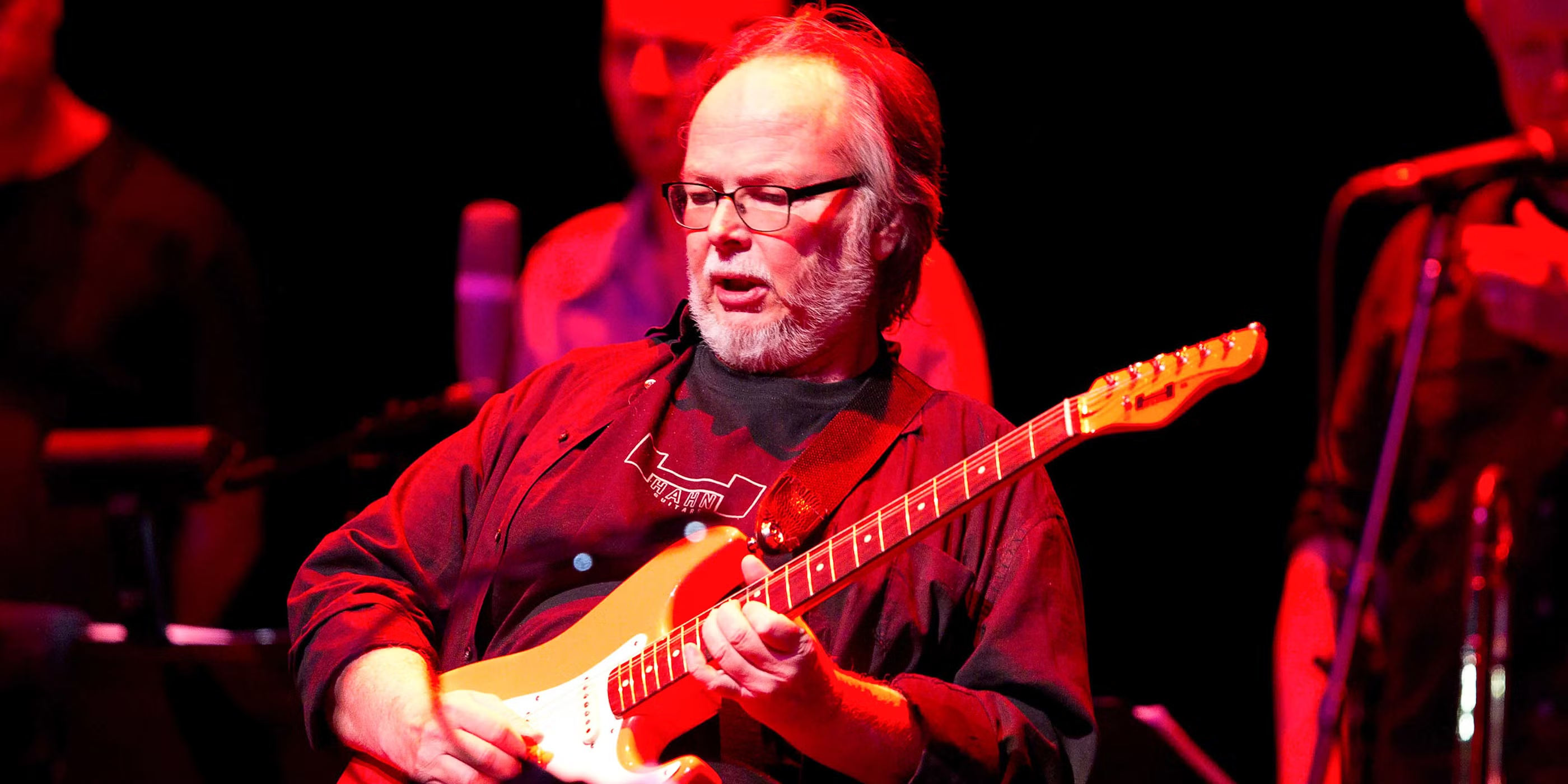
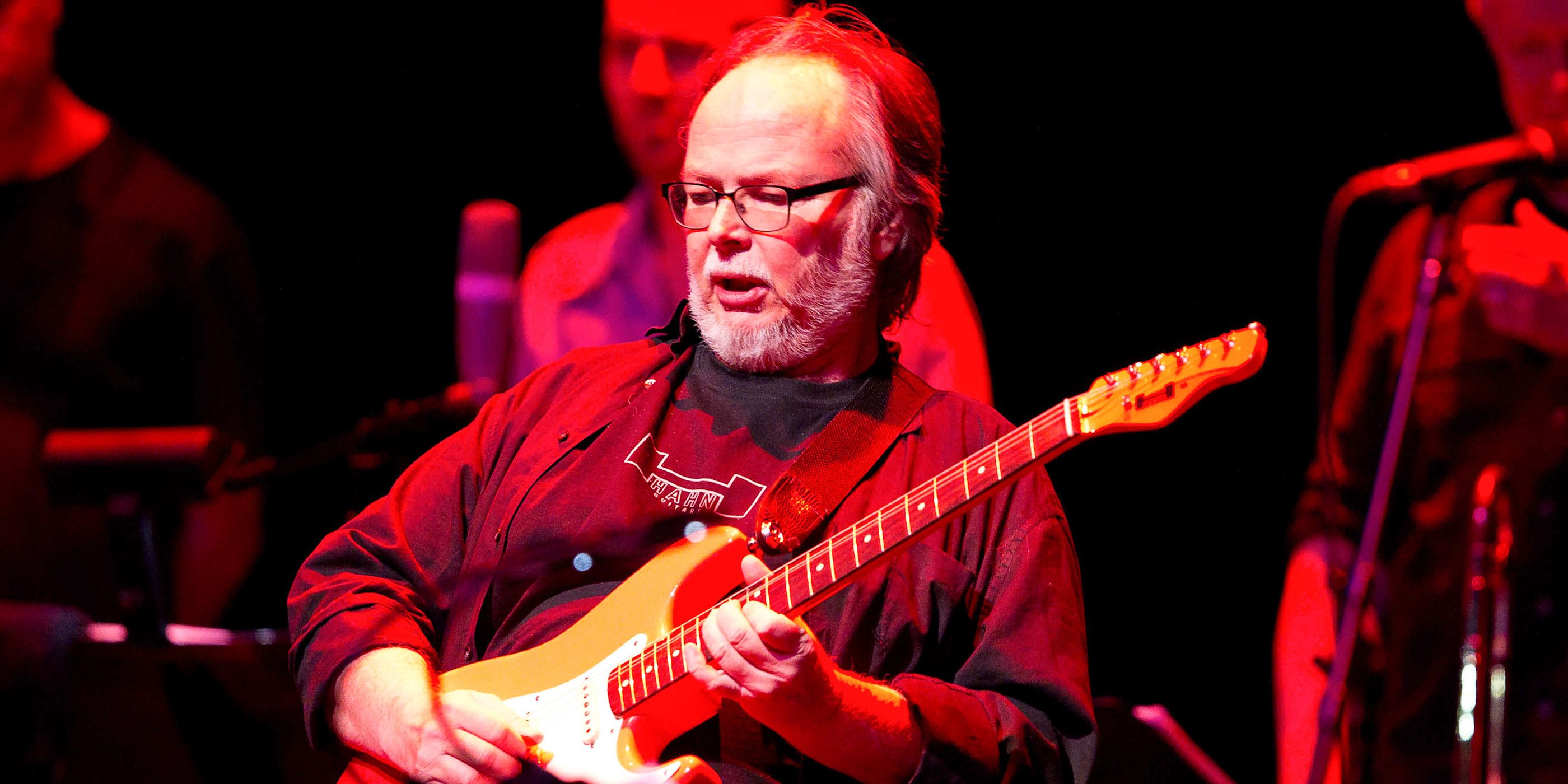
Steely Dan carved out a unique place in music history, fueled by studio perfectionism, potent and ironic lyrics and a jazz-rock sensibility that scored mainstream success while creating a cult following. The duo of Donald Fagen on keyboards and vocals and the late Walter Becker on guitar, bass and vocals teamed up with a bevy of renowned studio musicians to create a lasting musical legacy that continues to find an audience years later.
The band took its name from a novelty toy mentioned in William S. Burroughs‘ 1959 novel Naked Lunch, if you know, you know. They were inducted into the Rock and Roll Hall of Fame back in 2001 and have sold over 40 million albums globally. It’s quite a daunting task to rank such a prolific set of albums that define a genre with classic songs: “Do It Again,” “Reelin’ in the Years,” “Rikki Don’t Lose That Number,” “Deacon Blues,” “Black Cow,” “My Old School.” “Peg,” and that’s just scratching the surface. Focusing on the 70s, here are Steely Dan’s studio albums ranked by songwriting, musicianship, and overall production.
6
‘Pretzel Logic’ (1974)
Steely Dan’s third album, Pretzel Logic, begins a shift in how the band approached recording in the studio. It was also the last album the group went on tour to support until the 2000s. Donald Fagen and Walter Becker both decided to focus on creating music in the studio and quit performing live. Jeff Porcaro, who went on to form Toto, played drums on all songs except “Night by Night,” which features Jim Gordon, best known for his work with Derek and the Dominos. Studio legends Chuck Rainey and Wilton Felder were brought in to play bass and The Eagles bassist Timothy B. Schmit adds backing vocals to three songs, including “Barrytown” and the catchy blues shuffle “Pretzel Logic.”
“Rikki Don’t Lose That Number” peaked at number four on the Billboard Hot 100, making it the group’s most successful single. “Any Major Dude Will Tell You” is another classic peeled off the album, inspired by spending so much time recording in California. A cover of Duke Ellington’s “East St. Louis Toodle-Oo,” which gave the band some jazz cred, and the potent country music-inspired “With a Gun” both showcase the diversity of Pretzel Logic. It’s also the last album to feature the original members Jeff “Skunk” Baxter, who would later join The Doobie Brothers, and drummer/vocalist Jim Hodder.
5
‘Katy Lied’ (1975)
A new era of creativity and studio musicianship is evident on 1975’s Katy Lied. The album is an amalgamation of featured artists including a slew of guitarists, including Rick Derringer, Dean Parks, Elliott Randall and the first of many historic collaborations with jazz legend Larry Carlton, who adds signature licks on “Daddy Don’t Live in that New York City No More.” Outside of playing some bass and rhythm guitar, Walter Becker also contributed the guitar solos on “Black Friday” and “Bad Sneakers.” Rick Derringer laid down the memorable and fiery solo on “Chain Lightning.”
Jeff Porcaro handled all the drums minus “Any World (That I’m Welcome To),” played by studio guru Hal Blaine. Chuck Rainey and Wilton Felder were brought back into the fold to play bass on tracks along with Becker. Legendary vocalist Michael McDonald sings backing vocals on the album, clearly heard in “Bad Sneakers” and “Any World (That I’m Welcome To).” Donald Fagen and Walter Becker continued growth as lyricists shine in “Black Friday,” “Bad Sneakers,” and “Everyone’s Gone To The Movies,” an upbeat island-vibe song about pornography. The album has a clean sound that would only improve as the band continued to spend ample time in the recording studio. “Black Friday” still jumps out of the speakers.
4
‘Countdown to Ecstasy’ (1973)
Countdown to Ecstasy is Steely Dan’s second album, which spawned the quintessential tracks “Bodhisattva” and “My Old School,” for which guitarist Jeff “Skunk” Baxter approached the solo like a saxophonist trying to make his guitar honk. The members of the band were the same from the debut, but Becker and Fagen began to bring in a few outside musicians to enhance the record, including guitarist Rick Derringer for the slide work in “Show Biz Kids.” Like the debut, Walter Becker played bass and added backing vocals and Jim Hodder played drums on every track.
At the time, Countdown to Ecstasy wasn’t as successful as their debut, but in time has earned appreciation with some fan-favorite deep cuts, including “The Boston Rag.” The tune shows off the group’s irreverent and playful lyric writing with the classic opening line: “Any news was good news / And the feeling was bad at home / I was out of my mind, and you were on the phone.” “My Old School” was inspired by a drug bust at Bard College, when Becker and Fagen were students: “It was still September when your daddy was quite surprised / To find you with the working girls in the county jail.” Countdown to Ecstasy feels and sounds like a band getting into a grove that would be short-lived by studio experimentation.
3
‘Can’t Buy a Thrill’ (1972)
Steely Dan’s debut album is an eclectic mix of rock, pop and jazz. The effort features three different lead vocalists: Donald Fagen, David Palmer and Jim Hodder, who also played drums on every track. Palmer lends his vocals on “Brooklyn (Owes the Charmer Under Me)” and the hit “Dirty Work.” Fagen leads the way on hits “Do It Again,” and “Reelin’ in the Years,” while Hodder sings lead on “Midnite Cruiser.” The album features the twin guitar attack of Denny Dias and Jeff “Skunk” Baxter. Denny Dias used a rented Danelectro electic sitar for the memorable guitar solo on the Latin-tinged track “Do It Again,” while Baxter plays the classic lead on “Reelin’ in the Years.” Guitarist Denny Dias on his approach to playing in Steely Dan:
“I play jazz guitar in a rock-and-roll band and that’s all I’ve ever done.”
Can’t Buy a Thrill showed that Becker and Fagen were a potent songwriting force on the verge of taking the decade by storm. It marked the beginning of a glorious relationship the band had with Gary Katz, who produced every Steely Dan album through the 1980 release Gaucho. The album made an immediate splash, selling over 500-thousand copies in its first year and achieving platinum status in 1993, selling over one million copies.
2
‘The Royal Scam’ (1976)
The Royal Scam is a tour de force that captures Becker and Fagen hitting their stride as songwriters and entering a creative peak. The album’s lead track, “Kid Charlemagne,” was inspired by the rise and fall of notorious San Francisco LSD chemist Owsley Stanley: “Clean this mess up else we’ll all end up in jail / Those test tubes and the scale / Just get it all out of here / Is there gas in the car? / Yes, there’s gas in the car? / I think the people down the hall know who you are.” Larry Carlton plays the incredible guitar solo on the track widely considered to be among the best solos of all time. The jazz legend also plays on the energetic classic “Don’t Take Me Alive,” and “Everything You Did.”
Bernard Purdie played drums on all but two tracks on the album. The legendary soul and R&B drummer blessed the group with his signature style called the “Purdie Shuffle,” clearly heard on “The Fez,” Haitian Divorce,” and “Kid Charlemagne.” The title track is a six-minute opus that infectiously snakes along, highlighting Chuck Findley on trumpet. The Royal Scam is a brilliant album that showcases the maturing minds of Becker and Fagen and their obsession with studio perfection. It’s a flawless album that leads the duo to Aja.
1
‘Aja’ (1977)
Aja is one of the best sounding albums of all time. In fact, it won Best Engineered Recording — Non-Classical at the 20th Annual Grammy Awards in 1978. To this day, audio engineers and sound guys love to play this album to test speakers or prepare for soundcheck. Donald Fagen and Walter Becker used about 40 different musicians (including five different drummers on just seven songs) and many hours logged in the studio to get the sound and performances they wanted for their sixth studio album. The combination of more sophisticated songs and arrangements along with virtuoso performances and a nerdy level of high production standards was a perfect storm.
Fagen and Becker have many great quotable lyrics culled from every song on the album. The opening lines of “Black Cow:” “In the corner of my eye / I saw you at Rudy’s / You were very high / You were high.” The clever line in the chorus of “Josie,” “She’s a raw flame / A live wire / She prays like a Roman with her eyes on fire.” At just over eight minutes, the album’s title track, “Aja,” is the band’s longest song. The airy classic features the historic collaboration of Steve Gaad with his powerfully articulate drums along with jazz legend Wayne Shorter on saxophone. “Peg” and “Josie” are upbeat sonic treasures, “Deacon Blues” is a brilliant seventh-minute atmospheric track with a quotable and catchy chorus, and even the album’s deepest cuts, “I Got The News,” and “Home At Last” are well regarded. Aja is a masterpiece of studio perfection where each song and every moment is beautifully crafted and obsessed over. Studio perfection exemplified.















:max_bytes(150000):strip_icc():format(jpeg)/survivor-tout-c294a08236054d3e97f5edfa00dea737.jpg)
:max_bytes(150000):strip_icc():format(jpeg)/Isabel-Brown-The-View-040126-8a9587d93fdf448aaa66b7354fa05113.jpg)











































You must be logged in to post a comment Login