

Crypto World
THORChain’s $10M Exploit Caused by MPC Vulnerability, Private Key Leak

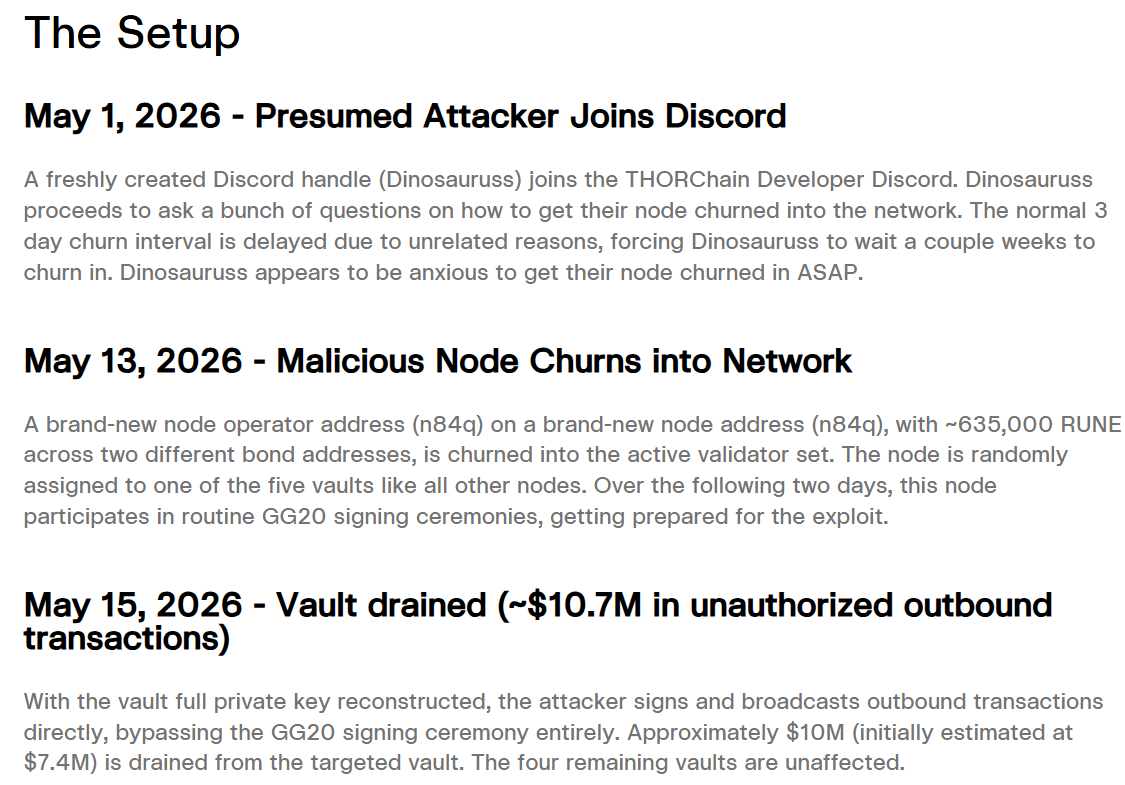
THORChain said a malicious node operator exploited a vulnerability in its GG20 threshold signature system to drain about $10.7 million from one of the protocol’s vaults.
The GG20 threshold signature scheme is used to secure THORChain vaults by splitting key control across multiple node operators, meaning no single node normally holds the full private key.
The vulnerability allowed the malicious node operator to reconstruct a full private key for one vault, through “progressive key material leakage,” the protocol said in a post-mortem report released on Wednesday.
THORChain said its automatic solvency checks triggered within minutes and halted signing and trading across multiple chains without human intervention. Node operators subsequently coordinated via Discord for a full network halt within two hours after and deployed a patch to fix the vulnerability.
The post-mortem report shows that the protocol’s automatic solvency checks functioned and stopped the exploiter from draining more funds. The report comes a week after blockchain investigator ZachXBT first flagged the $10 million exploit, shortly before THORChain announced a halt to all trading and signing.
The incident adds to a resurgence in crypto exploits, which stole more than $634 million in April, according to DefiLlama data.
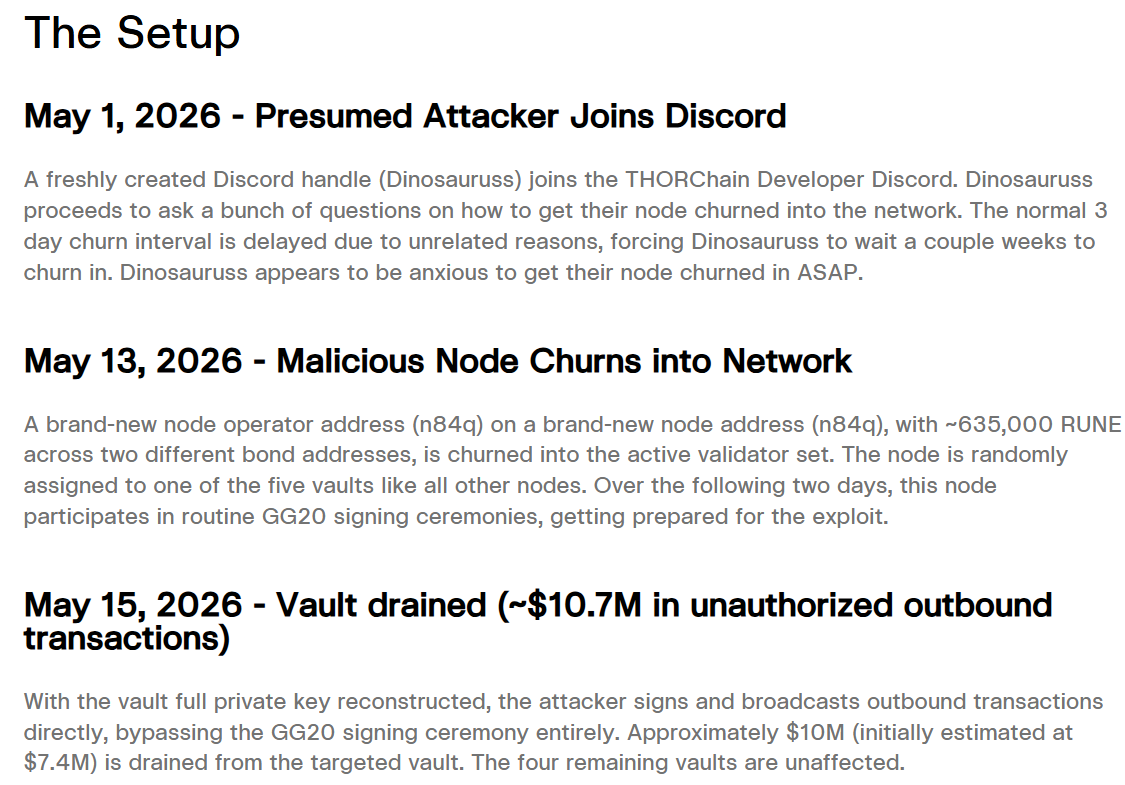
Timeline of the $10 million THORChain exploit. Source: THORChain
THORChain weighs recovery path without RUNE sales
THORChain said Friday that the post-exploit recovery path will be determined by a community consensus and published governance proposal ADR-028, with votes currently open for node operators.
The proposal would have THORChain absorb losses first through protocol-owned liquidity and spread the remainder across synth holders. It would deplete protocol-owned liquidity but redirect a portion of protocol income to replenish it over time, without minting or selling THORChain (RUNE) tokens.
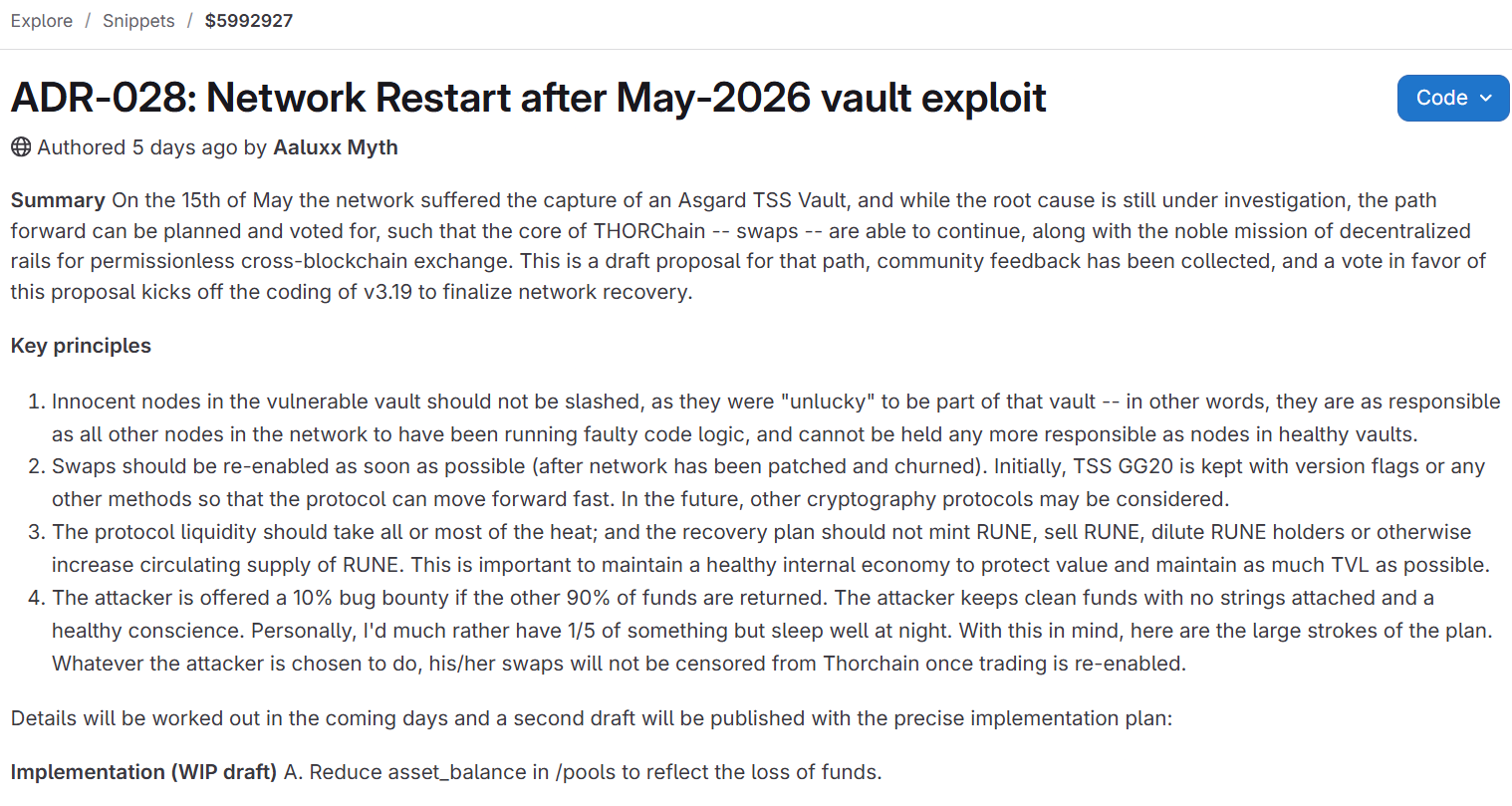
ADR-028 community proposal for recovery after $10 million exploit. Source: Gitlab
THORChain also offered a recovery bounty for the return of the stolen funds and said it would slash the attacker’s malicious node while protecting innocent nodes that were placed in the same vault as the exploiter.
Related: Polymarket team says user funds safe as exploit losses climb above $600K
ADR-028 proposes keeping the existing GG20 TSS framework in a patched and upgraded version and said it will resume trading only after the vulnerability is fixed, drawing mixed reactions from crypto industry watchers.
Pseudonymous crypto project analyst Bird said the initial vulnerability suggests that the GG20 TSS signing stack has a “flaw in randomness generation or local signing isolation,” but praised THORChain’s auto-safeguard for limiting the damage done by the exploit.
Other industry watchers were more critical of the decision. “My mental model is that GG20 has many brittle assumptions. You can keep patching it, but it will forever be a bit of a black box,” wrote crypto investor JP in a Wednesday X post.
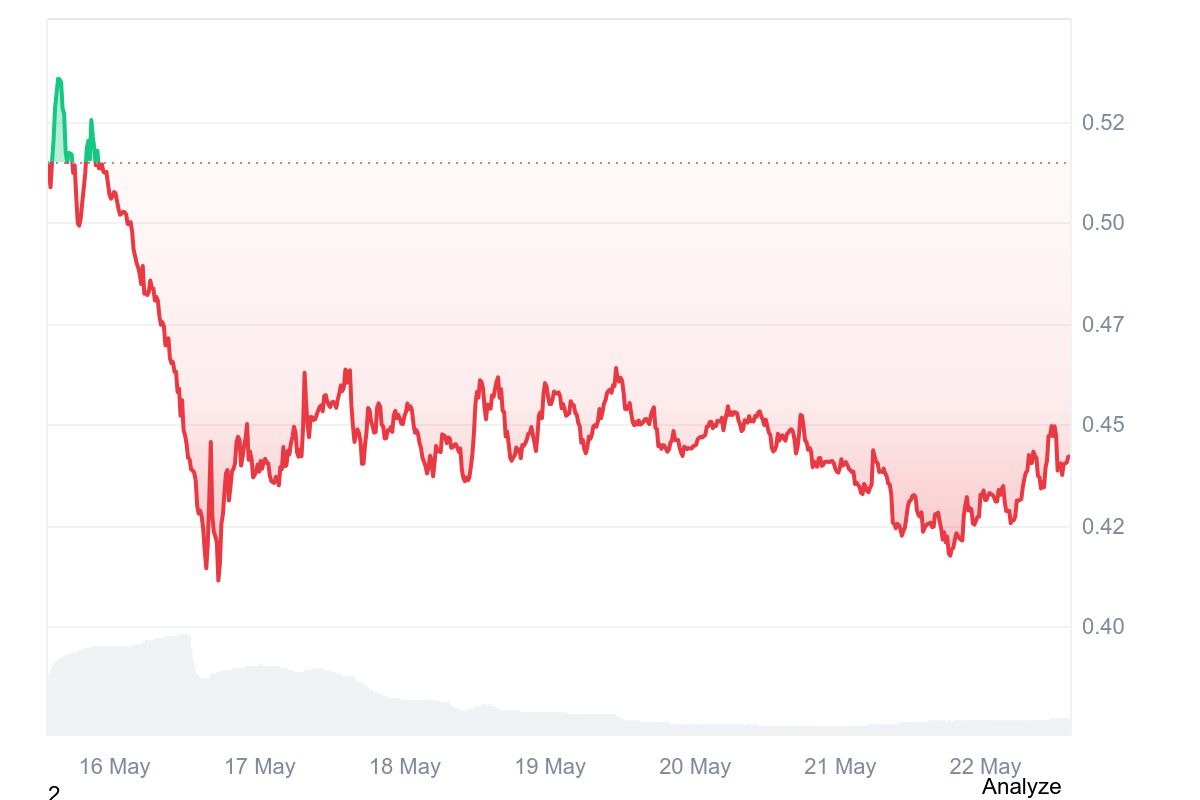
RUNE/USD, 1-week chart. Source: CoinMarketCap
The RUNE token’s price fell 15.5% in the week following the exploit, but staged a 4% recovery in the 24 hours leading up to 11:00 a.m. UTC on Friday, CoinMarketCap data shows.
Magazine: The legal battle over who can claim DeFi’s stolen millions



A Bitcoin reserve bill to codify Trump’s executive order gained a Nashville champion.
Summary
- Rep. Matt Van Epps framed the American Reserve Modernization Act as an extension of Nashville’s growing Bitcoin ecosystem.
- ARMA would lock federally held Bitcoin for a minimum of 20 years and authorize Treasury to acquire up to 1 million BTC over five years.
- Van Epps cited the $39 trillion national debt as the central argument for the legislation.
Rep. Matt Van Epps told Bitcoin Magazine that the American Reserve Modernization Act of 2026 is a direct reflection of what he sees happening in his own district. “Nashville is one of the nation’s leading Bitcoin hubs,” Van Epps said, pointing to Bitcoin Park, the city’s digital asset community, and the annual Bitcoin conference returning to Nashville in 2027.
Van Epps is one of 18 original cosponsors of ARMA, introduced on May 21 by Rep. Nick Begich alongside Democratic co-lead Rep. Jared Golden. The bill would codify President Trump’s March 2025 executive order establishing a Strategic Bitcoin Reserve, giving it statutory permanence that no future administration could reverse with a pen stroke.
What the ARMA bill would actually do
“With a national debt of $39 trillion, this is an essential piece of legislation,” Van Epps said. Under ARMA, any future sale of Bitcoin from the reserve would be permitted for only one purpose: reducing the national debt.
The bill would place the reserve inside the U.S. Treasury and authorize acquisition of up to 200,000 BTC per year for five years, targeting one million coins. All holdings would be locked for a minimum of 20 years. A separate Digital Asset Stockpile would hold non-Bitcoin digital assets already in federal custody.
As crypto.news reported, ARMA builds on the earlier BITCOIN Act framework that Begich introduced with Senator Cynthia Lummis in March 2025. The U.S. government currently holds an estimated 328,372 BTC accumulated through law enforcement seizures, including proceeds from the Silk Road takedown and the 2022 Bitfinex hack recovery.
The bill also affirms that the federal government may not impair the lawful right of individuals to own, transfer, or self-custody digital assets. It directs a study on budget-neutral acquisition strategies to evaluate methods for expanding reserves without increasing taxes or deficit spending.
White House crypto adviser Patrick Witt said at Bitcoin 2026 in late April that a “breakthrough” tied to the administration’s Bitcoin reserve plans could arrive in coming weeks. A Senate companion version from Senators Lummis and Cassidy includes similar codification provisions.

The Bitcoin community celebrated the 16th anniversary of “Pizza Day” on Friday, marking the first recorded commercial Bitcoin transaction, in which real-world goods were purchased with Bitcoin.
In May 2010, software developer Laszlo Hanyecz published an online post offering 10,000 BTC, which was valued at about $41 at the time, in exchange for two Papa John’s pizzas.
At current market prices, the BTC is worth more than $767 million, and at the all-time high of about $126,000 reached in October 2025, the 10,000 BTC was valued at more than $1.2 billion. Nischal Shetty, the founder of crypto exchange WazirX, said:
“Bitcoin Pizza Day is one of the most important moments in crypto history because it transformed Bitcoin from an internet experiment into a real economic network. It was actually the first proof that a decentralized digital asset could facilitate real-world commerce.”
At the time, only a “few hundred” transactions were processed on the Bitcoin network daily, and there was “almost no” Bitcoin payment infrastructure, service providers or institutional involvement, Shetty added.

Laszlo Hanyecz in 2010, with the two Papa John’s pizzas. Source: Coingecko
Hanyecz’s transaction showed that Bitcoin can be used as a medium of exchange to pay for goods and services in the real world, moving the world’s first digital currency from online experimentation to real-world utility.
Related: US lawmakers renew strategic Bitcoin reserve push with ARMA bill
Bitcoiners now have their eyes set on nation-state adoption
In 2024, nation-state adoption of Bitcoin began to capture narrative attention, with the Bitcoin community supporting initiatives like a strategic Bitcoin reserve and tax exemptions for Bitcoin payments.
The Iranian government announced in April 2026 that oil ships crossing through the Strait of Hormuz, a critical shipping waterway located in the Persian Gulf, could pay for shipping tolls in Bitcoin, US dollar stablecoins and Chinese yuan.
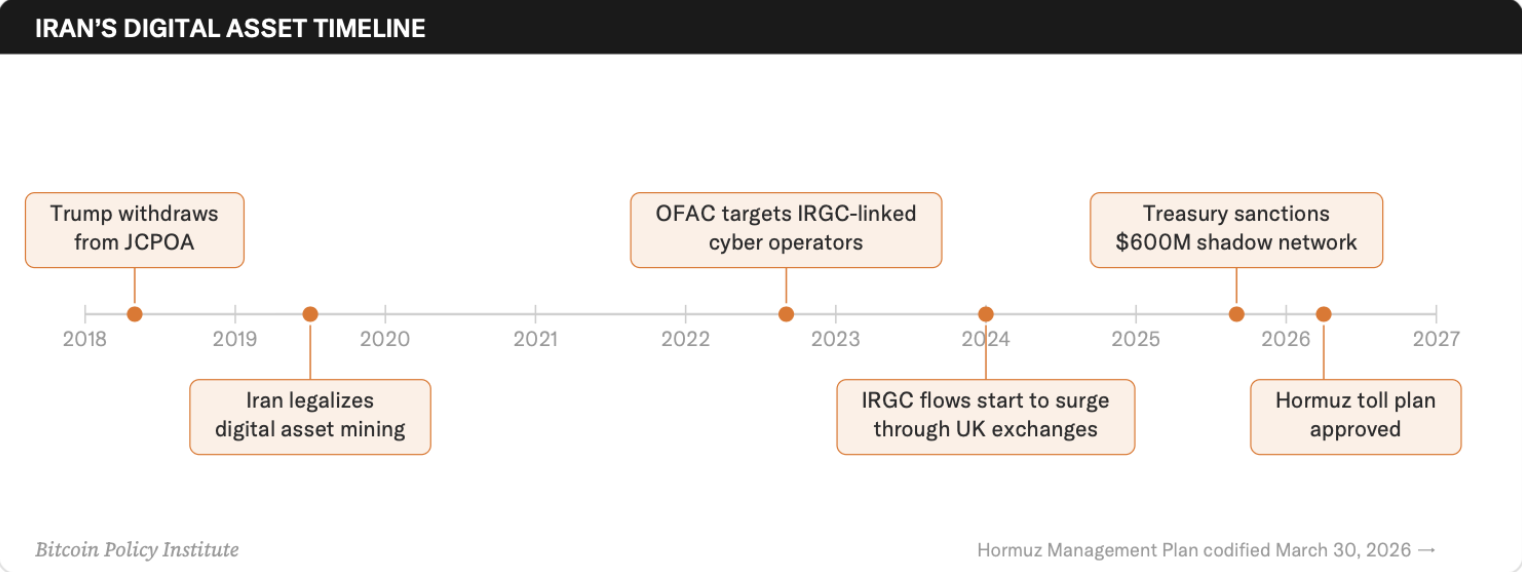
A timeline of the Iranian government’s adoption of Bitcoin and other digital assets. Source: Bitcoin Policy Institute
However, there is no onchain evidence of an oil toll being paid in BTC at the time of publication. Instead, Tether’s USDt dollar-pegged stablecoin continues to be the payment method of choice for the tolls, according to Sam Lyman, the head of research at Bitcoin Policy Institute, a digital asset advocacy organization.
Magazine: Big Questions: Can Bitcoin save you from the dreaded Cantillon Effect?

Key Takeaways
- Micron has initiated 1-alpha DRAM production at its Virginia manufacturing facility, marking the most sophisticated memory technology produced domestically.
- More than $2 billion has been invested in the Manassas site, creating employment for over 3,100 workers.
- MU shares declined approximately 1% Friday to $754.61, following Thursday’s 4.1% advance.
- Bank of America Securities elevated its Micron price target to $950, driven by artificial intelligence memory requirements.
- Samsung successfully negotiated a bonus compensation agreement with its labor union late Wednesday, preventing a scheduled strike.
Micron Technology (MU) opened Friday’s session with significant news: production of 1-alpha DRAM has commenced at its Manassas, Virginia manufacturing complex — representing the most technologically advanced memory chips ever manufactured on American soil.
Shares were changing hands near $754.61, showing a decline of roughly 1% during early Friday market activity, following Thursday’s robust 4.1% rally.
The Virginia manufacturing operation will supply DDR4 and LP4 memory solutions targeting automotive, defense, aerospace, industrial, networking, and medical technology sectors. According to Micron, the 1-alpha process node delivers the world’s leading DDR4 manufacturing capability and will expand DDR4 wafer production capacity at the location by four times.
Chief Executive Officer Sanjay Mehrotra conducted a ceremony at the manufacturing site with U.S. Commerce Secretary Howard Lutnick, U.S. Trade Representative Jamieson Greer, and Virginia Senators Mark Warner and Tim Kaine present.
Micron channeled over $2 billion into upgrading and expanding the Manassas location, which provides employment for more than 3,100 individuals. The initiative benefited from federal, state, and municipal support packages.
Full qualification of 1-alpha manufacturing operations from the Manassas plant is anticipated before 2026 concludes.
Turbulent Period for Memory Sector
The memory chip industry experienced notable volatility this week. During Monday’s events, remarks from Seagate‘s chief executive rattled memory and storage sector equities. His investor conference statement that expanding manufacturing capacity to satisfy storage requirements would “take too long” drove Micron shares beneath $660.
However, industry analyst Brad Gastwirth from Circular Technologies challenged the negative reaction. He argued the market downturn “appears disconnected from the underlying supply chain backdrop,” contending the executive’s statements actually indicated tighter supply conditions and improved pricing dynamics approaching.
Micron rebounded from those depressed levels as the trading week concluded.
Wall Street Outlook and Strategic Direction
Regarding analyst coverage, Bank of America Securities boosted its Micron price objective to $950, emphasizing robust artificial intelligence-fueled memory chip demand. Mizuho previously increased its forecast to $800, highlighting favorable pricing projections for both NAND flash and DRAM technologies.
Micron recently initiated sampling of 256GB DDR5 memory modules engineered for AI servers, utilizing its 1-gamma manufacturing process. The organization reports these modules reduce operational power consumption by more than 40% compared to existing configurations.
The Virginia production launch represents one component of a substantially broader initiative. Micron maintains an estimated $200 billion domestic investment strategy encompassing manufacturing locations in Idaho and New York.
The semiconductor manufacturer initiated construction on its New York facility complex in January. Its initial Idaho manufacturing site is projected to start wafer production during mid-2027. A secondary Idaho location is currently undergoing site preparation. The comprehensive projects are estimated to generate approximately 90,000 employment opportunities.
Micron has additionally pledged more than $325 million toward workforce training initiatives and community enhancement programs throughout all three states.
Meanwhile, competitor Samsung Electronics circumvented a threatened work stoppage following successful bonus compensation negotiations with its labor union late Wednesday evening, mere hours before planned industrial action. Union membership is conducting ratification voting through May 27. Samsung shares dropped 2.3% during Friday’s local trading session.

Hamilton ETFs filed a preliminary prospectus in Canada for an actively managed Bitcoin income exchange-traded fund (ETF) that would use leverage and short-term options strategies to generate yield alongside Bitcoin exposure.
The proposed Hamilton Enhanced Bitcoin DayMAX ETF would use covered-call strategies and leverage capped at roughly 25% of net asset value. The strategy is designed to generate income by collecting premiums from short-term options contracts tied to Bitcoin (BTC) price movements.
The fund is intended to combine Bitcoin exposure with monthly income generation. The company said the ETF would seek listing approval on Cboe Canada under the ticker symbol BDAY.
Hamilton ETFs said the fund is part of its DayMAX ETF lineup, which uses 0DTE, or zero-days-to-expiration, options contracts that expire the same day they are traded.
The filing remains subject to regulatory approval before the fund can begin trading in Canada. Hamilton ETFs manages approximately $16 billion in assets, according to the company.
Related: Hyperliquid ETFs surprise with 50% volume jump after slow launch
Crypto ETF issuers push into active strategies
As issuers expand beyond passive spot crypto products, asset managers are increasingly positioning digital assets as a category suited to more active investment strategies.
In January, BlackRock filed for the iShares Bitcoin Premium Income ETF , an actively managed product designed to generate monthly income through covered-call strategies tied to Bitcoin exchange-traded products. The same month, Bitwise Asset Management launched an actively managed ETF tied to assets including Bitcoin, precious metals and mining stocks.
In March, 21Shares president Duncan Moir told Cointelegraph that crypto’s early-stage and rapidly evolving market structure makes it particularly suited to active management approaches, adding that the company has expanded its trading and portfolio management teams to support more sophisticated products.
The same month, T. Rowe Price updated SEC filings for a proposed actively managed crypto ETF investing directly in digital assets including Bitcoin, Ether (ETH) and Solana (SOL), while Goldman Sachs later filed for a Bitcoin income ETF designed to generate yield through call options tied to spot Bitcoin exchange-traded products.
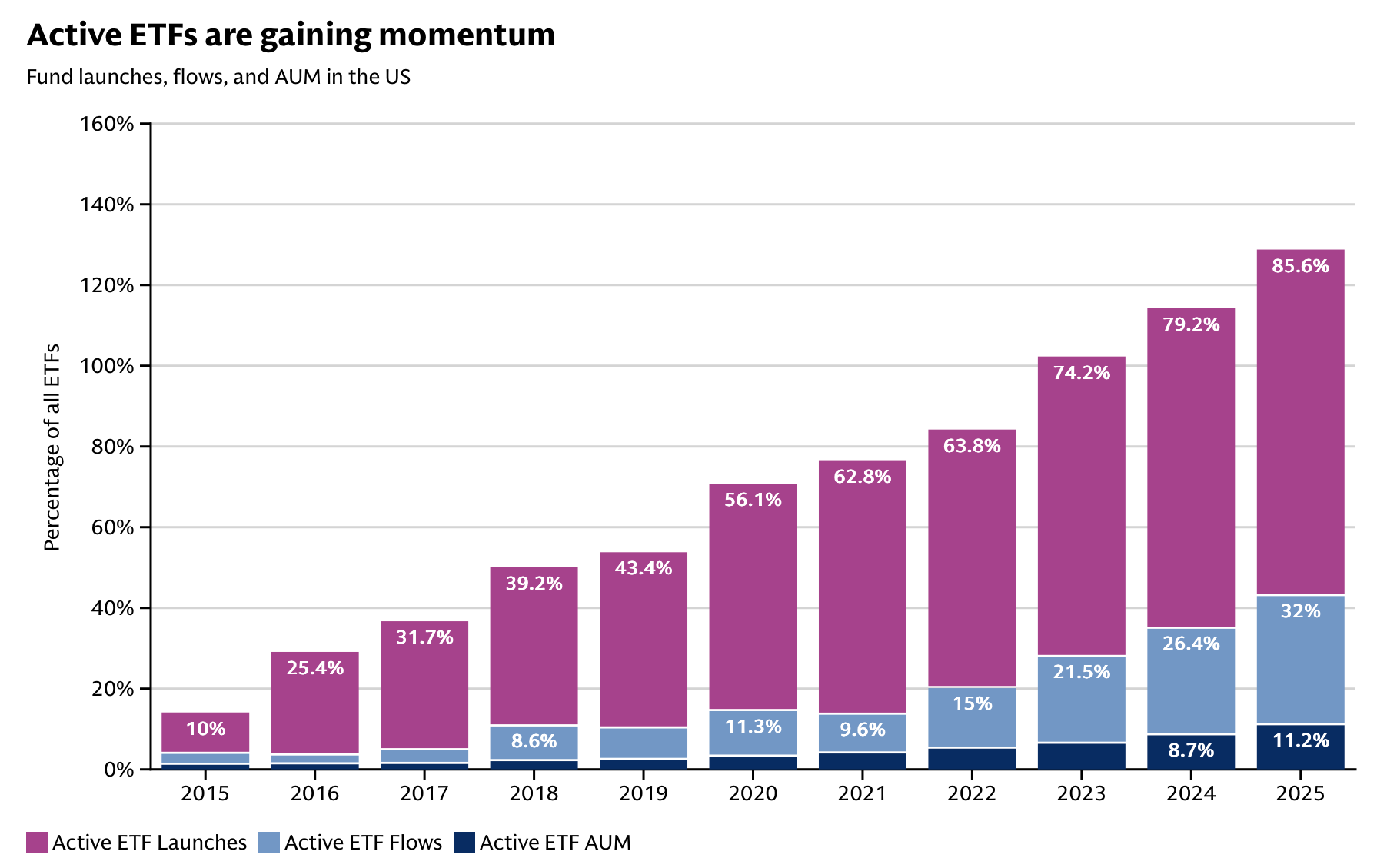
According to a report from Goldman Sachs Asset Management, active ETFs held nearly $1.8 trillion in assets globally at the end of 2025.
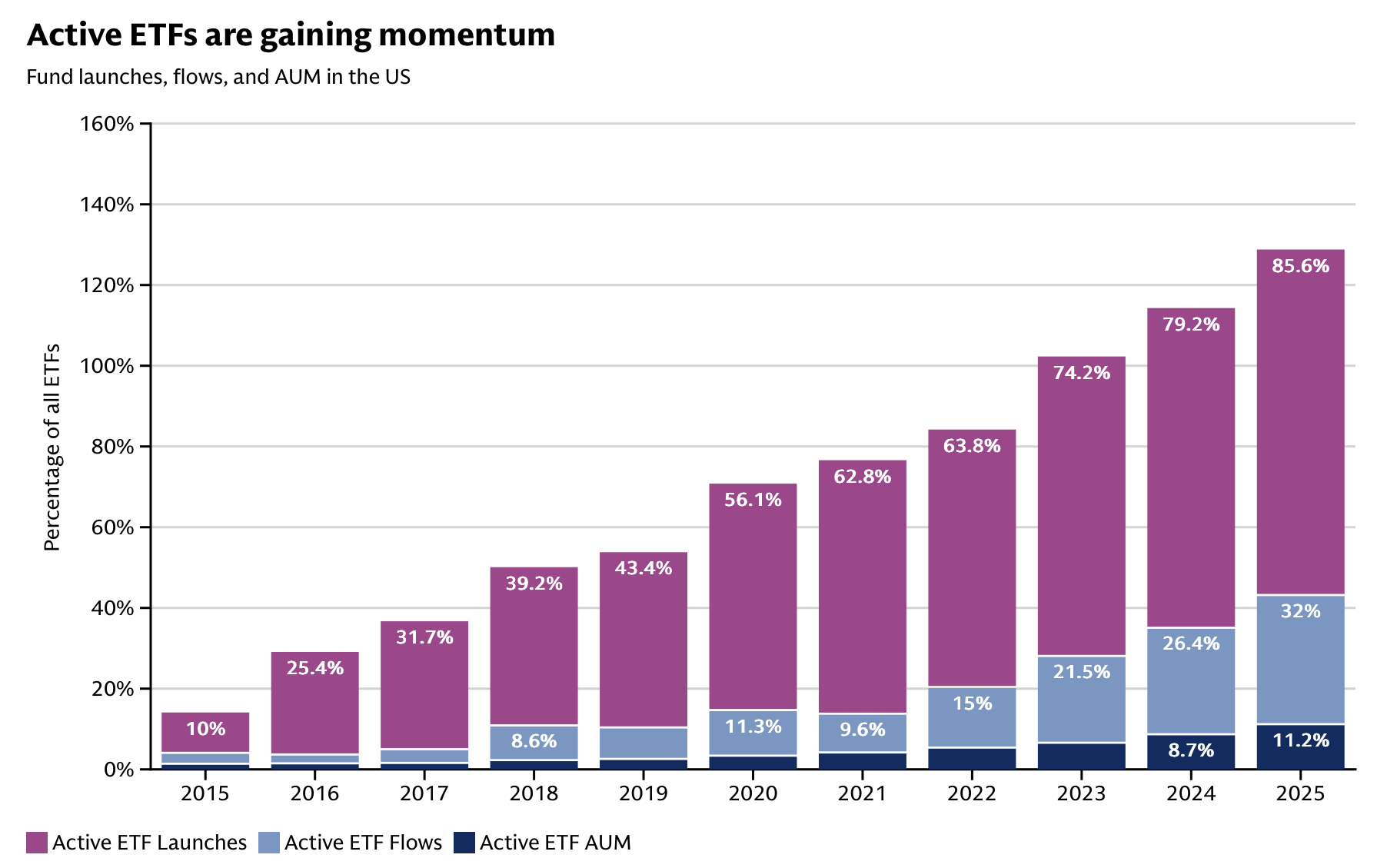
Source: Morningstar, Goldman Sachs Asset Management
Magazine: ETH bears growling, Tom Lee’s buying, XRP to ‘explode’: Market Moves


Disclosure: This article does not represent investment advice. The content and materials featured on this page are for educational purposes only.
Smart forex bots gain traction in 2026 as traders seek automated tools to monitor fast-moving currency markets.
Summary
- Smart forex bots are gaining traction as traders automate monitoring and execution across fast-moving currency markets.
- Modern expert advisors increasingly focus on single pairs like GBP/USD, using coded risk controls and backtesting.
- Traders remain cautious of overfitting, volatility risks, and execution quality despite improved transparency and automation.
Trading manually is getting harder and harder to justify, which is why an increasing number of retail traders have started turning to automated systems instead.
The BIS triennial survey for April 2025 put daily forex volume at $9.6 trillion – a 28% jump from three years earlier. Read on for a look at how automation tools are involved in this increase, and what the trade-offs are.
A market that doesn’t stop
London opens while Tokyo is wrapping up, then New York kicks in a few hours later. For traders watching two or three currency pairs at once (which most are these days), that’s an impossible amount of screen time to cover properly. Prices on the major pairs can move fast — we’re talking seconds — and a lot of this happens while a trader is asleep or otherwise occupied.
That’s why smart forex bots have jumped in popularity. In short, they watch the market so a person doesn’t have to. Whether they do that job well is a different kettle of fish, but the case for their use is pretty understandable.
What’s going on under the hood
Most of these tools are what’s called expert advisors — scripts written in MQL4 or MQL5 that get loaded into MetaTrader. How this works is an EA watches price data on a specific timeframe and checks it against coded rules. When those rules line up with what’s happening on the chart, it opens a position automatically. The whole idea is to take humans out of the moment-to-moment decisions.
Over the past year or two, a lot of these EAs have become narrower. Rather than trying to trade 8-10 pairs, some of them now only focus on one. GBP/USD is a common pick thanks to its liquidity windows — which are predictable — plus the fact that it responds in fairly consistent ways to Bank of England and Fed rate decisions. If an algorithm only has to learn one instrument’s behavior, it can be tweaked better than a system trying to do it all.
A setup might look at patterns on the daily chart to figure out which way the trend is going, then drop down to the M15 to time entries. Smart forex bots doing this analysis can filter out a lot of what trips up manual traders. But in practice, it depends how good the bot’s underlying logic is.
Risk management is coded in as well, covering all manner of variables from stop-loss placement, to how big each position is relative to the account, and how many trades can be open at once.
Some EAs also use a protocol where position size goes up after a losing trade. This recovers drawdowns faster when it works, but it can be nasty if a losing streak goes on longer than expected too. There’s always that tension with automated recovery — it looks great in a backtest, until a unique scenario arises.
Backtesting is what most traders don’t spend enough time on. Years of tick data can be fed through an EA (Tick Data Suite from Thinkberry SRL is commonly used for this) and the results give a picture of how the system would have handled various market conditions.
The quality of that data really does affect the outcome though, and it’s not all created equal.
Where it goes wrong
Over-fitting is still an issue. An EA that’s been tuned on 2018–2024 GBPUSD data can look incredible on paper, sure. But the week conditions shift with a surprise tariff announcement, it’ll fall apart. Trading bots typically deliver inconsistent results during volatility. April 2025’s tariff-driven chaos is a case in point, as it was a very revealing stress test for a lot of bots.
Trust is getting better, at least. Most platforms now let traders look at performance logs before putting money in. This is a step up from the old days of screenshots. If an EA provider won’t put up audited results going back a couple of years, that’s not good enough anymore.
Infrastructure is worth thinking about too, especially for strategies that work in tight windows. An EA on a home laptop won’t execute trades at the same speed as one on a VPS sitting near a data centre. For a lot of retail setups, this gap is fine, but for anything that depends on getting in and out within a few pips, it’s not.
None of this is going away any time soon. Pair-specialized EAs are putting up track records long enough to judge now, which wasn’t the case a few years ago. Bottom line, a bot won’t turn a bad strategy into a good one — but for traders who’ve already figured out the risk side of things, automation is less of a gimmick now than it used to be.
Disclosure: This content is provided by a third party. Neither crypto.news nor the author of this article endorses any product mentioned on this page. Users should conduct their own research before taking any action related to the company.

Key Takeaways
- Seaport Research Partners initiated a Buy rating on TXN with a $400 price objective, highlighting the company’s critical role in AI-driven power management infrastructure.
- Shares reached a fresh 52-week peak of $313.15 this past Friday, marking a year-to-date gain exceeding 72%.
- The company’s data center segment experienced approximately 90% year-over-year revenue expansion during the first quarter of 2026, accompanied by strategic price increases.
- First quarter earnings per share of $1.68 exceeded analyst expectations of $1.37, while revenues climbed 18.6% compared to the prior year.
- Recent insider transactions show executives reducing positions, with the CFO and a board member selling shares valued in the millions.
Shares of Texas Instruments (TXN) climbed to a new 52-week peak of $313.15 during Friday’s trading session, gaining approximately 4–5% as a bullish analyst recommendation provided additional momentum to a stock that has already surged more than 72% year-to-date.
Texas Instruments Incorporated, TXN
Seaport Research Partners elevated its rating on TXN from Neutral to Buy, establishing a $400 price objective. The investment firm’s optimistic outlook hinges on a singular catalyst: power management semiconductors.
Artificial intelligence-driven data facilities are consuming unprecedented amounts of electricity. Seaport’s analyst Jay Goldberg contends that this trend is compelling data center operators to fundamentally restructure their power distribution systems — positioning Texas Instruments as a primary beneficiary.
“Increasing power requirements and electrical density within each rack is compelling data centers to fundamentally redesign their electricity distribution architecture,” Goldberg stated. He characterized TXN as the “most diversified individual equity opportunity to capture exposure across the complete 800V infrastructure.”
Seaport projects the total addressable market for analog chips will expand from the current $5 billion valuation to $15 billion by decade’s end. While widespread deployment of the new 800-volt rack configuration won’t materialize until 2028, critical design selections are anticipated throughout this year — suggesting supply chain indicators may surface in the near term.
Data Center Segment Demonstrates Powerful Momentum
TXN’s data center operations are already showing impressive results. Segment revenues expanded approximately 90% on a year-over-year basis during the first quarter ending in March, while the semiconductor manufacturer has implemented price increases across its existing product portfolio driven by constrained supply and robust customer demand.
Mizuho analyst Vijay Rakesh acknowledged this favorable pricing environment and elevated his price objective to $300 from the previous $255, while maintaining a Neutral stance.
The company’s overall financial performance proved equally strong. TXN delivered Q1 earnings per share of $1.68, surpassing the Wall Street consensus estimate of $1.37 by $0.31. Quarterly revenues totaled $4.83 billion, representing an 18.6% year-over-year increase. Management provided second quarter EPS guidance ranging from $1.77 to $2.05.
The company’s return on equity registered at 32.49%, while net profit margin measured 29.11%.
Wall Street Sentiment and Executive Transactions
Analyst opinions remain divided. Wolfe Research maintains an Outperform recommendation with a $315 price target. UBS upgraded to Buy with a $295 objective. Wells Fargo retained an Equal Weight rating while lifting its target to $260. Goldman Sachs holds a Sell rating with a $200 price objective.
MarketBeat’s aggregated consensus stands at Hold with a mean price target of $263.65 — significantly below the stock’s current trading level.
Institutional accumulation has continued steadily. Norges Bank established a fresh position valued at approximately $2.5 billion during the fourth quarter. Bank of New York Mellon expanded its stake by 33.6% in the first quarter.
Regarding insider activity, CFO Rafael R. Lizardi divested 47,734 shares on May 14th at an average transaction price of $308.10 — a sale valued at more than $14.7 million and reflecting a 35.83% decrease in his ownership position. Director Carrie Smith Cox similarly sold 8,838 shares on May 13th at $306.41 per share.
Cumulative insider sales throughout the previous 90-day period have totaled $85.6 million in stock value.
TXN distributed a quarterly dividend payment of $1.42 per share on May 19th, equating to an annualized dividend yield of approximately 1.8%.
The equity’s 50-day moving average currently sits at $236.29, while the 200-day moving average stands at $205.49, both substantially beneath the present trading price.
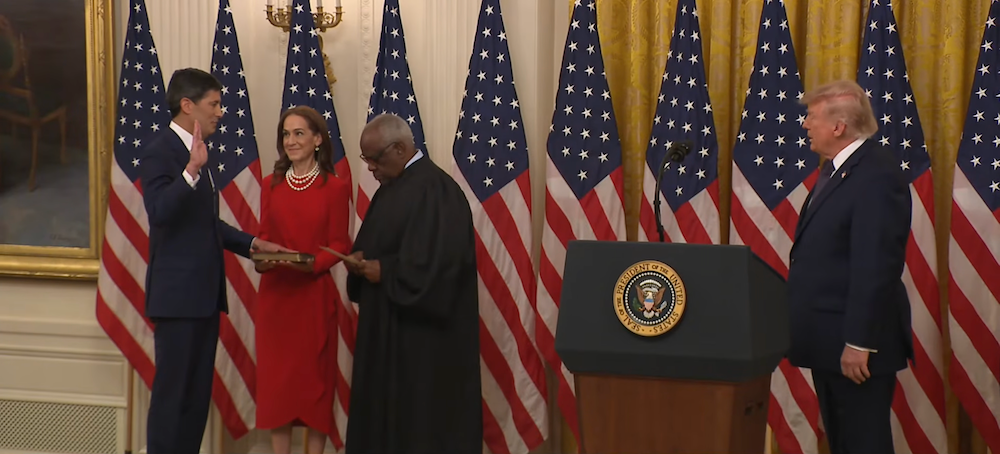
Kevin Warsh was sworn in on Friday as the chairman of the United States Federal Reserve, but investors and traders still forecast no interest rate cuts for the rest of 2026.
Speaking at the ceremony, US President Donald Trump said that Warsh will remain “independent” of the Executive Branch regarding interest rate policy, and claimed that employment numbers are at record levels.
“Thankfully, unlike some of his predecessors, Kevin understands that when the economy is booming, that’s a good thing,” Trump said. He added:
“We do have some debt we would like to take care of, and the way you do that is through growth. We are going to grow our way out of it so fast.”
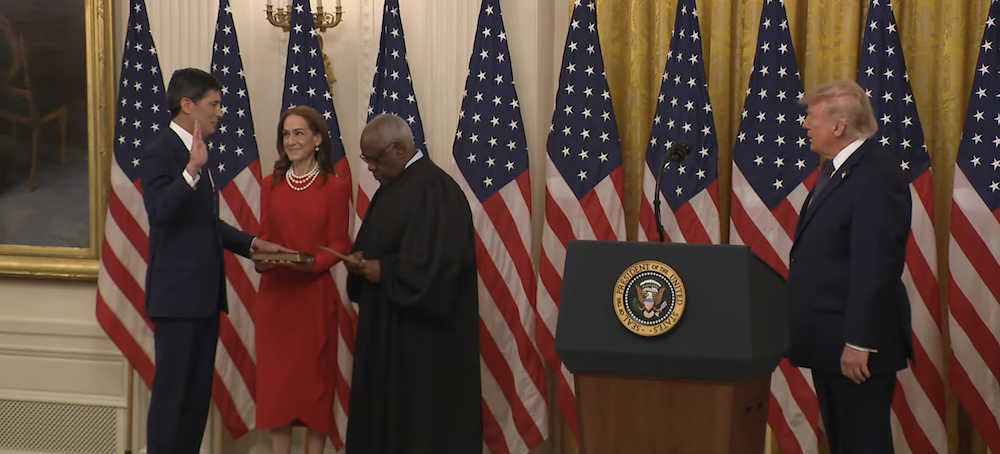
Warsh, pictured on the left, is sworn into office by Supreme Court Justice Clarence Thomas. Source: The White House
“We want to stop inflation, but we don’t want to stop greatness,” Trump continued, drawing mixed reactions from investors and economists, who weighed the likelihood of the Federal Reserve continuing to expand the monetary supply through low interest rates.
Lower interest rates are stimulative for risk-on assets like Bitcoin and crypto; however, cheap access to credit can also cause inflationary spikes, as individuals and institutions are encouraged to borrow cheaply and spend money on investments and commercial goods.
Related: Senate confirms Kevin Warsh to lead Federal Reserve
Investors forecast a 0% likelihood of interest rate cuts in 2026
Investors forecast no chance of an interest rate cut in 2026, and potential rate hikes at the remaining Federal Open Market Committee (FOMC) meetings, according to the Chicago Mercantile Exchange’s (CME) FedWatch tool.
3.5% of investors forecast a 25 basis point (BPS) interest rate hike at the next FOMC meeting, scheduled for June 17, according to CME data. For context, the current Federal Funds Target rate is between 350 and 375 BPS.
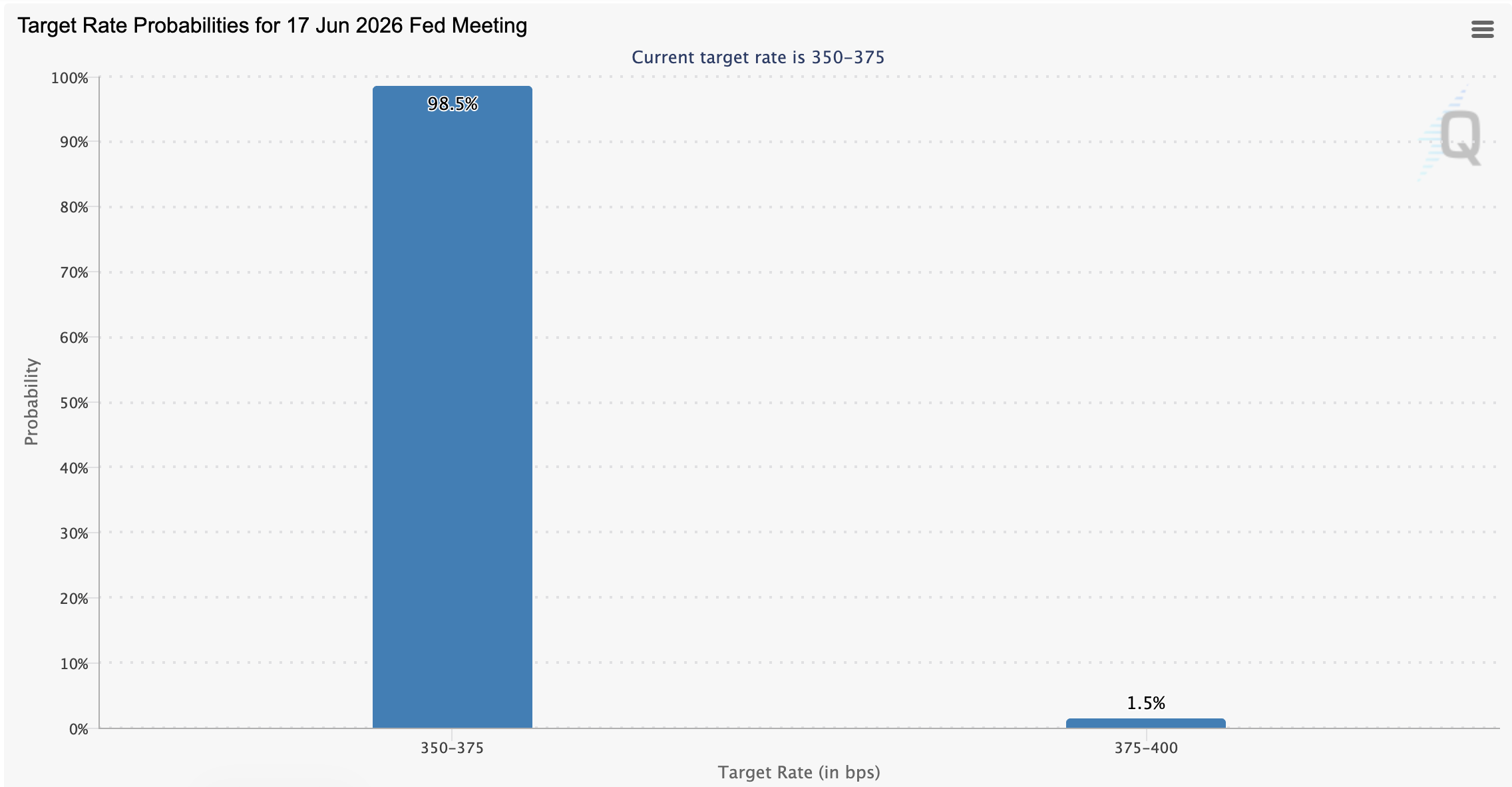
Interest rate target probabilities for the June FOMC meeting. Source: CME Group
The probability of a 25 BPS rate hike at the July FOMC meeting surged to 17%, and about 67% of investors forecast a rate hike at the FOMC’s final meeting in December.
The lack of interest rate cuts and macroeconomic uncertainty regarding the change at the Federal Reserve could negatively impact risk assets like Bitcoin, crypto and equities over the next several months.


Harbor Capital is trying to slice the AI boom into lab-branded trades, filing for a suite of active “Lab ETFs” tied to Anthropic, DeepMind, Meta, OpenAI and xAI ecosystems.
Summary
- Harbor capital’s proposed Lab ETFs would each focus on companies tied to a single AI lab, from Anthropic to OpenAI and xAI SpaceXAI
- The funds aim to own public stocks and other instruments that benefit from specific lab ecosystems rather than broad AI themes
- The move follows earlier ETFs that gained indirect exposure to Anthropic and xAI and comes as Gulf investors pour tens of billions into frontier AI labs
Harbor Capital has filed for five actively managed “Lab ETFs” that each target the ecosystems around Anthropic, Google DeepMind, Meta, OpenAI and xAI SpaceXAI, marking one of the first attempts to carve the AI boom into lab specific public market products.
According to the filing on X, noting that “Harbor Funds filed for 5 actively managed ‘Lab ETFs’ focused on the ecosystems around Anthropic, Google DeepMind, Meta, OpenAI, and xAI SpaceXAI,” citing Bloomberg ETF analyst James Seyffart.
According to a Harbor ETF Trust supplement filed with the Securities and Exchange Commission, the firm has been retooling its active lineup and now plans a family of generative AI themed strategies that extend its existing Harbor Scientific Alpha franchise into lab specific products.
While the detailed prospectus text for each Lab ETF is not yet public, Seyffart posted slides showing that the funds are designed to hold public companies whose revenue, strategic alignment or product roadmaps are tightly linked to a given lab’s models, tools and distribution.
How will Harbor’s ‘Lab ETFs’ let investors bet on Anthropic, DeepMind and OpenAI?
In practice, that likely means an Anthropic Lab ETF would tilt toward backers and heavy integrators of Claude models, while an OpenAI Lab ETF would lean into Microsoft, key chip suppliers and listed firms that have embedded GPT into their stacks, with similar logic for Google DeepMind, Meta and Elon Musk’s xAI SpaceXAI ecosystem.
MediaCrypto, reacting to the filing on X, captured the bigger picture by arguing that “AI ecosystem ETFs are the new sector ETFs,” adding that “the financialization of AI is happening at the same speed as the financialization of crypto,” as providers race to wrap narrow themes in liquid, listed vehicles.
That race is already under way: KraneShares’ Artificial Intelligence and Technology ETF AGIX, for example, offers direct exposure to Anthropic and SpaceX via secondary market stakes, while a separate wave of funds has experimented with special purpose vehicles to hold pre IPO positions in xAI and other private labs.
Why this AI ETF wave matters for crypto style risk and regulation
Harbor’s lab specific approach lands as frontier AI houses themselves face deepening regulatory and geopolitical scrutiny, mirroring the way major crypto issuers and exchanges were pulled into national security and consumer protection debates once they scaled.
The Financial Times recently reported that Google DeepMind, Microsoft backed OpenAI and Elon Musk’s xAI agreed to let US authorities conduct national security reviews of their most advanced models before release, underscoring how concentrated and systemically important these labs have become.
At the same time, former OpenAI staffers have warned in a public letter that xAI’s “poor safety record” represents a set of “unpriced risks” for investors in SpaceX’s anticipated $75 billion initial public offering, a reminder that lab ecosystems now sprawl across space, defense and critical infrastructure.
For crypto natives, the Harbor Lab ETFs read like a familiar playbook: sector specific exchange traded products that channel retail and institutional flows into a narrow technology thesis, not unlike how Bitcoin and Ethereum funds gave tradfi investors liquid exposure to previously opaque on chain risk.
As coverage of crypto market outlook and macro driven flows into Bitcoin (BTC) have shown, once Wall Street builds an ETF wrapper, narratives and flows can become self reinforcing, with index inclusions and passive buying shaping both valuations and regulatory focus.
If the Harbor products launch and gather assets, they could accelerate that same feedback loop in AI, funnelling capital into whichever labs dominate each narrative cycle and further entrenching a handful of quasi oligopolistic players whose models already underpin everything from trading algorithms to chatbots used by crypto exchanges.
Longer term, the segmentation of AI risk into Anthropic, DeepMind, Meta, OpenAI and xAI SpaceXAI “buckets” could also create new correlation patterns for digital assets, as traders increasingly model how shocks to a given lab whether a safety scandal, a national security block or an IPO surge bleed into AI focused tokens and into crypto infrastructure that leans on those models.


Clarity Act concerns from law enforcement are overblown, House Majority Whip Tom Emmer said.
Summary
- Emmer called law enforcement objections to crypto developer protections a “red herring” aimed at slowing the bill.
- He defended shielding noncustodial developers from money transmitter rules under the Blockchain Regulatory Certainty Act.
- The Senate Banking Committee advanced the Clarity Act 15-9, with bipartisan support beyond Republicans.
House Majority Whip Tom Emmer said law enforcement groups are overstating their concerns about crypto developer protections embedded in the legislation. He called the objections a “red herring” designed to slow the broader bill’s progress through Congress.
Emmer forcefully defended the Blockchain Regulatory Certainty Act, which would shield noncustodial software developers from being treated as money transmitters. He argued the U.S. needs clearer rules to keep innovators onshore rather than driving them to other jurisdictions.
Tom Emmer frames Clarity Act as bipartisan priority
Emmer pointed to the Senate Banking Committee’s 15-9 vote advancing the bill as evidence that support extends beyond Republicans. He described the Clarity Act as the fifth or sixth iteration of crypto market structure legislation the House has refined over multiple sessions of Congress.
“The president never asked me to predetermine, commit, fix, decide on any interest rate decision,” Emmer noted that the legislation would create clear distinctions between digital assets regulated as securities, commodities, or cash equivalents. He predicted Congress would ultimately send the package to President Trump’s desk.
The Blockchain Regulatory Certainty Act provision has drawn particular scrutiny. It codifies that developers who write code but do not control user funds should not face money transmitter obligations, a principle crypto advocates consider essential to keeping open-source development in the United States.
Emmer also criticized former SEC Chair Gary Gensler’s enforcement-first approach under the Biden administration. He argued that companies want to build in the U.S. but need to understand “the rules of the road” before committing resources.
What comes next for the Clarity Act
As crypto.news tracked, the bill still faces several hurdles before reaching a floor vote. Outstanding issues include stablecoin yield provisions, DeFi oversight language, and ethics rules for lawmakers trading tokens.
Galaxy Digital estimated the bill’s 2026 passage odds at roughly 50-50. Polymarket traders currently price it at approximately 46%, down sharply from 82% earlier in the year. Industry advocates have described mid-summer as the effective deadline before midterm politics make passage significantly harder.
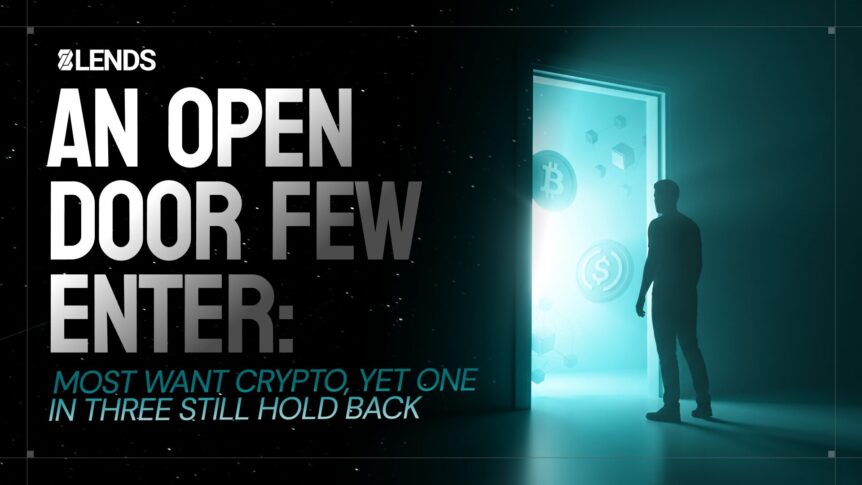
More than one-third of investors still avoid crypto, mainly because they are afraid of making mistakes. At the same time, 70% are open to using it in everyday life, especially for payments. This creates a clear gap between curiosity and actual use, according to a recent survey by Maclear among European investors[1].
Security failures dominate public perception of crypto, from high-profile exchange collapses to large-scale hacks, and the data reflects this. Yet fear of scams and fraud, while real, is only part of the picture. According to the survey, 35% of non-users cite lack of confidence and poor understanding of how crypto works as their primary barrier, not external threats, but internal ones. This distinction matters: platform failures can be addressed by regulation, but knowledge gaps require a different response entirely.
The State of Crypto Adoption in Europe and Its Major Barriers
Crypto adoption is already widespread, but usage remains shallow. Nearly half of respondents—48%—report using cryptocurrencies in some form. Stablecoins show even stronger traction: 41% of respondents hold them, and adoption rises to 85% among those who have ever used crypto.
Usage patterns reinforce this. The primary activity is investment, cited by 55% of crypto users. Around 25% use crypto as a form of savings or value storage. In other words, crypto is largely treated as a financial asset to hold, not spend daily. Only 6% report using crypto weekly. Yet the potential is broader: crypto can already support everyday activities such as peer-to-peer payments, cross-border transfers, paying for digital services, and participating in decentralized finance tools.
Security concerns continue to shape perception. High-profile incidents—such as exchange failures like FTX, large-scale hacks like Mt. Gox, or phishing scams targeting users’ wallets—have reinforced the idea that crypto is risky. These events dominate headlines and create a strong psychological barrier.
However, many users hesitate because they lack confidence in navigating the system safely. Fear of making irreversible mistakes and limited familiarity with digital assets are cited by 35% of respondents as key barriers. Complexity comes close behind, with 32% pointing to difficulties in getting started or using crypto services. This creates a paradox: crypto is designed to be accessible and user-driven, yet it is perceived as complicated and unforgiving. Small mistakes—like sending funds to the wrong address—can feel high-stakes, which discourages experimentation and daily use.
What It Takes to Make Crypto Part of Daily Life
Most users are not rejecting crypto. Only a third of respondents are strongly against using it for payments. What they are missing is trust. Stronger consumer protection is the most requested improvement, cited by 38% of respondents.
This includes clearer safeguards against fraud, such as verified platforms, stricter controls on listings, and faster response mechanisms when issues arise. Increased transparency is equally important: users want to see exactly where their money is going and who is responsible if something goes wrong.
Some platforms are already responding to this demand. 8lends, for instance, has built its lending infrastructure entirely on-chain, making every transaction publicly verifiable in real time — an approach that removes the need to trust a platform’s internal reporting. This kind of structural transparency is still the exception in crypto, not the rule.
«The barrier isn’t technology, it’s accountability. Our data shows that 47% of European investors already treat crypto as a backup financial system, yet the same people hesitate to use it for a €50 payment. That gap exists because users don’t know who to call when something goes wrong. Until crypto platforms answer that question as clearly as a bank does, daily adoption will stay stuck at the awareness stage,» says Alexander Lang, CFO at 8lends.
The next phase of crypto adoption will depend less on innovation and more on whether the industry can deliver the same level of trust, clarity, and accountability that users expect from traditional finance.
To learn more about the report, please visit the following link.
Boilerplate
8lends is a P2B lending platform that lets individual investors from all over the world fund real business loans and earn up to 25% annually, with all transactions conducted in USDC.
The platform was launched in 2025 by Maclear AG, a regulated P2B marketplace from Switzerland. Together, the two platforms have facilitated over €100M in business lending across 34,000+ investors, with just one recorded default (where every investor recovered 100% of their principal) and zero late loans to date.
While Maclear enables investments in real businesses using fiat, 8lends brings the same institutional-grade model to the global crypto community, allowing investors to fund real businesses in USDC without market volatility or the opacity of DeFi. Each loan on 8lends is secured by real business assets (collateral), evaluated across 40+ risk parameters, and managed through smart contracts (audited by CertiK and Cyberscope) that automate repayment flows.
The platform is independently audited and supervised by PolyReg, Switzerland’s leading financial self-regulatory body.
1. Methodology: The survey targeted European investors interested in alternative investment instruments. Data collection took place between February and March 2026. In total, 500 respondents from European countries participated in the study.to

Moment fleeing teen is knocked from bike during police chase

NYT Connections Puzzle 1076 Solved for May 22 2026 with Conveyor Belts and Homophones

Nashville Rep pushes Bitcoin reserve bill


-

 Crypto World7 days ago
BloFin War of Whales 2026 Grand Prix opens registration for $5M trading championship
-

 Tech7 days ago
Google reimburses Register sources who were victims of API fraud
-

 Fashion6 hours ago
Holiday Weekend Open Thread – Corporette.com
-
 Crypto World7 days ago
Bitcoin Battles US Bond Nerves With BTC Price Dip Toward New May Lows
-

 Fashion6 days ago
On the Scene at Gucci’s Cruise Show in New York City: Mariah Carey, Kim Kardashian, Lindsay Lohan, Iman, and More!
-
 Crypto World7 days ago
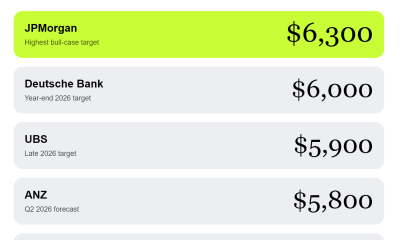
Wall Street’s Boldest Gold Prediction Has Russians Rushing to Buy
-

 Fashion7 days ago
Trending Western Style Vests Perfect for Summer
-

 Politics7 days ago
Watch: far-right flag-fanatics run over victim, attack locals – Setup By the Left wing for your entertainment
-

 Business7 days ago
Strategies for Australian Businesses Entering Southeast Asian Markets
-

 Crypto World1 day ago
Blockchain.com files with SEC for U.S. IPO
-

 Fashion6 days ago
Amazon Sundays: Memorial Day Hosting
-

 Entertainment6 days ago
Off Campus Easter Eggs Explained: Characters, Stories, More
-
Business6 days ago
Australia defends property tax changes designed to fix ‘broken’ housing
-

 Crypto World6 days ago
Intesa Sanpaolo’s crypto holdings jump to $235M as XRP enters
-
 Crypto World4 days ago
Revolut Launches Dogecoin Debit Card Across UK and EU
-

 Politics7 days ago
Anti-Zionists attacked in Jerusalem as ethnofascists chant race-hate
-

 Tech1 day ago
WhatsApp ads could make Irish debut after discussions with DPC
-

 Sports23 hours ago
2026 CJ Cup Byron Nelson leaderboard: Brooks Koepka finds putting stroke in Round 1
-
 Entertainment7 days ago
Ben Affleck’s Daughter Violet Trolled Over Mask-Free Outing
-

 Politics6 days ago
Cassidy defiant as Trump's revenge campaign closes in
You must be logged in to post a comment Login