There is also the argument that Ulster are victims of their own success.
As a reward for an upturn in form, the province were heavily represented in Ireland’s Six Nations squad.
A proud moment for those associated with the club, but it did deprive key players of the mid-season breather they normally would have had.
For the final, Ulster were missing their four longest-serving players. Captain Iain Henderson was suspended, while Stuart McCloskey – so influential for both Ulster and Ireland – was injured along with Jacob Stockdale and Rob Herring.
Advertisement
Of the team that started in Bilbao, Timoney was the oldest player at 30.
“There were eight players in Ireland camp and only two last year,” observed Murphy.
“The rugby we’ve played, and reaching a European final, albeit not with the result we wanted, all of those things have had an impact on us making the top eight.
“We have had to move our resources around and at this time our squad probably isn’t strong enough to compete in two competitions.”
New research from Lloyds Bank suggests that car owners who miss key deadlines for MOT, tax, or insurance renewals could face fines or higher costs—yet one in five are letting these dates slip.
42% of those surveyed said they find car admin difficult, rising to more than half, 59% of 25 to 34-year-olds.
Among those who have missed these tasks, more than one in 10 said they went on to face higher costs or fees as a result.
Advertisement
Warning as drivers face penalties for forgetting key dates
Nick Williams, managing director of transport at Lloyds, said: “Juggling multiple apps, deadlines, and rising costs means things can slip through the cracks for people trying to stay on top of their car admin.”
To support its customers, Lloyds has launched a new “manage your car” feature in its mobile app, offering reminders for MOTs, servicing, and insurance all in one place.
The goal is to help drivers stay organised and avoid unnecessary penalties.
The bank said the app features are available to all Lloyds customers, regardless of who provides their car finance.
Advertisement
Lloyds commissioned YouGov to carry out the survey, which was carried out in May among more than 2,000 people across the UK.
Other apps to help people keep on top of car admin are also available.
RAC head of policy Simon Williams said the myRAC app has four million users, adding: “You don’t need to be a member of the RAC to download it.”
Advertisement
UK drivers warned of £1,000 fines for using navigation apps
Drivers are being warned not to enter destinations into navigation apps while behind the wheel.
Motoring experts have stressed that using mobile devices in this way can result in fines, penalty points, or even prosecution.
Graham Conway, managing director at Select Car Leasing, said: “Navigation apps are incredibly useful, but this case is a reminder that even just typing in an address into your map app while behind a wheel can still be treated as a serious driving offence.
Recommended Reading
Advertisement
“A lot of motorists may think there is a difference between texting someone and quickly changing a route or entering a postcode, but if you are holding and interacting with your phone while driving, you are putting yourself at risk.
“The same applies when you are stationary in traffic.
“You are still in control of the vehicle, and traffic can start moving again at any moment.
“That short distraction could be enough for police to decide that you are not properly in control.”
Advertisement
Have you ever missed a key date for your car payment? Let us know in the comments how you handled it.
“Visiting Comanche Crossing on Juneteenth felt like freedom,” my father said as we pulled into Booker T. Washington Park, the site near what used to be known as the historic Comanche Crossing on Lake Mexia in Texas. “Listen, Bobby, this place would be full of Black folks cooking, dancing, and playing music. It was a big festival with fireworks and a party.”
It had been more than six decades since my father had visited the park in the summer of 1965. But he sounded like a little kid again as he breathlessly recounted all the food: “We would have barbecue ribs, chicken, brisket, blood sausage, raccoon, armadillo, fried chicken, potato salad, beans and yellow meat watermelon, and we had to have that Big Red Soda – you know it was created in Waco, right? – banana pudding, peach cobbler, pecan pie, white coconut cake, German chocolate cake, berry cobblers, pies and homemade ice cream.”
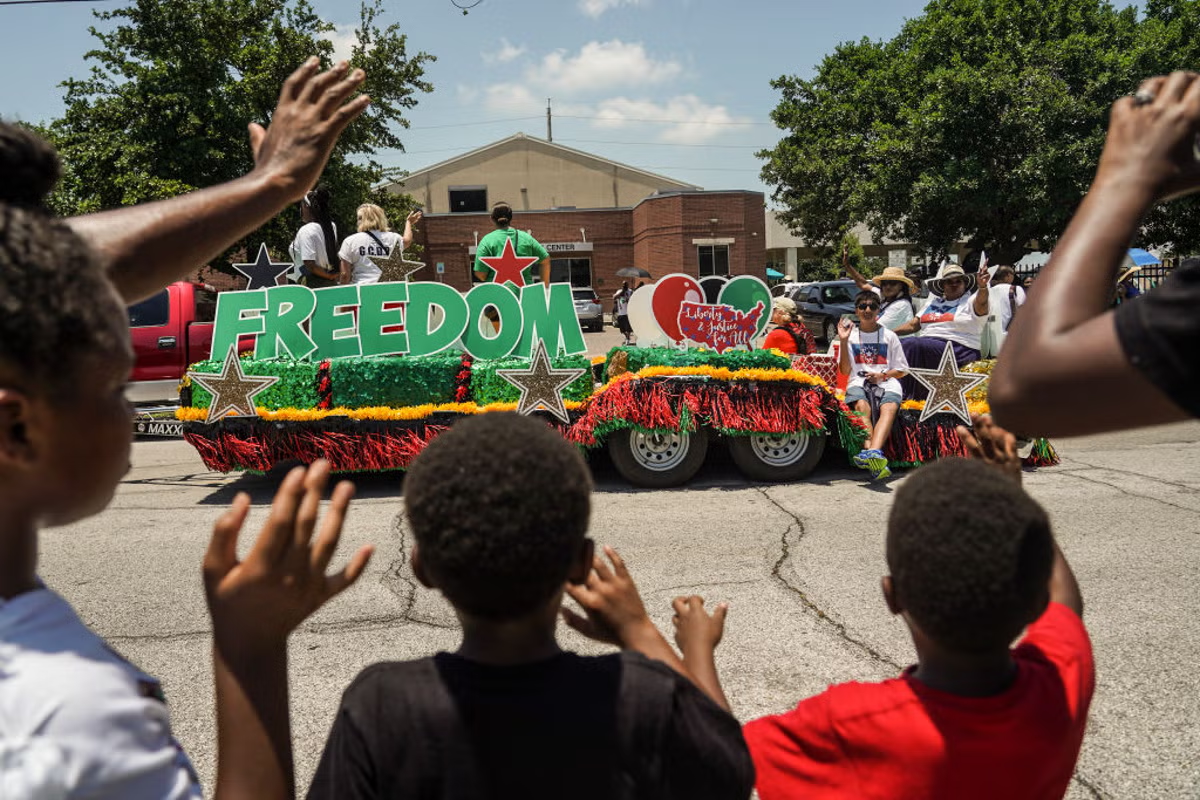
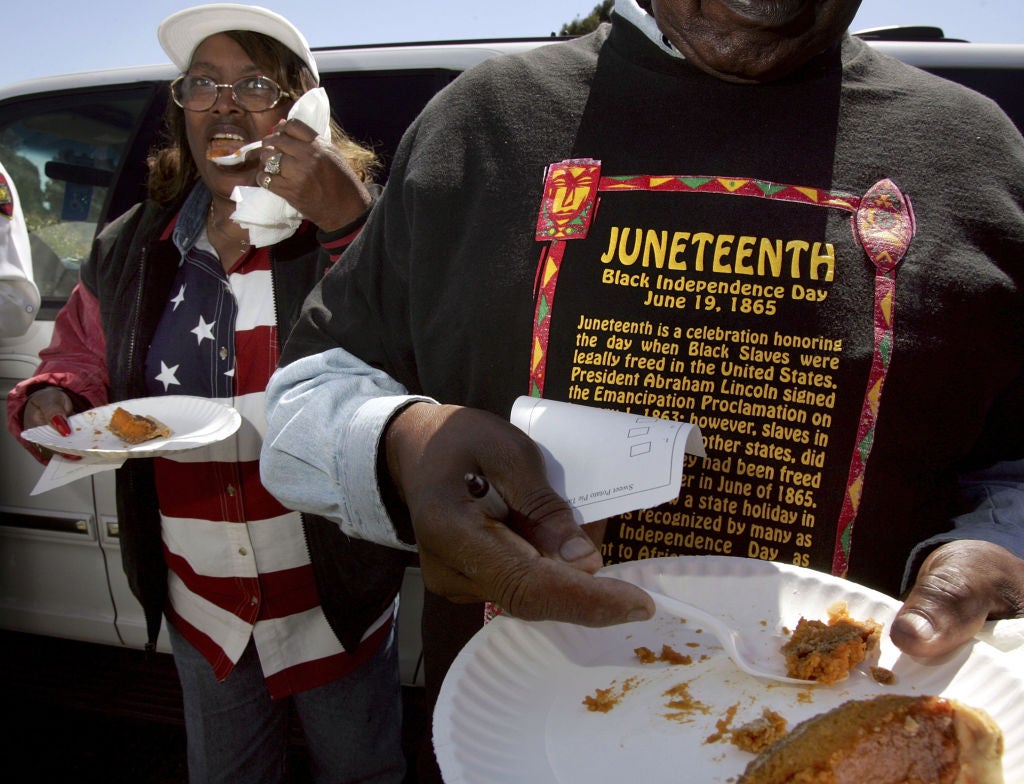
Long before Juneteenth became a national holiday in 2021 and Texas commemorated it as a state holiday in 1980, the park was where generations of my family would join thousands of Black Texans every June to celebrate June 19, 1865.
That was the day Union troops informed enslaved Africans in Texas that they were free, two-and-a-half years after the Emancipation Proclamation and six months before the ratification of the 13th Amendment, which officially abolished slavery in the U.S.
Advertisement
The park was where generations of my family would join thousands of Black Texans every June to celebrate June 19, 1865 (Getty Images)
Comanche Crossing lies less than 3 miles north of the site where the region’s enslaved people first learned of their freedom, and it’s where they decided to celebrate with a feast from their harvest.
Yet the story of Black Texans – and how they shepherded the traditions of Juneteenth celebrations through food for over a century – is a central part of this history that receives scant attention.
I’m a native Black Texan, so Juneteenth is personal. And I thought I fully understood its significance while I devoured smoked pork ribs, summer sausage and brisket, year after year, at my paternal grandmother’s house in my hometown of Fort Worth.
But now, as a scholar of Black food culture, I see these celebrations differently. The mouthwatering spreads that were laid out each year did more than nourish Black Texans. They celebrated the way food was wielded as a tool of resistance and a symbol of freedom during and after slavery.
The freedom feast
Advertisement
As we continued walking through Comanche Crossing, I asked my father what he remembered about preparing food for Juneteenth.
By summer 1965, he recalled, they were living in Fort Worth but traveled back to his hometown of Waco the night before Juneteenth to help his family cook for their annual Comanche Crossing trip. He recalled that the cooking lasted all night, with the meat smoked to perfection over the pit, while other family members, including my grandmother, assembled dishes for the next day, using mostly fresh ingredients and farm-raised livestock. The food was packed up on the morning of June 19, and then the whole family headed for Comanche Crossing.
“And that’s when we would really have a time,” he said.
Yet the story of Black Texans – and how they shepherded the traditions of Juneteenth celebrations through food for over a century – is a central part of this history that receives scant attention (Getty Images)
As my father excitedly described all the food and its preparation, I thought of culinary historian Jessica B. Harris, who, in her 2011 book, “High on the Hog, wrote, “The backbone of Juneteenth festivities has always been the table.”
Each family that came to Comanche Crossing prepared their own unique dishes for the Juneteenth spread.
Advertisement
“You can’t pinpoint how each family would prepare the foods,” my father said, “but you know you would see smoked meat for sure because that was our main tradition.”
For my family, smoked meat and potato salad were nonnegotiable.
The smoked meat echoes the ritual of hog killing that has long been part of the rural Black experience. The practice was one of the few moments when enslaved people exercised a measure of control over their food. Potato salad symbolized the abundance of the harvest of the land, putting on full display the agricultural knowledge and labor of the enslaved.
After emancipation, these traditions symbolized more than just celebration for Black Texans. They reflected what I called “emancipatory food power” in my first book, “Food Power Politics” – the ability of Black communities to use food as a resource for survival, self-determination and freedom.
Advertisement
A portal into the past
When we approached the large, elevated dance pavilion, the park’s largest structure, my father remarked, “It seemed much bigger to me as a kid.”
He wasn’t wrong. The current structure isn’t the original, which was destroyed by a fire in the 1990s. But for my father, it nonetheless conjured memories of him and his cousins “running around it and watching the adults dance and just be free.”
He said it reminded him “of that Sugar Shack picture.” He was referring to the iconic 1970s painting by Black artist Ernie Barnes depicting a group of exhilarated Black men and women enthusiastically dancing, arms and legs splayed every which way, to live music at a juke joint – a type of informal gathering place that emerged in rural Black communities in the American South after emancipation.
Advertisement
I watched as my father walked under the pavilion and around the park and thought about his recollections: a portal into those earlier Juneteenth celebrations in Texas, when those who attended were just one or two generations removed from enslavement. It was a brief glimpse into how deeply they treasured that day.
Black Texan and historian Amilcar Shabazz picks up on that thread in his 2004 book, “Advancing Democracy”:
“Before Black Texans had their own history, schools, churches … they had Juneteenth. It may not have looked like much in the eyes of an arrogant world, but it was everything Black Texans had, and they each loved and cherished that day with all their heart … and most important of all, they remembered.”
A homecoming 60 years in the making
Advertisement
As my father and I walked back to the car to get back on the road, I could tell that he could have stayed there, reminiscing, for hours.
He kept glancing around, as if his cousins, aunts, uncles, mother, grandmother and great-grandparents were right there with him in spirit, in their own little corner of Comanche Crossing, passing around dishes, filling plates and toasting to freedom.
But once we were in the car, his tone changed. He began talking about the 1981 tragedy at the park, which rocked the Mexia community to the core. Three Black boys, known as the “Comanche Three,” were being transported by three police officers across Lake Mexia in a small aluminum boat. Some type of accident occurred on the water, and all three boys drowned. The three police officers survived. To this day, the circumstances of what happened that night remain unclear.
About the author
Bobby J. Smith II is an Associate Professor of African American Studies, University of Illinois Urbana-Champaign. This article was first published by The Conversation and is republished under a Creative Commons licence. Read the original article.
Advertisement
While the tragedy disrupted the future of Juneteenth celebrations in Comanche Crossing, the events continued, though the number of visitors declined dramatically. But it didn’t erase the past from the minds of Black Texans like my father.
Clearly, the smell of barbecue, the sound of music and the love of community and family lingered in him.
In many ways, returning to Comanche Crossing after more than 60 years was a homecoming for my father. It was one for me, too. Through his memories, I came to see myself in the Juneteenth story – both personally and intellectually.
“I’m glad that I got the chance to see this place again in my lifetime,” my father said, holding back tears as Comanche Crossing disappeared in the rearview mirror.
The vote was taken by Knaresborough Town Council after a debate in which members claimed the unitary authority was guilty of “systemic neglect and central apathy” over its handling of services in the town.
Councillors raised various issues at the meeting on Monday, ranging from the management of historic sites to the maintenance of a public paddling pool and grass cutting.
The issues included:
Maintenance and investment at local sites such as Knaresborough House and Knaresborough Castle
Infrastructure problems including concerns over Viaduct Terrace and the condition of historic cobbled streets
The closure of the town’s paddling pool and the condition of public toilets at Waterside
Traffic congestion and parking issues on the High Street, alongside concerns over signage and tourism support
The motion was tabled by Councillor Matt Walker and seconded by Councillor Hannah Gostlow, both Liberal Democrats.
It was backed by all but one councillor in the chamber.
Advertisement
Cllr Walker said the vote sent an “incredibly powerful message” to the council’s headquarters in Northallerton.
“Knaresborough is standing together, and we have had enough,” he added.
Knaresborough Castle: Photo: David Dixon/Geograph Britain and Ireland. Licensed for use under Creative Commons.
“We were promised that local government reorganisation would improve services. Instead, it has lived up to none of its promises. North Yorkshire Council simply doesn’t work.
“The influx of messages I received from residents ahead of this vote proves this isn’t just a political issue —it’s a community-wide crisis.”
Advertisement
Cllr Gostlow said the town council wanted to hold talks with North Yorkshire Council over a devolution deal to take responsibility for the services and property it runs in the town.
She added: “When councillors, across parties, unite behind a common position, it reflects widespread concern about the current situation.
“We want to see constructive discussions begin on a local devolution deal that would enable Knaresborough Town Council to take on greater responsibility for local assets and services, with the resources needed to deliver for residents.
“We believe local decisions are often best made by those who know the town and its needs most closely.”
Advertisement
The town council said it would now formally submit the declaration of no confidence to the leadership of North Yorkshire Council, alongside a demand for an immediate capital investment package and the commencement of local devolution talks.
In response, the leader of the Conservative-controlled authority, Councillor Car Les, said: “I can confirm we have received this from Knaresborough Town Council and while disappointed to receive it, we will be very willing to have a meeting with them at the earliest opportunity to discuss this.”
Police Scotland received reports of the collision at around 4.30pm on Wednesday, June 17.
A West Lothian man was taken to hospital for treatment following a three-car crash on the A71 at Oakbank Roundabout near Livingston.
Advertisement
Police Scotland received reports of the collision at around 4.30pm on Wednesday, June 17.
Officers attended and closed the road to allow for the vehicles to be recovered. The road has now reopened to motorists.
The authorities have confirmed that enquiries into the crash are ongoing.
A Police Scotland spokesperson added: “Around 4.30pm on Wednesday, 17 June, 2026, we were called to a report of a crash involving three vehicles on the A71 at Oakbank Roundabout, Livingston.
Advertisement
“Emergency services attended and one man was taken to hospital for treatment.
“The road was closed to allow for recovery and has now reopened.
“Enquiries are ongoing.”
Don’t miss the latest news from the West Lothian Courier. Sign up to our free newsletter
The con typically begins with a text message or even an AI-generated phone call from someone pretending to be a son or daughter in urgent need of money.
Knowing how this scam works could help you to avoid it.
Scammer using smartphone and fake messages as thousands are lost to Hi Dad and Hi Mum scams (Image: Getty Images)
There are two main stages to the “Hi Dad (or often “Hi Mum/Gran/Grandad” scam:
Asking you to save a new number – this is the first stage of the scam. The victim is asked to save a new number for their child and delete the old one.
Asking to borrow or to be sent money – this is always to a third party, not their usual bank account. There will often be an emergency that needs an instant loan or gift or money to solve.
Criminals are exploiting busy parents who may act quickly without verifying who they are speaking to, with victims handing over thousands of pounds after believing they were helping their child.
The bank’s latest figures also reveal that men lost the equivalent of £100,000 every day to scammers during the first half of the year, with investment and purchase fraud among the biggest causes of losses.
Advertisement
Chris Ainsley, Head of Fraud Risk Management at Santander UK, warned that fraudsters deliberately target people when they are distracted or under pressure.
He said: “Whether it’s an investment opportunity that sounds too good to be true, or a text or phone call out of the blue from your child asking for money, we are urging people to stay alert and stay safe ahead of this Father’s Day.”
Recommended reading:
Hannah Bingle, Financial Crime Awareness Specialist at Yorkshire Building Society, adds: “Scams where the sender pretends to be a loved one can be really unsettling.
Advertisement
“If you receive a message claiming to be someone you know using a new number, don’t take it at face value. Try to call them on their existing number – you can quickly find out if the real person knows about the messages.
“If you’re still not sure, you can ask something the genuine person would know but a scammer couldn’t guess. Something simple like where you last met, the name of a pet or someone you both know.
“Don’t be rushed into sending anything. A real family member or friend wouldn’t mind you checking their details before handing over your money or information.”
The supermarket giant has said some shoppers will be able to order groceries until midnight through the retailer’s delivery services.
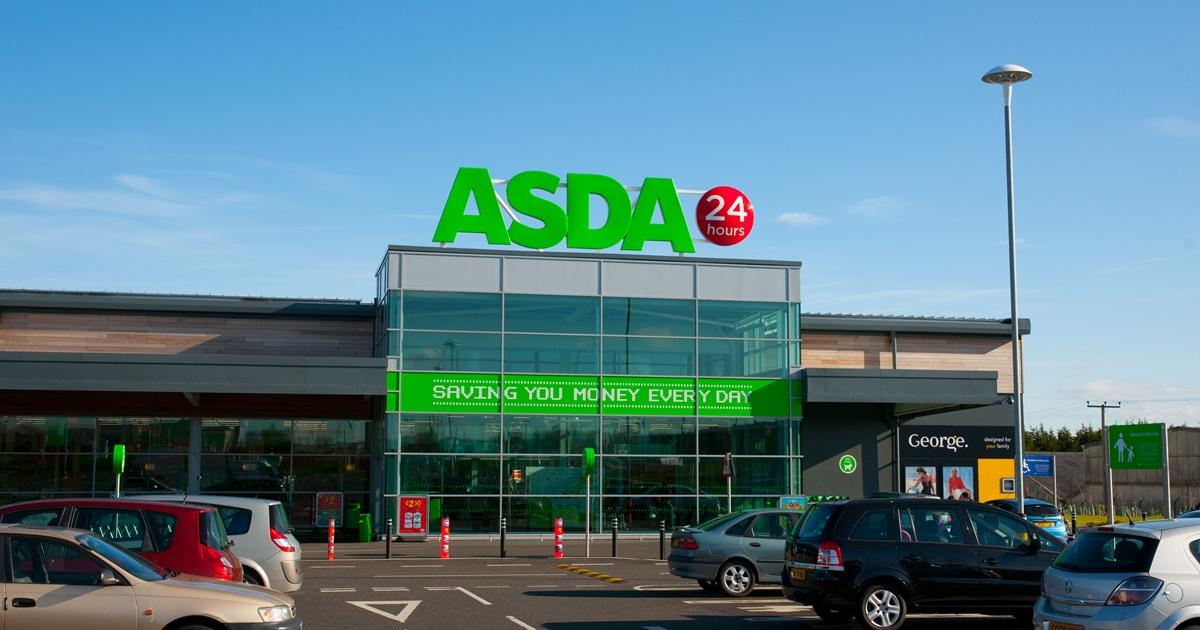
Asda announced it will be extending delivery by up to two hours at selected stores for customers ordering through Deliveroo, Just Eat, and Uber Eats.
Some branches will now accept orders until midnight instead of the usual 10pm cut-off.
Advertisement
Others will extend deliveries until 11pm, in anticipation of increased demand during the World Cup.
Asda extends delivery hours for customers
Along with the extended hours, Asda has introduced several delivery-only deals aimed at at-home football fans, including two pizzas for £10 and discounted beer promotions through Deliveroo.
Just Eat customers can enjoy up to 50% off selected breakfast items, while Deliveroo users can take advantage of discounts of up to 40% on soft drinks, party food, and other snacks.
Retailers have made these adjustments because FIFA has expanded the tournament from 32 to 48 teams this year.
Advertisement
Additionally, many matches will be televised later than usual, prompting a predicted increase in rapid delivery service demands.
Reportedly, supermarkets expect many fans to watch matches at home rather than in pubs or fan zones.
Beyond the football-focused promotions, Asda has tapped into one of the year’s most significant food trends by launching its own Cereal Milk Cookies.
These have been introduced at £2.24 for a pack of four, forming part of a broader bakery range.
The bake-at-home treats have previously developed a considerable following on social media, with one enthusiast referring to them as the “best on the market”.
Advertisement
The cookies are making a comeback in an expanded bakery range which includes 16 new patisserie-themed products inspired by food that has gained popularity on social media platforms.
Will you be taking advantage of Asda’s extended delivery hours? Let us know in the comments.
The only fan zone in the US host city has been shut down to bad weather, according to a spokesperson.
The FIFA Fan Zone in Boston has been shut down amid fears over stormy weather.
Advertisement
The fan zone at Boston City Hall Plaza – the only fan zone in the city – will be closed on Thursday, June 18.
A spokesperson for FIFA Fan Festival in Boston said the official World Cup spot is shut due to bad weather.
The spokesperson said: “Due to anticipated inclement weather conditions, the FIFA Fan Festival Boston at City Hall Plaza will be closed today, June 18.
“It’s our priority to ensure the safety of fans, staff, volunteers, and emergency services personnel.
Advertisement
“Additional operational updates will be shared as needed.”
This is a breaking news story. Follow along for updates.
Get Daily Record Premium for just £1 per month in exclusive offer to celebrate the world cup. Click HERE.
Achieving the perfect jammy egg can be a bit of a challenge
When it comes to breakfast, eggs are a popular choice for many Brits. Whether you’re tucking into a full English fry-up, avocado on toast, pancakes or crumpets, eggs provide a tasty accompaniment and are rich in healthy fats and protein.
Advertisement
Boiling them is one of the easiest preparation methods, but getting the perfect result is all about timing. While hard-boiled and runny eggs are fairly simple to master, nailing that ideal jammy yolk can prove far more challenging.
Thankfully, a food expert at Good Food has shared one crucial step that home cooks should take to nail the perfect jammy egg every single time.
What you need to do
The essential tip that the expert emphasises is to make sure the eggs are at room temperature instead of coming straight from the fridge. This allows the eggs to cook more uniformly and minimises the chance of cracking.
Placing a fridge-cold egg directly into boiling water can cause the shell to crack owing to the abrupt temperature shift, potentially compromising both the texture and the cooking duration needed to produce a perfectly jammy yolk.
How to make a jammy egg
To prepare perfectly jammy eggs, begin by filling a medium-sized saucepan with water and bringing it to a rolling boil. Next, gently lower the eggs into the boiling water using a spoon and cook them for approximately eight minutes to obtain a softly set, jammy centre.
Once the timer sounds, promptly move the eggs to a bowl of cold water to halt the cooking process and make peeling easier. After a minimum of three minutes in cold water, remove your eggs, peel them, and serve.
Exact cooking times for boiled eggs
For a runny egg that’s ideal for dipping toast, cook it for five minutes to achieve a just-set white and a flowing yolk.
If you prefer a slightly firmer egg, six minutes will deliver a liquid yolk with a softly set white that still has a touch of wobble.
A soft-boiled egg with a rich, sticky yolk can be accomplished in seven minutes, making it a favourite option for salads and breakfast dishes.
For a traditional hard-boiled egg, leave it in the water for 10 minutes, until both the white and yolk are completely set but still moist.
Advertisement
Alternatively, preparing a fried egg is nearly as straightforward. For crispy edges and a gooey centre, start cooking by warming the oil in your frying pan over a medium-high heat until it starts to shimmer.
Carefully crack the eggs straight into the hot oil and season liberally with salt and pepper. Tilt the pan towards you so the oil gathers at the edge, then use a spoon to repeatedly baste the egg whites with the bubbling oil.
Avoid the yolks to ensure they stay perfectly runny. Within just 45 seconds to one minute, the eggs will puff up nicely, developing crisp edges and fully set whites. Transfer to a plate and serve immediately.
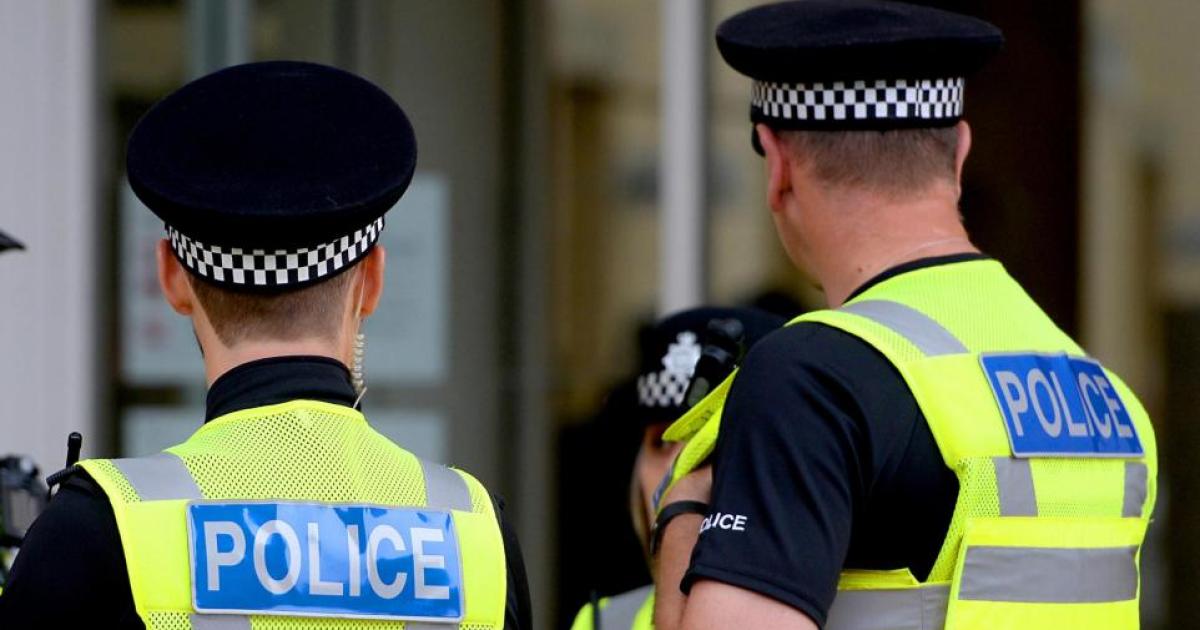
Officers in Durham pulled over drivers at random during Thursday (June 18) morning’s rush hour and carried out roadside breath tests, warning that celebratory drinking the night before could leave motorists over the limit by morning.
Sergeant Sarah Manser, of Durham Constabulary, said: “We come out this morning to give that message that alcohol still might be in your system the next morning.
“We’ve had a couple this morning already who haven’t blown over the limit, but they have had alcohol in the system.
Advertisement
“Please just don’t drink-and-drive; it’s just as simple as that.”
While no drivers tested positive for being over the legal limit, one was shocked to find they were close to the limit.
The targeted checks come as police warn that evening kick-off times, due to the World Cup being held in North America, increase the risk of motorists being unfit to drive the following day.
Sgt Manser continued: “If you do feel affected the next day, just don’t risk it.
Advertisement
“Don’t get in the car, don’t make that decision, because it does absolutely rip lives apart.”
Durham Constabulary highlighted that crashes increase by around 20 per cent on England match days.
Driver Louis Renwick, who passed the test with no alcohol in his system, said: “There are too many deaths on the roads through drink-driving.
“More power to the police, all these drunk drivers should be taken off the road.”
In her personal statement, the victim said “the trauma does not end with the conviction; I live with the consequences every day”
A “predatory” rapist, who ignored a woman’s pleas for him to stop, has been sent to jail. Lindsey Smith, of Coolidge Gardens, Cottenham, would regularly pressurise the woman for sex.
Advertisement
On two occasions between December 14 and 17, 2024, he ignored her pleas to stop and raped her. Smith was arrested on February 4, 2025, after the victim came forward to police.
The 31-year-old denied the allegations but was found guilty of two counts of rape, sending indecent communication and escaping from lawful custody following a trial at Peterborough Crown Court. On Friday, June 12, he was sentenced to six years in prison at Huntingdon Law Court.
In her personal statement the victim said: “The trauma does not end with the conviction; I live with the consequences every day”.
DC Lloyd Davies said: “Firstly, I would like to acknowledge the incredible courage of the victim for coming forward. It is thanks to her bravery Smith’s predatory behaviour has been exposed.
Advertisement
“I would encourage anyone who thinks they might’ve been a victim of a sexual offence to contact us. We take all reports very seriously and have a dedicated team of specially trained officers ready to investigate allegations promptly, fully and professionally, and a network of partner agencies and support services to offer assistance and support.”
















































You must be logged in to post a comment Login