MOON by Simaudio has expanded its Compass Collection with the new MOON 491 Network Player/Preamplifier and MOON 461 Power Amplifier, a Canadian-made streaming and amplification pairing built for listeners who want one serious high-end system without turning the rack into a wiring nightmare.
Designed and handcrafted just outside Montréal, the 491 combines a network player, preamplifier, DAC, MM/MC phono stage, and headphone amplifier in one chassis, while the 461 delivers 150 watts per channel and borrows MOON’s distortion-cancelling amplifier architecture from the flagship North Collection.
The timing feels right. MOON has built a reputation for delivering strong performance for the money in the high-end category, and this new pairing arrives with the same kind of momentum currently rattling Bell Centre glass during the Canadiens’ unexpected 2026 Stanley Cup Playoffs run.
“As a pairing, the 491 and 461 represent a complete expression of the Compass Collection,” said Etienne Gautier, CCO of Simaudio. “Together they deliver outstanding musical performance and system flexibility, while also forming a visually striking statement that will look exceptional in any environment, from contemporary interiors to traditional spaces. The MOON 491 and MOON 461 are the True Direction.”
Advertisement
That “complete expression” part matters. The 491 is not just another streamer with a nice faceplate. With MiND 2 streaming, Roon Ready support, AirPlay, Bluetooth, Qobuz Connect, TIDAL Connect, Spotify Connect, analog and digital inputs, adjustable MM/MC phono support, headphone output, and MOON’s Hybrid Power supply, it is clearly designed to be the hub for $6,500 USD.
Add the 461 power amplifier, with MOON Hybrid Power and MDCA technology, and the Compass Collection starts to look less like a lifestyle stack and more like a proper no-nonsense two-box high-end system with Canadian muscle. No poutine theatrics required. This is more like a smoked meat sandwich from Lester’s with fries and a hearty karnatzel on the side: straightforward, satisfying, and built to do the job without asking for applause.
MOON 491 Network Player/Preamplifier: One Box to Run Streaming, Vinyl, Digital and Headphones
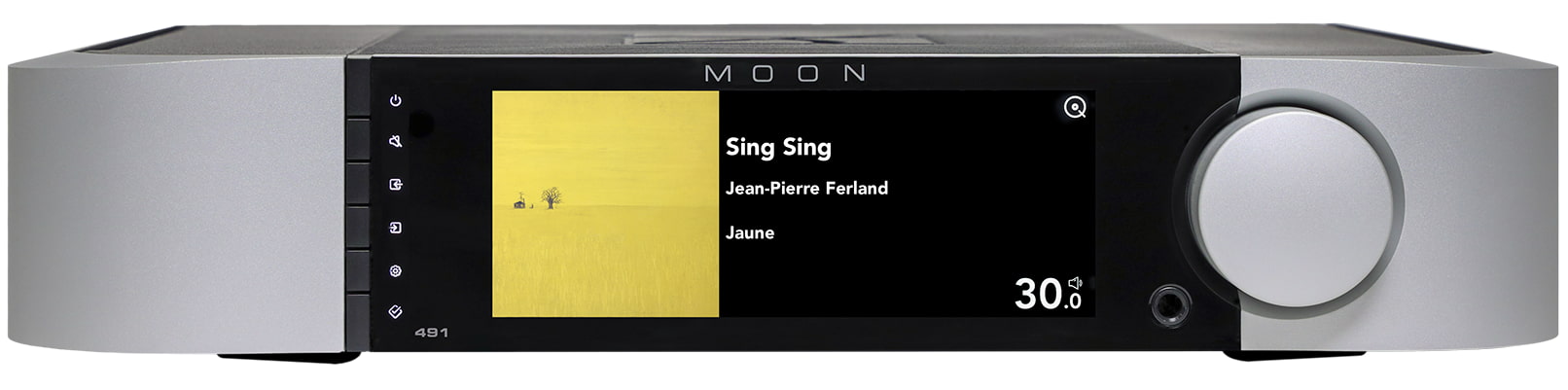
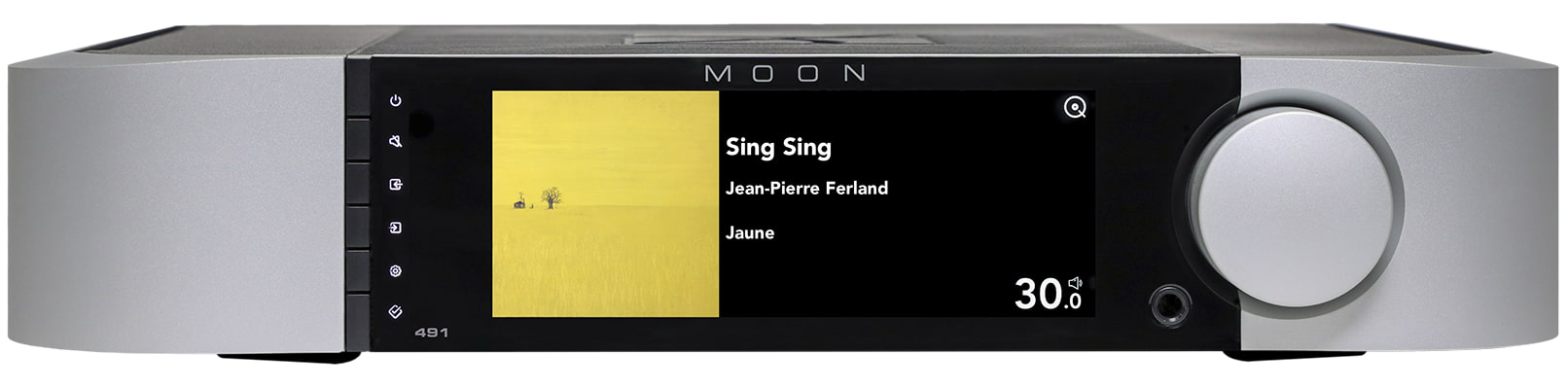
MOON 491
The MOON 491 Network Player/Preamplifier is designed to be the control center of a serious two-channel system. It combines a network player, preamplifier, DAC, MM/MC phono stage, and headphone amplifier in one chassis, which means it can manage streaming, digital sources, analog components, turntables, headphones, and system volume without requiring five separate boxes and a weekend with cable labels.
At the center of the 491 is MOON’s proprietary MiND 2 streaming platform. It works as a UPnP renderer, a Roon Ready endpoint, and supports AirPlay and Bluetooth. The MOON MiND Controller app for iOS and Android provides access to Qobuz, TIDAL, Deezer, and Spotify, while direct platform support includes Qobuz Connect, TIDAL Connect, and Spotify Connect. That gives users multiple ways to stream without being forced into one control path. Having used MiND 2 at AXPONA 2026, I can attest to its relatively easy learning curve.
The 491 also takes vinyl seriously. Its built-in phono stage supports both MM and MC cartridges, with adjustments for loading, capacitance, gain, and equalization through the on-screen menu.
Advertisement
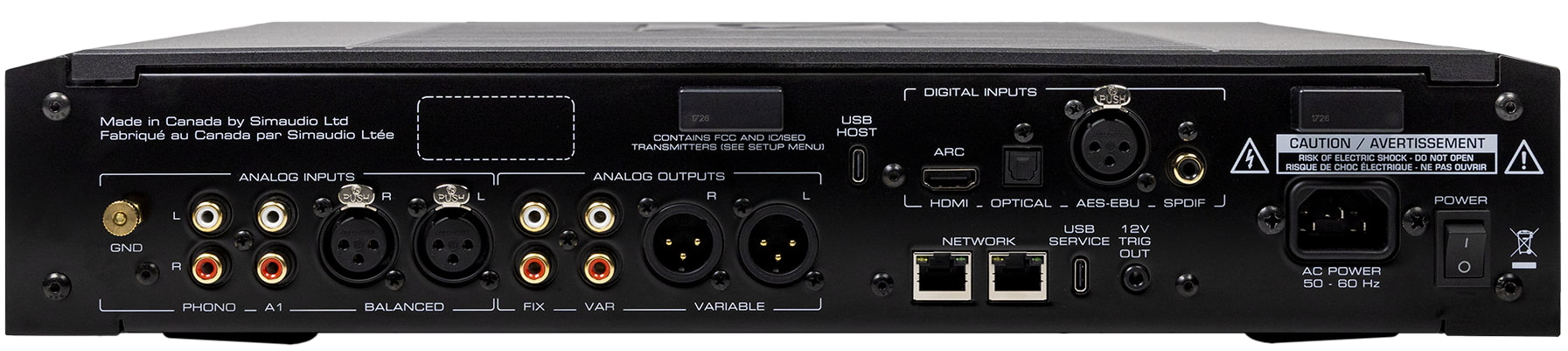
Analog connectivity includes one RCA line-level input, one balanced XLR input, and one phono input. Outputs include fixed and variable RCA, variable balanced XLR, and a 1/4 inch headphone jack. The large color display shows volume, album art, and track information, while control is handled through the app, front-panel buttons, and the aluminum CRM-4 remote.
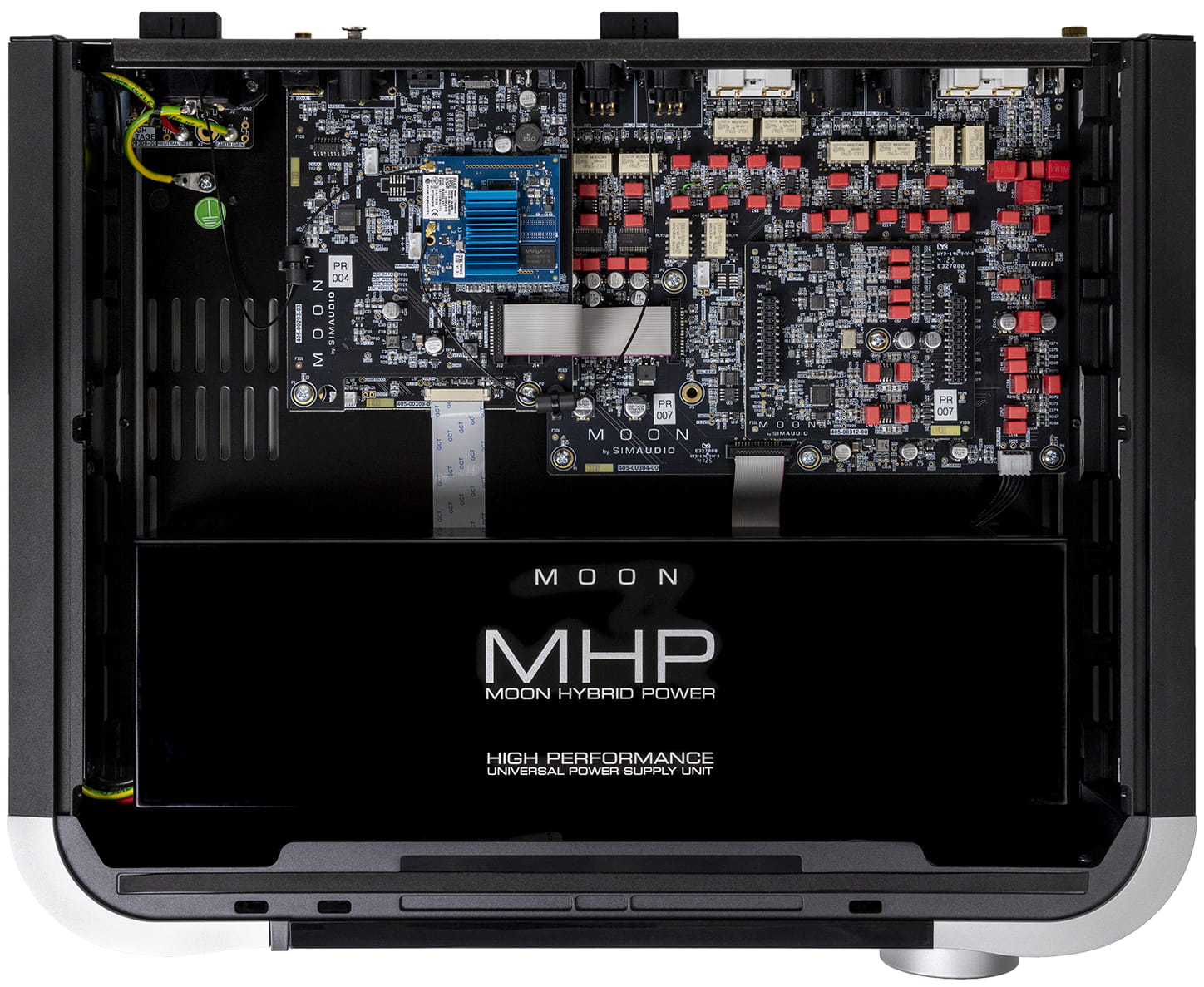
MOON’s Hybrid Power supply is also part of the package, blending linear and switch-mode power supply technologies to provide stable, low-noise DC power. According to MOON, the design operates beyond the audio band to avoid contaminating sensitive audio circuits, helping lower the noise floor and improve dynamic range.
Digital inputs: HDMI ARC, S/PDIF, Toslink, AES-EBU
Ethernet: 2 inputs
Input sensitivity: 0.3 V to 5 V
Input impedance: 22 kΩ
Gain: 10 dB
Frequency response: 10 Hz to 200 kHz, +0.5/-3.0 dB
Total harmonic distortion + noise: 0.0004%
Intermodulation distortion: 0.0004%
Dimensions: 16.9 x 3.5 x 14.1 inches / 42.9 x 8.7 x 35.7 cm
Shipping weight: 20 lbs / 9 kg
Finish: Black chassis with bead-blasted aluminum cheeks in black or silver
Remote: CRM-4 aluminum remote control
Display: Large color display with volume, album art, and playback information
MOON 461 Power Amplifier: Serious Power for the Compass Collection
The MOON 461 Power Amplifier is the dedicated power amplifier in Simaudio’s Compass Collection. It is designed to take the signal from a preamplifier and drive loudspeakers with high output, low distortion, and stable performance across different speaker loads. It is the most powerful model in the Compass Collection, rated at 150 watts per channel into 8 ohms, 300 watts per channel into 4 ohms, and 450 watts in mono into 8 ohms.
At the center of the 461 is MOON’s proprietary MDCA, or MOON Distortion-Cancelling Amplifier architecture, which was first developed for the flagship North Collection. The design is intended to reduce distortion and improve linearity, helping the amplifier preserve clarity, accuracy, and control as output demands increase.
Advertisement
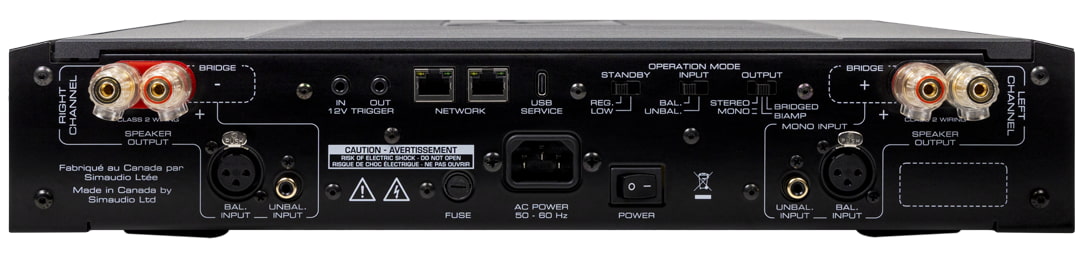
The 461 also uses two MOON Hybrid Power supply modules, with one dedicated to each channel. That dual-mono layout is designed to improve channel separation, reduce crosstalk, and deliver stronger current into lower-impedance loudspeakers. A Stereo / Bridged Mono / Bi-Amping Mono mode switch adds useful system flexibility for listeners who may want to run a single amplifier now and expand later.
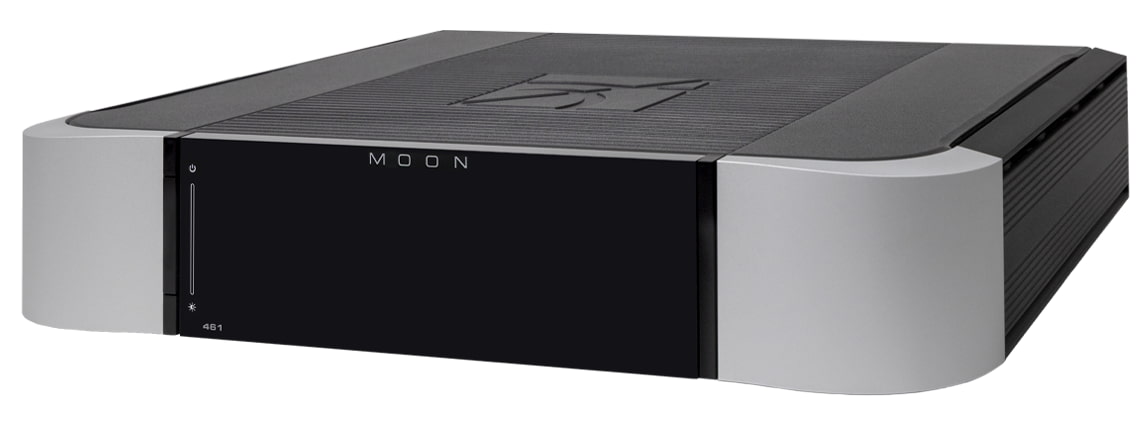
Visually, the 461 follows the Compass Collection design with a black chassis, bead-blasted aluminum cheeks in black or silver, and a clean front panel. It is not flashy, which is probably the point. This is a power amplifier, not a Cirque du Soleil audition. Think more Montreal Metro in February: not glamorous, but it moves a lot of current and usually gets you where you need to go.
MOON 461 Power Amplifier Specifications:
Product type: Analog stereo power amplifier
Collection: MOON Compass Collection
Amplifier architecture: MOON Distortion-Cancelling Amplifier architecture, or MDCA
Power supply: Two proprietary MOON Hybrid Power supply modules
Power supply layout: Dual-mono implementation, with one MHP module dedicated to each channel
Total harmonic distortion + noise at 150 W: 0.003%
Damping factor: 425
Power consumption, idle: 35 W
Power consumption, full power standby: 34 W
Power consumption, low power standby: 1 W
Dimensions: 16.9 x 3.5 x 14.5 inches / 42.9 x 8.7 x 36.8 cm
Shipping weight: 24 lbs / 11 kg
Finish: Black chassis with bead-blasted aluminum cheeks in black or silver
The Bottom Line
The MOON 491 Network Player/Preamplifier and MOON 461 Power Amplifier make the most sense as a clean, high-performance two-box system for listeners who want modern streaming, vinyl playback, DAC functionality, headphone listening, and serious loudspeaker control without building a rack that looks like Bell Centre after triple overtime.
The 461 is the matching muscle. With 150 watts per channel into 8 ohms, 300 watts into 4 ohms, and 450 watts in mono, it gives the Compass Collection real amplifier authority. MOON’s MDCA amplifier architecture, borrowed from the flagship North Collection, and dual MOON Hybrid Power modules add some meaningful trickle-down engineering. The stereo, bridged mono, and bi-amping modes also make it more flexible as a long-term system anchor.
What is missing? The 491 is not a full integrated amplifier, so passive loudspeakers still require a power amplifier like the 461. Otherwise, the feature set is quite complete: HDMI ARC, four digital inputs, two Ethernet jacks, MiND 2 streaming, Roon Ready support, Qobuz Connect, TIDAL Connect, Spotify Connect, MM/MC phono, DAC, headphone output, and preamplifier functionality.
Advertisement
The only obvious omission from the supplied information is any confirmation of higher-resolution Bluetooth codec support such as LDAC, aptX HD, or aptX Lossless.
Pricing & Availability
This pairing is not entry-level, but it is very MOON: designed and handcrafted in Canada, backed by a 10-year warranty, and built for listeners who want long-term performance rather than feature churn.
SpaceX has launched the upgraded third version of its Starship rocket for the first time, though the test launch did not go perfectly for Elon Musk’s spaceflight company.
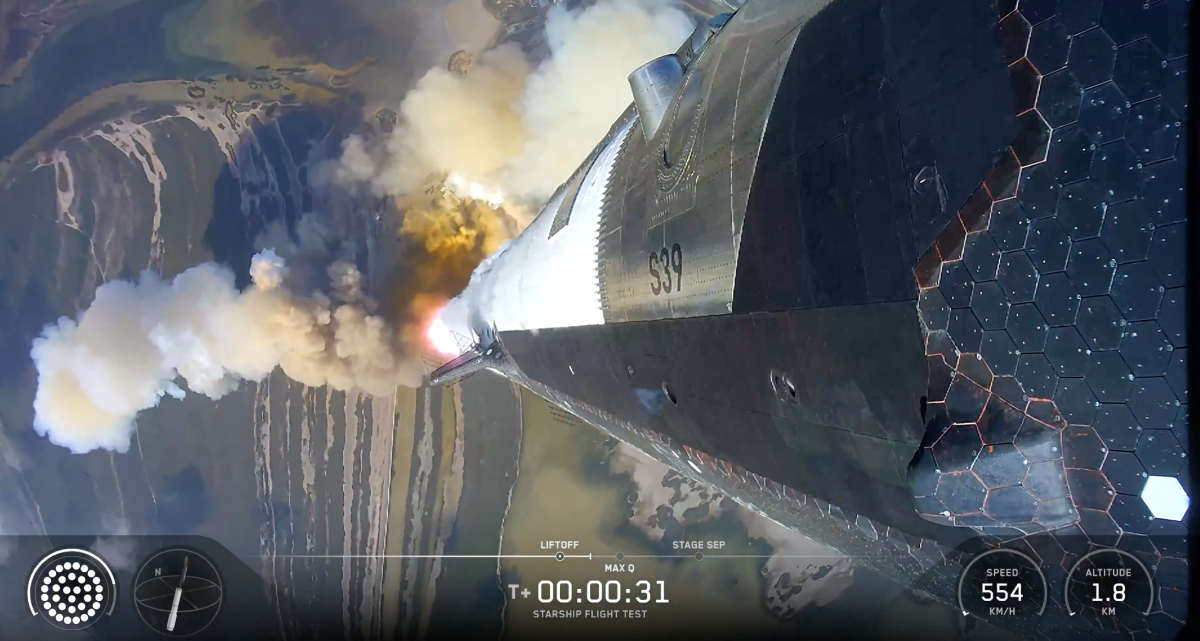
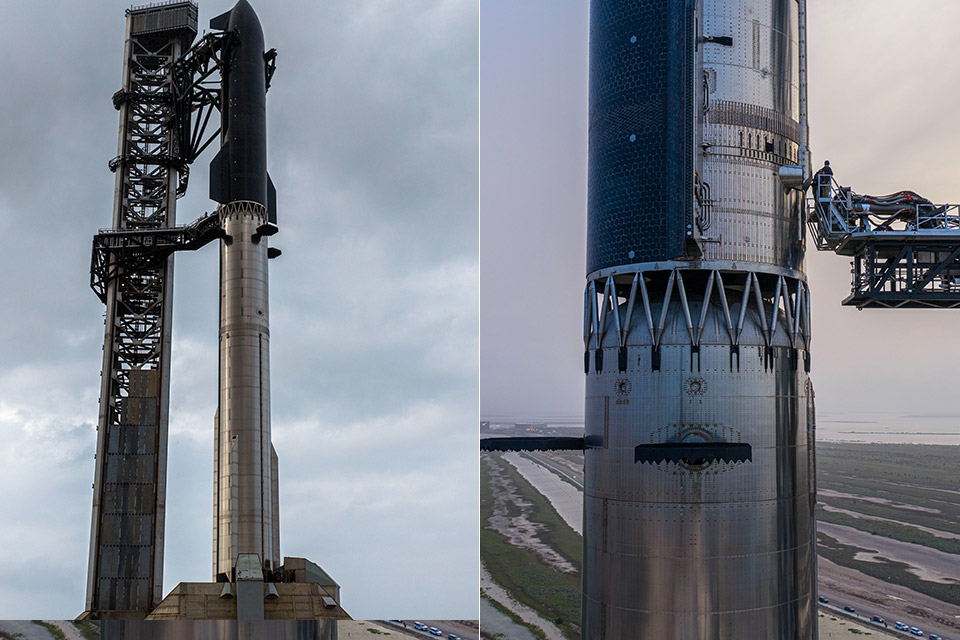
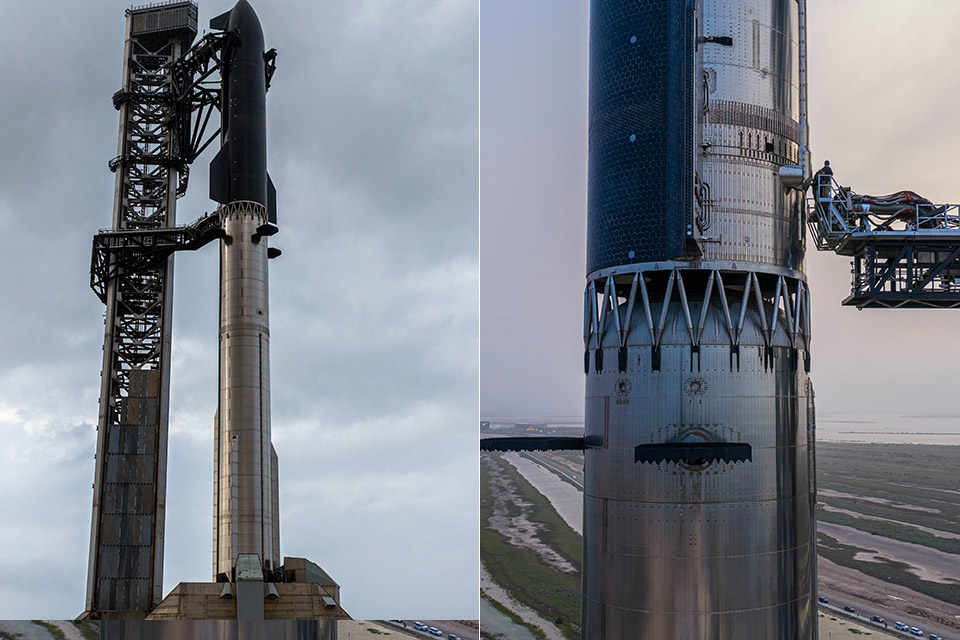
The 407-foot rocket — the most powerful ever built — lifted off from SpaceX’s company town Starbase, Texas, at 5:30 p.m. local time. Just a few minutes later, the upper stage ship separated from the Super Heavy booster and continued on into space.
The booster pitched away from the Starship vehicle and headed back to Earth, where it was supposed to perform a simulated landing in the Gulf of Mexico. But the booster’s engines did not properly re-ignite for the sustained burn that is meant to deliver it back to the launch site. The booster then tumbled down to the water, where it likely exploded.
Starship, meanwhile, lost one of its six Raptor engines as it ascended into space. But it successfully deployed all 20 of the Starlink satellite simulators along with two modified Starlink satellites meant to record footage of Starship’s exterior. Roughly one hour after liftoff, Starship simulated a landing in the Indian Ocean, before tipping over and exploding as expected.
Advertisement
While it didn’t go exactly according to plan, this was an important test launch for SpaceX. It was the first real shakedown of the upgraded Starship V3 hardware, which has been in development for months. The company was also testing out an all-new launchpad at Starbase that it’s been developing and building for years.
The test launch also comes at a historical inflection point for SpaceX as a company. Its IPO filing was made public this week, and SpaceX is expected to list on the Nasdaq in mid-June. The IPO is reportedly supposed to raise around $75 billion for SpaceX, which the company plans to use to fuel further development, massive AI ambitions, and to pay off some of the debt associated with xAI and Musk’s social media company X. (That means this could also be the last Starship test launch to happen without a stock market reaction.)
SpaceX has spent years and billions of dollars developing Starship, which it sees as crucial to its mission of making life multi-planetary. The company plans to use Starship for NASA missions to the moon, and eventually Mars. But the big job it needs to perform in the near-term is delivering more advanced Starlink satellites to Earth orbit, as Starlink is the only profitable part of SpaceX’s business.
This was the first Starship flight since October 2025. SpaceX had planned to attempt launching Starship V3 earlier, but one of the first upgraded boosters suffered an explosion during testing in November. SpaceX first attempted the launch on Thursday but ultimately had to delay it as a hydraulic pin on the launch tower arm refused to retract, according to Musk.
Advertisement
This new version of Starship features SpaceX’s third-generation Raptor engines, which have more thrust and a far simpler design. The new booster is designed for faster takeoffs and easier catches by the launch tower.
This story has been updated to include information about Starship’s simulated landing.
When you purchase through links in our articles, we may earn a small commission. This doesn’t affect our editorial independence.
On Friday, the ultrafast-fashion giant Shein finalized its acquisition of Everlane, a US clothing retailer that made its name by promising “radical transparency” into how its clothes were made. Neither company disclosed the price of the deal, but Puck reported last weekend that it clocked in at $100 million.
Founded in 2010, Everlane became synonymous with a certain strain of millennial consumerism that was supposed to be the exact opposite of Shein. It mainly sold elevated basics, and told a generation of anxious and high-minded shoppers that they could feel morally good about buying yet another pair of plain ballet flats or black high-waisted skinny jeans. Shein, by contrast, became notorious by flooding the internet with astonishingly cheap, trendy clothing produced at enormous scale. It has been criticized for years for alleged poor labor practices.
Given how differently Shein and Everlane positioned themselves, many people online felt the acquisition fell somewhere between darkly ironic and outright dystopian. The fashion writer Derek Guy, better known online as the “menswear guy,” articulated the vibe in a post on X: “Under Shein,” he wrote, “Everlane’s ‘radical transparency’ means you get to read about the small child making your boring gray crewneck sweater.”
Really, though, the deal makes perfect sense. In the long run, it may end up looking like a preview of where Chinese consumer companies are heading next.
Advertisement
Chinese ecommerce giants conquered the global market largely by selling cheap stuff at eye-watering scale. Companies like Shein and Temu thrived in part because of the “de minimis” loophole, a US trade rule that allowed packages worth under $800 to enter the country tariff-free and with relatively little customs scrutiny. That system became the backbone of a new era of cross-border ecommerce, enabling Chinese companies to ship cheap stuff directly to American consumers faster and more efficiently than many traditional retailers could manage.
But after US president Donald Trump imposed sweeping new tariffs on Chinese imports and ended the de minimis exemption, the economics underpinning that model began to falter. Chinese companies quickly realized they could no longer rely solely on flooding Western markets with bargain-priced products. If they wanted to keep growing internationally, they needed something more durable: a good old-fashioned brand.
Shein buying Everlane, however culturally cursed it may appear, is part of a broader trend already unfolding across Chinese commerce and manufacturing. Increasingly, Chinese companies are trying to move beyond anonymous low-cost production and toward owning recognizable global brands associated with quality, lifestyle, and status.
One of the clearest examples comes from Temu’s parent company, Pinduoduo. In March, the company announced a major new initiative called New PinMu, a multibillion-dollar effort designed to help Chinese manufacturers build premium international brands. The project is part of a larger strategic vision outlined by Pinduoduo co-CEO Jiazhen Zhao, who has been hyping up the company’s ambitions to elevate manufacturing standards and create pathways for Chinese factories to move up the value chain.
Advertisement
Meanwhile, Luckin Coffee, a Chinese coffee chain that has become one of Starbucks’ biggest rivals, recently acquired Blue Bottle, the cultish specialty coffee brand that helped define American third-wave coffee culture. Anta Sports, a Chinese sportswear giant that began largely as a domestic sneaker company, has spent years buying into premium global sportswear brands, including controlling stakes in Arc’teryx and Salomon.
The trend also reflects broader political pressures inside China. The government has become increasingly critical of the brutal price wars and hypercompetition that dominate industries like ecommerce and electric cars, a phenomenon often referred to as “involution.” Beijing now wants companies to focus more on sustainable growth, higher-end manufacturing, and global competitiveness rather than an endless race to the bottom.
Wingtech Technology has filed a lawsuit against its own subsidiary, Nexperia, in a Chinese court. The case, lodged at the Dongguan Intermediate People’s Court, seeks at least 8 billion yuan, roughly $1.1 billion, in damages. It is the first major legal challenge to a European government’s forced seizure of a Chinese-owned chipmaker. The dispute centres […]
When you think of Memorial Day sales, you probably think of mattresses and other home goods. And while those items are definitely discounted, now is also a good time to purchase tech. Personally, I’m not buying anything right now unless it’s discounted—and fortunately many of our top picks are. Whether you’re shopping for a power bank, a new pair of headphones, or some other gadget, I’ve rounded up the best Memorial Day deals for your perusal. We’ll update this article again over the weekend.
Updated May 22: We’ve checked prices, removed expired deals, added ten new deals, and ensured accuracy throughout.
WIRED Featured Deals:
Advertisement
Sony WH-1000XM5 for $248 ($152 off)
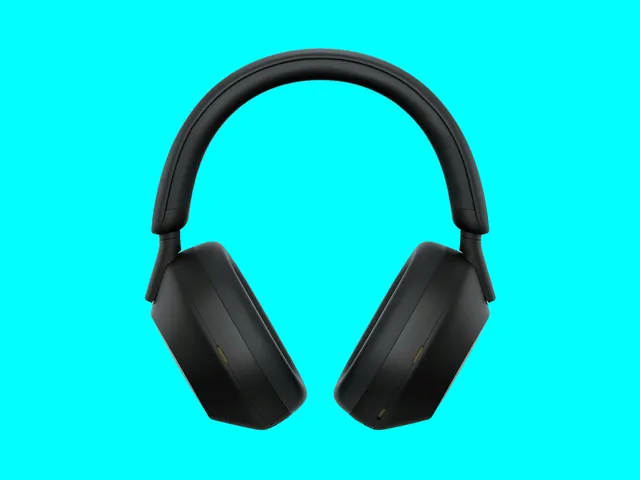
The Sony WH-1000XM5 have a very frustrating name, but they’re the predecessor to our favorite wireless headphones, and they’re still an excellent pick if you don’t want to shell out for the new WH-1000XM6. They go on sale frequently, but rarely drop this low in price, which comes within $5 of their all-time low. If you’re in the market for over-ear headphones, they’re hard to beat. They’re comfortable, portable, lightweight, and stylish, and they’ll make your music sound great no matter what you like to listen to.
In the latest sign of these AI-heavy times, the National Transportation Safety Board temporarily removed access to its docket system after discovering that voices of pilots who were killed in a UPS plane crash last year had been re-created using AI and were circulating on the internet.
The NTSB is prohibited by federal law from including cockpit audio recordings in its docket system, which otherwise contains troves of data on investigations and has historically been open to the public. But the accident docket for this flight included a spectrogram file of the voice recorder. A spectrogram uses a mathematical process to turn sound signals, including low and high frequencies, into an image.
Scott Manley, a popular YouTuber whose channel combines physics, astronomy, and video games, noted on X that it could be possible to reconstruct audio from the megabytes of data encoded in that image.
And that’s what happened. People took the spectrogram, along with the publicly available transcript, to create approximations of the cockpit voice recorder audio from UPS Flight 2976 in Louisville, Kentucky, according to the NTSB. They used AI tools like Codex, according to posts on social media.
Advertisement
The agency restored public access to the docket system on Friday but kept 42 investigations closed pending review — including the one related to Flight 2976.
Freshly sliced pepperoni is delivered via conveyer belt onto a pizza being assembled by a Picnic pizza-making robot. (GeekWire File Photo)
Picnic, the 10-year-old Seattle food automation startup that set out to revolutionize the production of pizza with robotics, has shut down and liquidated its assets.
According to legal documents and an email to creditors and investors, Picnic was unable to pay its debts and on May 11 executed a General Assignment for the Benefit of Creditors, a state-law process that allows an insolvent company to liquidate its assets outside of bankruptcy. A Santa Monica, Calif.-based liquidator, CMBG Advisors Inc., was named to handle the wind-down.
“CMBG will be working to sell off any remaining company assets and intends to distribute any cash proceeds after expenses to creditors,” stated the email, which was seen by GeekWire.
In fact, a buyer for those assets and Picnic’s intellectual property has since been found, said James Baer, founder and president of CMBG, speaking via phone Friday afternoon.
“I want to be respectful of privacy issues, but I will disclose that we did sell the company,” Baer said. He declined to reveal the name of the buyer, the purchase price or how any of the assets might be used.
Advertisement
The development marks a dramatic turn for a startup that raised about $50 million and was placing its pizza-making robots in stadiums, universities, and big-box retailers across the country. As of Friday, Picnic’s website was still live, touting its most recent funding round.
Founded in 2016 by mechanical engineer Garett Ochs as Otto Robotics and then Vivid Robotics, Picnic incorporated as Picnic Works, and set out to tackle one of the food industry’s most persistent challenges: the high cost and inconsistency of manual food preparation. Microsoft co-founder Paul Allen’s Vulcan Capital was among those that funded the company’s seed round.
Its signature product, the Picnic Pizza Station, could help a single employee produce up to 100 customized 12-inch pizzas per hour by automating the topping process — a pitch aimed squarely at high-volume food service operations struggling with labor costs and turnover.
Former Picnic CEO Clayton Wood at the company’s booth on the CES show floor in 2020. The Seattle startup and its pizza-making robot were making pizzas for attendees throughout the week. (GeekWire File Photo)
GeekWire first saw and tested the robotic pizza maker in 2019 as the company, led at the time by CEO Clayton Wood, emerged from stealth mode at its headquarters in Seattle’s Interbay neighborhood.
Picnic continued to raise funding and seek new customers over the next few years with Wood at the helm. The pandemic accelerated demand for carry-out and delivery as food service was reimagined. In 2021, the startup raised $16 million and inked a partnership with Seattle’s Ethan Stowell Restaurants. In 2022, a partnership with Domino’s tested robotic pizza assembly.
Advertisement
“Right now we’re really excited about some of the customers we’re talking to across all kinds of segments,” Wood said at the time. “We’re looking at everything — convenience stores, branded pizza, large brands in pizza, ski resorts, theme parks, grocers, managed food service. We’re jazzed.”
By 2023, Picnic had grown to about 100 employees, but it ran into economic headwinds, struggled to raise more cash, and was forced to conduct layoffs. Wood stepped down as CEO that year.
Reached Friday, Wood recalled Picnic being “caught in the squeeze” between a free-money era of 2018-2019 and 2022, “when the bottom dropped out of the market.”
The company brought on new CEO Michael Bridges in May 2023 and managed to attract $5 million in new financing, with backing from Unlock Venture Partners, the firm co-led by longtime Seattle-area entrepreneur and investor Andy Liu.
Advertisement
“Everything they did after that was happening in some kind of stealth mode, which was bizarre to me,” Wood said. “Because everything I was doing was trying to promote it and make it famous.”
Bridges lasted about two years and was gone in July 2025.
Last September, another new CEO came aboard — Valeri Inting — who had her sights set on building a “hospitality-first automated pizza chain,” with a pop-up planned for New York City earlier this year. But it never happened.
The former Picnic facility, on the second floor at R&D Interbay, a flexible workspaces development in Seattle, on Friday. (GeekWire Photo / Kurt Schlosser)
On Friday, GeekWire visited R&D Interbay, a flexible workspaces development in Seattle’s industrial Interbay neighborhood where Picnic’s headquarters were previously located.
The second-floor space was empty. There was no lingering smell of robotic pizza in the air.
Advertisement
Other tenants in the building recalled Picnic packing up several months ago. One remembered tasting pizzas from time to time, and another said the trash bins were full of “interesting materials” such as motors and other components after the move-out.
Lee Kindell, owner and head chef at Moto Pizza, gets ready to catch one of his pies as it emerges from a Picnic Pizza Station at his Belltown location in 2023. (GeekWire File Photo / Kurt Schlosser)
Among those left in the lurch by the demise of Picnic was Lee Kindell, owner and chef at Seattle’s Moto Pizza and an evangelist for technology in the kitchen. Moto operates eight Seattle locations and is expanding in California.
Kindell was one of Picnic’s most enthusiastic early customers, saying in 2023 that “robotics is the future of food” as he showed off a Pizza Station at his Belltown location. He told GeekWire this week that he actually wanted to buy Picnic when he first learned of the company’s financial troubles.
When the end finally came, he said, he was left holding a $250,000 “robot aquarium” — his term for the idle Picnic machines now sitting in his restaurant.
“I was so pissed I started my own robot company,” he said, referencing Motobotics, a new and separate entity from Moto Pizza, to build his own pizza-making machines. He’s partnering with the Igor Institute and Fresh Consulting, which is part of the Northwest Robotic Alliance.
Advertisement
But he still has his eye on Picnic — or whatever it is next. Of the mystery buyer, he said, “I want to know if they’re just going to use the IP, or if they’re going to try to resurrect Picnic.”
SpaceX lifted its upgraded Starship V3 rocket from the pad at Starbase in Texas late this afternoon for its first full test flight. At 407 feet tall and carrying more thrust than any rocket before it, the vehicle rose on 33 engines in the Super Heavy booster and six in the upper stage. One booster engine failed to ignite at the start, yet the stack cleared the tower cleanly and kept climbing.
The sound of an engine roaring on the coastal flats filled the air as the rocket began to accelerate. Only a few minutes in, the stages separated from each other high above the Gulf. The upper Starship ship continued to ascend, while the booster abruptly reversed course and returned to Earth. SpaceX had hoped to gently guide the booster back down to the Gulf’s surface with a controlled return and a soft landing, but the main brake burn engines failed to relight properly. So the booster tumbled through the air before colliding with the sea and breaking apart.
BUILD AN OFFICIAL NASA ROCKET – Kids prepare to explore outer space with the LEGO Technic NASA Artemis Space Launch System Rocket (42221) building…
3-STAGE ROCKET SEPARATION – Young builders can turn the hand crank to watch the rocket separate in 3 distinct stages: solid rocket boosters, core…
STEM BUILDING TOY FOR KIDS – This educational rocket kit was created in collaboration with NASA and ESA to showcase the authentic system that will…
However, attention quickly moved to the ship that was still on its way up. This one was carrying out a slew of test objectives, not the least of which was the launch of twenty dummy Starlink satellites and two actual ones outfitted with cameras to capture footage of the heat shield as it traveled through the skies. One of the six Raptor engines on board opted to shut down during the ascent, but the other five did a decent enough job to get them up to the height they planned, which was close to 195 kilometers. As they did so, the ship floated free and released each satellite exactly on time before beginning its long, arcing curve out over the Indian Ocean.
Re-entry produced the normal glow of plasma around the ship as it plunged lower into the atmosphere. The flight controllers watched as it flipped and calmed itself down with a succession of small, precise burns. In the final moments, it flopped onto its side in the sea, precisely where the engineers had hoped to land it for this test. Then, guess what? The ship exploded on contact. That was always part of the plan, of course, because the goal was to collect some data without taking too many risks, especially given this was the new hardware’s first trip.
Advertisement
Meanwhile, engineers at Starbase had utilized the flight to test a whole new launch pad configuration. That pad kept its position despite the tremendous liftoff, which was a quiet but significant victory, especially if it will be used for future operations. The entire mission lasted about an hour, from liftoff to splashdown. Earlier, there had been some delays due to a minor hydraulic fault on the tower arm, forcing them to cancel the attempt the day before.
This was the first Starship flight since October of last year, and it marked the introduction of the V3 design. The version has third-generation Raptor engines, which are expected to be more easier to work with and have a faster turnaround. Although the booster did not return and the ship went up in the water, the hardware met a number of key objectives: it separated cleanly, delivered the payload on time, and ran steadily even after one of the engines failed. Now, the teams will review all of the data to see where they can make changes for the next round.
The power of a regular fan, but for personal, portable use, the Dyson HushJet Mini Cool outputs a stream of high-speed air. It’s a little loud on its maximum fan speed, but when you need maximum cooling performance it’s a fair trade-off. Extremely compact and flexible in use, the Dyson HushJet Mini Cool’s fan is effective even on the lowest speed. If you want the most powerful portable fan, this is the one to buy.
Exceptionally powerful
Lowest speed actually useful
Small and flexible
Loud on the higher settings
Key Features
Advertisement
Review Price:
£99.99
Long lasting
Advertisement
Up to six hours’ battery life on the lowest setting
Powerful
Advertisement
Blows air faster than a regular, full-size fan
Introduction
After years of the handheld fan market being dominated by cheap, underwhelming devices, the big boys are here to show how it’s really done. In this case, with the Dyson HushJet Mini Cool, the company has taken everything it knows about making big fans and has distilled that into a tiny, portable model.
Exceptionally powerful, this tiny fan packs a punch, but should it be your travel companion of choice? Check out my full review to find out.
Advertisement
Advertisement
Design and features
Small and light
Simple controls
Decent range of accessories
Given how many people I see carrying portable fans around, it’s a little surprising that it’s taken so long for the bigger fan manufacturers to catch on. First, I had the Shark ChillPill and now I have the Dyson HushJet Mini Cool.
While comparisons between the two devices are inevitable, they’re both slightly different in what they do and how they work. The Shark ChillPill is a slightly larger but more versatile device, which is a fan, mister and cooling pad; the Dyson HushJet Mini Cool is a fan, built with the company’s latest technology to give a powerful jet of air.
Portable devices are often as much about style as they are about performance, so the Dyson HushJet Mini Cool is available in three colour combinations: the pink (Stone/Blush) that I have on review here, plus blue (Ink/Cobalt) and red (Carnelian/Sky).
Image Credit (Trusted Reviews)
It’s a very small device, with a 38mm diameter. That’s an important measurement for Dyson, with the PencilWash and PencilVac both having wands with the same diameter.
Advertisement
Advertisement
At just 210g, the Dyson HushJet Mini Cool is also very light and easy to carry, even more so than the slightly larger ChillPill.
In the hand, the HushJet Mini feels a bit like holding a microphone, easily fitting in your hand when you want to use it.
At the top, you’ll notice the jet-engine-inspired head, which is designed to reduce turbulence and increase air flow. It’s effectively a smaller version of the Dyson HushJet Purifier Compact. This head can be rotated 360°, letting me angle the air where I want it.
Image Credit (Trusted Reviews)
Controls are very simple. There’s a switch to turn the fan on or off, with the Dyson HushJet Mini Cool starting on fan speed one. The +/- buttons can be used to cycle between the five fan speeds, or you can press and hold the + button to temporarily engage the boost mode.
Image Credit (Trusted Reviews)
Advertisement
With the switch set to off, the + button shows battery life via the LEDs (each of the five lights represents 20% of battery power). That’s useful as an indicator, but there’s no way to tell how much battery power is left while the fan is on.
Advertisement
While the fan is an easy-to-use handheld, there are other options, and Dyson includes a Charging Stand, Neck Dock, and Travel Pouch in the box.
Image Credit (Trusted Reviews)
The Neck dock slides around the fan’s body, with the choice to have the controls facing towards your body or away from it. I prefer away, but it’s nice to have the choice.
Image Credit (Trusted Reviews)
Wearing the fan makes a lot of sense, and the rotating head makes it easy to get the air where you want it.
Advertisement
Image Credit (Trusted Reviews)
The Charging stand is a handy desktop accessory that keeps the fan upright so you can use it when you’re not moving.
Image Credit (Trusted Reviews)
Optionally, you can buy a Universal Mount or Grip Clip (for attaching to a bag) if you need more flexibility.
Charging is via the USB-C port on the rear. Use a fast charger, and the 5000mAh battery can be topped up in three hours. Handily, the Dyson HushJet Mini Cool can be used on fan speed one when it’s charging, so you don’t have to stop cooling.
Image Credit (Trusted Reviews)
Advertisement
When travelling, or when not in use, everything can slip into the drawstring travel bag.
Advertisement
Image Credit (Trusted Reviews)
At the bottom of the fan is the air intake, which looks a bit like the one on the Dyson Supersonic. On the Dyson HushJet Mini Cool, you can’t remove the bottom section, but you should use a cloth or brush to clean it down regularly.
Image Credit (Trusted Reviews)
Performance
Decent battery life
Very powerful
Loud on its maximum setting
The Dyson HushJet Mini Cool is exceptionally powerful. While its airflow is more concentrated than that of a regular fan, the airspeed is just as fast, if not faster.
Advertisement
Measuring from 15cm away, on fan speed one I got air flow of 2.6m/s; on the middle speed 5.5m/s; and 8.1m/s on the highest setting; Turbo increased the fan speed to a, frankly, ridiculous 11.3m/s.
That’s a lot more airflow than I got from the ChillPill, which topped out at 4m/s on its maximum setting.
Higher air speeds are useful, as the Dyson HushJet Mini Cool doesn’t have to be as close to you to feel the benefits, and I could run it at lower speeds.
Advertisement
Image Credit (Trusted Reviews)
That’s important when looking at battery life. On the lowest setting, the Dyson HushJet Mini Cool can last around six hours; on its highest setting, it’s around an hour. The Shark ChillPill lasts for 11 hours on its lowest setting, and up to 1.5 hours on its highest.
But, the Dyson HushJet Mini Cool’s middle speed is similar to the ChillPill’s highest speed, and speed one is still highly effective. Overall, then, I think you’ll get similar real-world battery life out of either device.
Advertisement
Although it’s called the HushJet, this fan can get quite loud. On its highest setting, there’s a lot of noise, and I measured it at 78dB from 15cm away. On the middle fan speed, I measured 72.7dB. Things are better on the lowest setting at 60.6dB, but the small space that air comes out of means that a larger fan will be quieter.
Should you buy it?
Advertisement
You want a powerful portable fan
If you want the power of a desktop fan for personal, portable use, this one is a brilliant choice.
Advertisement
If you want more than just a fan, look for a portable one that has different attachments for different jobs.
Final Thoughts
After years of putting up with cheap, horrible portable fans, I feel we’re spoilt for choice with the Dyson HushJet Mini Cool and the Shark ChillPill. Which one’s best will depend on what you want.
Advertisement
The ChillPill is more versatile, with misting and its chill plate giving some different options, but its fan is not as powerful, and it’s bulkier. The Dyson HushJet Mini Cool is slimmer and easier to carry around, and it’s much more powerful, working effectively even on its lowest fan speed. If you want the power of a regular fan in a handheld unit, this is the one to buy.
For alternative options, you can read my guide to the best fans.
How We Test
We test every fan we review thoroughly over an extended period of time. We use industry standard tests to compare features properly. We’ll always tell you what we find. We never, ever, accept money to review a product.
Find out more about how we test in our ethics policy.
Advertisement
Used as our main fan for the review period
We measure the fan speed using an anemometer so that we can accurately compare performance between models
FAQs
How long does the Dyson HushJet Mini Cool’s battery last?
You can get up to six hours on the lowest setting.
Can you use the Dyson HushJet Mini Cool while it’s charging?
Yes, you can use it on fan speed one while charging.
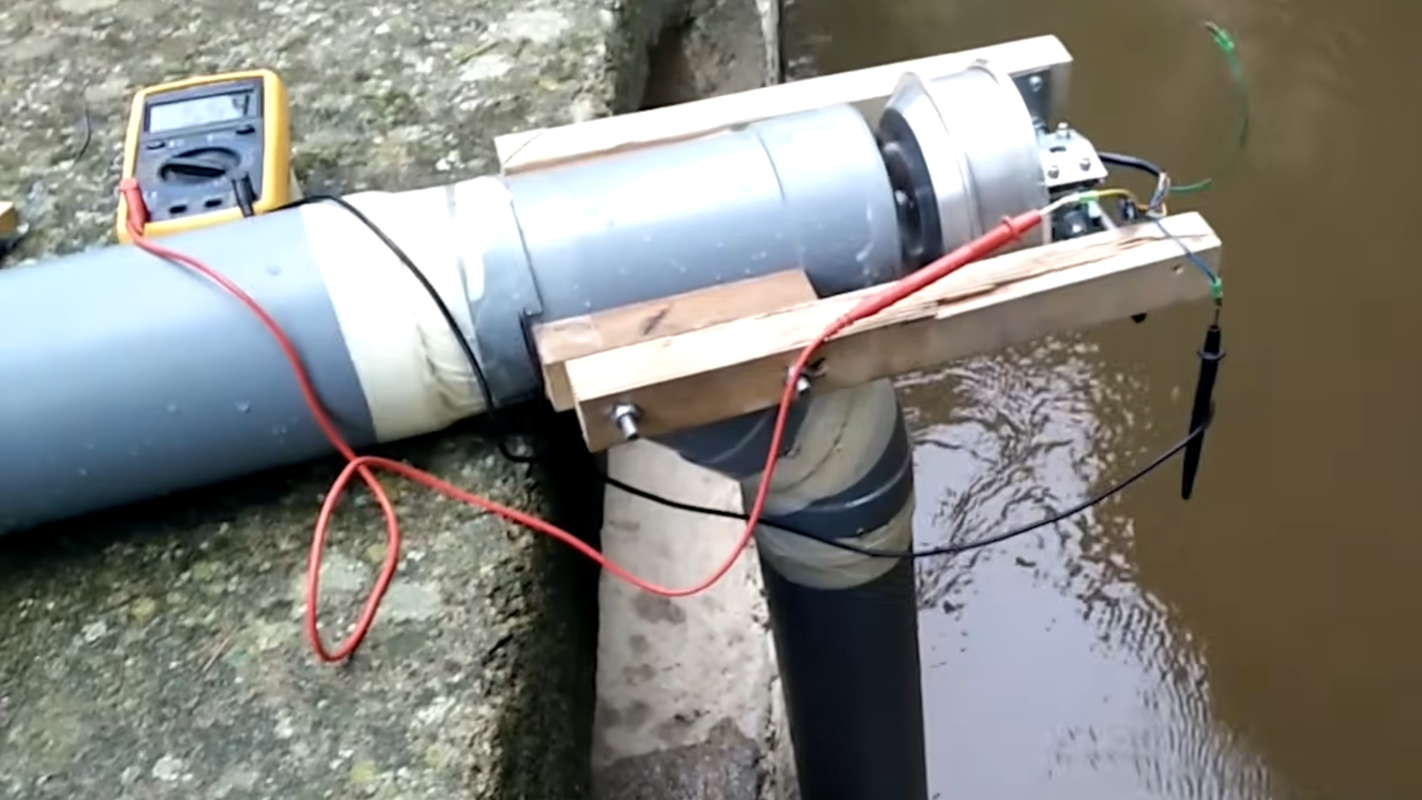
Engineering design makes all kinds of tradeoffs. Power trades off with torque, strength trades off with weight, and cost can trade off with quality. For designing a hydroelectric turbine, one of the main tradeoffs is hydraulic head with flow rate. Many large dams meant for bulk power generation will go with high head (or medium) designs, and for small dams with low head it’s usually not cost effective to build any generation. But if you’re really determined, you’ll want to build a low head water turbine like this one.
The build aims to use easy-to-find materials and simple tools. It uses 110mm and 160mm PVC pipe to not only siphon water up and over a dam, but to house the turbine as well. The turbine is built from a computer fan and sits inside the pipe with a shaft running through a Y-type fitting to the generator. The generator is built from a scavenged hoverboard wheel, and outputs a reported 3.3A DC at 60V for around 200 watts of power with only around 3m of head. The design allows the turbine to be placed at the point in the pipe that best suits the environment.
[OpenSourceLowTech], the creators of this project, make a compelling case that this build is cheaper than a 150W solar panel and it might even be able to produce more energy as well over certain timeframes, provided there’s a reliable source of water available and the owners of the dam don’t mind someone siphoning water over it continuously. The build video is worth a watch as well if for nothing else than the animation, which documents the build in excellent detail. Generating usable energy from hydropower doesn’t even need this big of a dam; if all you need is to charge your phone this tiny waterwheel will get the job done.
The Xiaomi 17T series is officially set to launch globally on May 28. Through a post on X, the company hinted at an upcoming launch with the tagline “The T is coming.” While Xiaomi has not shared any official details yet, reports suggest the teaser belongs to the Xiaomi 17T smartphone.
According to recent leaks, Xiaomi may not launch the Xiaomi 17T Pro in India. Instead, the company is expected to introduce only the standard Xiaomi 17T in the country. This launch is notable because Xiaomi skipped the Indian release of the 12T, 13T, and 14T series smartphones. As a result, the return of the T-series could give Indian users access to Xiaomi’s premium features once again.
Some worlds were never meant to stay distant.
Get ready to capture what others can’t reach. The T is coming. Standards are about to change. pic.twitter.com/YZulx7opto
Leaks suggest that the Xiaomi 17T and Xiaomi 17T Pro could look nearly identical from the outside. The phones may feature flat rear panels paired with square camera islands, giving them a clean and premium appearance. Xiaomi is also expected to place the power and volume controls on the right side of the devices. The Xiaomi 17T Pro could feature a 6.83-inch display with up to 144Hz refresh rate support, whereas the standard model may offer a 6.59-inch 1.5K AMOLED panel.
Furthermore, Xiaomi may feature the Xiaomi 17T with the MediaTek Dimensity 8500-Ultra chipset, or the Dimensity 9500 processor. Xiaomi may also include large batteries in both smartphones. The standard model could pack a 6,500mAh battery. Meanwhile, the Pro variant may feature a 7,000mAh battery.
Leica-Tuned Triple Camera Setup
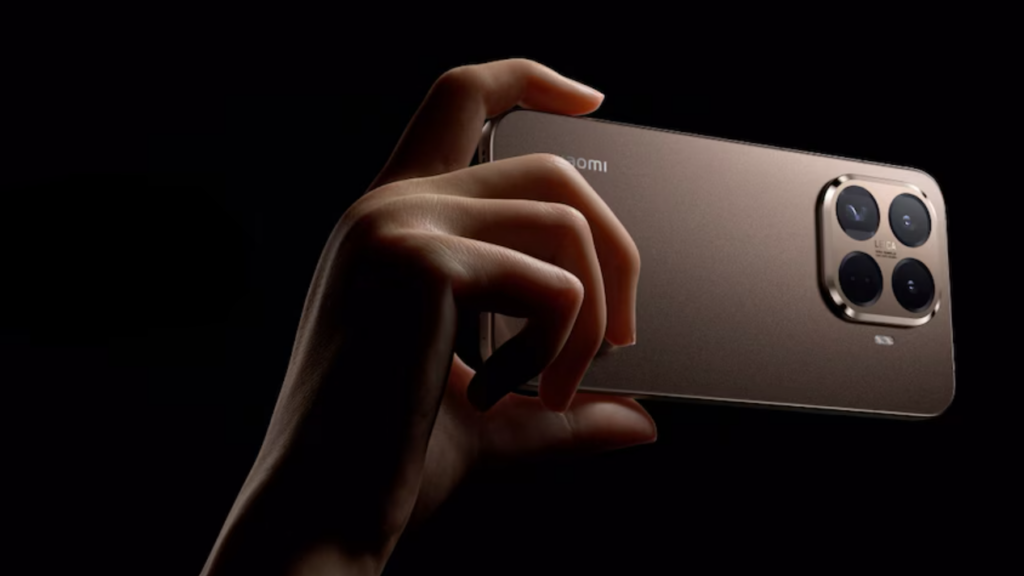
The Xiaomi 17T series will focus heavily on its camera capabilities. The company has announced Leica cameras for the upcoming series, while teaser images have shown a square-shaped rear camera module design. According to reports, this series may include a triple-rear camera system consisting of a 50MP main camera, a telephoto lens, and a 12MP ultrawide lens.
Xiaomi 17T Expected Price in India
Recent leaks suggest that Xiaomi may introduce the Xiaomi 17T as a premium smartphone in India. The starting variant of the phone with 12GB RAM and 256GB storage is expected to cost Rs 74,999, while the variant with 512GB storage might launch at Rs 84,999. Such a pricing scheme would allow the smartphone to compete with other high-end flagships from OnePlus, Vivo X series, and iQOO.






















































You must be logged in to post a comment Login