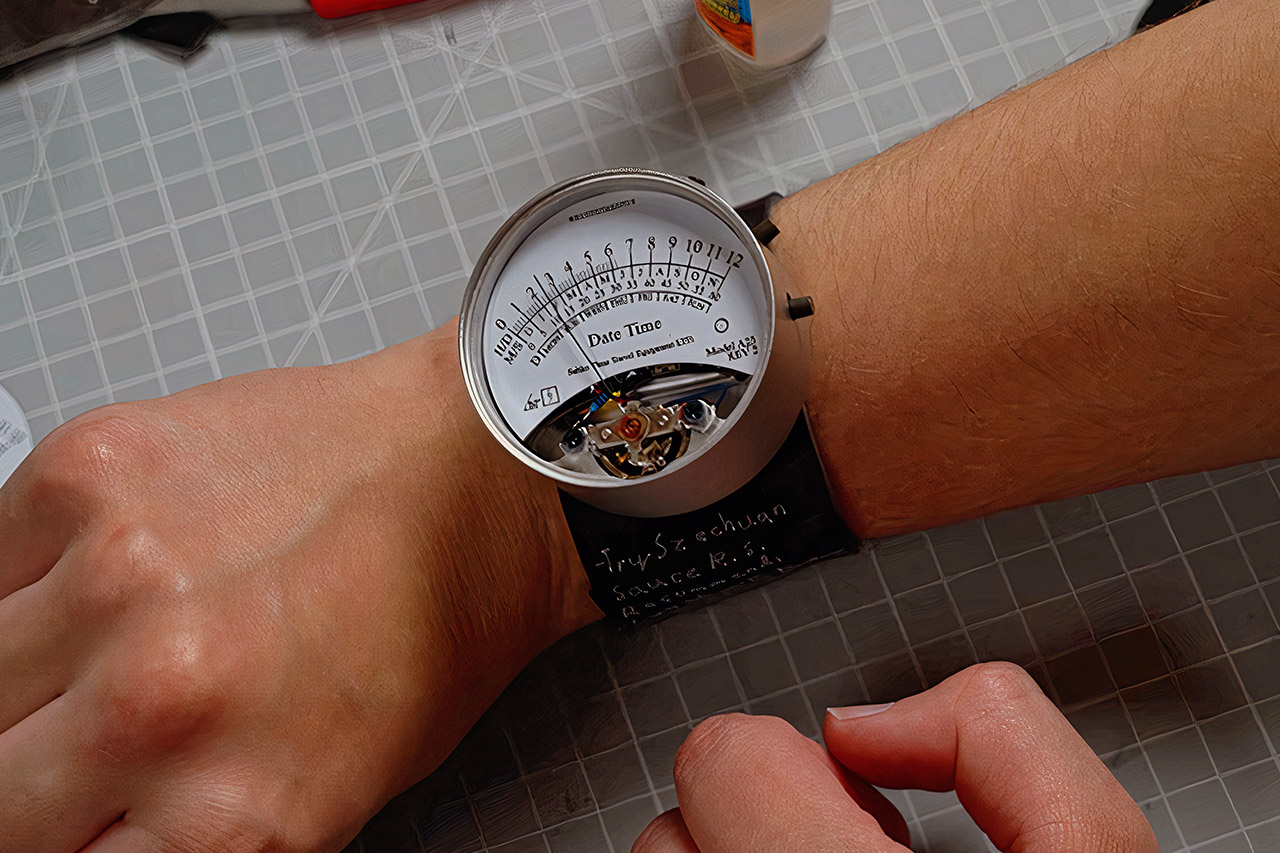
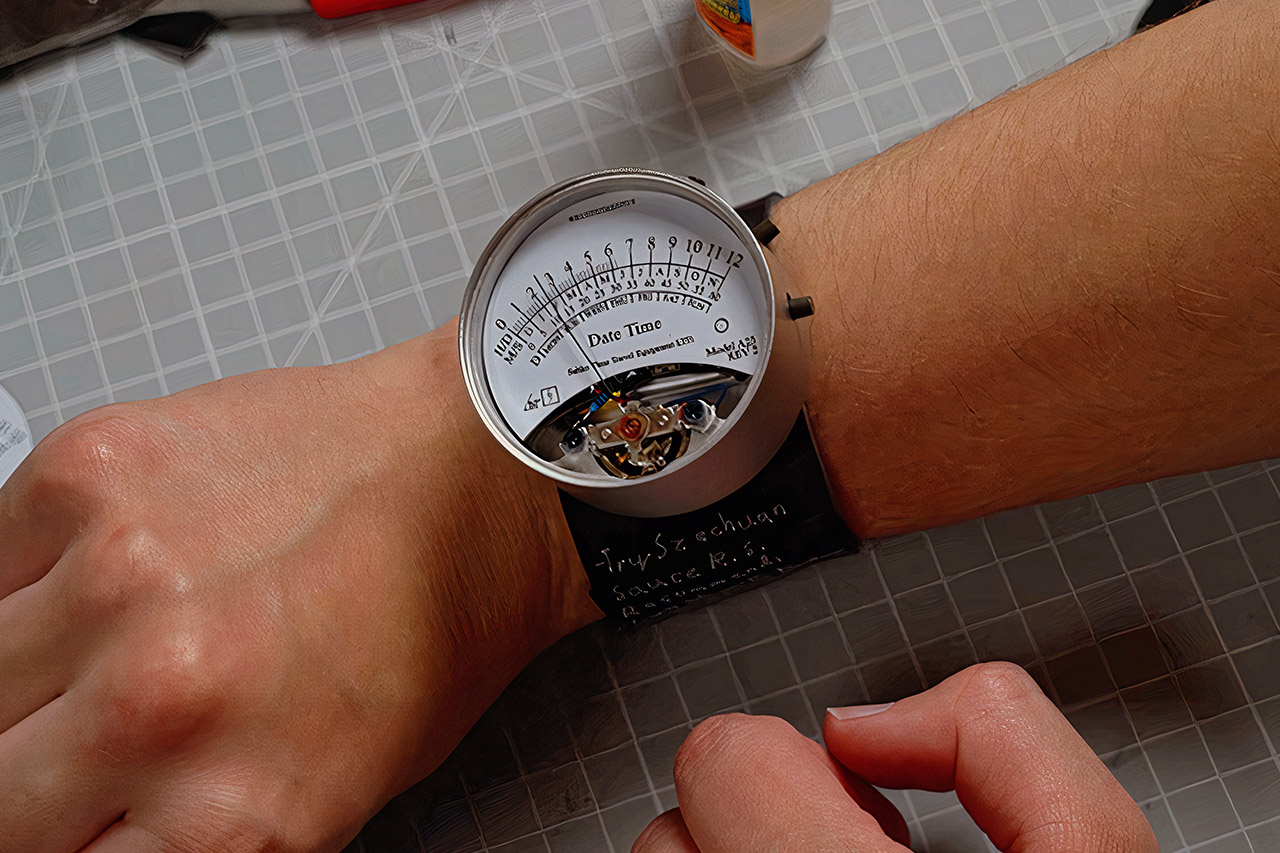
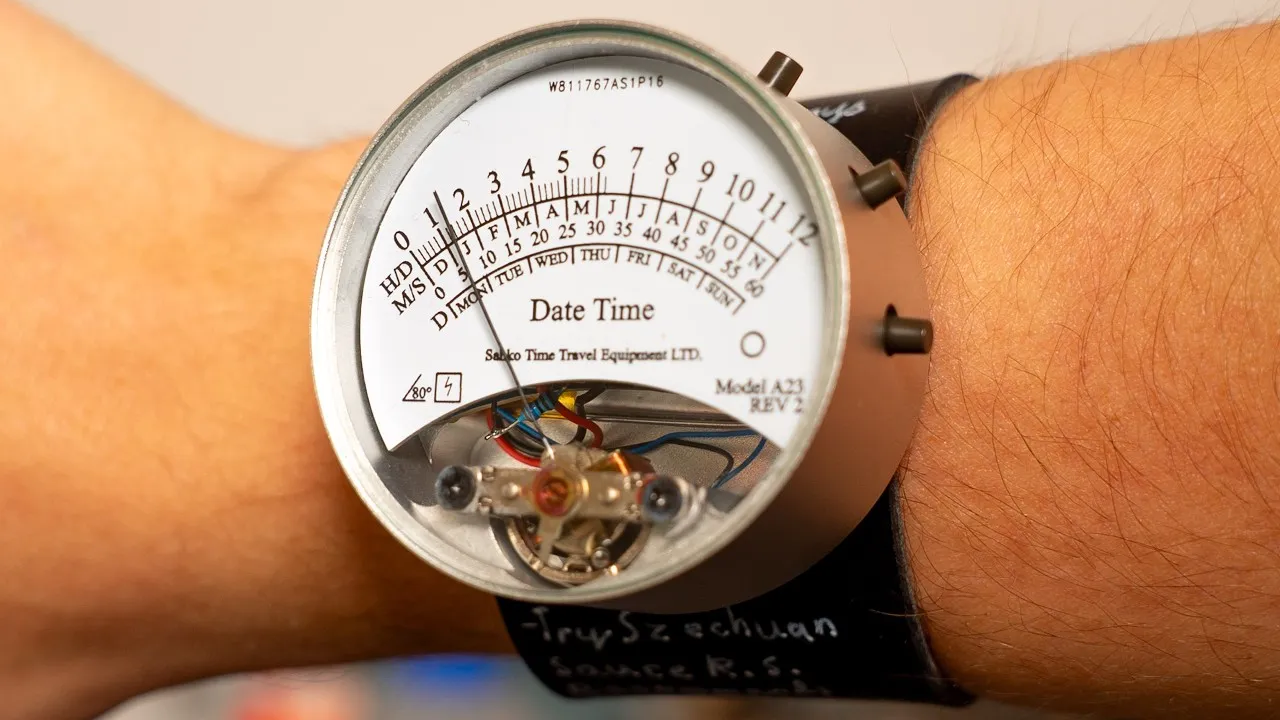
Wearing this watch provides an initial feeling of surprise, as a single needle glides across a printed scale to reveal the exact time or date without a flashing screen or ticking hands. Sahko transformed an idea drawn years ago into a polished item that fits easily around the wrist and seems both old and new at the same time. He desired a digital watch that depended solely on analog mechanics for display.
Early drawings depicted many scales crammed onto a single dial, each controlled by a button on the housing. He then built numerous prototypes to test different housings and circuits. The first version included a compass, which was a complete failure because the meter’s own magnetic field continuously threw off the readings. The functionality was then entirely dropped in favor of simplifying the design and ensuring that everything actually worked correctly.
Google Fitbit Air is the unbelievably comfortable, exceptionally smart way to transform your health[1]; and Google Health brings together effortless…
Unlock more with Google Health Premium: With a premium membership, get personalized coaching that’s built with Gemini and adapts to your life…
Comfortable fit – One Size Tracker (130-210 mm): The lightweight, micro-adjustable fit sits comfortably and quietly, so you can wear Google Fitbit Air…
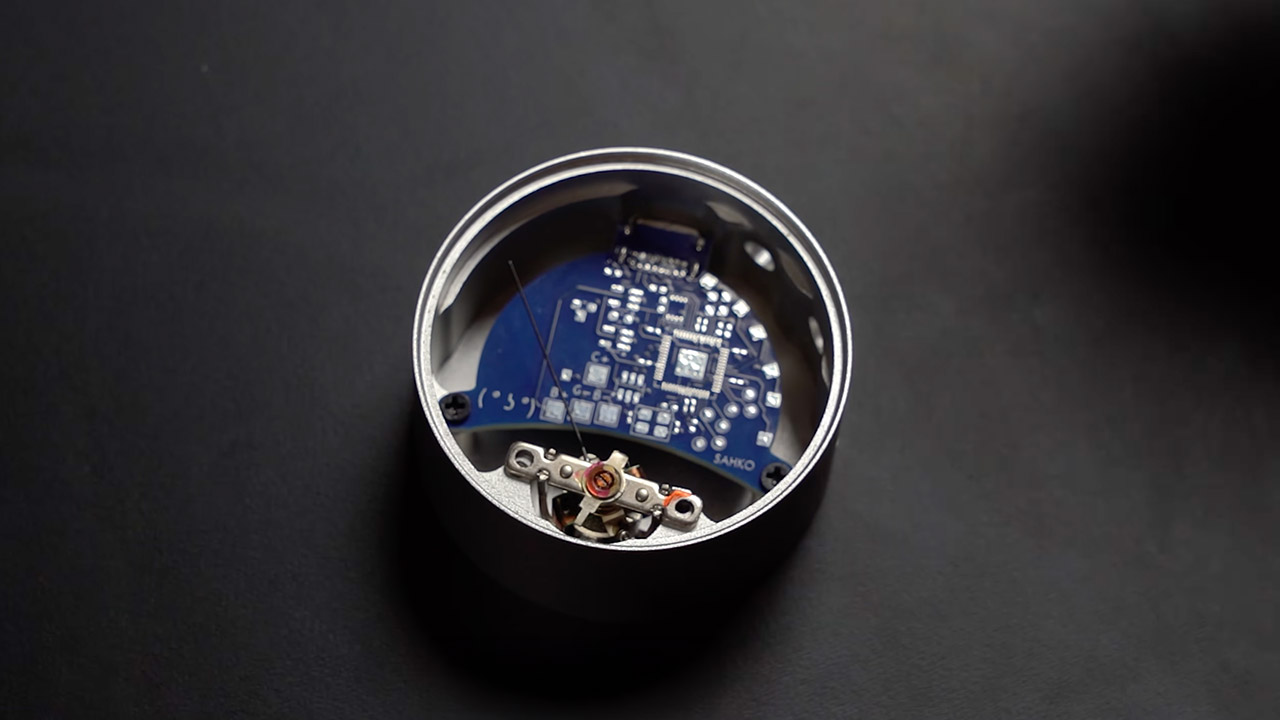
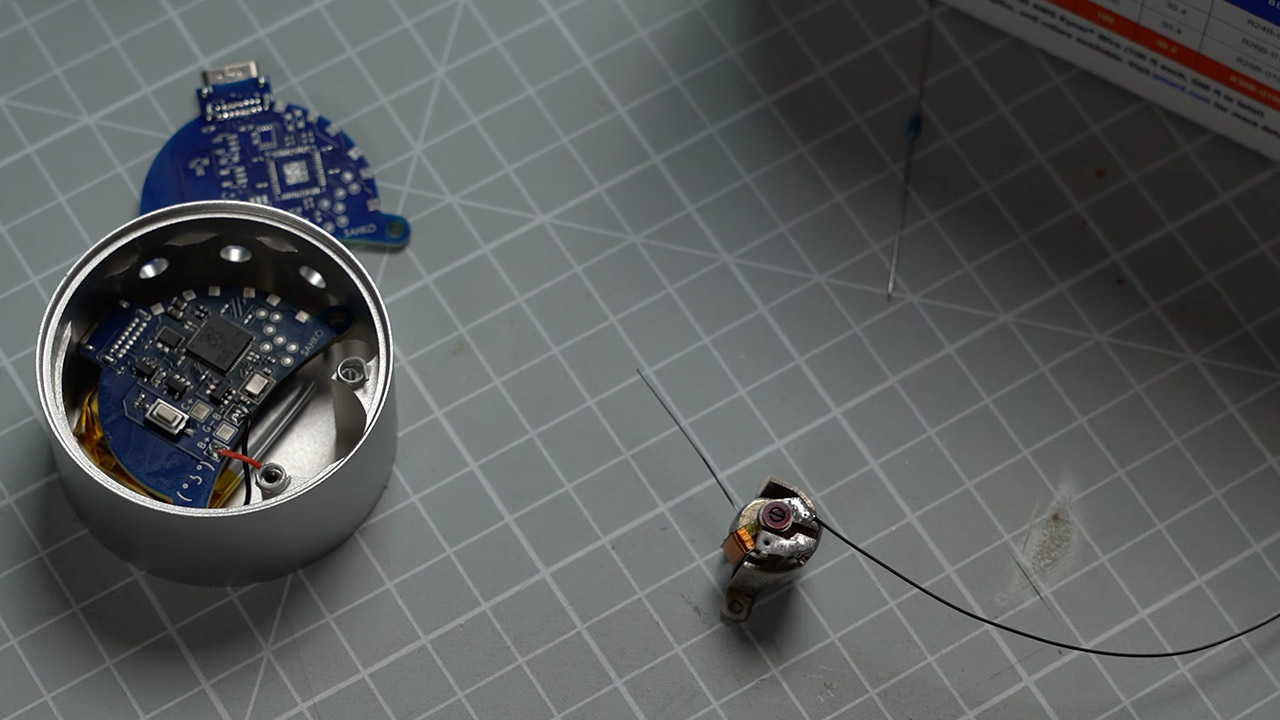
The meter movement is simply a salvaged 1970s amplifier component that lies in the middle of the entire setup. A current flows through the coil and interacts with a magnet, swinging the needle left and right in a smooth motion. The Raspberry Pi Pico microprocessor turns time into voltage, which is then passed to the digital-to-analog converter and, last, to the meter coil, ensuring that the needle always lands exactly on the mark. They use the same needle and arc in all modes, but the information shown differs depending on which button you press.
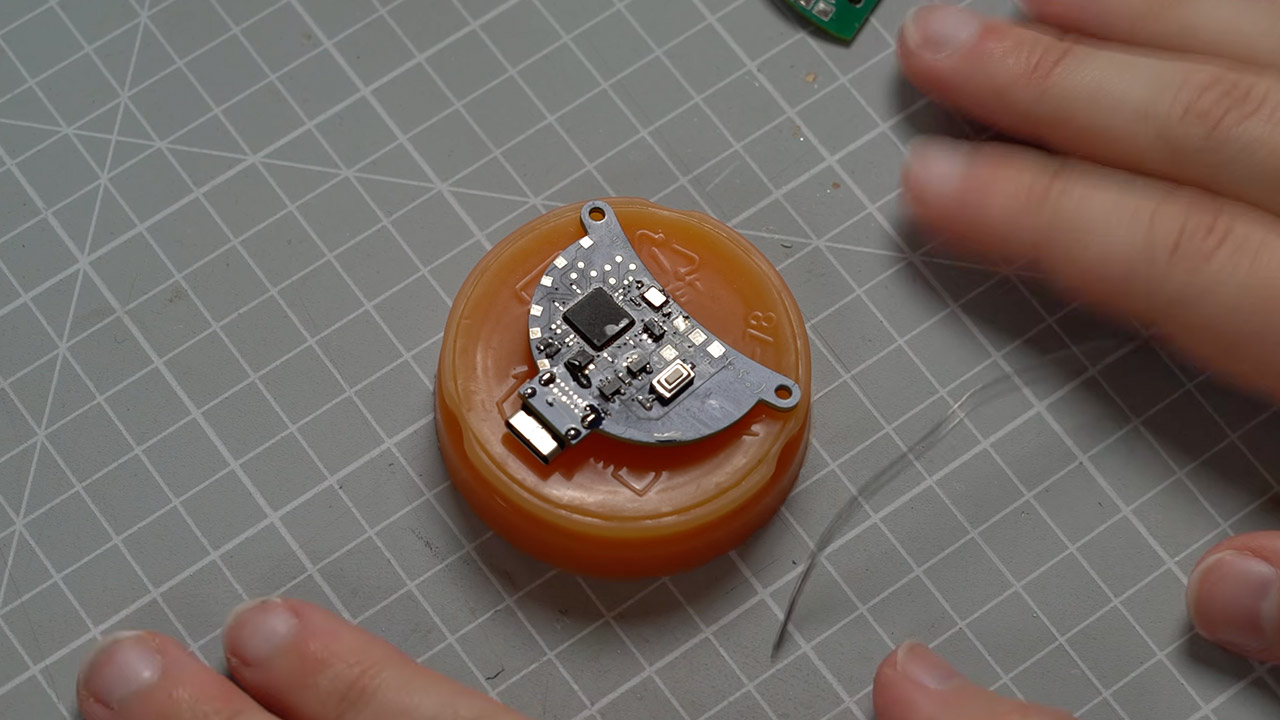
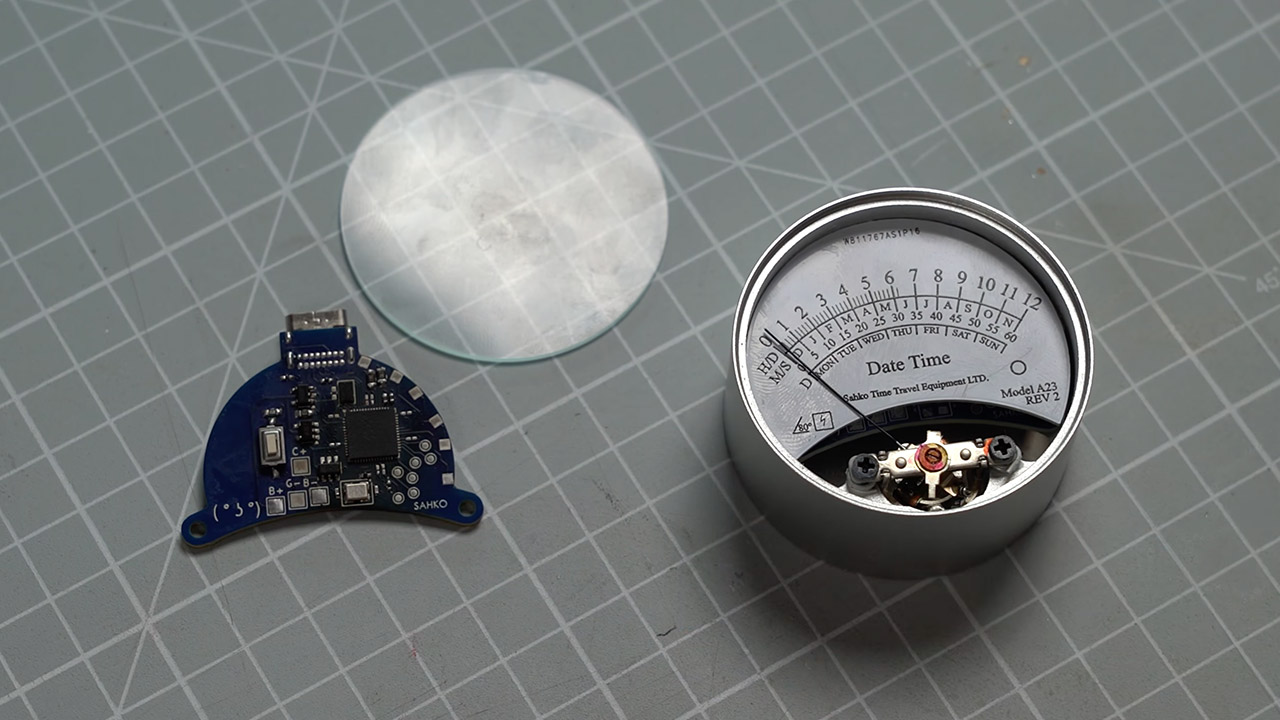
The Pico, converter, battery, and charging circuit are all housed on a customized board that takes up little space. Sahko had the idea of printing the dial scales directly onto the board, making it incredibly durable and visually beautiful. On one side of the case, there are three buttons: one to cycle through the hours, one for the day of the month, and one to show the month or day of the week. Holding the proper combination causes the needle to sweep over the scale, marking off each second in real time.
The case is machined from aluminum and has a smooth matte texture from bead blasting, making it fingerprint-resistant and comfortable against the skin. You can even put a pocket watch-style cover on the dial to protect the needle and keep it looking good. The wire spacers keep the needle perfectly level, so it never scrapes the underlying surface. The strap is made of leather and features an elastic bit in the center for easy adjusting. The leather ends simply attach to the case via magnets, making them exceedingly easy to put on and take off without the use of traditional pins or buckles.
Power comes from a little rechargeable battery that can easily last the entire day. The casing includes a USB-C socket for charging, and the Pico’s programming does an excellent job of keeping the time accurate and determining which voltage range to map each reading to, ensuring that the needle always reacts swiftly. If you want to see the schematics of the whole thing, Sahko has even uploaded a set of files to GitHub that contain schematics, board designs, and the actual firmware. [Source]
With all of the TVs available today, and all of the technical terms and jargon associated with television technology, it can be tough to figure out what’s important. Here’s a quick guide to help cut through the confusion.
Picture quality: Broadly speaking, the type of display technology helps dictate how good a TV’s picture quality is, but OLED is typically the best display technology, and this is followed by LCD (including QLED, and Mini LED). OLED tends to have the best picture quality because it doesn’t need a backlight and every pixel can be either on or off, leading to great black levels. In comparison, each LED in a backlight looks after multiple pixels at a time so it isn’t as precise — it’s not yet 1:1. Among midrange models, look for a feature including full-array local dimming, mini-LED and 120Hz refresh rate, which (unlike some other extras) do help improve the picture in my experience. Additionally, If a TV uses Quantum Dots it often leads to better color performance, whether it’s an OLED or an LCD.
Advertisement
Screen size: Bigger is better in my book. I recommend a size of at least 43 inches for a bedroom TV and at least 55 inches for a living room or main TV — and 65 inches or larger is best. More so than any “feature,” stepping up in TV screen size is the best use of your money. One of the most common post-TV-purchase complaints I’ve heard is from people who didn’t go big enough. And I rarely hear people complain that their TV is too large. It’s worth adding that while TVs can get really big indeed, 4K resolution is sufficient for even the biggest models, and CNET doesn’t recommend any 8K TVs as they represent a poor comparative value.
Price: TVs range in price from $100 to more than $2,000. Smaller screens are cheaper, well-known brands are more expensive and spending more money can also get you better image quality. Most entry-level TVs have a good enough picture for most people, but TVs last a long time, so it might be worth spending more to get a better picture. It’s also best to shop for a TV in the fall when prices are lower.
Sound quality: Every TV has some sort of built-in speaker, but in my twenty years of reviewing AV equipment the sound of modern TVs has been routinely terrible. While I do test the audio on each model, if you are serious about sound quality then buying a separate soundbar (from $100) or home theater system will instantly improve vital aspects such as speech and bass reproduction.
Smart TV: Among entry-level TVs the most important feature is what kind of smart TV system the TV uses, and while some are proprietary to each brand (Samsung and LG) some models do offer Roku and Google TV.
The Free Software Foundation announced this week that “its global call for free software supporters to organize LibreLocals this May resulted in free software supporters organizing forty-six LibreLocal events on six continents thus far.” (And new dates and locations are being added daily.)
The FSF invited free software supporters to organize in-person community meetups in their area during May 2026, or LibreLocal month, to bring people together to swap ideas, learn from each other, and celebrate free software. People were encouraged to organize events grounded in freedom to help spread the free software philosophy…. “The success of these LibreLocals speaks to how many people globally are interested in free software and ready to build community, and it demonstrates the strength of our movement” [said FSF executive director Zoë Kooyman]. “People getting together like this also proves how computer freedom and digital rights are on people’s minds. When we reject freedom-restricting software and promote software that respects user rights, it helps further so many other basic rights….”
The FSF has financially supported some of the events, but notes organizers are going above and beyond to create noteworthy events by any measure, and is impressed with the global network taking shape. “The energy we feel from all organizers is extremely motivating and we look forward to seeing LibreLocal events spread even wider over the next years! We want to support these initiatives even more, so we’ll be looking to build a network of sponsors for future iterations as we work towards May 2027,” says Heshan de Silva-Weeramuni, FSF program manager… William Goodspeed, the organizer behind the Beijing LibreLocal, reported that their meetup was double the size of last year’s, and a number of very rich collaborative projects have emerged among the attendees.
Discussing the value of connecting people, de Silva-Weeramuni notes: “Free software supporters know that connecting with each other leads them to learn, experiment, and create great things that protect our individual and shared rights. The extraordinary contributions that free software has made to the world were born through such collaborations between like-minded people towards a freer society. This same global spirit of collectively building a better future is one of the inspiring things that we have once again seen unfold through this year’s many LibreLocals.”
For the last two years, tech companies have aggressively pushed the idea that AI is ready to replace huge chunks of repetitive human work. Meanwhile, Starbucks just discovered that accurately identifying milk cartons inside a coffee shop is apparently still harder than Silicon Valley promised.
Starbucks
The company is officially scrapping its AI-powered inventory counting system across North America just nine months after deployment, according to a Reuters report. The tool, designed to automate stock counting and reduce in-store shortages, reportedly struggled with frequent miscounts and labeling errors, including confusing similar milk types or missing products entirely.
Starbucks’ AI inventory system: More headaches than solutions?
The automated counting system used cameras and LIDAR-equipped tablets to scan beverage inventory and ingredient stock across stores. It was part of CEO Brian Niccol’s larger “Back to Starbucks” turnaround strategy aimed at improving product availability and operational efficiency.
Athar Khan / Unsplash
But despite Starbucks previously claiming that the system improved inventory visibility, employees reportedly continued to struggle with inaccurate counts and unreliable product recognition. Internal messages reviewed by Reuters even showed workers openly celebrating the tool’s removal. Starbucks says it will now return to manual inventory counting while focusing on more standardized replenishment systems and daily restocking improvements instead.
AI keeps failing at the boring stuff companies said it would solve first
The funny thing is that inventory counting is exactly the kind of structured, repetitive task AI companies constantly claim should be easy to automate. And yet, once these systems leave polished demos and enter messy real-world environments with lighting changes, similar packaging, and busy workers, things start falling apart surprisingly fast.
What makes this especially awkward is how aggressively corporations are currently chasing AI adoption. Companies everywhere are laying off workers, restructuring teams, and pouring billions into automation strategies while many AI systems still struggle with basic reliability in practical workflows. Starbucks accidentally becoming the latest example of “humans still needed” feels both hilarious and deeply predictable. Maybe the bigger lesson here is that replacing people turns out to be much harder than replacing PowerPoint presentations with AI-generated buzzwords.
Drupal is warning that hackers are attempting to exploit a “highly critical” SQL injection vulnerability announced earlier this week.
The content management system (CMS) project published a PSA on May 18, urging administrators to reserve time for core updates that addressed an issue that threat actors might start exploiting “within hours or days.”
The flaw is now tracked as CVE-2026-9082 and was discovered by Google/Mandiant researcher Michael Maturi. It affects Drupal’s database abstraction API. It allows specially crafted requests to trigger arbitrary SQL injection on sites using PostgreSQL.
SQL injection is a flaw in which attackers inject malicious SQL commands into database queries via user input fields or dialogs on websites, resulting in unauthorized access, modification, or deletion of database data.
Advertisement
The flaw is exploitable without authentication and could result in remote code execution, privilege escalation, and information disclosure.
In an update to the advisory on May 22, Drupal confirmed that exploitation attempts have been detected.
“The risk score has been updated to reflect that exploit attempts are now being detected in the wild,” reads the updated advisory.
Drupal rated the vulnerability as “highly critical,” assigning it an internal score of 23 out of 25. However, NIST has rated it as “medium severity” based on a CVSS v3 score of 6.5.
Advertisement
Impact and recommendations
CVE-2026-9082 impacts a broad range of Drupal versions, including:
Drupal 8.9.x
Drupal 10.4.x before 10.4.10
Drupal 10.5.x before 10.5.10
Drupal 10.6.x before 10.6.9
Drupal 11.0.x / 11.1.x before 11.1.10
Drupal 11.2.x before 11.2.12
Drupal 11.3.x before 11.3.10
Website owners and administrators are recommended to upgrade immediately to the latest version available for their branch.
Those not using PostgreSQL are still advised to update, as the latest security updates also include fixes for upstream dependencies, including Symfony and Twig.
The advisory underlines that Drupal 8 and 9 are end-of-life (EoL), and that patches are provided on a “best-effort” basis; however, those branches still contain other known vulnerabilities, so continuing their use is inherently risky.
Automated pentesting tools deliver real value, but they were built to answer one question: can an attacker move through the network? They were not built to test whether your controls block threats, your detection rules fire, or your cloud configs hold.
This guide covers the 6 surfaces you actually need to validate.
A lot of people on MacBooks do not really think of themselves as gamers. Aside from a few casual titles on phones or trying out GTA or COD on their friend’s console, many don’t really get into that hobby. Macs have never had the same gaming reputation as Windows PCs, and if your idea of gaming is competitive shooters or open-world RPGs from AAA studios, it’s easy to miss out on the gems that are available on the Mac ecosystem.
But some of the best games for non-gamers are not about fast reflexes at all. They are about choices, curiosity, grief, adventure, and so much more. This is exactly why I’ve chosen these three games, which aren’t your typical hardware showcase. These go much deeper than that. Video games as an art form have been a long-standing debate, and I can’t recommend Disco Elysium, What Remains of Edith Finch, and Firewatch enough.
What stands out here is the confidence in writing and atmosphere.
Disco Elysium
ZA/UM
Disco Elysium is one of the best arguments that games can be literature without becoming homework. Enter the underwhelming role of a broken detective investigating a murder, but that description barely covers what the game actually does. This is a game about a lot of things. From politics and addiction to identity and the horror of waking up as yourself after everything has gone wrong. There’s a combat loop here, and it’s your conversational skills.
The real battles are fought inside your head, as different parts of the protagonist’s personality play a big role in the outcome of the story. This makes it perfect for MacBook users who do not want a mechanically demanding game. You simply talk, choose, and live with the consequences. Steam describes it as having a “revolutionary dialogue system,” and seeing how you can write sweet talk, romance, and even write poetry in-game, I’d say that’s pretty apt.
Advertisement
What Remains of Edith Finch
What Remains of Edith Finch is the game I would hand to someone who says they do not have time for games. In essence, it’s a series of connected short stories and experiences that are condensed into one single game that is incredibly easy to understand. You explore the Finch family home as the titular Editch, uncovering the stories of relatives who died in strange, tragic, sometimes surreal ways.
Annapurna Interactive
Each interactive short story changes how you play for a little while, but none of them asks you to master complicated systems. It is experienced from a first-person perspective and ends with that family member’s death, with the larger game exploring what it feels like to be humbled by the world.
If the concept sounds heavy, that’s exactly what the devs were going for. This is from the same people who brought you other critically acclaimed titles like Outer Wilds and Stray. So it’s no surprise that there’s a strong focus on narrative. You are not just watching a family history unfold; you are experiencing it yourself and piecing it together room by room.
Firewatch
Firewatch is probably the easiest of the three to recommend to someone who wants a “normal” game but does not want stress. You play as Henry, a man working as a fire lookout in the Wyoming wilderness. Your main connection is Delilah, another lookout who speaks to you through a walkie-talkie.
While the setup is simple, the game has a very distinct feel to it. Firewatch is about isolation, emotional escape, and the danger of treating distance like a solution. This is a proper single-player experience where choices shape the narrative.
Advertisement
Campo Santo
You can expect to explore, talk, and investigate as you slowly get pulled into something stranger. It is not difficult in the traditional sense, but you will be facing emotional challenges between two characters who aren’t honest enough to face their own lives.
For non-gamers on MacBooks, these three games are a perfect starting point. They are not about proving you are good at games. These are experiences that will make you stop and think for a while.
Unlock a world of knowledge with a Headway Premium subscription. This exclusive deal gives you unlimited access to Headway’s massive library of 1500+ book summaries, with 30-50 new ones added monthly. Cover any topic you can imagine, from personal development and business strategies to health and wellness. It’s usually on sale for $60 for new users only, but for a very limited time you can get it for $47.97.
Note: The Techdirt Deals Store is powered and curated by StackCommerce. A portion of all sales from Techdirt Deals helps support Techdirt. The products featured do not reflect endorsements by our editorial team.
As AI rivals Anthropic and OpenAI race toward IPO, SpaceX has now filed publicly for its own listing, revealing big losses and Elon Musk’s iron grip on ownership.
In a filing yesterday (20 May) with the US Securities and Exchange Commission, SpaceX for the first time revealed its financial standing, with billions in losses recorded. It reported a net loss of $4.28bn on revenue of $4.69bn for Q1, compared with a net loss of $528m on revenue of $4bn a year ago.
Notwithstanding those losses, the IPO is expected to be the largest listing in history if Elon Musk can pull it off and raise the targeted $75bn, which would far exceed the 2019 listing of Saudi Aramco for $29bn, the current record holder for largest IPO.
The really striking element in the filing is the level to which Musk will retain ironclad control over the company, and how difficult it would be to remove him in the future.
Advertisement
As SpaceX’s “founder, chief executive officer, chief technical officer and chairman of the board” of directors, Musk’s class B shares will likely ensure board control for the foreseeable future.
This concentration of voting power means SpaceX will qualify as a ‘controlled company’ under Nasdaq’s corporate governance rules, and the company said it intends to rely on exemptions from certain corporate governance requirements that would otherwise apply.
As is fairly standard for huge IPOs in the world of Big Tech, investors buying class A shares get economic exposure to SpaceX but very limited governance rights. Musk would retain effective veto power over all major decisions, including mergers, acquisitions, executive appointments and strategic direction, regardless of how many shares the public holds.
Musk has consolidated various businesses over the past year to arrive at the huge valuation. In February, SpaceX acquired xAI, which in March 2025 had acquired X.
Advertisement
Revenue growth from SpaceX’s Starlink satellite broadband service is widely credited for the foundation of the valuation, something confirmed in the filing which shows that it accounted for some two-thirds of sales in Q1 2026. Starlink currently dominates the global satellite internet service industry, with more than 9,000 satellites in orbit and roughly 9m customers.
The massive SpaceX IPO looks set to precede expected listings by duelling AI giants OpenAI and Anthropic in the near future. According to a report in the Wall Street Journal, OpenAI could confidentially file for IPO as early as tomorrow (22 May).
Don’t miss out on the knowledge you need to succeed. Sign up for the Daily Brief, Silicon Republic’s digest of need-to-know sci-tech news.
Most conventional analog watches have two or three hands, covering hours, minutes, and seconds (where present). [Sahko] has built a different kind of analog watch that creatively displays the time with just one.
The build is based around a simple analog coil meter, which, at its heart, just sweeps its needle across a scale based on the voltage input to the device. A Raspberry Pi Pico is employed to drive the meter through a digital-to-analog converter. Pressing the buttons on the outside of the device tells the watch to display hours, minutes/seconds, or the current month or day of the week. With a single needle, only one parameter can be displayed at a time, but that’s just a compromise you accept for having a cool unique analog dial watch.
Another cool touch in the design is that the dial backer isn’t just a printed piece of paper—it’s a custom PCB, which has a much nicer, hardier finish. The case of the watch is also CNC milled out of aluminum and bead blasted for a quality surface finish, adding a nice industrial touch to the build.
Advertisement
This is a great example of a custom watch with quality fit and finish. The attention to detail really pays off in terms of feel. We’ve seen other watch projects use similar construction techniques before, too.
The Cinemagoal app retransmitted content from major platforms like Netflix and Disney+.
Endyk/Getty Images
Cinemagoal, the app known for illegally rebroadcasting streaming content from Netflix, Disney+, Spotify and more, is the latest pirate ship to sink. The Guardia di Finanza, an Italian law enforcement agency under the country’s Ministry of Economy and Finance, announced that it conducted more than 100 search and seizures across the country related to the Cinemagoal app.
The Italian authority said the app ran 24 hours a day, retransmitting access codes from legitimate subscriptions to fake accounts that streamed media to Cinemagoal subscribers. According to the Guardia di Finanza, the app’s design was smart enough to get around a platform’s security checks and didn’t require a connection to a user’s IP address, making it harder to track. Cinemagoal subscriptions went for 40 to 130 euros, between $46 to $151, a year and were paid through hard-to-trace methods, like cryptocurrency or fake foreign bank accounts, the Italian agency said.
The Guardia di Finanza initially estimated Cinemagoal’s financial harm to be around 300 million euros, or around $350 million, but is also targeting the first 1,000 subscribers who used devices for the pirating app, with fines ranging from 154 to 5,000 euros, or between $179 to $5,800. It’s not clear if Cinemagoal is gone for good, but the Italian agency said it worked with other European authorities to seize servers that contained decryption data and the app’s source code. Before the crackdown on Cinemagoal, authorities across the world have been making it harder to access pirated content online. In 2022, the popular piracy site Popcorn Time shut down in 2022, while the illegal sports streaming service Streameast was taken offline more recently in September of last year.




























































You must be logged in to post a comment Login