Manchester City striker Khadija Shaw has signed a new four-year contract with the club, just days after it looked like she would be leaving the Women’s Super League champions this summer.
The Jamaica forward finished as the WSL’s top scorer for a third successive season, netting 21 goals in 22 games as City won the title for the first time since 2016.
Chelsea had been favourites to sign her as a free agent after contract renewal discussions broke down.
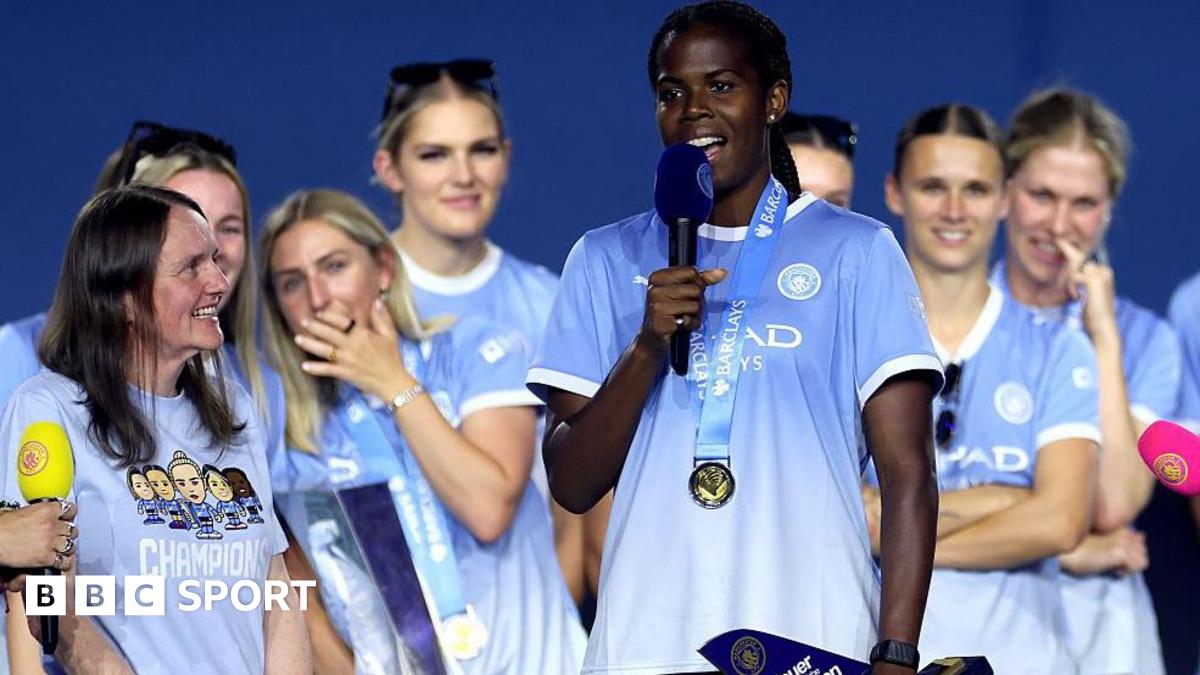
But Shaw, 29, announced her new contract until 2030 on stage at City’s end of season celebrations, where she received the player of the season trophy.
Advertisement
“I am still here, I am still hungry and there is no place I would rather be,” she said.
Shaw added that she was “happy to announce I will be staying at the football club”, before being mobbed by her team-mates.
This season she also won the Football Writers’ Association women’s footballer of the year award and was named WSL player of the season.
City face Brighton in the Women’s FA Cup final on Sunday as they hunt a domestic double.
Advertisement
Shaw has scored 26 goals and provided seven assists in 31 appearances in all competitions so far this term.
Since joining City in 2021, she has 117 goals in 137 appearances and is the club’s record goalscorer.
“It’s a huge statement from City that we’ve secured the services of one of the best centre-forwards in the world,” said director of football Therese Sjogran.
Cape Verde goalkeeper Vozinha has explained why he was overcome with emotion after his heroic performance against Spain at the 2026 FIFA World Cup.
The 40-year-old goalkeeper was named Man of the Match after producing seven saves to help Cape Verde secure a historic 0-0 draw against the European champions in their first-ever World Cup match.
Speaking after the game, Vozinha revealed that his tears were not only about football but also about family.
Advertisement
“I cried after the game because I grew up with my grandparents when I was a kid, and they could not be there. They passed away a few years ago. My mum could not be here either for a visa issue, and the money we had to pay for it. We did not manage to do this in time,” he said.
Vozinha’s emotional story touched football fans around the world after his outstanding display against one of the tournament favourites.
Making his World Cup debut at the age of 40, the veteran goalkeeper stood firm as Spain dominated possession and created several scoring opportunities. However, Cape Verde’s captain refused to be beaten, making seven important saves and keeping a clean sheet.
Advertisement
His performance helped Cape Verde earn a famous point in Group H and marked a dream start to the country’s first appearance at the World Cup.
The small island nation, with a population of just over 500,000 people, showed great determination and discipline throughout the match to frustrate the Spanish side.
While Spain will be disappointed not to have taken all three points, the night belonged to Vozinha, whose journey from dreaming of the World Cup to becoming a national hero captured the hearts of football fans.
The final whistle brought tears of joy and emotion for the goalkeeper, who was thinking about the family members who helped shape his life but were unable to witness the biggest moment of his career.
Advertisement
For Vozinha and Cape Verde, the historic draw against Spain is a result that will be remembered for many years to come.
Spain were left shell-shocked after being held to a frustrating stalemate by Cape Verde in their 2026 FIFA World Cup clash. The two sides faced each other in Group H at the Atlanta Stadium on Monday, June 15.
La Roja dominated possession throughout the game but had very little to show for it. Cape Verde valiantly defended across the 90 minutes, with 40-year-old goalkeeper Vozinha making multiple saves to keep his side in the game. Ferran Torres’ effort struck the woodwork towards the end of the first half, but the Spaniards failed to be clinical going forward, ensuring that Cape Verde sealed a historic point.
Thanks for the submission!
Advertisement
Without further ado, let’s take a look at five talking points from the FIFA World Cup clash:
Advertisement
#5 Spain dominated possession but were uninspiring going forward
Spain came into the game as the favorites to secure all three points and demonstrated excellent control of the ball, garnering a possession rate of 74 percent compared to Cape Verde’s 26 percent. The former also completed a mammoth total of 734 passes (92 percent accuracy), while the Blue Sharks completed only 205 passes with an accuracy of 73 percent.
However, Luis de la Fuente and Co. were unable to break down Cape Verde’s low block, only landing seven shots on target from an attempted 27 (xG of 2.29). They also missed both their big chances and will need to be more clinical going forward in the FIFA World Cup to avoid similar upsets.
#4 Cape Verde’s game plan worked to a tee
After qualifying for the FIFA World Cup for the first time in their nation’s history, Cape Verde were undoubtedly the underdogs heading into their clash against La Roja. However, Bubista’s tactics worked to a tee as Spain were unable to break down the former’s stubborn defense.
Cape Verde’s backline were at their very best, with Vozinha making seven saves to keep his side in the game. Moreover, centre-backs Roberto Lopes and Diney Borges were outstanding and made multiple clearances, recoveries, and interceptions each, ensuring their nation picked up their first-ever FIFA World Cup point.
Advertisement
#3 De La Fuente’s decision not to risk Yamal and Williams backfired
Spain superstars Lamine Yamal and Nico Williams were both nursing hamstring injuries heading into the 2026 FIFA World Cup. Despite recovering and rejoining team training this week, La Roja boss Luis de la Fuente indicated both wingers would play limited roles against Cape Verde.
This backfired as Spain looked underwhelming going forward without Yamal and Williams. However, upon Yamal’s introduction in the 71st minute, La Roja were rejuvenated as the 18-year-old was a constant threat down the right wing. Meanwhile, Williams was subbed on in the 87th minute for a short cameo.
However, both stars didn’t have enough time to help the Spaniards break the deadlock. Had they started the FIFA World Cup match, De la Fuente’s men could have potentially walked away with all three points.
#2 Ferran Torres and Mikel Oyarzabal struggled to make an impact
In Yamal and Williams’ absence, Ferran Torres and Mikel Oyarzabal were included in the starting XI. However, both forwards struggled to make an impact, which resulted in Spain being held to a stalemate.
Advertisement
Torres hit the woodwork, despite being five yards out from goal in the 41st minute, before Oyarzabal was unable to convert the follow-up. The former missed one big chance, completed none of his two dribbles, lost eight duels, and delivered none of his four crosses.
Oyarzabal also became the first footballer on record since 1966 to play the first 30 minutes of a FIFA World Cup match without making a single touch.
#1 Spain can’t afford to slip up further in FIFA World Cup
Following their stalemate against 67th-ranked Cape Verde, Spain are currently at the top of Group H with one point. However, with Saudi Arabia and Uruguay also in their group, La Roja cannot afford to drop points again going forward in the FIFA World Cup.
They will aim to bounce back in their next fixture against Saudi Arabia on June 21.
Rosedale Cemetery, in the working-class New Jersey suburb of Linden, not far from New York City, houses a gravesite unlike any other: a 36-ton, life-size granite replica of a 1981 Mercedes-Benz 240D. The hulking monument marks the resting place of Raymond Tse, a car-lover who was only 15 when he died in 1983. Tse’s older brother, David, commissioned the Mercedes, complete with Ray’s name on the license plates, for a reported fee of $250,000, and had it installed behind the mausoleum where Ray is interred.
Not all the graves at Rosedale are so conspicuous. When John Matthew Shippen Jr. was buried there in 1966, he was commemorated only by a slab of concrete demarcated by a number. No name, no birth or death year, no acknowledgment of Shippen’s deeply important place in golf history. Just a random numeral — 70 — assigned by the cemetery’s record-keepers.
***
Advertisement
IF YOU’RE UNFAMILIAR with Shippen, that’s kind of the point. For decades, he was the trailblazing golfer who time forgot — but who is certain to get some shine this week. That’s because the U.S. Open is for the sixth time returning to Shinnecock Hills Golf Club (est. 1891) on Long Island’s East End. In the first of those editions, in 1896, Shippen, then a 16-year-old assistant professional at Shinnecock, represented his club in a 35-player field made up largely of Scottish and English pros. Shippen’s youthfulness was not what made his appearance in the second-ever U.S. Open notable — his race was.
Shippen was born in Washington, D.C., in 1879 to a Shinnecock Indian mother and Black father. When John was 9, his father, John Sr., a Presbyterian minister and former slave, moved the family to the Southhampton, N.Y., area after he’d been assigned a ministry on the Shinnecock Indian Nation.
John Jr. began caddying at Shinnecock Hills, a course he’d helped build as a member of the crew that cleared the land. He was a fast study and a fine player. By 16, he had ascended to an assistant-pro role and soon after found himself in the field at the 1896 U.S Open, aided by Shinnecock members who covered his entry fee. Playing alongside Shippen was another trailblazer with the Shinnecock membership’s backing: Oscar Bunn, a Shinnecock Indian who, like Shippen, caddied at the club and developed an aptitude for the game.
John Shippen in 1913.
getty images
Advertisement
Shippen and Bunn would become the first Black and Native American golfers, respectively, to play in a U.S. Open, though their starts didn’t come without resistance. When the other pros in the field learned that golfers of color would be competing, they threatened to boycott the championship. USGA president Theodore Havemeyer didn’t blink, proclaiming the event would proceed even if only two players remained on the tee sheet. The protesting pros stood down, and on July 18 the competitors dug in for the one-day, 36-hole contest.
In the morning round, Shippen shot 78 on the 4,400-yard setup, good enough for a six-way share of first at the midway point. His stellar play continued in the afternoon … until it didn’t. On the short par-4 13th — the same hole on which Phil Mickelson would melt down 122 years later, in the 2018 U.S. Open — Shippen missed right onto a sandy path. Things got uglier from there. Years later, Shippen, as quoted in Pete McDaniel’s “Uneven Lies: The Heroic Story on African-Americans in Golf,” said, “I kept hitting the ball along the road, unable to lift it out of the sand and wound up with an unbelievable 11 for the hole. You know, I’ve wished a hundred times I could have played that little par-4 again.”
An 11. Seven over.
It’s silly to play the what-if game in golf, but, in this case, hard to resist. Shippen signed for an 81 in the second round to finish at 159, seven behind the winner, Scottish pro James Foulis. If Shippen had made par at 13 instead of a mess, who knows — today he might have his own wing at the World Golf Hall of Fame.
Advertisement
***
SHIPPEN WASN’T ONLY the first Black club professional but also the first American-born club pro, period. He played in five more U.S. Opens, his last in 1913, when another longshot, Francis Ouimet, famously prevailed at The Country Club in Brookline, Mass. It would be another 35 years before another Black golfer would play in a U.S. Open (Ted Rhodes, 1948, Rivera); another 46 years before a Black golfer would make a cut at the U.S. Open (Charlie Sifford, 1959, Winged Foot); and another 87 years before a Black golfer would win a U.S. Open (Tiger Woods, 2000, Pebble Beach).
Soon after Shippen’s U.S. Open debut at Shinnecock Hills, he landed the head-pro role at the Maidstone Club, just east of Shinnecock, before transitioning into the same job at Aronimink, the Philadelphia-area club that hosted the PGA Championship earlier this year. In 1924, Shippen took another head-pro post, settling into a club at which he would spend the bulk of his career: Shady Rest Country Club in Scotch Plains, N.J., where he taught golf and built clubs for 36 years.
Shady Rest, which opened three years before Shippen came aboard, was the first Black-owned country club in the U.S. The property offered nine holes of golf cut into a hillside and so much more: horseback riding, croquet, skeet shooting, a baseball diamond and tennis courts, where greats Althea Gibson and Ora Washington honed their games.
Advertisement
Shady Rest, which opened three years before Shippen came aboard, was the first Black-owned country club in the U.S.
Shady Rest also had a lively social scene and was a popular venue for many top Black musicians, including Louis Armstrong, Duke Ellington and Ella Fitzgerald. Shippen, who lived on the second floor of Shady Rest’s clubhouse, was central to the club’s growth, as a manager, steward and ambassador. He never lost confidence in his game, either, challenging any comers a dollar that they couldn’t outdrive him. Few could.
Shippen lived to 88, spending his final days at a Newark nursing home, apparently with little savings. He was buried about 10 miles south, at Rosedale Cemetery, beneath an unmarked gravestone, which would remain unmarked for the next 29 years. It’s hard to fathom such an important figure in the game’s history resting in anonymity, but such was Shippen’s fate. The nondescript grave was symbolic of a larger injustice: the golf world’s general lack of recognition of Shippen’s accomplishments and contributions.
That began to change on Feb. 14, 1991, when the Newark Star-Ledger published an article by sportswriter Jerry Izenberg that detailed Shippen’s story and unheralded place in history.
“Nearly a quarter of a century has passed since his death,” Izenberg wrote, “but the life and times of John Shippen shamefully remains a patch of rarely recalled history. This comes to mind this morning because school systems everywhere are celebrating Black History Month but, in the town, where John Shippen died in 1968 nobody speaks his name, and no historical plaque marks his passing. Maybe there are too many other heroes whose stories are easier to tell or maybe there are times when it is simpler to create ersatz ones. It takes a little work to piece together his remarkable story.”
Advertisement
Scotch Plains residents Ruby and Thurman Simmons were prepared to do that work. When the Simmons were tipped off to Izenberg’s piece by a history professor of Ruby’s, honoring Shippen’s legacy became their calling. By this point, the course was owned and operated by the town of Scotch Plains and had been renamed Scotch Hills Country Club. The Simmons presented Shippen and Shady Rest’s stories to the city council and began a years-long lobbying campaign that resulted in an annual tournament, youth academy and foundation, all in Shippen’s name.
In 2015, the clubhouse underwent a $1.1 million restoration. In 2019, the township dedicated a room in the clubhouse to Shippen’s memory, filled with memorabilia, artifacts and news clippings. In 2021, the course was rechristened again, returning to its original name. “It is time, in my opinion, to right a wrong,” Scotch Plains Mayor Josh Losardo said at the time. The following year, the National Park Service granted Shady Rest a listing on the National Register of Historic Places.
Shippen’s resting place also got the respect it deserved.
Shady Rest’s restored clubhouse……and the room commemorating John Shippen.
Advertisement
***
IN THE EARLY DAYS of Thurman and Ruby Simmons’s quest to commemorate Shippen, Thurman couldn’t get past Shippen’s unremarkable burial site. “The haunting image of an unmarked grave at Rosedale Cemetery lingered in his mind, a stark reminder of Shippen’s forgotten history,” Ruby wrote in “A Golf Legend,” her and Thurman’s 2024 memoir of her and her husband’s pursuits.
Yet another wrong that needed to be righted, and Thurman dedicated himself to the cause.
“I thought I’m gonna do some research and try and find out where he is,” Thurman told me in a phone interview the other day; he’s 82 now and said he tires quickly. But over a 25-minute conversation, it was clear his passion for honoring Shippen has not waned.
Advertisement
That research, over weeks, led Thurman to an old friend who owned a funeral home. As luck would have it, the home had Shippen’s resting place in its records.
“So I went to the cemetery and I asked in the office, where is John Shippen located?” Thurman continued. “They said, ‘Well, he’s over in this area called Sunny something.’”
That would be Sunnyside, a plot with hundreds, if not thousands, of graves on the northwest side of the 125-acre property. “So I went over there and walked the whole area for about an hour or so,” Thurman recalled. “Finally, I found a slab of concrete, and there was a number, 70.”
Shippen’s number. Thurman had found him.
Advertisement
Ruby’s recounting of her husband’s discovery offers more color. Again, from the couple’s memoir: “As he returned home, bursting through the door, he shouted to me: ‘I found the marker!’ The words hung in the air, resonating with the weight of the journey, and the significance of the revelation. Shippen, once lost in obscurity, now had a marker, a beacon to guide future generations to the remarkable story of the first American-born golf pro.”
Thurman took his find to the township, along with an ask to properly commemorate Shippen with a tombstone. “I went back to my committee, and I told them what I did,” Thurman said. “And they said, ‘Why do you want to do that?’ I said, ‘Because John Shippen did what he did over 100 years ago. He should be recognized in the world of golf. They hemmed and hawed, and they finally okayed it. It cost $800 to put the tombstone there. And that was it.”
You can visit the site. Shippen’s light-gray granite headstone stands about 3 feet tall, just to the right of a cedar tree and a stretch of unmarked graves. His stone reads:
JOHN SHIPPEN 1879 — 1968
Advertisement
THE FIRST AMERICAN BORN AFRICAN-AMERICAN GOLF PROFESSIONAL
GOLF PRO SHADY REST COUNTRY CLUB 1924 — 1960
In the bottom righthand corner, in smaller type, are a letter and three numbers that signify the grave’s location but also serve as a reminder of its formerly unidentified status: S-4-12-70.
Shippen’s headstone at Rosedale Cemetery.
Alan Bastable
Advertisement
Thurman said he was satisfied with the headstone. He also takes great pride in all that he and Ruby have been able to do to honor Shippen’s legacy. But, he said, so much more still needs to be done. A college event called The John Shippen has been awarding a PGA Tour and LPGA exemption since its 2021 founding, but Thurman would like to see a professional event in Shippen’s name that annually moves from state to state. He’d like to see a Shippen statue installed in front of the Shady Rest clubhouse. And generally, he’d like to hear Shippen’s name mentioned more frequently alongside the game’s other Black pioneers.
“It’s a shame that the golf world still don’t know who Shippen was,” Thurman said. “People who teach young kids about golf only talk about Tiger Woods, Charlie Sifford, Lee Elder, Mr. [Pete] Brown — they don’t talk about Shippen. … I watch golf on TV a lot. They don’t hardly mention that man’s name. They mention everybody else.”
That will not be the case this week as the U.S. Open returns to Shippen’s old stomping grounds. Shippen look-backs, like the one you’re reading, will be published by many media outlets. But one week of attention, Thurman will tell you, cannot make up for decades of neglect.
“We wanted to correct this here wrong,” Thurman said of his and his wife’s mission to shine a light on Shippen. “The man should get his due for what he did.”
Tiny Cape Verde pulled off a stunning result in its World Cup debut, shutting out heavily favored Spain. An impressive performance by 40-year-old goalkeeper Vozinha helped Cape Verde play one of the favorites to win the tournament to a surprising 0-0 draw. The final score is the biggest shock of the tournament so far, with Spain a -1200 favorite to win the match by some bookmakers. “The team tried,” said Spain midfielder Rodri. “It’s about fine-tuning those chances we created because against a team that sits back so much you’re not going to have many, and you know you have to take them. It’s that simple.”
Cape Verde actually had a chance to win the game, but Diney Borges’ late header was saved by Spain keeper Unai Simon.
European champion Spain’s roster is filled with superstar players. But they were frustrated by the underdogs from Cape Verde, with Vozinha pulling off a string of saves before halftime.
Barcelona forward Ferran Torres came closest to scoring for Spain, hitting the bar with shot and later forcing a save from Vozinha on another well-struck ball.
Advertisement
The keeper also denied Pedri and pushed away another potential score late in the half.
Cape Verde — a group of islands with around half a million inhabitants — is playing at its first World Cup.
The 2010 champion Spain is aiming to win the World Cup for a second time, but coach Luis de la Fuente warned on Sunday that Cape Verde could be one of the surprise teams of the tournament.
Cape Verde continued to defend stubbornly in the second half and not even teenage star Lamine Yamal could turn the game Spain’s way after he entered the match.
Advertisement
The result exposed Spain’s overreliance on Lamine in terms of attacking input. The teenager looked the likeliest to break the deadlock after coming on, but he also looked a bit rusty after getting his first playing time in nearly two months.
Spain may have also missed a trick by not bringing on Borja Iglesias as a substitute – a decision which is being heavily criticised considering the Celta Vigo forward’s prowess inside the box.
(Except for the headline, this story has not been edited by NDTV staff and is published from a syndicated feed.)
Featured Video Of The Day
IPL 2026 | Delhi Capitals Wins By 6 Wickets Against Mumbai Indians: Redemption For Sameer Rizvi
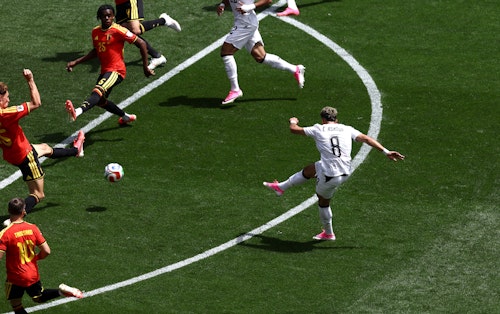
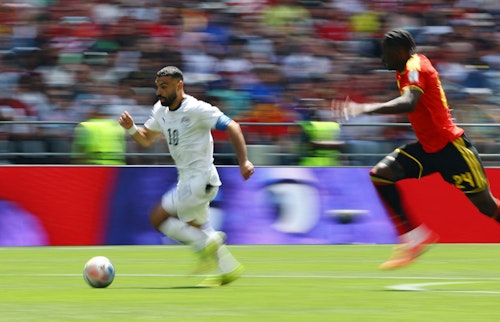
Mohamed Salah’s Egypt led Group G favourites Belgium at half-time after a fierce drive by Eman Ashour put the Pharaohs ahead at the Seattle Stadium on Monday, with the seven-time African champions still chasing their first victory on football’s biggest stage. Follow our live commentary.
Starting XIs of Belgium – Egypt
Belgium: Courtois – De Cuyper, Mechele, Ngoy, Meunier, Castagne – Onana, Tielemans – De Bruyne, Doku, Trossard, De Ketelaere
The Pharaohs’ fans will have enjoyed the first-half display at the Seattle Stadium. Photo: Albert Gea, Reuters
Advertisement
Half-time!
Some chaotic Belgian defending and a missed punch by Courtois twice gives Egypt the chance to score a second, but the Red Devils evenutally clear and that’s it for the first half.
Egypt are deservedly ahead and just 45 minutes away from their first ever World Cup win. Belgium, with zero shots on target, have some work to do.
Advertisement
Doku’s shot flies over the crossbar!
Belgium have their best chance yet, the ball falling to Doku after ricocheting inside the Egypt box.
The Belgian forward is slightly off balance and his shot flies over the bar.
Advertisement
Chance for Trossard
A rare gap in the Egypt defence frees Doku on the right. He cuts back to Trossard whose effort misses the target.
Fatouh is booked
Doku breaks on the right flank and his taken down by Egypt’s Fatouh, who is promptly booked.
Advertisement
Courtois saves!
Zico takes a shot from a tight angle but Courtois fends it off with a fine save. Egypt are brimming with energy.
Advertisement
Shobeir denies De Bruyne
Ashour, who’s all over the pitch, is fouled in defence. But De Bruyne takes a shot anyway, which Shobeir palms away with a flying save.
Advertisement
Match resumes after drinks break
We’re off again after a short hydration break; a chance for Belgium to regroup after falling behind.
A great day for Ashour to score his first international goal. Photo: Lee Smith, Reuters
Advertisement
Egypt take the lead (1-0)! What a goal!
Emam Ashour has given Egypt the lead with a stunning strike from outside the penalty box!
A great ball from Mo Salah and an even better strike by Ashour, who fires a low shot into the left corner past a hapless Courtois.
Advertisement
Castagne booked
The Belgian defender is shown a yellow card for bringing down birthday boy Salah.
Advertisement
Mo Salah turns 34 today. Photo: Agustin Marcarian, Reuters
Advertisement
Yellow card
Attia brings down Ngoy and is booked for halting a potential Belgium counter-attack.
VAR cancels Belgium corner
De Ketelaere wins the first corner of the match for Belgium… only for VAR to rule it a goal kick for Egypt.
Advertisement
Chance for De Bruyne!
A clever pass finds Kevin De Bruyne with space outside the Egypt box. He blasts a shot just wide of Shobeir’s right post.
Egypt won’t want to let him have another go.
Advertisement
Egypt start well
Bright start from the Pharaohs, who may have been piqued by talk of their passive, defensive style of play.
Salah, who turns 34 today, is looking lively at N.10.
Advertisement
Off we go!
Belgium, in their traditional red shirts and black shorts, get the ball rolling. Egypt are in white.
Advertisement
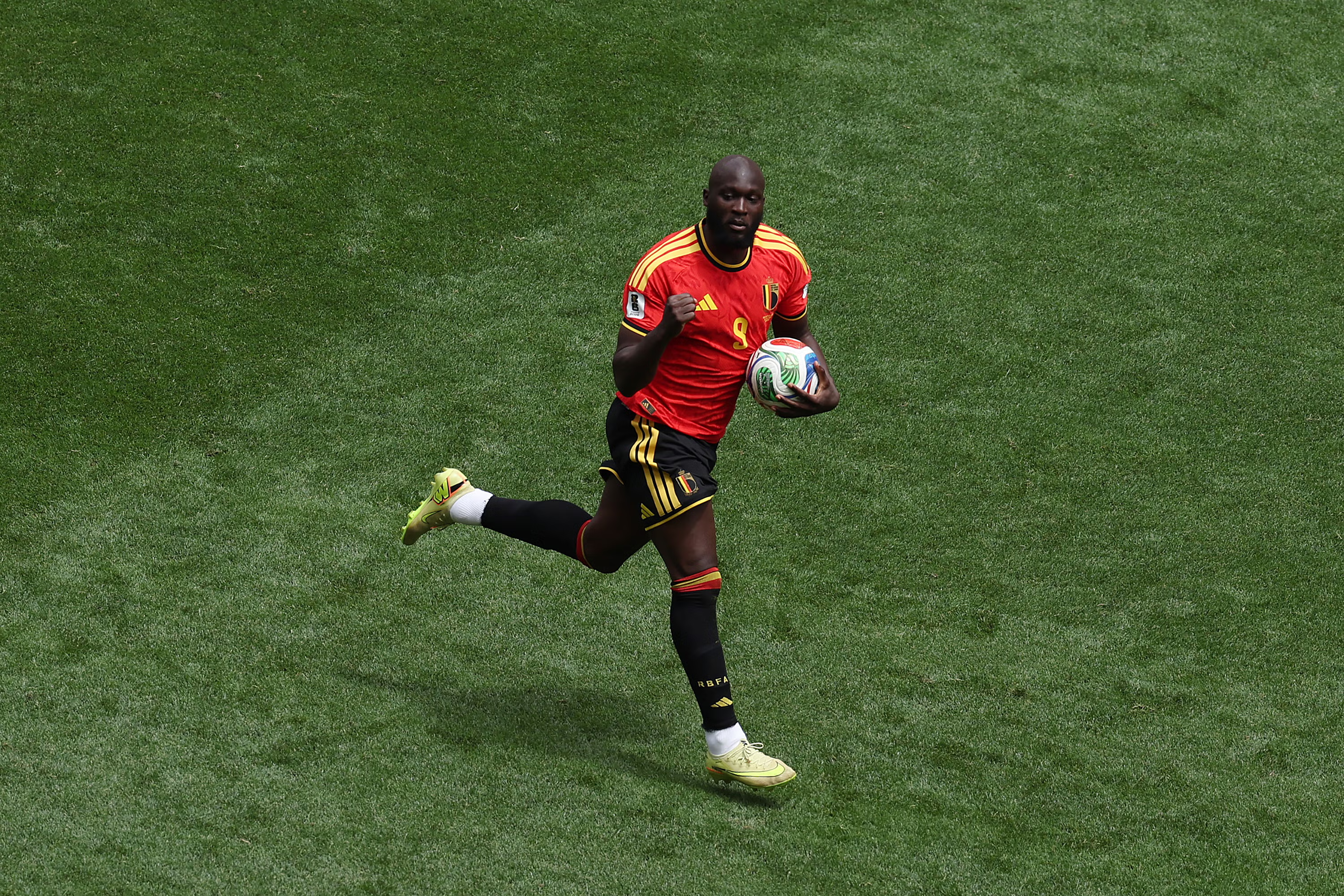
Lukaku on bench
Romelu Lukaku is starting on the bench for Belgium.
That’s no surprise after his injury-plagued season for Italian side Napoli.
Advertisement
Egypt make their World Cup debut on Monday, hoping to clinch a maiden win and qualify for the knockout stages for the first time in four participations. But standing in their way are Group G favourites Belgium, who rank among the tournament’s outsiders.
The Red Devils feature remnants of the “golden generation” that reached third place in 2018, including Kevin De Bruyne, Romelu Lukaku and Thibaut Courtois, though coach Rudi Garcia has overseen a gradual transition towards a younger core led by Jeremy Doku, Amadou Onana and Charles De Ketelaere.
They are expected to dominate possession, while Egypt defend deep and look to their two best players – forward Mohamed Salah and striker Omar Marmoush – to create scoring opportunities with fast breaks. The Pharaohs will take encouragement from the last meeting between the sides, when they claimed a 2-1 victory in a friendly in Kuwait in November 2022.
Monday’s match features the two strongest teams in Group G, which also includes Iran and New Zealand, meaning the game is not necessarily a must-win for either side.
Ireland’s Ciaran Nallon and Megalon K stormed to victory with a blistering double clear in 34.77 seconds in the CSI5* 1.50m PremiuMares Jump-Off class at the Longines Global Champions Tour of Ramatuelle, St. Tropez.
With 16 combinations competing in the class, just 0.13 seconds separated the winner and runner-up, Germany’s Katrin Eckermann and Iron Dames Cascajall NRW, who clocked 34.90 seconds.
France’s Cédric Angot and Gandor du Fief secured third place with a superb clear round in 37.04 seconds.
Advertisement
With Eckermann leading when Nallon entered the arena for the jump-off, he knew exactly what was required. The Irish rider threw everything at the challenge aboard Megalon K. Every distance was attacked, every turn committed, and the huge-striding gelding devoured the ground. As they flashed through the timers, the scoreboard revealed the unbelievable 34.77 seconds.
“I’m super proud of our mare, she tried her heart out and with the whistles from hospitality I knew I was in with a chance as I galloped to the last.
“If I hadn’t been watching Katrin’s (Eckermann, eventual runner-up) round I don’t think I’d have taken the risk!”
Pender & Lynch
Fresh from last week’s LGCT Grand Prix runner up in Cannes, Michael Pender looked determined to continue his incredible form aboard HHS Cyprus. Unfortunately, the Barnes red oxer claimed another victim and four faults in 44.69 seconds ended his challenge.
Advertisement
For Denis Lynch, the challenge was effectively over before it had begun. A rail at the very first fence aboard Chicago immediately put him on the back foot, eventually finishing on 4 faults in 38.88 seconds.
Jul 29, 2025; Eagan, MN, USA; Minnesota Vikings head coach Kevin O’Connell talks with tight end T.J. Hockenson (87) during the teams training camp at the Minnesota Vikings Training Facility. Mandatory Credit: Matt Krohn-Imagn Images
In the context of NFL football, being a “meathead” is a great compliment. That basic idea is doubly true upon remembering that the focus of the discussion involves a fullback.
In the 5th Round of the 2026 NFL Draft, the Vikings drafted Max Bredeson. Much of the reaction to the selection swirled around the FB being a teammate of J.J. McCarthy at Michigan. After all, McCarthy showed up on the Zoom call following the selection, verbally expressing enthusiasm about the draft pick. Since then, a decent bit has happened, including Vikings mandatory minicamp. OC Wes Phillips bestowed the descriptor while chatting with the media following one of the recent practices.
The Vikings’ New FB is a “Dirtbag” and a “Meathead”
For a little while, the Vikings have needed to get tougher. Kevin O’Connell’s team has always been a high-flying, high-skill crew. Seldom, though, have these Vikings been rugged enough.
Advertisement
Part of the solution has been found in acquiring certain personnel. Think tight end Josh Oliver, somebody who stands out for his massive size even among NFL athletes. So, too, do running back Jordan Mason and right guard Will Fries offer much to like due to their ruggedness. All three of these guys are meant to allow Minnesota better play bully ball.
Jan 4, 2026; Minneapolis, Minnesota, USA; Minnesota Vikings quarterback J.J. McCarthy (9) hands the ball off to Minnesota Vikings running back Jordan Mason (27) against the Green Bay Packers during the first quarter at U.S. Bank Stadium. Mandatory Credit: Jeffrey Becker-Imagn Images
More recently, there was the move for wide receiver Jauan Jennings. Jennings stands at 6’3″ and roughly 215 pounds. Even better, Jennings offers a grit and a nastiness that means being able to bulldoze defensive backs.
Kyler Murray had referred to Jennings as a “dirtbag,” a descriptor meant to highlight the physicality that Jennings plays with on Sunday. Phillips then stepped in front of the Minnesota media the next day, allowing me to ask about the comment. Phillips wanted some reassurance that being a “dirtbag” was a compliment. Since it was, Phillips was glad to adopt the term, even applying it to somebody else a few minutes later.
Indeed, a few minutes later, Phillips took on a question about Max Bredeson, allowing Phillips to reaffirm the value of boasting a “dirtbag” who is also a “meathead.”
Advertisement
“Max is probably another dirtbag,” Phillips said before explaining that the term is “absolutely” a compliment. Not long afterwards, the Vikings’ OC referred to the FB as a “meathead” who “loves ball” and who is “very smart.” Since “he’s all about ball” and is “a physical guy,” Bredeson is impressing the coaching staff.
Jan 1, 2024; Pasadena, CA, USA; Michigan Wolverines quarterback J.J. McCarthy (9) and tight end Max Bredeson (44) during the first half against the Alabama Crimson Tide in the 2024 Rose Bowl college football playoff semifinal game at Rose Bowl. Mandatory Credit: Jayne Kamin-Oncea-USA TODAY Sports
In all likelihood, the Minnesota Vikings will remain a pass-first team. Doing so will mean rolling with Justin Jefferson, Jordan Addison, and Jauan Jennings for a large portion of the snaps. Well and good.
But then there’s the young lad lining up at fullback. Max Bredeson isn’t guaranteed of anything since he’s a 5th-Round fullback. What’s clear, though, is that he has a ton of supporters inside TCO Performance Center. Watching him a minicamp means seeing somebody who moves well and who appears poised to take on a hearty workload.
Quite possibly, Bredeson will force the Vikings to adopt a more balanced attack than in recent seasons. Seeing Bredeson clear running lanes for Mason could mean more emphasis on 21 personnel.
Bredeson, the meathead, will look continue impressing once he’s allowed to toss the pads on in training camp and in the preseason.
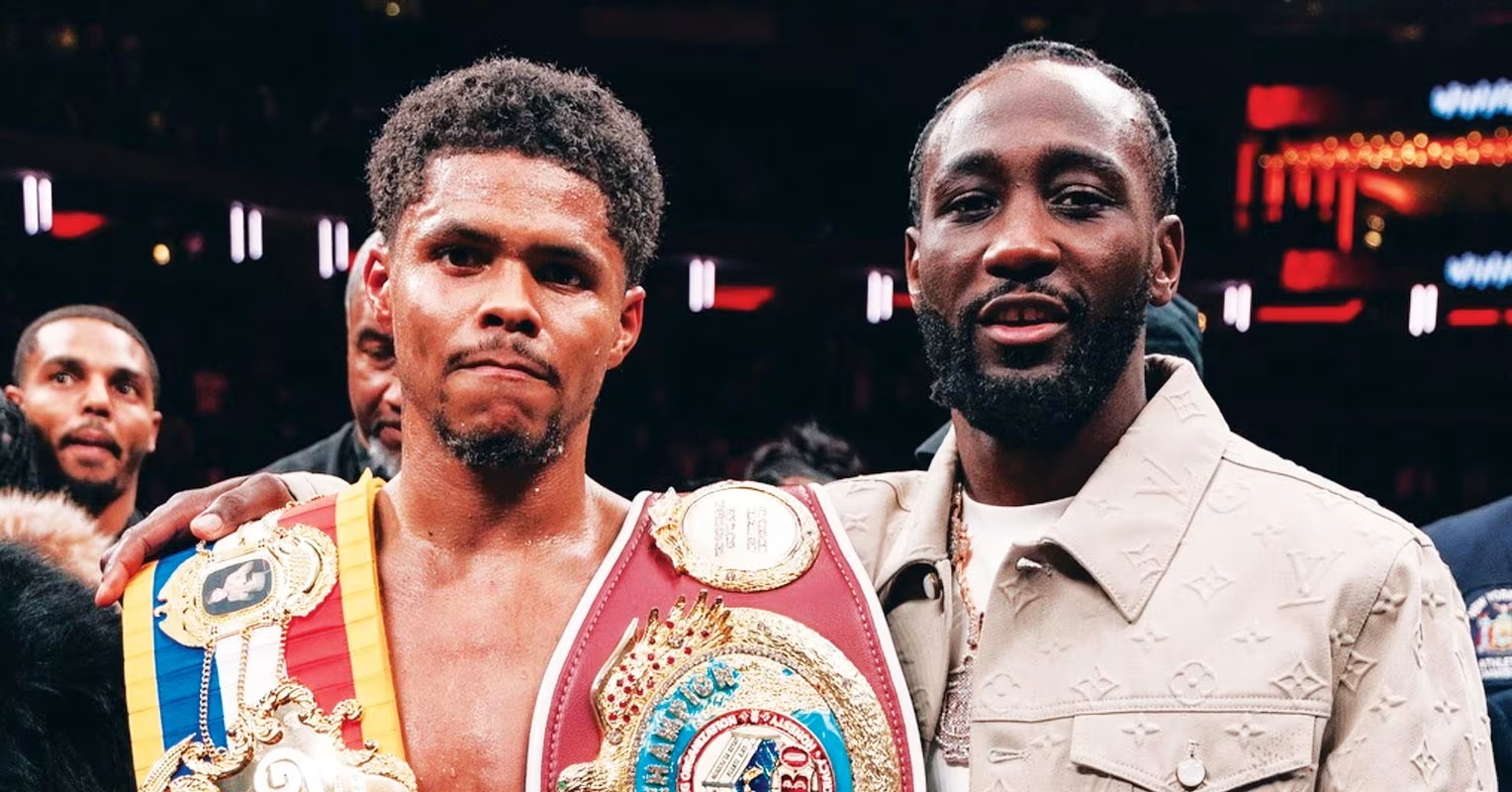
Shakur Stevenson is on the verge of recognition as one of boxing’s best and he has moved higher up the rankings following the retirement of good friend, Terence Crawford.
However, despite their relationship, there is one fighter that Stevenson believes could have beaten ‘Bud’, if they met in their primes.
That win earned Crawford an enormous amount of credit, thrusting himself into comparisons with those considered to be some of the greatest fighters in the long history of the sport.
“It is hard to say with this s**t because, with both of them guys, they different, so it is hard to even picture who would win. Now, what I do say, I think that Floyd, early on in his career, he struggled with southpaws; I feel like ‘Bud’ is probably going to be a southpaw and be the southpaw that he has ever been against. So that would probably play a part.
“But, I’ve seen ‘Bud’ have little issues with guys like ‘Mean Machine’ [Egidijus Kavaliauskas], who was orthodox and [Yuriorkis] Gamboa was winning some rounds, so it is a 50/50 thing. You just never know who would come in on point and win that fight, so it’s hard for me to even give an answer.”
Whilst Crawford’s unbeaten record seems set in stone, Mayweather’s fabled 50-fight win streak could be at risk, if his mooted September rematch with Manny Pacquiao is a professional contest.
Cape Verde is a small island nation located off the coast of Africa. Its population is just over 524,800 and each one of them had to have been jubilant following their soccer team’s FIFA World Cup result against Spain.
Spain is one of the favorites to win the World Cup this year, but only picked up one point in their match against Cape Verde. The two sides came to a 0-0 tie on Monday in one of the biggest shockers of the tournament so far.
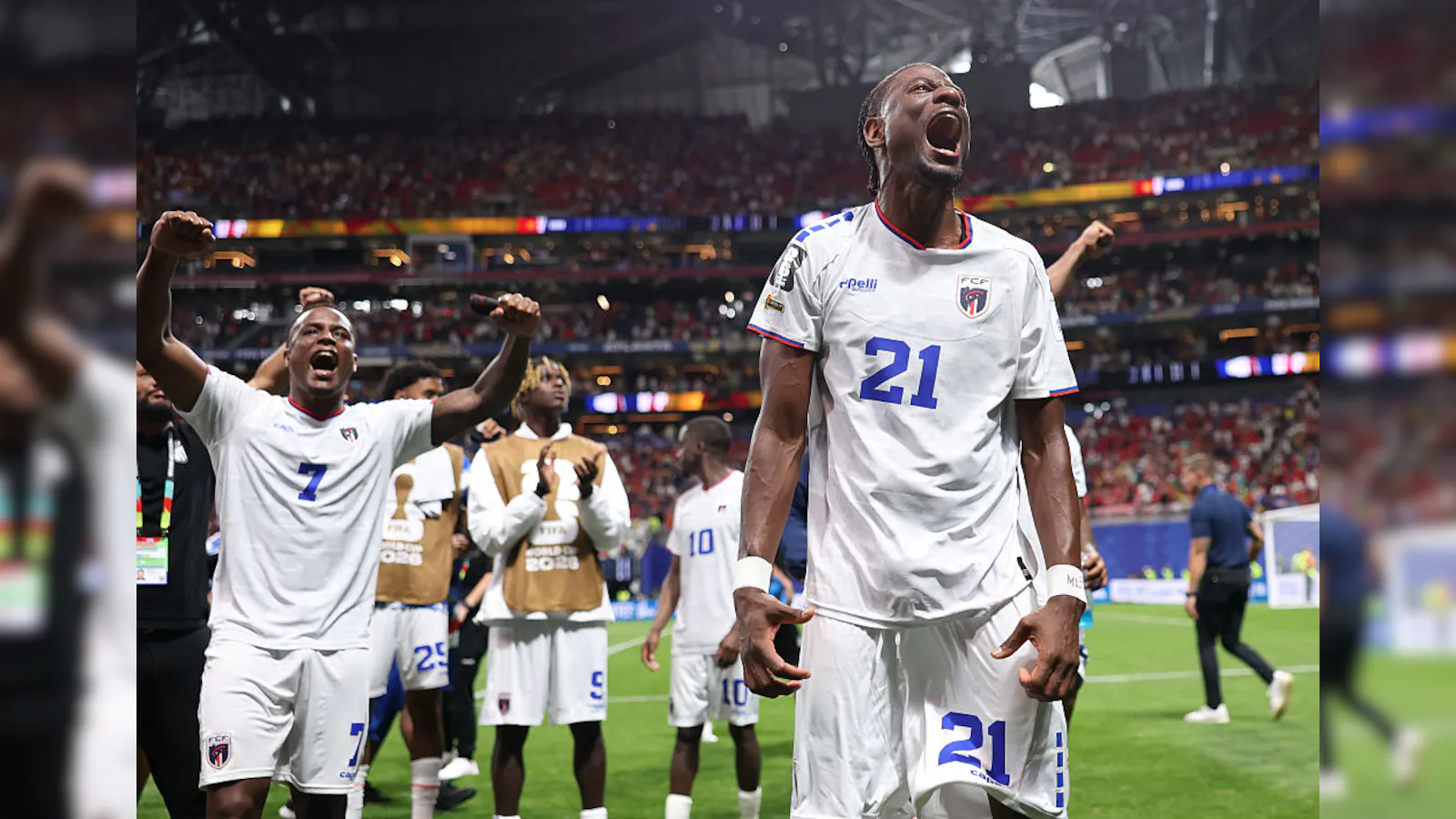
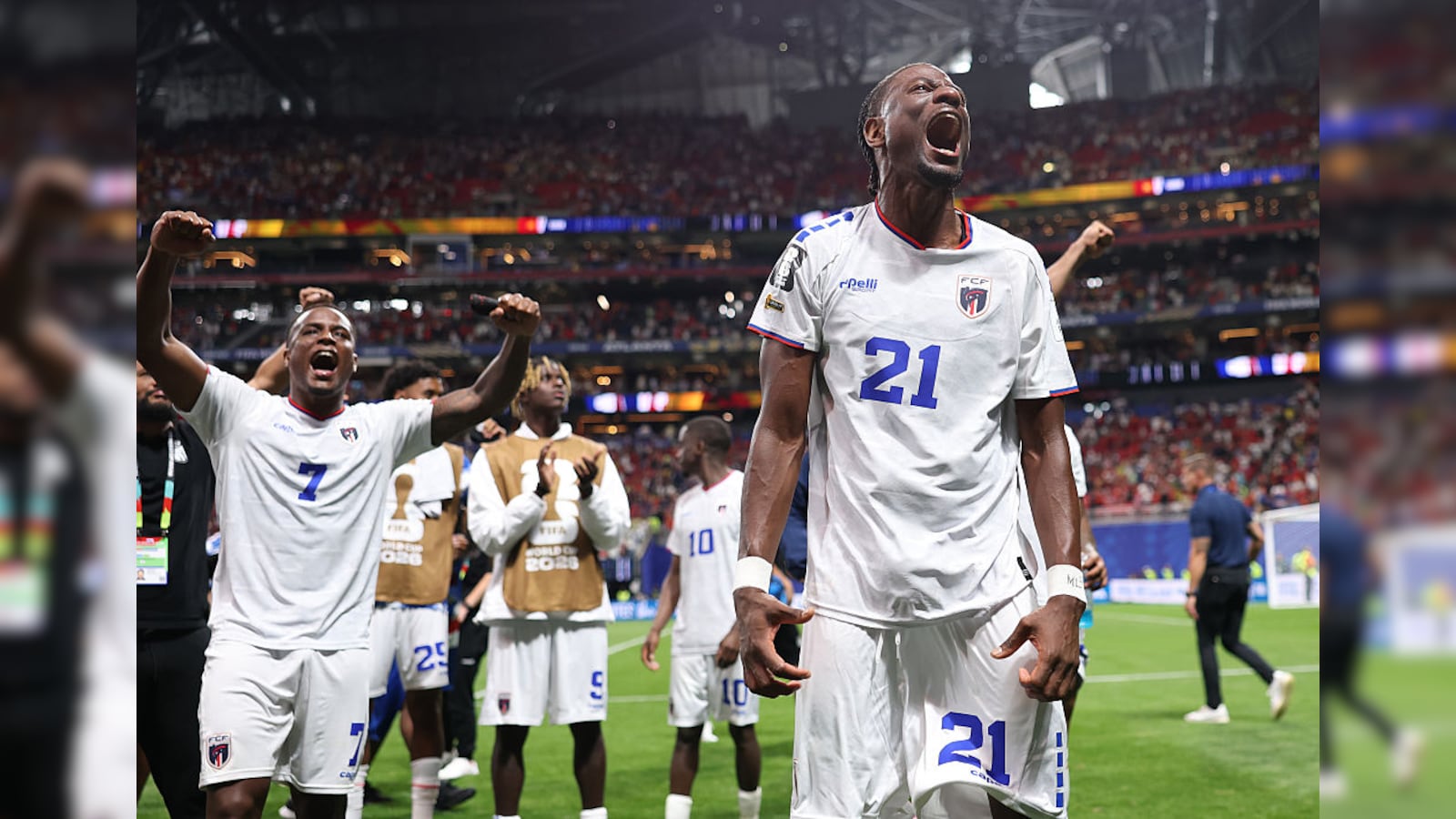
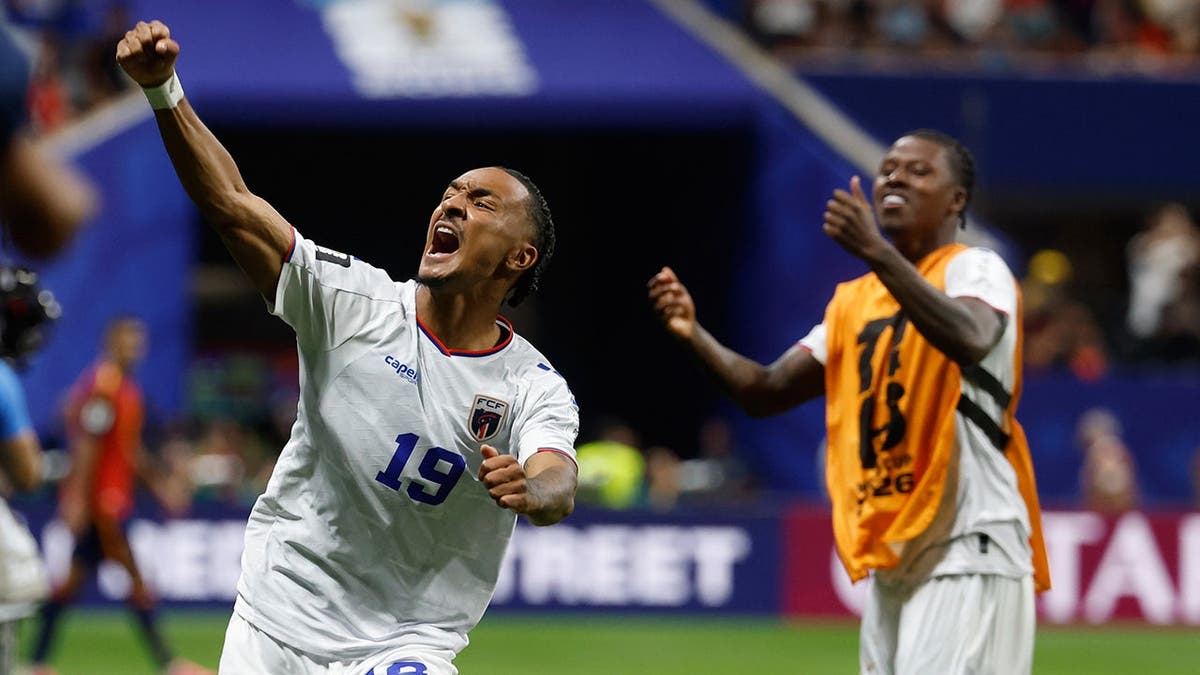
Cape Verde players celebrate after the World Cup Group H soccer match against Spain in Atlanta on June 15, 2026.(Mike Stewart/AP)
Cape Verde’s 40-year-old goalkeeper Vozinha kept Spain at bay in the first half despite an onslaught of shots. Spain had seven shots on goal, compared to Cape Verde’s one, but could never find the back of the net.
Mikel Oyarzabal took five of the seven shots.
Spanish sensation Lamine Yamal started the game off the bench, but even he couldn’t find the shot to get past Cape Verde.
The two squads will come away with one point each in the Group H matchup. It makes the road for Spain that much difficult as they await the result from the Saudi Arabia-Uruguay matchup later Monday.
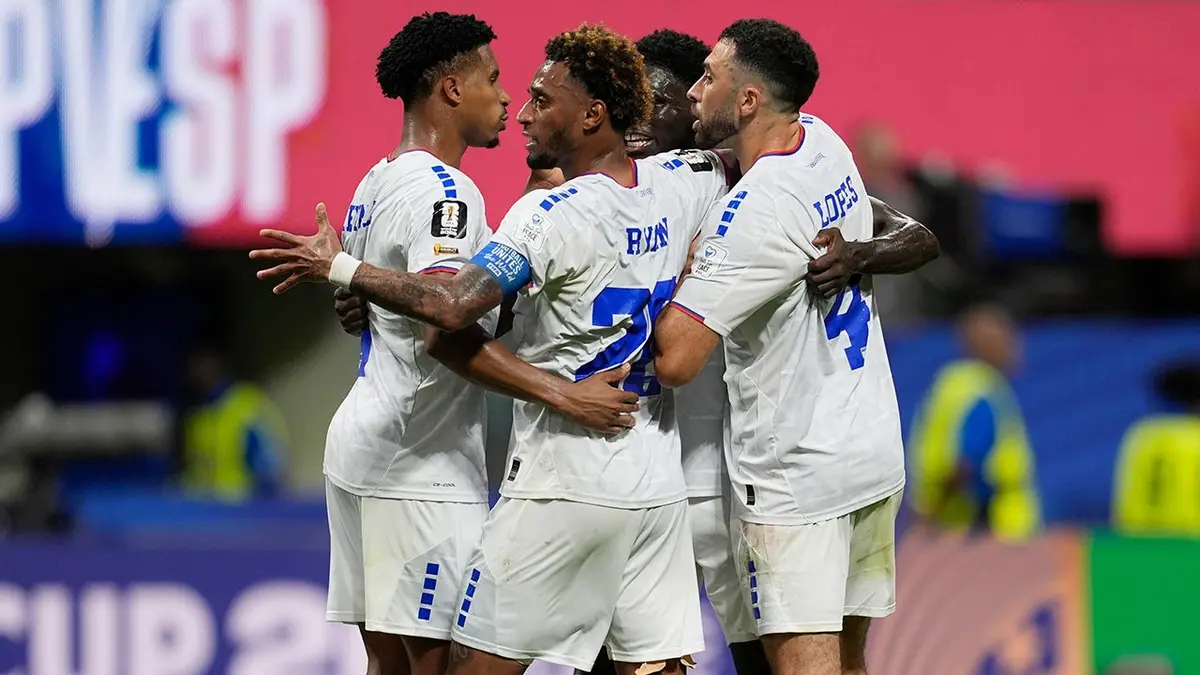
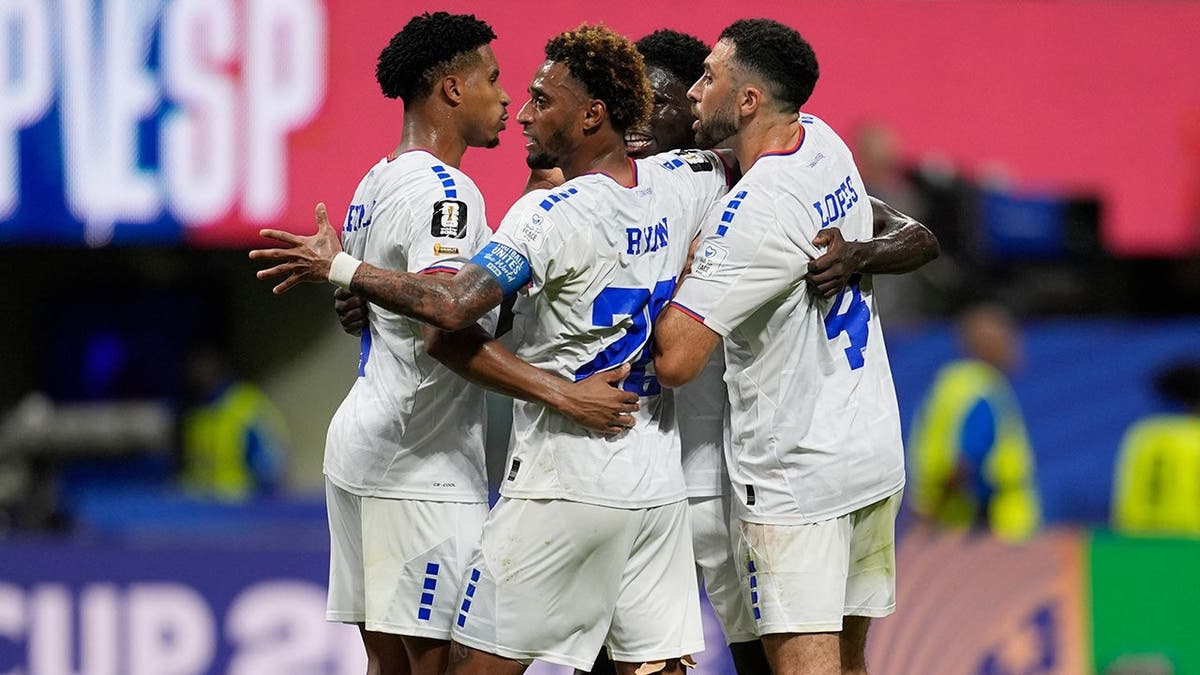
Cape Verde’s Dailon Livramento and Sidny Lopes Cabral celebrate after the World Cup Group H match against Spain in Atlanta on June 15, 2026.(Erik S. Lesser/AP)
Cape Verde is making its first World Cup appearance. The nation was a part of Portugal when the World Cup first began. It didn’t immediately become a FIFA member either.
The country started to vie for a World Cup appearance in 2002. They didn’t qualify for the tournament until this year as the field expanded to 48 nations.
Cape Verde is ranked 67th among FIFA members.
Advertisement
Spain won the World Cup in 2010 when the tournament took place in South Africa. In the last two tournaments, the nation only got as far as the round of 16.
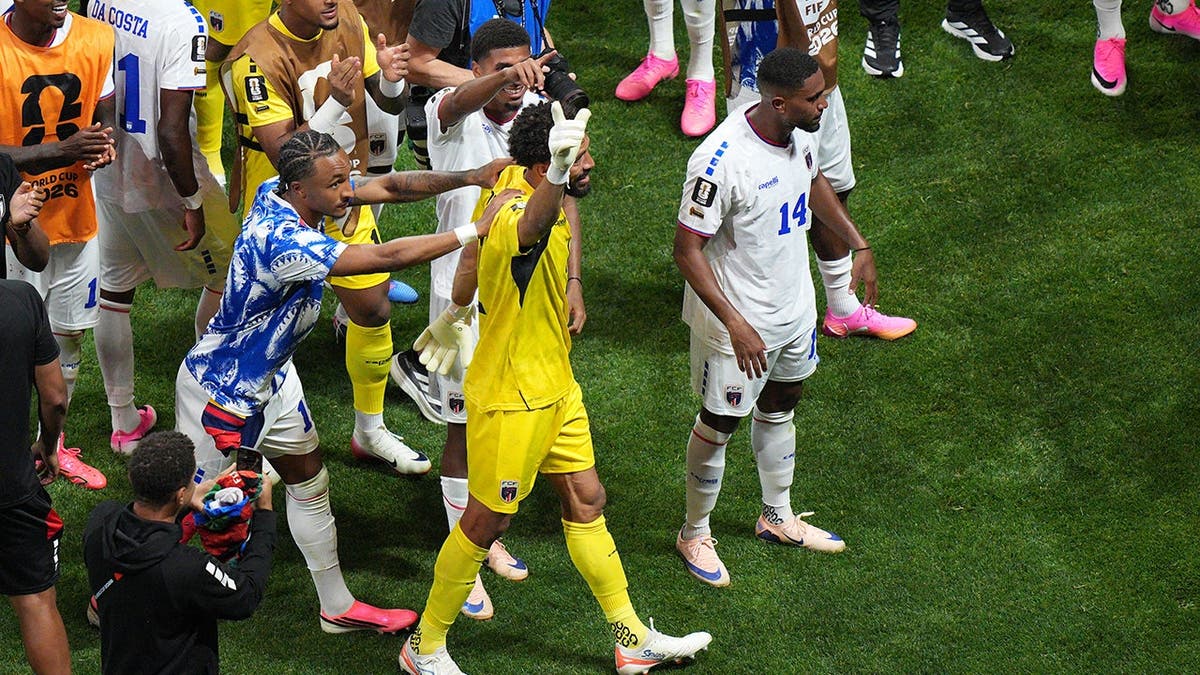
Cape Verde goalkeeper Vozinha celebrates a 0-0 draw during the World Cup Group H soccer match between Spain and Cape Verde in Atlanta on June 15, 2026.(Jacob Kupferman/Associated Press)







;)
;)
;)
;)






































You must be logged in to post a comment Login