







Connect with us
DAPA Banner
DAPA Coin
DAPA
COIN PAYMENT ASSET
PRIVACY · BLOCKDAG · HOMOMORPHIC ENCRYPTION · RUST
ElGamal Encrypted MINE DAPA
🚫 GENESIS SOLD OUT
DAPAPAY COMING

Business

Endeavour retains Cape Mentelle amid sweeping wine business sell down

Published

on

Endeavour retains Cape Mentelle amid sweeping wine business sell down

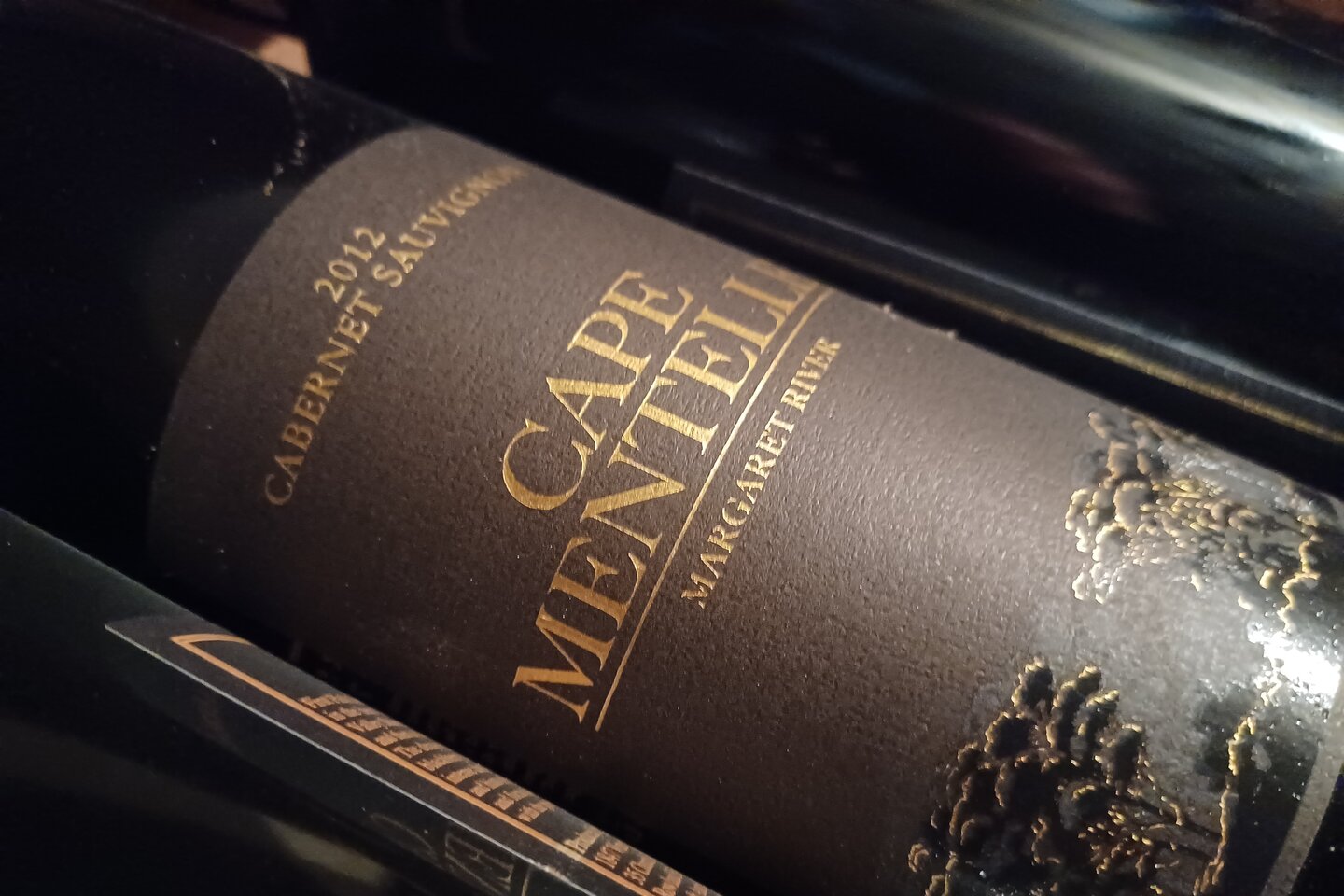
Renowned Margaret River winery Cape Mentelle will remain in liquor giant Endeavor Group’s portfolio amid a major sell down of wine assets.

Continue Reading
Click to comment

You must be logged in to post a comment Login

Leave a Reply

Business

Geely Stock: The Long-Term Growth Story Remains Intact (OTCMKTS:GELYF)

Published

on

Geely Stock: The Long-Term Growth Story Remains Intact (OTCMKTS:GELYF)

This article was written by

I’m a retired economist. Over the decades I focused on the auto industry and on the Japanese economy. I also taught a course on the Chinese economy for 30+ years. Prior to that I was an international banker and worked in factories. I began visiting automotive suppliers in Japan in 1983 for my PhD, while based at Hitotsubashi University and the University of Tokyo. Since 1994 I’ve served as a judge for the Automotive News PACE awards, visiting suppliers (under an NDA) for business case and engineering presentations on innovations. Over the years I’ve visited over 100 suppliers, in Korea, Japan, China and the Philippines, the US/Canada/Mexico, many countries in Europe, and Israel. I’m also on the steering committee of the GERPISA consortium of auto industry researchers, and helped plan their June 2022 global conference in Detroit. I’m the co-author of Smitka and Warrian (2017), A Profile of the Global Auto Industry: Innovation and Dynamics, available on Amazon as an eBook.I first lived in Tokyo in 1975, after graduating from Harvard with a degree in East Asian Studies. My econ PhD is from Yale; the Nobel Laureate Oliver Williamson was my dissertation chair. I’ve spent 7+ years in Japan, and 2 months or more in China, Korea, Germany and the Philippines. I read, write and speak Japanese, and read German and (a covid project) now read Chinese.My current research interests are technology in the automotive supply chain, and the Chinese industry. I am active in my community, the Treasurer for 2 non-profits and on the Board of a 3rd.My investing is mostly passive, via my university’s TIAA retirement plan, supplemented by direct holdings of 20 or so equities.

Analyst’s Disclosure: I/we have a beneficial long position in the shares of GELHY either through stock ownership, options, or other derivatives. I wrote this article myself, and it expresses my own opinions. I am not receiving compensation for it (other than from Seeking Alpha). I have no business relationship with any company whose stock is mentioned in this article.

My position is small (50 shares), which is also the case for my other direct investments. Most of my wealth remains locked in tax-advantaged TIAA retirement funds that do not allow choosing individual stocks.

Advertisement

Seeking Alpha’s Disclosure: Past performance is no guarantee of future results. No recommendation or advice is being given as to whether any investment is suitable for a particular investor. Any views or opinions expressed above may not reflect those of Seeking Alpha as a whole. Seeking Alpha is not a licensed securities dealer, broker or US investment adviser or investment bank. Our analysts are third party authors that include both professional investors and individual investors who may not be licensed or certified by any institute or regulatory body.

Continue Reading

Business

Making it easy to get on your bike

Published

on

Making it easy to get on your bike

A Perth startup has created the Uber for scooters and mopeds.

Continue Reading

Business

FirstCry shares fall 3% despite Q4 net loss narrowing to Rs 30 crore. What is Morgan Stanley saying?

Published

on

FirstCry shares fall 3% despite Q4 net loss narrowing to Rs 30 crore. What is Morgan Stanley saying?
The shares of FirstCry-parent Brainbees Solutions declined over 3% to their day’s low of Rs 229 on the NSE on Wednesday even as its Q4 net loss narrowed 61% to Rs 30.30 crore from the Rs 77 crore net profit reported in the corresponding quarter of the previous financial year.

The company released its results on Tuesday after market hours. While losses contracted sharply, revenue grew 12% YoY to Rs 2,163 crore in Q4 FY26, up from Rs 1,930 crore in the same quarter last year.

Although the net loss contracted sharply year-on-year, it increased sequentially from the Rs 28.43 crore net loss reported in the October-December quarter of the same financial year. The firm’s topline also declined 11% quarter-on-quarter from the Rs 2,424 crore revenue reported in the previous quarter of FY26.

The company’s adjusted Earnings Before Interest, Taxes, Depreciation and Amortisation (EBITDA) stood at Rs 119 crore versus Rs 101 crore in the year-ago period, while the adjusted EBITDA margin in Q4 FY26 was 5.5% compared to 5.2% in Q4 FY25.

Advertisement

Overall for the financial year ending March 31, 2026, FirstCry reported a 23% YoY drop in net loss while revenue grew 12% YoY and EBITDA rose 24% YoY. “With our current initiatives, we believe that structurally the growth rate for both online & offline channels will be much superior in FY27,” the company said in an exchange filing.


It added that it witnessed sequential improvement in YoY growth rate for revenue, despite heightened competitive intensity during the quarter. With its initiatives in offline channels, GMV grew in the mid-teens in Q4FY26, the filing said.
Morgan Stanley has maintained its “Equal-weight” rating on Brainbees Solutions Limited with a target price of Rs 300 (10% upside). The brokerage noted that margins were impacted by intense competition in the diapers segment and higher manufacturing costs. Management expects the India business growth rate in FY27 to improve over FY26, while manufacturing-related margin pressures are likely to reverse from Q2 onward. The brokerage added that competitive intensity in diapers could continue for another four to six quarters, even as the company targets adding more than 100 stores in FY27.

(Disclaimer: Recommendations, suggestions, views and opinions given by the experts are their own. These do not represent the views of The Economic Times)

Continue Reading

Business

Coal India shares slide 6% after PSU prices Rs 5,000 crore OFS at 10% discount

Published

on

Coal India shares slide 6% after PSU prices Rs 5,000 crore OFS at 10% discount
Shares of Coal India fell over 6% on Wednesday after the state-run miner said that the government will sell up to 2% stake in the company through an offer for sale at a floor price of Rs 412 per share, implying a 10% discount from the previous closing price of Rs 458.15 apiece on NSE.

Coal India announced on Tuesday that it aims to sell 6.16 crore equity shares, representing 1% of Coal India’s total paid-up equity capital, as the base offer size. The government also retains an oversubscription option to sell an additional 6.16 crore shares, taking the total potential offer size to 12.32 crore shares or 2% equity. At the floor price, this would be worth more than Rs 5,000 crore.

The offer for sale will open for non-retail investors on May 27, while retail investors, eligible employees and non-retail investors carrying forward unallotted bids can participate on May 29. It is important to note that the Indian stock market will remain closed on May 28 on account of Bakrid.

The government owned more than 63% stake in the PSU company, as on March 31, 2026. Coal India in its exchange filing further said that the share sale by its promoter will be conducted through a separate window mechanism on BSE and the National Stock Exchange in accordance with the Securities and Exchange Board of India’s OFS guidelines.

Advertisement

Additionally, 16 lakh Coal India shares changed hands in the block deal on Wednesday morning, according to ET Now.


Also read: Govt to offload up to 2% stake in Coal India via OFS on May 27-29

Coal India share price

Coal India shares sharply declined more than 6% to trade at Rs 428.40 apiece on NSE in the early trading hours of Wednesday. The stock has declined around 5% in one week and more than 3% in one month. Overall, the share price of the miner have gained more than 9% so far in 2026.
In the longer term, Coal India shares gained over 9% in one year, 81% in three years and 202% in five years. The company has a market capitalisation of nearly Rs 2.7 lakh crore.Coal India reported a steady March quarter performance, with consolidated profit after tax rising 12% YoY to Rs 10,908 crore, while revenue from operations increased 6% to Rs 46,490 crore, supported by improved realizations and higher other income.

Further, Coal India’s board also declared a final dividend for FY26 at Rs 5.25 per share. Payment of the final dividend for FY26 will be made subject to approval of shareholders in the upcoming AGM.

Also read: Coal India dismisses shortage fears; says 168 MT buffer available to meet rising demand

Advertisement

(Disclaimer: Recommendations, suggestions, views and opinions given by the experts are their own. These do not represent the views of The Economic Times)

Continue Reading

Business

Children's meals to be cheaper under VAT cut

Published

on

Children's meals to be cheaper under VAT cut

The cost of children’s meals in restaurants is set to come down as VAT on some items is cut to 5%.

Continue Reading

Business

Aequs shares slide 6% after Q4 swings to loss despite strong revenue growth

Published

on

Aequs shares slide 6% after Q4 swings to loss despite strong revenue growth
Aequs Limited shares dropped 6.25% to Rs 198.39 during Wednesday’s trading session after the company reported a sharp decline in profitability for the March quarter and widened full-year losses for FY26.

The stock came under pressure even as the company posted robust revenue growth, with investors appearing concerned over rising operational costs and continued losses in the consumer electronics business.

Aequs reported a consolidated net loss of Rs 54.1 crore in Q4FY26, compared to a net profit of Rs 9 crore in the corresponding quarter last year.

However, revenue from operations surged 47% year-on-year to Rs 367.1 crore, up from Rs 249.3 crore in Q4FY25, supported by strong momentum in its aerospace business and rapid scaling of the consumer segment.

Advertisement

EBITDA came in at Rs 32.1 crore, while the EBITDA margin stood at 9%. Margins contracted mainly due to the commencement of commercial operations in the consumer electronics segment during Q3FY26, which led to full operating costs being booked even as utilisation levels remained low.


The consumer business contributed 17% to total quarterly revenues, highlighting the company’s ongoing expansion in the segment.

FY26 Performance: Revenue and EBITDA Rise, But Losses Widen

For the financial year FY26, Aequs Limited reported a net loss of Rs 113.3 crore, with losses widening compared to the previous financial year. Despite pressure on profitability, the company delivered strong operational performance driven by growth across its core businesses.
Revenue for the year rose 33% year-on-year to Rs 1,230.4 crore, reflecting healthy demand momentum and continued business expansion. EBITDA also registered robust growth, increasing 43% YoY to Rs 154.5 crore. The improvement in margins was supported by operating leverage benefits and enhanced cost efficiencies across operations.
The aerospace division continued to be the company’s primary growth engine during FY26, contributing significantly to overall business momentum and revenue expansion.

Key highlights include:

The aerospace segment continued to witness strong momentum during FY26, with revenue rising 27% year-on-year to Rs 1,046.4 crore. The company also strengthened its long-term business visibility, with the aerospace order book expanding to USD 889 million.

During the fourth quarter alone, Aequs added 433 new aerospace parts, taking its total aerospace portfolio to 5,654 SKUs. Overall, the aerospace SKU portfolio recorded a healthy 26% year-on-year expansion, reflecting growing scale and deeper engagement with global aerospace programs.

Advertisement

Meanwhile, the consumer business continued its rapid scale-up, delivering 84% revenue growth during the year.

Capacity utilisation improved across key business segments during FY26, with the consumer segment operating at 23% utilisation, while the aerospace segment reached 62% overall utilisation, including 70% utilisation in India operations.

To further strengthen its manufacturing presence, Aequs Limited announced major expansion plans through strategic investment commitments. The company signed a Rs 1,900 crore MoU with Tamil Nadu to develop an integrated aerospace ecosystem and a Rs 2,856 crore MoU with Karnataka for capacity expansion across multiple business segments.

Management Commentary

Aravind Melligeri, Executive Chairman and Chief Executive Officer, described FY26 as a “landmark year” for the company, driven by strong execution, business expansion, and its IPO.

Advertisement

He highlighted that the aerospace business continued to gain traction with a strong order book, while the consumer segment entered full-scale production and revenue recognition phase.

According to management, Aequs is now focused on expanding manufacturing capabilities, deepening OEM partnerships, and moving toward higher-margin aerospace programs.

Stock Performance & Technical View

Despite Wednesday’s correction, Aequs shares have rallied nearly 49% over the last three months, reflecting strong investor interest in the company’s aerospace growth story.

The company currently commands a market capitalisation of around Rs 14,500 crore, while its 52-week high stands at Rs 223.85.

Advertisement

On the technical front, the stock’s 14-day Relative Strength Index (RSI) is at 61.8, indicating positive momentum. An RSI below 30 is generally considered oversold, while a reading above 70 signals overbought conditions.

(Disclaimer: Recommendations, suggestions, views and opinions given by the experts are their own. These do not represent the views of The Economic Times)

Continue Reading

Business

The huge impact of net zero industries on the Welsh economy

Published

on

Business Live

New research has been commissioned by Energy and Climate Intelligence Unit

Net zero(Image: InYourArea)

Net zero-related industries contribute £4bn of GVA (gross value added) to the Welsh economy and support over 41,300 jobs, shows new research.

The report, commissioned by the Energy and Climate Intelligence Unit (ECIU) with analysis provided by the independent consultancy CBI Economics and the Data City, found that more than 1,300 businesses- mostly (87%) small or medium-sized – are now part of the Welsh net zero economy. Around a sixth (15%) of those have started up in just the past five years.

Workers in the net zero economy are highly productive generating £117,500 of value on average, around 1.7 times the Welsh average. This helps support higher wages with workers earning £39,812 on average, approximately 11% above the Welsh industry average (£35,796).

The GVA contribution of net zero represents 4.3% of Wales’s total economic output and 3.1% of employment.

Advertisement

READ MORE: Economy Minister Adam Price on a new development agency the Development Bank of Wales and economic targetsREAD MORE: Marine engineering firm Avantis eyeing expansion on equity boost

The analysis also found that Wales has a potential £13.1bn renewable energy generation infrastructure pipeline, representing 10.9 gigawatt of capacity, but not all of it as yet is guaranteed to be built.

Wrexham records the highest share of local economic activity (GVA) supported by net zero at 7%, supporting more than 2,340 jobs. The area has a concentration of net zero businesses that is around eleven times higher than the UK average. This is followed by other net zero economic ‘hotspots’: Pembrokeshire (5.3% area GVA, 1,600 jobs), Rhondda Cynon Taf (5.2% area GVA, 2,890 jobs) and Newport (5.1% area GVA, 2,620 jobs).

The jobs are distributed across energy generation, manufacturing, construction, engineering and professional services, from solar panel installers to electric vehicle charging companies. Around 160 firms are involved in electric heat pumps and other renewable heating sources.

Advertisement

Russell Greenslade, CBI Wales director, said: “With our unique natural assets, strength in advanced manufacturing and well-established supply chains, we’ve long known that the net zero economy presents a major commercial opportunity for Wales.

“This new report underlines just how central the net zero economy is to our future prosperity. From onshore and offshore wind to carbon capture and emerging clean technologies, Wales can be at the forefront of the UK’s energy transition, with high-value, highly productive jobs created in every part of the country.

“The UK and Welsh governments must now work in partnership with business to seize that opportunity. That means creating a stable, competitive business environment and investing in the skills that will enable Welsh workers to thrive in the energy transition.”

Peter Chalkley, director of the Energy and Climate Intelligence Unit, said: “Reaching net zero emissions is scientifically the only way to bring balance back to the climate and stop climate change, but it’s also now a major component of the Welsh economy. With countries and states covering 84% of the global economy committed to net zero, Wales is very much part of a global race to build competitive, clean industries.

Advertisement

“This means there is real jeopardy for jobs and livelihoods if politics and policy shift and Wales starts to fall behind – standing still is unfortunately a recipe for decline. The hard work of the staff of hundreds of small businesses are driving the Welsh net zero economy forwards, installing heat pumps and solar panels, developing smart software for charging EVs and producing green hydrogen.”

“These workers are helping to make Wales more energy independent given net zero emissions essentially means burning less oil and gas. But Wales has slipped behind England and Scotland in its construction of renewable energy set against the backdrop of the US Iran conflict and the second oil and gas price crisis in just a matter of years.”

A Labour source said “When it comes to our energy infrastructure, Plaid claim to be pro green energy but have shown themselves to be a party of blockers. Now they are in government, obfuscating won’t do. Their position on undergrounding (transmission lines) doesn’t match the reality needed to help realise Wales’ potential as a leader in clean energy.

“The UK Government has already invested heavily in boosting these sectors in Wales, supporting jobs and helping to lower bills in the process. Plaid shouldn’t put that progress in danger.”

Advertisement
Continue Reading

Business

We want everyone to use our 'very green grocery'

Published

on

We want everyone to use our 'very green grocery'

A charity selling over supplies and damaged stock say they want to cut waste and help people live.

Continue Reading

Business

Wordle Answer for May 27, 2026 Revealed in Popular Daily Puzzle

Published

on

Air travellers wearing a protective face masks, amid the coronavirus disease (COVID-19) pandemic, at JFK International airport in New York

NEW YORK — The New York Times’ Wordle puzzle for Wednesday delivered “STUFF” as the solution for game No. 1,803, offering millions of players a moderately challenging test built around common letters and a repeated consonant.

The five-letter noun, which can refer to material, personal belongings or miscellaneous items, fits neatly into the game’s emphasis on everyday vocabulary. Official testers averaged about 4.4 guesses to crack it, according to the New York Times review.

Wordle remains a global staple years after its creation by Josh Wardle and its 2022 acquisition by the New York Times. The simple rules — six attempts to identify a hidden five-letter word with color-coded feedback — continue to draw dedicated fans who tackle the same puzzle each day regardless of location.

For many in Seoul and across Asia, the puzzle drops during evening hours, creating a shared moment with players in the Americas and Europe. Green tiles indicate correct letters in the right spot, yellow shows correct letters in the wrong position, and gray marks absent letters.

Advertisement

“STUFF” featured a double “F” at the end, a pattern that tripped up some solvers who overlooked repeated letters. Many started with strong openers such as “SLATE,” “CRANE” or “RAISE,” which efficiently tested common vowels and consonants. The word’s balanced mix of frequent letters kept it accessible without being overly obvious.

Social media filled with shared grids as the day unfolded. Some celebrated extended streaks, while others noted the puzzle as a fair midweek test that rewarded logical deduction over obscure knowledge.

The game’s lasting appeal lies in its balance of simplicity and strategy. No downloads are required for core play, though subscribers gain access to tools like the Wordle Bot for performance analysis.

Wordle’s Continued Cultural Footprint

Since bursting onto the scene in late 2021, Wordle has influenced a wave of digital word games. Its minimalist interface and daily rhythm turned it into a ritual for individuals, families and office groups.

Advertisement

The New York Times has integrated it into a broader puzzle ecosystem that includes Connections, Spelling Bee and others. Puzzle No. 1,803 continues the unbroken daily sequence that fosters a sense of global community.

“STUFF” aligns with the publication’s careful curation process. Editors select words that avoid offensive content while maintaining variety in difficulty. The solution’s definition, per Webster’s New World College Dictionary, covers “the material or substance out of which anything is or can be made; raw material,” along with more casual uses for things or belongings.

Players who struggled often missed the repeated “F” or tested incorrect vowel placements early. Online hints encouraged focusing on common endings and versatile nouns.

Effective Strategies Shared by Veterans

Experienced players stress the value of opening guesses rich in vowels and high-frequency consonants. This approach gathers maximum information quickly. Popular choices include “STARE,” “AUDIO” and “SLATE.”

Advertisement

Subsequent guesses build on feedback, eliminating impossible letters and testing new placements. Many track personal metrics — win rate, average guesses and streak length — to measure improvement over time.

Community discussions on forums and social platforms dissect patterns, though randomization helps preserve freshness. The game’s design prevents overly rare words while occasionally introducing subtle tricks like double letters.

Educational observers highlight benefits for vocabulary, pattern recognition and deductive reasoning. The puzzle’s low-pressure format makes it suitable for all ages and skill levels.

Broader Context in Puzzle Gaming

Wordle’s success has inspired variants such as Dordle and Quordle, which multiply the challenge with simultaneous puzzles. The original’s single daily solution, however, preserves its unique communal aspect.

Advertisement

As puzzle No. 1,803 concludes, attention turns to future editions. The New York Times refreshes the game at midnight Eastern Time, ensuring consistency worldwide.

For players seeking more engagement, companion activities like the Mini Crossword provide additional daily mental exercise. Families and colleagues often compare results, turning individual solves into social exchanges.

The phenomenon demonstrates the enduring power of simple, well-designed games in the digital era. What started as a personal project evolved into a cultural touchstone that offers brief, satisfying accomplishment amid daily routines.

“STUFF” tested adaptability and attention to detail without alienating casual participants. Whether it sustained a streak or prompted a reset, the puzzle reinforced Wordle’s core strength: delivering consistent, shareable enjoyment.

Advertisement

Millions will return Thursday for the next challenge, continuing a tradition that bridges time zones and backgrounds through the universal appeal of language and logic.

Continue Reading

Business

Small Communities and Board Games Highlight Puzzle #1081

Published

on

Nancy Guthrie

NEW YORK — The New York Times Connections puzzle for Wednesday delivered a mix of straightforward geography-themed groupings and clever wordplay, with “small community” leading solvers through puzzle No. 1,081. Millions of players worldwide grouped words into categories centered on everyday concepts, classic games and literary references.

The solution featured four categories: small community, classic board games, homophones of ways of looking, and words ending in the names of the March sisters from “Little Women.” The puzzle struck a balance that rewarded both general knowledge and lateral thinking, according to player reports and companion analyses.

Yellow (easiest): Small community — COMMUNE, HAMLET, TOWNSHIP, VILLAGE Green: Classic board games — BATTLESHIP, OPERATION, OTHELLO, TROUBLE Blue: Homophones of ways of looking — AYE (eye), LEAR (leer), PIER (peer), STAIR (stare) Purple (hardest): Ending in the “Little Women” March sisters — BANJO, MACBETH, MONOGAMY, NUTMEG (Jo, Beth, Amy, Meg)

Connections, the New York Times word-grouping game created by Josh Wardle, challenges players to find common threads among 16 words arranged in a grid. Correct groupings appear in yellow for the simplest, progressing through green, blue and purple for increasing difficulty. Players have four mistakes before the game ends.

Advertisement

For Wednesday’s edition, many solvers quickly identified the small settlements in the yellow category. Hamlet, township and village are standard terms for modest populated areas, while commune adds a communal living angle. The green category of classic board games offered a nostalgic trip for players familiar with family game nights.

The blue category required sharper phonetic awareness. AYE sounds like “eye,” LEAR like “leer,” PIER like “peer,” and STAIR like “stare” — all ways of looking or gazing. The purple category, often the trickiest, played on the March sisters from Louisa May Alcott’s novel: BANJO ends in “Jo,” MACBETH in “Beth,” MONOGAMY in “Amy,” and NUTMEG in “Meg.”

Social media platforms buzzed with reactions from Seoul to New York as players shared their results. Many maintained streaks, while others noted the puzzle’s accessibility compared to more obscure recent editions. The New York Times Connections Companion described the day’s challenge as moderate, appealing to both newcomers and veterans.

The Enduring Appeal of Connections

Since its launch, Connections has become a cornerstone of the New York Times Games portfolio alongside Wordle, Spelling Bee and Strands. Its daily release at midnight in each time zone creates a shared global experience. Players in Asia, including those in Seoul accessing it during morning or evening hours, solve the same grid as those in the United States.

Advertisement

The game’s design encourages pattern recognition and broad cultural knowledge without requiring specialized expertise. Categories range from pop culture and history to language tricks and everyday objects. This variety keeps the experience fresh while building a dedicated community that discusses strategies and celebrates perfect solves.

Educational observers point to cognitive benefits, including improved vocabulary, associative thinking and mental flexibility. Teachers sometimes incorporate similar grouping exercises in classrooms, while families use the puzzle as a collaborative activity.

Solving Strategies for Players

Veteran solvers recommend scanning for obvious clusters first, such as proper nouns, repeated themes or clear synonyms. Starting with the yellow category often builds momentum. For trickier groups, considering multiple meanings or homophones proves essential, as seen in Wednesday’s blue category.

Tracking personal performance through the official bot or companion features helps players refine their approach. Common pitfalls include overthinking simple categories or missing subtle connections in the purple group. Wednesday’s puzzle rewarded those who recalled both board game classics and literary naming conventions.

Advertisement

Community forums and social groups dedicated to NYT puzzles share hints without spoiling solutions outright. Discussions often highlight red herrings — words that nearly fit multiple categories — which test careful analysis.

Connections in the Broader Puzzle Landscape

The New York Times has expanded its games offerings significantly since acquiring Wordle. Connections stands out for its emphasis on thematic grouping rather than single-word deduction. Its success has influenced other developers to create similar associative games.

Unlike timed challenges, Connections allows thoughtful consideration within daily limits, making it suitable for quick morning solves or evening wind-downs. The purple category’s literary tie-in to “Little Women” added an educational layer, prompting some players to revisit the classic novel.

Player feedback indicates growing appreciation for categories that blend fun with learning. Wednesday’s mix of geography, gaming nostalgia, phonetics and literature exemplified this balance.

Advertisement

Looking Ahead

As puzzle No. 1,081 enters the archives, anticipation builds for future editions. The New York Times Games team carefully curates words to maintain fairness and variety while avoiding overly obscure or sensitive terms. Difficulty ratings fluctuate, keeping players engaged across skill levels.

For those seeking additional challenges, companion games like Strands or the Mini Crossword provide complementary mental stimulation. Many users build daily routines around the full suite of NYT puzzles.

The phenomenon reflects the timeless draw of word games in the digital age. What began as innovative experiments has become cultural rituals that connect people across distances and backgrounds through shared intellectual pursuits.

Whether Wednesday’s puzzle extended winning streaks or introduced new strategies, it reinforced Connections’ core strength: turning simple word associations into engaging daily experiences. Millions will return Thursday for the next grid, continuing conversations in homes, offices and online communities worldwide.

Advertisement
Continue Reading

Trending

Copyright © 2025