Connect with us
DAPA Banner
DAPA Coin
DAPA
COIN PAYMENT ASSET
PRIVACY · BLOCKDAG · HOMOMORPHIC ENCRYPTION · RUST
ElGamal Encrypted MINE DAPA
🚫 GENESIS SOLD OUT
DAPAPAY COMING

Business

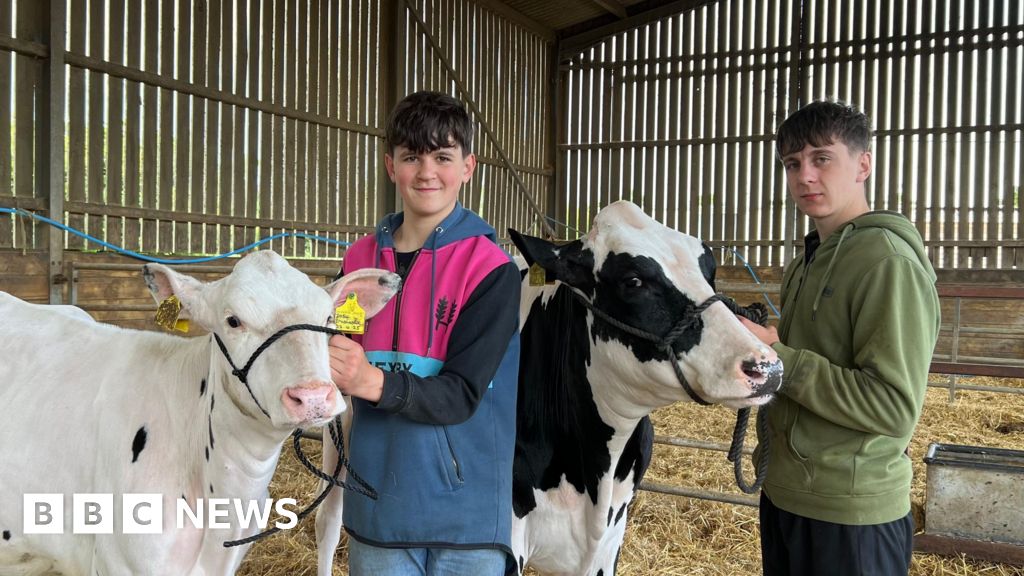
Farmers' warning as milk prices fall below cost

Published

on

Farmers' warning as milk prices fall below cost

Farmers worry more family farms will be sold unless dairy prices rise quickly.

Continue Reading
Click to comment

You must be logged in to post a comment Login

Leave a Reply

Business

From Waste to Value, The Economics Behind the Circular Food System

Published

on

Iran War Could Hit CO2 Supplies by Summer 2026

Food waste isn’t only a sustainability problem anymore. It’s starting to look like one of the more obvious economic leaks in the global food system, and leaks add up fast.

Every time food gets tossed, there’s a whole stack of costs buried inside it, land and water, fertilizer and feed, labor hours, packaging, cold storage, transport, shelf space, then the bill to haul it away and dispose of it. When that food is lost or discarded, the value doesn’t just “go away”, it vanishes from the system instead of supporting margins, stability, and food security.

That’s where the circular food system flips the story. Instead of treating surplus food, by-products, and organic waste as dead ends, circular models try to keep value moving for as long as it realistically can. Sometimes that means preventing waste in the first place.

Other times it’s nutrient recovery, tighter cold-chain performance, redesigning a production step that creates avoidable trim, or turning a by-product into a useful input. For companies in agriculture, manufacturing, retail, and logistics, cutting waste is becoming both an environmental goal and a pretty straightforward business strategy.

1.   Food waste is turning into a balance-sheet issue

The economics of food waste start way before anything hits a dumpster.

Advertisement

A wasted unit of food is basically a receipt for everything that happened earlier. The farm already paid in soil health, water, nutrients, labor, diesel, and time. Then a manufacturer added ingredients, processing steps, quality checks, and packaging. Retail and food service piled on storage, refrigeration, handling, and shelf space.

When food gets wasted, those costs don’t disappear, they get absorbed into margins. So yes, it’s an environmental issue, but it’s also a financial one, and it’s often hiding in plain sight.

That’s why prevention is shifting from “nice to have” to operational common sense. Better forecasting, inventory discipline, shelf-life planning, and tighter quality control can help companies hold onto value before it quietly drains out.

2.   Circular models treat by-products like inputs, not leftovers

A circular food system doesn’t assume every by-product is junk. It asks a more useful question, what’s still valuable in this material, and can we actually capture it without spending more than it’s worth?

Advertisement

Processing creates all kinds of side streams, peels, pulp, shells, fibers, proteins, oils, starches, mineral-rich residues. In a linear setup, those streams often become disposal costs. In a circular setup, they might become animal feed, food ingredients, soil amendments, bioenergy feedstock, packaging material, or a route for nutrient recovery.

Still, the business case can be picky. Quality and consistency matter. Location matters. Market demand matters. Some streams are too mixed, too contaminated, or too expensive to separate and move at scale. Others can generate real value when they’re clean, predictable, and close to a buyer who actually needs them.

And honestly, the goal isn’t to force every waste stream into a high-end “upcycled” product. Sometimes that’s not realistic. The smarter target is preserving the highest practical value at each stage, without pretending every by-product is a gold mine.

3.   Nutrient recovery links circularity to food security

Food security conversations usually focus on producing more food. Fair enough, production matters. But it’s only part of the story.

Advertisement

A resilient food system also has to lose less and use what it already produces more intelligently. Nutrient recovery is one of the clearer bridges between circularity and food security. Food waste, crop residues, manure, and certain processing by-products contain nutrients that can be returned to productive use, if they’re handled safely and in ways that make agronomic sense.

This isn’t a replacement for modern crop nutrition. Farming still relies on accurate nutrient supply, good timing, local soil conditions, and practical expertise in the field. Circular nutrient flows may help, though, by trimming avoidable losses and reducing dependence on fresh inputs where recovery is feasible.

In other words, it’s a complement, not a miracle fix.

4.   Prevention usually protects more value than diversion

When people picture circularity, they often jump straight to composting, anaerobic digestion, or upcycling. Those tools matter. But prevention usually saves more money and more resources, because it stops the loss before the full cost has already been paid.

Advertisement

Preventing waste avoids the cost of growing, transporting, cooling, handling, and disposing of food that never reaches its intended use. Diversion can recover some value after the fact, but prevention keeps that value intact earlier in the chain.

For retailers, the practical levers tend to be demand forecasting, date-code management, smarter markdown strategies, and tighter coordination with suppliers. For manufacturers, it’s often process tuning, ingredient standardization, better quality controls, and packaging choices that protect shelf life instead of shortening it.

The strongest approaches usually blend both. Reduce avoidable waste first. Donate safe surplus where that’s possible. Find secondary markets for suitable by-products. Then send what’s left to composting or energy recovery, instead of treating those as the first and only answer.

5.   Data is making circular food systems easier to fund

One reason food waste is so hard to tackle is that it can be weirdly invisible.

Advertisement

Losses show up across shrink reports, disposal bills, markdowns, yield losses, production slowdowns, quality rejects, temperature excursions, and customer returns. But they don’t always roll up into one clean, decision-friendly metric. Without decent measurement, it’s hard to pinpoint where value is leaking and which fixes are actually worth scaling.

That’s changing. Inventory systems, temperature monitoring, production analytics, shelf-life modeling, and broader supply-chain data are making waste easier to see, and easier to price. Once something becomes measurable, it becomes manageable, at least in theory.

This shift matters for investment. If a company can show where losses occur, why they happen, and what they cost, then circularity stops being a vague “sustainability effort” and starts looking like a performance lever. You can prioritize high-impact interventions, track improvements, and tie waste reduction to financial results instead of good intentions.

6.   How companies can translate waste reduction into business value

A few examples help make this feel less abstract.

Advertisement

ICL Group fits into this conversation through its broader role in crop nutrition, specialty minerals, and resource-efficient agricultural solutions. In circular systems, that role can align with better nutrient use and reduced losses, without overstating it. The careful framing is that ICL supports parts of the broader transition toward more efficient, resilient, and circular food systems, rather than “solving” food waste directly.

Carrier Global is relevant for a simple reason, cold-chain reliability is one of the most practical ways to prevent loss before it happens. Better refrigeration, monitoring, and transport visibility can help protect quality across long supply chains, especially for perishables like produce, dairy, and meat.

Kroger works as a retail example because food-waste reduction and donation efforts connect day-to-day operations with social impact. At the store level, sharper forecasting, better markdown management, and smoother donation systems can reduce shrink while redirecting edible surplus into communities.

Nestlé is a useful manufacturing example because large producers have multiple waste levers, packaging choices, process improvements, ingredient recovery, and by-product reuse. Scale matters here. Big companies can move circularity from isolated pilots into standard practice, though they also face the usual challenge of doing it consistently across many sites.

Advertisement

7.   The next phase is circularity by design

The most mature circular strategies don’t begin at disposal. They start upstream, with design.

That means designing products, processes, packaging, and supply chains with waste reduction built in from day one. It looks like asking, can ingredients be used more efficiently, can shelf life be protected without compromising quality, do by-products already have identified buyers, can nutrient-rich streams be returned safely to productive use?

This is also where coordination becomes the whole game. Food companies, agricultural input providers, logistics firms, retailers, and tech platforms all have pieces of the puzzle. No single player makes the system circular on their own. It takes alignment across the chain, and that can be slow, messy, and very unglamorous. Still, it’s probably the only way it scales.

Conclusion

The circular food system is moving beyond a sustainability slogan. It’s becoming an economic framework for protecting value across farming, food manufacturing, retail, logistics, and consumption.

Advertisement

Food waste is lost resources, lost margin, and lost resilience. Circular models shift the equation by preventing avoidable losses, recovering useful materials, returning nutrients to productive systems where it makes sense, and using data to make waste visible enough to manage.

The companies that pull ahead won’t necessarily be the ones making the loudest claims. They’ll be the ones that spot where value is leaking, build practical systems to keep it in play, and connect sustainability targets to measurable business performance.

As food security, resource efficiency, and profitability become more tightly linked, circularity offers a pretty grounded path forward, waste less, recover more, and design food systems where value keeps moving.

Advertisement

Continue Reading

Business

Schools turn to ‘outstanding’ office furniture store for new equipment with special offer

Published

on

Business Live

Office Furniture Online has a special money off offer running until the end of June.

Office Furniture Online's colourful classroom chairs

Office Furniture Online’s colourful classroom chairs are a key buy(Image: Office Furniture Online)

It’s no secret that schools need to be equipped with the right furniture for children to be able to learn properly – particularly if they’re going to be sitting at a chair and table all day long. Now, Office Furniture Online has a special money off offer on reliable classroom furniture.

Online customers can use the code OFO4OFF550 until 11:59pm on June 30, to get money off orders over £550. And there’s a huge amount of choice – for example, the stylish and practical EN One Classroom Chair, which comes in five vibrant colours to choose from, and six age groups from 3-4 years up until 14+.

It’s described as an ‘excellent space-saving solution’ because it’s able to be stacked – and it’s both ergonomic and durable, meaning it’s comfortable to sit on all day long. One chair of the 3-4 year age group costs £32.40 (including VAT) – if customers wanted 22 chairs for a whole classroom, that would cost £594, or £712.80 when VAT is added.

Advertisement

Office Furniture Online has money off with the code OFO4OFF550

Office Furniture Online's mobile dining unit

£1,225.20

£1,176.19

Office Furniture Online

Buy here

The furniture store offers everything kids need to thrive in school, like the Classic Rectangular Mobile Dining Units.

Advertisement

With the voucher code used, customers can save £23.76 on the order, bringing the total down to £684.29. And there are plenty of other options to choose from – including big ticket items, like the Classic Rectangular Mobile Dining Units, which come in a variety of sizes and colours. The eight-seater normally costs £1,225.20, but that price is taken down to £1,176.19 with the code.

There’s also some more unique items to choose from, like these Ricochet Wobble Classroom Stools. They are said to provide an ‘active sit for engaged learning’, supporting movement which is ‘cognitive development’ and giving students an outlet for fidgeting. Each chair costs between £87.60 and £110.40, depending on the size chosen, with a discount available if the total spend is over £550.

As an alternative, shoppers could look to the UK Educational Furniture site. It offers everything from chairs and seating to tables and storage, with plenty to choose from.

Another option is the TTS Group, which sells furniture from early years all the way up to secondary school. The bright Valencia Chairs cost from £21.99 (excluding VAT), and are sure to be a hit with primary students.

Advertisement
Office Furniture Online's Ricochet Wobble Classroom Stool

Office Furniture Online’s Ricochet Wobble Classroom Stools encourage engaged learning(Image: Office Furniture Online)

Shoppers have enthused about their experiences with Office Furniture Online, which has an average 4.3 star rating from over 19,000 reviews on Trustpilot. One review read: “Outstanding customer service from beginning to end. They couldn’t supply the exact product as it was out of stock, but immediately offered a superior, more expensive item at no extra charge.

“Every member of staff I dealt with was polite, courteous and extremely knowledgeable. It felt like genuine old‑school customer care — the kind that’s rare these days.” Another said: “Just at the service was fantastic. I placed an order one day and I received it the following morning delivery driver was excellent as well. Very helpful.”

While a third added: “Very efficient. The reviews were good and the product I wanted was advertised at a competitive price. I also had experience of the product, so I knew what I was buying. It arrived on time and was well packaged and protected.”

Some customers shared some slight gripes about delivery, like one who wrote: “Great furniture which is very good quality. It would be good if you could track your delivery to know roughly what time items will arrive?”

Advertisement

Office Furniture Online currently has a special offer on school furniture.

Continue Reading

Business

Mizuho downgrades Kosmos Energy stock rating on valuation concerns

Published

on


Mizuho downgrades Kosmos Energy stock rating on valuation concerns

Continue Reading

Business

Tyneside underwear brand OddBalls set for growth after Alcuin backing

Published

on

Business Live

‘It was hugely important for us to find a partner who understood the strength of the brand, the loyalty of our customers, and the opportunity ahead of us’

Alcuin has backed OddBalls.

Alcuin has backed OddBalls.(Image: Alcuin)

Tyneside underwear brand OddBalls is set for expansion after securing backing from a London investment group.

OddBalls was set up in 2014 by former Newcastle United goalkeeper Steve Harper, one-time Newcastle Falcons rugby player Richard Metcalfe and Paul Varley, former chief executive officer of the Falcons, after the sporting friends discussed ways to raise money for men’s cancer charities, with the firm initially donating a percentage from the sale of every pair of pants to testicular cancer charities. The trio have since left as directors of the original business Oddballs Apparel Ltd.

Advertisement

OddBalls now has partnerships with a number of organisations like The OddBalls Foundation, Movember, Prostate UK, My Name’5 Doddie Foundation and Alzheimer’s Research UK, and a portion of every sale from those collections is donated to charity. Last year it announced that, since its launch the firm has donated over £1m to charities.

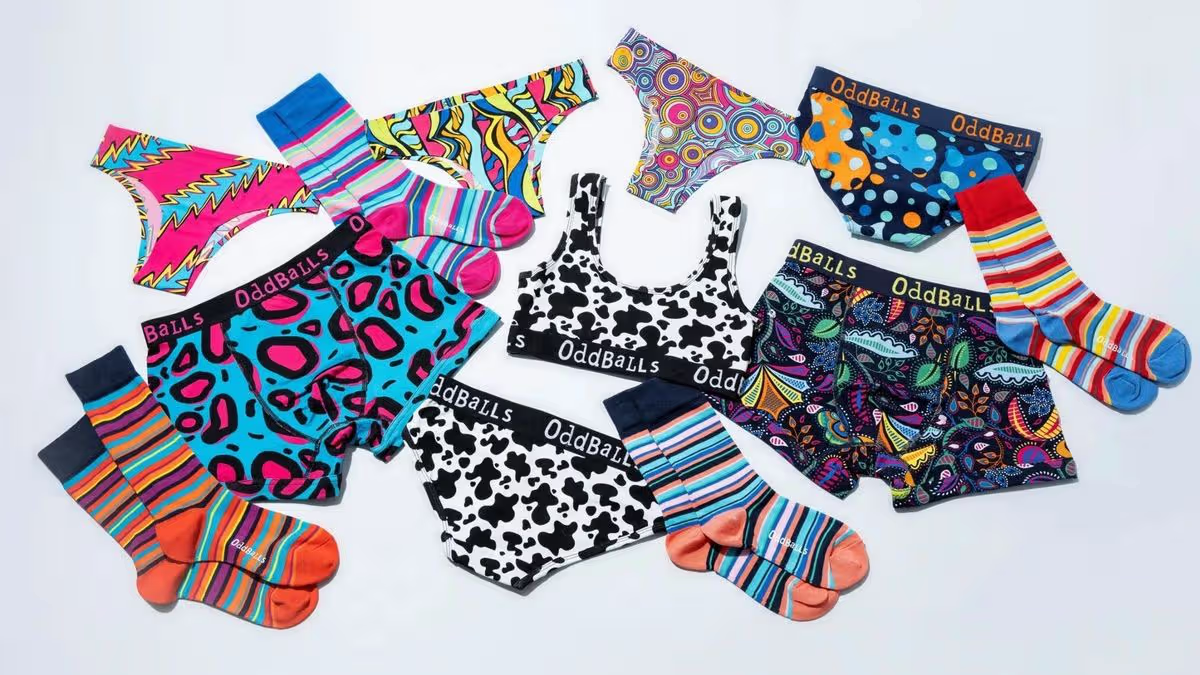
The firm is known for its brightly coloured boxers shorts and briefs, and over the years it has branched out to design, manufacture and retail underwear for both men, women and children, as well as socks, pyjamas and accessories including swimming briefs, towels, cups and hats.

Like this story? For more deals news you can visit our dedicated page for the latest news and analysis here.

Now the firm has partnered with London-based Alcuin Capital Partners, which will support its continued expansion and long-term success.

Advertisement

Alcuin has highlighted the rapid-growth of OddBalls to become a digitally-enabled leader in men’s and women’s underwear, pyjamas and socks, saying it is “excited to work with the team to support continued international growth and further product expansion”.

Will Cooper, CEO of OddBalls said: “We’re incredibly proud of what OddBalls has achieved so far, and Alcuin’s investment marks an exciting next step for the business. It was hugely important for us to find a partner who understood the strength of the brand, the loyalty of our customers, and the opportunity ahead of us.

“With Alcuin’s support, we’re looking forward to accelerating our international growth and expanding our product range, while continuing to build the business in a way that stays true to what makes OddBalls special.”

Tim Wheeler, investment director, Alcuin Capital Partners, added: “The quality of the brand, strong growth momentum, and data-driven approach at OddBalls made a powerful impression from our first meeting. We are absolutely delighted to be partnering with the highly impressive team as the business continues to scale.”

Advertisement
Continue Reading

Business

Flowers Foods: Despite The Dividend Cut, The Firm Still Seems Attractively Valued

Published

on

Flowers Foods: Despite The Dividend Cut, The Firm Still Seems Attractively Valued

Flowers Foods: Despite The Dividend Cut, The Firm Still Seems Attractively Valued

Continue Reading

Business

Hindalco, Nalco shares jump up to 5% after aluminium prices hit 4-year high. Where is metal headed?

Published

on

Hindalco, Nalco shares jump up to 5% after aluminium prices hit 4-year high. Where is metal headed?
Shares of Aditya Birla Group‘s Hindalco Industries and state-owned Nalco rallied up to 5% on Wednesday after aluminium prices soared to a 4-year high buoyed by Iran war tensions and possible production cuts by China, the world’s largest manufacturer.

Hindalco gained as much as 4.5% to its day’s high of Rs 1,154 on the BSE, while Nalco surged 5.1% to Rs 437.50. On the London Metal Exchange, the industrial metal increased by 0.6% to reach its highest price since March 7, 2022, at $3,672.50 per metric tonne.

According to a report by Bloomberg, traders are increasingly concerned that Chinese aluminium smelters could be asked to curb production as the country intensifies its review of energy consumption and emissions across major industries.

Chinese smelters have been running at full capacity amid a global supply shortage triggered by the Middle East conflict. Aluminium prices on the London Metal Exchange (LME) have risen since the war began in late February, as supplies from the region were disrupted due to the effective blockade of the Strait of Hormuz.

Advertisement

The report added that Chinese authorities are now looking to rein in excess production as inventories continue to build up. China’s Ministry of Industry and Information Technology said in a statement on May 13 that sectors including steel and oil refining would also come under scrutiny.


Further, investment bank Morgan Stanley said the medium-term demand-supply outlook for the metal remains supportive, with strong sustainability-led demand expected to coincide with constrained supply growth due to China’s smelter caps and slow capacity expansion in other regions.
The brokerage added that near-term factors such as China’s supply discipline, disruptions in the Middle East and elevated energy costs are likely to keep prices firm. It also noted that favourable positioning on the global cost curve and low inventories outside the US should help limit downside risks. Analysts further said India is entering a multi-year growth cycle, which is expected to drive robust demand for aluminium and copper.Aluminium is Morgan Stanley’s preferred base metal, supported by a tighter demand-supply balance. Supply growth is constrained by China’s capacity cap, slower ramp-up in Indonesia due to power limitations, and limited expansion elsewhere. Recent Middle East disruptions have further tightened the market, with some supply losses likely to persist given long restart timelines. This has driven both LME prices and regional premia higher (Japan, Europe, the US), with the forward curve in steep backwardation and LME on-warrant inventories at multi-month lows amid strong withdrawal demand in Asia. While cost support and tight inventories limit downside risk, any deterioration in global growth could weigh on demand, it said.

“LME inventories remain near historical lows, reflecting tight physical markets and limited buffer against shocks,” it said. With constrained supply flexibility, given China’s capacity cap and slower ex-China additions, low inventories increase the risk of price spikes during demand upcycles or supply disruptions.

Morgan Stanley also initiated coverage with an ‘Overweight’ rating on Hindalco. With a target price of Rs 1,325, the Wall Street major implies an upside potential of more than 20% from the previous closing price. Per the report, Hindalco is well positioned for value unlocking, supported by strong free cash flow (FCF) generation potential over the medium term.

(Disclaimer: Recommendations, suggestions, views and opinions given by the experts are their own. These do not represent the views of The Economic Times)

Advertisement
Continue Reading

Business

CD Projekt to launch new expansion for ’The Witcher 3: Wild Hunt’

Published

on

CD Projekt to launch new expansion for ’The Witcher 3: Wild Hunt’


CD Projekt to launch new expansion for ’The Witcher 3: Wild Hunt’

Continue Reading

Business

Zydus Lifesciences buyback alert! Last date to buy shares to participate in Rs 1,100 crore buyback at 7% premium

Published

on

Zydus Lifesciences buyback alert! Last date to buy shares to participate in Rs 1,100 crore buyback at 7% premium
Investors looking to participate in Zydus Lifesciences’ share buyback worth Rs 1,100 crore will likely have to purchase the shares of the company latest by Wednesday, May 27, before the stock goes ex-record date for the corporate action on Friday.

The pharma company fixed the record date to determine shareholder eligibility for the corporate action on May 29 (Friday). Only those shareholders who own the shares of the company in their demat accounts as on the record date will be eligible to tender shares.

As per SEBI’s T+1 settlement norm, investors must buy the company’s shares at least one trading day before the record date so that they are credited to their demat accounts by that date, making them eligible for the reward.

However, markets will remain closed on May 28 (Thursday) on account of Bakri Id. This effectively makes May 27 (Wednesday) the last date to buy the shares so that they are credited to the shareholders’ accounts by the record date (Friday).

Advertisement

All about Zydus Lifesciences share buyback

Earlier this month, Zydus Lifesciences board approved the plan to buy back up to 95.65 lakh shares, each with a face value of Re 1, representing 0.95% of the company’s paid-up equity share capital, for an aggregate amount not exceeding Rs 1,100 crore. The buyback will be conducted via the tender route.
Also Read | Zydus Lifesciences’ Rs 1,100 crore share buyback at 13% premium: Check record date, other details
The price for Zydus Lifesciences’ biggest-ever share buyback was fixed at Rs 1,150 apiece, implying a premium of nearly 7% from the stock’s previous closing price of Rs 1,079.05 apiece.
Zydus Lifesciences’ board of directors also approved the formation of a buyback committee, which can increase the buyback price or reduce the number of shares to be bought back up to one day before the record date, without changing the overall buyback size. Other details, including the entitlement ratio and whether the promoter and promoter group will participate in the buyback, will be disclosed later.

Zydus Lifesciences share buyback history
This follows the pharma company’s Rs 600 crore share buyback conducted via the tender route at a price of Rs 1,005 per share. The buyback price implied a premium of nearly 9% over the stock’s trading level on the record date. Prior to that, the company had executed a Rs 750 crore share buyback in 2022.

Also Read | Last date to buy Bajaj Auto, GSK Pharma and 10 other stocks for dividends

Zydus Lifesciences shareholding pattern
Before the buyback announcement, the promoter and promoter group held nearly a 75% stake in Zydus Lifesciences as of May 15, 2026, while retail investors and mutual funds held around 5% each. Foreign portfolio investors owned nearly 7% of the company, while insurance companies held slightly over 6%.

Advertisement

Zydus Lifesciences Q4 results
Zydus Lifesciences reported a consolidated net profit of Rs 1,272.5 crore for the January-March quarter of FY26, marking a 9% increase from the Rs 1,171 crore profit reported in the corresponding quarter of the previous financial year.

The company’s revenue from operations rose more than 16% year-on-year to Rs 7,587 crore during the quarter under review, compared with Rs 6,528 crore in the year-ago period.

Along with the Q4 results and share buyback announcement, Zydus Lifesciences said its board has recommended a final dividend of Re 1 per share (100%) on a face value of Re 1 each, subject to shareholders’ approval at the company’s Annual General Meeting scheduled for August 11.

Also Read | Zydus Lifesciences shares soar 7% to fresh record high after Q4 results. Should you buy, sell or hold?

Advertisement

Zydus Lifesciences share price
Zydus Lifesciences shares have gained over 4% in one week and 15% in one month. The stock is up more than 18% so far in 2026.

In the longer term, the shares of the company have gained over 18% in one year, 113% in three years and around 73% in five years. The company currently has a market capitalisation of nearly Rs 1.09 lakh crore.

Also read | LIC 1:1 bonus bonanza! Is today the last day to buy shares for free rewards?

(Disclaimer: Recommendations, suggestions, views and opinions given by the experts are their own. These do not represent the views of The Economic Times)

Advertisement
Continue Reading

Business

Have trading volumes dropped after STT hike on F&O? Here’s what data shows

Published

on

Have trading volumes dropped after STT hike on F&O? Here's what data shows
In order to control the “highly risky F&O satta”, the government raised securities transaction taxes (STT) on derivatives trading earlier this year as it aimed to curb excessive speculation. Data, however, shows little change in volumes over the two months since the higher taxes took effect.

Ashish Nanda of Kotak Securities took to X to share data showing how volumes changed after the STT hike took effect from April 1, 2026 onwards. “March was an exceptional month, but if you compare April with any other month, volumes don’t look that bad,” he wrote.

According to the data which Nanda sourced from the stock exchanges BSE and NSE, cumulative volumes for futures and options trades stood at Rs 2.55 lakh crore in April 2026, and Rs 2.56 lakh crore in May this year. This is significantly lower than the F&O trades worth Rs 3.10 lakh crore executed in March this year, but more or less at par with the volumes seen in earlier months.

“March was an exceptional month, but if you compare April with any other month, volumes don’t look that bad,” Nanda wrote. “Some softness can be seen in index futures and stock futures though. April index futures volumes were lower than 9 out of 12 previous months. Stock futures volumes were lower than 6 of previous 12 months,” he added.

Advertisement

The analyst noted that options volumes, however, are not showing any sign of softness after the STT hike. “Volumes are more than 9 out of previous 12 months both for index and stock options. May is looking strong too,” he said.

After presenting the Union Budget in February this year, Union Finance Minister Nirmala Sitharaman said that the government could not remain silent as speculative ‘satta’ in derivatives inflicts heavy losses on small retail investors.
Also Read |
F&O satta is highly risky… how can the government stay quiet: Nirmala Sitharaman on STT hike
“We are touching only the futures and options segment. No one has increased transaction costs elsewhere. Speculation, what we call ‘satta’ in Hindi, is highly risky, and many people with limited funds face heavy losses. The nominal increase in STT is aimed purely at deterring excessive speculation. We respect market activity, but the government cannot ignore the losses faced by small investors. This tax is only one element to support that policy. How the rest of the market is regulated is up to the market regulator,” Sitharaman said in a statement to the press after her Budget speech.

Announcing the changes in Parliament, the finance minister said, “I propose to raise the STT on futures to 0.05 percent from the present 0.02 percent. STT on options premium and exercise of options are both proposed to be raised to 0.15 percent from the present rate of 0.1 percent and 0.125 percent, respectively.”

(Disclaimer: Recommendations, suggestions, views and opinions given by the experts are their own. These do not represent the views of The Economic Times)

Advertisement

Continue Reading

Business

Why Runners Who Find the Right Shoe Never Look Back

Published

on

The team behind runny, the world’s #1 rated personalised running coaching app that launched in 2021, has closed its latest venture capital round having raised £5 million.

Ask any experienced runner about the moment they found their shoe, and the answer is often the same: everything changed. Not dramatically, not overnight, but in the accumulating way that the right equipment quietly removes friction from something you do repeatedly.

Running is a sport of repetition. A recreational runner covering forty kilometres per week takes roughly forty thousand strides in that time. Each stride involves a loading event – the foot contacting the ground and the body absorbing that force before redirecting it forward. Multiply forty thousand by the number of weeks in a year, and the cumulative load the foot and lower limb manages becomes a number that makes the case for shoe selection more clearly than any product description ever could.

Against that backdrop, the difference between a shoe that suits a runner’s biomechanics, training volume, and surface type and one that does not is not a marginal performance variable. It is a meaningful determinant of whether the runner stays healthy, trains consistently, and continues to improve or cycles through a familiar pattern of overuse injuries, forced rest, and frustrated restarts.

Finding the right shoe does not guarantee a runner will never get injured or that every session will feel effortless. But it removes one of the most consistently cited variables in running-related injury and fatigue from the equation – and for most runners, that is enough to change the experience of the sport entirely.

The Problem With Getting It Wrong

Most runners who have been in the sport for any length of time have experienced the wrong shoe. It may have been a pair that felt fine in the store but produced a specific hot spot by kilometre five. A shoe that looked right on paper but created knee pain on downhill sections. A style that felt comfortable for short efforts but became increasingly punishing on longer runs as the midsole failed to support the foot through accumulated fatigue.

Advertisement

The wrong shoe does not always announce itself immediately. Some problems develop gradually, the foot adapting to compensate for inadequate support or cushioning in ways that build strain in the Achilles, the plantar fascia, the iliotibial band, or the knee. By the time the injury presents, its origin is two or three months in the past, and the connection to footwear is not always obvious.

This delayed feedback loop is one of the reasons shoe selection is persistently underestimated by newer runners. The discomfort from a poorly chosen shoe rarely feels catastrophic in the moment of purchase. It compounds quietly across sessions until it becomes something that cannot be ignored.

What the Right Shoe Actually Does

The right running shoe does not fix poor biomechanics, compensate for inadequate training load management, or substitute for the strength work that keeps a runner’s joints healthy. Physiotherapy clinics that work with injured runners are consistent on this point: Runner’s Edge Physio notes that shoes are one piece of the puzzle, and that training load, running form, and strength play larger roles in injury risk than footwear alone.

What the right shoe does is provide an appropriate environment for the foot’s natural mechanics to function without additional stress. It cushions the loading event in proportion to the runner’s weight, gait, and surface type. It supports the foot’s arch and rearfoot in a way that reduces the compensatory loading that misalignment creates. It fits the foot’s actual dimensions closely enough that friction, slippage, and forefoot compression are not contributing factors to the session’s accumulated discomfort.

Advertisement

When a runner finds a shoe that delivers all of these things for their specific combination of foot type, gait mechanics, and training context, the experience of running changes. Not because the shoe is doing the running, but because it has stopped working against it.

The Role of Consistency in Shoe Selection

One of the less discussed aspects of running shoe selection is the value of consistency. A runner who changes shoes frequently, testing new models with each purchase, never fully establishes the baseline from which meaningful assessments of performance and comfort can be made. The body is constantly adapting to new loading inputs, which creates noise in the feedback loop that makes it difficult to distinguish what is working from what is not.

Experienced runners who have found their shoe tend to stay with it. Not out of brand loyalty or inertia, but because consistency in footwear is itself a training variable. When the shoe is known and stable, changes in comfort, fatigue, and injury risk can be attributed more reliably to training load, recovery, and form rather than to equipment variation.

This principle has a practical implication: finding the right shoe is worth the investment of time and attention it requires, because the return on that investment compounds across every training cycle that follows.

Advertisement

Understanding What Makes a Shoe Right

The question of what makes a shoe right for a specific runner cannot be answered generically. It depends on a combination of factors that are individual rather than universal.

Foot type and pronation pattern determine whether a neutral, stability, or motion control shoe provides the appropriate level of support. A runner with a neutral gait in a motion control shoe is being overcorrected. A runner with significant overpronation in a neutral shoe is receiving insufficient support. Neither outcome is neutral in its effect on the body across thousands of strides per week.

Training volume and surface influence the appropriate midsole cushioning and outsole construction. A runner covering high weekly mileage on hard road surfaces needs a different cushioning specification than one doing the same distance on soft trail terrain. Chelsea Foot and Ankle’s guide to the five key factors in running shoe selection identifies terrain as a critical but frequently overlooked dimension of shoe choice – one that can invalidate an otherwise well-matched specification.

Foot dimensions – width, volume, arch height, and toe length distribution – determine whether the shoe’s last shape accommodates the foot correctly. A shoe that fits in length but is too narrow across the ball of the foot will create forefoot compression that worsens with every kilometre of a long run. A shoe with insufficient toe box depth will cause nail pressure on downhill sections that accumulates into bruising over time.

Advertisement

Heel-to-toe drop affects the loading distribution between the forefoot and the rearfoot and influences how much work the Achilles and calf complex are required to do. A runner transitioning from a high-drop shoe to a low-drop shoe without a gradual adjustment period is at elevated risk of Achilles strain, regardless of how well the shoe fits in other respects.

Getting these variables right simultaneously is what distinguishes a shoe selection process from a shoe purchase.

Why Some Brands Build Loyalty More Than Others

The running shoe market is crowded, and most reputable brands produce competent footwear across the major categories. Yet within that field, certain brands develop loyalty among runners that goes beyond preference. These are brands whose shoes runners return to not because they cannot find alternatives, but because they have found something that works and see no compelling reason to introduce variation.

Mizuno occupies this position for a specific and consistent segment of the running population. The brand, founded in Japan in 1906, has built its running shoe range around the Wave plate technology it developed decades ago – a midsole component made from two sheets of thermoplastic rubber fused in a wave formation that distributes impact forces laterally across the midsole rather than concentrating them at the point of foot strike.

Advertisement

The result is a ride quality that is distinctively different from foam-dominant alternatives. Firmer, more responsive, and with a ground-feel that runners who prefer a connected, controlled sensation consistently describe as exactly what they were looking for. The Wave Rider series, now well into its third decade of continuous development, has become one of the most reliable daily trainers in the market precisely because Mizuno has refined the technology without abandoning the characteristics that built its following.

Fleet Feet’s review of the Wave Rider 28 captures this dynamic directly: one of their testers notes having run in Mizuno shoes since 2011 after being fitted at a running store, and describes the experience of wearing the Wave Rider as one that simply works – consistently, across sessions, year after year.

The Wave Inspire, Mizuno’s primary stability offering, applies the same Wave plate technology in an asymmetric configuration that provides medial support for overpronating runners without the rigidity associated with traditional motion control construction. It has developed its own loyal following among runners managing mild to moderate overpronation who want consistent support without sacrificing the responsive ride that makes Mizuno’s neutral range distinctive.

The Compounding Return of the Right Choice

A runner who finds their shoe early in their running life and maintains consistency in their selection accumulates a compounding return across years of training. Sessions are not interrupted by the adjustment period that comes with testing new models. The body’s loading patterns remain stable, which makes it easier to manage training volume without accumulating injury risk at transitions. And the mental overhead of shoe selection – the research, the testing, the uncertainty – is resolved, leaving attention for the training itself.

Advertisement

This is not an argument against trying new shoes or against innovation in footwear technology. It is an argument for understanding that finding the right shoe is a meaningful investment with a long-term return, and that the process of finding it deserves more rigour than most runners initially bring to it.

For Australian runners evaluating Mizuno’s range, the Wave Rider, Wave Inspire, and Wave Sky can all be explored and compared across neutral and stability options by browsing running shoes by Mizuno.

How to Find Your Shoe

The most reliable path to finding the right running shoe combines three elements: an understanding of one’s own foot type and gait mechanics, a clear picture of the training context the shoe will serve, and an honest trial period across multiple sessions before the choice is committed to.

A gait analysis from a specialist running retailer or sports podiatrist provides the foot type and pronation data that makes the stability category decision straightforward. Trying shoes in the afternoon, when feet are at their maximum daily volume, ensures the fit assessment reflects real-world conditions. And wearing a new shoe for progressively longer sessions before committing it to high-volume training weeks identifies any fit issues while there is still time to resolve them.

Advertisement

The runners who find their shoe and never look back are not particularly lucky or uniquely biomechanically favoured. They are runners who took the selection process seriously enough to find what works, and who had the discipline to stay with it once they did.

Runners with a history of recurring lower limb injuries or those beginning a running programme for the first time are advised to consult a sports podiatrist or physiotherapist for a gait assessment before selecting footwear.

Advertisement
Continue Reading

Trending

Copyright © 2025