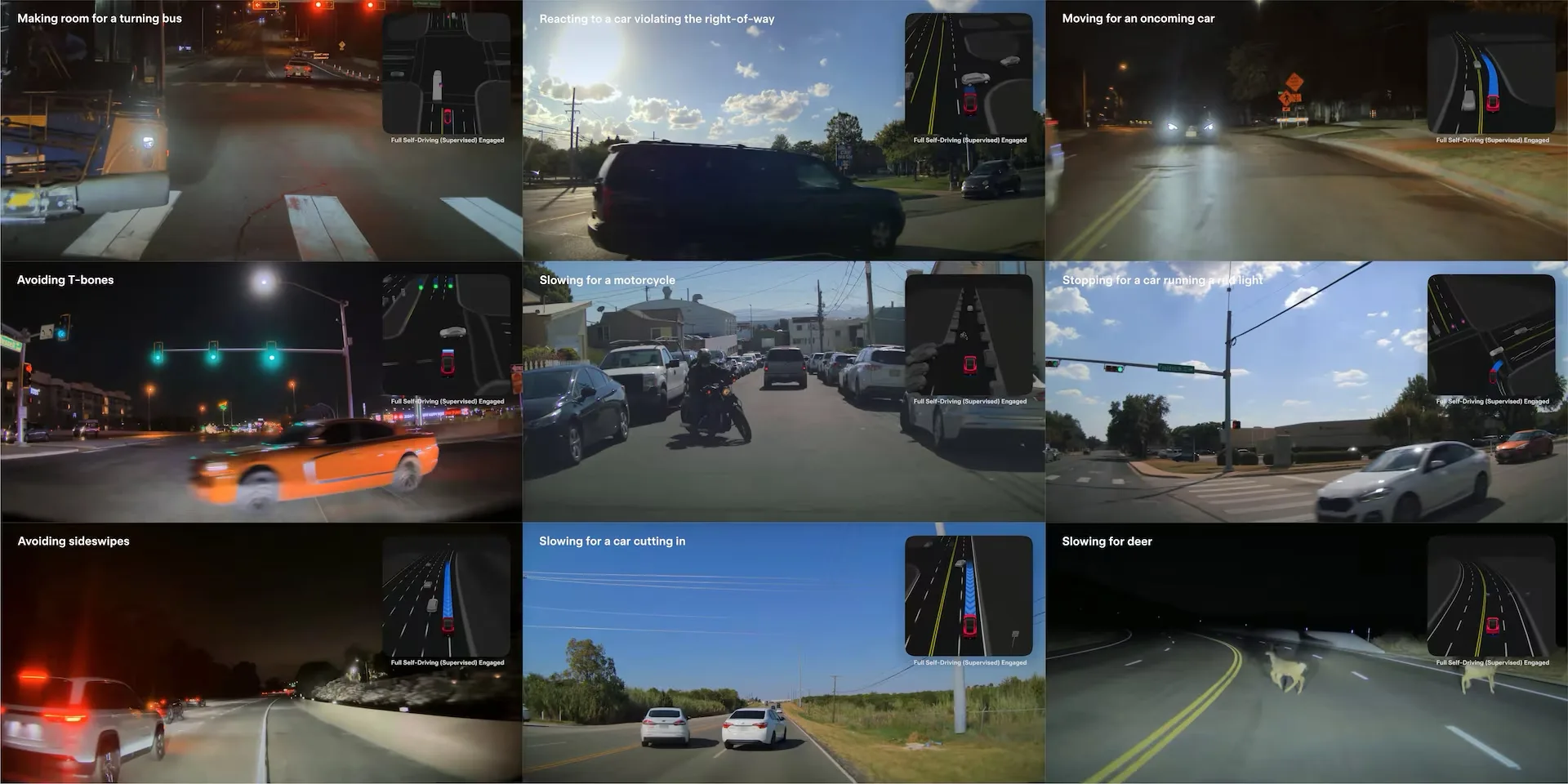
Hundreds of Tesla workers spend their days watching footage captured by cars running Full Self-Driving. They watch cats, dogs, and deer getting struck without the car braking, near-misses with children, and Teslas blowing through speed limits by 20 to 30 mph. Things seem dire, and yet Elon Musk keeps telling the world that FSD is ready to take the wheel.
Is FSD actually safer than a human driver?
Tesla has repeatedly claimed that FSD is up to 10 times safer than the average human driver, a claim that has been cited by its CFO, board chair, and Musk himself at shareholder meetings. The problem is that the methodology behind that number is deeply flawed.
Tesla compared its crash rate, counting only incidents where airbags deployed, to federal data that includes far less severe crashes requiring a tow truck. That single comparison error inflated its safety claims by a factor of three.
Advertisement
Reuters
On top of that, Tesla compares its relatively new fleet, averaging 4.1 years old, against the national average of 12.8 years. Newer cars are just safer, full stop. As Carnegie Mellon professor Phil Koopman put it, “It’s like saying: ‘My jet airplane is faster than your World War II bomber.’Yeah, so, what’s your point?”
Was Tesla’s robotaxi launch all smoke and mirrors?
Before both the 2024 Cybercab unveiling and the Austin robotaxi launch, Tesla staff spent months mapping routes and annotating footage so the cars could handle specific scenarios on specific streets.
Tesla
The Utah labeling team doubled to around 300 workers in the lead-up. Nearly a year later, Tesla operates only about 50 robotaxis in Austin, operating only within a carefully controlled zone.
Seven of the former labelers told Reuters they would not trust FSD to drive them. One called Tesla’s safety claims “bullshit.” That is a damning verdict from the people who know the technology best.
Should you trust Tesla’s self-driving claims?
Tesla hasn’t responded to Reuters’ findings, and the fine print on its own FSD website still warns that the feature requires active driver supervision. The FTC has received calls from consumer groups and US senators to investigate Tesla’s marketing of FSD, but has taken no action so far.
Musk once told shareholders that FSD would soon make texting while driving essentially safe. Six months later, that hasn’t happened. The technology the world’s richest man has been promising for ten years is still, by Tesla’s own admission, not ready to drive you anywhere alone.
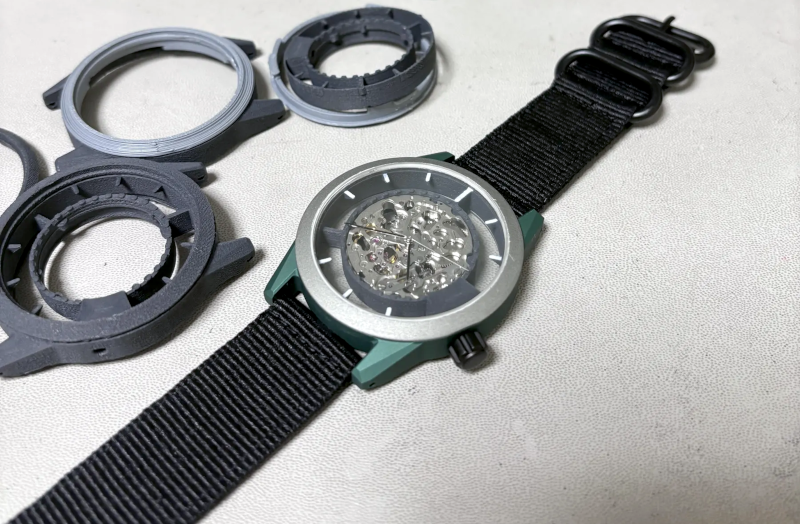
We were excited to see [Z0hn]’s project about 3D printing a custom watch from scratch — both because it was an exciting idea, and because the pictures looked great. While we still liked the project, we quickly realized it wasn’t really printing a watch so much as it was printing a case that holds an off-the-shelf movement. But it still looked great.
Many homebrew watches are cool and fine to wear to your next hackerspace board meeting. But this watch wouldn’t raise an eyebrow out among the normal public. Conventional watches use press-fit backs, tiny screws, or make the back screw into the housing. None of those are great for 3D printing, so this watch uses a bayonet connector, which is easy to create, robust, and reliable.
The watch looks easy to modify, so if you don’t like, for example, the unusual crown placement, you can change it. The movement is a Miyota 8N24 and, of course, the crystal is off-the-shelf, too.
Advertisement
While not exactly a printed watch, it was still pretty cool, and there are lessons to be learned here if you want to pull off the same feat. Or just go full on hacker. You could, too, try your hand with an open source movement.
The team behind the AI Octopus Euro 2024 predictor has updated its simulator for the 2026 FIFA World Cup, this time allowing users to throw natural-language scenarios at the model and see how the tournament might shake out.
“Sensible questions work – a red card, a key injury, a heat wave, a squad switching base camp – but so do the daft ones, e.g. ‘What if the tournament were played with rugby rules?’” said Luzmo CTO and co-founder Haroen Vermylen.
Advertisement
The system is simple: enter a scenario in a prompt box, and the predictor spits out how the results might go. The raw data includes squad quality based on player information, heat and altitude factors, injury data, and so on. A Monte Carlo simulation of the tournament is used to generate win/lose/draw probabilities, and the score line is derived from 5,000 match runs.
The engine behind the Euro 2024 AI Octopus was written in TypeScript. This time around, the team used Rust. “We moved to Rust to also be able to run things more quickly, as now there is a real-time component to this,” Vermylen told The Register.
“Before it could run for five minutes or so. Now we want the predictions to actually come out within two to three seconds of actual simulation time.”
OpenAI models parse the request and generate summaries, and an agent is used to create or transform scenarios, call the calculation engine, answer questions, and so on. A user doesn’t need to be a data scientist to ask questions and understand the answers.
Advertisement
It’s certainly rapid, recalculating the results based on suggested scenarios (even one in which we pondered the effect of politically dubious emissions from a certain world leader). Not that all scenarios will work. Vermylen told us that filtering was in place to ignore profanities and “to avoid scenarios that would just be harmful to certain groups.”
And then there is the age-old issue of an AI parser simply not understanding the prompt. Clarity is key. Using natural language is a great alternative to a UI with settings and sliders, but that ease of use can result in misunderstandings.
As the tournament progresses, the data will be refined. At the time of writing, the baseline reckons that Spain will beat England in the final. Spain currently has an 18 percent chance of lifting the trophy and a 26.8 percent chance of reaching the finals. Those figures can, of course, be altered by feeding in scenarios.
For example, we asked: “What if the Spanish team eats a bad paella?” Spain’s chance of winning the tournament then dropped to 1.5 percent, with France as the projected champion.
Advertisement
We also asked it what would happen if we replaced the England team with Register writers. Suffice to say that scenario did not end well.
We asked Vermylen what was next. “The Olympics would be nice… or the Eurovision. We’d like to give the United Kingdom a win.” ®
The point-and-click adventure game based on the horror anthology series arrives in August.
PHL Collective/DreadXP
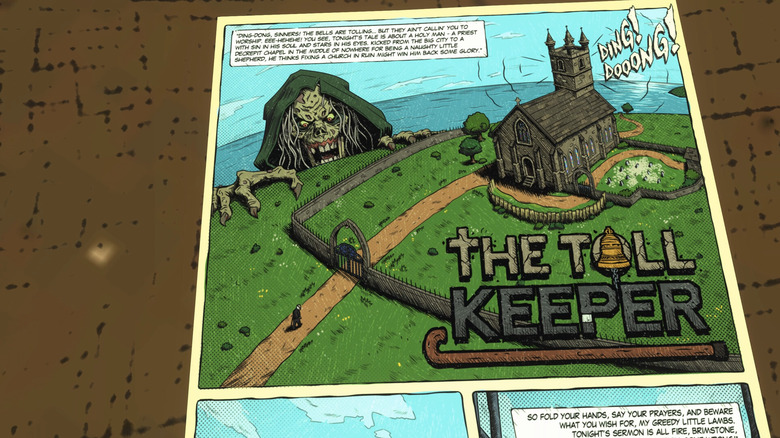
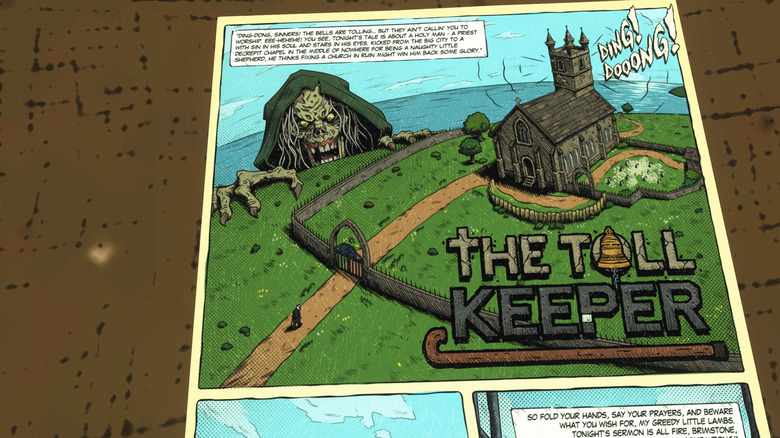
The Creepshow game isn’t dead after all. Though things have been quiet around the video game spin-off of Shudder’s horror anthology series since it was announced a few years ago, the Steam page just went live with a release window that’s surprisingly soon: August 2026. Creepshow is a point-and-click adventure that’s “gone all kinds of wrong,” according to developer PHL Collective. It’s being published by TheMortuary Assistant publisher, DreadXP.
In Creepshow the game, “Follow Danny and his friends as a bad day at the mall spirals into something much darker. Their search for the truth behind Danny’s father leads them to The Reader, a mysterious fortune-teller with a taste for treacherous tales.”
Advertisement
Going back to the original anthology films from the 1980s, Creepshow has always blended horror with a dash of humor, and the description indicates the video game will stick to that tone. It features “pulp-inspired visuals, dark humor, comic-book environments, horror mini-games, and endings you won’t see coming.” There’s no information on console releases, so for now it looks like it’ll only be coming to PC.
Four years on from their first appearance at the FIFA World Cup, Qatar will hope to fare rather better in North America than they did in 2022.
The Maroons were the first nation to play at the finals without ever previously qualifying when they hosted the tournament in 2022, but they quickly set another unwanted record as they became the first host country to be eliminated after two games. Now managed by experienced Spanish head coach Julen Lopetegui, Qatar will hope to use the lessons from their home humbling to pick up their first-ever points at the tournament, although their opener against Switzerland is the first of three tricky games in Group B.
This is Switzerland’s sixth successive appearance at the finals and they will be confident of getting off to a winning start, having been within a penalty shoot-out of reaching the semi-finals of Euro 2024. Manager Murat Yakin has now been in charge for five years and has picked a good blend of experience and youth, with familiar faces including Manuel Akanji, Granit Xhaka and Ricardo Rodriguez joined by the likes of Johan Manzambi and Dan Ndoye.
Advertisement
So, read on as we show you exactly how to watch Qatar vs Switzerland for free in the FIFA World Cup 2026.
How to watch Qatar vs Switzerland for free
Qatar vs Switzerland is available to watch for free in multiple countries, including the UK, Australia, Brazil, Belgium, Ireland, Netherlands, Switzerland and Turkey.
Abroad? Can’t access your free stream? Unblock your free World Cup stream with Norton VPN — more on that below.
Advertisement
Use a VPN to watch Qatar vs Switzerland live streams
It’s the World Cup, and if you’re traveling, you might discover your usual Qatar vs Switzerland stream is suddenly unavailable due to geo-restrictions.
Don’t worry, that’s exactly where a VPN can help. A virtual private network lets you connect to servers around the world so you can securely access your usual World Cup coverage as if you were back home.
Of course, most broadcasters have streaming services that you can access through mobile apps or via your phone’s browser.
You can also stay up-to-date with all of the key World Cup moments on the official social media channels on X/Twitter (@FIFAWorldCup), Instagram (@FIFAWorldCup), TikTok (@FIFAWorldCup) and YouTube (@FIFA).
We test and review VPN services in the context of legal recreational uses. For example: 1. Accessing a service from another country (subject to the terms and conditions of that service). 2. Protecting your online security and strengthening your online privacy when abroad. We do not support or condone the illegal or malicious use of VPN services. Consuming pirated content that is paid-for is neither endorsed nor approved by Future Publishing.
Becoming a Voices of Change fellow empowered me to believe I could be a teacher with all my flaws — that “perfection” is not necessary. In fact, it is antithetical to good teaching. I remember sitting in our first workshop where we learned how to write a pitch and discussed what successful pitching looks like.
My takeaway from that workshop was that this fellowship was going to push me in ways I’d always been afraid of, that I’d have to practice a kind of vulnerability that went deeper than what I modeled for my students. I’d have to face myself.
The fellowship taught me that what makes me unique is what makes me the best teacher I can be. My individual voice and reflections were what I had to offer, and not just the restatement of well-researched best practices. During my fellowship, I learned that the more vulnerable and specific I was in telling my story as a classroom teacher, the more my voice as a writer would shine through. This sense of authenticity translated into my teaching, as I felt empowered to be myself and to see my differences as gifts.
My essay describing the time when two birds flew into my classroom taught me that play is education, and to this day, I can breathe when things go awry because, through writing that essay, I reaffirmed to myself that it’s okay for curriculum to slow down, for community building to be at the center.
Advertisement
My essay exploring the power of neurodivergence led me to connect with other neurodivergent teachers and reminded me that my experiences are what make me the best teacher I can be. I used to be sad that my brain was built differently, but both the process and the outcome of that essay taught me that being different is a gift to share with others. I was most afraid to write that essay, but now I am most proud of it. I was once again reminded of the power in speaking my truth, especially when I’m most afraid to.
Overall, my essays taught me to pay attention to every moment of teaching, that sometimes the most mundane days of instruction offer kernels of truth and exploration. Topics such as boredom, artificial intelligence and allyship have been explored ad nauseam, but my editor empowered me to see that despite this, I still have a voice worth sharing, even when I didn’t think so.
As a result, I developed a confidence in myself that I carry with me to this day. I became more embodied as a human being, more present, because I realized that what made me me was actually what would allow me to connect more meaningfully with my students and the world. In extending that expansiveness and empathy towards myself, I had more empathy to give my students on their off days and more encouragement to give them on their better days. Ultimately, realizing that the most important stories I had to tell were topics I was too afraid to address publicly made me see that the core of education will always be about courage. Courage to be all of myself, to try new activities outside of and inside the classroom. I had to be ready to share myself to have the biggest impact as a writer. Similarly, I would have to do the same to be the best teacher I could be.
Since completing this fellowship, my identity as a human being has expanded. I now see myself not just as a teacher, but as a writer, a thinker, and an observer who has something to say. I feel more comfortable being me, and even empowered to do so. With each essay, I chipped away at my fears and accepted that the joy was in the process itself. Now, I tell my students something I have had to tell myself repeatedly during this fellowship: trust your voice.
Advertisement
This story is part of an EdSurge series chronicling diverse educator experiences. These stories are made publicly available with support from the Chan Zuckerberg Initiative. EdSurge maintains editorial control over all content. (Read our ethics statement here.) This work is licensed under a CC BY-NC-ND 4.0.
Fatema Elbakoury (she/her) is a high school English language arts teacher at June Jordan School for Equity in San Francisco.
Humans Matter: The ever-growing financial investments in AI development have so far caused two major reactions. Some people see AI as a ruinous technology that will drag everything down, while others are still keeping their optimistic view of the traditional evolution cycle of computer technology. Brad Smith definitely belongs to the latter, although he is asking his colleagues to have a closer look at how “normals” are expressing their dissatisfaction with the current state of the (tech) world.
Microsoft president and vice chairman Brad Smith recently shared his – definitely informed – opinion about the growing backlash against AI. Smith thinks that other leaders in the industry should listen when people express their disdain for “pro-AI” speakers attending graduation events. Smith believes that they should take the backlash as a significant wake-up call, because younger generations have always been the most eager early adopters of the latest technology products and trends.
Tech executives are definitely loving the concept that AI will revolutionize everything – although they might overestimate its capabilities because of what Box’s CEO called AI psychosis. At the other end of the spectrum, students who have completed their education are now looking at an increasingly complex job market.
Some executives have so far proposed AI as a transformative technology that is going to profoundly reshape the workforce. Anthropic CEO Dario Amodei famously said that LLMs and chatbots are going to erase half of entry-level white-collar jobs within the next five years, while Microsoft AI chief Mustafa Suleyman stated that “most” white-collar jobs will be taken by AI over the next 12 to 18 months.
Advertisement
Smith said that graduates are definitely recognizing the benefits of AI, but they want to keep it where an automation technology should belong. They want agency over chatbots, and they want to decide the future role of machines for themselves and not the other way around.
Microsoft’s president is even trying to revive the concept of the “American Dream,” stating that the dignity of work has always given life meaning and purpose.
“To those in the tech sector who seemingly want to pursue a future where computers replace jobs and AI becomes more capable than people, the next generation of people has offered a compelling response: ‘not so fast,’” Smith said in his post.
Microsoft’s stance appears to align with the recent shift in tone in pro-AI enthusiasm coming from technology leaders. CEOs of AI corporations are trying to highlight the potential benefits of automation technology, arguing that it will make workers more productive and efficient rather than simply replacing them.
Advertisement
Smith still thinks that AI is a transformative technology, an evolutionary leap that’s going to have significant implications for both individuals and organizations over the next few years. However, he also thinks that Microsoft is going to play a major role in this transformation, just like it did with the personal computer revolution.
“Workers have been Microsoft’s lifeblood from the start. If the world’s people don’t have jobs, then neither do we,” he said.
World Cup 2026 has kicked off — and if you’re looking to keep up with the latest matches wherever you are, or just keep your connection secure, it’s a good idea to use one of the best VPNs while streaming.
It’s well known that most major VPN providers offer apps for desktop, mobile, and tablets, but some go a step further with apps that you can install straight onto your TV.
Having a VPN app on your TV means skipping the hassle of connecting via a phone or laptop and allows you to keep your streaming activity and personal data private.
Advertisement
However, not all TV operating systems are alike when it comes to VPN availability — while Android TV, Google TV, Amazon Fire OS TVs and Apple TVs support native VPN apps, Samsung’s Tizen OS and LG’s webOS don’t. But don’t worry, we’ll cover a workaround below.
Which VPNs work on TVs?
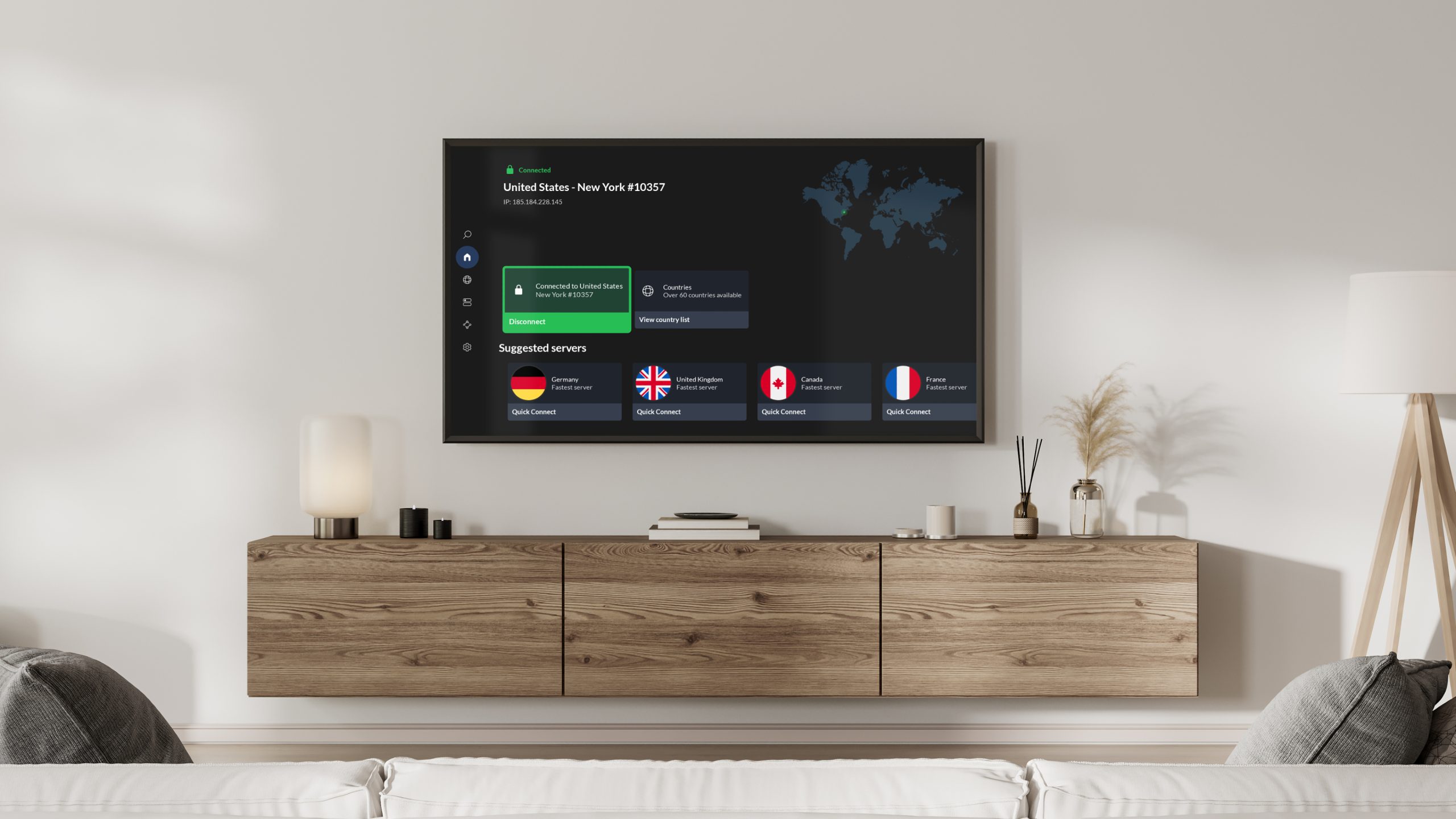
NordVPN runs on Android TVs (as pictured), as well as other common TV operating systems. (Image credit: NordVPN)
Which VPN will work on your TV depends on which platforms your VPN service is available on and whether your TV allows VPNs to run on its operating system.
Some VPNs are widely available across platforms. Norton VPN has a native app on Apple TV and Amazon Fire TV, and Android or Google TVs can run the Google Play version of the app natively.
Advertisement
The same is true for NordVPN and ExpressVPN, which both support all four platforms. However, it’s worth checking your VPN service’s specific device support information. Amazon’s latest Vega OS Fire Sticks, for example, is not compatible with ExpressVPN or Norton VPN.
For more details on the operating systems supported by different VPNs, it’s worth checking out our roundup of best smart TV VPNs.
As for Samsung TVs running Tizen OS and LG TVs running WebOS, VPN apps are not natively supported — but this doesn’t mean you’re out of luck if you’re looking to watch the World Cup securely.
Advertisement
How to use a VPN with a Samsung or LG TV
Samsung TVs, like the S90F pictured above, do not support VPNs by default. (Image credit: Future)
To access VPN-like functionality on a Samsung or LG TV, you’ll need to use Smart DNS. This effectively reroutes your Domain Name System (DNS) queries, so you can access your favorite shows from home. However, it won’t mask your IP address or encrypt your traffic like a VPN does.
It’s not a given that a VPN service will offer a SmartDNS feature. Of the best VPNs, ExpressVPN comes with its MediaStreamer SmartDNS tool, while NordVPN also has a SmartDNS capability. CyberGhost, which features in our best smart TV VPN list, also offers this functionality.
Using this method isn’t always that easy and success isn’t guaranteed. The simpler solution s to run a VPN on a laptop or mobile device, stream the World Cup (or whatever you’d like to watch) on that device, and then connect to your TV with a HDMI cable.
Advertisement
Can I cast a VPN stream to my TV with AirPlay or Chromecast?
(Image credit: Google)
Unfortunately, casting from a phone running a VPN to a TV not running a VPN usually doesn’t work, because the two devices aren’t part of the same network environment.
Casting relies on communication between devices on the samenetwork, so using a VPN on only one device can interrupt the connection between them.
If you link both your TV and phone to the same network — either behind the VPN or with SmartDNS — you’ll have a better chance of casting, but it’s still not as reliable as using a native VPN on your TV, or even using SmartDNS.
So the tip worth remembering: if you’re TVs operating system allows it, download a VPN direct to your device. If it doesn’t, you can always use your laptop and connect to your TV using a standard HDMI cable.
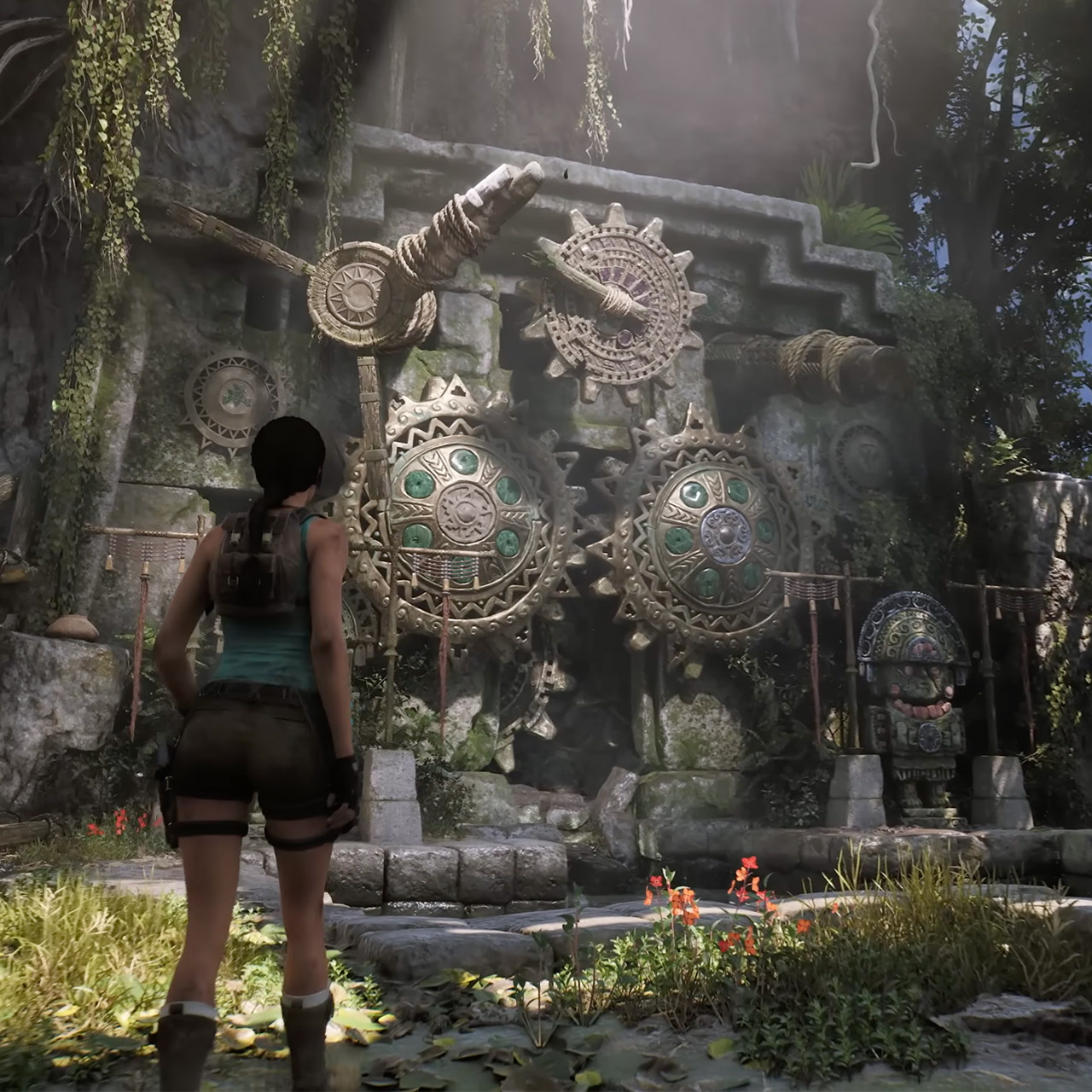
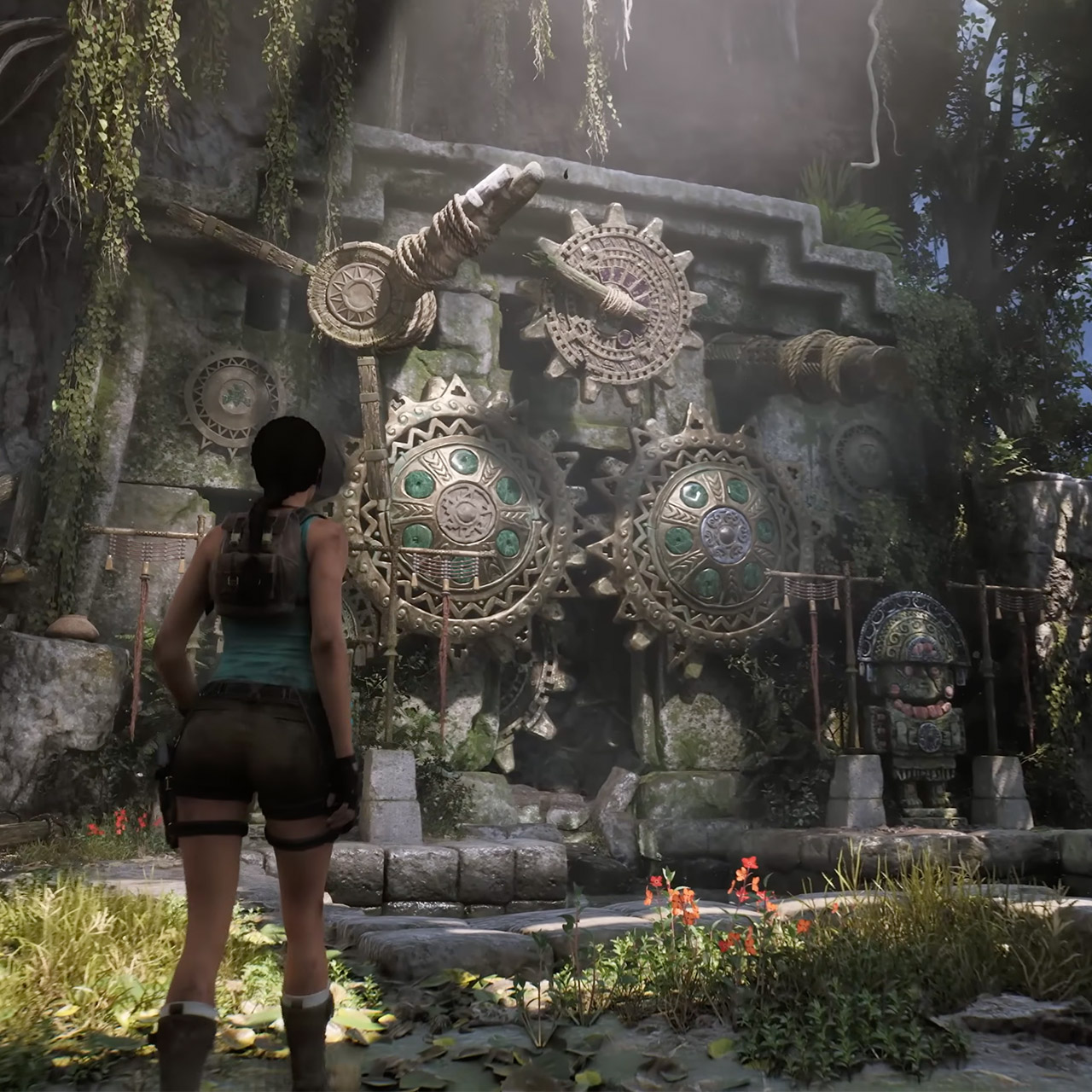
Lara Croft moves through thick Peruvian jungle undergrowth with familiar purpose. The new four-minute gameplay video, captured during Summer Game Fest hands-on sessions, drops players straight into a reimagined Lost Valley. It offers the clearest view yet of how the upcoming Tomb Raider: Legacy of Atlantis game refreshes the 1996 original while carrying forward lessons from more recent entries in the series.
Water pours over the old stonework just in front of Lara. The immediate challenge is to manage the flow so that water levels rise in the lower area and clear a path for her to follow. She climbs the mossy temple walls with jagged rock formations that mix in with the landscape rather than feeling like a staged game marker, which is a comfort. A wrist-mounted grapple then fires, capturing a massive cog, which she hauls into position, redirecting the current and fixing the system. Her scanner detects critical objects when realistic greenery makes them impossible to locate, even when you know they’re there. The entire method runs smoothly with almost no on-screen assistance, and it rewards you for paying attention and testing to see what works.
PlayStation 5 Console – 1TB, includes wireless controller, 1TBSSD, Disc Drive, 2 Horizontal Stand Feet, HDMI cable, AC power cord, USB cable, printed…
1TB of Storage, keep your favorite games ready and waiting for you to jump in and play
Ultra-High Speed SSD, maximize you play sessions with near instant load times for installed PS5 games
The visuals are simply stunning from the start, owing to Unreal Engine 5, which provides thick canopy cover, dynamic water, wonderfully detailed ruins, and extremely powerful theatrical lighting. The style effectively blends the sense of discovery from previous games with the more realistic visuals that we’ve come to expect today. Nothing seems overly planned or manufactured.
This small sample is only a taste of what the entire game has to offer. It follows Lara as she seeks for components of the Scion, a tremendously powerful device that transports her around the world: she starts in the Peruvian jungles and then travels to ancient Greek ruins, Egyptian deserts, and a mysterious Mediterranean island steeped in myth and legend. Each new site will feature its own unique blend of exploration, traps, and secrets.
Advertisement
The series’ core gameplay focuses on environmental puzzles, fluid movement, and precision combat. The new Focus system features some amazing slow-motion sequences that emphasize timing and movement. The grappling naturally extends to puzzle solving and crossing challenging terrain. Players can adjust the level of puzzle aid and combat complexity independently, allowing you to tailor the experience to your preferences. For those eager to dig in, there are trinkets and a skill tree to explore. Alix Wilton Regan is Lara’s new voice actress. She provides the usual calm assurance to the role, as well as some emotional range and situational knowledge, and she remains in character throughout, whether scaling cliffs, solving a mechanism, or dodging predators. The continuity really makes you feel like you’re walking in her shoes.
Crystal Dynamics and Flying Wild Hog worked together to produce the game. Their stated goal was to keep the sense of wonder and discovery from the original 1996 version while modernizing the mechanisms to ensure optimal operation on modern hardware and how people play now. They kept the essence of what made the early Tomb Raider so special while also providing new tools that allow players to use Lara’s full range of powers. We may expect the game to be released on February 12, 2027, for PlayStation 5, Xbox Series X and S, PC, and Nintendo Switch 2. [Source]
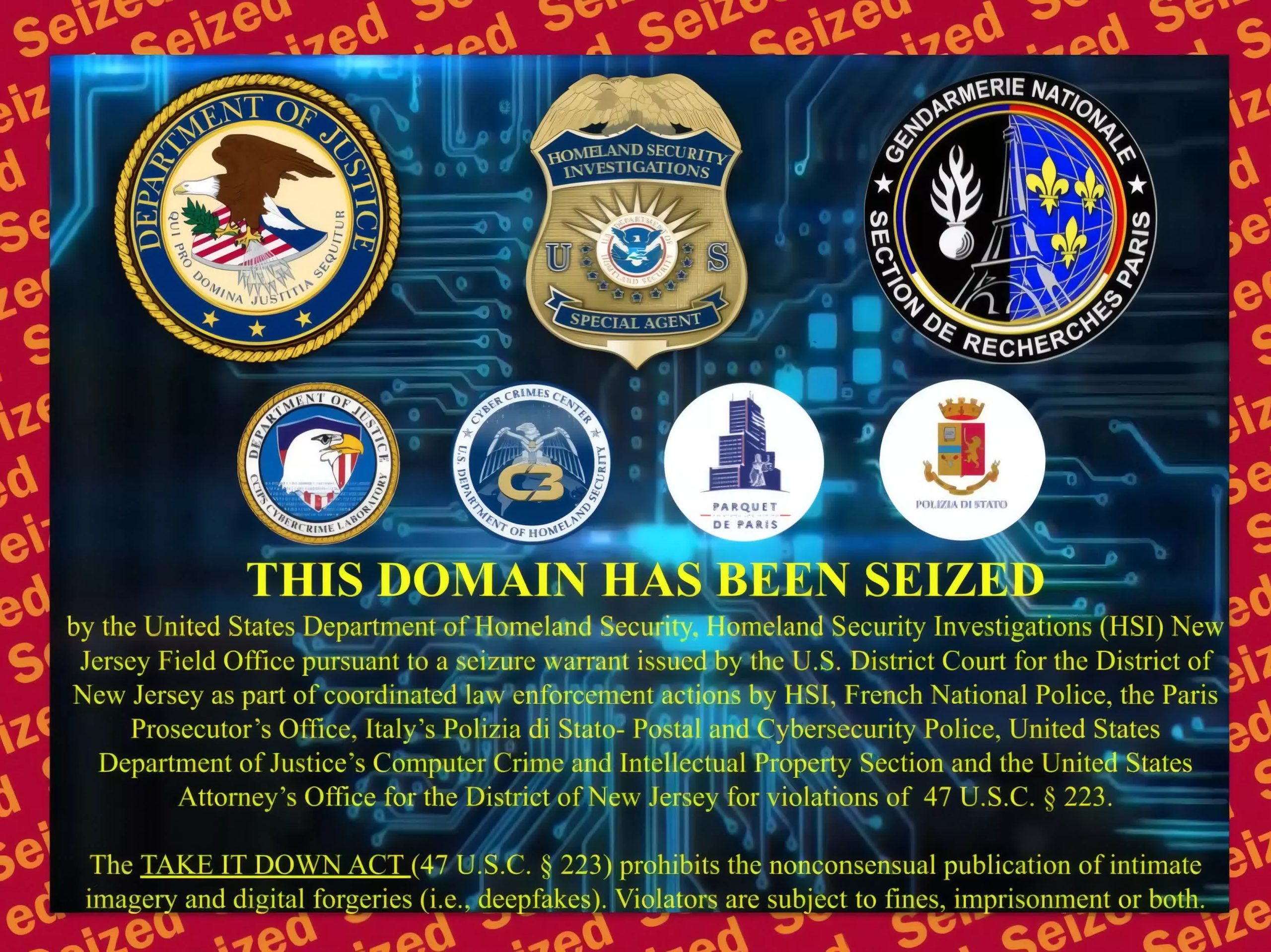
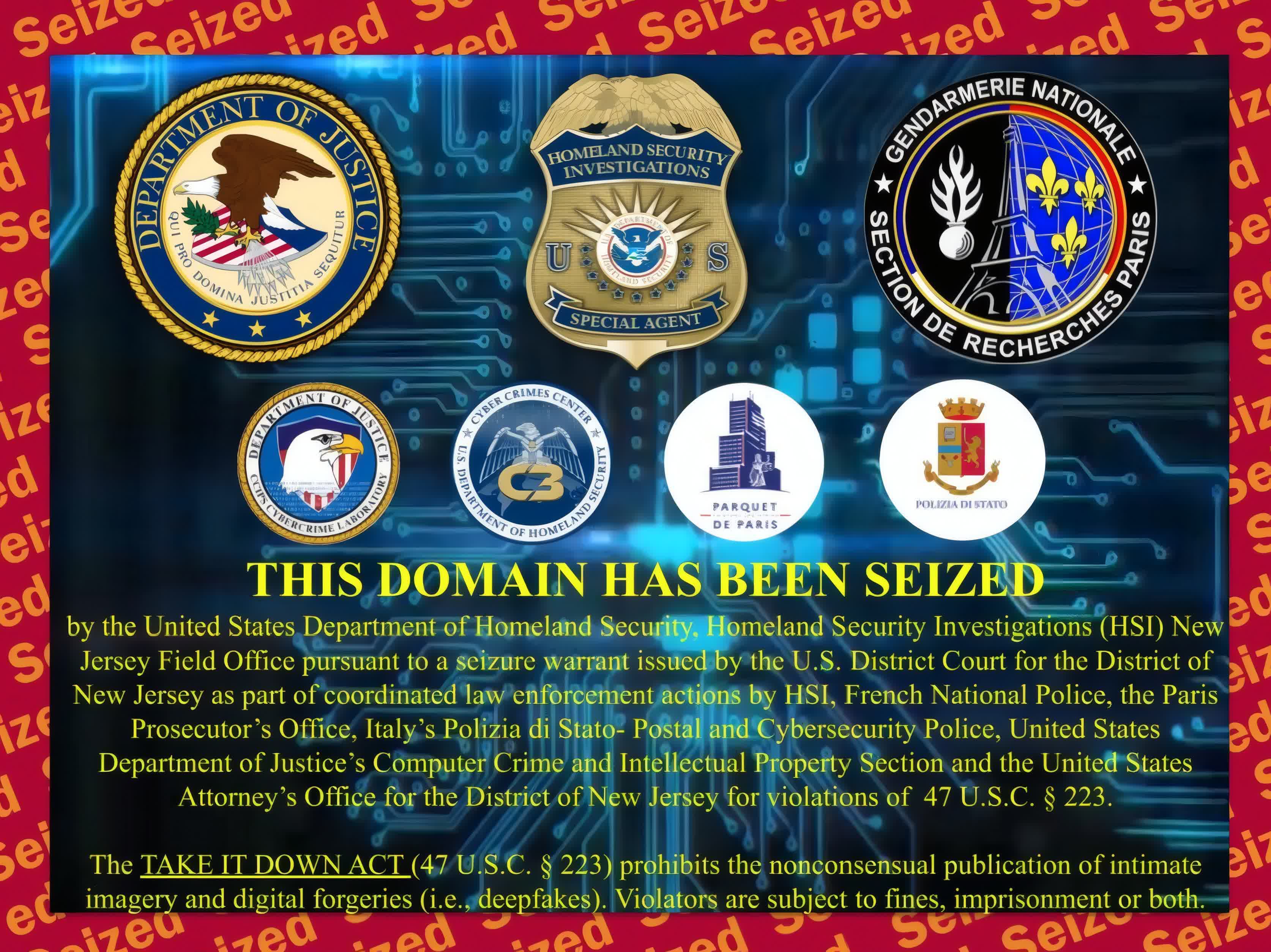
What just happened? The US government has seized two domains accused of hosting non-consensual deepfake pornography of female celebrities, marking what prosecutors say is the first domain seizure under the Take it down Act. CFake.com and SOCFake.com now point to law enforcement notices after the Justice Department and Homeland Security Investigations obtained federal warrants to redirect the sites.
The DOJ says the domains were used to publish digitally forged nude and sexual images and videos of women without their consent. According to the Justice Department, the material involved thousands of “digital forgeries,” while the US Attorney’s Office for New Jersey describes the sites as hosting hundreds of thousands of deepfake pornographic images and videos.
The targeted women included heads of state, first ladies, royalty, legislators, government officials, journalists, TV presenters, athletes, entertainers, and other public figures. Investigators said users could browse material by tags including “rape,” “forced,” “degradation,” and “slave.” Those categories are a big reason why prosecutors framed the case as abuse and exploitation rather than a copyright or impersonation dispute.
The affidavit supporting the seizure says CFake’s landing page described the content as digitally retouched and altered photos of well-known people. Its terms and conditions reportedly told any upset celebrity to contact the operators, then asked why they felt disadvantaged when “practically every female celebrity in the world” was also on the site. HSI also interviewed one victim in February who said the images were forged, non-consensual, and had caused psychological harm.
Advertisement
The Take it down Act, enacted in May 2025, makes it a federal crime to publish sexually explicit digital forgeries of identifiable adults without consent when the material is not a matter of public concern and is intended to cause harm or actually does so. It also gives authorities forfeiture powers over property used to facilitate violations, which in this case meant the domains themselves.
US authorities were alerted to the site by Italian cyber police, who shared evidence with France under the Budapest Convention on Cybercrime. French authorities arrested a 47-year-old man in Nice on June 10, accusing him of being a CFake administrator. CyberScoop reports that French investigators identified about 300,000 images and 7,000 videos depicting 14,000 people, along with 200,000 user accounts and 4 million monthly views.
Deepfakes have been a problem for years, from Scarlett Johansson calling attempts to stop them a “lost cause” in 2019 to the Taylor Swift AI nude images that spread across X in 2024. Google later banned ads for deepfake porn services, while San Francisco sued 16 AI “undressing” websites. As generative AI becomes more advanced, easier to use, and convincing in its output, the issue is arguably getting worse, not better.
The Trump administration released another large batch of government UAP records, including videos of glowing orb-like objects appearing to split and rejoin, witness accounts, illustrations, and decades-old investigative documents. Axios reports: The documents indicate that government agents have spent years monitoring, investigating and documenting suspected UAP incidents. At lease some of the sightings took place near sensitive government facilities, according to the reports. Videosshowingred and yellow light-emitting orbs, some of which appear to split apart and then reattach as they fly across the sky. The videos were taken by witnesses whom the government deemed “credible.”
Illustrations and videosshowingreenactments of what observers saw, and the positions they were in when they viewed them. Memos from governmentagentsdescribing their experiences seeing flying objects.
An illustration of a grayish-white balloon-like object hovering above an area near Colorado Springs, Colo. An illustration depicting a series of incidents that took place in the “western United States” where government officials reported seeing UAPs in 2023.
There also are decades-old records documenting the government’s involvement in investigating UAPs, including a 1949 letter then-FBI Director J. Edgar Hoover wrote federal agents after receiving a message from an American citizen expressing their belief they’d seen a non-human-made flying object. The records released by the administration do not express any conclusions as to whether the government believes the UAPs represent the existence of alien life. They also do not indicate any conclusions as to whether UAPs represent a national security threat to the U.S.





















































You must be logged in to post a comment Login