

Business
Zara’s India FY26 profit falls 32% to Rs 204 crore; revenue slips


Zara stores in India reported a Rs 299.84 crore profit and Rs 2,782.06 crore revenue from operations in FY25, Inditex Trent Retail India Private Ltd (ITRIPL), which operates the Zara brand in India, said.
Its total income was Rs 2,767.75 crore for the financial year ended March 31, compared to Rs 2,839.50 crore a year ago.
ITRIPL is a JV between Spain’s Inditex, which owns luxury fashion brand Zara, and Tata Group’s retail arm Trent Ltd.
Zara, which competes with foreign brands like H&M and UNIQLO in India, currently operates 22 stores in the country.

In FY26, Trent reduced its stake in ITRIPL in a buyback offer by ITRIPL.
“During the year under review, the company participated in the buyback offer made by ITRIPL and tendered 94,900 equity shares. Pursuant to the acceptance of the said offer, the company’s shareholding in ITRIPL stands at 20 per cent,” it said.Inditex group has another JV association with Trent, which operates Massimo Dutti stores in India. Massimo Dutti India Pvt Ltd (MDIPL) operates three stores in India.
Its revenue increased 27.97 per cent to Rs 128.45 crore in FY25 compared to Rs 100.37 crore in FY24.
The net profit rose 13.86 per cent to Rs 11.66 crore for the financial year ended March 2026.
Like ITRIPL, Tata group retail firm Trent has a 20 per cent stake in MDIPL.
ITRIPL and MDIPL source merchandise only from the Inditex Group, one of the world’s largest fashion retail groups, headquartered in Arteixo, Galicia, Spain, whose portfolio consists of several well-known brands, such as Zara, Massimo Dutti, Pull&Bear, Bershka, and Stradivarius, a women’s fashion brand.
Moreover, the choice of product and related specifications is Inditex’s discretion. Further, the entities are dependent on the Inditex group for permissions to use the said brands in India, subject to its terms and specifications, according to the latest annual report of Trent.


Progressive Corporation: Exceptional Growth But Normalizing Margins
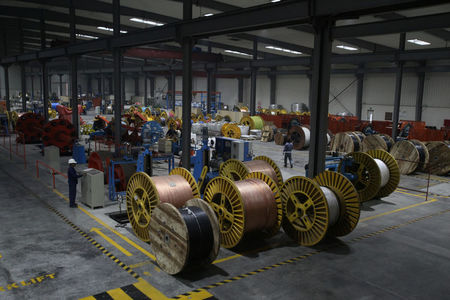
Bernstein breaks down 3 misconceptions around data centers and copper


Wolf Report is a senior analyst and private portfolio manager with over 10 years of generating value ideas in European and North American markets, and the owner of Wolf of Value, a service focusing on international dividend-paying value investments.He further covers the markets of Scandinavia, Germany, France, UK, Italy, Spain, Portugal and Eastern Europe in search of reasonably valued stock ideas.
Analyst’s Disclosure: I/we have a beneficial long position in the shares of CRARY either through stock ownership, options, or other derivatives. I wrote this article myself, and it expresses my own opinions. I am not receiving compensation for it (other than from Seeking Alpha). I have no business relationship with any company whose stock is mentioned in this article.
While this article may sound like financial advice, please observe that the author is not a CFA or in any way licensed to give financial advice. It may be structured as such, but it is not financial advice. Investors are required and expected to do their own due diligence and research prior to any investment.
Short-term trading, options trading/investment and futures trading are potentially extremely risky investment styles. They generally are not appropriate for someone with limited capital, limited investment experience, or a lack of understanding for the necessary risk tolerance involved.
I own the European/Scandinavian tickers (not the ADRs) of all European/Scandinavian companies listed in my articles. I own the Canadian tickers of all Canadian stocks I write about.
Please note that investing in European/Non-US stocks comes with withholding tax risks specific to the company’s domicile as well as your personal situation. Investors should always consult a tax professional as to the overall impact of dividend withholding taxes and ways to mitigate these.
Seeking Alpha’s Disclosure: Past performance is no guarantee of future results. No recommendation or advice is being given as to whether any investment is suitable for a particular investor. Any views or opinions expressed above may not reflect those of Seeking Alpha as a whole. Seeking Alpha is not a licensed securities dealer, broker or US investment adviser or investment bank. Our analysts are third party authors that include both professional investors and individual investors who may not be licensed or certified by any institute or regulatory body.

INGLEWOOD, Calif. — The United States men’s national team delivered a commanding performance in its 2026 FIFA World Cup opener Friday night, defeating Paraguay 4-1 at SoFi Stadium in a display that sent a strong message as co-hosts of the tournament.
Folarin Balogun scored twice in his World Cup debut, Christian Pulisic provided creative spark with key assists before halftime, and Giovanni Reyna added a stunning late goal to cap the victory. The result marked the most goals scored by the U.S. in a single World Cup match since 1930 and gave the Americans an ideal start in Group D.
The match, played before a raucous home crowd in the Los Angeles area, showcased the attacking fluency that coach Mauricio Pochettino has been building. The U.S. controlled possession and created numerous chances, outplaying a Paraguay side that had been solid in qualifying but struggled to contain the hosts’ pace and movement.
The Americans took the lead in just the seventh minute. Pulisic split two defenders with a precise pass to Weston McKennie in the box. McKennie’s cutback was turned into his own net by Paraguayan midfielder Damián Bobadilla under pressure from Balogun, giving the U.S. an early 1-0 advantage.
Pulisic, playing with the confidence of a veteran leader, continued to orchestrate the attack. Around the 31st minute, he delivered another dangerous ball into the area that Balogun finished clinically for his first international goal of the tournament, making it 2-0. Balogun had a goal called back for offside moments earlier but stayed sharp.
In first-half stoppage time, Balogun added his second. Receiving the ball near the edge of the box, he evaded two defenders with composure before curling a left-footed shot into the top corner, beyond the reach of goalkeeper Orlando Gill. It was a moment of individual brilliance that sent the crowd into a frenzy and gave the U.S. a 3-0 halftime lead — a commanding cushion in their first home World Cup match in decades.
Pochettino made changes at the break, including substituting Pulisic as a precaution after he took a kick to his left calf. The captain later said he hoped it was nothing serious. Paraguay pushed for a response in the second half, and their persistence paid off in the 73rd minute when Maurício pulled one back to make it 3-1.
The U.S. maintained control despite the setback. Defenders like Chris Richards were nearly flawless in distribution, and the midfield trio of Tyler Adams, McKennie and others dictated the tempo. Malik Tillman was influential in linking play throughout.
Deep into stoppage time, with the outcome already decided, Reyna provided the perfect finishing touch. He received the ball on the right side and unleashed a trivela — an outside-of-the-foot strike — that sailed into the far corner for his first World Cup goal. The 4-1 final scoreline reflected the U.S. dominance, though the visitors showed resilience in the latter stages.
This victory comes as the U.S. seeks to surpass its best modern World Cup performances. Hosting the tournament alongside Canada and Mexico brings added pressure and opportunity. A strong opening result boosts confidence heading into subsequent group matches and potentially deeper into the knockout stages.
Pochettino’s tactical setup emphasized quick transitions, high pressing and fluid attacking movements. Players like Balogun, who has been prolific at the club level with Monaco, provided the clinical edge that has sometimes eluded the U.S. in past tournaments. Pulisic’s vision and McKennie’s energy were central to the early breakthroughs.
For Paraguay, it was a difficult night despite their reputation as a tough, organized side. They had conceded few goals in qualifying against strong South American opponents but found themselves overwhelmed by the hosts’ intensity on the night. The own goal and defensive lapses proved costly.
The atmosphere at SoFi Stadium was electric, with fans waving flags and chanting throughout. As co-hosts, the U.S. benefited from passionate home support that amplified their performance. The win not only secures three points but also energizes the domestic soccer community during this landmark event.
Post-match, players and coaches expressed satisfaction with the result while maintaining focus on the challenges ahead. The group stage remains competitive, and the U.S. will look to build on this foundation. Balogun’s brace in particular drew comparisons to historical U.S. performances, highlighting the potential of this squad.
This match represented more than just a scoreline. It signaled the U.S. team’s evolution under Pochettino and its readiness to compete at the highest level on home soil. With talent across the pitch and growing belief, the Americans have positioned themselves well for what promises to be a memorable tournament.
The 2026 World Cup continues with high expectations for the host nations. For the U.S., Friday’s result provides momentum and validation of their preparations. Fans and analysts alike will watch closely as the team aims to make a deep run and create lasting memories in front of passionate domestic crowds.


Two phones and an app: How Russians skirt Putin’s digital iron curtain


I hold a Master’s degree in Cell Biology and began my career working for several years as a lab technician in a drug discovery clinic, where I gained extensive hands-on experience in cell culture, assay development, and therapeutic research. That scientific foundation gave me an appreciation for the rigor and challenges behind drug development, which I now bring into my work as an investor and analyst. For the past five years, I have been active in the investing space, with the last four years dedicated to working as a biotech equity analyst alongside my lab work. My focus is on identifying promising biotechnology companies that are innovating in unique and differentiated ways, whether through novel mechanisms of action, first-in-class therapies, or platform technologies with the potential to reshape treatment paradigms. By combining my lab-based scientific expertise with financial and market analysis, I aim to deliver research that is both technically sound and investment-driven. On Seeking Alpha, I plan to write primarily about the biotech sector, covering companies at different stages of development, from early clinical pipelines to commercial-stage biotechs. My approach emphasizes evaluating the science behind drug candidates, the competitive landscape, clinical trial design, and the potential market opportunity, all while balancing financial fundamentals and valuation. My goal in publishing here is to share some insights that help investors better understand both the opportunities and of course the many risks in biotech. This is a sector where breakthrough science can translate into outsized returns, but also where careful scrutiny is essential. I look forward to contributing thoughtful analysis and engaging with readers who share an interest in this dynamic and rapidly evolving space.
Analyst’s Disclosure: I/we have no stock, option or similar derivative position in any of the companies mentioned, and no plans to initiate any such positions within the next 72 hours. I wrote this article myself, and it expresses my own opinions. I am not receiving compensation for it (other than from Seeking Alpha). I have no business relationship with any company whose stock is mentioned in this article.
Seeking Alpha’s Disclosure: Past performance is no guarantee of future results. No recommendation or advice is being given as to whether any investment is suitable for a particular investor. Any views or opinions expressed above may not reflect those of Seeking Alpha as a whole. Seeking Alpha is not a licensed securities dealer, broker or US investment adviser or investment bank. Our analysts are third party authors that include both professional investors and individual investors who may not be licensed or certified by any institute or regulatory body.
Business
Exclusive-Tata’s iPhone parts factory contaminated farmland water, India pollution body alleges


Exclusive-Tata’s iPhone parts factory contaminated farmland water, India pollution body alleges

Prime Medicine's Prime Editing Is Worth The Risk

Ares Management: The Fears Are Understood, The Discount Has Overshot

As artificial intelligence spending continues to reshape the semiconductor landscape, investors are weighing the merits of NVIDIA Corp., Advanced Micro Devices Inc. and Intel Corp. in a high-stakes contest for dominance in data centers, AI accelerators and traditional computing. With NVIDIA maintaining its lead in AI GPUs, AMD gaining ground in both CPUs and GPUs, and Intel staging a notable recovery, the choice of which stock to buy in the second half of 2026 depends on growth outlook, valuation and risk tolerance.
NVIDIA shares closed recently around $205, with a market capitalization nearing $5 trillion. The company has delivered explosive growth, reporting record quarterly revenue of $81.6 billion in its most recent period, up 85% year-over-year, driven overwhelmingly by its data center segment. Analysts continue to view it as the clear leader in the AI infrastructure boom.
Oppenheimer analyst Rick Schafer has described NVIDIA as an “AI castle on a hill” that boasts the best performance-per-watt for both training and inference. He maintains an Outperform rating, highlighting the company’s Blackwell Ultra racks as leading the market by two generations.
AMD, trading near $500-$510 after a strong run, has seen significant outperformance in 2026 in some periods, fueled by accelerating data center growth and CPU share gains. Citi recently upgraded the stock to Buy with a $575 price target, citing underappreciated GPU opportunities, potential major wins with customers like Meta, and a CPU revival tied to agentic AI workloads. The firm sees AI potentially driving 54% of AMD’s sales by 2028.
Intel has staged one of the most dramatic recoveries, with shares more than doubling year-to-date at points amid optimism around its foundry ambitions, server CPU improvements and AI efforts under new leadership. Recent trading levels have hovered around $120-$125. While still facing execution challenges, the company benefits from broader CPU demand in the AI era.
The three companies operate in overlapping but distinct segments. NVIDIA dominates the high-margin AI accelerator market with an estimated 85-90% share, powered by its CUDA software ecosystem that creates strong customer lock-in. Its latest earnings underscored insatiable demand, with data center revenue continuing to surge.
AMD has successfully challenged NVIDIA in GPUs while maintaining leadership in certain server CPU segments, chipping away at Intel’s traditional stronghold. CEO Lisa Su has highlighted strong momentum in EPYC processors and Instinct GPUs, with the company raising expectations for server CPU market growth.
Intel, historically the CPU king, is fighting back with improved product roadmaps, foundry partnerships and AI chip initiatives. It has secured notable customer interest, though its turnaround remains a work in progress compared to the more established AI trajectories of its rivals.
Valuations reflect these dynamics. NVIDIA trades at forward multiples that some analysts consider attractive relative to its growth, especially compared to historical averages. AMD offers a balance of growth and somewhat more reasonable pricing in the eyes of bulls, while Intel’s valuation has expanded sharply with its rally but carries higher uncertainty.
Market watchers note that NVIDIA’s ecosystem advantage remains formidable. “They’ve got the whole stack,” one analyst observed in a recent discussion, pointing to CUDA, hardware and software integration. AMD is seen as the primary alternative for customers seeking options, while Intel’s path involves both CPU resilience and foundry scale.
Risks abound for all three. A potential slowdown in hyperscaler AI capital expenditure could pressure NVIDIA’s premium pricing. AMD faces the challenge of closing the performance gap in GPUs, and Intel must prove it can execute consistently on its ambitious restructuring. Broader economic factors, geopolitical tensions affecting supply chains, and competition from custom AI chips by big tech firms add layers of uncertainty.
For 2026 and beyond, analysts largely favor NVIDIA for its unmatched leadership and margins, with many maintaining Buy ratings and price targets implying further upside. AMD garners strong support as a high-conviction growth play with diversification benefits. Intel appeals to those betting on a multi-year turnaround and CPU/AI convergence.
Diversification across the sector remains a prudent approach for many portfolios, as the AI buildout is expected to benefit multiple players. NVIDIA’s near-term dominance appears secure, but AMD’s share gains and Intel’s recovery potential could shift the competitive balance over time.
Longer-term projections point to continued expansion in AI infrastructure, with data center spending driving semiconductor demand well into the decade. NVIDIA’s scale and innovation pipeline position it as the default leader, yet opportunities exist for AMD to carve out meaningful market share and for Intel to stabilize and grow in select areas.
Investors should consider their time horizon, risk appetite and overall portfolio allocation. Those seeking established AI leadership with strong cash flow generation may lean toward NVIDIA. Growth-oriented investors comfortable with volatility might favor AMD’s upside in both AI and traditional computing. Value-oriented or turnaround plays could look at Intel, though with higher execution risk.
The semiconductor sector’s cyclical nature means near-term pullbacks can create entry points, as seen in recent trading fluctuations. NVIDIA has pulled back from highs but remains a core holding for many AI-themed funds. AMD’s recent upgrades reflect growing confidence in its competitive positioning. Intel’s volatility underscores the binary nature of its recovery story.
Ultimately, no single stock is a guaranteed winner, but the trio represents the core of the AI and computing renaissance. NVIDIA sets the pace, AMD challenges aggressively, and Intel fights to reclaim relevance. Monitoring quarterly results, customer wins and technological benchmarks will be key to assessing which narrative prevails through the remainder of 2026 and into 2027.
As the AI investment wave matures, these chipmakers are poised to benefit, albeit at different rates and with varying levels of certainty. Prudent investors will weigh the structural advantages against valuations and competitive threats before committing capital in this dynamic market.

Trafford Centre Quiz store to close as chain shuts all shops

Progressive Corporation: Exceptional Growth But Normalizing Margins

XRP (XRP) Bounces From $1.05 Low as Analysts Call Market Bottom and Target $1.30 Breakout


-

 NewsBeat5 days ago
Alexander Zverev wins the French Open to finally earn a 1st Grand Slam title
-
 Entertainment6 days ago
The Best Mystery Series of All Time Is Surging on Streaming 30 Years After It Ended
-

 Crypto World5 days ago
Anatomy of the June crypto crash: Fed, Iran, Saylor
-

 Crypto World2 days ago
Oppenheimer backs SpaceX as $70 billion retail frenzy builds
-

 Crypto World2 days ago
Markets Rally as SpaceX IPO Looms Amid Iran Tensions and Inflation Surge
-
 Crypto World7 days ago
Senator Cynthia Lummis Calls CLARITY Act the Most Consequential Financial Legislation of This Generation
-
 NewsBeat6 days ago
Alexander Zverev conquers demons and outlasts Flavio Cobolli to win French Open for first major title
-

 Tech6 days ago
Microsoft unveils seven homegrown AI models in new bid for ‘long term self-sufficiency’
-

 Business5 days ago
High Stakes for Wembanyama as New York Pushes for 3-0 Lead
-

 Tech5 days ago
Notion restores access to Anthropic after service disruption
-
 Business6 days ago
The Pain Points Taking a Fragile Tech Rally Down a Notch
-
 Crypto World5 days ago
Eli Lilly (LLY) Stock Surges 4% Following Breakthrough Sleep Apnea Trial Results
-
 Business6 days ago
The investment to transform historic St Helen’s ground in Swansea
-

 Crypto World6 days ago
Trump’s AI Ownership Plan Could Benefit Anthropic at OpenAI’s Expense
-
 Sports4 days ago
Bangladesh beat Australia after 20 years in ODIs, register only their second win over six-time world champions | Cricket News
-

 Tech8 hours ago
NanoClaw integrates JFrog registries to secure AI agent downloads
-

 Crypto World3 hours ago
Bitget enters Argentina’s regulated crypto market through PSAV registration
-

 Tech19 hours ago
This Week In Security: Microsoft On Microsoft, Register Your Domains, Linux On ARM, And FreeBSD Joins The File Cache Club
-

 Politics2 days ago
Politics Home | Healey Resignation Is “Colossal Failure Of Government”, Says Former Labour Defence Secretary
-

 Sports2 days ago
First Time Since 1971: Australia Register Historic Low In ODI Cricket
You must be logged in to post a comment Login