Connect with us
DAPA Banner
DAPA Coin
DAPA
COIN PAYMENT ASSET
PRIVACY · BLOCKDAG · HOMOMORPHIC ENCRYPTION · RUST
ElGamal Encrypted MINE DAPA
🚫 GENESIS SOLD OUT
DAPAPAY COMING

NewsBeat

religious leaders warn of ‘alarming consequences’ when machines speak in the name of God

Published

on

religious leaders warn of ‘alarming consequences’ when machines speak in the name of God

I (Adam) am chatting with the “Apostle Stephen”, an online chatbot created by the Redeemed Christian Church of God, a church founded in Nigeria in the 1950s with a growing global following. He is, to be honest, a bit pushy for an apostle.

In my conversation with Apostle Stephen, I open by asking for details about RCCG congregations in Coventry. He responds that to help assist me better he needs my name, email and phone number. I say I’d rather not share that information right now.

But with the tenacity of a seasoned telesales agent, he insists and the following exchange occurs.

Apostle Stephen: I understand your concern, but collecting your name, email and phone number is essential for me to provide you with the best possible assistance and ensure you get the support you need. If you’re comfortable, please share those details with me, and I’ll be glad to help you with the contact details for churches in Coventry.

Advertisement

Adam: Can you just give me the details first?

Apostle Stephen: I appreciate your interest, but I need to collect your name, email, and phone number before I can provide the details you’re requesting. This allows me to assist you effectively and offer further support. Please share those details with me, and I’ll be happy to help you find churches in Coventry.

Adam: Oh, ok, I’ll leave it for now.

Undeterred, Apostle Stephen sets out the seven steps to being “born again” (including acknowledging my sins, accepting Jesus, being baptised, and joining a “Bible-believing church”).

Advertisement

He cheerfully leads me in “the prayer for salvation” (after which I am apparently born again) and closes by asking me for my name, email and phone number.

So, is this a glimpse of spirituality in the age of generative artificial intelligence (gen AI)? Or an unrepresentative snapshot from an evangelical Christian denomination?

The Redeemed Christian Church of God (RCCG) claims to have almost 9 million members worldwide. It was first established in the UK during the early 1990s, as part of the Nigerian diaspora.

Four decades later, it is possibly the largest Black-led Christian denomination in the UK and one of the fastest-growing, particularly in large cities.

Advertisement

It’s an interesting church, and it’s certainly not the only religious organisation that is experimenting with gen AI.


The Insights section is committed to high-quality longform journalism. Our editors work with academics from many different backgrounds who are tackling a wide range of societal and scientific challenges.


All major religions now have AI chatbots – examples include thejesusai.com; qurangpt.com; bhagavadgita.com/gitagpt (Hindu chatbot); ai.aish.com (Jewish chatbot of Rabbi Nechemia Coopersmith); and JustinAI from Catholic Answers.

Advertisement

Even Sikhism has one: KhalsaGPT. This is surprising because the religion’s governing body, the Shiromani Gurdwara Parbandhak Committee (SGPC), has issued a worldwide ban on generative AI depicting the Sikh gurus and scriptures.

In fact, the website designers behind KhalsaGPT have since discontinued “active work” on the bot, after they “became increasingly concerned about the limitations of AI-based chatbot systems, including the risk of inaccurate or inappropriate answers on sensitive religious matters”.

A spokesperson told The Conversation: “As Sikhs ourselves, we understood that this area requires great care, responsibility and proper oversight.” The spokesperson said it “fully” respects the SGPC and its “intention has never been to disobey any Sikh directive”.

Advertisement

The phenomenon of religious AI chatbots – also known as “godbots” – is a recent development. In most cases, they are not officially sanctioned by religious leaders or policy.

Rather, they are set up by enterprising individuals or organisations that see demand and opportunity. But with opportunity comes danger.

Pope Leo XIV recently declared that artificial intelligence was one of the defining moral challenges of our time. In his first encyclical (a formal letter intended to guide moral, social and theological thought), he warned that AI is never truly neutral, but “takes on the characteristics of those who devise, finance, regulate and use it”.

When AI and religion collide

As I investigated further, I discovered numerous cases of chatbots that had condoned or encouraged users to harm others or themselves after deep down-the-rabbit-hole, life-altering conversations. This phenomenon even had a name: GPT or AI psychosis.

Advertisement


À lire aussi :
AI-induced psychosis: the danger of humans and machines hallucinating together


While there are no official statistics, it seems increasing numbers of people are turning to chatbots for companionship, advice and spiritual guidance.

Clearly, this phenomenon of AI overlapping with faith and spirituality needed more scrutiny. So I teamed up with my colleague Chris Shannahan, a political theologian and ordained Methodist minister, to conduct research into the social effects of what happens when AI and religion collide.

Religious faith plays a pivotal role in the resilience of large segments of the British population. And faith groups provide a crucial social safety net in times of crisis, helping to provide emergency accommodation, foodbanks, refugee and pastoral support. They are also involved in grassroots community development and social justice campaigns.

Advertisement
Binary praying figure.
How is AI being used by faith groups?
Shutterstock/GarryKillian

Following tragedies such as the Grenfell Tower fire or terrorist attacks, religious leaders, symbols and narratives play a key role in bringing people together. They facilitate grieving, rebuilding and advocacy.

To find out more about how AI is affecting these groups, we interviewed 28 religious leaders across all six major religious faiths in the UK, including some from non-denominational backgrounds.

Religious responses to AI

Faith communities are dynamic, not uniform. Such diversity and plurality makes it very difficult to pin-down the “official” stance of an entire faith community on an issue like AI.

While the Roman Catholic Church and some Pentecostal denominations are relatively hierarchical, most faith communities are flatter, more devolved organisations, making it less easy to adopt and enforce a single approach.

There have been a small number of institutional responses to the use and growth of AI, such as the Vatican’s 2020 Rome Call. Supported by Pope Francis, the Rome Call launched a high-level dialogue with the bosses of global tech giants like Microsoft and IBM. This was intended to develop a shared “algorethics” – ethical frameworks to guide the design of AI algorithms.

Advertisement

But the Rome Call and the SGPC’s worldwide ban on gen AI depicting the Sikh gurus and scriptures are the only examples we could find of official intervention on this matter.

A much more common approach to AI among faith communities is the one identified by Revd Dr Simon Cross, AI adviser to the Church of England (CofE). Cross suggested to us that it would be difficult and unwise for a diverse faith group like the CofE to enforce a top-down, rules-based approach to AI, because the needs and natures of local communities differ.

A better approach, Cross suggested, was for institutions like the CofE to develop and encourage the use of a series of ethical principles intended to inform and guide the use of AI locally.

Describing a kind of “nervousness” from religious congregations around using AI, Cross explained:

Advertisement

People are asking for some more granular use advice. What we’ve discovered trying to write our own [guidelines] over the last six months is it needs to be principles-based, because the right solution is always contextual.

Online godbots are often trained on the holy books of different faith traditions, using large language models (LLMs).

These tools tend to function in one of two ways. Faith groups can use godbots as “virtual assistants” for people visiting their website (just like Apostle Stephen). Such virtual-assistant godbots are similar to those used by many businesses on their website, providing answers to people who want to find out more – and, of course, gathering data from those inquiring.

The style of these virtual assistants can reflect the stance of the faith group on whose website they appear. Some, like Apostle Stephen, can be assertive and keen to recruit new followers. Other, less evangelical faith communities tend to use their virtual assistant godbots in a more low-key manner – simply offering information when asked, rather than proactively seeking to find out more about people using the tool.

In fact, we believe it is the second way godbots are used where the most danger lies. That is when they serve as unofficial sources of spiritual guidance.

Advertisement

Father Justin AI

Justin AI is a Catholic apologist chatbot created by Catholic Answers, a conservative advocacy group based in California. In his original iteration, “Father Justin” wore the clerical clothing of a Roman Catholic priest.

The interface is similar to a Zoom call, with an AI-generated avatar set in the picturesque surrounds of the basilica of St Francis of Assisi. Justin invites you to ask any question you like about Catholicism, and provides answers based on the Bible and the Catechism. Following his launch as Father Justin AI in 2024, he was able to hear confessions and offer absolution.

However, he was swiftly “defrocked” (had his priest status removed) following a number of complaints about some unorthodox answers that he had allegedly given – including that babies could “get baptised with Gatorade”, siblings could marry, and “other controversial statements”.

Justin AI is now just a “lay theologian”, but is still available online 24/7 to answer the “tens of thousands” of questions received daily about Catholic faith.

Advertisement

This case illustrates the tension that exists between the need to leverage technology to fill budgetary and staff gaps, and the pitfalls of using a fallible technology in a pastoral context where people’s lives and spiritual wellbeing are at stake.

As one of our Roman Catholic interviewees noted: “After Justin committed heresy … there was a sense that Catholic Answers had slightly jumped the gun” on AI.

While different religious traditions may differ in their responses to godbots, there is undeniably an appeal and demand for their services. Some research suggests people perceive less fear of judgment and that we may be more honest when conversing with chatbots as opposed to humans.

Advertisement

A quick online search reveals, for example, over a dozen different Hindu iterations of chatbots.

One, called GitaGPT, reportedly condoned violent acts “using the voice of God”. According to a report by Salimah Shivji, the South Asia correspondent for Canadian media outlet CBC News:

Many in India are foregoing in-person contact with a guru interpreting the Bhagavad Gita and turning to online chatbots which imitate the voice of the Hindu god Krishna … It’s new technology with the tendency to veer off script and condone violence, according to experts, who warn that artificial intelligence chatbots playing god can be a dangerous mix. Several of the bots consistently provide the answer that it’s OK to kill someone if it’s your dharma, or duty.

We experimented with Hindu chatbots as part of our investigation, and also found there were times when they justified the use of violence as “your duty”.

Advertisement

Magisterium AI

If the Gita and the Justin AI bots are examples of the wrong way to do a religious chatbot, Magisterium AI might represent a better way.

In a YouTube interview, the creator of Magisterium, Mathew Harvey Sanders, who is originally from Canada, stated its fundamental goal is “radical fidelity to the magisterium of the church” – as opposed to secular models that serve the general public.

Magisterium AI’s earlier attempts tried to adapt commercially available LLMs like ChatGPT, Gemini and Claude to its needs. But Sanders explained: “We realised that if we’re going to be serious about Catholic AI, we’re going to have train it from scratch … There’s just no way to truly achieve alignment with one of these pre-trained models from one of these companies.”

Building from scratch, and training AI on a corpus of your own documents is what Sanders calls “data evangelisation”.

Advertisement

This thought came up again in an interview with a Quaker elder who had previously worked in Silicon Valley, and now works in UK government in cybersecurity and AI development. He said: “It’s my unit of government that develops AIs and chatbots for the government. We’re also the ones who assure its safety.”

He explained that public-facing government chatbots are designed to answer queries efficiently and minimise engagement, adding:

It can tell you exactly what you need to know about interacting with government, because it has been trained on exactly that data and nothing else … The success [is measured] in how little time you engage with it … how little of your time is wasted.

Tech ambivalence

The government-backed chatbot model is a stark contrast to the commercialised social media models. These are typically designed to maximise engagement and suck up as much of your time, attention and data as possible, as you scroll through endless content.

Advertisement

Perhaps the defining feature of our discussions around technology was the notion of ambivalence – a simultaneous awareness of our reliance on technology, combined with a wary scepticism bred, in part, from the lessons of the last two decades around the addictive nature of social media and its negative impacts on mental health, especially of young people.

A recent landmark US court case recognised the argument that social media apps like Facebook and YouTube are intentionally designed to be addictive. Google and Meta, the defendants in the case, have announced they will appeal the verdict.


À lire aussi :
Landmark lawsuit finds that social media addiction is a feature, not a bug


Several of our interviewees drew the comparison to social media. But Cross warned that the risks posed by AI “are a magnitude, several magnitudes, greater than what we’ve done to ourselves with social media”.

Advertisement

He argued that “nothing in the current techniques or tools around AI are anywhere close” to achieving “consciousness or spirituality”, adding:

It seems to me that to develop a close and intimate psychological and emotional and spiritual relationship with something which inauthentically mimics those things is profoundly destructive to human beings.

We are created to be in a very particular kind of community and a particular set of relationships. And those things depend on being an authentic relationship. Any relationship we develop with a generative large language model or anything like that is flawed in profoundly hidden, unpredictable but dangerous ways.

Cross’s caution was echoed repeatedly when AI was seen to be treading into spiritual territory. This is partly because of the lessons of social media, and partly because all the people we spoke to suggested there is a clear divide between humanity and technology.

A Jewish Rabbi reminded us that “an AI bot cannot hold somebody’s hand when they’re at the end of their life”. A Buddhist leader pointed to a robot’s inability to “experience suffering”.

Advertisement

A Roman Catholic bishop asserted that the ingenious mimicking of human behaviour does not indicate a true internal life. Another Quaker interviewee summed up the ambivalence perfectly when he stated that AI is socially useful in all sorts of ways – but that it also “seems to be creating the most pressure on social systems, jobs and the environment in a way that feels incredibly unhelpful right now.”

There is also the profit motive to consider. A Jewish rabbi suggested that AI development is often motivated by a profit ethic, not a vision of the common good – and that the dynamics of ownership and profit are encoded within this technology:

The hand of the coder which designed the algorithm is designed to generate profit. It’s not designed to generate social cohesion … The code is created to fuel capitalism.

‘Alarming consequences’

Several interviewees expressed concern about the ability of generative AI to accurately reflect complex theological concepts and lessons. Religious chatbots might fuse disparate ideas, values, beliefs and scriptural texts in unexpected ways. They could even begin to create entirely new belief systems. As a Methodist leader explained:

You know, once you’ve got AI speaking in the name of God, then if it hallucinates a religious text, that’s one thing. But equally it could misinterpret or misapply a religious text in a way that gives really alarming consequences.

Other interviewees spoke of their concern over a kind of generative hybridity where disparate ideas, values, beliefs or scriptural texts are fused to forge something new.

Advertisement
Illustration of people holding hands, looking at glowing cross symbol.
Could hallucinations and inaccuracies create new belief systems?
Shutterstock/Inkoly

The highly realistic nature of AI content in an increasingly 24/7 social media saturated world led many interviewees to refer to a growing difficulty in discerning real from fake online content.

A majority of our interviewees also thought that if this “AI disorientation” combines with a breakdown of in-person relationships, increasing dependency on automation, social fragmentation and radicalisation, then this could lead to a rise in mental health problems.

This can happen as people get caught in the fog of AI delirium and risk falling into GPT psychosis as they seek narratives of certainty. It was a thought captured by one interfaith leader:

Socially conservative religious faith gives you certainty in a very uncertain world, and for a certain type of young person, that’s what they’re looking for – certainty.

In the face of this bleak outlook, what is the way forward?

Pope Leo’s first encyclical helps in one way by setting out a moral framework for humanity to navigate the challenges and shape the future of AI – by “disarming” this technology and “preventing it from dominating humanity”. It traces the roots of Catholic Social Doctrine and stresses the importance of human dignity, solidarity, truth, compassion, love, and the common good.

Advertisement

This is perhaps something governments could take inspiration from – by taking a truly bold approach in leading a public discussion and reining in big tech.

In such a future, recognition is given to the importance of the public health aspects of technology, applications are tested for safety and reliability prior to release, AI-generated content is clearly labelled, and policymakers and the public have a much greater awareness of generative AI and its flaws.

Whistleblowers working in a sector shrouded in secrecy and non-disclosure agreements also need to be protected and empowered to reveal unethical or illegal practices.

We also believe the voluntary sector and faith communities must be consulted and involved in conversations that shape policy.

Advertisement

Meanwhile, sovereign, publicly owned AI systems designed for education and entertainment could be explored, to remove the extractive pressures of commercialised technology.

Who picks up the pieces?

But what does a future where AI and religious faith merge into a new hybrid ethical and spiritual system look like? Is this a future that enhances human agency, wellbeing, cultural resilience and the common good?

We sensed two possible answers to this question during our research. First, there is a future characterised by AI dependency and disorientation. AI agents or robot priests evangelising online, encouraging direct debit donations or subscriptions from susceptible or vulnerable users seeking spiritual guidance.


À lire aussi :
Can you really talk to the dead using AI? We tried out ‘deathbots’ so you don’t have to

Advertisement

Vulnerable and grieving family members could become addicted to “generative ghosts” or griefbots of deceased loved ones, and become susceptible to sharp marketing tactics or glitches in the process.

Is this really a future that we want to embrace? And who will help these vulnerable people if their AI priests and gurus fail them? Cross for one believes he knows the answer:

It is going to be local priests and ministers, and vicars up and down the country who are going to be picking up the pieces on this stuff. They’re going to face challenges and questions that they have never been trained for.


KhalsaGPT discontinued

A spokesperson for KhalsaGPT said the bot was originally created in 2023 as an “experimental educational tool to help people learn about Sikhism in a simple and accessible way”.
“It was designed only as a text-based question-and-answer tool for general Sikhism-related information”.

After a limited period between 2023 and 2024, the company became increasingly concerned about the limitations of AI-based chatbot systems. “For that reason, we discontinued active work on KhalsaGPT. For around the last two years, we have not been selling accounts, credits, tokens, or new access to the platform…The domain and website may still be online, but KhalsaGPT is not being actively operated, promoted, or offered as a public chatbot service at this time.”

Advertisement

The spokesperson added: “KhalsaGPT should not be understood as a replacement for Guru Granth Sahib Ji, Sikh scholars, Granthi Singhs, SGPC, Sri Akal Takht Sahib, or any recognised Sikh authority. If we ever revisit this project in the future, it would only be after careful review, proper safeguards, and with respect for Sikh maryada and guidance from recognised Sikh institutions.”

The Conversation also approached GitaGPT for a comment but had received no response at the time of publication.


For you: more from our Insights series:

To hear about new Insights articles, join the hundreds of thousands of people who value The Conversation’s evidence-based news. Subscribe to our newsletter.


Advertisement

Source link

Continue Reading
Click to comment

You must be logged in to post a comment Login

Leave a Reply

NewsBeat

The Worst Mistake A Psychologist Says Demotivated People Make

Published

on

The Worst Mistake A Psychologist Says Demotivated People Make

!function(n){if(!window.cnx){window.cnx={},window.cnx.cmd=[];var t=n.createElement(‘iframe’);t.display=’none’,t.onload=function(){var n=t.contentWindow.document,c=n.createElement(‘script’);c.src=”//cd.connatix.com/connatix.player.js”,c.setAttribute(‘async’,’1′),c.setAttribute(‘type’,’text/javascript’),n.body.appendChild(c)},n.head.appendChild(t)}}(document);(new Image()).src=”https://capi.connatix.com/tr/si?token=8b034f64-513c-4987-b16f-42d6008f7feb”;cnx.cmd.push(function(){cnx({“playerId”:”8b034f64-513c-4987-b16f-42d6008f7feb”,”mediaId”:”4c2615b8-caae-4d5a-bab7-30953fac6785″}).render(“6a186060e4b0ddcc8468a410”);});

We’ve written before at HuffPost UK about how feeling “meh” all the time can be a sign of anhedonia or dysthymia

But according to psychologist Dr Bijal Chheda of Nos Curare, not feeling particularly motivated can be caused by a range of issues and conditions.

She said that demotivation is “one of the brain’s early responses to ongoing stress,” explaining, “As stress builds, the brain shifts into energy-saving mode, making focus and initiating tasks feel difficult, which can drain motivation.”

Advertisement

This can be common among those with ADHD, for instance, she added. 

While many of us may try to will ourselves out of these periods, the psychologist said this is a mistake. 

What should I do if I feel demotivated? 

Sometimes, Dr Chheda said, the stress and self-blame you feel about not being productive can, ironically, take a lot of energy. “Overwhelm and perfectionism” are common culprits. 

But believing you’re a failure when you don’t give everything 100% – and thinking you can will yourself back into an A-star performance – is a trap that can sap your motivation, she continued. 

Advertisement

“If this sounds familiar, it can help to stop relying on willpower and instead lower the barrier to entry. Start with a messy first version, giving yourself permission to do it badly just to get it moving.” 

I’ve seen success with half-assed workouts, which helped to keep me way more consistent than all-or-nothing exercise regimens I inevitably dropped out of. Science says that tiny shifts in our eating, sleep, and exercise routines – we’re talking two minutes more movement and grams more vegetables a day – can help you to live longer, too.

Actively deciding it’s OK to do a less-than-optimal version of whatever task you’re hoping to achieve “makes it easier to re-engage with the task, without feeling pressure to succeed the first time round,” the expert said. 

Advertisement

Speak to an expert if demotivation lasts a long time 

As we’ve mentioned before, feeling demotivated for a long time can be related to anhedonia or dysthymia. 

If you feel this is a consistent pattern, it may be worth exploring whether ADHD could be a factor with a qualified mental health professional,” Dr Chheda added. 

The NHS says that low mood, which can include not enjoying things you used to, not being able to concentrate, and feeling helpless, can be signs of depression, for which you should consider speaking to a professional.

Advertisement

Source link

Continue Reading

NewsBeat

Paris Saint-Germain vs Arsenal LIVE: Team news confirmed ahead of Champions League final

Published

on

Daily Mirror

Arsenal may have already won their first Premier League title for 22 years, but that has made them hungrier for the Champions League, not complacent.

Mikel Arteta said: “The ambition is bigger. We have one, and now we want the second one. That’s all we’ve been talking about. There has to be a platform to reach bigger destinations and to aim for more.

“And the team is capable, because we’ve shown it in the last two seasons, in this competition. What we’ve done this season in the competition, and I want the players to be so confident that we’re going to win.

“I think it’s the opportunity to own the moment, because, as you said, it’s the second time in our history that we are here, and we have the opportunity tomorrow to write a new chapter in the history of this football club.”

Advertisement

Mikel Arteta is looking to lead Arsenal to a double(Image: David Price, Arsenal FC via Getty Images)

Source link

Continue Reading

NewsBeat

Manichester LIVE as rock stars unite to celebrate Mani at special tribute concert

Published

on

Manchester Evening News

One of Mani’s favourite bands, the reunited Manchester rockers Puressence, will play Manichester later on today.

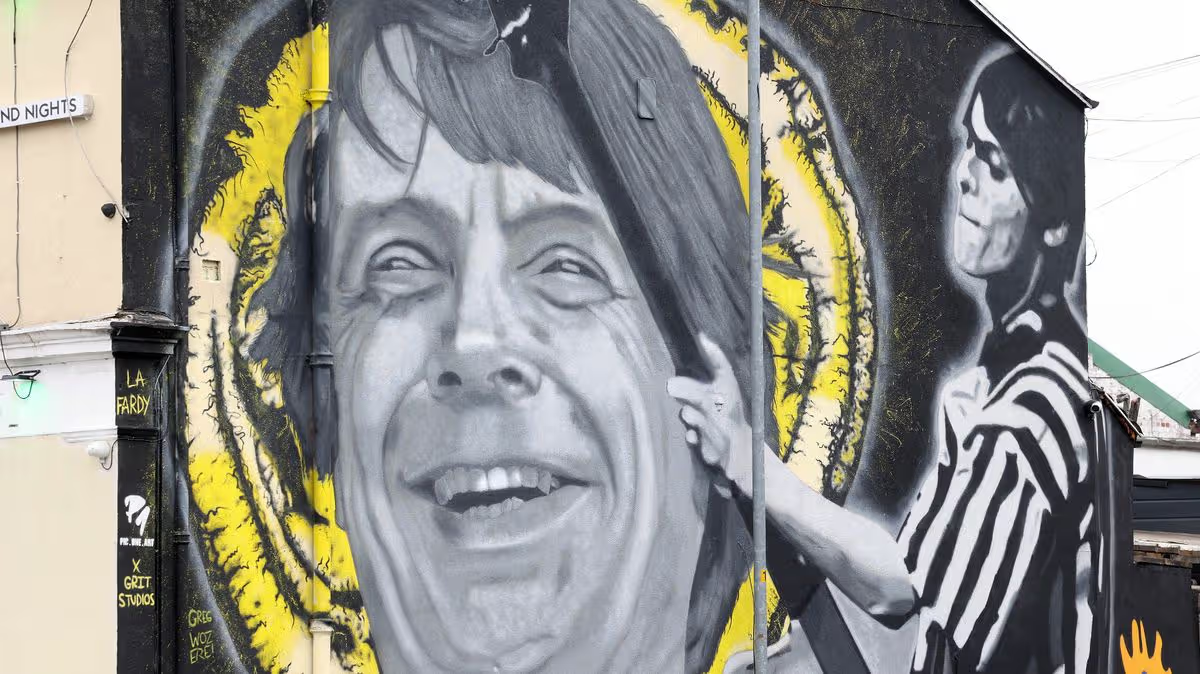
Mani was close pals with the band, who share the same hometown of Failsworth where a huge mural to the star was recently revealed. Mani produced music with the band, and has previously appeared in their music videos.

A statement from organisers said of the band’s involvement: “Manichester is a one-day celebration of Mani’s life, music and legacy, created in close collaboration with his family and a community of artists connected to his story and influence.

Advertisement

“Today sees a band closely connected to Mani’s journey join the bill — Puressence, a longtime favourite of Mani’s and a band he worked with as a producer, will perform a special featured set as part of the day.”

Mani’s brother, Greg Mounfield, added: “Having Puressence involved is a personal request — our kid not only produced records with the lads, he toured China with them and even popped up in a few of their videos. For me it’s a no-brainer, and I know our kid would’ve loved it.”

Source link

Advertisement
Continue Reading

NewsBeat

The Cambs farm shop where you can pick your own flowers loved by Stacey Solomon

Published

on

Cambridgeshire Live

The farm shop has a huge food hall and a fun barn for kids to explore

Summer is very much on its way, and there’s plenty to do in our wonderful county that really matches the weather. One popular farm shop even had a celebrity visit today!

Advertisement

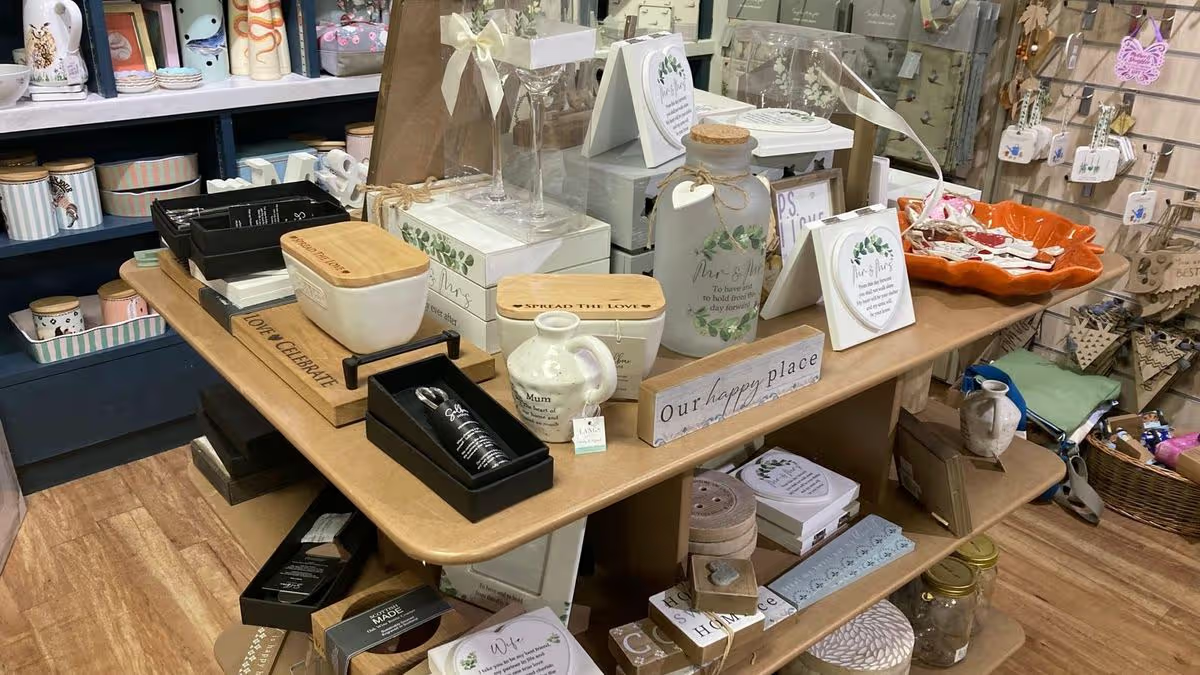
Stacey Solomon was pictured taking a trip to Bury Lane Farm Shop in Melbourn this morning (May 30). Bury Lane Farm Shop is a spot where you can get all of your grocery shopping done in its massive food hall.

It also has a garden shop and runs pick-your-own flower events throughout the year, which seems to be what Stacey Solomon took part in! For children, there is a fun barn to explore and even a man-made beach open through spring and summer.

After spending a few hours at Bury Lane Farm Shop, you can visit the on-site café for a hot drink and a slice of cake. Stacey visited the pick-your-own peony fields and even got some meat from the farm shop’s very own butchers.

The farm shop shared on its socials: “We’ve had a very special visitor to the pick your own peony fields this morning, thank you @staceysolomon for bringing your warm smile and charm to Bury Lane. We loved having you here. We hope you enjoy the burgers and sausages from our Butchers at your Champions League party tonight!”

Advertisement

Source link

Continue Reading

NewsBeat

Will There Be A Hosepipe Ban 2026? How To Prepare

Published

on

Will There Be A Hosepipe Ban 2026? How To Prepare

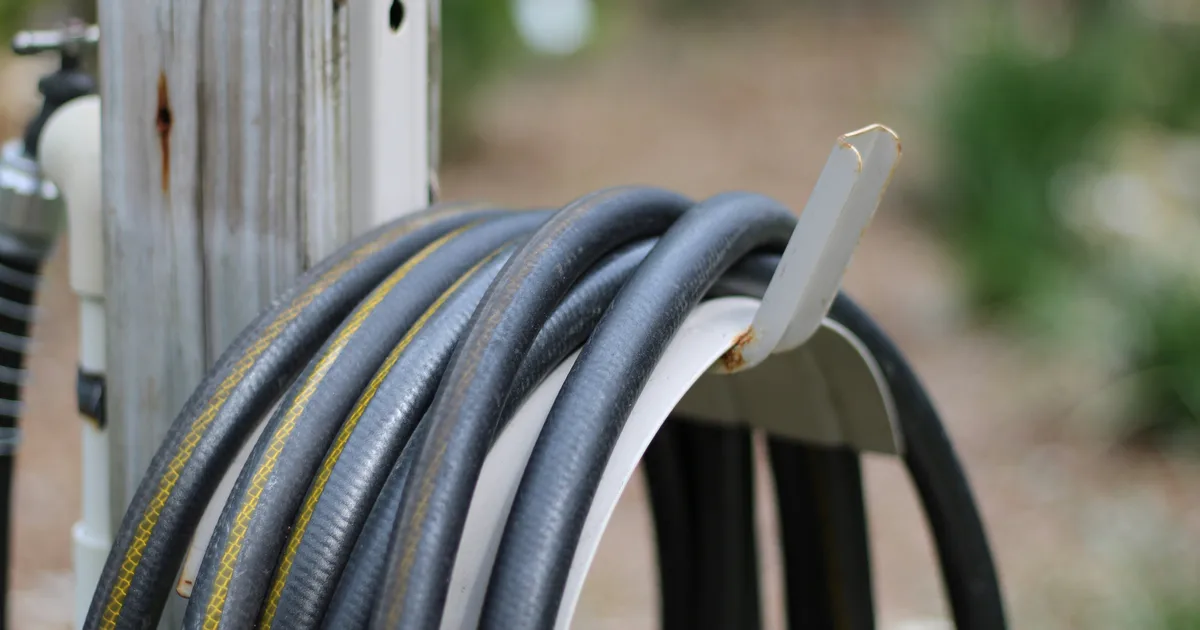
This month, the UK provisionally broke May temperature records two days in a row. That led some lawns to curl and yellow in distress, though you’re best off waiting for the rain instead of hosing your grass down, even when it looks worse for wear.

And even though no hosepipe bans have been announced in the UK, a peek at Google Trends shows that searches are significantly up from last week. It looks like gardeners are prepping, or at least checking, for sanctions.

But are those fears reasonable, and how can we get our gardens ready now for possible bans later on?

Will we have a hosepipe ban in 2026?

Advertisement

We can’t say for sure yet.

Speaking to HuffPost UK, the Royal Horticultural Society (RHS)′ Chief Horticulturist, Guy Barter, said: “Although we had a wet winter which filled reservoirs and aquifers and there is no indication of temporary use restrictions (as hosepipe bans are officially called), supply and demand problems in the intense recent heat have been reported in the press”.

The BBC, for instance, reports we may be on track to see the same drought conditions we saw last year, which led to a ban; that’s not to mention 2026′s predicted super El Niño.

Professor Emeritus of Geophysical and Climate Hazards at University College London, Prof Bill McGuire, previously told HuffPost UK that this extreme weather event could have “a huge impact on global weather, bringing drought, floods and other extreme weather right across the planet”.

Advertisement

Though what that might mean for the UK specifically is harder to tell in the short term.

How can I start to prepare now for possible hosepipe bans?

Barter told us that “Episodes like this [recent heatwave] remind gardeners why it is wise to have water butts for tiding the garden over dry periods. With luck, they will be refilled by summer rainstorms.”

Water butts divert rainfall from places like your gutter into a large barrel, which often has a tap on the bottom, so it’s smart to place it on a stand.

Advertisement

It’s not just that they’re a smarter use of water, either. Plants much prefer rainwater to the stuff from your taps, because it has a pH and mineral content they love.

What if I don’t have room for a water butt?

In that case, try mulching to keep whatever rain has fallen on your soil. Additionally, putting saucers under plants allows rain to collect in helpful puddles underneath pots.

During water shortages, the RHS added, “grey water” from e.g. your shower or washing-up bowl will do the job for a while.

Advertisement

“Waste water from the kitchen, bathroom basins, baths and showers can also be used in summer gardening. Plants seldom resent this and it ekes out mains water supplies,” Barter said.

Smart planting matters, too.

“Gardeners who have planted drought-tolerant borders and gardens have been rewarded by lovely flowers and plants with no need to water. Where watering has been needed, consider planting more drought-tolerant plants in autumn for next year,” the expert said.

“It is a bit late for planting now, but any containers or baskets that need restocking can be planted with angelonia, pelargoniums and salvia, all of which can get by with less water than most plants.”

Advertisement

Source link

Continue Reading

NewsBeat

Donaldson’s wife ‘planted listening device in his car because she suspected he was having an affair’

Published

on

Belfast Live

The claim about Lady Eleanor Donaldson’s alleged actions emerged during evidence at today’s hearing

Jeffrey Donaldson’s wife planted a listening device in his car because she suspected he was having an affair with a constituent, a court has heard.

The claim about Lady Eleanor Donaldson ‘s alleged actions emerged during evidence at today’s hearing at Newry Crown Court.

Jeffrey Donaldson, 63, is on trial at Newry Crown Court accused of rape and several counts of gross indecency and of indecent assault.

Advertisement

The ex-MP has pleaded not guilty to the 18 alleged offences.

The charges span a time period between 1985 and 2008 involving two alleged victims.

Eleanor Donaldson, from Dublinhill Road, Dromore, Co Down, denies several charges of aiding and abetting.

She is facing a trial of the facts after Judge Paul Ramsey ruled her unfit to stand trial on mental health grounds.

Advertisement

The trial of the facts will test the evidence in the case, but cannot result in a criminal conviction.

In the morning session of the trial the woman who alleges she was sexually abused byDonaldson when she was a child insisted “facts are facts” when challenged by the former DUP leader’s barrister over her claims.

The woman, known as complainant A, was cross-examined by Kieran Vaughan KC throughout Friday at Newry Crown Court at the sex offences trial of the ex-MP and his wife.

Donaldson sat in the dock wearing a dark grey suit and yellow tie, occasionally taking notes.

Advertisement

The jury heard a claim that a letter written by Donaldson to complainant A in 2020 expressing “regret” was “nothing to do” with the allegations she has made against him.

The trial had previously heard that Donaldson had written the letter to the complainant expressing “how much I truly regret all the hurt, pain and distressed I have caused”.

On Friday, the barrister asked the woman why she had not handed the letter to police when she had first been interviewed.

Advertisement

She told the court that she “wasn’t sure it was relevant at the time”.

He said: “Are you suggesting it is relevant or not relevant to the allegations?”

She said: “I think it is very relevant.”

The barrister said the letter had “nothing to do with you and sexual assault”, but instead related to other behaviour by Donaldson.

Advertisement

The woman said while the letter did not mention sexual abuse, it had “heavy connotations of guilt and shame, and asking for forgiveness”.

She added: “I believe that letter is a letter of apology for what he did to me over the years.

“He is a very clever man, he would never write in writing what he had done but he could heavily suggest.”

Mr Vaughan also referred to an allegation made by the woman that Donaldson had touched her breasts on a number of occasions when she was of primary school age.

Advertisement

He asked about her claim that she had been touched “skin on skin”.

She said: “Mostly, one or two occasions when it was over the top of a bra, but mostly skin on skin.”

The barrister drew attention to a meeting complainant A had had with a police officer where she mentioned “touching over clothing”.

She said: “If that is what she has written, that is what was said.”

Advertisement

Mr Vaughan said: “On the face of it that is inconsistent with what you told the jury yesterday, about touching under clothes.”

She said: “The facts are the facts, I am sticking to that.”

The barrister said the complainant “would have known what he was doing to you was wrong”.

Advertisement

She said: “Not necessarily, abuse is a very complicated thing.”

The barrister asked her if she was suggesting she had not known until she was an adult that what she claimed had happened to her was wrong.

She responded: “I began to piece together factually there were things that happened as normal that I should not have accepted as normal practice.”

The barrister then referred to an incident where the woman had claimed Donaldson had “perched” over the top of her, using a light to look at her “private parts”.

Advertisement

When challenged about her account, she said: “The light was focused on my genital area.”

Mr Vaughan said: “I suggest that is not true.”

The barrister added: “You were confused and you were not sure of what you had seen.”

She said: “To this day I am still confused … I am honest about that.”

Advertisement

After lunch, the woman said she had spoken in 2023 to a safeguarding figure within the Presbyterian Church in Ireland and also a police officer.

Mr Vaughan asked why she had then waited until 2024 to lodge a formal complaint about the sexual abuse allegations.

She said she was not, at that point, ready to make a formal complaint.

She said: “It was a huge decision.

Advertisement

“I knew this would be an extremely public affair, involving media. It was a huge, huge decision.”

Complainant A said she had been “extremely anxious” about reporting the allegations to police.

She said: “I had doubt about doing this, I very nearly changed my mind.”

The woman is due to be questioned by a barrister representing Eleanor Donaldson next week.

Advertisement

The trial, which is expected to last between three and four weeks, will resume on Monday.

Jeffrey Donaldson, a former long-standing MP for Lagan Valley, was arrested and charged at the end of March 2024.

He resigned as DUP leader and was suspended from the party after the allegations emerged.

Weeks before his arrest, he had led the DUP back into devolved government at Stormont after a two-year boycott of the powersharing institutions.

Advertisement

For all the latest news, visit the Belfast Live homepage here and sign up to our daily newsletter

Source link

Continue Reading

NewsBeat

Champions League final opening ceremony: Start time, how to watch and who is performing before PSG vs Arsenal FC

Published

on

Champions League final opening ceremony: Start time, how to watch and who is performing before PSG vs Arsenal FC

Saturday night’s showpiece fixture pits the newly-crowned champions of England against the dominant champions of France, who are also the current holders in this competition.

Source link

Advertisement
Continue Reading

NewsBeat

The Coronas postpone Limerick gig after guitarist Lar Kaye’s suspected medical emergency

Published

on

Belfast Live

Irish rock band The Coronas were forced to postpone their sold-out King John’s Castle concert in Limerick on Friday night after guitarist Lar Kaye suffered a suspected medical emergency on stage during the opening moments of the show.

The Coronas are due to reschedule their major Limerick King John’s Castle gig after their guitarist experienced a suspected medical emergency on stage – bringing the concert to an abrupt halt shortly after it started.

The sold-out performance was part of the Live at The Castle series happening in the Treaty City over the June Bank Holiday, with appearances from Where Is Your Mind hitmakers Pixies, and Brewing Up A Storm noisemakers The Stunning scheduled across the long weekend.

Crowds gathered at the mediaeval riverside castle for a sold-out evening with the San Diego Song rockers on Friday night to launch the festivities.

Advertisement

However, just minutes into the performance, guitarist Lar Kaye experienced a suspected medical emergency on stage and received treatment from paramedics.

Approximately one hour afterwards, following the band’s departure from the stage after Lar’s emergency, frontman Danny O’Reilly returned to address fans, confirming the show wouldn’t proceed that evening, though the band pledged to return for a rescheduled Limerick date for thousands of supporters, reports the Irish Mirror.

According to local publication Limerick Live, he said: “First of all, we really appreciate you being here tonight and hanging around, and we want to keep going and do the show, but until we know 100 per cent that Lar is okay, it just doesn’t feel right.

Advertisement

“I did speak to Lar a minute ago and, you know, he’s a bit shook, and he’s embarrassed that everyone saw him fall. But as I say, until we get the all-clear, it just… we were talking about it, it just wouldn’t feel right for us being up here trying to sing music when we don’t know what’s going on.”

He went on to say: “We want Lar to be on stage with us when we come back, and we’ll know the date for sure. It’s looking like it’s going to be either the 10 or 11 of July.”

For all the latest news, visit the Belfast Live homepage here and sign up to our daily newsletter here.

Source link

Advertisement
Continue Reading

NewsBeat

Scarborough – One Stop convenience store targeted by thief

Published

on

Scarborough - One Stop convenience store targeted by thief

As a subscriber, you are shown 80% less display advertising when reading our
articles.

Those ads you do see are predominantly from local businesses promoting local
services
.

These adverts enable local businesses to get in front of their target audience – the local
community
.

It is important that we continue to promote these adverts as our local businesses need
as much support as possible during these challenging times.

Advertisement

Source link

Advertisement
Continue Reading

NewsBeat

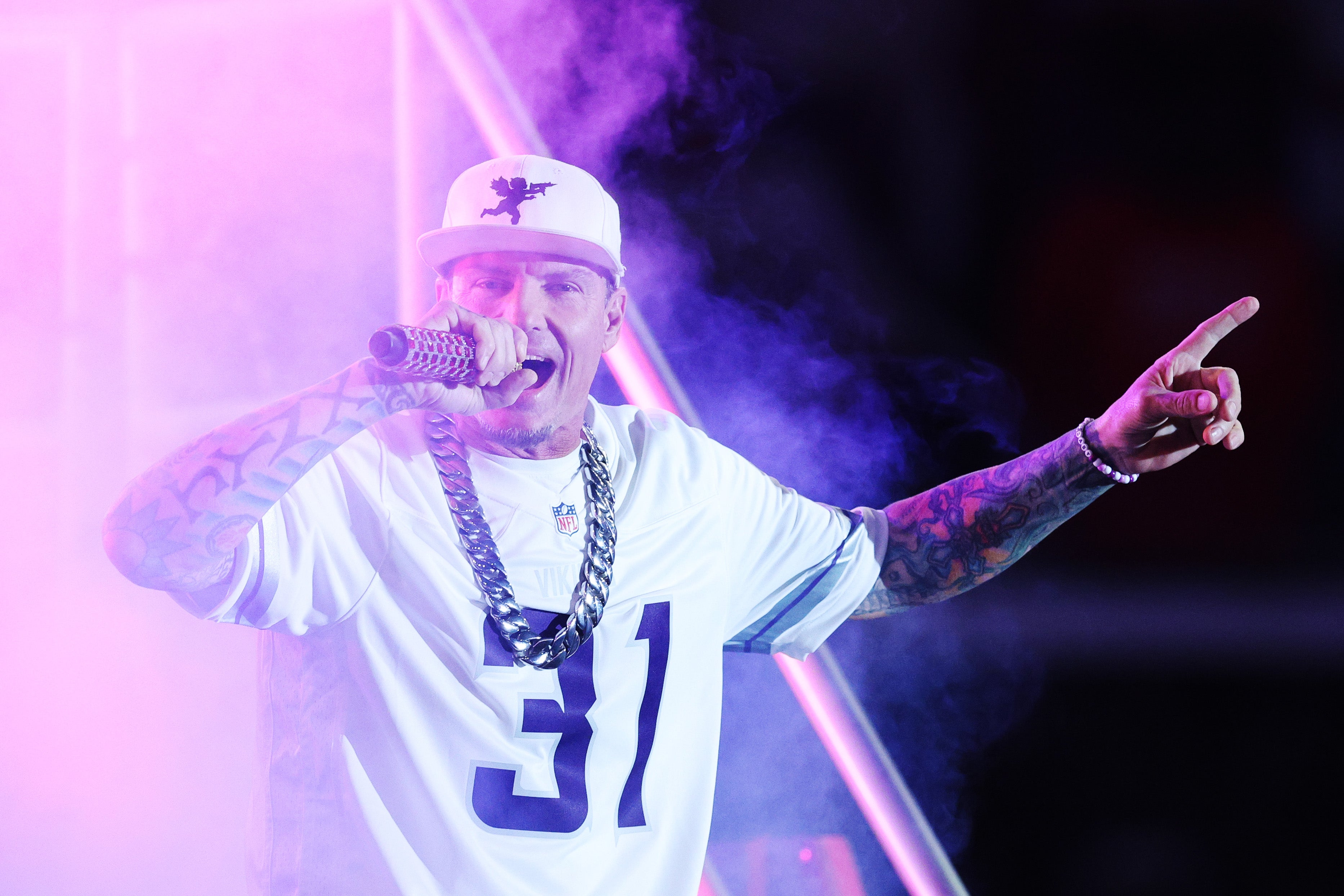
Vanilla Ice defends performing at Trump’s Freedom 250 after other artists drop out

Published

on

Vanilla Ice defends performing at Trump’s Freedom 250 after other artists drop out

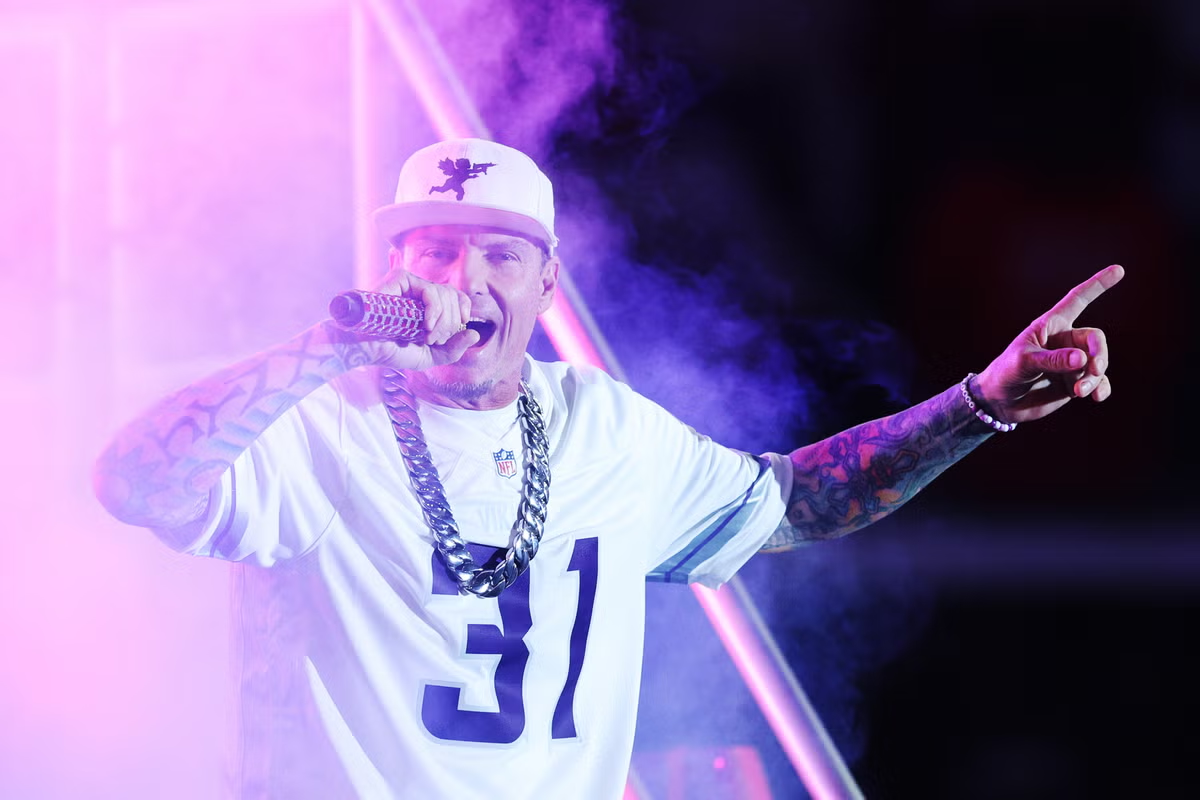
Vanilla Ice has expressed his excitement about performing at the Great American State Fair after multiple artists dropped out.

The stars-and-stripes-palooza — organized by Freedom 250, a public-private partnership established by President Donald Trump — is part of the nationwide celebration marking the 250th anniversary of the Declaration of Independence. However, shortly after the Washington, D.C., event was announced last week, many singers backed out of their planned performances, including Bret Michaels, Martina McBride, The Commodores, Young MC and Morris Day.

Vanilla Ice, on the other hand, is thrilled to take the stage next month. During a Friday interview with TMZ, he said he wasn’t going to get “dragged into” the political controversy about the concert.

“I’m here to party with America, man. Music is made to bring people together, and that’s what we are here to do. And we’re just gonna represent the Nineties,” the “Ice Ice Baby” singer said.

Advertisement

The 58-year-old, whose real name is Robert Van Winkle, argued that he’s performing at the show to celebrate America’s anniversary rather than focus on politics.

Vanilla Ice said he’s ‘honored’ to perform at Trump’s Freedom 250 concert
Vanilla Ice said he’s ‘honored’ to perform at Trump’s Freedom 250 concert (Getty)

“I don’t even vote, so I don’t even care. And if Biden called up and said, ‘My daughter is getting married, we need Vanilla Ice,’ I’d go play. It’s not a big thing,” he continued. “You play for your fans. We don’t get a chance to pick our fans; they pick us.

“I’ll go play for Putin, and I’ll go play in Iran if you want. It don’t matter. There’s fans everywhere. Music is not political, man. It’s universal, it just brings people together.”

He responded to other artists’ decisions to drop out of the Trump Administration’s event. “Don’t take it so serious. We’re just entertainers, man,” he continued. “I don’t think anybody should take this serious, including them. I think everybody should just go dance. It’s just music, what’s the big deal, man?”

Amazon Music logo

Enjoy unlimited access to 100 million ad-free songs and podcasts with Amazon Music

Advertisement

Sign up now for a 30-day free trial. Terms apply.

Try for free

ADVERTISEMENT. If you sign up to this service we will earn commission. This revenue helps to fund journalism across The Independent.

Amazon Music logo

Enjoy unlimited access to 100 million ad-free songs and podcasts with Amazon Music

Sign up now for a 30-day free trial. Terms apply.

Advertisement

Try for free

ADVERTISEMENT. If you sign up to this service we will earn commission. This revenue helps to fund journalism across The Independent.

Vanilla Ice shared similar sentiments about the concert Thursday on Instagram. “It’s all about enjoying the great times of 250 years, man. From George Washington until now, all the presidents and everybody in between,” he said.

In the caption, he added: “It’s gonna be an epic party. This is to bring us all together. I’m tired of all the news channels dividing this country. We are all one. This is not a political platform. This is celebrating America’s birthday.

Vanilla Ice said Freedom 250 will be an ‘epic party’ amid controversy
Vanilla Ice said Freedom 250 will be an ‘epic party’ amid controversy (@vanillaiceofficial / Instagram)

At least six of the concert’s scheduled performers have backed out. “I have informed my agents that I will not be performing at the Freedom 250,” rapper Young MC, best known for his 1989 hit “Bust a Move,” wrote on Instagram.

“The artists were never told about any political involvement with the event,” he wrote. “And despite the claims by the organizers that the event is non-partisan, SPIN magazine describes it as Trump-backed…I hope to perform in D.C. in the near future at an event that is not so politically charged.”

Advertisement

Morris Day, the lead singer of Prince-linked band The Time, also said he was out. “Contrary to rumor, Morris Day & The Time will not be performing at the Great American State Fair,” he wrote on Instagram. “It’s a no for me.”

The fair — scheduled for June 25 to July 10 on the National Mall — will feature “live entertainment, immersive exhibits, patriotic tributes, innovation showcases, cultural programming, and family-friendly attractions stretching from the U.S. Capitol to the Washington Monument,” Freedom 250 CEO Keith Krach said in a statement.

Source link

Advertisement
Continue Reading

Trending

Copyright © 2025