
TL;DR
The Breathitt County social media settlement totals $27M: Meta $9M, Snap $8M, TikTok $8M, YouTube $2M. 1,300+ school districts have filed similar suits.





Identical posts from Nvidia, Arm, and Microsoft contained the words “A new era of PC,” followed by the coordinates “25.0528, 121.5990,” which map to the Computex 2026 venue in Taipei. The cryptic posts can be seen as early confirmation that Nvidia is finally ready to support Windows’ push into Arm chipsets.
Read Entire Article
Source link

The Breathitt County social media settlement totals $27M: Meta $9M, Snap $8M, TikTok $8M, YouTube $2M. 1,300+ school districts have filed similar suits.
The financial terms of the Breathitt County social media settlement have been disclosed for the first time. Meta is paying $9 million. Snap and TikTok are each paying $8 million. YouTube negotiated a payout of slightly more than $2 million.
The combined $27 million is 8% more than the Kentucky school district’s $25 million annual budget. The figures were released under Kentucky’s open records laws. The settlements were announced earlier this month but without financial details.
When the settlements were first reported, only the fact that Snap, YouTube, and TikTok had agreed to settle was public. Meta settled separately. The financial breakdown shows Meta paying the largest share, consistent with the company’s position as the primary defendant across more than 6,000 related lawsuits nationwide.

The 💜 of EU tech
The latest rumblings from the EU tech scene, a story from our wise ol’ founder Boris, and some questionable AI art. It’s free, every week, in your inbox. Sign up now!
YouTube was the only company to include non-financial terms. It agreed to provide the district with training programmes to help teachers use its video product in classrooms. The other three paid cash only.
Breathitt County had asked for more than $60 million to finance mental health programmes and develop lesson plans around the dangers of social media. It received less than half that figure. The district’s superintendent, Phillip Watts, estimated in a deposition that he spent 20% of his working time handling social media-related concerns.
Carolyn McDaniel, the high school principal from 2016 to 2019, said the problem consumed even more of her time. “I had two assistant principals and they spent at least 50% of their time on social media stuff,” she said. “The kids would sneak their phones into class, video fights during the school day, vandalise property and bully one another online.”
The settlements allowed the companies to avert the first trial in the nation over a school district’s addiction complaint. The trial had been scheduled for 12 June in Oakland. The reprieve will be short-lived. More than 1,300 other school districts have filed similar suits. The next bellwether trial is scheduled for February 2027 in Tucson, Arizona.
The Breathitt County terms could signal openness to a mass settlement. Bloomberg Intelligence has estimated the total potential liability at $400 billion. A $27 million payout per district across 1,300 districts would total $35 billion, a fraction of the theoretical maximum but still a transformative expense for companies accustomed to treating litigation as a cost of doing business.
The precedents are building. In March, a Los Angeles jury found Meta and YouTube liable for harming a 20-year-old woman with addictive product design. The $6 million damages award was symbolic. A New Mexico jury ordered Meta to pay $375 million in a separate case about failing to protect children from online predators.
Kentucky’s attorney general is part of a group of approximately three dozen states suing Meta separately. That trial is set for August in Oakland. Kentucky is seeking $40 billion in civil penalties in the state case alone.
The pattern across 2026 has been consistent. Snap and TikTok settle before trial. Meta fights, loses, and pays more. In the personal injury trial, Snap and TikTok settled confidentially while Meta and Google went to verdict. In the school district case, all four settled, but Meta paid the largest share.
Meta launched a new social app called Forum this week, a Reddit competitor built from Facebook Groups. The company is simultaneously launching new social products and settling lawsuits alleging its existing products are addictive. The contradiction is the business model.
The comparison to tobacco litigation remains the most frequently cited framing. The 1998 tobacco Master Settlement Agreement cost the industry $206 billion. Bloomberg Intelligence’s $400 billion estimate for social media exceeds that figure by nearly double. Whether the analogy holds depends on whether juries continue to find the companies liable, and whether the institutional costs school districts claim can be proven at scale.
McDaniel, who now works at a high school in Tennessee, said the social media problems have only intensified since she left Breathitt County. The $27 million settlement pays for the damage already done. It does not pay for the damage still being done. The 1,300 districts waiting for their turn in court are counting on that distinction to matter.
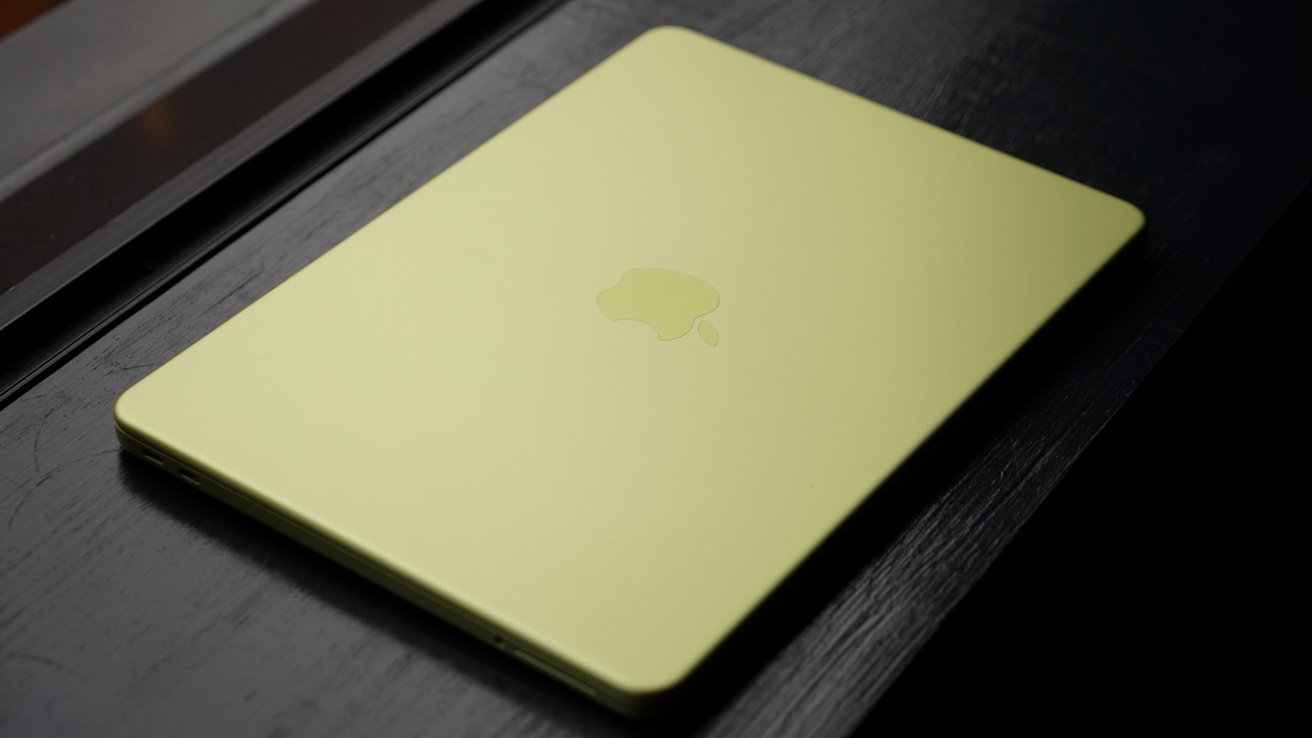
Amid ongoing MacBook Neo shortages, Apple has reportedly tasked suppliers with doubling its original order to 10 million units in an attempt to satiate demand.
Buying a new MacBook Neo today remains an exercise in patience, with deliveries taking multiple weeks. The 13-inch, $599 laptop has proven hugely popular among students and mobile workers alike, so much so that Apple can’t keep up.
Now, a report by supply chain analyst Ming-Chi Kuo claims that Apple has told its suppliers to produce more MacBook Neos than ever before. After an initial five-million-unit order, Apple has now doubled the figure to 10 million units.
Kuo was writing in a lengthy post on the X social network when he noted that “Sunny has become a new Apple CCM supplier, producing the MacBook Neo CCM.” A CCM is a self-contained Compact Camera Module, ready to be used in laptops like the MacBook Neo.
Kuo went on to add that Apple has raised its 2026 shipment forecast from five million to 10 million units.
This news also matches a similar report from earlier in May. Then, analyst Tim Culpan reported that Apple had been forced to order more A18 Pro chips for the endeavor.
The MacBook Neo first went on sale on March 11, 2026, and almost immediately saw expected delivery dates slip by weeks and months. Delivery windows haven’t improved much since.
Apple’s present crack at the low-end of the market sells for just $599. It’s even cheaper at just $499 when purchased in an education setting, or with a military discount.

The Android client for Apple Music has hinted at new subscription tiers, opening the possibility for a cheaper plan with some added restrictions. It won’t be free.
Since its conception, Apple Music has provided the same general level of service to all users regardless of their actual subscription plan. Sure, you can get it as an Individual, Family, Student, or Apple One subscription, but you get the same service across the board.
However, code strings spotted by Aaron Perris on X hints that change is on the horizon. The developer beta for Apple Music on Android includes a few specific lines that don’t apply to the current service at all.
One line is an error message stating “Premium access required.” The other error message about reaching a “skip limit,” displaying the message “Can’t skip any more tracks” to the user.
These messages are interesting, but cannot possibly work for the way Apple Music currently operates.
Apple currently doesn’t have a “premium” tier at all. Nor does it have any tiers providing a limited service to users at a cheaper price.
There is the 30-day free trial, but that doesn’t really count at all, as you still get the full service.
A plausible explanation from Perris is that it could be for something unrelated, such as radio stations. However, this is doubtful to work with Apple’s current radio stations at all.
An alternative idea would be something similar to Spotify’s playlists, where free users have a limited number of skips in some cases.
NEW: It appears that Apple may be working on a free or lower-cost tier of Apple Music.
Strings in the latest Apple Music for Android beta mention “Can’t skip any more tracks” and “Premium access required” pic.twitter.com/xGHeaDb7X3
— Aaron (@aaronp613) May 30, 2026
It is plausible for Apple to introduce a skip system for programmatic radio stations that has limitations. But it would only be feasible if Apple were to introduce a lower tier of service.
A cheaper plan with more restrictions than the full-fat service makes sense in this context. It would mean the full-priced users retain the ability to skip without restrictions, while the “lite” users face limits.
It would also be a justifiable explanation for the “Premium access required” message. Users paying less than full-price subscribers would naturally have parts of the experience blocked off or curtailed, requiring such a message to be needed.
While the messages certainly correlate with the idea of a lower-priced “lite” tier, it does not mean that Apple will be bringing out a completely free tier of Apple Music.
Aside from the trials, Apple Music has never been offered completely free to users without engaging in some kind of offer. For example, being offered as a benefit of a mobile phone contract.
Apple certainly could make a free tier if it wanted to, joining rivals like Spotify in the process. It just won’t, because Apple believes it works against the artist.
In an interview in April, Apple Music VP Oliver Schusser argued that free ad-supported tiers devalue music. The paid subscription is a prioritization of artist compensation and consistent pricing, he insisted.
“I think it’s not the right thing for songwriters and artists to just say, you know what, we’re going to give this away for free,” he said. “Especially with the very little monetization that artists and songwriters are going to get in return.”
With Apple keen to keep Apple Music a paid service, that makes a free option extremely unlikely to arrive anytime soon, if ever.

Over six million fans will fill stadiums across the U.S., Canada, and Mexico when the 2026 FIFA World Cup tournament kicks off in June.
The sheer scale of ticket demand has created ideal conditions for sophisticated fraud operations.
According to Group-IB researchers, they have identified over 4,300 fraudulent domains impersonating FIFA’s official web presence since August 2025, and some of these domains have remained dormant for nearly a year, lying in wait for desperate fans.
A Chinese-speaking threat actor known as Ghost Stadium sits at the centre of this fraud ecosystem.
This financially motivated group has built a pixel-perfect clone of the official FIFA website using a shared phishing kit.
The fake site replicates the legitimate PingIdentity login flow with near flawless accuracy.
Victims who land on these pages see authentic branding loaded directly from FIFA’s own content delivery network.
The system automatically switches between eleven languages based on the visitor’s browser settings.
“Major sporting events are a magnet for fraud. Huge demand, limited tickets, and the fear of missing your country play put fans under pressure to act quickly. Scammers know this,” said Yuan Huang, Global Fraud Intelligence Lead at Group-IB.
“We have identified more than 4,300 fraudulent domains impersonating FIFA’s official web presence ready to exploit fans looking for tickets, some sitting dormant since 2025.”
Facebook advertisements serve as the primary trap for unsuspecting ticket seekers.
These ads display dramatically discounted prices and countdown timers to create artificial urgency.
Clicking the ad leads visitors to a fake hospitality page with a prominent “BUY NOW” button.
Victims who already hold legitimate tickets are tricked into logging in — handing their credentials directly to the attacker.
The fraudster then changes the account password, locks the legitimate owner out, and resells the genuine tickets for profit.
New buyers without existing tickets face a different but equally destructive path.
They complete a detailed checkout form that captures their full name, address, phone number, and payment card details.
The fraudsters accept money through at least five distinct channels, including direct card capture, peer-to-peer apps like Chime and Nequi, and even cryptocurrency conversion through Alchemy Pay. No tickets ever arrive after payment is submitted.
Ghost Stadium does not operate alone in this space. Four independent threat actors are running six parallel fraud schemes simultaneously.
These include fake streaming platforms demanding subscription fees, counterfeit merchandise storefronts targeting Latin American markets, and unlicensed betting sites that harvest passport scans for identity fraud.
More than 2,500 FIFA account credential pairs are already circulating on dark-web markets at prices between $5 and $50 per pair.
Financial losses from premium-ticket fraud alone are estimated at between $71 million and $474 million.
To stay safe, the safest approach is to assume that any ticket offer outside official channels carries significant risk.
Check the exact domain spelling before entering any credentials. The official site is fifa.com without hyphens or alternative endings.
Enable multi-factor authentication on your FIFA account immediately and change your password if you have not done so recently.
Do not click on ticket ads appearing on Facebook, Instagram, or Telegram, regardless of how compelling the discount appears.
Taking one extra moment to verify before buying can prevent substantial financial and personal harm.

Follow TechRadar on Google News and add us as a preferred source to get our expert news, reviews, and opinion in your feeds.


As enterprise AI agents move into production, organizations are confronting a growing reliability problem. Many teams are discovering that LLM performance alone does not determine whether agents succeed in production. Long-running AI workflows must survive crashes, preserve state, recover from failures, manage inference costs, and coordinate across APIs, tools, and enterprise systems.
After a first wave focused on rapid deployment, organizations now need to revisit those first-generation implementations, and redesign early agent architectures around workflow orchestration, observability, governance, and recovery, said Preeti Somal, Senior VP Engineering at Temporal Technologies, during the latest AI Impact Series event in New York.
“We do have a lot of customers that come to us where they’re building version 2.0 of the same agent,” Somal said. “They had to move really fast, but they didn’t take care of the plumbing. Things crash and burn, and then they’re back to rebuilding with the reliable foundation.”
For workflow orchestration company Temporal, whose infrastructure predates the current wave of agentic AI, the shift reflects a broader enterprise realization: production AI systems require durable execution, state management, visibility into workflows, and mechanisms to recover when models or downstream systems fail.
“These patterns aren’t necessarily new,” Somal said. ” AI just supercharges them.”
Agentic systems introduce additional complexity because they often involve long-running, multi-step processes spanning multiple services, models, APIs, and tools. A single workflow might call several large language models, access retrieval systems, trigger external applications, and manage state over hours or days. The engineering questions, Somal said, often emerge only after deployment.
“People will write agents but haven’t thought about what happens if the agent crashes,” she said. “Am I going to need to run the entire agent flow again?”
For enterprises operating under cost constraints, the answer matters. Restarting workflows after failures can multiply inference expenses, increase latency, and create poor customer experiences.
Somal compared the current moment to an earlier period in enterprise cloud adoption when organizations went straight to migrating workloads before considering that they needed to redesign underlying architectures if they wanted these workloads to weather the long-term.
“This rush to do AI in a world where you haven’t even modernized your application reminds me a little bit of that lift-and-shift that happened in the cloud,” she said. “Everybody realized you’re spending more money on cloud and we haven’t gotten value there.”
Enterprise workflows increasingly involve agents executing over long windows, sometimes spanning many hours while interacting with tools and systems. Reliability challenges compound when workflows persist over time, and it impacts both state and memory, two ideas that are often treated interchangeably in AI conversations.
State concerns workflow execution. It includes where an agent is in a process, which actions have already completed, and where recovery should resume after failure. Memory or context captures information an agent carries forward across interactions or tasks.
“The state of the agent is around what step and what actions have been performed, and if something crashes, where do you want to recover from, versus the context and memory piece,” Somal explained.
That distinction becomes increasingly important when enterprises begin moving beyond simple chatbot interactions toward longer-running business processes. Somal pointed to a healthcare example involving customer Abridge, where workflows process physician visits through multiple stages, including audio processing, summarization, model calls, and after-visit generation.
“There’s not just one piece to that flow,” Somal said. “Taking videos and slicing that, taking summaries, calling the LLMs, generating the after-visit summary, all of that is being orchestrated.”
The implication for enterprises is that successful agents increasingly depend on systems that can survive interruptions, coordinate across services, and maintain continuity over time.
A useful framework for enterprise AI design is the deterministic spine, Somal said, which is how they think about Temporal’s role.
“It is denoting the path you want to take,” she said. “It is calling the brain, but if the brain doesn’t respond, it will call it again. If the brain responds but the next step is going to fail, it will pick up from where that failure happened.”
In this framing, the language model acts as a probabilistic system producing variable outputs, while orchestration software maintains execution reliability around it. And the concept matters because enterprise systems increasingly require consistency even when models remain non-deterministic. A procurement workflow, healthcare summary, customer support escalation, or compliance process cannot simply fail silently because a model call timed out or an external dependency crashed.
“What you care most about is making sure that you can recover and that you’re not paying the token tax if something goes wrong,” Somal said.
As enterprise leaders evaluate AI ROI, cost visibility has become a growing concern. Long-running agents frequently make multiple model calls across complex workflows, which can create opaque spending patterns. Somal described one operational advantage of orchestration as visibility into where costs accumulate. Because workflows are observable step-by-step, teams can see where tokens are being consumed across an agent process.
“You’ve got visibility into that entire flow in a single pane of glass,” she said. “You can now see where you’re spending the tokens in an agent that is multiple steps and calling multiple different systems.”
Workflow recovery also shapes cost efficiency. Without durable orchestration, a late-stage failure can force organizations to rerun an entire process from the beginning, including all prior model calls. Somal said systems designed around recovery can resume execution from the point of interruption.
“You pick up from where the crash happened,” she said. “We save you the cost of running the agent from step one again.”
Governance concerns are another emerging pattern as agentic AI takes hold. Rather than adopting fully managed agent systems wholesale, Somal said enterprises increasingly want standardized internal frameworks that provide guardrails while preserving flexibility, and implementing necessary features like governance controls, model selection policies, identity systems, cost management, and observability.
“The enterprises are looking at building these paved paths,” she said. “Taking something off the shelf is maybe not going to work because there are all of these other requirements.”
As organizations revisit first-generation deployments, challenges like this increasingly look less like a model problem and more like a systems engineering problem, and Temporal is positioned to help enterprises take this next step in part because for many organizations, it already existed as part of broader modernization programs before AI became a strategic priority.
“Temporal is already in the enterprise,” Somal said. “Taking that and extending that to AI and agent platforms feels very natural.”

We spotted the Aceii One while wandering the halls at Beyond Expo 2026, and it’s hard to slot it neatly into the usual “ball machine” category.
The Aceii One positions itself as a smart tennis partner rather than a feeding device, combining ball launching, AI vision tracking, coaching tools, and gamified training modes into a single mobile platform. The pitch is ambitious: replace predictable drills with something closer to a live rally that adapts to your level.
At the core is a dual-stage launch system that fires balls at intervals of up to 0.5 seconds, with speeds up to 80 mph (129 km/h). That alone puts it in serious training territory, but the differentiator is how it behaves between shots.
Thanks to its vertical dual-camera vision system, Aceii One tracks both player movement and ball trajectory in real time. It claims detection of shots up to 130 mph, using 1080p cameras and a 100° field of view. In practice, this lets it reposition, adjust feeds, and simulate rally patterns instead of just firing fixed sequences.
It also moves. A differential drive base lets it roll across court surfaces at up to 3.5 m/s, shifting between baseline, sideline, and service-line positions. In theory, that removes one of the biggest limitations of traditional machines: static placement.
Where Aceii One diverges most clearly from conventional hardware is its software. It doesn’t just offer drills; it builds structured “play.” It includes three main modes: Ranking Mode, which assigns an NTRP-style level and tracks progression; Challenge Mode, which unlocks new objectives as you improve; and Battle Mode, which simulates opponents using stored or shared play profiles.
The system turns repetition into progression by layering scoring, tiers, and unlocks on top of normal training. There’s also a coaching layer via the ACEII app, which builds structured courses and feeds them into practice sessions. It can analyse shot placement, spin, consistency, and speed, then adjust future drills accordingly.
However, the most interesting claim here is real-time coaching. Every shot is said to be analysed, with feedback covering placement, spin rate, and timing. It can identify errors and suggest corrections in the next drill cycle rather than after the session ends. There’s also a “Match Play” system that shifts training into competitive formats with scoring and adaptive difficulty, based on your NTRP range (1.0 to 5.0). It’s closer to a hybrid of training machine and interactive simulator than anything currently offered by consumer tennis equipment.
Physically, Aceii One is built around portability. It uses a foldable suitcase-style chassis, weighs around 25kg, and carries up to 120 balls. The design includes foldable legs, integrated storage, and a detachable ball container. Battery life ranges from two hours in motion to eight hours in stationary feeding, with a full recharge in around two hours. It also includes safety features like instant obstacle detection and automatic feed shutdown.
Aceii One is trying to move tennis robotics away from predictable repetition into something closer to adaptive training intelligence. Whether it fully replaces a coach is doubtful, but it clearly pushes beyond the traditional “ball launcher with settings” category.

Mini game controllers with buttons and joysticks that move like the real deal are a pretty cool keychain and fidget toy, but at least for some of us there’s this intrusive thought that tells us that it would be so much cooler if it actually was a functional game controller. Enter [Brux] tearing into a miniature GameCube controller and adding the required guts.
The keychain/fidget toy is made by Backpack Buddies and is one of a range of similar toys that feature buttons you can press and joysticks that move, giving a pretty good start on the externals of the controller. Once cracked open at the seam, some interior redecorating had to be performed to clear space and add something to mount switches onto. Here [Brux] opted to glue SMD switches to custom 3D components in lieu of a PCB. These were subsequently wired up with thin enameled wire, before attaching the original buttons to them following some more plastic surgery.
Some tiny joystick innards were then installed before gluing on the final buttons and joystick caps. As for how it all connects to a real GameCube, here an RP2040 was used to handle the translation of control inputs to the GameCube controller protocol. Then a GameCube controller was sacrificed for its cable and controller connector, but as can be seen in the video it does all work and creates the perfect controller for guests.


At 620 million monthly users, calling a frontier model for every image recommendation isn’t a strategy — it’s a bill. Pinterest CTO Matt Madrigal solved it by gutting Qwen3-VL’s vision layer and rebuilding it with proprietary embeddings, cutting costs 90% and boosting accuracy 30%.
Madrigal’s team has been heavily investing in customizing open-source models “foundationally in-house.”
“If you’ve got really unique data that you can then fine-tune an open source model with, data quality will, frankly, outweigh or overcome model size,” Madrigal explained in a recent VB Beyond the Pilot podcast.
Pinterest, which has around 620 million monthly active users, has long applied open source models for visual search and discovery, going back to Google’s BERT and OpenAI’s CLIP. The company fine-tuned its own Pin CLIP on the latter, incorporating proprietary visual embeddings and image metadata.
Pinterest’s conversational shopping assistant, Navigator 1, was built on Qwen3-VL and customized in “pretty significant” ways. Madrigal’s team essentially “ripped out” Qwen’s vision encoder layer and fine-tuned the model on proprietary multimodal embeddings. This has allowed them to capture metadata around pins and images that can then be precomputed offline and regularly retrained on new information to deliver personalized experiences.
“Open-source models, especially with open Apache licenses where you can truly tweak a lot of open weights and customize for unique use cases — that’s where we’ve found open source to be so powerful for us,” Madrigal said.
Bringing their own embeddings allows his team to gain context around metadata, pins, and images; also, notably, the model performs better at runtime and inference. Without these embeddings, devs would have to call and encode each image returned at runtime, one at a time. That results in a latency “20 times worse” from an inference perspective, Madrigal said.
“If it’s something that’s going to be critical for our end users, that’s going to drive engagement, that will have to scale to over 600 million monthly active users, we’re going to either probably build it or we’re going to leverage open source and customize the heck out of it,” he said.
VB Transform · July 14–15 · Menlo Park · Agentic orchestration
Intuit rebuilt its multi-agent system in 60 days. What did they change — and why?
At Transform, engineering leaders from Intuit, Target, and Instacart break down how they redesigned their orchestration architectures for reliability, scale, and real customers.
To guide users from inspiration to purchase, Madrigal’s team built a “taste graph”: a dynamic representation of what individual users actually like, not just what they click on. “It’s this representation of billions of people’s evolving tastes,” he said.
People go to Google or other search engines when they have a clear picture of what they want; Pinterest is for when they’re still in the discovery phase, Madrigal said. Pinterest’s goal is to encourage “lateral exploration” and transform discovery to intent (that is, clicking through ads or making purchases).
Under the hood, the architecture combines a graph structure with representational learning. User embeddings capture a user’s evolving tastes. These are constantly updated based on activity and new content and signals. “It’s not a social graph,” Madrigal said. “It’s much more of a preference graph: What’s going to inspire you? What are you trying to do next?”
For instance, one user may be into mid-century modern designs; another may prefer a Nantucket aesthetic. Those preferences will be captured in user embeddings, and the taste graph will deliver up specific, relevant products as a result.
“You go from the upper funnel, inspiration discovery, all the way through lower funnel intent,” Madrigal said.
Listen to the full podcast to hear more about:
How Pinterest uses sandboxes to encourage creativity in a way that is secure and contained;
Why a continuous feedback loop can prevent visual AI slop;
The importance of constant benchmarking to gauge user engagement, performance, latency, and other factors.
You can also listen and subscribe to Beyond the Pilot on Spotify, Apple or wherever you get your podcasts.

These days, it’s not uncommon for phones to share two big selling points: a partnership with a trusted photography brand and flashy AI features. The Xiaomi 17T Pro, launched this week in Vienna, is no different, boasting Leica-tuned cameras and fresh new AI skills from Google‘s text-to-video tool, Gemini Omni.
Of course, Leica is a storied brand with 157 years of history — so how does Omni’s presence on the Xiaomi 17T Pro sit with this photography heritage?
At a post-launch roundtable attended by TechRadar, the German camera giant — which has been collaborating with Xiaomi since 2022 — shared its take on the utility of generative AI, and its remarks were decidedly diplomatic.

For context, at the launch itself, Google made a cameo appearance to reintroduce Gemini Omni, which debuted at Google I/O 2026 earlier this month and is available on compatible Android phones, including the Xiaomi 17T series.
On stage in Vienna, Erin Pettigrew, Director of Product Experience at Gemini, generated a postcard-style video of herself enjoying the city’s cafe culture “to send back to [her] friends and family,” presumably because doing so was easier than filming an actual video of herself enjoying Vienna’s cafe culture.
Here’s what Leica had to say about generative AI tools like Omni:
“The philosophy of Leica is always to create authentic images; real images that really replicate reality,” said Marius Eschweiler, VP of Business Unit Mobile at Leica. “I think there is a little difference between customers who are choosing [to use] a smartphone for taking images [and traditional photographers], and I think we are offering smartphone users a good Leica experience with different Leica modes that are focused on authenticity.
“But there are also use cases [for generative AI], like this cute video postcard Erin [Pettigrew] presented. This is just a different use case. Whether you want to take a serious image or create something with generative AI — I think that’s a different use case. Most likely, you won’t see it on a Leica M camera, but I think on a Xiaomi 17T series, it makes perfect sense.”
Leica’s Head of Development and Engineering for Mobile, Pablo Acevedo Noda, was also keen to point out that Leica offers a Content Credentials feature, which embeds a digital signature into photos taken with Leica hardware — including the best Xiaomi phones — to verify their authenticity.

“Adding Content Credentials to photos taken with the phone prevents somebody from tampering with the photo afterwards — [or at least] you’ll know that it has been tampered with,” Noda explained.
“Sometimes, it will be obvious — if you add something special with Nano Banana, for example — but sometimes, it will not be obvious. The metadata will have that information there. That’s the important part.”
In a similar vein, Google announced a major upgrade for its Verify AI tool at I/O 2026 to show that it too is concerned about preserving authenticity and combating misinformation (though that feels a little bit like an arms dealer preaching to the masses about gun safety).
The sticky relationship between photography and generative AI has been a topic of conversation for several years now. I’ve asked the likes of Samsung, Qualcomm, and Honor for their thoughts on the subject in the past, and while some of those companies have been looser with their definition of ‘photography’ than others (in the early days of Galaxy AI, Samsung told me “there’s no such thing as a real picture”), most seem to agree that there is a place for generative AI tools in photography, as long as they’re presented to users as a choice.
Of course, there’s a big difference between AI-enhanced photo tweaks and a full-blown text-to-image machine like Gemini Omni, but it’s clear that tech companies are aware of (and in many cases, reacting to) consumer concerns surrounding AI.
My hunch is that Leica — a 157-year-old camera maker — has its own private thoughts about tools like Gemini Omni, but diplomacy prevails when multiple companies are involved in producing a single smartphone such as the Xiaomi 17T Pro. At least we know that Leica’s traditional M cameras are safe from generative AI for now…
For more on Xiaomi’s latest handsets, check out our full Xiaomi 17T Pro review and our dedicated feature on the Xiaomi 17T Pro’s excellent 5x telephoto camera.
Follow TechRadar on Google News and add us as a preferred source to get our expert news, reviews, and opinion in your feeds. Make sure to click the Follow button!
And of course you can also follow TechRadar on TikTok for news, reviews, unboxings in video form, and get regular updates from us on WhatsApp too.


A leaked Meta memo confirms an AI pendant entering testing next year. The company also plans “Wearables for Work” and expanded AI glasses.
Meta is developing an AI-powered pendant that it plans to start testing within the next year, according to an internal memo viewed by The Information. The device builds on the Limitless acquisition Meta completed at the end of 2025. Limitless made a pendant that users could clip to their shirt or wear as a necklace to record and transcribe conversations.
The memo also outlines plans to expand Meta’s AI glasses lineup and launch a business subscription called Wearables for Work. The enterprise tier would position Meta’s hardware as a productivity tool rather than a consumer novelty. Reality Labs, Meta’s hardware division, lost $4 billion in Q1 2026 alone.
The AI pendant category has a troubled history. Humane’s AI Pin launched in 2024 to withering reviews and was effectively dead within a year, with HP acquiring the startup’s assets for $116 million. Friend, another AI pendant startup, spent more than $1 million on subway advertisements and struggled to find users. Neither device offered enough utility to justify wearing an additional gadget.
Meta’s approach is different in one important respect. It already has a wearables business that works. Meta sold more than seven million Ray-Ban smart glasses in 2025 and commands roughly 82% of the smart glasses market. The pendant would be a second form factor in an ecosystem that has proven consumer demand, not a standalone product betting on a category that does not yet exist.
Limitless raised more than $33 million from investors including Sam Altman and Andreessen Horowitz before Meta acquired it. CEO Dan Siroker said at the time that Meta’s vision for “personal superintelligence” through wearables aligned with what Limitless was building. The startup stopped selling devices to new customers after the acquisition but continued supporting existing users.
The Wearables for Work subscription is the most commercially interesting detail in the memo. Meta’s glasses already integrate with Meta AI for voice queries, real-time translation, and visual identification. An enterprise tier could add meeting transcription, ambient note-taking, CRM integration, and hands-free access to workplace tools. The concept mirrors Microsoft’s Copilot subscription model but delivered through hardware rather than software.
The wearables market is fragmenting into distinct categories. Apple Watch dominates the smartwatch segment but is losing momentum to screenless health trackers. Oura has filed for IPO. Whoop and Google’s Fitbit Air emphasise passive data collection. Meta’s pendant would sit in a fourth category: ambient AI capture, the always-on recording device that supplements rather than replaces a phone.
The privacy implications are significant. Meta’s Ray-Ban glasses have already faced lawsuits and regulatory scrutiny over how they handle footage captured by their built-in cameras. A pendant that records conversations raises the same concerns in a more intimate form factor. The regulatory environment in the EU, where Meta faces ongoing DMA enforcement and GDPR scrutiny, could constrain where the device is sold.
Meta’s hardware strategy is now spread across glasses, pendants, a planned smartwatch codenamed Malibu 2, VR headsets, and the Vision Pro competitor. The company is betting that AI wearables will reverse Reality Labs’ cumulative losses, which have exceeded $60 billion since the division was created. The pendant is one piece of that bet. Whether it succeeds where Humane and Friend failed depends on whether Meta can make ambient AI recording useful enough that people will wear it, and trustworthy enough that the people around them will tolerate it.




NYT Strands Answers May 24 2026 Revealed for Puzzle No. 812 Theme Summer Essentials


Israel says it has killed new Hamas military leader in Gaza City airstrikes


Bridgerton Season 5: Cast, Release Date And Everything We Know So Far


Selena Gomez Reportedly Upset Over Benny Blanco’s Comments on Her ‘Terrible’ Diet

Micron Crosses $1 Trillion Market Cap as AI Demand Reshapes Memory Sector


BTS Sells Out Four Las Vegas Shows at Allegiant Stadium for ARIRANG World Tour
Microsoft’s quiet Claude Code retreat and the real cost of enterprise AI

China assigns ID codes to 28,000+ humanoid robots


XRP *JUST* SUCCEEDED!!!! CLARITY ACT EXPOSED!!! (SHE EXPOSED IT)


Waymo dominates autonomous vehicle registrations as Tesla trails behind
The Samsung pay deal is the moment Korean unions changed register


Westone Audio and Etymotic Acquired by Fidelity Collective in Major IEM Market Move
SpaceX’s $2 Trillion IPO: Why Tech Giants Nvidia (NVDA), Apple (AAPL), and Microsoft (MSFT) May Face Pressure

‘Breaking Bad’ Star’s Easy-to-Binge 6-Part Crime Series Spin-Off Is Finally Heading to Free Streaming


Millions of AI agents imperiled by critical vulnerability in open source package
Brian Armstrong Outlines Crypto Vision for the Future Financial System

Nvidia (NVDA) CEO Calls on Super Micro to Strengthen Export Controls Amid Smuggling Probe


NASA taps Blue Origin to deliver lunar rovers for Moon Base initiative

Hottest May day ever as London hits 34.8C in 2C leap from previous records


Crowds find riverside shade in York as temperatures soar



You must be logged in to post a comment Login