

Politics
Can Morocco trump its 2022 success in the 2026 World Cup?



After the Atlas Lions stole the show at the 2022 Qatar World Cup, becoming the first Arab and African team to reach the semi-finals, Morocco enters the 2026 edition with aspirations that extend far beyond repeating their historic achievement.
Having transformed from the tournament’s surprise package to one of the world’s leading teams, Morocco now faces a new test: was their Qatar triumph a one-off, exceptional moment, or the beginning of a new era for Moroccan football?
Morocco face Brazil in first World Cup game
Since the end of the Qatar World Cup, Morocco has continued its path of development and technical stability. The team has maintained its core structure while integrating promising young players who have strengthened the squad’s depth. As a result, the team has become one of the best in the world in the FIFA rankings, confirming that its success in 2022 was no fluke.
Morocco still relies on a group of key players who made the achievement in Qatar, led by captain Achraf Hakimi, alongside Nayef Aguerd, Noussair Mazraoui, Sofyan Amrabat and Azzedine Ounahi.
Brahim Diaz is one of the most prominent attacking weapons thanks to his ability to make a difference and add individual solutions in the final third.
But the most significant difference between the 2022 and 2026 World Cups lies in the emergence of a new generation of young talents, giving the national team wider options and more diverse solutions.
A mix of experience and youth
Among these names are Ayyoub Bouaddi, one of the most promising young talents in European football. There is also Bilal El Khannous, who has established himself as one of the team’s key midfielders, as well as Chamseddine Talbi and Ismail Sibaari, who add considerable dynamism and speed to the forward line.
In contrast, the squad is missing some names that were present in Qatar’s achievement, most notably Youssef En-Nesyri, Hakim Ziyech and Sofiane Boufal, who represent the end of one phase and the beginning of another that relies more on young players seeking to write their own history.
Realism and ambition
The new format of the World Cup, featuring 48 teams, gives stronger teams a better chance of advancing from the group stage, but the competition will become much tougher in the knockout rounds. Therefore, reaching the quarter-finals seems a realistic goal for Morocco, given the quality of the squad and the experience players have gained in recent years.
Repeating or even surpassing the semi-final achievement will require a combination of consistent performance, mental fortitude, and a bit of luck against top teams. While Morocco may not possess a single ‘superstar’ who can consistently decide matches, they compensate with a cohesive team structure and tactical flexibility that make them a formidable opponent for any national team in the world.
A project that goes beyond results
Morocco is no longer merely a representative of Arab and African football at the World Cup; it has transformed into a comprehensive sporting model based on planning, stability and investment in talent. The Moroccan experience has proven that competing with the world’s best is no longer a distant dream, but an achievable goal when vision and sound management are in place.
Whether the Atlas Lions succeed in repeating or surpassing the achievement of 2022, their participation in the 2026 World Cup will remain an important milestone in the rise of Moroccan and Arab football. It is also a new opportunity to prove that what happened in Qatar was not a passing exception but rather the beginning of a new chapter in history.
Featured image via Alex Livesey/ Getty Images
By Alaa Shamali

At around half past 10 on Monday night, 8 June, on a residential street in north Belfast, a man in his thirties allegedly pinned another man to the ground and began stabbing him. He was stopped by three members of the public, one of them carrying a hurling stick, who dragged him clear. The victim, a man in his forties, lost his left eye. His right eye sustained serious damage. He has deep lacerations to his face and back. He remains in serious condition in hospital. A kitchen knife was recovered.
The man now charged on suspicion of attempted murder is Hadi Alodid, 30 years old, of Duncairn Avenue, Belfast. He is also charged with possession of a blade in a public place and with threatening to kill a female NHS radiographer while he was being treated for a hand injury following his arrest. The court heard that while receiving that treatment, he told police: ‘I killed someone, I don’t know if they’re dead.’ Judge Steven Keown refused bail on Wednesday, finding that ‘the risks were far too great and unmanageable with any bail conditions’.
Alodid’s route to Belfast is on the public record. He flew from Sudan to Paris and from there to Dublin. On 10 February 2023, he boarded a bus from Dublin to Belfast, applied for asylum, and was granted leave to remain until 2028. He had no (known) criminal record and appeared on no police database. When Jon Boutcher, Police Service of Northern Ireland (PSNI) chief constable, contacted his counterpart in counter-terrorism, nothing came back. The attack is not, at present, being treated as terrorism. The motive is yet to be established. The investigation continues.
So too does the journey from Paris to Dublin to Belfast, for anyone minded to take it. It is worth understanding why this journey was taken, because understanding is exactly what the governing class is hoping the public will not acquire.
When the UK left the European Union, it lost participation in the Dublin III Regulation, the mechanism that had previously allowed it to return asylum seekers to whichever EU member state through which they had first passed. After Brexit, the UK introduced replacement inadmissibility rules under the Nationality and Borders Act 2022, which allow the state to refuse a claimant’s asylum request if he or she has a connection to a safe third country or passed through one before arriving in the UK. But these rules apply to Great Britain and not to Northern Ireland, where a Belfast High Court ruling in 2024 barred key provisions of the UK’s post-Brexit immigration laws. The Common Travel Area, the arrangement between the UK and the Republic of Ireland that predates both states and was preserved through Brexit as a structural requirement of the Good Friday Agreement, means that a person crossing from the Republic into Northern Ireland faces no passport check, no border control and no immigration officer.
This is not an oversight. It is the consciously constructed legal architecture, known to every government in the chain. And none has dared address the problems it poses, on the grounds that doing so might complicate the arrangements around the peace process.
Democratic Unionist Party MP Carla Lockhart asked in the Commons on Tuesday what action the UK government is taking to prevent abuse of the immigration system via the land border with the Republic. Hilary Benn, the secretary of state for Northern Ireland, confirmed what was already known: that any foreign national who abuses the hospitality of this country to commit crimes should be in no doubt of the government’s determination to deport them, and that net migration is down 82 per cent from its peak under the previous government. That, of course, is an answer to a different question.
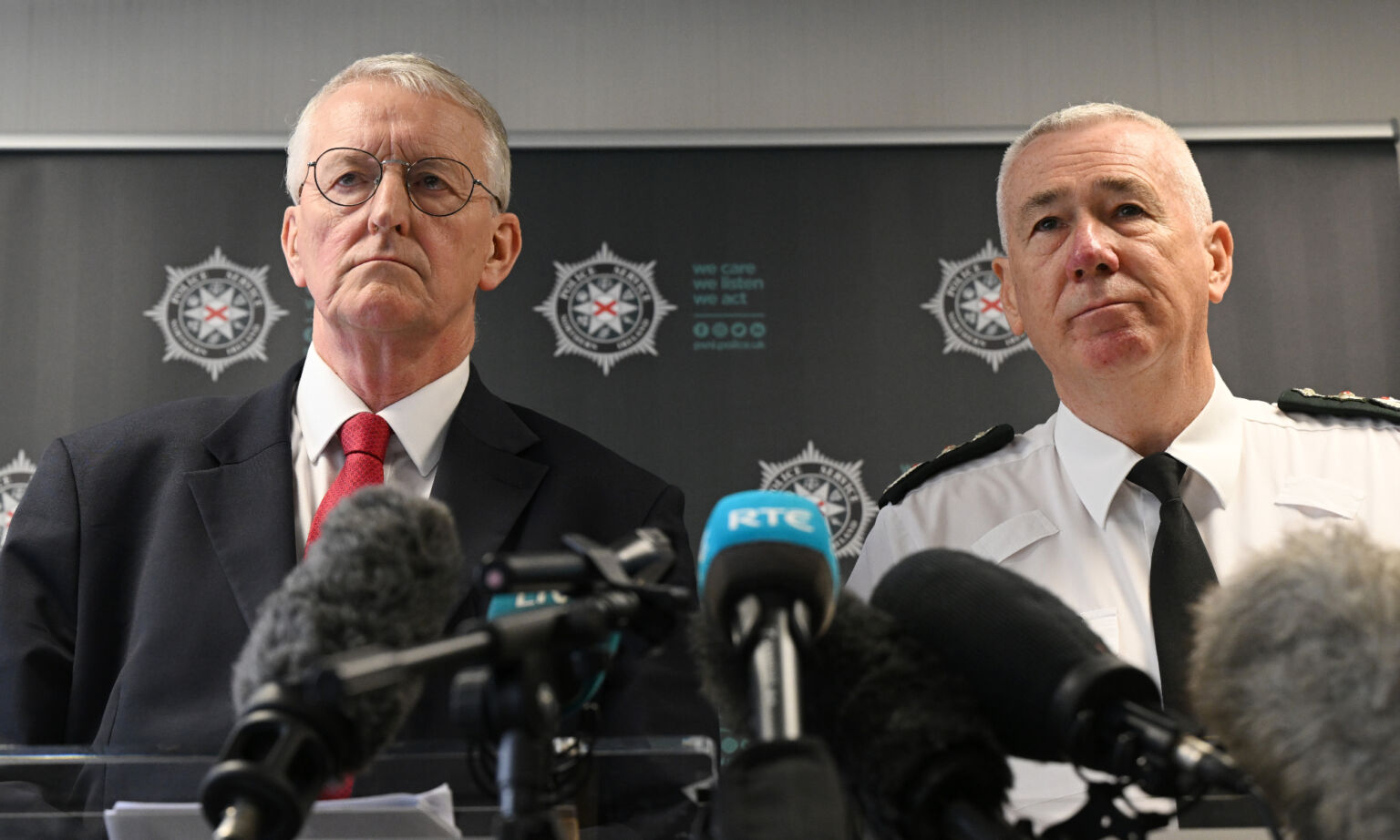
Northern Ireland secretary Hilary Benn, and PSNI chief constable Jon Boutcher attend a press conference in Belfast, 10 June 2026.
Benn subsequently offered, in good faith and apparently without embarrassment, a comment about the prospect of using someone’s history and background to assess future risk:
‘Questioning the suspect, seeking to find out more about him and the circumstances, it doesn’t necessarily follow that someone’s previous history is going to enable you to know if they are going to do something in the future. And therefore it is very hard to operate a system in those circumstances which attempts to anticipate what someone might do.’
This prompts one to reach for an argument of Thomas Sowell. There are no migrants in the abstract, Sowell observed. There are only specific people from specific places with specific histories, specific beliefs and specific characteristics. The generalisation ‘migrants’ is not a policy instrument. It is a rhetorical convenience for avoiding the actual policies that would have to be designed if you were dealing with real people. Benn is not refusing to generalise – he is refusing to particularise. He is arguing that because you cannot know in advance what a specific individual will do, the only defensible conclusion is that prior history, background, ideology and behaviour offer no useful information whatsoever. The system, he implies, simply cannot anticipate anything of note. We are, apparently, operating national border control much like a roulette wheel.
This is not merely wrong. It is the precise negation of what every risk assessment, every parole-board hearing, every terrorism analyst, every child-protection social worker and every insurance actuary does for a living. Risk assessment is the applied science of inferring future probability from prior evidence. The counter-extremism Prevent programme, which the government funds to the tune of tens of millions of pounds annually, is predicated entirely on the premise that prior indicators – ideology, association, behaviour, radicalisation pathway – are meaningful predictors of future violence. Following Benn’s logic, Prevent should be abolished immediately, because its entire operational rationale is the thing he just said is impossible.
The government funds a counter-extremism programme built on the premise that prior behaviour predicts future violence. And yet it sends its secretary of state for Northern Ireland to argue on television that prior behaviour cannot meaningfully predict future violence as a reason for declining to scrutinise how a specific individual came to be in Belfast before allegedly attempting to decapitate someone. One of these positions is true. The Prevent position is closer to the truth, which is why Benn’s broadcast remarks are not a serious argument. They’re a holding measure, a way of filling the airtime between the event and the moment when the news cycle obliges by moving on.
Now consider what happened simultaneously at Wednesday’s press conference. PSNI chief Boutcher, appealing for calm and promising law enforcement against the rioters, said that those involved in the disorder would have their images plastered everywhere. It is a legitimate deterrence instrument, and images of rioters do result in identification and prosecution. The observation that the institution declining to characterise the perpetrator of the original attack is energetically committed to naming and imaging the people who responded badly to it will not, however, have escaped the notice of the people being told to go home and be calm. The asymmetry is visible. And visible things tend to be noticed.
This is not an argument for outing defendants before trial. Sub judice rules are sensible and the presumption of innocence is not negotiable. It is an observation about where the state deploys its energy and its language. The prosecutorial machinery has historically moved with speed and purpose against such rioters, just as it did in 2024 after the Southport attack unrest. Yet it tends to be much more cautious when it comes to the events that have prompted the riots. That’s when the authorities throw out the usual lines: the motive is yet to be established, the investigation continues, please be mindful of what you share online. This pattern, swift action against one form of disorder and studied caution around the other.
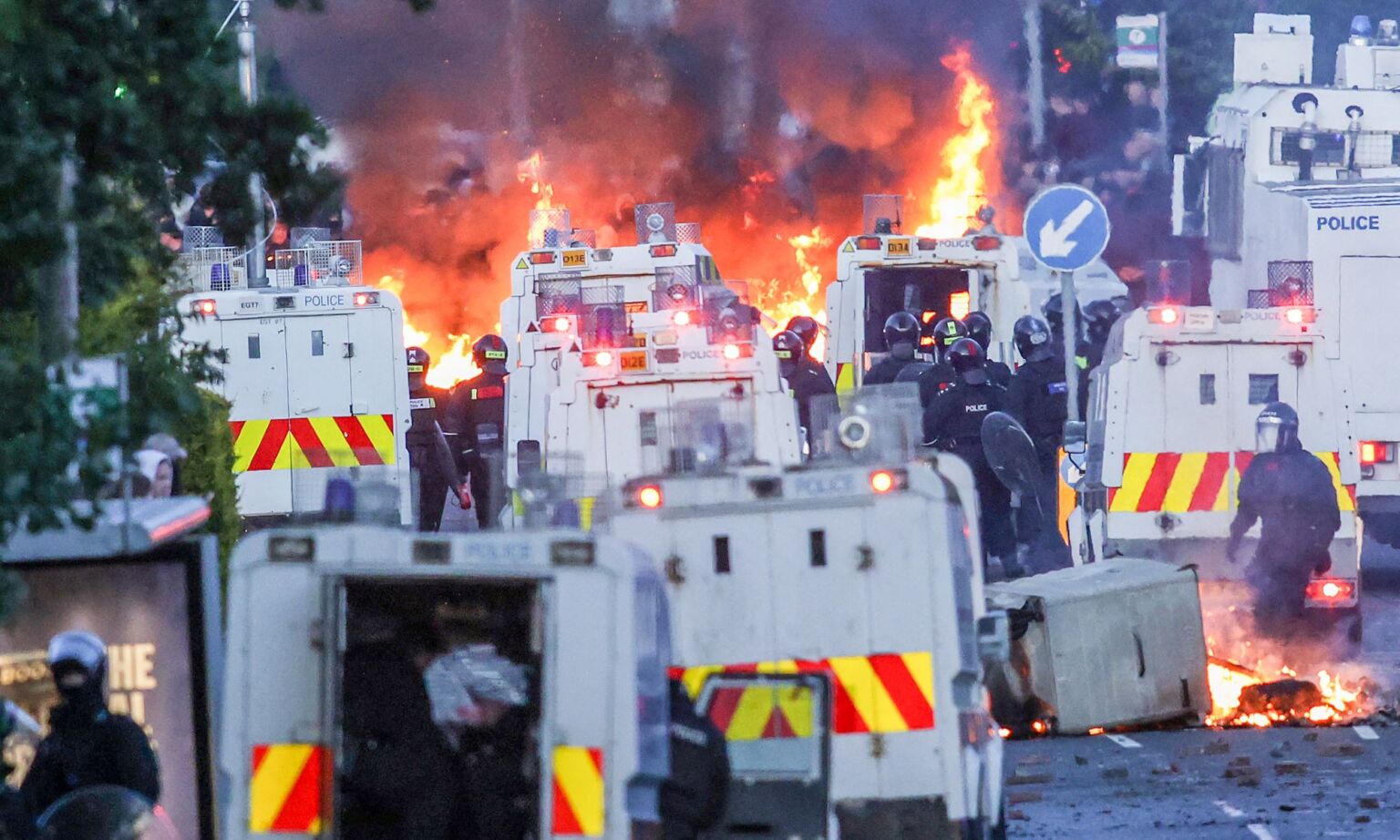
Protesters in stand-off with police in Glengormley, north of Belfast, Northern Ireland, 10 June 2026.
The Prevent dimension deserves attention. Prevent is the British government’s programme for identifying and supporting individuals considered vulnerable to radicalisation. William Shawcross’s 2023 Independent Review of Prevent found multiple issues: that it had drifted from adequately confronting Islamist extremism; that it was characterised by institutional timidity on the subject; and that Islamist terrorism remained the primary domestic terrorist threat. Indeed, Islamist terrorism accounted for approximately two-thirds of attacks since 2018, three-quarters of MI5’s caseload and 64 per cent of those in custody for terrorism-connected offences. The review recommended reorientation toward the primary threat.
The government accepted several of these recommendations. The acceptance was followed, as usual, by a considerable number of further discussions about how the acceptance might be implemented without causing too much disruption to existing arrangements.
Alodid was not, the PSNI chief Boutcher confirmed, known to Prevent. He was not known to any national-security database. He was, in other words, exactly the type of individual that Prevent’s acknowledged gap in non-networked, non-referred coverage is designed to miss. This was a man who had arrived from Sudan, a nation in the grip of an active civil war in which Islamist militias – designated as terrorist organisations by the US State Department as recently as March of this year – were being absorbed into the Sudanese Armed Forces’ fighting ranks. It is entirely reasonable to ask whether he should have been given leave to remain and why he was not properly vetted. Benn’s answer, that previous history doesn’t tell you what someone will do, is rejected daily by his own government’s counter-terrorism strategy.
Then there is the question of what the word ‘refugee’ is being required to carry in this discussion, and it is carrying considerably more than it can bear.
Refugee status is a legal designation, not a moral quality. It is a determination made by a caseworker, on the basis of evidence available at the time of claim, that a person faces a well-founded fear of persecution in their country of origin. It says nothing about ideology. It says nothing about mental health. It says nothing about criminal propensity or the individual’s relationship to political violence. These are orthogonal categories. A person can be a genuine refugee, genuinely fleeing genuine persecution and also pose a serious risk to British citizens. When determining whether someone is a refugee, caseworkers assess the persecution claim. The security and public-protection assessment is a separate exercise, conducted separately, resourced separately, and in the case of an individual arriving via an unmonitored land border under the Common Travel Area, conducted with whatever information the Home Office happens to have – which, in this case, was apparently nothing.
The governing class and its media interlocutors have fused refugee status and individual safety assessment into a single category. To define someone as a refugee is to declare they pose no threat. This is not an honest synthesis. It is a category error with a political function. The function is to ensure that the concrete question – whether this individual was adequately assessed before being granted leave to remain and whether the route through which he arrived constitutes a structural gap in public protection – cannot be posed without triggering the response that you are calling for the abolition of the asylum system. Nobody serious is calling for that. The question is whether the asylum system, as it currently exists, is doing the full job that protection of the public requires. Benn’s claim, that prior history doesn’t tell you what someone will do, is not an answer to that question. It is a device for making the question sound unanswerable so that it need not be answered.
As Sowell taught us, there are no migrants in the abstract. There is no refugee in the abstract. The abstract refugee is a politically useful figure. He is stateless and suffering, the exemplar of everything the liberal conscience requires one to defend. The abstract refugee cannot be scrutinised without implicating the liberal conscience. The concrete individual here, suspect Hadi Alodid, is a specific man, from a specific country, with a specific recent history. He arrived via a specific route that specific legal decisions have left unmonitored. He was granted leave to remain in September 2023 on the basis of a specific assessment by a specific caseworker. His particular case desperately needs to be scrutinised. Scrutiny is not an attack on the abstract refugee. It is how you protect the next person. The governing class prefers the abstract refugee, because the abstract refugee requires only sentiment. The concrete individual requires accountability.
‘Progressive’ journalist Mehdi Hasan’s appearance on BBC’s Newsnight on Tuesday evening deserves credit for its internal consistency. He argued that this is a story of far-right actors exploiting a hideous crime, amplified by Elon Musk and Tommy Robinson. The danger, he continued, is to minority communities, and that anyone drawing wider conclusions from the attack is doing the demagogues’ work.
This is a partial argument presented as a total one. The partial truth is real. On Tuesday evening, homes burned, families were forced to flee and a Turkish barber’s shop in Ballyclare was attacked. These are genuine harms visited on innocent people. All of that is true. But none of it is an argument about whether the system that produced the conditions for the original attack is functioning adequately.
The existence of disreputable or thuggish people who exploit a failure does not determine whether the failure is real. If it did, institutional failure could never be examined, because there is always, in any charged situation, someone willing to exploit the examination for bad purposes. The governing class has understood this and used it consistently in response to incidents similar to the one in Belfast this week. Produce a Musk. Point at the mob. Claim that anyone not pointing at the mob is in league with it. The examination of the actual problem at hand is indefinitely deferred, which is the point.
The history that makes Hasan’s position untenable is not a history he disputes. It is a history he declines to address. The grooming-gangs scandal in Rotherham illustrates the point. The 2015 Jay Report documented over 1,400 victims of organised sexual exploitation in Rotherham between 1997 and 2013. The Casey Review of 2015 found Rotherham council ‘in denial’. Casey’s Rapid Audit of June 2025 found that institutions had, across two decades, avoided discussing perpetrator ethnicity ‘for fear of appearing racist, raising community tensions or causing community cohesion problems’. It found that one local authority had replaced a plan targeting specific perpetrators with a ‘broad commitment’ to tackling exploitation ‘in its varied manifestations across the district’s communities’, and that police were told by councils to avoid publicising convictions ‘due to fear of raising tensions’.
This was a deliberate institutional choice, made in the face of known evidence, to prioritise what officials called ‘community cohesion’ over the protection of children. ‘Community cohesion’ here means the management of political embarrassment at the expense of the people being harmed. It is a bureaucratic alibi, not a social good.
The language around Belfast – that the motive is yet to be established, that prior history doesn’t necessarily tell you what someone will do, that the investigation must be allowed to proceed – is not identical to the Rotherham mechanism. But it runs on the same fuel and it serves the same interest. Hasan is running the same machine under a different brand, and the machine is running fine.
The same PSNI chief constable who will plaster rioters’ images everywhere is the head of a service whose intelligence operations, as disclosed in recent Investigatory Powers Tribunal proceedings, included routine six-monthly trawls of journalists’ phone data. The same secretary of state who told the Commons that those abusing the hospitality of this country will be deported is the minister responsible for an immigration architecture with a functioning open door in it. The same prime minister who found the attack sickening took the knee in 2020 and is now managing a premiership whose departure timetable is a matter of active parliamentary negotiation. The people moving quickly are moving quickly against the people who reacted badly to the failure. The people responsible for the failure are explaining, at measured length, why the failure was in the nature of things. Why previous history cannot tell you what someone will do, and why it is very hard to operate a system in these circumstances.
Many of us, for different reasons, find this less than fully satisfying. The religion of calm has its sacraments and its clergy. Its central liturgy is the substitution of the emotional register for the analytical one. Their emotivist lexicon consists of sickening, harrowing, deeply shocking, deeply concerning. Its founding doctrine is that concern about the immigration system is contamination, that the person asking the structural question stands in proximity to the mob and must prove they are not by not asking it. Its clerisy are the Benns and the Hasans and the Boutchers and the Starmers. All mostly reasonable people, managing unreasonable circumstances they helped to construct. All gesturing toward the next calm that will precede the next event on the next street.
Three brave people with a hurling stick ran toward such an event this week. Yet the governing class continues to look the other way.
Owen Shapell is a PhD researcher in social sciences.
Politics
The House | Reform Councillor George Finch: Nobody Deserves To Be In No 10 More Than Farage



9 min read
He’s in charge of an institution with £1.5bn assets and of services vital to the lives of hundreds of thousands of people – and he’s not yet 20 years old. Nadine Batchelor-Hunt meets Reform UK council leader George Finch
If ever there was a child of his time, it is George Finch.
“My mum was a hairdresser, my dad worked as a carpenter for the council at the time,” says Finch, Reform UK’s leader of both Warwickshire county council and Nuneaton and Bedworth borough council. “Finances were fine, but then they had me in 2006, and then obviously the financial crash happened… It destroyed what we did, and the income wasn’t sustaining a family.”
Growing up in the shadow of the crash and austerity shaped Finch – and arguably makes him perfectly attuned to the politics it has produced.
“Every system was just failing,” he says. “Everything was cut, nothing was working… and this was a kind of carbon-copy of families across Bedworth at the time… The system was completely broken. Families like mine were left and thrown to the curb.”
There were additional strains: both of Finch’s sisters have significant health issues that continue to confront them with the harsh reality of the state of some NHS services. Speaking of one sister with a neurological disorder, he says: “Even when I’ve been in this job, I’ve spent hours and hours and hours in A&E waiting by her side on a ward where there’s kids self-harming, and it’s not right.”
If the council leader is daunted by the weight of the responsibility of his office, he does not show it. Indeed, in his telling, this is light work when compared to his previous gig as a carpenter and plasterer.
“I was working when I was 16, 17 – not on building sites but in doing up homes, carpentry, plastering, all that type of stuff,” says Finch. “I’ve done that type of stuff before, and I know what it’s like to sit in a damp house when it’s dripping, while just eating a sandwich. You don’t get a nice little tea break like you do in offices.”
He [Lee Anderson] was really my type of people… just say how it is.
Despite his tender age, Reform isn’t even Finch’s first party. “I was a young conservative who joined the Conservative Party at 16,” says Finch. “It was more the conservative values, not necessarily the party.” He speaks of his disillusionment with the party and is especially critical of Boris Johnson – describing the former prime minister as a “wet liberal in proper Conservative clothing”.
The catalyst for joining Reform UK, he says, was an encounter with Reform MP Lee Anderson at school. “I was in the politics class, and me and my mate, we love Lee Anderson,” says Finch. “He was really my type of people… just say how it is. You know, like, ‘Oh, have a lovely day, lovely ladies’… Say something like that in Warwick? ‘How dare you call me a lovely lady?!’”
Finch says he asked Anderson a question about education, namely, ‘How will Reform UK resist the wave of wokeism that’s washing across our education establishments?’. “I practiced that, because it’s so important to me,” says Finch. He recalls Anderson “spoke to so many” in the room and behaved like such “a normal chap” that when he approached Finch and asked whether he’d join Reform, he did. “He said: ‘George, you going to join?’ I went: ‘Go on, then – I’ll join tomorrow.’ So, I did. And then helped the general election candidate – we got third place, 9,000-odd votes, great from a standing start. We’re going to win at the next election.”
Asked why he was attracted to politics, he replies: “It goes to my old background: my family, my town.” Finch is sitting next to a stuffed bear clawing a tree, the symbol of the county he presides over. The bear’s name is Wendy, according to The Times, loaned to Finch’s office from a local museum – something Finch reportedly made an early priority upon taking office.
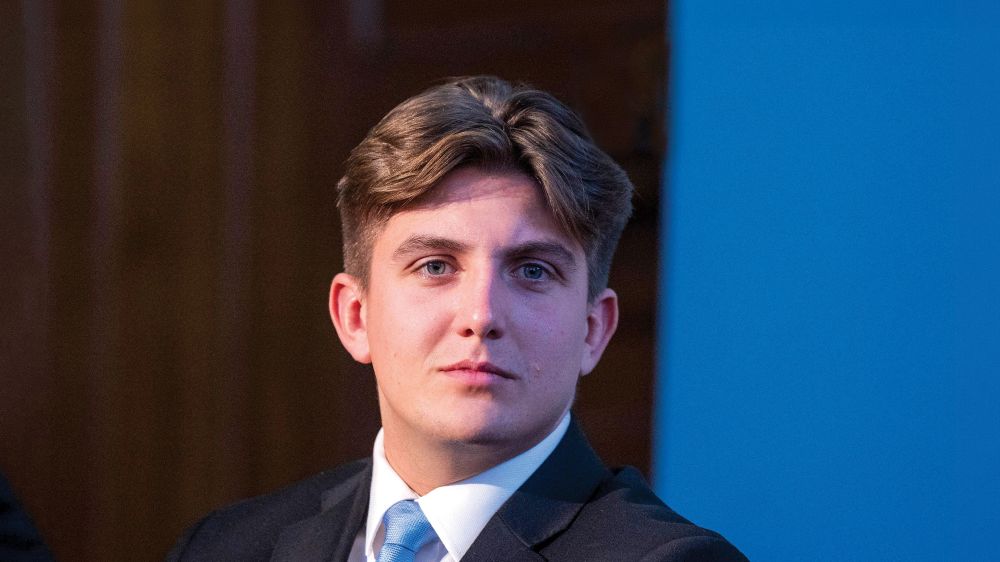
Bedworth, the town he is from, is in the borough of Nuneaton and Bedworth in North Warwickshire. The last coal mine in the town closed in 1982, ending a long history of coal mining dating back centuries; in many ways, it is typical of the area Reform must win to make it to No 10. “It’s been totally forgotten about, even though it is a town that’s got a huge pride in what it does,” says Finch.
In the several years since then, Finch has enjoyed a meteoric rise. He says his priorities locally have been to “change the entire foundation of which the council is built on” – describing running two councils as “phenomenal”. He says highways, crime awareness and prevention and finances are all areas where he’s seeking improvements, as well as home school transport, which he says costs the council £50m a year. The way he speaks about local issues makes it clear he sees Reform’s record in local government as an opportunity to gain the electorate’s confidence, saying it’s “the only chance” the party has to prove itself to the people. “We have to work as hard as we can to get the best value for money for taxpayers, voters,” says Finch. “If we get local champions, we’re winners.”
But it has not been plain sailing; Finch narrowly won a no-confidence motion earlier this year by one vote – something he dismisses as a “farce” that “backfired”. The Green Party tabled the motion concerning Finch’s remarks relating to the rape of a 12-year-old girl in Warwickshire, and a dispute with county council chief executive Monica Fogarty over Pride flags. On the former, Finch had risked contempt of court after sharing details about the suspects and accusing the police of attempting to cover up their immigration status – claims which Warwickshire police rejected.
I haven’t got a problem with young kids and women coming over on boats – if they have got a genuine refugee status and they need genuine help
Finch defends himself, telling The House he “had to fight tooth and nail for transparency”. “They’ll refute that,” says Finch, saying that they argued for the need to preserve community cohesion. He recalls being told, “’You don’t want riots like in Epping’.” He replied: “‘We won’t have riots in Epping if we tell them the truth’… And I put a statement out: no riot.”
There is growing speculation that Rupert Lowe’s breakaway party, Restore Britain, could put pressure on Reform at the next general election, given its standing in the polls for the Makerfield by-election. The race is expected to be tight between Labour’s Manchester mayor Andy Burnham and Reform UK’s Robert Kenyon, meaning any votes lost to Restore may cost Reform the election – something to which Finch is very much alive.
Finch says he is waiting to see the results in Makerfield before passing judgement but likens Restore to the British National Party (BNP) and questions whether its social media presence is “matching up” to votes. “What are their policies?” asks Finch. “What are their people? Look at other political parties in the past, when they stand a load of candidates – parties like BNP and Ukip… you can see their candidates and what they stand for.”
Finch tells The House he believes a Restore government would deport people based on their colour, and believes a lot of Restore voters do not realise this – nor do the two previously Reform Warwickshire councillors who have defected to the party. “[Gurkhas would] be gone… no excuse, no reason; gone, just because of their colour,” claims Finch.
While it’s obvious Finch sees Reform as different to Restore, he describes immigration as “terrible, terrible, terrible” and “a complete failure”, defending Reform’s Zia Yusuf’s remarks on deporting legal immigrants living in social housing.
“Zia is absolutely right, and we’re looking at it on the borough council,” says Finch. “Social housing, council housing, should be there for British nationals – British citizens.”
Finch also says veterans and care leavers should be at the top of housing lists, “not asylum seekers, not illegal immigrants” – though he does express some sympathy for women and children arriving on small boats. “I haven’t got a problem with young kids and women coming over on boats – if they have got a genuine refugee status and they need genuine help,” says Finch. “I haven’t got a problem with that, but I’m not seeing that materialise on the boats.”
The council leader is also dismissive of allegations that Reform’s agenda is racist, saying people “need to understand our policies a bit more”. “Those people that are just ignorant, they go: ‘Oh, you’re all racist’,” says Finch. “Well, if you sit down with me for an hour, I can tell you that I’m not racist.”
Sitting beneath a framed Reform football shirt reading ‘FARAGE’, Finch insists the party is not a “one-man band”, but one of policies, local champions, councillors, council leaders and MPs, as well as its high-profile leader. “I know what it’s like in a head office, I’ve seen it – I’ve seen the way it works,” he says. He adds that no politician alive deserves the keys to No 10 more than Nigel Farage. “He’s changed his country for the better – and he’s not even been elected to British Parliament until recently,” says the 19-year-old. “So, he deserves it.”
Finch also praises the recent policy announcement on tax-free overtime by the party. “The no tax on overtime – great policy… In the town centre, they love that policy,” says Finch. “I think it’s great. We have our own policies, we are our own party, we’ve got fresh-thinking people.”
As the interview winds down, we circle back to whether Finch has ambitions beyond leafy Warwickshire, a question side-stepped earlier on.
“To become a Member of Parliament for North Warwickshire and Bedworth, or the East, or wherever: it’d be a great honour to serve locally, in my home town – but I’m not focused on that at the moment,” he says. “When a general election comes, we’ll see, but I am 100 per cent committed to these two councils. That’s a new line – these two councils – because that’s why people get elected.”


INGLEWOOD, California — FIFA paid tribute to California’s Native American tribes as part of the pregame festivities ahead of Friday’s match at SoFi Stadium, the tournament’s first in the United States.
So-called native land acknowledgments have become common in North America, especially on the West Coast of the United States and across Canada, but have faced criticism and ridicule as the “latest woke ritual,” as one Wall Street Journal commentary put it.
The prerecorded video that played as the stadium filled up with U.S. and Paraguay fans acknowledged the Yuhaaviatam of San Manuel Nation and Gabrieleño Band of Mission Indians, among others, as “the original inhabitants of Los Angeles County.”
FIFA President Gianni Infantino’s campaign-style efforts to win support from local political officials across the United States last year included visits with tribal leaders, POLITICO reported at the time.
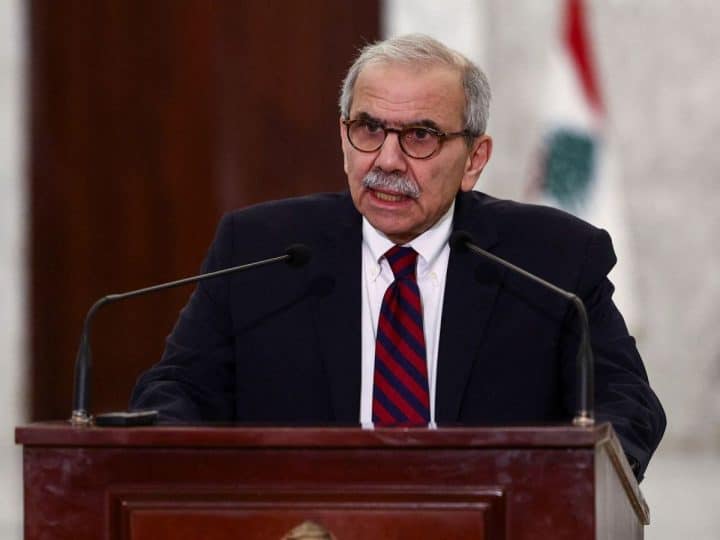
Lebanese PM Nawwaf Salam has condemned Iran for Israel’s war of aggression in southern Lebanon, in a deranged interview with the Murdoch Times.
Nawaaf claimed that Tehran rejected a supposed ‘ceasefire’ ‘deal’ in Israel’s invasion of Lebanon because:
Tehran wanted to say Lebanon is a card in our pocket, that ‘we decide on Lebanon’s behalf … we are the decision-makers’.
The one-sided ‘deal‘ involved Israel being free — its usual modus operandi — to continue attacking and seizing territory in southern Lebanon. By contrast, resistance group Hezbollah would have to cease all operations, lay down its arms and leave the territory, giving the invaders free rein. But Israel would supposedly stop bombing Beirut.
Instead, Iran has continued to refuse any ceasefire in its own war with Israel and the US that does not include Israel leaving all Lebanese territory and ceasing all aggression against Lebanon. And when Israel bombed Beirut this week, on 8 June 2026, Iran struck Israel in retaliation, having warned the occupiers it would do so.
Lebanon’s ‘Vichy’ government
Despite Shia Muslims forming the largest group in Lebanon, Lebanon’s so-called ‘National Pact’ mandates that the country’s president must always be a Maronite Christian and its prime minister a Sunni Muslim — while the speaker of parliament is Shia Muslim.
Salam’s government is widely considered a ‘Vichy‘ regime collaborating with its occupiers. This collaboration has led to accusations of “high treason” and “servile collaboration” with Israel and its US backers despite Israel’s bombing of Beirut. This has triggered renewed street protests against the regime demanding resistance to Israel’s invasion.
Salam clearly isn’t listening, too busy parroting his sponsors’ narrative that absolves Israel of its land theft and murder and blames Iran for daring to resist.
Featured image via DailyNewsEgypt
By Skwawkbox
The X account of Howard Beckett, the popular former Unite general secretary candidate, has been taken over by hackers. The culprits may to be aligned with the Israeli occupation, of which Beckett is a staunch opponent. However, they are continuing to put out watered-down versions of Beckett’s usual output in an apparent attempt to fool followers. The account has also posted ‘crypto’ content, a topic in which he has never shown an interest.
Unite — Unauthorised
Complaints about the crypto posts have succeeded in having those removed, but Beckett has still been unable to regain access of his account. Those who follow his account should be aware that any posts are currently not generated by him or anyone authorised to post.
Featured image via the Canary
By Skwawkbox
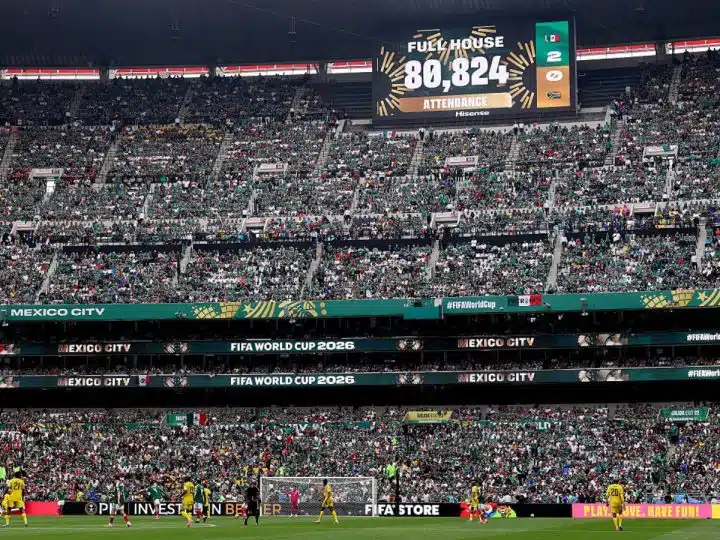
An 81-year-old German fan died near Azteca Stadium in Mexico City, the Mexican capital, hours before the kickoff of the opening match of the 2026 World Cup between Mexico and South Africa.
According to the Mexican website Publimetro, the fan suffered a heart attack while attempting to enter the stadium through Gate 1, near the “Rampa 2” area, which necessitated immediate intervention from the ambulance and emergency teams deployed around the stadium.
The report added that medical staff performed cardiopulmonary resuscitation (CPR) on the fan at the scene before transferring him to the National Institute of Cardiology in Mexico City, where he passed away due to his health crisis.
The incident occurred before the start of the opening match of the tournament, which ended with the Mexican national team defeating South Africa two goals to nil in Group A competition.
Azteca Stadium holds historical significance in World Cup tournaments, as it became the first stadium to host the opening match of the tournament in three different editions, having hosted the opening ceremonies of the 1970 and 1986 World Cups before hosting the opening of the 2026 edition.
Featured image via Carl Recine/Getty Images
By Alaa Shamali
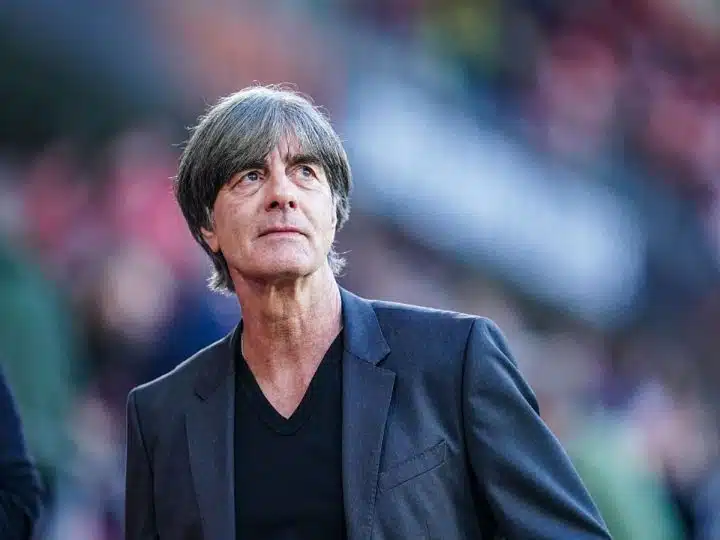
Former German coach Joachim Löw has voiced clear criticism of FIFA’s decision to expand the 2026 World Cup to 48 teams, arguing that the new format has diminished the tournament’s competitiveness and technical quality.
In an interview with the German channel RTL as part of the series “World Cup Fever: Monica Lierhaus and the National Team Coaches,” Löw—who led Germany to victory in the 2014 World Cup in Brazil—confirmed that he was never in favor of increasing the number of participating teams.
The 66-year-old coach stated that he had always believed the 32-team format was the most suitable for the World Cup, explaining that group stage competition was more intense and exciting when qualification was limited to just two teams per group.
The current edition of the World Cup is being held for the first time with 48 teams across the United States, Canada, and Mexico. Löw considered this an excessive expansion, even while acknowledging the right of smaller teams to dream of participating in the world’s biggest event.
The German coach pointed out that allowing eight teams finishing third in their groups to advance to the knockout stages has reduced the importance of first-round matches, making the group stage less compelling than in previous versions.
He added that the old system forced a genuine struggle within each group to secure the two qualifying spots, whereas the current
version has a wider margin for qualification, which negatively impacts the level of competition and excitement.
Löw believes that maintaining the tournament’s technical quality should be a priority for FIFA, emphasizing that he prefers more selective and competitive tournaments rather than increasing the number of participants.
The German coach concluded his remarks by stressing the need to maintain the high standard of the World Cup, suggesting that reducing opportunities for qualification to the knockout stages would enhance the value of the matches and raise the quality of competition in the tournament.
Featured image via Daniela Porcelli/Getty Images
By Alaa Shamali
Politics
French journalist is the latest foreign national to be denied entry by the Israeli occupation
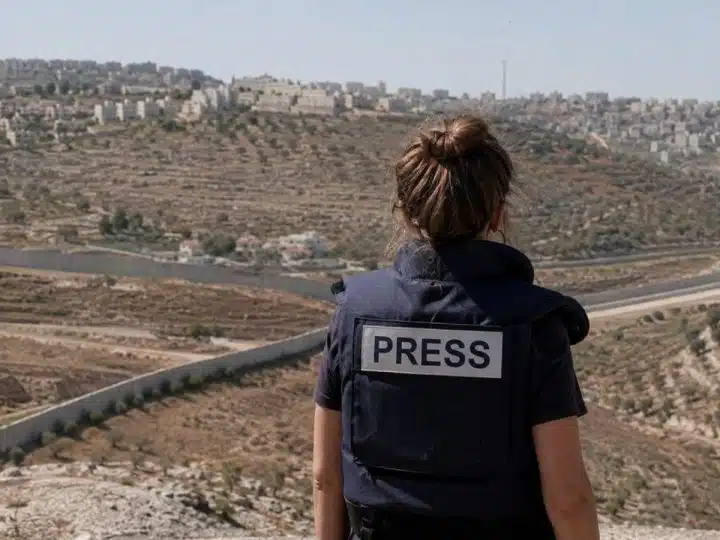
“Israeli” authorities have deported French journalist Alice Froussard. Although possessing all necessary paperwork, she was stopped at Tel Aviv’s Ben Gurion airport, on the evening of 10 June. She was then interrogated several times and detained for almost ten hours. Then she was expelled from the country, and sent back to France the following day.
Deported French journalist said the October 7 massacre must be viewed ‘in context’
Froussard, 33, works for several French media outlets and has covered the occupied West Bank since 2019. She had planned to travel there on assignment for Radio France Internationale (RFI) when she was deported.
No official reason has been given by the authorities for Froussard’s deportation. But the occupation obviously disagrees with her truthful reporting on “Israel’s” genocide in Gaza, and West Bank apartheid.
The occupation’s minister for diaspora affairs, Amichai Chikli claimed he was pleased the journalist had been deported. He described her as a “French journalist who supports Hamas, and who claims that the October 7 massacre must be viewed ‘in context’.”
I am pleased to announce that at this very moment, Alice Froussard, a French journalist who supports Hamas, and who claims that the October 7 massacre must be viewed “in context,” is making her way from Ben Gurion Airport back to Paris.
Like Linda Sarsour before her, she too has…
— עמיחי שיקלי – Amichai Chikli (@AmichaiChikli) June 11, 2026
Reporters Without Borders (RSF) describes Froussard’s detention and deportation as “unjustifiable.” It says it fears an information blackout in the West Bank, similar to that imposed on Gaza since October 2023.
Israeli occupation has no legal right to block entry of anyone intending to visit the occupied territory
But Pascal Confavreux, the French foreign ministry spokesperson said:
We regret this decision, which nevertheless falls under the sovereignty of the Israeli authorities, to whom I refer you.
Confavreux is wrong. In 2024, the International Court of Justice’s (ICJ) advisory opinion stated Israel’s presence and control in the occupied Palestinian Territory (OPT) is illegal. It must end immediately. International law experts, such as Ralph Wilde, say this means it lacks any right to dictate entry, border access, or block humanitarian aid. According to Wilde, those wishing to enter or operate in Palestine should instead coordinate with representatives of the Palestinian people.
Qalandia Airport, near Jerusalem, was the West Bank’s only airport. It was built by the British in 1920, but was illegally seized by the occupation in the 1967 war. The occupation is now planning to hide its ruins with a massive settlement. More than 9000 housing units are due to be constructed for illegal Jewish colonists.
There is now no way to fly directly into the occupied Palestinian territory. “Israel” controls all borders, or has strict security oversight over all entries. This applies to the border from Jordan, Egypt and “Israel”.
Strict immigration controls and “national security concerns” mean tens of thousands of foreign nationals are denied entry each year, for one reason or another.
Israeli occupation says supporting BDS is a reason for entry to be denied
The Law for Entry into Israel was amended in 2025. It stipulates that foreign nationals will be denied entry if they publicly call for boycotts or deny the Holocaust. Anyone denying the October 7, 2023 “massacres”, or publicly supporting prosecuting “Israeli” soldiers for war crimes in international courts will also be blocked
In June, Palestinian-American activist Linda Sarsour was also banned from entering the country. This was because she supported the Boycott, Divestment, and Sanctions (BDS) movement against the Israeli occupation.
Back in 2018, the Israeli occupation blocked the entry of a record 19,000. The number must surely be higher today. The reasons given are varied, but those who are affected include journalists, activists, politicians, and legal experts, and the numbers are increasing.
View this post on Instagram
In February 2026, 32 peace activists from Eyewitness Palestine were denied entry. And in May, 2026, 40 human rights monitors affiliated with the Euro-Med Human Rights Monitor were blocked at the border.
Featured image via Twitter
By Charlie Jaay
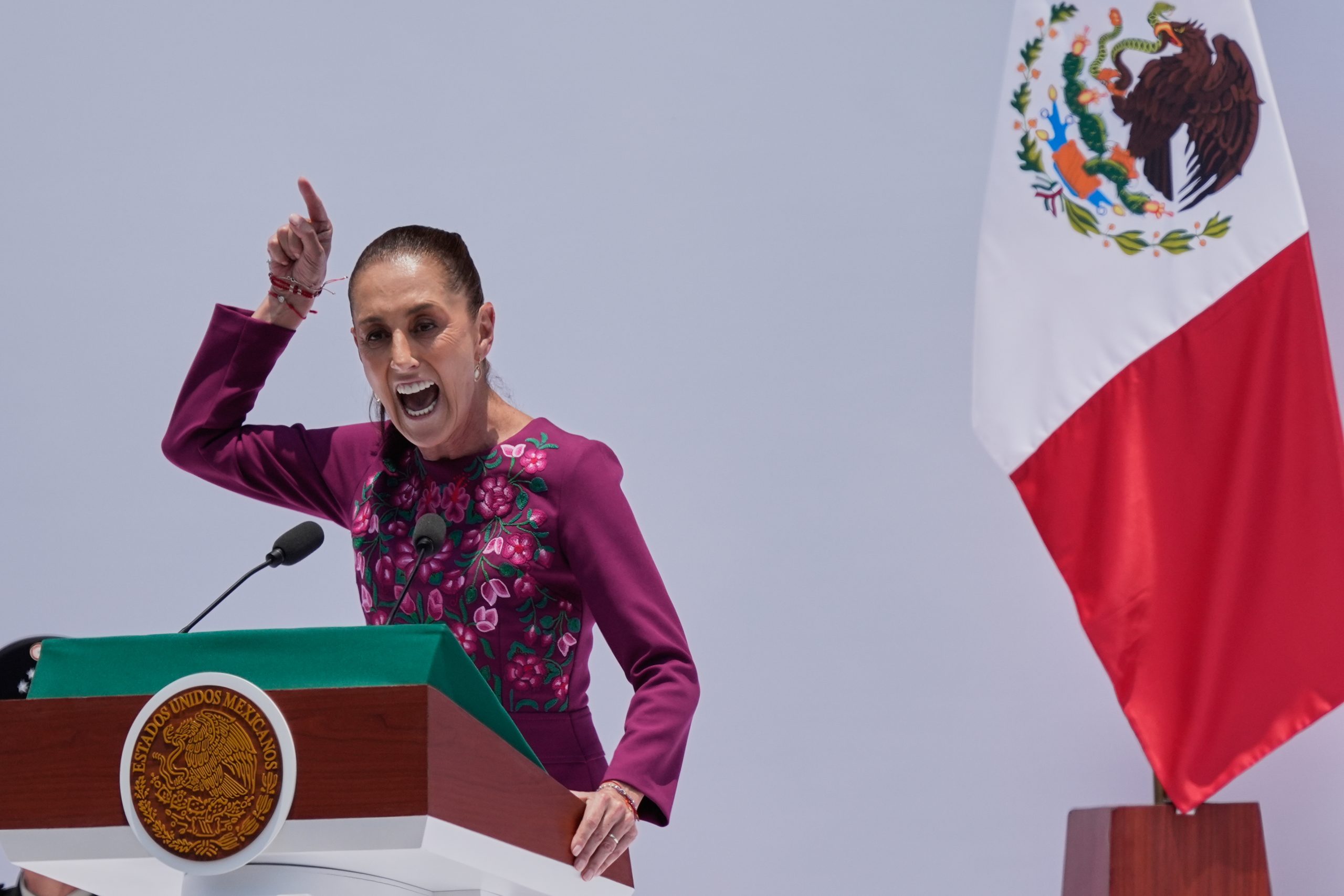

Just after halftime in their country’s match against South Africa on Thursday afternoon, Mexican embassy officials were nervous.
Forward Julián Quiñones scored a goal in the first nine minutes, and spirits were high at the embassy’s Washington watch party where mini-burritos, cervezas and — in a nod to the bilateral relationship — McDonald’s hamburgers and walking tacos were flowing freely. But South Africa’s shots on Mexico’s goal were creating staccatos of panic as the score remained 1-0.
“So far, so good — but it could be better,” one diplomat quipped.
Talk to Mexican officials, diplomats and business leaders, and it’s a sentiment that’s apropos of the current state of the bilateral relationship between the U.S. and Mexico as the two countries, along with Canada, kick off six weeks of FIFA World Cup festivities.
Mexican President Claudia Sheinbaum — who did not attend the opening match — has earned plaudits on both sides of the border for her behind-the-scenes work to cultivate a solid working relationship with President Donald Trump, despite vastly different political orientations and persistent friction over migration, drug trafficking and trade.
Sheinbaum’s domestic challenges were also on full display outside the historic Azteca stadium Thursday, where hundreds of protesters demanding pay raises for teachers and more resources for the search of 130,000 missing persons in Mexico clashed with police and threw cones and other projectiles into the security perimeter.
Now, at what should be a continental high-water mark — as North America unites to host the World Cup — the relationship is instead facing its greatest test. Tensions are running high over the future of the U.S.-Mexico-Canada trade agreement, a brewing extradition standoff over several Morena party officials — including the governor of Sinaloa — and Trump’s fresh threats on Wednesday to target drugs “coming in by land” via Mexico.
“It’s on a knife’s edge,” said Arturo Sarukhán, Mexico’s ambassador to the U.S. during the Bush and Obama administrations. “The paradox is that all of this is playing out as the World Cup kicks off, a World Cup that should have been a moment to celebrate the promise of North America, and to talk about the future of a North American century.”
The strain on the bilateral relationship beyond the World Cup is existential for Mexico — about 80 percent of the country’s exports flow to the United States — but also for the U.S., Mexico is the United States’ largest trading partner, with two-way trade topping $872 billion in 2025, accounting for roughly 15 percent of all goods coming into the U.S. And the integration runs deep into American supply chains, like autos and electronics, meaning that anything that seriously destabilizes the relationship is bad economic news for the U.S.
For now, the anxiety is largely one-directional, as Trump world remains broadly bullish on the U.S.-Mexico relationship even amid genuine turbulence. Two CIA officers were killed in an April crash in Chihuahua that revealed U.S. intelligence operatives working in the field alongside Mexican state investigators without, Mexican officials say, the federal government’s authorization. The Sinaloa indictments followed just over a week later.
“It’s a pressure point, but I also think if you ask people who work on this, they’d say that — relative to where we’ve been in the past — the security cooperation with Mexico is pretty good under Sheinbaum,” said Alex Gray, a former senior National Security Council official in the first Trump administration. “I think things are, all things considered, not bad.”
Even the original architects of the 2026 World Cup bid, which was won during the first Trump administration, agree that cracks in the U.S.-Mexico relationship were a more serious issue eight years ago.
North American soccer executives told POLITICO that bringing the U.S. together with Mexico wasn’t easy at a time when Trump was calling NAFTA — the precursor to USMCA — “a disaster” and demanding Mexico pay for his border wall.
White House aides laud Sheinbaum’s cooperation on everything from preventing the spread of Ebola heading into the World Cup to efforts to combat drug trafficking. A senior White House official, granted anonymity to speak candidly about the bilateral relationship, described it simply as “good.”
“I mean, there have been shared responsibilities, like, for example, the whole Ebola thing, right? We worked with them and Canada to ensure that there is proper vetting of individuals coming into the countries,” the official said. “We’re obviously working with her on combatting cartels on many fronts, so it’s good.”
The Mexican embassy in Washington did not respond to a request for comment.
Yet Mexican officials have watched the relationship unfold with a kind of cognitive dissonance, marked by progress in one lane and crisis in another. Homeland Security Secretary Markwayne Mullin’s meeting last month with Sheinbaum in Mexico, for instance, was seen as a positive step for the bilateral relationship, particularly for the security cooperation that has underpinned it.
But that goodwill is being tested on several fronts. The Morena indictments are creating a domestic quagmire for Sheinbaum, who is demanding “overwhelming and irrefutable proof” before moving against Sinaloa Gov. Rubén Rocha Moya and the nine other current and former Mexican officials who have been charged by the U.S. Justice Department with drug trafficking and weapons offenses.
Trade talks between the two countries had also been going reasonably well — so much so that the two have been talking without Canada even at the table. But Trump on Wednesday injected a fresh dose of uncertainty by saying he was “not looking to renew” the pact and dismissed the notion that the U.S. needed either of its neighbors. And the countries are all but certain to miss the July 1 date to renew the agreement, with a third round of talks scheduled in Mexico City the week of July 20.
The uncertainty has left proponents of the bilateral relationship nervously reading the tea leaves of Trump’s public appearances for any indication of growing irritation with Sheinbaum.
“What I’m seeing is it’s not just one single relationship: We have several individual and topic-based agendas. You have something very good in one hand and something struggling in the other. What we’re trying obviously is to have an umbrella relationship that is good, that makes the other individual agendas also good,” said Enrique Perret, managing director of the U.S.-Mexico Foundation. “But right now we don’t have that good umbrella relationship. That’s what we’re missing.”
The two leaders still have yet to meet at the White House, a move that some south of the border see as a carefully calculated effort on Sheinbaum’s part to not take any unnecessary gambles with the relationship, and avoid the kind of Oval Office spectacle that became commonplace between Trump and world leaders last year.
The two have only met once in person — at the official draw for the 2026 FIFA World Cup in December. Whether they’ll appear together at any games in the coming weeks remains an open question.
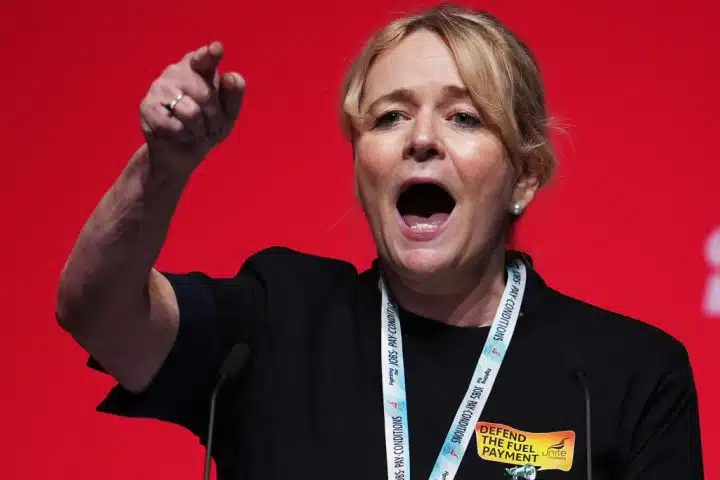
Unite — Sharon Graham’s call for looser fiscal rules to fund military spending was slammed by Stop the War’s officer, Shabbir Lakha.
Graham was mourning the resignation of John Healey as defence secretary, who resigned citing Starmer and his chancellor, Rachel Reeves, as not ‘serious’ enough about spending huge amounts of our money on military build-up.
Lakha pointed out that the government is already cutting 1% of all capital budgets to pay for this defence hike, and that Healey resigned to demand even more.
He slammed her, as the leader of one of the biggest unions in the country, for actively campaigning for welfare and public sector cuts.
Graham, Unite’s secretary, has frequently demanded more military spending.
Let’s be clear about this: the govt is already cutting 1% of all capital budgets to fund this military spending hike, Healey resigned to demand even more. The leader of one of then biggest unions in the country is actively campaigning for welfare and public sector cuts. https://t.co/dhTnx3Lg3O
— Shabbir Lakha (@ShabbirLakha) June 12, 2026
Unite’s Graham wants fiscal loosening
She claimed John Healey’s resignation as defence secretary “laid bare the utter chaos at the heart of government.”
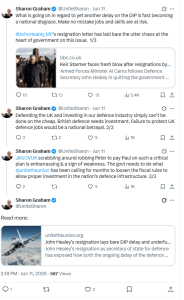
The accompanying press release from Unite, headlined “John Healey’s resignation lays bare DIP delay and underfunding is risking jobs and national security,” described the situation as an “underfunding” crisis.
According to the FT, the defence plan is expected to include between £13.5bn and £15bn in extra spending for defence up until 2030 — less than the £18bn minimum that Healey had wanted and far short of the £28bn shortfall in the MoD’s current plans.
Warmongers mourn
The warmongering Graham and the warmongering media are sadly opining about the resignation of Healey.
FT called him “collegial, moderate and prodigiously hard-working.”
They praised him for his relationships with the Trump admin. FT said:
Healey has also cultivated decent relations with his American counterpart Pete Hegseth, the outspoken former Fox News host and veteran.
“He’s done well with Pete Hegseth. They get along, although they are very different characters,” one military figure said.
Bloomberg quoted the arms dealers’ trade association lamenting Healey’s departure.
“His resignation today is something to lament, and is truly a damning reflection on the current state of affairs,” said Kevin Craven, chief executive officer of ADS, the UK’s trade body for the aerospace, defense, security and space sectors
Bloomberg said his resignation had been “particularly surprising” given that he has been one of “the most loyal Labour figures for more than three decades.”
Graham, like FT and Bloomberg, is speaking for defence contractors.
The working class deserves a union leader who fights for them and can deliver jobs that are not meant to aid a genocide.
Featured image via Christopher Furlong/Getty Images
By The Canary

U.S. spot Bitcoin ETFs add $85.85M in daily inflows as net assets hit $79.65B

Tartan Army kick off celebrations ahead of Scotland’s first World Cup match in 28 years

Canada’s OpenText to create 400 jobs in Cork and Galway

BloFin War of Whales 2026 Grand Prix opens registration for $5M trading championship

Blockchain.com files with SEC for U.S. IPO

Israel says it has killed new Hamas military leader in Gaza City airstrikes

Why aren’t you making money? Stop these 6 financial mistakes today!

The Laziest Way To Make Money With AI (Full Tutorial, 6x Return)

Why Rich People Buy Assets (And Stay Rich) #Finance #Investing #Money #FinanceWithRahulRetrix
-

 NewsBeat5 days ago
Alexander Zverev wins the French Open to finally earn a 1st Grand Slam title
-
 Entertainment6 days ago
The Best Mystery Series of All Time Is Surging on Streaming 30 Years After It Ended
-

 Crypto World5 days ago
Anatomy of the June crypto crash: Fed, Iran, Saylor
-

 Crypto World2 days ago
Oppenheimer backs SpaceX as $70 billion retail frenzy builds
-

 Crypto World2 days ago
Markets Rally as SpaceX IPO Looms Amid Iran Tensions and Inflation Surge
-
 Crypto World7 days ago
Senator Cynthia Lummis Calls CLARITY Act the Most Consequential Financial Legislation of This Generation
-
 NewsBeat6 days ago
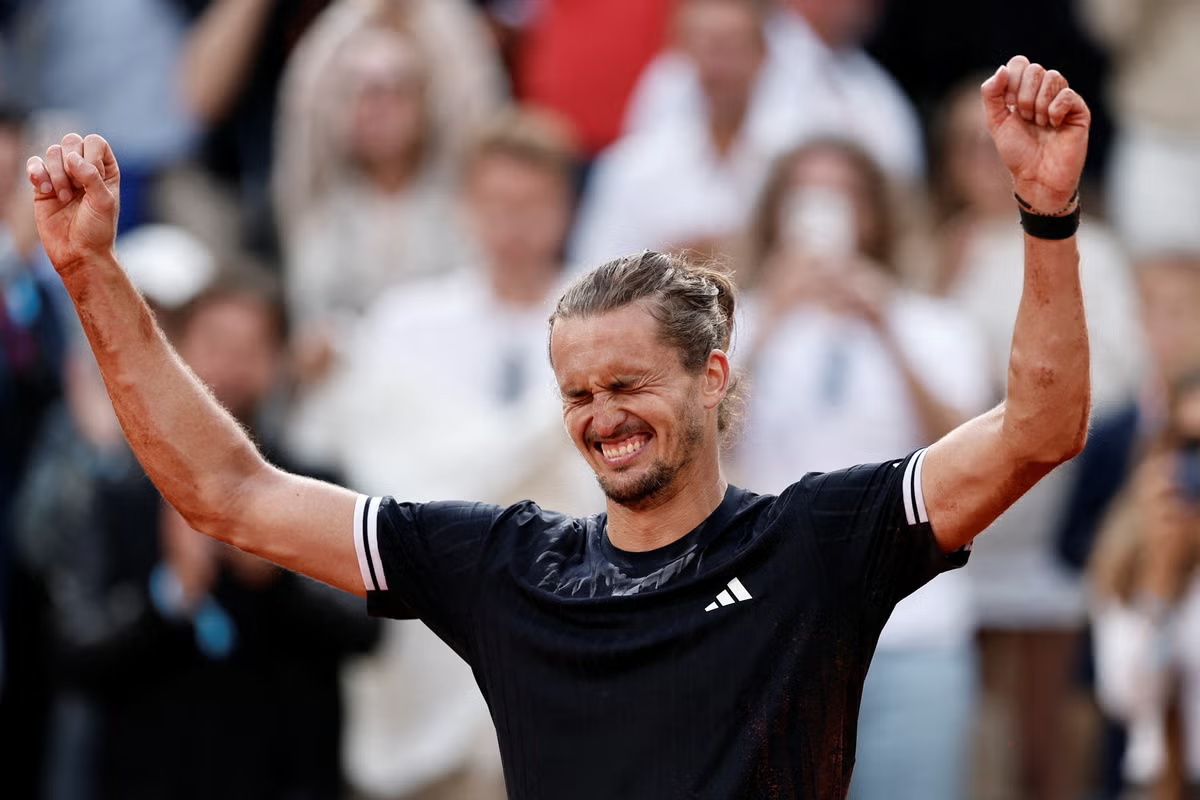
Alexander Zverev conquers demons and outlasts Flavio Cobolli to win French Open for first major title
-

 Tech6 days ago
Microsoft unveils seven homegrown AI models in new bid for ‘long term self-sufficiency’
-

 Business5 days ago
High Stakes for Wembanyama as New York Pushes for 3-0 Lead
-

 Tech5 days ago
Notion restores access to Anthropic after service disruption
-
 Business6 days ago
The Pain Points Taking a Fragile Tech Rally Down a Notch
-
 Crypto World5 days ago
Eli Lilly (LLY) Stock Surges 4% Following Breakthrough Sleep Apnea Trial Results
-
 Business6 days ago
The investment to transform historic St Helen’s ground in Swansea
-

 Crypto World6 days ago
Trump’s AI Ownership Plan Could Benefit Anthropic at OpenAI’s Expense
-
 Sports4 days ago
Bangladesh beat Australia after 20 years in ODIs, register only their second win over six-time world champions | Cricket News
-

 Business7 days ago
Forensic Expert Floats Handyman Theory in Disappearance of Savannah Guthrie’s Mother
-

 Tech8 hours ago
NanoClaw integrates JFrog registries to secure AI agent downloads
-

 Crypto World3 hours ago
Bitget enters Argentina’s regulated crypto market through PSAV registration
-

 Tech19 hours ago
This Week In Security: Microsoft On Microsoft, Register Your Domains, Linux On ARM, And FreeBSD Joins The File Cache Club
-

 Politics2 days ago
Politics Home | Healey Resignation Is “Colossal Failure Of Government”, Says Former Labour Defence Secretary
You must be logged in to post a comment Login