

Politics
The Architecture of “False Flags” and Wartime Propaganda

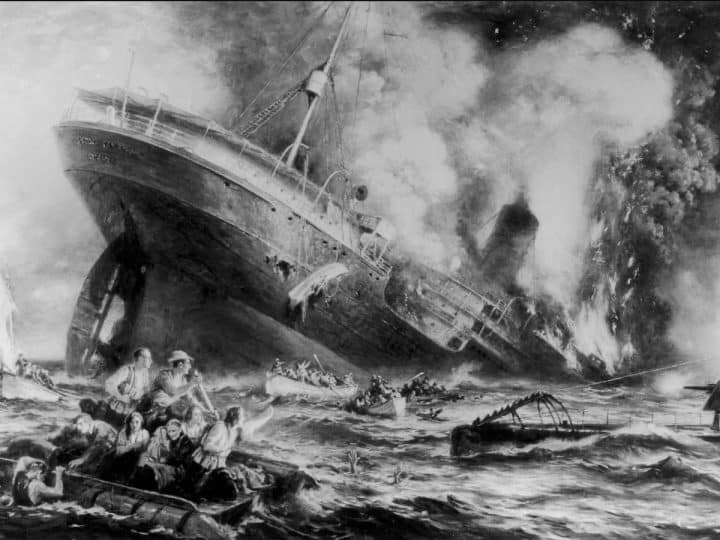

On 7 May 1915, the pristine waters off the old head of Kinsale became a graveyard. Within just eighteen minutes of being struck by a single German torpedo, the RMS Lusitania – the world’s most celebrated luxury liner – vanished beneath the Atlantic, taking 1,198 lives with her. Historically, this tragedy is framed as a shocking turning point; a brutal act of piracy that shattered American isolationism and catalysed a moral crusade against imperial tyranny.
Yet, when we peel back the layers of standard textbook narratives, the fate of the Lusitania emerges as something far more calculated. Beneath the murky depths of this disaster lies a masterclass in crisis engineering – an intricate nexus of resource warfare, strategic maritime blockades, and the brutal leverage of financial markets.
It was an event transformed behind the scenes by architects of power, including the First Lord of the Admiralty, Winston Churchill, into a mass intelligence test. By deconstructing the chasm between the overt humanitarian narrative and covert geopolitical determinants, we can decode the hidden mechanics of more contemporary conflicts.<
War as an Engineered Industry
In classical political philosophy, war is often defined as an extension of politics by other means. However, a critical reading of political economy suggests a more chilling reality: modern total wars do not break out spontaneously; they are deliberately designed.
For any state to transition from peacetime into total war, it must first break the instinctive social contract of its citizenry. Democratic societies do not willingly sacrifice their youth, wealth, and liberties without an acute, existential provocation. This necessitates a “shock event” – or what strategic literature brands a “false flag” operation. By executing an attack or deliberately manufacturing a vulnerability, ruling elites can fabricate evidence to frame an adversary, thereby legitimising military aggression in the eyes of an outraged public.
The First World War (1914–1918) served as the premier laboratory for this brand of total mobilisation. It was not merely an escalation of armies, but a systemic restructuring. Entire civil institutions and societies were weaponised under totalitarian state control, all masked by the collective war effort. In this grand theatre, the entry of the United States in 1917 represented the ultimate geopolitical pivot.
The war dismantled three great empires – the Russian, German, and Ottoman – leaving millions dead and mutilated in its wake. Crucially, the Russian and German empires stood defiantly outside the orbit of western ‘Money Powers’ – non-elected, transnational network of central banks, Wall Street cartels, and mega asset management firms that controls the global reserve currency and uses sovereign debt to dictate international policies and conflicts to preserve its financial hegemony – whilst the Ottoman Empire occupied a Levant targeted for oil colonization and strategic British realignment.
Yet, this monumental American intervention would never have materialised without the psychological and political groundwork engineered through the wreckage of the Lusitania two years prior.
Geopolitical Background and the Ethnic Context
Prior to the disaster, President Woodrow Wilson’s administration faced a complex domestic quandary. London was desperate for American intervention; the British economy was utterly exhausted, and the Western Front was consuming human lives at an unsustainable rate. For decision-makers in Whitehall, dragging Washington into the trenches was a matter of sheer survival.
However, American public opinion leaned overwhelmingly towards isolationism, viewing the European conflagration as a distant imperialist squabble. Furthermore, Wilson faced a profound demographic dilemma: a relative majority of the American populace was of German descent, with the German language deeply embedded in local schools, press, and communities.
To shatter this domestic deadlock, British political planners recognized that they needed something louder than diplomacy. They required a direct assault on American sovereignty or dignity – an event so emotionally devastating that it would rewrite the collective consciousness and morph into an undeniable moral justification for total war.
Deconstructing the Incident: Myth versus Reality
When the German U-20 boat targeted the Lusitania, claiming 1,198 lives – including 128 American citizens – the Allied media machine instantly weaponised the tragedy. It was branded a savage German war crime against defenceless civilians. However, a century of maritime exploration and declassified documentation has exposed a truth entirely at odds with the official narrative.
1. The Auxiliary Cruiser
The Lusitania was never a purely civilian vessel. She was officially registered on the British Admiralty’s auxiliary warship rosters, designed from her very inception to specifications that allowed immediate conversion into an armed cruiser during wartime. In fact, her construction had been heavily subsidised by military loans from the British Government on the explicit condition that the Navy could claim her when required.
2. The Cargo
Despite vehement denials from British political circles, subsequent investigations and physical expeditions to the wreck proved that the ship’s holds were packed with massive shipments of military supplies destined for the British Army, including millions of rifle rounds, shrapnel shells, and fuses shipped out of New York.
Paradoxically, this lethal ammunition was loaded quite openly. This explains the mysterious, massive secondary explosion that ripped through the vessel immediately after the single German torpedo strike, causing her to sink in a mere 18 minutes. Under international maritime law at the time, the Lusitania was an entirely legitimate military target.
3. The Suppressed Warnings
Operating within strict maritime protocols, the German Chancellery saw through the British plot to use civilians as human shields for weapons transport. In an extraordinary move, the German Embassy in Washington purchased advertising space in major American newspapers – including prominent New York broadsheets – explicitly warning passengers that boarding the Lusitania was a high-risk venture, as she would pass through a designated war zone carrying military material.
Tragically, pro-British interest groups within the United States successfully suppressed the publication of these warning advertisements in several pivotal cities, leaving the civilian passengers entirely in the dark – disposable pawns in a high-stakes geopolitical chess game.
Winston Churchill and Engineered Risk Management
At the very centre of this web sits Winston Churchill, the First Lord of the Admiralty.
Declassified records reveal that Britain’s legendary naval intelligence hub, Room 40, had successfully cracked the German military wireless codes. Consequently, the Admiralty possessed precise, real-time tracking of German U-boats patrolling the Irish coast.
The profound suspicion surrounding the incident lies not just in the sudden withdrawal of a military escort for the Lusitania, but in a sequence of direct, highly irregular directives emanating from Churchill’s personal office:
Step 1: A secret, direct order is issued from the personal office of the First Lord of the Admiralty, Winston Churchill.
Step 2: The order is relayed past standard naval command straight to the Captain of the Lusitania as she approaches British waters.
Step 3: The luxury liner is commanded to reduce her speed off the Irish coast, placing her precisely within the active U-boat nexus.
This final directive flew in the face of all established naval protocols, which dictated that fast vessels must maintain maximum speed and zigzag to evade torpedoes. Internal Admiralty testimonies indicate that Churchill’s own aides confronted him, warning that slowing the ship would drastically increase the probability of an attack. His stern, unyielding reply was:
The order is mine; pass it on.
By confirming the military cargo, suppressing public warnings, intercepting the intelligence codes, and actively slowing the ship into the path of a known submarine, the incident shifts from the realm of tragic military negligence into the territory of deliberate facilitation – the engineering of a catastrophic trap.
Propaganda Mechanisms and the Dehumanisation of the Adversary
The moment the ship sank, the Allied media apparatus executed a meticulously prepared crisis management plan. Empirical military facts were instantly replaced with highly emotional, weaponised vocabulary. Overnight, headlines coalesced into a unified, thunderous battle cry: “The Barbarians Dare Again” and “The Hun Butchers Murder Mothers and Children”.
This wartime propaganda went far beyond mere reporting; it sought the total dehumanisation of the adversary – a psychological prerequisite required to prepare ordinary citizens to kill without guilt. The campaign succeeded brilliantly in shattering American isolationism. While Washington delayed its official declaration of war until 1917, the ghost of the Lusitania served as the emotional fuel and political legitimacy that President Wilson required to successfully market total war to Congress and an outraged American public.
From the Lusitania to the Twenty-First Century: Continuity of the Model
Deconstructing this history is not an exercise in mourning the ruins of the past, but an effort to extract the immutable structural rules of crisis engineering. It reveals that central planners and ruling elites treat mass casualties as mere cost variables in equations of global hegemony. This exact political blueprint has repeated itself across subsequent, well-documented historical milestones:
The Gulf of Tonkin Incident(1964): Washington claimed that an American destroyer fell victim to an unprovoked North Vietnamese assault. Declassified documents later exposed the attack as entirely fabricated and illusory, yet it served as the official pretext granted by Congress to launch full-scale military intervention in the Vietnam War.
The 9/11 Attacks (2001): Irrespective of the details heavily classified under absolute state secrecy, these attacks represented the ultimate modern “shock event.” It cleared the path for totalitarian domestic legislation like the Patriot Act and launched two decades of pre-emptive wars that redrew global energy maps and geopolitical borders at the cost of millions of lives.
The Economic Reality of Systematic Warfare
The ultimate umbilical cord linking engineered conflicts to the global order is forged in finance and credit. During the First World War, Great Britain funded its astronomical war effort by borrowing heavily from Wall Street, specifically the J.P. Morgan banking group. By 1916, British military debts to American banks had ballooned to exceed 10% of the entire United States Gross Domestic Product (GDP).
This massive financial exposure created an unyielding economic chain of events. The accumulation of military debts to the point of exceeding the 10% threshold automatically rendered an Allied victory an absolute matter of domestic national security for the United States. This was essential to protect the banking and financial system from total systemic collapse.
Consequently, America’s entry into the trenches was not a spontaneous, idealistic crusade to protect global democracy. It was an intervention emotionally brokered by the tragedy of the Lusitania to safeguard the investments of the financial elite on Wall Street and secure the ultimate repayment of British sovereign bonds.
Wars as Mass Intelligence Tests
Parroting official political narratives without subjecting them to rigorous geopolitical and critical analysis constitutes a failure of a collective intelligence test. The global financial and monetary elites who steer the international order do not view the world through the lens of sentimentality, national borders, or human cost; they view it through the prism of centralised control and the restructuring of financial systems via the controlled shocks of total war.
Reading the Lusitania incident provides the necessary lens to decipher our current global landscape. The very same archetypes that deployed print propaganda in 1915 are utilizing digital simulation models, viral pandemic narratives, climate emergency rhetoric, and modern energy blockades today to usher in a highly centralized financial and social order. As history repeatedly warns us, the capitulation of the masses to emotional propaganda is a blank cheque signed by the victims for their executioners, ensuring the repetition of the catastrophe in every age.
Featured image via Three Lions/Getty Images


We hope you love the products we recommend! All of them were independently selected by our editors. Just so you know, HuffPost UK may collect a share of sales or other compensation from the links on this page if you decide to shop from them. Oh, and FYI — prices are accurate and items in stock as of time of publication.
The FIFA World Cup is kicking off any day now, and while the finale is a while away, there’s one good luck charm you’re going to need to manifest the result of your dreams.
That’s right, an excellent football shirt. You might be convinced it’s finally coming home this year, but there’s no better way of showing it than donning some recognisable kit to let everyone know where you stand.
If you simply can’t wait for the big game, or you’re already planning where you’re going to watch your team’s first game, we’ve found some of the best official (and non-official) World Cup merch to stock up on now.
There are options for England World Cup shirts, Scotland, kids’ sizes, and of course, plenty of the manufacturers we’ve included also stock other countries’ colours, too.

The post The absurdity of banning Hasan Piker and Cenk Uygur from the UK appeared first on spiked.

Ariana Grande has leaned into her dark sense of humour in the music video for her new single Hate That I Made You Love Me.
Merging elements of horror and comedy – two genres of which the Grammy winner is a well-documented fan – the tongue-in-cheek music video was released on Monday, featuring Justin Long as a man who’s haunted by a figure from his past, played by Ariana.
The clip opens with Justin digging what appears to be a grave, before it’s revealed that the No Tears Left To Cry is living in an abandoned room underneath it all, reading over her past diary entries.
Following this, the Weapons actor is seen trying to rid himself of visions of Ariana, culminating in him crashing his car, setting himself on fire and eventually revisiting the “resting place” – only for her to turn the tables on him in its final moments.

If all of that sounds like a lot, that’s probably because it is, but the five-minute clip is sure to get people talking.
Check out Ariana Grande’s latest video for yourself – also featuring what appears to be a cameo from a true Broadway legend – below:
Hate That I Made You Love Me was released last week, and while on the surface it seems like a straightforward break-up song, fans have been speculating that its lyrics see Ariana reflecting on her relationship with fame and celebrity.
The Wicked star previously described Hate That I Made You Love Me as “one of my favourite songs i’ll ever give to you, the greatest fans in the entire world”.
“I’m so grateful for all of the art, moments, songs we have shared,” she told her fans. “I can’t wait for this next chapter and all of the surprises I have for you.”
Hate That I Made You Love Me is the lead single from Ariana’s upcoming eighth album Petal, which is due for release on Friday 31 July.
The track is currently on track to give Ariana her eighth UK number one, which will be her first since 2020’s Positions.

As a sometimes gym girl, I do care about my protein intake. But for me, the priority is usually fibre.
Don’t get me wrong: protein helps us to feel fuller and keeps our muscles healthy (especially crucial as we age). But many of us are actually getting too much of it.
Meanwhile, only 10% of us eat the recommended 30g of fibre a day. That’s a shame, because it’s linked to lower heart disease, cancer, and dementia risk.
Whatever your health goals, though, one struggle remains constant: eating healthily throughout the week without feeling either exhausted by endless cooking or bored by bland meal prep.
I’m not saying my picks are the perfect answer: no meal is thrilling on day three. But I have found a mostly make-ahead breakfast and dinner combo that requires next to no effort to cook and means I can enjoy 22g fibre and 50g protein by 2pm, leaving my evenings more flexible for CBA dinners.
Here are the recipes if you want to give them a go:
1) Mango Skyr chia pudding

While writing an article about Icelandic yoghurt Skyr, I realised I should probably try the low-fat, high-protein, creamy option. I used to make this meal with coconut milk, which was delicious, but I’ve found Skyr keeps me fuller longer.
Ingredients:
- 2 ripe mangoes (this is a good way to use up overripe ones)
- 500g Skyr
- 150g chia seeds
- Cardamom spice (optional)
- Tablespoon maple syrup (optional)
Method:
- Peel and slice the mangoes over a large plastic or metal mixing bowl or blending jug to catch all of their juices. The liquid is important here, because it makes the pudding softer.
- Add the yoghurt and, if you want, cardamom spice and maple syrup. Either use a stick blender or blend in a jug until smooth. If you don’t want to blend it – I don’t always – chop the mangoes finely right over the pudding container, making sure again to catch the juices.
- Add the chia seeds and stir, pushing every last seed you can under the mix.
- Store in the fridge in an airtight container or containers. I find it’s good for the work week, but follow the yoghurt’s best before date if you’re not sure.
2) Harissa butter beans with eggs

I was going to call this a shakshouka, but it’s really not – it’s just a sort of beany, tomato-ey, eggy mix that feels vaguely related. It takes about three minutes to heat up on my stove, but it’s important that your pan has a lid. This helps to finish the whites before the yolks get chalky, and the steam also helps to prevent food from sticking to the bottom of my pan.
Ingredients:
- 3 cans butter beans (any other white bean will do)
- 90g jar harissa (I like mine spicy: if you don’t, try less, or use tomato puree)
- Sprinkle paprika
- Small onion
- 4 cloves garlic
- Tablespoon olive oil
- 8 eggs
- 1 tin chopped tomatoes
- (Optional) lemon, for its juice
- (Optional) 80g feta, for crumbling on top
Method for the make-ahead part:
- Warm the pan to a low or medium heat and add the oil once hot.
- Add the onions and a pinch of salt and heat until softened: I waited about 10 minutes for a sweet, soft base.
- Add the garlic and paprika and cook ’til fragrant. This takes about 30 seconds.
- Add the tomatoes and cook until it’s become thicker, 3-5 minutes.
- Add the beans and harissa and stir. Cook for 1-2 minutes more.
- Cool a little before placing in an airtight container or containers and placing in the fridge.
Method for cooking on the day:
- Put a quarter of the prepared bean mix per person in a pan on medium heat.
- Make little holes with a spatula and crack two eggs per person into them.
- Put a lid over the pan (this is crucial) and leave it for about three to five minutes, depending on how “done” you like your yolks.
- Lift the eggs out of the pan first so as not to break their yolks and spoon the bean mix around them.
- Top with 20g crumbled feta, if using. It’s also great with a squeeze of fresh lemon juice if you have it.

The government has released the highly-anticipated second tranche of internal files on Peter Mandelson and his brief appointment as ambassador to the US.
The ex-Labour peer fell from grace last September after the depth of his friendship with convicted paedophile Jeffrey Epstein was revealed.
But questions remain around why he was appointed in the first place and what kind of influence he had with ministers.
The Conservatives forced the Cabinet Office to release all documents related to the controversial hire earlier this year via a parliamentary procedure called a “Humble Address”.
The first tranche of documents showed that Mandelson had got the top job against recommendations from security officials.
Most ministers and civil servants have handed over their private exchanges with the former Washington attache for the second batch of documents.
Some of the files have been redacted amid concerns about international security and the ongoing Metropolitan Police probe into Mandelson’s conduct in public office.
The ex-Labour peer has not been charged and insists he is not guilty of any wrongdoing.
Deciding to appoint Mandelson into the top diplomatic post has cast a huge shadow over Keir Starmer’s premiership.
He has repeatedly accused Mandelson of creating a “litany of deceit” around his ties to Epstein, but his critics continue to lambast him over it.
Here’s a look at the most eye-catching findings within the 1,400 pages…
1. Pat McFadden Criticises ‘Tax-Raising’ Labour MPs
McFadden made clear his frustration with Labour MPs in private messages with Mandelson.
Speaking around the time Labour MPs were rebelling over planned welfare cuts in May last year, McFadden said: “Every meeting I have is ‘who can we tax in order to pay benefits to others’. They’re asking the wrong questions.”
The government was eventually forced into a huge climbdown on cutting welfare amid the backlash from Labour MPs.
2. Mandelson Refused To Hand Over His Own WhatsApps
The documents make it clear that the ex-ambassador did not want to assist the Humble Address process.
The report reads: “On 31 March the [Cabinet Office] wrote to Peter Mandelson – via his solicitors – to request any information held on his personal phone. Peter Mandelson declined to comply with this request. The Government has no further recourse to search the personal devices of Peter Mandelson.”
3. ‘Thick Of It’ Row Over Trump Red Box Gift
Olly Robbins, the most senior civil servant in the Foreign Office who was dismissed over the Mandelson’s vetting row, exchanged messages with top officials – including the ex-ambassador – about a potential gift for Trump.
In August 2025, Robbins wrote: “As I’m sure you know, [it] is clear that one of the gifts that would mean the most to the President would be a red dispatch box with the gold crest and lettering mimicking a UK Government Ministerial box with ’President of the United States”.
Mandelson was involved in lengthy emails with other officials in trying to get the gift secured.
He then complained in a private email to No.10′s former chief of staff Morgan McSweeney that “the saga goes one… this is like something out of [the] Thick of It… I have gone tonto on this.”
4. Praise For Mandelson From Those Within Labour
The messages showed many Labour figures welcomed Mandelson’s appointment when it was first announced.
Then-health secretary Wes Streeting told Mandelson that the “PLP [Parliamentary Labour Party] WhatsApps are stratospheric in praise” over Mandelson’s first public appearance in Washington.
Pensions minister Torsten Bell messaged Mandelson when he was announced as ambassador, writing: “You. Are. Here.”
He added: “Very proud of what is yet to come! Hope this comes off.”
However, several ministers – including then justice secretary Shabana Mahmood and transport secretary Heidi Alexander – appeared to Mandelson’s messages.
Then assistant government whip and now transport minister Keir Mather also ignored all contact from Mandelson.
5. Wes Streeting’s ‘Mid-Life Crisis’
Streeting, previously considered one of Mandelson’s “proteges”, was heavily criticised by Mandelson in his messages to Pat McFadden.
Mandelson said it was “pathetic” for Streeting to have circulated “a series of videos and a note” to the cabinet after his intervention on alleged war crimes in Gaza.
Mandelson then wrote: “I think Wes is experiencing an early mid-life crisis.”
6. Tearing Down Ed Miliband
Mandelson wrote disparagingly about energy secretary Ed Miliband’s spat with ex-prime minister Tony Blair about net zero in late 2025.
He claimed Miliband “couldn’t resist yesterday. So person and stupid. If he had played differently it would have had [a] fraction of attention.”
7. Attacks On Keir Starmer
Discussing one of Starmer’s trips to the White House to discuss the Ukraine war, Mandelson tore into the prime minister’s “completely reductionist” approach.
Speaking to Pat McFadden over WhatsApp, Mandelson said: ”[Starmer] Wants to avoid any encounter with journos that might involve him answering a question. No sense of opportunity for personal projection. Just avoid all risk. Always the same. They/he have no confidence.”
He also attacked the No.10 operation, calling it “beleaguered and bereft” last July and said the top team “don’t think Keir knows what he wants”.
8. Mandelson Told Lammy He Would ‘Never Regret’ Appointing Him
On November 18, 2024, Mandelson wrote a hand written letter to Lammy, then the foreign secretary, insisting that he was the right appointment as US ambassador.
He said: “I just wanted you to know that if you were minded to appoint me I would make sure you never regret it.”
He added: “I fear that navigating Britain’s interests through the Trump administration will require super-human skills and luck and a massive team effort.”
He continued: “For me, it would be the last thing I do in public life and it would be a huge honour to serve you and the government in this role.”
Subscribe to Commons People, the podcast that makes politics easy. Every week, Kevin Schofield and Kate Nicholson unpack the week’s biggest stories to keep you informed. Join us for straightforward analysis of what’s going on at Westminster.
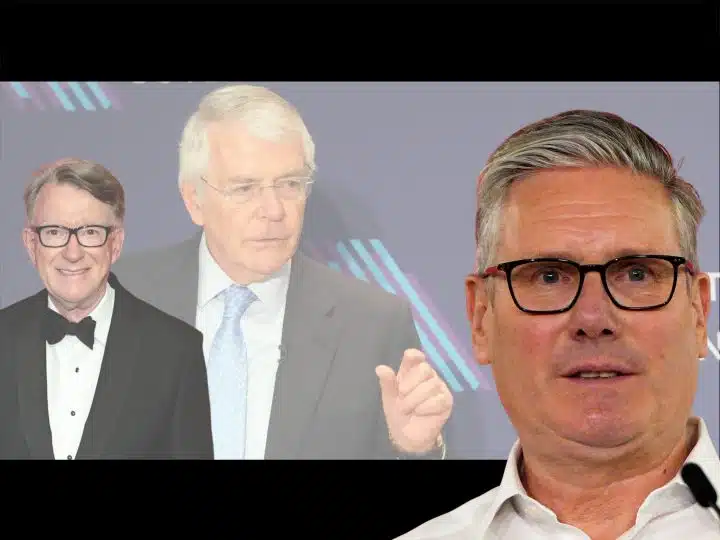

New Labour’s enemies on the left have often accused the Blairites of being ‘red Tories’: figures like like Peter Mandelson disputed this accusation, and yet we now know he advised Keir Starmer to take advice from John Major.
Mandelson, w e’ve heard this Tory before
The latest revelation emerged in the new release of messages from Mandelson’s time in government. The reason the government is releasing his correspondence is another email tranche – specifically that which the US released in relation to the dead paedophile Jeffrey Epstein.
As it turned out, Mandelson was bosom buddies with Epstein, and he was secretly talking to him about British state secrets. We say ‘as it turns out’, but we did warn the government Mandelson was friends with Epstein before Starmer made him the ambassador to the US.
The latest release of messages contains the following exchange between Mandelson and Starmer. As you can see, it took place not long after Starmer became PM:
[17/07/2024, 21:41] Peter Mandelson: Keir, hope you are well, you have got off to a flying start. I was at a dinner with John Major this evening and if you don’t know him I think good idea to invite him for a chat. As well as being a very nice person, he is interesting and thoughtful. Just a thought. No need to reply.
[25/07/2024, 13:25] Keir Starmer: Thanks Peter. Its so good to be getting on with the job of governing. A million times better than opposition – you know that! I’ll reach out to John M, he’s a very thoughtful man. See you soon I hope.
Who could have guessed that Starmer was taking his cues from a Tory ex-prime minister?
The wrong track
As you may or may not know, Starmer recently re-nationalised the railways. Major was the one to privatise them, and as Tom Nicholas recently covered, this ended up being a long and winding disaster:
Before you think we’re praising Starmer, there’s something else to point out. Namely, that Starmer performed a typical half measure by failing to renationalise the companies which own the actual trains. As James Wright wrote for the Canary:
the party will not nationalise the rolling stock companies – Eversholt, Porterbrook, and Angel Trains. These companies own the majority of the trains that we rent. That’s despite the company shareholders making over £2bn in the past decade in dividends.
So basically, Conservative prime minister John Major sold off the trains when he privatised the railways in 1993. Now we rent them back at higher costs and still will under Labour’s plans.
So yeah – consider us unsurprised to learn that Mandelson, Starmer, and Major may have been chatting it up behind closed doors.
Featured image via Carl Court (Getty Images) / Dimitrios Kambouris (Getty Images) / Carl Court (Getty Images)
By Willem Moore

Euphoria creator Sam Levinson has said that Sydney Sweeney had a gung-ho approach to her controversial storyline in the show’s most recent season.
Throughout season three, Sam has spoken out in support of Sydney’s performance, after scenes depicting her Euphoria character turning to OnlyFans modelling to help pay for her elaborate wedding raised eyebrows among fans and critics.
Some even went as far as comparing the Emmy-nominated actor’s more graphic scenes to a “humiliation ritual” for the star, as her character took part in increasingly more extreme OnlyFans shoots.
As the discourse has raged on, Sydney has mostly kept schtum, although Sam did have some things to say during an interview on the New York Times’ Popcast podcast.
He recalled: “When I first wrote [Sydney’s season three storyline], I thought, ‘Well, maybe, we shoot all of this, and we don’t have any nudity’.
“I was [telling her], ‘maybe, there’s ways to shoot around certain [things]’ – and she looked at me, and she was like, ‘Are you kidding? I’m playing an OnlyFans model!’.”
Praising Sydney, he added: “I think she’s a totally fearless actor. She’s also just wonderfully professional, and shows up just game every day.
“I adore working with her, because there’s such a flexibility in terms of the performance.”
Sam previously weighed in on Cassie’s OnlyFans storyline before the new season had even begun airing.
“What we wanted to always find is the other layer of absurdity that we’re able to tie into it so that we’re not too inside of her fantasy or illusion,” he insisted, pointing out the use of lighting and the inclusion of Cassie’s housekeeper as a makeshift photographer was intended to provide a “gnarly and jarring” contrast between the character’s more supposedly glamorous moments.
He added: “We wanted to capture what she’s trying to show the audience and be inside of it, but then also pull back wider and see how depressing it is.”
Euphoria is now streaming on Now and Sky.

Euphoria actor Toby Wallace has had his say on the mixed response the most recent run of episodes has received.
He recalled: “I remember walking on to their season going like ‘okay this is definitely a little bit of a different show, like it feels different’.”
“I don’t think you can really treat it as exactly the same vibe as the last two seasons, because it’s not in a lot of ways. [Sam Levinson, Euphoria’s creator] always wants to recreate and build something original,” Toby continued, noting that the showrunner didn’t want “to replicate or do something that’s already been done”.
Toby added that, while Euphoria’s third outing has received plenty of criticism, there’ve been some “really good” responses from fans and critics, too.
“In terms of the story that we set out to tell, which is a story about addiction and its consequences, this feels like the end to me,” he claimed.
“I want to finish this as strong as I can,” he noted at the season three premiere back in April.
All three seasons of Euphoria are now streaming on Now and Sky in the UK.


Critics of Israel have long faced repression for speaking out in defence of Palestinians. In the latest example of this, the UK has now banned US streamer Hasan Piker from entering the country:
the uk has revoked my visa as well. all at the behest of israel. the west is betraying "liberal values" for a genocidal fascist foreign government. soon we will all become israel. https://t.co/UqQG1dogOI
— hasanabi (@hasanthehun) May 31, 2026
Israel influence
Hasan Piker is a streamer on Twitch. He also uploads videos to YouTube, and is famous for content like the following:
As Piker notes in the following video, he was set to interview Jeremy Corbyn, Zack Polanski, and Yanis Varoufakis before speaking at the Oxford Student Union:
Piker has spoken at the Oxford Student Union before, where he said the following:
ironic because a year ago, i delivered a speech at oxford union about the dangers of conflating judaism and zionism & how this foments antisemitism. since then the government has arrested pensioners for protesting against israel and let iof war criminals roam free! https://t.co/C6f9poXFR3
— hasanabi (@hasanthehun) June 1, 2026
Here’s one of the pensioners in question:
British police arrest a blind man with a walking cane in Trafalgar Square, London, under the Terrorism Act, for holding a sign reading: ‘I oppose genocide – I support Palestine Action,’ as part of a wave of arrests targeting hundreds of protesters. pic.twitter.com/CgcBKLXNRB
— Eye on Palestine (@EyeonPalestine) October 4, 2025
In a video he posted after having his visa revoked, Piker said:
Listen, I’m going to say something. This is a warning. I hope you guys understand the Western world and liberal democracy is a sham. And all of the supposed things that they claim to care about, they do not actually care about.
We are moving into a very different timeline. This is why I constantly reiterate that fascism is here, right? Like the administration trying to deploy subpoenas against political dissident in the United States of America or the UK, that’s like completely captive to the interests of of pro-Israel advocacy organizations. …
The Labor government is supposed to be the liberal government… and the American government is the right-wing government… We are we are in the 1930s era ,where I think that the administrations in both the UK and the United States of America – regardless of their supposed ideological differences – are absolutely moving as a uni party.
And things are going to get even worse from here on out.
Genocide-denying stooge VS Hasan Piker
One of the most prominent voices calling for Hasan’s ban was Labour MP David Taylor. We’ve reported on Taylor before, noting that he seemingly denied Israel’s genocide in Palestine as a vector to attack the Green Party:
Do you remember when the Green Party used to profess to care about environmental issues, rather than spout baseless antisemitic conspiracy theories? https://t.co/nGv0zFdB8k
— David Taylor MP (@DavidTaylor85) February 24, 2026
Taylor wouldn’t be the first to describe the genocide as an ‘antisemitic conspiracy theory’, and no doubt he won’t be the last.
Israel’s defenders have repeatedly insisted that you can’t call out the state’s crimes if they resemble historic antisemitic conspiracies. It’s a ‘get-out-of-jail’ free card, and we’ve seen it deployed in the most heinous ways imaginable since the genocide began:
BREAKING: Israel dismisses IDF top lawyer Yifat Tomer-Yerushalmi for leaking video of Israeli soldiers raping Palestinian.
Minister of Defense of Israel Israel Katz threatens her with 'imprisonment for many years" & calls her actions "a grave blood libel against heroic IDF… pic.twitter.com/YpPpdlYSs7
— Double Down News (@DoubleDownNews) May 26, 2026
Before Piker’s ban, Taylor said:
It’s shocking that SXSW would invite someone who has openly supported a proscribed terrorist organisation and spouted these kinds of vile antisemitic rants to speak at their festival.
With the unacceptable rise in antisemitism on our streets leaving British Jews in a constant state of anxiety, Hasan Piker is clearly not conducive to the public good.
The “vile antisemitic rants” are criticisms of Israel. While we’re told its antisemitic to blame all Jews for the actions of Israel, the state’s defenders are happy to label all criticism of Israel ‘antisemitism’.
On ‘support for a proscribed terrorist organisation’, Taylor is referencing comments like the following (as reported by the Independent):
Last month, Mr Piker publicly stood by remarks made during an episode of Pod Save America, where he asserted that Hamas was “1,000 times better” than Israel and that he “would vote for Hamas over Israel every single time.”
Given that Gaza is in rubble and Israel is not, it’s hard to disagree with the maths here.
Also, do you know who supported Hamas in a more material fashion than Piker? That’s right – Israeli PM Benjamin Netanyahu – who notoriously said the following:
Anyone who wants to thwart the establishment of a Palestinian state has to support bolstering Hamas and transferring money to Hamas … This is part of our strategy – to isolate the Palestinians in Gaza from the Palestinians in the West Bank.”
Israeli politicians made it impossible for the Palestinians to peacefully pursue liberation; the inevitable result of this was Hamas.
Establishment protection
There are obvious reasons why the British establishment has sought to defend Israel at the expense of its own citizens:
- The UK profits from Israel’s actions through arms deals and partnerships.
- Israel is a key ally of America, and the UK is America’s foremost lapdog.
- The Israel lobby has proven to be very effective at influencing British politicians – particularly through the ‘Labour Friends of Israel‘ and ‘Conservative Friends of Israel‘ groups.
- Once enough people within the establishment hold an opinion, mirroring that opinion becomes the price of entry.
Here’s what scumbag MP David Taylor said when it was pointed out how weird it is for senior British politicians take hundreds of thousands of pounds from donors whose primary interest is the betterment of a genocidal foreign power:
Absolutely vile. This person shouldn't be a member of any political party, yet alone it's deputy leader. https://t.co/TQ11164qLC
— David Taylor MP (@DavidTaylor85) February 23, 2026
Is there any way Israel can interfere in our politics that wouldn’t be considered antisemitism?
Oh, and to give a further idea of how preposterous this all is, look at how Fox News covered the Piker ban:
Fox News says Hasan Piker used a antisemitic trope by saying Israel advocacy groups pushed for his ban. And then in the following sentence details how said groups pushed for his ban. pic.twitter.com/skJb1os8pz
— Noot Noot
 (@PunishedPingu) June 1, 2026
Zionist advocacy groups
Zionism is the ideology of Israel existing as an expansionist colonial state that serves as America’s foothold in the Middle East. While many advocacy groups in the UK and the US pose as being against ‘antisemitism’, the reality is they spend more time defending the rights of Zionists.
One of the Zionist advocacy groups calling out Hasan was Community Security Trust (CST). The group said:
Hasan Piker has a record of promoting rhetoric that includes antisemitic themes, denial of well documented atrocities and apparent support for extremist groups.
Once again, they’re talking about criticism of Israel. And CST has form on this, as Fréa Lockley reported for the Canary in 2019 after Labour revoked the press pass of journalist Asa Winstanley:
The Community Security Trust (CST) is a charity, initially set up to protect “British Jews from antisemitism and related threats”. On 4 August, it published a report called Engine of Hate: the online networks behind the Labour Party’s antisemitism crisis. This report stated:
the single most popular website for article shares about the subject of antisemitism, the Labour Party and Israel/Palestine was Electronic Intifada, a radical anti-Zionist website which has consistently promoted the idea that allegations of antisemitism in the Labour Party are false, and are part of a smear campaign against Jeremy Corbyn that is orchestrated by the Israeli government.
The campaign against the Canary
Here at the Canary, we’ve also faced attacks from pro-Zionist advocacy groups. As Paul Holden noted in his book The Fraud:
In 2021, Impress launched an investigation into the Canary alongside Skwawkbox, another independent, pro-Corbyn political website. Impress acted pursuant to a report published by Lord Mann, a vehement Corbyn critic and former Labour MP who was promoted to the House of Lords by the Tories. Mann’s report had accused both online publications of antisemitism.
The accusation was based, in part, on the research of Daniel Allington, an academic based at King’s College London. Allington was also ‘Head of Online Monitoring’ for the Campaign Against Antisemitism (CAA) between June 2016 and September 2018.
As Holden also reported, IMPRESS cleared us, and:
It felt moved to add that those who:
disagree with the Publisher’s views on subjects such as Zionism may find these views offensive, adversarial or provocative but this in itself does not rise to the level of threat to, or targeting of, persons or groups on the basis of their protected characteristics.
Over in the US, Piker has faced a campaign which is nearly identical to what we’ve endured here in the UK.
The campaign against Hasan Piker
Piker has faced numerous attacks from the Anti-Defamation League (ADL). As people have noted, the ADL seems to be much more concerned about anti-Zionism than antisemitism:
The ADL, which defended Elon Musk’s salute, and has never made videos like this about rightwing actual antisemites, is obsessed with Hasan Piker. https://t.co/IjQCxw9sCT
— Mehdi Hasan (@mehdirhasan) April 17, 2026
Piker himself has also observed this discrepancy:
asmongold is the largest right wing political content creator in the us. his view counts eclipse the daily wire. here he is, openly admitting that he’s a funnel for nick fuentes & his repulsive neonazi worldview & strangely enough the adl never tries to deplatform him. perhaps… pic.twitter.com/zxQ7vCrpTF
— hasanabi (@hasanthehun) May 29, 2026
Explaining itself, the ADL said the following:
ADL has seen firsthand how extreme and demonizing rhetoric and ugly expressions of anti-Zionism can be the driving force behind antisemitic discrimination against Jews
Even if the above is true, maybe the solution isn’t to police anti-Zionism; maybe it’s to stop supporting a political project which necessitates the ethnic cleansing and murder of Israel’s neighbours in the Middle East?
White supremacy certainly gives white people a bad reputation, but the correct response isn’t to suggest anti-Nazis are the real problem.
In the past, the ADL has nominated Hasan for the position of ‘Antisemite of the Year’ alongside Greta Thunberg (!):
The ADL and donor group AIPAC have also worked with US politicians to try to deplatform Piker:
i mean they did this by way of adl and ritchie torres for like 2 years, now they got higher profile dems and republicans to lean into it because theyre desperate
— hasanabi (@hasanthehun) May 4, 2026
After reading out a headline titled “Jewish groups call on UK to bar dangerous Hasan amid antisemitic attacks”, Piker said the following in his latest video:
[the UK government] did because Israel advocacy organizations have unbelievable amounts of power over what even the United Kingdom has to say and do. Yeah. If you’re an avowed anti-Zionist, your travel will be restricted. It’s totally ridiculous, dude.
Connections
Canary reporter Ranjan Balakumaran noted this is all happening on the same day that more Peter Mandelson files come out:
View this post on Instagram
Another way of looking at this is that these are not separate stories.
Peter Mandelson is the godfather of Labour Together – the group which maneuvered Keir Starmer into power. As we, Paul Holden, and others reported, this included fabricating smears of antisemitism (including against the Canary specifically). Now, the government which Mandelson helped create isn’t just smearing its opponents with bogus antisemitism accusations; it’s barring them from the country.
Point any of this out, however, and figures like David Taylor MP will accuse you of being an antisemite. And in future, you may face consequences far graver than reputational damage.
Featured image via Amy Sussman (Getty Images) / WPA Pool (Getty Images) / Joe Raedle (Getty Images)
By Willem Moore
Politics
The House | “A case study in what the stage does best”: Baroness Chakrabarti reviews ‘Inter Alia’


Cormac McAlinden as Harry and Rosamund Pike as Jessica | Photo (c): Manuel Harlan

3 min read
With its commanding lead performance by Rosamund Pike, I challenge you not to be enthralled and provoked by this urgent legal drama
Light and humorous moments aside, Australian lawyer-turned-writer Suzie Miller’s Inter Alia (“among other things”) is a very serious play. As with Miller’s 2019 stage work Prima Facie, a legal professional woman protagonist becomes the device for exploring wider, urgent societal issues. In the earlier work, it was a criminal defence barrister whose worldview is rocked by her own rape. That piece garnered international plaudits for both Miller and the phenomenon that is Jodie Comer in the starring role in the UK.

This time, the equally glittering and formidable Rosamund Pike plays Jessica Parks, a Crown Court judge and unabashed feminist who has sent many a sex offender to the slammer. Her work-life balance is non-existent, or at least impossibly demanding, thanks to the oblivious entitlement or passive-aggressive resentment of her hapless, less obviously successful criminal silk husband Michael. He is portrayed with understated aplomb by Jamie Glover. Jess’ life of juggling plates, cases, family duties and domestic dinner parties is sent into shock after an incident involving her only child, 18-year-old Harry. In this West End Wyndham’s Theatre transfer from the National Theatre, the darling boy is played with sensitivity and flair by Cormac McAlinden.
Pike delivers what we expect of a cinema star returning to the stage after many years. She commands the space, audience and material in a performance which combines physical energy and dexterity with charisma, empathy and warmth. Would any politicians reading this please take note? Pike’s own discipline and stamina in essentially carrying the one hour and 45 minutes, without interval and at a rate of knots, is well worthy of her character. Crucially, she is completely believable as an obviously class-privileged senior woman who has given her life to public service, towards the less glamorous end of our very precious and much-maligned UK judiciary. I have met and admired a great many Jesses over the years. Some are lawyers and judges, but others are senior doctors, journalists and, dare I say it, even parliamentarians.
Rosamond Pike delivers what we expect of a cinema star returning to the stage after many years
While the energy and pace are impressive, and at times almost mesmerising, there were moments when I did not need quite so much rock guitar and well-choreographed but dizzying actor-driven prop movement, as clothes and dishes are disposed into the well-placed magic doors and cupboards, worthy of legendary National set-design.
Ultimately, however, while the screen is – for me at least – unrivalled as the medium for transcending worlds and developing three-dimensional characters, this production is a case study in what the stage does better or even best. That is providing challenge. While many of us applauded Adolescence, and welcomed all its well-deserved accolades, the parents in the last episode of that Netflix drama let themselves too very easily off the hook. This piece does the opposite.
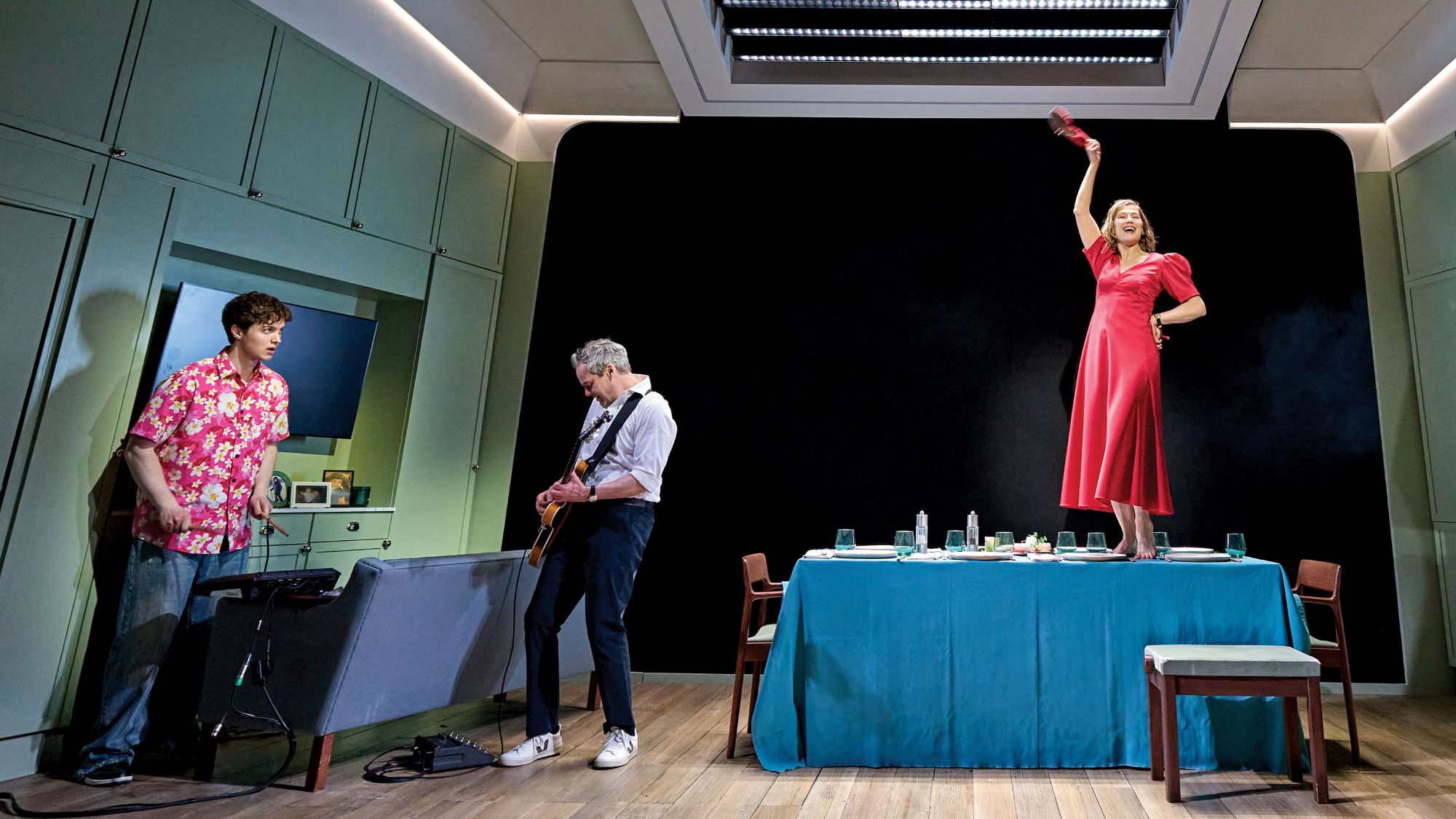
Photo (c): Manuel Harlan
I loved it, of course, for humanising lawyers and judges, who are fast becoming a demonised minority, but mostly for doing so with critical honesty, integrity and intelligence. Readers might expect this review of me, but I challenge anyone not to be enthralled and provoked.
Baroness Chakrabarti is a Labour peer
Inter Alia
Written by: Suzie Miller
Directed by: Justin Martin
Venue: Wyndham’s Theatre, WC2 – until 20 June

Colts legend Raymond Berry, Hall of Fame wide receiver, dead at 93

iPhone Fold’s production issues won’t stop September launch

Boy, 8, dies after horror crash as another child, 5, fights for his life


-

 NewsBeat5 days ago
Israel says it has killed new Hamas military leader in Gaza City airstrikes
-

 Tech5 days ago
NASA taps Blue Origin to deliver lunar rovers for Moon Base initiative
-

 Sports7 days ago
2026 NBA Finals schedule, odds: Knicks await Thunder or Spurs after winning East
-

 News Videos6 days ago
XRP *JUST* SUCCEEDED!!!! CLARITY ACT EXPOSED!!! (SHE EXPOSED IT)
-

 News Videos3 days ago
This is BROKEN! INSANE 5x MONEY CAR WASH WEEK! The NEW GTA Online UPDATE Today! (GTA5 New Update)
-
 Crypto World6 days ago
Micron Crosses $1 Trillion Market Cap as AI Demand Reshapes Memory Sector
-
 NewsBeat7 days ago
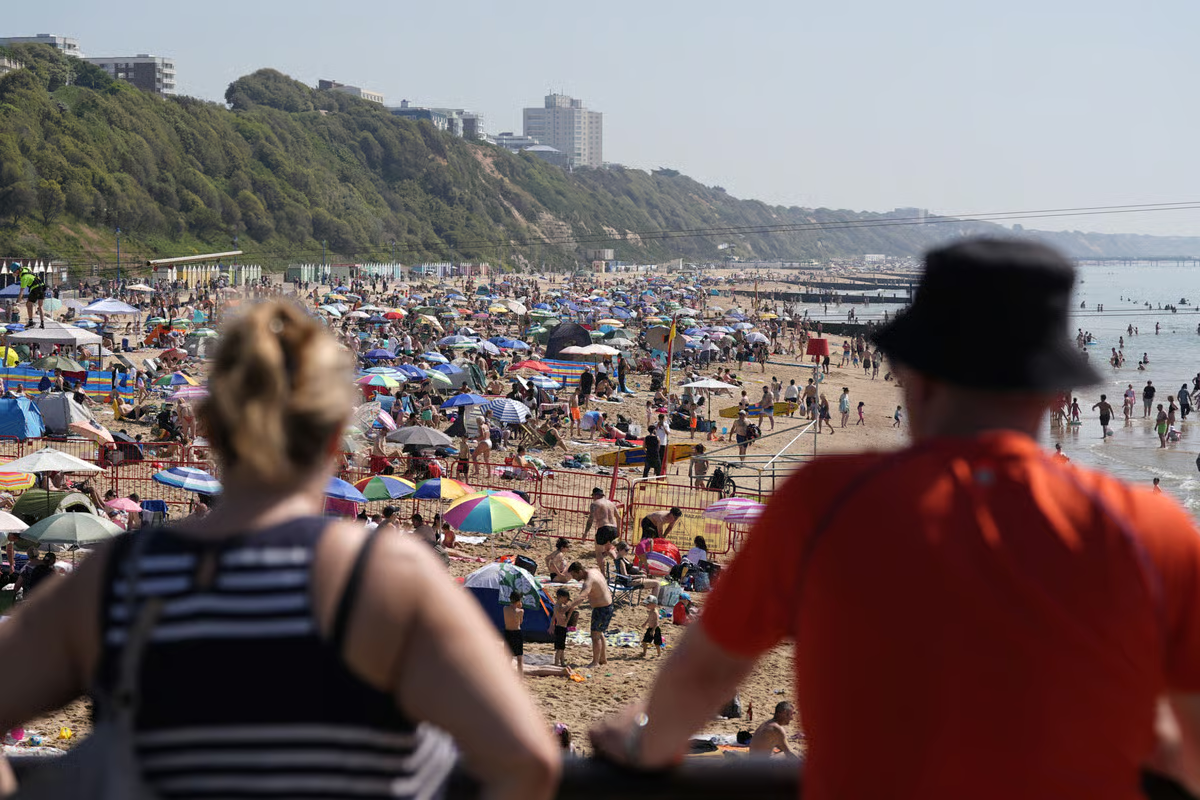
Hottest May day ever as London hits 34.8C in 2C leap from previous records
-

 Business6 days ago
Selena Gomez Reportedly Upset Over Benny Blanco’s Comments on Her ‘Terrible’ Diet
-

 Business7 days ago
Nikkei 225 Surges Past 65,000 for First Time as Iran Peace Hopes Fuel Record Rally
-
 Tech6 days ago
China assigns ID codes to 28,000+ humanoid robots
-

 Tech3 days ago
Waymo dominates autonomous vehicle registrations as Tesla trails behind
-
 Entertainment7 days ago
‘Breaking Bad’ Star’s Easy-to-Binge 6-Part Crime Series Spin-Off Is Finally Heading to Free Streaming
-

 Tech5 days ago
The Samsung pay deal is the moment Korean unions changed register
-
 Tech2 days ago
SpaceX just won a second Golden Dome contract. This one is $4.16 billion.
-

 Entertainment6 days ago
Days of our Lives 2-Week Spoilers May 25-June 5: Gwen Rages, Abe Confesses & 2 Tragic Anniversaries!
-
 Entertainment7 days ago
Taylor Swift Fans Label Travis Kelce’s Beer-Chugging A ‘Red Flag
-
 NewsBeat3 days ago
FIRST NIGHT REVIEW: Take That bring the Circus back to life in spectacular sun-soaked style
-

 News Videos3 days ago
SHE IS KILLING XRP!!! WATCH URGENT AND ACT FAST
-

 Tech6 days ago
Millions of AI agents imperiled by critical vulnerability in open source package
-
Crypto World5 days ago
SpaceX’s $2 Trillion IPO: Why Tech Giants Nvidia (NVDA), Apple (AAPL), and Microsoft (MSFT) May Face Pressure
You must be logged in to post a comment Login