

Crypto World
Bitcoin’s Price Drops Toward $71K as Total Liquidations Surpass $500 Million

Bitcoin’s price took yet another hit in recent hours, dropping toward $71,000 after failing to maintain the weekend momentum that took it to about $74,000.
The asset fell by roughly 3% on the day, touching an intraday low near $71,300.

It’s also important to note that the sudden decline triggered a wave of forced liquidations across the crypto derivatives market. Data from CoinGlass shows that total liquidations surpassed $500 million for the past 24 hours, with $135 million of that happening in the last hour alone. Many traders were caught on the wrong side of the move, and long positions accounted for the majority of the wipeout. This also indicates that many traders were expecting a continuation higher after Bitcoin’s earlier attempt to stabilize near $74,000.

BTC was among the leading assets by liquidation volume, alongside Ethereum, which is oftentimes the case during market-wide wipeouts.
The selloff comes after days of fragile price action, during which the cryptocurrency repeatedly failed to reclaim higher resistance levels. With BTC now hovering close to $71,000, the market appears to be entering a more defensive and bearish phase. A deeper break below this area could intensify selling pressure and potentially trigger another round of volatility.
The post Bitcoin’s Price Drops Toward $71K as Total Liquidations Surpass $500 Million appeared first on CryptoPotato.



Ethereum co-founder Vitalik Buterin is exploring a new way to build crypto investment products that could reduce one of decentralized finance’s biggest risks: sudden liquidations.
In a research post published Monday, Buterin proposed creating index-tracking assets using options contracts rather than the debt-based structures that underpin much of DeFi today. The idea is to allow users to gain exposure to a basket of crypto assets, similar to an index fund, without relying on collateralized debt positions (CDPs), which can be wiped out when markets move sharply.
“What if we use options as the base of DeFi, instead of CDPs and liquidations?” Buterin wrote in a post shared on X.
Under today’s DeFi model, users typically borrow against crypto collateral to create synthetic assets or stablecoins. If the value of that collateral falls too quickly, positions can be automatically liquidated, often triggering cascades of forced selling during periods of market stress.
Buterin argued an options-based system could replace that abrupt “you get liquidated” dynamic with a smoother process. Rather than instantly losing a position when prices move against a trader, exposure would gradually diverge from a target allocation, potentially making the system more resilient during periods of volatility.
A key advantage, according to Buterin, is that the design could function using slower-moving price oracles, the data feeds that tell DeFi protocols what assets are worth. Most DeFi applications today rely on near real-time oracle updates, which can become targets for manipulation during periods of market turbulence.
By contrast, Buterin said an options-based framework could work with “slow oracles” similar to those used by prediction markets. That could reduce the risk of protocols acting on incorrect price data and lessen the need for split-second automated liquidations.
The proposal is particularly relevant to algorithmic stablecoins, which have historically depended on oracle systems and collateral mechanisms that can fail under stress. Buterin said he would feel “much safer” holding algorithmic stablecoins built on an options-based structure than one that depends on real-time oracle feeds that could potentially be manipulated.
The idea comes with tradeoffs. Buterin acknowledged that such a system would require regular portfolio rebalancing and that it remains unclear whether those adjustments can be made cheaply and efficiently enough to avoid excessive trading costs or slippage.
The concept remains theoretical and has not been implemented on Ethereum. Still, it reflects a broader effort by Buterin to rethink the foundations of DeFi and develop systems that prioritize robustness over leverage.
Read more: Buterin says Ethereum Foundation will shrink, sell less ETH, and focus on ‘CROPS’
Crypto World
Strategy’s $2.5 million BTC sale and lessons from the first time MSTR sold in December 2022


When Strategy (MSTR) disclosed that it sold 32 bitcoin in May, memories were jogged of the company’s first-ever bitcoin sale in December 2022.
Both events generated headlines questioning whether Michael Saylor’s company was backing away from its long-standing bitcoin accumulation strategy. Both prompted scrutiny of the firm’s finances. Both represented extraordinarily rare moments in the history of the world’s largest corporate bitcoin holder.
Yet the more useful lesson from the 2022 sale may be that investors should be cautious about reading too much into any single disposal.
Late 2022 was one of the most tumultuous periods in cryptocurrency’s history, the culmination of the “crypto winter” that unfolded that year which came to a head with the collapse of exchange FTX in early November.
From a high of around $69,000 a year earlier, bitcoin had fallen over 75% to below $16,000.
“Of course bitcoin isn’t going to zero,” geopolitical strategist Peter Zeihan wrote on X on Nov. 12. “We have carbon taxes in some places. Bitcoin is going negative.”
The following month, MicroStrategy as it was then known, sold 704 BTC for roughly $11.8 million as bitcoin traded near $16,500. The company said the transaction was designed to harvest tax losses that could offset future gains.
Michael Saylor’s firm then bought 810 BTC two days later, leaving its overall bitcoin position larger than before.
At the time, however, many critics saw something more consequential.
Gold advocate Peter Schiff argued the sale exposed cracks in Saylor’s unwavering commitment to bitcoin and suggested it could be the first step toward a broader liquidation.
“Shares of MicroStrategy just made a new 52-week low, down 90% from the record-high in Feb. 2021,” he wrote in a separate post. “Don’t make the mistake of thinking 90% off is a good buy. This isn’t just a sale, it’s a going-out-of-business sale.”
History unfolded differently. Rather than marking the beginning of a selling cycle, the December 2022 transaction occurred near the bottom of the bear market. Over the following years, bitcoin rebounded to record highs while Strategy dramatically expanded its holdings. The company’s stash has since grown from roughly 132,500 BTC at the end of 2022 to more than 843,000 BTC today.
That experience could tempt investors to dismiss the latest sale as equally irrelevant. But doing so risks overlooking how much the company itself has changed.
The Strategy of 2022 was largely a leveraged bitcoin holder. The Strategy of 2026 is a far more complex financial vehicle built around bitcoin ownership. The company now manages a capital structure that includes convertible debt, common-equity issuance programs and multiple preferred-stock offerings designed to attract different classes of investors.
Against that backdrop, selling 32 BTC, worth roughly $2.5 million and representing less than 0.004% of its holdings, is financially insignificant. But the transaction may reflect a broader reality: bitcoin sales are no longer unthinkable within Strategy’s operating model.
“This may just be the beginning of much larger sales to come,” Schiff wrote on X following news of Strategy’s second sale. “Plus, if MSTR just stops buying more bitcoin that’s a huge problem for bitcoin.”
That does not mean the company is abandoning accumulation. Strategy continues to buy bitcoin aggressively and raise capital to fund additional purchases. But unlike in 2022, the question is no longer whether Strategy will ever sell bitcoin.
The more relevant question is whether future sales remain rare exceptions or become another routine tool in the management of an increasingly sophisticated bitcoin treasury empire.
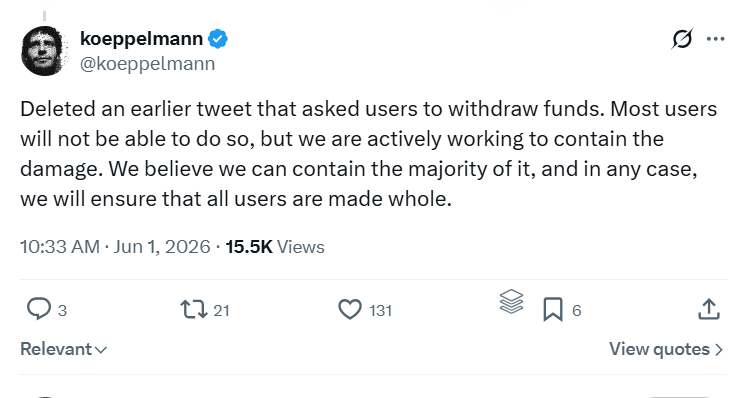
Gnosis is working to contain an exploit Monday affecting its Gnosis Pay product after co-founder Martin Köppelmann acknowledged an active hack involving the system’s delay module and said the project would cover user losses.
Köppelmann initially urged users to withdraw funds, a warning quickly amplified by blockchain security firm PeckShield, which said users were strongly advised to withdraw all funds (EURe and GNO) and check exposure.
The Gnosis co-founder later withdrew that advice, however, and deleted the initial tweet, saying that most users would not be able to withdraw their funds. He reiterated that the Gnosis team is “actively working to contain the damage” and will make users whole.
Gnosis is a long-running Ethereum project best known for its smart contract wallet infrastructure and Gnosis Chain, an Ethereum Virtual Machine (EVM)-compatible network used for payments and decentralized finance.
The shifting guidance leaves key questions unanswered, including how much has been stolen, which contracts or users are affected, and whether the issue stems from the Zodiac delay module itself, its configuration within Gnosis Pay, or a broader architectural flaw.
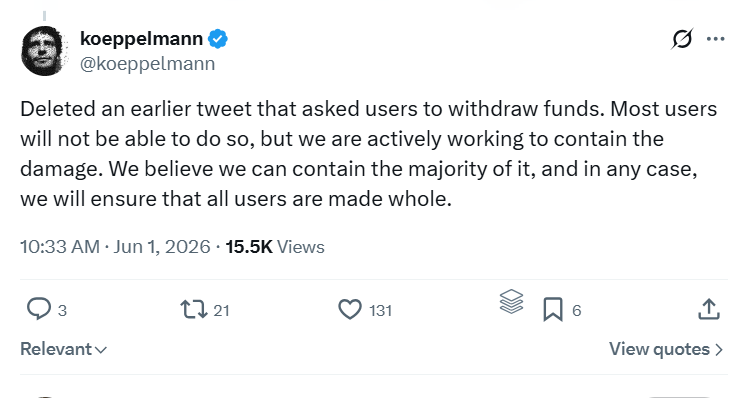
Gnosis co-founder pledges to make users whole. Source: Koeppelmann
Cointelegraph reached out to Gnosis and Gnosis Pay for comment, but had not received a response by publication.
Former Near protocol core developer Vadim Zacodil said Gnosis Pay’s design routes user self-custody through a shared “delay” layer that queues outgoing transactions from many Safes at once, so a bug or exploit there can push malicious withdrawals into thousands of users’ queues simultaneously, even though individual keys never move.
In practice, he argued, what is protecting users in this incident is less the self-custodial Safe accounts and more Gnosis’s ability to pause infrastructure and commit treasury funds to cover losses.
Related: Cosmos-based Gravity Bridge halts bridge after reported $5.4M exploit
Incident follows third-party Safe module exploit
The incident comes just days after a separate exploit involving a third-party module connected to Safe, the smart contract wallet infrastructure originally incubated within the Gnosis ecosystem and now developed by Safe Labs.
In that case, a SquidRouterModule contract interacting with Safe wallets was abused to drain about $3.2 million from roughly 86 Safes across Ethereum and Base, prompting both Safe Labs and Squid to say the vulnerability lay outside their core protocols.
It also comes after a month of reduced crypto exploit losses on the whole. Data from CertiK posted Sunday showed total losses fell to about $68.3 million in May, a roughly 90% decline from April, marking the third month this year with losses below $100 million.
[Update 1:57 P.M. UTC, June 1 — Updates third paragraph with share price decline in Monday morning trading.]
Strategy sold 32 BTC last week, its first reported Bitcoin sale since a 2022 tax-loss transaction, as the company moved to fund preferred stock distributions.
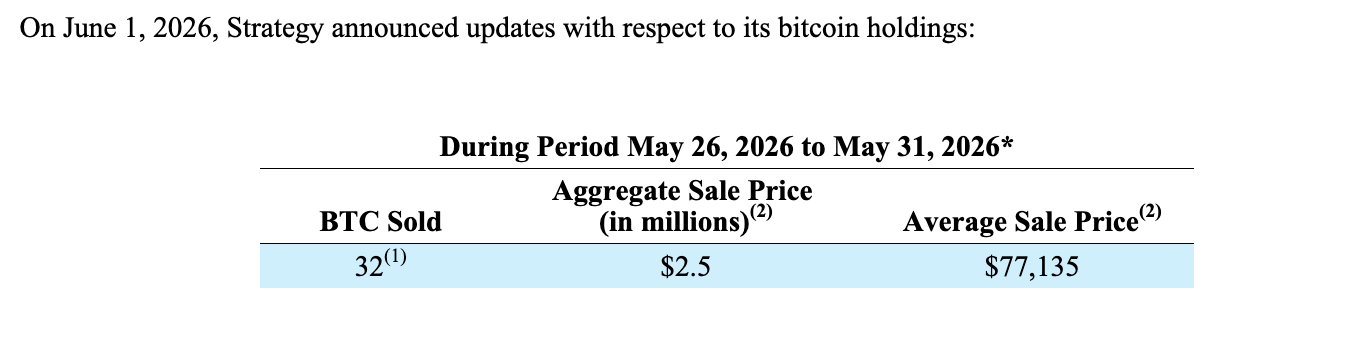
Strategy sold 32 Bitcoin (BTC) for $2.5 million at an average price of $77,135 per BTC, reducing its holdings from 843,738 BTC to 843,706 BTC, according to a Monday 8-K filing with the US Securities and Exchange Commission.
The company’s MSTR Nasdaq-traded shares fell more than 6% following Monday’s market open, last trading at about $148.70 apiece.
Proceeds from the Bitcoin sale are expected to be used to fund distributions on preferred stock, the company said.
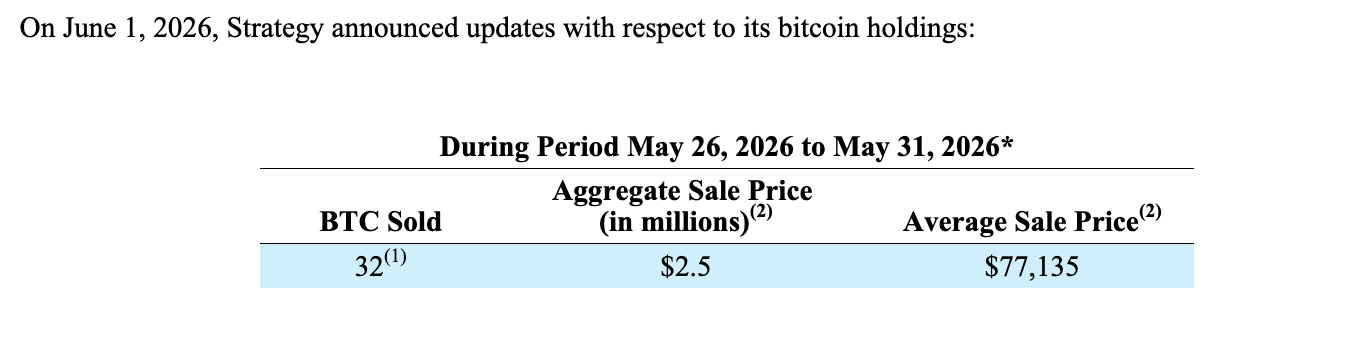
Source: SEC
The sale came after Strategy faced increased scrutiny over its preferred stock financing model, as investors questioned whether dividend obligations could eventually pressure the company to sell some of its Bitcoin.
The sale is Strategy’s first reported Bitcoin disposal since a 2022 tax loss transaction, when the company sold 704 BTC and repurchased 810 BTC two days later.
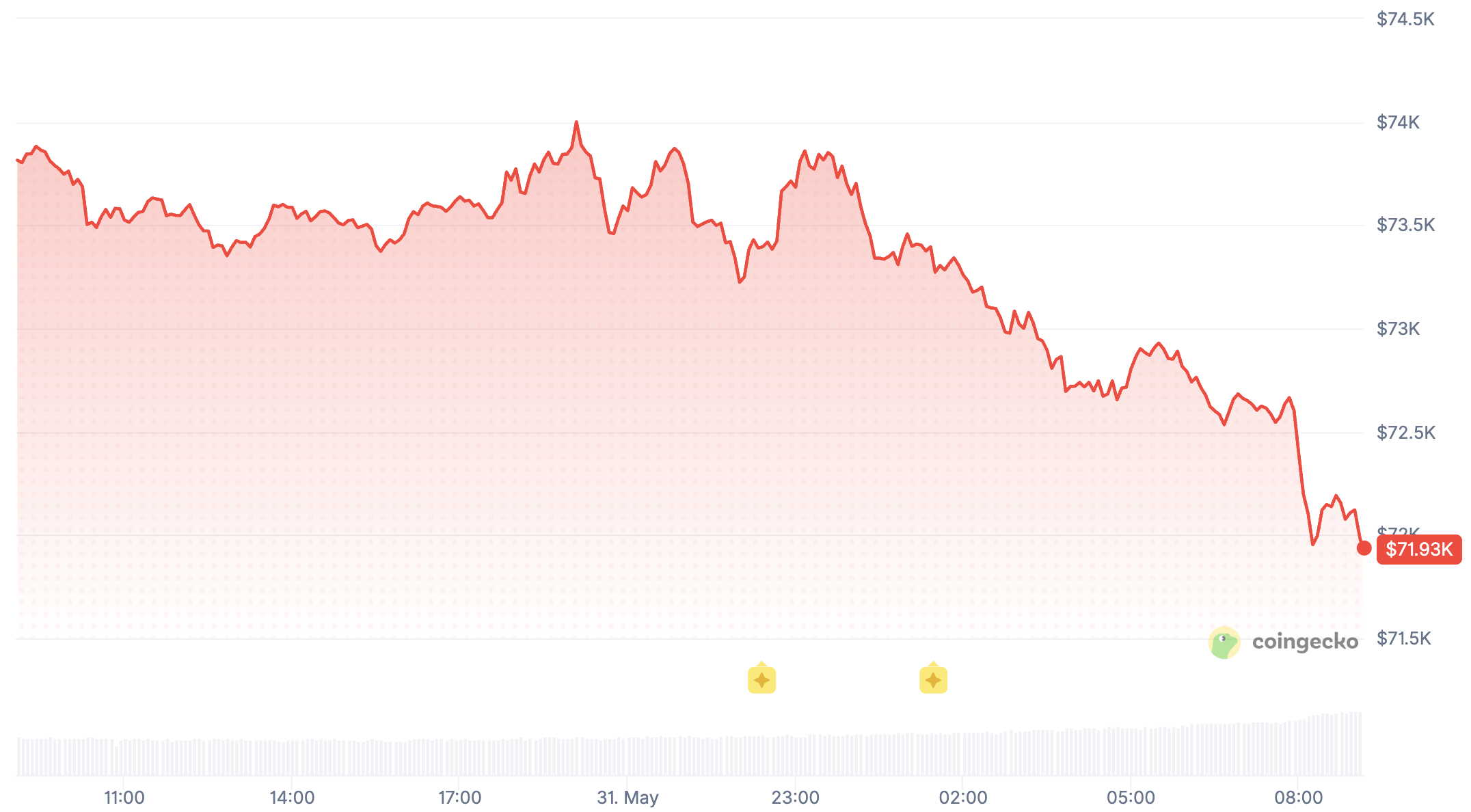
Bitcoin (BTC) price chart over the past 24 hours. Source: CoinGecko
Bitcoin slipped below $72,000 following the disclosure and traded at $71,939 at the time of writing, according to CoinGecko.
Strategy sells $128 million in Common A stock
In addition to selling Bitcoin in the last week of May, Strategy also offloaded 801,994 Class A (MSTR) shares, generating $128.3 million in proceeds.
No preferred stock raises took place over the week, aligning with reports by STRC Live, which estimated that Strategy would announce no buys for the past week.
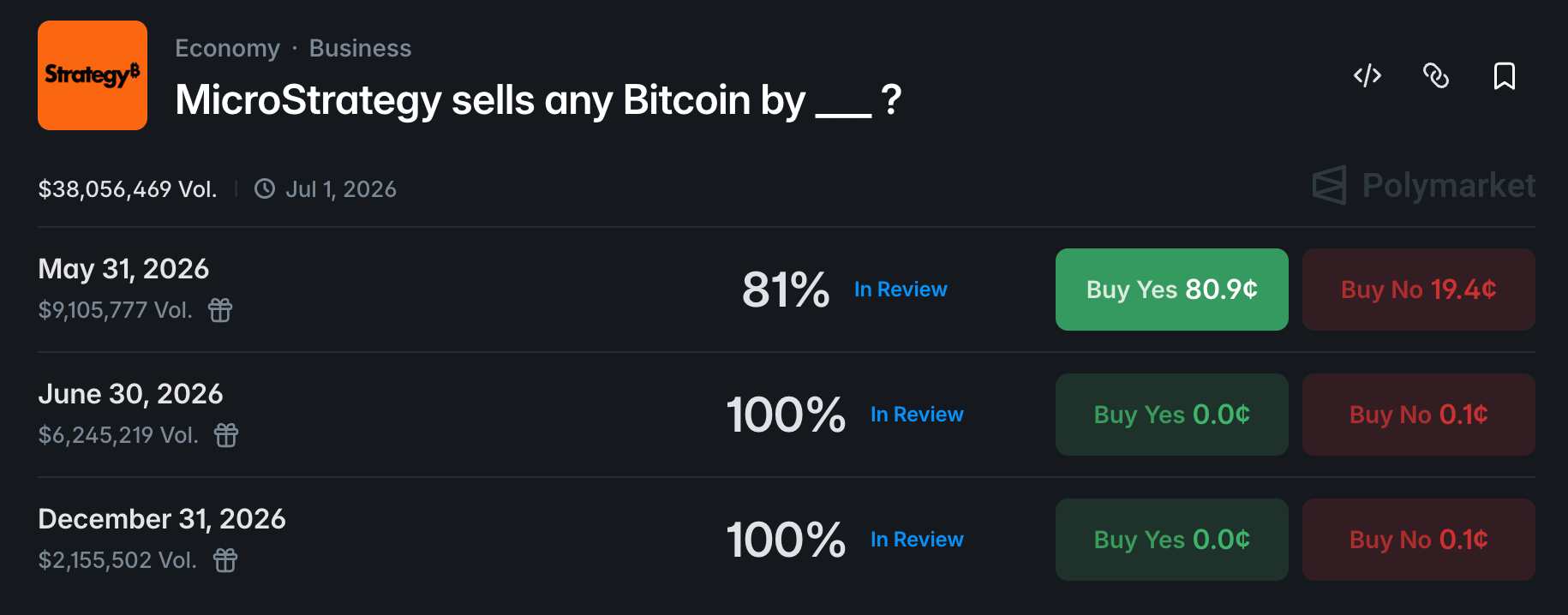
Source: Polymarket
The sale may have surprised some investors after Strategy executive chairman Michael Saylor hinted at possible fresh activity over the weekend.
“Working Better” Saylor posted on X late Sunday morning to accompany a bubble chart tracking Strategy’s Bitcoin purchases over the past nearly six years.
Saylor had not posted on X about the $2.5 million Bitcoin sale at the time of writing, prompting criticism that he has gone “radio silent” despite typically announcing new purchases immediately.
Some industry observers had been anticipating a potential sale, with crypto intelligence platform Arkham reporting that Strategy transferred BTC to Coinbase Prime last Friday.
Related: Strategy buys back $1.5B of debt at discount, cuts outstanding notes to $6.7B
Strategy CEO Phong Le confirmed last week that the company might sell Bitcoin at some point in the future.
“We’ll likely sell Bitcoin at some point in time, but we will be net increasing our Bitcoin and more importantly, increasing our Bitcoin per share,” the CEO said.
Corporate Bitcoin demand cools as selling activity emerges
Strategy’s sale comes as some Bitcoin treasury companies have slowed purchases or begun reducing holdings after months of accumulation.
Nasdaq-listed ProCap Financial announced Monday it sold about 52 Bitcoin to fund the repurchase of 2 million shares of its common stock at an approximately 50% discount to net asset value. The company said the transaction increased Bitcoin exposure on a per-share basis for remaining shareholders.

Source: Anthony Pompliano
Broader Bitcoin treasury activity also showed signs of cooling, with firms acquiring a combined 144 Bitcoin over the past week, including purchases by DDC Enterprise, the Smarter Web Company and Capital B, according to corporate disclosures. That compares with 603 Bitcoin purchased by corporate holders in the previous week, marking a sharp week-over-week decline.
Magazine: Big Questions: Do we really only need 2–5 cryptocurrencies?


Japan’s ruling party is pushing crypto ETFs and yen stablecoins, and that could turn SoftBank from a crypto-adjacent conglomerate into a central piece of Japan’s on-chain financial infrastructure.
Summary
- Japan’s LDP wants a legal framework for crypto ETFs and broader use of yen stablecoins across Asia.
- SoftBank already controls important consumer rails through PayPay and its 40% stake in Binance Japan.
- Masayoshi Son’s AI infrastructure push makes SoftBank look less peripheral to this transition and more embedded in it.
Japan’s ruling Liberal Democratic Party has now moved beyond abstract crypto reform and into something more strategic: a formal proposal for crypto ETFs and yen-backed stablecoins as part of a broader attempt to keep the yen relevant in an increasingly tokenized regional economy.
Reuters reported on June 1 that an LDP policy panel asked the government to promote yen stablecoins for settlement across Asia and build a legal framework for crypto exchange-traded funds.
The stablecoin side is the more consequential part of the proposal. Crypto ETFs can pull traditional investors into the market through regulated wrappers, and in a previous crypto.news piece on spot crypto ETFs in Japan, noted that the expectation was that domestic regulators could approve such products by 2028 if the rules are aligned with market demand and custody requirements.
But stablecoins do something more foundational. They turn currency into software. They make settlement continuous, programmable, and potentially borderless.
That is why yen stablecoins matter far beyond retail crypto trading, and why crypto.news has already tracked this direction in reporting on yen stablecoin reserve rules and on institutional products like JPYSC.
How does SoftBank factor into Japan’s stablecoin plans?
SoftBank sits unusually close to the place where that policy shift could become real. In October 2025, PayPay, SoftBank’s payments arm, acquired a 40% stake in Binance Japan. Yahoo Finance reported that the aim was to fuse crypto access with everyday cashless payments, while a separate crypto.news report on PayPay’s Binance Japan stake noted that users would be able to buy crypto and withdraw proceeds directly via PayPay Money. That matters because PayPay is not a niche product. It is one of the largest mobile payments platforms in Japan, with a user base of more than 70 million according to multiple reports.
The rails are already there
The usual mistake in writing about stablecoins is to focus only on the token issuer. In reality, the bigger fight is over the rails: who controls access, funding, wallet interfaces, merchant reach, compliance, and settlement. PayPay and Binance Japan, taken together, give SoftBank a credible foothold across exactly those layers. Binance Japan users can already move from PayPay Money into crypto and back again, which means SoftBank has already helped create a consumer bridge between conventional digital payments and regulated crypto exposure.
That makes the LDP proposal more interesting. If Japan does legalize crypto ETFs and actively promotes yen stablecoins for regional settlement, those products will need distribution, wallets, payment rails, and interfaces that ordinary people will actually use. SoftBank is already positioned there. It does not need to become a bank or a stablecoin issuer to matter. It simply needs to own enough of the pipes. This logic is already visible in crypto.news reporting on broader financial infrastructure, including Binance’s USD on and off ramps via BPay Global and the slow expansion of regulated rails around exchanges.
This is also why the timing matters. The June 1 Reuters report landed the same day Reuters separately noted that Binance was rolling out trading in U.S. stocks and ETFs, further blurring the line between crypto venues and conventional brokerage platforms. The walls are coming down. Payment apps are becoming financial interfaces, exchanges are becoming multi-asset platforms, and stablecoins are becoming quasi-sovereign infrastructure. SoftBank, through PayPay and Binance Japan, is already embedded in that convergence.
Son’s AI bet sharpens the case
Masayoshi Son’s AI push makes this more than a crypto side bet. It changes the scale of the argument. In late May, SoftBank Group said it would develop and operate 5 gigawatts of AI data center capacity in France, representing investment of up to €75 billion. In SoftBank’s own press release, Son said, “AI is entering a new era, and the countries that build the infrastructure for this transformation will shape the future of technology, industry and society.” That statement is about compute, but it is also about control. Son is not interested in sitting politely at the edge of infrastructure. He wants to own it.
That matters here because programmable money, tokenized assets, and AI-driven financial systems are not separate domains for long. They collapse into one another. The platforms that manage liquidity, route transactions, price risk, and automate treasury functions will depend on cloud capacity, high-throughput networks, compliant payment interfaces, and digital currencies that can move instantly. A future yen stablecoin regime would fit directly into that stack. Crypto.news has already touched adjacent territory in its reporting on how stablecoins are becoming part of the infrastructure conversation, including in coverage of OpenAI’s rise and stablecoins as an AI gateway currency.
Son’s appetite for leverage reinforces the point. The Wall Street Journal reported in February that SoftBank had taken on $27 billion in additional debt over a single quarter as its OpenAI exposure deepened. Bloomberg reporting carried by Yahoo Finance on financing tied to SoftBank’s U.S. data-center expansion showed nearly $1 billion raised for infrastructure linked to its AI buildout, part of a broader flood of riskier debt into that sector. This is not the posture of a company content to clip fees from other people’s platforms. It is the posture of a company trying to position itself at the base layer of whatever comes next.
That is why Son’s AI strategy belongs inside the stablecoin story. His willingness to lever up for AI does not sit alongside Japan’s crypto pivot as some parallel obsession. It turns SoftBank from a passive beneficiary of regulatory change into a company actively building part of the infrastructure stack that yen stablecoins could eventually run through. The combination of payments exposure, exchange access, and AI infrastructure makes SoftBank look less like an opportunistic investor and more like a private-sector candidate to help operationalize Japan’s shift toward tokenized finance.
A monetary story disguised as crypto policy
The deeper point is that this is not really a crypto story at all. It is a monetary sovereignty story disguised as market reform. Reuters’ reporting makes clear that the LDP panel wants yen stablecoins used in Asia because Japan sees the risk of irrelevance if digital settlement becomes dominated by dollar tokens and foreign platforms. That is consistent with the wider global direction. Reuters reported in May that a euro stablecoin project added 25 banks, showing that Europe is also trying to build digital currency infrastructure rather than leaving the field entirely to U.S.-linked issuers. Japan is now signaling the same instinct, only later and more cautiously.
SoftBank is not the state, and it is not a central bank. But if Tokyo follows through, it may not need to be either. It already has scale in mobile payments, an economic claim on a licensed crypto exchange, and a chairman willing to borrow heavily in order to own infrastructure before the market consensus catches up. That is what makes this more than a routine regulatory development. The LDP may be writing rules for crypto ETFs and yen stablecoins, but the market should also be reading those rules as an early map of who gets to sit closest to the rails once Japan decides the yen has to move on-chain.


A dicey weekend for DeFi hacks has seen a total of $7 million lost across four separate incidents.
Disruption on Sui network continued through the back end of last week, ultimately extending to three incidents, and early this week, popular Euro crypto card Gnosis Pay warned users to withdraw their funds.
The hacks
Despite being first to occur, Fluid only disclosed a compromise of its “rewards distribution infrastructure” on Sunday, four days later.
The announcement came after X account YieldsAndMore drew attention to the loss of 125,000 FLUID (worth approximately $200,000 at the time) and 52,000 of the GHO stablecoin on May 27.
Fluid was criticized on X for delaying the announcement of the $250,000 loss, and instead encouraging users to take advantage of high yields following a $77 million withdrawal.
Read more: Stake DAO hit by hack as DeFi security confidence hits new low
There were also two bridge hacks over the weekend, affecting the Gravity and Alephium bridges.
Alephium’s $815,000 loss was first spotted by Blockaid on Saturday. The firm later walked back its initial theory that “compromised guardian keys” caused the loss, after the Alephium team’s post.
Also on Saturday, the Gravity bridge X account warned of an “unfortunate incident,” instructing validators to halt operations. Hours earlier, on-chain investigator SpecterAnalyst had flagged the theft of $5.4 million worth of USDC, WETH, USDT and PAXG.
At least 10 bridge hacks have rocked the crypto sector so far this year.
Read more: Bridge hacks back in vogue as Verus exploit brings 2026 total to $329M
Finally, yield vault platform Artificial Financial Intelligence announced a “security incident” in its afiUSD Vault.
While the team’s alert didn’t specify the amount lost, a quick look at the vault’s transaction history reveals a withdrawal of approximately $500,000 of various DeFi tokens. The vault’s dashboard displays a TVL of almost $400,000, but its portfolio section lists just $300 worth of tokens.
In a follow-up post on Monday, the team confirmed that around $480,000 was lost to a “sophisticated exploit,” with a full post-mortem to come.
Read more: Crypto hackers snatch over $1B in 68 incidents this year
The downtime
On Thursday last week, Sui Network went down in its third outage of the year so far.
Three being the magic number, the downtime turned out to itself be just the first of three disruptions over the following 48 hours.
Sui’s status page shows disruption of almost six hours on Thursday, and two outages of eight and a half hours and 45 minutes on Friday.
A blog post published by the Sui Foundation on Sunday explained that the first two incidents were linked to a recent update. The third was caused by a rushed fix, which the foundation described as an “interim measure designed to restore functionality [which] had a known issue with a low probability of causing a halt.”
Read more: SUI: Stops Unexpectedly and Intermittently
The warning
After such a volatile weekend, there’s nothing quite like a vague but urgent warning to kick off the week.
On Monday morning, Gnosis’ Martin Koeppelmann warned users of the Gnosis Pay crypto card to withdraw their funds. It was later deleted, with Koeppelmann later clarifying “most users will not be able to do so.”
Read more: ‘RFV Raiders’ target Gnosis DAO for treasury redemption proposal
The danger apparently lies in the “Zodiac delay module” and allows a hacker to initiate transactions from users’ Safe accounts. Koeppelmann reassured users that, if affected, they would be reimbursed.
May DeFi hack roundup
There appears to be no let-up in the recent string of crypto exploits which began to turn heads in April; over $60 million was lost in May.
Losses are down from April, which was dominated by losses of $280 million from Drift Protocol and $290 million from Kelp DAO/LayerZero. However, the number of significant incidents listed on Protos’ hack tracker is similar; 30 in May versus April’s 33.
Got a tip? Send us an email securely via Protos Leaks. For more informed news and investigations, follow us on X, Bluesky, and Google News, or subscribe to our YouTube channel.

MicroStrategy has disclosed a modest disposal of Bitcoin from its treasury, selling 32 BTC for about $2.5 million as the company earmarks cash for distributions on its preferred stock. The sale, executed at an average price of $77,135 per BTC, reduced MicroStrategy’s holdings to 843,706 BTC from 843,738 BTC, according to an 8-K filing with the U.S. Securities and Exchange Commission. In the wake of the disclosure, MicroStrategy’s Nasdaq-listed shares slipped more than 6% in Monday trading, trading around $148.70 at the open.
The company said the proceeds from the Bitcoin sale would be used to fund distributions on its preferred stock, with no new preferred raises announced for the week. The move stands in contrast to the firm’s long-running strategy of accumulating BTC, and comes as investors scrutinize how MicroStrategy plans to finance its preferred-equity program while continuing to hold a large Bitcoin treasury.
The sale marks MicroStrategy’s first Bitcoin disposal since a 2022 tax-loss transaction, when 704 BTC were sold and 810 BTC were repurchased two days later. Bitcoin’s price context surrounding the announcement was softer, with BTC trading around $71,900 on the day, after slipping below $72,000 in the hours following the disclosure, according to CoinGecko data.
Key takeaways
- Bitcoin sale details. MicroStrategy sold 32 BTC for approximately $2.5 million, at an average price of $77,135 per BTC, shrinking its BTC stake from 843,738 to 843,706 BTC.
- Funding use for preferred stock. The company said the proceeds would fund distributions on its preferred stock, with no new preferred raises reported during the week.
- Stock market reaction and context. MicroStrategy’s MSTR shares dropped over 6% after the disclosure, underscoring investor sensitivity to how the company funds its preferred equity and manages its Bitcoin treasury.
- Treasury activity in broader markets cooling. The move fits a broader pattern of easing appetite among corporate Bitcoin treasuries, where several firms have slowed purchases or begun reducing holdings, with weekly net purchases sliding to about 144 BTC versus 603 BTC the prior week.
MicroStrategy’s financing strategy in focus
The sale aligns with MicroStrategy’s ongoing effort to balance liquidity needs against its long-standing commitment to growing its Bitcoin holdings. By channeling proceeds into preferred stock distributions, the company signals a prioritization of its fixed-income obligations over immediate large-scale Bitcoin accumulation. Market observers have long debated whether the preferred-stock financing model creates pressure to monetize part of the Bitcoin reserve to support dividends, especially if Bitcoin prices move unfavorably or if distributions increase over time.
In its 8-K filing, MicroStrategy’s management did not indicate any new preferred raises during the week, which some analysts had anticipated amid the continued use of preferred equity alongside the Bitcoin treasury. The decision to deploy a portion of the Bitcoin haul into distributions rather than reinvestment or larger BTC purchases reflects a nuanced approach to capital structure management in a volatile market.
The timing of the sale matters, given the company’s history. The 2022 tax-loss sale marked a rare instance of strategic BTC disposal, followed by a small round of repurchases. This latest move does not appear to signal a broad retreat from Bitcoin accumulation, but rather a targeted liquidity action tied to its preferred-stock program and the evolving needs of debt and equity financing.
What the market and executives have signaled
Beyond the bitcoin sale, MicroStrategy also unloaded 801,994 Class A (MSTR) shares, generating about $128.3 million in proceeds for the week. The combination of asset disposals—both in Bitcoin and equity—appears to reflect a broader attempt to optimize liquidity without derailing the company’s longer-term plan to increase Bitcoin exposure on a per-share basis.
Industry observers had been watching for signals that the company might pivot more decisively away from or toward Treasury activity. Earlier speculation, including notes from crypto intelligence tracker Arkham, suggested a transfer of BTC to Coinbase Prime in the days leading up to the announcement, fueling expectations of possible forthcoming moves. MicroStrategy’s executive chairman, Michael Saylor, had posted a “Working Better” chart on X that tracked Bitcoin purchases over roughly six years, a public-facing marker of ongoing interest in Bitcoin accumulation, though he did not publicly comment on the latest sale as of press time. Some market participants viewed the timing with skepticism, interpreting it as a sign that even a long-running buyer like MicroStrategy exercises discipline in the face of funding needs and market volatility.
Additionally, MicroStrategy’s position sits within a broader corporate finance narrative around the use of Bitcoin and other crypto assets to back financing strategies. Earlier reporting highlighted the company’s broader debt management efforts, including a separate move to repurchase debt and reduce outstanding notes, actions that complicate the calculus around when and how much BTC should be monetized to support corporate capital structures.
The investor mood music around the company’s strategic plan continues to be shaped by the balance between Bitcoin’s price trajectory and the fixed-income obligations tied to its preferred stock. While the company has maintained that it intends to be net positive on Bitcoin exposure over time, the precise cadence of BTC purchases and sales will likely hinge on capital needs, macro conditions, and the evolving regulatory environment that governs corporate crypto treasury programs.
Broader context: corporate treasuries cool on Bitcoin purchases
The MicroStrategy move arrives at a moment when several corporate treasury programs have tempered their Bitcoin appetites after months of steady accumulation. In a related development, ProCap Financial announced a sale of about 52 BTC to finance a repurchase of 2 million shares at roughly a 50% discount to net asset value, a move designed to lift per-share Bitcoin exposure for remaining shareholders. The trend aligns with a broader market pattern in which some treasury holders recalibrate their holdings in light of price volatility and financing costs.
Market observers note that other buyers—such as DDC Enterprise, Smarter Web Company, and Capital B—reported net additions around 144 BTC collectively in the past week, a substantial drop from the prior week’s roughly 603 BTC total. The broader data suggest a cooling cadence after a sustained stretch of heavy accumulation by corporate wallets, even as Bitcoin remains a focal point of treasury strategies for many issuers seeking to diversify balance sheets and hedge against equity risk.
For investors, the evolving picture matters for several reasons. First, it underscores the delicate balance between funding needs and long-term crypto exposure for listed companies that have tethered their capital structure to Bitcoin. Second, it highlights that corporate treasuries are not merely passive accumulators of BTC; they actively adjust timing and scale in response to liquidity demands, debt maturities, and regulatory signals. And third, the ongoing dialogue around MicroStrategy’s financing model—particularly the use of preferred stock alongside a large BTC treasury—could influence how other firms structure their own crypto-backed financing in the months ahead.
As the sector digests these developments, market participants will want to monitor how forthcoming disclosures align with price action, and whether more treasuries signal a willingness to monetize portions of their BTC holdings to support equity or debt obligations. The next few quarters could reveal whether this is a temporary liquidity rebalancing or part of a longer-term shift in how corporate treasuries interact with the cryptocurrency markets.
Readers should stay tuned for updates on MicroStrategy’s capital-structure moves, potential additional BTC sales or purchases, and any regulatory or market developments that could reshape how corporate crypto treasuries operate in a rapidly evolving environment.
Crypto World
Binance Opens US Stock Trading to Non-US Users, Sets Up Tokenized 'bStocks' on BNB Chain


Binance on Monday opened zero-commission trading in more than 7,000 U.S.-listed stocks and exchange-traded funds to eligible customers outside the United States, and said a tokenization layer called bStocks will follow on its BNB Chain in the coming weeks, according to the company and an exclusive… Read the full story at The Defiant
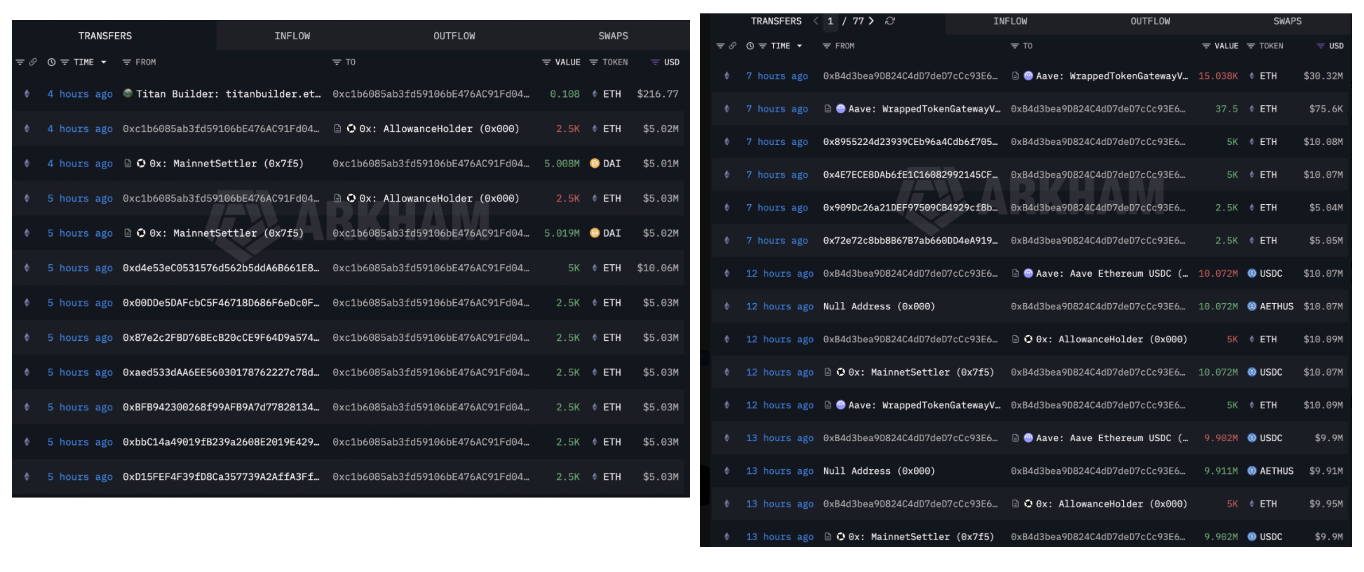
An early Ether (ETH) investor sold their ETH holdings over the past week as the price headed toward $2,000, sparking fears of further losses. However, onchain data tells a different story as traders speculate where ETH/USD might bottom.
Key takeaways:
- An early Ethereum whale sold $136 million in ETH, adding pressure as Ether trades below the $2,000 level.
- Onchain data shows no evidence that older ETH investors are selling en masse.
- Analysts warn the ETH price could fall further toward the $1,500 support.
Ethereum OG whale sells $136 million ETH
An old Ethereum whale, an early investor holding tokens since the network’s first years, sold 55,000 ETH worth about $112.25 million and 9,442 ETH worth roughly $24 million over the past week.
Related: Ether bears at risk of $2B squeeze as short positions build around $2K
The early Ether investor offloaded a combined $136 million at an average price of $2,041 per ETH, according to blockchain data tracker Lookonchain.
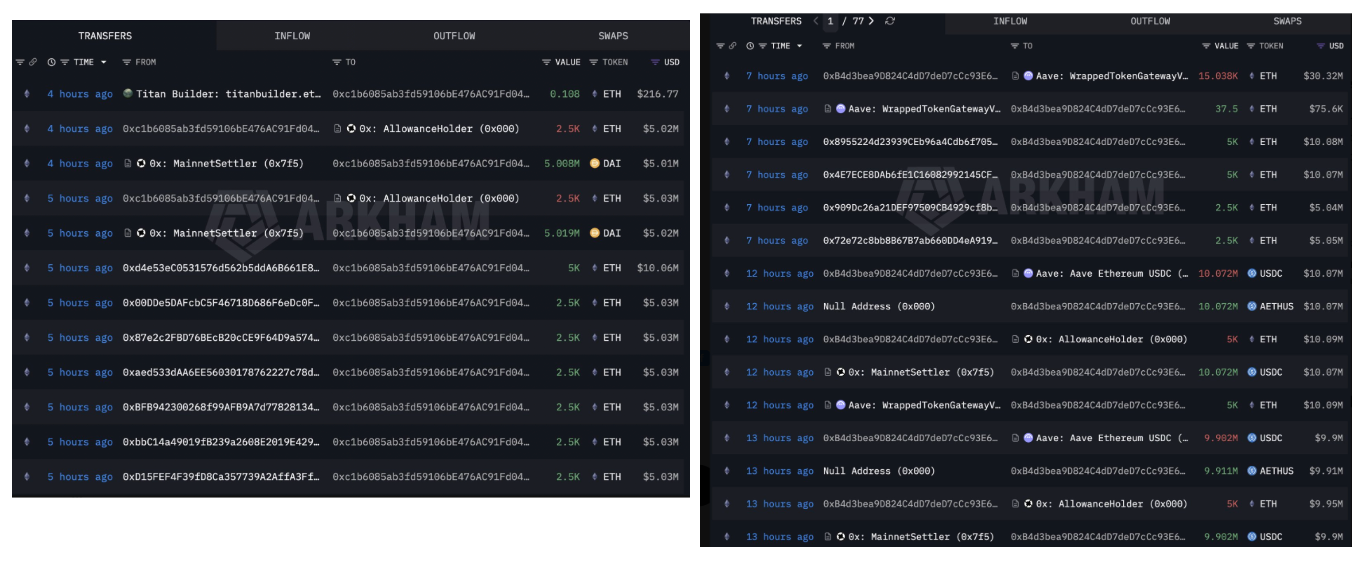
Selling by an old ETH wallet. Source: Lookonchain
However, this does not appear to be part of a wider trend, as an analysis of Ethereum’s supply, based on “HODL waves,” reveals that a significant portion of Ethereum supply remains unmoved on various time frames. In fact, the share of the supply by older holder cohorts has generally increased over the past year.
More recently, the 3m-6m investor cohort saw a notable reduction in supply, which has dropped to 9% from 13.5% on May 19. The 1w-1m holder cohort has also seen its supply holdings drop to 2.6% from 4.76% over the same period. This suggests that most of the supply changing hands is being done by short-term holders.
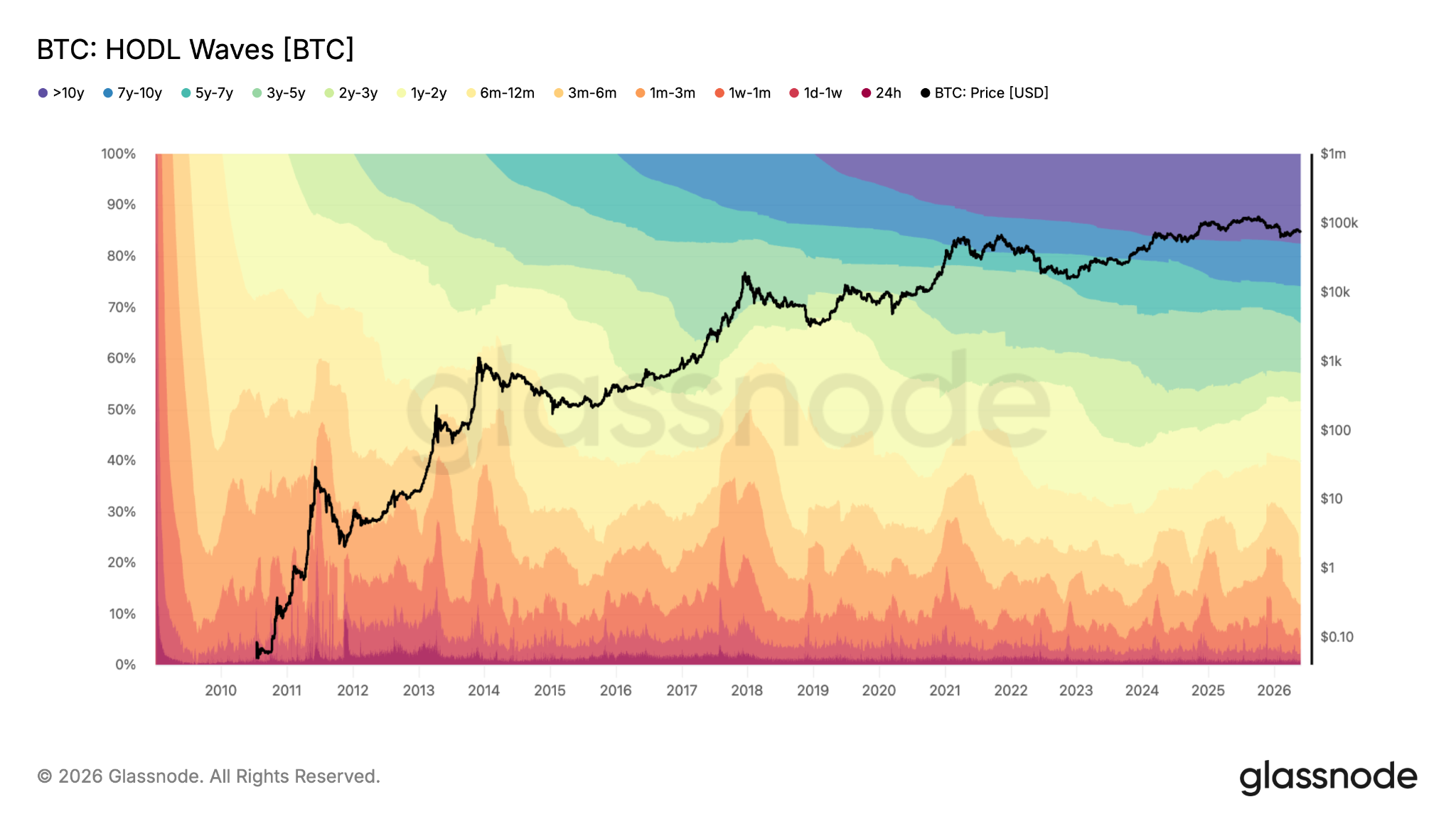
Ethereum: HODL Waves. Source: Glassnode
In fact, supply held by the 5y-7y investor cohort has increased slightly to 9% from 8.59% on May 19.
Moreover, the chart below shows that the supply last active 5-7 years ago has only seen a modest rise in recent weeks and is well below the activity seen in 2022 when ETH price bottomed below $1,000.
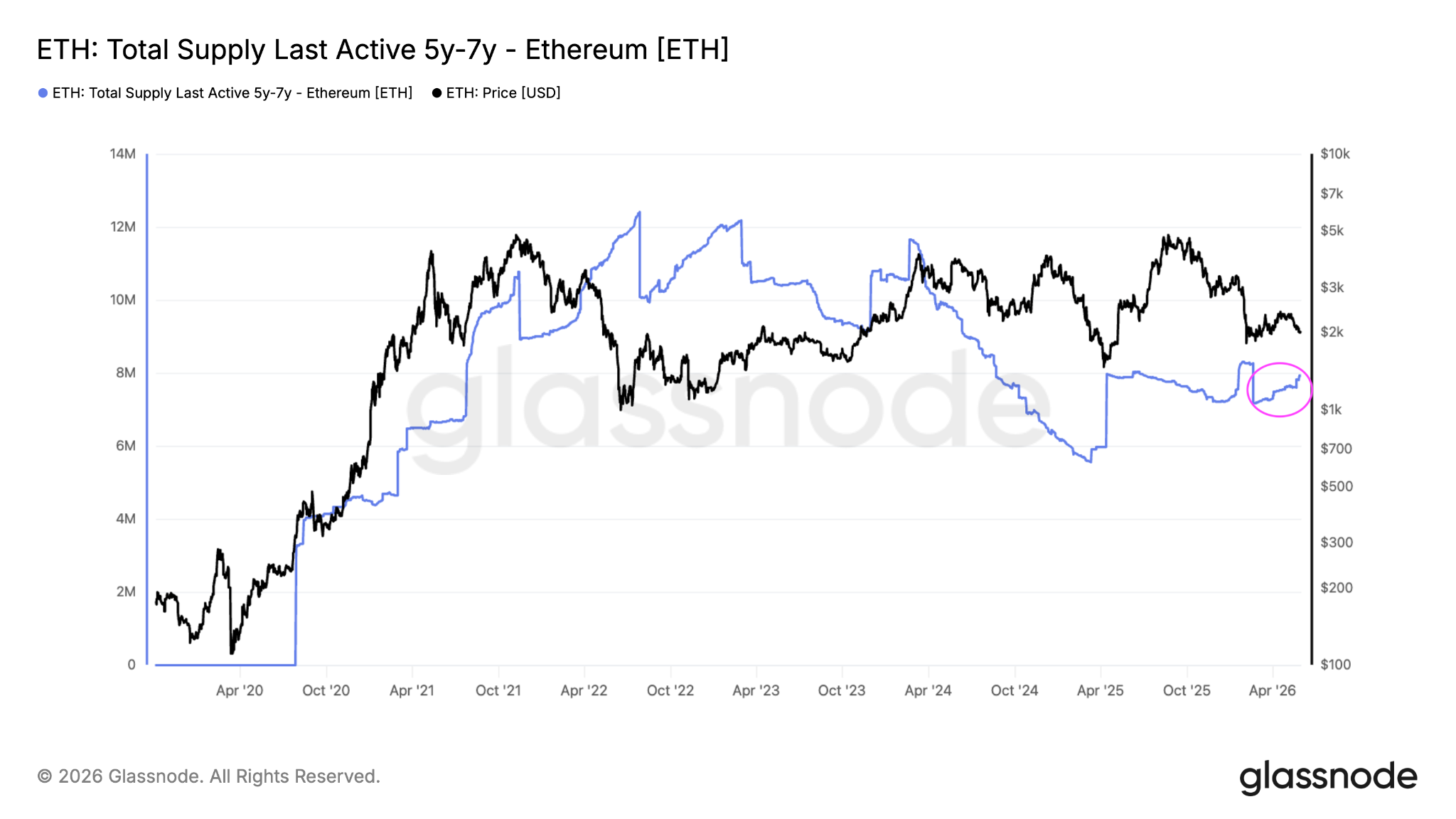
ETH: Total supply last active 5 years to 7 years. Source: Glassnode
Except for several significant players announcing that they have sold a part or their entire ETH holdings recently, there’s no real broad trend to support the argument that Ethereum OGs are selling en masse.
Ether price drop to $1,500?
Since Thursday, ETH/USD has been oscillating around the $2,000 psychological level as traders braced for more price downside.
At the time of writing, ETH is trading at $1,980, down 2% over the last 24 hours and 6.5% on the week.
“This doesn’t look good for Ethereum,” analyst Alex Marzell said in an X post on Sunday adding:
“Momentum continues to favor the bears as $ETH moves closer to the next key support area.”
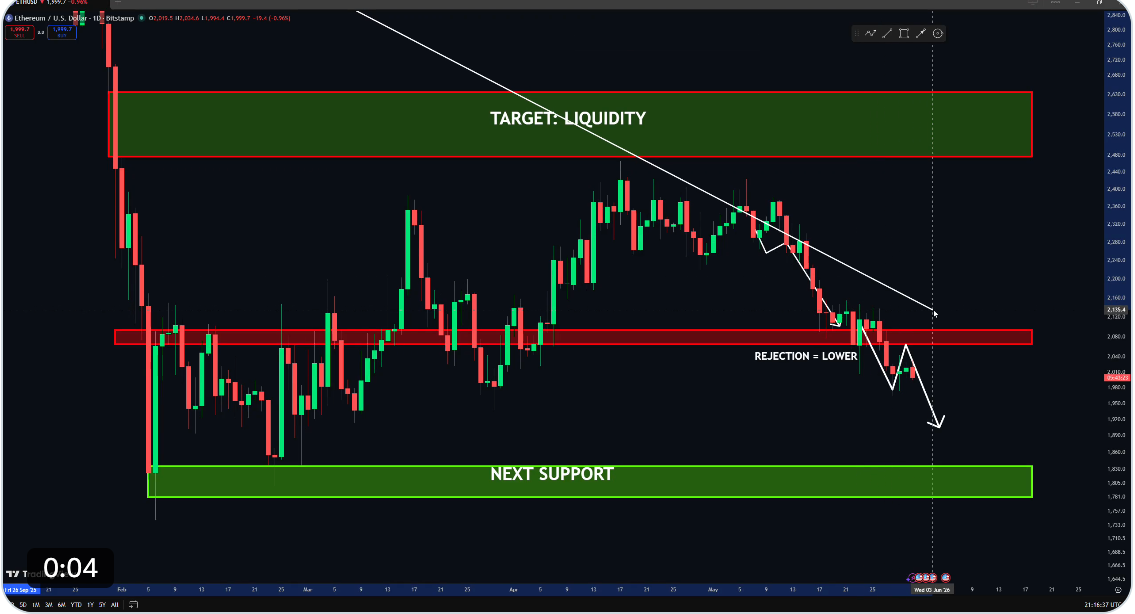
ETH/USD daily chart. Source: X/Marzell
Marzell was referring to the crucial support around $1,800, which analysts say must hold to avoid a deeper correction.
Fellow analyst Merlijn The Trader said that the ETH/USD price action is “mapping perfectly onto a Wyckoff Accumulation structure,” as shown on the three-day chart below.
The analyst explained that ETH is currently in a “Phase B consolidation, post-selling climax” and was entering Phase C, where it would bottom below $1,500.
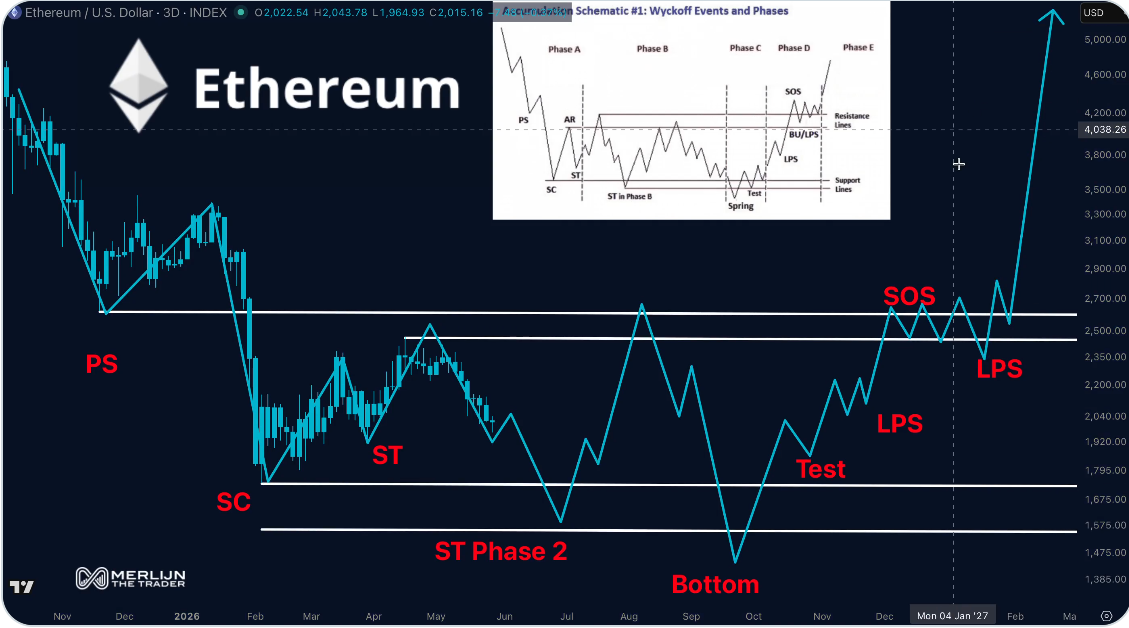
ETH/USD three-day chart. Source: Merlijn The Trader
Another analysis by Echo Analysis said a bear flag breakdown projected ETH price drop toward $1,500 support.
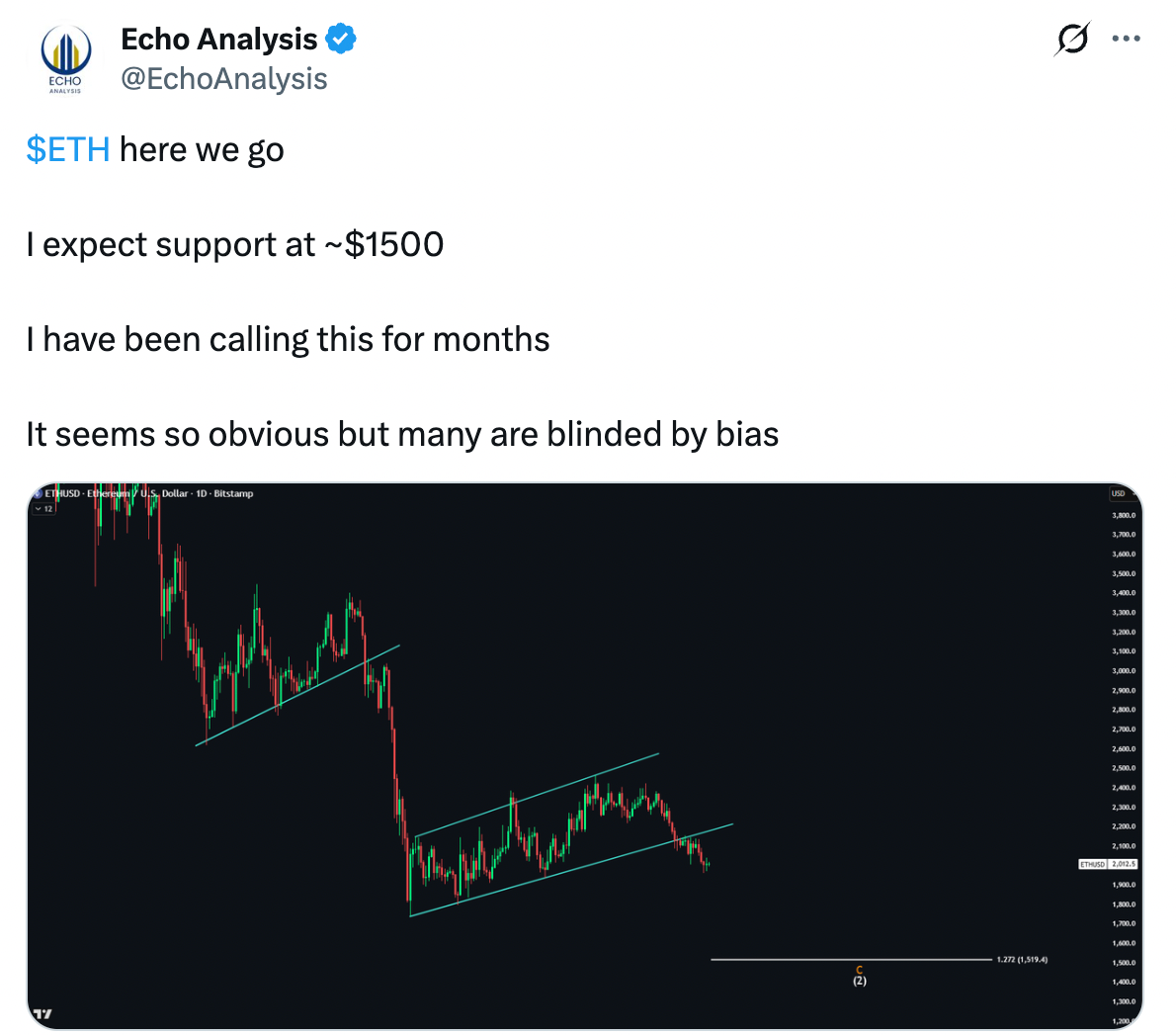
ETH/USD daily chart. Source: Echo Analysis
As Cointelegraph reported, increasing supply on exchanges and declining ETF demand put ETH at risk of another leg down toward the $1,500-$1,700 demand zone.
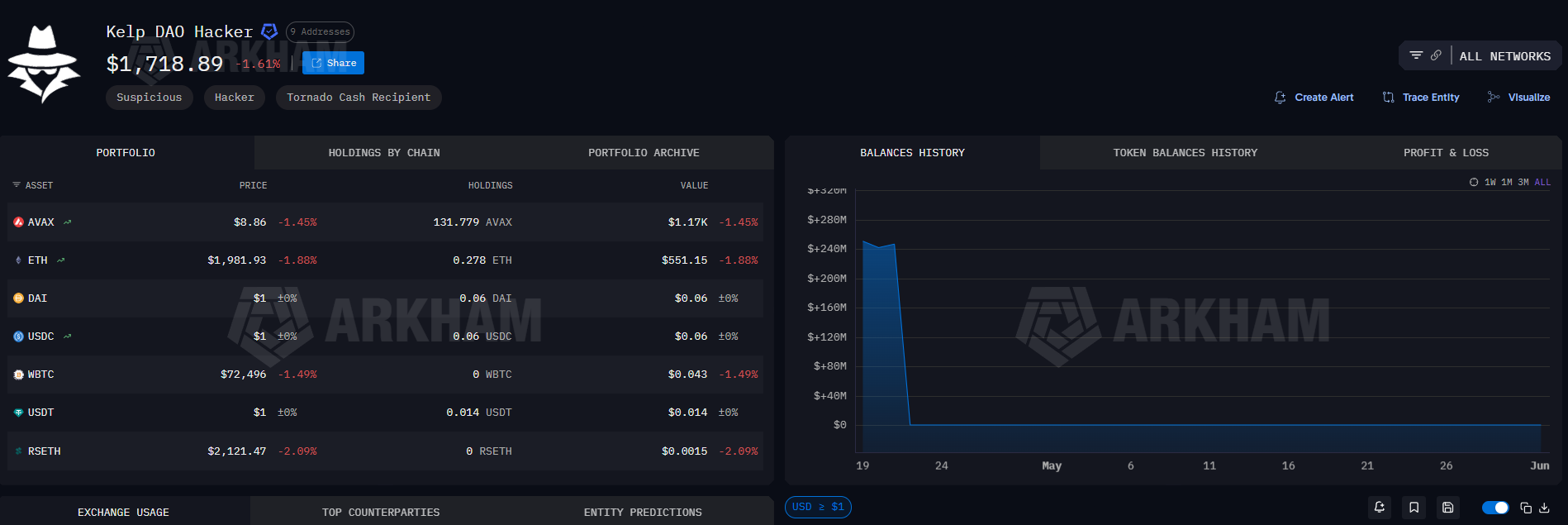
The hacker behind the $293 million Kelp DAO exploit has laundered nearly all of the unfrozen stolen funds, or about $220 million, in just six weeks, according to Arkham data and onchain analysts.
The Kelp DAO hacker-tagged wallet appears to have laundered nearly all the stolen funds, with just $1.7 million remaining traceable in the wallet, according to blockchain data provider Arkham. The malicious actor drained 116,500 Kelp DAO restaked ETH (rsETH) on April 18, pushing the total amount stolen from crypto hacks to $630 million for April.
The funds were laundered in two layers: bridging to Bitcoin using crypto mixer Wasabi and then returning to Ethereum before withdrawing and depositing via mixing protocol Tornado Cash, according to onchain analyst Specter.
The laundering activity may significantly reduce the chances of recovering the remaining unfrozen funds.
An additional $71 million was frozen by Arbitrum’s Security Council on April 21. A governance proposal and a US court order previously approved the transfer of the frozen funds to an Aave-controlled multi-signature wallet for the rsETh recovery effort. The next hearing on the ownership claims tied to the frozen funds is set for Friday in New York, court documents show.
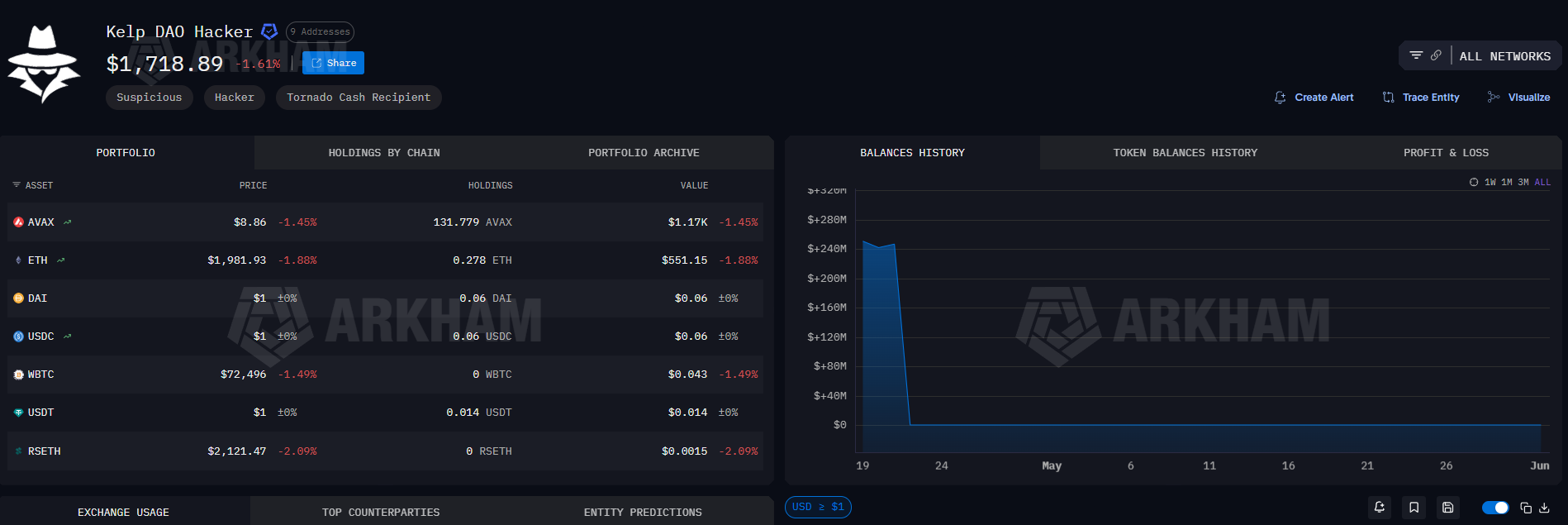
Kelp DAO Hacker-tagged wallet, total balance. Source: Arkham
The development comes a week after Kelp DAO said it restored its restaked Ether token as part of a five-week recovery effort, after the final tranche of 20,373.7 rsETH tokens was sent to the LayerZero smart contract responsible for locking, minting, burning and releasing rsETH during cross-chain transfers, Cointelegraph reported Tuesday.
Related: Verus bridge exploiter returns $8.5M after bounty offer
Crypto hacks decrease by 90% in May, but DeFi security concerns persist
Cryptocurrency hacks logged a significant decrease during May, but it wasn’t enough to soothe the growing concerns tied to the security of the decentralized finance (DeFi) industry.
Losses from cryptocurrency exploits fell to $68.3 million in May, marking a near 90% decline from the amount lost in April, according to crypto security platform CertiK. About $2.6 million was attributed to phishing attacks, while a total of $9.4 million was successfully recovered or returned.
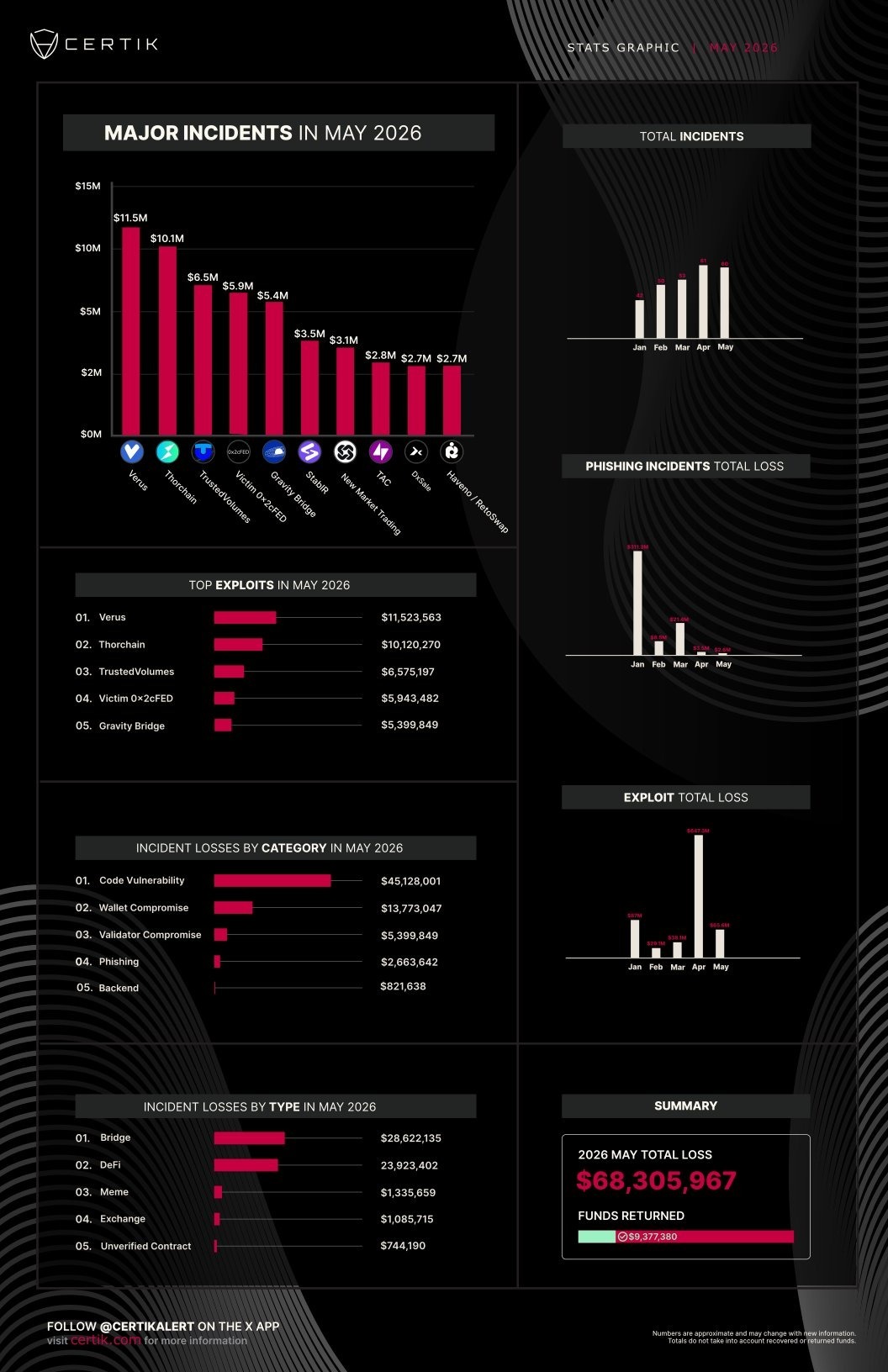
Crypto exploit losses in May reached $68.3 million. Source: CertiK
Still, the $293 million Kelp DAO exploit triggered wider concerns about the safety of the industry, prompting DeFi protocols to reevaluate the security of their oracle providers.
Within three weeks after the exploit, Bitcoin DeFi platform Solv Protocol and liquidity protocol Tydro both migrated to Chainlink’s Cross-Chain Interoperability Protocol (CCIP), seeking a more secure oracle provider.
Kelp DAO also migrated its rsETH token to Chainlink CCIP, moving away from its previous LayerZero-powered bridge after attributing the incident to weaknesses in its cross-chain setup.
However, LayerZero said on April 20 that the exploit resulted from a single point of failure in Kelp DAO’s implementation, which relied on a single LayerZero DVN as the only verified path despite prior warnings against that configuration.
Magazine: The legal battle over who can claim DeFi’s stolen millions

Do You Work Out Mid-Workday?

Saudi must overcome challenges of the past at the 2026 World Cup

FINANCE CAREERS That Will Make You RICH! @ZellEducation


-

 NewsBeat5 days ago
Israel says it has killed new Hamas military leader in Gaza City airstrikes
-

 Tech5 days ago
NASA taps Blue Origin to deliver lunar rovers for Moon Base initiative
-

 Sports7 days ago
2026 NBA Finals schedule, odds: Knicks await Thunder or Spurs after winning East
-

 News Videos6 days ago
XRP *JUST* SUCCEEDED!!!! CLARITY ACT EXPOSED!!! (SHE EXPOSED IT)
-

 News Videos3 days ago
This is BROKEN! INSANE 5x MONEY CAR WASH WEEK! The NEW GTA Online UPDATE Today! (GTA5 New Update)
-
 Crypto World6 days ago
Micron Crosses $1 Trillion Market Cap as AI Demand Reshapes Memory Sector
-
 NewsBeat7 days ago
Hottest May day ever as London hits 34.8C in 2C leap from previous records
-

 Business6 days ago
Selena Gomez Reportedly Upset Over Benny Blanco’s Comments on Her ‘Terrible’ Diet
-

 Business7 days ago
Nikkei 225 Surges Past 65,000 for First Time as Iran Peace Hopes Fuel Record Rally
-
 Tech7 days ago
China assigns ID codes to 28,000+ humanoid robots
-

 Tech4 days ago
Waymo dominates autonomous vehicle registrations as Tesla trails behind
-
 Entertainment7 days ago
‘Breaking Bad’ Star’s Easy-to-Binge 6-Part Crime Series Spin-Off Is Finally Heading to Free Streaming
-

 Tech5 days ago
The Samsung pay deal is the moment Korean unions changed register
-
 Tech2 days ago
SpaceX just won a second Golden Dome contract. This one is $4.16 billion.
-

 Entertainment6 days ago
Days of our Lives 2-Week Spoilers May 25-June 5: Gwen Rages, Abe Confesses & 2 Tragic Anniversaries!
-
 NewsBeat3 days ago
FIRST NIGHT REVIEW: Take That bring the Circus back to life in spectacular sun-soaked style
-
 Entertainment7 days ago
Taylor Swift Fans Label Travis Kelce’s Beer-Chugging A ‘Red Flag
-

 News Videos3 days ago
SHE IS KILLING XRP!!! WATCH URGENT AND ACT FAST
-

 Tech6 days ago
Millions of AI agents imperiled by critical vulnerability in open source package
-
Crypto World5 days ago
SpaceX’s $2 Trillion IPO: Why Tech Giants Nvidia (NVDA), Apple (AAPL), and Microsoft (MSFT) May Face Pressure
You must be logged in to post a comment Login