Horror fans can’t get enough of the movie Obsession. Written and directed by Curry Barker, Obsession follows Bear (Michael Johnston), a hopeless romantic who makes a wish on a One Wish Willow to make his friend and crush, Nikki (Inde Navarrette), fall in love with him. While his wish comes true, his dream romance turns into a bloody nightmare that threatens to destroy him and everyone around him.
After it was made on a budget of less than $1 million, Obsession achieved universal acclaim in theaters, receiving a 96% Certified Fresh rating on Rotten Tomatoes. It also grossed over $100 million at the box office in just three weeks, according to Box Office Mojo, making it one of the most successful horror movies of the decade.
In an interview with Digital Trends, Obsession actor Megan Lawless, who portrayed Bear’s friend and secondary love interest, Sarah, in the film, discussed how she brought her beloved character to life, what it was like making the movie with the cast and crew, and what the future holds for her after its unprecedented success.
This interview has been edited for length and clarity.
Advertisement
Focus Features / Focus Features
Digital Trends: Megan, thank you so much for joining me today. Let’s get started. How [are] you doing?
Lawless: I’m great. How are you?
Digital Trends: I’m fantastic. Everyone, including myself, can’t get enough of Obsession. It just grossed over $100 million at the box office, and I’ve been seeing a lot of people online saying how much they loved your performance as Sarah in the film. So I was wondering if you could tell us how it feels to see so many people react to your character in this way.
Lawless: It’s great. I mean, I’ve always loved Sarah, and I was hoping that people could extrapolate a lot from the time that I was on screen and really root for her. That was always my goal: for people to root for her. So now that I’m seeing everyone rooting for her…in the comments, it just makes me really happy that they love her the way I love her, and that all the elements came together to get fans to support her and root for her.
Digital Trends: Awesome. I’m really curious about what your inspirations were for bringing [Sarah’s] character to life.
Advertisement
Lawless: Oh, that’s a great question. I don’t know if I had any specific inspirations, per se. I think I just read her off the page, and I understood her pretty immediately. And then after talking with Curry and just making sure that our vision aligned, I felt that just bringing a lot of myself into it and perspective. Her perspectives on everything, I think, shape her as a character as well a lot. So, yeah, that was pretty much it.
I stylistically drew inspiration from Hayley Williams and more punk rock-type girls, more than myself. We have very different styles, me and Sarah. So, that was really fun. And then, I was looking at different punky cool chicks on Pinterest and stuff to get inspiration on my hair because we changed my hair for me to play Sarah. So I was looking for a haircut that I thought would embody how I viewed Sarah to be. And then, Blair [James], the costume designer, got everything aligned, and then she came together visually, and that was the really fun part of the process.
Digital Trends: Awesome. What was it like working with everyone on the set of this film? I’ve seen behind the scenes [footage]. It seems like you were all having the time of your lives on it. So I wonder if you can tell us more about that.
Lawless: Oh, we did have the time of our lives. It was just incredible. I say this time and time again, but I’ve never been so close with my castmates…and crew members than I have been with Obsession. Me and Inde, she slept in my bed. We had sleepovers twice last weekend, and we do so much together.
Advertisement
And me and Haley Johnson, our producer, I can call her up anytime. And we also hang out outside of work. We are really good friends. I’ve developed such deep friendships with people I work with. We throw game nights sometimes, and we still are maintaining a really great friendship and rapport.
Even after stopping filming and after the film has been released, we’re making an effort to keep seeing each other. And that has never happened for me to this level. And it’s just another huge blessing that comes out of Obsession. It’s just so special, every part of it.
Digital Trends: That’s really fantastic to hear. It’s so great to have a community of friends [who] get together to make films together. It’s just really great to see that dynamic brought to life on the screen.
Speaking of Inde, I’ve seen videos online. You really seem like the best of friends right now. But compared to your characters in the film, they were really clashing over what was going on. A lot of the terror came from [Inde’s] character as Nikki. Were there times during the production where you were genuinely terrified of her and what she was bringing to the film?
Advertisement
Focus Features / Focus Features
Lawless: I must say, no. Inde does not genuinely terrify me because I just know her so well, and it’s hard to remove. But I will say that I was constantly in awe of her performances. I just thought they were incredible. The way she would transform.
But yeah, behind all the movie magic and like, just in between takes coming and being able to joke around and have fun, that removed all of the fear for me when I watch it now as a whole. I watched it in a theater or something. Then I can remove myself from the story and really be engaged with the story from more of an outside perspective, I would say, but never on set.
Digital Trends:Right. And speaking of story, one of the most talked about parts of the movie is that scene in the car when Nikki attacks you with that brick. That had my jaw on the floor. It was so shocking, and the tragedy [that] comes afterwards after Bear opens that acceptance letter. That broke my heart. So I was wondering if you could tell us more about what you thought about that scene being in the film.
Lawless: Oh, my gosh. Yeah. I mean, I loved the scene. I had a feeling, even before I started reading it, that my character would be killed off. All anyone can hope for is that her death scene is iconic, and people will talk about it, and it will really make audiences feel something. And I can say without a doubt…it really is a strong moment in the film where everything changes for Bear.
It’s the catalyst that leads us to the finale of the film, and it’s just so momentous, and I love how much gravitas it has. When I was reading it, it was just so insane, I was really stoked about it. And I was really curious as well to see how we would pull all the pieces together to make it happen. So the whole process was really fun, making that scene what you see on the film.
Advertisement
Digital Trends: Absolutely. I mean, it reminded me of this similar scene from The Haunting of Hill House…There’s, like, a similar jump-scare sort of scene in the car that changes everything. And I got that same feeling watching that scene in the theater.
And another thing I was really intrigued by the film is the dynamic between Sarah and her friends. With Bear, Ian, and Nikki. Once the wish has been made and Freaky Nikki is just dominating [Nikki’s] life, everyone just tries to keep [their] distance while saying she just needs psychiatric help, not knowing what’s really going on with her. But it really feels like they’re just trying to distance themselves from the issue.
In your opinion, do you think Sarah really considers Nikki like a friend or more just [as] competition for Bear’s affection?Focus Features / Foc
Lawless: I was talking about this the other day a little bit with Inde, actually. I think they’ve been friends for a long time. But I think this is one of those friend groups where they go way back. They’ve known each other since high school. And I think this might be a point in their lives where, if the events of the film didn’t unfold, they would start moving in different directions.
So they’re moving on to different chapters of their life. I want to go to art school. Nikki wants to quit [her] job so that she can work more on her writing. And so it might be a friend-group dynamic [where] they’ve outgrown each other a little.
Advertisement
I definitely think Nikki and Sarah are friends, and they’ve known each other a while, and obviously, at the start of the film, I’m comfortable enough with Nikki to confide in her that I have feelings for Bear, and that’s why she brings it up to Bear in the car that Sarah was talking about [him] all day. You know? She has a crush on [him]. And we definitely have a good enough friendship to have that sort of rapport.
But I think from Sarah’s perspective, when everything starts to unfold, and her friend has now kind of betrayed her. She exposed her feelings for Bear to Nikki, and then all of a sudden, Nikki is dating Bear the next day.
I think that would feel like a huge betrayal and probably sows a lot of seeds of doubt in Sarah’s mind [about] her friend and these friendships that she has… and she is trying to figure out why her friends would change their tune so suddenly.
And it must feel kind of personal. It would feel personal, or personal to me, if my best friend started dating the guy I’ve been telling her all about that I like the next day. [It] would feel like an attack.
Advertisement
Digital Trends: Right. Going back to what you said. The wish is really what causes the friend group to unravel. Part of me was wondering, “If Bear had never made that wish, do you think he would have ended up with Nikki, or would he have eventually been with Sarah?”
Don’t get me wrong. What he did later on in the film was awful. But there was some glimmers of hope for all their characters before that fateful wish. Focus Features / Focus Features
Lawless: Yeah. I’m not quite sure what would have happened. I like to believe that Sarah was close to telling Bear herself about her feelings. I even like to believe at [the trivia night], she has been telling Nikki about her feelings, and Nikki’s supposed to probe it all and eventually [Sarah] would get to tell Bear how she feels. After gauging his feelings, though, Bear has no feelings for her. So maybe, if she had heard that, she would have been like, “OK, never mind.”
I shouldn’t even try, but I think without the wish…Bear is not suitable to be in any relationship. [They] are mature enough to avoid someone that, if they were to get keyed on in that, they would avoid being with Bear because they understand that he has a lot of development and growth that he needs to work through before being in a relationship.
Digital Trends: Yeah, that’s what I thought, too. Sometimes in these situations, people just kind of like to learn to be comfortable with themselves before they can really be with others. So that’s something that Bear was never able to really get over. He was so desperate not to be alone that he basically just destroyed everyone’s lives.
Advertisement
Lawless: Yeah, that is just really, really dangerous…It’s just really damaging for all parties.
Digital Trends: Absolutely. So, after Obsession, what other projects are you working on right now?
Lawless: So I’m going to start filming another project, another film, it’s a thriller, next month. I’m not quite sure if I can name what it is, but you’ll see something in the news soon, I’m sure. I think there’ll be an article that is released about the cast eventually. But I do have plans to do that. And then, that’ll be really fun, another feature horror. Totally different kicker, which I like.
And then, we’ll see about that. I’ve been talking to a lot of people, meeting a lot of people, and reading a lot of scripts. So the possibilities are kind of endless. And it’s very exciting. I would love to do another film, but like a drama or work on a show, a dramatic show. I would love to just really explore my craft even more on a larger scale. So we will see.
Advertisement
Digital Trends: Yeah. I’m really looking forward to seeing whatever you do next. I think it’s going to be really great.
Lawless: Aw, thanks.
Digital Trends: Oh, you’re welcome. Now, as far as the future, I mean, do you see yourself working with Curry and anyone else from Obsession again? I know the cast of Curry’s next film, Anything But Ghosts, was just announced, but what about his Texas Chain Saw film? Do you see yourself working with any of them?
Lawless: Absolutely. I would love to work with all of them again. I got the opportunity to work with Haley Johnson, our producer, again on a short that we did before Obsession actually came out in theaters, but after we had filmed Obsession. And it was just so nice to have so many crew members and stuff, all of us together, because sometimes when you film, it’s like you wrap, and then you don’t get the opportunity to relive what you just did. This incredible thing you just did.
Advertisement
I would just love to work with Curry again. I would [with] Inde again. I mean, the whole cast I would work together again…you never know. We’ll see how things pan out. But we all have such good relationships with each other. I wouldn’t be surprised.
Digital Trends: That’s all really terrific to hear. I can’t wait to see what you all do next.
As AI becomes profitable, Jensen Huang claims companies are hiring more engineers
Jensen Huang isn’t worried about AI taking your job. In fact, he thinks the opposite is happening.
Speaking at Nvidia’s GPU Technology Conference (GTC) at Computex 2026 in Taipei—where thousands packed the venue, and 70 simultaneous watch parties broadcast across Taiwan—the CEO pushed back against concerns about AI-driven unemployment with a blunt dismissal.
People talk about AI reducing jobs. Complete nonsense. It’s causing more software engineers to be hired.
Jensen Huang
His reasoning is straightforward. A software engineer who uses AI well can now produce the economic output of three engineers. That doesn’t make engineers redundant—it makes them more valuable. Companies want more of them, not fewer.
Advertisement
Huang estimates that the world’s 30 to 40 million software developers, who collectively earn around US$3 trillion in salaries annually, are now producing what amounts to US$9 trillion in productive output, effectively tripling their productivity.
“If that line were flat, then obviously people will hire fewer software engineers,” he said. “But because the output is so incredible, people want to hire more.”
AI has crossed from experimental to profitable
The broader argument behind Huang’s jobs claim is that AI has finally become genuinely useful—and genuinely profitable.
He pointed to the rise of agentic AI as the turning point. Unlike traditional chatbots that simply answer questions, agentic systems can observe, plan, and execute tasks using tools such as browsers, spreadsheets, and code compilers, much like a human worker would.
Advertisement
“Today we can say that agentic AI has arrived, that useful AI has arrived.”
As AI becomes more capable, businesses are finding more ways to deploy it commercially. “Tokens are now profitable units of revenue,” he added, referring to the basic units of data processed by AI models. “Because it is now profitable, AI companies want to build a lot more.”
That, Huang argued, is creating demand for more software development, not less.
Pointing to GitHub data, he noted that developer activity has continued to surge despite rapid advances in AI. GitHub’s Octoverse 2025 report found that developers pushed nearly 1 billion updates to software projects in 2025—a 25% year-on-year increase—while more than 36 million new developers joined the platform in a single year.
Advertisement
With agentic AI now entering the picture, Huang argued, that trajectory is only going to steepen.
The effects are already rippling through entire economies. Nowhere is that more evident than in Taiwan, the epicentre of the AI hardware boom.
The country’s GDP is forecast to grow 9.64% in 2026—its fastest pace in 16 years—powered largely by demand for AI chips and computing infrastructure. In the first quarter alone, GDP expanded 14.55%, the fastest quarterly growth in nearly 48 years.
Reinventing the PC
Beyond the jobs debate, Huang saved a major product announcement for the keynote.
Advertisement
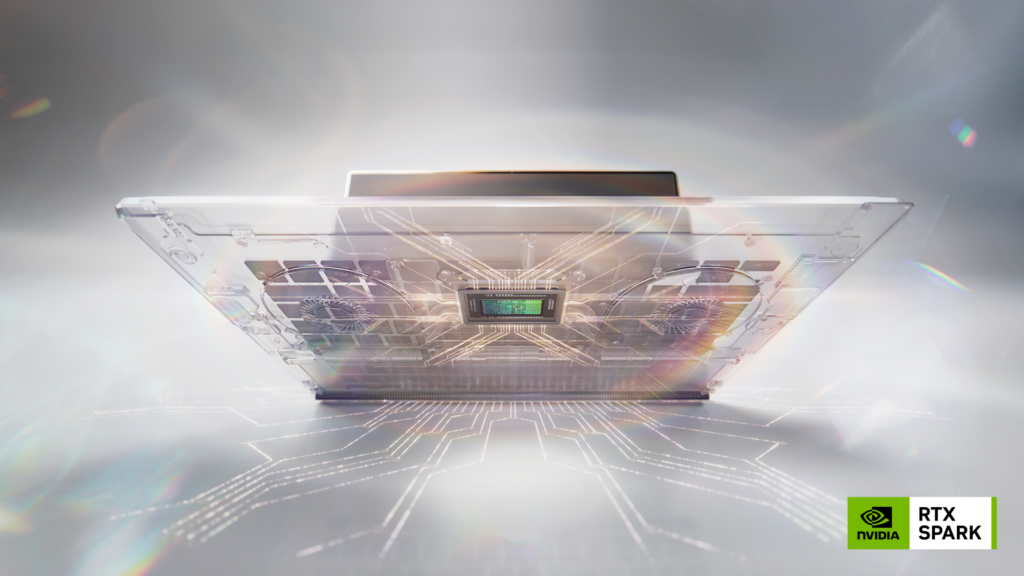
Nvidia and Microsoft have co-developed a new superchip—the RTX Spark—that Huang says marks the biggest reinvention of the PC in four decades.
Image Credit: Nvidia
Built with MediaTek, the chip features a Blackwell GPU, a 20-core CPU, and 128GB of unified memory on a 3-nanometre process, powerful enough to run 120-billion-parameter AI models entirely on a laptop with no internet connection required.
Microsoft, Dell, HP, ASUS, Lenovo, and MSI are all expected to launch devices this fall, with Huang claiming “100% of the world’s PC industry” has signed on.
The vision goes well beyond a faster laptop. Huang imagines a dedicated AI computer sitting in your home like a TV or games console, running personal agents around the clock—managing your calendar, booking travel, monitoring your home, and getting smarter over time.
“I could totally imagine that someday there’s actually an AI supercomputer in your house, running all of your agents,” he said. “And these in time become a lot more like R2-D2 to you than a PC.”
Advertisement
Huang also said that the same agentic computing technology powering cloud AI today will eventually run in robots, satellites, factory floors, and base stations.
“There is no question this reinvention of the computer is as big a deal as the reinvention of the phone into the smartphone,” he said. “And this is the beginning of that journey.”
CEO Aravind Srinivas demonstrated the system onstage alongside Intel CEO Lip-Bu Tan during Intel’s keynote address, using Perplexity’s “Personal Computer” agent to process confidential deal materials. In the demonstration, local models running on Intel Core Ultra Series 3 determined which information should remain on the device and which information could be sent to cloud-based models. Srinivas said the approach balances intelligence, accuracy, privacy, and cost.
The key claim is not that a model can run locally — dozens of tools already do that. It is that Perplexity’s system makes the routing decision itself, task by task, without requiring the user to choose in advance. Sensitive data like financial records or health information stays on the local machine; the heavier reasoning tasks that require frontier-scale models get sent to the cloud. One task, multiple execution locations, automatic orchestration.
“No product has done this before,” a Perplexity spokesperson said in an email to VentureBeat. The product is not yet available to users; according to the company, the hybrid inference feature will launch in the coming weeks.
Advertisement
Perplexity’s road from cloud-only agents to on-device AI orchestration
To understand why the Computex demonstration matters, it helps to trace the product arc Perplexity has been building since early this year.
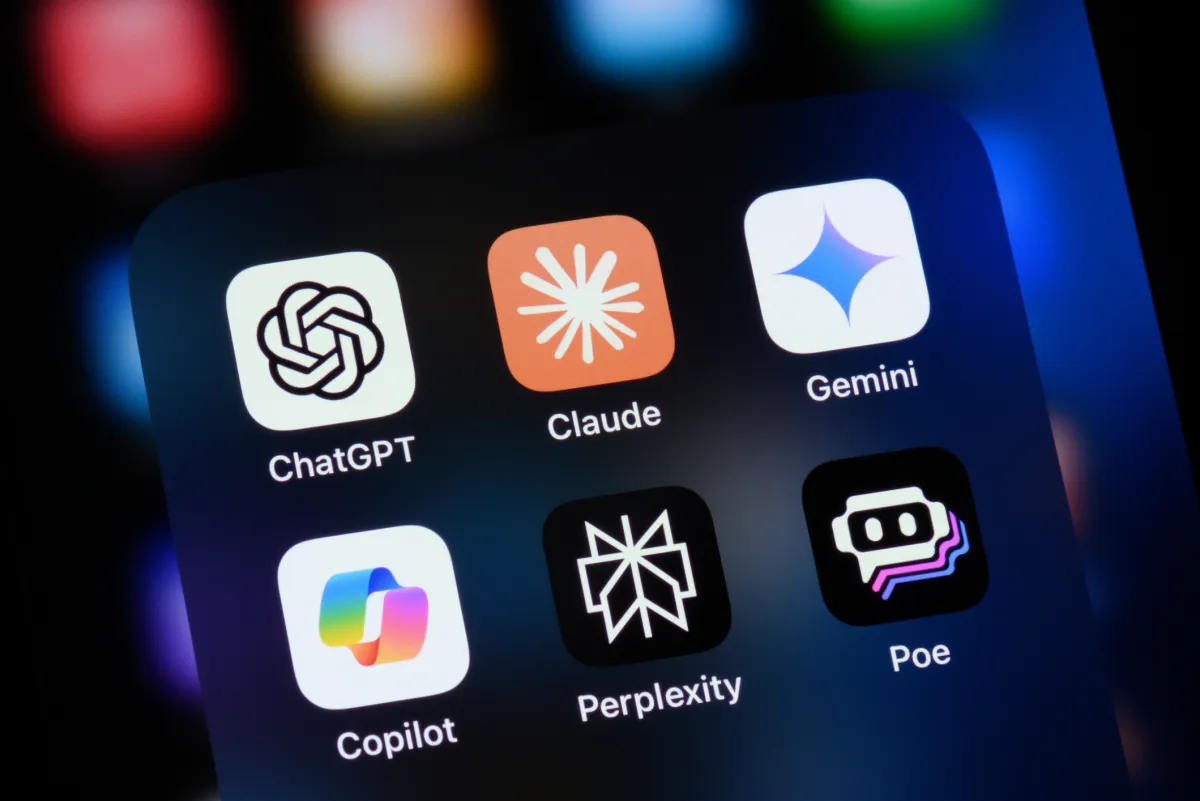
On February 25, Perplexity launched Computer, a multi-model AI agent that orchestrates 19 different AI models to complete complex, long-running tasks on behalf of users. The system ran entirely in the cloud, breaking goals into subtasks and routing each to whichever model — Claude, Gemini, GPT, Grok, or others — was best suited for the job. Perplexity Computer unified every current AI capability into a single system, functioning as a general-purpose digital worker that operates the same interfaces a user does.
Then, in March, Perplexity introduced Personal Computer at its inaugural Ask 2026 developer conference. That product launched as a new Mac app with support for a hybrid local-cloud AI agent, which Perplexity described as a “personal orchestrator” that hybridizes local and server environments for security and productivity. Personal Computer could access the Mac’s file system and native Mac apps to create and execute entire workflows, with files created in a secure sandbox and all actions auditable and reversible.
What Srinivas demonstrated at Computex extends this architecture in a fundamental way. Previously, even the Personal Computer product divided labor along relatively clear lines: local file access on the device, heavy computation on Perplexity’s servers.
Advertisement
The new hybrid inference orchestrator gives the system itself the ability to reason about where each piece of a task should execute — not just which model to use, but which physical location should process it. The system reportedly asks for user permission before sending sensitive tasks to the cloud, a design choice that addresses one of the central anxieties enterprises have about agentic AI: data governance.
Why Nvidia’s RTX Spark and Intel’s new silicon make the timing strategic
The timing of the demonstration is not coincidental. Computex 2026 has been dominated by a single theme: on-device AI. Just hours before the Intel keynote, Nvidia CEO Jensen Huang unveiled the RTX Spark, a new Arm-based superchip that the company positions as the foundation for a new generation of AI-native Windows PCs.
At full strength, the RTX Spark Superchip offers up to 20 Arm CPU cores, a Blackwell GPU with 6,144 CUDA cores, 128GB of LPDDR5X RAM, and up to 300 GB/s of memory bandwidth — enough power and memory for AI agents and 120-billion-parameter models with context lengths stretching to a million tokens. RTX Spark systems will begin arriving in the fall.
Intel, not to be outdone, used its keynote to showcase Xeon 6+ processors with 288 efficiency cores built on 18A technology for the data center, and positioned its Core Ultra Series 3 as the client silicon that makes hybrid inference possible on the PC.
Advertisement
Perplexity’s hybrid orchestrator sits at the intersection of both strategies. If the system performs as advertised, it creates a direct economic incentive for users — and eventually enterprises — to invest in more powerful local silicon. The more capable the on-device chip, the more inference can run locally, reducing cloud costs and improving latency for sensitive workloads. That dynamic benefits Nvidia, Intel, and every other chipmaker competing for AI PC sockets.
The implications extend well beyond chip economics. “As chips become more powerful, more intelligence moves onto a person’s machine, alongside server inference for the complex tasks that still need frontier models,” a Perplexity spokesperson told VentureBeat. “Sensitive and sovereign work can stay local, which changes the need for massive country-level infrastructure.”
That last claim — about sovereign infrastructure — is the most provocative. Nations from the UAE to France to India have been investing billions in domestic AI compute capacity partly on the assumption that sensitive data must stay within their borders, which means building or buying access to local data centers. If meaningful inference can run on an end user’s device with no data leaving the machine, the calculus changes. It does not eliminate the need for data centers, but it could soften the urgency of the buildout.
The model-agnostic architecture that makes hybrid inference possible
Perplexity’s hybrid inference play rests on the same architectural bet the company has been making all year: that the orchestration layer matters more than any individual model. For AI engineers, this signals a fundamental shift — the orchestration layer may matter more than the models themselves.
Advertisement
The key insight is separation of concerns: the orchestration layer handles task decomposition, state management, and tool coordination, while the model layer handles specific computations. This decoupling means teams can swap models as better alternatives emerge without redesigning the entire system.
Perplexity has leaned heavily into this philosophy. The company is doubling down on packaging frontier models in a consumer-friendly user experience, arguing that there is value in orchestrating multiple third-party LLMs to obtain the most cost-effective and accurate answers to queries. Models, in Perplexity’s view, are specializing, not commoditizing.
The hybrid inference extension takes that logic one step further. Perplexity is now orchestrating not just across models but across physical compute locations — choosing which model runs where. A lightweight local model might handle a privacy-sensitive document summarization task while a frontier cloud model tackles the complex reasoning required to analyze that summary against a broader market landscape. The orchestrator manages the handoff.
This is a technically ambitious claim. Making it work reliably in production will require the orchestrator to accurately assess the complexity of each subtask, understand the sensitivity of the data involved, know the capabilities and latency characteristics of whatever local hardware the user has, and manage the state of a task that may be bouncing between environments mid-execution.
Advertisement
It is easy to imagine edge cases where the routing logic fails, sends something sensitive to the cloud, or degrades performance by assigning a task to an underpowered local model. Perplexity says the system will be chip-agnostic, though the initial Computex demo ran on Intel silicon. The company expressed enthusiasm in its communications about the new AI chips announced at Computex this week, suggesting it intends to optimize across vendors.
A $20 billion valuation, nine lawsuits, and the pressure to deliver
The hybrid inference announcement arrives at a complicated moment for Perplexity. The company has been on a remarkable growth trajectory: It secured $200 million in new capital at a $20 billion valuation, just two months after raising $100 million at an $18 billion valuation. Since its founding three years ago, the rapidly growing AI company has raised $1.5 billion in total funding, according to PitchBook data.
But the company also faces a mounting stack of legal challenges. Nine organizations have filed active suits against Perplexity for alleged copyright and trademark infringement as of May 31, 2026: CNN, the New York Times, News Corp and Dow Jones, the New York Post, the Chicago Tribune, Encyclopedia Britannica, Merriam-Webster, Reddit, and Japan’s Yomiuri Shimbun. The CNN lawsuit, filed just days ago on May 28, is the most recent, accusing Perplexity of scraping more than 17,000 CNN stories, photos, videos, and other content and using that material to train its products. Perplexity has responded with a consistent message. “You can’t copyright facts,” the company’s chief communications officer Jesse Dwyer said in a statement.
Other publishers have opted for partnership over litigation. Time, Gannett, Le Monde, and Der Spiegel have signed licensing arrangements with Perplexity. The company launched a Publishers Program in mid-2024 in which participating outlets receive a share of revenue generated when their content is cited in Perplexity answers.
Advertisement
According to CNBC, Perplexity’s chief business officer Dmitry Shevelenko confirmed at the time that the flat rate was a double-digit percentage but declined to share specifics. As TechCrunch reported in December 2024, additional publishers including the LA Times, Adweek, The Independent, and Lee Enterprises subsequently joined the program, though not without internal controversy — reporters at some outlets told TechCrunch they were not informed of the deals before they were announced publicly.
The legal risk is not existential, but it is material, and with enterprises increasingly evaluating Perplexity’s tools for sensitive workflows — precisely the use case the hybrid inference system is designed to serve — unresolved intellectual property questions could dampen adoption.
How hybrid inference sharpens Perplexity’s enterprise ambitions
The hybrid inference demo should be read alongside Perplexity’s broader push into enterprise software, a transformation that accelerated dramatically this year. At the Ask 2026 developer conference in March, VentureBeat reported that Perplexity announced Computer for Enterprise, positioning the three-year-old startup as a direct competitor to Microsoft, Salesforce, and the legacy enterprise software stack.
Beyond Computer’s existing 100-plus integrations, enterprise customers gained access to business-grade connectors for Snowflake, Datadog, Salesforce, SharePoint, and HubSpot, with administrators able to install custom connectors via the Model Context Protocol. The package also includes purpose-built workflow templates for legal contract review, finance audit support, sales call preparation, and customer support ticket triage, alongside SOC 2 Type II certification and the option for zero data retention.
Advertisement
Hybrid inference deepens this enterprise pitch considerably. For regulated industries — financial services, healthcare, defense, legal — the ability to keep sensitive data on a local device while still accessing the reasoning power of frontier cloud models is not a nice-to-have. It is a potential compliance requirement.
An investment bank parsing confidential deal documents, for instance, might be unable to send those materials to a third-party cloud under existing data handling agreements. A system that can run the sensitive parsing locally while routing non-sensitive analytical tasks to the cloud offers a middle path. IDC forecasts a tenfold increase in agent usage and a thousandfold growth in inference demands by 2027, and security and governance rank as the top evaluation factor for enterprise agentic platforms, according to a CrewAI survey. Hybrid inference speaks directly to that priority.
The race to decide where AI actually runs is just getting started
Several questions will determine whether Perplexity’s Computex demonstration becomes a landmark product or a compelling prototype.
The actual performance characteristics remain untested outside a controlled stage environment — how the routing logic handles varied hardware configurations, unreliable network connections, and ambiguous data sensitivity classifications is an open question.
Advertisement
The competitive response matters too: Google, Microsoft, Apple, and OpenAI are all building their own local-cloud AI architectures. Apple Intelligence already routes some tasks locally and some to Private Cloud Compute servers, Google’s Gemini Nano runs on-device, and Microsoft’s Copilot+ PCs are designed around local inference capabilities. None of these systems, however, currently offer the kind of dynamic, autonomous task-level routing Perplexity claims.
Even if the technology works as demonstrated, there is the question of whether the business can keep pace with the ambition. At a $20 billion valuation with approximately $200 million in annual recurring revenue, Perplexity trades at roughly 100x revenue, a premium requiring aggressive growth to justify. Management’s $656 million 2026 revenue target implies 230% growth, creating significant execution pressure.
Perplexity has built its business on a bet that the future belongs not to any single model but to the system that orchestrates all of them. At Computex, it extended that bet from the software layer to the physical layer — from which model to which machine. In the AI industry’s relentless race to build bigger data centers and train larger models, Perplexity just argued that the most important computer in the stack might be the one already sitting on your desk.
AI is getting expensive, and some companies are cutting back on usage in an attempt to moderate costs. That cohort includes Uber, which recently instituted internal usage caps as a way to cut down on its exorbitant AI spend.
Bloomberg reports that the company has instituted a new rule that places a monthly $1,500 cap per employee and per agentic coding tool, including Anthropic’s Claude Code or Cursor. The usage is trackable via an internal dashboard that each employee has access to, although — in certain cases — the caps can be exceeded with permission, the company says.
The news is perhaps not too surprising, since, in April, the company’s CTO revealed that the ridesharing giant had blown through its entire annual AI budget in a matter of four months. That appears to have occurred after Uber encouraged staff to use AI “as much as possible” and even ranked their internal usage competitively on internal leader boards, The Information previously reported.
Uber’s COO, Andrew Macdonald, also recently cast doubt on AI’s productivity impact, noting during a podcast appearance that “it’s very hard to draw a line” between AI usage and new consumer features.
Advertisement
Uber’s cutback raises a broader issue that the tech industry is currently facing: As enterprises pour money into AI, where exactly is the return on investment? Indeed, AI ROI has so far remained a largely theoretical phenomenon that everybody hopes will eventually materialize — although some companies are obviously getting a little restless while they wait.
Microsoft has unveiled Scout, an experimental always-on AI “autopilot” agent for Microsoft 365 that can operate across Teams, Outlook, OneDrive, SharePoint, calendars, contacts, browsers, and external apps via MCP. “Autopilots stay active in the background, understand how work gets done across your apps and systems, and take action without needing to be prompted each time,” said Omar Shahine, a Microsoft veteran who recently announced he is leading a new team to bring OpenClaw-based personal assistants to Microsoft 365 apps. Computerworld reports: Shahine said Scout can reduce mundane tasks that office workers face, such as coordinating and scheduling meeting times with colleagues, or blocking times in a user’s calendar based on upcoming work commitments. “It can also spot risks, like stalled decisions, so you can address them before they become blockers,” he said. It’s available as an “experimental release” to customers of the company’s Frontier program, Microsoft said, and will require Intune policy configuration and “opt-in attestation.” […] It’s not clear whether Scout will be included in Microsoft 365 Copilot subscriptions or charged separately. Microsoft did not immediately provide additional details about pricing.
On April 14, 2025, Dan Berulis, an IT staffer at the National Labor Relations Board (NLRB), filed a Congressional whistleblower complaint with an extraordinary and urgent claim: The so-called Department of Government Efficiency (DOGE) had seemingly compromised the agency’s data and appeared to be exfiltrating it out of the NLRB entirely. Additionally, Berulis claimed that mere minutes after DOGE members had accessed the agency’s data, there appeared to be login attempts from an IP address in Russia.
At the time, DOGE teams, orchestrated by billionaire Elon Musk, were sweeping across government, firing federal workers, and accessing sensitive data and technical systems with no oversight and little transparency.
The following day, Berulis went public in an NPR article with his name and claims. In it, he claimed that in the lead up to his Congressional disclosure, a threatening note had been taped to his door, including photos of him walking his dog that appeared to have been taken by a drone. Berulis was already scared that speaking out had made him a target.
In a new defamation lawsuit, filed by Berulis in a DC court on April 17 and made public this week, Berulis alleges that Musk himself made him a target of further violence by falsely stating that Berulis’ whistleblower claim against DOGE was fake. The complaint was initially filed under seal because Berulis maintains a security clearance that requires pre-publication review of anything related to his work with the government.
Advertisement
Five days after the NPR story went live, on Easter Sunday, April 20, 2025, Berulis got in his car to drive to Maryland to make a last-minute visit to his uncle, opting to take local roads instead of the major highway nearby. Within about five minutes of leaving his house, Berulis realized something was wrong. As he approached a stop sign at an intersection, his car wouldn’t slow down. He ran off the road and into the sign. When he examined his car, he found something that terrified him: His brake lines had been cut.
Unbeknownst to Berulis at the time, the night before, on April 19, at 8:06 pm, Musk had reshared an X post from right-wing influencer Mario Nawfal, claiming that DOGE had been “cleared” and that people were asking the the Department of Justice to investigate Berulis. Musk shared Nawfal’s post, writing, “Filing a deliberately false whistleblower claim is a serious crime.” The story had originally been circulated by @amuse, an account that has regularly shared misleading claims and misinformation and is followed by influential people like Musk and Department of Health and Human Services Secretary Robert F. Kennedy, Jr. The @amuse post included Berulis’ name and photograph.
According to a police report viewed by WIRED, when a police officer from Prince William County arrived at the scene, Berulis’ lawyer from Whistleblower Aid, Andrew Bakaj, who had helped Berulis file his Congressional complaint about DOGE, was also on the scene.
Berulis, who found out about Musk’s tweet after the accident, thought back to the threatening note that had been posted on his door earlier that month.
Advertisement
According to the suit, Musk’s “readers drew the implication” that Berulis had committed a serious crime, “as reflected in replies demanding prosecution, jail, harm, or arrest,” and this put him at “increased risk of physical harm.” In the replies to the post, which remains online, several users called for Berulis to be prosecuted. One user wrote, “Snitches get stitches”.
“The correlation was obvious to me, with the timing,” he says. Berulis also began to worry about how exactly whoever had been threatening him knew where he lived.
PSVR headsets are a great place to start for PlayStation fans who also want to try virtual reality. And now, PlayStation’s Days of Play Sale is the perfect time to buy one. Right now, you can get the PlayStation VR2 headset in the US store for $299 (was $399) and in the UK store for £309.99 (was £399.99).
Days of Play is PlayStation’s annual summer sale, kind of like a Black Friday event that takes place halfway through the year instead of near Thanksgiving. This particular discount will be active until 6/11 at 2:59AM EDT in the US or 6/10 at 18:59 BST in the UK.
The PlayStation VR2 launched in 2023, but it’s still new enough that you can’t expect to get a much lower discount than this. If you don’t want to wait until Black Friday for a potentially slightly lower discount (if they offer one at all), I’d buy now.
Advertisement
Today’s best PSVR headset deal
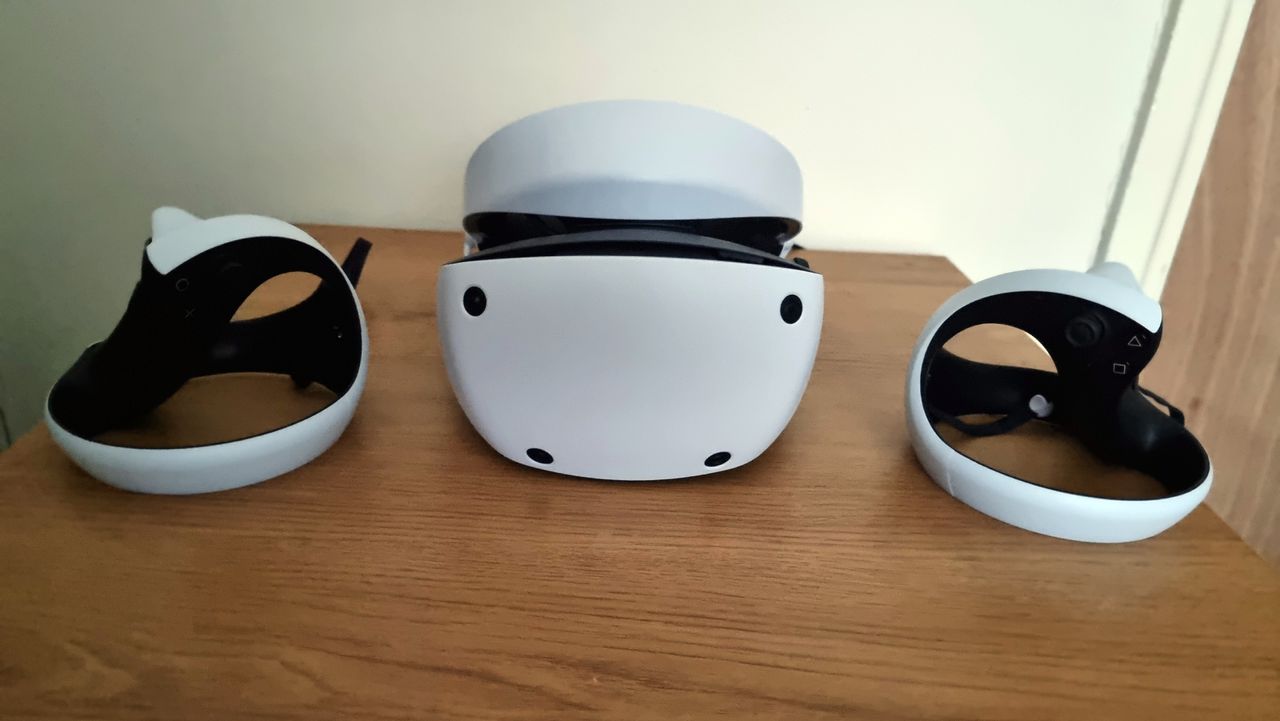
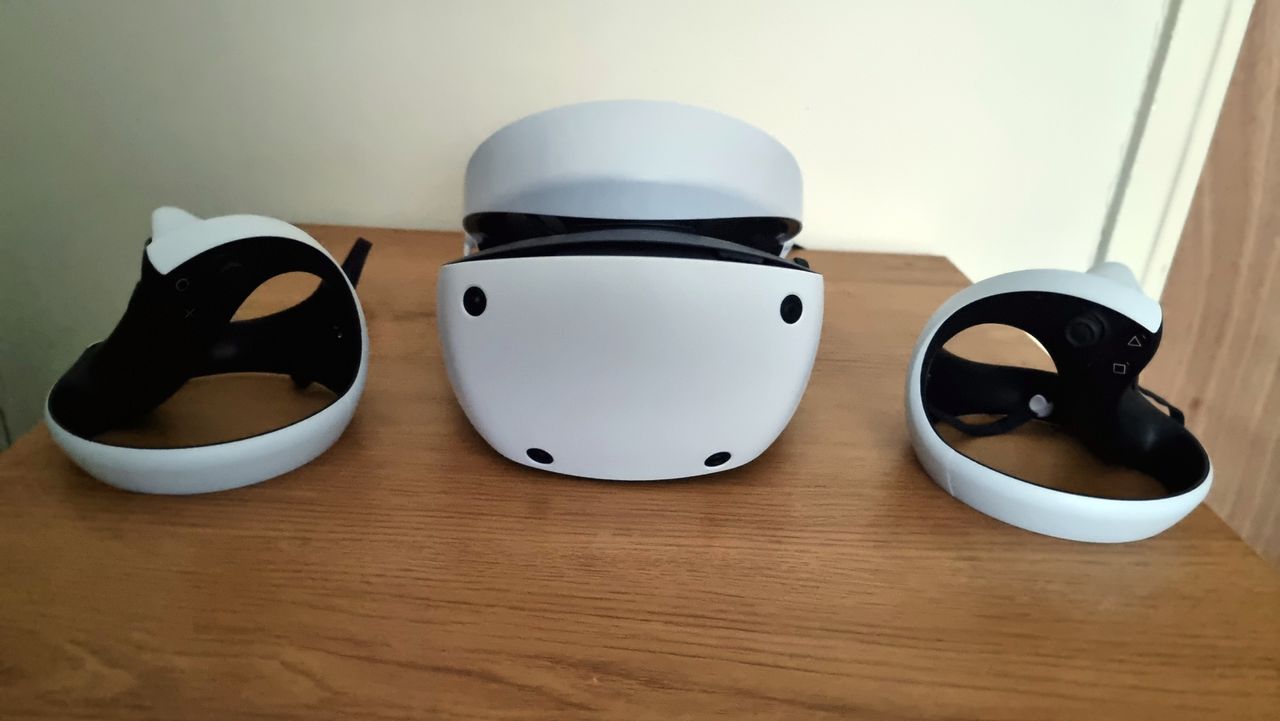
The PlayStation VR2 headset comes with two VR2 Sense controllers with straps, a USB charging cable, and in-ear stereo headphones with three sizes for earpieces. In the UK, you can also select a bundle that comes with a PlayStation Store voucher for Horizon Call of the Mountain for the same price. I’d recommend that one if you live in the UK, considering it doesn’t cost extra for the game.
The PlayStation VR2 is the best console experience we’ve had with a VR headset. In our PlayStation VR2 review, we rated 4.5 out of five stars for its improvements on the past PlayStation VR headset, such as the “superb image quality,” including 4K with HDR at 120fps. It features two 2000×2040 OLED displays, intelligent eye-tracking, and up to a 110-degree field of view.
These enhancements, along with its “simple setup” and “pin-sharp responsiveness”, boosted the score. The PSVR 2’s biggest downer was the price, which isn’t as much of a problem with this sale.
Advertisement
That said, I’d recommend browsing our best PSVR 2 games so you can plan what to play. What’s the point of buying a PlayStation VR2 headset if you don’t like any of the games? I’d also recommend browsing our best VR headsets in general, in case one of them better matches your interests.
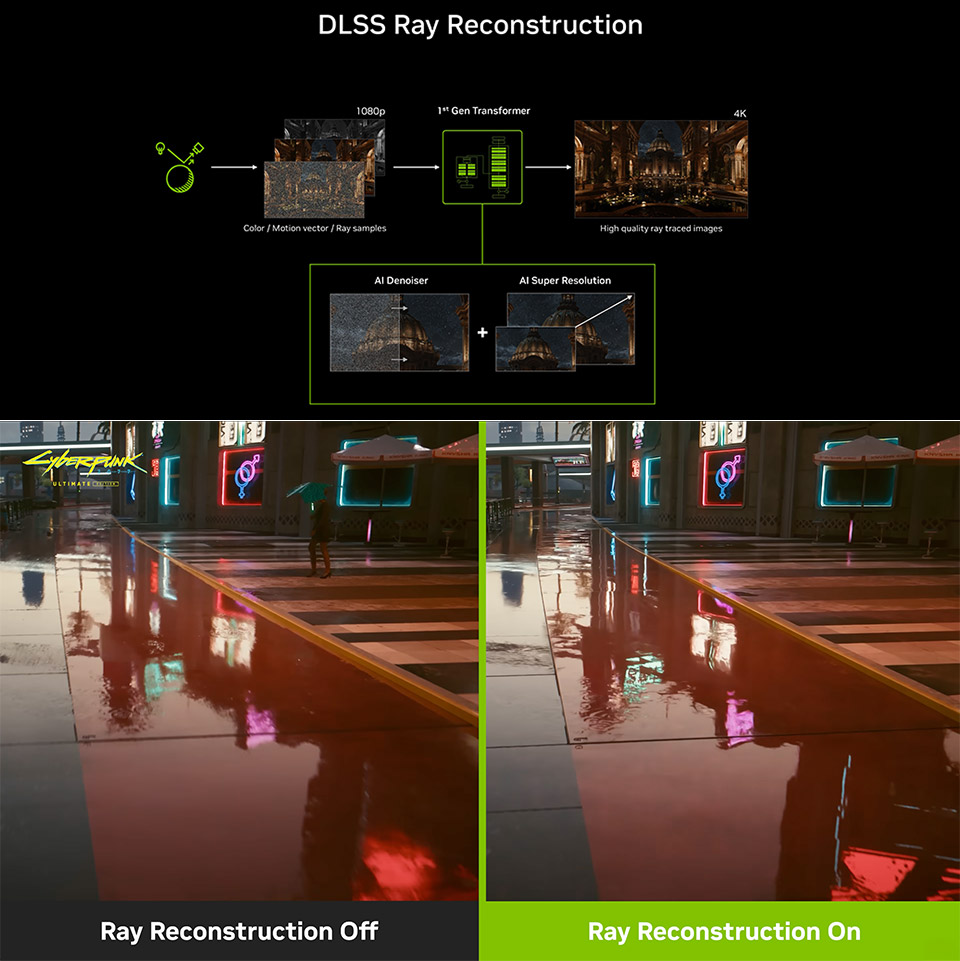
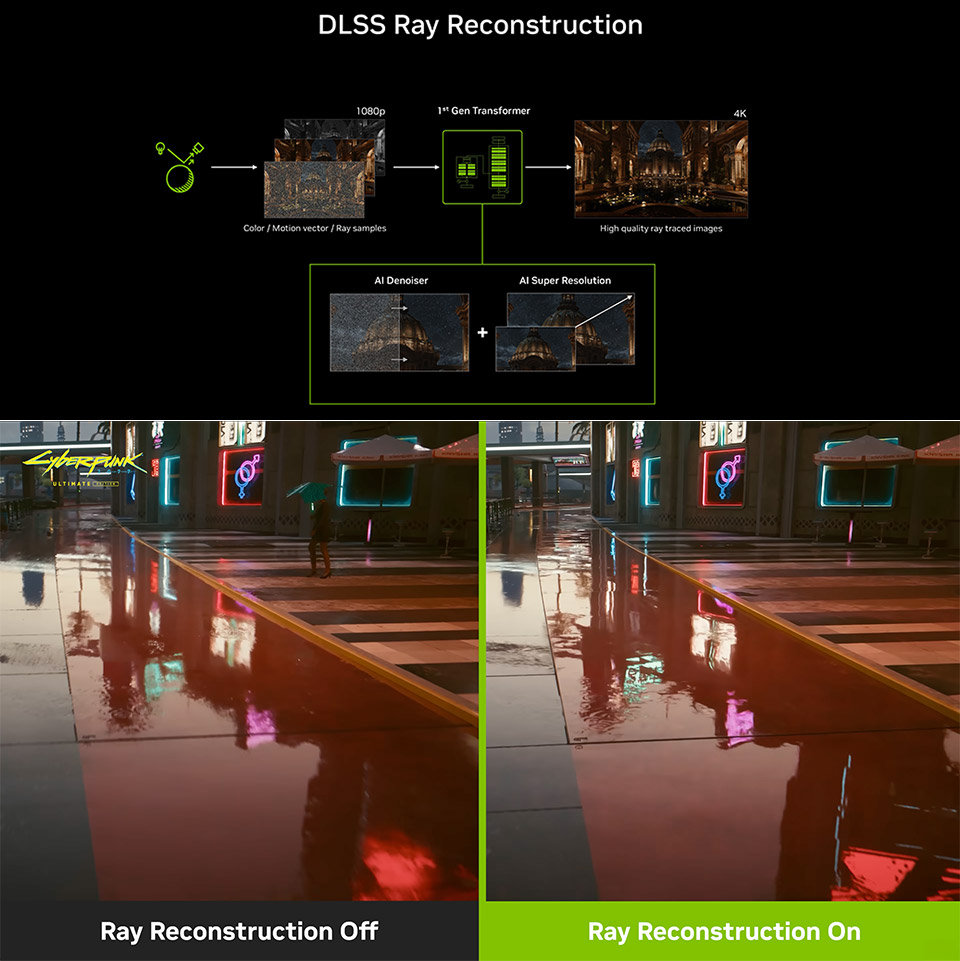
Players chasing realistic lighting and reflections in games often run into the same frustrations. Ray tracing looks impressive in theory because it simulates how light actually bounces around a scene. In practice, engines fire fewer rays than ideal to protect frame rates, which leaves behind grainy noise that older cleanup tools struggle to fix without blurring details or creating odd trails behind moving objects. NVIDIA addressed those issues with a new version of its Ray Reconstruction feature inside the DLSS family. The update relies on a second generation transformer model trained on far more data than before. It processes 20 percent more parameters and handles 35 percent more computations internally, yet it keeps performance roughly in line with the previous release.
The model now takes critical information straight from the game engine, such as motion data and how the engine samples individual pixels, giving the AI crucial new context to assist it decide what to keep and reject. This means that developers now have far more control over how information accumulates from one frame to the next, allowing them to fine-tune the outcomes to match the artistic vision for every game they’re working on.
High-Performance Computing: Harness the power of the AMD Ryzen Z2 Extreme processor to effortlessly handle demanding tasks. Enjoy reliable…
Simplistic Design: Enjoy the latest generation of Windows 11 Home for your everyday needs. MSI recommends Windows 11 Pro for business use.
Perfection Through Anthropometry: As a handheld device, Claw has achieved the optimal balance between its grip and weight. We have meticulously…
Consider Indiana Jones and the Great Circle as an example: those pesky snow particles no longer leave ugly ghosting trails when a character moves about. PRAGMATA becomes cleaner as the strong laser effects flicker over the image, leaving less junk to deal with once the light fades. Alan Wake 2 makes a much better job of preserving the very fine lines of vintage CRT TVs, which tended to blur and lose all of their wonderful detail for no apparent reason.
These small but significant adjustments may appear insignificant on their own, but they add up and make a tremendous difference over long gaming sessions. The good news is that the improved reconstruction works on all GeForce RTX graphics cards, including previous models from the 20 and 30 series. You don’t need the most recent hardware to benefit from this, either, because everything will be available via the NVIDIA app in August, once the game publishers have issued the necessary modifications. They already have 27 games planned to take advantage of this at launch, including Cyberpunk 2077, Hogwarts Legacy, and Star Wars Outlaws, as well as a number of other titles that will be launched immediately or very soon.
Advertisement
This isn’t just for games; the same AI approach is already being used as a denoiser in Blender. The upcoming version 5.3, which should be ready in the fall, gives 3D artists a far better understanding of how lighting will appear in the scene without having to wait for the full render to complete. Over a thousand games and applications have already benefited from NVIDIA’s extended RTX capabilities, which is fascinating. [Source]
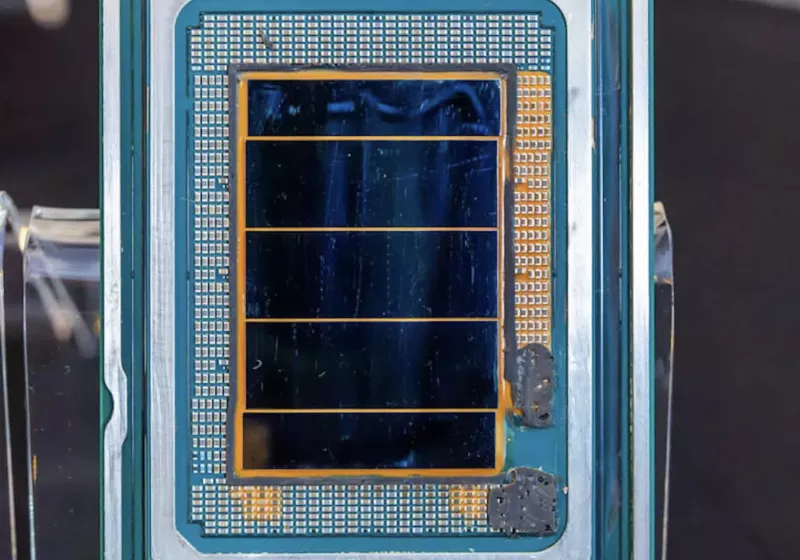
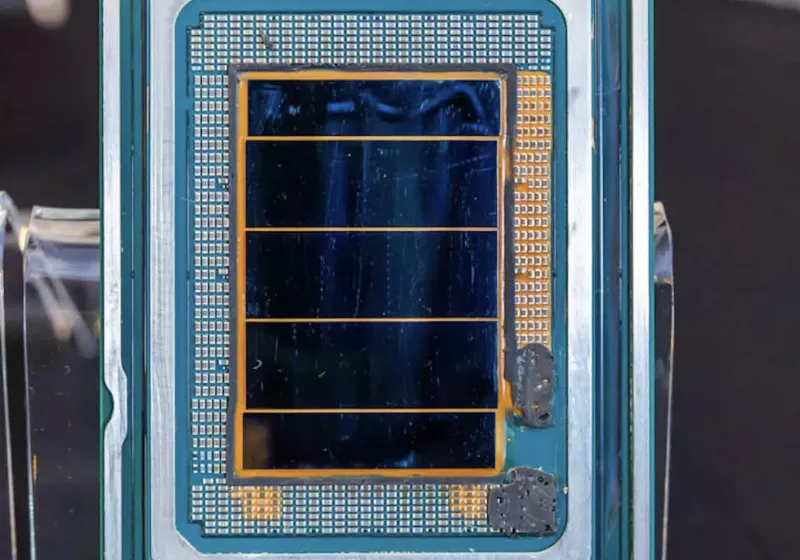
In the near term, Xeon 6+ Clearwater Forest is the part that matters. Formerly known simply as Clearwater Forest, the family uses only E-cores and scales up to 288 Darkmont cores per socket, along with 576 MB of L3 cache. Read Entire Article Source link
Tech and energy giants are among the biggest AI users, report reveals
The biggest users are also investing in data centers, chips, models and more
AI is becoming concentrated among the biggest companies, SMBs could struggle with ROI
New data from the AI-Driven Enterprise Institute (AIDE Institute) has revealed that even the top AI adopters aren’t necessarily seeing the most tangible, meaningful returns on investment.
According to the report, Nvidia is one of the highest users of AI even though it’s best known for shipping AI products and services.
Per the analysis of job postings, patent filings, earnings call discussions and other disclosures, it seems that operations, software, R&D and engineering all benefit from the technology.
Latest Videos From
Advertisement
ROI from AI can take years
Though tech-first companies like SLB, Amazon and Meta were also among the highest adopters, the research also shows how the technology is becoming increasingly engrained into other sectors.
For example, Walmart has been using artificial intelligence to improve inventory forecasting, supply chain management, delivery optimization and customer service, while energy firms like AES Corporation, NextEra Energy and Chevron have been using it to help grid management, energy forecasting and predictive maintenance.
Still, AIDE warns that even these top adopters aren’t seeing huge returns as promised, arguing that infrastructure upgrades, staff retraining and reframing business processes are all slowing down the transformation.
Additionally, the research highlights how the biggest investors in AI are also investing heavily in data centers, AI chips, networking infrastructure and model development, implying they’re on the technology’s cutting edge, and that non-tech firms might see even slower returns.
Advertisement
Sign up to the TechRadar Pro newsletter to get all the top news, opinion, features and guidance your business needs to succeed!
Ultimately, the data points toward AI becoming a concentrated effort among the biggest companies with the largest capital sources and technical capabilities.
With small businesses in particular still uncertain how best to invest in AI, it’s clear we still don’t know exactly where it can help and where it can deliver the best returns.
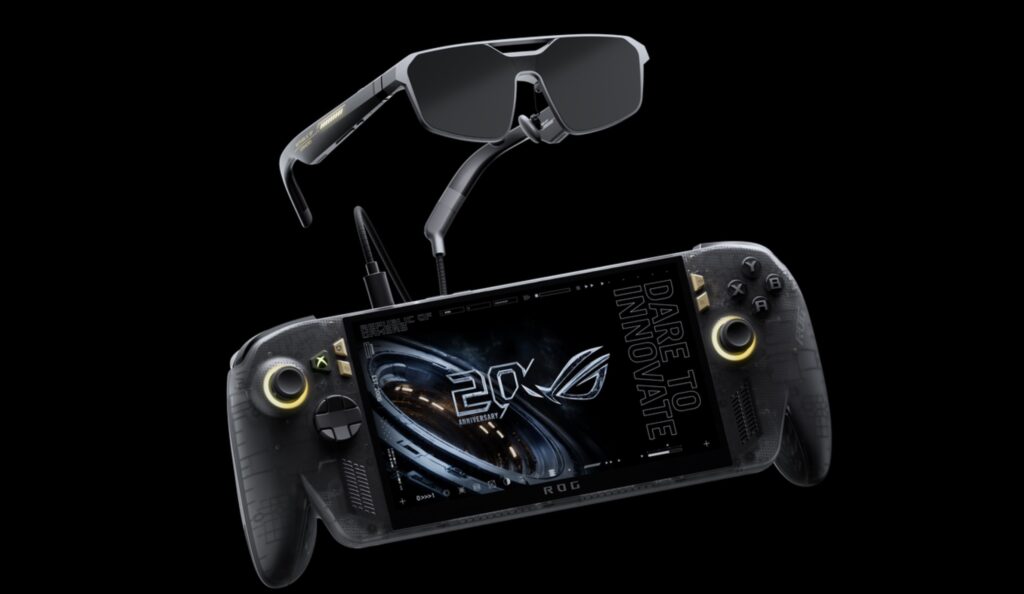
ASUS is perhaps the biggest name in the gaming space, and there’s good reason for it. Their Zephyrus lineup caters beautifully towards serious gamers, while the Ally is for the people who’re on the move. There’s something for everyone. And keeping up with that spirit, at Computex 2026, ASUS ROG celebrated its 20th anniversary with what it calls “Edition 20,” a showcase of everything from RTX 5090-powered gaming PCs to limited-edition handhelds and, surprisingly, even a board game.
New Xbox Ally X20, Desktop & Strix SCAR 18
The main highlight of the event was arguably the ROG Xbox Ally X20 Bundle. The limited-edition handheld features a translucent black design with gold accents and is powered by AMD’s new Ryzen AI Z2 Extreme processor. ROG has also upgraded the display to a 7.4-inch Nebula HDR OLED panel with a 120Hz refresh rate. There are improvements to the controls, too, including redesigned joysticks and a new D-pad. The bundle also includes the ROG XREAL R1 Edition 20 AR glasses, essentially turning the handheld into a portable gaming setup that feels far more ambitious than a standard gaming console.
If handhelds aren’t your thing, ASUS also introduced the ROG G1000 Edition 20. The desktop can be configured with up to an NVIDIA RTX 5090 graphics card and an AMD Ryzen 9 9950X3D processor. ASUS says the system can dissipate up to 1000W of heat thanks to its tri-zone cooling setup and massive 420mm liquid cooler. The most unusual feature, however, is the AniMe Holo display. ASUS calls it the world’s first holographic fan system in a prebuilt gaming PC. Whether that’s genuinely useful is debatable, but it definitely makes the G1000 one of the more unique gaming desktops we’ve seen this year.
ROG also refreshed its flagship gaming laptop, the Strix SCAR 18. The new model can be configured with up to an Intel Core Ultra 9 290HX processor and an RTX 5090 Laptop GPU. It also features what ASUS claims is the world’s first 18-inch 4K 240Hz Mini LED gaming laptop display. The laptop supports up to 320W of combined system power and retains ROG’s tool-less upgrade design, allowing users to access RAM and SSD slots without needing a screwdriver.
ASUS Even Made a Board Game
One thing nobody expected from a gaming hardware company was a board game. Yet that’s exactly what ASUS announced with ROG Saga: In Search of Lapuntu Edition 20. The game is based on ROG’s cyberpunk-inspired universe and supports up to four players. ASUS says it’s designed as both a collectible and a playable experience, complete with premium accessories and a dedicated gaming tablemat.





















![The Crypto Dump Is Just Beginning! Prepare For Mega Buying Opportunities [ETH & SOL Targets]](https://wordupnews.com/wp-content/uploads/2026/06/1780429707_maxresdefault-80x80.jpg)





























You must be logged in to post a comment Login