

Politics
‘As an ex-officer, this is one of the worst things I’ve ever seen’

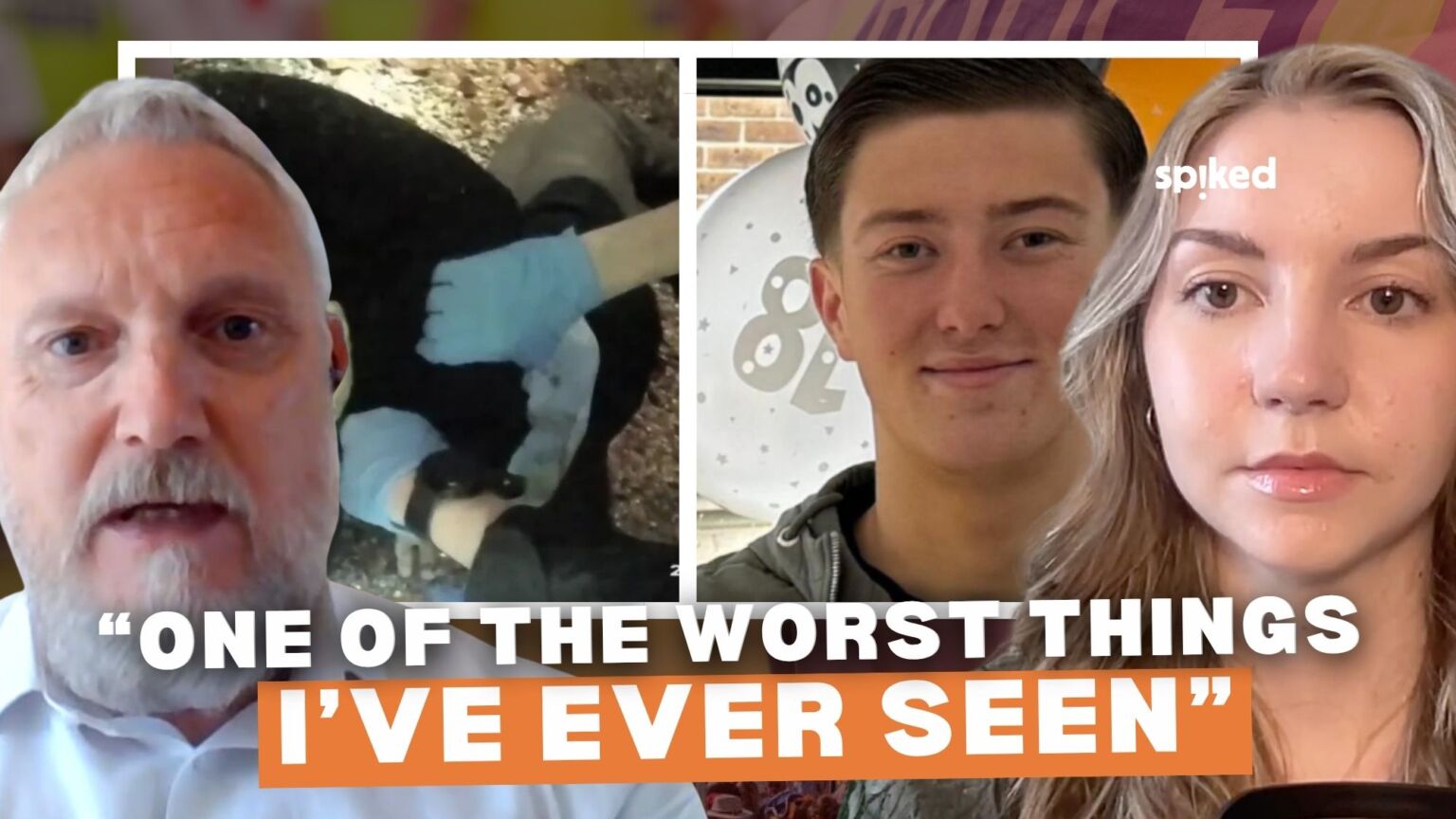
The post ‘As an ex-officer, this is one of the worst things I’ve ever seen’ appeared first on spiked.



A brash Trump- and Israel-aligned millionaire — Abelardo De la Espriella — has come out ahead in the first round of Colombia’s presidential election. Colombia’s left-wing government has strongly criticised Israel’s genocide and resisted Trump’s attempts to reassert US influence in Latin America. Meanwhile, De la Espriella has vowed to reverse these results and restore ties with Israel.
Far-right candidate sides with Israel
As Latin America’s fourth–largest economy, this could be a pivotal. Colombia has stood for decades as a key US ally in Latin America. It’s also been one of Israel’s staunchest partners in the region. But its first left-wing president Gustavo Petro has severed ties with Israel over its genocidal crimes in Gaza, and criticised intensifying US crimes against Latin American governments under Donald Trump.
Far-right presidential candidate De la Espriella has pledged to:
- Renew an “alliance” with the apartheid state of Israel, putting an embassy in Jerusalem and building “a direct, firm and strategic relationship with Israel“.
- Align with Trump and his aggressive expansionism in Latin America.
- End peaceful attempts to consign Colombia’s dark history of military conflict to the past. Instead, escalate confrontation and boost military funding through a hardline ‘iron fist’ approach. He would buy military equipment from the US and Israel.
- Set up ten mega-prisons as part of an intensifying drug war — the kind that has failed consistently both in Colombia and elsewhere.
- Give police permission to shoot protesters if they deem it appropriate.
- Expand the exploitation of natural resources.
- Embrace the capitalist extremism of neoliberalism again, slashing private-sector taxes and gutting public spending.
De la Espriella lived in Miami before the election campaign, and will probably leave again if he loses. And for years, he had served as a lawyer to prominent criminals. His supporters have been flying the Israeli flag alongside campaign banners. Propagandists at United with Israel! have expressed excitement about:
the possibility of reversing one of the most dramatic diplomatic ruptures in Latin America.
Israeli foreign minister Gideon Sa’ar, meanwhile, has celebrated the momentum behind his “friend“:
Congratulations to my friend El Tigre @ABDELAESPRIELLA on his victory in the first round of Colombia’s Presidential elections. — Gideon Sa'ar | גדעון סער (@gidonsaar) May 31, 2026
Good luck in the next round.
Firme por la patria! 
 pic.twitter.com/u9mTAZEDCc
Another rich misogynist for the far-right
De la Espriella has modelled himself after Trump, learning how leaders can successfully exploit algorithms and public anger to amass power. While pushing ‘conservative family values,’ he has been openly misogynistic, unapologetically sadistic. And he’s come from outside politics to lead the presidential race relying on:
aggressive use of social media, support from charismatic Evangelical pastors, and backing from key conservative figures across Latin America.
The mining industry has been pushing people to back him. US politicians have been doing the same, while Ecuador’s far-right president tried to bolster his campaign with a dodgy promise to cancel tariffs.
Despite all the personal disagreements on the Colombian right, they share a common hatred of the left in the end. So it’s unsurprising that they’ve been uniting behind de la Espriella. Fellow far-right candidate Paloma Valencia, for example, wasted no time in backing him to ‘oppose communism’.
Recently, meanwhile, Colombia’s left paid particular attention to a scandal showing the Trump regime, drug traffickers, Israel, and the Latin American far right collaborating to undermine progressives in the region. So the prospect of underhand tactics is absolutely on the cards too.
The peace-building, left-wing alternative
De la Espriella got 43% of the vote in the first round. But main left-wing candidate Iván Cepeda was close behind with 40%. So the left is still very much in the race.
Cepeda and Petro’s Pacto Histórico coalition faced consistent congressional opposition to its programme. But it still managed to reduce poverty, inflation and unemployment. And its gains in congress in March’s elections suggested it remained popular.
Drug-related violence has long been a pervasive problem in Colombia, and there has been a slight increase coinciding with Trump’s second term in the US. But Cepeda believes in continuing the push for peace rather than escalation, as does his Indigenous running mate, human rights activist Aida Quilcué.
Cepeda has also been critical of Israel’s genocide and apologism for it on Colombia’s right.
In the first round of the presidential vote, de la Espriella predictably (as a colonial cheerleader) did well in largely white and conservative areas. Cepeda, meanwhile, won in majority Black and Indigenous communities.
Around 24 million Colombians voted, but there are 41 million people who are eligible to vote. And turnout is usually a lot higher in the second round, which in this case will take place on 21 June.
The Latin American election is far from over. Voters on the fence will now need to decide between the brash and divisive de la Espriella and the calmer, more pragmatic Cepeda. The Colombian left, meanwhile, will need to unite and make a strong case for peace in order to stop the far right and its sadistic colonial friends.
Featured image via XX / Getty Images
By Ed Sykes
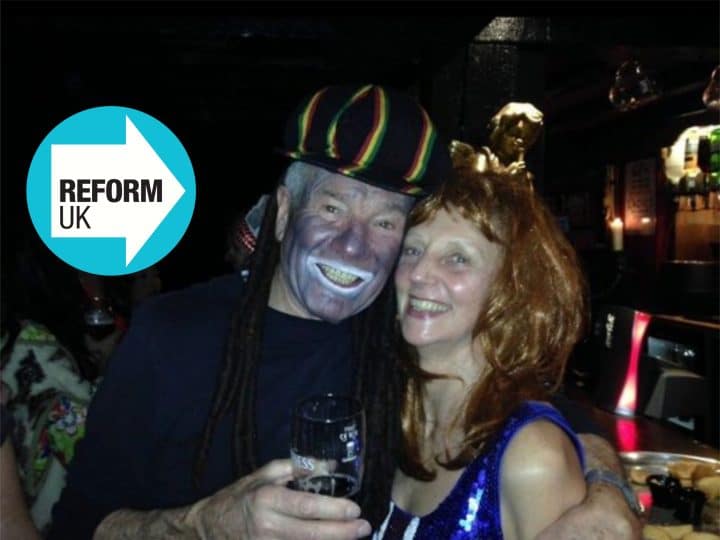

Geoff Shaw is one of the new crop of Reform UK councillors who were elected to office in May 2026. And like many of his new colleagues, Shaw is already attracting all the wrong sort of attention:
Reform UK’s Councillor Geoff Shaw, black face with ‘rasta wig’.
Theydon Bois, Epping Forest District Council.
Any comment @EFReform or @McIvorJaymey? pic.twitter.com/WpepSiD7Ky — Reform Party UK Exposed
 (@reformexposed) June 2, 2026
Disgraceful
Shaw is one of 11 Reform politicians who won a seat on the Epping Forest District Council. This gave Reform a majority of the 18 seats available. Given the rate at which Reform loses councillors, however, the party may struggle to hold on to that majority — especially with politicians like Reform’s Shaw in the mix.
In the offending picture, Shaw appears to have Black and White Minstrel-style face paint on:
From 1958 to 1978 the BBC here in the U.K. broadcast the Black and White Minstrel show
pic.twitter.com/YjBYqh80AU
— MAGA deserves everything they voted for
(@nogg_the) May 24, 2026
Reporting on the history of the show, David Hendy wrote for the BBC website:
What’s harder to fathom is why, in an era in which tens of thousands of black people had long been settled in Britain or were trying to make it their home, a BBC which had already managed to reflect something of the reality of black British life… took so little account of the offence caused by white performers blacking-up their faces on a peak-time TV show.
Hendy added:
For the best part of the next twenty years it didn’t seem to occur to anyone in a position of authority at the BBC that the series really was offensive to more than just a few “killjoys”. This failure to even see any racism was a measure of the BBC’s real problem: the archival record of its behind-the-scenes thinking during this period is far from flattering.
On that record, one BBC executive wrote at the time of the show’s airing:
The best advice that could be given to coloured people by their friends would be: “on this issue, we can see your point, by [SIC] in your own best interests, for Heaven’s sake shut up. You are wasting valuable ammunition on a comparatively insignificant target”.”
While it’s obvious to most why it’s offensive to portray Black people as cartoonish caricatures, people like Shaw still aren’t getting it. To make it completely clear, then, we need to go back to the start.
The history of minstrelry
The tradition of Black minstrelry began in the US, and it emerged at a time when Black people lacked the rights of white American citizens. As the National Museum of African American History & Culture reported:
The first minstrel shows were performed in 1830s New York by white performers with blackened faces (most used burnt cork or shoe polish) and tattered clothing who imitated and mimicked enslaved Africans on Southern plantations. These performances characterized blacks as lazy, ignorant, superstitious, hypersexual, and prone to thievery and cowardice. Thomas Dartmouth Rice, known as the “Father of Minstrelsy,” developed the first popularly known blackface character, “Jim Crow” in 1830. By 1845, the popularity of the minstrel had spawned an entertainment subindustry, manufacturing songs and sheet music, makeup, costumes, as well as a ready-set of stereotypes upon which to build new performances.
In other words, the practice emerged as a means for white Americans to ridicule and denigrate their Black countryfolk. And it persisted because enterprising racists figured out how to turn a profit from it.
You can’t separate the act of Blackface from the history of Blackface. And while you can utter phrases like ‘it’s just face paint‘ or ‘I don’t mean any offence‘, in doing so you sound like a fucking idiot.
Getting away with it
We’re not sure what Shaw’s excuse will be yet, but we’d be very surprised if it contains the word ‘sorry.’ After all, he’s a member of the party which happily tolerated the following:
- Reform activist worries growth of Jewish population could ruin UK culture.
- Media silent as antisemitic Reform activist spotted campaigning.
- Another Reform candidate praises Oswald Moseley — A rite of party initiation?
- Reform has put a suspended racist in charge of campaign finances.
- Reform candidate wants to ‘tear down’ the NHS.
- Video emerges of Reform’s ‘Nazi salute’ candidate drink driving.
Featured image via the Canary
By Willem Moore
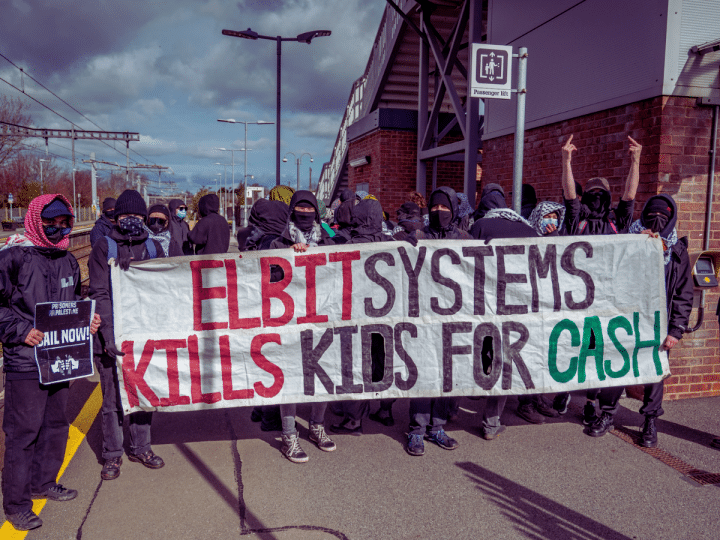

Labour’s Liverpool Riverside MP Kim Johnson spoke out against the Starmer regime’s determination to convict the ‘Filton 24’ activists. The group had been imprisoned for up to two years awaiting trial.
Starmer and his front-bench drones forced a retrial of the ‘Filton 24’ anti-genocide activists who damaged an Israeli weapons factory. The jury at the first trial had refused to convict them on any charges, despite false evidence from their accusers. The security service-linked judge at the retrial:
• Banned lawyers from telling jurors about their right to “jury equity.”
• Banned lawyers and press from noting government pressure for terrorism sentencing despite no terror charges.
• Banned lawyers and defendants from discussing anti-genocide motives for targeting the drone factory.
This trial has seen the spotlight focus on the actions of members of the Filton 24.
Filton 24 retrails and political interference
Now Johnson has told the Canary of her fears for justice and her concerns over political interference in legal process. She said:
The Filton 24 re-trial raises serious questions about transparency and fairness.
We have seen a series of highly unusual developments throughout this case – including restrictions being placed on what can be said in court.
If convicted, these individuals could face terrorism-related sentencing consequences that jurors will not have been told about.
At the same time, senior politicians have continually made public comments about this trial, committing contempt of court, and raising further concerns about the integrity of the process.
Justice must always be open and transparent. The public has a right to know how these proceedings are being conducted, what juries are being told and what they are not.
These are not fringe concerns. They go to the heart of fair trials, civil liberties and confidence in our justice system.
Of the six re-tried activists, two were acquitted of all charges. Juries rejected all charges alleging any violent intent. However, the four activists convicted of criminal damage will be sentenced on 12 June 2026 at Woolwich Crown Court.
If sentenced under terrorism legislation, the activists face long sentences, tougher barriers to early release, and decades of travel restrictions and having to report to the authorities, even post-release. This is the possible fate for the remaining Filton 24 defendants.
Their supporters have urged all well-wishers who are able to attend to do so, in order to increase pressure on the intelligence-linked judge to act with restraint. Public mobilisation in support of Filton 24 continues.
Featured image via Barold / the Canary
By Skwawkbox
I served for 24 years as a police officer in emergency response, public order, intelligence and counter-terrorism. I saw the best of policing, worked with devoted colleagues and took pride in work that indisputably mattered. I joined the police to make a difference. Duty, camaraderie and justice were not abstract ideals – and I believed that the force made the country safer. But, in the end, disillusionment drove me out.
Over time, I watched the mission of the police being hollowed out by ideological capture. Concern for public trust mutated into a top-down obsession with political correctness and policies that increasingly served political fashions, rather than the enforcement of the law. My personal breaking point came when I understood that the institution itself was eroding the principles I had sworn to defend.
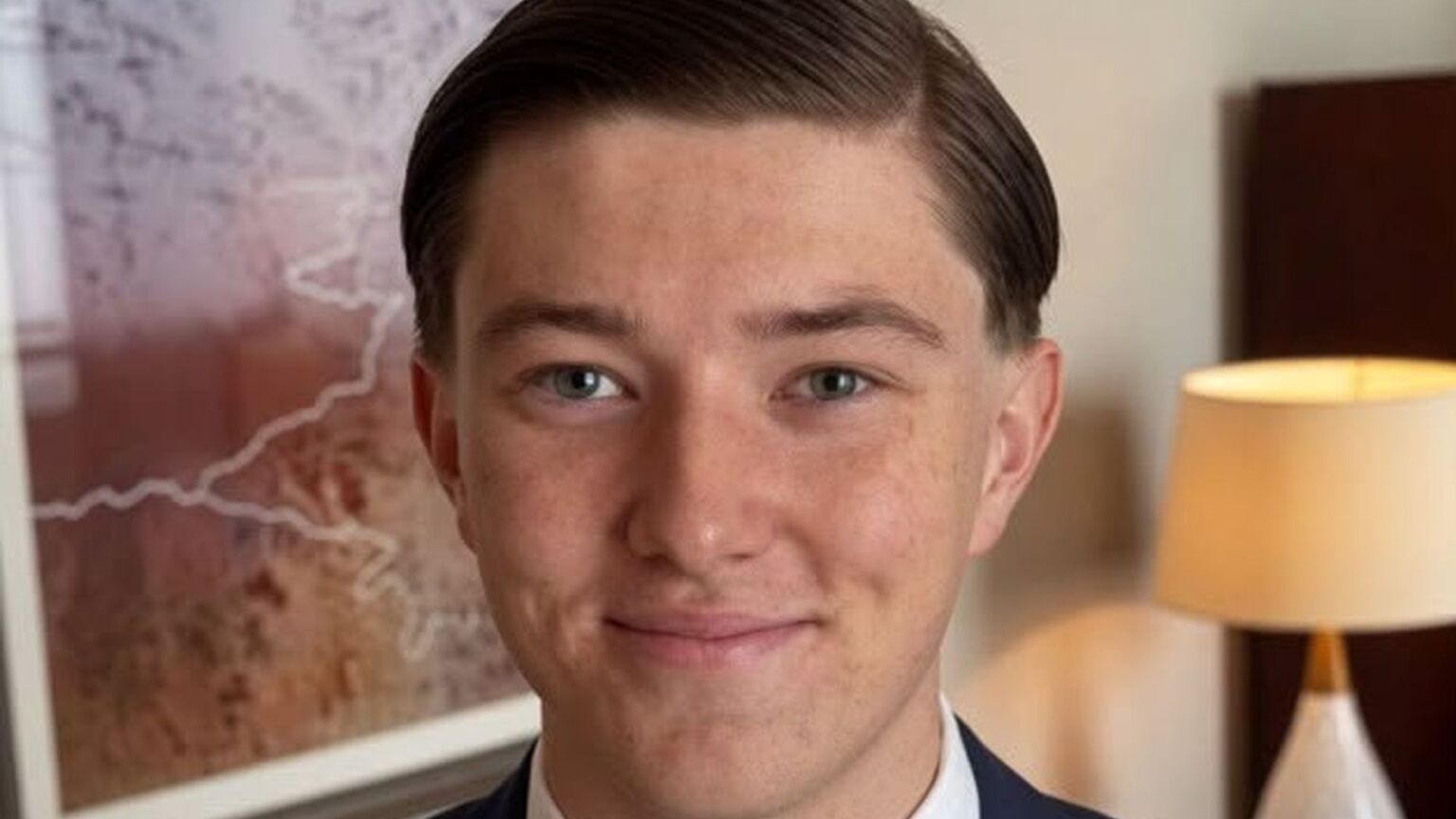
The inevitable, tragic denouement of this ideological transformation came with the murder, in December 2025, of 18-year-old Henry Nowak. Nowak was stabbed four times by a Sikh man named Vickrum Digwa. But, when police arrived at the scene, it was Nowak who was placed in handcuffs. This callous decision was made because Digwa told officers that Nowak was a ‘racist’. Nowak told officers that he’d been stabbed. His last words were reported as, ‘Please, brother, I can’t breathe’. ‘I don’t think you have, mate’, an officer responded. Nowak died at the scene.
For a long time, British policing stood for impartiality, restraint and equal enforcement of the law. Nobody thinks that now. There has been a litany of cases, some high profile and others not so, where fear of that most career-ending of accusations – ie, of racism – has led to gross injustices.
The most infamous outrage is that of grooming gangs, which have been disproportionately comprised of Pakistani Muslim men. This was not merely a tragedy – it was a disgraceful collapse of policing and child protection. In town after town across the country – in particular areas with large Muslim populations such as Rotherham and Telford – mainly white working-class girls were subjected to appalling sexual exploitation. Police stood by, failed to act or looked the other way. Last year, a report by Baroness Louise Casey found that fear of being labelled racist was one of the primary motivators of police inaction.
We witnessed a similarly perverse obsession with race in 2021. A teacher at Batley Grammar – an independent state school in West Yorkshire – showed his pupils the same cartoons of Muhammad that were published by the French satirical magazine, Charlie Hebdo, in 2015. The teacher was subject to a terrifying campaign of abuse and intimidation from Muslim parents and organisations, until he was eventually forced into hiding and police protection. Yet again, police caved to the demands of these sectarian bigots in the name of ‘cohesion’. Not one of the teacher’s persecutors was charged.
These events did not emerge out of thin air. For years, police forces have prioritised identity politics above public safety. The death of George Floyd in America in 2020, and the resulting mania of the Black Lives Matter protests, sent this process into overdrive.
This is a corruption of purpose. Policing is now viewed through social-justice conventions about competing identity groups, producing the notorious ‘two-tier’ mindset. Senior leaders have reinforced that impression with their own bombast. They now routinely describe policing as a vehicle for inclusion and broader social reform. When police leaders sound more like activists than law enforcers, the public is more than entitled to conclude that priorities have been badly warped.
The Independent Office for Police Conduct is now investigating the behaviour of the officers in the Henry Nowak case. But one thing is obvious: responsibility cannot be dumped on frontline officers alone. Culture is set by senior leadership, and senior leadership must answer for the culture that saw its officers handcuff a teenager who was in the process of bleeding to death.
I know full well that policing is hard and that difficult judgements are unavoidable. But difficulty is not an alibi for weakness. The police are not there to placate pressure groups or manage sensitivities – they are there to uphold the law and protect people from intimidation, violence and coercion. When that mission is subordinated to ideological fashion or activist pressure, trust rots. Senior ranks deserve a disproportionate share of the blame, and they must not be spared over the death of Henry Nowak.
Britain’s policing institutions face a stark choice: continue down a path where social-justice activism eclipses law enforcement, or return to the foundational principles of equal protection under the law. Without that change, public confidence, already at its lowest ebb in memory, will not be recovered.
Paul Birch is a former police officer and counter-terrorism specialist. You can read his Substack here.


UK ministers and generals are using Palantir software to decide which Palantir products to buy. By modelling battles through the far-right tech firm’s Foundry software, officials hope to outsource thinking … then again, thinking has rarely been our governments’ strong suit.
Anyway, the Murdoch-owned Times reported on 1 June:
The US tech firm Palantir is helping ministers and military chiefs decide what weapons to invest in so they can win a war against the likes of Russia, it is understood.
A senior military source told the paper:
The CIA-backed firm evaluates force mixes — such as the balance of drones versus manned vehicles — and capabilities against a range of scenarios to help determine investment choices.
Palantir founders Alex Karp and Peter Thiel openly espouse far-right ideology.
The UK military, police, NHS and, allegedly, the Telegraph newspaper have started to use Palantir technology. The firm is also involved in Israel’s genocide in Gaza, and maintains a permanent desk in southern Israel. Trump’s paramilitary immigration operations also use the firm’s gear.
Foundry has been described as:
one of the company’s flagship data integration and analytics systems that is marketed more towards civilian pursuits – specifically towards large businesses and public services.
Foundry also transforms:
an organisation’s data, actions, decision rules and security controls into a single structured system that humans and AI can use together to run complex operations. It can model how an organisation works, managing assets, people, processes, and supply chains.
It can support planning, logistics, inventory and forecasting.
The Times said:
The data-driven outcomes have helped inform the long-awaited defence investment plan (DIP), which will not be published before the second week of June. It will set out how billions of pounds of taxpayers’ money will be spent in the department.
Officials in the Ministry of Defence are also using Palantir’s Foundry software as a financial planning tool by “swapping in and out different spending decisions”, a second source familiar with the technology added.
Palantir will be hard to untangle
The process seems to involve officials asking the Palantir software questions. Foundry answers based on whatever has been been loaded into the large language model — presumably by Palantir:
For example, the MoD can ask: if it is to buy a ship, what will the associated costs be over its lifetime?
They said Palantir was being used to integrate data from all the war games the UK has held and “run queries across those to give a sense of future scenarios”.
The Times added:
Palantir’s tech is now so intertwined with all aspects of the British military that it will be hard to untangle in future years, should that ever be deemed necessary.
Not at all weird or chilling. As the Canary reported on 20 April, Palantir’s ‘manifesto’ is a collection of far-right tropes more suited to a Joe Rogan podcast than a multinational arms firm:
Point 21 reads:
Some cultures have produced vital advances; others remain dysfunctional and regressive. All cultures are now equal. Criticism and value judgments are forbidden. Yet this new dogma glosses over the fact that certain cultures and indeed subcultures . . . have produced wonders. Others have proven middling, and worse, regressive and harmful.
While Point 22 is a fascist-accented lament for Western imperialism:
We must resist the shallow temptation of a vacant and hollow pluralism. We, in America and more broadly the West, have for the past half century resisted defining national cultures in the name of inclusivity. But inclusion into what?
Oh no, inclusion. Boo hoo!
The Times warned the tech giant is so intertwined with UK governance and militarism that it will “be hard to untangle.” Yet it must be. This isn’t just a software firm. Palantir’s founders aren’t simply Incel computer nerds. The company is a Trojan Horse. And the UK is handing greater and greater power to the company’s far-right Trump-aligned CEOs by the day.
Featured image via Carl Court / Getty Images
By Joe Glenton


Rail union RMT is demanding all Govia Thameslink Railway staff be brought into direct employment after the train company became the latest to be brought under public control.
The union has been campaigning for all elements of the railway to come into public ownership. And it has welcomed the commitment by the government to launch Great British Railways with track and train all nationalised.
However, private contractors will continue to employ thousands of workers. These include:
- Cleaners.
- Gate line staff.
- Security staff.
- Infrastructure maintenance, renewal and engineering workers.
This is despite the Labour government’s commitment to undertake the biggest wave of insourcing in a generation.
RMT general secretary Eddie Dempsey said:
We want to see all our members on the railway receive the same benefits of public ownership and this includes outsourced workers.
The Labour government needs to follow through on its commitment to undertake a mass wave of insourcing.
Railway workers in outsourced companies work just as hard and contribute just as much to public transport as those directly employed.
Across our union, thousands of outsourced workers are growing increasingly frustrated at having poorer wages, no sick pay and being treated as if they are a second-class workforce.
RMT will industrially and politically maintain pressure on the government until it fulfils its obligations to our members.
Featured image via Getty Images
By The Canary


Less than a quarter of the UK’s largest commercial fishing vessels may have clear ownership transparency. And this is creating a systemic blind spot in UK fisheries governance.
Environmental law organisation ClientEarth has laid out these findings in a new analysis: Whose Boat Is This?
The current regulatory gap on commercial fishing vessel ownership risks enabling vessel owners to operate through complex corporate structures and hide behind shell companies. This can mask the Ultimate Beneficial Ownership (UBO) of these vessels.
ClientEarth’s Kyle Lischak said:
The core problem is simple: the government does not publicly identify who really owns many of the vessels commercially fishing UK waters to a clear and satisfactory extent.
This lack of transparency around vessel ownership, which limits accountability, allows for unlawful fishing practices to potentially occur.
The UK is a leading maritime nation and a global ocean governance actor. It has consistently supported international efforts to tackle illegal fishing and improve fisheries transparency through initiatives such as the Illegal, Unreported, and Unregulated Fishing Action Alliance and its wider engagement in multilateral ocean governance forums.
However, it falls short of implementing the highest standards domestically because the UK current regulation does not require disclosure of ultimate beneficial owners for all commercial fishing vessels operating under its jurisdiction.
In particular, key systems such as vessel registration and fishing licences do not effectively capture who ultimately owns or controls vessels.
When ownership cannot be identified, the UK cannot rule out links to organised crime, sanctioned entities, or hostile actors. In cases where ownership is untraceable, the trail leads to opaque offshore jurisdictions.
Illegal fishing practices
The lack of regulation weakens national oversight in UK waters, making this a matter of economic control and national security, as well as public safety.
Without clear ownership and accountability, the UK public cannot be completely confident that the seafood harvested by UK vessels, and other commercial vessels that fish in UK waters, is legally and sustainably sourced. Lischak said:
At a time of focus on domestic security, the UK cannot fully account for who is exploiting its marine resources.
The UK, and the devolved governments, now have clear evidence of a major transparency gap in their fisheries governance. This regulatory gap exposes the country to risks linked to organised crime, illicit financial flows, sanctions evasion and other illegal activities associated with global fishing networks.
Most UK fishers make real and concerted efforts to follow the rules but they may be left competing with opaque commercial operators whose ownership can remain hidden behind complex structures.
When ownership is unclear, enforcement is weaker and any bad actors are not held accountable, this can create unfair competition for honest UK fishers and lead to market distortions. Lischak commented:
Law-abiding UK fishers may be left competing with operators who do not play by the same rules.
This opacity also has direct environmental consequences. Illegal and unaccountable fishing accelerates overexploitation, damages marine ecosystems, and undermines efforts to manage ocean resources sustainably and ensure food security. Lischak continued:
The ocean is one of the UK’s greatest allies on future food and job security, and in the fight against climate change. Weakening its health through poor oversight puts us all at risk.
Calls for reform
The UK already has established frameworks that could improve fisheries transparency, including company ownership rules and new verification powers.
To live up to its reputation as a global ocean governance leader, the UK must close the gaps by requiring UBO disclosure at commercial fishing vessel registration and licensing stages, lowering ownership thresholds to make it harder to hide, and publishing UBO data in a publicly accessible register.
It needs to strengthen the enforcement of company disclosure requirements and restrict access to UK waters for commercial vessels with opaque ownership, closing loopholes that currently allow anonymity to persist.
Countries around the world are endorsing the Global Charter for Fisheries Transparency and implementing its 10 principles, including UBO disclosure. The UK also supports the Charter, but now it needs to act on it or risk undermining its leadership on this issue more broadly.
Lischak added:
These reforms would strengthen enforcement, protect UK fishers, and build public trust. The solution is practical and achievable with existing tools. It is now up to the UK to act.
You can read the full report here.
Featured image via Getty Images
By The Canary


Donald Trump has claimed that Israel and Hezbollah have “agreed to halt attacks” after indirect talks through intermediaries.
Trump wrote:
I had a very good call with Hezbollah, and they agreed that all shooting will stop – that Israel will not attack them, and they will not attack Israel.
Bearing in mind that no US president has ever spoken with Hezbollah, and the US designated the group a terrorist organisation, we have to ask if the intermediary was a carrier pigeon or a pet fish?
According to statements from Lebanon’s embassy in Washington, the plans mean Hezbollah would stop ‘attacking’ Israel. This would be in exchange for Israel stopping its illegal strikes on Beirut and its southern suburbs.
Of course, Hezbollah and Lebanon have the right to self-defence under international law. Whereas Israel has zero authority to be attacking, bombing, or illegally occupying another country’s sovereign territory.
Lies
Trump has been caught lying more times than we can count since the US and Israel launched their illegal attacks on Iran.
To start with, Trump claimed that Iran was aiming to rebuild its nuclear programme. He also said Israel and the US “obliterated” these sites in strikes last year. However, there was no evidence of any nuclear programme, this year or last.
The director general of the International Atomic Energy Agency told NBC News the organisation did not believe Iran has nuclear weapons and:
had not seen elements of a systematic and structured program to manufacture nuclear weapons there.
Trump also claimed that Iran was seeking to develop a long-range missile to attack the US, for which there was no evidence.
A 2025 federal government assessment contradicted this. It stated that Iran was still years away from the ability to produce long-range missiles.
Then, in April, Trump claimed that the Iran-Israel ceasefire did not include Lebanon, despite Pakistan making it clear in advance that it was always included.
Around the same time, Trump delivered a 19-minute address to the nation. In it, he slurred his words and stumbled over basic sentences. He denied that he aimed to bring about regime change in Iran. This was despite his earlier demand for “unconditional surrender” from Iran.
Additionally, after Trump’s regime, alongside the Israeli regime, murdered Iran’s supreme leader, Ayatollah Ali Khamenei, Trump insisted that he should have a say in Iran’s new leader. Because, of course, when you murder the leader of a sovereign nation, you get first pick over its new one.
But Trump got his regime change. Khamenei was replaced by erm, Khamenei – his very own son.
More lies
Even before the US and Israel launched their unprovoked attacks, Trump was already lying about the number of Iranians the ‘regime had killed’ in its ‘brutal crackdown’ of mass protests in January.
Trump also likes to set a deadline of ‘two weeks’. This never actually comes to fruition. He has used the same time frame for Iran, Ukraine, and Russia, as well as his own tariffs. It’s been a long two weeks…
It’s unclear whether the angry orange man doesn’t know the difference between truth and lies or if he just doesn’t care.
What is clear, though, is that the things that come out of his mouth have very few links to reality. There is also no way of knowing what he might, or might not, do next.
He is in charge of one of the world’s most powerful countries. Yet his credibility is directly endangering the lives of millions of people in West Asia.
Feature image via Nathan Howard/Getty Images
By HG
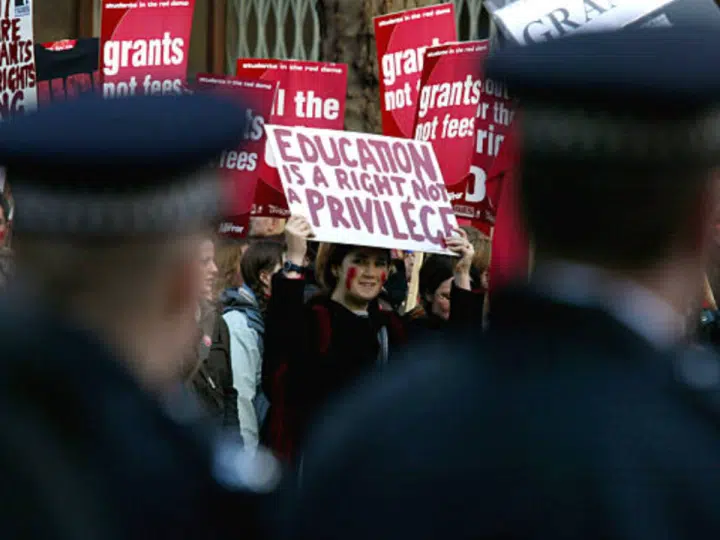

Student organisations and experts are launching an inquiry into the defunct debt-bondage system of student loans across England. In particular, the National Union of Students (NUS) wants the inquiry to look at the interest rates. Additionally, it will examine threshold repayment mechanisms.
The loans inquiry can’t come soon enough for many students or graduates on the sharp end of our privatised, financialised education model. Studies show that one in three people now think that a degree:
just isn’t worth the amount of time and money.
The structurally defunct student loans system
Much of Europe and the developed world, more broadly, receives free or heavily subsidised education. This even extends to Scotland, and before 1990, also England and Wales. Moreover, English degrees now cost on average £53,000 in debt.
If most comparable countries can do free education, it’s clearly not a structural necessity. Dumping decades worth of wage debt onto young people, before they’ve entered the job market, just isn’t working.
Youth unemployment (16-24) is now nearly 15%. This figure includes countless graduates. Unsurprisingly, young people often feel that they were tricked into valueless degrees. These degrees lead to considerable debts.
The acronym NEET — Not in Education, Employment nor Training — dominated airwaves last week. This happened following the devastating report into NEETs by former minister Alan Milburn. Its 217 pages paint what Milburn calls:
a record of failure [by consecutive neoliberal governments] … We are at risk of a lost generation. That is a moral crisis. It has economic consequences.
This cumulative cost is estimated at £125bn by Milburn’s report. Furthermore, there are also stark regional inequalities between, say, North London boroughs and West Midlands areas. North London boroughs have 1% NEET, while in West Midlands areas it is over 21.5%.
In whose interest?
One of the most reprehensible aspects of student loans is how punishing the interest rates are. Extortionate interest means that many graduates’ debt actually increases while they work and pay back (those lucky to find work).
See, for example, the case of one NHS nurse whose debt rose from £57,000 to over £77,000 whilst she was working and honouring repayments. This privilege came at a monthly cost of £145 from her paycheck, although £400 was being added each month simultaneously.
The 29-year-old Labour MP Nadia Whittome pointed out earlier this year that her student debts had fallen by only £1,000 since graduating. This despite working six years on an MP’s salary in the top 5% of UK earners.
Another miserable graduate wrote to the BBC’s Your Voice platform:
Just after she graduated in 2016, her debt was £34,105 – but her latest balance statement shows it’s now £41,908 because the interest accumulating is outstripping her repayments.
“It feels like I’m constantly chasing a debt that gets bigger over time; it feels like climbing a mountain.”
This became a flashpoint earlier this year when ‘Money Saving Expert’ Martin Lewis went head-to-head with Tory elite Kemi Badenoch over the issue. Reminder that Badenoch served as Tory minister for children and families. She also served, later, for inequalities previously, thus contributing to the above structural dysfunctions.
Job market blues and AI bots
It’s hardly surprising that fewer people than perhaps ever believe that going to university leaves graduates “a lot better off” in the long run. Notably, this shocking statistic is down from 50% in 2005 to 36% in 2025.
Milburn’s report cites young people recounting dehumanising, dystopian tales of sending dozens of CVs assessed and rejected by AI. Many also reported being tested via AI simulations or self-recorded videos. These are then being turned down for work en-masse, without applicants ever talking to an actual human.
In response, many students are using AI to write their applications, since there’s little point in selling your soul only to have a robot reject you. This leaves a historically unique, bizarre robot-to-robot interaction which benefits neither companies nor job-hunters.
Entry-level jobs, the report also says, are becoming more challenging to attain, in part because of this remote recruitment farce. But the roles traditionally filled by younger people – retail, customer service, warehousing – are now either scarcer or increasingly specialised. This too is partly as a result of rapid AI automation.
These issues cannot be viewed separately. They need addressing together, systematically, and quickly.
Featured image via Sion Touhig / Getty Images
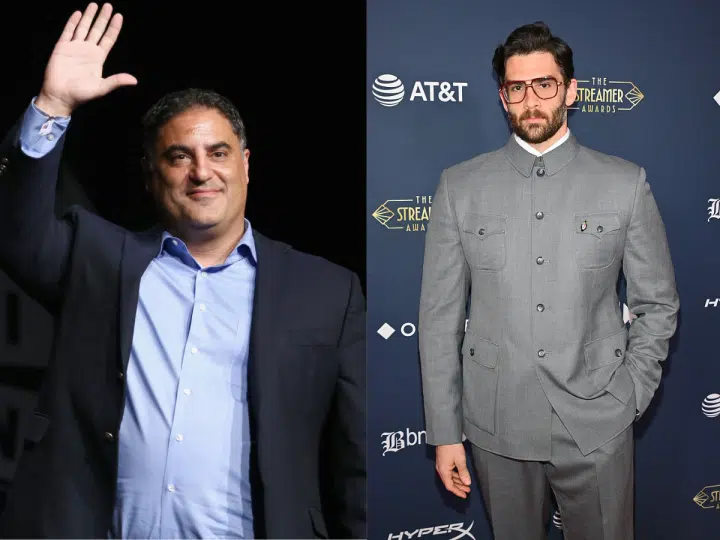

The Oxford Union (OU) has issued a statement condemning the Starmer government for cancelling the entry visas of US anti-genocide speakers Cenk Uygur and Hasan Piker.
The pair had been scheduled to speak at an OU debate and were barred by Starmer for their speech against Israel’s genocide and other crimes. But its own free speech record is anything but spotless.
The government’s action to please the UK Israel lobby is a disgrace, if an entirely unsurprising one.
In a post on X, OU president, Arwa Elrayess, said it would proceed with the event. She added that the cancellation was a “direct threat to free expression” by the Starmer regime.
The Oxford Union intended to host Cenk Uygur and Hasan Piker on 6 June for a discussion and Head-to-Head event with our members.
We are deeply concerned by the revocation of both speakers’ Electronic Travel Authorisations on the basis that their appearances would not be ‘conducive to public good’. These events had been publicly announced for months. This eleventh-hour call signals much more than democratic decline – it is a direct threat to free expression.
The Oxford Union was founded on one principle: that ideas are challenged through debate, not silenced by decree. We have never turned a speaker away because of their political beliefs nor have we sought a permission slip from the state. We will not start now.
This event will not be cancelled. The Union will ensure this discussion takes place. Free speech does not require a visa.
We will update our members shortly.
The OU is absolutely right that the UK government is a threat to free speech. It has been one at least since Starmer took over and launched his war on UK rights to protect Israel from scrutiny and resistance.
Oxford Union has dirty hands too
However, the OU’s own hands are far from clean on the matter.
It boasts that it is the “last bastion of free speech”. However, Palestinian-American writer Susan Abulhawa is suing the OU for deleting five sections from the record of Abulhawa’s address to a 2024 OU debate on the motion, ‘This house believes Israel is an apartheid state engaged in genocide’.
The European Legal Support Centre had noted that her “speech contributed to the proposition’s overwhelming victory —278 votes to 59”. Meanwhile, the video of her speech, “garnered a quarter of a million views in just one week”.
However, on 12 December 2024, the Oxford Union quietly deleted the original and replaced it with an altered version, cutting nearly two minutes of her words without her consent. They concurrently issued a vaguely worded statement citing “potential legal concerns,” which the claim argues are utterly unfounded.
In reality, it is claimed, this was a discriminatory, politically motivated decision to appease those offended by her truth-telling.
Two of the deletions described well-documented crimes committed by Israeli soldiers against Palestinian and Lebanese civilians:
“…and in the 1980s and ’90s, Israeli soldiers had left booby-trapped toys in southern Lebanon that exploded when excited children picked them up”.
“…if Palestinians were systematically raping Jewish doctors, patients, and other captives with hot metal rods, jagged and electrified sticks, and fire extinguishers, sometimes raping to death, as happened with Dr. Adnan Al-Bursh and others”.
Israel’s use of rape as a weapon is now an established fact that the denialism of its lobby can’t hide. But it can try to delete mentions of it — and the OU capitulated.
First they came…
Martin Niemöller’s famous poem, First they came, notes how many people keep silent, or worse, collaborate with fascism when they are not its direct victims. The same goes for freedom of speech, particularly when it is attacked by Israel and its enablers.
The OU is complaining now — rightly so. But its complaints are undermined by its own collusion with the same Israel lobby on Israel’s crimes in the Abulhawa case (and others).
It’s good that the OU has finally found its voice, but it comes after almost three years of genocide. There must be an end to capitulations by establishment groups and politicians while there are still Palestinian people to defend.
Featured image via Rich Polk/Getty Images for Politicon and Jerod Harris/Getty Images for Streamer Awards
By Skwawkbox

Bitcoin Fair Value Closer To $224K Based On Debt Risk Model: Bitwise

Aaron Rai keen to learn from mistakes heading into Memorial Tournament

NVIDIA CEO says panic about AI & jobs is “complete nonsense”



![The Crypto Dump Is Just Beginning! Prepare For Mega Buying Opportunities [ETH & SOL Targets]](https://wordupnews.com/wp-content/uploads/2026/06/1780429707_maxresdefault-80x80.jpg)
-

 NewsBeat6 days ago
Israel says it has killed new Hamas military leader in Gaza City airstrikes
-

 Tech7 days ago
NASA taps Blue Origin to deliver lunar rovers for Moon Base initiative
-

 News Videos4 days ago
This is BROKEN! INSANE 5x MONEY CAR WASH WEEK! The NEW GTA Online UPDATE Today! (GTA5 New Update)
-

 News Videos7 days ago
XRP *JUST* SUCCEEDED!!!! CLARITY ACT EXPOSED!!! (SHE EXPOSED IT)
-
 Crypto World7 days ago
Micron Crosses $1 Trillion Market Cap as AI Demand Reshapes Memory Sector
-
 Tech3 days ago
SpaceX just won a second Golden Dome contract. This one is $4.16 billion.
-

 Business7 days ago
Selena Gomez Reportedly Upset Over Benny Blanco’s Comments on Her ‘Terrible’ Diet
-

 Tech5 days ago
Waymo dominates autonomous vehicle registrations as Tesla trails behind
-

 News Videos4 days ago
SHE IS KILLING XRP!!! WATCH URGENT AND ACT FAST
-
 NewsBeat4 days ago
FIRST NIGHT REVIEW: Take That bring the Circus back to life in spectacular sun-soaked style
-

 Tech6 days ago
The Samsung pay deal is the moment Korean unions changed register
-

 Business24 hours ago
Jade Biosciences, Inc. (JBIO) Discusses Positive Interim Results From JADE101 Phase I Healthy Volunteer Study and Development Plans Transcript
-
 Tech7 days ago
Millions of AI agents imperiled by critical vulnerability in open source package
-
Crypto World4 days ago
CFTC Has Approved the First Regulated Bitcoin Perpetual Contract in the U.S.
-
Crypto World6 days ago
SpaceX’s $2 Trillion IPO: Why Tech Giants Nvidia (NVDA), Apple (AAPL), and Microsoft (MSFT) May Face Pressure
-
 Entertainment6 days ago
The Most Misunderstood Sci-Fi Horror Movie of the Last 10 Years Just Took Over Netflix
-

 Crypto World7 days ago
Spain blocks prediction markets Polymarket Kalshi
-
 Crypto World4 days ago
Snowflake (SNOW) Stock Rallies on Strong Q1 Results and AI Product Growth
-
 NewsBeat4 days ago
Novak Djokovic v Joao Fonseca LIVE: French Open latest scores and results after Jannik Sinner’s shocking collapse
-
 Entertainment4 days ago
Weak ‘Supergirl’ Box Office Tracking Amid Milly Alcock Backlash
You must be logged in to post a comment Login