

Crypto World
These Altcoins Defy Market Crash, Bitcoin (BTC) Bounces From 2-Month Low: Market Watch

Bitcoin experienced another leg down yesterday and earlier this morning, dropping to a fresh multi-month low of just over $65,000 before it staged a minor rebound.
Although there are a few altcoins with double-digit losses today, there are more with similar gains that have defied the overall market state.
BTC Rebounds From $65.3K
After it lost the $80,000 support level at the end of May, the primary cryptocurrency went on a down-only trip for several days. It first dipped to $76,000, but the bears were just getting started and drove it south to under $73,000 as the month came to a close.
It managed to rebound slightly to $74,000, where another rejection awaited. The crash that took place at the beginning of June was even more profound. This time, the bears pushed bitcoin to under $70,000 yesterday and kept the pressure on for several more hours. This culminated earlier this morning with a price drop to $65,300, which became BTC’s lowest trading level in approximately two months.
The bulls finally intervened at this point and didn’t allow another nosedive. Bitcoin has recovered roughly $2,000 since the local low and now sits around $67,000, but critics are still convinced that BTC could dump to as low as $20,000 if the $50,000 support is lost.
For now, bitcoin’s market cap has remained at $1.350 trillion, while its dominance over the alts keeps dropping to well below 56% on CG now.

These Alts Rocket
As mentioned above, red continues to dominate most alts’ charts. ETH has dropped below $1,900 after a near 5% decline on a daily scale. SOL is down to $75 following a similar decline. XRP celebrated its 14th birthday with a fresh drop yesterday to $1.20 before it rebounded to $1.24 as of now.
BNB is deep in the red, similar to BCH, DOGE, and mostly H, which has plunged by 11%. In contrast, DEXE and ENA have rocketed by over 20% daily, followed by ONDO, WLD, and VVV, all of which complete the double-digit price gainer club.
The total crypto market cap dipped below $2.350 trillion earlier today but sits at $2.4 trillion on CG now.

The post These Altcoins Defy Market Crash, Bitcoin (BTC) Bounces From 2-Month Low: Market Watch appeared first on CryptoPotato.

Crypto World
Standard Chartered’s Kendrick Calls $59K the Bitcoin Cycle Bottom; Holds $100K BTC and $4K ETH Year-End Targets

TLDR:
- Standard Chartered’s Kendrick confirms Bitcoin’s $59K level as the definitive cycle low for 2025.
- Spot Bitcoin ETF redemptions exceeded $5.72B since May, driven partly by SpaceX IPO liquidity needs.
- Kendrick maintains $100K Bitcoin and $4K Ethereum price targets through year-end despite the selloff.
- A potential U.S.-Iran peace deal and falling oil prices could ease macro pressure on crypto markets.
Standard Chartered analyst Geoffrey Kendrick declared the crypto winter over, maintaining his year-end targets of $100,000 for Bitcoin and $4,000 for Ethereum.
Kendrick confirmed Bitcoin’s drop to around $59,000 as the cycle bottom, citing heavy spot ETF redemptions and SpaceX IPO-related liquidity pressure as the primary drivers behind the recent selloff.
With those headwinds now clearing, he expects renewed buying activity and returning ETF inflows to support a sustained recovery through year-end.
Kendrick Confirms $59K as Cycle Bottom After Sharp ETF Selloff
Bitcoin touched $59,375 on June 5, marking a 53% decline from its October 6 all-time high of $126,000. Kendrick identified that level as the definitive cycle low for the current market. In a note published Friday, he stated: “Winter is over. Welcome back to crypto Spring.”
Spot Bitcoin ETFs recorded some of their steepest redemptions since launch during the period. Total outflows surpassed $5.72 billion from the second week of May.
Kendrick noted that ETF holders were anecdotally liquidating positions to free up cash for the SpaceX IPO, which began trading on Nasdaq at around $150 on Friday.
SpaceX shares climbed roughly 26% above the IPO price shortly after listing. The launch also drew significant activity on crypto derivatives platforms.
Hyperliquid recorded high-volume trading on SpaceX crypto contracts, with valuations reaching up to $2.4 trillion at points during the session.
With the IPO now complete, that specific source of selling pressure should ease. Kendrick expects the removal of that liquidity drain to allow ETF inflows to recover, reinforcing the $59,000 floor as a durable base for the next leg higher.
$100K BTC and $4K ETH Targets Hold as Macro Pressure Eases
Alongside the IPO effect, Kendrick pointed to easing geopolitical tensions as a second catalyst supporting the recovery. A potential U.S.-Iran peace deal discussed at the G7 could prevent further oil price escalation.
Cooling crude prices would reduce upward pressure on U.S. Treasury yields, lifting a key macro constraint on crypto markets.
Brent crude fell to around $87 per barrel and West Texas Intermediate traded near $85. President Trump indicated a peace deal with Iran was likely, though he later reversed course on Truth Social, saying the publicly reported terms “was not what had been agreed” and warning Tehran’s officials to quickly “get their act together.”
Despite the uncertainty, Kendrick kept his year-end price targets unchanged. He added that Ethereum may outperform Bitcoin in the near term as market conditions normalize. At the time of his note, Bitcoin was trading just below $64,000.
To confirm the market floor, Kendrick outlined three metrics to watch. He expects Strategy’s Michael Saylor to announce a fresh Bitcoin purchase on Monday, net-positive daily inflows to return to U.S. spot Bitcoin ETFs, and international oil prices to continue declining through the week.

Michael Saylor said SpaceX’s IPO marks a milestone for corporate Bitcoin adoption, arguing that 25% of the so-called Mag 8 now hold BTC on their balance sheets.
Summary
- Michael Saylor said Tesla and SpaceX put Bitcoin on the balance sheets of 25% of the Mag 8.
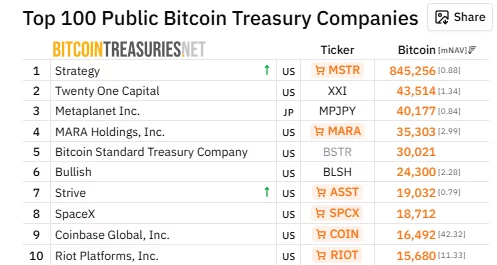
- SpaceX holds 18,712 BTC, while Tesla owns 11,509 BTC, according to BitcoinTreasuries.
- Public companies now hold 1.26 million BTC worth about $80.56 billion across 199 firms.
In a June 13 X post, the Strategy chairman congratulated Elon Musk and SpaceX following the company’s highly anticipated stock market debut.
Saylor used the occasion to highlight Bitcoin’s growing presence among major technology firms, arguing that SpaceX’s listing has made Bitcoin part of the balance sheet strategy of 25% of the so-called Mag 8 companies.
“Congratulations Elon Musk and SPCX on a historic IPO. Thanks to you, 25% of the Mag8 now holds Bitcoin on the balance sheet.”
Tesla and SpaceX give Bitcoin a place in the Mag 8
Saylor’s comment refers to Tesla and SpaceX, two companies linked to Musk that have disclosed Bitcoin holdings. According to BitcoinTreasuries data, SpaceX currently holds 18,712 BTC, while Tesla owns 11,509 BTC.
Combined, the two companies hold 30,221 BTC, giving weight to Saylor’s argument that Bitcoin has gained a foothold among some of the world’s most influential technology firms.
The remark came as SpaceX made its public market debut. Shares of the aerospace company surged as much as 31% intraday to a high of $176.52 before giving back part of those gains and closing at $160.95, still up 19% from its $135 IPO price.
The strong debut briefly pushed the company’s market capitalization above $2 trillion and underscored investor enthusiasm for one of the most anticipated listings in recent years.
For Saylor, the significance extends beyond the stock’s performance. The longtime Bitcoin advocate has spent years promoting the cryptocurrency as a corporate treasury asset through Strategy, which remains the world’s largest public Bitcoin holder. According to BitcoinTreasuries, Strategy owns 845,256 BTC, far ahead of every other corporate holder.
SpaceX’s position among the largest corporate Bitcoin owners also places it ahead of several well-known crypto-related firms. BitcoinTreasuries ranks the company eighth among public Bitcoin treasury holders, behind firms including Strategy, Twenty One Capital, Metaplanet, MARA Holdings, Bitcoin Standard Treasury Company, Bullish, and Strive.
Corporate Bitcoin adoption continues to accelerate
Saylor’s comments also come as corporate Bitcoin adoption continues to expand. Data from BitcoinTreasuries shows that public companies collectively hold about 1.26 million BTC worth roughly $80.56 billion. The number of public companies holding Bitcoin has climbed to 199, while aggregate corporate holdings have increased about 3% over the past 30 days.
The trend has accelerated in recent months as more companies adopt Bitcoin treasury strategies previously associated with Strategy. Twenty One Capital currently holds 43,514 BTC, while Metaplanet owns 40,177 BTC and MARA Holdings controls 35,303 BTC, according to BitcoinTreasuries data.
While most members of the Mag 8 have yet to add Bitcoin to their balance sheets, Saylor’s post highlights how corporate adoption has expanded beyond a handful of early adopters. With SpaceX now trading publicly while holding nearly 19,000 BTC, Bitcoin’s presence among major technology companies appears more visible than ever.
At press time, Bitcoin (BTC) was trading near $61,242, according to data from crypto.news. The world’s leading crypto asset has fallen 3.1% in the past 24 hours and 8% over the last week. However, it still remains roughly 51.4% below its record high of $126,080 as investors continue to react to macroeconomic uncertainty, elevated Treasury yields, and expectations that the Federal Reserve could keep interest rates higher for longer.
Disclosure: This article does not represent investment advice. The content and materials featured on this page are for educational purposes only.
Crypto World
Lockheed Martin (LMT) Secures $2.8B Pentagon Contracts for F-35 Support and CH-53K Program

Key Points
- Defense contractor Lockheed Martin secured two Pentagon agreements worth approximately $2.8 billion combined
- The primary contract, valued at $2.29B, supports ongoing F-35 Lightning II maintenance operations
- An additional agreement worth up to $525M funds CH-53K helicopter engineering work through Sikorsky subsidiary
- Shares opened at $539.94, declining 1.52% and trading significantly below the 52-week peak of $692
- Korea Investment Corp expanded LMT stake by 17.1% during Q4, while Wall Street maintains Hold consensus at $620.68 price objective
Defense industry leader Lockheed Martin (LMT) has been awarded a pair of significant U.S. Department of Defense agreements totaling approximately $2.8 billion, supporting both the F-35 stealth fighter platform and CH-53K heavy helicopter initiatives.
Shares of LMT began trading Friday at $539.94, representing a 1.52% decline for the session. The current price remains considerably beneath the 52-week peak of $692.00 and trades below the 200-day simple moving average of $562.41.
Lockheed Martin Corporation, LMT
The primary contract carries a $2.29 billion valuation structured as a cost-plus-incentive-fee indefinite-delivery/indefinite-quantity arrangement. This agreement encompasses comprehensive sustainment operations for the F-35 Lightning II Joint Strike Fighter platform.
The scope includes site activation services, fleet management operations, interim contractor support functions, and reliability improvement initiatives. End users span the Air Force, Marine Corps, Navy, Foreign Military Sales participants, and F-35 Cooperative Program Partners.
Geographically, F-35 sustainment activities will primarily occur at Fort Worth, Texas facilities (85% of work), with supplementary operations in Orlando, Florida. The performance period extends through December 2028.
The secondary agreement flows to Sikorsky Aircraft, a Lockheed subsidiary, carrying a ceiling value of $525 million. This contract addresses non-recurring engineering efforts, integration activities, and flight-test support services for the CH-53K Heavy Lift Helicopter initiative.
The beneficiaries include the Marine Corps, Navy, and an international Foreign Military Sales partner. Primary execution sites include Stratford, Connecticut (65.2% of workload) and West Palm Beach, Florida (19.93%), with the completion date scheduled for June 2031.
Neither contract includes immediate fund obligations at award. Instead, financial commitments will occur incrementally as individual task orders are issued. Naval Air Systems Command located in Patuxent River, Maryland, serves as the contracting authority.
Institutional Ownership Expands
Korea Investment Corp expanded its LMT holdings by 17.1% during the fourth quarter, elevating its total position to 175,294 shares worth roughly $84.78 million. Multiple additional institutional participants have similarly increased their exposure.
Welch Group LLC grew its position by 1.5% in Q4. Both Clough Capital Partners and Jain Global LLC established fresh positions during Q3. Institutional ownership collectively represents 74.19% of outstanding Lockheed Martin shares.
Quarterly Results and Street Sentiment
Lockheed’s first quarter 2026 performance fell short of Wall Street expectations. The defense contractor reported earnings per share of $6.44, undershooting the consensus forecast of $6.79. Revenue registered at $18.02 billion against projections of $18.38 billion.
Top-line growth measured just 0.3% on a year-over-year basis. Management guidance for full-year 2026 EPS spans $29.35–$30.25, while analyst models center around $29.88 annually.
Analyst perspectives remain divided. Citigroup reduced its price objective from $675 down to $571 while maintaining a “neutral” stance. Morgan Stanley lowered its target from $675 to $653 alongside an “equal weight” designation. Bank of America decreased its objective to $600, also carrying a “neutral” rating.
Conversely, DZ Bank elevated LMT to “strong buy” status in late April. Wells Fargo commenced coverage with an “equal weight” rating paired with a $650 target.
The prevailing consensus among 21 covering analysts stands at “Hold,” with a mean price objective of $620.68—approximately 15% above Friday’s opening quotation.
The company has also announced a quarterly dividend distribution of $3.45 per share, scheduled for June 26 payment, yielding 2.6% on an annualized basis.
TLDR:
- LG Electronics is piloting an onchain ad network on Arbitrum to record verifiable delivery data.
- The pilot ran in Japan with Hakuhodo, testing real-user engagement and operational performance live.
- WARC projects global ad spend at $1.3 trillion in 2026, raising pressure for provable performance.
- LG targets fraud, tightening privacy rules, and falling engagement as the three core ad problems.
LG Electronics is testing an onchain advertising network built on the Arbitrum blockchain. Developed by the company’s Blockchain Research Lab, the pilot runs in Japan alongside advertising firm Hakuhodo.
The project records ad delivery data in a verifiable, tamper-resistant format. It targets three persistent problems in digital advertising: fraud, privacy, and declining engagement. Results from the live trial are currently under evaluation.
LG Electronics and Arbitrum Take On Digital Ad Fraud
LG Electronics Arbitrum pilot addresses one of digital advertising’s most enduring problems. The industry measures impressions, clicks, and conversions inside closed systems.
Settlement arrives weeks later through processes neither advertiser nor publisher can inspect. Disputes ultimately come down to contracts and third-party audits rather than shared evidence.
WARC forecasts global advertising spend at $1.3 trillion in 2026. At that scale, the gap between reported performance and provable performance shapes where budgets flow.
LG’s Blockchain Research Lab designed its system to record ad delivery as evidence — who served an advertisement, when, and how.
The lab identified fraud as one core pressure point. Advertising is bought and sold automatically at high volume. Bot-generated traffic blends with genuine performance and gets counted the same way.
The onchain system makes that data difficult to alter after the fact, creating a record both sides can reference.
Samuel Byungsun Park, Blockchain Research Department Leader at LG Electronics, described the project’s dual focus.
“We are exploring how blockchain technology can help improve transparency in advertising workflows while supporting a privacy-conscious approach to consumer data,” Park said.
“We are also evaluating whether this approach can deliver meaningful value to advertisers, publishers, and audiences.”
The third factor driving the pilot is audience engagement. Ad volume keeps rising while response rates fall. Performance metrics explain less on their own.
The Japan trial with Hakuhodo put the system in front of real users to assess whether interacting with the advertising felt natural and whether the operational model held together under live conditions.
Programmable Infrastructure Shapes the Advertising Market
The case for public blockchain infrastructure in advertising comes down to ownership of the scoreboard. If the layer that proves performance belongs to one participant, every number it produces carries that participant’s interests. A measurement system controlled by one of the teams convinces no one on the other side.
Arbitrum’s role in the pilot reflects that logic. LG’s Blockchain Research Lab can configure the execution environment, fee structure, and governance to match its objectives.
At the same time, the network runs on public infrastructure that no single company controls. Steven Goldfeder, Co-Founder and CEO of Offchain Labs, connected that structure to the broader market shift.
“Advertising has long been measured by how many impressions are served. The industry is shifting toward verifiable performance and blockchain is the architecture built for it,” Goldfeder said.
“This is the programmable economy applied to advertising — markets and transactions running automatically in software, with cryptographic proofs every participant can verify.”
Harry Kalodner, CTO of Offchain Labs, noted that large enterprises consistently seek the guarantees of public infrastructure without surrendering control of their own environment. “Arbitrum was built to support exactly this kind of work, where new categories emerge because the underlying infrastructure is finally ready for them,” Kalodner said.
LG’s published strategy keeps the system alongside the demand-side and supply-side platforms already in use. Verification arrives as an addition to the existing stack rather than a replacement. Switching costs stay low, and existing relationships between advertisers and publishers remain intact.
Brendan Ma, Head of Investment Strategy at the Arbitrum Foundation, pointed to growing enterprise interest across sectors. “Since the launch of Arbitrum, we have seen rising demand from leading enterprises and publicly listed partners across global markets, from trading and finance to now the global advertising industry, the largest media market in the world,” Ma said.
LG has outlined continued deployment in live advertising environments as its next step, along with work toward technical standards covering data reliability, privacy-conscious operation, and cost efficiency.


Ripple is trying to put XRP and RLUSD into the market for AI-agent payments in an environment that is still mostly paying in the dollar-pegged USDC stablecoin.
The company introduced the XRPL AI Starter Kit earlier this week, a set of developer tools for building AI agents that can send payments on the XRP Ledger, per a release shared with CoinDesk.
This kit includes XRPL documentation access through an MCP server (which connects a service’s AI tools to external data sources), Claude skills for wallet creation, balance checks and payments, and support for x402 payments using XRP and Ripple USD, Ripple’s dollar-backed stablecoin.
The pitch is that if AI agents are going to buy API access, pay for model inference, settle invoices or move value between services, they need payment rails that are cheap, fast and easy to trigger without a human clicking approve each time.
Ripple says XRPL can do that with three-to-five-second settlement, predictable fees, native payments, escrow, multisig and a built-in decentralized exchange.
But turning that into actual usage is where challenges lie, with the novel x402 system in focus.
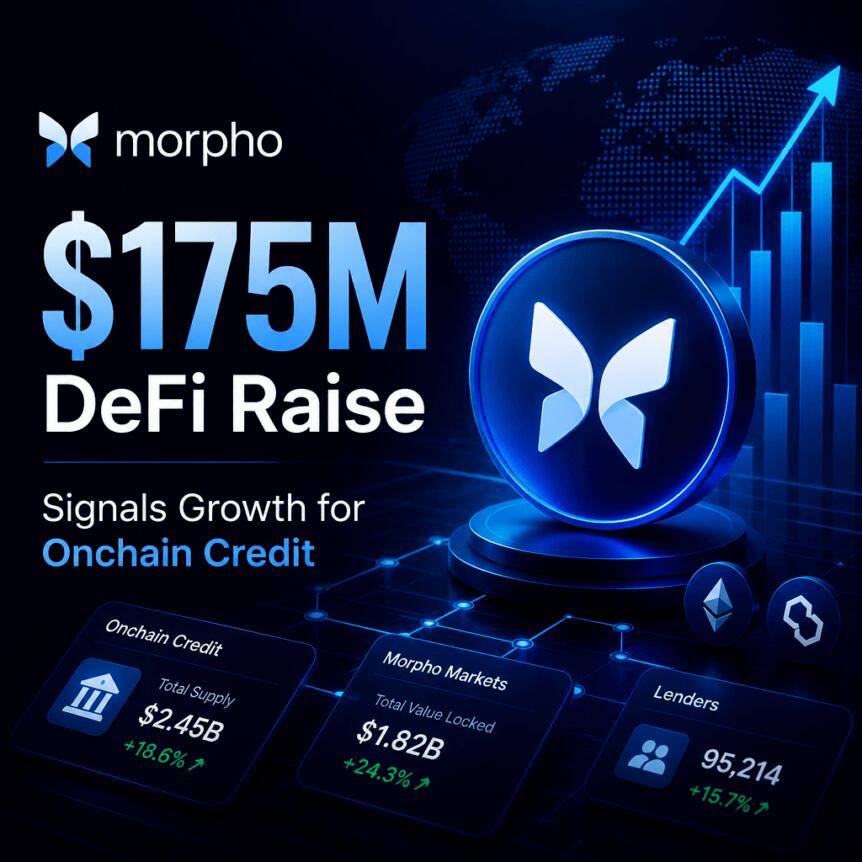
Investors are showing renewed interest in “onchain credit” and stablecoin-linked financial infrastructure, signaling a shift away from decentralized finance (DeFi) lending as a standalone retail product. That backdrop is helping a well-known lending protocol, Morpho Labs, raise fresh capital and frame its next phase as credit infrastructure for institutions.
According to Cointelegraph, Spark CEO Sam MacPherson said stablecoin growth is pushing the market to treat credit as a core layer in the onchain financial stack. He pointed to Morpho’s latest funding as an example of capital flowing toward stablecoin-enabled lending and credit tooling.
Key takeaways
- Morpho announced a $175 million funding round led by Paradigm, with participation from a16z Crypto and Ribbit Capital.
- The company positions Morpho not only as a DeFi lending protocol, but as credit infrastructure for banks, asset managers, and fintechs.
- DeFiLlama data cited in the report puts Morpho at $6.72 billion in TVL and about $3.47 billion in active loans.
- Sentora highlights Morpho smart contract usage—citing Coinbase activity—to argue institutional-grade credit workflows are taking shape.
- CryptoRank data indicates late-stage crypto funding has surged sharply, while seed and pre-seed funding has declined.
Morpho’s pitch: from lending protocol to credit infrastructure
Morpho announced Tuesday that it raised $175 million in a round led by Paradigm, with a16z Crypto and Ribbit Capital also named as lead participants. While Morpho is already associated with DeFi lending, the company is using this round to pursue a broader role: becoming a credit infrastructure layer for more traditional finance players.
The concept centers on onchain credit markets—systems that let borrowers, lenders, and deploying institutions use blockchain-based assets to originate credit. In this framing, stablecoins and tokenized financial products provide the asset rails, while credit infrastructure provides the lending and deployment logic.
MacPherson, speaking to Cointelegraph, argued that as stablecoins scale, “credit becomes one of the most important pieces of infrastructure in the stack.” The implication for investors is straightforward: if tokenized money becomes more widely used, demand for the associated lending and credit services tends to follow.
Onchain lending depth and institutional use cases
One reason Morpho’s funding drew attention is the reported scale of its lending activity. The article cites DeFiLlama data showing Morpho with $6.72 billion in total value locked (TVL) and about $3.47 billion in active loans.
Sentora, in a Friday newsletter, interpreted these figures as evidence of “significant liquidity depth,” a point that matters because liquidity is often a key constraint for credit markets. Without sufficient borrowing and lending depth, credit products can struggle to scale in real-world conditions, particularly when institutions require consistent counterparties and stable execution.
Sentora also pointed to Coinbase’s use of Morpho smart contracts to originate more than $2.17 billion in corporate USDC loans. The underlying argument is that Morpho is increasingly being used for credit workflows that look more like institutional lending infrastructure than a purely retail DeFi application.
In that view, the shift isn’t isolated to crypto-native lending. Sentora said exchanges, custodians, and asset managers are actively evaluating blockchain-based lending systems to support credit products, while protocols compete to become the “underlying infrastructure” enabling business-to-business integrations.
How Morpho plans to measure success
Beyond raising capital, Morpho’s leadership said the real test will come from integration-driven growth over the next year to 18 months. Co-founder Merlin Egalite told Cointelegraph that the company aims to expand integrations with banks, asset managers, and large platforms, bring in more institutional capital, and roll out features inspired by traditional credit markets.
Egalite characterized the goal as building infrastructure rather than trying to replace existing competitors. “The problem we are trying to solve is less about replacing competitors and more about establishing ourselves as the credit infrastructure layer that banks, asset managers and fintechs build on,” he said in the report.
Late-stage VC momentum and changing funding patterns
The timing of Morpho’s raise also reflects broader venture market dynamics. The article notes that venture capital is increasingly concentrating on a smaller set of established crypto infrastructure projects.
It cites CryptoRank’s Q1 2026 crypto fundraising report, which reported that capital allocated to Series C and later-stage rounds surged 1,020% year over year and 320% quarter over quarter. Those later-stage deals accounted for 28.4% of venture funding across nine deals, while seed and pre-seed funding fell 38.1% year over year and represented only 5.2% of total capital.
Against that backdrop, Egalite said he is not concerned about capital concentration, aligning with the thesis that durable infrastructure—protocols with measurable liquidity, integrations, and institutional usage—may be attracting disproportionate attention as the market matures.
For investors and builders watching onchain credit, the key question now is whether Morpho’s funding translates into sustained institutional integrations and repeatable credit origination. The next signal to track will be whether the protocol’s liquidity depth and contract-driven credit usage continue to grow alongside stablecoin adoption, and how quickly traditional finance partners operationalize blockchain-based lending at scale.
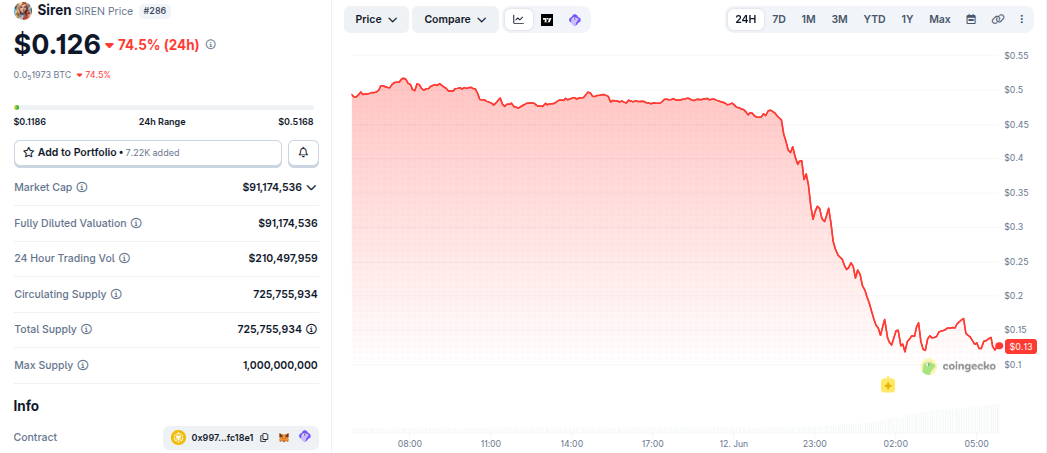
SIREN, the BNB Chain token tied to meme and AI-agent narratives, crashed roughly 75% in 24 hours on Saturday, sliding from highs near $0.520 to lows around $0.126 after its top holder began dumping the portfolio.
The collapse wiped out hundreds of millions in market value and triggered over $2.4 million in long liquidations across global exchanges.

What the SIREN Whale Dump Reveals
A whale dump is when a large token holder sells a significant portion of their position in a short period, often triggering cascading liquidations and panic selling. In this case, blockchain data shows SIREN’s top holder behind a coordinated and aggressive sell-off.
According to Lookonchain, the top holder has already received over $7.5 million in USDT from SIREN sales. Furthermore, the dumping process continues, as the entity continues to hold approximately 595.7 million SIREN tokens.
Follow us on X to get the latest news as it happens
That position represents roughly 82% of the circulating supply, worth around $92 million at the time of the alerts. Such heavy concentration creates a structural risk that has now materialized across the entire SIREN market.
Additional monitoring from several traders flagged transfers exceeding $10 million in some estimates. Substantial volumes were routed to exchanges, including Bitget, intensifying sell-side pressure across spot and derivatives markets.
As a result, trading volume surged dramatically to over $191 million in 24 hours. The spike reflects heightened panic and significant retail exit liquidity as small holders rushed to unload positions ahead of further potential downside.
SIREN now trades near $0.126 with a market capitalization of approximately $94.7 million and a similar fully diluted valuation, according to BeInCrypto Markets data. The token is ranked around 286 by market cap, given its nearly fully circulating supply relative to the 1 billion maximum.
Why SIREN Has Become a Repeat Volatility Story
This crash fits a recurring pattern for SIREN. Since early 2026, the token has experienced multiple sharp pumps and subsequent dumps, repeatedly shaking retail confidence across BNB Chain’s meme and AI-agent trading communities.
At its peak in recent sessions, SIREN had rallied roughly 200% in about 10 days, briefly inflating its market value by more than $600 million. That momentum reversed abruptly once on-chain data revealed aggressive selling from concentrated wallets.
Analysts have repeatedly flagged extreme supply concentration as the key risk factor. At times exceeding 90% in linked wallets, such dynamics amplify both upside momentum during accumulation phases and brutal downside cascades when distribution finally begins.
While some observers note the project’s meme appeal and presence in AI-agent discussions, the heavy reliance on a single dominant holder has left retail participants particularly vulnerable.
Confidence rebuilds slowly after such cascading liquidation events.

The decline also comes amid broader market volatility across meme and AI-themed tokens. SIREN’s 24-hour activity highlights its highly speculative nature, with significant depth across Gate.io, KuCoin, and various decentralized exchanges on BNB Chain.
For now, traders remain wary of additional downside. The whale’s remaining holdings could exert continued pressure, while any relief rally may face heavy resistance if more selling materializes from the same concentrated wallet cluster.
The post SIREN Token Crashes 75% as Whale Triggers a Massive Sell-Off appeared first on BeInCrypto.


Google has sued an organized cybercrime network it calls the “Outsider Enterprise,” accusing the China-based group of running AI-powered text scams.
The company is pursuing the case alongside the FBI, which is preparing its own enforcement actions, and is working with AT&T, T-Mobile, and Verizon to block the messages.
How the AI-Driven Scam Operation Worked
The network coordinated via Telegram and sold phishing kits that let criminals blast fake text campaigns impersonating Google and other brands, according to Google’s blog. Hundreds of thousands of victims lost a combined total in the millions.
Follow us on X to get the latest news as it happens
Investigators tied the group to 9,000 fake websites and more than 1 million fraudulent URLs. Android users flagged 55,000 spam texts in May alone. The Enterprise sent 2.5 million messages over that same period.
The case matters beyond text fraud. AI now lets attackers scale convincing scams that once required manual effort. BeInCrypto has tracked this shift across attacker tools, DeFi risks, and AI exploit pipelines that give attackers a structural edge over defenders.
The Wider Crackdown
Google paired the litigation with policy advocacy. The company is backing seven bipartisan bills, including the National Strategy for Combating Scams Act and the Stop SCAMS Against Seniors Act.
It also pointed to its own defenses. Google said its messaging tools now intercept more than 10 billion malicious messages each month. Android scam detection flags suspicious calls and contacts in real time.
The FBI framed the action as a model for shared defense against transnational fraud.
“Criminals increasingly use AI to make fraud like this more convincing and harder to detect,” Brett Leatherman, FBI Cyber Division, said.
Subscribe to our YouTube channel to watch leaders and journalists provide expert insights
The post Google Files Lawsuit to Dismantle AI-Powered Text Scam Operation appeared first on BeInCrypto.
Zcash has undergone a follow-up security audit using Anthropic’s Mythos system, which, according to founder Zooko Wilcox, found no additional serious vulnerabilities in the protocol after the recent Orchard flaw disclosure.
Summary
- Anthropic’s Mythos audit found no additional serious vulnerabilities in the Zcash protocol following the recent Orchard flaw disclosure.
- The review followed emergency upgrades that fixed a vulnerability that could theoretically have enabled unlimited counterfeit ZEC creation.
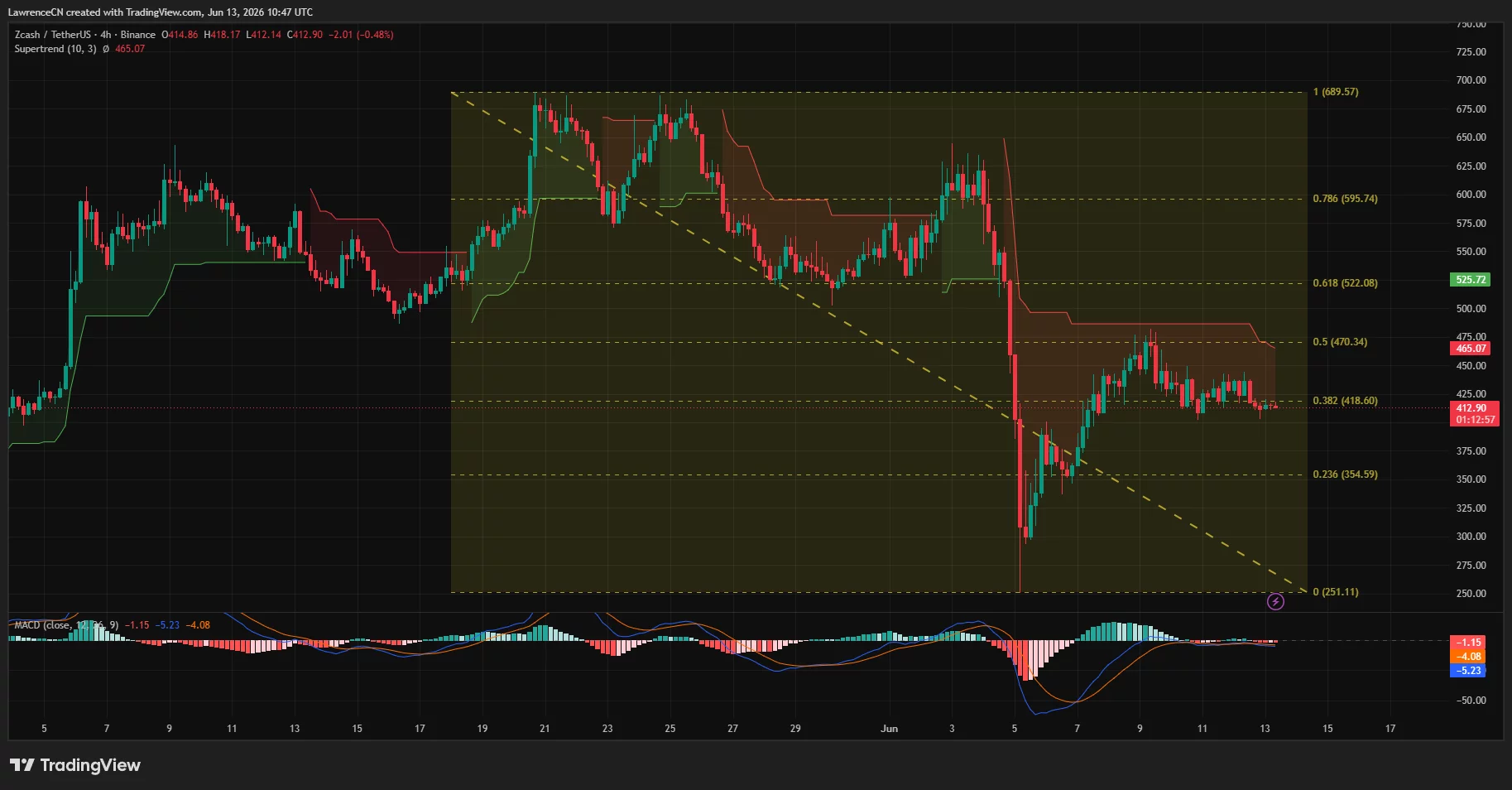
- ZEC has pulled back to around $417 after a sharp rebound, while technical indicators suggest resistance remains near the $465 level.
According to Wilcox, Anthropic carried out the audit at the request of Shielded Labs following the discovery of a vulnerability that could theoretically have allowed unlimited creation of counterfeit ZEC.
In a June 13 post on X, Wilcox thanked Anthropic for helping protect Zcash users and said the review did not identify any other serious bugs in the network.
The result comes little more than a week after the Zcash ecosystem rushed to contain a flaw in Orchard, the blockchain’s primary shielded transaction pool.
According to Shielded Labs, the defect could theoretically have enabled an attacker to create an unlimited amount of counterfeit ZEC. The organization said previous exploitation appeared unlikely, while acknowledging there is no cryptographic proof showing the vulnerability was never used.
Work on fixing the issue began before the flaw became public. According to Zcash Open Development Lab founder Josh Swihart, developers first deployed a soft fork that temporarily disabled Orchard transactions while technical details remained confidential.
A second upgrade, the NU6.2 hard fork, went live on June 3 and removed the vulnerability before Orchard transactions were re-enabled.
Emergency measures contained the Orchard flaw
Details released earlier by Wilcox showed the original vulnerability was identified on May 29 by security researcher Taylor Hornby during a targeted audit using Anthropic’s Opus 4.8 model. Hornby reported the issue to Zcash Open Development Lab, which coordinated a response across ecosystem participants before the fix was deployed.
Following the fix, Wilcox said teams across the Zcash ecosystem continued reviewing the protocol for additional risks. According to his June 13 update, Shielded Labs and other contributors are now focused on further security-hardening measures and plan to release additional updates as that work progresses.
Several organizations remain involved in the effort, including the Zcash Foundation, Tachyon Group, Valar Group, Shielded Labs, and Zcash Open Development Lab, according to Wilcox.
Ironwood proposal focuses on supply verification
Alongside the audit findings, Wilcox has continued promoting the proposed Ironwood upgrade, which he said would allow users to independently verify Zcash’s circulating supply by aggregating balances held across active pools once the upgrade is activated.
According to Wilcox, Ironwood would introduce a new location for holding shielded ZEC, place restrictions on transactions that could involve counterfeit coins, and incorporate additional security measures, including AI-assisted audits. He said the timeline for activation remains uncertain and will depend on further development work and community discussions.
The Orchard disclosure triggered a sharp sell-off in ZEC. The token lost more than 50% of its value between June 4 and June 5 before rebounding to $478.70 on June 9. ZEC has since fallen back to around $417 as investors reduced exposure to risk assets amid escalating tensions between the United States and Iran.
Technical indicators also show that the post-crash recovery is facing resistance. On the four-hour chart, ZEC has fallen back below the 38.2% Fibonacci retracement level at $418.60 after failing to hold gains near $478.70 earlier this week. The token also remains below the Supertrend resistance at roughly $465, which continues to cap upside attempts.
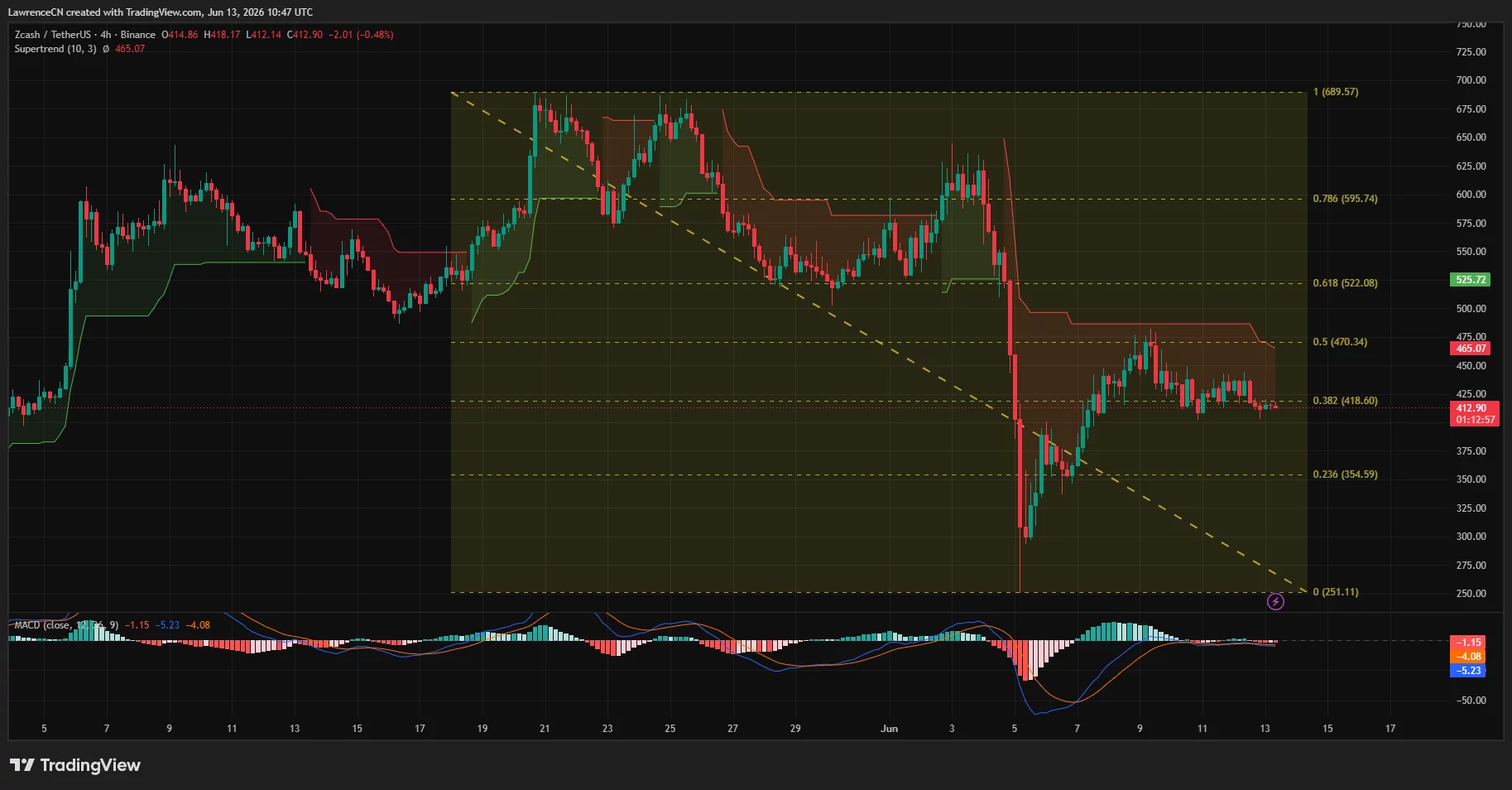
Unless buyers reclaim the $465-$470 area, the chart points to a possible retest of support near $355, which marks the 23.6% Fibonacci retracement level. Meanwhile, the MACD histogram has slipped back into negative territory after briefly turning positive during the recovery rally, indicating that buying pressure has weakened since the June 9 peak.
Key Takeaways
- Geoffrey Kendrick from Standard Chartered identifies Bitcoin’s cycle bottom at $59,000, reached on June 5
- Outflows totaling $5.72 billion from Bitcoin ETFs since mid-May linked to investor positioning for SpaceX’s public debut
- SpaceX commenced Nasdaq trading at $150 per share, currently up approximately 26%, potentially ending crypto liquidation pressure
- Progress on U.S.-Iran diplomatic negotiations and declining oil prices reducing macroeconomic headwinds for digital assets
- Year-end forecasts remain intact: $100,000 for Bitcoin and $4,000 for Ethereum
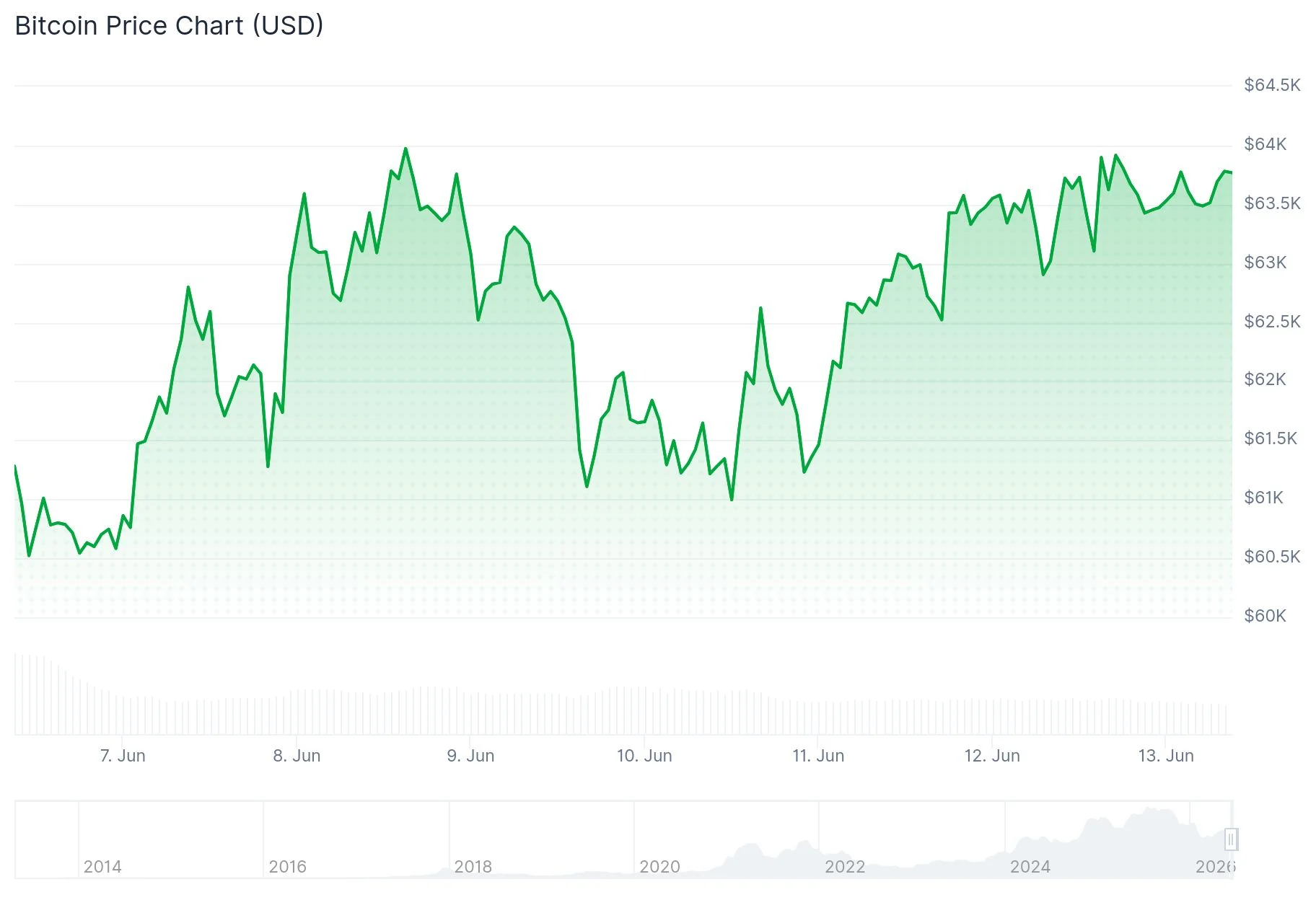
Bitcoin reached a low of $59,375 on June 5, 2026, based on CoinDesk pricing data. Geoffrey Kendrick, a digital asset analyst at Standard Chartered, has identified this level as the conclusive cycle bottom for the leading cryptocurrency.
“Winter is over. Welcome back to crypto Spring,” Kendrick declared in his Friday research note.
As of this writing, Bitcoin was changing hands just under $64,000, showing significant recovery from its recent trough.
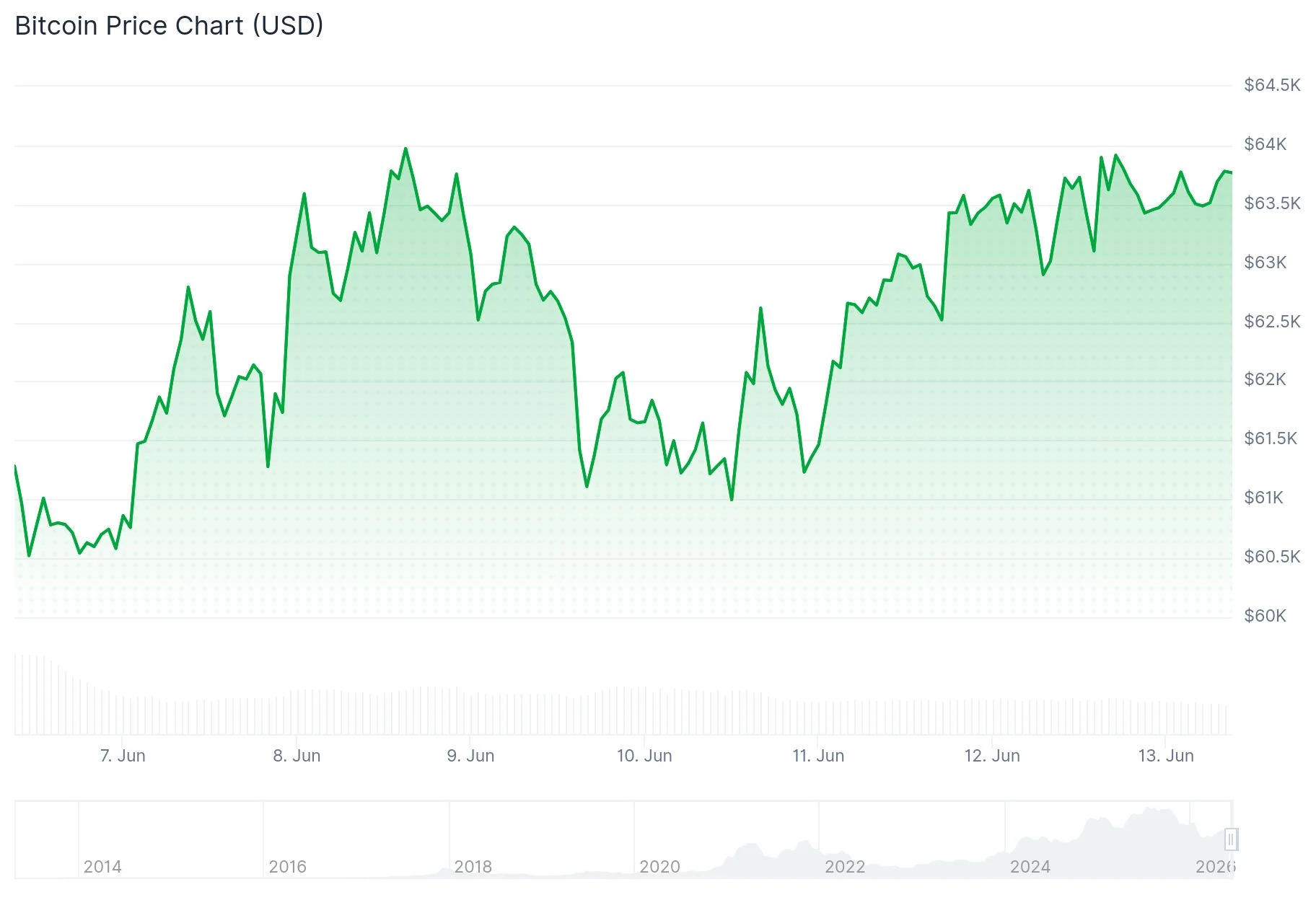
The cryptocurrency’s descent from its record peak of $126,000 on October 6 to the $59,000 level constitutes a 53% drawdown.
SpaceX Public Offering Triggered Digital Asset Liquidation
Kendrick attributes much of the recent downward pressure to the SpaceX public offering. Market participants allegedly liquidated Bitcoin ETF positions to raise capital for participation in the highly anticipated IPO.
U.S.-listed spot Bitcoin exchange-traded funds experienced aggregate net redemptions of $5.72 billion beginning in the second week of May. This outflow magnitude ranks among the most severe since these investment vehicles launched.
SpaceX equity started trading on Nasdaq Friday morning at approximately $150 per share. Current trading levels show gains of roughly 26% above the initial offering price. Kendrick suggests this successful IPO may eliminate that particular source of selling pressure.
On decentralized exchange Hyperliquid, SpaceX derivative contracts were experiencing substantial trading activity, implying a company valuation reaching $2.4 trillion.
Declining Energy Prices and Middle East Diplomacy Bolster Outlook
The secondary catalyst Kendrick highlighted involves a prospective U.S.-Iran diplomatic agreement under discussion at the G7 summit. Should this materialize, it could prevent further escalation in global oil prices.
Reduced oil prices would alleviate upward pressure on U.S. Treasury yields. As yields decline, risk assets like Bitcoin typically experience renewed investor interest.
Brent crude retreated to approximately $87 per barrel, with West Texas Intermediate trading near $85, following President Trump’s comments about a probable peace agreement. Trump subsequently clarified on Truth Social that the publicly disclosed terms did not reflect what was actually negotiated, urging Iranian leadership to “get their act together.”
Three Confirmation Metrics for Market Bottom
Kendrick outlined three specific indicators he’s monitoring to validate the market floor thesis.
First, he anticipates Strategy, under Michael Saylor’s leadership, will reveal another Bitcoin acquisition on the upcoming Monday.
Second, he seeks sustained net-positive daily flows returning to U.S.-listed spot Bitcoin ETFs.
Third, he’s observing whether crude oil pricing maintains its downward trajectory.
Kendrick maintains his year-end projections: Bitcoin reaching $100,000 and Ethereum hitting $4,000. He additionally forecasts Ethereum will deliver superior returns compared to Bitcoin over the coming months.
For investors who established positions near the $59,000 bottom, achieving Kendrick’s $100,000 year-end projection would yield approximately 70% returns.

Jonah Hill, Channing Tatum In Talks For ’24 Jump Street’

Pray for Financial Breakthrough #prayer #shorts #catholic

Weekly Indicators: Consumers Back Off – Slightly


-

 NewsBeat5 days ago
Alexander Zverev wins the French Open to finally earn a 1st Grand Slam title
-
 Entertainment6 days ago
The Best Mystery Series of All Time Is Surging on Streaming 30 Years After It Ended
-

 Crypto World5 days ago
Anatomy of the June crypto crash: Fed, Iran, Saylor
-

 Crypto World2 days ago
Oppenheimer backs SpaceX as $70 billion retail frenzy builds
-

 Crypto World2 days ago
Markets Rally as SpaceX IPO Looms Amid Iran Tensions and Inflation Surge
-
Crypto World7 days ago
Senator Cynthia Lummis Calls CLARITY Act the Most Consequential Financial Legislation of This Generation
-
 NewsBeat6 days ago
Alexander Zverev conquers demons and outlasts Flavio Cobolli to win French Open for first major title
-

 Tech6 days ago
Microsoft unveils seven homegrown AI models in new bid for ‘long term self-sufficiency’
-

 Business5 days ago
High Stakes for Wembanyama as New York Pushes for 3-0 Lead
-

 Tech5 days ago
Notion restores access to Anthropic after service disruption
-
 Business6 days ago
The Pain Points Taking a Fragile Tech Rally Down a Notch
-
 Crypto World5 days ago
Eli Lilly (LLY) Stock Surges 4% Following Breakthrough Sleep Apnea Trial Results
-
 Business6 days ago
The investment to transform historic St Helen’s ground in Swansea
-

 Crypto World6 days ago
Trump’s AI Ownership Plan Could Benefit Anthropic at OpenAI’s Expense
-
 Sports4 days ago
Bangladesh beat Australia after 20 years in ODIs, register only their second win over six-time world champions | Cricket News
-

 Tech10 hours ago
NanoClaw integrates JFrog registries to secure AI agent downloads
-

 Crypto World6 hours ago
Bitget enters Argentina’s regulated crypto market through PSAV registration
-

 Tech21 hours ago
This Week In Security: Microsoft On Microsoft, Register Your Domains, Linux On ARM, And FreeBSD Joins The File Cache Club
-

 Politics2 days ago
Politics Home | Healey Resignation Is “Colossal Failure Of Government”, Says Former Labour Defence Secretary
-

 Sports2 days ago
First Time Since 1971: Australia Register Historic Low In ODI Cricket
You must be logged in to post a comment Login