The venue is hosting special activities for its 25th anniversary.
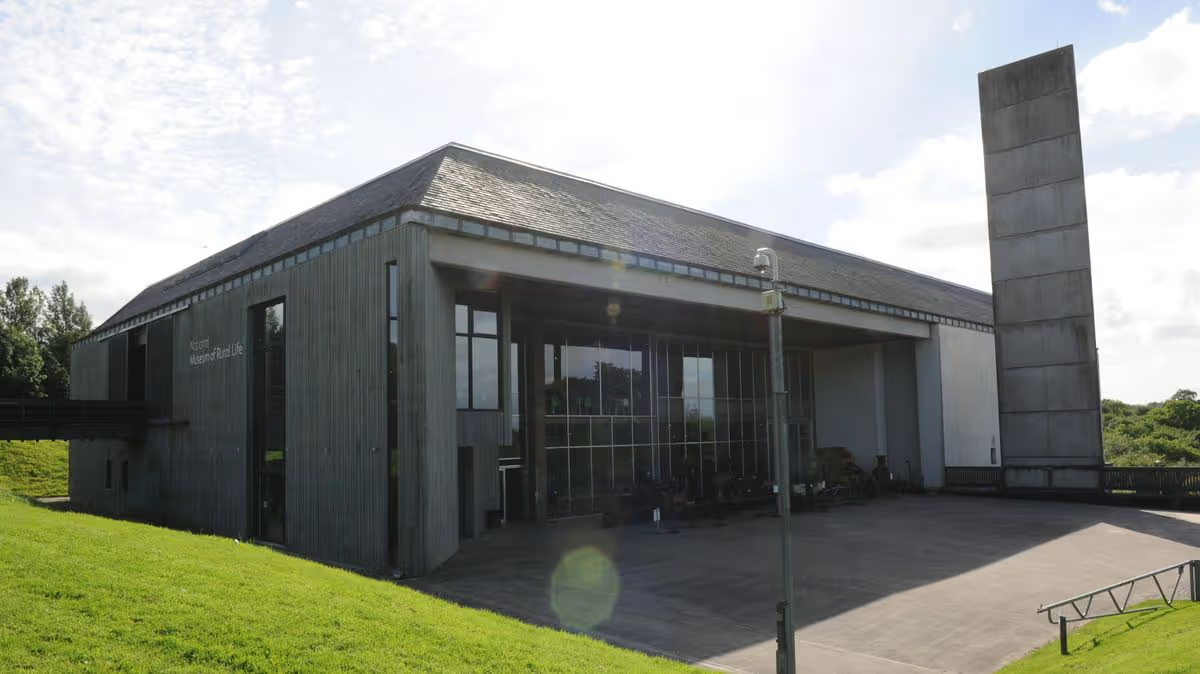
The National Museum of Rural Life in East Kilbride is getting set for a special celebration.
Advertisement
Get along to the Philipshill Road venue on Saturday, July 4, to enjoy its 25th anniversary day, from 10am to 5pm.
Free with museum admission and annual pass, celebrate 25 years of the National Museum of Rural Life with special activities scheduled throughout the day that showcase the museum displays and life on a working farm.
And then there will be an archaeology weekend on Saturday and Sunday, July 25 and 26.
Advertisement
Free with museum admission and annual pass, get along from 10.30am to 3.30pm and take part in family-friendly fun. Meet the team from Treasure Trove Scotland and find out about their work investigating and assessing new archaeological discoveries.
North Yorkshire Police said a blue-coloured electric bicycle with Twofish branding and two seats, was stolen from accommodation in King Street, around 11.25am on Tuesday, April 14.
Recommended reading:
The force has issued an appeal for to the public for information along with an image of a person its officers said could assist its investigation.
Advertisement
A spokesperson for North Yorkshire Police said: “If you can help our appeal, please email clair.bailey-lane@northyorkshire.police.uk.
“Or call 101 and ask for PC 1411 Clair Bailey-Lane.
“If you wish to remain anonymous, you can pass information to Crimestoppers on 0800 555 111.
“Please quote reference 12260068068 when passing on information.”
As our beloved NHS continues to wobble, anyone with an ounce of sense has turned their attention to preventative healthcare. Time to get intimately acquainted with NAD, then.
It’s a trending ingredient in longevity science and has been lauded as a “can-do” everything molecule. More formally known as nicotinamide adenine dinucleotide, NAD is essentially a bioactive form of vitamin B3 and an essential coenzyme found in every single cell of the human body.
NAD is increasingly being studied for its role in supporting healthy ageing and extending life spans. “NAD metabolism is fundamentally involved in mitochondrial function, cellular repair, oxidative stress regulation and metabolic signalling,” explains Jana Buzkova, NAD scientist and co-founder of Finnish biotech company NADMED, which has developed an innovative blood test.
A question of supply and demand
Advertisement
Supplements might seem like the easiest shortcut for a NAD boost, but popping a pill without insider knowledge might not always be the most effective way to top up levels. This is because the way each body converts the ingredient into active NAD in tissues can significantly vary.
While the body produces NAD naturally, levels are thought to be influenced by a range of lifestyle and environmental factors. Poor diet, stress and sedentary living may all tip the balance, and this is where demand begins to outstrip supply.
Studies also suggest levels of NAD decline as you get older. The research shows this dip can negatively impact mitochondrial function, DNA repair and the activity of longevity-associated proteins known as sirtuins. In response, attention has shifted towards strategies to support NAD levels, with diagnostic testing emerging as a new frontier. The research highlights that identifying the NAD markers linked to energy metabolism, oxidative stress and overall cellular function has the potential to support healthy ageing.
NADMED is among the players leading this space, partnering with UK longevity clinic Altheome to launch consumer NAD testing designed to reveal how NAD-related metabolites are functioning within the body. The blood test takes a deep dive into the balance between oxidative stress and the body’s ability to repair damage.
Advertisement
A snapshot of cellular ageing
The NADMED test claims to be the NAD test that meets the EU’s safety requirements available in the UK, and, with a £199 price tag, the test brings laboratory-grade analysis into a consumer setting.
The process is simple: order the test online, book an at-home or clinic-based blood draw, and receive results within 10 working days. What to expect next? A detailed snapshot report of NAD levels, offering personalised insights that may inform supplementation choices, lifestyle adjustments or wellness strategies.
Buzkova cautions that results should be interpreted carefully. “If low NAD levels are detected, the results should be assessed by a healthcare professional alongside other biomarkers, symptoms and medical history.” The bottom line is this: while the test doesn’t diagnose disease, NAD testing offers an intriguing window into your biological ageing. It’s not a crystal ball for longevity, but another crucial piece in the puzzle.
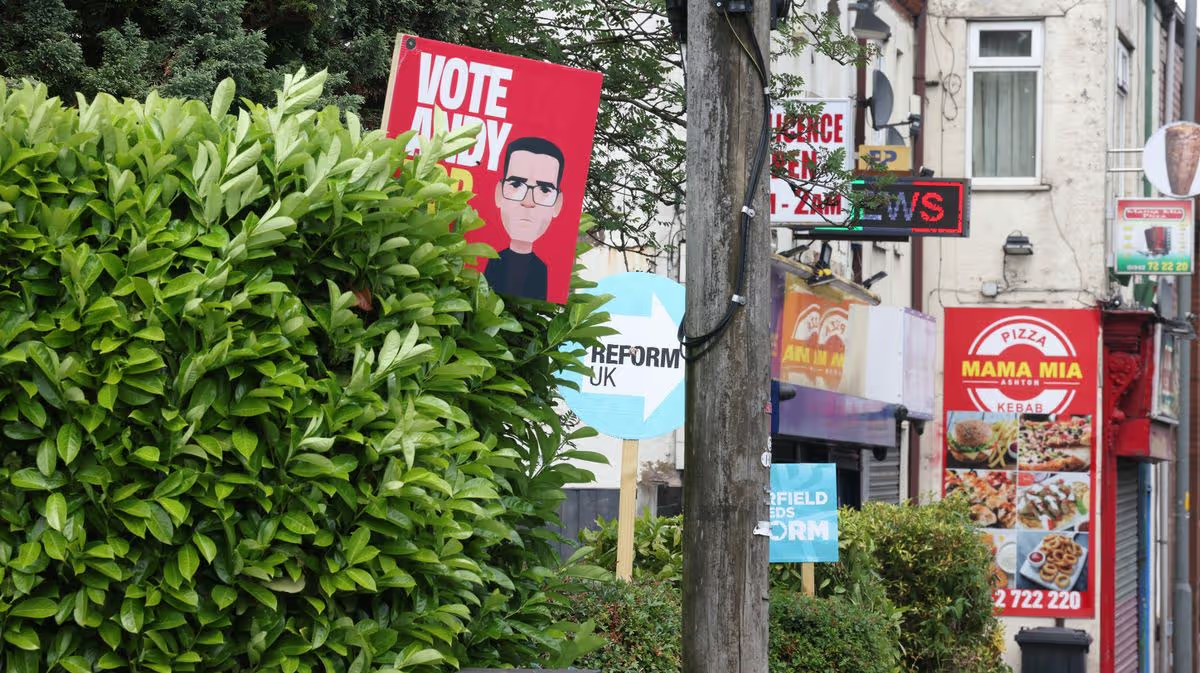
Traffic hums along the busy Bolton Road, in Ashton-in-Makerfield, where neat front gardens and clipped hedges have become unlikely political battlegrounds.
The houses are dotted with Labour red and Reform turquoise placards. On one short stretch of this road, politics is no longer confined to television studios or social media feeds – it’s literally on the doorsteps.
Within a few hundred yards, five different households display five different political stickers.
Arguably, they serve as a microcosm of what we have seen and heard across the constituency over the past few weeks: former Labour voters switching to Reform, while some remain loyal to the party.
Neighbours disagree sharply about immigration, trust and overall decline of the country as well as the constituency. Because the stakes couldn’t be higher.
On June 18 the people in Makerfield will go to the polls in a by-election triggered by the resignation of its MP Josh Simons, clearing the way for Andy Burnham to return to Westminster.
Burnham, one of Labour’s most recognisable and popular political figures, is gambling that the personal brand he has built over nearly a decade as mayor of Greater Manchester can overcome wider frustrations with the party nationally.
Advertisement
For Reform UK, the contest presents an opportunity to deliver an embarrassment to Labour in one of its traditional heartlands. This constituency voted Leave in 2016 and, in a seat shaped by post-industrial decline and deep frustration with politics, Nigel Farage’s party believes it has fertile ground.
And nowhere is that contest more visible than on this stretch of Bolton Road. We often hear how the country is divided, but what about a divided street?
Can a neighbourhood stay neighbourly when the political stakes are so high?
While national parties trade blows on television or online, these neighbours still share a fence line.
The MEN managed to knock on four of the five semi-detached houses to find out the answer to that question.
One house stands out immediately. Behind an immaculately kept garden – with trimmed hedges and colourful flower beds that give the place an almost stately feel – a large turquoise Reform banner flutters atop a flag pole.
Advertisement
The Reform “flag flier” is 79-year-old Albert Bretherton. A retired haulier, he says one reason for putting up the banner was practical: to stop campaigners knocking at the door.
But it’s also an act of political defiance.
“All our friends are just fed up with Labour” he says. But a lot of people don’t want to admit they’re voting Reform, because “they’re frightened of getting the racist card chucked at them,” says Albert.
Like many people I spoke to across Makerfield, Albert is a disillusioned former Labour voter, frustrated about immigration, policing, crime and what he sees as Labour abandoning working people.
Advertisement
“Look at the government we’ve got now,” he says. “I predicted what would happen when Labour got in. I knew they would take off them who saved, and got a pension, and give it to them what don’t want to work. They’re Labour’s main policies.”
In some ways, the Reform banner could be construed as a red rag – or turquoise in this instance – to a bull.
But Albert insists there have been no issues with the neighbours “Oh no, no, everybody’s entitled to their opinion,” he says.
Advertisement
He remains critical of Andy Burnham’s record, particularly questioning the efficiency of the public transport policies and urban regeneration projects.
But immigration comes up repeatedly. “I don’t mind immigration but it should be done in a fair way. People should apply and not come on a boat and come to the front of the queue.”
He claims some of the neighbours are only voting for Andy Burnham because “they’re retired and have a house in Spain. [Burnham] wants to go back into the EU.”
Albert doesn’t agree with Josh Simons stepping down as MP and clearing the path for Burnham.
Advertisement
“That’s why they brought Andy in by the back door by the way. I think that’s a bit naughty isn’t it,” he says.
He admits that he liked Josh – “He was alright” – but insists he shouldn’t have stood down.
As for Burnham, he adds: “Since he’s been in Manchester he’s never been back here. He’s a career guy isn’t he?”
A few doors down, one house is bearing multiple Labour placards, featuring the slogan ‘Vote Andy For Us’ alongside an avatar of the Greater Manchester mayor.
Advertisement
The hardcore Burnham fan in this house is a 19-year-old man, who declines to be named.
“I think he’s a great guy, he’s local,” he tells me. He’s voting for Labour because “they’re better than Reform”.
He brings up Rob Kenyon’s old social media posts, adding: “He’s clearly sexist isn’t he?”
Advertisement
The teen says he had an altercation on the street with Reform while they were out canvassing.
This was shortly after Nigel Farage’s visit to Chapo’s at The Caledonian across the road. The Reform UK leader was visiting the pub as part of the party’s ‘Save Our Pubs’ campaign.
“I saw the candidate, Rob Kenyon. I just pulled over in my car, rolled down the window and called him an aristocrat,” the young man continues. “They started taking pictures and said they’d get me done for a Public Order offence.”
Why did he do that?
Advertisement
“Nigel Farage is a Tory at the end of the day and he’s an aristocrat,” he replies.
Reform told the MEN it has no recollection of this happening.
Apart from that, the man insists that conversations with his neighbours are more cordial.
“I do have some conversations with the neighbours. They’re not bothered, we get along,” he says.
Advertisement
Asked about Reform voters, he adds: “I think people are focused on immigration but what’s the problem? I don’t see a problem. I think it’s great for the economy.”
Voting for Labour seems to be in his blood. His parents are voting for Burnham and his granddad “used to go around with a megaphone screaming ‘vote Labour’ back in the 80s,” he says.
For him, Labour identifies problems and implements change, even if Keir Starmer’s performance hasn’t been perfect. Next door the contrast couldn’t be more stark
Advertisement
Engineer Andrew, who declines to give his surname, is Albert’s son-in-law.
He makes no secret of his voting for Reform, with two turquoise placards on his property.
“It’s mainly because we don’t like Keir Starmer,” he tells the MEN. “I want to get rid of him, he’s useless. It’s everything.”
Nigel Farage, on the other hand, is a “good communicator. All the things he stands for is more or less what we stand for,” says Andrew. “We’re working people and we get taxed far too much.”
Advertisement
Reform’s candidate, Robert Kenyon, has faced criticism over previous online comments about various issues, including his position on Brexit, abortion and sexist remarks about women. But Andrew dismisses this as Labour “spin”.
He dislikes Andy Burnham, describing him as “Keir Starmer part two”.
Immigration is one of the main concerns, and says the country is letting in too many people. But he rejects the label of “far right”, describing himself and his partner as “concerned people,” adding: “I’m not racist. My partner’s not racist. We’ve got friends from different religions and that. It’s not a problem.”
Advertisement
For Andrew, the window signs also serve a practical purpose. Since he put the signs up, he’s had no door knocks from any of the parties.
When asked if the different political views cause any tensions on the doorsteps, he gestures towards the neighbours and jokes: “I might not take her parcels in anymore.”
Next door to him, Mike Brumskill has put up a Labour placard because he feared people would assume the Reform sign, on the neighbour’s hedge, was on his house and might present him as a target.
He’s put up Andy Burnham stickers in the window. “I just think he’s a very genuine man, I think he’s got a moral compass,” he tells me. “He’s set himself apart from normal politicians.”
Advertisement
Citing Burnham’s record, including campaigning for the families of Hillsborough and as Health Secretary, he believes “nobody but Andy Burnham would have a chance of beating Reform around here.”
Farage’s vote share has been dented slightly by newcomer Restore, whose candidate, Rebecca Shepherd, is polling at seven percent in her party’s first parliamentary contest.
For that reason, Mike is “so glad” that Restore is “going to take away a chunk of the Reform vote and weaken them.”
A retired police officer and used to putting down riots and disorders, Mike expresses deep alarm over Nigel Farage’s rhetoric.
“I’ll be totally honest with you. I see Nigel Farage as someone like [Oswald] Mosley in the 1930s,” he says. “I really, really am scared of the community tensions.”
Like the 19-year-old Labour voter, Mike brings up Rob Kenyon’s “misogynistic” social media posts.
“I like to think of myself as a decent man and I find him abhorrent,” he continues. “I’ve got three daughters, a wife and granddaughters and I wouldn’t want that man anywhere near politics and power.
Advertisement
“That level of misogyny offends me as a man. My wife was horrified when she saw that and I don’t blame her.
“He’s got the potential to go to Parliament and he’s supposed to represent women. And if you’ve got that contempt… you know I just don’t understand that as a man.”
Yet, despite these sharp divides, Mike remains committed to his community.
“I love my neighbours, they’re really lovely decent people,” he says. “I even love the fella who’s flying the Reform flag. Everyone’s entitled to their opinion.”
Advertisement
Nonetheless, he struggles to understand “how anyone can even contemplate voting for Reform.”
Whichever way Makerfield votes on June 18, the striking thing is that despite all the different political views, people still manage to live side by side. They’ve managed to do something that national politicians increasingly struggle with – disagreeing fiercely without falling apart.
After the by-election the placards will come down. Some will wake up to the results feeling disappointed, others vindicated.
But the people of Bolton Road – and Makerfield overall – will have to find a way to live with the results.
President Donald Trump has compared the UFC structure being built at the White House to the Eiffel Tower and says he may “never, ever take it down”.
The UFC is set to host an unprecedented show on the South Lawn of the home of the United States’ leader in Washington DC on 14 June, to mark 250 years of American independence.
Construction has started, with workers assembling domed arches over a staging area which will become the octagon.
Trump says he may choose to leave the arena standing because it is “attractive to a lot of people”, like when Paris decided to keep the Eiffel Tower.
Advertisement
The famous structure, built in 1889 as part of the World’s Fair to celebrate 100 years of the French Revolution, was planned to be taken down 20 years later before French authorities decided to keep it.
“Many don’t know that it was supposed to be taken down immediately after the World’s Fair,” Trump said on Tiktok.
“They said ‘you know, we sort of like it, let’s leave it up a little longer’. And then they said ‘let’s leave it longer and longer’ and they never took it down.
“We’re building something in front of the White House that’s quite attractive to a lot of people. And I’m looking at it and maybe we’ll never, ever take it down.”
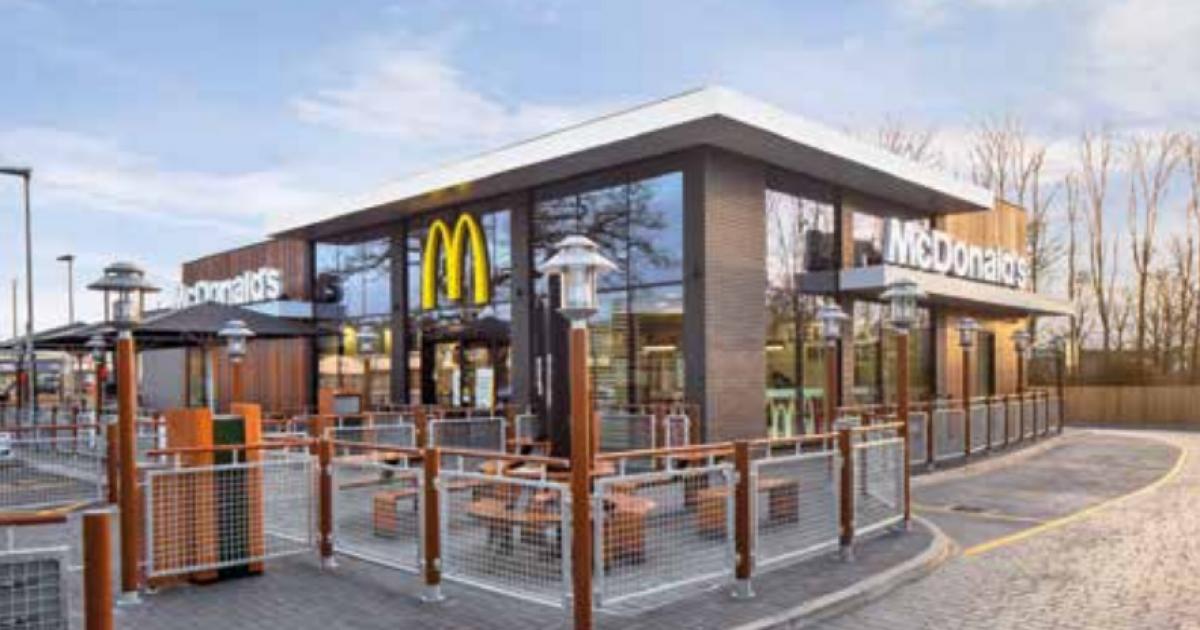
The proposal, which will be considered by North Yorkshire Council’s Richmond area planning committee on Wednesday, would see the restaurant built on a parcel of grassland immediately north of the main Scotch Corner roundabout.
The scheme includes a drive-thru restaurant with indoor and outdoor seating, a children’s play area, toilets and parking for 55 vehicles.
The location of the proposed McDonalds restaurant at Scotch Corner. Photo: Google.
Four electric vehicle charging points would be installed within the car park, with infrastructure in place to allow a further eight bays to be connected in the future.
In addition, outline permission is being sought for a dedicated electric vehicle charging facility featuring up to 20 charging bays on land to the north of the restaurant.
Advertisement
Supporting documents say this would double the number of publicly available EV chargers in Richmondshire at present.
Planning officers have recommended approval of both elements of the application, subject to conditions and a legal agreement covering highway improvements, biodiversity measures and travel plan monitoring.
The proposed restaurant would operate 24 hours a day and is expected to create around 120 jobs, equating to around 82 full-time positions.
The site sits between the A1(M) and the Driver and Vehicle Standards Agency (DVSA) testing facility and would be accessed via an existing junction on the A6055.
Advertisement
Improvements to the junction, pedestrian routes and cycle access are included as part of the development.
Planning officers concluded the scheme would provide significant economic benefits and is appropriately located close to the strategic road network.
A report to councillors states that although the development would result in the loss of less than one hectare of Grade 3 agricultural land, the impact is considered acceptable due to the site’s location and limited agricultural value.
The application has attracted objections from local parish councils, residents and businesses.
Advertisement
Concerns raised include increased traffic congestion, road safety, litter, the loss of greenfield land and the cumulative impact of further development around Scotch Corner.
In its response, Moulton Parish Meeting said a strategic assessment of the many planning applications in the pipeline for the Scotch Corner area was required before any further schemes were approved.
It added: “There is already a choice of fast food outlets, either planned or existing at Scotch Corner or nearby at the approved Road Chef at Catterick Central and Barton Truckstop.
“Any further development is unnecessary.”
Advertisement
However, both National Highways and North Yorkshire Council’s highways officers have withdrawn their initial concerns following amendments to the scheme and have raised no objections, subject to conditions.
The development would also include extensive landscaping, with 14 new trees, wildflower grassland and additional screening planting designed to soften the appearance of the site and enhance biodiversity.
A slightly worse scenario would see nuclear weapons deployed in 10 years (Picture: EPA)
Russia’s ‘good’ outcome for the next 25 years would involve the use of nuclear weapons, according to a report.
The country’s annual economic forum kicked off on Wednesday in St Petersburg, attended by Vladimir Putin and business heavyweights from across the globe.
Presenting at the conference was Konstantin Malofeev, founder of the Russian Orthodox media network Tsargrad, who presented a ‘Russia 2050’ report with three possible scenarios.
The ‘good’ scenario involves Russia ‘obtaining a clear image of victory in the ideological war’ using nuclear weapons, annexing Ukrainian cities including Kyiv, Odesa, Kharkiv ‘and so on,’ and seeing the European Union crumble.
Advertisement
Putin is among the attendees of the annual economic forum (Picture: MAXIM SHIPENKOV / POOL / AFP via Getty Images)
A ‘bad’ scenario would see Russia lose its war in Ukraine and be ‘colonised’ by 2050, while an ‘inertial’ result would end in ‘American and Chinese hegemony’ and would see Russia use nuclear weapons by 2036.
Sign up for all of the latest stories
Start your day informed with Metro’s News Updates newsletter or get Breaking Newsalerts the moment it happens.
Malofeev has vocally supported the annexation of Crimea and has funded efforts to destabilise Ukraine, including Russia’s 2014 Donbas operation.
Advertisement
He is sanctioned by the UK for ‘acting in support of the destabilisation of Eastern Ukraine’, and the Foreign, Commonwealth & Development Office (FCDO) says he has faced a criminal investigation into his alleged support to separatists in the region.
The ‘good’ scenario involves annexing Kyiv (Picture: Arif Murat Kayacan/Anadolu via Getty Images)
Malofeev was joined onstage by Alexander Dugin, co-author of the report who is also sanctioned by the UK, US and EU.
The FCDO says he ‘is or has been involved in destabilising Ukraine by being responsible for, engaging in, providing support for, or promoting any policy or action which destabilises Ukraine or undermines or threatens the territorial integrity, sovereignty or independence of Ukraine.’
Dugin told audiences at the summit that the unpublished report had already been presented at the Russian Ministry of Defence’s General Staff Academy.
Black smoke rises over St Petersburg following a Ukrainian drone strike (Picture: AP Photo/undefined)
The city’s governor, Alexander Beglov, said ‘infrastructure objects’ in three districts of the city had been hit on Wednesday.
Meanwhile Ukrainian President Volodymyr Zelensky said the drones had struck several ‘military targets’, including the Petersburg Oil Terminal ‘which serves the war’ and ‘an enterprise in the Tambov region involved in the production of Russian weapons’.
In a post to X, he said: ‘Important facilities on Russian territory were hit last night.
‘I thank our warriors for their precision. Ukraine’s plan for long-range sanctions is being implemented exactly as needed to bring peace closer. Glory to Ukraine!’
Beglov confirmed in a post on Telegram that clean-up efforts are underway and that several people had been injured, but there were no fatalities as a result of last night’s strike.
Ask an incoming tourist what the country’s big visitor draws are, and they may well say Buckingham Palace, the Tower of London, Stonehenge, Thorpe Park or even Legoland
The best attractions in England this year have been crowned, and the winners may come as something of a surprise.
Ask an incoming tourist what the country’s big visitor draws are, and they may well say Buckingham Palace, the Tower of London, Stonehenge or even Legoland.
The victory comes off the back of a win at the Visitor Attraction of the Year at the 2026 Suffolk and Norfolk Tourism Awards, so Jimmy’s is clearly having a good year.
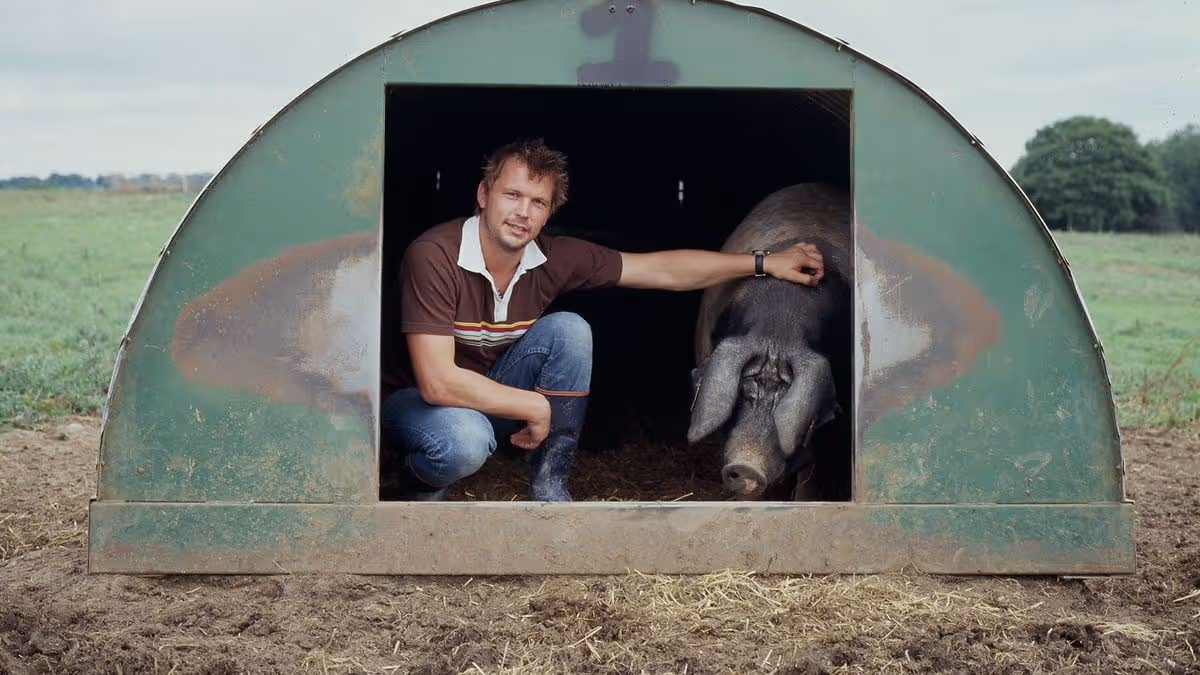
The wildlife park is owned by TV star and conservationist Jimmy Doherty, who has presented programmes on both Channel 4 and the BBC. He is best known for the show Jimmy’s Farm, which details the operation of the Essex Pig Company that he and his wife Michaela Furney own in Suffolk.
Do you have a travel story to share? Email webtravel@reachplc.com
The park aims to be a centre of excellence for British rare breeds while also housing animals like camels, primates, tapirs and crocodiles. Lions and a tiger were added as recently as October 2025.
The real draw that put the place on the map was the acquisition of polar bears. Jimmy’s Farm built Europe’s largest facility for the species, called “the Lost Lands of the Tundra,” housing rescue polar bears alongside brown bears, Arctic foxes, grey wolves, reindeer and red-breasted geese. The bears are even visible from the train window on the London–Ipswich line.
Getting from London to Ipswich by train takes about an hour from Liverpool Street, but the lack of a bus from Ipswich station to the park is an issue some have confronted. Most visitors end up getting a taxi, which costs around £13 each way. The zoo itself is only part of the site; there are also shops and a restaurant in the farm area, and you can leave and re-enter the zoo with your receipt.
Jimmy’s Farm has 1,800 five star reviews on Tripadvisor, out of 2,400 in total.
Advertisement
“What a great day out, a well thought out place, extremely conducive and focused on giving the animals the best possible environment to flourish and feel comfortable in their habitat,” one happy customer wrote.
“Some beautiful woodland walks, plenty of things to do for children aside from seeing the animals, beautifully situated in the centre of the park, away from the majority of animals. Plenty of choice around the park for eating, whether you want a snack or something more substantial, as well as numerous picnic areas if you bring your own food.”
The winners were announced at the annual event hosted by journalist and broadcaster Sean Fletcher on 3 June at Aerospace Bristol.
Coming in second place in the Large Visitor Attraction of the Year rankings was Bletchley Park in Buckinghamshire, where visitors can learn about the code-breaking geniuses who were instrumental in helping the Allied Forces win WWII.
Advertisement
It is clearly a year for farms. The bronze award was handed to Attwell Farm Park in Worcestershire, a family-run petting farm where Pedigree Aberdeen Angus cattle, sheep, goats, pigs, chickens and ducks are all ready to nibble some feed from your hand.
Gold, Silver and Bronze were awarded in 17 categories selected from 21 local awards. They ranged from ‘Regenerative Tourism Award’ to ‘Accessible and Inclusive Tourism Award’ and from ‘New Tourism Business of the Year’ to ‘Self-Catering Accommodation of the Year’.
Tourism Minister Stephanie Peacock said: “I am delighted to see so many businesses across England being recognised for their outstanding work, helping to make people’s stays as enjoyable and memorable as possible.
Advertisement
“From hotels and pubs to glamping, museums and experiences, these awards are a real testament to those striving to ensure our tourism industry remains outstanding. Our upcoming Visitor Economy Growth Strategy will provide a clear, long-term plan to unlock investment, back businesses and showcase more of our great destinations to the world.”
VisitEngland Director Andrew Stokes added: “The awards are a celebration of England’s outstanding tourism industry and an opportunity to highlight the excellence that makes it world-leading.
“From a hands-on, traditional blacksmith’s visitor experience in the Midlands and a castle hotel and spa set in one of our national parks to accessible and inclusive holidays, these awards showcase the exceptional quality, unparalleled customer service and innovation that drive our industry.
“I congratulate the wonderful range of first-class award recipients, all of whom are so passionate about tourism. They are all deserving winners.”
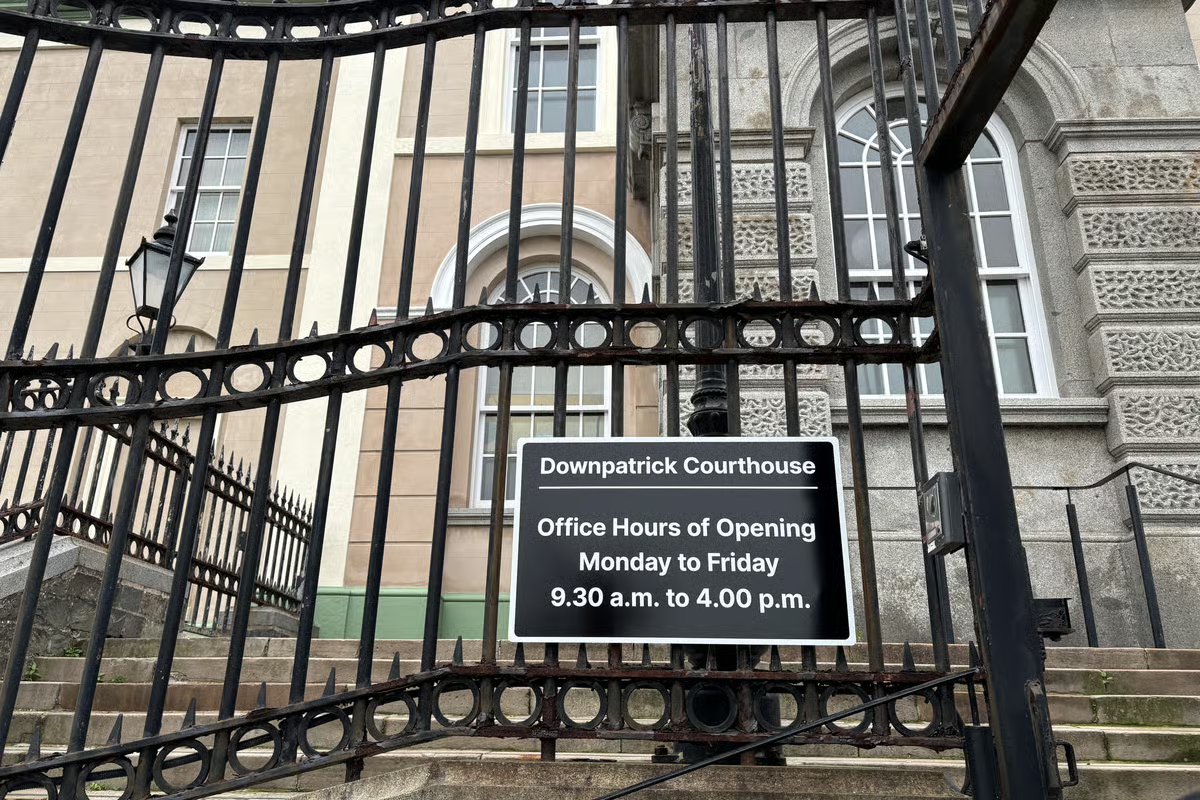
On Thursday morning, Downpatrick Magistrates’ Court heard that the officer remains in hospital, and is “seriously unwell”, having sustained a broken wrist, a crush injury to a leg which they cannot put weight on, injuries to the head, cuts and abrasions, and is in “a great deal of pain”.
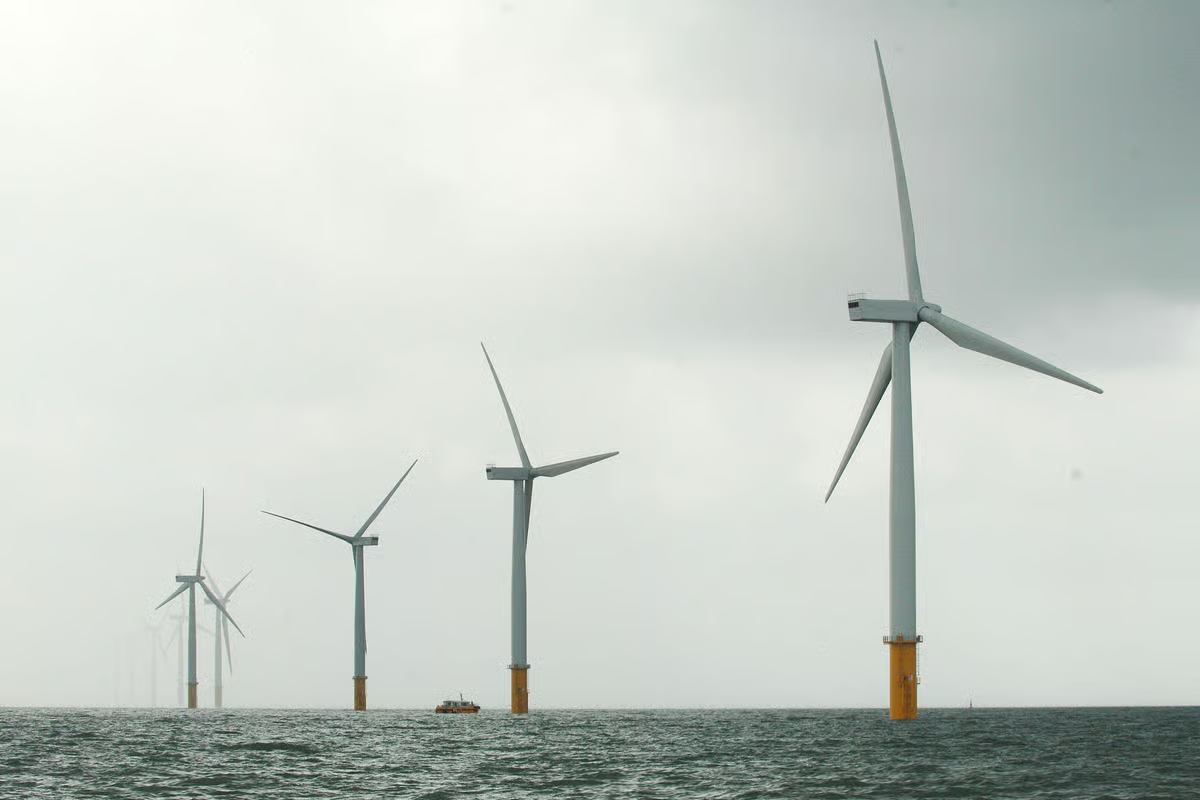
Dr Waldman added: “To build this scenario, we brought together a wide range of international marine and energy datasets, from national targets and spatial plans to seabed depths, wind and wave records, existing infrastructure and projected turbine technologies, to create a realistic picture of what current ambitions might mean in practice.
Simon has visited some of the most remote places o Earth, and has trouble with his broadband
Neil Shaw Assistant Editor
10:58, 04 Jun 2026
This article contains affiliate links, we will receive a commission on any sales we generate from it. Learn more
Adventurer Simon Reeve says he has taken extreme steps to get connected to the internet, including scaling scaffolding outside his home. The writer and presenter has travelled to some of the most remote places on earth, including the Arctic, the Congo Rainforest and the Kalahari Desert.
But despite being based in the UK, he is one of millions of Brits living in homes unable to access full-fibre broadband. Slow and unreliable Wi-Fi is the UK’s biggest pet peeve, according to new research by Vodafone. Nearly a quarter rely on hot spotting from their phone every day.
Simon said: “I’ve travelled to some of the most remote places on earth, and I know just how important it is to stay connected. Even at home in Devon I’ve had to resort to wandering around a field, sitting on scaffolding and even banning my son from streaming to combat slow Wi-Fi.”
Advertisement
55% admit taking work calls in unusual spots, including the garden, the car, and even the bathroom when signal dips. For many, losing internet access has meant abandoning the working day altogether, with 18% saying they logged off for the rest of the day.
A Vodafone spokesperson added: “Slow or unreliable broadband is still a daily frustration for millions of people across the nation, whether they live in a remote hamlet or the middle of a busy city. Our research shows just how much it impacts people’s lives.”
Vodafone is launching 5G Broadband, which could benefit around 3.7million houses in the UK who can’t yet access full fibre.














































You must be logged in to post a comment Login