

Politics
Chest Discomfort Without a Diagnosis: When Specialist Assessment Matters


The second someone finds themselves facing chest discomfort, their mind begins to spiral into panic. It can be difficult to think of anything else in that second, as anything happening to our hearts scares us far more than most health issues out there. But do you know what can make this situation even more excruciating? Going through a heart check and still walking away without a clear diagnosis in hand. This is, arguably, even more exhausting and frustrating than the discomfort itself. The only ray of light that remains, then, is hoping that some specialist can help you instead. So, if you’re in this situation, let’s help you understand why chest discomfort can be so difficult to diagnose and how a specialist can help you uncover the root cause of this issue.
Why is chest discomfort so difficult to diagnose?
The biggest problem with the symptom “chest discomfort” is that the chest contains many organs and structures that can cause it. The heart, lungs, muscles, ribs, oesophagus, and even something more abstract, like anxiety, can create this sensation. While chest pain related to the heart is described as tightness, indigestion or acid reflux as a burning sensation, and muscle strain as a sharp pain, the first instinct people have when clutching their chest is that something is wrong with the heart. The problem is, heart problems don’t always follow this pattern anyway. Many people will experience jaw discomfort, upper back pain, nausea, dizziness, or fatigue rather than chest pain, and never link them to the heart. Some people may even have intermittent symptoms that practically disappear by the time of the appointment, making things even harder for a doctor.
When should you involve a heart specialist?
Now, if your pain is linked to a muscle strain or mild indigestion, your GP will usually be good enough to handle the problem. But there are a few red flags to watch out for. Chest discomfort that repeatedly appears during physical activity is one of them. If walking uphill, climbing stairs, or other forms of exercise trigger chest tightness, blood flow to the heart may be affected.
You should also get yourself checked by a good cardiologist in London if your symptoms are becoming more frequent and more intense, and are affecting your quality of life. Even if your tests came out green before, these ongoing symptoms deserve a closer look. Remember: a single normal ECG does not mean the issue is no longer heart-related. If a close relative of yours also has had a bout with heart disease, high cholesterol, or cardiac issues – especially at a younger age – you absolutely should get yourself checked by a heart doctor. Lastly, if your chest pain is accompanied by heart palpitations, dizziness, or unexplained shortness of breath, and these symptoms are worsening over time, get yourself checked immediately.
Should you wait for an NHS referral or go private?
To be clear, the NHS is an excellent system for treating emergencies and providing essential care for most people. But when it comes to specialists, a private clinic may be a much better option. The primary reason is that waiting times for such doctors, especially for non-urgent investigations like unexplained chest discomfort, can stretch for weeks, even months, depending on your area. For someone who is experiencing chest pain, this is pretty bad, as not only can their symptoms worsen significantly with time, but the waiting period itself can be emotionally draining.
Going private will let you see a cardiologist and access advanced tests (if needed) much faster. In many cases, you can arrange a consultation, ECGs, stress testing, echocardiograms, and advanced imaging within a week. When the goal is to identify a potentially serious issue that presents as just chest pain, this is nothing short of a blessing in disguise. Again, if your symptoms are mild and stable, and you’re already seeing a GP, it’s fine to wait a bit. But if your symptoms are worsening or affecting your life in any way, it’s best to see a private cardiologist instead.
What tests should you get for your chest discomfort?
The exact tests you’ll be getting will depend on your consultation with the cardiologist, based on your symptoms, risk factors, age, physical exam results, and medical history. But there are still some common tests that you can ask about. The first is an electrocardiogram, also called an ECG. This test records the electrical activity of your heart, checks for any abnormalities in your heart rhythm, and signs of previous damage to the organ.
Alongside this, you may need blood work to check for markers of heart muscle injury, inflammation, cholesterol, and other conditions that may be contributing to your symptoms. If your symptoms occur during physical activity, a stress test may also be added. In it, you’ll be asked to exercise on a treadmill or a stationary bike, and your heart will be monitored by the doctor throughout.
To get a clearer picture of how well your heart is functioning, an echocardiogram may also be ordered – an ultrasound specifically for the heart. It shows how well your heart is pumping blood, how well your valves are functioning, and if there are any structural issues that need addressing. In more complex cases, your doctor may also recommend tests such as a Holter monitor if the chest pain appears at random, ambulatory monitoring if random blood pressure spikes are a suspect, a coronary CT angiogram to obtain detailed images of your arteries, and a 3D scan to obtain a true, full picture of your heart in real time.
Getting the best possible care for your heart
At the end of the day, don’t forget that chest discomfort, especially one that hasn’t had a clear diagnosis so far, is not something you simply need to live with. This isn’t something you resign yourself to for the rest of your life. You need to keep fighting, and the best way to do so is to get yourself checked by specialist doctors. Even if the cause turns out to be non-cardiac in the end, anything this persistent should absolutely be evaluated so you are not left guessing about your own health. If you feel you can still afford to wait, see a specialist with an NHS referral; otherwise, start with a private cardiologist immediately. Sooner or later, the root cause of your issue will undoubtedly surface, and when it does, prepare yourself for the treatment plan. If you can just do this much, everything will be just fine.


Dementia researchers have known for a while that sleep changes appear to be associated with Alzheimer’s risk, though it can be very hard to work out whether the condition causes the symptom or vice versa. It may be a mix of both.
Whatever the connection, a previous study showed that older people who got fewer than five hours of sleep a night were about twice as likely to develop dementia over five years than those who got six to nine hours’ shut-eye.
However, a new study published in the journal Alzheimer’s & Dementia sought to find out why longer sleep duration seems to up our risk too.
How much sleep was linked to higher dementia risk?
This research looked at 2,410 study participants, all of whom were over the age of 65. The researchers compared the individuals’ sleep patterns with their levels of phosphorylated tau 181, or p-tau181 – a modified type of tau protein sometimes described as a “hallmark of Alzheimer’s disease”.
Alzheimer’s is the most common form of dementia in the UK and has been associated with the build-up of amyloid plaques and tau tangles. They’ve been compared to the “trigger and bullet” in the development of the condition.
Higher levels of p-tau181 buildup began to be seen from eight-and-a-half to nine hours of sleep, and shot up even further past 10 hours of sleep. (This wasn’t about a one-off night of added shut-eye, by the way – these numbers reflected participants’ regular sleep routines).
The researchers think this might mean that older individuals who are longer sleepers might be likelier to experience early neurodegenerative changes.
This study follows a 2025 paper which found that getting more than nine hours of sleep a night seemed to negatively affect cognitive performance among people of all ages, especially those with depression.
More research is needed
Study author Dr Vanessa M Young from UT Health San Antonio said: “A lot of people worry about whether their sleep habits are affecting their brain health.
“Because this is a snapshot in time rather than a long-term study, we cannot say that long sleep causes Alzheimer’s, but the findings suggest it may be worth monitoring, and that more sleep is not always better for brain health.”
Previous research, which relied on the same data set (The Framingham Heart Study, which has been following a group of people and their children since 1948), also found that older adults who went from sleeping fewer than nine hours a night to nine hours or more over the years may be at a higher risk of dementia.


3 min read
Britain does not lack difficult problems. Nor do we lack good ideas. But too often we fail to build lasting public agreement around the biggest decisions we face.
Social care, welfare reform, and the governance of artificial intelligence and digital technologies are among the defining policy challenges of our time. They are very different issues, but they share something in common. They demand more than another review, consultation or parliamentary statement. They require an enduring national settlement.
That should encourage us to think not only about the decisions we make, but about how we make them.
Politics has always involved disagreement. It should. But too often our modern politics rewards the performance of disagreement over the practice of solving problems. A relentless news cycle, social media and the rhetoric of permanent campaigning too often reinforce that instinct.
Point scoring becomes easier than problem solving.
Recently, I had the privilege of leading one of the government’s most ambitious People’s Panels on a major area of public policy. New prime ministers are entitled to change policy. Clear priorities make for better governments. What stayed with me was not simply the policy under discussion, but what the People’s Panel taught us about consensus building and the future of policy making when problem solving, not point scoring, becomes our starting point.
The People’s Panel brought together 120 people from across every nation of the United Kingdom, selected to broadly reflect the country we serve. They arrived with different experiences, different assumptions and strongly held views. Some were instinctively supportive. Others were openly sceptical. That diversity was not an obstacle. It was the point.
Over several weeks, they heard evidence, challenged assumptions, questioned experts and wrestled with genuine trade-offs. Nobody expected unanimous agreement.
The lesson was not that disagreement disappeared. The lesson was that disagreement became productive.
We did not ask people to think alike. We asked them to think together.
That feels like an increasingly rare thing in public life.
People who began from very different places found common ground not because differences were ignored, but because they had been aired honestly, challenged respectfully and worked through collectively. Consensus was not engineered. It was earned.
Watching that process reinforced something I have come to believe. When we are all given the time to hear evidence, challenge assumptions and deliberate together, consensus becomes far more achievable than our politics often suggests.
Representative democracy remains the foundation of our country. Governments govern. Parliament decides. A People’s Panel does not replace those responsibilities. It strengthens them by helping build the public legitimacy that our biggest national settlements demand.
It will not be right for every decision. Nor should it be. But where the choices are profound, trade-offs unavoidable and the consequences felt across generations, this approach has real value. Not only in shaping better policy, but in rebuilding confidence that politics is capable of listening before deciding.
Policies will change. Governments will change. Priorities will evolve. They should. But if government discovers a better way of bringing people into the difficult decisions that shape our country’s future, that is something worth keeping.
Tony Wilson famously said: “In Manchester, we do things differently.” It was more than a slogan. It reflected a confidence that original thinking often produces better answers than familiar habits.
Perhaps that is the mindset we now need for some of our oldest national challenges.
If we want to restore faith in politics, we should spend less time asking how politicians can persuade people of their answers and more time trusting people to help shape them.
Because the public do not always expect politicians to have all the answers. They do expect us to ask the right questions and trust them enough to help answer them.
That is how we build stronger national settlements. That is problem solving, not point scoring.
James Frith is Labour MP for Bury North

Andy Burnham will today enter Downing Street as prime minister, becoming the seventh person to hold the office in a decade.
Burnham is the Labour and Co-operative Party MP for Makerfield, having returned to parliament at a by-election on 18 June 2026. He previously represented the constituency of Leigh from 2001 to 2017.
Burnham’s first stint in parliament
During his first period in parliament representing Leigh, Burnham held several ministerial positions under Tony Blair and Gordon Brown. He served in cabinet as secretary of state for health (2009-2010), secretary of state for culture, media and sport (2008-2009) and chief secretary to the Treasury (2007-2008).
Burnham served as minister of state for delivery and quality in the Department of Health from 2006 to 2007 and as a parliamentary under-secretary of state in the Home Office from 2005 to 2006.

MDU warns Chancellor clinical negligence system ‘not fit for purpose’

Northern Ireland RE curriculum is ‘indoctrination’ – Supreme Court
Burnham also held a series of prominent frontbench roles during Labour’s tenure in opposition from the 2010 election until he left parliament in 2017. He served as shadow health secretary under Ed Miliband (2011-2015) and shadow home secretary under Jeremy Corbyn (2015-2016).
Burnham twice stood unsuccessfully for the Labour leadership in 2010 and 2015.
Burnham placed second to Jeremy Corbyn in 2015, winning 19.% of the Labour membership vote. He was nominated by a total of 68 MPs – the most of any other candidate.
In his 2015 campaign launch, held at Ernst & Young, Burnham argued that “the entrepreneur will be as much our hero as the nurse” – a move seen by some as misjudging the party mood that year. He was later accused of shifting leftwards during the campaign.
In 2010, Burnham won 8.7% of the electoral college vote (under Labour’s old leadership rules) and was eliminated in the first round. He was nominated by 33 Labour MPs – the minimum number to enter the next stage of the contest.
In his 2010 leadership bid, Burnham promoted “aspirational socialism”.
Burnham: Greater Manchester mayor
Burnham left Westminster in 2017 to run for the Greater Manchester mayoralty. He was elected mayor in 2017, 2021 and 2024, each time securing over 60% of the vote. In 2024, he achieved a majority of 351,803 over the Conservative candidate, who received 68,946 votes (10.4%).
During his tenure as mayor, Burnham oversaw the introduction of the Bee Network, which brought buses and trams into a locally controlled, integrated transport system. He also focused on homelessness initiatives, donating 15% of his annual £110,000 salary to tackling homelessness.
The Covid-19 pandemic, particularly the government’s introduction of a regional tiered system of restrictions, unexpectedly elevated the national profile of regional politicians, especially England’s metro mayors like Burnham.
In October 2020, a high-profile standoff occurred between Burnham, representing Greater Manchester, and the central government over the imposition of “Tier 3” restrictions (then the highest level). Burnham publicly led negotiations demanding greater financial support for businesses and workers affected by the stricter lockdown measures. He argued that the support offered by the government was insufficient, requesting £65 million while the government initially offered a £60 million package.
Burnham held a widely reported press conference criticising the negotiation process and the perceived inadequacy of the support. During the press conference, he learned via media reports that £22 million of business support funding had been confirmed, prompting an unscripted, angry reaction where he called the government’s approach “brutal” and “frankly disgraceful”.
He stated: “It’s brutal to be honest, isn’t it? This is no way to run the country in a national crisis. This is not right. They should not be doing this.
“Grinding people down trying to accept the least they can get away with. £22m to fight the situation that we are in is frankly disgraceful.”
This confrontation helped Burnham earn the moniker of “King of the North”.
During Starmer’s leadership of the Labour Party and his premiership, Burnham became an increasingly vocal critic. In a remarkable intervention at Labour’s annual conference in 2025, Burnham pointed to a “climate of fear” in the party.
In 2025 and 2026, the Starmer government’s woes over the winter fuel payment cut, welfare bill rebellion and Peter Mandelson vetting debacle sparked speculation that Burnham could mount a parliamentary comeback.
In early 2026, Burnham sought the Labour selection for the Gorton and Denton by-election, which was triggered by the resignation of former minister Andrew Gwynne. However, Labour’s national executive committee (NEC) voted 8-1 to block Burnham’s candidacy; only the deputy Labour leader and Burnham ally, Lucy Powell, voted in his favour. Burnham’s application had been publicly supported by senior Labour figures including Powell, Angela Rayner, Ed Miliband and Sadiq Khan.
The decision to block Burnham was a boost for the Green campaign, spearheaded by Zack Polanski, resulting in the party’s first-ever victory in a parliamentary by-election.
2026 Labour leadership crisis and Makerfield by-election
The May 2026 local elections and devolved parliament elections to the Scottish Parliament and Senedd Cymru inflicted more pain on the Labour Party. These results, which were confirmed from 8 to 9 May, sparked an intense political crisis as Labour MPs lined up to call on Starmer to step down/set out a timetable for his departure. In total, over 90 MPs called for Starmer to step down as prime minister. Several serving frontbenchers, including ministers Jess Phillips and Miatta Fahnbulleh, resigned in order to do so.
On 14 May 2026, Wes Streeting resigned as health secretary. In his letter of resignation, the outgoing health secretary described the 2026 local and devolved parliament elections as “unprecedented”. He said that the rise of nationalism in all corners of Britain represented “an existential threat to the future integrity of the United Kingdom”. Streeting later vowed to stand in a future Labour leadership election.
Mere hours after Streeting’s resignation, Josh Simons, a former junior minister, announced that he would resign his Makerfield seat to enable Burnham to stand as a candidate and return to parliament.
In a statement setting out his decision to resign as an MP, Simons said: “It is my unwavering belief that nothing short of urgent, radical, courageous reform will make a difference. That must start with a change in leadership.
“Today, I am putting the people I represent and the country I love first and will be resigning as MP for Makerfield. I am standing aside so that Andy Burnham can return to his home, fight to re-enter parliament, and if elected, drive the change our country is crying out for.”
This time, ahead of the Makerfield by-election, the NEC put up no resistance and Burnham was confirmed as Labour’s candidate.
On 4 June, during a BBC Question Time special, Burnham confirmed that he would seek to enter any future Labour leadership contest should he win the Makerfield by-election. He argued that “Wes Streeting seems to have launched a leadership contest, so if that is running I would seek to join it.”
Burnham stated: “I can’t do anything unless I’m lucky enough to get the support of people here.
“But if I get your support, I would seek to represent you at the highest possible level and give this constituency maximum power and influence.”
In the early hours of Friday 19 June, Burnham was declared as the winner of the Makerfield by-election. Burnham secured 24,927 votes (54.8%) and a significant majority of 9,231 over the Reform UK candidate in second place.
The Makerfield by-election moved Labour’s leadership crisis into a new phase. It ensured that Burnham was now eligible to stand in a leadership contest to succeed Starmer. Events moved quickly. Starmer spent the weekend of 20-21 June at Chequers, the prime minister’s country retreat, to mull his political future.
In a statement on the morning of 22 June, Starmer confirmed his intention to resign. Speaking on the steps of Downing Street, Starmer said it had been an honour to serve the “country I love”. His voice cracked as he paid tribute to his wife, Victoria, and his sons.
In the hours that followed Starmer’s address, Burnham confirmed that he would be standing for the Labour leadership.
He said: “His decision marks the beginning of a transition and it is important that this process is conducted in an orderly and responsible way. I will put myself forward as part of this process…
“The Labour movement has always been at its strongest when it looks forward with confidence and purpose. This is what we will do from here and we will make sure this transition is a positive process of renewal for our party and our country.”
Almost immediately, Streeting endorsed Burnham and abandoned his own leadership bid. The former health secretary said he had spoken to Burnham “at length” in recent days.
In a post to social media, he stated: “We could spend the summer exaggerating small differences, or we can roll up our sleeves and help him to deliver the change our party and country needs. That is the choice I am making and I hope that everyone else will back Andy, too.”
2026 Labour leadership contest
On 25 June, the Labour NEC set out the leadership election timetable. Members of the parliamentary Labour Party (PLP) were told they could nominate a fellow Labour MP to stand for leader from 9 July to 15 July. Under the party’s rule book, any candidate would need to receive the support of 20% of the PLP (81 MPs) to stand in the contest.
The NEC announced that, in the event that more than one candidate was nominated, a membership ballot would take place between 6 August and 27 August – with the result being announced on August 29.
On 29 June, in his first speech since Starmer announced his decision to resign as prime minister, Burnham promised a “new direction” for Britain. Speaking at the People’s History Museum in Manchester, Burnham vowed to establish a “No 10 of the North”, which he claimed would be “the nerve centre of a rewired Britain”.
Dressed in his trademark dark T-shirt, the former Greater Manchester mayor stated: “Ours is a 10-year mission to raise people’s living standards.
“I know people can’t wait forever for change. I heard on doorsteps in Makerfield how people need a bit extra now to help with rising costs. I will do my very best to deliver it, and whilst not taking risks with the public finances, will seek to give Britain some breathing space as soon as I can.
“People need to be able to look forward to a night out or a holiday with the kids. People need hope.”
On 7 July, Nigel Farage, the leader of Reform UK, sought to upstage Labour’s leadership transition by announcing he would resign as an MP and contest the resulting Clacton by-election. He delivered the live statement about his “future in public life” after facing questions over a series of donations. In the wake of Farage’s announcement, the major parties confirmed they would not field candidates in Clacton, leaving him to face a slate of novelty challengers, including perennial candidate Count Binface.
Burnham later quipped that Binface, who secured 95 votes in the Makerfield by-election, was “carrying the hopes of the nation”. Speaking at the Silver Clef music awards at the Royal Albert Hall on 9 July, Burnham declared: “Now, the legends that we’re here to honour have not shied away from politics in their career, but I promise you, I am not going to talk politics to you tonight, except to say, except to say this, Count Binface. You are carrying the hopes of the nation.”
On 8 July, Al Carns, the former defence minister, ruled out a leadership bid after weeks of speculation that he could stand. Carns told Sky News that a leadership contest was “not the best use of Labour’s time” and that in his view “we need to get on board” with Burnham. This intervention meant that Burnham was the only Labour MP to have declared his candidacy at the time nominations opened on 9 July.
On the evening of 9 July, it was announced that 322 MPs had officially endorsed Burnham – comfortably surpassing the 81-MP threshold. The Labour heir apparent was just one nomination shy of the 323 mark; once reached, no other candidate would be able to muster the 81 backers required to enter the race to replace Starmer.
On 13 July, the second day of nominations, a further 27 MPs backed Burnham – taking his total to 349.
In a PLP hustings on 13 July, Burnham underlined his aim to create “a team and culture where everyone is valued, seen and listened to.” He warned that “this is a significant moment for the country, and our constituents are counting on all of us to come together.”
Burnham reportedly emphasised that “the Labour movement is, and always has been, a broad church. Cabinet and appointments will reflect that, alongside contribution, experience and commitment”.
Burnham delivered his first commons speech since returning to parliament on 14 July. It came during a debate on the Public Office (Accountability) Bill, also known as the “Hillsborough law”.
Burnham had introduced the same legislation as an unsuccessful private member’s bill in 2017, calling for a legally enforceable duty of candour on public officials and authorities during investigations and inquiries. The bill, promised in the 2024 Labour manifesto, had been stalled since January 2026 after a proposed carve-out for intelligence officers provoked a backlash from the Hillsborough families.
In his address, Burnham praised the outgoing prime minister, hailing Starmer’s commitment to building “a country based on justice”.
Burnham stated: “Tonight, it feels like life is coming full circle. In passing this momentous piece of legislation, which will change the way this country thinks about and works towards justice, we are truly rewiring the state and passing power from the authorities to the hands of ordinary people.
“It is happening because of the prime minister’s commitment to a country based on justice and fairness, and we thank him for that. He has honoured his commitment to the Hillsborough families, and what this House will do in passing this bill tonight is rebalance the scales of justice so that we have justice for ordinary people going forward.
“That is some legacy indeed.”
On 15 July, Labour MP Neil Coyle – a supporter of Starmer and Burnham critic – nominated Catherine West to lead the party. During the May 2026 Labour leadership crisis, triggered by the local and devolved parliament elections, West had threatened to topple Starmer as a “stalking horse” candidate unless a more realistic rival emerged.
Responding to a Sky News report pointing to frustrations within Labour that the party had never been led by a woman, Coyle responded: “Well, I nominated one today.”
West, however, declined to pursue a leadership bid, replying: “I’m flattered… but I’m backing Andy.”
The episode ensured that Burnham’s elevation would not be wholly unanimous.
In the end, Burnham secured a total 379 nominations out of a total 403 Labour MPs. He was formally introduced as the leader of the Labour Party in a special conference on 17 July 2026.
In his first speech as Labour leader, Burnham pledged to serve “people and places who have been waiting too long for politics to let them hope again.”
Addressing an audience of MPs, activists, trade union leaders and party grandees, Burnham further vowed to end Labour’s factional disputes, saying “we won’t beat Britain’s new right if we are consumed by infighting and pulling in different directions.” He referred to a “generation of politicians” who had failed to challenge “an economic model that simply doesn’t work well enough for ordinary people.”
Burnham declared: “Four decades of the neoliberalism that began in the 1980s have not been kind to the places that built our party, nor to the communities across the UK in rural and coastal areas. So we pledge today to them to be better.”
He added: “Political power was centralised and economic power was privatised. The country surrendered control of the essentials – housing, water, energy, transport – and left people exposed to higher costs…
“The right used the phrase ‘take back control’ – but they are the ones who gave it away in the first place.
“If we want an economy and a country that works for all people and places – which to me should always be at the very core of Labourism – then it requires a new path to the one we’ve been on for the last 40 years.”
Andy Burnham: political views and notable votes
Burnham supported Lucy Powell for the party’s deputy leadership in September 2025. The election followed the resignation of Angela Rayner, who stepped down as deputy prime minister and deputy party leader after an investigation into her tax affairs. It marked the first time since 2007 that Labour had held a deputy leadership contest while in government.
Powell, the former leader of the House of Commons, was seen as a candidate representing the party’s “soft left”. She secured 117 nominations from the Parliamentary Labour Party (PLP), above the 80 required, and went on to win the election – defeating Bridget Phillipson with 54.3% of the vote.
Burnham is a member of Mainstream, a centre-left network within the Labour Party. The group was launched in September 2025 by the think tank Compass and the activist group Open Labour. It describes itself as a home for “Labour’s radical realists” and aims to influence the direction of the Labour government. It has called on the government to offer a “popular, principled and practical left politics for meaningful change.”
Compass has described the group as “an independent vehicle with the sole task of saving the Labour Party from its clear drift to the right and the unintended paving of the way to a Reform government.”
Burnham supported Remain in the 2016 Brexit referendum.
In February 2017, Burnham voted in favour of the European Union (Notification of Withdrawal) Bill. The legislation empowered the prime minister to notify the Council of the European Union of the UK’s intention to withdraw, formally triggering the process set out in Article 50 of the Treaty on European Union. MPs supported the bill by 498 votes to 114 at second reading.
Burnham voted in favour of a government motion calling for the renewal of the Trident nuclear deterrent system in July 2016. The motion, which was passed by 472 votes to 117, committed the UK to constructing a new fleet of submarines to carry the nation’s nuclear weapons. Labour was split over the issue with 140 of its 230 MPs going against leader Jeremy Corbyn and backing the motion.
Burnham voted against a government motion to extend UK airstrikes against Isis from Iraq into Syria in December 2015. The motion, which was passed by 397 votes to 223 after a ten-hour debate in the House of Commons, authorised the RAF to conduct strikes against Isis targets in Syria.
In October 2014, Burnham was one of 192 Labour MPs who voted in favour of recognising Palestine as a state. The motion, passed by 274 votes to 12, called on the government to “recognise the state of Palestine alongside the state of Israel as a contribution to securing a negotiated two-state solution”.
Burnham voted against the government’s motion on the principle of military intervention in Syria in August 2013. The government motion was defeated by 285 votes to 272, a move which effectively ruled out UK participation in any US-led military strikes.
In February 2013, Burnham voted in favour of the Marriage (Same Sex Couples) Bill at its second reading. The landmark piece of legislation, which received its second reading by 400 votes to 175, legalised marriage for same-sex couples in England and Wales.
In March 2003, Burnham voted in favour of the government motion authorising military action against Iraq. The vote, one of the most contentious in recent parliamentary history, gave the prime minister, Tony Blair, the authority to join the US-led invasion.
Andy Burnham: background and career before politics
Andrew Murray Burnham was born in Aintree, near Liverpool, on 7 January 1970. He grew up in Culcheth, Cheshire, and attended St Aelred’s Catholic High School in Newton-le-Willows.
He studied English at Fitzwilliam College at the University of Cambridge.
Before his election as an MP in 2001, Burnham worked as a researcher for the Labour politician Tessa Jowell from 1994 to 1997. He then served as a parliamentary officer for the NHS Confederation and as an administrator for the Football Task Force.
In 1998, he became a special adviser to the culture secretary, Chris Smith.
Andy Burnham: personal life
Burnham married Marie-France van Heel in 2000. They have one son and two daughters.
His father was a telephone engineer and his mother was a receptionist. He joined the Labour Party at the age of 15.
Andy Burnham: trivia
Burnham is a lifelong supporter of Everton Football Club.
Former Liverpool defender Jamie Carragher reportedly donated to Burnham’s 2010 leadership campaign.
Burnham played cricket for Lancashire’s junior team and continues to play football, having previously turned out for the Labour Party’s “Demon Eyes FC” team.
In 2003, he made a substitute appearance for Leigh RMI in a pre-season friendly against Everton.
He was portrayed by the actor Matthew McNulty in the 2022 ITV miniseries Anne, which dramatised events surrounding the Hillsborough disaster.
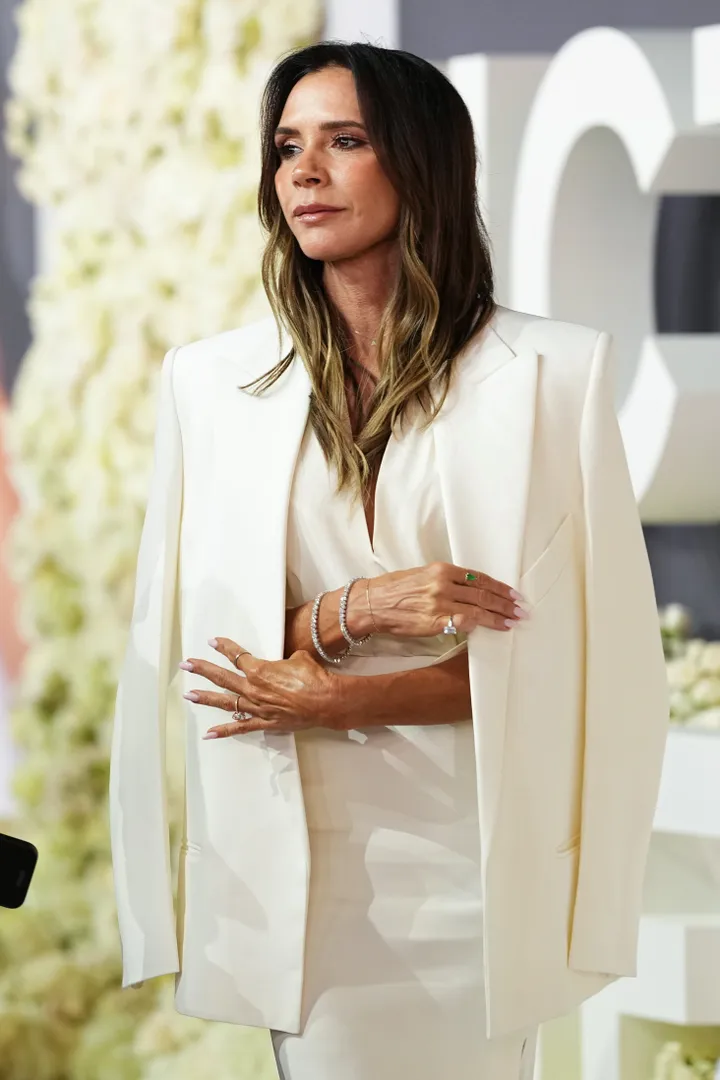
Spice Girls star Melanie C celebrated her marriage to husband Chris Dingwall over the weekend – with most of her former bandmates in attendance.
But while Victoria Beckham was unable to join Mel B, Geri Halliwell and Emma Bunton for the I Turn To You singer’s big day – she and her husband, football icon Sir David Beckham, were in the US for the World Cup – she was, at least, there in spirit.
Melanie and Chris first tied the knot in an intimate ceremony in his native Australia, before a more lavish do in the UK.
In their write-up of Melanie’s nuptials, British Vogue shared that Sporty Spice walked down the aisle in a wedding dress by Victoria, who has turned to fashion design in recent years since stepping away from the pop world.
Victoria told the magazine: “I was actually having dinner with Melanie and asked her what she was up to. She very casually told me she was leaving for Australia in two days and getting married!
“When I asked what she was wearing, she mentioned she had actually ordered one of my dresses but that it didn’t quite fit, and she didn’t have time to get it altered before leaving. I happened to have that exact dress in my own wardrobe and offered to lend it to her.”

“Victoria’s dress was my something borrowed,” Melanie enthused. “It was very special, having her there.”
After that, Victoria said she “obviously offered to make her dream dress” once she found out that Melanie would be having a second celebration on her home turf.
The bride added: “Victoria wanted to make it much more personal to me. She found some gorgeous vintage lace, and everything was really delicately dyed to the perfect shade. It’s very flattering, open at the back. “My daughter [17-year-old Scarlet] was at the first fitting, and she wanted a bit more drama in the length. The line from Scarlet has been, ‘It’s my wedding too!’.”
British Vogue’s wedding snaps include a group photo of Mel B, Geri and Emma with Melanie C on her wedding day.
The group last came together as a five-piece two years ago, performing an impromptu rendition of one of their biggest hits at Victoria’s 50th birthday.
Since then, there’ve been various rumours of a project between all five members of the band, though none of them have come to fruition, despite them celebrating a major milestone earlier this year.
A senior Conservative MP has announced that they will stand down from parliament at the next general election.
Helen Grant, the shadow solicitor general, was first elected to parliament in 2010 as the MP for Maidstone and The Weald, and has represented the redrawn seat of Maidstone and Malling after boundary changes took effect in 2024. In a statement, she described representing the two constituencies as “the greatest privilege of my professional life.”
Grant told her local Conservative association on 10 July that she would not seek re-election as the MP for Maidstone and Malling at the time of the next general election, which is expected in 2029.
Grant explained that, while she remains healthy and cancer-free following major surgery and treatment from 2023 to 2024, the illness had reinforced her view that now is the right time to begin handing over to a successor.
MDU warns Chancellor clinical negligence system ‘not fit for purpose’
Northern Ireland RE curriculum is ‘indoctrination’ – Supreme Court
Grant said she had informed Kemi Badenoch, the Conservative leader, of her decision, and also told her she intends to stand down as shadow solicitor general at the next reshuffle. She thanked Badenoch for her leadership and friendship during “one of the most fulfilling periods” of her parliamentary career.
Grant delayed the publication of the statement announcing her decision to stand down following the death of Ann Widdecombe, who she succeeded as the MP for Maidstone and The Weald in 2010.
In the 2024 general election for the new Maidstone and Malling constituency, Grant received 14,146 votes (30.5%). The Labour candidate received 12,472 votes (26.9%), and the Reform UK candidate secured 9,316 votes (20.1%). Grant was duly elected with a majority of 1,674.
Grant was appointed as shadow solicitor general in November 2024 after supporting Badenoch in the 2024 Conservative leadership election. During the campaign, Grant said Badenoch had “that X-factor we rarely see in our politicians”.
Grant stood as a candidate in the House of Commons contest for deputy speaker following the 2024 general election. She won the support of senior parliamentarians Jeremy Hunt, Andrew Mitchell and Chi Onwurah among others.
During the Conservative government under David Cameron, Grant served as parliamentary under-secretary for sport and civil society at the Department for Culture, Media and Sport from October 2013 to March 2015, and jointly as parliamentary under-secretary of state for courts and victims (2012 – 2013) and parliamentary under-secretary of state for women and equalities (2012 – 2013).
Grant was the first ever justice and victims minister. Of her role, Grant wrote in 2012: “I look after the interests of victims and witnesses of any crime, including domestic violence, sexual violence and rape.
“I’ll be called on to speak about a number of issues, from the opening of new rape support centres to government plans to stop bailiffs taking advantage of people.”
As equalities minister, Grant was one of the three frontbenchers responsible for taking the Marriage (Same Sex Couples) Bill through the House of Commons. The bill legalised same-sex marriage in England and Wales.
Grant served as vice-chair of the Conservative party for communities from 2018 to 2020. Under prime minister Boris Johnson, she was appointed UK trade envoy to Nigeria (August 2020 – July 2024) and the prime minister’s special envoy for girls’ education (January 2021 – March 2025).
In January 2021, Grant presented the Football (Regulation) Bill to parliament under the 10-minute rule procedure. Introduced in the wake of financial crises, such as the collapse of Bury FC, the bill called for the creation of an independent regulator to oversee club finances, ensure a fairer distribution of money throughout the football pyramid, and reform the governance of the Football Association.
The Banknote Diversity Bill, which Grant introduced in April 2019, sought to address the fact that no historical ethnic minority figure had ever featured on a UK banknote. The bill would have placed a legal duty on the Bank of England to ensure such representation on future currency designs.
Grant was a member of the House of Commons committees on arms export controls from February 2016 to October 2016, the international development committee from July 2015 to October 2016, and the justice committee from July 2010 to October 2011.
In the 2005 to 2010 parliament, Grant was added to the Tory “A-List” of prospective parliamentary candidates (PPCs), drawn up by Conservative Central Office at the behest of then-party leader David Cameron. The A-List was a centrally-approved priority list of around 100-150 PPCs created as part of Cameron’s bid to modernise the party’s image. The primary goal was to increase the diversity of Conservative MPs by fast-tracking more women and candidates from ethnic minority backgrounds into safe and winnable seats.
Grant was ultimately the first black woman to be selected to defend a Conservative seat; the Maidstone and The Weald constituency had a 14,856-vote Conservative majority at the time. Her election in 2010 made her the Conservative Party’s first black woman MP.
Anne Widdecombe, Grant’s immediate predecessor, described her as someone with “the makings of an excellent parliamentarian and stateswoman, someone I think our people will be very proud of in the years to come.”
Grant initially joined the Labour Party in 2004. In 2008, she denied claims in the Mail on Sunday that she put herself forward as a Labour candidate in Croydon in 2004 for elections in 2006.
Grant joined the Conservative party in 2006, describing David Cameron as the decisive factor.
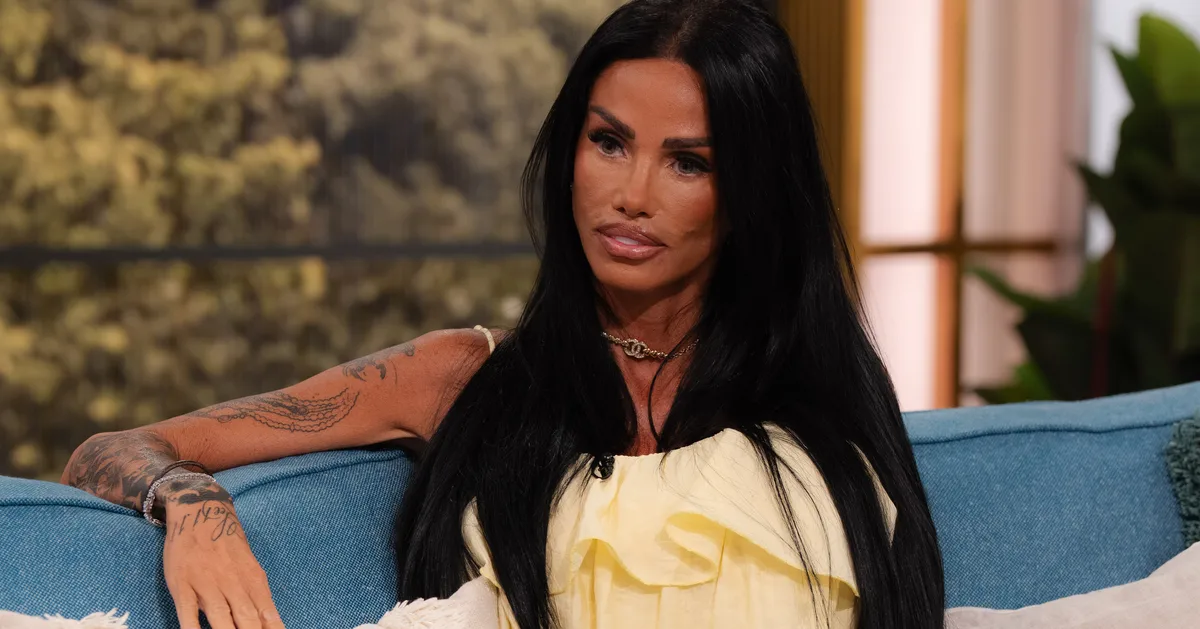
Katie Price is speaking out amid fresh reports about her relationship with her husband Lee Andrews.
Over the weekend, The Sun On Sunday reported on an alleged voicenote sent by Katie’s husband to a friend, claiming he could sell a sex tape featuring the couple for around £250,000 behind her back.
Setting the record straight on her Instagram story, Katie insisted (as reported by Metro): “This story is completely untrue. I have never made such a tape and any suggestion otherwise is false and deeply misleading.
“The claims appear to be based on a voicenote sent from Lee discussing a tape… a tape which does not exist and never will. This material has been passed to The Sun by a third party and does not reflect reality.”
She added: “I feel incredibly upset, abused and humiliated that such serious and false allegations have been shared publicly without any factual basis.”
In The Sun On Sunday’s reporting, the tabloid claimed that Lee later told his friend he was “not serious” when he allegedly said he’d sell an intimate video featuring himself and the former glamour model.
The sharing of private, sexual photos or videos of someone without their permission, or “revenge porn” has been illegal in the UK since 2015.
Katie raised eyebrows at the beginning of this year, when she shared that she and Lee had tied the knot in Dubai just days after meeting for the first time in real life, having previously connected on social media.
In the months since, Lee has reportedly been arrested and detained in Dubai on two separate occasions.
Earlier this month, while promoting a new documentary series about her life in the public eye, Katie told HuffPost UK: “It’s literally one scandal after another scandal, and another one, and another one, and another one. Even till this day there is a scandal!”
She added: “All the speculation about my life and what’s going on now, none of you have any idea.”
We hope you love the products we recommend! All of them were independently selected by our editors. Just so you know, HuffPost UK may collect a share of sales or other compensation from the links on this page if you decide to shop from them. Oh, and FYI — prices are accurate and items in stock as of time of publication.
Shopping for a new baby can be overwhelming. There are so many products out there, most of them claiming that they are an absolute ‘essential’ for new parents.
But that can’t possibly be true; while we’re not one to knock buying products that make your life easier, we survived without app-controlled bottle warmers for years.
“With so many baby products available, it can be difficult to know where to begin,” says Hamish McPhillips, head of category management at Silver Cross.
To help you sort the fact of parenting essentials you need from the fiction, we’ve consulted him for a round-up of new baby essentials.
Newborn baby essentials checklist
Car seat
“Start with a car seat, as it’s the one item you’ll need from day one,” says McPhillips.
“If budget allows, opt for a rotating infant carrier with a lie-flat function. 360-degree rotating car seats are ideal for getting your baby in and out of the car hassle-free, while a lie-flat position offers greater comfort and support for newborns.”
Best car seats to shop

Celeb-approved travel cot
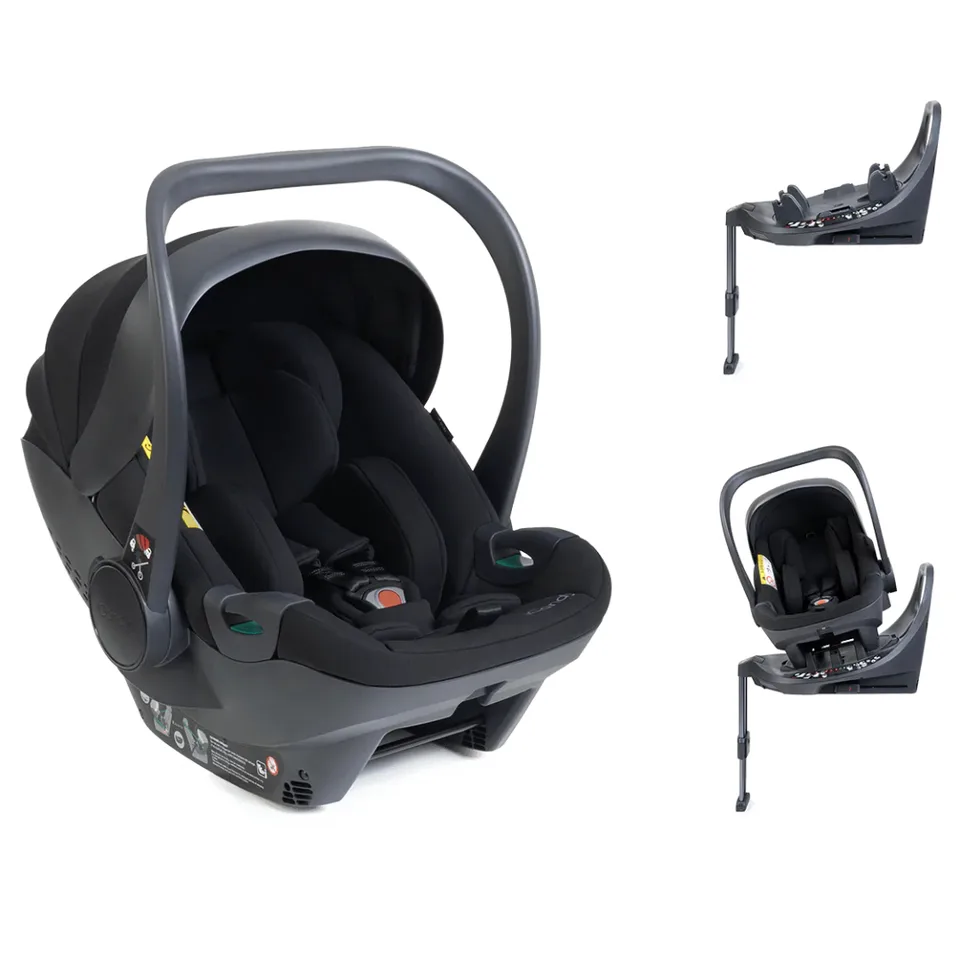
If you’re looking for a seat that you can bring them home from the hospital in, this one from iCandy has been safety tested to make it suitable for babies from birth.
Not only is the headrest fully adjustable, but the sides have added ventilation to ensure safety for newborns.
It also comes with a 360 base, meaning it makes getting your little one in and out of the car a breeze, and comes with a foldable support leg so you can easily store it when you’re not in transit.
Child fit: 40 to 87 cm/ 3 months to 12 years
Weight limit: Up to 13kg
Seat weight: 11kg with base
Dimensions: 68 x 44 x 34kg
Safety: i-Size (R129)

Most comfortable
Designed to keep your child safe and comfortable until they no longer need a car seat, the Maxi-Cosi Pearl can be used until they’re 12 years old.
The newborn inlay accessory means you can use it from birth, but when they’re four you can easily switch to booster mode, which features an adjustable headrest.
No matter their age, its 360 degree rotation allows you to quickly get them in and out of the car – because you don’t need another thing slowing you down when you’re trying to leave the house.
But that’s not the only feature that prioritises comfort: the seat is lined with ClimaFlow fabrics, which maintains optimal airflow throughout the seasons.
Of course, safety is key, so it also uses a G-CELL structure to spread impact and reduce injuries should you get into any accidents.
Child fit: 61 to 150cm/ 3 months to 12 years
Weight limit: Up to 36kg
Seat weight: 8.2kg
Dimensions: Rearwards facing, 51-55 x 44 x 70-74cm. Forwards facing, 63-81 x 44 x 67-77cm
Safety: R129/04

Most affordable car seat
As well as coming in at less than £100, this car seat takes an entire step out of your travelling routine as you can simply snap it into place in your pushchair – all without an adaptor.
Using a three-point harness, it makes sure your kid is both comfortable and safe. Joie has made it from machine-washable covers, which means you won’t have to worry about any unfortunate spillages, and it’s also included a sun canopy for extra protection when it’s bright outside.
Child fit: 40 to 75 cm/ up to 12 months
Weight limit: Up to 13 kg
Seat weight: 2.96 kg
Dimensions: 56 x 39 x 68 cm
Safety: ECE R129/03 and i-Size

Best for lying flat
This versatile car seat means your baby can get their snooze in no matter where they are, thanks to the fact it lies completely flat.
So you can get your child out of the car quicker than you can say ‘pebble’, the seat also comes with a SLIDETECH 2 base that slides the seat out 27cm and 90 degrees so you can reach them without having to strain. Not to mention that it also comes with a 360° FlexiSpin rotation system that lets you twist it with just one hand for extra easy access.
Pebble also comes with a large attached canopy, which uses UPF50+ protection to keep them protected from the sun, wind, and rain. Like the Pearl, the structure is designed to reduce impact and keep your baby secure with the three-point harness.
Child fit: 40-87cm, 0-24 months
Weight limit: Up to 13 kg
Seat weight: 3.9kg + 8.1kg base
Dimensions: 63.2 x 43.2 x 75cm with base
Safety: R129/04

Best convertible car seat
Forget about clicking your car seat into your pushchair, what if it actually was one, too? Well, if that’s your dream it’s your lucky day, because this one from Doona folds out into a stroller in seconds – ideal for when you’re on the go or don’t want to wake them from their slumber.
The seat itself comes with three recline positions, so they can lie down in any which situation (dreamy). Although it can only be used in recline position, it comes with an add-on accessory that helps protect against impact.
Child fit: 40-85 cm
Weight limit: Up to 13 kg
Seat weight: 8.3kg
Dimensions: 72 × 44 × 46 cm as car seat, 89 x 44 x 101cm as stroller
Safety: R129/04, EN1888, EN12790, TUV (EU)
Pushchair
“The second essential is your wheels,” says McPhillips. “Consider the type of lifestyle you have and how you’ll use your pushchair in your daily routine. Will you be walking around town every day, tackling country paths, or travelling frequently with your growing family?”
It’s also worth considering a pushchair that is compatible with car seats and other kind of travel.
“Many brands offer travel systems that pair with their car seats, which can be a great option for added convenience and value for money,” adds McPhillips.
“I would definitely recommend looking out for carrycots that are approved for overnight sleeping too, making naps on the go and overnight stays much easier.”
Best pushchairs to shop

Best for growing families
Whether you’re adding to your family, or planning on growing it in the future, this stroller from Momcozy will expand with you.
With 23 configurations to choose from, you can assemble it however you like to accommodate an only child, siblings or twins.
It comes with a bassinet, which can be used for a second child, or switched out for the seat for newborns. Plus, the bottom can be used as a wagon for older kids, so you’re not constantly having to herd children through busy streets.
Designed for strolling on any kind of terrain, it comes with a high-performing suspension system so they don’t feel bumps in the road. And, Momcozy has made sure it’s comfortable for parents too, as the handle bar adjusts to any height for optimum positioning as you push.
Despite promising big, it also folds extremely small, which makes it ideal for travel, too.
In the box: Bassinet, toddler seat, detachable canopy, bumper bar, front wheels, rear wheels, rain cover, travel bag
Dimensions: 92 to 109.5 x90 x 49cm.

Best pushchair bundle
Don’t want to have to worry about different brands of pushchair and car seat connecting?
So you can cross multiple things off your list at once, iCandy has created this pushchair bundle, which comes with every accessory under the sun.
The pushchair is compatible with 14 different car seats, so you can move your baby out of the car while they’re snoozing, and it can also easily be converted into a double pushchair with the addition of the bassinet.
Also included are a raincover, screen, seat liner, changing bag, cup holder, seat liner, and all the clamps and converters you need – but if you don’t want all of that, there are plenty of other bundle potentials to choose from.
In the box: Raincover, screen, elevator Adaptors, car seat adaptors, footmuff and seat liner, changing bag, parasol, cup holder, clamp, and the iCandy Cocoon 360 Infant Car Seat and Base
Dimensions: 77 × 61 × 96 cm

Best for on the go
If the idea of messing around with folding your pushchair for minutes on end every time you get in the car or on a plane doesn’t sound appealing to you, this stroller has you covered.
It has a one-hand fold, which will add hours back on to your life (or it’ll feel like it) while the suspension is designed specifically to respond to stops and starts around the city.
If that wasn’t enough for you, it’s also eco-friendly, as it’s made from bio based materials that reduce its carbon footprint by up to 21% – all while staying UPF protecting so your babe is sun safe.
In the box: Pushchair
Dimensions: 106cm x 52cm x 104cm
Crib
“Bedside cribs are great option for the first few months, allowing your baby to sleep safely alongside you while making the night-time feeds much easier for you and your baby,” McPhillips says.
“When planning your nursery, it’s definitely worth investing in nursery furniture that grows with your child. Convertible cots that transform into toddler beds are always a good option, supporting your child from birth through to their early years while creating a consistent sleep environment.”
Best bedside and convertible cots to shop now

Best convertible bed
Honestly, tying to get rid of furniture is a nightmare – how are you supposed to buy a new bed when you can’t get rid of your old one?!
To eliminate that problem entirely, Stokke has come up with a bed that converts with your child as they grow. Starting as a bedside newborn crib, the mattress height adjusts as they get bigger, and is suitable all the way up to five years old.
Whether they’re sleeping next to you or in another room, the crib can be moved around thanks to the addition of swivel wheels, so you won’t have to rely on friends and family to relocate your little one.
Dimensions: 65 x 78 x 85cm minimum; 125 x 78 x 85cm maximum
Age suitability: 0-5 years old.

Best travel cot
Some cots need to be strapped to your bed, which can get annoying when you’re trying to move the cot around the house with you so your baby can never be out of sight.
Not this one, though. As well as being freestanding, the sides drop down so you have quick and easy access to your baby (yep, even when you’re recovering from a C-section).
The side panels are made of mesh, so you can also keep a watchful eye on them as they sleep, and it even folds into a travel bag so you never have to be without it.
Dimensions: 98 x 61.5 x 72 to 82.5cm
Age suitability: 0 to 6 months.
Nursing chair
“A comfortable nursing chair is another purchase many parents find themselves grateful for,” McPhillips says.
“You’ll spend countless hours feeding, soothing and settling your baby during those early months, so having a comfortable place to sit can make a real difference to everyday parenting life.”
Best nursing chairs to shop

Most stylish nursing chair
This stylish chair is designed to be as comfortable for the feeder as it is practical. As well as coming in a soft teddy texture, the chair sits atop a rocking base, for added soothing while your baby feeds.
The arms sit at the optimum height for feeding, so you might nod off to sleep with how comfy you are. You can even add a matching footstool if you like, but be warned: you’ll never want to leave.

Best budget alternative
If investing in a whole nursing chair sounds like a step too far for you, this pillow from Momcozy is a happy medium.
Made from 100% safe memory foam, it’s supportive of your baby while they’re feeding, and it’ll also stop any uncomfortable arm strain you have.
Plus, it expands with your baby, so you won’t have to worry about supporting extra weight as they grow.
High chair
“While we often think of highchairs as something for later, many modern designs can be used from birth with lie-flat newborn attachments and adapt as your child grows,” McPhillips explains. “Introducing your baby to family mealtimes from an early age can help encourage interaction, routine and social development.”

Best convertible high chair
Meal time is family time, so there’s no reason a high chair can’t be a seat for anyone. At least, if you ask Stokke it would say so, because it’s made this high chair than be converted from baby chair through to an adult one so it fits all the family.
The included newborn set means you can have your baby sit with you at the table from birth, and then switch out to the baby set as they grow. Remove the high chair layer and you’ll have a sturdy seat for a toddler, and it’s even the right depth and height to support a fully grown adult.
While this one comes in a natural beech finish, there are plenty of other colours to choose from, and you can add engraving so it becomes an heirloom you pass down through the generations. Sweet!

Best high chair bundle
Should you not be the type for shopping (can’t relate), this bundle kills two birds with one stone as you’ll get both a baby bouncer and high chair in one.
With a wipe-down seat, washable seat pads, and one-hand fold, getting your baby set up and for meal time takes mere seconds.
The height of the seat is completely adjustable, and the meal tray is removable, so it can adjust to your toddler’s needs at they grow.
Plus, the set comes with an anti-slip floor mat, so you can rest assured that they’re safe and sound whether they’re in the bouncer or in the chair.
Travel stroller
“Although not an immediate essential, it’s also worth planning ahead for a compact travel stroller if you expect to take holidays or weekend trips during your baby’s first year,” suggests McPhillips.
“Look for something lightweight, easy to fold and sturdy enough to cope with everyday adventures.”
What to consider when shopping for a new baby
As well as the size, weight, and age suitability – not to mention style – there are a few things to be mindful of when shopping as new parents.
Compatibility
If you’re shopping for a car seat, you’ll need to make sure you check whether it’s compatible with your car model, McPhillips explains.
“Your car seat is arguably the most important purchase you’ll make, so it’s essential to ensure it’s compatible with your car and installed correctly,” he says.
“Where possible, visit an independent nursery specialist and have the car seat fitted before you buy. Specialist retailers offer bespoke, tailored advice based on your family’s lifestyle, vehicle and daily routine.
“They can carry out car seat fitting demonstrations and check compatibility. It’s always a good idea to spend some time practicising fitting your car seat yourself ahead of time too to help you feel confident.”
Safety
Of course, car seat compatibility is important because it ensures your baby stays safe.
Safety should be the number one consideration across everything you buy, according to McPhillips.
“It’s also key to be aware of independent safety ratings, such as ADAC, which provide some of the most respected crash-test tests available and can help parents compare the safety performance of different car seats,” he explains.
“Look for trusted sleep brands with long-standing reputation for safety and quality, and products that have undergone rigorous testing for peace of mind.
“If you’re considering purchasing a carrycot for daytime naps or overnight sleeping, ensure it is approved for overnight sleep and has been specifically designed for this purpose. A firm, flat mattress, good airflow and breathable materials are all essential elements of a safe sleep environment for a newborn.”
In general, the fabric that comes into direct contact with your baby should be soft and breathable (like bamboo), McPhillips says. UPF 50+ protection can also be useful to protect your child from the sun.
Longevity
“Longevity is another key consideration when it comes to value for money,” McPhillips says. “Where you can, opt for car seats and nursery furniture that can be adjusted and converted as your baby grows.”
Test
“Most importantly, I always encourage expectant parents to take the opportunity to test products in person,” he adds.
“Fold and unfold the pushchair, practice fitting the car seat, and ask plenty of questions. While online research is useful, it can’t be compared to hands-on experience and expert guidance offered by a trusted independent nursery specialist.”
Mamas and Papas personal shopping
If you’re not sure where to begin, Mamas and Papas offers a free personal shopping experience.
With over 40 years of baby and child product expertise, its experts can offer guidance on what to buy in store, so you can ditch the registry and get a discount on your next shop.
Read our full review here.

4 min read
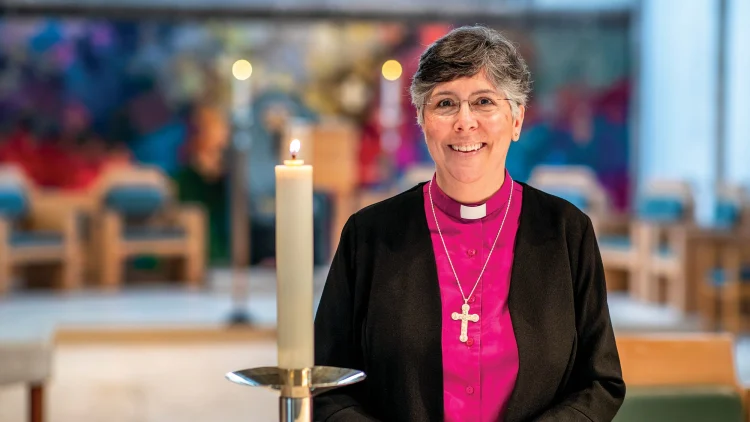
Guli Francis-Dehqani, the Bishop of Chelmsford, pays tribute to her parents’ remarkable bravery as Christians in Iran and how they found themselves, at last, no longer strangers but ‘fellow citizens with the saints’
I was born in Iran. My father was from a village called Taft, and had the opportunity, as a child, to be educated by British missionaries some 200 miles away in Isfahan. During term-time he would go away to school, and in the holidays would return to his Muslim family. Eventually at 18, he chose to be baptised as a Christian, but always retained a profound respect for Islam.
By the time I was born, he was bishop of the small Anglican church in Iran. He’d married my mother, the daughter of British missionaries, herself born and raised in Iran.
Then the revolution came. My father was very much in favour of change, and voted for the Islamic Republic on the proviso that it kept its promises of freedom and respect for all.
But very quickly our lives began to change.
The bishop’s house where we lived was ransacked, church institutions were confiscated or closed and financial assets frozen. My father was briefly imprisoned and then there was an attempt on his life. In the early hours of the morning in late October 1979, two gunmen broke into the house, clambered over the walls, and found their way to my parents’ bedroom. They were asleep in bed so they called him by his name and fired five bullets. Extraordinarily, they missed. My mother was shot. She threw herself over him…It was just instinctive for her to protect him. So she was injured, but he survived.
His pillowcase, with bullet holes in it, is an extraordinary thing. I don’t know why my mother brought it to the UK, but she did and I’ve now inherited it.
You can see what looks like a halo of bullet holes. You can see where my father’s head would have been and the bullet holes around it.
While my father was out of the country for meetings, the situation got a lot worse in Iran.
My father was advised not to return for the time being.
And then my brother was murdered. He was 24. No one was ever brought to justice. We’ve always understood that he was a scapegoat for our father, that really they had no interest in him. Possibly they thought my father would come back for the funeral; possibly it was an act of revenge. But at that point, the rest of us left to be with my father, after we’d buried my brother, assuming we’d be back home within a few months.
You can see where my father’s head would have been and the bullet holes around it
My father carried on as bishop in Iran in exile for about 10 years until his retirement. He very quickly realised he was going to have to practise what he’d preached for many years about reconciliation, about forgiveness, about all those things that trip off the tongue but when you have to live them are a different matter.
I, without realising it, observed how my parents chose to lean-in towards the way of forgiveness and looking for blessings rather than allowing themselves to become bitter. They were extraordinary. The pain never left. And yes, my father will have always had the feeling that if he’d gone back his son wouldn’t have been killed. But they never allowed the pain to become what defined them while they continued always in their calls for justice.
In our first year in England we were offered a vacant flat in Ridley Hall, a theological college in Cambridge.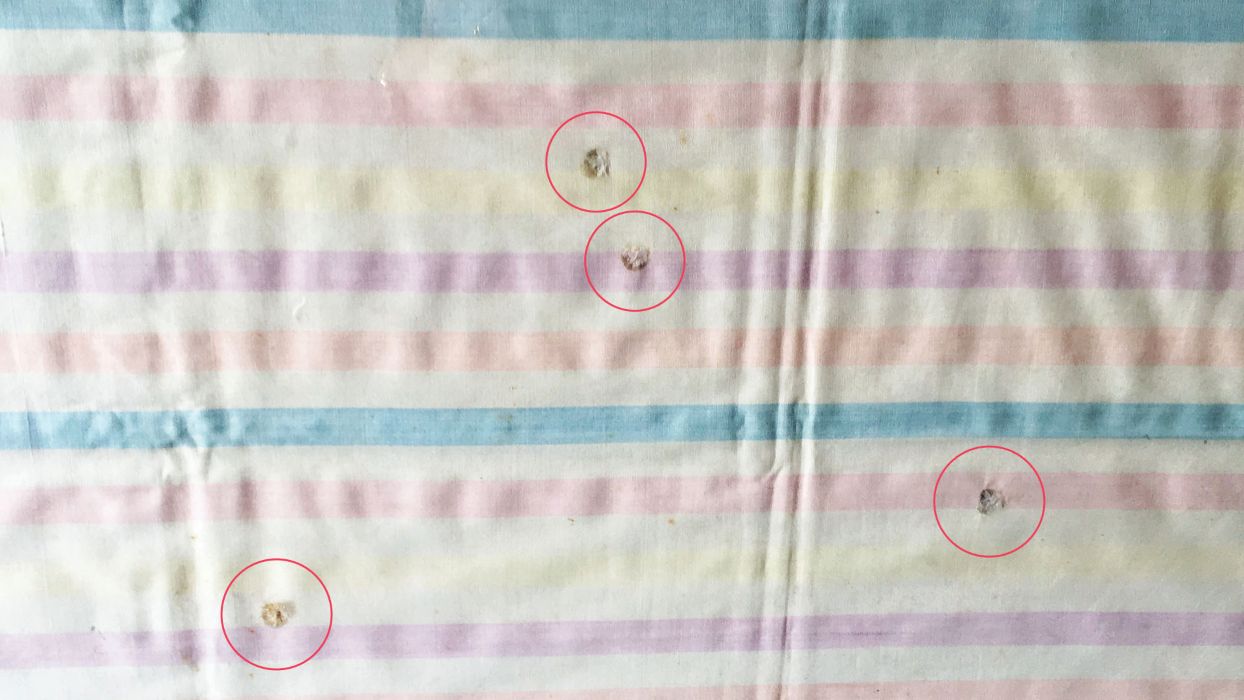
I finished school and went to university and then went to work for BBC, and eventually I got married to a man from Northern Ireland. He was ordained a few years before me.
Now we are seeing Iran double down on those courageous people who came out onto the streets in December and January and again when President Donald Trump encouraged them to do so with the most recent war.
What we need is an effective resistance movement around which people can coalesce, which will eventually bring freedom.
Both my parents are buried in Winchester Cathedral and the words on my father’s grave are from St Paul’s letter to the Ephesians, “No longer stranger or sojourner but fellow citizen with the saints.” The verse speaks to his lifelong journey of wanting to find a place of belonging.
I recognise there are differences of opinion around whether bishops should be in the House of Lords.
My colleagues on the Lords Spiritual bench work incredibly hard, and I still find it extraordinary that somebody like me is in this House.
The Right Reverend Francis-Dehqani was interviewed by the Lord Speaker, Lord Forsyth of Drumlean, and is the latest guest on the Lord Speaker’s Corner Podcast, available wherever you get your podcasts
Andy Burnham will vow to give Britain “more breathing space” in his first speech outside 10 Downing Street as he takes office as prime minister.
The former mayor of Greater Manchester, who will become the seventh prime minister in just 10 years, is expected to call for honesty and reflection. Burnham’s address is set to focus on his priorities for restoring confidence in government.
The new prime minister will say that he is “acutely conscious” of being the seventh person to walk up Downing Street in the space of just 10 years, as part of a call for more stable and responsible politics.
Burnham will describe the moment as one of “reflection and resolution”, insisting Britain must be honest about the challenges.
MDU warns Chancellor clinical negligence system ‘not fit for purpose’
Northern Ireland RE curriculum is ‘indoctrination’ – Supreme Court
Setting out his domestic priorities, Burnham will argue that political stability must deliver improvements in people’s lives.
Keir Starmer will give a final speech as prime minister at around 11:15am before his visit to the Buckingham Palace to formally tender his resignation. Burnham is then expected to address the nation outside No 10 before 1:00pm.
Starmer shared a three-minute video on social media over the weekend claiming he had left Britain in a better state than he found it. The outgoing prime minister pointed to achievements including his ongoing support for Ukraine, the Hillsborough Law, a social media ban for under-16s and action to save British Steel.
Starmer said: “I am so proud that we leave the country in a much better state than we found it two years ago, on the economy, on public services, on protection for children, on defence and security, and on our international reputation in particular.
“That’s the test for any prime minister: do you leave your country in a better place than you found it? And that test, and that answer, is a yes.”
Burnham was elected as Labour leader unopposed last week after a short contest confined to the parliamentary Labour Party (PLP) failed to produce a challenger. In the end, he secured a total 379 nominations out of a total 403 Labour MPs.
In his first speech as Labour leader, Burnham pledged to serve “people and places who have been waiting too long for politics to let them hope again.”
Addressing an audience of MPs, activists, trade union leaders and party grandees, Burnham further vowed to end Labour’s factional disputes, saying “we won’t beat Britain’s new right if we are consumed by infighting and pulling in different directions.” He referred to a “generation of politicians” who had failed to challenge “an economic model that simply doesn’t work well enough for ordinary people.”
Burnham declared: “Four decades of the neoliberalism that began in the 1980s have not been kind to the places that built our party, nor to the communities across the UK in rural and coastal areas. So we pledge today to them to be better.”
He added: “Political power was centralised and economic power was privatised. The country surrendered control of the essentials – housing, water, energy, transport – and left people exposed to higher costs…
“The right used the phrase ‘take back control’ – but they are the ones who gave it away in the first place.
“If we want an economy and a country that works for all people and places – which to me should always be at the very core of Labourism – then it requires a new path to the one we’ve been on for the last 40 years.”


Derek Webb
| Campaign for Fairer Gambling
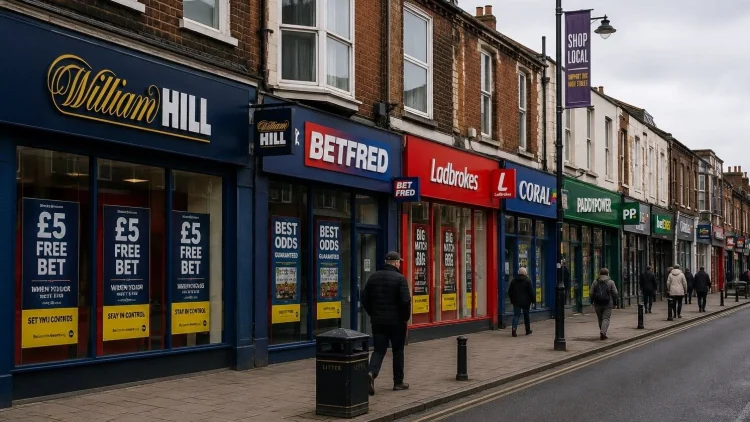
The Starmer administration thought that growing gambling was good economic policy. It is odds on that the Burnham team will not make the same mistake
The Labour Government has made economic growth its central mission, calling it “the only route to improving the prosperity of our country and the living standards of more people.” It has also launched a multi-billion pound Pride in Place strategy to create “safer, healthier neighbourhoods” by working with local communities. This commitment to localism has since been reinforced by the pledge of our new Prime Minister, Andy Burnham, for further devolution across the UK.
The gambling sector regularly claims that it benefits the economy. The Starmer administration often shared this narrative, for instance when gambling minister Baroness Twycross recently told the Lords Liaison Committee that the Government wanted to see the regulated sector grow. When Lord Filkin countered that there would no doubt be strong public support for tougher action on gambling advertising, the Baroness said: “I am not sure it is really my role to do just what the public thinks.” Public, take note.
However, Department for Culture, Media and Sport (DCMS) data shows gambling’s Gross Value Added (GVA) has fallen by 40 per cent in real terms since 2019, while the other sectors the department oversees have grown. Indeed, the evidence shows that the gambling sector adds relatively little to the economy, thereby limiting growth and productivity. This is particularly true for online gambling, with many sites offshore, which also imposes significant costs through gambling harm.
Venues with only gambling machines, commonly known as Adult Gaming Centres (AGCs), are spread unevenly across Britain and are concentrated in the most deprived areas. They often deceptively display the title “Casino” despite not holding casino licences.
Some AGCs and Bingo operations are in breach of the “80/20 rule”, whereby only 20 per cent of machines should be of the highest stakes category B machines, rather than the less dangerous category C and D ones. Some AGCs appear to inflate machine numbers by counting stacks of tablets (see below image) as gaming machines, allowing more Category B machines on site.

The Gambling Commission’s new rules, which take effect on 29 July, require “non-compliant” gaming machines to be “removed from premises quickly”. Yet they were announced six months earlier, allowing venues to continue to make millions of pounds from the 80/20 loophole in the meantime.
By contrast, the Commission has dedicated a large amount of time, effort and money into prosecuting gamblers who bet on the 2024 general election date with alleged inside information, where the gain was just hundreds of pounds.
The Commission will seemingly come down hard on anyone who gets one over on the bookie, no matter how small the amount, but it is much less hard on the bookies themselves. In recent years the Commission has not removed a licence from a big gambling operator, despite repeated failures.
In the 1980s, Ladbrokes Casinos and Playboy Casinos did have their licences revoked after the Gaming Board was willing to invoke the spirit of the 1968 Act under the Home Office. The move from Home Office to DCMS, from the Board to the Commission, and the 2005 Gambling Act, have all contributed to the current incompetence and complacency of gambling oversight.
The Commission has this year been given £26 million by the Treasury to crack down on the illicit gambling market. This month the Gambling Reform APPG held a hearing dedicated to growing concerns around this illicit market. Multiple experts spoke but neither the Gambling Commission nor DCMS attended.
Representatives from both bodies did attend the Lords Liaison hearing into gambling advertising, where they repeatedly argued that restricting legal advertising would strengthen the illicit market. But there is strong evidence that widespread advertising normalises gambling, and therefore grows the whole market, including the illicit side. The logical response is to tackle all gambling advertising while blocking illicit sites.
The Whitehall and Westminster machine appears to have made a few late moves in favour of the gambling sector. The English Devolution and Community Empowerment Act 2026 includes “Gambling Impact Assessments” that give councils more powers to challenge gambling premises appearing in their communities. But a late amendment, by persons unknown, seriously weakens those powers.
A recent appointment by DCMS of the government’s first Music Champion was bestowed upon Michael Dugher, the former CEO and Chair of the gambling trade lobbying body. The odds of gambling friendly Parliamentarians being invited to concerts may have just shortened.
Also, the CMS committee made public a letter to the Commission on the controversial matter of Financial Risk Assessments. It uses the term “recreational bettors” rather than “gamblers” and seems inappropriately close to one that the bookies themselves would write.
This is all in stark contrast to the reality of gambling harm. This month, the coroner at the inquest of Gareth Evans, who took his own life after becoming addicted to gambling, determined that William Hill had failed to assess the risk and intervene. Extracts from the last letter Gareth wrote describe the anguish of living with extreme gambling harm, and in interviews his mother, father, and sister were so eloquent in telling their story. The family, supported by the charity Gambling with Lives, called for an end to gambling advertising. Each marketing message is an invasive trigger towards harm for many.
Andy Burnham has spoken passionately about the need to tackle gambling harm. Tackling Whitehall and Westminster will be part of that agenda.
Over to you, Prime Minister.

Critical ServiceNow code execution flaw now exploited in attacks

JAPAN IN DANGER: The Carry Trade Implosion… XRP Could Be The KEY

Cross-chain protocol Allbridge halts after $1.65 million flash loan exploit


-
 NewsBeat4 days ago
London Mayor Sadiq Khan handed a peerage by Keir Starmer alongside 15 other Labour figures… just days before the PM leaves No10
-

 Fashion3 days ago
Weekend Open Thread – Corporette.com
-

 Politics2 days ago
The House | The City of London can help the new chancellor deliver growth in every postcode
-

 Politics5 days ago
Young campaigners urge incoming PM to act on outdoor junk food ads
-

 Crypto World4 days ago
CFTC blocks Kalshi from unwinding Michigan trades after court order
-

 Business4 days ago
Nvidia Stock Slips After Big Tuesday Rally as Huang Confirms Vera Rubin Chip Is Now in Production Today
-
 Crypto World3 days ago
Two July Windows Left: The CLARITY Act’s Senate Fight and What Failure Means
-

 Crypto World2 days ago
Ripple Payments Joins MiCA With 14 Firms, Does It Mean Anything For XRP?
-

 Politics20 hours ago
Democrats look to World Cup watch parties to register thousands of voters
-

 Crypto World2 days ago
Ripple wins EU-wide access as ESMA adds it to MiCA register
-
 Entertainment5 days ago
Disney’s Most Ambitious Failed Star Wars Attraction Is Coming to SDCC
-

 Business4 days ago
Palantir Shares Rise After Expanded Nvidia Partnership and Fresh Analyst Upgrades Ahead of Earnings Day
-

 Crypto World4 days ago
Injective Submits SEC Transfer-Agent Registration to Onchain Ownership Records
-

 Tech6 days ago
Get Your ESP32 Sunny Side Up With This Solar Dev Board
-

 News Videos6 days ago
XRP BOMBSHELL… XRP OMBOARDED FOR TRANSACTIONS!!!
-

 NewsBeat3 days ago
Registration is now open for March for Men with Kev 2026
-

 Tech6 days ago
Dark Secrets Emerge When Jailbreaking LLMs
-
 Sports5 days ago
New Cornerback Enters Vikings Trade Rumor Mill
-

 News Videos3 days ago
Money | Class 12 Economics | CBSE Board Exam 2026-27
-

 Business3 days ago
Banco Bilbao Vizcaya Argentaria, S.A. (BBVA) Discusses Global Macro Environment and Economic Outlook for Core Markets Transcript
You must be logged in to post a comment Login