

Politics
‘Sexist’ Robert Kenyon flees from female journalist

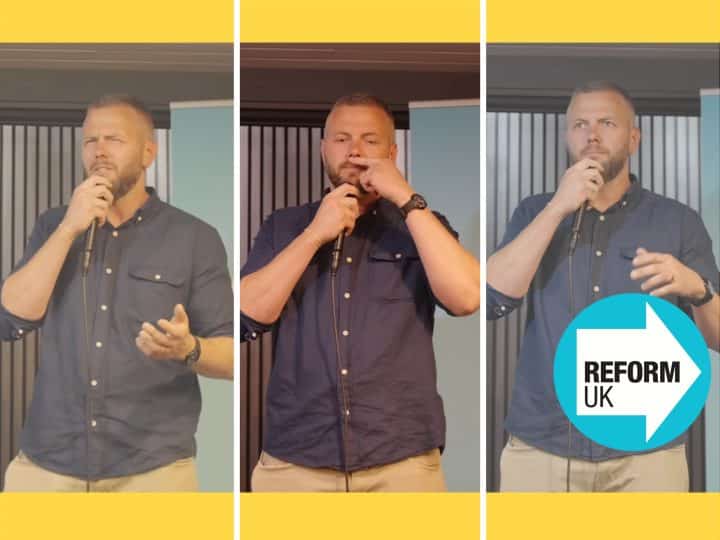
Robert Kenyon is Reform UK’s candidate in the crucial Makerfield by-election. As we’ve reported, Kenyon has made a number of comments he’s struggled to defend, including that he’s a “sexist.” This is partly because his views are indefensible, and partly because he can barely string a sentence together.
The lad does have a strategy for dealing with hard questions, though, and it’s to run away:
Reform UK’s #Makerfield Candidate @RobKenyonReform can’t answer a simple question.
This isn’t new politics, it’s dodging simple questions. Share far and wide! pic.twitter.com/HqSnKM6Y5c
— Reform Party UK Exposed
 (@reformexposed) June 4, 2026
Oh, and by ‘hard questions’, we basically mean ‘any questions.’
Run, Rob run
In the video above, Beth Rigby of Sky News approaches Kenyon, who is standing to the side of his van with an umbrella. Robert Kenyon’s willingness to be pictured with an umbrella demonstrates he’s something of a modern misogynist, because one of the old guard would never be seen dead with such a contraption – especially not when walking the short distance from the van to the office. Don’t believe us? This is from the Telegraph in 2014:
Umbrellas annoy me. I’ve always thought that umbrellas were inherently unmanly. As undignified in a man’s hand as they are in his cocktail. I think slightly less of a man if I see him using an umbrella. I know, I know: it’s my problem, not his. He’s just trying to stay dry. But why is he so obsessed with this precious dryness? And is an umbrella really the best way? What’s wrong with a hat, a waterproof jacket, waiting for the downpour to pass or, hell, just getting wet?
Britain is a ridiculous country full of wet and angry, Reform-curious, men, and it always has been. Back to the video, Rigby asks Robert Kenyon:
Why should women in Makerfield vote for you, Rob?
It’s a good question, because Robert Kenyon has also said things like this:
Reproductive rights? Women’s rights? They can dress it up all they want, they are deciding to kill a baby inside the womb…What they mean is they want to shag anyone they want and if they get caught they get a second chance and treat it [sic] as a secondary last chance form of contraception. They ain’t kidding anyone.
And this:
I’d hazard a guess that the majority [of abortions] are for vanity purposes like unwanted pregnancies.
“Vanity,” he said. The reality is women want to be able to choose when they bring a life into the world; not that they’re worried their favourite dress might not fit.
On the topic of vanity, Ribert Kenyon clearly isn’t someone who cares about how he looks or sounds to other people. As the Guardian reported:
In 2021, Kenyon responded to a social media post about [Carol] Vorderman in which another user wrote: “My god I’d love to smell and lick your arsehole”, by saying: “He’s only saying what we’re all thinking”.
A man with pride in how he comes across would not have said this in public.
Divisive Reform
In response to Rigby, Kenyon responded:
If you speak to the Press Office.
He didn’t expand on what would happen if she spoke to them, so Rigby pressed on:
Why should women in Makerfield vote for you, Rob, when you said you were a sexist? Why should women vote for you when you said that you were sexist and that they can’t drive?
As we reported previously, Kenyon was a reservist in the Army Reserves. Despite his party suggesting otherwise, Robert Kenyon never actually deployed anywhere. Given the way he fled the scene with nothing to show for it, though, you’d be mistaken for thinking he served in Afghanistan.
There’s no doubt an audience for Robert Kenyon’s brand of umbrella-owning misogyny — the problem is that audience probably doesn’t include women — i.e. the majority gender in the UK.
Featured image via the Canary
By Willem Moore

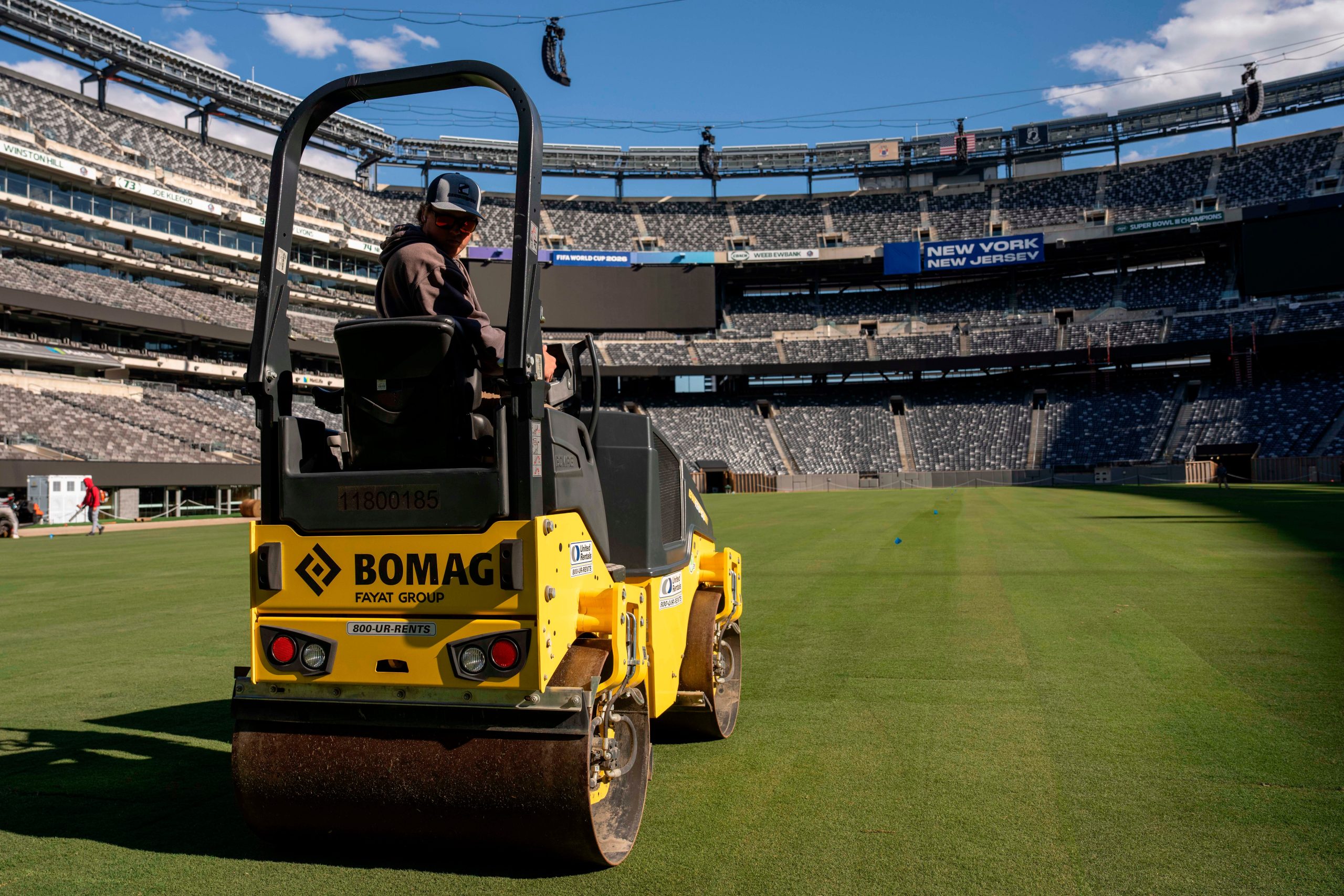

Ireland is hoping the global sporting spotlight surrounding the World Cup will also shine on its growing sports technology industry.
Enterprise Ireland, the Irish government’s trade and innovation agency, has been working to help Irish companies expand in the U.S., from sports analytics firms to the Irish company behind the natural grass used at nine World Cup stadiums. POLITICO spoke with Aidan McKenna, Enterprise Ireland’s head of U.S. operations, about Ireland’s sports tech ecosystem and how Trump administration’s trade policies have shaped the agency’s approach.
This interview has been edited for length and clarity.
Ireland has developed a reputation in sports technology. Why has the sector become such a strength?
I think there’s probably two big aspects to this. It’s probably just our passion for sports, all types of sports: soccer, rugby, our own national Gaelic football. But we also, given our cultural connections to the U.S., we have a really good understanding of U.S. games. We have a growing number of technology companies that are looking to bring data and health science into the professional area of sports.
An Irish company is also behind the playing surface at several World Cup venues. Tell us about that.
McKenna: SIS Pitches originated in Ireland. They designed a way to grow natural grass and sod in a certain environment that can be lifted and transplanted into these stadiums.They’ve become world leaders in kind of natural grass solutions for stadiums all over the world.
It is really nice to say that an Irish company is behind growing the best possible surface for our world-class players at the World Cup, and nine stadiums have used their solution.
Beyond the World Cup, what role do you see Ireland playing around the 2028 Los Angeles Olympics?
We’re a proud sporting nation. We punch above our weight. We will have our top athletes come to LA, and I know we’re going to be based in Long Beach, and we’re going to ensure that the Irish athletes are supported.
How has the Trump administration’s approach to Europe and trade changed how Enterprise Ireland thinks about investing or expanding in the U.S.?
Enterprise Ireland, or indeed Ireland and the EU, would always advocate against any trade barriers. Where there’s tariffs, or non-tariff barriers, it makes the opportunity for trade more difficult.
But the U.S. is a fantastic market. It’s a huge market. It’s the largest market in the world.
What we’ve done in Enterprise Ireland is remind the U.S. administration that Irish companies are making a contribution to the U.S. The top 10 Irish companies employ 125,000 Americans in highly highly skilled jobs here.
Has that environment changed what it means to be an Irish exporter?
We would always advocate: if you want to do business, you have to be closer to customers, you have to give your customers confidence that you’re close to them. We have always advocated that to be successful in the overseas market, you got to be committed, you got to be in the market.
I’m actually actively fast-tracking the amount of Irish companies that are establishing a presence in the U.S. So in New York, we’ve done what we call a landing pad accelerator so companies can get the right legal advice, get the right tax advice, develop your go-to-market strategy, hire the right people.
And we encourage the founders of the Irish businesses to come in and spend a couple of years here, carry their culture, bring that into the U.S. teams.
Finally, what role can sports play in strengthening U.S.-Irish ties?
Sport is a brilliant bridge. It’s a brilliant arbitrator of bringing people together… We’re going to host the Ryder Cup in Adare Manor in September 2027. We’re going to open up Ireland to businesses, to people, to golf enthusiasts. The World Cup itself — it’s a fantastic celebration of what’s good in the world.
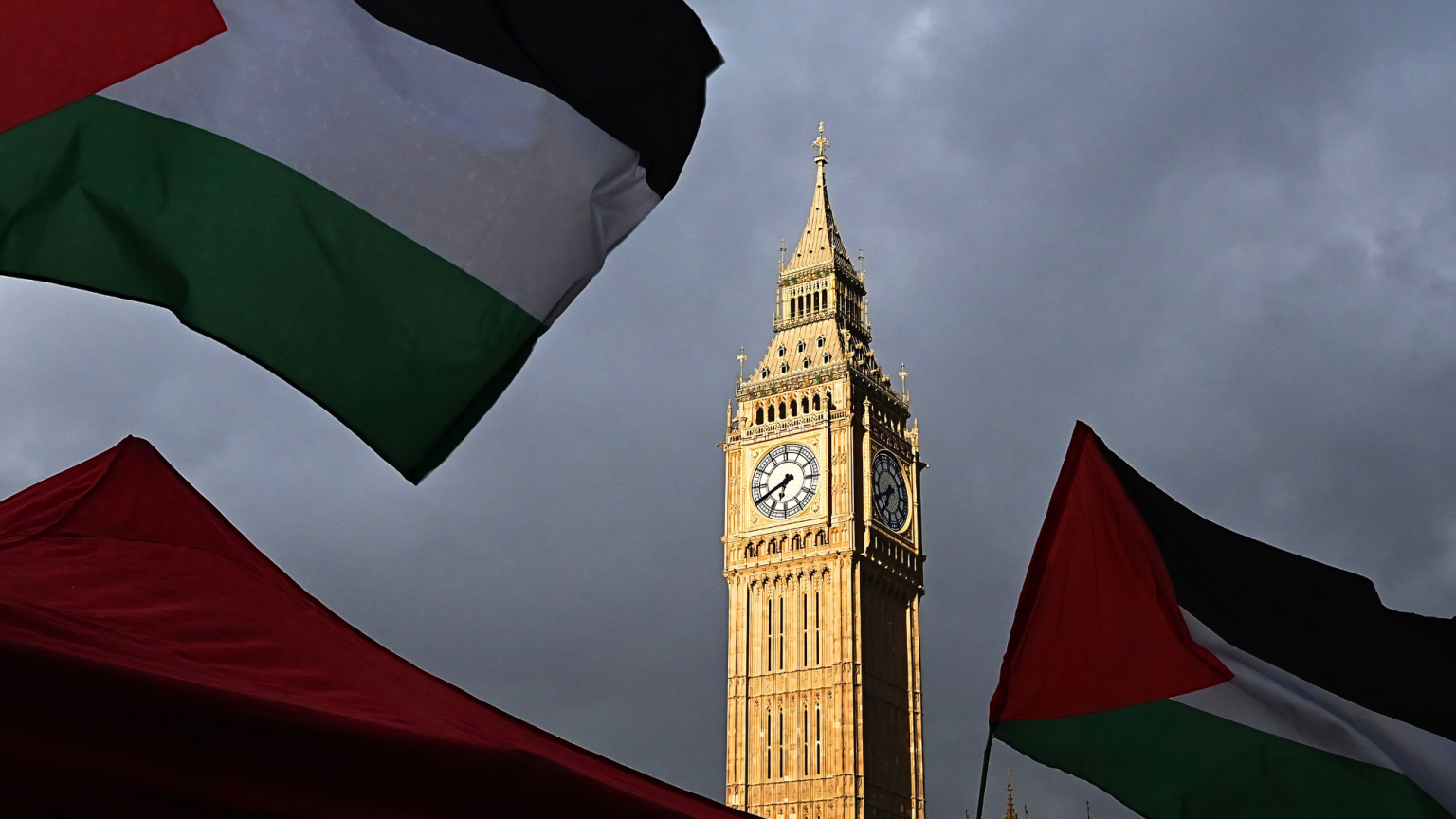
When Shockat Adam defeated Jonathan Ashworth in one of the biggest shock results of the 2024 General Election to become the new MP for Leicester South, he described his victory as being ‘for the people of Gaza’.
Since then, he and a handful of other MPs elected in 2024 – Birmingham Perry Barr’s Ayoub Khan, Blackburn’s Adnan Hussain, Dewsbury and Batley’s Iqbal Mohamed – have been dubbed the ‘Gaza independents’. They, along with former Labour leader Jeremy Corbyn, a fringe of radicalised Labour MPs and four Green MPs, have made it their mission to channel the anti-Israel hatred that has already taken over our streets and our institutions into the very heart of our democracy, the House of Commons. Since the General Election, there have been a staggering 17 urgent questions granted on issues to do with Israel and Gaza – almost one in 10 of all urgent questions. Three of the four urgent questions secured by the Greens have been about Gaza. And this doesn’t include urgent questions on broader issues in the Middle East, which are frequently hijacked by anti-Israel fanatics.
A quick peek at the speaking records of the Gaza independents is revealing. Newly elected MPs tend to focus their early efforts on raising issues in their constituency. Not so for the Gaza independents. When Adam said he was elected for the people of Gaza, this was not tongue-in-cheek. Since being elected, he has mentioned Gaza 32 times, Israel 29 times and Leicester South just 29 times. Meanwhile, Iqbal Mohamed has mentioned Israel 51 times and Gaza 40 times, compared with 43 times for Dewsbury and Batley. Adnan Hussain has mentioned Gaza 23 times, Israel 16 times and Blackburn only 20 times. Even Ayoub Khan, whose constituency of Birmingham Perry Barr has long been suffering under crippling bin strikes, has mentioned Gaza and Israel a combined 33 times, compared with his constituency a mere 29 times.
I can only imagine how bizarre it must be for the people of North Herefordshire, who thought they were electing a Green MP to talk about nature reserves and pollution, to hear Ellie Chowns mention Israel and Gaza a combined 50 times and North Herefordshire just 37 times. Astonishingly, she has mentioned Israeli settlements in the West Bank more times than the pollution of the River Wye – a key local issue that she promised to make her top priority if elected.
The frequency with which these MPs have used their platforms in the Commons to pontificate Israel has been dizzying – and their use of parliamentary procedure has been shameless. In just the past few weeks, there has been a backbench business debate on trade with Israeli settlements and a Westminster Hall debate about Israeli influence on British politics.
In the Westminster Hall debate, we had the extraordinary sight of multiple MPs who have been on Qatari-funded trips to Qatar complain about other MPs going on trips to Israel, even though these were funded by British donors to British organisations, such as through Conservative Friends of Israel or Labour Friends of Israel.
To be clear, it is entirely justifiable for parliamentarians to go on state-funded trips, provided they are declared and the MPs go with open eyes. But as John Lamont noted in his brave and powerful contribution to that debate, those MPs were not calling for a review of lobbying regulations or foreign-sponsored trips. They were singling out one country. I will happily leave it to the reader to guess why they were so eager to single out this particular country.
Fortunately, there are many brave MPs who have stood up to all this in parliament. But the fight is extraordinarily one-sided. For even the most ardently pro-Israel MPs, this issue will just be one of many they care about. For some, their motivation for speaking out may be more driven by their principled belief that some balance is needed, rather than from a deeply held, organic desire to talk about Israel. Contrast this with the multiple MPs on the other side, for whom this is what they got into politics for and what gets them out of bed every morning. It’s the same on Britain’s streets. While many view the anti-Israel hate marches with contempt and horror, a small, angry and laser-focussed minority have been able to dominate public discourse.
Needless to say, none of this actually contributes to improving the situation for ordinary Palestinians, or for anyone else in the Middle East. As Hamish Falconer, the Middle East minister, admitted, ‘An inevitable consequence of the actions announced from this despatch box is that the warmth of my relationship with my counterparts in Israel has indeed suffered’. Combined with the UK’s unconditional recognition of a Palestinian state, we have thrown away any leverage we had with the Israeli government and much of the influence we had over the Palestinian Authority. And we have done this merely to indulge a mob who do little more than make this a nastier, unfriendlier country for our small Jewish community – and indeed the rest of us.
Elliot Keck is political director of Conservative Friends of Israel.


SANFORD, Maine — Maine Secretary of State Shenna Bellows ended her Senate campaign on Sunday, further clearing the path for rival Troy Jackson as he consolidates support in a fast-moving Democratic nomination contest.
“This has been an unprecedented nominating process, compressed into days instead of months, and I’m grateful to every volunteer who worked around the clock for this movement,” Bellows said in a statement. “That energy is exactly what we need to beat Susan Collins in November — and Democrats don’t have a day to waste in unifying around that shared goal.”
Bellows was the most prominent woman to enter the breakneck contest, which has unfolded over the last week after Graham Platner ended his campaign following POLITICO’s report that a woman who used to date him accused him of sexual assault. He has denied the allegations.
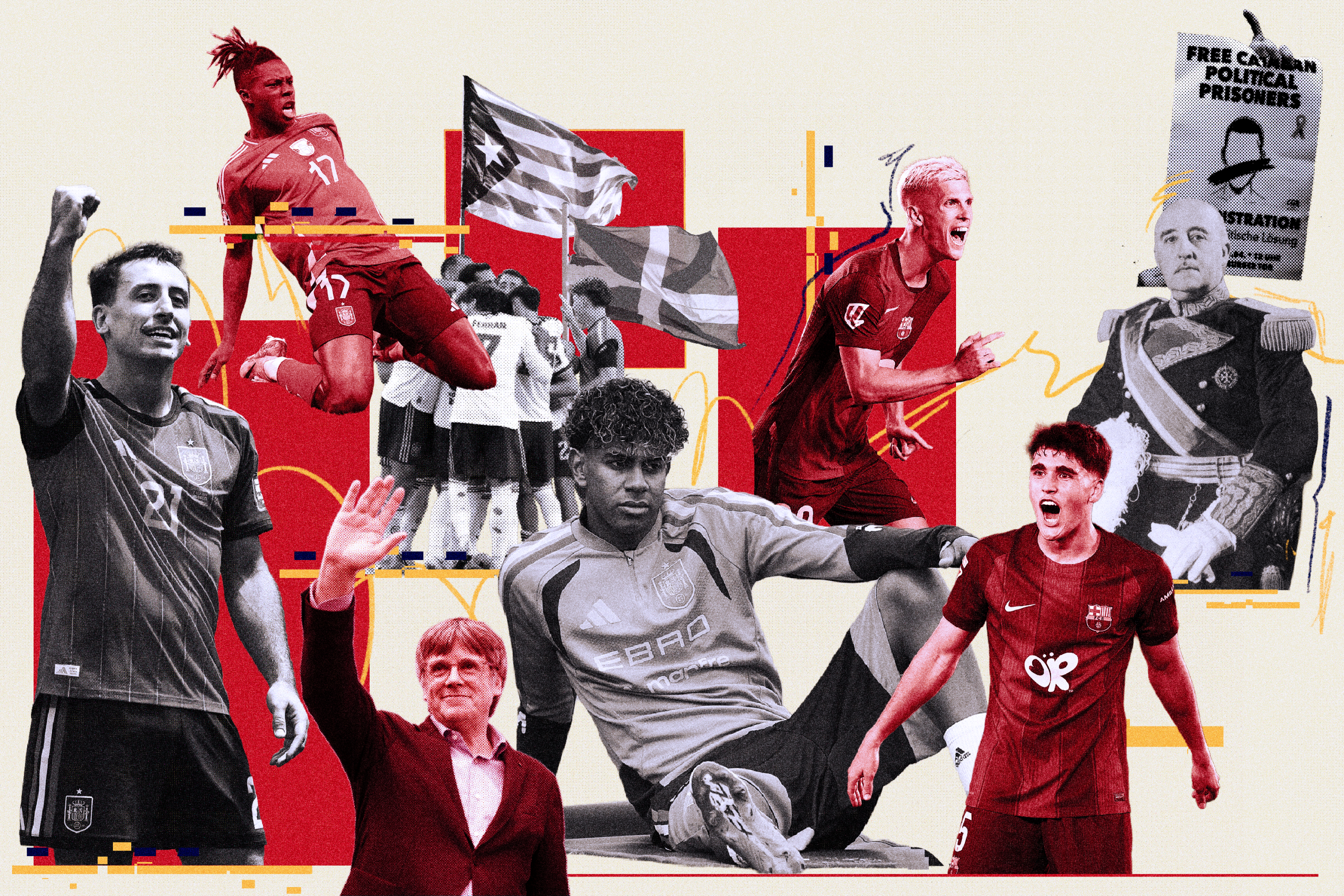

MADRID — The last time Spain reached the final of the World Cup it had a team heavy with players from the region of Catalonia, where the all-conquering FC Barcelona had refined a possession-based attacking style that laid the template for the entire country’s soccer identity.
Barcelona stars Xavi Hernández, Carles Puyol, Gerard Piqué and Sergio Busquets — Catalans, all — were key players in the side that defeated the Netherlands in the 2010 final in Johannesburg.
That historic summer for Spanish soccer was also a seismic moment for the country’s relationship with Catalonia. The day before the final, hundreds of thousands of Catalans took to the streets of Barcelona to voice their anger at a judicial decision which reversed some of the powers devolved to their northeastern region. It was the beginning of several years of territorial tensions which would culminate in a full-blown constitutional crisis, after Catalan political leaders staged a disputed independence referendum.
Sixteen years later, the challenge to Spain’s territorial unity from Catalonia and its other restive region, the Basque Country, has faded — now no more than a subplot to more urgent political battles over corruption and immigration.
Yet the Catalan and Basque presence in the World Cup squad is stronger than ever, with players from those two regions outnumbering representation from Spain’s other 15 in the squad that will face Argentina in today’s final. With no players from Real Madrid, the historic club from Spain’s capital, in the squad — although one did sign for the team in the off-season — this Spanish side relies particularly heavily on the country’s so-called periphery, those regions far from the capital’s power base.
Soccer has eclipsed politics as the vehicle for Spain’s most prominent separatist strongholds to project their identities.
“It’s not that pro-independence feeling has disappeared, but nobody sees it as a priority right now,” Lola García, a columnist at Catalonia’s centrist La Vanguardia newspaper, told POLITICO. “This government inherited one of the worst crises Spanish democracy has seen,” added Justice Minister Félix Bolaños, saying that “normalcy and co-existence have returned.”
‘The Premier League speaks Basque’
The Catalan influence on Spain’s soccer psyche began in earnest with the tenure of Dutch coach Johan Cruyff at Barcelona, between the late 80s and the mid-90s. He introduced a model of play that emphasized cool, triangular passing rather than the more physical, passionate style previously been in vogue.
A decade later, Pep Guardiola would use Cruyff’s blueprint for his own revolution, which prioritized passing and pressing — and saw his Barcelona side of 2008 between 2012 dominate all it faced. Guardiola went on to win further honors and spread his philosophy during coaching stints in Germany and England. Catalan soccer’s stock has remained high since and his former club, Barcelona, has continued to produce world-class players, many graduating from its La Masia academy, with a style that ESPN describes as “the most pressing- and possession-intensive […] on the continent.” The style is now emulated around the world.
While Catalan soccer prowess has become something of a given, expanded Basque influence in the game has been more striking in recent years. Two Basque players — Mikel Oyarzabal and Nico Williams — scored the Spanish goals that defeated England in the 2024 European Championship final.
A generation of coaches from the region have made their name both domestically and abroad. Four Basques will lead English teams at the start of this coming season, including Mikel Arteta at reigning champions Arsenal and Andoni Iraola at Liverpool.
“The Premier League speaks Basque,” the Crónica Vasca news site wrote of the richest and most powerful soccer league in the world.
Catalan separatists split
The last two decades may have witnessed the Spanish soccer team’s greatest achievements — four men’s European and world titles and a women’s world title since 2008 — but they have also seen Spain’s national unity pushed to the brink.
The brewing Catalan unrest of 2010 eventually exploded in 2017, with the separatist regional government staging a referendum on independence deemed unlawful by the conservative central administration in Madrid. The ballot went ahead amid chaotic scenes, as police baton-charged voters and the country plunged into its deepest constitutional crisis since the post-fascist return to democracy in the late 1970s.
Pro-independence politicians were jailed, direct rule was temporarily introduced from Madrid and the president of Catalonia, Carles Puigdemont, fled to Belgium.
Nine years on, Catalonia is a different place. Those jailed are now free, while other legal action taken against Catalan nationalists has been lifted thanks to an amnesty introduced by the Socialist-led central government of Pedro Sánchez, who has been in power since 2018. On Thursday, the Court of Justice of the European Union ruled in favor of Puigdemont after a Spanish court had sought to prevent him from benefiting from the amnesty. The decision could, finally, pave the way for him to return to Spain without facing jail time.
“The previous independence attempt failed and so there’s not going to be another one in the short or medium term,” said García, author of two books about the Catalan crisis. “Insisting on it doesn’t make political sense” for nationalist politicians, she added.
She said Catalans are more concerned about housing, where a rental crisis is pricing out many in the region — and more widely across Spain — from the market. Immigration is also a growing worry, providing fertile ground for a relatively new far-right party, Aliança Catalana. It preaches a unique blend of anti-immigration policies and Catalan nationalism. But while advocating independence for the region, it is not promising to lead another secessionist bid.
Meanwhile, the disparate pro-independence parties that buried their economic and social differences in order to defy the government in Madrid a decade ago are once again divided.
“Since the independence drive what we have seen is a deepening of the left-right ideological differences” between separatist forces, Francesc-Marc Álvaro, a member of the Spanish Congress for the separatist Catalan Republican Left, told POLITICO.
That party now takes a more moderate approach to the independence issue than Puigdemont’s conservative Together for Catalonia and the far-left Popular Unity Candidacy.
“Not enough time has passed to embark on another [independence bid],” Álvaro said. “We’re in a phase of what you might call reconstruction and building up of strength.”
Terror and violence
Basques have their own long-standing independence movement, with some mainstream parties supporting that aim. But, as in Catalonia, the issue has been pushed into the background.
In 2011, the armed Basque separatist group ETA announced a permanent ceasefire. In 2018, it disbanded. Compared to Catalonia, the sovereignty issue in the Basque Country had literally been a matter of life and death: ETA killed 853 people over a four-decade campaign of violence, during which government-sponsored death squads also operated.
“Basque society is still in a phase of wanting to move on from what happened,” said García. “It was a lot of years of terrorism and people prefer to forget about it altogether.”
The moderate Basque Nationalist Party leads a coalition government in the region, while the more stridently separatist EH Bildu is the main opposition. With polls showing support for Basque independence at just 23 percent, and memories of the failure of the Catalan secession bid still fresh, neither party is focusing on the territorial issue.
However, nationalists in both the Basque and Catalan regions continue to demand their own national soccer teams. In the former case, they want to see players from the French-Basque region eligible.
“I’m not supporting either side,” nationalist party leader Aitor Esteban said when asked in a radio interview ahead of the Spain vs. France semifinal earlier this week. “My team is the Basque national team, and neither of these sides [France or Spain] has my support because the governments of both countries knowingly prevent us from having an official national team.”
Santiago Segurola, a sports journalist and editor of a book of essays exploring soccer’s relationship to politics, describes an “Asterix village” mentality in Spain’s Basque Country, which has a population of just over two million and a passion for soccer that verges on the religious.
“The Basque Country is small, so they look for space for pitches wherever they can find it because soccer’s so important there,” he told POLITICO.
Second-division club SD Eibar’s Ipurua stadium, for example, is on the side of a mountain, built on top of the rubble left by the bombing of the city by German and Italian aircraft during the Spanish civil war.
The region’s most successful club, Athletic Bilbao, has arguably been a proxy for nationalist dreams of a Basque national team. It only signs players who have either come through its junior ranks or represented other teams in the Spanish and French Basque Country, or Navarre. (The French-born Aymeric Laporte, who plays in defense for Spain, qualified to play for the club through Basque family links.)
Despite its strict signings policy, Athletic is one of only three clubs — along with Real Madrid and FC Barcelona — never to be been relegated from the top division.
“In a globalized world where borders don’t exist, Athletic has maintained its borders,” said Segurola. “Athletic has made a virtue of this policy. This shows that soccer is more than a business.”
‘A propaganda strategy’
With its heavy reliance on Catalan and Basque players, the Spanish team poses a conundrum for nationalists from those regions: Should they support it in the World Cup?
Those who remember the febrile atmosphere in Catalonia during the height of the independence drive say support for Spain was muted. That has changed.
“Now there’s more willingness to celebrate the success of the national team and do so more freely,” said García, the columnist from La Vanguardia. “It’s not that you weren’t allowed to before, but it was frowned upon.”
Álvaro, the lawmaker from the pro-separatist Catalan party, says he has pro-independence friends who support the Spanish team despite their political opinions, because they enjoy watching Dani Olmo, Marc Cucurella, Pau Cubarsí and Lamine Yamal and other Catalan players on the biggest stage. However, he takes a different view.
“The Spanish team wants to convey a positive idea of Spain — it’s saying to Catalan and Basque nationalists: ‘This team can be your team too,’” Álvaro says. “As far as I’m concerned, it’s a propaganda strategy. And there’s a problem with that, because those who are telling you that won’t let you have a Catalan team that competes on an international level, like Scotland does.”
Sixteen years ago, as the Spanish team disembarked in Madrid from the aircraft that had brought it home from its World Cup victory in South Africa, the bags of Xavi Hernández and Carles Puyol were each wrapped in the Catalan Senyera flag, in a subtle assertion of regional pride that stirred debate. Three years earlier, many claimed the duo had made a more provocative gesture by wearing their socks in such a way that the red-and-gold Spanish colors were hidden throughout an international game against Latvia.
But, with Catalan and Basque influence on the national team greater than ever and separatist tensions slackening off, such controversies are much less frequent.
Soccer, rather than independence, is now the talking point in Spain.
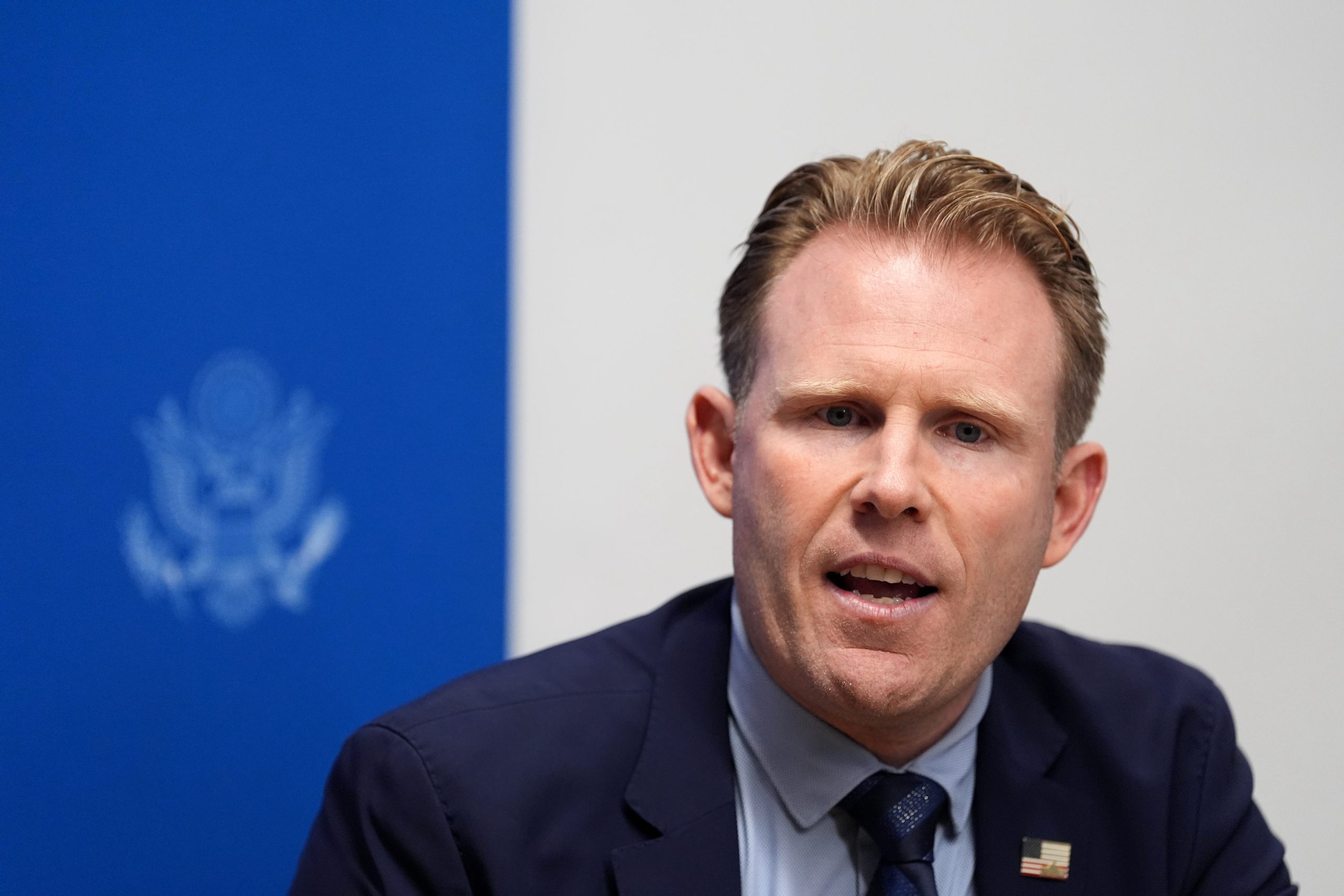

The head of FIFA’s anti-discrimination partner is calling on the international soccer body to not adopt a ban on transgender athletes at the Women’s World Cup, after the Trump administration publicly announced its intention to pressure the organization to do so last week.
Andrew Giuliani, the head of the White House World Cup Task Force, told POLITICO Thursday that getting FIFA to guarantee that “women play in the Women’s World Cup and not biological men” could represent a lynchpin issue during planning negotiations for the 2031 tournament.
If successful, the endeavor would represent a major victory for the Trump administration’s efforts to bar transgender women from competing in women’s and girls’ sports domestically and abroad. Earlier this year, the International Olympic Committee adopted a blanket ban for its female categoriesthat paralleled an earlier White House executive order.
But Piara Powar, the executive director of anti-discrimination group Fare network, warned that such a restriction would only further stigmatize transgender athletes and marginalize women with intersex characteristics.
“We think it’s important that even if a ban comes into force for the World Cup in 2031 it should not be embedded in FIFA regulations permanently,” Powar wrote in a text message to POLITICO. “FIFA should not go the way of the IOC and exclude human beings from participation in football.”
FIFA did not respond to requests for comment.
The organization currently has no centralized sex-verification regime, instead requiring each national federation to verify the eligibility of its players before submitting rosters, including investigating “any perceived deviation in secondary sex characteristics” and maintaining documentation of its findings.
The IOC’s policy, meanwhile, dictates that athletes competing in female categories undergo a one-time genetic screening.
Powar said such a ban at FIFA would impact women with medical conditions known as differences in sex development, or DSDs, which can manifest as testosterone levels outside the typical female range and having male chromosomes.
Jon Holmes, spokesperson for the advocacy group Football v Homophobia similarly warned that women with DSDs would “bear the brunt of this.”
He suggested that the administration’s efforts are largely performative — noting that “there’s no suggestion anyone is near international level,” referring to transgender female soccer players.
Payoshni Mitra, an advocate for abolishing sex testing in women’s sports, however, said in an interview Friday that it was too early to speculate about a policy that doesn’t exist, but noted that she “will be very, very surprised if suddenly they come up with a very exclusionary policy.”
Mitra said she’d hope that FIFA acts “in a way that is based on science,” adding: “If they come up with a policy, the policy will be based on science, evidence-based science, and also should take into account athlete well-being and the other conditions that concern these policies.”
FIFA has yet to formally announce the location of the 2031 tournament, for which the U.S., Mexico, Costa Rica and Jamaica have submitted the sole joint bid. Giuliani said Thursday that the organization had already told President Donald Trump that the U.S. would host the contest.
Powar pleaded with other sporting groups to consider the human price of hosting their tournaments in the U.S., despite the lucrative commercial appeal of the country.
“We would urge all sports bodies to think of the credibility of their sport and the harmful impact of accepting all U.S. conditions of hosting — it may come at the cost of excluding participants,” Powar wrote. “And in football, a sport that has always been the most open and accessible, that could be devastating.”
It’s now more than three years since this site drew attention to the curious case of Progress Scotland, the zombie “polling company” run by the SNP’s Angus Robertson that had no employees and hadn’t published any polls since October 2020, but was apparently still accepting, and soliciting, donations from subscribers, and appeared to have disposed of a rather substantial amount of money (well into six figures) without producing anything to show for it.
We followed up the next day with another article about the company’s repeated delays in producing its 2021 accounts, which finally showed up in May 2023.
Here’s what the Progress Scotland website looks like today.

And once more, a few questions spring to mind.
Its most recent accounts, published a few weeks ago, showed a dramatic drop in assets, from almost £60,000 to just over £8,000.

As the company is only required to publish “micro-accounts”, there was no explanation of where the money had gone, and the identity of the sole employee (and what they do all day) is a mystery. The micro-accounts contain a note saying “The director of the company has elected not to include a copy of the profit and loss account within the financial statements”.
Robertson’s last recorded entry in the MSP register of interests (from March 2026) said that he hadn’t done any work for the company since 2021 and expected to receive only a “final payment” of £501-£1000 for work before then.

The only other person believed to have worked for Progress Scotland, Robertson’s brother-in-law Peter Dempsie, stepped down in 2022.

So a company with no known paid staff, that’s been effectively dormant for almost six years and now doesn’t even have a website, has assets that look like this:

That is… a pretty strange trajectory, wouldn’t you say, readers? The firm’s assets have peaked four years after its last known work, and then just vanished overnight, and none of the numbers bear any relation to what it claimed about its subscriber base or any known costs of polling.
With the whereabouts of millions of pounds of money that was supposed to be used for the fight for independence – the SNP’s “ringfenced” fundraisers, the mysterious expenditure of Yes Scotland, and now Progress Scotland slipping quietly offstage – all now in some dispute, it looks more and more as though indy supporters have been taken for a very long ride to nowhere.


“Micro accounts” are also deployed by Believe In Scotland/Business For Scotland, who claim to have raised many hundreds of thousands of pounds in recent years but publish figures comprising only a tiny fraction of that. In 2024 BFS claimed a turnover of £300,000 but reserves of just £1,022 (alongside assets of £40,000) with no information about expenditure, salaries or the like. Where did it go? Wheesht for indy.
(Believe In Scotland has been listed as “dormant” for the past three years despite being the brand used on marches and rallies and in campaigning.)


The system offers a near-bottomless pit for people to hide their finances in, away from public scrutiny, for good reasons or bad.

The money comes in, and then… nobody knows.
And while we wish we had a punchy or optimistic line to end this article on, that seems to be pretty much the end of the story. There’s very little anyone can do to probe the affairs of such companies and find out exactly what happened to the vast bucketloads of cash they extracted from hopeful Yes supporters’ pockets, except that we do know none of it has effected a single step of progress towards independence. The only thing moving forward in the last decade has been certain people’s bank balances.
Not only do we not know where we’re going, but we don’t know where we’ve been, and we can’t even say what we’ve seen. This, folks, is not the road to Paradise.

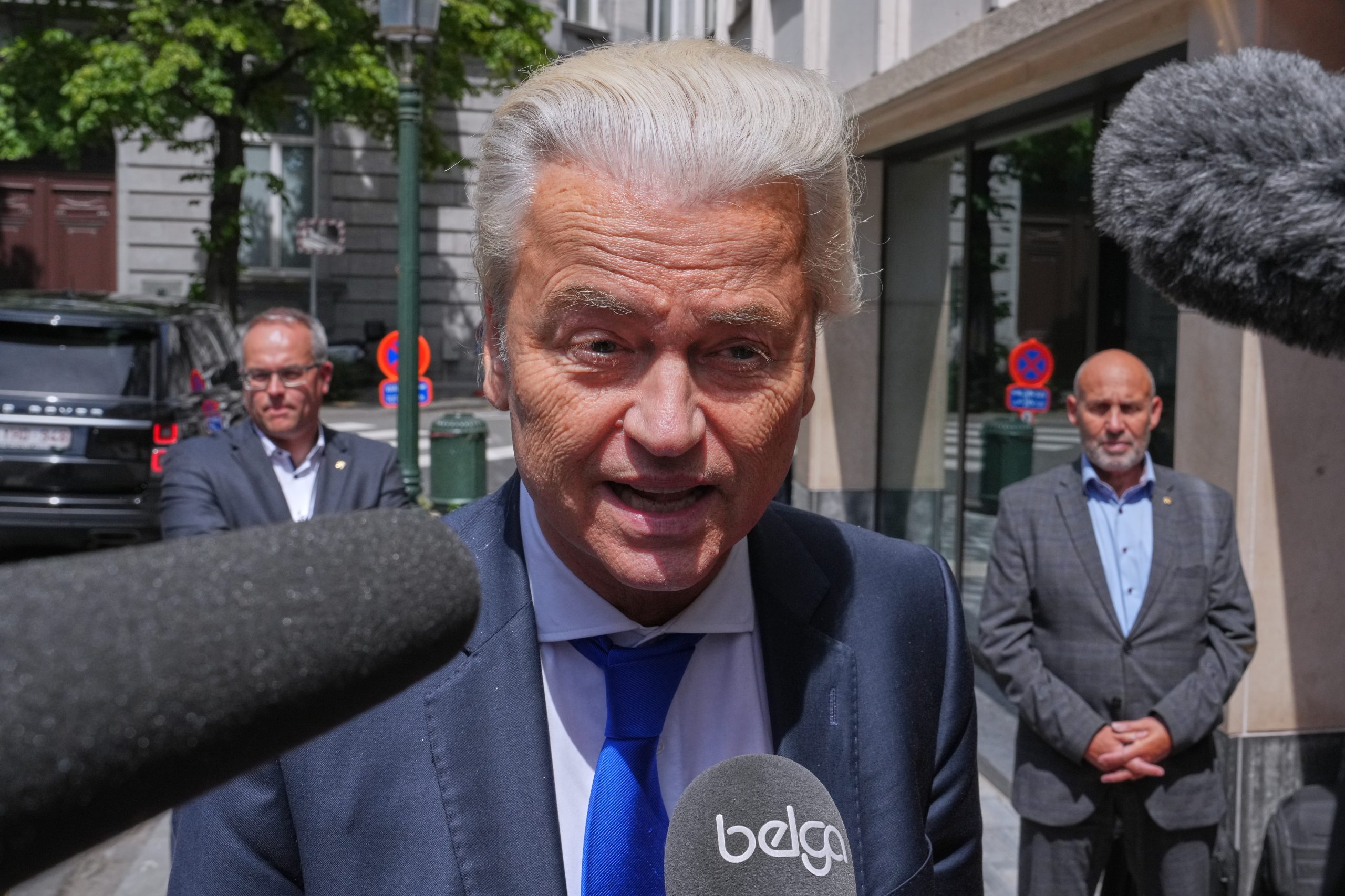

BERLIN — As the World Cup comes to a close, there’s one group of politicians who’ve remained unusually quiet about the fate of their own national teams: Europe’s far-right party leaders.
Top officials from France’s National Rally, the Alternative for Germany, England’s Reform UK and others faced complicated dynamics in deciding how to talk about the World Cup. The broad, socially acceptable form of patriotism inspired by international sporting events like the World Cup seems at first glance like an easy fit for parties whose core message includes a return to strong national pride.
But in many of the countries where these parties are growing, increasingly diverse teams with immigrant backgrounds are at odds with the way these parties think about national identity — making it tougher for them to vocally support the home team without implicitly supporting the individual players who are part of it.
“For the right, for whom national identification and identity has always been more salient than for the center and the left, soccer fandom was a natural conduit to express its passion and commitment,” said Andrei S. Markovits, a professor at the University of Michigan who studies the intersection of sports and nationalism. “This has become a tad more difficult when the players hail from multicultural backgrounds, many of which the right sees as inferior.”
(Former Spanish Prime Minister Mariano Rajoy learned the hard way how people react when someone points out those multicultural backgrounds: The center-right pol came under fire for saying ahead of Spain’s semifinal match against France that the French national team was “without Frenchmen,” a not-so-subtle dig at the African origins of many of the team’s star players.)
“It would not be good in terms of their electoral strength for [far-right parties] to be critical of these teams,” said Alan Bairner, a professor at England’s Loughborough University who has researched sports and national identity. “But the fact that they might seem a bit lukewarm is in itself a telling thing.”
That’s perhaps why criticism from far-right leaders has been directed not at their own teams, but at other teams — or at using the tournament to chime in with nationalist narratives that serve their own purposes.
Geert Wilders, leader of the Netherlands’ far-right Freedom Party, posted an image of himself in a bright-orange suit to cheer on the Dutch team in the early stages of the World Cup. It was a sharp contrast with his comments a day earlier, when he’d reposted a picture of members of the Moroccan squad praying on the field with an anti-Islam insult as the caption. (Several players of Dutch-Moroccan origin opted to play for Morocco, rather than the Netherlands this year.)
And after the Netherlands lost to Morocco in a penalty shootout late last month and post-game celebrations led to clashes with police in The Hague, Wilders — long a vocal supporter of stricter immigration controls in Europe — used the occasion to call for the deportation of all Moroccans involved in the clashes.
Reform UK’s Nigel Farage, too, used England’s semifinal match against Argentina on Wednesday to hearken back to the two countries’ 1980s-era war over the Falkland Islands: “Let’s do it all over again just like 1982,” he posted on X.
(Farage got in trouble earlier in the tournament for posting a photo of himself celebrating an England win by chugging a pint in a Three Lions jersey … only for observers to note it was a picture from the 2024 Euros.)
But in most cases, far-right leaders have swallowed their criticism of their diverse national teams and offered the basic messages of support expected of them, or in some cases, just stayed quiet.
National Rally leader Jordan Bardella, despite his past jabs at French striker Kylian Mbappé, congratulated the French team on a good run after losing to Spain earlier this week and said they “thrilled an entire nation” with their World Cup performance.
And AfD leaders Alice Weidel and Tino Chrupalla sought to downplay criticism of the German team’s diversity from within their party: Asked about one AfD state-level politician’s assertion that Germany’s national squad “has lost the quality of an authentic German national team” due to its diverse roster, both Weidel and Chrupalla were dismissive of those comments.
“If a player of an ethnic group whom you deem inferior scores goals for you, what are you going to do? Disavow him as belonging to the nation that you love?” asked Markovits. “No … you may deep down still doubt the genuine essence of his nationality, but you accept his goals and appropriate them as your own.”
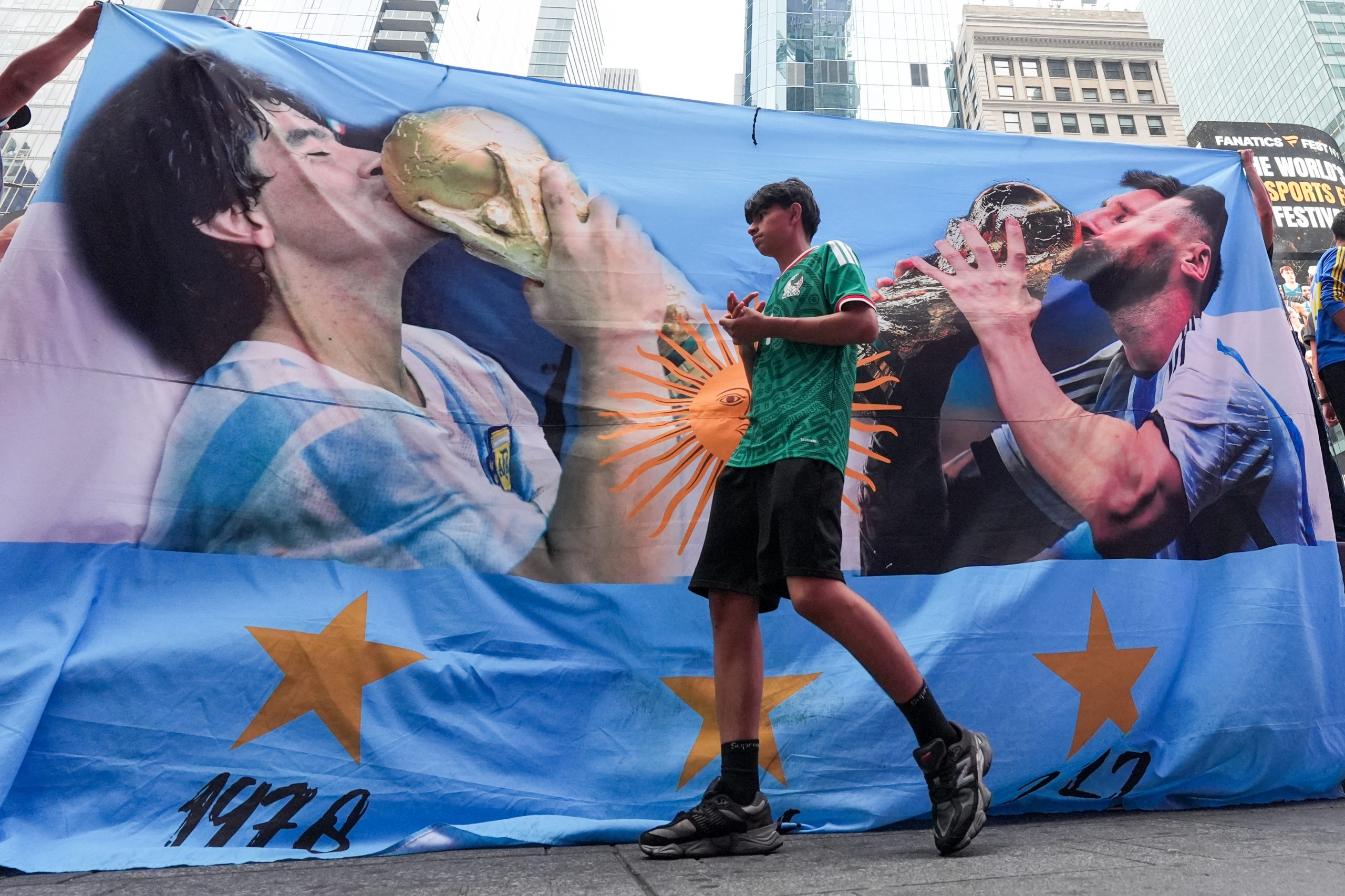

The Democratic National Committee is betting the world’s biggest sporting event can help build its voter base.
The DNC is launching a nationwide voter registration effort for Sunday’s World Cup final, dispatching organizers, volunteers and campaign staff to FIFA Fan Zones, sports bars and community watch parties with the goal of registering more than 3,000 new Democratic voters.
The effort underscores how both political parties are increasingly viewing major sporting events as opportunities to reach voters — particularly young Americans who may be less likely to attend traditional political events but are gathering in large numbers around the monthlong tournament. In the case of the World Cup final, more than 80,000 people are expected to attend in person.
“From outside FIFA Fan Zones and at World Cup watch parties to bars, restaurants and parks, we’ll spend the weekend registering thousands of new Democrats and having conversations about how we win races up and down the ballot,” DNC Chair Ken Martin said in a statement.
The weekend push spans nearly two dozen states, with Democratic organizers attending events in battlegrounds including Arizona, Pennsylvania and Florida. In Arizona, Democrats plan registration efforts in Phoenix, Chandler, Tempe, Tucson and Yuma.
The campaign builds on the DNC’s broader “When We Count” initiative focused on young voters ahead of the 2026 midterms.
Unlike traditional registration drives centered on college campuses, the program deliberately targets young Americans who are already in the workforce.
About one-third of the program’s fellows are native Spanish speakers.
The party is pairing the registration effort with a four-part national training series that it says will equip more than 1,500 organizers, campaign staff and volunteers with best practices for partisan voter registration.
Professional sports leagues have increasingly embraced civic engagement around elections, and the NBA and WNBA are some of the most visible examples, using arenas as polling locations and partnering on nonpartisan voter registration drives. And conservatives have previously registered voters at NASCAR events.
“The power in sport is that people gather. It creates a sense of belonging,” said Lee Igel, a professor of global sport at New York University. “If you want to get 3,000 people registered to vote at a watch party for a sports mega-event, you’d be hard-pressed not to get closer to 30,000 people” registered.
Igel said the DNC’s initiative takes that relationship between sports and civic participation a step further.
“There’s some precedent when it comes to voting and sports,” he said. “But this picks up on a more recent trend of politicians, elected officials and the organizations they’re connected to tapping into the power of sport.”
He pointed to leaders across the political spectrum, including President Donald Trump and New York City Mayor Zohran Mamdani, as examples of politicians increasingly recognizing sports’ cultural reach.
“Sport is fun and games,” Igel said, “but the attention it attracts in communities — from eyeballs to people in person — is enormous.”
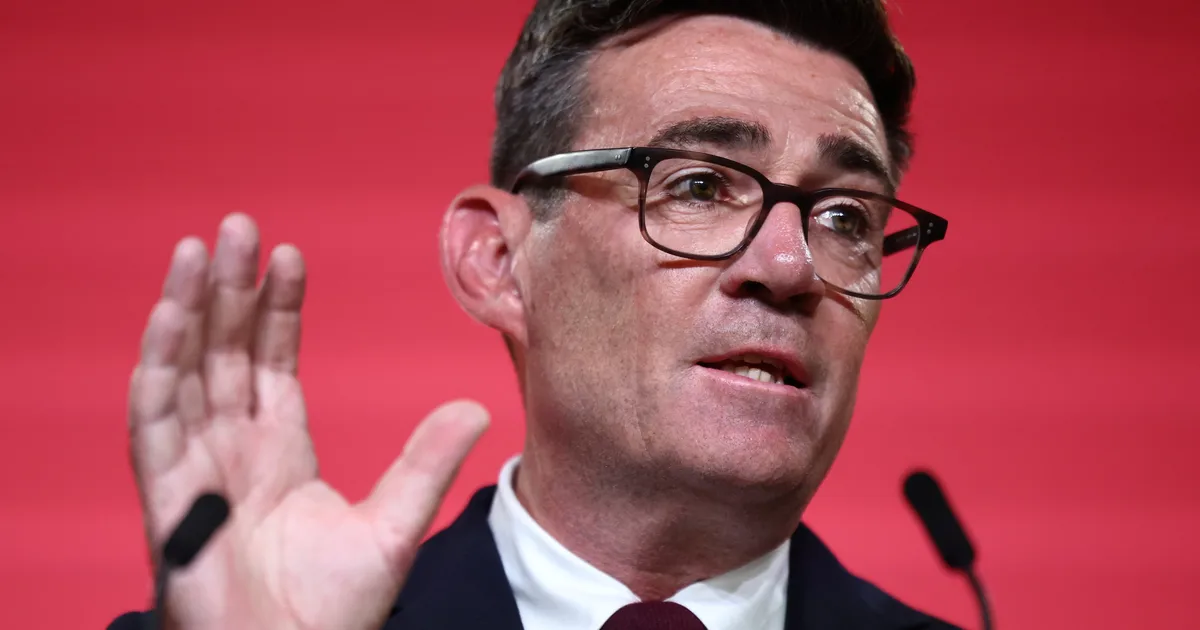
Andy Burnham’s government intends to scrap Keir Starmer’s plan to implement digital ID, a close ally to the incoming prime minister has confirmed.
Dropping the controversial scheme is part of Burnham’s bid to put his own stamp on government and distance himself from his predecessor’s most divisive policies.
Starmer announced plans for a digital ID scheme last September to crack down on illegal working, but it sparked fears about whether personal data might then be at risk.
Speaking to Laura Kuenssberg on the BBC, deputy Labour leader Lucy Powell said scrapping the programme move would allow ministers to be “laser focused on the cost of living, laser focused on rewiring the economy, rewiring the political system in this country, and clearing the decks, if you like, from of all of the other things that might distract and take away from that in terms of the focus of the government”.
Asked how much money would now be freed up for other means, Powell said: “The OBR said it would cost, I think, £1.8 billion over the over the coming years.
“That’s not an insignificant amount of money. That will obviously be re-prioritised and redistributed in different ways.
“But as I say, it’s not just about the money.
“It’s actually about the attention and the focus, so that the the whole of government machinery can work in service of the agenda and the vision that the Labour government is setting out under under Andy Burnham, and I think that is important.”
She also claimed Burnham will deliver on the Labour manifesto by being “bolder” and “clearer” about what the party stands for.
Powell confirmed there would be a “change of emphasis” on North Sea oil and gas drilling under Burnham as well.
There has been widespread speculation that the new prime minister might issue new drilling licences to boost the UK’s energy security, even though the 2024 Labour manifesto pledged not to.
Though she did not confirm what Burnham intends to do on the divisive topic, Powell said the new PM would take a “more pragmatic approach” towards North Sea drilling.
Powell said: “We’ve been really clear that the way to achieve, in the long term, energy security and lower bills is by ensuring that we do have our our own homegrown, clean, much cheaper energy.
“But we’ve been absolutely clear that North Sea gas and oil is an important part of that transition.
“It’s an important part of the mix, and I think what Andy’s talking about is taking a more pragmatic approach and working with the industry to make sure that it can contribute to that transition and to the the mix that is needed over the long term.
“So let’s see what he’s got to say about that. But I don’t think it’s a change of policy. It’s more a change of emphasis.”
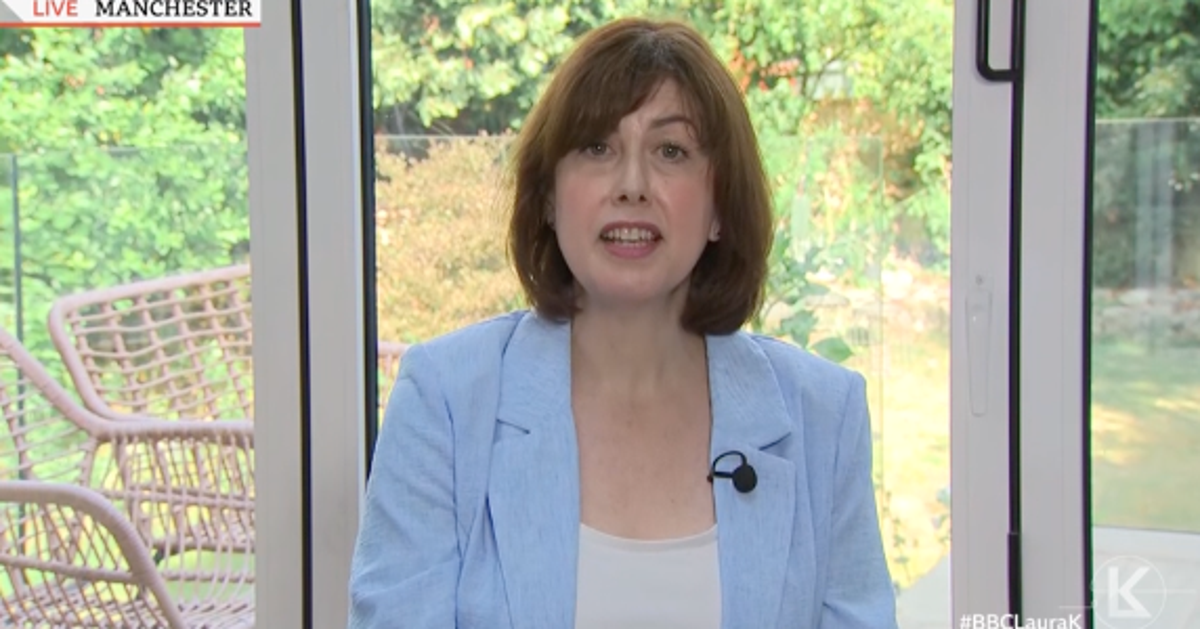
Lucy Powell has claimed speculation about Andy Burnham’s cabinet has been “horrible” in an attack on the media.
The deputy Labour leader blamed the press for reporting on the briefings coming from within the party about who might be in the incoming prime minister’s top team.
Burnham was confirmed as the leader of the Labour Party on Friday after running uncontested to replace Keir Starmer, and will be announced as prime minister on Monday.
He said last week he has not yet decided on his ministers because he thinks it would “cause complete chaos if you start half a reshuffle before you’re in position”.
His refusal to confirm who might be in his cabinet and at the heart of his government operation has led to widespread confusion – even though Burnham has pledged to make Labour more united and to stop in-fighting.
BBC presenter Laura Kuenssberg asked Powell, a close ally to Burnham, about the particularly mixed reports about whether energy secretary Ed Miliband might get a senior position.
The presenter said: “Burnham has promised to end factionalism in the Labour Party but there has been quite a lot of briefing already, a lot of briefing against Ed Miliband.
“It doesn’t bode, very well, does it, for Andy Burnham’s promise of ending all that unhappiness and in-fighting within the party?”
Powell replied: “There’s been a lot of speculation in the media about various individuals which has been really quite horrible, to be honest, and unedifying.
“I know that as political journalists, maybe you’ve not had the story of the Labour leadership crisis to write about for the last few weeks, because actually I’m really proud of the way in which the Labour Party has come together in a consensus around Andy Burnham being the next leader.”
She claimed the media is “looking for other personalities and other disagreements” to write about.
Kuenssberg hit back: “Journalists write about things they are told about.”
Jacob Rees-Mogg, former Tory minister, then criticised Powell’s response while sitting on Kuenssberg’s panel.
“Lucy Powell, an admirable person in many ways, was saying something she knows isn’t true at the end, when she said these stories are coming from disgruntled journalists because they didn’t have a big enough story to write,” he said.
Rees-Mogg added that reporters “do not make things up” and only write “what they are given by politicians”.
Listen to Commons People, the podcast that makes politics easy. Every week, Kevin Schofield and Kate Nicholson unpack the week’s biggest stories to keep you informed. Join us for straightforward analysis of what’s going on at Westminster.
Two horse riders die within hours of each other at separate British competitions

Who Missed Taylor Swift and Travis Kelce’s Wedding? The Biggest Celebrity No-Shows Explained

These Loose, European-Looking Summer Jumpsuits Are Trending


-
 NewsBeat3 days ago
London Mayor Sadiq Khan handed a peerage by Keir Starmer alongside 15 other Labour figures… just days before the PM leaves No10
-

 Fashion2 days ago
Weekend Open Thread – Corporette.com
-

 Politics1 day ago
The House | The City of London can help the new chancellor deliver growth in every postcode
-

 Politics4 days ago
Young campaigners urge incoming PM to act on outdoor junk food ads
-

 Crypto World4 days ago
CFTC blocks Kalshi from unwinding Michigan trades after court order
-

 Business4 days ago
Nvidia Stock Slips After Big Tuesday Rally as Huang Confirms Vera Rubin Chip Is Now in Production Today
-

 Crypto World1 day ago
Ripple Payments Joins MiCA With 14 Firms, Does It Mean Anything For XRP?
-

 Politics4 hours ago
Democrats look to World Cup watch parties to register thousands of voters
-
 Entertainment4 days ago
Disney’s Most Ambitious Failed Star Wars Attraction Is Coming to SDCC
-

 Crypto World2 days ago
Ripple wins EU-wide access as ESMA adds it to MiCA register
-
 Crypto World2 days ago
Two July Windows Left: The CLARITY Act’s Senate Fight and What Failure Means
-

 Business4 days ago
Palantir Shares Rise After Expanded Nvidia Partnership and Fresh Analyst Upgrades Ahead of Earnings Day
-

 Crypto World3 days ago
Injective Submits SEC Transfer-Agent Registration to Onchain Ownership Records
-

 Tech5 days ago
Get Your ESP32 Sunny Side Up With This Solar Dev Board
-

 News Videos5 days ago
XRP BOMBSHELL… XRP OMBOARDED FOR TRANSACTIONS!!!
-

 NewsBeat2 days ago
Registration is now open for March for Men with Kev 2026
-

 Tech5 days ago
Dark Secrets Emerge When Jailbreaking LLMs
-
 Sports4 days ago
New Cornerback Enters Vikings Trade Rumor Mill
-

 News Videos2 days ago
Money | Class 12 Economics | CBSE Board Exam 2026-27
-

 Business3 days ago
Banco Bilbao Vizcaya Argentaria, S.A. (BBVA) Discusses Global Macro Environment and Economic Outlook for Core Markets Transcript
You must be logged in to post a comment Login