

Business
Growth & Total Return Weekly Chat



Welcome to the go-to destination for all Growth & Total Return investing conversations on Seeking Alpha. Our main idea is to exchange ideas and have fun in the process. Please note comments are not regulated with the same rigor as the rest of the site. We kindly request all users to refrain from personal attacks on fellow commenters. Regardless of which side of an investing idea you find yourself, please be courteous and don’t direct abuse at other users.


Mookie Betts tells FOX Business what was most important to him when creating a glove.
Los Angeles Dodgers superstar Mookie Betts has already influenced young players with his play over the years, and now they will be able to wear his glove.
Betts’ glove company, LGND, announced Monday a landmark partnership with Perfect Game, the world’s largest youth baseball and softball platform and scouting service, naming its glove the official glove of Perfect Game. The partnership will officially launch on July 27.
Betts told FOX Business that “it means a lot” that Perfect Game believed in him and his company.
CLICK HERE FOR MORE SPORTS COVERAGE ON FOXBUSINESS.COM

Los Angeles Dodgers shortstop Mookie Betts (50) heads to the dugout after the final out of the bottom of the second inning against the Athletics at Sutter Health Park in West Sacramento, California, on June 30, 2026. (Scott Marshall/Imagn Images / IMAGN)
“It means a lot, man. It shows the belief that they have in my team, me, myself and the team, and what they have obviously, I think it’s really going to affect the young people coming up, cause they can show their personalities,” Betts told FOX Business in a recent interview.
“They can look and see that hopefully, one day all the big league guys that have the different models and they can aspire to be them.”
Perfect Game Chairman Rick Thurman said the partnership is everything that represents what the youth baseball company is trying to be.
“This partnership represents everything Perfect Game strives to deliver to athletes, which is access, authenticity and products shaped by the needs of players,” Thurman said in a news release.
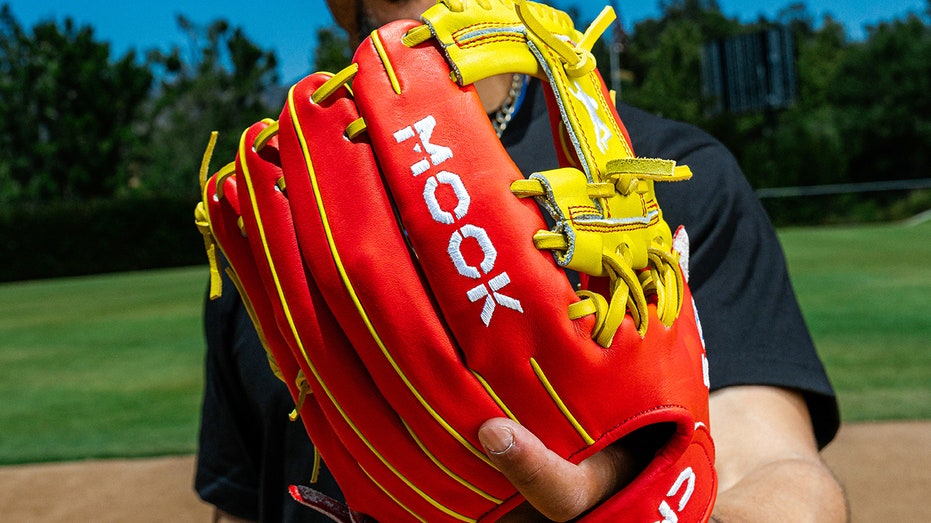
Mookie Betts wears a LGND glove from the “Mook Series.” (LGND Sports/Perfect Game / Unknown)
“Mookie is one of the most accomplished and respected players in baseball, but beyond that, he understands what young athletes value. LGND was built with those athletes in mind, and we believe this will redefine expectations for baseball equipment partnerships.”
The launch features premium glove lines, both of which were developed with player performance and feedback in mind.
The “Mook Series” features Betts’ signature stamped in the palm, his game-worn colorway and the iconic 50 Tri-Star logo embroidered on the thumb, giving players an authentic connection to a future Hall of Famer.
GET FOX BUSINESS ON THE GO BY CLICKING HERE

Mookie Betts wears a LGND glove from the “Mook Series.” (LGND Sports/Perfect Game / Unknown)
The “MVRK Series” delivers the same premium Japanese leather construction and craftsmanship in a collection designed for players who want professional-level performance with distinctive styling and versatility across multiple positions.
Betts said he has been using the glove all year and said the integrity of the glove has held up. His goal with LGND is to allow young kids to express themselves through a glove, while also ensuring it is well-crafted.
Betts is a four-time World Series champion, American League MVP winner, an eight-time All-Star, a seven-time Silver Slugger and a six-time Gold Glove winner.
Follow Fox News Digital’s sports coverage on X, and subscribe to the Fox News Sports Huddle newsletter.
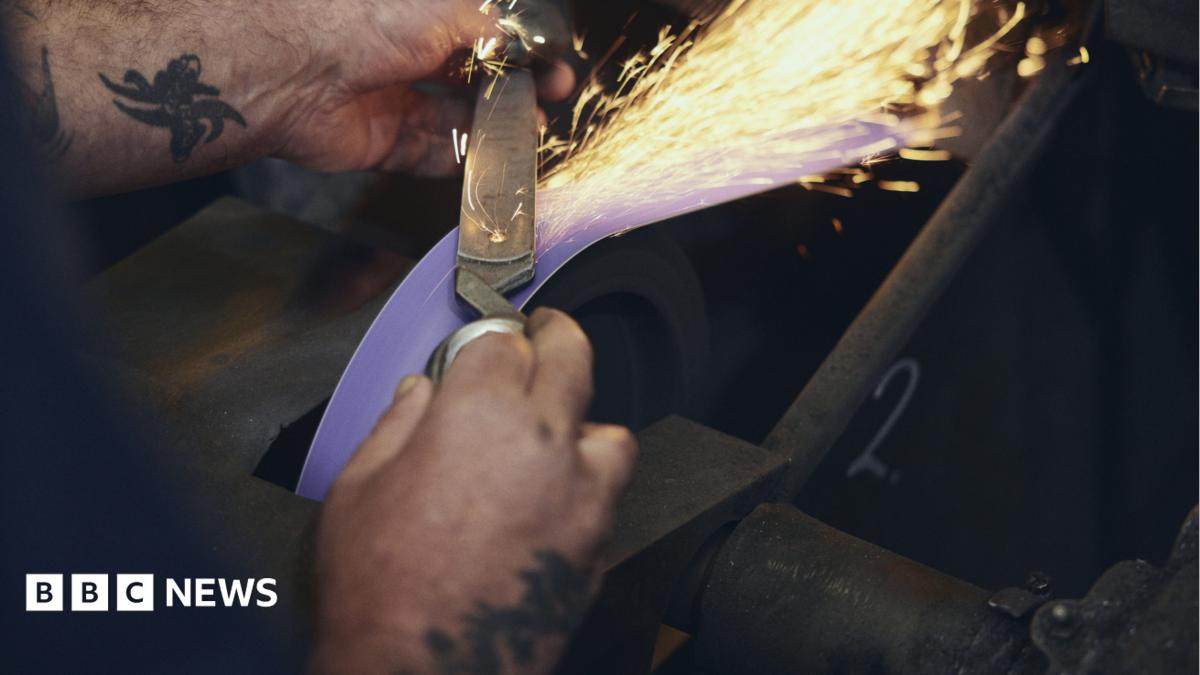
Ollie Priestley is not just doing any mechanical apprenticeship.
Working at specialist car restoration business Tolman, Priestley, 29, has embarked on a “heritage vehicle technician” apprenticeship. He’s learning the skills to work on modern classic cars that need a mix of traditional and new techniques to restore.
New technologies are enabling those techniques – from computer-aided design (CAD) for new vehicle components, to 3D printing them, as well as learning the intricacies of a car’s electronic control units.
“I wanted to develop the skills that allowed me to work on the cars that I love and excite me, like the Peugeot 205 GTi,” says Leicestershire-based Priestley.
“Getting to know how to make things keeps me focused and engaged. I’ve just fabricated a gearbox mount for a classic BMW. It’s cool to know that the things I create will bring the car back to life.”
Tolman founder Chris Tolman says what Priestley is learning sets him apart from apprentices in mainstream car dealerships, who, due to digital tools, are increasingly becoming “just fitters”.
“The computer identifies the issue and they swap the part. For specialist car businesses, our technicians need to identify and understand a problem, and then be creative and innovative to find the answer,” says Tolman, who is based in Warwickshire.
Tolman’s point highlights an important question hanging over how trade apprentices are being taught today, as technology plays an increasingly bigger role.
As a result, apprenticeships are moving up the education value chain.
For example, Priestley’s three-year apprenticeship, which he is doing through the Heritage Skills Academy in Bicester (HSA), was introduced in 2018 to incorporate 3D printing and CAD amongst other digital skills, alongside essential skills like welding and glazing.
It is a level three apprenticeship offering the equivalent of three A-levels. It replaces the previous level two and three “classic vehicle framework” apprenticeship.
HSA managing director John Pitchforth says it’s “radically improved” as it combines “modern technology with engineering fundamentals”.
Government apprenticeship data also shows that the number of people starting level two intermediate apprenticeships have fallen by nearly a quarter over the past year, in favour of people starting higher level apprenticeships – level four to seven.
Level six and seven respectively equate to bachelors and masters degrees. Level three apprenticeship numbers have remained stable.
But with tech having a growing influence over the curriculum, are apprentices now just learning how to run computer software, at the expense of the actual skills of a specific trade?
HSA’s Pitchforth argues that the organisation’s apprentices come out highly skilled – perhaps more so than those from other programmes.
“When modern engineers come to us to transfer into our sector, they often lack the basic engineering principles and are unable to diagnose and repair vehicle systems without a computer telling them what’s wrong,” he says.
Did you get to see the 2024 film Civil War, with its dystopian depiction of a present day USA in the midst of a violent meltdown?
What made it such an effective thriller was that it all seemed so frighteningly real. Although the two sides in that civil war were fictitious, it hit a raw nerve precisely because of the very obvious divides that scar modern day America.
But interestingly it was actually written and directed by a British film-maker, Alex Garland, and he expressed worries about his home country, as well as the US. In both countries, he told the Guardian, “there’s a lot to be very concerned about”.
He’s not alone. If you are an avid user of social media, you could almost believe that we are a nation disunited enough to have a full-on civil war of our own. And even away from the exaggerated adversarialism online, there are plenty of people worried that Britain is gripped by uncontrollable rage.
It’s a sense of discord that Britain’s new prime minister, Andy Burnham, seems to recognise. Since announcing his run for the Makerfield seat in May, he’s repeatedly urged Britons to forget about party labels or factional identities and instead unite around pride in their local area. “Place first, not party first”, is how he puts it.
And as he entered Downing Street on Monday, he called for a “new national sense of unity, of common purpose and positivity”.
But it’s worth asking: just how divided really is Britain?
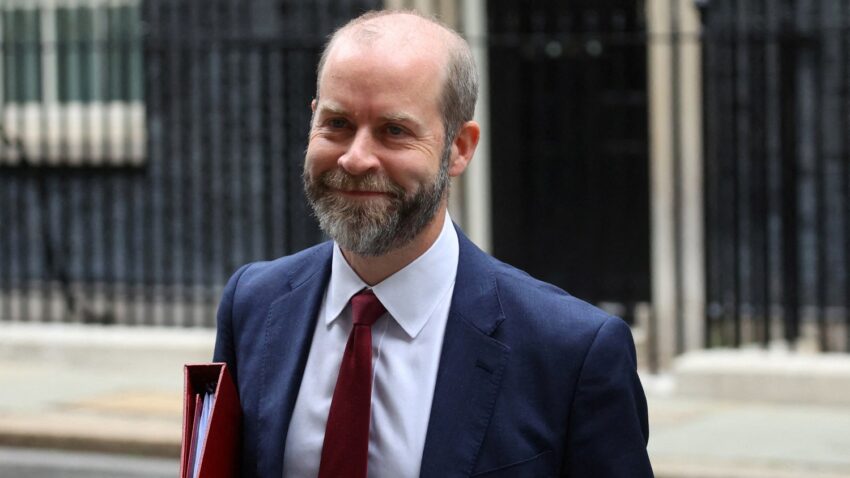
Jonathan Reynolds has been appointed secretary of state for business, innovation, science and trade, returning to the department he led at the start of Sir Keir Starmer’s government, as new prime minister Andy Burnham scraps the standalone science and technology department just three years after its creation.
The appointment hands Reynolds a substantially enlarged empire. The Department for Science, Innovation and Technology (DSIT), created under Rishi Sunak in 2023, has been abolished, with the bulk of its responsibilities folded into the new super-ministry. According to the Financial Times, officials had been asked to move remaining functions to the Department for Culture, Media and Sport, with oversight of AI in the public sector passing to cabinet secretary Antonia Romeo rather than a minister.
Reynolds held the business and trade brief from July 2024 until last September, when he handed the role to Peter Kyle and became chief whip, a job he made little secret of not enjoying. His first spell was defined by trade agreement negotiations and the emergency legislation that secured the future of British Steel’s blast furnaces, and he built strong relationships with employers and trade unions along the way.
For business owners, the return of a known quantity will be welcome. The manner of his arrival is another matter. Scrapping DSIT sparked a revolt among tech founders and investors within hours of the plans emerging, and the row now lands squarely on Reynolds’ desk.
The practical stakes are considerable. DSIT sponsored UKRI, the research funding body that sits above Innovate UK grants, as well as the Government Digital Service. All of that machinery now goes into flux just as firms are being urged to adopt AI and invest in innovation.
Julian Harris, chief executive of techUK, and Dom Hallas, executive director of Startup Coalition, called the proposal “the wrong change at the wrong time” in a letter to the new prime minister when the plans first surfaced.
Matt Clifford, who served as Starmer’s AI opportunities adviser, was blunter still. “This would be a big mistake,” he wrote on X. “Right now is a critical moment for tech as an economic and national security issue. Tying up our most senior science and tech officials in a reorg wastes time and energy that’s desperately needed for the actual substance.”
Burnham’s calculation is that a single, muscular business department serves his reindustrialisation agenda better than a separate science ministry. “I will be a pro-business leader of the Labour Party as I was a pro-business mayor of Greater Manchester,” he said in his first speech as Labour leader. One Labour figure told the FT the enlarged department could eventually be rebranded a “Ministry of Industry”.
Business groups are prepared to give him the benefit of the doubt, up to a point. Rain Newton-Smith, chief executive of the CBI, said: “We want Andy Burnham and his team to succeed. ‘Manchesterism’ provides a coherent theory of growth… The challenge is execution.”
That word, execution, is the one for SME owners to hold on to. Sentiment towards the new administration is fragile, with just 13 per cent of firms expecting taxes to fall under Labour’s new leadership. Reynolds inherits goodwill from his first stint, but also a department mid-rewiring, a tech sector in open dissent and a grants system that thousands of growing firms need to keep functioning while the nameplates change.
His first job is proving that a bigger department means a stronger champion for business, not a slower one.

Paul Jones
Harvard alumni and former New York Times journalist. Editor of Business Matters for over 15 years, the UKs largest business magazine. I am also head of Capital Business Media’s automotive division working for clients such as Red Bull Racing, Honda, Aston Martin and Infiniti.
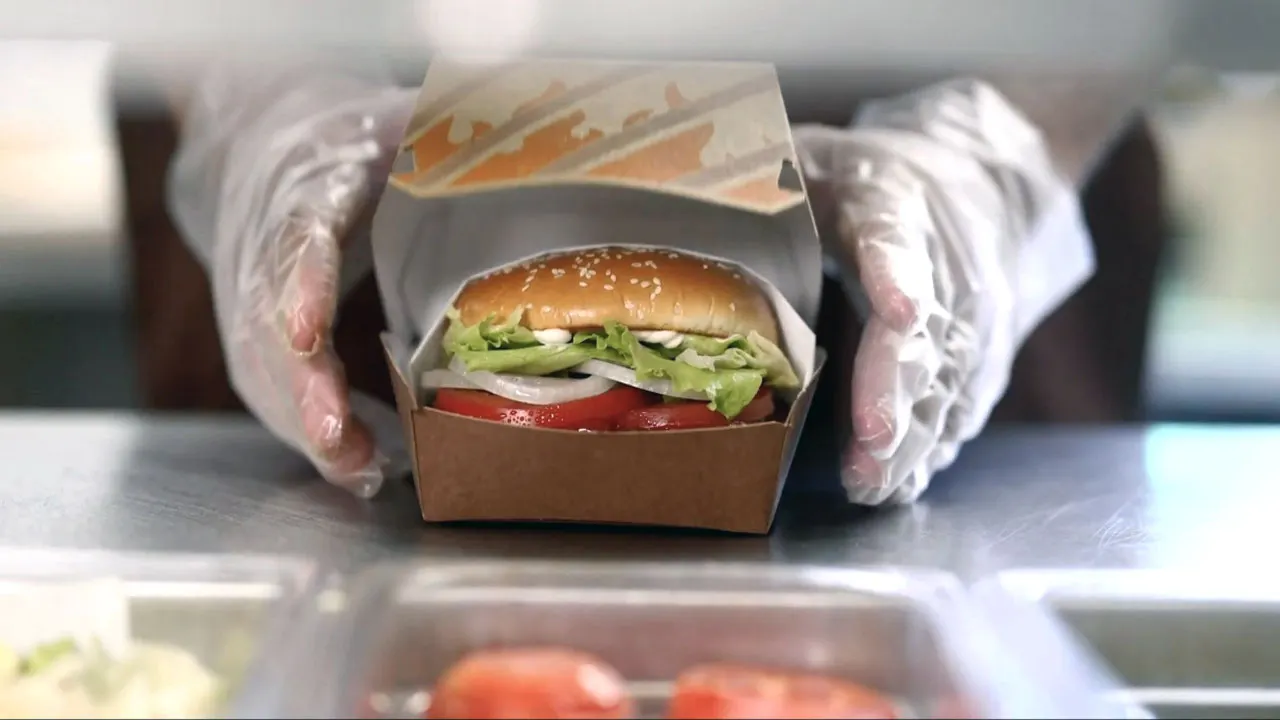
FOX Business correspondent Madison Alworth reports that it’s likely the service will expand further on ‘The Claman Countdown.’
Burger King is making a major push to improve customer satisfaction, announcing Monday that it will remake any unsatisfactory Whopper for free and offer guests a complimentary Whopper on their next visit.
The fast-food chain said the “Whopper Guarantee” initiative will launch alongside a new team of employees called “Your Way Champions,” who will be specifically dedicated to addressing customer needs rather than solely overseeing restaurant operations.
“Burger King is introducing two new initiatives designed to improve the moments Guests told the brand matter most – providing a consistent, accurate and welcoming in-restaurant experience – by introducing Your Way Champions and the Whopper® Guarantee,” the Florida-based chain said.
The move comes about four months after Burger King launched a listening initiative inviting guests to share feedback directly with company President Tom Curtis through his phone number. The chain said it received thousands of calls and texts highlighting areas for improvement.
BURGER KING MAKES CHANGES TO SIGNATURE WHOPPER FOR FIRST TIME IN NEARLY A DECADE
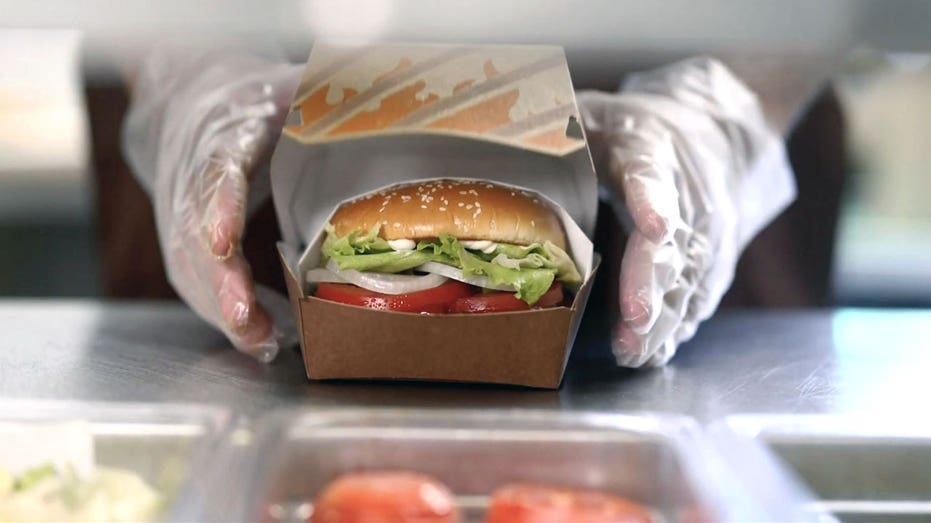
The new Burger King Whopper is served in a box instead of a paper wrapper. (Burger King / Fox News)
Under the Whopper Guarantee, guests can have any Whopper remade immediately for free if it does not meet their expectations.
The company will also offer guests a complimentary signature burger on their next visit to make up for the inconvenience.
“Guests expect to have it served hot, and exactly the way they ordered it. That’s why if a Whopper® doesn’t meet a Guest’s expectations, the brand will not only continue to remake it on the spot, but they’ll offer the Guest’s next Whopper for free,” the chain said.
WISCONSIN DEMANDS $1M FROM BURGER KING FRANCHISEE OVER ALLEGED VIOLATIONS

An exterior view of a Burger King fast food restaurant in Danville, Pennsylvania. (Paul Weaver/SOPA Images/LightRocket via Getty Images / Getty Images)
To redeem the offer, guests can scan a QR code inside their Whopper box to receive a unique six-digit code that can be used for a free classic Whopper during their next Burger King visit.
The new Your Way Champions will serve as a “clear point of contact” for guests throughout their visit, helping ensure orders are prepared correctly and resolving issues when needed.
Employees in the role will be identifiable by their Your Way Champion uniforms and will welcome guests, double-check orders, focus on customization requests and provide assistance aimed at creating a more guest-focused experience.

An employee greets customers inside a Burger King location. (Burger King)
GET FOX BUSINESS ON THE GO BY CLICKING HERE
“When Guests choose us, they expect high-quality food, orders made the way they asked, and a team that’s there when they need us,” Burger King said. “That’s what these changes are about. We’re raising the standard in our restaurants, so every Guest feels like they made the right choice.”
| Ticker | Security | Last | Change | Change % |
|---|---|---|---|---|
| QSR | RESTAURANT BRANDS INTERNATIONAL INC. | 73.96 | -1.05 | -1.40% |
Burger King said additional initiatives based on guest feedback will roll out throughout the year, including new menu announcements expected later this summer.
- Thailand’s economy has slowed sharply over decades, with growth falling from around 7% to roughly 2%, driven by repeated crises, structural weaknesses, and a shifting global trade environment. Stagnation has worsened household debt, suppressed wages, deepened inequality, and contributed to broader social and institutional problems.
- The author argues that stimulus spending alone is insufficient and that Thailand must reform its production base across agriculture, industry, and services. Priorities include modernising farming toward high-value outputs, expanding film and food sectors, linking foreign investment to local supply chains, and improving labour force participation and productivity to raise growth potential toward 4.7%.
Thailand’s economy, once a regional powerhouse, is now gasping for air. Yet the next wave of growth is within reach. With the right fuel and new engines, we can regain momentum. But first, we must understand what went wrong.
Economies rarely collapse overnight. They fade when they cannot recover from shocks or adapt to new realities. That is Thailand’s story.
Repeated crises — from the 1997 Tom Yam Kung crash and the 2008 financial crisis to the Covid-19 pandemic — pushed growth from 7% to 5%, then below 4%, and now just around 2%. During the Covid years, growth per person was only 0.1%.
Meanwhile, global trade has flipped. The era of globalisation is giving way to geopolitical rivalry and protectionism. With outdated engines, Thailand has slipped to the bottom of Asia; only Japan grows more slowly. Stay on this path, and Vietnam’s per-capita income will overtake ours within 20 years. The middle-income trap will tighten. High-income status will drift out of reach.
Systems crack
When growth stalls, households feel it first. Inequality ensures that. Household debt now exceeds 80% of GDP. Banks avoid SME lending. Governments turn to subsidies, pushing public debt even higher. This cannot hold.
The problem is not unemployment. It’s low wages. Workers cannot survive without overtime. Labour’s share of GDP keeps shrinking, deepening inequality and social strain.
Corruption rises when an economy is stuck: police acting like crime syndicates; clergy scandals; judicial lapses, even sports associations accused of cheating athletes. Slow growth cracks the system far beyond economics.
With people trapped in insecure jobs and neighbouring countries hosting scam hubs, Thailand is now entangled in transnational scamming and money-laundering networks. The lack of a serious crackdown raises doubts about the government itself.
If growth keeps sinking, Thailand risks sliding into a “grey economy.” Add marijuana, casinos, and call-centre scams, and quality investors and tourists will stay away. Reviving the economy requires real growth engines.
The heart of a new development model is simple: build enough “good” jobs. Jobs with middle-class incomes, stability, benefits, and skills. Good jobs stabilises society and make politics less volatile. They give people something to build on.
This is what political parties should compete to deliver.
Limits of stimulus
Why are we growing so slowly? If we assume Thailand is still a high-potential economy, every downturn looks cyclical, and stimulus seems like the answer. That has been the playbook for decades.
But if Thailand is actually low-potential, stimulus is not enough. We must reform production and restructure the economy.
Picture Thailand as an airplane. One wing carries four “spending engines”: consumption, private investment, public spending, and exports. All are stalling. Household debt limits consumption. Tight lending limits private investment. High public debt limits state spending. Exports suffer from global slowdown and protectionism.
The other wing holds four “production engines”: agriculture, industry, services, and public services. They are underpowered. To fly again, the captain must strengthen production, not spending.
Structural fault lines
Where are the bottlenecks?
Agriculture relies too much on commodities, rising and falling with global prices. Rubber exports remain below their level 10 years ago.
Industry is squeezed by global technological shifts, especially in autos. Competition is fierce, but our productivity is stuck because we cannot keep pace.
Tourism, once the crown jewel, has not regained pre-Covid revenue. Safety concerns drag it down.
Across sectors, three problems stand out: a shrinking labour force, weak investment, and low productivity.
Labour has been falling for decades due to low fertility. Preventable deaths from road accidents and pollution remain shockingly high. Many workers leave the labour force by age 55. Military conscription removes 70,000 productive workers each year. As education quality plunges, it can no longer offset a shrinking workforce.
Investment is weak. Public investment is limited by tight budgets and low tax revenue, much of which goes to fixed expenses such as salaries. Extending retirement age will strain budgets further.
Thailand has foreign direct investment, but much does not links to local supply chains. Some firms register here only to access tax incentives. On top of that, rigid regulations deter genuine investors.
Meanwhile. productivity suffers from misallocated resources, underinvestment in R&D, and failure to turn research into products.
Lean development
Globalisation’s retreat makes everything harder: US tariffs at 90-year highs, Europe’s green rules, China’s oversupply pushing prices down, and cheap imports flooding Thailand destroying local businesses. With a weakened WTO, countries now rely on bilateral deals.
It’s clear. Thailand must build new growth engines. We cannot rely on massive industrial expansion as before. A better starting point is “lean development”: use the people we have more efficiently, remove waste, and make every baht count. Then modernise agriculture, industry, and services step by step.
This is urgent. Most listed companies are struggling. One-third of manufacturing firms and more than a quarter of consumer companies are loss-making. Real estate and construction face the same fate.
New growth hopes
So how do we build a new growth engine?
First, modernise agriculture. Today, subsidies trap 30% of workers in low-earning farming. We need smaller, higher-value production like Japan’s melons, uni, and Kobe wagyu. Thai bamboo, biochar, sea crabs, and bananas show similar promise: they use fewer workers but generate more income.
Thai food offers even bigger potential. We have one restaurant per hundred people — street food not included. Yet Singapore has more eateries on the Michelin Bib Gourmand list.
The difference is state support: investing in quality, preserving heritage recipes, using technology, and promoting restaurants abroad. With a small domestic market, we must also look outward and expand online.
Film production is another bright spot. In the first nine months of this year, 450 foreign shoots brought in about seven billion baht. Jurassic Park, White Lotus, and Alien Earth were filmed here. Most spending stays in Thailand, creating high-income jobs and distributing earnings widely. With more state support, also for Thai producers, film could become a major growth engine.
Industry must modernise too : competing on quality, not price; expanding into ASEAN markets; shifting to green products; and building stronger Thai brands. Combustion engines will remain in demand in developing countries for at least a decade, while new opportunities emerge in green steel, pet food, and other eco-products.
Call to action
To recover, Thailand must act on three fronts: labour, investment, and productivity.
We must cut preventable deaths, reduce PM2.5, expand childcare and senior care to raise female participation, reform conscription, attract skilled workers, and improve education quality.
We must stop losing revenue through unnecessary tax privileges. Thailand has capital, but wastes it propping up outdated subsidies instead of modernising agriculture. Link foreign investors to local supply chains, clear regulatory bottlenecks and investment will follow.
Finally, productivity must rise. Freer trade helps, as many current rules hold us back. R&D must turn ideas into products.
If we succeed on these fronts, Thailand’s growth potential could rise from 2–2.3% to about 4.7% — enough to escape the middle-income trap by 2041.
Within 15 years, our economy will shift toward modern services. Workers will move from low-value jobs. Domestic spending will strengthen. Exports will matter less in a world of rising barriers.
Thailand cannot stay on the old path. Our task now is to build new engines — ones that create “good” jobs. That means new skills, new innovation, and less red tape.
If we act, those engines are within reach. They are ours to build — piece by piece, sector by sector, job by job. The only question is whether we are ready to begin.
Note: Somkiat Tangkitvanich, PhD, is president of the Thailand Development Research Institute (TDRI). This article is an edited version of his keynote speech at TDRI’s Annual Conference on Reimagining Thailand’s Development Model, held on November 17. TDRI’s policy analyses appear in the Bangkok Post on alternate Wednesdays.
Other People are Reading
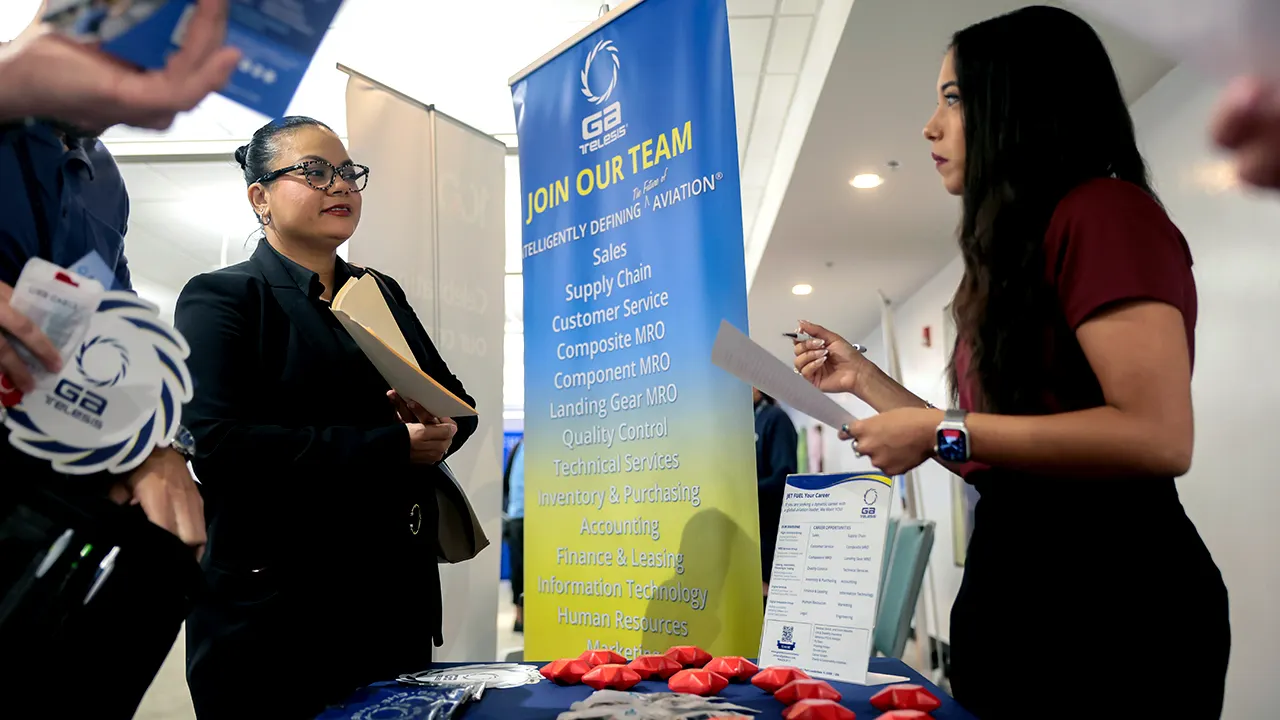
Check out what’s clicking on FoxBusiness.com.
As artificial intelligence reshapes workplaces across industries, one hiring executive says job seekers worried about AI replacing them may be focusing on the wrong challenge.
Instead of looking for candidates with years of AI experience, employers increasingly want workers who can prove they’re willing to learn, according to Sultan Khan, head of talent acquisition and human resources at San Francisco-based OpenArt AI.
“The willingness to learn is the biggest thing that we really need right now,” Khan told FOX Business. “The people that are open to learning are the ones that we’re seeing grab jobs really quickly in this current landscape.”
His comments come as employers increasingly seek workers with AI skills. According to PwC’s 2025 AI Jobs Barometer, the skills required for AI-exposed jobs are changing 66% faster than in other occupations, while workers with AI skills receive an average 56% wage premium compared with those in similar roles.
DIMON URGES CALM OVER FEAR ABOUT AI’S IMPACT ON JOBS: ‘STOP BEING BREATHLESS OVER IT’

Instead of looking for candidates with years of AI experience, employers increasingly want workers who can prove they’re willing to learn, Sultan Khan said. (Philip Dulian/dpa/Getty Images)
OpenArt, an AI-powered creative platform with more than 8 million monthly users, has grown its workforce by roughly 300% over the past seven to eight months, according to Khan, and is hiring across engineering, product, design, marketing and creative roles.
But Khan said resumes packed with years of AI experience aren’t necessarily what stand out.
“I think the biggest thing that helps make people stand out to me is when I see that they’ve done a lot of side projects or a lot of learning,” he said, pointing to applicants who complete AI courses, earn certifications or experiment with AI tools on their own.
Because generative AI remains relatively new, Khan said recruiters understand many applicants won’t have years of hands-on experience. Instead, he said, hiring managers are looking for people who show curiosity and adaptability.
CALIFORNIA LAWMAKERS WARN NEWSOM BUDGET TAX CREDIT CAP THREATENS HOLLYWOOD JOBS
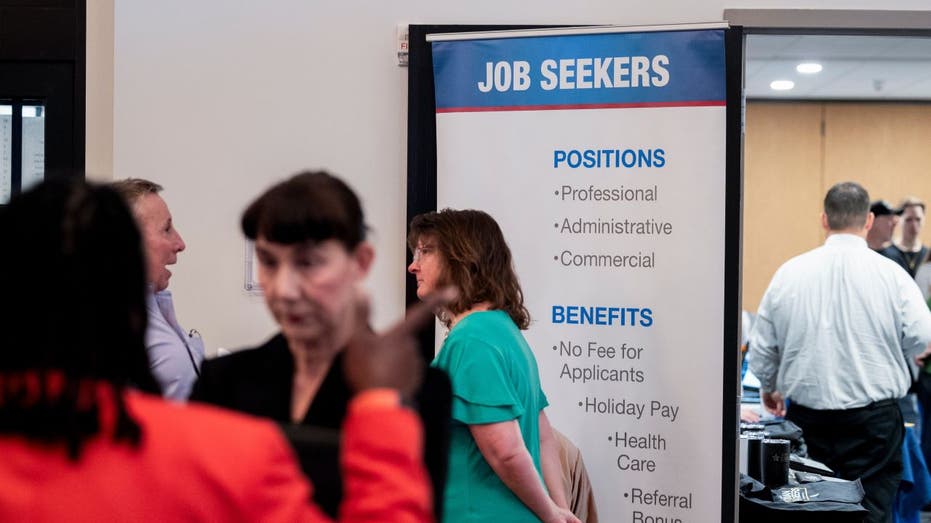
Khan said resumes packed with years of AI experience aren’t necessarily what stand out. (Angus Mordant/Bloomberg)
“The curiosity is another big thing,” Khan said. “The ones that are really eager and willing to learn how to adapt it into their current workflow are the ones that are getting tons of calls from recruiters.”
That mindset isn’t limited to software engineers.
While OpenArt is recruiting engineers and product managers, Khan said the company is also hiring creative directors, designers and video editors who want to incorporate AI into visual storytelling.
“AI isn’t the creative aspect of things,” Khan said. “It’s the human behind it. AI only does what you tell it to do.”
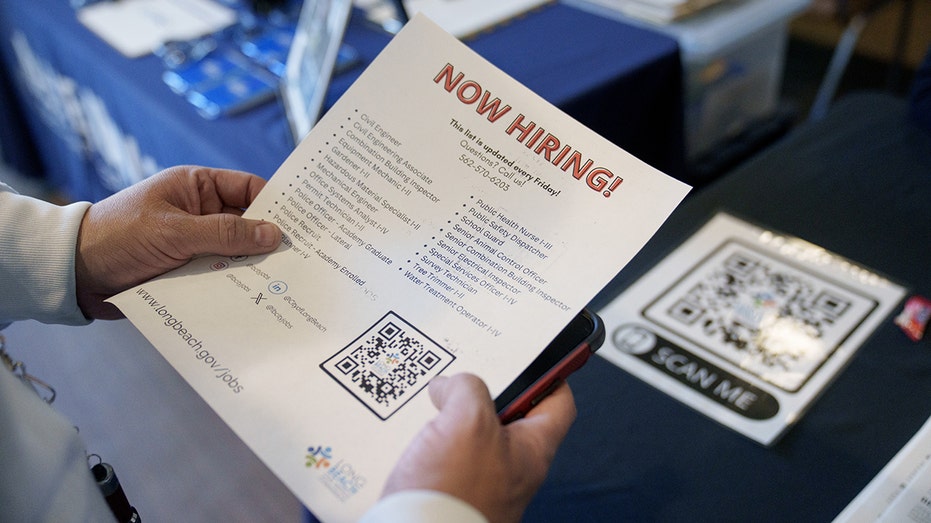
Khan’s advice for recent college graduates is to start using AI before an employer asks you to. (Photographer: Eric Thayer/Bloomberg via Getty Images)
Khan acknowledged concerns that AI could replace workers but argued the technology is more likely to change existing jobs than eliminate them.
“AI isn’t going to eliminate jobs,” he said. “It’s just going to transform jobs as a whole.”
His outlook echoes part of a broader trend identified by the World Economic Forum, which estimated in its 2025 Future of Jobs Report that technological advances, including AI, could create 170 million new jobs globally while displacing 92 million by 2030, resulting in a net gain of 78 million jobs. The report also found employers increasingly expect workers to build AI-related skills as adoption spreads.
For recent college graduates entering an uncertain labor market, Khan’s advice is straightforward: start using AI before an employer asks you to.
CLICK HERE TO GET FOX BUSINESS ON THE GO
He recommends researching the AI platforms commonly used in a chosen field, building projects with those tools and showcasing that work on resumes and LinkedIn profiles.
“The biggest takeaway is really to start learning how to adopt into the AI space rather than only putting it under a negative light,” Khan said.

Check out what’s clicking on FoxBusiness.com.
Boeing CEO Kelly Ortberg said the global aerospace company has begun early work on a possible new airplane design but is not yet ready to move forward.
Ortberg, who became president and CEO in August 2024, said Boeing is spending “time and money” evaluating its options and preparing to introduce a new design when the company is ready, according to The Wall Street Journal.
“We don’t have a firm configuration right now,” Ortberg said ahead of the Farnborough International Airshow near London. “We’re evaluating trade studies. You create a baseline, and you evaluate things against the baseline, and then you change.”
TRUMP ANNOUNCES CHINA WILL BUY 200 BOEING JETS AFTER XI TALKS: ‘A LOT OF JOBS’

Boeing CEO Kelly Ortberg speaks during a media event at the company’s delivery center in Seattle on Jan. 7, 2026. (M. Scott Brauer/Bloomberg via Getty Images)
Before launching a new airplane, Boeing wants to improve its finances, develop the necessary technology and deliver aircraft that are already behind schedule, Ortberg said.
“Certainly, getting our financial house in order is a part of our being ready,” Ortberg said. “That’s going to take another couple years.”
Boeing is currently focused on delivering delayed models, including its long-awaited 777X wide-body jet, The Wall Street Journal reported.
UPS SAYS BOEING GUIDANCE LED CARRIER NOT TO ADOPT ENHANCED MD-11 INSPECTIONS BEFORE FATAL CRASH
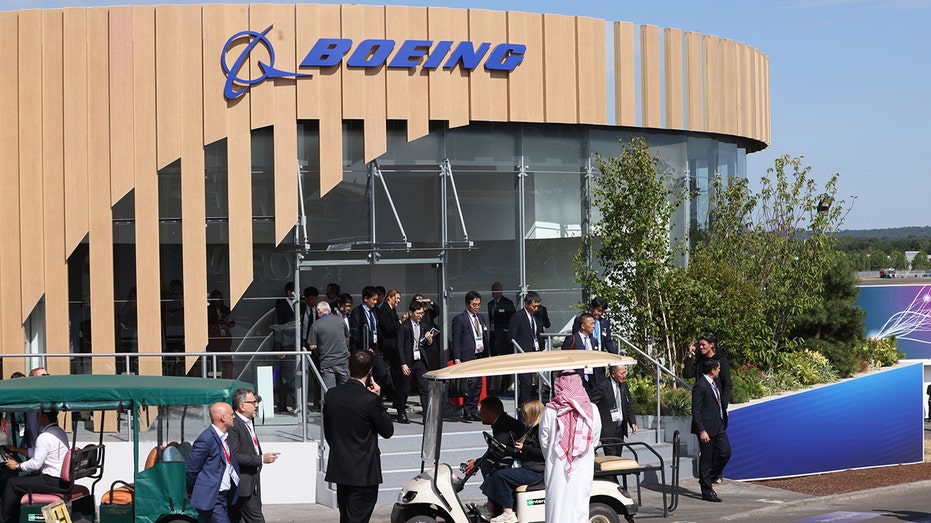
The Boeing Co. chalet is seen at the Farnborough International Airshow in Farnborough, England, on July 20, 2026. (Betty Laura Zapata/Bloomberg via Getty Images)
“Orders are not our challenge,” Ortberg said. “Our challenge is getting these orders delivered.”
Boeing also kept the 777X in the U.S. rather than conducting demonstration flights at the Farnborough airshow while the aircraft awaits Federal Aviation Administration (FAA) certification, according to The Wall Street Journal.
The FAA could approve Boeing’s 737 MAX 7 as soon as late July. Ortberg said he expects the larger MAX 10 to follow not long afterward, the outlet reported.
Stocks In This Article:
AIRLINES WARN CHANGING DAYLIGHT SAVING TIME WOULD DISRUPT SCHEDULING
The Boeing logo is displayed outside the company’s chalet at the Farnborough International Airshow in Farnborough, England, on July 20, 2026. (Betty Laura Zapata/Bloomberg via Getty Images)
Ortberg said airline customers want Boeing to focus on improving production and reliability across its current lineup before introducing a new jet, according to CNBC.
Boeing and Airbus dominate the large commercial aircraft market, and a future Boeing airplane could help the company compete with Airbus’ A320 family, the outlet reported.
The comments come as Boeing adds to its order book. In May, President Donald Trump said Chinese President Xi Jinping had agreed to order 200 Boeing jets during a high-level meeting in Beijing.
GET FOX BUSINESS ON THE GO BY CLICKING HERE
Boeing could not immediately be reached by FOX Business for comment.
Business
Dow Little Changed as Oil Eases From $90 a Barrel Amid US-Iran Strikes, Big Tech Earnings Loom Ahead

The Dow Jones Industrial Average was little changed Monday morning, trading at 52,127.90, down 18.52 points, or 0.036%, as investors weighed easing oil prices against continued volatility in the technology sector heading into a heavy week of corporate earnings reports.
U.S. stocks broadly moved higher earlier in the session, with the S&P 500 adding 0.5% and the tech-heavy Nasdaq Composite climbing nearly 0.8%, buoyed by a rebound in semiconductor stocks following a turbulent week that had seen sharp losses across the chip sector. Oil prices, meanwhile, eased somewhat after briefly touching $90 a barrel over the weekend amid an escalating exchange of strikes between the United States and Iran.
Markets navigate competing pressures
Monday’s relatively muted trading in the Dow reflected a broader market attempting to balance several simultaneous crosscurrents. On one hand, chip stocks were advancing ahead of a wave of anticipated earnings reports from major technology companies later this week, offering some relief following a period of sharp declines across the semiconductor sector. On the other, geopolitical tensions tied to the ongoing conflict between the United States and Iran continued to weigh on broader sentiment, even as crude prices pulled back somewhat from their weekend peak.
Markets had closed lower Friday, dragged down by a steep selloff in megacap technology and semiconductor shares that extended a difficult stretch for those sectors. Despite that decline, all three major indexes still finished the week higher overall, with the S&P 500 gaining 0.63%, the Dow adding 0.23%, and the Nasdaq climbing 1.02%, even as the small-cap Russell 2000 slipped 0.42%.
Entering the heart of earnings season
With corporate earnings season now in full swing, market strategists have increasingly focused on how markets are reacting to results rather than simply whether companies are beating expectations. TheStreet Pro contributor James “Rev Shark” DePorre noted that markets are now entering what he described as the heart of earnings season, adding that the central question is whether recent volatility in chip and technology stocks has meaningfully shifted how investors respond to upcoming results.
“The big question is whether the recent carnage has changed expectations enough to change the response to the numbers,” DePorre said. “Will in-line reports be good enough, or does the sell-the-news dynamic that has been punishing some strong results remain in charge?”
DePorre pointed to a notable pattern already emerging this earnings season: more than 86% of S&P 500 companies that have reported results so far have beaten analyst expectations, yet markets have continued to sell off shares in many of those companies regardless. “Beats are not the primary issue,” he said. “Guidance and capex are.”
Geopolitical tensions continue to shape trading
Beyond the earnings-driven dynamics, the ongoing conflict between the United States and Iran remained a significant factor influencing market sentiment. Oil prices had wavered following a new round of U.S. airstrikes against Iranian targets over the weekend, which also coincided with the announcement of another American service member’s death connected to the conflict.
Despite the continued military escalation, there were some signs of a potential diplomatic opening. According to Iran’s state news agency IRNA, cited by Germany’s DPA news agency, Iran has received proposals from international mediators regarding a possible resumption of negotiations with the United States. Iranian Foreign Ministry spokesman Esmaeil Baghaei said Iran would continue to defend itself “resolutely” even as those diplomatic channels remain open.
A volatile month for major indexes
Monday’s trading continues what has been an unusually volatile month for U.S. equity markets. The Dow reached an all-time high earlier in July before pulling back amid rotation out of artificial intelligence-linked names and rising oil prices, a pattern that has repeated itself several times over recent weeks as investors continue debating the sustainability of the AI investment boom that fueled much of this year’s earlier market gains.
Market strategists have described the recent turbulence in chip and technology stocks as reflecting a broader reassessment of AI-related valuations rather than a fundamental shift in the underlying economic outlook. One analyst previously described the pattern as a rotation out of a sector that had been extremely strong for months, combined with a broader revaluation of the AI trade itself, a dynamic that has continued to play out in fits and starts throughout the summer.
What comes next for markets
With Big Tech earnings reports from companies including Alphabet, Microsoft, Meta and Amazon expected in the coming days, market participants are looking to those results, and particularly the accompanying guidance on capital expenditure plans, as the next major catalyst likely to determine whether the recent rotation into and out of technology stocks continues or stabilizes.
At the same time, the trajectory of the U.S.-Iran conflict remains a key wildcard for oil prices and broader market sentiment. Should diplomatic talks referenced by Iranian officials gain traction in the coming days, that could provide some relief to energy markets; continued escalation, however, would likely keep crude prices elevated and add further uncertainty to an already turbulent trading environment heading into the back half of the summer.
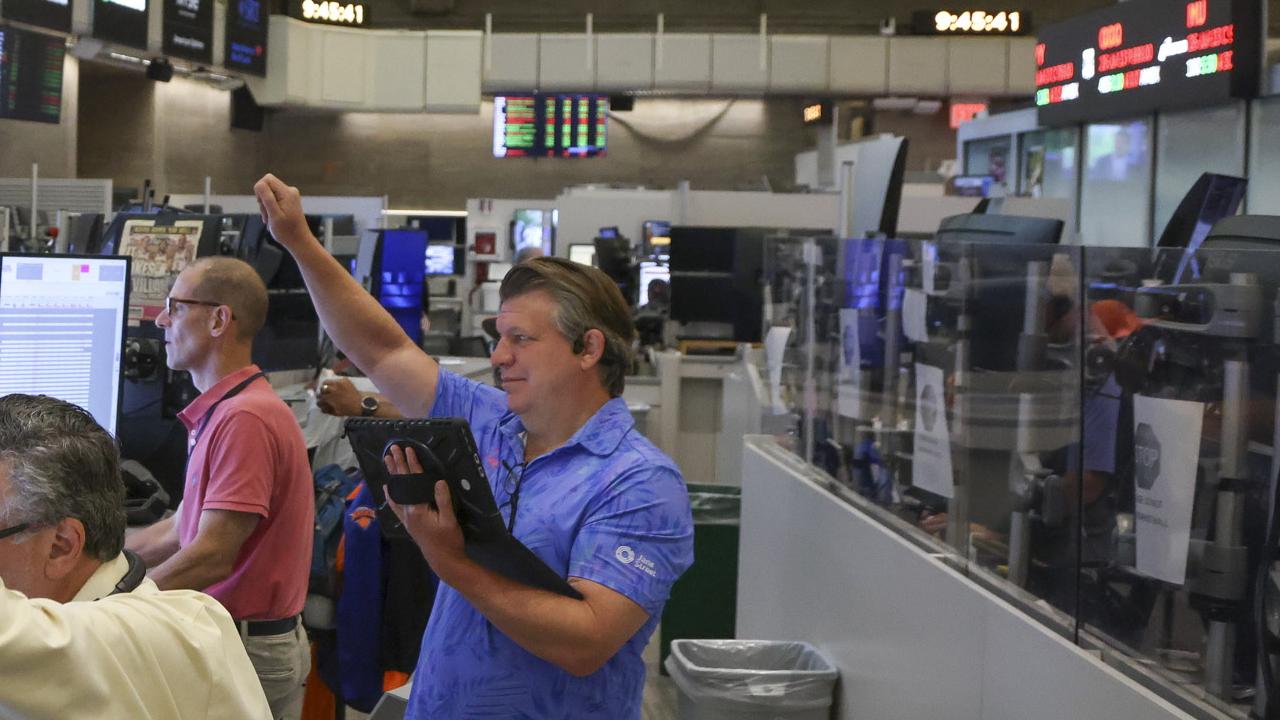
Wall Street’s three major indices have finished lower while investors looked for moves toward Middle East de-escalation and waited for earnings reports due from major technology companies later in the week.

What is the release date for Stuart Fails to Save the Universe on HBO Max?
![Sick Luke - MONEY MACHINE (feat. Lazza & Tony Effe) [Official Visual]](https://wordupnews.com/wp-content/uploads/2026/02/1770843044_maxresdefault-80x80.jpg)
Sick Luke – MONEY MACHINE (feat. Lazza & Tony Effe) [Official Visual]

Jacket potatoes will be fluffier if you use 1 simple ingredient before baking


-
 NewsBeat4 days ago
London Mayor Sadiq Khan handed a peerage by Keir Starmer alongside 15 other Labour figures… just days before the PM leaves No10
-

 Fashion3 days ago
Weekend Open Thread – Corporette.com
-

 Politics3 days ago
The House | The City of London can help the new chancellor deliver growth in every postcode
-

 Politics6 days ago
Young campaigners urge incoming PM to act on outdoor junk food ads
-

 Crypto World5 days ago
CFTC blocks Kalshi from unwinding Michigan trades after court order
-
 Crypto World4 days ago
Two July Windows Left: The CLARITY Act’s Senate Fight and What Failure Means
-

 Crypto World3 days ago
Ripple Payments Joins MiCA With 14 Firms, Does It Mean Anything For XRP?
-

 Business5 days ago
Nvidia Stock Slips After Big Tuesday Rally as Huang Confirms Vera Rubin Chip Is Now in Production Today
-

 Politics1 day ago
Democrats look to World Cup watch parties to register thousands of voters
-
 Entertainment5 days ago
Disney’s Most Ambitious Failed Star Wars Attraction Is Coming to SDCC
-

 Crypto World3 days ago
Ripple wins EU-wide access as ESMA adds it to MiCA register
-

 Business5 days ago
Palantir Shares Rise After Expanded Nvidia Partnership and Fresh Analyst Upgrades Ahead of Earnings Day
-

 Crypto World4 days ago
Injective Submits SEC Transfer-Agent Registration to Onchain Ownership Records
-

 NewsBeat4 days ago
Registration is now open for March for Men with Kev 2026
-

 Tech7 days ago
Get Your ESP32 Sunny Side Up With This Solar Dev Board
-

 News Videos6 days ago
XRP BOMBSHELL… XRP OMBOARDED FOR TRANSACTIONS!!!
-

 Tech6 days ago
Dark Secrets Emerge When Jailbreaking LLMs
-

 NewsBeat14 hours ago
Unregistered fitter used Gas Safe logo on business flyers
-
 Sports5 days ago
New Cornerback Enters Vikings Trade Rumor Mill
-

 News Videos4 days ago
Money | Class 12 Economics | CBSE Board Exam 2026-27
You must be logged in to post a comment Login