

Crypto World
OCC Head Says he only Feels ‘Political Pressure’ from Democrats over Crypto Trust Charter

Jonathan Gould, the Comptroller of the Currency (OCC) nominated by Donald Trump, implied that the US president had not ordered him to approve or give special consideration to a national trust charter application tied to his family’s financial interests.
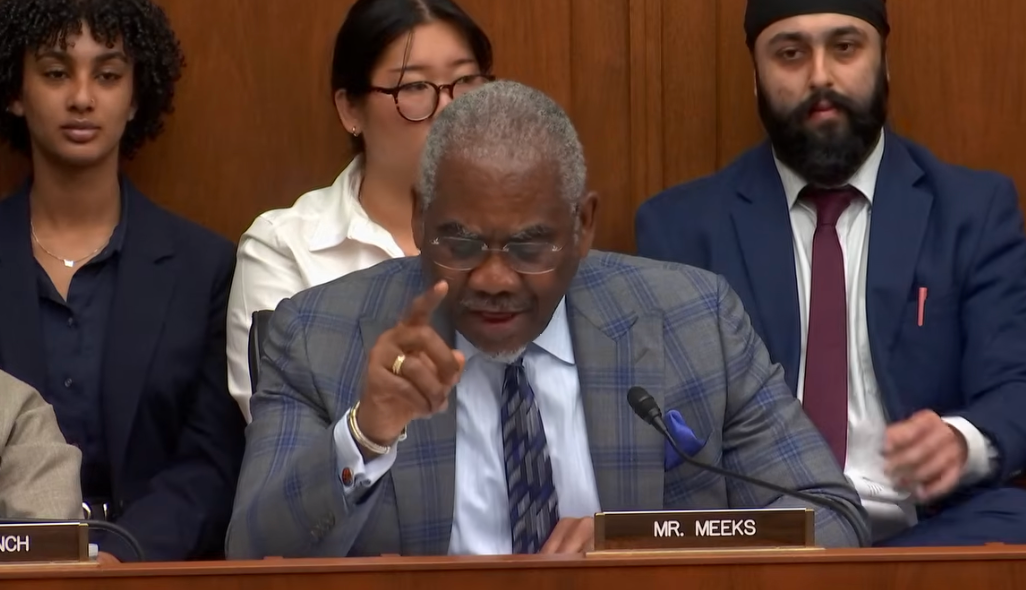
In a Thursday hearing of the House Financial Service Committee on “oversight of prudential regulators,” New York Representative Gregory Meeks questioned Gould on the Trump family crypto company World Liberty Financial’s connections to foreign governments and the Binance exchange. The company, whose co-founders include Trump and his sons, applied for an OCC charter in January, prompting backlash from many Democratic lawmakers alleging conflicts of interest.
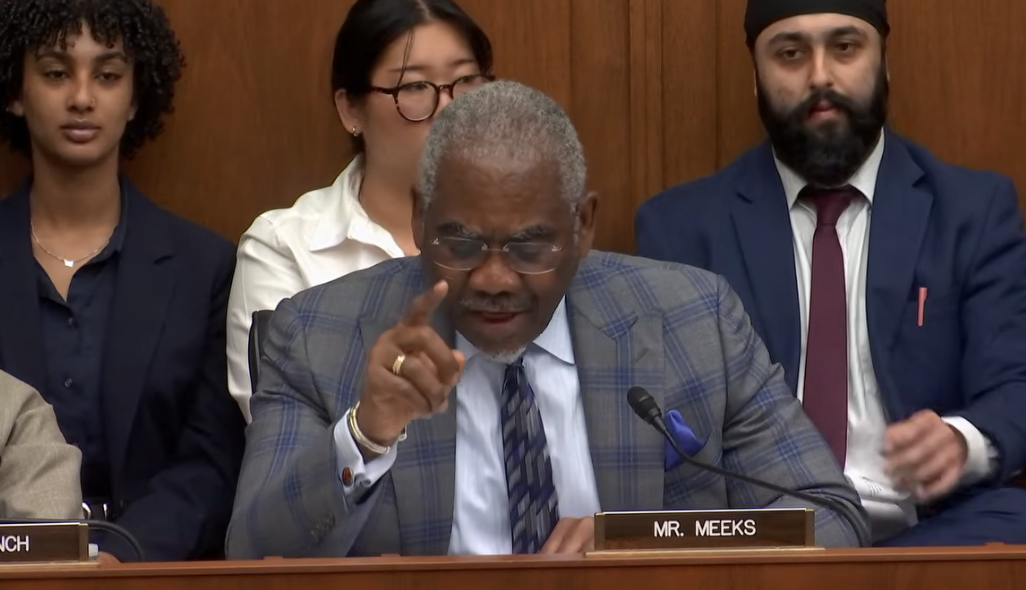
Representative Gregory Meeks at a Thursday hearing.
Source: House Financial Services Committee
Meeks said that the company “actively lines the pockets of the president’s family,” pressing the comptroller to hold World Liberty to the same standards as other companies in consideration of its application for a national bank trust charter, “to prove if [he’s] still working on behalf of the American people, or [ceded his role] to serve as a fixer for the Trump family.”
Meeks and Gould talked over each other at the hearing, with the New York lawmaker accusing the OCC head of being “Trump’s fixer,” signaling his belief that World Liberty’s application would be approved.
“Your attempts to continue to pressure me are the only political pressure I’ve felt from anyone other than your Senate colleagues,” said Gould. “That is very unfortunate and unprecedented.”
Gould’s remarks came after the OCC had already approved or conditionally agreed to several national trust charter applications from crypto companies, including Coinbase, Ripple, BitGo, Circle, Fidelity Digital Assets and Paxos. The comptroller took office in July 2025 having been confirmed by the Republican majority Senate along party lines.
Related: US senator calls for anti-corruption provisions in crypto bills
The OCC head said in January in the days after World Liberty’s application was submitted that the agency would be “apolitical and nonpartisan” in its consideration. However, Massachusetts Senator Elizabeth Warren, who also asked Gould to pause reviewing World Liberty’s application, said that the approvals were for “seemingly ineligible companies,” violating federal banking laws.

Four of World Liberty’s co-founders, including two of Donald Trump’s sons. Source: World Liberty Financial
Approval for a national trust bank charter allows crypto companies to provide certain services without being subject to the same regulatory requirements as traditional banks. In addition to World Liberty, crypto exchange Kraken’s parent company, Payward, filed an application with the OCC in May.
CLARITY Act consolidation expected in Senate
A comprehensive digital asset market structure bill, called the CLARITY Act, is expected to head for a vote in the full Senate soon after advancement in two crucial committees this year. On Wednesday, Treasury Secretary Scott Bessent said that the Trump administration was aiming for passage sometime this summer, with some senators expecting a vote before August.
Magazine: Bitcoin miners are pivoting to AI, so why is the hashrate near ATHs?



Western Union has made its USDPT stablecoin available on Bybit's fiat channels in Latin America, the two companies announced Thursday. Bybit, which describes itself as the world's second-largest crypto exchange by trading volume with over 80 million users, is the first major crypto exchange to… Read the full story at The Defiant


CME Group Chief Executive Terry Duffy has warned that the recent approval of cryptocurrency perpetual futures in the U.S. has created significant risks for investors and the financial system, calling the products “a disaster waiting to happen.”
Summary
- CME CEO Terry Duffy called U.S. crypto perpetual futures a “disaster waiting to happen.”
- Duffy warned that high leverage and automatic liquidations could expose retail traders to heavy losses.
- The criticism comes as Kalshi, Coinbase, and Kraken expand into the newly approved U.S. crypto perps market.
According to remarks delivered at Piper Sandler’s Global Exchange & Fintech conference on June 4, Duffy criticized the Commodity Futures Trading Commission’s decision to permit regulated crypto perpetual futures, arguing that the highly leveraged instruments introduce dangers that many market participants may underestimate.
Speaking shortly after several firms received regulatory clearance to enter the market, Duffy said speculation was increasingly replacing traditional market functions and questioned whether the new products serve the long-term interests of investors.
Perpetual futures, commonly known as perps, differ from standard futures contracts because they have no expiration date. The products allow traders to maintain positions indefinitely and often provide leverage of up to 50 times the deposited capital.
Duffy said the combination of high leverage and automatic liquidation mechanisms could expose retail traders to substantial losses, particularly if they do not fully understand funding rate costs and other risks associated with holding positions over extended periods.
Why is CME concerned about crypto perpetual futures?
Concerns from CME come as the U.S. crypto derivatives market undergoes one of its biggest regulatory changes in years.
On May 29, the CFTC approved the first regulated crypto perpetual futures products for U.S. participants, opening a market that had previously been dominated by offshore exchanges.
Days later, prediction market operator Kalshi launched Bitcoin perpetual futures, followed shortly by Ethereum perpetual futures on June 4, 2026. A broader suite of 11 additional cryptocurrency contracts, including Solana and Dogecoin, has been submitted for regulatory review but remains pending case-by-case approval before they can go live for trading
At roughly the same time, Coinbase Financial Markets received regulatory guidance allowing eligible U.S. institutional clients to access perpetual futures and options listed on Deribit, the derivatives exchange Coinbase acquired in 2025.
Separately, Kraken announced plans to launch regulated Bitcoin perpetual futures through Bitnomial Exchange, a regulated platform acquired by Kraken parent company Payward earlier this year.
The rapid expansion has prompted investors to reassess the competitive landscape for exchange operators. Shares of CME Group, Cboe Global Markets, and Intercontinental Exchange have come under pressure this week as some investors worry that regulated crypto perps could draw trading activity away from traditional futures markets.
Despite those concerns, Duffy argued that institutional demand for the products remains limited. He said between 85% and 90% of CME’s trading activity comes from institutional participants and noted that analysts covering the company do not view perpetual futures as a meaningful replacement for futures products typically used by professional investors.
What concerns does Duffy have about the approval process?
Beyond the products themselves, Duffy questioned how regulators handled the approval process.
During his conference appearance, the CME executive said the CFTC moved too quickly when reviewing what he described as a novel and complex financial instrument.
According to Duffy, regulators bypassed the type of comprehensive review process that would normally accompany the introduction of a new derivatives product carrying substantial leverage.
His comments arrive as firms across the crypto industry race to establish a foothold in the newly opened U.S. perpetual futures market.
While exchanges such as Kalshi, Coinbase, and Kraken are moving rapidly to expand offerings, Duffy said the risks associated with leverage-heavy products warrant greater scrutiny before they become widely adopted by retail traders.


The cryptocurrency-funded peptide market has surpassed a $100 million annual run rate after first-quarter sales jumped 159% quarter-over-quarter to $32 million, according to a new report from Chainalysis.
Summary
- Chainalysis says the crypto-funded peptide market has exceeded a $100 million annual run rate.
- Q1 2026 peptide sales jumped 159% quarter-over-quarter to $32 million.
- Average spending on independent purity testing fell 88% per buyer, raising safety concerns as demand for peptides continues to grow.
According to Chainalysis, demand for off-label peptides has expanded rapidly beyond niche biohacking communities, creating a growing gray-market industry that increasingly relies on cryptocurrency payments.
The blockchain analytics firm said peptide purchases reached $32 million during the first quarter of 2026, up from $12 million in the previous quarter.
Peptides, which are short chains of amino acids used in health, fitness, and wellness products, have gained attention following the success of GLP-1 drugs such as Ozempic and Wegovy. Chainalysis said growing consumer interest in weight loss, performance enhancement, and recovery products has pushed more buyers toward alternative peptide suppliers operating outside traditional pharmaceutical channels.
Many of those suppliers are based in China, where access to conventional banking services can be limited for businesses selling prescription-grade compounds and unregulated substances. As a result, Chainalysis said cryptocurrency has become a key payment rail connecting manufacturers with international buyers.
Stablecoins have become the preferred payment method
Examining on-chain activity linked to major peptide vendors, Chainalysis found that larger suppliers increasingly favor stablecoins over more volatile cryptocurrencies.
The firm said vendors receiving average deposits of at least $1,000 showed a payment mix dominated by stablecoins, suggesting an effort to reduce exposure to crypto price swings while handling larger supply-chain transactions.
What began as a small market catering to specialized buyers has evolved into a more organized ecosystem, according to Chainalysis.
The report noted that leading vendors are adopting increasingly sophisticated on-chain financial practices while continuing to process significant volumes through Bitcoin and stablecoins.
Chainalysis compared the peptide trade to other gray-market industries that have historically turned to cryptocurrency after encountering restrictions from banks and payment processors. The firm said suppliers can offer raw and unbranded products directly to consumers at prices well below those available through regulated channels.
The findings also fit into a wider trend previously identified by Chainalysis. Earlier this year, the company reported that cryptocurrency flows to suspected trafficking services rose 85% during 2025, with stablecoin-heavy networks operating through Telegram and other online platforms.
Chainalysis said blockchain transparency nevertheless provides investigators with permanent transaction records that can help track financial activity and identify key intermediaries.
Quality testing spending has fallen despite rising demand
Alongside rising sales, Chainalysis identified a decline in spending on independent product testing among peptide buyers.
The firm said many customers previously sent payments both to peptide suppliers and to Janoshik, a Czech-based laboratory that tests chemical purity. As the number of buyers surged, however, testing expenditures failed to keep pace with sales growth.
According to Chainalysis estimates, average testing spending per buyer fell 88% to roughly $8, even though Janoshik is conducting more tests than before. The decline occurred because new demand entered the market faster than testing activity expanded.
Safety concerns have also emerged around some suppliers participating in the industry. Chainalysis reported that Shanghai Sigma Audley, a company it linked to organizations previously involved in selling fentanyl precursors, generated at least $1 million in Bitcoin and $3.59 million in stablecoins before expanding into peptide sales.
Given the combination of unregulated products and cryptocurrency-based transactions, Chainalysis warned that many new customers entering the sector may have limited experience with either market, increasing potential risks as the industry continues to grow.
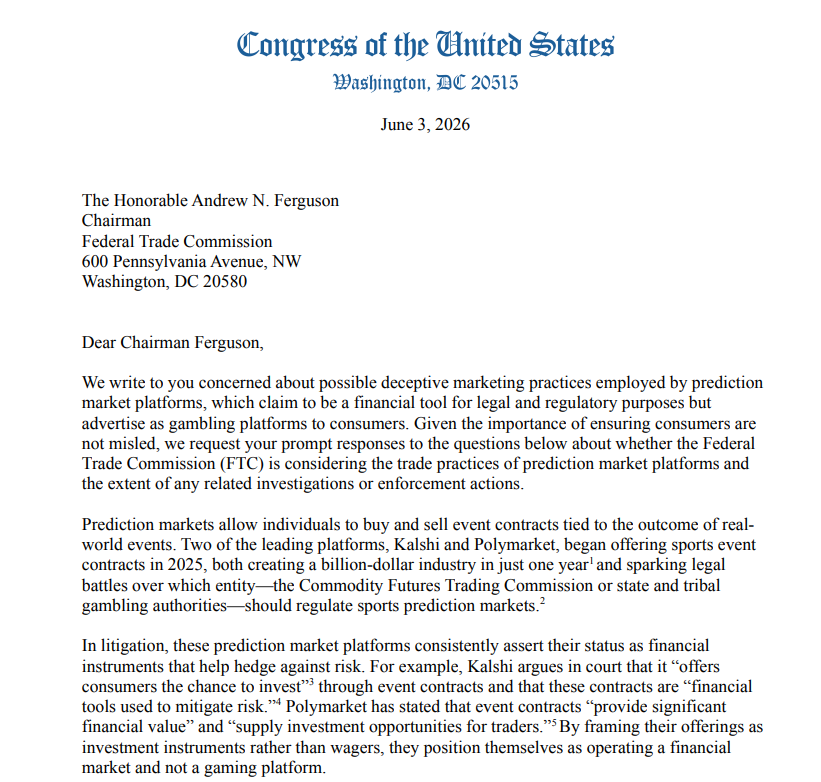
Nine Democratic lawmakers in the US House of Representatives have called on the Federal Trade Commission to launch a probe into how prediction markets are advertising to customers compared to how they present themselves to regulators.
In a statement on Wednesday, US Representatives Kevin Mullin and Gabe Vasquez said the FTC should investigate whether online prediction market platforms are misleading customers by advertising as gambling platforms while telling regulators they are financial tools offering investment products.
Prediction markets allow users to trade contracts on the outcome of future events. They have also been facing scrutiny over insider trading, with Congress launching a probe into Polymarket and Kalshi in May and questioning the companies’ responses to insider-trading incidents on their platforms.
The Democratic lawmakers allege that prediction market platforms use language associated with sports gambling, including legal betting and betting on sports without a sportsbook, while attempting to evade state gambling regulations.
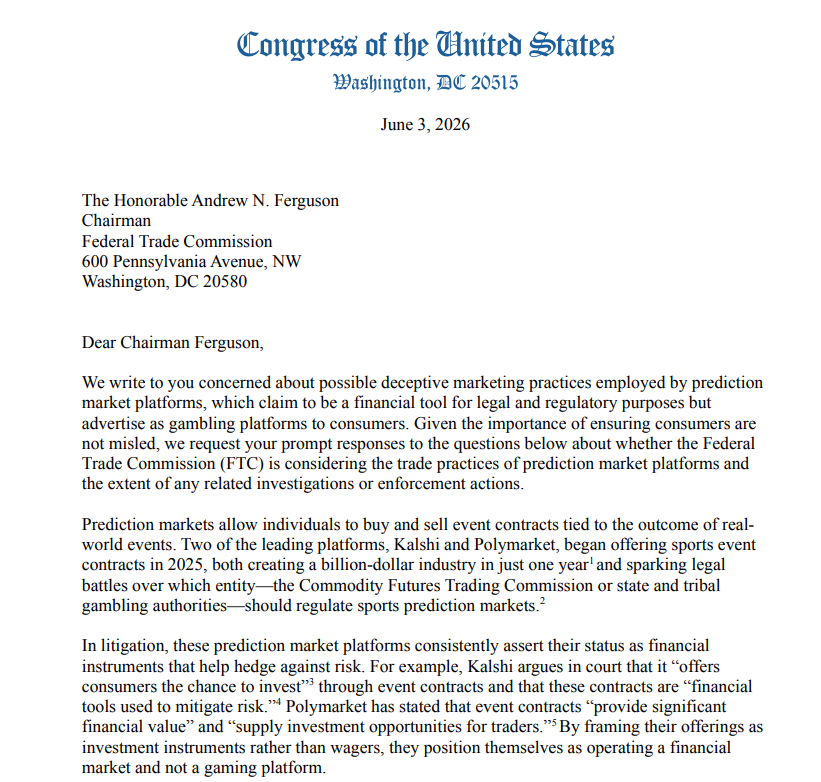
A group of nine Democratic lawmakers is calling on the FTC to launch a probe into prediction markets. Source: Kevin Mullin
“These prediction market companies are presenting themselves differently to regulators than they are to the public, and that kind of contradictory messaging can mislead consumers about what rules and protections actually apply,” Mullin said.
“We are urging the FTC to investigate these practices and ensure consumers are protected from this potentially deceptive activity,” he added.
In their letter, the lawmakers are also asking the FTC for detailed information by June 29 on whether it has plans to take investigative or enforcement action against prediction market platforms for possible deceptive practices.
Related: Kalshi bans 3 US politicians for betting on their own election races
At the same time, the lawmakers have asked whether the FTC has received complaints about prediction markets and if the FTC considers public perception and legal filings when determining if a company has engaged in possible deceptive practices.
US Representatives Jared Huffman, Raul Ruiz, Salud Carbajal, Mike Levin, Dina Titus, Paul Tonko, and Valerie Foushee have also signed the letter.
Prediction markets have emerged as a significant real-world use case for blockchain, with some platforms relying on crypto rails and stablecoins for settlement and payments.
In March, transactions hit record highs amid growing interest in political and geopolitical event contracts, improved accessibility and positive regulatory developments for the industry.
Magazine: Big Questions: Do we really only need 2–5 cryptocurrencies?

Key Takeaways
- RBRK stock declines even as company delivers 39% revenue increase and improved cash generation.
- Shares fall in after-hours trading despite AI-focused cybersecurity platform expansion.
- Rubrik posts impressive ARR gains, but stock pressure continues following quarterly report.
- RBRK weakens as investors digest AI expansion, profitability metrics, and forward outlook.
- Company advances AI security offerings while facing post-earnings stock decline.
Shares of Rubrik (RBRK) experienced selling pressure following the company’s announcement of impressive first-quarter performance and increased emphasis on artificial intelligence-powered cybersecurity solutions. The stock closed regular trading at $77.00, declining 3.10%, then slipped further to $75.61 in extended hours. This downturn occurred even as the company demonstrated accelerating revenue, enhanced cash generation, and broader enterprise market penetration.
First Quarter Delivers Impressive Financial Performance
Rubrik unveiled its fiscal 2027 first-quarter financial results covering the three months concluded April 30, 2026. The data security specialist generated total revenues of $387.1 million, representing a 39% surge from the $278.5 million recorded in the comparable period last year. Subscription-based revenues climbed 41% to reach $374.2 million.
The organization disclosed that subscription-based annual recurring revenue hit $1.57 billion at the end of the reporting period. This metric demonstrated 32% annual expansion and underscored sustained market appetite for its security offerings. Revenues excluding material rights surged 43% compared to the year-ago quarter.
Rubrik simultaneously enhanced its profitability indicators throughout the period. GAAP-based gross margin expanded to 80.5%, while the non-GAAP gross margin improved to 82.9%. Furthermore, free cash flow generation climbed to $73.6 million, compared with $33.3 million in the prior-year period.
Company Advances AI-Driven Security Strategy
Rubrik has strategically repositioned itself as both a security and AI operations provider as businesses confront escalating cyber threats. The organization concentrates on data protection, identity restoration, cloud infrastructure resilience, and incident response capabilities. Consequently, the quarterly performance reflects growing enterprise demand for comprehensive cyber resilience solutions.
Throughout the quarter, Rubrik broadened multiple AI-integrated and cloud security capabilities. The company announced availability of Anthropic’s Mythos Research Preview via Project Glasswing. It simultaneously rolled out data protection functionality for Google Workspace, encompassing Gmail and Google Drive recovery capabilities.
Rubrik additionally introduced Rubrik Agent Cloud designed for Google Cloud’s Gemini Enterprise Agent Platform. This solution enables organizations to identify AI agents, implement protective parameters, and undo detrimental agent activities. The company also revealed SAGE, its artificial intelligence governance framework providing real-time agentic oversight.
Forward Guidance Signals Continued Expansion
Rubrik projected second-quarter fiscal 2027 revenues ranging from $395 million to $397 million. The company anticipates non-GAAP earnings per share between $0.03 and $0.05. It also forecasts subscription ARR contribution margin in the 11% to 12% range.
For the complete fiscal year, Rubrik anticipates revenues between $1.638 billion and $1.648 billion. The organization also projected subscription annual recurring revenue between $1.854 billion and $1.862 billion. Free cash flow projections range from $293 million to $303 million.
The company concluded the quarter holding $1.75 billion in cash, cash equivalents, and short-term investment securities. It also disclosed 2,946 customers generating subscription ARR exceeding $100,000. Nevertheless, the stock continued declining as market participants digested the comprehensive earnings announcement.



Arthur Hayes, co-founder of BitMEX and one of Hyperliquid's most vocal public supporters, has sold his entire positions in HYPE and NEAR Protocol. Hayes announced the exit on X on June 4, citing three macro headwinds he said altered his near-term risk calculus. "I just dumped my entire $HYPE and… Read the full story at The Defiant
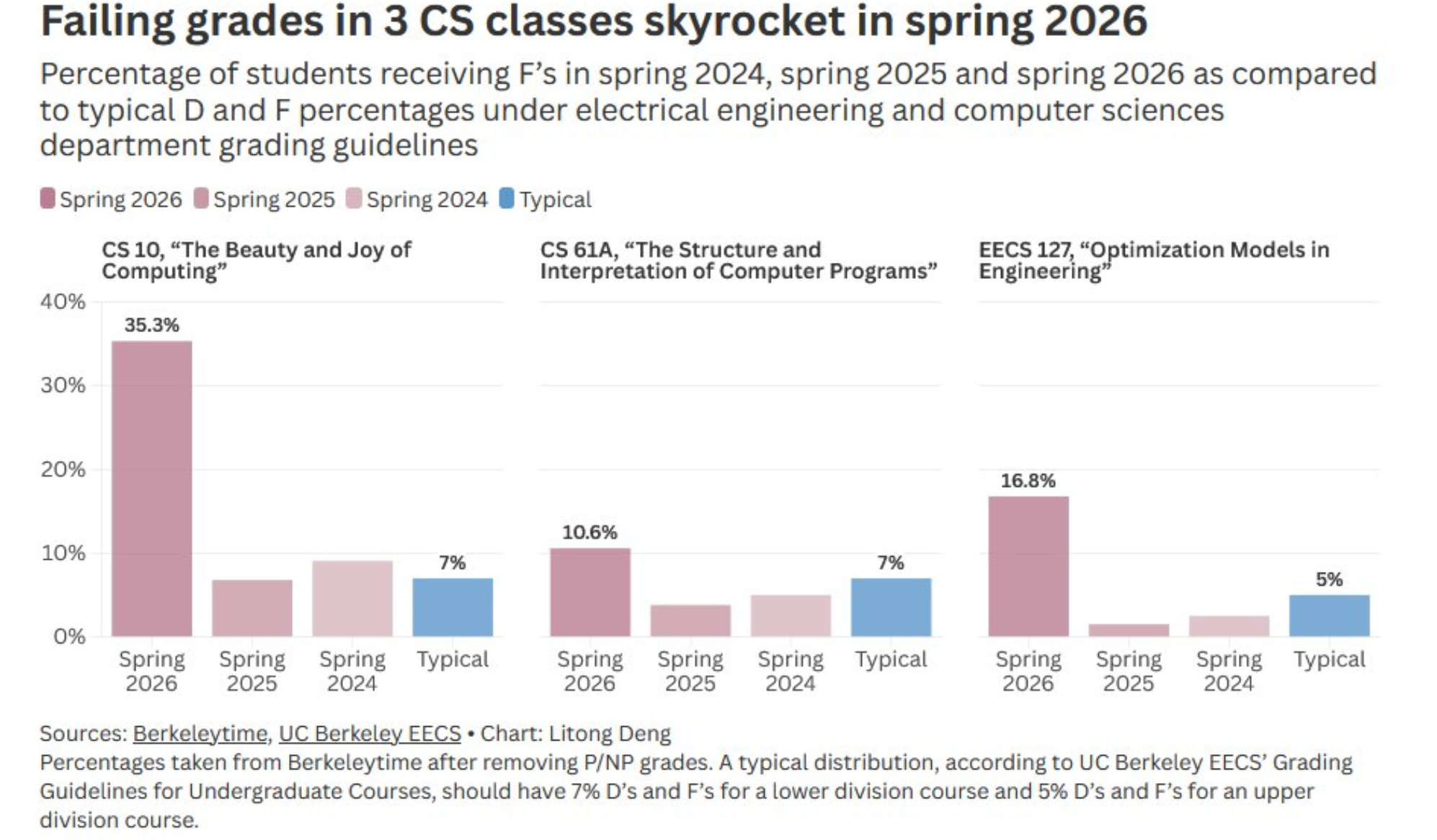
Canada launched a national artificial intelligence (AI) strategy on June 4, promising 250,000 jobs, while UC Berkeley reported record failing grades in computer science classes that professors trace to student overreliance on the same technology.
Prime Minister Mark Carney unveiled the AI for All strategy in Toronto with AI Minister Evan Solomon. Days earlier, Berkeley faculty disclosed failure rates suggesting AI is reshaping how students learn.
Canada Bets Big on Its AI Strategy
The strategy targets up to $200 billion in added growth and 250,000 new jobs over five years, according to the official release. It aims to lift business AI adoption from just over 12% to 60% by 2034.
That gap is the point. Canada ranks among the slowest G7 nations to adopt AI at scale, despite holding a fast-growing digital sector.
The plan succeeds the 2017 Pan-Canadian AI Strategy, the world’s first national AI plan, which seeded the Vector, Mila, and Amii research institutes.
It also promises free AI literacy for 1 million post-secondary students and trusted AI agents for every learner. That promise now meets a cautionary signal from California.
“AI is here. The question is whether it will improve the lives of all Canadians or benefit only a few… That’s why we need an ambitious new strategy: AI for All,” Carney said in a statement.
Follow us on X to get the latest news as it happens
Berkeley Shows AI’s Classroom Cost
Elsewhere, at UC Berkeley, 35.3% of Computer Science 10 (course code) students failed in spring 2026, up from under 10% in prior years, per Berkeleytime data. The department expects only 7% to fail.
Teaching professor Dan Garcia traced the spike to a sharp rise in AI-enabled cheating. Nearly 30 students were caught using large language models (LLMs) on take-home exams.

“One professor discovered a student’s linear algebra class had an “open AI” policy for homework and exams. That student then couldn’t do basic linear algebra in the next course,” noted Hedgie, a financial markets analyst.
Garcia said his office hours, once full, now often sit empty. Faculty warn the failures signal weaker fundamentals, not only misconduct.
The risk compounds when automating skilled jobs meets graduates who never mastered the basics.
“Companies are firing experienced engineers while the pipeline that produces new ones is being gutted by the same technology,” one user quipped.
A Workforce Squeezed at Both Ends
The timing is stark. AI-cited layoffs hit a record 38,579 in May, 40% of all U.S. cuts and the leading reason for a third straight month, outplacement firm Challenger, Gray and Christmas reported.
AI has been blamed for 87,714 cuts so far in 2026, already past the 54,836 logged in all of 2025. Critics call the label cover for routine cost-cutting.
Some tech workers now seek refuge in other sectors as employers restructure around automation.
Block confirmed layoffs tied to AI, while Wall Street opened stable digital asset roles for displaced talent.
Can Canada be able to build skills faster than AI erodes them? The coming months of AI-driven job restructuring and promised legislation will offer the first test.
The post Canada Launches AI for All Strategy as UC Berkeley Counts the Classroom Cost appeared first on BeInCrypto.
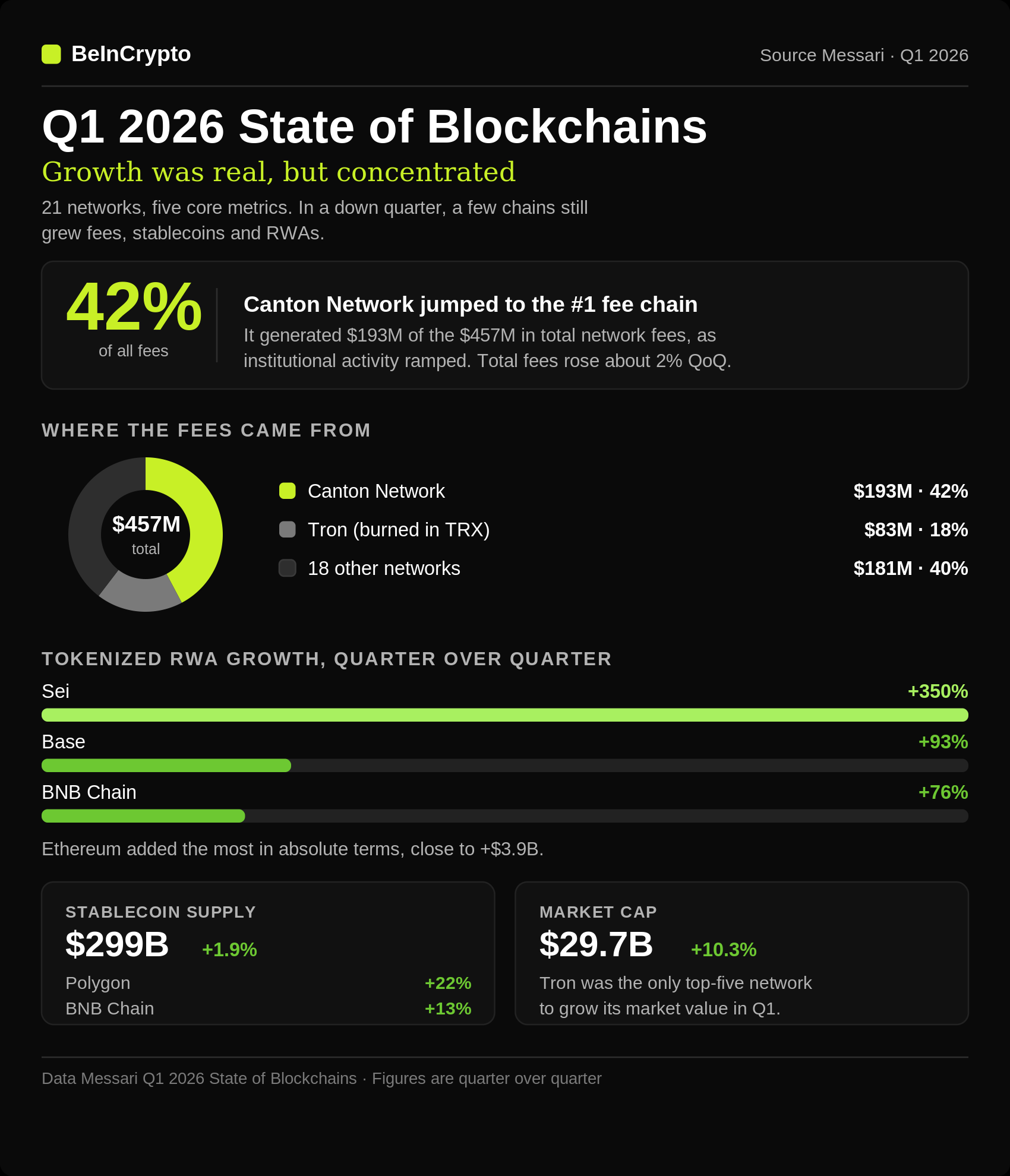
Canton Network captured roughly 42% of all blockchain fees in the first quarter of 2026, climbing to the top of Messari’s fee rankings as institutional activity on the network grew.
The chain generated about $193 million of the $457 million in total fees across 21 blockchains that Messari tracked, according to its Q1 2026 State of Blockchains report.

Why Canton Leapt to the Top of the Fee Table
Canton Network ranked first among the 21 networks for fees in Q1 2026. Its $193 million share represented about 42% of the group total. Aggregate fees rose roughly 2% over the prior quarter.
That gain stood out in a weak market. Most networks saw key metrics fall as prices sold off through the quarter. Canton moved the other way, lifted by growing institutional crypto adoption rather than retail trading.
Despite the news, however, the native token, Canton Coin (CC), traded near $0.15 at the time of writing. It had slipped about 3% over the prior 24 hours, leaving CC ranked around 20th by market value despite its earlier bullish chart setup.

What Drove the Fee Growth
Canton runs as a Layer-1 built for regulated institutions. Digital Asset launched the network in May 2023 alongside more than 30 financial firms.
It uses privacy features and a Global Synchronizer, now governed by the Canton Foundation under the Linux Foundation, that lets separate institutional systems settle transactions together.
Founding participants include Goldman Sachs, BNP Paribas, and Deutsche Börse. JPMorgan’s Kinexys unit moved to issue its JPMD deposit token on Canton in January, and DTCC is working to tokenize US Treasuries it custodies. HSBC completed a tokenized deposit pilot on the network in April.
Follow us on X to get the latest news as it happens
Fees climbed as tokenized real-world assets, repo markets, and banks settling bonds on-chain scaled up.
Messari noted that real-world assets kept rising even as other metrics declined across the sector.
Q1 2026 State of Blockchains is live. 21 networks, five core metrics, one clear theme: even in a down quarter, a few networks grew fees, stablecoins, and RWAs,” the researchers indicated.
Messari framed the quarter around selective strength.
A Concentrated Picture
Growth was narrow rather than broad. A handful of chains carried the gains while many others declined. Tron was the only top-five network to grow market value, rising about 10% to $29.7 billion.
“TronDAO was the only top 5 network to grow market cap (+10.3% QoQ to $29.7B). With ~$83M in Q1 fees all burned in TRX, fee accrual helped insulate it from the broader bear market. Total fees actually rose ~2% QoQ to $457M – driven by Canton Network. Canton Network jumped to the #1 fee chain, capturing 42% of all fees ($193M) as institutional activity ramped. Tokenized RWAs kept climbing while other metrics declined,” indicated Luis Rincon, Head of Research Operations at Messari.
Real-world asset growth clustered too. Sei led with a 350% quarterly jump, ahead of Base at 93% and BNB Chain at 76%. Ethereum added the most in absolute dollar terms, close to $3.9 billion.
Stablecoin supply rose modestly to $299 billion, with Polygon and BNB Chain growing fastest.
The pattern echoes Canton’s earlier token price pullback and points to value consolidating on networks tuned for specific uses.
Whether Canton holds the top fee spot may depend on how quickly institutions keep moving assets on-chain.
The post Canton Network Tops Fee Generator Rankings as Institutions Drive Q1 2026 Activity appeared first on BeInCrypto.


Shielded Labs proposed a new Zcash network upgrade that would let anyone verify the privacy coin's supply has not been secretly inflated, after disclosing that a recently patched bug in the network's main shielded pool could have allowed undetectable counterfeiting of ZEC. Shielded Labs, a… Read the full story at The Defiant
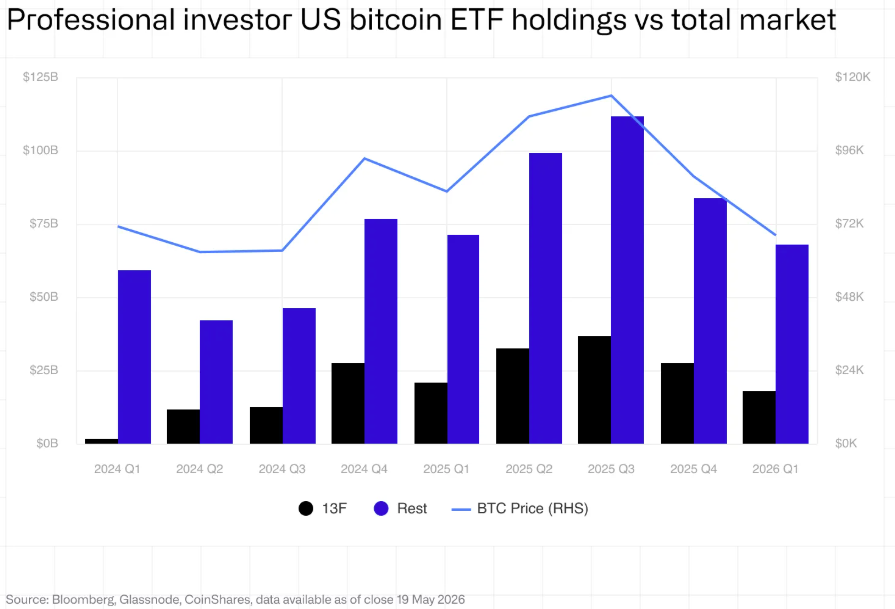
Professional ownership of US spot Bitcoin exchange-traded funds (ETFs) declined sharply in the first quarter as Bitcoin’s bear market deepened, suggesting that trading-oriented institutions were a significant source of selling pressure during the downturn.
A new report by CoinShares analyzing quarterly 13F filings — regulatory disclosures that reveal the equity holdings of investment managers with at least $100 million in assets — found that professional investors reduced their Bitcoin ETF exposure to 261,000 BTC from 313,000 BTC in the first quarter, a 17% decline.
The combined value of those holdings fell 35% to $17.8 billion, while the share of total US Bitcoin ETF assets held by 13F filers declined to 20.8% from 24.7%.
“This dataset is consistent with what bitcoin markets have historically looked like in drawdowns,” CoinShares digital asset analyst Matt Kimmell wrote in the report. “Leveraged and tactical strategies unwind.”
The selling was heavily concentrated among hedge funds and brokerages, which accounted for roughly 96% of the reduction in exposure. Hedge funds cut their holdings by 31,400 BTC, or 39%, while brokerages reduced exposure by 18,800 BTC, a 53% decline.
In contrast, investment advisors — the largest professional cohort with 150,300 BTC in holdings — reduced exposure by just 5.9%. Banks more than doubled their Bitcoin ETF holdings, adding 7,800 BTC during the quarter.
The decline in professional ownership coincided with a sharp correction in Bitcoin’s price. The asset’s value fell 22% during Q1, extending declines from late 2025 and briefly dropping below $60,000. At its lowest point, Bitcoin was down roughly 50% from its October 2025 all-time high above $126,000.
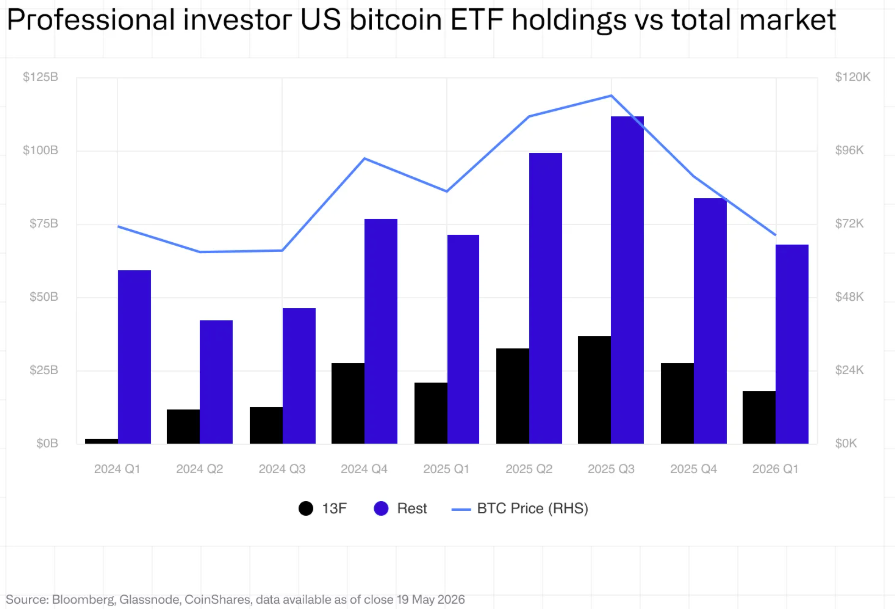
The share of Bitcoin ETF holdings by professional managers declined in the first quarter. Source: CoinShares
Related: Strategy debt, AI boom, Bitcoin collapse have analysts predicting doom: Are they right?
Despite BTC market volatility, regulatory backdrop improves
Despite the market volatility, CoinShares said the first quarter delivered several regulatory developments that could support the digital asset industry’s long-term growth.
Among them were efforts by US regulators to provide greater clarity around the division of oversight between the Securities and Exchange Commission (SEC) and the Commodity Futures Trading Commission (CFTC), as well as proposals affecting how digital assets may be treated in retirement accounts.
Regulatory progress has continued beyond Q1, with the SEC recently making digital assets a strategic priority through 2030. In a draft document released this week, the agency vowed to “provide a firm regulatory foundation for digital assets and distributed ledger technologies through a rational, coherent, and principled approach.”
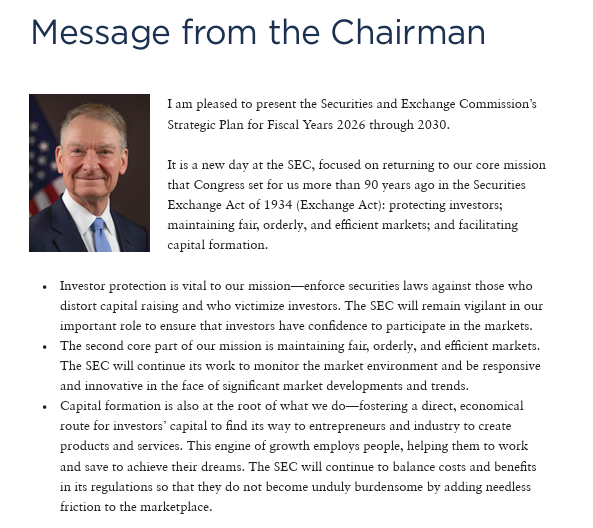
SEC Chair Paul Atkins’ message in the agency’s draft Strategic Plan through 2030. Source: SEC
CoinShares also highlighted the growing acceptance of Bitcoin among traditional financial institutions. Earlier this year, BlackRock acknowledged Bitcoin’s potential role in modern portfolios, arguing that the traditional stock-and-bond diversification model has become less reliable in the post-2020 investment environment.
Nevertheless, market participants remain focused on the fate of the CLARITY Act, a proposed market structure bill that would establish a more comprehensive regulatory framework for digital assets and further define the roles of the SEC and CFTC.
The current version of the bill has drawn scrutiny from the banking industry, though some lawmakers expect it could reach the Senate floor for a vote as early as August.
Related: Crypto Biz: Crypto infrastructure spending rises as ETF appetite cools

WFI drops hammer on age fraud, Five wrestlers banned for four years | Other Sports News

The next OnePlus flagship could drop earlier, and straight into Apple’s iPhone launch slot

Solent Freeport joins forces with Solent Growth Partnership to launch new apprenticeship incentive programme



-

 Tech7 days ago
Waymo dominates autonomous vehicle registrations as Tesla trails behind
-

 News Videos6 days ago
This is BROKEN! INSANE 5x MONEY CAR WASH WEEK! The NEW GTA Online UPDATE Today! (GTA5 New Update)
-
 Tech6 days ago
SpaceX just won a second Golden Dome contract. This one is $4.16 billion.
-

 Business3 days ago
Jade Biosciences, Inc. (JBIO) Discusses Positive Interim Results From JADE101 Phase I Healthy Volunteer Study and Development Plans Transcript
-

 News Videos6 days ago
SHE IS KILLING XRP!!! WATCH URGENT AND ACT FAST
-
 NewsBeat6 days ago
FIRST NIGHT REVIEW: Take That bring the Circus back to life in spectacular sun-soaked style
-

 Business5 days ago
Is the Spurs Phenom Already Better Than Prime Diesel?
-

 Sports2 days ago
French Open 2026 results: Alexander Zverev beats Rafael Jodar and will play Jakub Mensik in semi-finals
-

 Politics6 days ago
The House | Inside Andy Burnham’s Makerfield Campaign: “Nobody Thinks This Is In The Bag”
-
 Crypto World6 days ago
CFTC Has Approved the First Regulated Bitcoin Perpetual Contract in the U.S.
-
 NewsBeat6 days ago
Novak Djokovic v Joao Fonseca LIVE: French Open latest scores and results after Jannik Sinner’s shocking collapse
-
 Entertainment6 days ago
Weak ‘Supergirl’ Box Office Tracking Amid Milly Alcock Backlash
-

 Tech2 days ago
CryZENx Releases Fresh Playable Content Deep Inside Jabu-Jabu for His Ocarina of Time Remake
-
 Crypto World6 days ago
Snowflake (SNOW) Stock Rallies on Strong Q1 Results and AI Product Growth
-

 Entertainment6 days ago
Maddox Jolie-Pitt Legally Requests to Drop Brad’s Surname
-

 Business6 days ago
Demand Conditions Improve In Chemicals Sector In April 2026
-

 Crypto World6 days ago
MicroStrategy Moves $30 Million in BTC to Coinbase Prime: Is the Bitcoin Sell-Off Already Here?
-
 Entertainment5 days ago
One of the Greatest Sitcoms of All Time Shoots Up Apple TV’s Charts 11 Years Later
-

 Tech6 days ago
This Week In Security: Ubiquiti Fixes, And FreeBSD Joins The Club You Don’t Want To Join
-
 Entertainment6 days ago
Bruce Willis’ Generosity Resurfaces Amid His Dementia
You must be logged in to post a comment Login