





Connect with us
DAPA Banner
DAPA Coin
DAPA
COIN PAYMENT ASSET
PRIVACY · BLOCKDAG · HOMOMORPHIC ENCRYPTION · RUST
ElGamal Encrypted MINE DAPA
🚫 GENESIS SOLD OUT
DAPAPAY COMING

Crypto World

OCC Head Says he only Feels ‘Political Pressure’ from Democrats over Crypto Trust Charter

Published

on

OCC Head Says he only Feels ‘Political Pressure’ from Democrats over Crypto Trust Charter

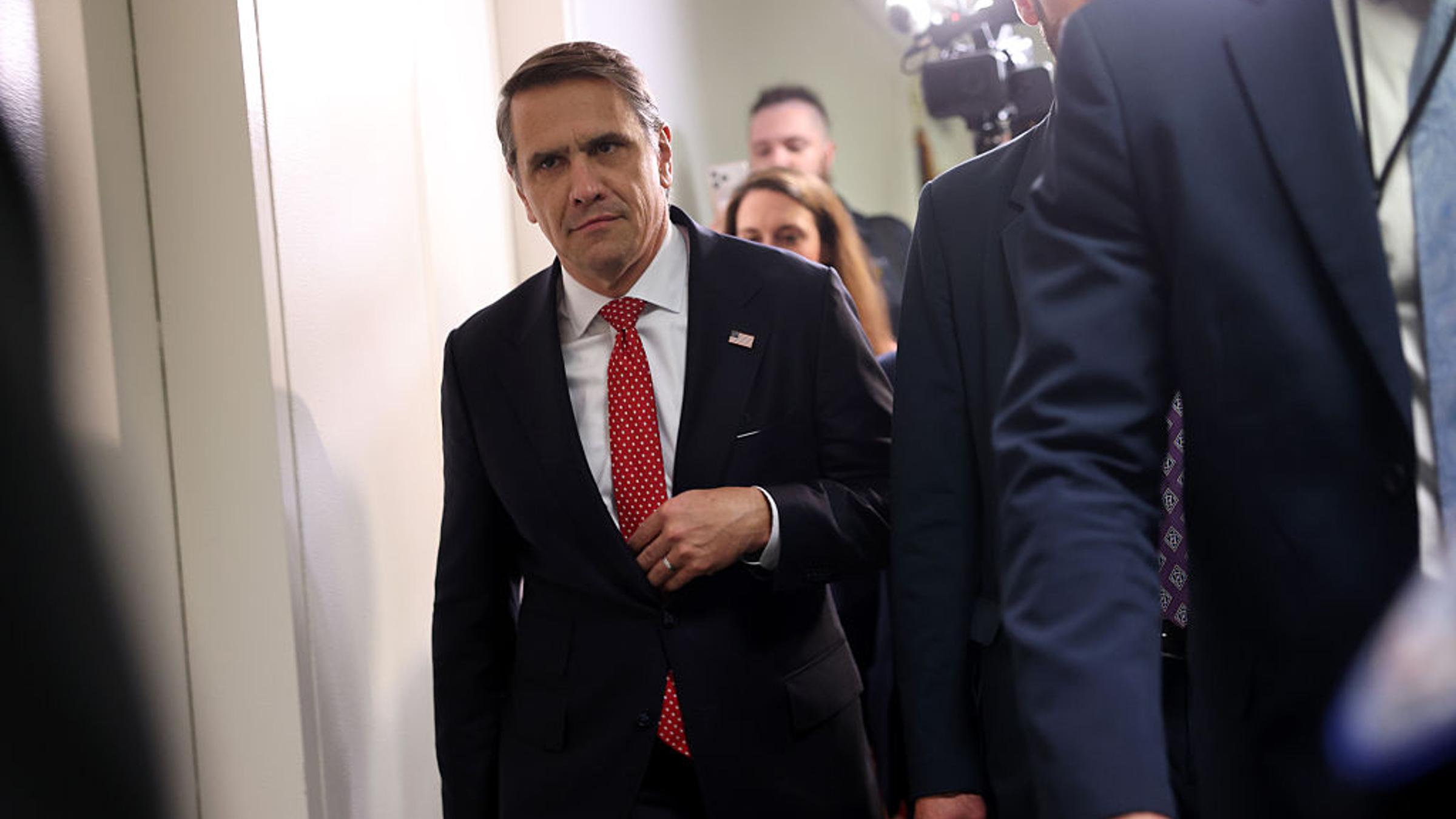
Jonathan Gould, the Comptroller of the Currency (OCC) nominated by Donald Trump, implied that the US president had not ordered him to approve or give special consideration to a national trust charter application tied to his family’s financial interests.

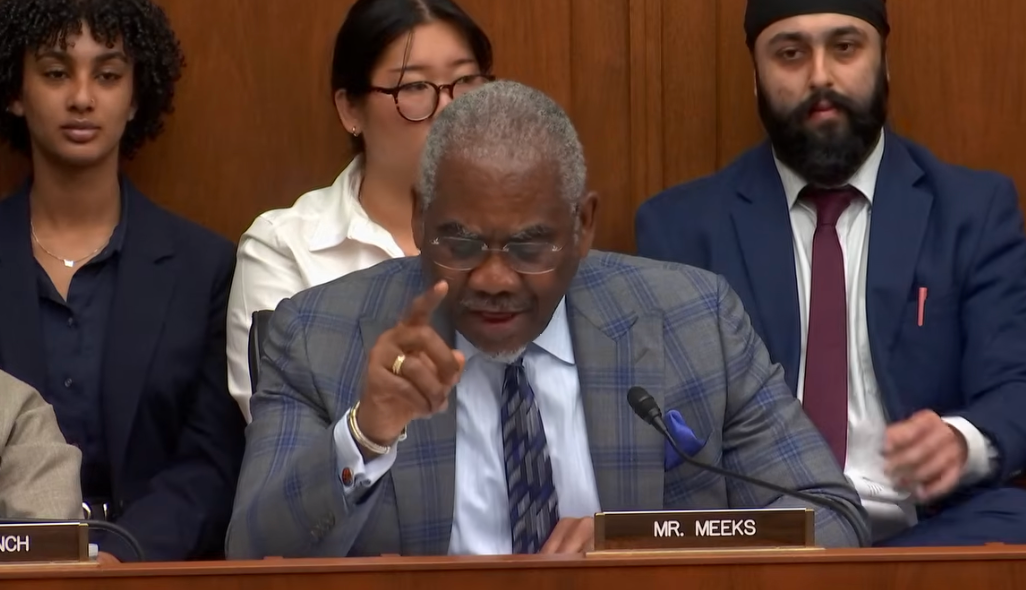
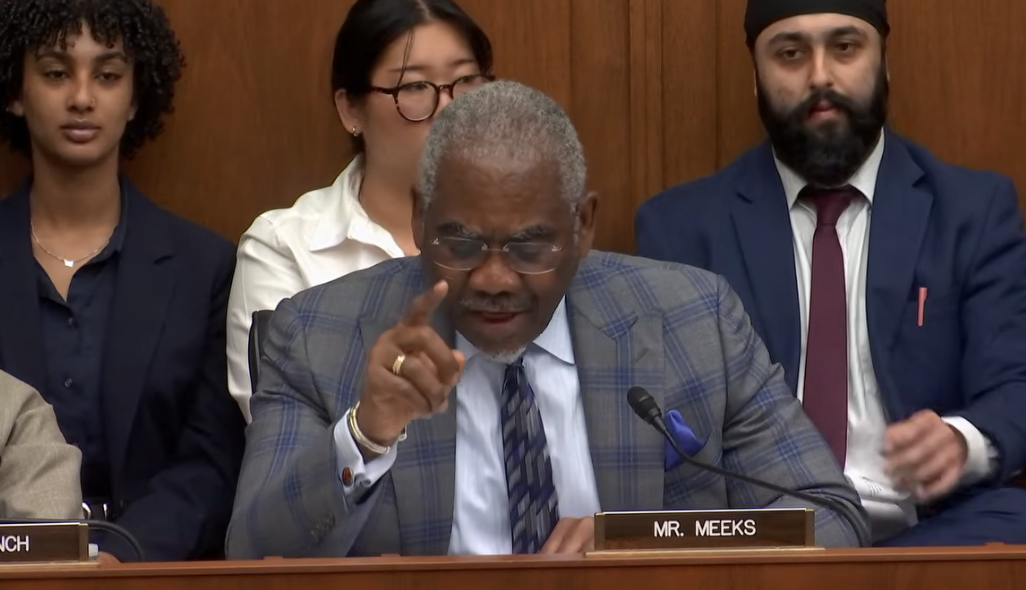
In a Thursday hearing of the House Financial Service Committee on “oversight of prudential regulators,” New York Representative Gregory Meeks questioned Gould on the Trump family crypto company World Liberty Financial’s connections to foreign governments and the Binance exchange. The company, whose co-founders include Trump and his sons, applied for an OCC charter in January, prompting backlash from many Democratic lawmakers alleging conflicts of interest.

Representative Gregory Meeks at a Thursday hearing.
Source: House Financial Services Committee

Meeks said that the company “actively lines the pockets of the president’s family,” pressing the comptroller to hold World Liberty to the same standards as other companies in consideration of its application for a national bank trust charter, “to prove if [he’s] still working on behalf of the American people, or [ceded his role] to serve as a fixer for the Trump family.”

Meeks and Gould talked over each other at the hearing, with the New York lawmaker accusing the OCC head of being “Trump’s fixer,” signaling his belief that World Liberty’s application would be approved.

Advertisement

“Your attempts to continue to pressure me are the only political pressure I’ve felt from anyone other than your Senate colleagues,” said Gould. “That is very unfortunate and unprecedented.”

Gould’s remarks came after the OCC had already approved or conditionally agreed to several national trust charter applications from crypto companies, including Coinbase, Ripple, BitGo, Circle, Fidelity Digital Assets and Paxos. The comptroller took office in July 2025 having been confirmed by the Republican majority Senate along party lines.

Related: US senator calls for anti-corruption provisions in crypto bills

The OCC head said in January in the days after World Liberty’s application was submitted that the agency would be “apolitical and nonpartisan” in its consideration. However, Massachusetts Senator Elizabeth Warren, who also asked Gould to pause reviewing World Liberty’s application, said that the approvals were for “seemingly ineligible companies,” violating federal banking laws. 

Advertisement

Four of World Liberty’s co-founders, including two of Donald Trump’s sons. Source: World Liberty Financial

Approval for a national trust bank charter allows crypto companies to provide certain services without being subject to the same regulatory requirements as traditional banks. In addition to World Liberty, crypto exchange Kraken’s parent company, Payward, filed an application with the OCC in May.

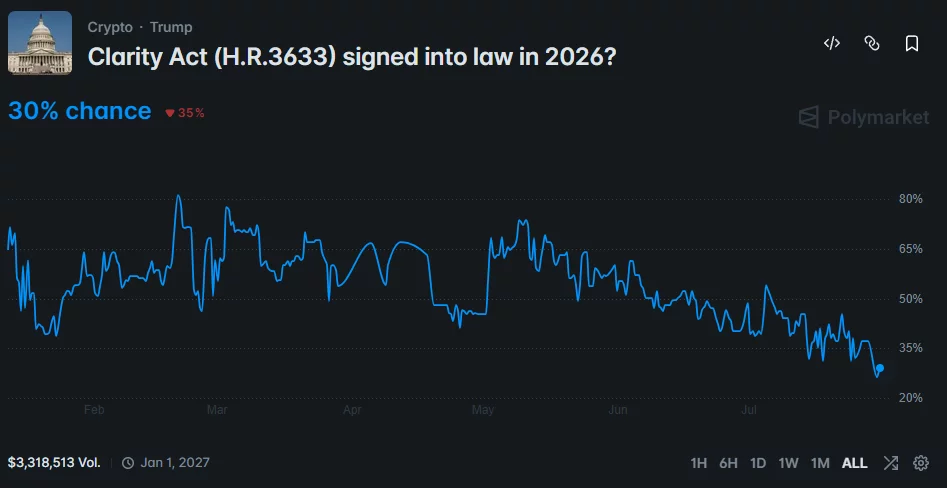
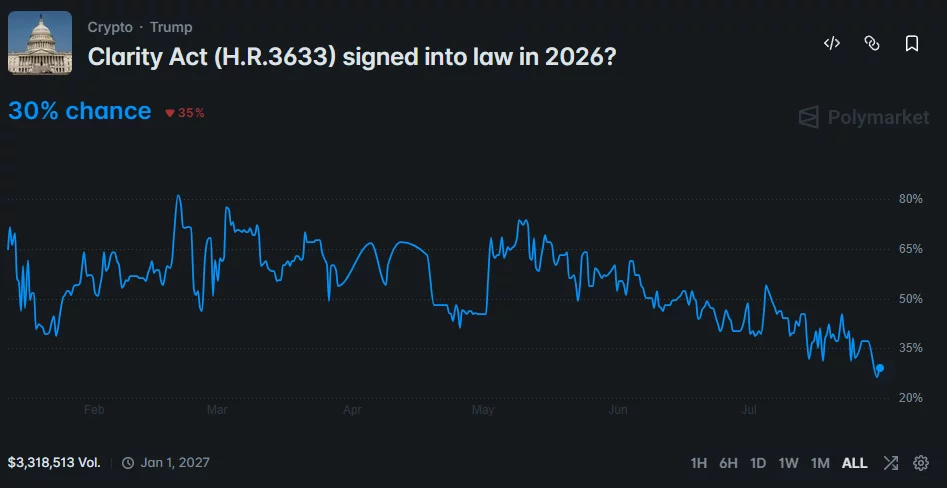
CLARITY Act consolidation expected in Senate

A comprehensive digital asset market structure bill, called the CLARITY Act, is expected to head for a vote in the full Senate soon after advancement in two crucial committees this year. On Wednesday, Treasury Secretary Scott Bessent said that the Trump administration was aiming for passage sometime this summer, with some senators expecting a vote before August.

Magazine: Bitcoin miners are pivoting to AI, so why is the hashrate near ATHs?

Source link

Advertisement
Continue Reading
Click to comment

You must be logged in to post a comment Login

Leave a Reply

Crypto World

Bitcoin ETF Ownership Shifts as Hedge Funds Sell and Banks Buy: CoinShares

Published

on

Bitcoin ETF Ownership Shifts as Hedge Funds Sell and Banks Buy: CoinShares

Professional ownership of US spot Bitcoin exchange-traded funds (ETFs) declined sharply in the first quarter as Bitcoin’s bear market deepened, suggesting that trading-oriented institutions were a significant source of selling pressure during the downturn.

A new report by CoinShares analyzing quarterly 13F filings — regulatory disclosures that reveal the equity holdings of investment managers with at least $100 million in assets — found that professional investors reduced their Bitcoin ETF exposure to 261,000 BTC from 313,000 BTC in the first quarter, a 17% decline.

The combined value of those holdings fell 35% to $17.8 billion, while the share of total US Bitcoin ETF assets held by 13F filers declined to 20.8% from 24.7%.

“This dataset is consistent with what bitcoin markets have historically looked like in drawdowns,” CoinShares digital asset analyst Matt Kimmell wrote in the report. “Leveraged and tactical strategies unwind.”

Advertisement

The selling was heavily concentrated among hedge funds and brokerages, which accounted for roughly 96% of the reduction in exposure. Hedge funds cut their holdings by 31,400 BTC, or 39%, while brokerages reduced exposure by 18,800 BTC, a 53% decline.

In contrast, investment advisors — the largest professional cohort with 150,300 BTC in holdings — reduced exposure by just 5.9%. Banks more than doubled their Bitcoin ETF holdings, adding 7,800 BTC during the quarter.

The decline in professional ownership coincided with a sharp correction in Bitcoin’s price. The asset’s value fell 22% during Q1, extending declines from late 2025 and briefly dropping below $60,000. At its lowest point, Bitcoin was down roughly 50% from its October 2025 all-time high above $126,000.

The share of Bitcoin ETF holdings by professional managers declined in the first quarter. Source: CoinShares

Advertisement

Related: Strategy debt, AI boom, Bitcoin collapse have analysts predicting doom: Are they right?

Despite BTC market volatility, regulatory backdrop improves

Despite the market volatility, CoinShares said the first quarter delivered several regulatory developments that could support the digital asset industry’s long-term growth.

Among them were efforts by US regulators to provide greater clarity around the division of oversight between the Securities and Exchange Commission (SEC) and the Commodity Futures Trading Commission (CFTC), as well as proposals affecting how digital assets may be treated in retirement accounts.

Regulatory progress has continued beyond Q1, with the SEC recently making digital assets a strategic priority through 2030. In a draft document released this week, the agency vowed to “provide a firm regulatory foundation for digital assets and distributed ledger technologies through a rational, coherent, and principled approach.”

Advertisement

SEC Chair Paul Atkins’ message in the agency’s draft Strategic Plan through 2030. Source: SEC

CoinShares also highlighted the growing acceptance of Bitcoin among traditional financial institutions. Earlier this year, BlackRock acknowledged Bitcoin’s potential role in modern portfolios, arguing that the traditional stock-and-bond diversification model has become less reliable in the post-2020 investment environment.

Nevertheless, market participants remain focused on the fate of the CLARITY Act, a proposed market structure bill that would establish a more comprehensive regulatory framework for digital assets and further define the roles of the SEC and CFTC. 

The current version of the bill has drawn scrutiny from the banking industry, though some lawmakers expect it could reach the Senate floor for a vote as early as August.

Advertisement

Related: Crypto Biz: Crypto infrastructure spending rises as ETF appetite cools

Source link

Continue Reading

Crypto World

OCC Chief Faces Democratic Pressure Over Crypto Trust Charter

Published

on

Crypto Breaking News

Regulatory scrutiny of crypto licensing intensified as lawmakers scrutinized the handling of a national bank trust charter application tied to World Liberty Financial, a Trump-family affiliated crypto venture. During a House Financial Services Committee hearing on the oversight of prudential regulators, OCC Comptroller Jonathan Gould—nominated by Donald Trump—faced questions about potential conflicts of interest and the potential influence of political considerations on licensing decisions. The hearing underscored ongoing debates over how closely regulatory actions should align with political and familial ties in the context of the evolving U.S. crypto framework.

Representative Gregory Meeks of New York pressed Gould on World Liberty’s connections to foreign governments and to the Binance exchange, arguing that the company’s co-founders include members of the president’s family. World Liberty Financial had submitted an OCC charter application in January, prompting significant Democratic pushback over perceived conflicts of interest. At issue was whether the OCC would apply the same standards to World Liberty as it does to other applicants seeking a national trust charter, which affects the regulatory treatment of certain crypto-services providers.

Meeks asserted that World Liberty’s actions “actively line the pockets of the president’s family,” urging the OCC to demonstrate that its decision would be in the public interest and not influenced by political considerations. Gould and Meeks spoke past one another at times, with the lawmaker urging that the OCC head be held to prove he was acting on behalf of the American people rather than serving as a political intermediary for the Trump family. Gould responded that political pressure had been the only pressure he perceived from lawmakers outside the Senate.

Even before this hearing, the OCC had already approved or conditionally approved several national trust charter applications from crypto companies, signaling a growing regulatory pathway for the sector. Names cited included Coinbase, Ripple, BitGo, Circle, Fidelity Digital Assets and Paxos. The OCC’s openness to national trust charters has been framed as a way to provide regulated access to stable operations and banking-like services for crypto firms, albeit amid intense regulatory and policy scrutiny. Gould began his tenure in July 2025, having been confirmed by the Republican-dominated Senate along party lines. In January, shortly after World Liberty’s application was submitted, Gould stated the agency would be “apolitical and nonpartisan” in its review process. Massachusetts Senator Elizabeth Warren, who had also urged pausing the review, argued that the approvals appeared to be directed at “seemingly ineligible companies,” potentially contravening federal banking laws.

Advertisement

World Liberty’s case sits within a broader trend of tightly watched efforts to integrate crypto firms into traditional banking-style oversight through national trust charters. In parallel, crypto exchange Kraken’s parent company, Payward, filed a similar application with the OCC in May, highlighting the ongoing push among several market participants to obtain the same regulatory treatment as established banks for certain crypto activities.

Key takeaways

  • OCC Comptroller Jonathan Gould asserted that there was no presidential instruction directing or pressuring him to approve or favor World Liberty Financial’s national trust charter application.
  • The House Financial Services Committee hearing spotlighted perceived conflicts of interest linked to World Liberty’s Trump-family ties, with lawmakers urging equal regulatory scrutiny for the charter application.
  • The OCC has previously approved or conditionally approved a slate of national trust charter applications from major crypto firms, including Coinbase, Ripple, BitGo, Circle, Fidelity Digital Assets, and Paxos; Kraken’s Payward also pursued similar oversight.
  • Regulatory debate centers on whether national trust charters create a lighter or different set of banking requirements for crypto firms, and how those standards align with federal banking laws and AML/KYC expectations.
  • The broader policy environment remains contested, with calls for enhanced anti-corruption provisions and tighter enforcement, as conservative and progressive lawmakers weigh the costs and benefits of expanded crypto bank-charter access.
  • Two key committees advanced the CLARITY Act in the Senate, signaling movement toward a comprehensive digital-asset market-structure framework, with timelines discussed for passage in the coming months; observers note the importance of aligning U.S. policy with global standards.

Regulatory neutrality, charters, and the path forward

The hearing showcased how the OCC’s decisions on chartering crypto firms sit at the intersection of regulatory design, political accountability, and market integrity. The concept of a national trust charter—allowing crypto firms to offer certain services with banking-like protections—continues to be debated for its practical implications, including licensing standards, consumer protection, and systemic risk considerations. Critics warn of potential conflicts of interest when a governing official has personal or familial ties to an applicant, while proponents emphasize the need for clear, consistent regulatory frameworks that enable compliance-oriented firms to operate with adequate oversight.

From a compliance and enforcement perspective, the case underscores several critical issues for crypto firms and financial institutions alike. First, licensing pathways such as national trust charters shape the regulatory runway for crypto-service providers, with implications for AML/KYC requirements, consumer disclosures, and supervisory regimes. Second, the treatment of politically connected entities raises governance questions about independence, transparency, and the risk of regulatory capture. Finally, the ongoing movement toward a formalized digital asset market structure—exemplified by the CLARITY Act process—could redefine the boundary between crypto activities and traditional banking, influencing licensing, custody, settlement, and cross-border operations.

According to Cointelegraph, the CLARITY Act’s consolidation in the Senate represents a deliberate step toward a unified framework for digital assets, which could affect how banks, exchanges, and crypto firms navigate licensing, custody, and interoperability requirements. The administration’s stated aim for summer passage, as cited in reporting, signals a potential shift in legislative momentum and regulatory tempo, with significant implications for compliance programs and cross-border activities. As the regulatory landscape evolves, institutions must monitor not only domestic policy developments but also how international standards—such as MiCA and U.S. enforcement actions—intersect to shape risk, governance, and operational resilience.

Looking ahead, the central issue remains how regulators will balance innovation with risk management and consumer protection, while ensuring transparent governance and consistent application of standards across entrants to the charter framework. The coming months will be pivotal for determining whether the United States can sustain a robust, enforceable regulatory regime that accommodates crypto-native business models without compromising integrity or market stability.

Advertisement

Closing perspective: ongoing congressional scrutiny, evolving licensing standards, and the CLARITY Act’s trajectory will define the U.S. regulatory posture for crypto firms and their access to traditional banking rails. Stakeholders should watch how enforcement priorities and governance practices adapt to these developments, as policy choices will reverberate through licensing decisions, cross-border operations, and institutional compliance programs.

Risk & affiliate notice: Crypto assets are volatile and capital is at risk. This article may contain affiliate links. Read full disclosure

Source link

Advertisement
Continue Reading

Crypto World

Russia Targets British 17-Year-Old for Alleging Digital Assets were Circumventing Sanctions

Published

on

Russia Targets British 17-Year-Old for Alleging Digital Assets were Circumventing Sanctions
Latest NewsPublishedJun 4, 2026

Political activist Bill Browder, the teenager’s father, said his son was “the first high school student in the world to be sanctioned by an authoritarian regime” over a report on the ruble-pegged stablecoin A7A5.

Alexander Browder, the son of American-British political activist Bill Browder, said that he has been targeted by Russia over allegations that officials used the ruble-pegged A7A5 stablecoin to evade sanctions amid the country’s war on Ukraine.

In a Wednesday X post, Browder said his work through the website Global Cryptocurrency Laundering Database had resulted in him being “sanctioned by an authoritarian regime for uncovering corruption.” Specifically, he alleged in a March report that A7A5 was backed by deposits from Russian financial institution Promsvyazban and was used to circumvent Western sanctions stemming from Russia’s war on Ukraine.

“The Ruble-backed stablecoin A7A5 is one of the most prevalent issues facing the West. It is sanctioned in the UK, US and EU but it still operates,” said Browder. “A7A5 holds value through its ability to be converted into cash by criminals. Western governments need to put pressure on the specific exchanges which allow the conversions to happen and the countries which facilitate these exchanges.”

Advertisement

Source: Bill Browder

The stablecoin pegged to the ruble processed more than $110 billion in onchain transactions, according to a CertiK report this week. European Union officials sanctioned A7A5 in October 2025, saying the stablecoin was intended to bypass war-related financial restrictions on Russia’s economy.

Related: HTX denies UK sanctions allegations as new data flags $7.6B Russia-linked flows

Browder says his actions “touched a raw nerve” with Russia’s government. According to British news outlet The Times, he may be the youngest person to ever be sanctioned by Russia. The government has also banned certain journalists from entering the country.

His father is known for exposing corruption in Russia and leading the Global Magnitsky Justice Campaign.

Advertisement

Russian lawmakers weigh legislation to impose criminal penalties for unlicensed crypto activities

In April, lawmakers in Russia’s parliament advanced a bill that could allow authorities to impose criminal penalties on unlicensed digital asset services and mandate registration with the country’s central bank. The proposed bill, “On Digital Currency and Digital Rights,” if passed, could ban unlicensed crypto platforms starting in July 2027.

Magazine: Bitcoin miners are pivoting to AI, so why is the hashrate near ATHs?

Cointelegraph is committed to independent, transparent journalism. This news article is produced in accordance with Cointelegraph’s Editorial Policy and aims to provide accurate and timely information. Readers are encouraged to verify information independently.

Source link

Advertisement
Continue Reading

Crypto World

“I’m Not Here to Pump ADA”: Charles Hoskinson Steps Away as Cardano Faces Biggest Identity Crisis Yet

Published

on

oxicity and Targeted Campaign Report Against Charles Hoskinson

Charles Hoskinson, the founder of Cardano, says boosting the ADA price was never his job, and he is stepping back from videos, interviews, and X (Twitter) to reflect.

He documented heavy personal abuse on the platform and framed the moment as a choice between purpose-driven research and pure speculation.

A Founder Steps Back From the Spotlight

In a video address to the Cardano community, Hoskinson confirmed he is pausing his public output. He plans to keep building while going quiet on social channels.

“I’m gonna keep working on midnight, but I’m not gonna make videos publicly, and I’m not gonna do my interviews.

He pointed to relentless toxicity on X (Twitter), where an analysis of 130 replies found 35 were hostile or abusive. He has since hit back at what he calls coordinated attacks.

Advertisement
oxicity and Targeted Campaign Report Against Charles Hoskinson
Toxicity and Targeted Campaign Report Against Charles Hoskinson. Source: Christian Taylor on X

Price Was Never the Point

Hoskinson drew a hard line on his role, rejecting any responsibility for ADA’s market performance. The token now trades near 18 cents after a sharp 24-hour drop.

Cardano (ADA) Price Over the Last Year.
Cardano (ADA) Price Over the Last Year. Source: BeInCrypto

“What I’m not passionate about is making the price of ADA go up.”

Follow us on X to get the latest news as it happens

He warned that chasing valuation is a losing game for the whole ecosystem.

“I’m smart enough, and I’m old enough to know if you play the game of token go up, you’ll never win, because there’s always a new person to demand the token go up even more.”

He added that the project must stand for more than speculation. “If this is a place where only money matters… You’ll lose everyone, including me.”

The warning lands as Cardano DeFi projects struggle, with tools like TapTools winding down.

Advertisement

A Call for Reform

Hoskinson aimed his sharpest criticism at the Cardano Foundation, calling its lack of accountability the worst mistake of his career.

He also flagged the difficulty of passing research proposals as a core grievance.

He called for an exodus from current management, new leadership, and a new roadmap. Despite the warnings, he insisted the project can endure.

“Cardano is not a protocol. It’s the people behind the protocol.”

Subscribe to our YouTube channel to watch leaders and journalists provide expert insights

Advertisement

The post “I’m Not Here to Pump ADA”: Charles Hoskinson Steps Away as Cardano Faces Biggest Identity Crisis Yet appeared first on BeInCrypto.

Source link

Continue Reading

Crypto World

STRC Falls 5% Below Par: Normal Preferred Behavior or Warning Sign?

Published

on

Strategy’s preferred stock STRC closed Wednesday at $94.65, about 5% below its $100 par value, touching off a wave of alarm on social media.

While some critics have aired concern about the sustainability of the structure that has helped fund Strategy’s Bitcoin buying spree, a few supporters argue that STRC’s move down is normal for preferred securities.

STRC Is Acting Like a Preferred Stock

One of those pushing back against the panic was crypto commentator Scott Melker, known as The Wolf of All Streets to his 1 million followers on X.

“A 5% discount to par is not evidence that something is broken,” he wrote in a June 4 social post. “It’s evidence that investors are demanding higher yield, pricing risk, or reacting to market conditions – exactly what preferred stocks do.”

The mechanics here matter. STRC launched in July 2025 at a $100 par value, not a price floor, and according to the analyst, that par figure determines how liquidation preference and certain redemption provisions work, but it does not obligate the stock to trade there.

Advertisement

He pointed out that many preferred stocks often spend long periods below their stated par, and STRC’s monthly dividend adjustment was designed to pull the price back to $100 by raising the yield when demand softens. As of today, Strategy’s data shows STRC trading at $94.65 with an effective yield of 12.15%, which is higher than its current dividend of 11.50%. The larger market yield is a direct result of the lower share price.

That dynamic became a focal point of the debate, with Bitcoin author Adam Livingston arguing that the market is simply pricing risk at a 12.5% yield.

The Risk Underneath the Yield

Despite Melker’s assurances, the concern gaining traction goes beyond bond math. Strategy’s total preferred dividend obligations are close to $1.7 billion per year, and, as Bitcoin critic Peter Schiff previously pointed out, its software business does not come close to covering that figure.

Recall that the payments largely depend on the company’s ability to keep issuing new STRC shares, which, as several observers noted in the comments section of Melker’s X post, can become more difficult if the shares continue to trade below par.

Advertisement

Schiff, who called STRC a Ponzi scheme back in April, argued that the lower STRC trades, the more Strategy will have to raise the official dividend to stabilize it, and that would see it burning through cash faster and pulling forward any eventual Bitcoin sales.

Last month, crypto media personality Ran Neuner made a similar point, stating that if STRC doesn’t recover to $100, Strategy can’t issue more shares at par, which would then limit its ability to raise cash. As a result, the market would then start pricing STRC below par more permanently. This would force further yield increases to attract buyers, which would in turn require more cash, potentially including BTC sales, to fund those payments.

The post STRC Falls 5% Below Par: Normal Preferred Behavior or Warning Sign? appeared first on CryptoPotato.

Source link

Advertisement
Continue Reading

Crypto World

Can Elon Musk Grok AI Be Right About This Scary 2026 XRP Price Prediction?

Published

on

Can Elon Musk Grok AI Be Right About This Scary  2026 XRP Price Prediction?

Grok AI is not sugarcoating its XRP price prediction, calling the correction from $3.50 exactly what it is: brutal and steep. But Elon Musk’s AI is equally direct about where the end-of-2026 prediction points.

$3 to $5 as the realistic bull target, with high-conviction scenarios reaching $7 to $8 and above from a current price of $1.18.

The foundation of that call is not wishful thinking; it is a convergence of 4 forces that have been building simultaneously while price has been grinding lower.

Bitcoin recovering toward new highs lifts the entire market, and XRP has historically been one of the biggest beta plays when that happens.

Advertisement
Source: Grok AI XRP Price Prediction

Final regulatory clarity on crypto, including stablecoins and market structure, removes the overhangs that have kept institutional capital cautious about deploying at scale.

Ripple’s RLUSD stablecoin, gaining real traction for cross-border payments and settlements, is the utility story becoming a revenue story, directly boosting XRP Ledger transaction volume and demand for XRP as the bridge asset in those flows.

And ETF inflows returning would add the structural institutional demand that turns a narrative into a sustained trend.

What Grok is describing is a market that has been pricing in the worst-case outcomes for months, where every positive development has been ignored, and every macro headwind has been amplified.

When that sentiment cycle turns, assets with the strongest fundamental cases tend to move the furthest the fastest, and XRP’s combination of regulatory clarity, real-world utility, and institutional access infrastructure makes it one of the most complete setups in the altcoin space for that reversal.

Advertisement
Xrp (XRP)
24h7d30d1yAll time

The bear case is the one the chart is threatening to test right now. A Bitcoin breakdown below $60,000 would likely drag XRP under $1.00 for the first time in years.

Grok AI acknowledges that RLUSD’s growing real-world utility provides a better prediction floor than previous cycles, but it is not dismissing the sub-$1.00 scenario as impossible, given where Bitcoin is sitting today.

Grok AI Price Prediction: The Chart Is Testing the Most Important Support in Its Entire Post-Settlement History

XRP is closing the current week at $1.191 with a weekly low of $1.140, and this weekly chart, going back to 2023, is showing something that has not happened since before the entire institutional repricing began.

Advertisement

The pre-breakout base from 2023 through October 2024 held XRP between $0.40 and $0.70 for over a year. The November 2024 vertical move to $3.40 launched from a base of $0.55, and the dotted support line on this chart sits at approximately $1.20, which is the level XRP has been defending since February 2026.

This week’s candle broke that line intraweek, with the low of $1.140 testing into the gap between $1.00 and $1.20 that has almost no structural support built into it.

The recovery back to $1.191 on the current close is keeping the weekly close marginally above $1.20, but the margin is thin enough that a single bad macro day next week could close this candle well below the floor.

The $1.00 level is the last psychological and structural barrier before XRP is priced out of the entire post-settlement premium.

Advertisement

Getting there on a weekly close would represent a complete unwinding of the regulatory clarity narrative that the market spent most of late 2024 pricing in, and would validate the bear case Grok identified around a Bitcoin breakdown below $60,000.

On the upside, the first meaningful resistance is now $1.40, which was support for months before breaking down this week.

Above that $1.60 is the zone where the market spent most of March and April consolidating, and clearing $1.60 on a weekly close is the minimum requirement before any conversation about the $3 to $5 target becomes technically credible.

Whether that extreme reading marks the capitulation bottom that Grok’s $3 to $5 call needs as its starting point, or whether it continues lower toward 25 as Bitcoin tests $60,000, is the question that defines the next 3 months for XRP holders.

Advertisement

LiquidChain Is Catching the Attention of XRP holders

Smart money does not wait at resistance. It moves before the next thing becomes obvious.

Bitcoin, Ethereum, and XRP are all capped at the same bands they have been testing for weeks. The macro relief keeps getting delayed. The institutional inflows keep getting pushed back. Waiting on catalysts outside your control is a strategy with a known ceiling.

Early-stage infrastructure plays do not have that ceiling. A small market cap means a modest rotation produces dramatic movement. The gap between what something is actually worth and what the market currently thinks it is worth is where asymmetric returns come from. That gap only exists while the project is still undiscovered.

Advertisement

Multi-chain fragmentation is bleeding DeFi every single day. Bitcoin, Ethereum, and Solana run completely isolated liquidity systems. Every user moving value between them pays for that disconnection in fees, slippage, and failed transactions.

LiquidChain collapses all 3 into a single execution layer. One deployment. Full ecosystem access. No cross-chain tax.

The presale is at $0.01454 with just over $700,000 raised. That is ground floor, not a marketing phrase.

Execution is unproven. Adoption is unknown. Established assets offer a smoother ride toward a ceiling that is already visible. LiquidChain offers an earlier seat at a table that has not been set yet.

Advertisement

Explore the LiquidChain Presale

The post Can Elon Musk Grok AI Be Right About This Scary 2026 XRP Price Prediction? appeared first on Cryptonews.

Source link

Advertisement
Continue Reading

Crypto World

This Nasdaq Firm Chasing 10% of Ethereum (ETH) Supply Now Sits on an $85M Hit

Published

on

Nasdaq-listed Ethereum treasury firm FG Nexus has recorded cumulative losses of more than $85 million on its Ethereum treasury strategy after selling a large portion of its holdings at a significant discount.

According to data shared by blockchain analytics platform Lookonchain, the company acquired 50,770 ETH for around $196 million at an average price of $3,860 between August and September 2025.

FG Nexus Dumps Holdings at a Loss

The pressure has also been reflected in FG Nexus’ stock performance. The latest market data shows the shares closed at $7.11, down 13.4% on the day, after losing roughly 48% of its value so far this year.

FG Nexus had previously adopted ETH as its primary treasury reserve asset. The company officially started its accumulation program on July 30, 2025, by acquiring 6,400 ETH, exactly on the 10th anniversary of Ethereum’s genesis block. It then increased its exposure through a series of additional acquisitions. CEO and Chairman Kyle Cerminara had earlier said that FG Nexus “plans to become a significant player in the Ethereum network with a goal of a 10% stake in ETH.”

Advertisement

The strategy came under pressure as market conditions deteriorated. ETH, which had been trading above $4,600 in October, declined to about $2,700 by November. This prompted the North Carolina-based company to begin selling. Since then, the crypto asset has seen a much larger drawdown. FG Nexus is among several firms affected by the decline in Ether prices.

Peter Thiel’s Founders Fund exited its entire investment in Ethereum treasury firm ETHZilla in February. Meanwhile, Bitmine, which is the largest ETH treasury company, is estimated to be facing unrealized losses of around $9 billion after ETH fell below $1,800.

Challenges Extend Beyond Price

ETH is currently trading at its lowest level since April 2025. Alongside falling prices, the broader Ethereum ecosystem has also faced a period of uncertainty in recent months. For instance, the Ethereum Foundation (EF) has recently come under increased scrutiny following a series of high-profile departures, including Tomasz Stańczak, Tim Beiko, Josh Stark, and Barnabé Monnot.

The exits sparked speculation about internal instability and disagreements over the Foundation’s direction. In response, Ethereum co-founder Vitalik Buterin said the Foundation is not the center of Ethereum but only one participant in the network.

Advertisement

The post This Nasdaq Firm Chasing 10% of Ethereum (ETH) Supply Now Sits on an $85M Hit appeared first on CryptoPotato.

Source link

Continue Reading

Crypto World

Market Recap: Broadcom (AVGO) Earnings Trigger Tech Selloff as Oil Surges Beyond $95

Published

on

Brian Armstrong's Bold Prediction: AI Agents Will Soon Dominate Global Financial

Key Highlights

  • Broadcom (AVGO) shares declined despite surpassing earnings estimates, failing to meet Wall Street’s lofty projections
  • Marvell Technology (MRVL) experienced a pullback as investors secured gains after a significant recent surge
  • CrowdStrike (CRWD) delivered strong results and unveiled a stock split, yet fell due to stretched valuations
  • Ciena (CIEN) shares tumbled despite increasing revenue projections, with margin concerns weighing on sentiment
  • Crude oil prices breached $95 per barrel, lifting energy names while stoking inflation worries

Broadcom delivered solid quarterly results fueled by robust artificial intelligence demand, yet the market reaction was decidedly negative. The semiconductor giant’s networking solutions and specialized AI processors have positioned it as a critical partner to leading cloud infrastructure companies. However, Wall Street had already baked in exceptional performance, and when actual figures fell slightly below those sky-high expectations, shares tumbled.

The weakness rapidly contaminated the broader chip industry. Semiconductor names such as Advanced Micro Devices, Micron, Qualcomm, and Intel all retreated as market participants shifted capital away from recent high-flyers.

Marvell Faces Profit-Taking After Trillion-Dollar Valuation Buzz

Marvell Technology had experienced an impressive rally following remarks from Nvidia CEO Jensen Huang, who indicated the company possessed potential to eventually achieve a trillion-dollar market capitalization. Those comments propelled the stock significantly higher throughout recent trading sessions. However, today’s broader sector weakness provided an ideal moment for traders to realize profits.

The Marvell decline underscored a crucial reality about AI-focused equities: rapid ascents can be matched by equally swift reversals. Elevated price-to-earnings multiples leave minimal margin for error, even when fundamental business narratives remain compelling.

CrowdStrike Posts Strong Quarter Yet Shares Retreat

CrowdStrike reported quarterly earnings that exceeded analyst projections and increased its outlook for the full fiscal year. The cybersecurity leader simultaneously announced a four-for-one stock split, a move generally designed to attract retail participation by making shares more accessible at a lower price point.

Advertisement

Yet despite these positive developments, the stock declined. Market participants appeared more concerned with the company’s premium valuation multiple rather than celebrating the operational achievements. This represented another illustration of a recurring market theme—exceptional results aren’t always sufficient to sustain momentum.

Ciena emerged as another unexpected casualty. The networking equipment provider increased its top-line revenue forecast but fell short on profitability metrics and certain forward-looking guidance components. Shares plunged sharply, demonstrating how demanding investors have grown regarding quarterly performance, requiring flawless execution across all metrics.

UnitedHealth provided one of the session’s few positive storylines. Bank of America elevated its rating on the healthcare behemoth, pushing shares higher and providing support to the broader medical sector. Market participants have been searching for defensive positioning beyond technology, and healthcare offers that characteristic profile.

Oil prices surged past the $95 per barrel threshold amid escalating geopolitical tensions across the Middle East. Energy sector equities benefited from the commodity strength, though the advance simultaneously reignited concerns regarding inflationary pressures. Elevated crude prices could complicate the Federal Reserve’s efforts to maintain price stability.

Advertisement

The session’s overall character reflected an increasingly discriminating market environment. While artificial intelligence remains an attractive secular growth theme, investors have grown far more selective regarding valuations and are no longer willing to chase momentum at any price.

Source link

Advertisement
Continue Reading

Crypto World

Dow Surges 500 Points While Tech Stocks Tumble on Broadcom’s AI Forecast Miss

Published

on

Nasdaq 100 Jun 26 (NQ=F)

Quick Summary

  • The Dow Jones Industrial Average surged more than 500 points (approximately 1%) on Thursday, June 4, even as the S&P 500 and Nasdaq Composite declined
  • Broadcom (AVGO) plummeted over 14% following disappointing guidance for its AI chip business that failed to meet Wall Street’s elevated expectations
  • The iShares Semiconductor ETF tumbled 4.4%, weighing heavily on technology shares
  • The House voted to terminate military operations with Iran, signaling de-escalation after tensions flared earlier this week
  • SpaceX disclosed a planned $75 billion initial public offering in regulatory documents

U.S. equity markets experienced a dramatic divergence on Thursday, with traditional industrial companies surging while technology stocks suffered significant losses.

The Dow Jones Industrial Average jumped over 500 points, registering approximately 1% gains. Meanwhile, the S&P 500 declined between 0.2% and 0.3%, while the Nasdaq Composite dropped more than 1%.

Nasdaq 100 Jun 26 (NQ=F)

The divergence was particularly striking. Despite the mixed index performance, most individual stocks within the Dow and S&P 500 actually advanced. However, steep declines among semiconductor names created sufficient downward pressure to offset broader market strength.

Broadcom’s Forecast Disappointment Sparks Chip Stock Rout

Broadcom stock collapsed more than 14% on Thursday following the semiconductor giant’s artificial intelligence chip revenue outlook, which disappointed investors looking for more aggressive growth projections.

While Broadcom’s quarterly results exceeded analyst estimates, the company’s forward guidance failed to justify the stock’s dramatic appreciation over the preceding twelve months. Investors who had bid shares higher on AI optimism quickly reversed course.

“All it takes is one company to at least temporarily wreck the party,” noted Paul Hickey, co-founder of Bespoke Investment Group. “Yesterday, the party pooper was Broadcom.”

The iShares Semiconductor ETF plunged 4.4% during Thursday’s session. Additional chip manufacturers including Micron and Sandisk also posted notable declines.

Advertisement

Nvidia, which represents the Dow’s sole semiconductor holding, demonstrated relative resilience with just a 0.3% decline.

The technology-focused Nasdaq had posted consecutive daily gains for approximately two weeks before Thursday’s reversal. Market strategists had cautioned that the rally’s foundation was weakening, with fewer stocks contributing to index advances — a trend that historically signals vulnerability.

Geopolitical Developments, Employment Data, and SpaceX Filing Draw Attention

Investors also processed significant geopolitical news. The House of Representatives passed legislation on Wednesday to conclude U.S. military engagement with Iran. The congressional action followed a concerning escalation in hostilities earlier this week — the most serious confrontation since an April ceasefire agreement.

Oil prices retreated on Thursday as President Trump outlined potential ceasefire parameters. The U.S. dollar and Treasury yields similarly moderated.

Advertisement

With Friday’s May employment report approaching, market participants analyzed two Thursday labor indicators: the Bureau of Labor Statistics’ weekly unemployment claims and layoff tracking from Challenger, Gray & Christmas. Holiday-week distortions contributed to elevated jobless claims figures.

Separately, SpaceX revealed through Securities and Exchange Commission filings its intention to pursue a $75 billion initial public offering — positioning it among the largest public market debuts in history.

Corporate earnings releases continued with anticipated reports from Ciena Corporation, Lululemon Athletica, and DocuSign scheduled for Thursday.

Earlier this week, Alphabet’s equity capital raise bolstered expectations for sustained artificial intelligence infrastructure investment. However, following an extended technology sector rally, Broadcom’s results proved sufficient to undermine investor confidence.

Advertisement

The S&P 500 and Nasdaq were tracking toward consecutive sessions of declines as afternoon trading progressed.

Source link

Advertisement
Continue Reading

Crypto World

Sky Launches Fixed-Rate Yield Product Built on Pendle, Targeting $6B sUSDS Pool

Published

on

Sky Launches Fixed-Rate Yield Product Built on Pendle, Targeting $6B sUSDS Pool


Sky (formerly MakerDAO), the protocol behind the $11 billion USDS stablecoin, launched a fixed-yield product Wednesday that lets depositors lock in a set return to a named maturity date using Pendle's yield-tokenization infrastructure. The product, called Fixed Yield, is now live at… Read the full story at The Defiant

Source link

Continue Reading

Trending

Copyright © 2025