Connect with us
DAPA Banner
DAPA Coin
DAPA
COIN PAYMENT ASSET
PRIVACY · BLOCKDAG · HOMOMORPHIC ENCRYPTION · RUST
ElGamal Encrypted MINE DAPA
🚫 GENESIS SOLD OUT
DAPAPAY COMING

NewsBeat

England vs New Zealand: Ollie Robinson’s road to redemption has perfect start at Lord’s

Published

on

BBC Sport microphone and phone

Robinson was exiled for 24 Tests. In that time, 13 other men bowled seam in Test cricket for England. Fourteen, if you count Harry Brook’s wrong-footed part-time filth.

Robinson spent part of the Ashes winter playing club cricket in Sydney, mainly to work on his game, but also to be in the right place if England needed him. One wonders how many bowlers would have had to go down for Robinson to get the call, especially given a reserve Lions squad was also in Australia. Maybe 15, even 20?

But necessity is the mother of invention or, in this case, reinvention.

Humbled in Australia, England were badly in need of an attack-leader, a reliable tone-setter.

Advertisement

This summer is the first since 2007 that none of James Anderson, Stuart Broad or Chris Woakes will play a Test for England. Throw in the likelihood that Mark Wood will never play another Test and it means the four cornerstones of England’s pace attack have gone in the space of three years, taking 1,609 wickets with them.

So England reached out to Robinson, telling him at the start of the summer he was back on the radar. Already maturing with the captaincy, Robinson lasered-in on the goal of an international recall.

Those at Hove speak of an intense focus on a chance Robinson once thought had gone. Extra training sessions, leading on and off the field amid the turmoil of a points deduction for financial issues. The bowling was in good order, and there was even a vital century with the bat against Surrey.

When the England recall came, director of cricket Rob Key called Robinson “one of the best bowlers in the world”. McCullum said he had “banged the door down”, while Stokes challenged Robinson to “stay here as long as he can”.

Advertisement

On a murky and moody Thursday at Lord’s, Robinson rose to the challenge.

England had been rolled over for 140 by the excellent New Zealanders and all of Key, McCullum and Stokes must have been wondering if the Ashes rebuild was going to be reduced to rubble. Salvation came from the man they had shunned.

With the clouds hovering, rain threatening and pitch nibbling, Robinson was the perfect horse for this course.

Rumbling in from the Nursery End, nipping the ball down the slope to left-hander Devon Conway.

Advertisement

Third ball. Front pad. Finger up. Robinson’s eyes wide with delight, Conway aghast at a review that showed enough of leg stump was being clipped.

Source link

Continue Reading
Click to comment

You must be logged in to post a comment Login

Leave a Reply

NewsBeat

Born without a right hand, Apgar set to play in the Women’s Professional Baseball League

Published

on

Born without a right hand, Apgar set to play in the Women’s Professional Baseball League

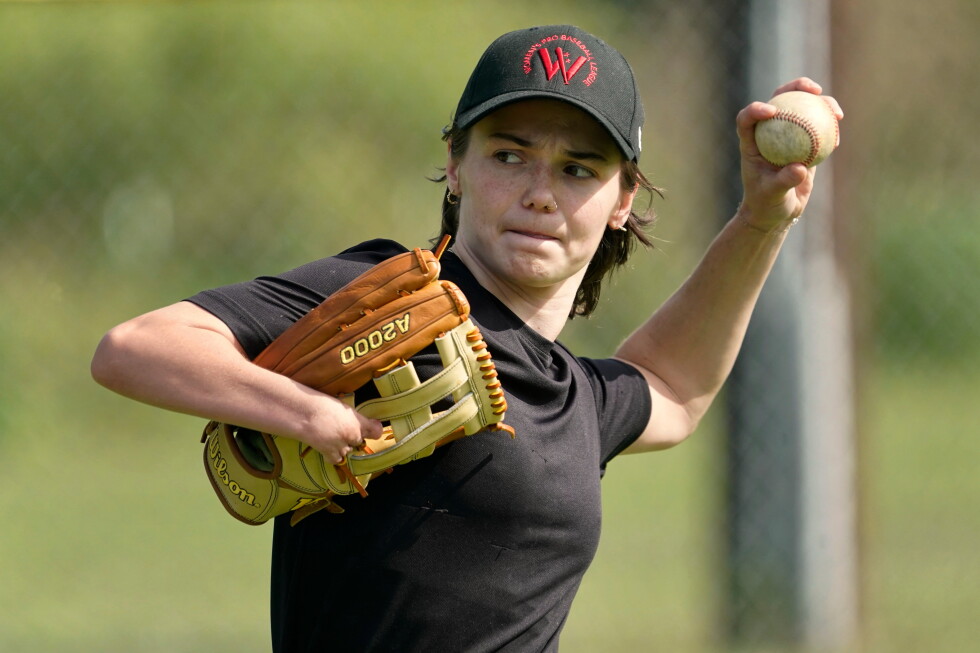
Britt Apgar was born with a limb difference. She had a small right forearm, half of a palm and no fingers on her right hand.

On her way to 12 surgeries by the age of 4, she was taught two lessons by her parents that never left her. Two principles that she carried all the way to the Women’s Professional Baseball League.

“My mom said I am never allowed to use my hand as an excuse,” Apgar said. “Like if I wanted to do the monkey bars, we were out there figuring out how to do the monkey bars, and they taught me how to tie my shoes before I even went to preschool. So that way I was never, like I never felt weird or different around the kids. And my dad … if I wanted to do anything, he wanted me to put my heart into it like 100 percent.”

Family is at the center of Apgar’s journey to the WPBL’s inaugural season this summer in Springfield, Illinois, pitching and playing the outfield for the Los Angeles Queens. The family she was born into — her parents, Tommie and Tom, and her older brother, Zach — and the family she picked up along the way.

Advertisement

“I have always and will probably forever describe her like this: She is sunshine,” said Courtney Jamison, one of Apgar’s closest friends.

Baseball, softball and dropping out of college

Apgar bats right-handed, resting the bat on the flat part of the nub on her right arm. She uses her left hand and arm to pull the bat on a swing while the nub guides it through the zone.

When she pitches, Apgar rests her glove on her nub and keeps it down near her waist so she can quickly move it to her left hand after she finishes her motion. When she catches a ball in the outfield, she turns her glove inside before taking it off and grabbing the ball to throw it.

“It sounds like a lot, but it’s really quick, I swear,” Apgar said.

Advertisement

It’s a process she practiced and perfected in the sunshine of North Carolina. Apgar, 22, was born in Farmville near East Carolina University, and she grew up playing in the fields near her home.

Her father and brother would throw in the yard, and she fell in love with the pop of the baseball landing in their gloves.

“I wanted to make that sound, too,” she said.

While Zach was content to just play catch, Britt wanted to do everything. Tom studied former major league pitcher Jim Abbott, who was born without a right hand, and taught his daughter how Abbott fielded his position.

Advertisement

When the family moved to Greensboro, Britt continued to play. She made the junior varsity squad as a freshman in high school, but the coach told her he couldn’t keep her on the team.

“He pulled me to the side and said, ‘Hey listen, I think you’re a great player, but you’re just never going to be big and strong enough to play with my guys. And we get changed on the bus, we get changed behind dugouts at the field, and I just can’t have that interfering with the team chemistry and stuff,’” Apgar recalled.

Apgar started crying and walked off the field. She switched to softball, and she played all the way through one full season at Greensboro College.

A couple of weeks into her sophomore year, she quit. She liked playing softball, but she didn’t like the atmosphere around the team, and it wasn’t baseball.

Advertisement

She transferred to North Carolina-Greensboro and got a job at a gym. When Tommie — a factory worker — broke both of her legs in an accident at home, she dropped out of college and started working full-time.

“Put my head down, worked a lot,” she said.

Apgar thought she was done with baseball. But it turned out baseball wasn’t done with her.

Finding a solution to a big problem

When Apgar hits, the nub catches the impact of contact while the left hand finishes the swing. That becomes an issue when she faces velocity in the upper 70s and low 80s, like what she is going to see this summer in Springfield.

Advertisement

Apgar attended a WPBL camp in March at the spring training home of the Boston Red Sox. Facing left-hander Niki Eckert, she hit a grounder to second — and knew almost immediately something was wrong.

“Swung for it, just busted my nub open completely,” Apgar said.

Apgar’s grounder was the third out of the inning, so she was bleeding when she ran out to left field. Wearing a white uniform and concerned about the implications of what happened, she used the back of her glove, her black belt and a sock to hide the blood.

Looking for a solution to her problem against high velocity, Apgar went on Instagram and asked for help. She was flooded with responses, including suggestions for foam and prosthetics.

Advertisement

“Even when people didn’t have helpful hints or like tips or tricks, they would just say, ‘Protect the nub,’” she said.

Using a batting glove, foam and a hollowed-out part of an old prosthetic, Apgar developed a prototype with some help from Jeff Gardner, a WPBL investor. Gardner, a former scientist who works in generic drugs, became friends with Apgar after they met at the March camp in Florida.

Gardner went a step further, reaching out to Chrysta Irolla, the director of prosthetics and orthotics at the Hospital for Special Surgery in New York.

“When you get a personality like Brittany’s, it’s easy to want to help somebody like her,” Gardner said.

Advertisement

Irolla and the hospital are building a prosthetic for Apgar with a gel liner and a hook extension that is designed to fit around the bat and provide a more secure attachment. Doctors used some of the bones in Apgar’s left leg and foot to help strengthen her arm when she was a kid, so the hospital also is creating custom foot orthotics for her with built-in rigid plates.

“She’s very open to trying new things. She just wants to perform at the highest level and everything that she can do to get there,” Irolla said. “It’s really nice to have somebody be that open and creative and motivated.”

Apgar has no feeling in her nub. During one visit with Irolla, she tried on a prosthetic that mimicked the sensation of touch.

“It was the first time that I had held a bat and it felt like I was holding it with two hands. So I started tearing up,” she said. “It was such a mind-blowing feeling.”

Advertisement

The WPBL opportunity, and the training

Baseball moved back into Apgar’s life more than two years ago, when she saw a post on social media about WPBL tryouts. She put her name in and then forgot about it.

In April 2025, she got an email inviting her to try out at Nationals Park that August.

“I couldn’t believe it,” Apgar said. “I was like, there’s no way this is actually happening.”

Then, reality set in. She was about to face the best of the best, and she hadn’t played competitive baseball for years.

Advertisement

Following her father’s advice, she went all out with a challenging daily schedule.

She got up at 6 a.m. so she could run and do footwork drills before going to work at 9 a.m. At 3 p.m., she took her lunch break and joined a friend for another run with a weighted vest. She drove to her parents’ home after work, and Tom threw batting practice to her until the sun went down.

Jamison’s boyfriend, Logan Vacharasin, played baseball at Greensboro, and he got Apgar into the college’s facility for more baseball activities at night. Then Apgar would go back to her gym for grueling sessions with Isaiah Manning, a college wrestler.

“There were nights that he would make me cry in that gym,” Apgar said. “I would be bawling, crying, thinking I couldn’t do it. And he would be like, you’re not leaving until you can do this.”

Advertisement

As Apgar trained almost around the clock, she was backed by constant support from her parents. And Jamison, who brought her food and told her how proud she was of her. And her girlfriend, Natalie Brewer, who encouraged her to keep going when she was ready to give up. And Vacharasin and Manning. The list goes on and on.

There were more than 600 players at tryouts, but Apgar made enough of an impression that she was selected by Los Angeles in the third round of the league’s six-round draft in November. The Queens play their first game of the season on Aug. 1 against New York.

On the day of the draft, Apgar was surrounded by friends and family at Jamison’s apartment.

“They had all invested time and effort and energy into me making it and we had all made it at that very moment,” she said, “and so that whole night was just us on top of the world celebrating together. It was so great.”

Advertisement

___

AP Sports: https://apnews.com/sports

Advertisement

Source link

Continue Reading

NewsBeat

Bangladesh’s President Shahabuddin, one-time Hasina ally, resigns

Published

on

Bangladesh's President Shahabuddin, one-time Hasina ally, resigns

DHAKA, Bangladesh (AP) — Bangladesh’s President Mohammed Shahabuddin, appointed during the rule of ousted Prime Minister Sheikh Hasina, resigned Friday halfway through his term following years of political turbulence in the South Asian country.

A new government headed by Tarique Rahman, the son of former Prime Minister Khaleda Zia and Hasina’s archrival, came to power with a landslide victory in February after 18 months of interim rule under Nobel Peace Prize laureate Muhammad Yunus. Hasina stepped down and fled to India in August 2024 following an anti-government movement that ended her 15-year rule.

Hasina fiercely criticized the interim administration led by Yunus.

Shahabuddin submitted his resignation on Friday to Parliament Speaker ⁠Hafiz Uddin Ahmad, citing medical reasons. The resignation letter was seen by The Associated Press. The speaker told a news briefing later on Friday that he accepted the resignation.

Advertisement

But local media reported that Shahabuddin had to resign under pressure from the current government as he allegedly talked to Hasina by phone when he visited London for medical treatment in May. The AP could not confirm the incident independently.

Shahabuddin was known to be a trusted follower of Hasina. Following her ouster, he faced strong opposition from a student group that led the uprising against Hasina. The protesters branded him a collaborator of Hasina and took to the streets demanding his resignation and arrest.

A new political party formed by the student leaders of the uprising, the National Citizen Party, has long been campaigning against Shahabuddin.

According to Bangladesh’s constitution, if the president resigns, the speaker of Parliament automatically takes over the post on an interim basis until a new president is elected by lawmakers. The NCP joined an election alliance led by the Bangladesh Jamaat-e-Islami party, the largest Islamist party in the country.

Advertisement

The president is the head of state and primarily a figurehead but also has a constitutional role during a political crisis. The president also acts as the commander-in-chief of Bangladesh’s armed forces.

Shahabuddin was sworn in as the 22nd president of Bangladesh on April 24, 2023. Hasina won a fourth consecutive term in a January 2024 election that was boycotted by major opposition parties including Rahman’s Bangladesh Nationalist Party and Jamaat-e-Islami.

Shahabuddin’s resignation has deprived Hasina of a powerful ally. The ousted prime minister has told mainly Indian media that she wants to return to Bangladesh in December and surrender in court to face charges.

India refused to hand over Hasina to Bangladesh despite repeated requests by both the Yunus-led government and the current one.

In November, a special tribunal on Bangladesh sentenced Hasina to death in absentia for ordering a crackdown on the uprising. The United Nations in a report said nearly 1,400 people were killed in the crackdown. Hasina denied the charges against her from exile.

Advertisement

Source link

Continue Reading

NewsBeat

Seaplane crashes into island north of Seattle, all 11 people rescued

Published

on

Seaplane crashes into island north of Seattle, all 11 people rescued

SEATTLE (AP) — The pilot of a float plane that crashed on a remote island near Washington’s border with Canada, injuring all 11 people on board, changed course to avoid a thunderstorm before it went down, the company that operated the flight said Friday. But it remained unclear what caused the crash.

The Kenmore Air seaplane struck a rocky shore along Sucia Island, a state park north of the main San Juan Islands, on Thursday evening after veering past sailboats and other vessels. A swift rescue by nearby boats and a helicopter got everyone safely to hospitals.

As of Friday afternoon, three passengers remained hospitalized, all in satisfactory condition. The pilot was among those released. The San Juan County Sheriff’s Office said the people had head injuries, broken bones and cuts.

The crash came less than three weeks after a seaplane carrying eight people made a rough landing in New York City’s East River, causing minor injuries.

Advertisement

Videos posted on social media showed the aircraft turning to one side as it flies low over the water near several boats and the shore. The plane makes a hard landing, at first touching down on just one float, then briefly skips into the air before hitting land.

The San Juans are a rugged archipelago between Washington and British Columbia. They are a popular summer vacation spot known for ferries, whale watching and hiking.

First responders and witnesses race to the scene

Dave Eastman was in a dinghy on the water when the plane approached. At first he was worried it was going to hit his boat, he said, but then he saw it flying low toward the island. There were six or seven boats in the area and everyone raced to help, he said.

In the videos, passengers can be seen exiting the plane as black smoke rises. Soon bright orange flames engulf the fuselage, which came to rest partially submerged against a large rock.

Advertisement

“It kind of just shook us up a little bit,” he said. “Knowing everyone’s OK, at least that everyone is alive at this point, that kind of helps ease the concern.”

Eastman, of Lynnwood, Washington, said Thursday started off with nice weather, but a lightning storm hit the area around the time of the crash. Heavy rain began falling as the plane was burning, he said.

Several agencies scrambled to respond. The U.S. Coast Guard sent a helicopter while their Canadian counterparts mobilized a hovercraft, according to a recording of San Juan County dispatch audio posted by Broadcastify.

A video released by the U.S. Coast Guard showed a person being hoisted from a vessel below into an MH-65 Dolphin helicopter, his right leg immobilized in a splint.

Advertisement

Sucia Island features a maze of coves, beaches and rocky points. The plane went down near Shallow Bay, which cuts a wide crescent into the island near a campground.

The same type of seaplane crashed near Seattle in 2022

The plane’s operator said it was a DHC-3 Otter made by de Havilland Aircraft of Canada. That is the same model of floatplane as one that plunged into the waters of Puget Sound northwest of Seattle in 2022, killing 10 people.

Advertisement

Federal regulators ordered seaplanes to be inspected afterward, and investigators found a single component of a critical flight control system had failed.

The plane that crashed Thursday was operated by Kenmore Air, a tourism airline based near Seattle, which is a different company than the one involved in the 2022 crash. Founded in 1946, Kenmore Air bills itself as the largest seaplane operator in the U.S.

The Otter is a workhorse seaplane model that has been used widely for decades, said aviation safety expert John Cox.

The cause of the crash will be investigated

The National Transportation Safety Board may be able to quickly get an idea of what happened because investigators will be able to interview the pilot and witnesses and watch videos of the crash, Cox said.

Advertisement

The wreckage was recovered and placed on a barge by Friday afternoon. The agency will publish a preliminary report in about a month.

In a statement, the airline said it would not speculate about why the plane went down. According to the flight tracking website Flightradar24, the seaplane made an abrupt 180-degree turn about three minutes before the crash, heading back toward Sucia Island, which it had just passed on its path west.

“There was a weather system in the area at the time, and the pilot adjusted the flight path in response to that weather,” Kenmore Air said.

The plane was up to date on its maintenance, with its last 100-hour inspection completed June 25, the airline said.

Advertisement

“We are grateful that everyone aboard has been accounted for,” Kenmore CEO David Gudgel said. He said the company canceled all scheduled flights for Friday and was cooperating with investigators.

The aircraft took off from Lake Union in Seattle, which is about 80 miles (130 kilometers) south of Sucia Island, and was headed to Roche Harbor, the site of a historic hotel, marina and resort on San Juan Island.

___

McCormack reported from Concord, New Hampshire, and Collins reported from Hartford, Connecticut. Associated Press transportation reporter Josh Funk in Omaha, Nebraska, contributed.

Advertisement

Source link

Advertisement
Continue Reading

NewsBeat

Bolton runners set off on 50k Wigan Road crash fundraiser

Published

on

Bolton runners set off on 50k Wigan Road crash fundraiser

The Bolton News visited the Performance Unit in Breightmet on Saturday morning (July 25), where participants had just completed their second five-kilometre loop of the morning.

Having started at 7am, runners were in high spirits as they prepared to head back out for the next lap.

Around 100 people are expected to take part in the fundraiser throughout the day, organised by Performance Unit owner Joel Cooper.

Joel had been at the Performance Unit since 5am making the final preparations before runners set off.

Advertisement

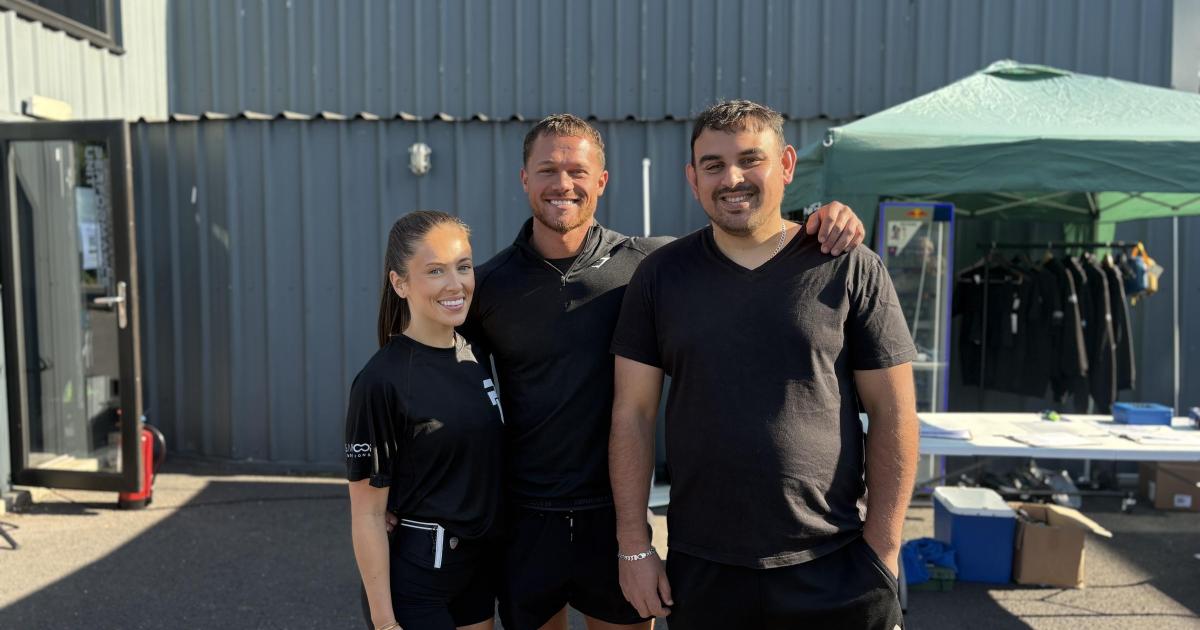
Organiser Joel Cooper (middle) with his girlfriend Olivia Bell (left) and participant Craig Choda (Image: NQ)

He said that organising the event had been stressful, but he had plenty of support.

He said: “Luckily I’ve got a lot of people who have helped.

“Staff, my mum and my girlfriend are all here with me.”

With the sun shining, Joel said the conditions were perfect for the challenge.

Advertisement

Performance Unit members all smiles after completing 10K so farPerformance Unit members all smiles after completing 10K so far (Image: NQ)

“Hopefully the blue sky stays out when the barbecue and DJ are here.”

The music is being provided by NoPlan, a DJ trio that includes Joel’s younger brother, Sam Cooper.

The group offered to perform free of charge to help keep spirits high throughout the day.

Ready for the third 5K of the morningReady for the third 5K of the morning (Image: NQ)

Participants set off together at the start of every hour to complete a five-kilometre loop, with anyone completing all 10 laps covering a total of 50 kilometres.

Advertisement

“We’re 10k in and 40 to go and we’ve done a nice easy route to start with,” said Joel.

“I think I’ll surprise everyone this afternoon with a more challenging route, to throw a spanner in the works.

“Some of these runners are absolutely unbelievable, so I’ll really put them to the test.

“We’re all here to push ourselves to the limit.”

Advertisement

Family and friends from across Bolton have come together for the fundraiserFamily and friends from across Bolton have come together for the fundraiser (Image: NQ)

The money raised will support families affected by the tragic collision on Wigan Road in January, which claimed the lives of four people.

Taxi driver Masrob Ali, 54, from Blackburn, died after his vehicle was involved in a head-on collision.

Muhammad Danyaal Asghar Ali, 19, of Knutshaw Crescent, Bolton, Farhan Patel, 18, of Briercliffe Road, Bolton, and Mohammed Jibrael Mukhtar, 18, of Junction Road, Bolton, who were travelling in the speeding car that struck the taxi, also died.

Four passengers travelling in the taxi also suffered serious injuries.

Advertisement

Residents around Breightmet can expect to see groups of runners taking on the challenge throughout the dayResidents around Breightmet can expect to see groups of runners taking on the challenge throughout the day (Image: NQ)

Joel said the tragedy had a personal connection for some members of the gym, who knew those travelling in the taxi.

Fundraising stalls, homemade bakes and live music are continuing throughout the day as organisers aim to raise £20,000 for the families affected by the tragedy.

To donate, visit https://www.justgiving.com/crowdfunding/performance-unit

Advertisement

Source link

Continue Reading

NewsBeat

York’s Askham Bog reopens after makeover as it turns 80

Published

on

York’s Askham Bog reopens after makeover as it turns 80

Activities will include guided reserve walks, pond dipping, a theatre production, crafts, and more.

Askham Bog is Yorkshire Wildlife Trust’s inaugural reserve, as the Trust was founded to care for it in 1946.

Sir David Attenborough being shown round Asham Bog by the Yorkshire Wildlife Trust’s Prof Alastair Fitter in 2016. (Image: The Press)

A fragment of ancient peatland banded by road and railway line, the reserve is home to extensive rare wildlife from centuries-old royal ferns to hundreds of different moth species, as well as more common and beloved robins, roe deer, and dragonflies.

The reserve is a deeply-loved urban green space lauded as a ‘cathedral of nature conservation’ by Sir David Attenborough when he visited in 2017, and the Trust hopes to inspire more people and visitors to enjoy its peace and quiet on the edge of York.

Advertisement

Recommended reads:

‘Gardens are being destroyed in this part of York – it’s nothing short of disgusting’

International pop powerhouse wows thousands at North Yorkshire open-air gig

From Manchester United to Wembley glory: York City moments fans will never forget

Advertisement

Pronounce it properly- how to say name of this North Yorkshire attraction


Yorkshire poet Ian McMillan has written a celebratory poem about Yorkshire’s wildlife to mark the occasion and the Trust’s 80th anniversary.

The poem is in two halves, with the second part remaining secret and buried in a time capsule within the reserve, along with other Trust memorabilia, to be reopened in 70 years’ time for the Trust’s 150th anniversary.

Ian said: “I wanted this poem to be my birdsong, my splash of a fish in a river, my breeze whispering through the trees.

Advertisement

“I wanted my poem to be true to the ideals of Yorkshire Wildlife Trust and to inspire future generations to enjoy our wildlife – and, of course, to write poems about it!”

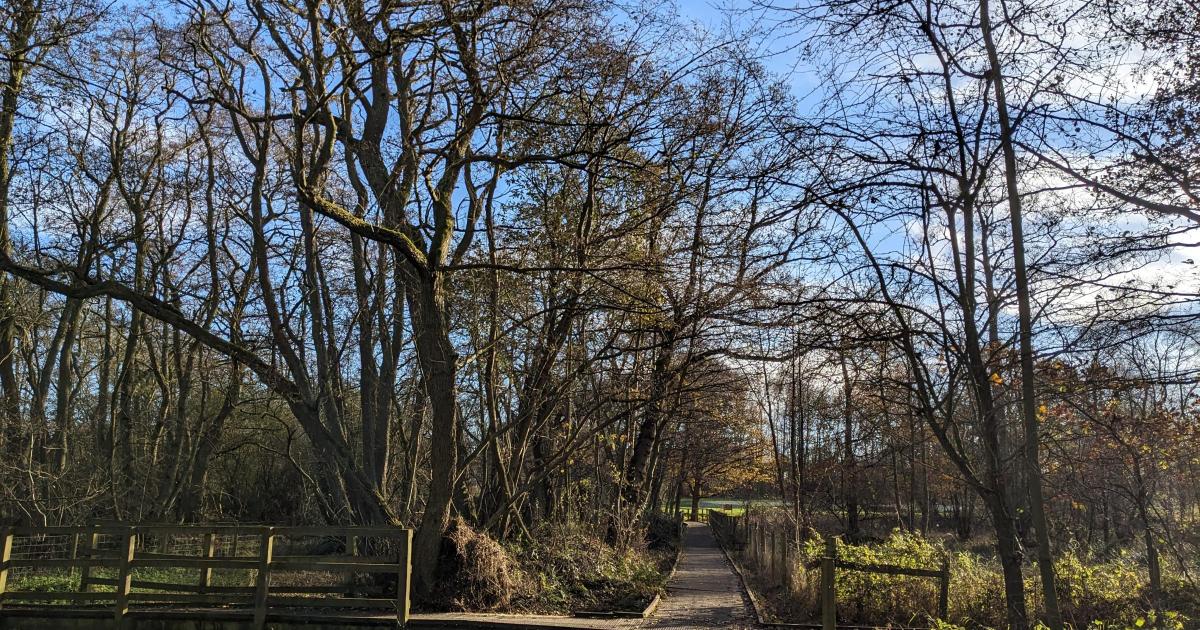
Askham Bog is located a 10-minute walk from Askham Bar and includes a 1 km boardwalk loop, which takes in some of the reserve’s best wildlife and the popular main pond.

First installed in the early 2000s by a team of dedicated reserve volunteers, the original boardwalk has now been replaced with sustainably-sourced materials that have better longevity and durability, with an improved route layout and wider sections with smoother surfacing for improved accessibility.

New signage has been installed on-site, and the Trust has also undertaken some vital management work in areas usually obscured by the boardwalk.

Advertisement

David Craven, Yorkshire Wildlife Trust’s head of operations in East Yorkshire, said: “Caring for Askham Bog has always been an honour, but it has been particularly lovely to see and hear just how much Askham Bog means to York’s local community whilst the reserve has been closed.

“From stories about visiting after school as a child and returning decades later with children and grandchildren, to the difference having a peaceful green oasis has made to people’s mental health, we are so pleased to be able to open the reserve again in time for school holidays and welcome visitors back to enjoy Yorkshire’s ‘cathedral of nature conservation’ again.”

To celebrate the reserve reopening, the Trust is hosting an opening event on-site at the reserve on July 25 and 26.

This will include guided walks of the reserve by Yorkshire Wildlife Trust staff, with all the best information on what wildlife to spot where as well as the opportunity to purchase limited-edition linocut prints of the reserve by local York artist Jon Haste.

Advertisement

There will also be the opportunity to purchase memorial plaques to be installed on the new boardwalk – the first ten purchased will be at a discount.

Rusticus Walking Theatre Company will be performing Ditzy the Dragonfly.

Thread and Press will be running family willow-weaving workshops creating 2D bugs, birds, and butterflies; there will be pond dipping sessions; and there will be a Yorkshire Wildlife Trust members-only moth spotting event with @garden. Of moths on Sunday, July 26th.

On-site catering, self-led wildlife spotter guides, and nature-journalling opportunities will also be available.

Advertisement

Yorkshire Wildlife Trust president Alastair Fitter will give a talk at Pike Hill Golf Club York on Friday, July 24, about the reserve’s captivating history.

As part of its 80th anniversary celebrations, the Trust has also been running an appeal to raise money for further vital work needed at the reserve.

Askham Bog has struggled in recent years with increasingly unpredictable dry periods that risk damaging its vital peat habitat.

The Trust is raising money to manage scrub and invasive Himalayan balsam on-site, create new ponds for wildlife like great-crested newts, and survey how wildlife has responded on-site to the hotter weather.

Advertisement

To find out more about the reopening event and appeal to safeguard Askham Bog’s future, go to https://www.ywt.org.uk/appeals/action-for-askham-bog.

The Trust is grateful to contractors Bison Bridges for supplying the new boardwalk, Elms Solutions Ltd for their careful management of the boardwalk removal and reinstallation, and Piers Edsall of Environmental Art for supplying the time capsule.

Source link

Advertisement
Continue Reading

NewsBeat

Headteacher who ‘positively influenced’ thousands of pupils to retire after 50 years

Published

on

Cambridgeshire Live

The former headteacher has said he is ‘forever grateful’ for his career in education

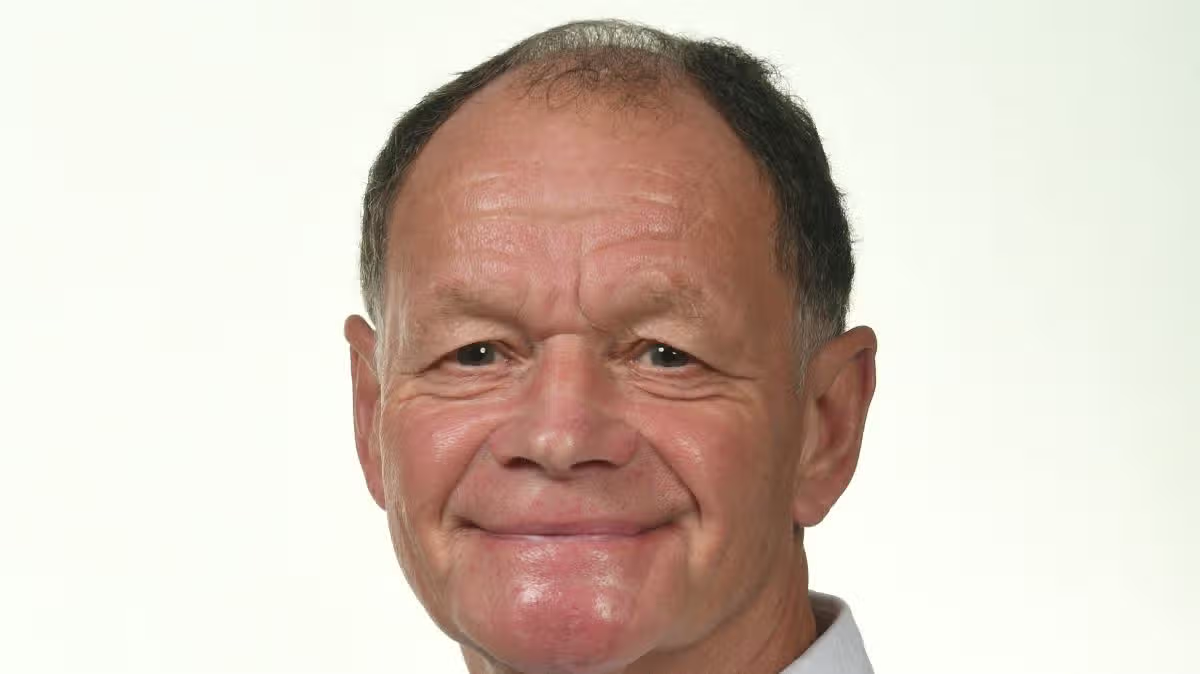
A headteacher who worked with pupils in Cambridgeshire for more than 50 years is retiring. Eric Winstone started out as a PE teacher in the 1970s before he became headteacher of Bushfield Community College in Orton Goldhay, Peterborough, in 2001.

Advertisement

From there, he led the school through significant development until 2014, including overseeing its transition into Ormiston in 2009. He later became the school’s executive principal, and helped the school to achieve specialist college and centre of excellence statuses.

Alongside his leadership roles at Bushfield, he has also served as chair of the Peterborough Secondary Headteachers’ Association and played a significant role in the local authority’s children’s services board.

Mr Winstone is now retiring after more than 50 years in education. Mr Winstone said: “In over 50 years of being involved in education, I have never once regretted my decision to enter this profession. Starting out as a PE teacher in 1974 and ending my career as Executive Principal was a wonderful journey which enabled me to work with some wonderful teachers, leaders, support staff and governors.

“In my time, I have had the pleasure of working at some excellent schools and have had the very best time over the last 15 years as Principal of Bushfield Community School and then Ormiston Bushfield Academy. Building and developing the Academy was the highlight of my career and I have seen the Ormiston Academies Trust develop and expand to become one of the leading academy trusts in the country.

Advertisement

“My closing years as Chair of Governors at Ormiston Meadows enabled me to continue to be involved in education and pass on my experience to developing leaders. Most of all, I will savour the contact with over 5,000 young people that I have had the pleasure to teach and support through their secondary education over the years.

“Educating young people is a lifelong journey and I will be forever grateful for having had the opportunity to make a difference.”

Mr Winstone will attend his final governing body meeting at Ormiston Meadows next month before he officially retires.

Tom Rees, chief executive officer of Ormiston Academies Trust said: “Eric’s contribution to education in Peterborough and beyond has been immense. He has positively influenced the lives of thousands of young people, supported generations of staff and leaders, and played a pioneering role in bringing Bushfield into Ormiston Academies Trust, where it continues to achieve highly.

Advertisement

“His legacy continues to be felt across our schools today, and we are hugely grateful for everything he has done for our trust and the communities we serve. We wish him the very best in his much-deserved retirement.”

Kelly Moore, current principal at Ormiston Meadows Academy, praised Mr Winstone for giving an “extraordinary amount” to education throughout this career. She added: “We have been incredibly fortunate to benefit from his wisdom, guidance and unwavering support at Ormiston Meadows Academy.

“His experience, integrity and commitment to young people have made a lasting impact on our community, and we wish him every happiness in his retirement.”

Source link

Advertisement
Continue Reading

NewsBeat

A Large Freckle Near My Vagina Turned Out To Be Skin Cancer

Published

on

A Large Freckle Near My Vagina Turned Out To Be Skin Cancer

The appointment with my primary care physician (PCP) was for a routine physical. I expected a clean bill of health. After all, I’d had no issues and was having the physical as part of my New Year’s checklist, along with getting my car’s oil changed and switching out my furnace filter.

I told my doctor I was between gynaecologists because my former OB-GYN hadn’t been able to answer basic questions about the postmenopausal symptoms I’d been having. I asked for a referral, but given it would take four months or longer to see a new OB-GYN, my PCP suggested she could perform a pelvic exam, along with a pap smear and cervical swab, just to get me up-to-date on all routine tests.

As she completed the exam, she asked if I was aware of a large freckle on my labia just outside my vagina. Not being a contortionist, I wasn’t aware of this strangely shaped grey spot that my doctor photographed in order to show me.

It looked like so many other age spots on my arms and legs that have popped up over the years as a result of days in the 1970s sun, before any of us used sunscreen. Still, my doctor suggested I see my dermatologist soon.

Advertisement

At the dermatologist’s office, she also showed little concern, thinking the spot was of no consequence, but should be examined nonetheless.

“I’m 99% sure it’s nothing,” were her exact words as she performed a biopsy of the freckle, slicing it from my skin and placing it in a vial for testing. Taking her cue, I’d nearly forgotten about the whole thing when I received a call on Tuesday morning a week later. Having lived through my late husband’s cancer experience, I knew that no doctor makes an “all clear” phone call at 8am.

I realised, instead, she was going to tell me bad news. And she did.

The cells placed in the vial were melanoma, specifically, a labial or vulvar melanoma. Though I was familiar enough with melanoma to know that, as a pale redhead with previous sun exposure, I should be checked for them annually, I had no idea one could occur literally where “the sun don’t shine”.

Advertisement

My dermatologist explained that the freckle was in situ, meaning in the very beginning stage of becoming cancerous and only involved the top layer of skin. I would need surgery to remove it – something she wasn’t equipped to do.

The next two days were spent ascertaining the seriousness of my diagnosis and finding a surgeon willing to undertake this procedure, which would involve not only removal of the freckle, but also getting clear margins around it.

In the case of a melanoma like this, the surgeon would seek one-centimeter margins, removing a fairly large portion of tissue in the shape of a football from a tight space with many nerve endings and highly sensitive skin. Because of the unusual location and delicacy of the surgery, I spent hours navigating the local healthcare system, as I attempted to find a surgeon who would accept the task.

Courtesy of Lori Tucker-Sullivan

Advertisement
“I participate in a long-term cancer screening program,” the author writes.

My dermatologist referred me to gynaecology. In that department, especially without having an established relationship with a doctor, there was no one who would take my case. From there, I was sent to gynaecological oncology within the cancer centre. Several calls there also resulted in no doctors willing to move forward. While I wanted only for this cancerous lesion to be removed from my body, I was instead tossed from department to department as staff tried to determine who was best prepared to perform this unusual procedure.

Finally, I was referred to a melanoma surgeon within the skin cancer department. A nurse phoned on day three and said the surgeon was well-practiced in these types of melanomas and would take my case. She could squeeze me in to meet with her a week later, and scheduled surgery for the week after that. I phoned my children and we made plans for my daughter to travel from Chicago to be with me for my appointment. We had a plan, and I felt better, but I didn’t realise how large a bullet I had just dodged.

Throughout my late husband’s three-year experience with head and neck squamous cell carcinoma, we tried to stay away from online searches and rabbit holes. His cancer was understood primarily to affect heavy smokers and drinkers, though he was neither. It was through our own and his doctor’s research that we learned his cancer was caused by the human papilloma virus or HPV. Having that knowledge provided his care team with a more specific approach, one that, though too late to save him, has allowed for better treatment protocols today than existed in 2009.

However, researching a cancer diagnosis can also lead to anxiety rather than calm or focus. Remembering this, I refrained from any internet searches until I met with my new cancer surgeon, a young woman whose matter-of-fact demeanour quickly calmed me. Once in her office, I peppered her with the questions I’d been too afraid to type into a search engine: How did this happen, why had I never heard of melanomas in this location, and, most importantly, what was the long-term prognosis? Her answers were surprising.

Advertisement

Because of their location, labial melanomas are rarely caught at an early stage as mine was. Usually, according to my surgeon, they are not caught until they begin to cause discomfort, bleed or become a large mass. By that time, the melanoma has grown deep into the skin and excision, and removal is more difficult. And because of their location close to many lymph nodes, they can spread aggressively. I looked across the room at my daughter, who had lost her father to cancer when she was just 13, and noticed we had the same shocked look on our faces as we understood the situation: had my diagnosis come later, my outcome could have been completely different.

Nearly 40% of vulvar melanoma patients present with regional or metastatic disease (Stage III or Stage IV) compared to only 13.6% of cutaneous melanoma (those on more common areas like arms, legs, back, etc), which means vulvar melanoma is more likely to have spread via the lymph system by the time the patient presents to the doctor. A patient at Stage III has a five-year survival rate of about 48%. At Stage IV, that drops to a 25% rate of survival. Though vulvar or labial melanomas are rare, they most often occur in older women. And while I was beating myself up for my preteen suntanning, there is no definite connection between vulvar melanomas and sun exposure.

Though melanoma is the sixth most common cancer in women, only 0.2% of 100,000 women per year will be diagnosed with a labial melanoma, which primarily affects white, postmenopausal women in their 60s. The rarity of the diagnosis also means there’s little study of these cancers, though there also appears to be no connection between them and HPV or other STDs. As stated in a study by the National Institutes of Health (NIH), these melanomas are often asymptomatic and presentation is delayed by that and a lack of easy self-examination.

The author with her late husband Kevin, prior to his cancer diagnosis.

Courtesy of Lori Tucker-Sullivan

The author with her late husband Kevin, prior to his cancer diagnosis.

Surgery took over an hour while I was under anaesthesia, and recovery took a few weeks, during which it was important to restrict movement and keep the wound very clean. Pain meds kept the discomfort at bay but didn’t address the lingering worries. In addition to my physical care, I also met with my therapist to continue processing how close I came to a much more serious situation and how I might turn my gratitude into advocating for prevention in others.

Advertisement

Because the freckle on my labia was caught when it was, I was told I have a less than 3% chance of recurrence and no further treatment. My surgeon will check me every six months, and my new dermatologist, who specialises in vulvar cancer, will see me every three months for two years. Provided nothing new is discovered, I’ll return to annual check-ups. But my prognosis is this good only because it was detected so early.

When I returned for a follow-up appointment with my primary care doc, she reminded me that many postmenopausal women skip regular pelvic exams, or are confused about how often they are needed. Instead, they should speak with their doctors about the frequency, which is based on their personal health history, and whether they currently have symptoms.

Just as most dentists now check for oral cancer, doctors other than oncologists can help examine for vulvar cancer. A simple request to a gynaecologist to check the skin for unusual spots during your regular pelvic exam, or a request to the dermatologist to include the vulva during your annual skin checks, are easy ways to possibly detect cancer at an earlier stage.

At my primary care doctor’s office, we hugged, tearing up as the two of us realised what her attention and urging had prevented. Bringing my awareness to a seemingly innocuous spot in an unusual place prevented me from having a terrible and possibly fatal diagnosis. For that I am forever thankful.

Advertisement

Lori Tucker-Sullivan is a writer and educator in Detroit. Her work has appeared in The New York Times, Washington Post, Salon, and others. Her book, “I Can’t Remember if I Cried: Rock Widows on Life, Love and Legacy,” was released in 2024 and profiles widows of her favorite musicians and what they taught her about grief. She is currently at work on a memoir of her marriage bookended by home renovation and her late husband’s cancer diagnosis.

Do you have a compelling personal story you’d like to see published on HuffPost? Find out what we’re looking for here and send us a pitch at pitch@huffpost.com.

Source link

Advertisement
Continue Reading

NewsBeat

Brazil uses gold fingerprinting to trace illegal Amazon mining

Published

on

Brazil uses gold fingerprinting to trace illegal Amazon mining

BRASILIA, Brazil (AP) — Brazil is using forensic science to tackle illegal gold mining in the Amazon, a top threat to the rainforest, Indigenous groups and other communities there that has accelerated deforestation and driven mercury contamination to dangerous levels.

The work takes place at the National Institute of Criminalistics in Brasilia, the country’s capital, where federal police have set up a “gold lab” that collects and analyses samples from across the country.

The objective is to determine if a newly acquired sample — gold seized in a police raid, for example — comes from a protected area, meaning it has been illegally mined. It’s called “gold fingerprinting” — tracing the origin of gold samples with high precision.

Tracing gold is like looking at a person’s DNA, experts say

At the lab, sparkling gold flakes are kept in tiny, coin-shaped vessels, but the most valuable thing about them is the data they hold. Each speck is unique because while it forms in nature, inside a rock or a riverbed, the gold deposits absorb particles from the area, such as traces of silver and copper.

Advertisement

And that’s the fingerprint. It allows the investigators to determine if gold seized during a police raid was actually mined in the area its purported owner claims it came from, or if it was illegally sourced from a national forest or Indigenous land — in which case its analysis would match stored data from the protected area.

Gustavo Geiser, a federal police forensics expert, says the method has been developed since 2019 in collaboration with Brazilian universities. The investigators use tools such as X‑ray fluorescence spectrometry, scanning electron microscopy and laser ablation mass spectrometry.

“As we advanced, the forensic examinations became increasingly complex,” Geiser said, but the question before them was always the same: “Where did this gold come from?”

If the forensics prove a gold sample was illegally mined, the information then helps police build a case and move forward with further investigations and possibly charges.

Advertisement

Criminals insert illegally mined gold into legal markets

Those involved in environmental crimes in the Amazon frequently resort to fraud to introduce their goods into legal markets, not just when it comes to gold but also for cattle and timber. Lately, a worldwide surge in gold prices has only spurred on the mining rush in the Amazon rainforest.

Advertisement

Amazon Mining Watch, a platform that uses satellite imagery to track mining, estimates that about 496,000 hectares (1.2 million acres) of rainforest have been cut down for mining since 2023, including some 223,000 hectares (551,000 acres) in the Brazilian Amazon.

Brazil’s Federal Court of Accounts, its top audit institution, said last year there was evidence indicating that mining permits granted by the National Mining Agency to small-scale miners were being used to pawn off gold extracted from protected areas in the Amazon.

Greenpeace, in its own independent report in May, based on publicly available records, satellite imagery and aerial surveillance, detailed how the scheme works.

On paper, an owner of a legally authorized mine in the Amazon would declare that tons of gold had been extracted at that mine.

However, satellite and aerial imagery would show that there had not been any activity at the site of the legal mine. Meanwhile, images of bordering Indigenous lands, where mining is banned, would reveal large-scale mining operations — a “ghost mine” scam as Greenpeace calls it.

Advertisement

A federal court in Para, a northern state severely impacted by illegal mining, issued an order this month for institutions like the Central Bank and the National Mining Agency to enact effective control and traceability of all gold, from the mines to the markets. Brazil’s federal prosecutors also filed a lawsuit against the National Mining Agency, seeking better oversight of mining permits.

Prosecutor André Porreca, who is leading the case, said the permits have become a front used “to launder gold extracted by criminal organizations from Indigenous territories and protected areas.”

Geiser, the forensic expert, says the Brasilia gold lab is an important piece of the puzzle that helps battle crime and strengthen global gold supply chains.

“Being able to state that it (gold) has a legitimate origin and therefore is valid for inclusion in a country’s or a bank’s financial reserves, I believe provides solidity not only to the market but also to the countries’ financial bonds,” he said.

Advertisement

There is no data on how many criminals the lab has helped put behind bars, but Geiser says crime networks have recently begun exploiting neighboring countries such as Venezuela, French Guiana and Suriname, to launder illegally mined gold. Samples from abroad have made it to his lab, where they have joined the constantly growing database, he said.

The growing crime has also forced regional countries to strengthen collaboration through the Amazon International Police Cooperation Center, headquartered in the Brazilian city of Manaus.

Illegal gold mining leads to devastating mercury contamination

The Amazon is the world’s largest rainforest and a key regulator of global climate, so anything that degrades it could accelerate global warming, researchers say.

A 2023 analysis by MapBiomas, a nonprofit that monitors land-use, said that over 90% of Brazil’s mining is taking place in the Amazon region, with nearly 40% of it illegal, in protected areas.

Though illegal gold mining is a relatively small driver of deforestation, compared to agriculture, the harm it inflicts on the environment is nearly impossible to reverse — especially because of the use of mercury to extract gold. Once the gold is separated, the mercury is released into the rivers, contaminating water sources and fish essential to Indigenous life.

Advertisement

A 2023 study by Fiocruz, a Brazilian science institute, said 21.3% of fish in Amazonian markets exceeded the World Health Organization’s safety limits for mercury levels — with children between 2 and 4 years old consuming mercury at levels up to 31 times the recommended maximum.

Brazil signed the U.N. agreement known as the Minamata Convention on Mercury, which commits it to eliminate mercury use in gold mining.

The Ministry of Mines and Energy published a draft this month on easing out mercury that’s up for debate, meant to take place until Aug. 7. Federal prosecutors have urged that Indigenous groups — the ones most affected by the contamination — be consulted, but that has not yet happened.

A total ban on mercury would both curb environmental contamination and also bolster forensics investigations, according to Geiser of the federal police, whose lab can detect any traces of mercury in its samples.

“It will make it even clearer that any mining using mercury … is illegal,” he added.

Advertisement

___

The Associated Press’ climate and environmental coverage receives financial support from multiple private foundations. AP is solely responsible for all content. Find AP’s standards for working with philanthropies, a list of supporters and funded coverage areas at AP.org.

Advertisement

Source link

Continue Reading

NewsBeat

TV actress Tricia Penrose buys The Goathland Hotel of Heartbeat fame

Published

on

TV actress Tricia Penrose buys The Goathland Hotel of Heartbeat fame

Tricia Penrose, who played barmaid Gina Ward in Heartbeat’s Aidensfield Arms for 18 years, has bought The Goathland Hotel – the real-life setting used in ITV’s long-running show.

The news marks a new chapter for the York stone pub in the pretty North York Moors village of the same name where so many village goings-on and rural crimes were mulled over.

Flashback: The Aidensfield Arms when it became The Goathland Hotel.Flashback: The Aidensfield Arms, aka The Goathland Hotel. (Image: The Press)

The Goathland Hotel is popular worldwide for its role as the Aidensfield Arms in the TV series which ran from 1992 to 2010.

Announcing the news on Instagram, Tricia Penrose, whose character Gina Ward married PC Bellamy in the TV series, said: “I have some exciting news to announce.

Advertisement

“I am now the proud owner along with 2 local businessmen of The Goathland Hotel well known as The Aidensfield Arms where I played Gina Ward for 18 years.

“Gina’s going home!! Woohoo!! I will be setting up a YouTube channel to let you know what events will be taking place etc etc.

“I will be over there in my pub next Tuesday 28th from about 11.00. It’s very exciting xxxx.”

The Aidensfield Arms from Heartbeat. (Image: Submitted)

The recognisable pub in Goathland, on the North York Moors, has long been a draw for Heartbeat fans and tourists. It previously ran under the same family ownership for more than 41 years before being sold to Penrose and her business partners.

Advertisement

The Goathland HotelHeartbeat actress Tricia Penrose buys The Goathland Hotel. (Image: The Press)

Most of the internal scenes in the pub were filmed there and many of the features seen in Heartbeat can still be seen today. As a result of its fame, The Goathland Hotel welcomes thousands of visitors throughout the year from fans of Heartbeat from across the globe.

Heartbeat, set in the fictional village of Aidensfield and filmed across North Yorkshire, became one of ITV’s most popular dramas. The Aidensfield Arm, as depicted in the show, was a central hub for village life, with Penrose’s character Gina Ward a firm fan favourite.

The bar in the pub from Heartbeat. (Image: Submitted)

The actress, now 56, appeared in the series from 1993 until its final episode in 2010, becoming one of its longest-serving cast members.

Since leaving the show, she has worked as a radio presenter on Radio Wirral and appeared on Celebrity Big Brother in 2013. She also released two music singles in the early 2000s.

Advertisement

The purchase caps a notable year for the actress, who married her second husband, Chris Hargreaves, in May.

Her return to the pub marks a full-circle moment for fans of the show.

Source link

Advertisement
Continue Reading

NewsBeat

The best drink for staying hydrated this summer – it’s not water

Published

on

Daily Record

An expert has claimed this common drink could already be in your fridge at home

A top nutrition expert has warned that your body can start drying out before you’re even properly sweating. With the weather heating up across the UK, people are being reminded that reaching for water

Verónica Chazín, speaking on Spanish radio show ‘Herrera en COPE’, said the body is battling to keep its core temperature at 37 °C during intensely hot weather – and all that behind-the-scenes effort can drain fluids faster than people realise. The important message is not to wait until you feel rough before you act.

In a twist that’ll make water lovers do a double take, Chazín said plain water isn’t actually the best for keeping you hydrated. She claims a common drink in most UK fridges could be a better solution for people wanting to stay the most hydrated.

Advertisement

She said: “Although water is the hydrating drink par excellence, it is not the one that hydrates us the most.” For some, research suggests that milk can keep hydration levels up for longer.

Verónica added that milk’s mix of protein, carbs and minerals help our stomachs to cling on for longer, when compared to plain water. Coconut water and isotonic drinks also score well when it comes to staying topped up in soaring temperatures.

The NHS claims that water is “a healthy and cheap choice to keep you hydrated”, but backs the idea of adults drinking lower-fat milk, such as semi-skimmed, 1% fat or skimmed milk and unsweetened plant-based drinks to help with hydration needs.

Advertisement

It is important to bear in mind that milk is not suitable for everyone to drink. Key groups who should avoid or limit regular cow’s milk include infants under one year old, people with lactose intolerance, and individuals with a milk protein allergy (like casein or whey).

What you eat matters too

Verónica highlighted water-heavy produce to help you keep cool, with watermelon leading the way. People could also top this up with things like cucumber, melon, pineapple and tomatoes.

She also warned against living on “just salad” unless it’s actually got some proper fuel in it. Her advice was to add protein like salmon, tuna or eggs, and she also suggested legume-based salads to keep meals balanced without feeling heavy.

Alternatively, she advised skipping the kind of meals that sit in your stomach. Things like rich, fatty dishes and big, heavy plates that make digestion work overtime and crank up your internal heat.

Alcohol got a clear thumbs-down too, because it doesn’t “help” hydration at all. Verónica said “It’s not just that alcohol doesn’t hydrate me, it actually dehydrates”.

As for signs you’re already running low, she listed headaches, dizziness, fatigue, and a dry mouth. Another clue your body is waving a red flag is if your urine is dark and you’re going less often.

People shouldn’t wait for those alarms to start drinking, and Verónica suggested having water every hour or two, even if you don’t feel thirsty.

Advertisement

Source link

Continue Reading

Trending

Copyright © 2025