
Connect with us
DAPA Banner
DAPA Coin
DAPA
COIN PAYMENT ASSET
PRIVACY · BLOCKDAG · HOMOMORPHIC ENCRYPTION · RUST
ElGamal Encrypted MINE DAPA
🚫 GENESIS SOLD OUT
DAPAPAY COMING

NewsBeat

Wales breaking news plus weather and traffic updates (Friday, June 5)

Published

on

Wales Online

Hello, and welcome to WalesOnline’s live blog for Friday, June 5. We’ll be bringing you all of the latest news from across Wales – whether you’re on the move, at home or at work – as well as the latest traffic and travel.

We’ll also be keeping you informed of major news stories from the UK and overseas.

Contribute to the live blog by posting your comments below, or tweet us @WalesOnline to share the news that’s breaking in your area. Read the biggest stories in Wales first by signing up to our daily newsletter here.

Advertisement

Source link

Continue Reading
Click to comment

You must be logged in to post a comment Login

Leave a Reply

NewsBeat

Irregular heartbeat risk much lower in super-fit people than previously thought

Published

on

Irregular heartbeat risk much lower in super-fit people than previously thought

Exercise is important for your heart and cardiovascular health. But for years, research has suggested that very fit people – particularly young men – have a higher risk of developing atrial fibrillation (an irregular heartbeat) later in life than less athletic people do.

But our new large-scale study of more than one million young Swedish men challenges this long-held concern about fitness and heart health. The study shows that atrial fibrillation risk in very fit people is smaller than previously thought. And, importantly, the benefits of being fit – such as having lower rates of other cardiovascular diseases, such as stroke and heart attack – clearly outweigh the potential downsides.

To conduct our study, we analysed data from over one million Swedish men. Each of these men had completed a military conscription test between 1972 and 1995 when they were around 18 years old. During conscription, fitness was estimated using a maximal ergometer bicycle test.

We followed the participants using national health registries until 2023. Information was collected on diagnoses in specialised outpatient and inpatient care, as well as information on cause of death where relevant.

Advertisement

Nearly half a million of these men were siblings, allowing the team to compare brothers with different fitness levels. This method also helped control for shared genetics and upbringing to better understand risk.

In the population-wide analysis, where all men were compared based on their fitness levels, the fittest men did show a higher risk of atrial fibrillation until age 40. After 45, however, the benefits – fewer other heart problems – started to outweigh the risk.

But the sibling analysis told a different story. When comparing brothers, the link between high fitness and atrial fibrillation weakened significantly. The net positive effect of fitness on overall heart and cardiovascular health, although also weakening in the sibling analysis, was still evident from the start.

These benefits grew larger as the men aged. Across five decades of follow-up – from the age of 18 until the age of 65 – the benefits of being highly fit outweighed the overall risk of developing atrial fibrillation at all ages.

Advertisement
An advantage of our study is that we were able to compare siblings.
Worawee Meepian/ Shutterstock

While the higher risk of atrial fibrillation in the fittest men weakened in the sibling analysis, an elevated risk did remain. However, this risk was small overall. The potential risk of developing atrial fibrillation was also far outweighed by the positive benefits that being fit had on reducing risk of other cardiovascular diseases.

There was also some evidence that the increased risk of atrial fibrillation seemed to be driven by typically milder forms of atrial fibrillation.

Cardiovascular benefits of fitness

These findings suggest that earlier studies may have overestimated the risk of developing atrial fibrillation if you’re very fit because they couldn’t fully account for shared familial factors – such as genes and shared environmental factors – that may influence both fitness and heart health.

Because our study was able to account for these shared factors, we were able to show that we should potentially tone down the message that being very fit or engaging in endurance exercise poses a big risk to heart health. The risk of atrial fibrillation isn’t zero, but the benefits to heart health more generally are far greater.

Advertisement

Our results have also been confirmed in previous studies. However, our research builds upon this prior evidence by incorporating the sibling comparisons in the analyses, showing that the atrial fibrillation risk becomes weaker.

Our study also performed a more detailed examination of risk over time by following up with participants over a longer period of time, while also considering the benefits of high fitness. As such, our research has performed a more direct comparison of benefits and harms throughout life.

Overall, our research illustrates just how beneficial physical fitness is for overall cardiovascular health. Although very fit people do have a slightly higher risk of developing atrial fibrillation compared to people who are less fit, this risk of far lower than previously thought.

Plus, we show that the overall net benefits of fitness on cardiovascular health more broadly far outweigh any potential risk.

Advertisement

Source link

Continue Reading

NewsBeat

James Handy stabbing latest: Son of Top Gun star’s girlfriend arrested over actor’s death

Published

on

Evening Headlines
Man arrested over deadly stabbing in Tarzana, California

James Handy, the Hollywood character actor known for his roles in films such as Jumanji and Top Gun: Maverick, has been found stabbed to death at his Los Angeles home.

His girlfriend’s son has been arrested on suspicion of murder.

Police responded to a 911 call at a property in Tarzana, in San Fernando Valley, at 9:30 a.m. Wednesday morning and found Handy, 81, unconscious in the front yard with a stab wound to his chest.

He was taken to a local hospital where he was later pronounced dead.

Advertisement

Michael Gledhill, 44, the son of Handy’s girlfriend, who lived at the residence with his mother, has since been arrested.

Gledhill was taken into custody and booked at a Van Nuys jail.

Handy made his film debut in 1981 and also appeared in such well-known movies as Bird, Arachnophobia, The Rocketeer, Logan and Suburbicon.

He also made a string of appearances in popular TV shows like Quantum Leap, Murder She Wrote, Melrose Place, NYPD Blue, The X Files, The West Wing and Alias.

Advertisement

Hollywood actor James Handy fatally stabbed at Los Angeles home

James Handy, the actor known for roles in films such as Jumanji and Top Gun: Maverick, was stabbed to death at a Los Angeles home on Wednesday, police said. He was 81.

The Los Angeles police said officers from its West Valley division responded to a 911 call indicating “unknown trouble” at a property in Tarzana, in San Fernando Valley, at around 9.30am local time on Wednesday.

They found Handy unconscious in the front yard with a stab wound to his chest. He was taken to a local hospital where he was pronounced dead.

Police identified the suspect as Michael Gledhill, 44.

Advertisement

Investigators said he lived at the property with his mother, whom they described as Handy’s girlfriend.

Police said Gledhill approached officers responding to the scene and “told them he was the one they were looking for.”

Gledhill was arrested and booked at the Van Nuys jail on suspicion of murder.

Shahana Yasmin has this report.

Advertisement

Joe Sommerlad5 June 2026 08:45

Good morning

Hello and welcome to The Independent’s live coverage of the tragic death of American actor James Handy, who was fatally stabbed at his Los Angeles home Wednesday.

Police have since arrested the son of his girlfriend.

Advertisement

Joe Sommerlad5 June 2026 08:35

Source link

Continue Reading

NewsBeat

Traveller camp at Howe Bridge Leisure Centre asked to leave

Published

on

Travellers park up at Howe Bridge Leisure Centre, Atherton

The travellers moved in on June 3, setting up in the overspill car park behind the main car park.

Wigan Council has now spoken to the group and asked them to move.

In a statement on Thursdsay, June 4, said: “The council was alerted to Travellers arriving at Howe Bridge Leisure Centre site yesterday (Wednesday) around 5pm.

(Image: Dan Dougherty)

“A notice to leave the site will be issued today, in line with our procedures.”

Advertisement

The removal process is likely to take several days now that it has been started.

If the travellers refuse to leave, they can be issued with notices, but again, this process can take over a week.

Travellers are protected from discrimination under the Race Relations Act 1976 and the Human Rights Act 1998, alongside all ethnic groups with distinct cultures, languages or values.

Advertisement

Source link

Continue Reading

NewsBeat

Reaction to Henry Nowak murder shows why the government needs to channel a real ‘common sense’

Published

on

Reaction to Henry Nowak murder shows why the government needs to channel a real ‘common sense’

The murder of student Henry Nowak on December 3 2025 shocked the UK. Now the case has also become a pretext for attempts by some on the right to divide communities with demands for “common sense”.

It leaves the Labour government with an important choice: move away from its failed strategy of trying to win over Reform UK voters, or continue down a route that risks normalising divisive rhetoric.

In the wake of revelations about Hampshire police’s handling of the knife attack, media attention focused on violent protests near the site of the killing.

But arguably more important is the suggestion by Reform UK leader Nigel Farage, before the unrest began, that people respond with “pure cold rage”. His comments came after Vickrum Digwa, a Sikh, was jailed for life for the fatal stabbing in Southampton.

Advertisement

In heated exchanges in the Commons on June 3, Farage’s comments were widely condemned. But besides being exactly what Henry Nowak’s family wanted to avoid, it was also an example of the well-worn right-wing strategy of depicting its politics as “common sense”.

In his initial statement, Farage had clearly and calmly presented arguments around two-tier justice, anti-white racism, mass immigration and diversity initiatives as facts that are taken for granted and shared by all rational human beings.

Yet, common sense can take different forms. Political historian Sophia Rosenfeld has argued that without some form of common sense (shared norms, values and judgments), political life could devolve into a contest of pure strength. In other words, for a democracy to function, it requires a “shared realm” or a basic agreement on facts and rules.

Over recent decades, however, there has been an increase in far-right and populist politicians claiming to be torchbearers for common sense. In many cases, this can be perceived as an attempt to solidify reactionary narratives around race, gender and culture as rational and incontrovertible “fact” .

Advertisement

Where this leaves Labour

A key problem for the Labour government now is how to respond to attempts to hijack the idea of common sense.

Until now, Labour has followed other mainstream actors, including the Conservatives, in trying to outflank the far right on its own turf. But this appeal to voters on the right often comes at the expense of its own membership base.

At times, the government appears to have shared far-right language when using “common sense” as a way of framing its politics. Prime Minister Keir Starmer echoed Reform’s demands to bring in stricter tests and higher standards of English for settlement in the UK, as part of a “common sense” policy. Centring language skills as a core element of citizenship was once strongly connected with anti-migrant politics.

Meanwhile, in terms of immigration, Labour has pledged to “restore common sense to our borders”. This dovetails with Farage’s claim that a responsible government has a duty to protect its borders “as basic common sense”.

Advertisement

On top of this, Home Secretary Shabana Mahmood’s recent response to people protesting at immigration reforms as “white liberals”, telling them to “fuck right off”, might look to some like a page from the far-right playbook. It came months after a warning from Starmer (which he later rowed back on) that the UK risked becoming an “island of strangers”.

Prime Minister Keir Starmer later said he ‘deeply regretted’ the ‘island of strangers’ phrase.

In general, the government’s response to Nowak’s murder has been measured in comparison to that of Farage. Conservative leader Kemi Badenoch, however, appeared to follow Reform’s demand that the killing be treated the same as George Floyd’s murder in the US.

In speaking to UK multiculturalism, Mahmood’s message that “we cannot allow this murder to turn communities against one another”, and her reminder that “we do not believe in collective punishment in this country”, are noteworthy. These narratives offer basic pathways for a more inclusive common sense from which to build resistance to divisive rhetoric.

Advertisement

Yet these remarks alone are insufficient. Where is such measured language when it comes to, for instance, making a positive case for migration? The long-term impact of normalising far-right ideology by sharing elements of its discourse cannot be undone overnight. Nor should it be a reactive measure.

While the series of events surrounding Nowak’s murder have inevitably been exploited, this tragedy can also serve as a clear watershed moment for the government – and for the political mainstream in general. Trying to outflank Reform UK is a dead end that will lead to more hate and division.

Mahmood spoke about the duty to police without fear or favour, something that has been severely lacking at times. More broadly, the need to build a case for communities that deal with crime and tragedy in a way that avoids further societal discord could not be clearer. The only option now for mainstream politicians, and British society, is to make the case for their own version of common sense.

Advertisement

Source link

Continue Reading

NewsBeat

Solar farm plan criticised for ‘absence of details’

Published

on

Cambridgeshire Live

If approved, the solar farm would generate up to 500MW of power

East Cambridgeshire District Council has questioned the adequacy of a consultation over a planned solar farm. Kingsway Solar Farm will have the capacity to generate up to 500MW when complete and plans include a National Grid connection with 15km of overhead lines between Brinkley and Burwell with pylons every 300 metres or so.

Officers said the “absence of details” meant their “ability to provide substantive and informed comments” was “significantly constrained”. They said it “may be legally debatable that the level of information is not strictly defined” by law, but there was no justification provided for not making it available.

Two potential routes for the pylon corridor were considered – east and west – with the applicant deciding on the east option. But officers said there was “no summary of the ongoing engagement informing the design refinement”, beyond “selected technical aspects” in an environmental report.

Advertisement

They said “it is reasonable to assume” that the initial design refinement “has not considered ongoing engagement or consultation feedback”.

Officers said they had “on several occasions” raised concerns that they weren’t given enough information “to develop an informed view of the likely significant environmental effects of the development”.

They said information such as baseline surveys and technical studies with “principles for effective mitigation” were not made available, “particularly in relation to the topics of heritage, landscape and visual, ecology and trees”.

Officers said that “no visualisation or baseline photographs” were shared and though the applicant acknowledged that re-routing or moving the electrical lines underground “would be the only plausible mitigation”, this was not on the agenda of any consultation event.

Advertisement

They added that there was a “missed opportunity” to fully understand the impact of the development on the nearby Newmarket Racecourse. Officers told the planning committee that if the inspectorate agreed they could ask them to retake the process and submit again – or even not accept the submission.

The council’s planning committee approved sending a report by officers to the Planning Inspectorate alleging that not enough information was given during the consultation.

Source link

Advertisement
Continue Reading

NewsBeat

can small pleasures help us get unstuck?

Published

on

can small pleasures help us get unstuck?

You sit down to start a task you care about. Nothing happens. You open your phone instead. Minutes turn into hours. You feel restless, flat, or oddly exhausted, even though you haven’t done much at all.

For many neurodivergent people, this cycle is painfully familiar. It’s often described as a motivation problem or a focus issue. But for those who are ADHD (attention deficit hyperactivity disorder) or autistic and ADHD (AuDHD), these experiences are closely linked to how dopamine – a vital brain chemical involved in motivation and reward – is regulated.

Due to this experience, some neurodivergent people have started to turn to a simple tool: the “dopamine menu”. Popularised in 2020 by Jessica McCabe, a YouTuber and ADHD advocate, a dopamine menu is a personalised list of activities that can help provide small, regular boosts of motivation and pleasure throughout the day.

For people who find themselves stuck or overwhelmed, it offers a structured way to access activities that feel rewarding or regulating. But to understand why this approach can be helpful, it is important to understand what dopamine is and how it works.

Advertisement

Dopamine is often referred to as the “feel-good” neurotransmitter, but this is an oversimplification. While it does play a role in pleasure, dopamine is also closely linked to motivation, anticipation and the ability to initiate and sustain tasks.

It is produced in three areas of the brain: the hypothalamus, substantia nigra and the ventral tegmental area. Outside the brain, it is also released from the adrenal glands, kidneys and gastrointestinal tract.

Dopamine is involved in multiple cognitive processes including learning, attention, mood regulation, focus, memory and reward. It also plays a role in pain perception, sleep and movement.

Dopamine is released in response to certain activities such as spending money, eating, drinking and sex. This dopamine “burst” reinforces that we like this activity and motivates us to do it again. Not all dopamine increases are equal. Some activities provide short, intense bursts, while others lead to more gradual and sustained changes.

Advertisement

Why this matters for neurodivergent people

Some neurodivergent people have a different relationship to dopamine than neurotypical people. The most discussed neurotype when it comes to dopamine is ADHD.

Research suggests that people with ADHD typically have a lower baseline level of dopamine, and may process it differently. This can lead to a greater drive to seek stimulation.

Dopamine is involved in multiple cognitive processes.
bogdandimages/Shutterstock

In everyday life, this can show up as difficulty starting tasks, a reliance on urgency to get things done, or a tendency to seek out highly stimulating activities. These patterns are often misunderstood as laziness or lack of discipline, when in fact they reflect differences in how the brain regulates motivation and reward.

People with ADHD are also more likely to develop addictions, such as to substances, video games, gambling or the internet, and are at higher risk of relapse. This demonstrates the importance of appropriate, tailored support, rather than framing such behaviour as purely a matter of choice.

Advertisement

Regardless of neurotype, many people find themselves turning to quick, easily accessible sources of dopamine, such as scrolling on a phone. While these can provide short-term relief, they are often not satisfying in the longer term and may leave people feeling more depleted.

Designing your own sources of reward

This is where dopamine menus can be helpful. Rather than relying on a narrow set of high-intensity activities, a dopamine menu provides a wider range of options that can support more consistent regulation throughout the day.

In her 2020 video, Jessica McCabe describes dopamine menus in sections, although they can be adapted to suit individual needs.

“Appetisers” are small, quick activities such as watering plants or making a coffee. “Meals” are more substantial activities that take longer, such as going for a walk, cooking or playing a board game. “Sides” are additions that make less enjoyable tasks more appealing, such as adding music or a podcast. “Desserts” are enjoyable activities best used in moderation, such as scrolling on social media or watching television. While “specials” are less frequent, more novel experiences, such as attending an event, eating out or going on a trip.

Advertisement


À lire aussi :
What autistic people – and those with ADHD and dyslexia – really think about the word ‘neurodiversity’


The process of creating a dopamine menu starts with identifying activities you enjoy and considering how they might fit into your daily routine. Making these activities more accessible – for example, leaving a yoga mat out or preparing materials in advance – can reduce the effort required to get started. It can also be helpful to add small barriers to activities you are trying to reduce.

What’s important is that dopamine menus are not to-do lists. They are optional, flexible and designed to reduce pressure rather than create it. By enabling us to decide in advance what feels supportive or enjoyable, they can reduce the cognitive load of choosing what to do in moments of low motivation.

So, rather than fixing a lack of motivation, dopamine menus offer a way of working with the brain’s natural rhythms, and creating space for small moments of energy, interest and ease throughout the day.

Advertisement

Source link

Continue Reading

NewsBeat

Wales mum who ‘had IBS for decades’ now has months to live

Published

on

Wales Online

Ruth Lloyd-Williams, from Llandudno, was first diagnosed ‘by chance’

A mother who had IBS for decades before receiving a terminal bowel cancer diagnosis has said she is determined to outlive her prognosis and is manifesting a “miracle” as she believes “cancer hates positivity”. Ruth Lloyd-Williams, 61, a businesswoman who lives in Llandudno, was first diagnosed with bowel cancer “by chance” in February 2025 after spontaneously booking a GP appointment for a check-up.

One month later, she was told she needed a stoma and had “five years” to live and, one year later, after various treatments including chemotherapy and radiotherapy, she was given the news she only had “months to live”. Despite this prognosis, Ruth refuses to be a statistic and is determined to see her grandson born in September – and she is currently receiving a new treatment which she hopes will prolong her life.

If “the worst happens”, she has decided she would like to be cremated in her wedding dress to avoid the “pain and heartbreak” of her family having to dispose of it, and she would like to have her ashes scattered in her back garden, so she “never misses out on a family BBQ or a garden party”.

Advertisement

Speaking about her advice to others with terminal cancer, she told PA Real Life: “Don’t just sit there and be the statistic. It doesn’t matter how old you are because, unfortunately, cancer doesn’t care how old you are, or what your life plans are or whether you’re going on holiday next year.

“But if you can do anything, be as positive as you can. Cancer hates positivity. I am full of hope and do believe that miracles do happen.”

Ruth has had symptoms of irritable bowel syndrome (IBS) – a common condition which affects the digestive system and can cause stomach pain or cramps, bloating, diarrhoea and constipation – ever since she can remember. She recalls having “tummy ache” from the age of five and being taken to hospital during primary school, but she said doctors “never knew what to do about it”.

Advertisement

As she reached adulthood, she said she just “learned to live with it” – but her symptoms of excruciating abdominal pain, frequent or infrequent bowel movements and anxiety were “debilitating” at times.

“You get to the point where it’s just part of your life,” Ruth said. “I was just left to get on with it, so every time it flared, I either treated it myself or I just saw myself through the process.”

Ruth said her symptoms were never fully investigated – she just had “this IBS label” – and her flare-ups continued over the following years. In January 2025, however, while at her GP surgery booking an appointment for her husband Paul, now 67, she enquired about booking a check-up for herself.

She had been experiencing some discomfort and noticed a recent change in her bowel movements, so she thought: “I’ll go and ask, I’ve not been for years.” After an initial appointment, Ruth was referred for a colonoscopy on February 5, 2025, which she said was “fairly painless and all over in a flash”.

Advertisement

Within an hour, she said she was given the “bombshell” news that she had bowel cancer and a 6cm tumour had been found. “It was almost like an out-of-body experience – you’re out there watching somebody else get this news that’s going to change their life,” she said.

The following month, in March, her consultant told her the cancer was “treatable and not curable” and she would need a stoma – an opening on the surface of the abdomen which has been surgically created to divert the flow of faeces or urine.

She added: “I could hear this wailing noise and it wasn’t until I stopped to think that I realised that wailing noise was me.”

Advertisement

On the day of the stoma procedure on March 19, 2025, Ruth said she arrived at hospital in silver sequin trousers to “make a statement”. However, just two days later, she was given further “out of the blue” news.

“The consultant came along to see me and said, ‘I’ve got some news for you. Unfortunately, we’re going to have to upgrade your diagnosis’,” she said.

“I said, jovially, ‘Oh, an upgrade to me is extra leg room and a glass of champagne, so what is it?’ He said, ‘No, unfortunately, the scan showed that you’ve got mets (when cancer spreads) in your liver, you’ve got five years and there’s nothing we can do’.”

Ruth subsequently underwent chemotherapy from April to September, followed by 25 sessions of radiotherapy, and she had her liver resectioned and ablated – a treatment which uses extreme temperatures to destroy cancer cells – on February 6, 2026. However, she then suffered an infection and another follow-up scan in March this year revealed the tumours had increased in size again and her liver was “riddled”.

Advertisement

“I went to see the consultant after it had all calmed down and I was told I’d only got months to live,” she said. “But my answer to that was, ‘Well, I can’t go anywhere because I’ve got a grandson due in September’.”

Ruth, who built a community support resource for women called Network She, was offered a new treatment called Breakwater. She currently receives this intravenously once a fortnight and takes tablets every day. While she said she suffers side effects of fatigue, nausea, mouth abscesses and peripheral neuropathy, a type of nerve damage, she is responding well to the treatment and hopes it will prolong her life.

“It’s very easy to have a diagnosis and think, ‘Oh, I’m dying, I may as well just sit on the couch and wait for it to happen’… I’m not doing that,” she said. “I’m now on something that wasn’t available to me when I was first diagnosed, so one year down the line, two years down the line, there might be something else.”

Ruth, who also runs a medical education business for healthcare professionals called HCP Ed-UK, is now writing a diary-style book about living with bowel cancer, featuring characters named after her tumour, stoma and PICC line, which is used to give chemotherapy or other treatments. She named her tumour Billy because, at first, she hoped he would have “no mates”, her stoma Prada after the luxury brand and its bags and her PICC line Lilli after the food piccalilli.

She has worked with an illustrator called Michelle Webster to create an animation of her tumour, basing the character on one of “the ugliest fish in the world”, a blue hairy frogfish, and her stoma.

“This all comes from dealing with imposter syndrome,” she explained. “I’ve found over the years that when you’re dealing with something that is big and uncomfortable, or just unpleasant, if you name it and you give it a personality, it’s easier to deal with.”

Ruth hopes to release the book later this year, titling it, Ruth vs Billy – One Woman’s War Against Billy The Hairy Blue Face Frog Fish, and she has set up a Facebook group in the same name, where she posts regular updates. She is encouraging everyone to advocate for themselves when it comes to their health, do their own research and remain as positive as possible.

Advertisement

“Cancer hates positivity, so I hate cancer, so therefore I am being as positive as I possibly can – and that alone makes you feel better,” Ruth said. “Your diagnosis doesn’t have to be the end of your life. It might be eventually, but it also might be the reason for living.

“I’ve very much learned you have to live in the moment and I often think of the phrase: ‘Don’t count the days, make the days count’.”

To find out more, visit Ruth’s Facebook page.

Source link

Advertisement
Continue Reading

NewsBeat

Road closures to impact Bolton in the next two weeks

Published

on

Government invests £3.3bn to improve roads in North West

The Borough Council of Bolton has announced that several roads will be closed for the Ironman events until June 8.

The restrictions are expected to remain in place until 9am on June 9.

Diversion routes will be signposted to assist motorists during this period.

Advertisement

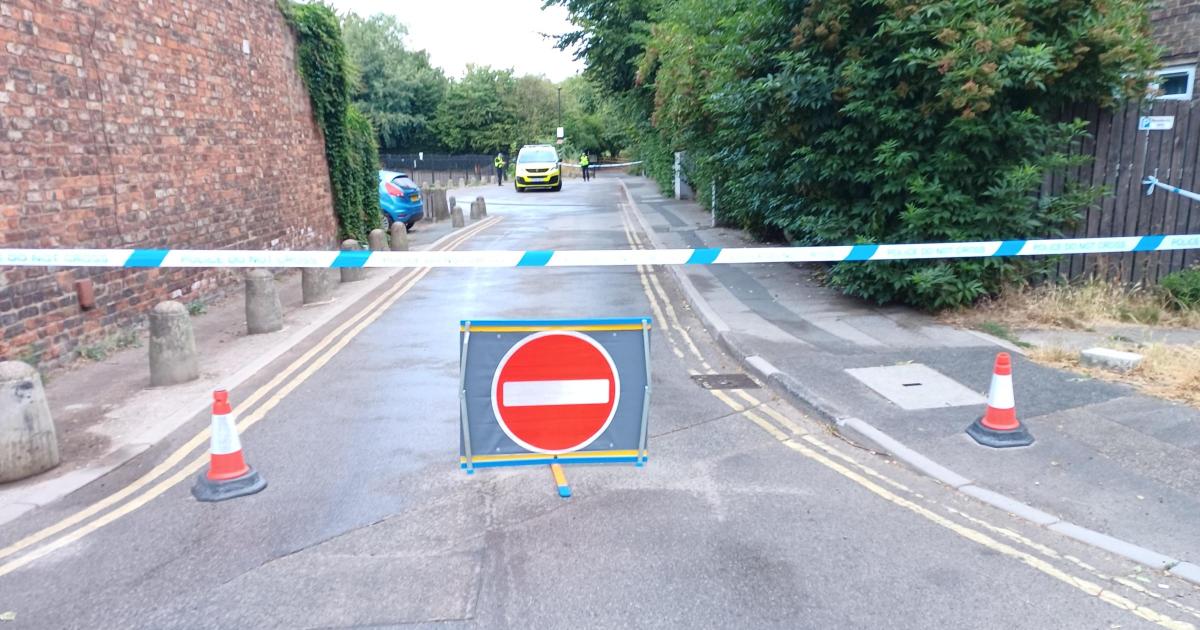
In Horwich, Winter Hey Lane will be closed on June 20, from St John Street to Lee Lane for the Horwich Rox event.

This closure will be in effect all day or until the event concludes.

Drivers should plan alternative routes to avoid delays.

Lastly, Guido Street will be temporarily closed from Horace Street to Darwin Street for approximately five days from  June 9 to 13 due to water works.

Advertisement

The restrictions will prohibit all vehicular and pedestrian traffic in this area. An alternate route will be available via Darwin Street, Halliwell Road, and Horace Street.

Motorists are advised to stay updated and plan their journeys accordingly.

Source link

Advertisement
Continue Reading

NewsBeat

Cristiano Ronaldo and Lionel Messi – a rivalry that shaped football

Published

on

Cristiano Ronaldo and Lionel Messi

“There is no doubt being in the same league changed everything,” says Txiki Begiristain, director of football at Barcelona between 2003 and 2010.

Ronaldo’s world record £80m move to Real Madrid in 2009 thrust the pair right into the centre of one of football’s most intense club rivalries – Barcelona v Real Madrid.

And by the time Ronaldo left for Juventus in 2018, the pair had won five Ballons d’Or apiece. In the nine seasons the pair were together in Spain, Ronaldo had scored 450 goals in 438 games for Real. Messi, 471 in 476 games for Barca.

But it had become far more than just numbers. By now, it was personal – and the growth of social media meant the world was watching.

Advertisement

“For Cristiano it was Lionel Messi and for Lionel Messi it was Cristiano. ‘I need to beat this guy’,” said Begiristain.

“The Mourinho – Guardiola rivalry was like a mirror for the Ronaldo – Messi rivalry. And, as players, they knew that game-winning goals were their route to one-upmanship,” added Spanish football writer Sid Lowe.

“We could watch it all on our phones. And in turn, the global exposure for the Messi – Ronaldo rivalry was now sky high, absolutely off the charts. Everything they did was must-see.

“It was on everyone’s lips in the press box, newspapers and social media comments, Cristiano and Leo were hell bent on outdoing each other on the pitch. Their personal battle for supremacy was symbolised by the ongoing trophy battle between the clubs.”

Advertisement

And what a battle it was. Messi and Barcelona undoubtedly won the La Liga honours, but the Champions League was dominated by Real Madrid and Ronaldo.

In 2012, Ronaldo inspired Real to their first La Liga title in four years but it was Messi who picked up his fourth straight Ballon d’Or award – much to his rival’s disgust. He went to win four of the next five.

“There is a genuine animosity that begins to grow,” says Robinson. “They didn’t acknowledge each other that much, they hated comparisons.

“They could not tolerate if they were the greatest of all time, there could be another in their era, in their football league.”

Advertisement

Deco adds: “I don’t think there is something similar to what happened with Messi and Ronaldo at this moment because at the same time the two clubs, Barcelona and Madrid, were at the same level and fighting for the big trophies.”

When Messi scored a 92nd-minute winner for Barcelona at Real Madrid in 2017, he removed his jersey and held it up the crowd.

“In the popular narrative, Cristiano had been the diva and Messi had been the humble servant of Barcelona, but this was the moment of Messi reasserting himself on the rivalry, saying maybe for the first time in his career ‘look at me’,” says Robinson.

Just a few months later, Ronaldo mimicked the celebration when he scored in the Spanish Super Cup at Barcelona.

Advertisement

Balague added: “If you needed proof of how much it meant to beat each other, those are the pictures.”

Source link

Continue Reading

NewsBeat

Friarage Hospital, Northallerton, offers vitreo surgery

Published

on

Friarage Hospital, Northallerton, offers vitreo surgery

Eighty-one people have received vitreo-retinal surgery at the Friarage Hospital in Northallerton since the service began in October 2025, bringing advanced ophthalmic care to the Hambleton and Richmondshire areas.

Carri Ramsbottom, from Friends of the Friarage, said: “Friends of the Friarage believe that every patient deserves high-quality care closer to home and this service is a shining example of our commitment to achieve this.

“It has been incredible to see how much of a difference the new service has made to our patients in such a few short months.

Advertisement

“We all want to return to the comfort of our own homes as quickly as possible following surgery, and it has been an honour to help make that a reality for our patients.”

The charitable group raised more than £200,000 to fund new surgical equipment, making the specialised eye surgery possible.

Vitreo-retinal surgery treats serious eye conditions such as retinal detachment, macular holes and complications from diabetic eye disease.

Before the service launched, patients in the area had to travel to The James Cook University Hospital in Middlesbrough, often requiring multiple appointments and assistance getting home, due to being unable to drive after receiving eye drops or injections.

Advertisement

The first to benefit was Andrew McDonald, a software engineer from Northallerton, who underwent vitreo surgery at the Friarage Surgical Centre in October 2025 after experiencing leakage in his eye caused by complications from uveitis; inflammation of the eye, which was significantly impacting his day-to-day life.

Mr McDonald said: “As the Friarage Hospital is within walking distance from my house, I was able to walk in, have my operation and walk home.

“It doesn’t get any better than that.

“I would like to say a huge thank you to Mr Saad and his wonderful team for their ongoing compassion and support from my initial appointments right through to my operation.

Advertisement

“They are all so kind and caring and I would recommend anyone thinking about going for vitreo surgery at the Friarage to just do it – the team will really look after you.

“As for the fundraisers and supporters of Friends of the Friarage, they are unsung heroes and a very special group of people, who helped make this possible.

“Eight months on, my eye is improving really well and is making a huge difference to my quality of life.”

He was under the care of Mr Ahmed Saad, consultant ophthalmologist and vitreoretinal surgeon.

Advertisement

Mr Saad said: “The introduction of vitreo-retinal surgery at the Friarage is already having a huge impact on our patients, like Andrew.

“Previously, our patients had to travel to other hospitals for this type of specialist treatment but now they can receive sight-saving treatment closer to home, reducing travel and waiting times, and making care more accessible and convenient for them and their families.

“We are extremely grateful to Friends of the Friarage for their generosity and support.

“Their contribution is directly helping us preserve and restore sight for people in our community, and we truly appreciate their continued commitment to supporting patient care at the Friarage.”

Advertisement

Source link

Continue Reading

Trending

Copyright © 2025