

Business
Why Trees Belong on the Risk Register
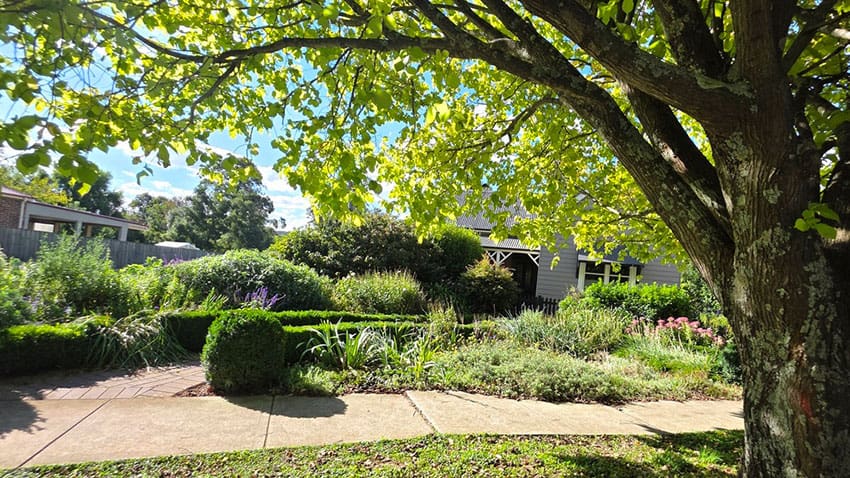
Most businesses can tell you when the boiler was last serviced, when the fire alarm was last tested, and when the lift was last certified. Ask when the mature beech at the edge of the car park was last inspected by someone qualified to assess it, and the answer is usually a pause.
Trees occupy an odd position in commercial risk management. They are conspicuous, they are often the most valuable landscape feature on a site, and they are almost never on the maintenance schedule. Then a limb comes down on a parked car, or a whole tree fails across a footpath, and the question of who was responsible for knowing it was going to happen becomes a very expensive one.
The duty is not optional and it is not passive
If your business occupies land with trees on it, you owe a duty of care under the Occupiers’ Liability Act 1957 to anyone lawfully on that land, and a lesser but real duty under the 1984 Act even to trespassers. Where a tree overhangs a road or footpath, the Highways Act 1980 gives the highway authority powers to compel action and to recover costs.
The important word in all of this is reasonable. The law does not require that trees never fail. Trees are living structures and some proportion of them will shed limbs regardless of what anyone does. What the law asks is whether the occupier had a reasonable system in place for identifying foreseeable risk, and whether that system was actually followed.
Courts have consistently framed the test around inspection. Not around outcome, and not around whether the defect was obvious in hindsight, but around whether a landowner had arranged for someone competent to look at the trees at sensible intervals, and whether that person would have spotted the problem. Where a business can produce records showing a periodic inspection regime by a suitably qualified person, the defence is strong even when a tree has failed. Where there are no records at all, the position is weak even when the failure was genuinely unforeseeable.

The absence of a paper trail is, in practice, the liability. This is why arboricultural contractors such as Red Oak Tree Care are increasingly asked for written condition surveys rather than a verbal quote to take a tree down. A quote is a commercial document. A survey is evidence.
What a defensible regime actually looks like
The National Tree Safety Group, whose guidance is widely treated as the reference point in this area, sets out an approach based on proportionality rather than blanket inspection. The core idea is straightforward. Assess trees according to the likelihood that a failure would hit somebody.
A tree in the middle of a fenced field poses a negligible risk to people regardless of its condition. The same tree, in the same condition, standing beside a school gate or a busy loading bay, requires a different level of attention. Zoning a site by target occupancy is the first step, and it is the step that keeps the cost of the whole exercise proportionate.
For most commercial sites, a workable regime looks like this. An informal walkover by a member of staff who has been briefed on the obvious warning signs, carried out a few times a year and particularly after severe weather. A formal inspection by a qualified arboriculturalist at intervals determined by the risk zoning, typically somewhere between one and five years. A written record of both, retained.
The warning signs a non specialist can be trained to spot are not subtle. Fungal fruiting bodies at the base or on the stem. Cracks or splits in major limbs. Cavities and decay pockets. Soil heaving or lifting on one side of the root plate. Sudden leaf loss out of season. A distinct lean that was not there last year. None of these confirms a tree is dangerous. All of them justify a call to someone who can tell you.
The insurance dimension people forget
There is a second financial exposure that has nothing to do with falling branches.
Across much of southern England, and particularly on the shrinkable clay soils that run through Surrey and the surrounding counties, tree roots are implicated in a significant share of subsidence claims. Clay expands when wet and contracts when dry. A large tree drawing moisture from beneath a shallow foundation during a dry summer can cause differential movement in a building, and the resulting cracking is expensive to remediate.
Where a claim is made against a neighbouring landowner whose tree is alleged to be the cause, the question of whether that landowner knew, or ought to have known, about the risk becomes central. Insurers examine tree management records. A business that has been actively managing its trees, with crown reductions carried out at appropriate intervals and documented, is in a materially better position than one that has left everything to grow unchecked for twenty years.
The inverse problem also exists. Remove a mature tree that has been drying out clay soil for decades, and the ground can rehydrate and heave, lifting foundations upward. This is why the reflexive answer to a tree near a building is not always to fell it, and why the decision should not be made by whoever happens to be holding the chainsaw.
Development sites and the cost of finding out late
For anyone acquiring or developing commercial property, trees carry a distinct category of risk that surfaces at exactly the wrong point in the transaction.
Tree Preservation Orders and conservation area designations restrict what can be done to trees regardless of who owns the land. A protected tree standing where the access road needs to go is a planning problem, a programme problem, and occasionally a deal breaker. Breaching a preservation order is a criminal offence, and sentencing takes account of any financial benefit the offender obtained, which means the calculation that it might be cheaper to fell the tree and pay the fine has been closed off deliberately.
BS 5837, the British Standard covering trees in relation to design, demolition and construction, sets out how an arboricultural impact assessment should be produced and how root protection areas should be calculated. Planning authorities expect to see it. Commissioning that work at the feasibility stage, before the design is fixed, costs a fraction of redesigning around a constraint discovered at planning committee.
Where businesses go wrong
Three failures account for most of the exposure.
The first is treating tree work as a grounds maintenance line item to be awarded on price. The gap in competence between a certificated arboriculturalist and a two person outfit with a chainsaw and a van is enormous, and it is invisible until something goes wrong. Ask for NPTC or equivalent certification covering the specific operations involved, and ask for the public liability certificate rather than accepting an assurance.
The second is failing to keep records. An inspection that happened but was not written down provides no protection whatsoever in a claim.
The third is reacting rather than planning. Emergency tree work carried out after a storm, at short notice, in poor conditions, costs several times what the same work would have cost as a scheduled operation, and it happens at the moment when every contractor in the region is fully booked.
A modest suggestion
Trees are assets. They raise property values, they contribute to biodiversity commitments that increasingly appear in reporting frameworks, and they do things for the experience of a workplace that no amount of interior design achieves. They are also structures that can kill people, and the law treats them accordingly.
Put them on the risk register. Establish who is responsible for them. Get a qualified survey of anything large enough to hurt someone. Keep the paperwork. The cost of doing all of that, for a typical commercial site, is smaller than most organisations spend annually on the coffee machine.
Business
Amalgamated Financial director Mark Finser sells $39,880 in shares

Amalgamated Financial director Mark Finser sells $39,880 in shares
Business
How can Disney get back its narrative momentum?

How can Disney get back its narrative momentum?
Business
Arlo technologies director Amy Rothstein sells $149,218 in stock

Arlo technologies director Amy Rothstein sells $149,218 in stock
Business
UFP Technologies executive chairman Bailly sells $4.1m in shares

UFP Technologies executive chairman Bailly sells $4.1m in shares
Business
Harvard reveals $2.2B SpaceX stake after Elon Musk company IPO
SpaceX stock rallies following CEO Elon Musk’s reveal of the new xAI Grok 4.6 model. Siebert Financial CIO Mark Malek analyzes SpaceX’s market performance, AI competitiveness and revenue potential on ‘Mornings with Maria’.
Harvard University’s investment arm disclosed a $2.2 billion stake in SpaceX, revealing a massive payoff from an early investment in Elon Musk’s rocket company following its blockbuster public debut.
Harvard Management Company reported the position in a regulatory filing Friday, making SpaceX the largest individual stock holding disclosed in its $4.3 billion portfolio of U.S. equities.
The investment highlights how SpaceX’s record-setting June initial public offering delivered significant gains for university endowments that gained exposure to the company through venture capital investments, in some cases more than a decade ago.
SPACEX AND TESLA CHOOSE TEXAS FOR AI CHIP MANUFACTURING PLANT THAT WILL BE WORLD’S LARGEST BUILDING

SpaceX’s next-generation Starship spacecraft atop its Super Heavy booster is launched on its ninth test at the company’s launch pad in Starbase, Texas, May 27, 2025. (Joe Skipper/Reuters, File / Reuters)
Harvard Management oversaw about $57 billion as of June 2025, according to the latest publicly available figure.
Harvard is not the only university investor benefiting from SpaceX’s move into the public markets.
The University of California’s investment arm disclosed a position worth roughly $1 billion in a filing this week, while the University of North Carolina and Washington University in St. Louis also held investments in the company.
| Ticker | Security | Last | Change | Change % |
|---|---|---|---|---|
| SPCX | NO DATA AVAILABLE | – | – | – |
Harvard’s position could include both shares owned directly and stock distributed to the university through private investment funds.
Harvard Management Company and SpaceX did not immediately respond to FOX Business’ requests for comment.
CATHIE WOOD SAYS BATTERED SPACEX COULD BECOME ‘MOST IMPORTANT COMPANY IN GLOBAL HISTORY’

Harvard University’s investment arm disclosed a $2.2 billion stake in SpaceX. (Scott Eisen/Getty Images, File / Getty Images)
SpaceX currently carries a valuation of more than $1.8 trillion. The gains arrive as university finances face pressure from uncertainty over federal research funding, demographic changes that are reducing the pool of college-age students and weaker returns from private equity.
Large university endowments have nevertheless delivered strong recent performance.
Endowment funds managing more than $500 million returned a median 18.9% before fees in the year ended in June, according to the Wilshire Trust Universe Comparison Service.

SpaceX currently carries a valuation of more than $1.8 trillion. (Getty Images, File / Getty Images)
SpaceX shares have fluctuated since the company debuted at $135 per share. The stock fell 0.9% Friday to close at $140.
CLICK HERE TO GET FOX BUSINESS ON THE GO
Investment managers overseeing more than $100 million in U.S. equities generally must submit Form 13F within 45 days after the end of each quarter, providing a snapshot of their holdings in securities traded on U.S. exchanges.
Business
Iran war commander visits USS Abraham Lincoln as carrier prepares to return home

Iran war commander visits USS Abraham Lincoln as carrier prepares to return home
Business
Stocks to Watch: Reddit, Applied Materials, Innventure
↗️ Reddit (RDDT): The social-media platform was selected to join the S&P 500 index. Shares were up 11% in midday trading.
↘️ Applied Materials (AMAT): The semiconductor-equipment maker reported higher third-quarter net income and increased revenue, but failed to impress investors. Shares ticked down nearly 6% in afternoon trading.
↘️ Innventure (INV): Innventure withdrew guidance for its Accelsius data-center liquid-cooling business, citing dynamics in the artificial intelligence infrastructure market. The stock plunged 57%.
Business
SMA Solar Technology AG 2026 Q2 – Results – Earnings Call Presentation (OTCMKTS:SMTGY) 2026-08-15
Seeking Alpha’s transcripts team is responsible for the development of all of our transcript-related projects. We currently publish thousands of quarterly earnings calls per quarter on our site and are continuing to grow and expand our coverage. The purpose of this profile is to allow us to share with our readers new transcript-related developments. Thanks, SA Transcripts Team
Business
Allstate president John Dugenske sells $8.89m in company stock

Allstate president John Dugenske sells $8.89m in company stock
Business
Avis Budget Group EVP sells $652,574 in company stock

Avis Budget Group EVP sells $652,574 in company stock
-
Fashion1 day agoWeekend Open Thread: Ann Taylor
-
Business7 days agoDatadog: Best Of Breed For Multiple Reasons
-
Business7 days agoHow to Start a Cleaning Business: A Step-by-Step Guide
-
NewsBeat4 days agoCommunication cards help banking customers access services or report scams
-
Business7 days agoBDC Weekly Review: Private BDC Q2 Numbers Are Strong
-
Business5 days agoOil Price Today (August 11): Crude oil rises to $88 after Trump’s compensation demand dents Hormuz opening. Here’s why
-
Fashion6 days agoAmazon Sundays: Closet Care Before Fall
-
Crypto World5 days agoWhy Did Nvidia Stock Fall on Monday Despite a $500 Billion Wall Street AI Deal?
-
Crypto World5 days agoRevolut wins French banking licence, creates second EU banking hub
-
Business7 days ago5 Things You Must Know About Jorge Messi, the Father and Longtime Agent Who Shaped Lionel Messi’s Career
-
Politics6 days agoBen-Gvir’s crocodile project halted but abuses at Ketziot Prison continue
-
Politics6 days agoThe Church of England’s ruinous reparations racket
-
Politics6 days agoSaudi Arabia used 86% of missile stockpile defending Iran attacks
-
NewsBeat19 hours agoMyanmar says over 300,000 Rohingya refugees verified for repatriation as exodus enters ninth year
-
Politics13 hours agoSEQ Code: The Three Letter Boarding Pass Code That Could Give You The Worst Seat
-
Politics7 days agoWhat’s An EDT? The Rise Of ‘Extreme Day Trips’ As A Travel Trend
-
Crypto World6 days agoUSDC and USDT Now Own 84% of Crypto Card Spend as the Euro Retreats
-
Politics7 days agoThe House Article | Burnham still needs to sell devolution to the public
-
Crypto World6 days agoCrypto Made a $9.6 Billion Record, But It’s Hiding a Crucial Truth
-
Fashion5 days agoCan You Wear Double Cloth Gauze Clothing To Your Office?

You must be logged in to post a comment Login