
He was from Arizona, and went on to explain how people in the US don’t fall over themselves to apologise all the time like we do.
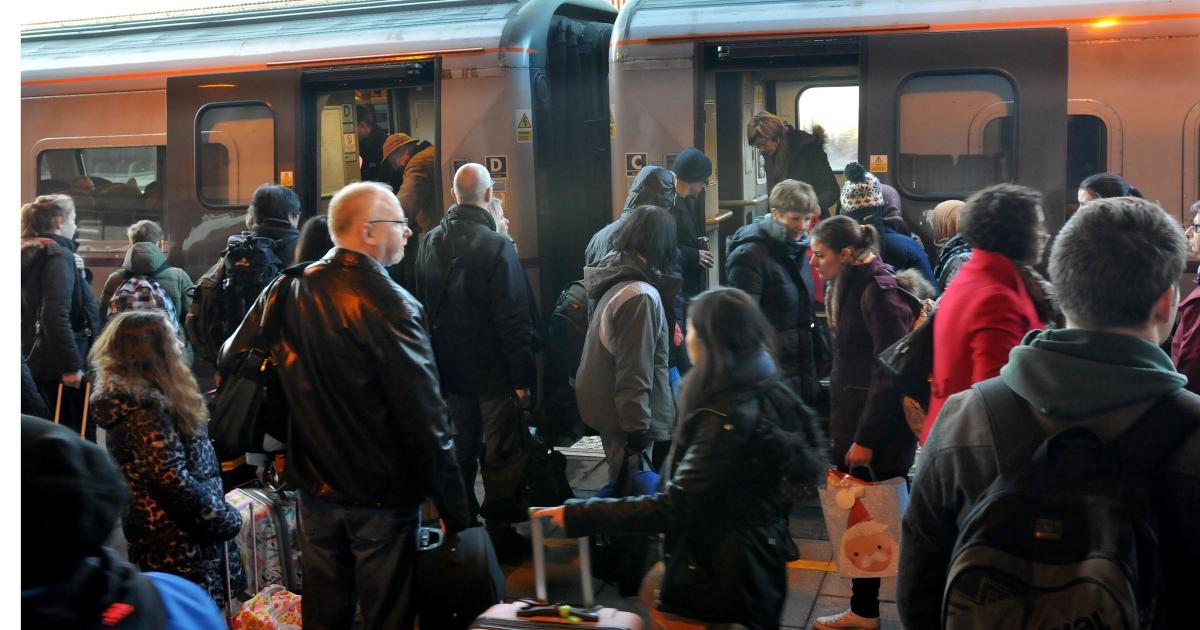
It’s true – we Brits are always keen to say sorry, often when it isn’t our fault. An hour previously I had said sorry to a woman who flung her backpack in my face while barging across a crowded rail platform – a ‘sorry’ hotspot. “Why did you apologise to her?” my husband asked.
He says sorry far less than I do, but then he is half Dutch, so maybe that explains it. I’m 100 per cent British and I apologise for almost everything. If someone steps on my foot I’ll say sorry. If someone lets a door slam in my face I’ll say sorry. In public settings I will often say: “Sorry, is this seat taken?,” when it clearly isn’t.
Advertisement
It drives my husband mad. “Sorry, but I bought these raspberries yesterday and they are all black underneath” I said while returning them to a supermarket last week. He told me: “Why are you sorry – they sold you rotten produce, you are entitled to return them.”
He’s always telling me to stop over-apologising for things that are not my fault.
I even apologise when I call helplines. “I’m sorry to bother you,” I will ask, while speaking with customer services.
British people say sorry on average nine times a day, according to research carried out last year by Babbel, a German language learning app. I would put the true figure at double that, for me at least.
Advertisement
In her book of English culture, Watching the English, social anthropologist Kate Fox identified a uniquely ‘English sorry reflex’. As part of her research she deliberately bumped into hundreds of people and intentionally jumped queues in towns and cities across England to record reactions. She encouraged colleagues to do the same while overseas, for comparison.
Fox found that around 80 per cent of English victims said sorry, even though the collisions were clearly her fault. Compared to when tourists from other countries were bumped, the difference was marked. Fox points out that only the Japanese have a similar culture, often leaving foreigners baffled by the constant apologies.
Saying sorry is definitely more a woman thing. In my experience females apologise far more often, and for far more trivial things. I believe it’s a sign of low self-confidence. We want to leave a good impression with others, so cover our backs by apologising. But in reality it works the other way, people don’t tend to respect those who constantly say sorry. They see us as weak, especially in the workplace.
But, of course, it’s a vital word in polite society. The well-known saying ‘Never explain, never apologise’ – attributed to the 19th-century British Prime Minister Benjamin Disraeli – would make for a very unlikeable person.
Advertisement
Nowadays, politicians and others in high office are constantly being asked to say sorry.
Saying sorry is also a way of protecting ourselves, avoiding potential conflict. We live in hostile times, on a planet populated by many rude, aggressive people and the desire to avoid that at all cost is lodged within our consciousness.
Online, there’s no shortage of analysis over why we British apologise so often, and a host of theories as to why we do it. There’s no definitive answer, so if you expected to find one in this column, I’m sorry.
He was pronounced dead on Thursday, 4th June, after sustaining a stab wound to the chest. Michael, the son of James’s girlfriend Wendy, was arrested shortly afterwards on suspicion of the killing and remains in police custody, reports the Mirror US..
Wendy’s first public statement comes in the wake of the Jumanji actor’s final public appearance before he was fatally stabbed by her son.
Speaking to The California Post on 5th June, the 76 year old said, “I’m just trying to make it through one day at a time, a minute at a time,” before adding, “I loved James and my son.”
She went on to say, “I can’t believe my son did it. I’m just trying to… ” before retreating back into her home in Tarzana, California. She had previously told TMZ that her son had previously been diagnosed with schizophrenia, but had stopped taking his prescribed medication prior to the alleged incident.
On Thursday, 4th June, Los Angeles police confirmed they had launched a murder investigation following a chilling 911 call. According to reports, the suspected killer rang the emergency services and stated, “I am the son of man, I just killed the man of sin.” Officers arrived at the property to find the actor unconscious in the front garden, having apparently sustained a stab wound to the chest. He was rushed to a nearby hospital, where the 81 year old was pronounced dead.
“The suspect was identified as 44-year-old Michael Gledhill, a resident of Tarzana,” investigators stated in a press release. “He was arrested and transported to Van Nuys Jail where he was booked for one count of murder.”
Wendy also shared a heartfelt message for James’s nearest and dearest. “They know I loved him so much. I’m so sorry. I’m so sorry this happened. I’m still in shock. I still can’t comprehend it,” she said.
James enjoyed a career spanning 45 years, amassing dozens of film and television credits, including well-loved titles such as Jumanji, The X-Files, Law and Order, and NCIS: Los Angeles, amongst many others.
Michael remains in custody on $2 million bail. Investigators have yet to disclose a motive for the senseless killing, nor have they confirmed whether Wendy’s claims that her son had been diagnosed with mental health issues prior to the stabbing are accurate.
Coastal councillors have said that changes to food waste collection are vital to establishing an environment where humans and gulls can thrive alongside each other.
North Yorkshire Council is not set to start separate household food waste collections until 2043.
It comes as plans for a £119,000 urban gull strategy – which includes investment in education campaigns, gull-proof rubbish bags, new and retrofitted litter bins – were backed by members of the Scarborough and Whitby Area Committee.
“While gulls, in particular Herring Gulls and Kittiwakes are a valued part of coastal biodiversity, their increasing presence in urban areas has led to significant issues including noise, fouling, aggressive behaviour (human/gull contact), and overall public health concerns,” the strategy states.
Advertisement
Councillors welcomed the “outlawing of some of the barbarous practises that have been used in the past” and a “move into the 21st century”.
Officers said the strategy was “very much a theoretical document” that would become a “proper action plan”.
Tim Croot, an officer in the environmental protection team, told councillors that North Yorkshire Council had moved on from “quite draconian interventions such as removing eggs and shooting [gulls]”.
He added that methods used by the now-defunct Scarborough Borough Council, which included netting and spikes “wasn’t terribly successful”.
Advertisement
“The strategy from the very outset aimed to try and create some cohesion where we could have co-existence and acceptance of the birds,” he said at the meeting on Friday, June 5.
“It is their coast as much as it is the humans’ coast, and we need to get to the point of having a strategy in which the actions take account of the needs of the birds as much as the needs of people.”
The key ‘pillars’ of the new strategy are focused on waste and rubbish, cleaning and jet washing, targeted proofing, and monitoring and planning.
Cllr Janet Jefferson welcomed the proposal, stating: “This is such a good way forward. I think education is one of the biggest things, because I see people feeding them publicly, and also just dumping their rubbish bags in the street.”
Advertisement
Councillors said they were concerned that the introduction of weekly food waste collections is not set to start in North Yorkshire until 2043 – while other councils are already required to implement kerbside recycling services – because of an extension granted to NYC due to its existing waste management arrangement.
Cllr Neil Swannick said: “If you could take the food waste out of the waste stream and stop it being mixed up with other materials, then potentially you could at least deal with a major part of the problem.
“If there was a culture of everyone putting food waste into a separate collection bin, then that removes food waste from the waste site.”
Cllr Derek Bastiman agreed that changes to food waste recycling “should form part of this strategy” and seconded Cllr Swannick’s amendment welcoming the gull strategy as well as “suggesting that further work is done to explore the possibility of bringing forward food waste reduction before 2043, including a potential pilot for the coastal area”.
Advertisement
The costs associated with the strategy include £30,000 on seagull-proof rubbish sacks, £50,000 for jetting, which is based upon the £40,000 spent last year plus inflation and an increase in activity based upon customer feedback.
The £19,000 for new and retrofitted litter bins relates to the cost of trialling a mix of both new bins and retrofitting additional measures to existing bins, the report states.
Meanwhile, £15,000 would go towards education and communication and £5,000 for signage.
The amendment and recommendations were unanimously endorsed by the Scarborough and Whitby Area Committee.
Advertisement
A final decision will be made by NYC’s executive committee in August.
Cheesy pasta may seem very simple to make, but it can often be really plain and boring — unless you add a cheap ingredient most people have in their kitchen cupboard.
Cheesy pasta is testament to the fact that the most straightforward meals are the most satisfying. It’s an ideal dish for those cosy evenings when something hearty is in order. While it’s widely regarded as a simple recipe, the sauce can turn out rather bland without the correct components.
Advertisement
Milk and butter can form a creamy foundation, yet they risk diluting the natural taste of the cheese, meaning you can barely detect it. This can leave cheesy pasta tasting somewhat flat, prompting experimentation with ways to enhance it.
After trialling smoked paprika, chilli flakes, garlic and even jalapeños, it turns out that a few drops of Worcestershire sauce can produce the finest cheesy sauce imaginable.
Cheese sauce is renowned for being indulgent, yet it can also taste slightly one-dimensional and uninspiring due to its high dairy content.
Worcestershire sauce, however, helps redress this balance by introducing acidity, which cuts through the richness of the butter, milk and cheese, preventing the sauce from becoming overly heavy.
It simply sharpens the overall taste, rendering the sauce more savoury, well-rounded and considerably cheesier.
Worcestershire sauce contains fermented ingredients that contribute a touch of saltiness and a subtle heat, meaning your cheesy pasta will be considerably more flavoursome using just everyday kitchen staples.
Cheesy pasta is such a wonderfully simple dish, and incorporating a dash of Worcestershire sauce has transformed it into a firm favourite comfort dinner that takes fewer than 10 minutes to prepare.
How to make better cheese pasta
Ingredients
200g of pasta
One tablespoon of flour
25g of butter
Two cloves of garlic (chopped)
300ml of milk (room temperature)
100g of cheddar cheese
100g of Emmental cheese
One tablespoon of Worcestershire sauce
One tablespoon of Dijon mustard
Black pepper
Any other seasonings you wish to use (such as smoked paprika, chives, parsley, etc)
Notes:
Should you prefer to skip any cooking preparation, simply substitute the garlic and butter for garlic butter instead.
I’d also recommend removing the milk and butter from the fridge in advance, as cold dairy is more likely to clump up when heated. For a silkier sauce, ensure your ingredients are at room temperature.
Cheddar is the go-to cheese for a pasta dish owing to its robust flavour and excellent melting properties, though used alone it can become overpoweringly rich if too much is added.
It’s preferable to combine cheddar with a milder variety for a more balanced flavour profile. Emmental works particularly well, though mozzarella or Parmesan are equally suitable alternatives.
Advertisement
No additional salt has been incorporated into this recipe, given that the Worcestershire sauce already provides sufficient seasoning.
Method:
To start, place your pasta into a pan of salted boiling water and cook following the packet instructions. Remember to reserve a small mugful of pasta water prior to draining.
While the pasta is cooking, melt the butter in a saucepan over a medium heat. Add the garlic and allow it to cook for approximately 60 seconds before it begins to colour.
Incorporate the flour and combine it thoroughly with the butter until you achieve a smooth paste, otherwise known as a roux.
Gradually introduce the milk in small amounts, stirring continuously until a sauce forms. Take great care here, as the most frequent error is adding excessive milk, resulting in a thin, watery consistency.
Lower the heat and incorporate the Worcestershire sauce and Dijon mustard. Should you wish to include any additional seasonings, introduce them at this point.
Take the pan off the heat and add the cheeses. Gradually add small amounts until they’ve completely melted and you’ve achieved a silky sauce.
Should your sauce appear overly thick, incorporate a touch of the reserved pasta water, but if it looks too runny, then add slightly more cheese.
Season the sauce generously with black pepper, but refrain from adding salt as the Worcestershire sauce is already rather salty.
Your cheese sauce should now be intensely cheesy and considerably more flavoursome than usual.
Belfast Council took DAERA to court after it stopped funding for animal welfare enforcement
Belfast Council is telling Stormont it is “undermining” animal welfare by refusing to fund council services while introducing new laws in the city and around Northern Ireland.
Advertisement
Belfast Council has agreed to write to the Stormont Department of Agriculture, Environment and Rural Affairs stating it is “concerned that introducing additional animal welfare responsibilities, without providing adequate resources, risks undermining both existing enforcement activity and the successful implementation of new legislation.”
The council is saying in a letter to Alliance MLA Andrew Muir, Minister for DAERA that “Animal welfare cannot be improved through regulation alone, and requires properly resourced services capable of investigating complaints, tackling illegal breeding and protecting vulnerable animals.”

The animal welfare service within councils was fully funded, at around £1.25 million per year, by DAERA until August 2023, when the department said it was unable to continue to provide funding for councils in relation to non-farmed animal welfare services.
A judicial review was then lodged in the High Court by Belfast City Council and Fermanagh Omagh District Council on behalf of SOLACE (Society of Local Authority Chief Executives) against the Stormont department, to challenge its decision. The court found that there was a breach on the grounds of a “procedural legitimate expectation.”
The final court order required that before making any decision the department must give advance notice to the AERA Committee for its consideration and must notify councils once it has done so. The court order also said DAERA must reimburse the councils’ full legal costs in relation to the Judicial Review.
A Belfast Council report states: “Officers are now aware that a letter from the minister/permanent secretary was tabled at the AERA Committee on April 16 2026. The letter advised the committee that DAERA does not intend to provide funding to councils for animal welfare services in 2026/27 due to budget constraints.”

Advertisement
In February, Minister Muir said he would take forward legislation to require sellers and suppliers of puppies, and sellers of kittens, under six months of age, to register with their local council. The seller and supplier will be required to meet specific conditions of registration.
The council report states: “Whilst officers welcome any steps to improve animal welfare, it has been stressed to departmental officials that councils do not have the capacity to implement this legislation and therefore there needs to be appropriate assurance around the resources which will be provided to councils to deliver this additional function.
“The department has indicated that the registration scheme would be self-financing. Council officers have asked for evidence to demonstrate that would be the case. To date this additional, supporting financial information has not been provided by the department.”
Green Party Councillor Anthony Flynn spoke this week at the monthly meeting of the full Belfast City Council at City Hall about the outcome of the Judicial Review in relation to animal welfare services and new animal welfare legislation. He said: “I think it is deeply important that we actually recognise the excellent work carried out by animal welfare officers across Belfast and Northern Ireland.
Advertisement
“These officers deal with some of the most distressing cases of neglect, cruelty and illegal breeding, and the types of animal cruelty that exists in our community should horrify all of us.”
He added: “But what concerns me about the department’s response at the end of this case is the contradiction in its approach. On one hand the DAERA minister is talking about strengthening animal welfare legislation by introducing new registration requirements for puppy and kitten sales. This I wholeheartedly agree with, and I have fought for, for years.
“However, on the other hand the department is withdrawing funding from the very officers that are responsible for enforcing animal welfare on the ground. This follows a pattern of behaviour from Executive ministers, and particularly the DAERA minister.
“(It means) local councils, and local council officers, will have tonnes of extra responsibility, but without the resources necessary to actually deal with that responsibility. If Stormont is serious about improving animal welfare standards, it cannot continue to place additional responsibilities on councils without demonstrating those responsibilities will be properly resourced.
Advertisement
“We can’t continue to expect that our ratepayers in Belfast absorb those additional costs, while departments announce new schemes, without the funding to back them up. That is not good for the state of animal welfare in our city, and it is not good for our ratepayers.”
He said: “Good animal welfare standards are achieved through properly funded enforcement, through trained officers and effective regulation. Laws that cannot be enforced properly do not improve animal welfare standards in our city.”
He successfully proposed an amendment to the council’s letter to the Agriculture, Environment and Rural Affairs Committee at Stormont.
DUP Councillor Ruth Brooks at the meeting announced her “full agreement” with the Green Party on the matter. She said: “Issues that we really want to deal with in this city are being held back because of the amount of resources we as a council are having to put into animal welfare and our dog warden service”
Advertisement
She said: “We are as a council failing to get some of the basics right, because we are being asked to do so much, but if we are going to tackle these issues, we can’t be left as sole funders. There has to be funds that come from DAERA.”
This will be the third location in Northern Ireland
Fast-food chain Popeyes has submitted plans to open a location in Belfast City Centre.
Advertisement
Plans have been spotted on the planning portal for signage and a fascia which don the chicken shop’s logo and signature colours.
Popeyes currently have two locations across Northern Ireland. It opened its first location at Lesley Forestside in September 2024, then followed with The Junction in Antrim in July 2025.
The new chicken restaurant is set to open its doors in the former GAME store on Castle Place. There are no further details on when the location will open.
Signage has also been spotted at Lesley Bloomfield, indicating that Popeyes is set to open in Bangor. A sign with the logo and ‘coming soon’ has appeared, and it is set to open in 2027, according to the shopping centre’s Facebook.
This follows shortly after Popeyes announced they were set to open its very first location in the Republic of Ireland. Their Blanchardstown location will open on June 6, 2026.
Popeyes Louisiana Chicken, founded in New Orleans in 1972, is known for serving up American Southern-style chicken dishes and sides. Customers can expect chicken sandwiches, chicken tenders, hot wings, wraps and more when they open the doors of their new location .
Having launched in the UK in November 2021, Popeyes now has over 80 sites in the UK with plans to open more than 45 new restaurants in 2025. The chain employs approximately 3,000 people in the UK and expects to create another 2,500 new roles this year.
Popeyes is joining Wingstop as the second chicken chain to submit plans to open on the same street. Plans were spotted in March of this year for the famous wing joint to open up in the Costa on Castle Place.
The man arrested following the discovery of the body of a missing 11-year-old is reportedly the father of one of her friends
The main suspect in the death of a missing 11-year-old girl is reportedly the father of one of her friends – who was previously accused of rape but remained free.
Advertisement
French investigators have been searching for missing Lyhanna for days.
She disappeared in the southwestern Gers region on May 29, and the searches ended with the discovery of her body in a disused grain silo.
Police notices said she had been wearing a black-and-white striped top, black shorts and yellow socks with branding from the Japanese manga series “One Piece”.
On Thursday authorities announced a child’s body dressed in “similar clothes” had been found.
Police were led to the grain silo by a tip-off that the suspect in custody had previously worked there, Gers-region prosecutor Olivier Naboulet said on Friday evening.
DNA matching confirmed the body was Lyhanna’s but more autopsy work is needed to determine the cause of death, Naboulet said.
Advertisement
Speaking earlier Friday, French President Emmanuel Macron joined the outpouring of dismay, saying the case revealed cracks in the system and that he was “shocked”.
“Things didn’t happen as they should have done. That is clear. And so it is unacceptable,” Macron said. “We cannot look her family in the face and say everything went well.”
French media reported the 41-year-old man taken into custody was seen in front of Lyhanna’s school in the Gers town of Fleurance and, on surveillance cameras, later spotted driving with her in his car.
He told investigators that he dropped her off near the municipal swimming pool, media reports said.
Advertisement
Another Gers-region prosecutor, Clemence Meyer, said this week that young girls and their families had previously lodged multiple complaints about the suspect, including allegations of rape.
An allegation that the man raped a minor at his Gers-region home in 2020 was looked into, with medical evaluations and police interviews, but authorities closed the case in 2024 for lack of evidence, the prosecutor said.
The man was the subject of another, still ongoing police investigation for alleged rape when Lyhanna disappeared.
Advertisement
The child in that case alleges the suspect raped her repeatedly at his home in 2024 and 2025, the prosecutor said.
That case has bounced between jurisdictions.
She also said another allegation of raping a minor was lodged against the man this week.
The government has now launched an overarching investigation.
Advertisement
Justice Minister Gerald Darmanin said officials will look at the time it took for casework to be transferred between jurisdictions, why information is transmitted on paper, not electronically, why police seemingly didn’t follow orders and “why we didn’t intervene despite many months of complaints against the man”.
“It’s completely unacceptable,” Darmanin said, speaking Thursday. “We are all terrified by this malfunction.”
He said it reveals “our poor organisation and without doubt, the fact that at the Justice Ministry and elsewhere, we don’t take the words of children seriously”.
Lymph nodes play a key role in the immune system, helping the body fight infections and cancer. In breast cancer, the lymph nodes in the armpit are often the first place the disease spreads to and, at the moment, everyone with invasive breast cancer undergoes surgery to remove lymph nodes for examination.
A pioneering AI tool which colour-codes body parts during live operations has been deployed by surgeons for the first time in the UK.
Medics at St Mark’s, the National Bowel Hospital, utilised the system on Thursday during surgery on a patient in her 60s.
The tool, known as Eureka, works alongside robotic or laparoscopic procedures, projecting real-time, colour-coded highlights onto a screen.
This visual aid helps surgeons identify and protect or dissect specific tissues, such as nerves appearing green or connective tissue in turquoise, enhancing precision and safety.
Advertisement
Experts have praised the portable AI unit for boosting efficiency in the operating theatre. It was developed by Japanese surgeons who trained the AI using thousands of surgical video recordings.
The operation on Thursday was the first time the technology has been used in the UK (PA)
The operation on Thursday was the first time it has been used in the UK.
It was also the first time that it has been used during surgery outside Japan.
The patient, who has not been named, received a bowel resection at the hospital, which is part of London North West University Healthcare NHS Trust.
Consultant surgeon Mr Kapil Sahnan described the tool as an “extra helping arm”.
Advertisement
He said that it helps “look at your live surgery and start telling you which are the hidden structures which perhaps you can’t see”.
He added: “And the hope and the idea being is, that if you can identify these, that the operation becomes safer, you have this kind of extra helping arm with artificial intelligence running at the same time as your surgery, preventing errors and making everything a lot more safe.
“And we were the first hospital in the world outside of Japan to use it.”
Medics at St Mark’s, the National Bowel Hospital, used the tool to operate on a patient in her 60s (PA)
He went on: “Another way of thinking about it is, I remember that my mother used to use an A to Z when she had to plan routes. Now we all use Google Maps and Waze.
“And this is that version of kind of navigation that now has been applied to surgery.
Advertisement
“The difference has been that real time aspect, so you can see it at the same time as you’re operating.
“The idea being is you want to prevent any errors happening before they do, and one way to do that is use, not human intelligence but intelligence, which has been derived from thousands and thousands and thousands of operative videos where people have gone through and labelled things.
“So the computer can see things before the human eye can.”
He added: “You get these really beautiful images, they put colour overlays over the operative images. which can either be on constantly, or they can pulse.”
Advertisement
Mr Sahnan said work was under way to work out how “we can genuinely prove that this is going to be advantageous and, more importantly, how we can start rolling it out.
“We’re lucky to have it today, but it would be amazing if everybody had it in the next couple of years, it would make surgery for everybody a lot safer.”
The U.S. military says it shot down four Iranian drones that were launched toward the Strait of Hormuz on Friday and then struck some of the Islamic Republic’s coastal surveillance radar sites in response.
“The attack drones posed an immediate threat to regional maritime traffic,” U.S. Central Command said on social media.
It was the latest in back-and-forth attacks that have strained the tenuous ceasefire in the war.
You must be logged in to post a comment Login