

Crypto World
US House weighs crypto tax proposals, de minimis reporting rules


The U.S. House Ways and Means Committee circulated seven discussion drafts of digital asset tax legislation ahead of a Tuesday hearing, signaling a concentrated effort to reshape how crypto activities are taxed under the Internal Revenue Code. The drafts tackle a broad range of topics, including stablecoins, mining, staking, and on-chain transactions, with an emphasis on easing compliance burdens while clarifying entitlement, classification, and reporting rules for market participants.
Specific proposals under consideration include reducing the tax paperwork for crypto holders, clarifying the tax treatment of mining and staking rewards, and potentially introducing a de minimis reporting threshold for smaller transactions. The seven drafts were released in advance of a formal hearing chaired by Republican Jason Smith, underscoring bipartisan interest in modernizing digital asset tax policy.
According to Cointelegraph, industry advocates have been pressing lawmakers to lessen reporting burdens for mining and staking activities and to create a de minimis exception to relieve small-value transfers from onerous tax documentation.
In parallel, a draft bill released by members of Congress in March and officially introduced in May as the Digital Asset PARITY Act proposed a $200 reporting threshold for stablecoin transactions, while explicitly excluding a similar threshold for cryptocurrencies such as Bitcoin. The aim, supporters say, is to introduce tax clarity that could encourage broader onshore activity in the diverse digital asset space.
Cody Carbone, CEO of The Digital Chamber, framed the debate around tax clarity as essential to the sector’s growth: “We need digital asset tax clarity or activity will never fully onshore.” His remark reflects a broader push from industry groups to align U.S. policy with how digital assets are traded and held in practice, rather than forcing all activity into existing traditional-asset tax constructs.
Despite momentum in the House, officials note that any bill or amendment addressing crypto tax policy will require bipartisan support in Congress before enactment. While the House hearing proceeds, Senate leadership has indicated that lawmakers will first advance a budget reconciliation package before turning to a separate digital asset framework, such as the CLARITY Act, as part of a broader policy workflow.
As policymakers refine their approach, related policy conversations continue in other jurisdictions and at the state level. For instance, a broader tax-policy debate around crypto has featured discussions of exemptions and thresholds that would lessen reporting for small-value transfers and reduce administrative friction for exchanges, mining operations, and staking services alike. In a related vein, discussions in Congress intersect with ongoing questions about how digital assets should be treated under securities and banking frameworks, as well as how they align with international regulatory standards.
Wyoming Senator Cynthia Lummis has publicly signaled that there is consideration in both the House Ways and Means Committee and the Senate Finance Committee of a de minimis threshold for Bitcoin transactions—an approach described in her own draft legislation released in July 2025 and cited in Congressional discussions. The idea would be to provide a clear, lower-cost compliance path for routine, low-value transfers, potentially harmonizing federal treatment with state-level efforts and market practice.
Key takeaways
- The Ways and Means Committee circulated seven draft bills aimed at digital asset taxation, covering stablecoins, mining, staking, and on-chain transactions, ahead of a Tuesday hearing chaired by Rep. Jason Smith.
- Proposals include reducing reporting requirements for crypto holders and establishing a de minimis threshold for small transactions, along with clearer guidance for mining and staking activities.
- The PARITY Act envisions a $200 reporting threshold for stablecoins but does not extend the same threshold to major cryptocurrencies such as Bitcoin, reflecting a tiered approach to governance across asset types.
- Legislative momentum in the House faces cross-chamber dynamics: the Senate is prioritizing a budget reconciliation package before pursuing a standalone digital asset framework such as the CLARITY Act.
- State-level developments are progressing in parallel. Illinois passed a budget that includes digital asset taxation provisions, with a planned 0.2% tax on brokered digital asset transactions pending signing by the governor.
National policy proposals and regulatory intent
The seven draft bills demonstrate an attempt to codify tax treatment for a broad array of digital asset activities. By proposing a lighter reporting burden for ordinary holdings and transactions, lawmakers appear to acknowledge the friction between tax administration and the practical realities of retail and institutional crypto usage. At the same time, the drafts seek to provide clearer classifications for mining and staking rewards, which have historically presented ambiguity under existing tax rules. This alignment could impact how exchanges, mining operators, staking-as-a-service providers, and other service entities structure their compliance programs and reporting workflows.
The Digital Asset PARITY Act’s focus on a $200 stablecoin reporting threshold highlights a deliberate split in policy design: stablecoins, as near-term payment rails with high on-chain usage, may warrant a lower reporting bar to minimize friction for everyday transactions. By contrast, the act does not extend a similar exemption to widely traded cryptocurrencies like Bitcoin, signaling a differentiated treatment based on perceived risk profiles and regulatory oversight needs. Industry observers have framed the PARITY Act as a stepping stone toward more comprehensive clarity, while critics caution that stability-focused thresholds could invite regulatory arbitrage or uneven enforcement across asset classes.
The inclusion of a potential de minimis exemption for small transactions—the so-called de minimis reporting cut-off—addresses a common pain point for users and intermediaries. If adopted, such thresholds could reduce the administrative burden on individuals who engage in modest crypto activity and on smaller exchanges that currently face disproportionate compliance costs relative to transaction scale. Yet, setting thresholds also raises questions about coverage—whether off-chain exchanges, over-the-counter desks, and cross-border transfers would be encompassed—and how authorities would verify and enforce exemptions without creating loopholes.
From an institutional standpoint, tax clarity is viewed as a prerequisite for broader onshore participation by wallets, custodians, miners, and staking providers. The industry push aligns with a broader regulatory objective: to foster a transparent and predictable tax environment that minimizes dispute resolution and improves the quality of tax data for enforcement and compliance workflows. While lawmakers weigh the balance between simplicity and precision, financial institutions and crypto firms will closely monitor the approach to reporting thresholds, asset classifications, and the scope of taxable events.
State-level developments and compliance implications
The Illinois General Assembly approved a state budget that allocates new digital asset tax provisions as part of the fiscal framework. If signed into law by Governor JB Pritzker, crypto users would face a 0.2% tax on transactions conducted through brokers registered with the state. The move underscores how state-level policy can shape the day-to-day operational posture of exchanges, custodians, and other market participants that interact with Illinois residents. For market participants with multi-jurisdictional footprints, state tax rules add another layer of complexity to tax reporting, client communication, and regulatory compliance programs.
These developments occur in a broader context where financial-services firms—ranging from traditional banks to crypto-native institutions—are assessing how digital assets should be integrated into their risk, AML/KYC, and licensing frameworks. Tax policy changes at the federal and state levels can influence licensing requirements, reporting expectations, and cross-border cooperation, particularly in an environment where enforcement priorities and regulatory interpretations continue to evolve.
Additionally, observers note the broader policy conversation intersects with international efforts and market structure considerations, including how U.S. tax policy aligns with global standards and regional frameworks. While the specifics of MiCA, SEC, CFTC, or DOJ enforcement strategies exist outside the immediate legislative drafts, the direction of U.S. policy can influence global capital flows, cross-border reporting, and the design of stablecoin regulation and banking integration for crypto firms.
Industry and policy researchers will be monitoring how the state and federal proposals unfold, particularly around threshold levels, the treatment of mining and staking, and the scope of which activities trigger taxable events. The working assumption remains that bipartisan support is necessary for any substantive reform to pass both chambers and gain presidential approval, given the mixed track record of crypto tax legislation in recent years.
Related context in other jurisdictions, such as Israel’s approach to voluntary crypto disclosures and tax reporting, underscores the global sensitivity around compliance and enforcement. These comparative developments illustrate the practical challenges that regulators face when balancing innovation with robust tax administration and consumer protection.
Meanwhile, discussions surrounding de minimis exemptions continue to anchor debates about how best to calibrate tax policy with market realities. Senator Cynthia Lummis’s de minimis proposal for Bitcoin, introduced as part of a broader policy effort, reflects a recognition that a nuanced approach—distinct from other asset types—may be necessary to address the realities of digital asset usage and reporting.
As the legislative process unfolds, practitioners should prepare for a future where tax compliance programs, reporting systems, and licensing strategies are redesigned to accommodate a more explicit and harmonized set of rules for digital assets. Financial institutions, exchanges, and miners alike will need to align internal controls with evolving definitions of taxable events, thresholds, and asset classifications.
Closing perspective: The pace and direction of crypto tax policy in the United States will hinge on cross-chamber consensus and the ability to translate policy goals into implementable rules that withstand judicial and regulatory scrutiny. Watch for developments around the CLARITY Act, reconciliation timelines in the Senate, and state-level actions that could foreshadow a broader national framework.



SpaceX has secured a major compute agreement withGoogle ahead of its planned Nasdaq listing, adding another large customer to its expanding AI infrastructure business.
Summary
- SpaceX has secured a $920 million monthly compute deal with Google ahead of its planned Nasdaq IPO.
- Google will access about 110,000 NVIDIA GPUs and related equipment from October 2026 through June 2029.
- Google said the agreement will help meet stronger-than-expected demand for Gemini Enterprise and other AI products.
A regulatory filing by SpaceX said Google will pay the company $920 million per month from October 2026 through June 2029 for access to about 110,000 NVIDIA GPUs, CPUs, memory, and other related equipment. The filing said Google’s access will begin at a lower fee as the service ramps up through September.
Google turns to SpaceX for AI capacity
The agreement comes as Google faces rising demand for its AI products. In a statement, a Google representative said Google Cloud and SpaceX have worked together for years and described the contract as a short-term capacity arrangement.
According to Google, demand for its agent platform, Gemini Enterprise, has been higher than expected. The company said the SpaceX deal will provide bridge capacity while it works to meet customer needs.
Unlike Anthropic, Google already controls one of the world’s largest AI compute footprints, according to outside estimates cited in the report. However, Alphabet’s own spending plans show the pressure created by the AI race. Alphabet has committed more than $180 billion in capital expenditures this year and has said spending will rise significantly in 2027. The company also recently announced an $80 billion equity sale.
Deal follows Anthropic agreement
SpaceX’s new contract with Google follows a similar deal announced in late May with Anthropic. Under that agreement, Anthropic agreed to pay SpaceX $1.25 billion per month through 2029 for compute capacity from the Colossus 1 data center near Memphis, Tennessee.
The report said Colossus 1 was originally built by xAI, which is now part of SpaceX, for its own artificial intelligence work. Anthropic raised usage limits on the same day its deal with SpaceX was announced, after facing compute limits before the agreement.
Google’s deal appears to cover about half the compute made available to Anthropic at Colossus 1. SpaceX did not identify which data center Google will use. Elon Musk has previously said Colossus 2 may be reserved for xAI, according to the report.
Cancellation terms give both sides flexibility
The regulatory filing said both SpaceX and Google can terminate the agreement with 90 days’ notice after December 31, 2026. The filing also includes a delivery condition tied to GPU access.
If SpaceX fails to provide the committed GPU capacity by September 30, 2026, Google may end the agreement after a one-month grace period, according to the filing. Google may also accept the available number of GPUs and receive a reduction in monthly fees.
IPO plans add weight to compute strategy
SpaceX announced the Google agreement one week before its stock is expected to begin trading on Nasdaq. SEC paperwork shows the company plans to raise about $75 billion at a valuation near $1.75 trillion, which would make it the largest IPO in history.
Google is already a long-time SpaceX investor. Its stake is expected to be worth more than $100 billion after the listing, according to the report. The two companies are also reportedly discussing orbital data centers, a project tied to SpaceX’s plans after the IPO.


Digital asset treasury companies have come under fresh pressure as the crypto market slump has pushed major bitcoin, ether, and Solana holders into large unrealized losses.
Summary
- Hyperliquid treasury firms remain the only major DAT group with meaningful unrealized gains, according to Artemis data.
- Hyperliquid Strategies holds about 23.7 million HYPE and has over $1.1 billion in paper gains.
- Strategy now faces more than $12.8 billion in unrealized Bitcoin losses, according to SaylorTracker data.
Artemis data shows that Hyperliquid-focused treasury firms are the only major group still holding meaningful paper gains, even after HYPE pulled back from its record high above $74 earlier this week.
The contrast has become sharper in the first half of 2026, as several public companies that copied the crypto treasury model now face deep losses on their token positions. Companies built around bitcoin, ether, and Solana reserves are carrying billions of dollars in unrealized losses, while HYPE treasury firms remain positive for now.
Hyperliquid Treasuries Stay Ahead
According to Artemis, Hyperliquid Strategies holds about 23.7 million HYPE and still has more than $1.1 billion in unrealized gains. The gain remains even after HYPE fell 11.98% during the latest market pullback.
Hyperion DeFi, which disclosed just over 2 million HYPE in its latest SEC filing, also remains in profit. Artemis estimates the company has about $35 million in unrealized gains on its HYPE holdings.
The figures separate HYPE treasury firms from most other digital asset treasury companies. Artemis data shows that treasury firms tied to bitcoin, ether, and Solana are now dealing with major paper losses as crypto prices trade near multi-year lows.
Strategy Leads Bitcoin Treasury Losses
SaylorTracker data shows Strategy, formerly MicroStrategy, now holds more than $12.8 billion in unrealized bitcoin losses. The company helped popularize the corporate bitcoin treasury model and remains the largest public bitcoin holder.
Strategy began buying bitcoin when the asset traded near $10,000, but SaylorTracker data shows its average acquisition cost has climbed to about $75,000 per BTC after years of purchases.
The company’s position has moved sharply over the past year. When bitcoin topped $126,000 last October, Strategy had more than $14 billion in unrealized gains. SaylorTracker data later showed those gains turned into about $9.5 billion in losses in February before briefly returning to positive territory in April.
This week, Strategy said it sold 32 bitcoins for $2.5 billion. After that announcement, bitcoin fell toward $59,100 on Friday afternoon, leaving Strategy with a paper loss of about 20% on its holdings. MSTR shares were down more than 11% on Friday near $116, close to a two-year low.
Ether Treasury Firms Face Heavy Paper Losses
Ethereum treasury companies are also under pressure after ETH fell below $1,550 on Friday, its lowest level in more than a year.
Artemis estimates that Bitmine, chaired by Fundstrat’s Tom Lee, has about $10.5 billion in unrealized losses on more than 5.4 million ETH. At current prices, those holdings are worth about $8.6 billion.
Bitmine’s ETH position represents nearly 4.5% of Ethereum’s circulating supply. The company has previously said it wants to raise that figure to 5%. BMNR shares fell more than 10% on Friday to around $16, their lowest level since the firm launched its ether treasury strategy in June 2025.
Sharplink, another major ether treasury company, holds nearly 869,000 ETH. Artemis data estimates its paper loss at about $1.8 billion.
Solana treasury firms have also taken losses as SOL fell below $65 on Friday, its weakest price since late 2023.
As previously reported by crypto.news Forward Industries, the largest public Solana treasury company, holds more than 6.8 million SOL. Artemis data estimates the company now has about $1.2 billion in unrealized losses on those holdings.
The latest data shows how the digital asset treasury trade has split between HYPE-linked winners and larger crypto treasury firms facing heavy losses.
Bitcoin has fallen to nearly $59,000 after dropping more than 20% in a week, prompting Michael Saylor to respond publicly after CNBC host Jim Cramer blamed him for the cryptocurrency’s latest selloff.
Summary
- Michael Saylor pushed back after Jim Cramer blamed him for Bitcoin’s slide below $60,000 following Strategy’s sale of 32 BTC.
- CryptoQuant and Citigroup argued that ETF outflows and whale selling have had a much larger impact on Bitcoin than Strategy’s transaction.
- Grayscale, Peter Schiff, and Charles Schwab analysts focused on Strategy’s funding model and Bitcoin’s longer-term bear market trend.
Posting on X as Bitcoin (BTC) slid below the $60,000 level, Jim Cramer wrote that “Saylor murdered Bitcoin,” pointing to Strategy’s recent Bitcoin sale and the market’s sharp decline. The comment came after Bitcoin suffered over $450 million in long liquidations and reached its lowest level in almost two years.
Responding shortly afterward, Strategy Executive Chairman Michael Saylor dismissed the accusation, writing that the decline was “just a flesh wound.”
Strategy disclosed earlier this week that it sold 32 BTC after trading opened on Monday. Although the transaction represented only a tiny fraction of the company’s Bitcoin holdings, the move attracted attention because Saylor has spent years publicly advocating a buy-and-hold approach toward the asset. Bitcoin and Strategy shares both came under pressure following the disclosure.
As reported earlier by crypto.news, Cramer argued that the sale altered investor perceptions of Bitcoin’s previous rally. According to his remarks, many traders had viewed Strategy’s aggressive accumulation program as an important source of support for the market.
He described the company as a key factor behind Bitcoin’s rise, while stopping short of calling the situation market manipulation.
ETF outflows have drawn scrutiny from analysts
Several market observers pushed back against the idea that Strategy’s sale was responsible for Bitcoin’s decline.
CryptoQuant CEO Ki Young Ju argued that focusing on Saylor overlooks much larger selling activity from long-term Bitcoin holders.
“Can we really compare the 1.24M BTC that OG whales sold to Saylor and ETFs over the past two years with the 32 BTC Saylor sold?”
Ju added that Bitcoin would likely be trading at lower levels today without purchases from Strategy and spot Bitcoin ETFs.
While Ju rejected claims that Saylor caused the downturn, he said he remained open to evidence-based analysis challenging his view. In his assessment, blaming Strategy for Bitcoin’s collapse was unsupported by available market data.
Citigroup analysts reached a similar conclusion in a recent note. According to the bank, investors may be paying too much attention to Strategy’s sale while overlooking persistent withdrawals from U.S. spot Bitcoin exchange-traded funds.
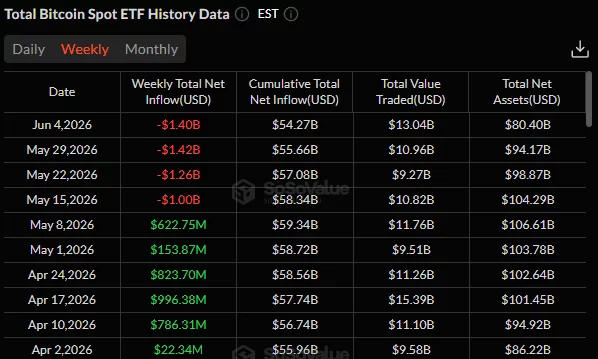
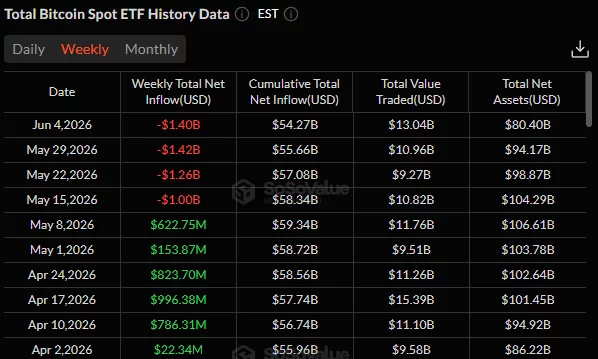
Data from SoSoValue showed spot Bitcoin ETFs recorded $2.43 billion in net outflows during May. Another $1.40 billion left the funds during the first three days of June. Citigroup said ETF demand remains one of the most important drivers of Bitcoin prices and suggested those outflows have had a much larger impact on market performance.
Concerns remain around Strategy’s funding model
Elsewhere, some analysts focused less on the sale itself and more on what it could signal about Strategy’s future.
Economist Peter Schiff argued that Strategy’s Bitcoin treasury model depends heavily on its ability to continue raising capital through equity markets. According to Schiff, the company could face increasing pressure if MSTR shares lose their premium and make future fundraising more difficult.
A separate report from Grayscale Research also highlighted potential funding challenges. Grayscale said declining prices for MSTR and STRC shares could make it harder for Strategy to expand its Bitcoin holdings. The firm added that if STRC trades below its intended level, Strategy may need to increase dividend payments, raising cash obligations and potentially increasing the likelihood of future Bitcoin sales.
Despite those concerns, Grayscale said a reduction in Bitcoin concentrated on highly leveraged corporate balance sheets could benefit the market over time by spreading ownership across more treasury companies.
Meanwhile, Charles Schwab Director of Digital Currencies Research and Strategy Jim Ferraioli argued that the market may be searching for a simple explanation for a trend that began months ago.
According to Ferraioli, Bitcoin has been in a bear market since October 2025, when it reached nearly $126,000 before entering a prolonged decline.
Ferraioli said Bitcoin’s weakness stems primarily from the loss of momentum that previously attracted capital into the asset. Because Strategy’s sale occurred near the end of an eight-month downtrend, he argued it is difficult to identify the transaction as the main cause of Bitcoin’s latest losses.

Strategy’s disclosure of a 32 Bitcoin move reverberated through the market, underscoring a shift in the narrative around corporate Bitcoin treasuries. The sale, described as a small fraction of Michael Saylor’s firm’s vast holdings, nonetheless chipped away at the prevailing assumption that corporate BTC reserves would remain permanently locked up. In the days that followed, investors re-evaluated the Bitcoin treasury thesis, even as Strategy’s broader treasury strategy remains, for now, firmly anchored in accumulating BTC per share. This episode arrived alongside a broader set of developments in crypto policy and corporate finance, painting a picture of a market navigating both strategic asset allocation and a tightening regulatory landscape.
In other corners of crypto news this week, JPMorgan Chase & Co. chief Jamie Dimon sharpened his critique of the industry’s evolving market structure proposals, while a French Bitcoin treasury vehicle pursued a sweeping fundraising mandate that would dramatically expand its war chest for Bitcoin purchases. Taken together, the week highlighted how treasury management, regulatory expectations, and capital formation are increasingly interlinked in shaping near-term price action and long-run adoption.
Key takeaways
- Strategy disclosed the sale of 32 BTC, its first reported liquidation outside a 2022 tax event, triggering a reassessment of the firm’s Bitcoin treasury thesis.
- Delphi Digital argued the market has begun to view Strategy as no longer a pure “buy and never sell” vehicle, signaling a structural shift in how Bitcoin treasuries are valued by investors.
- Regulatory discourse intensified as Jamie Dimon said banks would oppose the latest CLARITY Act markup, highlighting a widening rift between traditional finance and crypto innovation on compliance and product offerings.
- Capital B is seeking shareholder approval to expand its fundraising capacity to issue up to 5 billion euros in new equity and about $116 billion in credit instruments to finance future Bitcoin purchases, potentially expanding its BTC stack well beyond current levels.
- Coinbase joined the wave of institutional interest in stablecoin reserves by investing in ProShares GENIUS Money Market ETF (IQMM), signaling appetite for regulated, reserve-backed exposure tied to stablecoins under the GENIUS Act framework.
Strategy’s liquidity rethink tests the “never-sell” meme
The 32 BTC sale announced by Strategy, led by Michael Saylor’s corporate vehicle, represented a modest slice of its total holdings—yet it had outsized consequences for market psychology. The company’s BTC reserve is widely cited as a central pillar of its valuation framework, and the move punctured the dominant narrative that Strategy would only accumulate more coins with no intention to divest. The event helped catalyze a broader debate about how to price Bitcoin treasury models when corporate treasuries face ordinary liquidity needs and risk management concerns.
Reports surrounding the sale noted that Strategy’s overall balance sheet remains vastly weighted toward Bitcoin; the liquidation was the first non-tax-related sale publicly disclosed since 2022. After the disclosure, Strategy’s stock price came under pressure as investors recalibrated expectations about the long-term Bitcoin-per-share metric. Delphi Digital captured the moment, noting in a market summary that “the market learned that Strategy is no longer read as a pure one-way accumulation vehicle.” The message, they added, is no longer confined to conference calls but is reflected in actual trading behavior.
For investors, the episode raises important questions about how to value Bitcoin treasuries when even the most committed holders confront the realities of operating a business—whether it’s funding operations, meeting debt obligations, or pursuing strategic investments. It also invites a broader assessment of whether the “buy and hold” narrative remains a valid framework for evaluating corporate crypto warehouses, especially as markets become more sophisticated about risk-adjusted returns and liquidity planning. The episode doesn’t erase Strategy’s long-standing commitment to Bitcoin per share, but it does remind the market that crypto treasuries are not immune to the same financial pressures that affect any large corporate balance sheet.
The public thread of the narrative remains: even high-conviction holders will occasionally depart from a strict accumulation path when the business case for liquidity or strategic diversification presents itself. The broader takeaway for market participants is that Bitcoin’s role as a corporate treasury asset is evolving from a simple store of value into a more nuanced instrument—one that must be balanced against operating needs, debt covenants, and investor expectations.
Source: Michael Saylor
Regulatory battlegrounds heat up as CLARITY Act debate deepens
Beyond corporate treasury moves, the policy arena is heating up around the envisioned market framework for crypto. JPMorgan CEO Jamie Dimon publicly signaled opposition to the latest CLARITY Act markup, arguing that crypto companies deserve the same regulatory scrutiny as conventional banks and should not be afforded privileged treatment merely for offering certain products. In particular, Dimon targeted provisions that would permit crypto firms to provide interest-bearing products while avoiding the capital and compliance burdens traditionally borne by banks. The remarks added to a broader chorus of critics who warn that such exemptions could create inequities within the financial system.
Supporters of the CLARITY Act contend that a clear, modern regulatory framework would spur innovation and provide certainty for consumers and businesses alike. They describe the act as a necessary step toward standardizing oversight, protecting investors, and clarifying the status of crypto markets in the U.S. The debate underscores a central tension: how to reconcile rapid innovation with prudent risk management and consumer protections. As lawmakers push for market structure legislation, the contours of the policy landscape will continue to influence how institutions engage with digital assets and how new products—ranging from stablecoins to tokenized services—are designed and offered to the public.
Jamie Dimon said the banking industry opposes the latest CLARITY markup. Source: Fox Business
Capital B’s ambitious fundraising plan and its BTC ambitions
Capital B, the French-based Bitcoin treasury company, is seeking shareholder approval to dramatically expand its capital-raising capacity. The plan would authorize the company to issue up to 5 billion euros in new equity and to raise roughly $116 billion in credit instruments to finance future Bitcoin purchases. If approved at the June 17 meeting, management would gain access to a far larger pool of capital than the company has previously raised, a move that could accelerate Bitcoin accumulation during periods of price weakness or volatility.
Capital B has already accumulated a sizable BTC position, reporting holdings of 3,139 BTC after adding 4 BTC in a recent period. The company disclosed it had purchased 192 BTC for $15.2 million in a prior month, reflecting a steady cadence of adds alongside its fundraising ambitions. The scale of the contemplated capital raise would give Capital B the option to accelerate purchases during market dips or to diversify its treasury strategy through more dynamic asset deployment. The potential implications for BTC supply dynamics and market psychology are meaningful, especially if other treasury-focused firms consider similar fundraising moves in response to shifting market conditions.
These developments come amid a broader European and global push to establish clear regulatory parameters for stablecoin-related activity and digital asset institutions. If Capital B can access a much larger capital base, it could become a more prominent participant in the Bitcoin market, potentially influencing price discovery during episodes of liquidity constraints or bursty demand.
Source: Alexandre Laizet
Institutional appetite for stablecoin reserves grows with GENIUS Act momentum
In another sign of growing institutional interest in the mechanics of stablecoin collateral, Coinbase disclosed an investment in ProShares GENIUS Money Market ETF (IQMM). The fund is designed to hold cash equivalents and other highly liquid assets that would qualify as stablecoin reserves under the GENIUS Act—the proposed framework that would require stablecoins to be backed by high-quality, liquid reserves. ProShares notes that the ETF aims to provide exposure to cash, bank deposits, and short-term U.S. Treasury securities, aligning with the asset mix that stablecoin issuers typically earmark to back their tokens.
The investment by Coinbase signals ongoing demand from regulated exchanges and fintechs for vehicles that implement reserve-asset standards envisioned by the GENIUS Act. By supporting a vehicle intended to hold compliant reserves, Coinbase illustrates a path for traditional market participants to participate more directly in the stablecoin ecosystem while adhering to evolving regulatory expectations. For market observers, this development underscores growing institutional interest in structured products tied to stablecoin reserves—an area likely to gain further attention as the regulatory framework for digital assets gradually coalesces.
The GENIUS Act and the broader push to codify reserve requirements for stablecoins are part of a larger effort to create a federally grounded framework that can accommodate rapidly evolving use cases—from payments to settlement and beyond. As institutions seek greater certainty and safer exposure to the stablecoin segment, products tied to reserve assets may become a focal point for capital allocation and risk management in crypto markets.
Source: ProShares
Crypto Biz continues to track how corporate treasuries, regulatory developments, and institutional finance converge to shape the crypto landscape. What unfolds next will hinge on policy decisions in Washington and Brussels, the pace of adoption of regulated investment vehicles, and the willingness of major players to adjust treasury strategies in response to market dynamics.
As Congress and regulators refine market structure proposals and as major treasury entities calibrate their holdings, readers should watch for official guidance on reserve standards, as well as any shifts in large-scale buy-and-hold narratives as real-world liquidity needs pressure even the most steadfast BTC holders.


Coinbase CEO Brian Armstrong has turned the U.S. crypto policy fight into a national competitiveness argument by saying rivalry with China could strengthen America.
Summary
- Brian Armstrong said U.S.-China competition could strengthen America and push Washington to improve crypto policy.
- The Coinbase CEO warned that strict crypto and stablecoin rules could benefit China’s CBDC and offshore stablecoin issuers.
- Armstrong has framed crypto legislation as a national competitiveness issue rather than a narrow industry demand.
Armstrong said competition with China “might be the best thing to happen to America since the cold war,” adding that the U.S. had become complacent after leading global markets for years. The Coinbase chief said competition “breeds excellence” as he pushed lawmakers to treat crypto rules as part of America’s economic contest with Beijing.
Armstrong links crypto rules to China competition
Over the past year, Armstrong has repeatedly argued that Washington risks weakening the U.S. crypto industry if it adopts rules that push digital-asset activity offshore. According to Armstrong, restrictive policies on stablecoins and crypto markets could hand an advantage to China, offshore issuers, and central bank digital currency projects outside U.S. control.
In his stablecoin arguments, Armstrong has warned that banning interest-bearing stablecoins would not stop demand for yield. He has said such a ban would instead benefit China’s CBDC efforts and foreign stablecoins operating beyond U.S. oversight.
The Coinbase CEO has used that message as Congress weighs market-structure legislation for digital assets. His argument presents crypto regulation not only as a financial policy issue, but also as a question of American leadership in global finance.
Coinbase and banks clash over legislation
The debate has also deepened tensions between crypto firms and traditional banks. JPMorgan CEO Jamie Dimon recently attacked Armstrong in unusually sharp language, calling him “full of shit,” according to the report.
Armstrong has responded by accusing large banks of trying to use regulation to weaken crypto competitors rather than building better products. Coinbase has argued that open crypto networks and stablecoins can update payment systems and financial infrastructure, while banks have warned lawmakers about risks tied to lighter oversight.
The fight has grown more political as the crypto industry pushes for market-structure rules that would create clearer lanes for digital assets. Armstrong’s China argument gives Coinbase and its allies a message that can reach beyond the crypto sector and into national security debates.
Trump meeting raises political stakes
President Donald Trump met with Armstrong before publicly urging lawmakers to move crypto legislation forward, according to the report. The meeting showed how closely Coinbase has positioned itself near the administration’s digital-asset agenda.
The China framing gives Coinbase’s policy goals a larger political frame. Instead of arguing only for rules that help exchanges and stablecoin issuers, Coinbase can present its position as part of a contest over financial power, technology, and the future of the dollar.
Critics cited in the report argue that this approach may blur the line between public interest and a private company’s lobbying goals. They say consumer protection, financial stability, and market oversight remain serious questions, even when crypto firms invoke China.
Coinbase has clashed with U.S. regulators before, including the SEC, which previously threatened legal action against the exchange. Armstrong answered that clash directly and has continued to press lawmakers for clearer rules.
Crypto World
Altcoin Rotation Picks Up Pace With Ethereum Investors Moving Into New Themes in Cryptocurrency

Key Insights
- One of the big crypto players is moving out of his holdings in Ethereum and allocating his funds to ZEC, HYPE, NEAR, VVV, and LIT.
- The reason behind the portfolio change is related to valuation issues rather than any problem with the Ethereum blockchain platform itself.
- Zcash fell sharply below important support levels even though it was highly liquid and actively traded on markets.
Ethereum Exit Points to New Period of Altcoin Rotation
Altcoin Rotation is now gaining wide coverage in crypto circles after one notable Ethereum community member was reported to sell off his entire ETH holding and then invest the proceeds into an equally diverse selection of alternative coins. The news has generated buzz as it indicates an evolving investing trend based on valuations and not technology.
Based on reports by BSCN, the individual invested in five altcoins — VVV, NEAR, ZEC, HYPE, and LIT. The action implies a deliberate strategy geared toward diversifying into various blockchain categories, from privacy blockchains and DeFi networks to AI platforms and broader blockchain ecosystems.
Diversification Among Various Crypto Sectors
In the reorganized portfolio, there is a pattern whereby investors are moving away from focusing only on the major large-cap coins. Instead of relying on a single market sector, this particular portfolio is spread across various investment narratives and ideas.
Among the various investments made, the coin that was allocated the highest value was Lit Protocol (LIT). This implies that the confidence level in LIT is high compared to other investments. The remaining coins include VVV, NEAR, ZEC, and HYPE.
By using such a technique, an investor avoids relying heavily on just one market narrative since the allocation in the portfolio gives flexibility should there be a change in preferences regarding market sectors. In crypto markets, investors routinely shift their focus among various ecosystems.
The Most Prominent Gains Belong to Zcash
A prominent coin featured in this reallocation is Zcash (ZEC). For many years, the coin has been considered a top privacy-oriented project in the crypto space, despite market attention sometimes being diverted to emerging blockchain networks.
Certain types of digital assets tend to get attention from the investment community during particular market phases, especially those related to financial privacy. The presence of Zcash in this portfolio suggests continued investor interest in this asset class. Among the visual materials published along with the report were the logos of Zcash and Hyperliquid.
Weaknesses in Technicals Create Pressure on Zcash
Although Zcash is experiencing renewed interest among investors, the coin performed poorly during recent trades. According to current statistics, it was trading around $559.09 with losses of 10.18% over the last day.
Despite the sharp fall, interest in the cryptocurrency remained. Zcash had a market capitalization of approximately $9.34 billion and recorded about $1.33 billion in daily trading volume.
Technical data showed weaknesses in the short-term structure. Buyers attempted to defend an important support zone between $600 and $620 with several recovery attempts during the session. Nonetheless, those recoveries failed to establish positive momentum.
A sequence of lower highs began forming, indicating decreasing buying power and increased seller domination. The major breakthrough occurred when support at $600 broke and sellers drove the price down toward the $559 area. Now that a key support has turned into resistance, the question is whether Zcash can stabilize within the current range.
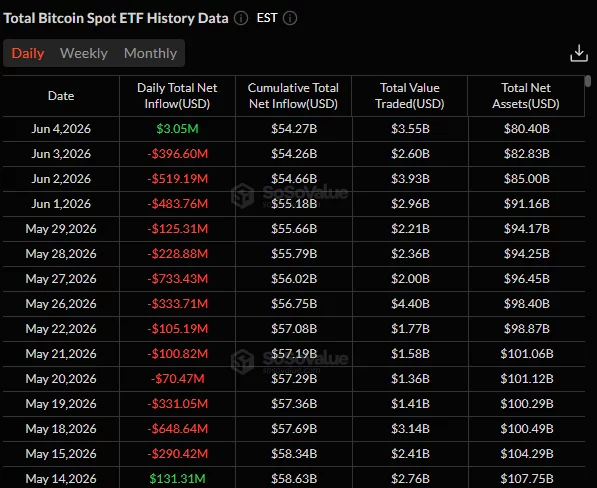
U.S. spot Bitcoin ETFs have recorded $3.05 million in net inflows on Thursday, ending a record 13-day withdrawal streak that erased more than $4.4 billion from the funds since mid-May.
Summary
- Spot Bitcoin ETFs recorded $3.05 million in inflows, ending a record 13-day outflow streak that drained over $4.4 billion.
- BlackRock’s IBIT led the turnaround with $47.66 million in inflows, while several rival funds continued to see withdrawals.
- Spot Ether ETFs also returned to positive flows, while Hyperliquid ETFs extended their uninterrupted inflow streak.
According to SoSoValue data, Thursday’s modest inflow brought an end to the longest run of outflows since spot Bitcoin ETFs launched in the United States. The reversal came after nearly three weeks of continuous redemptions that coincided with a sharp decline in Bitcoin prices and a steep drop in ETF assets.
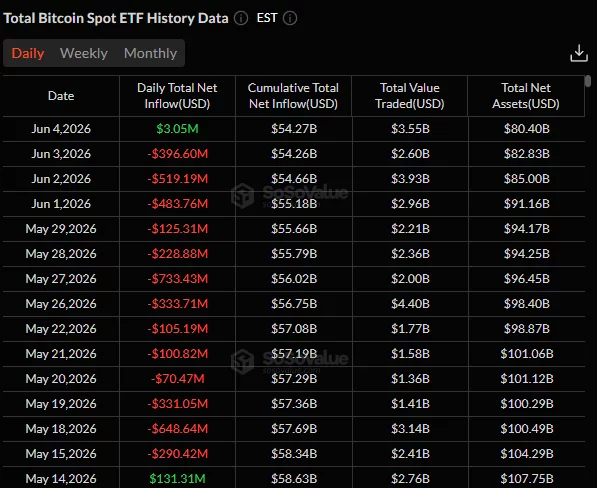
Despite the positive reading, the scale of the inflow remained small compared with the preceding withdrawals. During the 13-session stretch, daily outflows regularly exceeded $100 million, while Thursday’s $3.05 million gain failed to offset even a fraction of the capital that had exited the category.
Fund-level data showed that BlackRock’s IBIT accounted for the turnaround. SoSoValue reported that the fund attracted $47.66 million in fresh capital, while products from Fidelity, Bitwise, and Ark Invest continued to post net outflows.
Pressure on the sector has been visible in total assets under management. Spot Bitcoin ETF holdings fell to $80.40 billion by Thursday, down from $104.29 billion at the beginning of the outflow streak. The decline occurred as Bitcoin lost ground over the same period, falling from levels above $74,000 to below $64,000.
Bitcoin ETF assets remain below recent highs
Data from CheckonChain showed that spot Bitcoin ETFs currently hold 1.277 million BTC. While that figure sits slightly above the February low of 1.274 million BTC, it remains about 7.2% below the record level reached in October.
Market conditions remained unstable even after the inflow streak ended. Bitcoin (BTC) traded near $63,800 on Thursday after briefly recovering from earlier weakness. By Friday, the cryptocurrency had plunged to an intraday low of around $59,100, its lowest level since October 2024, before rebounding above $61,000.
Recent ETF flow trends have attracted increased attention from market participants. In a recent note, Citigroup analysts argued that investors may be underestimating the importance of ETF demand in Bitcoin’s price performance.
The bank pointed to sustained withdrawals from spot Bitcoin ETFs as a major factor behind recent weakness, noting that the products recorded $2.43 billion in net outflows during May and another $1.40 billion during the first days of June.
Ether ETFs and HYPE funds continue to diverge
While Bitcoin funds returned to positive territory, spot Ether ETFs also halted a prolonged period of withdrawals.
According to SoSoValue, U.S. spot Ether ETFs brought in $19.30 million on Thursday, June 4, after 17 consecutive trading days of net outflows. BlackRock’s ETHA generated the entire inflow, while all other Ether funds finished the session with no net movement.
Assets held by spot Ether ETFs stand at $9.78 billion, equivalent to roughly 4.57% of Ethereum’s circulating market capitalization. Cumulative net inflows since the products launched in 2024 have reached $11.21 billion, although total assets remain about $2 billion below their earlier peak.
A different trend continued in the newly launched Hyperliquid ETF segment. The three HYPE-focused ETFs added another $12.15 million on Thursday, extending an uninterrupted inflow streak that began with their debut on May 12. Grayscale’s HYPG ETF contributed $4.70 million on its first day of trading.

A $56 billion Illinois state budget advanced by the General Assembly on Monday includes a new digital asset tax provision that could affect crypto users and firms operating in the state. The measure, described by supporters as a revenue tool, would levy a 0.2% tax on digital asset transactions carried out by entities acting as digital asset brokers in Illinois. According to Cointelegraph, the provision is framed as a “privilege tax” within the Digital Asset Privilege Tax Act amendment to the budget.
The 1,624-page budget bill, part of the revenue and tax package intended to fund the 2027 fiscal year, was approved largely along party lines. If enacted, the tax would require digital asset brokers to register with the state and comply with enforcement provisions designed to govern Illinois-based digital asset business activity. The legislation also sets out criminal penalties for noncompliance, including potential Class 3 felonies if brokers fail to adhere to the registration and operational requirements starting January 1.
Governor JB Pritzker has indicated an intention to sign the bill into law, but as of Friday morning had not yet issued the formal signature. Lawmakers project that the crypto tax would generate roughly $60 million for the state’s 2027 budget.
Key takeaways
- The Illinois budget includes the Digital Asset Privilege Tax Act amendment, introducing a 0.2% tax on digital asset transactions by brokers operating in Illinois.
- Brokers would face mandatory registration and compliance duties; failure to comply could result in a Class 3 felony with 2–5 years’ imprisonment and fines up to $25,000.
- The measure is expected to raise about $60 million in the 2027 fiscal year as part of the state’s revenue package.
- Industry groups, including the Digital Chamber and the Illinois Blockchain Association, have publicly criticized the move, arguing it was buried in a large budget bill and lacks adequate stakeholder engagement. They contend the policy could be economically destructive and leave Illinois-based firms at a disadvantage.
- The tax comes amid broader policy actions by the governor and state authorities regarding crypto activity, including executive-order–level actions on related areas such as prediction markets.
Tax framework within the Illinois budget
The centerpiece is the Digital Asset Privilege Tax Act amendment embedded in the 2027 budget package. The 0.2% levy would apply to transactions conducted by entities acting as digital asset brokers in the state, with the expectation that brokers register and adhere to specified guidelines governing their Illinois operations. The legislation frames the tax as a privilege charge tied to the digital asset business activity conducted within Illinois’ borders, aiming to augment state revenue while shaping the regulatory perimeter for brokers.
Registration requirements would take effect in the new year, and brokers who fail to register or comply with the act’s provisions could be charged under Illinois’ criminal code as a Class 3 felony. The penalty carries a potential prison term of two to five years and fines up to $25,000 per violation, reflecting a stringent approach to enforcement for noncompliant entities.
The budget bill remains subject to the governor’s signature. If signed, the measure would formalize the tax into law and pave the way for the state to begin collecting the revenue anticipated from the levy. Illinois legislators and supporters view the tax as a mechanism to fund the 2027 budget while establishing a defined regulatory framework for digital asset activity in the state.
Industry response and regulatory implications
Industry advocates have pushed back against the measure, arguing that the tax was tucked into a sprawling budget proposal with limited stakeholder engagement. In public statements, the Digital Chamber and the Illinois Blockchain Association described the proposal as economically destructive and warned that it would impose an undue burden on Illinois-based crypto firms without adequate notice or preparation time. They also pointed to the claim that no other state has imposed a similar tax, signaling a potential competitive disadvantage for Illinois in attracting crypto-related business.
ThePushback underscores broader regulatory frictions between state-level fiscal measures and the fast-evolving digital asset landscape. If enacted, the tax would shape licensing requirements for brokers, affect KYC/AML compliance arrangements, and influence how exchanges and other intermediaries structure their Illinois operations. Moreover, the move could influence how financial institutions assess cross-border activity and banking relationships with Illinois-based crypto firms, given the state’s attempt to formalize its treatment of digital asset intermediaries.
Policy context: prediction markets, enforcement priorities, and the broader regulatory landscape
The proposed crypto tax aligns with a broader regulatory posture taken by Governor Pritzker toward digital asset activities. Earlier in the year, the governor signed an executive order banning state employees from engaging in prediction market event contracts with platforms such as Kalshi and Polymarket, citing concerns that such bets could leverage nonpublic information for personal gain. The executive order signals a broader emphasis on governance and oversight of crypto-related activities within the state and complements the tax proposal as a coordinated policy stance.
From a wider regulatory perspective, Illinois’ approach interacts with ongoing federal and international frameworks. The state’s action sits alongside debates about licensing regimes, AML/KYC standards, and the relationship between digital asset brokers and traditional financial governance. As policymakers navigate MiCA-like considerations and U.S. oversight from agencies such as the SEC, CFTC, and DOJ, Illinois’ tax design raises questions about harmonization with national standards, cross-border operations, and the role of state-level measures in shaping the regulatory landscape for crypto firms, banks, and investors.
Closing perspective
With the bill awaiting the governor’s signature, the key questions revolve around how the registration regime will be implemented, how enforcement will unfold, and what adjustments, if any, lawmakers will consider in response to industry feedback. The Illinois measure could set a notable precedent for state-level digital asset taxation, with implications for licensing, compliance, and the competitive positioning of crypto firms within Illinois and beyond.

Singapore-based crypto travel platform Travala has rolled out what it calls the world’s first agentic AI travel protocol. The system enables AI agents to search, reserve, and pay for hotels using USDC on Base, a Coinbase-backed layer-2 network. The move extends agentic AI stablecoin payments into travel bookings and positions Travala at the forefront of AI-enabled checkout infrastructure for travel commerce.
The Travala Travel Multi-Chain Protocol (MCP) is live through Claude Desktop, with external developers invited to integrate the capability into their own travel-agent experiences, the company said in a statement shared with Cointelegraph. The protocol bridges Travala’s hotel catalog with AI agents via the Model Context Protocol, an open standard designed to connect AI applications with external tools. Payments are conducted over Coinbase’s x402 protocol on Base, enabling gasless USDC transactions, near-instant settlement, and typical booking costs around $0.01.
Key takeaways
- Travala launches an agentic AI travel protocol on Base, enabling AI agents to book hotels using USDC with near-zero fees and fast settlement.
- The system links Travala’s inventory to AI agents via the Model Context Protocol, with payments executed through x402 on Base and ERC-7715 session keys allowing in-wallet signing control.
- Final payment authorization remains with the traveler, meaning the protocol is autonomous in its operations but not fully hands-off for end users.
- Travala’s network covers more than 2.2 million hotels, including listings from Marriott, Hilton, and IHG, with plans to expand to flights and other travel products.
- A 10% Coinbase Wrapped BTC (cbBTC) rebate is offered on completed stays booked through the AI agents, adding a financial incentive for developers and travelers.
Autonomy in practice: what changes for travelers and builders
Travala frames the MCP as a meaningful step toward an autonomous travel economy, while still preserving user control. CEO Juan Otero described the launch as “the death of the checkout button,” framing it as a move from a static checkout experience to an ongoing, agent-led shopping process. Even as AI agents search and propose options, the traveler retains final signing authority within their wallet, meaning the AI merely initiates payment requests that require human approval before funds move.
The protocol uses ERC-7715 session keys to manage interactions. This design allows an AI agent to request payment while the traveler’s wallet holds the ultimate signing power. In practice, this supports a continuous conversational thread—an AI agent can carry context across searches, bookings, and cancellations in a single chat, reducing repetitive prompts and friction in the booking flow.
Connecting inventory with agent-enabled commerce
Travala says its MCP taps into a catalog of over 2.2 million hotels, with listings sourced through prominent aggregator partners and major brands, including Marriott, Hilton, and IHG. The company highlighted that the integration could eventually extend beyond hotel stays to other travel products, such as flights. The broader vision includes leveraging Travala’s AVA loyalty token to support future MCP use cases, potentially tying loyalty rewards to AI-driven booking workflows.
External developers can adopt Travala’s MCP via Claude Desktop, enabling other travel agents to embed the same AI-enabled checkout flow. While automation advances, the model preserves a human-in-the-loop approach to payments, providing a security and control layer that may appeal to users wary of fully autonomous transactions.
Context within the evolving AI-payments landscape
Travala’s announcement arrives amid a growing wave of AI-driven payments infrastructure within the crypto ecosystem. Industry coverage has noted a surge in agentic payments on Base, with x402-linked wallets reportedly surpassing 100 million transactions. The broader ecosystem includes solutions from Fireblocks, MoonPay, Exodus, and Oobit, all aiming to enable AI agents to spend stablecoins and other digital assets without manual intervention at every step.
Chainalysis has documented the rising use of agentic payments on Base, a trend that has supported broader experimentation with programmable payments in AI workflows. The combination of a stablecoin (USDC), a scalable L2 network (Base), and an open toolset (Model Context Protocol and ERC-7715 session keys) creates a cohesive environment for automated travel payments that still respects user consent and control.
Strategic implications for the travel-tech and crypto sectors
Travala’s MCP signals a shift from purely crypto-enabled checkout to AI-assisted, programmatic booking workflows. For investors and developers, it highlights a frictionless, low-cost payment layer that could accelerate adoption of AI agents in live commerce. The integration with major hotel brands underscores the potential for large-scale inventory to be accessible through AI channels, potentially expanding the use cases for stablecoins in consumer travel.
From a strategic perspective, the combination of gasless payments, near-instant settlement, and predictable fees could incentivize larger, more complex bookings to move through AI agents. Yet the model’s reliance on traveler approval means risk controls remain in place, reducing the likelihood of unauthorized charges and aligning with user-centric security expectations. This hybrid approach—automated negotiation and human oversight—may become a template for other sectors exploring agentic commerce.
Broader adoption and next steps
Travala has signaled that the MCP will evolve beyond hotels, with flights and other travel products on the roadmap. The venture also points to potential expansions of the AVA loyalty program, potentially integrating reward mechanics with AI-driven booking journeys. As more developers adopt the framework, the breadth and depth of AI-empowered travel options could grow, drawing in users who value speed, transparency, and control in their online travel experiences.
Observers will want to monitor how adoption scales among developers and whether the autonomous capabilities can mature to reduce the amount of human intervention required for routine bookings. The interplay between user trust, safety measures, and AI efficiency will shape how quickly and widely agentic travel becomes mainstream.
Additional reporting on related developments in AI-driven payments and agent-based commerce continues to emerge, with industry outlets highlighting parallel efforts to streamline settlement and reduce operational frictions across platforms.
As the ecosystem evolves, Travala’s MCP could become a test case for how autonomous financial workflows interact with real-world consumer purchases, potentially setting a benchmark for the next wave of AI-enabled travel experiences.
Travala was founded in 2017 and currently accepts more than 100 cryptocurrencies alongside fiat currencies, positioning itself as a bridge between traditional travel booking and crypto-enabled commerce.
Readers should watch for updates on the MCP’s expansion into flights and other travel categories, as well as any regulatory or security considerations that emerge as AI agents gain more autonomy in payment workflows.
Crypto World
South Korean Authorities Launch First Reported Illegal Gambling Probe Into Polymarket Users
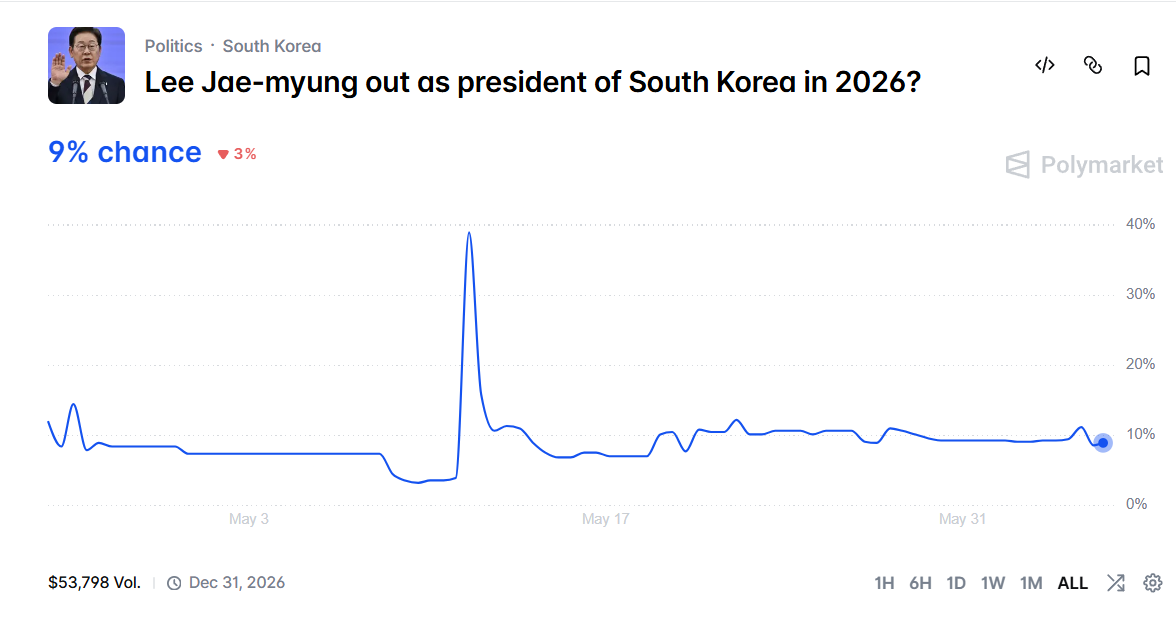
South Korean police have reportedly launched the country’s first illegal gambling probe into local Polymarket users, widening regulatory scrutiny of the decentralized prediction market.
The investigation is led by Gangwon Provincial Police and was requested by the National Police Agency, according to ChosunBiz.
Users may face fines of up to 10 million won ($6,500) under Article 246 of the Criminal Act covering gambling and habitual gambling. Under current law, Sports Toto is the state-authorized sports betting platform, while unauthorized online betting can be prosecuted under South Korean gambling laws.
The reported probe adds to a broader global crackdown on prediction markets, with several jurisdictions blocking or restricting access to Polymarket. Some countries have completely blocked or prohibited Polymarket, including Singapore, Poland, Portugal, Hungary, Ukraine, Brazil and Indonesia. Polymarket remains accessible in South Korea.
The news comes after President Lee Jae-myung’s ruling Democratic Party swept most major local elections held on Wednesday, while conservative Oh Se-hoon won another term as mayor of Seoul, Reuters reported.
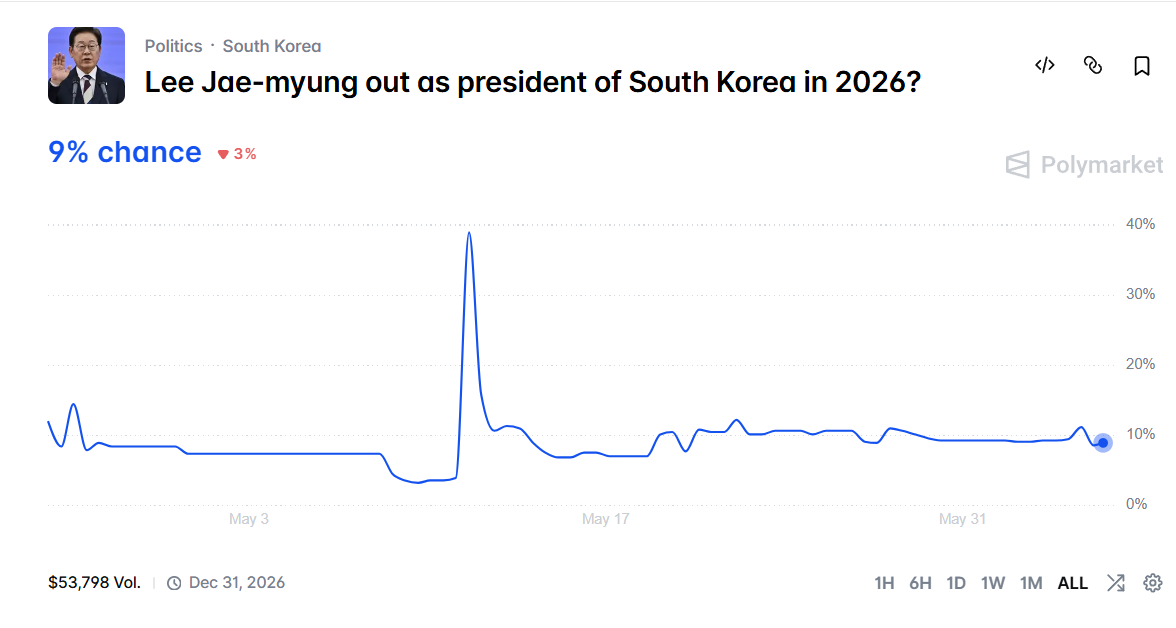
Prediction market on whether Lee Jae-myung would be out as president of South Korea in 2026. Source: Polymarket.com
One Polymarket contract on whether Lee Jae-myung would be out as president saw nearly $54,000 in total trading volume, data shows.
Related: Polymarket users cry foul after Strategy sale market resolves to ‘no’
Political betting faces growing scrutiny
The latest probe adds to the growing regulatory scrutiny of political betting on Polymarket.
In January, US lawmakers proposed legislation aimed at restricting political prediction market trading by government officials after a Polymarket user netted over $400,000 on a contract related to the removal of then-Venezuelan President Nicolás Maduro, fueling insider trading concerns.
In May, the chair of the US House of Representatives’ Oversight and Government Reform Committee sent letters to the CEOs of Kalshi and Polymarket, questioning their response to the insider trading allegations on the platforms.
In response to the growing scrutiny, Polymarket said it was weighing the implementation of a mandatory identity verification system more in line with global Know Your Customer (KYC) verification standards, Cointelegraph reported on May 27.
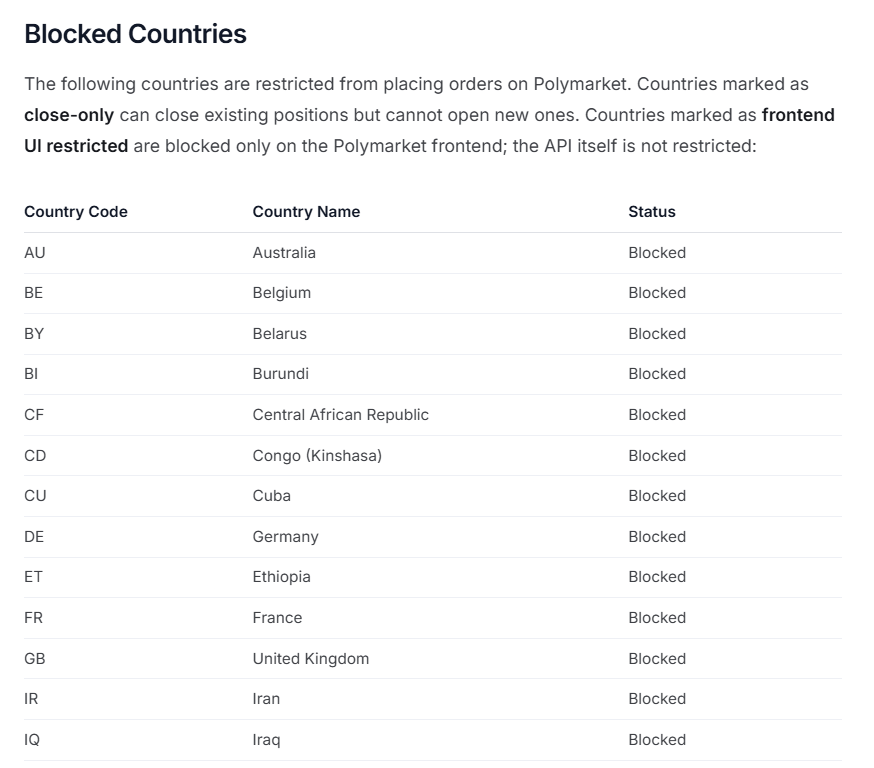
Polymarket list of geoblocked countries and regions. Source: Polymarket.com
Polymarket said it was entirely geoblocked in 35 regions at the time of writing.
Magazine: Polymarket seeks Japan entry, Harvard dumps entire ETH position: Hodler’s Digest, May 17 – 23

Powershift profile: 2026 Belmont Stakes odds, post position, history and more to know

YouTube Premium just got more expensive again: now $16 a month, or $27 for families

10 Baby Steps To Financial Freedom In South Africa



-

 Business4 days ago
Jade Biosciences, Inc. (JBIO) Discusses Positive Interim Results From JADE101 Phase I Healthy Volunteer Study and Development Plans Transcript
-
 Tech7 days ago
SpaceX just won a second Golden Dome contract. This one is $4.16 billion.
-

 Sports3 days ago
French Open 2026 results: Alexander Zverev beats Rafael Jodar and will play Jakub Mensik in semi-finals
-

 Business7 days ago
Is the Spurs Phenom Already Better Than Prime Diesel?
-

 Tech4 days ago
CryZENx Releases Fresh Playable Content Deep Inside Jabu-Jabu for His Ocarina of Time Remake
-

 Politics7 days ago
The House | Inside Andy Burnham’s Makerfield Campaign: “Nobody Thinks This Is In The Bag”
-
Crypto World17 hours ago
LBank Surpasses 25 Million Users Worldwide as AFA Partnership Continues to Drive Global Growth
-

 Fashion9 hours ago
Weekend Open Thread: Evereve – Corporette.com
-

 Business3 days ago
Trump Taps Housing Chief Bill Pulte as Acting Intelligence Director After Gabbard Exit
-
 Entertainment7 days ago
One of the Greatest Sitcoms of All Time Shoots Up Apple TV’s Charts 11 Years Later
-

 Business7 days ago
Demand Conditions Improve In Chemicals Sector In April 2026
-
 NewsBeat7 days ago
Everything you need to know as Cambridge’s Strawberry Fair returns after cancelled year
-
 Crypto World4 days ago
Seagate (STX) Stock Surges to Record High on AI Boom and Legal Settlement
-
 NewsBeat3 days ago
Republicans balk at Trump’s attempt to appoint a MAGA enforcer to lead National Intelligence
-
 Entertainment7 days ago
Britney Spears Shares Troubling Update After Hard Year
-
 Crypto World3 days ago
EU AI Data Center Project Faces Delays as Funding Gaps Grow
-

 Business3 days ago
Aehr Test Systems Stock Soars 17% Amid Surging AI Demand and Conference Spotlight
-

 Tech7 days ago
Intel and 3DGS back a $3.3bn glass-substrate plant in India’s Odisha
-

 Tech7 days ago
Acer’s Swift Air 14 is a peppy MacBook Neo rival with some cool upgrades and a $699 ask
-

 Tech7 days ago
Knox County, TN Rolls Back ‘Roots’ Book Ban After Backlash
You must be logged in to post a comment Login