

Crypto World
Coinbase CEO Brian Armstrong warns China could win if US crypto rules stall



Coinbase CEO Brian Armstrong has turned the U.S. crypto policy fight into a national competitiveness argument by saying rivalry with China could strengthen America.
Summary
- Brian Armstrong said U.S.-China competition could strengthen America and push Washington to improve crypto policy.
- The Coinbase CEO warned that strict crypto and stablecoin rules could benefit China’s CBDC and offshore stablecoin issuers.
- Armstrong has framed crypto legislation as a national competitiveness issue rather than a narrow industry demand.
Armstrong said competition with China “might be the best thing to happen to America since the cold war,” adding that the U.S. had become complacent after leading global markets for years. The Coinbase chief said competition “breeds excellence” as he pushed lawmakers to treat crypto rules as part of America’s economic contest with Beijing.
Armstrong links crypto rules to China competition
Over the past year, Armstrong has repeatedly argued that Washington risks weakening the U.S. crypto industry if it adopts rules that push digital-asset activity offshore. According to Armstrong, restrictive policies on stablecoins and crypto markets could hand an advantage to China, offshore issuers, and central bank digital currency projects outside U.S. control.
In his stablecoin arguments, Armstrong has warned that banning interest-bearing stablecoins would not stop demand for yield. He has said such a ban would instead benefit China’s CBDC efforts and foreign stablecoins operating beyond U.S. oversight.
The Coinbase CEO has used that message as Congress weighs market-structure legislation for digital assets. His argument presents crypto regulation not only as a financial policy issue, but also as a question of American leadership in global finance.
Coinbase and banks clash over legislation
The debate has also deepened tensions between crypto firms and traditional banks. JPMorgan CEO Jamie Dimon recently attacked Armstrong in unusually sharp language, calling him “full of shit,” according to the report.
Armstrong has responded by accusing large banks of trying to use regulation to weaken crypto competitors rather than building better products. Coinbase has argued that open crypto networks and stablecoins can update payment systems and financial infrastructure, while banks have warned lawmakers about risks tied to lighter oversight.
The fight has grown more political as the crypto industry pushes for market-structure rules that would create clearer lanes for digital assets. Armstrong’s China argument gives Coinbase and its allies a message that can reach beyond the crypto sector and into national security debates.
Trump meeting raises political stakes
President Donald Trump met with Armstrong before publicly urging lawmakers to move crypto legislation forward, according to the report. The meeting showed how closely Coinbase has positioned itself near the administration’s digital-asset agenda.
The China framing gives Coinbase’s policy goals a larger political frame. Instead of arguing only for rules that help exchanges and stablecoin issuers, Coinbase can present its position as part of a contest over financial power, technology, and the future of the dollar.
Critics cited in the report argue that this approach may blur the line between public interest and a private company’s lobbying goals. They say consumer protection, financial stability, and market oversight remain serious questions, even when crypto firms invoke China.
Coinbase has clashed with U.S. regulators before, including the SEC, which previously threatened legal action against the exchange. Armstrong answered that clash directly and has continued to press lawmakers for clearer rules.



The U.S. House Ways and Means Committee has released seven crypto tax discussion drafts that would introduce new rules for decentralized finance lending, stablecoin payments, staking rewards, and other digital asset transactions ahead of a June 9 congressional hearing.
Summary
- House Ways and Means Committee has released seven crypto tax discussion drafts covering DeFi lending, stablecoins, staking, mining, and wash-sale rules.
- Proposed measures could introduce tax relief for certain stablecoin payments while extending anti-abuse and wash-sale rules to digital assets.
- The proposals will be discussed at a June 9 congressional hearing as lawmakers consider changes to U.S. crypto tax policy.
According to crypto journalist Eleanor Terrett, the discussion package breaks crypto tax policy into a series of standalone proposals covering areas such as stablecoins, mining, staking, DeFi lending, wash-sale rules, charitable donations, and a voluntary disclosure program for taxpayers with unresolved crypto reporting issues.
The proposals arrive as lawmakers increase their focus on how digital assets should be taxed in the United States. Several of the subjects included in the drafts were previously grouped together under greater legislative efforts, including the bipartisan Digital Asset Protection, Accountability, Regulation, Innovation, Taxation, and Yields Act, known as the PARITY Act, and separate legislation introduced by Senator Cynthia Lummis.
DeFi lending and stablecoin transactions move into focus
Among the most closely watched provisions are those affecting decentralized finance activity. Terrett said the discussion drafts address DeFi lending, an area that has faced years of uncertainty over how transactions should be treated under U.S. tax law.
The package also includes provisions related to stablecoin payments. Under one proposal, compliant stablecoins could qualify for a de minimis treatment on small gains and losses generated through everyday transactions.
The measure would allow certain low-value payments to receive different tax treatment from speculative crypto trades. At the same time, lawmakers continue to examine how stablecoins should be treated within the tax system.
As reported by crypto.news earlier, the bipartisan PARITY Act proposed a deemed-basis rule for regulated dollar-pegged payment stablecoins. According to Representative Steven Horsford’s office, the provision would treat digital dollars used as payment instruments more like cash for tax purposes while including safeguards against trading and arbitrage abuse.
Several anti-abuse measures also appear in the new discussion drafts. Terrett said the proposals would extend wash-sale and constructive-sale rules to crypto transactions, bringing digital assets closer to the framework already applied to traditional financial markets.
Mining and staking rules remain under review
Tax treatment of mining and staking rewards remains another major topic within the package. According to Terrett, the discussion drafts include provisions addressing both activities alongside charitable contributions and reporting requirements.
Related legislative efforts have already sought changes in this area. Under the PARITY Act introduced by Representatives Horsford, Max Miller, Suzan DelBene, and Mike Carey in May, taxpayers would be allowed to elect when staking and mining rewards become taxable. Horsford’s office said the proposal is designed to address the so-called phantom income issue faced by some participants.
Earlier coverage also noted that 18 bipartisan lawmakers urged the Internal Revenue Service to revisit its 2023 staking guidance before the 2026 tax year.
Attention now turns to the Ways and Means Committee hearing scheduled for June 9, where the discussion drafts are expected to play a central role. Terrett said the proposals will likely feature prominently during the proceedings as lawmakers evaluate potential changes to crypto taxation.
Outside the tax debate, Congress continues to consider other digital asset legislation. The CLARITY Act is advancing through the legislative process, while Representative Nick Begich recently introduced the American Reserves Modernization Act, a bill that would pursue budget-neutral methods of increasing U.S. Bitcoin reserve holdings rather than requiring the government to purchase up to 1 million BTC over five years.
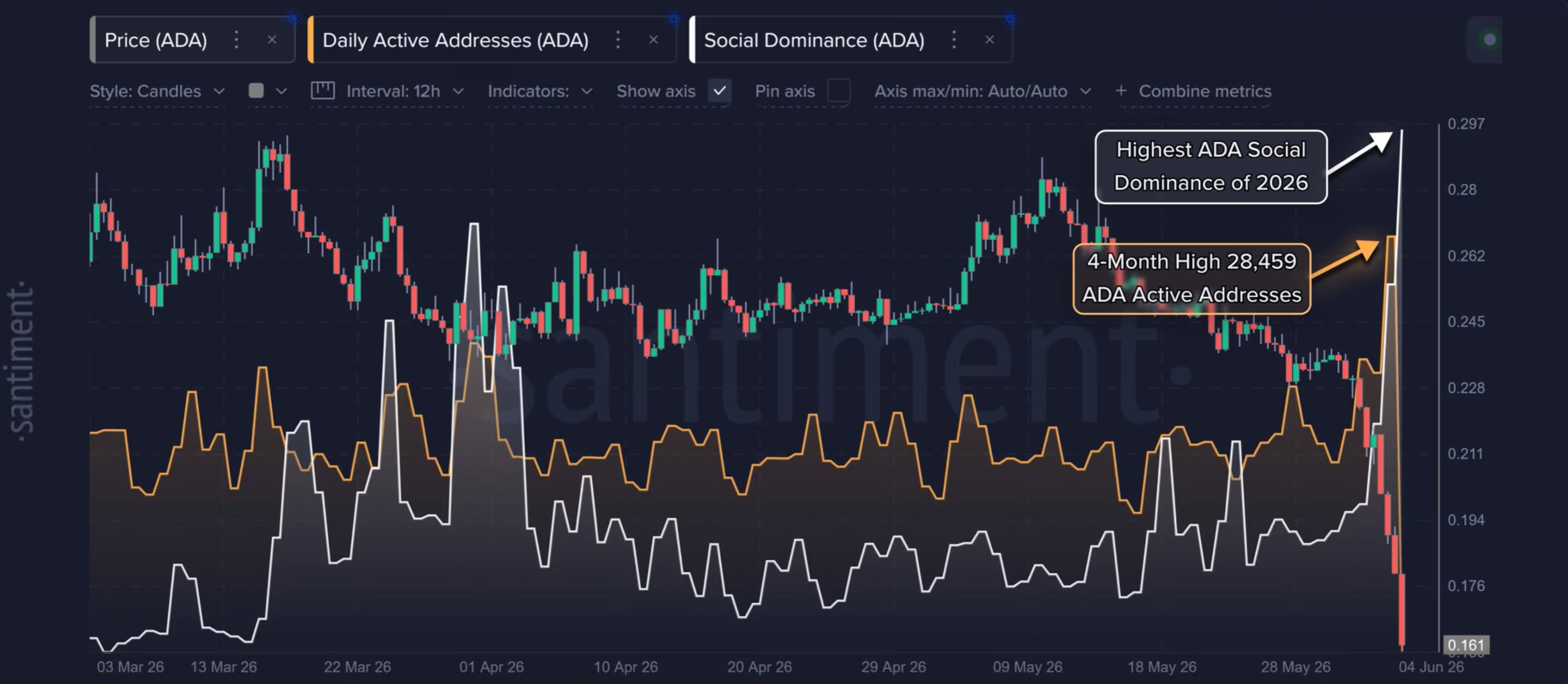
Cardano is getting attention again, but not the kind holders usually want.
ADA fell to around $0.16 on Thursday, down nearly 30% over the past seven days and more than 75% over the past year, CoinDesk data show. The token briefly traded below $0.16, its lowest level since December 2020, extending a drawdown that has turned Cardano from one of crypto’s largest retail communities into one of the market’s clearest stress cases.
The latest selling followed comments from founder Charles Hoskinson, who said he was “taking a break” after warning that Cardano could face a “wave of failures” across its ecosystem. His remarks came after TapTools, a Cardano analytics platform, said it would shut down after four years, and after the community voted against funding Cardano’s 2026 Summit in Singapore.
The market reaction has now spread beyond price.
Santiment said ADA’s social dominance reached about 0.52%, a 2026 high, meaning more than one in every 190 crypto-related discussions across tracked social channels focused on Cardano.

Daily active addresses also climbed to 28,459, the highest level in four months, suggesting users are moving funds, checking positions or interacting with the network during the selloff.
Such a kind of activity can be read two ways.
The bullish version is that Cardano’s base has not disappeared. ADA still has one of crypto’s louder communities, and activity rising into a selloff can show holders are engaged rather than checked out.
However, another read is that attention is being pulled in by distress. Project shutdowns, funding fights and the founder stepping back are not the kind of catalysts that usually bring durable bids. Retail loyalty can keep a token relevant, but it cannot replace ecosystem growth, new capital or working applications.
That is the test now. ADA is cheap by old cycle standards, but cheap alone is not a catalyst. Cardano needs evidence that projects can survive, treasury funding can be deployed and users have reasons to do more than defend the chain online.


Cameron Winklevoss has defended Zcash after the privacy coin plunged as much as 45% and Cypherpunk Technologies shares dropped 37% following disclosure of a critical bug that could have allowed unlimited counterfeit ZEC to be created.
Summary
- Cameron Winklevoss defended Zcash after a critical Orchard pool bug triggered a sharp selloff across ZEC and related stocks.
- Shielded Labs confirmed the vulnerability could have enabled unlimited counterfeit ZEC creation before an emergency fix was deployed on June 2.
- Arthur Hayes exited his entire ZEC position, while Cypherpunk Technologies said there is “zero evidence” the exploit was ever used.
According to a June 5 X post, Cameron Winklevoss defended Zcash as investors reacted to the disclosure of a critical vulnerability in the network’s Orchard shielded pool. While acknowledging that bugs can emerge in any blockchain system, he argued that the focus should be on how quickly researchers identify and address them.
“When it comes to any L1, there will be bugs. What’s important is that there are world class researchers focused on hardening the network and staying ahead of the bad guys.”
His remarks arrived as pressure spread across companies tied to the Zcash ecosystem.
Shares of Cypherpunk Technologies, a publicly traded company focused on accumulating Zcash, fell to their lowest level since March. Yahoo Finance data showed the stock dropped 37% to $0.59 after touching an intraday low of $0.53. At the same time, shares of Gemini-linked GEMI declined 4.4% to $4.41 as technology stocks weakened across U.S. markets.
Shielded Labs says exploit was possible before emergency fix
Details released by Shielded Labs showed that security researcher Taylor Hornby discovered the vulnerability on May 29 during an AI-assisted audit. According to the organization, the flaw remained undetected for roughly four years inside the Orchard shielded pool.
Shielded Labs stated that Hornby successfully used the exploit in a local testing environment to create unlimited counterfeit ZEC without detection. The organization added that the same method could have worked on the Zcash mainnet before the issue was patched.
An emergency response led by the Zcash Open Development Lab and other ecosystem contributors resulted in a network upgrade completed by June 2. The fix temporarily paused Orchard activity before restoring it with corrected code.
Despite the repair, Shielded Labs said cryptographic tools alone cannot determine whether the exploit was used before the patch because Orchard transactions are designed to preserve privacy.
While the organization described prior exploitation as unlikely, it emphasized that users should not rely solely on that assessment.
The Zcash Foundation later released Zebra 5.0.0 through the NU6.2 hard fork, re-enabling Orchard with the corrected circuit. According to the foundation, no evidence of unauthorized value creation had been identified.
Market participants cut exposure as uncertainty grows
Selling intensified across Zcash-related assets following the disclosure. According to data from crypto.news, Zcash (ZEC) plunged more than 45% in 24 hours, hitting an intraday low of $264.80 on June 5. The privacy coin has since pared some of those losses and was changing hands at around $361 at press time.
Among those reducing exposure was BitMEX co-founder Arthur Hayes. In a post on X, Hayes said he sold his entire ZEC position because the incident undermined his investment thesis around privacy-focused assets.
Hayes wrote that exploitation appeared “extremely unlikely” but argued that the inability to conclusively rule it out created a problem for a privacy-focused cryptocurrency.
“The privacy from AI, govt, big tech narrative demands perfection not improbability. I read about the exploit yday, and didn’t appreciate how it violated my narrative mental map. The 30% dump, made me rethink, and I had to take profit on the entire position.”
Meanwhile, Cypherpunk pushed back against concerns that counterfeit coins had entered circulation. In a statement posted on X, the company said there was “zero evidence” that the vulnerability had been exploited. It also argued that an attacker would have had little incentive to hold counterfeit ZEC through a major bull market instead of selling the coins earlier.


Hyperliquid has been flagged by the UK Financial Conduct Authority, bringing regulatory scrutiny to one of the largest crypto perpetual futures venues.
Summary
- UK FCA warned that Hyperliquid and Hyper Foundation may be offering financial services without authorization.
- ICE CEO Jeffrey Sprecher said the NYSE parent is studying Hyperliquid’s perpetual futures model.
- Hyperliquid generated $255 million in revenue by May 20, while HYPE gained 101% year to date.
According to a notice published by the UK Financial Conduct Authority on May 21, Hyperliquid, Hyper Foundation, the protocol’s application, and related social media channels may be offering or promoting financial services and products in the United Kingdom without authorization.
The regulator stated that consumers should avoid dealing with the platform and warned that firms operating without approval may not provide the protections available through regulated financial services.
The FCA’s warning arrived as cryptocurrency perpetual futures, commonly known as perps, attract increasing attention from regulators, exchanges, and trading firms.
Unlike traditional futures contracts, perpetual futures have no expiration date and rely on recurring funding payments to keep prices aligned with spot markets.
At the same time, major operators of regulated exchanges have begun discussing whether similar products could gain a larger foothold in traditional financial markets.
Traditional exchanges are studying perpetual futures
Speaking at Piper Sandler’s Global Exchange & Fintech conference on June 4, CME Group Chief Executive Terry Duffy criticized the Commodity Futures Trading Commission’s decision to allow regulated crypto perpetual futures in the U.S.
Duffy argued that the highly leveraged products introduce risks that many market participants may underestimate. He said perpetual futures can allow traders to maintain positions indefinitely while using leverage that may reach 50 times the deposited capital.
According to Duffy, automatic liquidation mechanisms and funding-rate costs could expose retail investors to significant losses if they do not fully understand how the products function.
Describing the market as increasingly driven by speculation, Duffy questioned whether the new contracts serve the long-term interests of investors.
While CME’s chief executive voiced concerns, Intercontinental Exchange Chief Executive Jeffrey Sprecher took a different approach. During remarks made last week, Sprecher said the parent company of the New York Stock Exchange was studying Hyperliquid’s model and discussing with regulators why traditional venues could not offer comparable products.
Those comments emerged as regulated crypto perpetual futures began entering the U.S. market. On May 29, the CFTC approved the first regulated crypto perpetual futures products for U.S. participants, opening a market that had previously been dominated by offshore platforms.
U.S. firms move into a market long led by offshore venues
Following the regulatory approval, prediction market operator Kalshi launched Bitcoin perpetual futures and introduced Ethereum perpetual futures on June 4.
According to regulatory filings, another 11 cryptocurrency perpetual futures contracts, including products tied to Solana and Dogecoin, remain under review.
Elsewhere in the sector, Coinbase Financial Markets received regulatory guidance allowing eligible institutional clients in the United States to access perpetual futures and options listed on Deribit, the derivatives exchange acquired by Coinbase in 2025.
Kraken has also announced plans to offer regulated Bitcoin perpetual futures through Bitnomial Exchange, a regulated platform acquired by parent company Payward earlier this year.
Against that backdrop, Hyperliquid remains one of the largest decentralized venues for perpetual futures trading.
The platform’s scale has made it increasingly difficult for regulators and traditional exchanges to ignore. By May 20, Hyperliquid had generated $255 million in revenue for the year, according to reported figures, while the HYPE token had gained 101% over the same period.
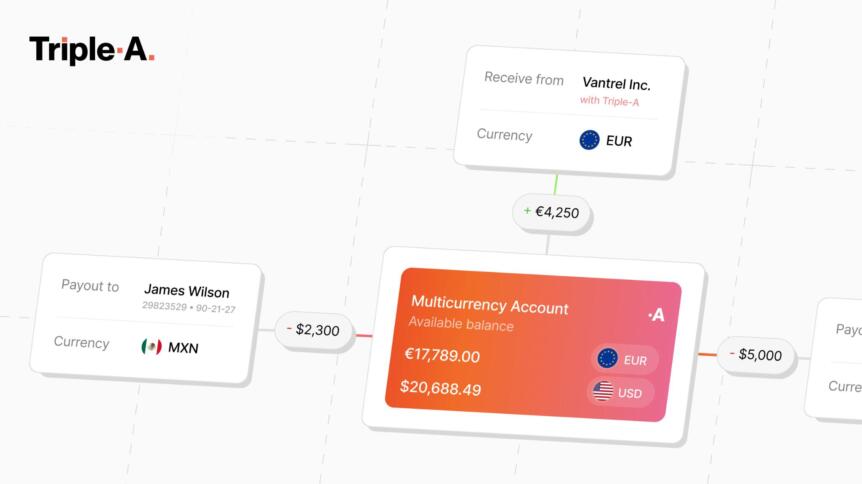
Triple-A, a licensed global payments firm, has begun a European rollout of Multicurrency Accounts that link local euro collections to stablecoin rails and global payout options. The product gives businesses a named EUR IBAN without needing an EU legal entity and consolidates collection, conversion and payout into a single platform that supports payouts to more than 70 countries.
What the product does
The Multicurrency Accounts offer customers a named euro International Bank Account Number, enabling firms to receive SEPA and SEPA Instant transfers as if they had a local euro account. From there, funds can be routed to a traditional bank account, converted and sent into a stablecoin, or distributed as local-currency payouts across Triple-A’s supported markets.
Key capabilities include:
- Collection of euro payments via SEPA rails without establishing an EU entity or separate local bank account.
- Integrated conversion and settlement into stablecoins alongside traditional fiat payouts.
- Global payout coverage exceeding 70 jurisdictions, intended to simplify reconciliation and lower transaction predictability.
Why this matters to businesses
For companies that sell into Europe or run platforms with EU-based users, collecting euros typically requires either opening a local subsidiary and bank account or relying on intermediary providers, which can add cost, time and reconciliation complexity. Triple-A’s offering aims to remove that onboarding hurdle by providing named euro accounts without a local entity, while keeping collection and payout flows connected in the same infrastructure.
That unified approach is significant because it collapses what are often separate steps in cross-border workflows: collection, conversion and payout. By linking SEPA collection directly to stablecoin rails and local-currency payouts, payouts can be executed faster and with fewer handoffs. For B2B sellers, marketplaces, and platforms that manage many payees across multiple jurisdictions, this reduces operational friction and can improve cash flow timing.
Regulatory and market context
Triple-A positions the product as bridging traditional banking rails with cryptocurrency settlement options. The company is registered with the U.S. Financial Crimes Enforcement Network and holds licences across jurisdictions including Singapore and Europe, an important point given the heightened regulatory attention on stablecoins and cross-border transfers.
Stablecoins have been promoted as a way to speed settlement and reduce foreign exchange overheads, but widespread commercial adoption depends on robust on- and off-ramps to fiat. Providers that focus narrowly on stablecoin rails can struggle to offer local collection capabilities; conversely, traditional payment providers often lack direct access to digital-asset settlement. Triple-A’s pitch is that combining both capabilities in one system addresses a practical market gap.
Industry implications and risks
In practice, the impact of products like Multicurrency Accounts will hinge on several factors. First, bank and regulator acceptance of named IBAN flows routed through non-EU entities will determine how broadly firms can rely on these accounts. Second, counterparty, custody and AML controls around stablecoin conversions remain a focus for regulators and corporate treasurers, affecting how quickly large enterprises will shift liquidity into tokenised rails.
Operationally, bringing collection and payout into a single ledger can simplify reconciliation and lower per-transaction costs, which matters for platforms with many small payouts. It also creates a clearer technical path for firms that want optionality between fiat and token settlement depending on corridor economics.
How it fits into the competitive landscape
Triple-A’s announcement highlights a broader industry trend: providers seeking to stitch together fiat rails, banking relationships and tokenised settlement to offer end-to-end cross-border payment services. While some market participants specialise in stablecoin settlement and others in local-rail collection, the value proposition here rests on integration and coverage.
The company says the offering is intended for a range of customers, including B2B merchants selling into Europe, exporters, platforms that collect and disburse funds for users and other payment service providers or electronic money institutions seeking to add euro collections to their stacks. Triple-A also indicates plans to expand collection capabilities to include U.S. dollar and Singapore dollar accounts in the future.
Takeaway
Triple-A’s Multicurrency Accounts represent a practical step toward reducing friction in euro collections and global payouts by combining SEPA access with stablecoin rails. The product could ease market entry for non-EU firms selling into Europe and provide platforms with a unified path from collection to payout. However, the broader adoption will depend on regulatory acceptance, counterparty controls and how cost savings compare with traditional banking and payment-provider alternatives.
For corporates and fintechs evaluating cross-border architectures, the announcement underscores the growing focus on hybrid solutions that marry established banking rails with digital-asset settlement to deliver faster, more predictable global payments.


Helium founder Amir Haleem has stepped down as chief executive of Nova Labs after HNT’s price suffered a steep multi-year decline and the company sold its consumer mobile business.
Summary
- Amir Haleem has stepped down as Nova Labs CEO and moved into the chairman role.
- Mario Di Dio has taken over as CEO of Nova Labs after Haleem’s exit.
- HNT has fallen 96% over five years, according to market data cited in the report.
According to Haleem’s announcement on X, Mario Di Dio has taken over as CEO of Nova Labs, while Haleem has moved into the chairman role. The leadership change came as HNT remained under heavy pressure, with the token down 96% over five years and another 15% on the day of Haleem’s exit, according to the market data cited in the report.
I hate “some personal news” tweets, but, some personal news
after 13 years running Helium, I let the team know a couple of months ago that I am stepping down as CEO and moving into the chairman role. @didiomario is taking over. this is the right moment to do it, and he is… — amir 🇺🇸 (@amirhaleem) June 4, 2026
Helium mobile sale fails to lift HNT
Nova Labs completed the sale of Helium Mobile to Noble Mobile on June 2, 2026, according to the company update cited in the report. The sale came two days before Haleem announced his resignation as CEO.
Helium Mobile had become one of the project’s more visible consumer products after Nova Labs tried to connect crypto incentives with low-cost cellphone service. Still, the HNT token did not recover after the sale. According to the report, HNT stayed down 30% over the week and 46% over the month.
At the same time, Helium’s other tokens also remained far below earlier levels. MOBILE has fallen 76% over five years, while IOT has dropped 87%, according to the price figures cited in the report. Nova Labs issued the tokens to reward operators of Helium-linked networking devices.
Haleem says he still holds HNT
In his departure message, Haleem said he still holds HNT, according to the report. His statement came after years of public comments in which he promoted the long-term case for Helium and its token-backed network model.
Some users on X described his move to chairman as a deserved break after a long run, according to the report. Others focused on HNT’s price history and the timing of his exit, especially after the company sold Helium Mobile without a recovery in the token.
The leadership handover also closed a major chapter for Nova Labs. Haleem spent more than a decade building Helium’s wireless network concept, which used crypto rewards to encourage people to run hardware devices that supported the system.
Nova Labs leaves behind years of controversy
Helium raised nearly $365 million over its lifetime, with FTX listed among its backers, according to the report. In 2022, the company faced criticism after it advertised Lime, Salesforce, and Nestlé as network users, although those companies were not using the network.
A Forbes investigation later reported that insiders mined close to half of all HNT during the token’s early months. The SEC sued Nova Labs in January 2025 under then-chair Gary Gensler, accusing the company of making materially false and misleading statements about users, including Lime, Nestlé, and Salesforce.
After Paul Atkins took over the SEC under President Donald Trump, Nova Labs settled the case in April 2025. According to the report, Nova Labs paid a $200,000 civil penalty tied to one misrepresentation charge, while the SEC dismissed the remaining claims with prejudice.


Brad Sherman has criticized proposals to distribute government payments through stablecoins, warning during a congressional hearing that such a system could support tax evasion while lawmakers simultaneously advance several new crypto tax proposals.
Summary
- Rep. Brad Sherman criticized proposals to issue tax refunds and government payments in stablecoins, arguing they could facilitate tax evasion.
- The comments came after NCUA Chairman Kyle Hauptman suggested stablecoins could enable faster government disbursements, including on weekends and holidays.
- Congress is reviewing new crypto tax proposals covering stablecoins, DeFi, staking, and wash sales.
According to remarks delivered during a House Financial Services Committee hearing on oversight of federal banking regulators, U.S. Representative Brad Sherman argued that using stablecoins for government payments would create risks that outweigh any potential benefits.
The criticism came after National Credit Union Administration Chairman Kyle Hauptman suggested that stablecoins could improve the speed of government disbursements.
Hauptman told lawmakers that dollar-pegged tokens operate around the clock, allowing tax refunds and emergency payments to reach recipients outside traditional banking hours, including weekends and holidays.
Responding to the proposal, Sherman said he could not think of a worse idea and argued that government-backed stablecoin payments would legitimize what he described as an alternative system designed to facilitate tax evasion.
Sherman also raised concerns about yield-bearing stablecoins, stating that legal professionals were already searching for ways to work around restrictions on interest payments and urging regulators to develop rules capable of preventing such outcomes.
Stablecoin tax rules remain under review
Sherman’s comments arrive as Congress examines how stablecoins should be treated under U.S. tax law.
As reported earlier by crypto.news, the House Ways and Means Committee recently released seven discussion drafts covering digital asset taxation ahead of a June 9 hearing.
According to crypto journalist Eleanor Terrett, the package includes proposals addressing stablecoins, staking rewards, mining income, DeFi lending, wash-sale rules, charitable donations and a voluntary disclosure program for unresolved crypto tax reporting.
Among the proposals is a provision that could allow compliant stablecoins to receive de minimis treatment for small gains and losses generated through everyday transactions. The measure would separate certain low-value payments from speculative crypto trading activity for tax purposes.
Lawmakers have previously explored similar concepts through the bipartisan Digital Asset Protection, Accountability, Regulation, Innovation, Taxation and Yields Act, known as the PARITY Act.
According to Representative Steven Horsford’s office, that proposal included a deemed-basis rule that would treat regulated payment stablecoins more like cash while incorporating protections against trading and arbitrage abuse.
Regulators outline banking and compliance plans
Elsewhere during the hearing, federal regulators discussed the implementation of stablecoin oversight requirements established under the GENIUS Act.
FDIC Chairman Travis Hill said regulators are preparing customer identification requirements for stablecoin issuers and indicated that proposed rules could be released soon.
At the same hearing, Comptroller of the Currency Jonathan Gould defended the Office of the Comptroller of the Currency’s handling of a national trust bank charter application submitted by Trump-linked World Liberty Financial.
The exchange became tense after Representative Gregory Meeks questioned Gould’s independence and asked whether he was acting on behalf of the public or the Trump family.
Gould rejected the criticism, describing the comments as unprecedented and saying the pressure he had experienced came from lawmakers rather than political figures connected to the administration.
The regulatory discussion unfolded as crypto firms continue to gain access to traditional banking infrastructure. Falcon Finance launched its fUSD stablecoin with Anchorage Digital, the first federally chartered crypto bank, while crypto exchange Kraken recently received a Federal Reserve master account with certain limitations.
Separately, World Liberty Financial said last month that it was in the final stages of obtaining conditional approval for its banking charter application.
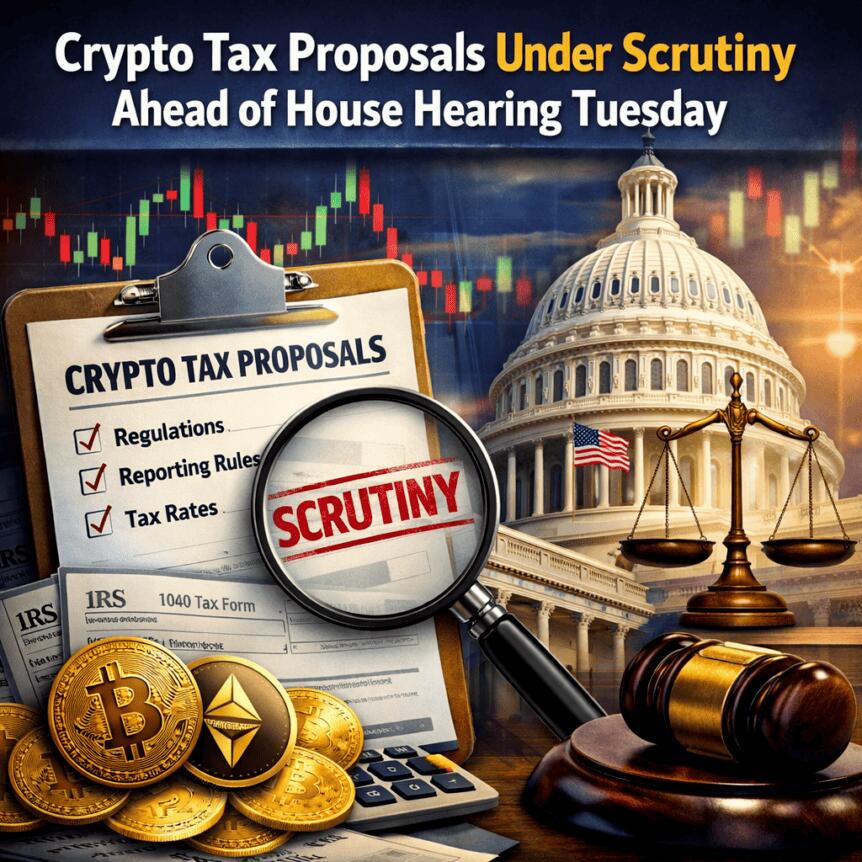
The US House Ways and Means Committee moved the dial on digital asset taxation by circulating seven discussion draft bills ahead of a key hearing on the topic. The set of proposals touches on stablecoins, mining, staking, and everyday crypto transactions, signaling a bipartisan effort to clarify how the IRS should treat crypto activities and reduce the tax-reporting burden for users.
Chairing the committee, Rep. Jason Smith, and other lawmakers presented the drafts as a step toward more predictable tax rules for participants across the crypto ecosystem. The package aims to ease paperwork for crypto holders, provide clearer treatment for mining and staking activities, and potentially create a “de minimis” reporting exception for small-value transactions. The drafts were released in advance of a Tuesday hearing dedicated to digital asset taxation, underscoring Congress’s ongoing focus on how these assets should be taxed as activity and adoption expand.
Key takeaways
- The Ways and Means package signals a push to reduce annual tax paperwork for crypto holders while clarifying the tax treatment of mining and staking tokens.
- A de minimis reporting approach for small crypto transactions is on the table, with lawmakers exploring thresholds that would ease reporting requirements for ordinary transfers.
- The PARITY Act earlier proposed a $200 reporting threshold for stablecoins, while excluding a similar threshold for other cryptocurrencies such as Bitcoin.
- Any legislation advancing these ideas will require bipartisan support in both chambers to become law, with the Senate weighing its own priorities alongside a broader tax agenda.
- State-level signals are emerging, notably in Illinois, where a new budget includes a digital asset tax provision that would apply to brokered transactions.
What the proposals seek to change
The seven draft bills circulated by the committee address several recurring pain points for the tax treatment of digital assets. One throughline is reducing the formal reporting burden on individuals who hold or transact with cryptocurrencies. By reexamining the way taxable events are defined and reported, lawmakers appear intent on reducing friction for routine crypto activity while preserving revenue integrity for the federal government.
Another focus is clarity around mining and staking activities. Mining uses energy-intensive processes to validate and record transactions, while staking typically involves locking up tokens to participate in network consensus. The drafts indicate an intent to provide clearer rules for how gains from these activities should be taxed, and under what circumstances, avoiding ambiguity that has long puzzled taxpayers and practitioners alike.
Alongside these aims, the drafts contemplate a de minimis reporting exemption for small-value transactions. The idea is to spare ordinary retail transfers from triggering onerous tax reporting, a concept that has gained traction in policy circles as a way to curb friction without eroding tax base.
In parallel to the House effort, a March draft law known as the Digital Asset PARITY Act proposed a specific threshold for stablecoins—around $200—for reporting purposes. Importantly, the PARITY Act did not extend a similar threshold to other cryptocurrencies like Bitcoin, illustrating the nuanced approach lawmakers are exploring for different classes of digital assets. The proposal drew a pointed reaction from industry stakeholders who argued for broader tax clarity to encourage onshore compliance, as noted by The Digital Chamber’s CEO in commentary linked to the PARITY Act.
As part of the policy discourse, Wyoming Senator Cynthia Lummis has signaled interest in a de minimis exemption for Bitcoin transactions that could operate in tandem with federal efforts. Her team has discussed a potential $300 de minimis threshold in connection with capital gains taxes, building on a framework she has introduced in other contexts. These items underscore the cross-chamber tension between ensuring tax compliance and avoiding overbearing reporting requirements that could suppress legitimate onshore activity.
Policy path and the Senate’s timetable
While the House effort concentrates on tax clarity and administrative relief, the Senate’s agenda appears more constrained by broader budget considerations and a longer-running debate over a digital asset market framework. Senate lawmakers are expected to prioritize a budget reconciliation package before evaluating a proposed market structure bill commonly referred to as the CLARITY Act. This sequencing means that any House-passed proposals would need substantial bipartisan support to survive the Senate’s scrutiny and potential revisions.
The dynamic highlights a familiar pattern in Washington: a flurry of activity around digital asset tax policy, followed by protracted inter-chamber negotiations over how to balance investor protections, innovation, and revenue requirements. For market participants, the timing and scope of bipartisan broadening of tax clarity will matter, not just the specifics of any single draft. The Tuesday hearing in the House provides a venue for lawmakers to hear from witnesses and stakeholders as they shape a path forward.
Source coverage points to ongoing industry calls for simpler reporting and more predictable guidance. The crypto policy debate has long centered on how to treat mining and staking activities, whether stablecoins should be given a distinct treatment, and how to avoid stifling everyday on-ramps with heavy reporting burdens. The new drafts reflect an attempt to translate those concerns into concrete legislative language, even as lawmakers acknowledge the need for cooperation across party lines to move from discussion to law.
Illinois moves on digital asset taxation
Beyond federal activity, state-level developments are surfacing as well. This week, the Illinois General Assembly approved a $56 billion state budget that includes provisions imposing a digital asset tax. If Governor JB Pritzker signs the budget into law, crypto users would face a 0.2% tax on transactions conducted through brokers registered with the state. The measure signals how state-level tax policy could complement or complicate federal efforts, especially for residents and businesses with cross-border activity or localized crypto activity in jurisdictions with different tax regimes.
These shifts at both federal and state levels illustrate a broader trend: policymakers are moving from high-level debates about crypto’s legality and morality toward concrete tax policy levers that could affect everyday users. The interplay between de minimis thresholds, mining and staking clarity, and state tax incentives or thresholds will likely shape how investors and infrastructure builders approach compliance and reporting in the near term.
Why this matters for investors, users, and builders
From an investor perspective, clearer tax rules and potential reporting relief can reduce compliance risk and operating costs, particularly for individuals who hold a diversified mix of digital assets or participate in staking and yield-generating activities. For miners and staking participants, explicit guidance on when income is recognized and how gains are calculated can influence decision-making around deployment and asset selection, especially in a climate of rising energy costs and evolving network economics.
For developers and platforms, the material implications extend to how on-chain transactions are categorized and reported. Clarified thresholds and definitions can improve user experiences by reducing friction in tax reporting while maintaining transparency about taxable events. At the same time, the ongoing policy tug-of-war—between tighter reporting for some asset classes and looser requirements for small transfers—will continue to shape product design, KYC/AML considerations, and record-keeping tooling across the ecosystem.
As the dialogue moves forward, readers should watch for two near-term developments: whether the House’s seven-draft package gains momentum toward formal legislation, and how the Senate harmonizes its approach with federal reconciliation processes and the CLARITY Act. The Illinois framework, meanwhile, provides a real-world test case for how state tax regimes may interact with federal policy and influence local crypto activity. The coming months will reveal how these threads converge into a coherent and durable tax structure for digital assets.
Sources and context for this overview reflect coverage of the committee’s discussion drafts, the PARITY Act debate, and state-level developments as reported in Cointelegraph and related policy reporting. For readers seeking to explore the original materials, the Ways and Means Committee’s hearing page and the PARITY Act coverage offer additional detail on the proposals and their rationale.


SpaceX has secured a major compute agreement withGoogle ahead of its planned Nasdaq listing, adding another large customer to its expanding AI infrastructure business.
Summary
- SpaceX has secured a $920 million monthly compute deal with Google ahead of its planned Nasdaq IPO.
- Google will access about 110,000 NVIDIA GPUs and related equipment from October 2026 through June 2029.
- Google said the agreement will help meet stronger-than-expected demand for Gemini Enterprise and other AI products.
A regulatory filing by SpaceX said Google will pay the company $920 million per month from October 2026 through June 2029 for access to about 110,000 NVIDIA GPUs, CPUs, memory, and other related equipment. The filing said Google’s access will begin at a lower fee as the service ramps up through September.
Google turns to SpaceX for AI capacity
The agreement comes as Google faces rising demand for its AI products. In a statement, a Google representative said Google Cloud and SpaceX have worked together for years and described the contract as a short-term capacity arrangement.
According to Google, demand for its agent platform, Gemini Enterprise, has been higher than expected. The company said the SpaceX deal will provide bridge capacity while it works to meet customer needs.
Unlike Anthropic, Google already controls one of the world’s largest AI compute footprints, according to outside estimates cited in the report. However, Alphabet’s own spending plans show the pressure created by the AI race. Alphabet has committed more than $180 billion in capital expenditures this year and has said spending will rise significantly in 2027. The company also recently announced an $80 billion equity sale.
Deal follows Anthropic agreement
SpaceX’s new contract with Google follows a similar deal announced in late May with Anthropic. Under that agreement, Anthropic agreed to pay SpaceX $1.25 billion per month through 2029 for compute capacity from the Colossus 1 data center near Memphis, Tennessee.
The report said Colossus 1 was originally built by xAI, which is now part of SpaceX, for its own artificial intelligence work. Anthropic raised usage limits on the same day its deal with SpaceX was announced, after facing compute limits before the agreement.
Google’s deal appears to cover about half the compute made available to Anthropic at Colossus 1. SpaceX did not identify which data center Google will use. Elon Musk has previously said Colossus 2 may be reserved for xAI, according to the report.
Cancellation terms give both sides flexibility
The regulatory filing said both SpaceX and Google can terminate the agreement with 90 days’ notice after December 31, 2026. The filing also includes a delivery condition tied to GPU access.
If SpaceX fails to provide the committed GPU capacity by September 30, 2026, Google may end the agreement after a one-month grace period, according to the filing. Google may also accept the available number of GPUs and receive a reduction in monthly fees.
IPO plans add weight to compute strategy
SpaceX announced the Google agreement one week before its stock is expected to begin trading on Nasdaq. SEC paperwork shows the company plans to raise about $75 billion at a valuation near $1.75 trillion, which would make it the largest IPO in history.
Google is already a long-time SpaceX investor. Its stake is expected to be worth more than $100 billion after the listing, according to the report. The two companies are also reportedly discussing orbital data centers, a project tied to SpaceX’s plans after the IPO.


Digital asset treasury companies have come under fresh pressure as the crypto market slump has pushed major bitcoin, ether, and Solana holders into large unrealized losses.
Summary
- Hyperliquid treasury firms remain the only major DAT group with meaningful unrealized gains, according to Artemis data.
- Hyperliquid Strategies holds about 23.7 million HYPE and has over $1.1 billion in paper gains.
- Strategy now faces more than $12.8 billion in unrealized Bitcoin losses, according to SaylorTracker data.
Artemis data shows that Hyperliquid-focused treasury firms are the only major group still holding meaningful paper gains, even after HYPE pulled back from its record high above $74 earlier this week.
The contrast has become sharper in the first half of 2026, as several public companies that copied the crypto treasury model now face deep losses on their token positions. Companies built around bitcoin, ether, and Solana reserves are carrying billions of dollars in unrealized losses, while HYPE treasury firms remain positive for now.
Hyperliquid Treasuries Stay Ahead
According to Artemis, Hyperliquid Strategies holds about 23.7 million HYPE and still has more than $1.1 billion in unrealized gains. The gain remains even after HYPE fell 11.98% during the latest market pullback.
Hyperion DeFi, which disclosed just over 2 million HYPE in its latest SEC filing, also remains in profit. Artemis estimates the company has about $35 million in unrealized gains on its HYPE holdings.
The figures separate HYPE treasury firms from most other digital asset treasury companies. Artemis data shows that treasury firms tied to bitcoin, ether, and Solana are now dealing with major paper losses as crypto prices trade near multi-year lows.
Strategy Leads Bitcoin Treasury Losses
SaylorTracker data shows Strategy, formerly MicroStrategy, now holds more than $12.8 billion in unrealized bitcoin losses. The company helped popularize the corporate bitcoin treasury model and remains the largest public bitcoin holder.
Strategy began buying bitcoin when the asset traded near $10,000, but SaylorTracker data shows its average acquisition cost has climbed to about $75,000 per BTC after years of purchases.
The company’s position has moved sharply over the past year. When bitcoin topped $126,000 last October, Strategy had more than $14 billion in unrealized gains. SaylorTracker data later showed those gains turned into about $9.5 billion in losses in February before briefly returning to positive territory in April.
This week, Strategy said it sold 32 bitcoins for $2.5 billion. After that announcement, bitcoin fell toward $59,100 on Friday afternoon, leaving Strategy with a paper loss of about 20% on its holdings. MSTR shares were down more than 11% on Friday near $116, close to a two-year low.
Ether Treasury Firms Face Heavy Paper Losses
Ethereum treasury companies are also under pressure after ETH fell below $1,550 on Friday, its lowest level in more than a year.
Artemis estimates that Bitmine, chaired by Fundstrat’s Tom Lee, has about $10.5 billion in unrealized losses on more than 5.4 million ETH. At current prices, those holdings are worth about $8.6 billion.
Bitmine’s ETH position represents nearly 4.5% of Ethereum’s circulating supply. The company has previously said it wants to raise that figure to 5%. BMNR shares fell more than 10% on Friday to around $16, their lowest level since the firm launched its ether treasury strategy in June 2025.
Sharplink, another major ether treasury company, holds nearly 869,000 ETH. Artemis data estimates its paper loss at about $1.8 billion.
Solana treasury firms have also taken losses as SOL fell below $65 on Friday, its weakest price since late 2023.
As previously reported by crypto.news Forward Industries, the largest public Solana treasury company, holds more than 6.8 million SOL. Artemis data estimates the company now has about $1.2 billion in unrealized losses on those holdings.
The latest data shows how the digital asset treasury trade has split between HYPE-linked winners and larger crypto treasury firms facing heavy losses.

This home speaker offers style, substance and serious spatial audio, but I still have one (very minor) gripe…

California governor race results: Xavier Becerra advances

Henkel: Cheap Enough To Ignore Its Growth Problem



-

 Business4 days ago
Jade Biosciences, Inc. (JBIO) Discusses Positive Interim Results From JADE101 Phase I Healthy Volunteer Study and Development Plans Transcript
-
 Tech7 days ago
SpaceX just won a second Golden Dome contract. This one is $4.16 billion.
-

 Sports3 days ago
French Open 2026 results: Alexander Zverev beats Rafael Jodar and will play Jakub Mensik in semi-finals
-

 Business7 days ago
Is the Spurs Phenom Already Better Than Prime Diesel?
-

 Tech4 days ago
CryZENx Releases Fresh Playable Content Deep Inside Jabu-Jabu for His Ocarina of Time Remake
-

 Politics7 days ago
The House | Inside Andy Burnham’s Makerfield Campaign: “Nobody Thinks This Is In The Bag”
-

 Fashion10 hours ago
Weekend Open Thread: Evereve – Corporette.com
-
Crypto World18 hours ago
LBank Surpasses 25 Million Users Worldwide as AFA Partnership Continues to Drive Global Growth
-
 Business3 days ago
Trump Taps Housing Chief Bill Pulte as Acting Intelligence Director After Gabbard Exit
-
 Entertainment7 days ago
One of the Greatest Sitcoms of All Time Shoots Up Apple TV’s Charts 11 Years Later
-

 Business7 days ago
Demand Conditions Improve In Chemicals Sector In April 2026
-
 NewsBeat7 days ago
Everything you need to know as Cambridge’s Strawberry Fair returns after cancelled year
-
 Crypto World4 days ago
Seagate (STX) Stock Surges to Record High on AI Boom and Legal Settlement
-
 NewsBeat3 days ago
Republicans balk at Trump’s attempt to appoint a MAGA enforcer to lead National Intelligence
-
 Entertainment7 days ago
Britney Spears Shares Troubling Update After Hard Year
-
 Crypto World3 days ago
EU AI Data Center Project Faces Delays as Funding Gaps Grow
-

 Business3 days ago
Aehr Test Systems Stock Soars 17% Amid Surging AI Demand and Conference Spotlight
-

 Tech7 days ago
Intel and 3DGS back a $3.3bn glass-substrate plant in India’s Odisha
-

 Tech7 days ago
Acer’s Swift Air 14 is a peppy MacBook Neo rival with some cool upgrades and a $699 ask
-
 Tech7 days ago
Knox County, TN Rolls Back ‘Roots’ Book Ban After Backlash
You must be logged in to post a comment Login