









Connect with us

Business

Trump says he would not unfreeze Iran’s assets before peace deal is done

Published

on

Trump says he would not unfreeze Iran’s assets before peace deal is done
Continue Reading
Click to comment

You must be logged in to post a comment Login

Leave a Reply

Business

UK warehouse market grows 61% in a decade as firms hold more stock

Published

on

UK warehouse market grows 61% in a decade as firms hold more stock

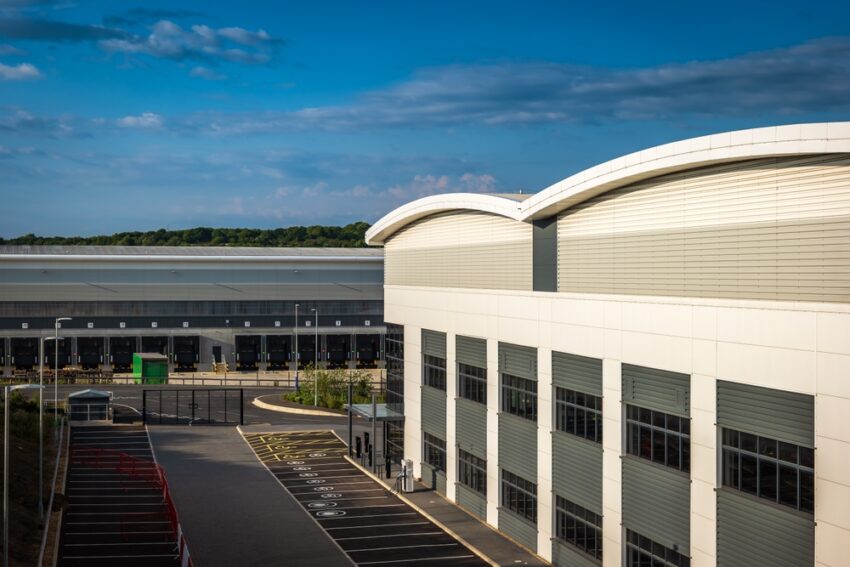
New industry figures show the UK’s warehouse market has expanded by 61% since 2015, reflecting changing supply chains, ecommerce growth and businesses carrying larger inventories.

If you wanted to understand how British businesses have changed over the past decade, you could do worse than look inside their warehouses.

New analysis of industry data shows the UK’s warehouse market has grown by 61% since 2015 and is now worth an estimated £38.2 billion. On the surface, it’s a story about bigger buildings and more storage space. Dig a little deeper, though, and it tells a much bigger story about how companies are adapting to a world where disruption has become the norm.

The days of keeping stock levels to an absolute minimum are fading. Businesses that once relied on perfectly timed deliveries are increasingly choosing resilience over efficiency, carrying more inventory, diversifying suppliers and rethinking how quickly they can get products into customers’ hands.

For Britain’s SMEs, it’s a shift that is changing everything from cash flow to expansion plans.

Advertisement

Why are businesses holding more stock?

Not long ago, “just-in-time” inventory management was seen as the gold standard. The less stock sitting on shelves, the better.

Then came a succession of shocks. The pandemic exposed just how fragile global supply chains could be. Shipping delays became front-page news, manufacturers struggled to source components and retailers were left with empty shelves.

Since then, geopolitical tensions, rising freight costs and disruption to major shipping routes have reinforced the same lesson: relying on everything arriving exactly when it’s needed is a gamble many businesses no longer want to take.

Instead, more companies are building a buffer. Holding extra stock isn’t simply about preparing for the unexpected; it’s about giving themselves greater control over how they serve customers when the unexpected inevitably happens.

Advertisement

What else is driving demand?

The growth of ecommerce has quietly rewritten the rules.

Customer expectations have changed dramatically over the last decade. Fast delivery, accurate stock information and hassle-free returns have become standard rather than exceptional. Businesses that can fulfil orders quickly are increasingly the ones winning repeat customers.

That has had a knock-on effect throughout the logistics sector.

The number of so-called mega warehouses has surged, online retailers now occupy significantly more warehouse space than they did a decade ago and investment continues to flow into distribution centres designed to process thousands of orders every day.

Advertisement

It’s no coincidence that the logistics sector now contributes around £175 billion to the UK economy and supports approximately 2.7 million jobs. Warehousing has evolved from a back-office necessity into a critical part of modern commerce.

What does this mean for SMEs?

While much of the investment has come from major retailers and logistics operators, smaller businesses are facing many of the same decisions.

As companies grow, one of the first challenges often isn’t finding more customers but finding somewhere to put the products those customers are buying.

Extra stock quickly takes over offices, workshops and spare rooms. Leasing larger premises can be expensive, particularly in areas where industrial space remains in high demand, yet running with too little inventory can leave businesses vulnerable to delays and missed sales.

Advertisement

For many SMEs, the question is no longer whether logistics deserves attention, but how much of it should remain in-house.

Is this a short-term trend?

Probably not. Many of the forces driving warehouse growth are structural rather than temporary. Ecommerce continues to reshape buying habits, businesses remain cautious about supply chain disruption and customers show little appetite for waiting longer for deliveries.

The result is a logistics sector that looks very different from the one that existed ten years ago. Warehouses have become bigger, inventory has become more strategic, flexibility has become more valuable.

Those changes may not be immediately visible from the high street, but they are reshaping the way British businesses operate behind the scenes.

Advertisement

For SMEs, that’s perhaps the biggest takeaway of all. The warehouse is no longer just somewhere products are stored. Increasingly, it’s becoming a barometer of how confident, resilient and prepared a business is for whatever comes next.

Advertisement
Continue Reading

Business

World Cup Marketing Tips for Brands Without a Sponsorship

Published

on

World Cup Marketing Tips for Brands Without a Sponsorship

The World Cup is one of the last events on earth that still gathers a genuinely mass audience. Billions of people watch. For a few weeks, the whole conversation bends toward one thing.

Official sponsorship of that moment costs a fortune. Most businesses will never pay it, and most do not need to. The brands generating the loudest buzz around a tournament are frequently not the official partners at all.

That is the opportunity. You can reach an engaged, attentive audience during the World Cup without ever buying a sponsorship. You just need to be smart about how you show up.

Buy attention where the fans already are

Sponsorship buys official status. It does not buy a monopoly on attention. During a tournament, football fans are online constantly, checking scores, arguing about referees, and reading match reaction. That attention is available to any advertiser willing to place ads where those fans gather.

This is where targeted digital advertising does the heavy lifting. Instead of paying for a global sponsorship badge, you pay to appear in front of the specific people who are following the tournament. Programmatic and specialized ad networks let smaller brands buy that reach directly.

Advertisement

Networks such as AdsNetwork, which focus on verticals including iGaming, fintech, and crypto, are one route for brands whose audience clusters around sports betting and online gaming during major tournaments. The wider principle applies to everyone. Identify where your customers pay attention during the World Cup, then buy inventory there rather than chasing a sponsorship you cannot justify. A tightly targeted campaign on the right sites will usually outperform a scattergun spend on the biggest platforms.

Mind the trademark rules

Before you write a single line of copy, understand what you cannot say.

Governing bodies protect their marks aggressively. Official tournament names, logos, trophies, and certain phrases are restricted. Using them without a licence invites legal trouble, even for a small business.

The workaround is simple. Reference the broader sporting moment rather than the protected terminology. Talk about the summer of football, the tournament, the big match, or the games everyone is watching. You can join the cultural moment without borrowing the official language. Plenty of well-known brands run entire campaigns this way, and audiences barely notice the distinction.

Advertisement

When in doubt, keep your wording generic and your intent obvious. Fans understand what you mean.

Ride the moment with real-time content

The biggest advantage a small brand has over a global sponsor is speed.

Sponsors sign off campaigns months ahead. Their creative is locked long before kick-off. A nimble business can react to what actually happens on the pitch, the same day it happens. A surprise result, a memorable goal, a moment that everyone is talking about by lunchtime.

This is where non-sponsors often win. Reactive social posts tied to live moments consistently outperform pre-planned sponsor content on engagement. The reason is simple. They feel timely and human rather than scheduled.

Advertisement

Set yourself up to move fast. Have a designer on standby during big matches. Pre-agree what you will and will not say, so approval takes minutes rather than days. Watch what is trending and connect it back to your brand only when the link feels natural. Forced football references are worse than none.

Give your audience a reason to act now

Attention is only half the job. The tournament also creates a natural sense of urgency you can build on.

Match days are deadlines. A limited-time offer tied to a specific fixture gives people a reason to act before the whistle. This is the same psychology behind flash sales and pre-launch hype, where scarcity and timing drive people to move. There are smart, and less obvious, ways to build genuine demand and urgency that go beyond a simple discount code.

Tie the offer to the rhythm of the tournament. A deal that runs until the next match. A prize that pays out if a certain team wins. A countdown that mirrors the fixtures. The event supplies the urgency for free. Your job is to attach your offer to it in a way that feels part of the fun.

Advertisement

Match the mood, not just the moment

Timing gets you noticed. Tone decides whether people warm to you.

Football is emotional. Fans swing between joy, heartbreak, and disbelief, sometimes within a single half. Brands that read that mood correctly earn goodwill. Brands that misread it look tone-deaf.

Pay attention to your specific market too. Some sectors boom during a tournament, particularly hospitality, food delivery, and betting, and UK businesses across pubs, bookmakers, and takeaways are braced for a significant tournament-driven spending boost. Others see attention drift away while the games are on. Know which camp you are in. If your customers are glued to the football, join them. If they are trying to escape it, that is useful to know as well.

Not every brand should suddenly pivot to full football mode. The ones that succeed find a genuine reason to be there.

Advertisement

Turn attention into something lasting

A tournament is a spike. The smart play is converting that spike into something that outlives it.

Use the surge in traffic to capture contacts, not just clicks. Grow your email list. Encourage a follow. Offer a reason to come back after the final whistle. A campaign that wins attention for a week but keeps nothing is a missed opportunity.

Measure as you go. Watch which posts, offers, and placements actually drive action, and shift budget toward them while the tournament is still running. The advantage of digital over a fixed sponsorship is exactly this. You can adjust in real time.

Common questions

How can a brand market around the World Cup without being an official sponsor?

Focus on the audience rather than the event’s official status. Reach fans through targeted digital advertising on the sites and platforms they use during the tournament. Reference the broader sporting moment instead of protected trademarks and official names. Create fast, reactive content tied to real match moments, since speed is where non-sponsors beat sponsors. Add time-limited offers linked to fixtures to turn attention into action. Done well, this reaches the same fans a sponsor reaches, at a fraction of the cost.

Advertisement

Which types of ad networks work best for reaching sports and betting audiences during a tournament?

Specialized ad networks that focus on relevant verticals tend to work better than broad platforms for this audience. Networks concentrating on iGaming, sports betting, fintech, and crypto, such as AdsNetwork, carry inventory on sites where engaged sports and betting audiences already spend time. That targeting produces cleaner traffic and less wasted spend than a general campaign. The right choice depends on your sector, but the principle holds. Buy where your specific audience gathers rather than paying a premium for the largest possible reach.

Final thoughts

You do not need a sponsorship to win during the World Cup. You need to understand where the attention is, respect the rules around official branding, and move faster than the big brands can.

Buy targeted reach instead of official status. React in real time. Tie offers to the fixtures. Match the emotional mood of the moment. Then capture something that lasts once the tournament ends.

For brands whose audience sits in sports betting, gaming, or fintech, AdsNetwork is one example of a network built to reach that crowd during moments like these.

Advertisement

The tournament belongs to the fans, not the sponsors. Any brand willing to show up thoughtfully can share in the moment.

Advertisement
Continue Reading

Business

(PHOTO) Natalie Portman Shows Off Baby Bump in New Photo, Expecting Third Child With Partner Tanguy Destable

Published

on

Natalie Portman

Natalie Portman shared a new photo showing off her growing baby bump on Instagram, offering fans a glowing glimpse of her pregnancy as the Oscar-winning actress prepares to welcome her third child.

The photo, posted to Portman’s Instagram account, shows the actress standing in front of a sunlit window with her baby bump visible beneath her shirt. She captioned the post, “Counting the days until we meet you,” accompanied by a pink heart emoji, along with a credit to the photographer. Comments on the post were restricted to select accounts, though those who were able to respond flooded the section with supportive messages, including one from former child star Macaulay Culkin, who simply wrote, “Gee whiz.”

Portman first announced her pregnancy publicly in July, describing the experience as “such a privilege and a miracle.” The baby will be her first child with her partner, French musician Tanguy Destable. Portman previously shared two children, son Aleph, now 15, and daughter Amalia, now 9, with her ex-husband, choreographer and director Benjamin Millepied.

Despite the demands of raising two children while now expecting a third, Portman has continued to maintain an active and varied acting career in recent years. Her most recent major role came this year in the film “The Gallerist,” in which she played a character named Polina Polinski alongside a cast that included Sterling K. Brown, Jenna Ortega and Catherine Zeta-Jones.

Advertisement

Portman first rose to international prominence through her roles in two of the biggest franchises in modern film history. She played Padmé Amidala across the “Star Wars” prequel trilogy, and later joined the Marvel Cinematic Universe as astrophysicist Jane Foster, who also becomes the superhero Mighty Thor, appearing in multiple films within that franchise. Both of her characters in those franchises have since died within their respective storylines, making a return to either role unlikely for the actress going forward.

Beyond her tentpole franchise work, Portman has built a career defined by a wide range of roles across film and television. In recent years, she has starred in projects including the limited series “Lady in the Lake” and the film “May December,” both of which drew significant critical attention. She has also taken on more unexpected projects, including a one-episode voice cameo as the “Whale Doco Narrator” in the popular children’s animated series “Bluey.”

Looking ahead, Portman has several projects already lined up, including the films “Pumping Black,” “Good Sex” and “Photograph 51,” suggesting her upcoming pregnancy and the arrival of her third child are unlikely to significantly slow her ongoing acting career, consistent with the balance she has maintained between her professional work and family life throughout her two prior pregnancies.

Portman won the Academy Award for best actress for her role in the 2010 psychological thriller “Black Swan,” a performance that remains one of the defining achievements of her career and helped establish her as one of Hollywood’s most respected dramatic actresses. She began acting professionally as a child, making her film debut in 1994’s “Léon: The Professional,” and has continued working steadily across film, television and voice acting in the decades since.

Advertisement

Portman’s relationship with Destable became public in recent months following her earlier divorce from Millepied, with whom she was married for more than a decade before the couple’s split. Portman and Millepied met while working together on the 2010 film “Black Swan,” in which Millepied served as a choreographer, and the couple went on to have two children together during their marriage.

News of Portman’s third pregnancy adds to a wave of recent celebrity pregnancy and family announcements that have drawn significant attention from entertainment media in recent months, with fans and fellow celebrities alike continuing to express excitement and support for the actress as she prepares to expand her family for a third time.

Portman has generally maintained a measured, selective approach to sharing details of her personal and family life publicly throughout her career, making moments like her recent Instagram pregnancy announcement and subsequent baby bump photo notable events that tend to generate substantial engagement and media coverage whenever she chooses to share them with her audience.

Advertisement
Continue Reading

Business

Earnings call transcript: First Commonwealth beats Q2 2026 estimates, shares rise

Published

on


Earnings call transcript: First Commonwealth beats Q2 2026 estimates, shares rise

Continue Reading

Business

Cracker Barrel taps former Bloomin’ Brands exec as CEO

Published

on

Cracker Barrel taps former Bloomin’ Brands exec as CEO

David Beno takes over helm from Julie Felss Masino. 

Continue Reading

Business

(VIDEO) DoorDash Wins FAA Approval and Launches DoorDash Air, Its Own In-House Drone Delivery Business

Published

on

DoorDash Wins FAA Approval and Launches DoorDash Air, Its Own

DoorDash is building its own drone delivery business, the company announced Wednesday, after securing federal approval that allows it to operate commercial drone deliveries independently for the first time rather than relying solely on outside partners.

The food and grocery delivery giant unveiled the new venture, called DoorDash Air, after receiving a Part 135 air carrier certification from the U.S. Federal Aviation Administration. The certification legally permits DoorDash to operate a commercial drone delivery service within the United States and grants the company the ability to fly its drones “beyond visual line of sight,” according to FAA documentation, a designation that only a handful of drone operators nationwide have previously secured.

The new program was developed within DoorDash Labs, the company’s internal robotics and autonomy research division, which will eventually integrate the drone service directly into DoorDash’s consumer delivery app. According to the company, DoorDash Air makes it the eighth drone operator in the United States to receive Part 135 approval, placing it in the same regulatory tier as companies including Amazon’s Prime Air, Alphabet-owned Wing and Zipline, all of which have built out commercial drone delivery operations in recent years.

Advertisement

DoorDash confirmed it is building its own aircraft as part of the effort, along with the broader ground infrastructure needed to support drone operations. A company spokesperson described the scope of the undertaking in a statement, saying, “We’re building the full stack to make that possible from the ground infrastructure to the drone itself, and the handoff systems that make it work together seamlessly.”

Despite the certification, the company has been careful to temper expectations about how quickly its drones will begin appearing in customers’ orders. DoorDash did not provide a detailed timeline for full commercial deployment, though a company spokesperson said the service is expected to launch in the fall, with additional details planned for release at the company’s annual product event in September. Any early rollout is expected to begin with limited pilot programs in which drones fly short distances while remaining within visual range of a human operator, ahead of any broader expansion using the beyond-visual-line-of-sight capability DoorDash has now secured.

The company said the drones being developed for DoorDash Air use components primarily sourced from the United States. According to figures the company has previously shared, its drone deliveries under existing partnership programs have been able to complete trips under five miles in an average of less than 25 minutes, a speed advantage the company has cited as one of the central benefits of expanding its aerial delivery capacity.

DoorDash is not abandoning its existing drone partnerships as it builds out its own capabilities. The company said it will continue working with Alphabet’s Wing and Israeli drone company Flytrex even as DoorDash Air comes online. DoorDash first partnered with Wing in 2022 to launch drone deliveries in Australia, later expanding that partnership to several U.S. markets, including the Dallas-Fort Worth area in 2024, where customers have been able to order from merchants such as Wendy’s locations and receive deliveries at speeds of up to 65 miles per hour at a cruising altitude of roughly 150 feet.

Advertisement

The push into drones builds on DoorDash’s broader investment in autonomous delivery technology over the past several years. DoorDash Labs is also responsible for developing Dot, the company’s autonomous sidewalk delivery robot, which launched in September 2025 and currently operates in the Phoenix, Arizona, suburbs of Tempe, Mesa, Gilbert and Chandler, as well as in Fremont, California.

DoorDash has framed its expanding robotics and drone efforts as part of a broader strategy to reduce its reliance on human couriers for certain types of orders, given that courier wages represent a significant recurring expense for the company’s business model. Drones in particular offer a way to more efficiently serve orders originating from remote or hard-to-reach locations where human delivery workers may be less willing or able to travel quickly.

Internal data from DoorDash’s existing drone delivery pilot programs has shown encouraging results for participating merchants. Some businesses involved in the company’s partner-operated drone pilots saw their DoorDash order volume rise by roughly 30%, a gain the company said persisted for at least nine weeks following the initial rollout of drone delivery options in those markets.

Central to DoorDash’s broader delivery strategy is what the company calls its Autonomous Delivery Platform, a system designed to determine in real time which delivery method, whether a human courier known internally as a Dasher, the Dot sidewalk robot, a drone, or an outside delivery partner, is best suited to fulfill a given order. The system factors in the specific order details, delivery route, prevailing conditions and available transportation options when making that determination, with company officials suggesting that drones are generally best suited for mid-range orders, while human couriers remain preferable for deliveries involving apartment buildings, larger orders or more complex handoffs.

Advertisement

Shares of DoorDash rose as much as 1.5% in premarket trading following the announcement before paring some of those gains as the broader market session got underway, reflecting a modestly positive but measured investor reaction to the company’s latest expansion into autonomous delivery infrastructure.

Continue Reading

Business

Chef Boyardee bulks up with protein pasta

Published

on

Chef Boyardee bulks up with protein pasta

The product line features five canned varieties.

Continue Reading

Business

What Happens When Honest Customers’ Money Gets Frozen?

Published

on

What Happens When Honest Customers' Money Gets Frozen?

Lithuanian law allows a bank to freeze a suspicious transaction for a maximum of 10 business days without formal law-enforcement action. If your business account stays blocked longer than that, with no explanation and no evidence of a criminal investigation, courts have repeatedly ruled the freeze unlawful – and ordered the bank to return the funds plus interest.

Revolut, the London-founded fintech, provides its European banking services through a subsidiary licensed in Lithuania and supervised by the Bank of Lithuania and the European Central Bank. It is there, in Vilnius, that a recent set of figures has drawn scrutiny – and with them a question that will be familiar to any British business following the UK’s own debate over frozen accounts: how long may a bank withhold a customer’s money before the law requires it to be returned?

Rolandas Kiškis, head of Lithuania’s Financial Crime Investigation Service (FCIS – the country’s Financial Intelligence Unit), recently gave the Lithuanian Parliament’s Budget and Finance Committee a telling statistic: the agency receives around 100,000 suspicious transaction reports a year, and a striking 80% of them come from a single market player – Revolut Bank. As the FCIS head himself noted, most of these reports are generated automatically, by a system that files a report the moment it detects the faintest hint of risk.

Revolut’s explanation is straightforward: the bank serves 57 million customers across the European Economic Area, so it naturally generates proportionally more reports, and its transaction monitoring relies on AI-driven systems that respond to potential fraud in real time.

For a UK readership the relevance is twofold. Revolut is a British-founded company that many in the UK use, so how frozen funds are handled within its European operations is of natural interest. More practically, a large number of UK businesses operating across the Channel – those with EU subsidiaries, euro-denominated accounts or European customers – hold money with institutions licensed not by the FCA but by regulators in Vilnius, Dublin or Amsterdam. Where such an account is frozen, it is the law of that jurisdiction, not UK law, that governs the customer’s rights.

Advertisement

Anti-money laundering compliance is, without question, an important, legally mandated duty for financial institutions. But this statistic has another side, one rarely discussed in public: behind every automatically generated report there is often a real customer whose funds are frozen, whose account may be blocked, and who frequently receives no explanation for weeks, months, sometimes over a year. “In practice, a number of these situations have no legal basis at all, and courts are increasingly ruling in customers’ favour,” says Dr. Justinas Jarusevičius, a partner and attorney at Lithuanian law firm Motieka & Audzevičius.

How Long Can a Bank Legally Freeze Your Money? The 10-Business-Day Rule

Lithuania’s Law on the Prevention of Money Laundering and Terrorist Financing – the national implementation of the EU’s anti-money-laundering framework – sets out a clear mechanism. When a financial institution identifies a suspicious transaction, it must suspend it and report it to FCIS within three business hours (Art. 16).

From that point, the decision shifts to the state. FCIS has 10 business days to take the steps needed to confirm or dispel its suspicions. If, within that period, the financial institution receives no instruction to apply a temporary restriction on ownership rights under the Code of Criminal Procedure, the transaction must be resumed.

In other words, a customer’s funds can lawfully stay frozen over a suspicious transaction for longer than 10 business days only once law enforcement has become involved and applied criminal-procedure measures – measures that can themselves be challenged in court.

Advertisement

In practice, Jarusevičius says, a different scenario often plays out: the financial institution blocks the account on its own initiative, tells the customer only that “compliance checks” are under way, or offers no explanation at all, while the funds sit “under review” for months – with no FCIS instruction, no pre-trial investigation, no court order. In such cases, if the institution cannot point to a specific legal basis, the freeze is unlawful and the institution faces civil liability.

Who Has to Prove the Freeze Was Justified? What the Courts Have Ruled

A telling example is a dispute recently concluded against NIUM EU, UAB, an electronic money institution licensed in Lithuania, in which Jarusevičius’s firm, Motieka & Audzevičius, represented two business clients. In June 2022, the institution cut off the clients’ access to accounts holding close to EUR 490,000, without any warning. Their complaints went unanswered, not within the 15-business-day deadline set by the Law on Payments, nor afterwards: the first substantive response arrived more than six months later, and the actual legal basis for freezing the funds was never disclosed until the case reached court.

On 6 June 2024, the Vilnius Regional Court, in civil case No. e2-1187-643/2024, ruled that the institution had failed to prove any legal basis for withholding the clients’ funds. The court rejected the institution’s defence, which relied on an instruction from a UK regulator addressed to the institution’s sister company: that instruction was neither binding on the Lithuanian entity in its dealings with its own clients, nor did it cover the claimants, who had no contractual relationship with the entities named in it. It was also significant that nothing in the case showed FCIS had ever been informed about the clients’ transactions at all, meaning the statutory prevention mechanism had never even been triggered.

On 12 December 2024, the Lithuanian Court of Appeal, in civil case No. e2A-510-912/2024, upheld the first instance ruling and set out a rule with significant practical implications: in disputes of this kind, it is the financial institution that must prove it reasonably restricted the client’s account access and had the right to withhold the funds. A vague reference to AML law, or to a generic contract clause allowing the institution to suspend services “in accordance with legal requirements” is not enough – the institution must identify and prove the specific statutory provision, or the specific instruction from a competent authority, underlying its actions.

Advertisement

This Court of Appeal case is not an isolated one. Lithuanian courts are currently hearing a number of similar cases in which clients of Lithuania-licensed financial institutions are seeking the return of funds held in their accounts but frozen by those institutions.

The outcome for the clients was not just the return of their funds (the institution transferred most of it once it learned of the court proceedings) – the court also awarded 12.5% annual interest for the period between the filing of the case and the return of the funds, plus legal costs.

What Should a Customer Whose Funds Are Frozen Do?

Jarusevičius recommends three practical steps. First, demand a written explanation of the grounds for the freeze. Under the Law on Payments, payment service providers must inform customers about the blocking of a payment instrument and its reasons (with narrow statutory exceptions), and must review a written complaint and provide a reasoned response within 15 business days.

Second, track the timeline. If more than 10 business days have passed since the transaction was suspended and the customer has received no information about any measures taken by law enforcement, the continued freeze is likely without legal basis.

Advertisement

Third, enforce your rights. Consumers can turn to the Bank of Lithuania, which resolves disputes between consumers and financial market participants out of court. For business clients, the main route is litigation, where they can claim not only the return of their funds but also interest for the period the funds were unlawfully withheld. The case law above shows that the burden of proof in these disputes falls on the financial institution, and that a passive stance by the institution, failing to respond to complaints, failing to disclose grounds, is weighed by courts in the client’s favour.

Clients often ask whether they have to simply wait for the bank to act first. They don’t, Jarusevičius says. Once the 10-business-day window has passed with no sign of law-enforcement involvement, the customer can send a formal legal demand and, if that goes unanswered, file a claim – there is no requirement to keep waiting indefinitely for the institution to volunteer an explanation.

Prevention – Yes. Arbitrariness – No.

The problem is not the filing of suspicious activity reports itself – that is a statutory, socially useful duty, and a high volume of reports does not by itself indicate wrongdoing. The problem arises when risk management turns into the indefinite withholding of customer funds without legal basis, without information, and without law enforcement involvement.

Lawmakers struck this balance clearly: a suspicion gives an institution the right to suspend a transaction for days, not months. After that, it is for the state to decide, and if it doesn’t, the money must go back to its owner. As the volume of automated reports keeps growing, that rule only becomes more relevant. For UK businesses that hold funds with EEA-licensed institutions, it is a distinction worth understanding before, not after, an account is frozen.

Advertisement

Justinas Jarusevičius is an attorney representing clients in financial services litigation, including the case against NIUM EU, UAB described above.

Advertisement
Continue Reading

Business

Birmingham Sports Quarter plans to transform ‘deprived’ area of city

Published

on

Business Live

The project includes a stadium, jobs and 1,000 new homes over the next 20 years

Visualisation of The Powerhouse Stadium, part of Birmingham City FC's Sports Quarter project. Taken from BCFC forum.

Visualisation of The Powerhouse Stadium, part of Birmingham City FC’s Sports Quarter project(Image: Local Democracy Reporting Service / BCFC )

Birmingham Council has outlined how Blues’ Sports Quarter could revitalise a ‘deprived’ neighbourhood as it presented a sweeping vision for the city’s future. The authority has recently published its draft Local Plan, an extensive document which examines how the council can help shape the city over the next two decades.

Advertisement

Specifically, it details how the council can support economic growth, tackle housing requirements and draw in investment, alongside regeneration prospects across the city.

One significant prospect is Birmingham City’s Sports Quarter scheme, which will redevelop the 48-acre Wheels Park site in the east of the city and be anchored by a new stadium called The Powerhouse.

The eye-catching design of the proposed stadium was unveiled last year, with Blues chairman Tom Wagner stating they aim to create a ‘globally-recognised colosseum’ that can also accommodate events such as concerts.

The broader Sports Quarter vision surrounding the stadium itself also encompasses new transport connections, a training facility, women’s stadium, arena and residential development.

Advertisement

Regarding how this scheme could contribute to Birmingham’s transformation in the years ahead, the city council indicated it would sit at the centre of the Bordesley Park Growth Zone.

“Bordesley Park will be re-invigorated into a vibrant, sustainable, and inclusive mixed-use neighbourhood, centred on a nationally significant, sports and leisure destination,” the draft Local Plan said

“The Sports Quarter […] provides a unique opportunity to establish Birmingham as a globally recognised destination for sports, leisure, entertainment and major events.

Birmingham Wheels Park site, where Birmingham City FC are planning to build their new stadium. Credit: Alexander Brock. Permission for use for all LDRS partners.

Birmingham Wheels Park site, where Birmingham City FC are planning to build their new stadium(Image: Local Democracy Reporting Service / Alexander Brock)

“Development will be anchored by a new stadium for Birmingham City FC, supported by training facilities, leisure and entertainment attractions and other complementary uses.

Advertisement

“Together, these uses will attract investment, create jobs, skills and training opportunities and act as a catalyst for wider regeneration across East Birmingham.”

The document went on to state that the Sports Quarter will be conceived as a “year-round destination”.

“[It will thrive] on both event and non-event days with new homes, new jobs and community facilities, high quality public realm, enhanced connectivity and environmental improvements,” it said.

“In doing so, it will foster pride in place and deliver lasting economic and social benefits for local communities and Birmingham as a whole.”

Advertisement

Regarding the Sports Quarter and St Andrew’s Park, the council added that future expansion and development will be progressed in accordance with the following principles:

  • deliver a new stadium for Birmingham City FC alongside “national and international leisure and entertainment attractions to anchor the place and catalyse wider development”;
  • provide additional appropriate sports and leisure facilities which strengthen the role of the location as a “destination for activity and well-being”;
  • accommodate a suitable blend of uses which could encompass residential, commercial, business, industrial, education, hotel, leisure, retail, cultural and community purposes;
  • deliver a minimum of 1,000 new homes informed by local housing requirements;
  • provide additional appropriate community facilities, by “fostering social inclusion and participation” and supplying facilities designed for active use;
  • contribute towards delivering substantial net additional jobs, skills, and training opportunities and pathways in the area directly on-site;
  • deliver “high-quality public realm” to draw in visitors and investment, enhance the environmental quality for local residents and businesses, and promote a vibrant atmosphere on both event and non-event days;
  • support the Site of Local Importance for Nature Conservation (SLINC) on the western edge of the site and provide suitable mitigation, alongside measures to enhance green and blue infrastructure and biodiversity;
  • integrate the existing St Andrew’s Stadium site within the broader regeneration vision for Bordesley Park, either as a retained sports stadium or alternative form of development, subject to further appraisals;
  • improve connectivity to and through the site, prioritising walking, cycling and public transport movements while supporting the operational requirements of the destination.

Regarding transport in particular, the council said: “A wide range of measures are proposed to enhance connectivity to and through the area.

“This includes the development of rapid transit routes along the A45 (Sprint) and Eastern Metro Extension and potential improvements to existing railway services and local stations, including a potential relocated station at Adderley Park.”

The draft Local Plan added: “The Sports Quarter will be a key catalyst for the delivery of such major transport improvements, supporting the business case for investment in public transport improvements and promoting active travel modes.”

The council added that regeneration proposals could help address longstanding challenges of “deprivation, limited employment, poor health outcomes, and high levels of economic inactivity” throughout East Birmingham.

Advertisement

“The importance of Birmingham City FC to the local area will continue to be recognised as an important community institution, contributor to the regional economy, and a national presence in sport representing the city,” it added.

Earlier this year, West Midlands Mayor Richard Parker launched Britain’s ‘biggest and most powerful’ Mayoral Development Corporation (MDC) to ‘significantly speed up’ the £11bn regeneration of East Birmingham.

Mayor Parker said at the time that the MDC initiative would harness a broad range of powers, encompassing land acquisition, planning, business tax incentives and infrastructure funding.

He went on to say this would enable the corporation to cut through bureaucratic obstacles, bolster investor confidence and accelerate investment into the region, delivering significant benefits to major schemes such as the Sports Quarter.
Advertisement
Continue Reading

Business

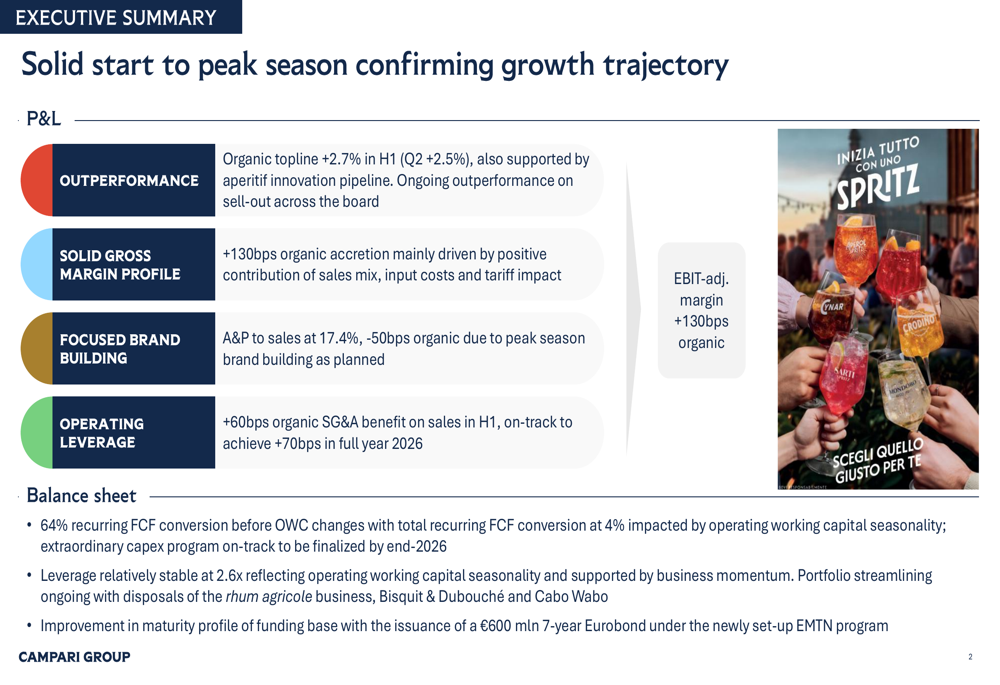
Campari H1 2026 slides: aperitif growth drives margin expansion

Published

on

Campari H1 2026 slides: aperitif growth drives margin expansion


Campari H1 2026 slides: aperitif growth drives margin expansion

Continue Reading

Trending

Copyright © 2025