Connect with us

Business

What Happens When Honest Customers’ Money Gets Frozen?

Published

on

What Happens When Honest Customers' Money Gets Frozen?

Lithuanian law allows a bank to freeze a suspicious transaction for a maximum of 10 business days without formal law-enforcement action. If your business account stays blocked longer than that, with no explanation and no evidence of a criminal investigation, courts have repeatedly ruled the freeze unlawful – and ordered the bank to return the funds plus interest.

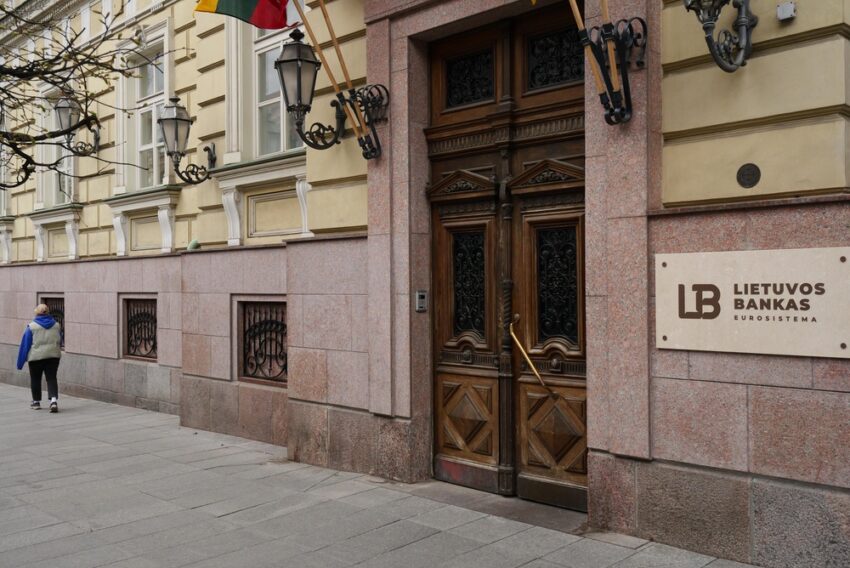
Revolut, the London-founded fintech, provides its European banking services through a subsidiary licensed in Lithuania and supervised by the Bank of Lithuania and the European Central Bank. It is there, in Vilnius, that a recent set of figures has drawn scrutiny – and with them a question that will be familiar to any British business following the UK’s own debate over frozen accounts: how long may a bank withhold a customer’s money before the law requires it to be returned?

Rolandas Kiškis, head of Lithuania’s Financial Crime Investigation Service (FCIS – the country’s Financial Intelligence Unit), recently gave the Lithuanian Parliament’s Budget and Finance Committee a telling statistic: the agency receives around 100,000 suspicious transaction reports a year, and a striking 80% of them come from a single market player – Revolut Bank. As the FCIS head himself noted, most of these reports are generated automatically, by a system that files a report the moment it detects the faintest hint of risk.

Revolut’s explanation is straightforward: the bank serves 57 million customers across the European Economic Area, so it naturally generates proportionally more reports, and its transaction monitoring relies on AI-driven systems that respond to potential fraud in real time.

For a UK readership the relevance is twofold. Revolut is a British-founded company that many in the UK use, so how frozen funds are handled within its European operations is of natural interest. More practically, a large number of UK businesses operating across the Channel – those with EU subsidiaries, euro-denominated accounts or European customers – hold money with institutions licensed not by the FCA but by regulators in Vilnius, Dublin or Amsterdam. Where such an account is frozen, it is the law of that jurisdiction, not UK law, that governs the customer’s rights.

Advertisement

Anti-money laundering compliance is, without question, an important, legally mandated duty for financial institutions. But this statistic has another side, one rarely discussed in public: behind every automatically generated report there is often a real customer whose funds are frozen, whose account may be blocked, and who frequently receives no explanation for weeks, months, sometimes over a year. “In practice, a number of these situations have no legal basis at all, and courts are increasingly ruling in customers’ favour,” says Dr. Justinas Jarusevičius, a partner and attorney at Lithuanian law firm Motieka & Audzevičius.

How Long Can a Bank Legally Freeze Your Money? The 10-Business-Day Rule

Lithuania’s Law on the Prevention of Money Laundering and Terrorist Financing – the national implementation of the EU’s anti-money-laundering framework – sets out a clear mechanism. When a financial institution identifies a suspicious transaction, it must suspend it and report it to FCIS within three business hours (Art. 16).

From that point, the decision shifts to the state. FCIS has 10 business days to take the steps needed to confirm or dispel its suspicions. If, within that period, the financial institution receives no instruction to apply a temporary restriction on ownership rights under the Code of Criminal Procedure, the transaction must be resumed.

In other words, a customer’s funds can lawfully stay frozen over a suspicious transaction for longer than 10 business days only once law enforcement has become involved and applied criminal-procedure measures – measures that can themselves be challenged in court.

Advertisement

In practice, Jarusevičius says, a different scenario often plays out: the financial institution blocks the account on its own initiative, tells the customer only that “compliance checks” are under way, or offers no explanation at all, while the funds sit “under review” for months – with no FCIS instruction, no pre-trial investigation, no court order. In such cases, if the institution cannot point to a specific legal basis, the freeze is unlawful and the institution faces civil liability.

Who Has to Prove the Freeze Was Justified? What the Courts Have Ruled

A telling example is a dispute recently concluded against NIUM EU, UAB, an electronic money institution licensed in Lithuania, in which Jarusevičius’s firm, Motieka & Audzevičius, represented two business clients. In June 2022, the institution cut off the clients’ access to accounts holding close to EUR 490,000, without any warning. Their complaints went unanswered, not within the 15-business-day deadline set by the Law on Payments, nor afterwards: the first substantive response arrived more than six months later, and the actual legal basis for freezing the funds was never disclosed until the case reached court.

On 6 June 2024, the Vilnius Regional Court, in civil case No. e2-1187-643/2024, ruled that the institution had failed to prove any legal basis for withholding the clients’ funds. The court rejected the institution’s defence, which relied on an instruction from a UK regulator addressed to the institution’s sister company: that instruction was neither binding on the Lithuanian entity in its dealings with its own clients, nor did it cover the claimants, who had no contractual relationship with the entities named in it. It was also significant that nothing in the case showed FCIS had ever been informed about the clients’ transactions at all, meaning the statutory prevention mechanism had never even been triggered.

On 12 December 2024, the Lithuanian Court of Appeal, in civil case No. e2A-510-912/2024, upheld the first instance ruling and set out a rule with significant practical implications: in disputes of this kind, it is the financial institution that must prove it reasonably restricted the client’s account access and had the right to withhold the funds. A vague reference to AML law, or to a generic contract clause allowing the institution to suspend services “in accordance with legal requirements” is not enough – the institution must identify and prove the specific statutory provision, or the specific instruction from a competent authority, underlying its actions.

Advertisement

This Court of Appeal case is not an isolated one. Lithuanian courts are currently hearing a number of similar cases in which clients of Lithuania-licensed financial institutions are seeking the return of funds held in their accounts but frozen by those institutions.

The outcome for the clients was not just the return of their funds (the institution transferred most of it once it learned of the court proceedings) – the court also awarded 12.5% annual interest for the period between the filing of the case and the return of the funds, plus legal costs.

What Should a Customer Whose Funds Are Frozen Do?

Jarusevičius recommends three practical steps. First, demand a written explanation of the grounds for the freeze. Under the Law on Payments, payment service providers must inform customers about the blocking of a payment instrument and its reasons (with narrow statutory exceptions), and must review a written complaint and provide a reasoned response within 15 business days.

Second, track the timeline. If more than 10 business days have passed since the transaction was suspended and the customer has received no information about any measures taken by law enforcement, the continued freeze is likely without legal basis.

Advertisement

Third, enforce your rights. Consumers can turn to the Bank of Lithuania, which resolves disputes between consumers and financial market participants out of court. For business clients, the main route is litigation, where they can claim not only the return of their funds but also interest for the period the funds were unlawfully withheld. The case law above shows that the burden of proof in these disputes falls on the financial institution, and that a passive stance by the institution, failing to respond to complaints, failing to disclose grounds, is weighed by courts in the client’s favour.

Clients often ask whether they have to simply wait for the bank to act first. They don’t, Jarusevičius says. Once the 10-business-day window has passed with no sign of law-enforcement involvement, the customer can send a formal legal demand and, if that goes unanswered, file a claim – there is no requirement to keep waiting indefinitely for the institution to volunteer an explanation.

Prevention – Yes. Arbitrariness – No.

The problem is not the filing of suspicious activity reports itself – that is a statutory, socially useful duty, and a high volume of reports does not by itself indicate wrongdoing. The problem arises when risk management turns into the indefinite withholding of customer funds without legal basis, without information, and without law enforcement involvement.

Lawmakers struck this balance clearly: a suspicion gives an institution the right to suspend a transaction for days, not months. After that, it is for the state to decide, and if it doesn’t, the money must go back to its owner. As the volume of automated reports keeps growing, that rule only becomes more relevant. For UK businesses that hold funds with EEA-licensed institutions, it is a distinction worth understanding before, not after, an account is frozen.

Advertisement

Justinas Jarusevičius is an attorney representing clients in financial services litigation, including the case against NIUM EU, UAB described above.

Advertisement
Continue Reading
Click to comment

You must be logged in to post a comment Login

Leave a Reply

Business

CBIZ shares soar 17% after Grant Thornton agrees to buy company in $5 billion cash deal

Published

on

CBIZ shares soar 17% after Grant Thornton agrees to buy company in $5 billion cash deal
Cbiz shares jumped 17% on Wednesday after Grant Thornton Advisors agreed to buy the professional services firm for $5 billion in cash, a deal that would create one of the largest accounting and advisory services providers in the US.

Cbiz shareholders will receive $55 per share, a 17.8% premium to the stock’s previous close. The shares rose 17.5% in premarket trade after the announcement.

The deal will make Grant Thornton the fifth-largest provider of professional, tax and advisory services in the US, behind Deloitte, EY, KPMG and PwC. The combined platform will have a presence in more than 20 countries and territories and generate nearly $7.5 billion in revenue.

“By combining our multinational platform with CBIZ’s strong market presence, we’re broadening our ability to support businesses through every stage of growth — from early development to global scale,” Grant Thornton Advisors CEO Jim Peko said.

Advertisement

The transaction is expected to close in the fourth quarter of 2026. It includes a “go-shop” period that allows CBIZ to seek competing offers until August 27.


Goldman Sachs advised CBIZ on the transaction. Deutsche Bank is the lead financial adviser for Grant Thornton Advisors.
Also Read: Vertiv shares crash 14% in pre-market after Q2 revenue misses estimatesDeal overshadows mixed earnings

The acquisition announcement came alongside CBIZ’s second-quarter results, which showed a clear earnings beat but weaker-than-expected revenue.

For the quarter ended June 30, 2026, CBIZ reported adjusted diluted earnings per share of $0.91, above analysts’ estimate of $0.8046. Revenue came in at $682.2 million, about 3.2% below the $704.9 million expected by analysts.

Revenue was down 0.2% from a year earlier, hurt by a similar decline in the company’s core financial services business. Adjusted EBITDA fell 14.3% year-on-year to $103.1 million. Adjusted EBITDA margin narrowed to 15.1% from 17.6%.

Advertisement

On a GAAP basis, net income dropped 55.6% to $18.6 million, or $0.31 per diluted share. The decline reflected higher operating expenses and acquisition-related costs tied to the integration of Marcum, which CBIZ bought in 2024.

The CBIZ deal is another sign of consolidation in the US accounting industry, where mid-tier firms are trying to build scale and narrow the gap with the Big Four.

Baker Tilly and Moss Adams combined last year in a $7 billion deal. CBIZ had also expanded through acquisitions, including its $2.3 billion purchase of accounting firm Marcum in 2024.

Grant Thornton has been expanding since receiving investment from a consortium led by New Mountain Capital in 2024. New Mountain is making a fresh investment to support the CBIZ transaction, which the companies said is the largest deal of its kind in more than 25 years.

Advertisement
Continue Reading

Business

Bitcoin Steadies Near $64,000 as Crypto Traders Brace for a Pivotal Federal Reserve Rate Decision Today

Published

on

Robinhood logo.

Bitcoin traded at $63,860.26 as of Wednesday afternoon, up a modest $13.14, or roughly 0.02%, as cryptocurrency markets settled into a holding pattern ahead of a Federal Reserve interest rate decision that traders across both traditional and digital asset markets have described as unusually difficult to predict.

Bitcoin opened Wednesday at $63,853.49, up 0.2% from Tuesday’s opening price, before climbing as high as $64,244.18 during the morning session, according to pricing data. The cryptocurrency’s relatively flat overall movement Wednesday followed a volatile stretch earlier in the week, including a sharp pullback Tuesday when bitcoin opened 2.5% lower than the previous day, dropping to around $63,327 as investors broadly reduced exposure to riskier assets ahead of the Fed’s two-day policy meeting.

The Federal Reserve’s rate decision, due later Wednesday, has emerged as the dominant catalyst shaping crypto market sentiment this week. According to data from the CME Group’s FedWatch tool, market participants assigned a 35.8% probability to a rate increase following the meeting’s conclusion, up sharply from 25.7% just a week earlier. Separate estimates cited by CoinDesk showed a somewhat different split, with roughly a 70% probability assigned to rates remaining unchanged and a 30% chance of a surprise quarter-point increase. Some analysts have characterized the meeting as among the hardest Fed decisions to forecast in recent years, given the unusual combination of economic signals policymakers are currently weighing.

Ether, the second-largest cryptocurrency by market value, moved somewhat more sharply than bitcoin during the same period. Ethereum opened Wednesday at $1,919.73, up 1.5% from Tuesday’s opening price, before slipping back to $1,904.82 by mid-morning, according to pricing data. Bitcoin and ether moved in opposite directions for stretches of Wednesday’s session, a divergence that market watchers attributed to renewed airstrikes in the Middle East combined with the approaching Fed announcement, both of which have added competing sources of uncertainty for crypto investors this week.

Advertisement

Broader cryptocurrency market data showed modest overall improvement heading into Wednesday. The total global cryptocurrency market capitalization rose 0.4% to reach approximately $2.28 trillion, recovering from a 1.6% decline recorded the previous day, according to data from CoinMarketCap. Bitcoin’s dominance within the broader crypto market held steady at approximately 56.3%, while ether accounted for roughly 10.2% of total market value. Despite the modest recovery in headline prices, a widely tracked measure of investor sentiment, the Fear and Greed Index, remained in “fear” territory at a reading of 28 to 29, reflecting continued caution among traders even as prices stabilized somewhat.

Institutional flows into bitcoin exchange-traded funds showed signs of softening in recent sessions. Spot bitcoin ETFs recorded a net outflow of $11.6 million on July 27, ending a streak of seven consecutive sessions of net inflows, with asset managers BlackRock and Fidelity leading the pullback, according to data on ETF flows. Even so, some corporate treasury activity continued during the same window, with Hyperscale Data disclosing a bitcoin treasury holding of 1,106 bitcoin, valued at approximately $71.7 million, as of July 28, signaling that at least some institutional accumulation of the cryptocurrency has continued despite broader market softness.

Macroeconomic factors beyond the Fed decision have also weighed on crypto sentiment this week. Rising oil prices, driven by renewed hostilities between the United States and Iran, have added to broader inflation concerns across financial markets, a dynamic that traditionally creates headwinds for risk assets including cryptocurrencies. At the same time, a strengthening U.S. dollar has added further pressure, with analysts noting that the combination of higher oil prices and dollar strength has increased overall macro-volatility risk heading into the Fed’s announcement.

Trading data suggested bitcoin has largely oscillated within a defined range in recent sessions, generally trading between roughly $62,700 and $65,500. Some market analysts have pointed to that range as a key technical zone to watch in the near term, with the lower boundary near $62,700 serving as a support level and the $64,500 to $65,500 zone acting as resistance that bitcoin has struggled to convincingly break through in recent trading.

Advertisement

Beyond bitcoin and ether, individual cryptocurrency tokens showed more significant divergence Wednesday. Jupiter, a decentralized finance token, rose nearly 6% to lead gains within a broader recovery among DeFi-focused tokens, while artificial intelligence-linked tokens continued to struggle, with Fetch.ai falling more than 4% on the day as AI-related crypto tokens continued unwinding gains posted the previous month.

Bitcoin’s current price level remains well below its all-time highs reached earlier in the cryptocurrency’s price cycle, though the asset has still posted substantial gains compared with prior years, with its market capitalization standing at approximately $1.27 trillion to $1.33 trillion depending on the specific pricing snapshot used, maintaining its position as by far the largest cryptocurrency by market value, well ahead of ether’s market capitalization of roughly $233 billion.

With the Federal Reserve’s decision expected to be announced later Wednesday, crypto traders and analysts broadly expect increased volatility to follow the announcement, regardless of whether the central bank opts to raise rates, hold steady, or signal a different policy path than markets currently anticipate, given how closely digital asset prices have tracked broader shifts in monetary policy expectations throughout the past several weeks of trading.

Advertisement
Continue Reading

Business

Amazon Web Services India net profit jumps over 10-fold to Rs 242 cr in FY26

Published

on

Amazon Web Services India net profit jumps over 10-fold to Rs 242 cr in FY26
Amazon Web Services India Pvt Ltd has reported a more than 10-fold growth in consolidated net profit to Rs 242.8 crore in the financial year 2026, as per a document shared by market intelligence firm Tofler.

The cloud services arm of e-commerce giant Amazon had posted net profit of Rs 23.1 crore in FY25.

​Its consolidated revenue from operations grew by about 21 per cent to Rs 20,225.6 crore in FY26 from Rs 16,744.9 crore in FY25.

AWS, however, reported a decline of around 14 per cent in standalone net profit to Rs 242.4 crore in FY26, compared to Rs 281.5 crore in FY25.

Advertisement

The company’s revenue from operations on a standalone basis grew by 21.4 per cent to Rs 20,225.6 crore during the period under review from Rs 16,659 crore in the year-ago period.


“The company’s total expenses for the fiscal were reported at Rs 19,888 crore (on a standalone basis),” Tofler said.

Continue Reading

Business

Heathrow passengers to foot bill for third runway bidding process

Published

on

Business Live

The initial costs are expected to be recouped through ticket prices

a British Airways plane taking off from Heathrow Airport

A British Airways plane taking off from Heathrow Airport(Image: Daniel Leal-Olivas/PA Wire)

Heathrow will be allowed to pass the enormous bill it has accumulated in preparing its third runway bid on to passengers, the aviation watchdog has confirmed, in a ruling that looks set to cement the airport’s status as the costliest in the world.

The Civil Aviation Authority (CAA) ruled that Heathrow Airport Limited (HAL) will be entitled to recoup the £320m it has already spent competing to secure the megaproject contract by increasing the fees attached to travellers’ air fares.

Advertisement

Rival bidder Heathrow West was also granted permission to recover the £4.2m it has so far spent on its own proposal.

The two operators have been competing fiercely to persuade ministers to back their respective third runway plans, assembling extensive planning documents and feasibility studies, while also enlisting the services of expensive third-party advisers to bolster their bids.

For incumbent HAL, that investment has already stretched into the hundreds of millions, the CAA noted, with the hub previously arguing it needs to cover its early outlay if the expansion is to remain financially attractive, reports City AM.

In its ruling, the aviation regulator said without the design and planning efforts both bidders have undertaken to develop credible expansion proposals, the timely delivery of the third runway project would have been put at risk.

Advertisement

It added that both parties would need to demonstrate their claims had been independently scrutinised line by line before being permitted to pass on the costs.

“Our decision strikes a balance between supporting the delivery of benefits to consumers through timely progress on Heathrow expansion, whilst also protecting them from undue increases in costs,” said Tim Johnson, the UK Civil Aviation Authority’s director of consumers and markets.

“The costs Heathrow can recover are capped, independently scrutinised and subject to efficiency reviews, helping ensure that passengers only pay for efficient costs that are justified.”

Under the compensation scheme, agreed following a consultation held last year, HAL will be permitted to add 10p to every passenger fare over the next 20 to 25 years. It will also be responsible for recouping Heathrow West’s more modest costs, should the rival bid led by hotel magnate Surinder Arora fail to succeed.

Advertisement

The CAA reached its decision alongside a wide-ranging review of Heathrow’s overarching regulatory framework, in which it will determine whether rival operators will be permitted to own and run key infrastructure within the airport.

Airlines operating at the hub have grown increasingly frustrated with the exorbitant charges they are forced to pass on to passengers, and – in lockstep with Arora – some have established a pressure group lobbying for a wholesale shake-up of red tape at the airport.

At £28.80, the airport’s charges are already the costliest in the world, and are anticipated to climb by as much as £50 once the full expenditure of the third runway is factored in.

Wednesday’s CAA ruling will see the airport charge per passenger rise by approximately 15 pence in 2028, climbing to 30 pence in subsequent years.

Advertisement

The initial costs incurred by bidders are expected to be recouped through ticket prices over a period of roughly 20 to 25 years.

Continue Reading

Business

Automatic Data Processing, Inc. (ADP) Q4 2026 Earnings Call Transcript

Published

on

OneWater Marine Inc. (ONEW) Q1 2026 Earnings Call Transcript