

Business
3 Growth & Income Stocks To Buy + Steve Answers Your Questions


PM Images/DigitalVision via Getty Images

Listen here or on the go via Apple Podcasts and Spotify

Steve Cress shares Pro Quant Portfolio’s impressive returns (0:45) 3 Stocks from the brand-new Quant Growth & Income Portfolio (6:30) Q&A with Steve (13:30) Thoughts on SpaceX IPO (37:25)
Transcript
Rena Sherbill: Steve Cress, the investing legend, the quant myth, the man that is delivering such alpha for all of us. Welcome back to the show.
Steve Cress: Thank you very much for having me. It’s great to be here. Thank you for organizing it.
Rena Sherbill: It’s always great to have you. We have come upon an anniversary and you were on, I guess it was about a year ago, talking about this new product that we launched from the Pro Quant Portfolio. And you had referenced a few picks. One of our best received episodes, by the way.
People that are paying attention are astounded and by the outstanding performance. Talk to us about it.
Steve Cress: So a year ago, we had launched the Pro Quant Portfolio and the launch of that was really a result of a survey we did from an existing product, which is called Alpha Picks, which we launched about four years ago.
And when we surveyed our Alpha Picks customers, the audience was split pretty 50-50. Half of them wanted a higher frequency of growth ideas and Alpha Picks is a product where we come out with two ideas a month, our two favorite quant strong buys.
So the subscribers said they wanted more ideas more frequently. And the other half said they wanted ideas that were focused on dividend stocks. So as a result of that survey about a year ago, we launched the Pro Quant portfolio, which delivered on a higher frequency ideas. So we rebalance a fixed portfolio of 30 stocks every Monday.
And I’d say on average about two to three new stocks will come in, sometimes less, sometimes more, but on average about two to three. And it’s our favorite quant stocks that run through our ranking.
And we focus on stocks that are collectively strong on value, growth, profitability, momentum, and EPS revisions. And it came out with much success. And one year later, the product is currently up 56.9%.
Compared to the S&P 500 (SP500), which is up 18.65 % for the same period. So those are the one year numbers the last 52 weeks. So celebrating that anniversary, as it was welcome with many new customers, and I think they’ve been really pleased that they invested in it.
There’s not many portfolios of 30 stocks that you can claim are up almost 57 % in a one year period. So we’ve been really pleased with the performance.
Rena Sherbill: Yeah, really amazing. I mean, even relative to a great market year doing really fantastically.
Steve Cress: It is. I mean, for the 52 week period, I guess, in terms of performance, it feels great. There are an unbelievable amount of rotations to risk on risk off risk on risk off. So it didn’t necessarily feel good during it. I think we had three periods too, where the VIX like surged. We had two in late 2025 and once in March of this year.
But at the end of the day, the performance over the market’s been good and for the product, it’s been even better.
Rena Sherbill: Which brings us to a brand new product, which I believe was also born out of audience feedback, if I’m not mistaken, one of our audience’s favorite topics, income.
Steve Cress: Yes, yes. So a lot of our subscribers at Seeking Alpha, and just many investors in general, are very income oriented. They like to have stocks that pay dividends. We tend to really focus on capital appreciation.
So what we wanted to do is create a product where we marry both growth and income and take a little bit longer to get out than the pro-quant portfolio. But we were able to do it.
And it also leverages our proprietary dividend grades. So Seeking Alpha is one of the few firms that actually will review a stock’s dividend. And we review it on four different elements. It’s safety, it’s growth, it’s consistency, and it’s yield. And just like the quant system where we have academic letter grades that range from A plus to F on a sector relative basis, the dividend grades work the same way.
So when we look at dividend safety, if it has an A plus, it’s much safer than the rest of the sector. So we combine that with our quant model and focusing on stocks that pay dividends.
So the quant growth and income product is a portfolio of 30 stocks and that rebalances every two weeks. So every other Wednesday, we make the announcement at 1 p.m. noon Eastern Standard Time. And the focus for the product, as I mentioned, it’s both capital appreciation and income.
So every stock pays a dividend. We have a benchmark that we decided to use, which was an ETF called the Vanguard High Yield Index ETF (VYM). And that currently has a yield on it of about 2.2%. And the focus of that ETF isn’t necessarily capital appreciation, but in our back test, we substantially beat the performance of it.
And that is our objective in terms of total return to beat that benchmark.
So the return from 2015 through the beginning of this year for the product back tested was 500 % compared to 200 % for the Vanguard High Yield Index ETF.
And I’m also pleased to say we just purchased the stocks Wednesday for the portfolio and the average yield on it is 3.0%. That’s the average forward yield. The average yield trailing is 2.99%.
So it’s significantly higher than (VYM), which currently has a yield of 2.19%. And I’m also pleased to say that the portfolio is significantly outperforming it on its first day of trading.
It’s up 1.63 % now versus the Vanguard index which today (Thursday) is down 0.07%. So great first day. Higher yield, higher return. And that’s exactly what we want.
Rena Sherbill: It sure is. So you treated your subscribers, your followers on Seeking Alpha to a sneak peek of the top stocks in that new portfolio. And I’d love it if you shared with our listeners, with our audience, what those stocks that you shared were.
There were three of them. And then I’d love to get into some questions and answers for you.
Steve Cress: Yeah, absolutely. So of the 30 stocks, we’ll give away three and we’ll do that right here. And really the three that we’re giving away, it’s just on the basis of giving you an idea of what’s in the portfolio.
I went for a diversified approach because the portfolio has financials, it has REITs, it has consumer staple, it has utilities, it has industrials.
It is actually a very different portfolio compared to Alpha Picks and Pro Quant Portfolio which tend to be much more growth oriented and very few of the stocks in those portfolios have dividends where this does. So this is a really nice counter to it. I often refer to it as a barbell approach.
As an investor, you want to get stocks that have really good fundamentals where you’re focused on capital appreciation, but markets gyrate. And even though we take a bottom up approach and we’re not top down, that top down has an impact. So obviously there can be fear and anxiety in the markets.
It creates volatility spikes. Whenever you look at sentiment indicators, they bottom out in extreme fear. So it’s really nice to have a balanced portfolio where you have dividend stocks on one hand and growth stocks on the other. So three of the stocks in the growth, want an income portfolio product.
One is Exxon (XOM). So we have energy stocks in there as well. Exxon, as you may be familiar, it’s the largest energy company in the world. It’s a fully integrated oil and gas company.
And I just looked at the stat the other day. It’s pretty amazing. They have a total refining capacity of 4.1 million barrels of oil per day. That is a huge, huge number. And it’s a big company. The market cap is 619 billion. And in terms of the factor grades, it’s a little bit expensive.
The stock has pulled back in the recent week or so, but it did have a big run up when the crisis with Iran started, as many energy stocks did.
So the valuation grade on this is a D now, but it was D six months ago. So it’s been expensive. It’s one of the go-to stocks in the energy sector. In terms of its growth, it’s in line with the sector.
Its profitability is an A plus versus the sector. So it is by far one of the most profitable companies if you’re looking at a number of different metrics, whether it’s a return on equity or return on capital or margins, they have just about the best in the business.
And in terms of revisions, I know I’ve been taking up their EPS revisions over the last 90 days. So they have a lot of confidence. And one of the questions that we get with Exxon or other energy stocks is do we expect a major pullback if the situation with Iran is resolved? And from my experience, you’ll have a bit of a pullback, but it takes a really long time for these companies to lower their prices. So the margins stay high for longer.
And I think that will benefit Exxon. In terms of the dividend safety, it’s got a B minus grade. So anything, any grade historically we found between B minus and A plus, they have a further to the dividend cut 98 % of the time. So that’s exactly what we’re looking for.
And that’s the point of the dividend grades. Comparatively for companies historically that had a dividend grade of an F, they ended up cutting their dividend 60 % of the time. So it’s in that sweet spot for safety.
And in terms of dividend consistency, they’ve been paying a dividend almost since their existence. So they have an A plus. They’ve been paying it much, much longer than many other companies. So that is a sample of one stock.
Another one is a REIT called EPR Properties (EPR), significantly smaller. It’s got a market cap of 4.36 billion. So this is sort of just entering the large cap territory. could even be considered really a mid cap stock.
However, this has a really sweet yield at 6.52 % and it’s a premier player and has experience oriented properties sort of like properties that own movie theaters or places like Topgolf, many things that involve entertainment, family, organized and what we’ve found historically too is that these companies although they may not be entirely recession proof families still want to do things. People want to have fun and they can go to venues like that.
So the properties that they own underneath those venues have done very well historically. And the company is stellar in terms of its valuation framework and growth compared to the sector.
It’s got an A minus valuation, which on a relative basis means it’s cheaper than most of the sector and its growth is A minus as well, which means a growth is stronger compared to the versus the rest of the sector. And I’ll also add it’s got an A minus downgrade for growth.
Six months ago, it was a C. So the company over the last six months has really demonstrated that their properties continue to do well and that they’re growing faster.
Analysts have also taken up their estimates of the company. The EPS revision grade is an A plus right now, and six months ago it was a B plus. So analysts increasingly confident that the company will be able not only to deliver, but so much so that they’re taking their estimates up.
So that’s the second company and the third company is a financial. It is called the Hanover Insurance Group ticker symbol (THG). This company has a market cap of 6.48 billion. There’s a quant strong buy and it has a dividend yield of 2.05%. Hanover Insurance Group provides insurance for property and casualty.
And in terms of the segment, it rates very, very high. The reason why it’s pretty intuitive when you look at the factor grades, valuation framework, very attractive versus a group with an A minus and the growth is a B plus versus the financial sector.
Additionally, very profitable B plus grade there. And in terms of analyst revisions, just about as good as you can get, it’s an A minus, only a couple of grades higher than that.
So that means compared to the sector, analysts are taking their earnings estimates up at a faster pace than it is for the rest of the sector. In terms of the dividend safety grade, it has an A, and the dividend growth grade is an A as well.
So those are the three stocks, and I’d highly recommend that you either take a look at the article, but I would even recommend more that you take a look at the product. If you are interested in having income, but growth as well, this would be a great product to look at.
Rena Sherbill: And we’ll leave the link to both the article and the product in show notes and in the article if you’re reading along in the transcript. So I’m going to get into some questions first from the article that was just published that you just worked off of those three stocks.
The question is from ChooseCats. Wouldn’t it make more sense to structure it closer to Alpha Picks than the PQP if the aim is to buy companies that grow their dividend over time? The high churn rate of PQP is going to work against that.
And before you answer, somebody kind of answered and I’m curious what you think. BY627 said the high turn in PQP is likely due to the stock selection criteria, which would be different here I would imagine, hopefully much fewer small caps than the PQP, which would help keep the turnover lower. Besides for fixed income folks who I presume this is geared towards, having a fixed 30 positions means you don’t need to contribute more capital every two weeks to stay consistent like with Alpha Picks. This could be interesting, but I admit I do have heartburn thinking of all the turnover from PQP and all the unattainable entry prices and 50 % sell-offs.
Steve Cress: Well, you know, it’s definitely a balance. You have to ask yourself, at the end of the year, do you want a product that is going to provide a fairly stable income level? And I think the income level on average will be fairly stable here. But I guess, if you give up on the turnover, you’re going to give up.
So at the end of the day, really what’s more important, is it the turnover or is it the performance? And people will say this about taxes as well. They don’t like turnover because they get taxed. Well, if you own PQP, you’d be up 56 % for the last year. If you owned Alpha Picks over the last 52 weeks, the return there is a hundred percent.
Do you want to have a return that’s closer to the S &P over the last year, or do you want a return that’s closer to 57 % or 102 %? You could double your capital, and it’s well worth the amount of taxes that you would pay on it to double your capital. So that’s sort of the trade-off. Do you want the higher returns, which these have shown historically that they provide?
Or do you just not want to turn over your portfolio as much out of fear of taxes?
Rena Sherbill: Yeah, we just started this tax series and one of the first questions that made me want to start that series was I was asking Raul Shah, the analyst, or he was saying in one of our episodes that many people think, I don’t want a higher salary because I’m going to get taxed more. And he’s like, that’s not how to think about it. That’s not how to think about it.
Steve Cress: Right. Yes. It’s like the equivalent. Sometimes it’s hard for me to answer that because that is a great analogy. It’s like, so you want to give up money. And I there’s a guarantee. There’s no guarantees that, you know, the product will perform, but it’s got a really good history of doing.
Rena Sherbill: It’s prosperity mindset, right? Next question. What is the target dividend that you hope to achieve with this portfolio? the strategy include reinvesting the dividends?
Steve Cress: The strategy does include and reinvesting the dividend. target is, we don’t know where interest rates will be at any given year. So our target is basically to stay within sort of 25 to 50 basis points of the Vanguard High Yield Index. So we’re going to have sort of that floating range based on the benchmark. So, we’re like almost at a 20 year high in terms of interest rates.
Nobody ever knows what’s going to happen. You don’t know if there’s going to be tariffs. You don’t know if there’s going be a war. You don’t know if going to be a hyperinflation. You don’t know if inflation is going be bottoming out. You don’t know if we’re going to be in a recession.
So interest rates will always be volatile to a certain extent. So we can’t say that we’re going to target a specific rate, but we will target a range within the benchmark. And that’ll be 25 to 50 basis points. But right now, I’m really pleased that our average yield is much higher than the benchmark. So that’s fantastic.
Rena Sherbill: Ted 2.0 asked about whether or not you have a yearly average targeted capital appreciation percentage and also about the monthly average targeted dividend yield.
Steve Cress: Yeah, so sort of in the same vein of the last question, you never know what markets are really going to do. So we can’t target a specific capital appreciation level.
But again, our goal is to outperform the benchmark. you know, going back 10 years, I think in our back test, eight out of the 10 years we outperformed the benchmark. The only two it did not perform it was during the pandemic. But the follow up years were really good.
And as I mentioned, the performance has absolutely crushed the benchmark over that 10 year period. So we’re very pleased with the returns and our objective is to outperform the benchmark.
Rena Sherbill: I’m going to ask two more questions on this new product, and then we’re going to get into some from our previous episode.
I was wondering whether this new product stands beside the Alpha Picks and PQP systems, or if it functions as a standalone application, reducing the risk in the aforementioned products. Managing all three products may be too labor intensive, so what would you suggest to keep things manageable?
Steve Cress: I would honestly recommend probably two of the three. You want to have income on one side and you want to have capital appreciation on the other.
I really don’t want to take away from the quantum growth and income portfolio because that is focused on both capital appreciation and income. But typically you find with companies that pay dividends, they don’t grow as fast as companies that have good fundamentals that put their earnings back into the company.
So whenever you pay a dividend, you’re taking that earnings out of the company. It’s not being reinvested. So it’s great for investors to collect that dividend. It’s not always great for the company if they’re really in a grow, grow phase.
If it’s more of a mature company or they have a consistent income stream, it’s really nice to have that payout in the form of a dividend. So our products such as Alpha Picks and ProQuant Portfolio, they are highly focused on capital appreciation.
Some of the Alpha Picks stocks do pay dividends, but that is not the focus of the product. It really is capital appreciation. So I’d say, the choice is if you want a higher frequency of ideas, ProQuant portfolio would be better. Our back test did show that ProQuant portfolio over time had a better return than the Alpha Picks back test. More recently, the performance has been better with Alpha Picks, but that’s because Alpha Picks is more of mature portfolio.
It’s been around for four years on the pro-quant portfolio just started. So Alpha Picks has the benefits of having some positions that predate a year, especially stocks that were AI stocks that have had a tremendous run up.
Over the long-term, I would expect the pro-quant portfolio to have a higher return than Alpha Picks. So if you have both portfolios, that’s a portfolio of 60 stocks.
And that’s great diversification. It may seem like a lot of names to manage every two weeks, you have the rebalance on the quant growth and income. It’s weekly on the pro quant portfolio. If that’s too much for you, then it might be better to have Alpha Picks where there’s less turnover.
It would be a lot of stocks, but we put everything on a silver platter there. We’re telling you what to buy and what to sell.
So really at the end of the day, if you spend, an hour on this or a half hour, you know, every week or every two weeks, it’s really quite easy to manage. And it could build generational wealth. So it certainly might be worth a half hour every two weeks.
Rena Sherbill: Last question about this product, the Quant Growth and Income Portfolio. Somebody’s asking, why bother with all this overhead and extra risks and costs related to the QG&I portfolio if you can simply invest in well-established and professionally managed ETFs with deep history and established reputation?
Why bother with QG&I when you can invest in something like (SCHD)?
Steve Cress: Right. So as I mentioned with the Vanguard, index, high yield index, which they mentioned. So you’re doing it because you want performance.
And, so as I said, going back to 2015, just want to give you the exact numbers that we have here, had you invested in the stocks from QG&I, and done the rebalance and it is work, but it shows that the work pays off. The return was 502% compared to the index, which was 203%. So the return is 2.47 times greater. You that individual that you spoke before who made the reference to, not taking a higher salary because of taxes, I guess the argument you would make here is, if you do own an ETF, there’s very little work.
There’s a very minimal fee that’s associated with it. If you owned the quant growth and income portfolio, that does take a little bit more work, but you have almost two and half times the return historically from the back test.
And you can say that’s a back test that’s history, but our products have clearly shown by example, if you look at Alpha Picks, that product has been out four years and sits since inception. It’s up 439 % compared to the S &P 500 up a hundred percent for the same period.
So more than four times the return on the S &P. So that’s an actual return from trades that is not a back test. So you have to ask yourself, you could work less and have less of a return, or you could work a little bit more and have a tremendous return compared to the ETFs.
And that’s what we’re aiming for. ETFs alone, anywhere, like the S&P 500 ETF (SPY) owns 500 stocks.
This is a portfolio of only 30 stocks. So do you want to own stocks that would be ranked by our quads system, a strong sell, a sell or a hold, or do you want to own stocks that would be ranked a strong buy or buy?
There’s a total of 618 stocks in the Vanguard high yield index ETF. Now that does provide a lot of diversification, but that also really weighs down any potential return that you can have. You want to have a concentrated portfolio that has some diversification to it. That’s why 30 stocks is good.
Or if you have two products such as PQP or Alpha Picks Plus, the quantum growth and income, that gives you about 60 stocks. So it’s a lot less stocks than an ETF, but you don’t want to own everything because not everything’s going to perform well.
The whole point of our quant system is to rank stocks to separate the strong companies from the weak companies. And that’s exactly what we do. We take the historical data from their earnings, their revenue, their, and, many, many hundreds of financial factors.
And we also take forward growth estimates from professional Wall Street analysts where we look at the revenue growth or earnings growth or EBITDA growth. So our product is both backward looking and forward looking from a quant perspective.
But we’re comparing all those metrics for a company, whether it’s within income or cashflow or balance sheet or financial metrics, every single day, we compare the company’s metrics to its sector and we put a fresh recommendation out there. Is it a strong buy? Is it a buy?
Where the ETFs tend to be very stagnant and they hold a lot of stocks. So if I were to run all 612 stocks through our portfolio tool, we would find many of those stocks would be strong sells or sells.
Rena Sherbill: Much appreciated. Okay, so we had you on last month. That episode was titled, to Hold’em, When to Fold’em, and we asked people to leave us some, to leave you questions.
One of the first ones, I’m an alpha subscriber since April. One thing that’s unclear to me is about the buy hold recommendations. Should everyone who joins start with the whole portfolio, including the homes?
I would also point out your strategy of redistributing profits on sell to the entire portfolio is not practical in a real portfolio when there are commissions and fees.
Steve Cress: Okay, so we don’t know what every individual’s risk tolerance is or how much capital they have. So it’s really hard to say on a specific basis what’s right for you as an individual. A lot of people also, they have brokerage firms where there’s almost no commission at all. So I don’t know what kind of brokerage firm that you’re trading through. So there’s a lot of unknowns out there.
But I will say, if you do wanna try to copy the performance that we have, the best approach when we do sell a stock for Alpha Picks is to reinvest across the board. That includes the holds, the buys, and the strong buys.
And really the reason is, my belief is that that diversification helps to minimize risk and it maximizes returns over a long period of time. So we’re not talking about 600 stocks. We’re talking about with Alpha Picks, it could be a portfolio of anywhere from like 35 to 40 stocks at any given time. But that diversification really does help to minimize your risk and over the long term, you do get rewarded for that.
So that’s why our strategy is to reinvest in all the stocks. And now as an individual, you might wanna just pick one or two stocks or a handful of strong buys, but you wouldn’t be mimicking the performance that we have.
Rena Sherbill: I’m going to read a thread that I’m curious your thoughts on. Ghost Blowfish writes, my issue with the hold rating is it can sit on a stock forever while that stock pumps. I bought Broadcom (AVGO) right after liberation day about a year ago. It was a hold at that time and has been ever since yet I bought it $204 and now it’s 425. I’m totally happy with that return but it makes me skeptical of the hold ratings.
And then somebody responds, sadly, it’s a computer system. No system can perfectly predict the stock price movement, AKA instruct you to buy low and sell high at the exact price points. Somebody responds to that. Analysts see significant upside for Broadcom potentially around 20%, which supports the current hold rating I’m long and continuing to hold.
Steve Cress: A hold is a hold. if you own the stock, it’s not a recommendation to sell it. And if it’s a stock that has been part of Alpha Picks, which was a strong buyer by, it’s as dropped to a hold, we advise people to stay in it. Our system holds a stock in there for 180 days. when we think about buys and strong buys, we have those ratings because we believe the securities are mispriced.
And there was significant upside versus the sector. If it’s a hold, we anticipate that that performance will be in line with the sector. So as we’re looking at a stock like Broadcom, we can also look at a stock at (MU), which we had a strong buy on.
And I believe he said he aimed it for a year and his return was basically a double, I think he had in the stock from what you said. Micron was up 894 % over the course of the year.
We have many examples like that as well that are in the portfolio. So as I look at Alpha Picks.
Let’s see. We have Powell (POWL) that’s that’s up 1,500 %. Sterling (STRL) is up 1,500%. That one’s a strong buy that did drop to hold it’s back at strong buy. Argon is a hold. That’s up 487%. There’s just a number of examples that are really up significantly where that have been hold recommendations as well.
So again, hold means hold. It doesn’t mean sell. The reason why we let it go after 180 days is at that point, we really want to make room for some of the other strong buys.
And we also keep it in Alpha Picks for a long time because many times stocks do go from a hold back to a strong buy or buy based on how the valuation framework changes versus the sector or adults taking up their earnings estimates. I will say if you don’t like that, and a lot of people don’t like that, holding a stock for that long that has a hold.
Steve Cress: And that’s, I believe one of the reasons why so many people wanted a portfolio more like PQP, where the holding period is far, far less. You’re looking at something that we don’t give away exactly what the hold period is, but you’re looking at something in terms of weeks instead of months. And that’s why a lot of people prefer pro-quant portfolio. It’s a higher frequency of ideas and it’s not keeping onto the hold stocks as long.
Rena Sherbill: And hold does not sell and hold does not strong buy often because of one or two or three factors. I mean, there’s reasons that even though it’s popping, there’s reasons why it doesn’t become a strong buy.
Steve Cress: And you do, you can tell by looking at the factors. It’s a very transparent system. So if you go to premium or pro, you look at the ratings tab, it would show you the ratings on stock every single day. And we keep it there. We archive it. So people will know when a stock move from a strong buy down to hold, and they’ll see those five core ratings as well. And any change in those ratings. So it’s a very, very transparent system.
Rena Sherbill: There’s the first part of this question and a second part. The first part, we’ve talked about a bunch. believe, I don’t know if you have something new to say or to reiterate. OK, it is, of course, interesting to read about great stocks to buy. And we all like that. However, I would like to see more discussion about when the day would be to sell and not ride the stock back down. That is a huge question for the AI surge.
Also, the idea of PEG is great, but oftentimes you see vastly different numbers from different sources. Sometimes there is no PEG for a stock and also the earnings part of the PEG is a five-year number, so it may take a while for the stock to grow into that.
Steve Cress: Okay so peg is a ratio that I do like. I’ve mentioned that before, but it’s not the only ratio. There are many metrics that we look at under valuation. We have a PE on both a four and a trillion basis. We have EBIT, EBIT price to sales price, the book, cashflow. There’s a number of different metrics that we have.
And, for exactly for that reason, one metric could be good, but that doesn’t provide an overall valuation framework. So that’s why we have a lot of metrics that we look at. In terms of wrridingting stocks back down, if a company is maintaining its fundamentals and the stocks that we recommend for both pro-quant portfolio and Alpha Picks typically have very strong fundamentals, they will not be insulated from what happens with the larger economy or the macro environment.
So if you have a period where a war starts or investors think that a certain sector is overvalued and there’s a massive sell-off, these stocks will not be impervious to that. They will come down. But we have shown many, many times where you do benefit significantly by buying on those dips because fear and sentiment can drive a market, but it’s usually pretty temporarily.
Investors typically return to companies with good fundamentals. And when they do return, they return in size. So these stocks usually whip back very, very fast and to a large extent. So by example, we conducted a study and this isn’t just for our stocks either. We took a look at the last five market corrections since 2010.
And we used a 15 % mark for a pullback in the S &P as the purchase point. And what we found were those five pullbacks on average. If you bought the S &P 500 when it had pulled back 15%, and it pulled back more in times, but that 15 % was sort of the line in the sand where we purchased.
If you bought when it was down 15 % and you held it for two years, you were up. And if you bought our top 10 quant strong buys when the market was down 15% and you held those for two years, you were up 117%. Okay. The number for the S&P, if you held that for two years, it was up 50%.
And our top 10 quant strong buys were up 117 % on average. So it really, it does hurt when you go into market pullbacks. Cause you’re looking at your portfolio disintegrate in front of you. But really one of the points with quant is to eliminate the emotional part of investing and use those data points as an indicator.
So this is a great like historical indicator. And I’m sure as you’re well aware, if you’ve been in the markets for a while, markets come down and markets come back and it happens. But the name of the game doesn’t change by low and sell high. So if you can remove that emotion and say, okay, I have companies here that have really strong revenue growth, really strong earnings growth, and the valuations are more attractive than they were before correction, you should be using it as an opportunity to buy those stocks.
It really pays off, and that is really what helps to create generational wealth as well.
Rena Sherbill: All right, here’s the last question from Christopher. Steve, do you agree that the market is pricing optical networking at AI speed, but the actual rollout still behaves more like a traditional infrastructure cycle? The technology is improving quickly, but the industry still needs time on packaging, reliability, integration at scale, deployment, economics.
We’ve seen similar setups before, solar EV charging, fiber build-outs, early 5G. The direction was right, the rollout was slow, valuations reset hard. Phonotics will no doubt become the standard, but the rollout will 100 % take longer and be messier. Hyperscalar deals do not equal actual orders. Management are all doing napkin forecasts. When that happens, how much of today’s valuation still holds up?
Steve Cress: Well, I will say part of what we do is we’re really taking sort of a bottom up approach. And we wouldn’t even know that these were AI stocks. If there wasn’t like a sector or industry label on it, we’d be looking for stocks that have really strong growth, really good profitability, really good valuation frameworks.
So what I find with our type of strategy is we are looking for companies that have earnings and a good valuation framework. So I think if you went back to sort of last October, November, there was a major pullback in the market and it was being driven by particularly technology stocks and their investment towards AI.
And it presented sort of a huge opportunity because the companies that we have in the portfolios, they continue to beat top and bottom line expectations.
I think part of the fear that you’re referring to is sort of in the overall environment. And this could have been applied during the TMT bubble as well, back in like 97, 98, 2000. A lot of those companies actually did not have earnings. And the revenues weren’t even really there.
And it’s kind of interesting because we have this SpaceX (SPCX) IPO that’s coming out on the 12th. And there’s like a handful of companies in the aerospace and defense sector which do more earnings than one quarter than SpaceX has done in its entire longevity.
So you really have to say, what kind of companies do I want to own? Do I want to own pie in the sky? Or do I want to own companies that have proven revenues and proven earnings?
And there are many companies in AI, especially even industrial stocks, such as PAL and Sterling, but we also have Credo (CRDO), you have Micron. These are companies that have real earnings and real revenue.
So I think that’s likely to continue. There will also be companies that don’t have real revenue where, you know, adults could also bake in a forecast going forward where there’s huge growth, but there’s been no historical earnings. As an investor, you just have to do your research.
And that’s really what’s great about our Seeking Alpha platform is we provide this research, we provide all the financials there, and we provide products such as Alpha Picks and PQP that does the homework for you.
So that period that we had in October, November, definitely, the portfolio has suffered a little bit, but man, the stocks came firing back. And more importantly, when they released their earnings results, they were beating expectations, both top line and bottom line.
So these companies have solid positions and solid earnings. So I think that’s it. I hope that answered that question.
Rena Sherbill: Not as a quant man, but just as somebody that’s been around the markets for a long time, do you have any interest in SpaceX? Like, is that something you’re gonna dabble in at all?
If you had to say two lines or two thoughts about that IPO, what would you say? As somebody who’s been around.
Steve Cress: I think it’s an amazing company. Elon Musk is an amazing individual. His companies, no question about it, are revolutionary. What they’ve done in aerospace and defense is absolutely revolutionary as well. And with the Starlink satellites, that is a product that will be in demand.
But at the end of the day, when I look at a company, I look at those five core investment characteristics. I look at growth, I look at value, I look at profitability.
I look at analyst revisions and I look at the stock’s momentum and if a stock doesn’t tick those boxes for me, most likely not going to be in it. I probably would have missed Amazon (AMZN) early in its days and Facebook (META) early in its days when the companies had no earnings. I probably would have missed that.
But in the same token, Alpha Picks is up over the last 52 weeks, 100 % pro-quant portfolio is up 55 % or something. So still getting good returns and probably sleep better at night. With SpaceX, I think they’re going to have like 18 billion in revenues, which for large companies is actually pretty small in terms of revenues.
And they have negative earnings. So they’re not even earning money at this point. So probably will come. But this is not the point. If I have to compare it to my portfolio and the criteria and parameters I look for, it probably wouldn’t cut it.
Rena Sherbill: The analyst that we had on today’s episode in closing this conversation was talking about how something that he’s learned over the years is you save more money by missing out on the big plays than you do on the slow incremental profits and alpha that you’re making along the way. In other words, he’d rather miss the Amazon than be true to his strategy.
Steve Cress: I have a good strategy. It’s got a great track record. So it ain’t broke. So why fix it?
Rena Sherbill: In fact, here comes another product if you’re interested in growth and income. So we’re going to keep churning along as long as the success is there.
Cheers to that success. Steve, appreciate you coming on today. Thanks for answering our questions and talk to you next month.

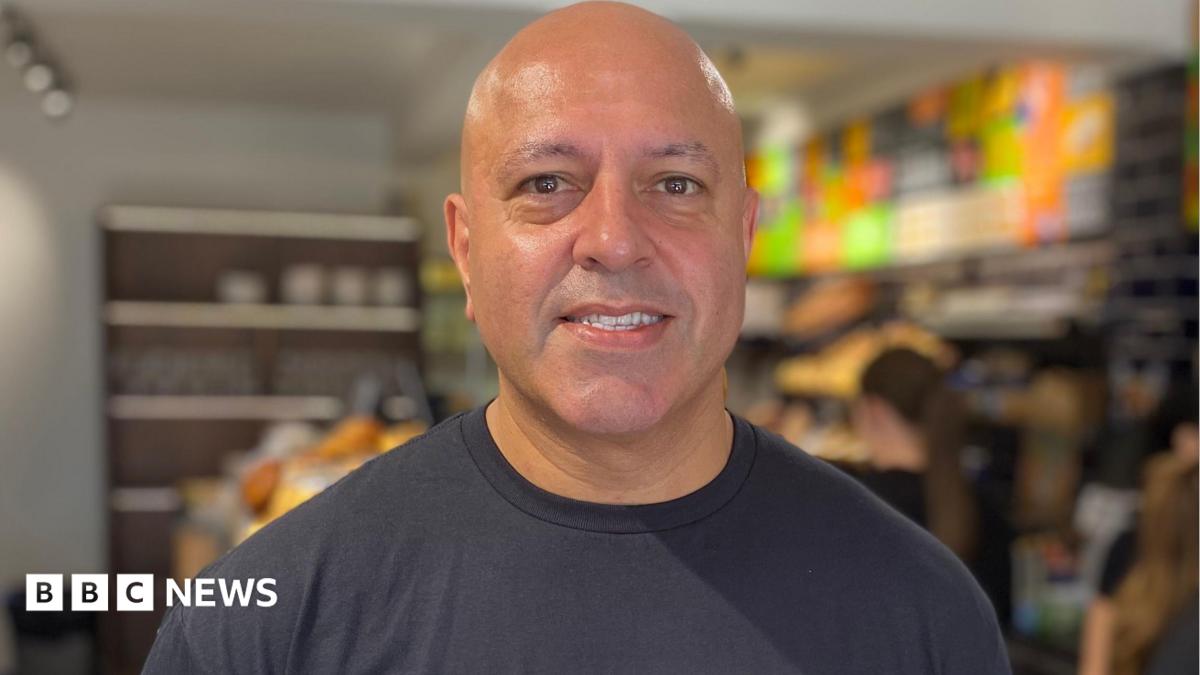
Earlier this month, new Prime Minister Andy Burnham announced a 20% cut in business rates for pubs, social clubs and music venues in England, telling them “the cavalry is coming”.
Some hospitality firms welcomed the move but others in the industry, such as hotels and restaurants, questioned why the 20% cut to business rates would not extend to them.
Bains called for more action from the government to slash VAT rates.
“The VAT is the problem in the UK, especially in our industry,” Bains said. “Twenty per cent is probably one of the highest in the world.
“If we can get that reduced that’s going to help.
“We’ve been running the business for 20 years and it’s hard, it’s the hardest it has ever been.
“But we are long-term businessmen and you have to take all the hits.
“Ultimately, it’s up to the government, whatever we say doesn’t matter.”
He said high living costs had made people more cautious, with the restaurant’s previous three-month waiting list now down to two weeks.
“People are booking closer to the time they want to eat.
“They are cautious because they don’t know what the future holds, and I get it because we are all in the same boat,” he said.

Virtus Investment Partners provides investment management products and services to individuals and institutions. We operate a multi-manager asset management business, comprising a number of individual affiliated managers, each with a distinct investment style, autonomous investment process and individual brand. We clearly understand the responsibility we have to our clients and we are committed to their success as investors.
For important disclaimers, go to https://www.virtus.com/social-media-guidelines. Note: This account is not managed or monitored by Virtus, and any messages sent via Seeking Alpha will not receive a response. For inquiries or communication, please use the firm’s official channels.
Business
T-Mobile Down? Service Hit by New Outage Reports Tuesday, One Day After Nationwide 62,000-Report Failure

T-Mobile customers reported fresh service problems early Tuesday morning, according to outage-tracking service Downdetector, coming just a day after the wireless carrier suffered one of its largest network outages in recent memory that affected tens of thousands of users nationwide.
Downdetector said user reports indicated problems with T-Mobile beginning around 6:19 a.m. Eastern time Tuesday, prompting the company to post about the disruption on X using the hashtag #TMobileDown.
A Massive Outage Just One Day Earlier
Tuesday’s reports follow a far larger disruption that hit T-Mobile’s network on Monday afternoon, one of the most significant outages the carrier has experienced in recent memory. T-Mobile was down for thousands of users in the U.S. on Monday, according to Downdetector.com, with the wireless carrier’s service outage beginning around 4 p.m. Eastern time and more than 62,000 incidents reported countrywide at its peak, before the number fell to about 21,200 by 6:05 p.m.
Other outlets tracking the Monday incident recorded even higher peak figures. Reports on Downdetector surged to more than 64,000 from users across the country, with the disruption beginning around 1 p.m. Pacific time before truly spiking roughly 30 minutes later.
A Disruption Felt Across the Country
Monday’s outage was not confined to any single region, with users reporting problems from coast to coast. Outage reports came in from nearly every major city in the United States and multiple states, spanning from Florida and California to North Carolina and Washington, with additional reports emerging from Minnesota, Louisiana and Hawaii.
Affected customers described losing cellular service entirely during the height of the disruption. Users on social media reported being stuck in “SOS” mode, indicating their devices had lost standard network connectivity and could only place emergency calls.
T-Mobile’s Delayed Public Response
The carrier faced criticism for how long it took to publicly acknowledge the scale of Monday’s problems, even as complaints continued mounting online. T-Mobile said in a statement to Reuters that it was actively working on the reports of technical challenges impacting some customers, but did not provide a reason for the outage.
The company’s more detailed public acknowledgment came notably later than when the disruption first began. Over two hours after reports spiked on Downdetector, T-Mobile finally acknowledged the outage with a post on its T-Mobile Help account. “Our teams are actively working on the reports of technical challenges impacting some customers,” the company wrote. “Any service impacts are in the process of being resolved and are our highest priority. We know how critical it is to stay connected and every available resource is focused on resolving this as quickly as possible.”
Frustration Over the Company’s Silence
The delay in T-Mobile’s response drew criticism from customers who felt the company was too slow to communicate about the scope of the problem. Many people commenting on the situation said the outage lasted even longer than the company’s statement suggested, with some reporting disruptions of up to four hours, and expressed frustration with what they described as T-Mobile’s prolonged silence before issuing any public update.
Caveats Around Outage-Tracking Data
As with most Downdetector-based outage reporting, the actual number of people affected by Monday’s disruption may not precisely match the figures shown on the tracking site. The actual number of affected users may differ from what’s shown on Downdetector, which tracks outages by collating status reports from a number of sources rather than directly from the carrier’s own internal systems.
Not T-Mobile’s First Recent Outage
Monday’s disruption adds to a pattern of periodic network problems that have affected T-Mobile and its mobile virtual network operator partners over the past couple of years. The carrier experienced a smaller, regional outage in November 2024 that was traced to a brief mechanical issue at a facility in the Salt Lake City area, a disruption that also affected MVNOs like Google Fi and Mint Mobile, which rely on T-Mobile’s underlying network infrastructure.
An earlier outage in October 2024 was attributed to a third-party vendor fiber cut and predominantly affected users in Florida, Alabama and Georgia, an incident that also knocked out T-Mobile Home Internet service for some customers during a roughly six-hour disruption window.
How Tuesday’s Reports Compare
While Downdetector’s initial figures for Tuesday’s disruption, at 775 reports as of the 6:19 a.m. posting, are far smaller in scale than Monday’s tens-of-thousands-strong wave of complaints, the timing has raised questions among affected customers about whether the new reports represent a lingering aftereffect of Monday’s outage or an entirely separate technical issue. As of Tuesday morning, T-Mobile had not issued a specific statement addressing the cause of the newly reported problems.
With T-Mobile having only recently resolved Monday’s large-scale outage, customers experiencing renewed issues Tuesday are likely to watch closely for an official update from the company clarifying whether the new reports are connected to the prior day’s disruption or represent a fresh, unrelated technical problem. Given the criticism the company faced over its delayed communication during Monday’s outage, T-Mobile may face added pressure to respond more quickly this time, particularly as affected customers continue to rely on outage-tracking platforms like Downdetector for real-time updates in the absence of prompt official statements from the carrier itself.

Thailand has been at the center of a wide range of international headlines recently, spanning diplomatic apologies, security incidents, economic developments, and cultural milestones. This roundup captures the most significant stories shaping the country’s global image and domestic priorities.
Diplomatic Incident: Italian Students’ Bangkok Metro Controversy
A viral incident involving Italian exchange students behaving badly on Bangkok’s metro system dominated headlines this week. The Italian embassy issued a formal apology after footage showed teenagers disrupting a local passenger, sparking widespread outrage across Thai social media. The case was ultimately settled through apologies and fines, with the Italian school also apologizing to the broader Thai public for the embarrassment caused. The incident underscores the importance Thailand places on public decorum and respect toward locals, especially from foreign visitors and students studying in the country. Read more on Thailand Business News
Security and Border Tensions
Thailand continues to navigate serious security challenges on multiple fronts. Five soldiers were killed in an attack at a checkpoint in southern Thailand, highlighting ongoing insurgent violence in the region. Simultaneously, Thailand is pressing forward with a border fence project along the Cambodian frontier following clashes in 2025, while Cambodian officials have acknowledged that the ceasefire between the two nations remains fragile. These developments reflect persistent instability in Thailand’s border regions, requiring sustained military and diplomatic attention.
Economic Developments and Investment Trends
Thailand’s economy is experiencing notable shifts, particularly in foreign investment and technology sectors. Foreign investment applications jumped 80% to $40.6 billion, driven largely by the ongoing AI boom. This surge is complemented by growing China-Thailand technology cooperation, aimed at fostering a “prosperous shared future.” However, not all economic indicators are positive—industrial output shrank the most in seven months, and the Bank of Thailand forecasts modest 2.3% growth while warning that rising debt could affect the broader economy. Additionally, Thailand has decided to keep its value-added tax steady at 7% for another year, signaling a cautious approach to fiscal policy amid economic uncertainty. See related coverage on Thailand Business News
Cybersecurity Challenges
The financial sector faces mounting cybersecurity threats. Thailand’s SEC has filed a criminal complaint against Bitkub, alleging the crypto exchange concealed a cyberattack that resulted in a $47-50 million hack. Separately, hackers reportedly used an autonomous AI agent to spy on Thailand’s Finance Ministry, raising alarms about the sophistication of cyber threats targeting government institutions. In response, Thailand is strengthening international partnerships, including a new cybersecurity collaboration between the Bank of Thailand and Singapore’s MAS.
Automotive and Manufacturing Shifts
Thailand’s automotive industry is undergoing significant transformation as Chinese EV manufacturers gain ground, prompting the country to cut its vehicle output targets. This shift reflects broader trends discussed in coverage of how domestic EV policy is reshaping the global automotive hierarchy, with China and Thailand positioned as emerging leaders in electric vehicle production and adoption.
Wellness, Tourism, and Cultural Heritage
Thailand continues to position itself as a premier wellness and tourism destination. The country aims to become one of the top five wellness economies in the Asia Pacific region by 2030, backed by investments in luxury wellness experiences that go “beyond the spa day.” Tourism infrastructure is also evolving, with new alliances modernizing the passenger journey and airport operations across the country.
Culturally, Thailand celebrated its ninth UNESCO World Heritage site, with a monastery added to the prestigious list, boosting tourism prospects. UNESCO officials are also scheduled to visit Chiang Mai to evaluate its Lanna heritage bid, alongside ongoing efforts to secure recognition for Wat Arun. These heritage designations are expected to further elevate Thailand’s appeal as a cultural tourism destination. Explore more tourism insights on Thailand Business News
Sports and Entertainment
Thailand’s sports scene saw notable activity, including Tyson Fury’s unaired fight against Mariusz Wach held in the country ahead of his anticipated bout with Anthony Joshua. In regional competition, Vietnam claimed the Men’s SEA Volleyball Cup title over Thailand, while the Thai football team posted a five-goal victory over Laos. Additionally, Formula 1 continues expanding its presence across Southeast Asia, with Thailand playing a role in this growing motorsport footprint.
Infrastructure and Regional Cooperation
Thailand is advancing several major infrastructure initiatives. The country has paused its ambitious $28 billion Land Bridge project for now, while simultaneously targeting 2030 for the completion of the first phase of a high-speed rail link to China. These projects reflect Thailand’s long-term strategy to enhance regional connectivity and trade logistics.
Social and Humanitarian Concerns
Amid the business and political news, human stories also emerged. A woman was forced to deliver her baby prematurely at 33 weeks while in Thailand due to life-threatening complications, highlighting healthcare challenges faced by travelers. Meanwhile, human rights organizations have called on Thailand not to forcibly return Chinese dissidents, raising concerns about the country’s treatment of political refugees.
Conclusion
Thailand’s news landscape reflects a nation balancing rapid economic modernization, persistent security challenges, and a strong cultural and tourism identity. From diplomatic incidents to AI-driven investment surges, the country continues to navigate complex domestic and international pressures while positioning itself as a regional leader in technology, wellness, and heritage tourism.
Source : Google News – Search
Other People are Reading
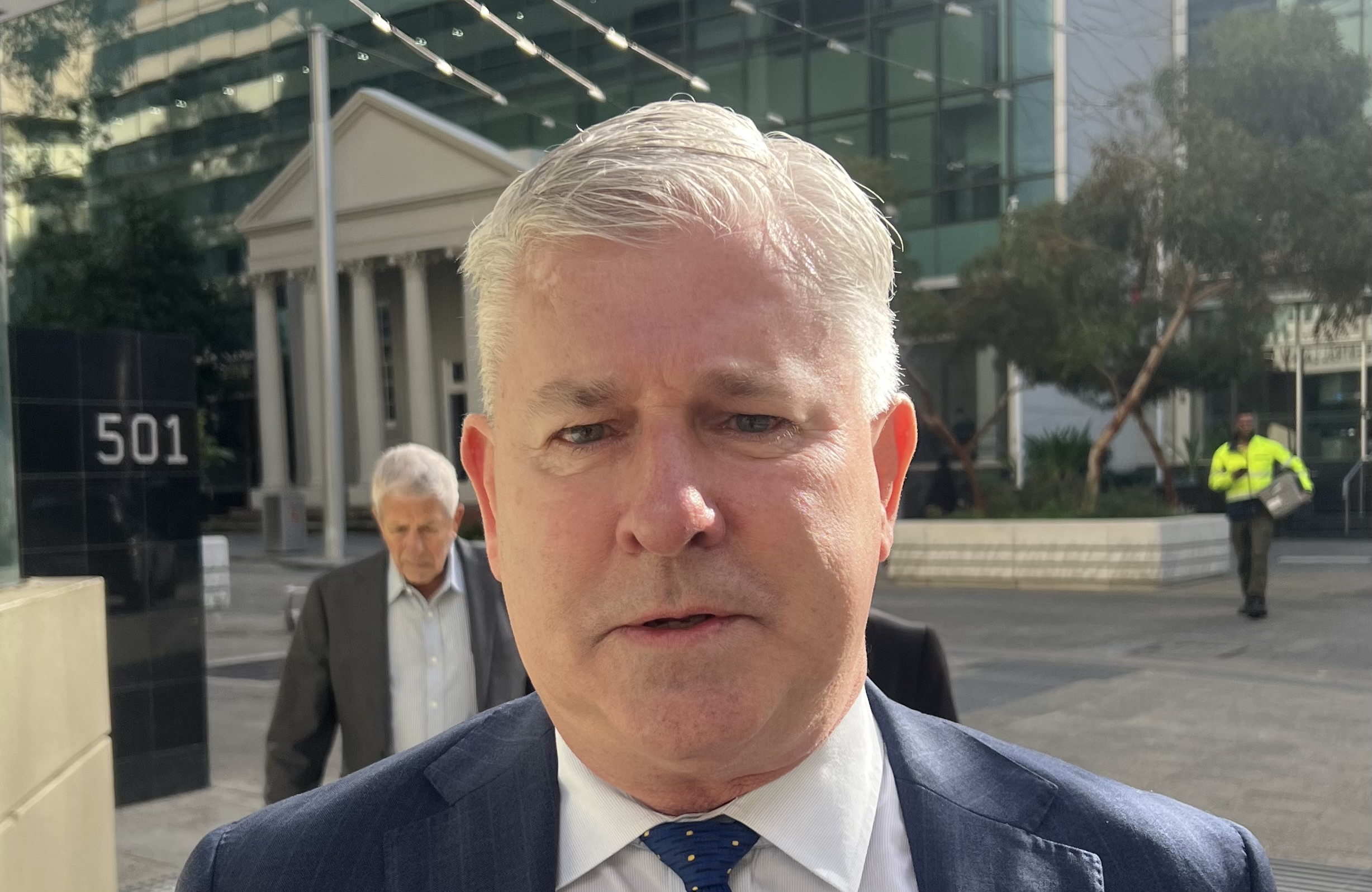
Former Bali Ha’i Cruises director and general manager Colin Beeck is fighting allegations he illegally transferred more than $670,000 out of a company bank account in a four-year stealing spree.
Business
Global AI Stock Selloff Deepens as Kospi Plunges Over 10%, Chipmakers Tumble Across Asian Markets This Week

A rout in global chipmakers deepened Tuesday, as fears over the durability of the artificial intelligence boom intensified ahead of earnings results from some of Silicon Valley’s biggest companies later this week.
South Korea’s Kospi led declines across Asia, falling more than 10% and prompting a short halt in trading, after investors dumped shares in the country’s two leading memory-chip makers.
Korean Chipmakers Bear the Brunt
Shares in SK Hynix fell 14.7%, while its larger rival, Samsung Electronics, dropped 13.4%. The two companies have tumbled 42% and 34%, respectively, in July alone, marking one of the sharpest monthly declines either stock has experienced in years.
The selloff extended across other major Asian markets as well. In Tokyo, the Nikkei 225 fell 4.4%, with memory-chip maker Kioxia plunging more than 18%, a decline that has cut the company’s share price in half over the course of this month’s selloff. In Europe, ASML, the world’s biggest maker of chip-manufacturing equipment, fell 2.2%.
A Sharp Reversal for Stocks That Powered the Market Higher
The scale of the reversal stands out given how central these same stocks were to global market gains earlier in the year. Chip and memory stocks, which powered global markets higher in the first half of the year as investors bet they would be the biggest beneficiaries of vast AI spending, have borne the brunt of a brutal selloff in recent weeks.
Analysts pointed to mounting anxiety around the financial sustainability of the AI infrastructure buildout as the central driver behind the reversal. Venu Krishna, head of U.S. equities strategy at Barclays, said worries around funding uncertainties, capital expenditure increases and Big Tech free cash flow have taken center stage for investors.
Wall Street Selling Spills Into Asia
Tuesday’s declines in Asia followed another difficult session for chip and memory stocks on Wall Street a day earlier. Monday’s trading saw memory company SanDisk fall 11% and chipmaker Nvidia drop 5%, with futures tracking the Nasdaq 100 pointing to a further 0.8% drop at Tuesday’s open.
Big Tech Earnings Add to the Nerves
The selloff comes as Wall Street enters the heart of second-quarter earnings season, with major technology companies scheduled to report results this week. Tech giants Microsoft, Meta, Apple and Amazon are all set to deliver reports later this week, and investors are parsing early results for signs of whether massive AI-related spending will ultimately prove sustainable.
That nervousness was already on display last week following one major tech company’s results. Alphabet’s share price dropped 7% in a single day last week, following the company’s announcement that Google had burned through cash in the second quarter to fund AI infrastructure spending.
Diverging Views on Whether the Selloff Is Overdone
Not all market strategists agree on how to interpret the current wave of selling. Marija Veitmane, head of equity research at State Street, said the market is worried about extra borrowing, extra capital expenditure and how sustainable current spending levels really are, describing the negative momentum as building into a “spiral.” Despite that caution, Veitmane also struck a more optimistic note about underlying demand, telling reporters that reading through the results reported so far, demand still appears fantastically strong, and that for her, the current pullback represents a buy-the-dip opportunity.
Other investors were more skeptical about the sustainability of current spending trends. Albert Saporta, group chief executive of asset manager GAM, attributed the moves to a realization that the current AI capital expenditure frenzy will end up in a bust, much like previous spending cycles across other industries. Saporta added that rising prices for credit default swaps tied to companies including Oracle, SpaceX, Alphabet, Amazon, Meta, Broadcom and Nvidia pointed toward a broader investor reckoning over the AI spending plans of major U.S. technology firms.
Chinese Competition Adds to the Anxiety
Beyond concerns about spending sustainability, growing evidence of Chinese progress in AI development has added another layer of unease for investors. Jim Reid, an analyst at Deutsche Bank, said renewed worries over AI investment spending and competition from cheaper Chinese companies triggered another selloff in global semiconductor stocks Tuesday morning.
That anxiety was fueled in part by a notable development from a Chinese AI startup last week. Chinese AI startup Moonshot last week released a large language model which appeared to have capabilities approaching those of frontier U.S. labs such as Anthropic, a development that rattled investors betting that Silicon Valley’s biggest companies would need to maintain vast spending levels to stay ahead of emerging competition.
CXMT’s Blockbuster Debut Cools Off
The Chinese chip sector’s own volatility was also on display Tuesday, following a dramatic stock market debut a day earlier. In China, shares in memory-chip maker CXMT fell more than 4% on Tuesday, a day after it raised $8.5 billion in a blockbuster listing in Shanghai. Its shares had risen 466% on Monday.
A Steep Fall From SK Hynix’s Recent Peak
The scale of SK Hynix’s decline becomes even more apparent when measured against its recent highs. The Seoul-listed shares of SK Hynix have plunged nearly 50% since hitting a record high of around 3 million won, or roughly $2,000, in June, after the stock had tripled in value earlier this year before peaking.
Traders Describe an Unusually Violent Selloff
Market participants in Tokyo described the speed of the recent decline as unlike anything they had recently witnessed, attributing part of the move to rising interest rates unwinding momentum and retail-driven positions. One senior equities trader said they could not remember seeing anything this bad or violent in recent memory.
The scale of the Kospi’s pullback over the past month has been substantial. The Kospi’s decline on Tuesday means the index has fallen about 25% over the past month and is down a third from its June peak, though it remains 46% higher for the year to date.
Oversupply Fears Compound the Selloff
Beyond near-term valuation concerns, some investors are also growing wary of longer-term oversupply risk as chipmakers continue announcing aggressive expansion plans. SK Hynix and Samsung plan to build two new chip plants apiece in South Korea as part of a combined 800 trillion won, or roughly $548 billion, investment aimed at doubling their production capacity for DRAM chips over the next five years. U.S. rival Micron Technology has raised its own planned domestic investment to $250 billion through the end of 2035.
A Fed Decision Looms
Adding to the uncertainty, investors are also bracing for a Federal Reserve interest rate decision on Wednesday, a potential additional trigger for volatility. Traders remain divided on whether the central bank will hold rates steady or move to raise the benchmark interest rate at this week’s meeting.
With major technology earnings due throughout the week and the Federal Reserve’s rate decision looming Wednesday, investors are likely to remain on edge as they weigh strong underlying AI demand against mounting concerns about spending sustainability, competitive pressure from China, and the risk of a broader capital expenditure overshoot across the chip and memory sector.
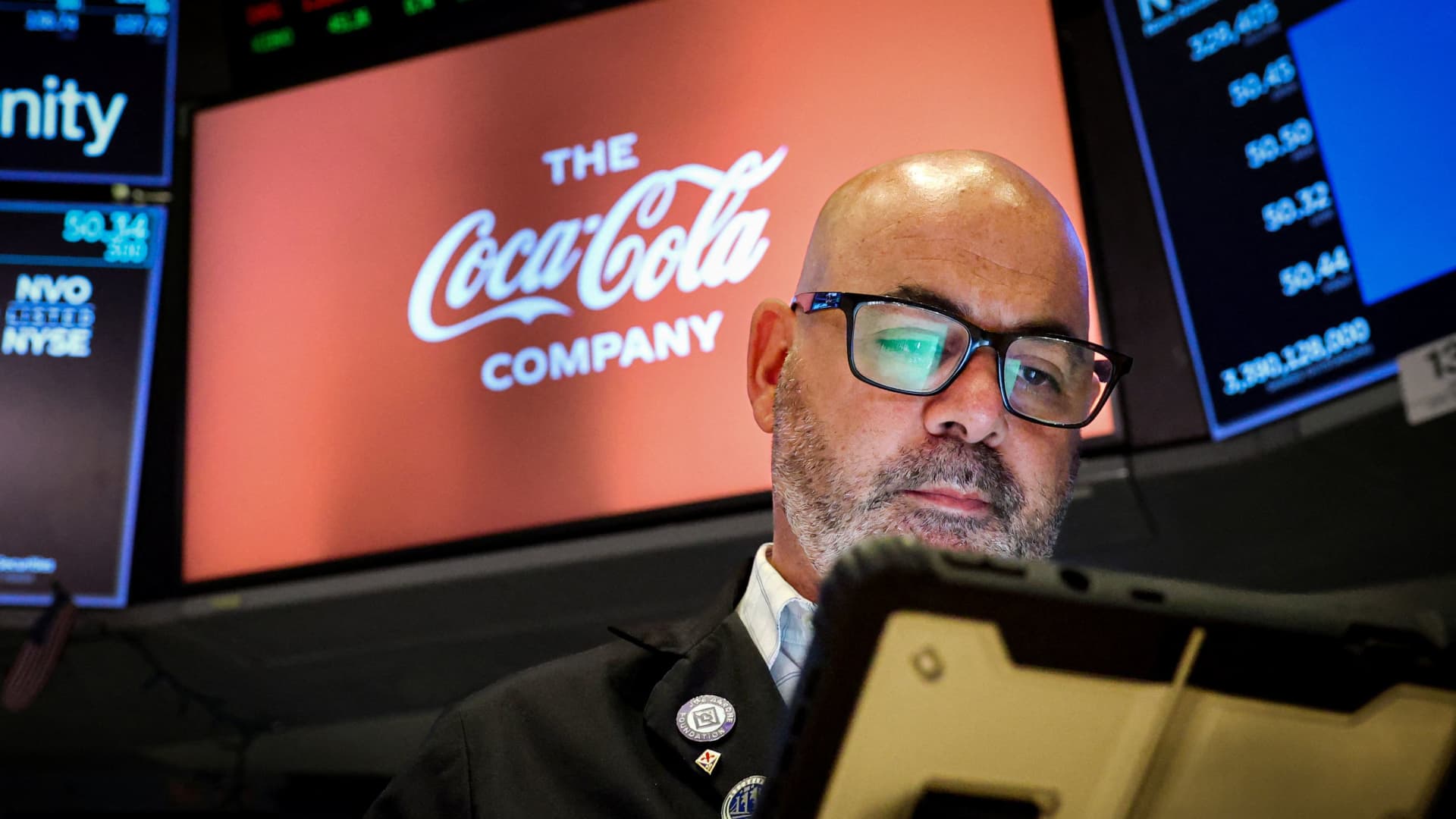
A trader works on the floor at the New York Stock Exchange (NYSE) in New York City, U.S., July 20, 2026.
Brendan McDermid | Reuters
Coca-Cola on Tuesday reported quarterly earnings and revenue that topped Wall Street’s estimates, fueled by higher demand for its drinks.
The company also hiked its full-year forecast. Coke is now projecting comparable earnings per share growth of 9% to 10%, up from its prior forecast of 8% to 9%. It also expects organic revenue to increase about 5%, on the high end of its earlier range of 4% to 5%.
Shares of Coke rose more than 2% in premarket trading.
Here’s what the company reported compared with what Wall Street analysts surveyed by LSEG were expecting:
- Adjusted earnings per share: 97 cents, vs. expected 93 cents
- Revenue: $13.38 billion, vs. $13.16 billion expected
Coke reported second-quarter net income of $4.43 billion, or $1.03 per share, up from $3.81 billion, or 89 cents per share, a year earlier.
Excluding asset impairments, restructuring costs and other items, the company earned 97 cents per share.
Net sales rose 7% to $13.38 billion.
Jack McGinn and Sam Jones discuss calls by a WA skilled migration expert.

Wall Street's AI CapEx Concerns Overlook Demand-Supply Outlook

TransUnion earnings beat by $0.08, revenue topped estimates

Robinhood Leads Tokenized Stocks by Holders but Not by Money

Below Deck Med’s Luke Exits Early After Soiled Sheets Scandal

What to do if money gets stuck in the ATM machine?


-

 Fashion4 days ago
Weekend Open Thread: Brooks Brothers
-

 NewsBeat7 days ago
How a former Blue Peter presenter stunned America’s Got Talent judges
-

 Tech1 day ago
Intel is reversing course and bringing hyper-threading back to its server chips
-
 Business6 days ago
New Jersey voter registration controversy explained: How 6,600 noncitizens got on the rolls, and what happens next
-
 Entertainment7 days ago
Johnny Depp’s R-Rated Gothic Cult Classic Gets New Release Ahead of Sydney Sweeney Remake
-

 Crypto World5 days ago
Ethics, other provisions in crypto Clarity Act to be further discussed
-

 Politics1 day ago
Luke Littler dismantles Gerwyn Price to retain title in Blackpool
-
 Sports2 days ago
Commonwealth Games boxing: Jadumani Singh seals dominant 5-0 win over Pakistan’s Sumama Rehman to enter quarter-finals | Commonwealth Games News
-

 Sports4 days ago
2026 3M Open leaderboard: Scottie Scheffler finds putter in Round 1, sits three back
-

 Fashion4 days ago
16 Dresses for the High Summer Event
-

 News Videos5 days ago
The Peugeot Family: How 200 Years of an “Old Money” Dynasty Died in A Boardroom
-

 Politics3 hours ago
The Part of the Electric Transition Nobody Wants to Discuss
-

 Politics2 days ago
Spain sweeps the board at 2026 World Cup with individual awards
-

 News Videos2 days ago
BITCOIN JUST ENTERED THIS CRITICAL ZONE…
-
 Entertainment4 days ago
A New Post-Apocalyptic Gundam Anime Series Blasts Into SDCC
-

 Crypto World2 days ago
XRP Ledger adds $2.6B as RWA inflows rank second
-

 Crypto World3 days ago
Ripple bought a bank in pieces. The $4 billion audit
-

 Tech3 days ago
Anthropic launches Claude Opus 5, a cheaper AI model for coding, agents and enterprise workflows
-

 Crypto World5 days ago
Uniswap (UNI) pushes deeper into tokenized RWAs with permissioned trading pools
-

 Entertainment2 days ago
Sara Gilson Killed By Husband After Viral “Pedophile” TikTok Video
You must be logged in to post a comment Login