

Politics
Tommy Robinson threatens to ‘punch head off’ former Sikh ally


Tommy Robinson is a far-right agitator who’s led street movements like the English Defence League (EDL) and Unite the Kingdom (UtK). While Robinson’s propaganda has shifted over the years, the common throughlines have been Islamophobia and the fear of migrants.
As these prejudices aren’t unique to white Brits, there are some people from minority groups who have thrown in with Robinson and his ilk.
Now, one of the Sikh men who supported Robinson in the past is being warned to watch his back.
Short story:
Bobby Singh, who twerks for Tommy Robinson, is now being threatened by Tommy Robinson.
"If I personally see Bobby Singh, I'll personally punch his fucking head off." pic.twitter.com/CKsdzy0Npv
— Mukhtar (@I_amMukhtar) June 7, 2026
Robinson’s ex-mate Bobby Singh — who is he?
Bobby Singh is the co-founder of Love Your Postcode, a real estate and property management company. Recently, Singh attended the far-right Unite the Kingdom rally (as Mukhtar highlighted in the video above), where he voiced his support for Robinson. He’s also reshared anti-Muslim posts from Robinson like the following:

Because the above comes from Robinson — a known bullshitter and far-right propagandist — most people would ask themselves:
- Is this AI?
- Was it staged?
- Did it happen recently or years ago?
The other thing to remember is that sometimes Muslim people commit crimes. This is true of every group. But smear merchants like Robinson give the impression that Muslims are uniquely bad by only highlighting crimes committed by them.
Either Singh is willing to turn his brain off when he sees Islamophobic content or he lacks critical thinking skills.
The controversy surrounding Singh
Singh has now attracted controversy because of a TikTok panel in which he asked viewers to vote one “if you’re in support of the Singh” or two “if you’re in support of Henry”. From context, it’s clear that the men in question are the murderer Vickrum Digwa and his victim Henry Nowak (most baptised Sikh men have the surname ‘Singh’, but Digwa does not).
The video attracted greater controversy because at one point another man asks to change the vote, stating:
Can you put a 1 in the comments if I should piss on Henry’s grave, and a 2 if I should shit on his grave.
Singh has since claimed the backlash is a ‘character assassination’, and that while he was on the TikTok panel, he doesn’t agree with everything that was said.
Bobby Singh has RESPONDED to the live TikTok video circulating online.
In it, he shared a panel with someone who asked: “should I shit or piss on Henry Nowak’s grave?” The video also shows him agreeing that “Henry is wearing a turtleneck, so he means trouble,” and endorses… pic.twitter.com/V5Vo7xP5Ky
— Sydney Jones (@SydneyJones_) June 7, 2026
Regardless of whether Bobby Singh made the worst comments or not, it was clearly in poor taste to ask viewers to vote on which man they backed.
Digwa murdered Nowak with an illegal weapon, and then he fooled the police into thinking Nowak was the aggressor. Digwa’s actions, then, contributed towards a situation in which Nowak was handcuffed while bleeding out (with the other factor being police incompetence).
Dis-unite the Kingdom
Ironically, Love Your Postcode says the following about itself:
Our commitment to community cohesion and philanthropy is interwoven with a passion for business, inspiring others to lead with confidence and a sense of social responsibility.
We say, ironically, because co-founder Singh attended Robinson’s Unite the Kingdom rally, this now-yearly event isn’t committed to “community cohesion” at all. We say that because it promotes “remigration”.
Speakers at the first event included the Dutch Generation Remigration. The Canary wrote this about the group:
Well, they’re the leading proponents of ‘remigration’, which is the plan to mass deport migrants and their descendants from European countries.
We’re not quite sure how that will work in Britain given the continuous influxes of populations we’ve experienced since the Roman Empire, except we are sure, obviously – they’re talking about deporting Black and brown people.
Generation Remigration did not attend the 2026 UtK event. No doubt because key member, Eva Vlaardingerbroek, was banned from entering the UK earlier this year.
Robinson has kept the ethnic cleansing torch burning, anyway, and regularly posts about “remigration” himself. Take this from 12 May:
Invaders and their offspring, tormenting and brutally attacking our people in Europe and filming it “for fun” and to assert dominance.
Remigration and de-islamisation can’t come quick enough.
You’ll note Robinson calls for “remigration” and “de-Islamification”. He’s doing this to make it clear it won’t just be Muslims who go.
You’ll also notice he’s not saying something like ‘deport the non-indigenous Brits‘. This is because the in-group currently includes all white Europeans.
This won’t last, of course, and we only have to look back to 2016 to see when the far right was actively hostile towards continentals — most notably Polish people.
Clearly, to anyone smart enough to read between the lines, Bobby Singh isn’t in the in-group, so why was Robinson promoting him before this latest controversy? And why was Singh promoting Robinson?
Singh and Robinson: Bedfellows
To Robinson, there’s an obvious benefit to tolerating a guy like Bobby Singh. Specifically, he can point at him and say: “See, how can I be racist when I’m best mates with this guy?” The answer is obvious, and it’s that in this case, the two are friends because of racism, specifically racism against migrants, which seems to be Singh’s beef if his retweets are anything to go by.

In modern Britain, establishment politicians like Nigel Farage warn ‘All migrants are bad‘ and their supporters hear ‘All Muslims are bad‘.
Inevitably, this becomes ‘All Black and Brown people are bad‘, because believe it or not, the white rioters shown below aren’t the best at identifying cultural signifiers; they just see a person’s skin colour and lose their minds.
Dozens of bricks being thrown pic.twitter.com/VwPXkfZlmR
— Taj Ali (@Taj_Ali1) June 2, 2026
Unless you’re a white British man, a guy like Robinson will always always turn on you at some point. But for some, their desire to punch downwards overrides their instincts for self-preservation.
To be fair, what Singh said was obviously grim, but Singh isn’t the only Sikh man facing backlash from the far-right.
Sikhs at a London remembrance march describe their fears and report a rise in abuse following Henry Nowak’s murder.
— Sky News (@SkyNews) June 7, 2026
 https://t.co/Zl3K65O6Kq pic.twitter.com/WB5y5UwmnD
Nigel Farage has retweeted JD Vance's tweet, calling British Sikhs "mass invasion of migrants."
Like I said the other day. Look how quickly they turned on the Sikh community. pic.twitter.com/1eGb1WYbnb
— Mukhtar (@I_amMukhtar) June 6, 2026
In-fighting
Known white supremacists like James Goddard are repeating the following:
Deport the Sikhs
It should be noted Robinson is still defending Sikhs despite a significant proportion of his far-right followers turning on them.
About 535,000 Sikhs live in the UK (around 0.8% of the population).
The Sikhs aint taking over our towns or cities, or even the UK for that matter you fucking moron.
They integrate and add value, they love, respect and do fight for our country. Sikhs are not… https://t.co/bv5Qa4IUwp
— Tommy Robinson
 (@TRobinsonNewEra) June 4, 2026
You're a disingenuous shithouse.
Fuck you and your framing. Nobody said we should "give up our homeland to Sikhs", own it dickhead.
— Tommy Robinson
(@TRobinsonNewEra) June 4, 2026
Lest we forget, Robinson literally calls for “remigration”. Clearly he doesn’t actually respect Sikhs; he’s just using them as cover for his Islamophobia.
What this shows, anyway, is that it’s impossible to maintain tactical positions on the reactionary far right. There will always be those who are willing to go further, and they will always find themselves arguing from a stronger position because the logical end point of this ideology is a patriarchy of indigenous whites.
An odd one
One final thing to note about Bobby Singh is that he’s not completely deluded about the white supremacist movement he’s attached himself to. In a video which appears to have been filmed at Unite the Kingdom, Singh said:
And by the way, just for the record, just for the record, lads. If they do go back and you ask me to go back, I wouldn’t have a fucking issue…There is no greater honour than going back to a country where it’s your real people of your colour. So what I’m saying is, mate, I’m patriotic, but if you ever want to say to me, ‘Bobby, your time’, I’m more than happy.
It’s not good that Singh — or anyone — feels this way. Every British citizen who isn’t 100 years old grew up in a multicultural country. The problems we’ve faced since then don’t arise from that fact; they arise from rich people stealing all of Britain’s wealth while blaming minority groups as cover.
Speaking as a white Briton, believe me, skin colour is no indicator of individuals being “your real people”. The people I have the least in common with in this country are the white identitarians who line up behind Tommy Robinson. If such people ever take power, I’ll be doing everything I can to move to a country that doesn’t treat skin colour as the defining characteristic.
Although Bobby Singh may not have an issue, you have to assume foreign countries would object to us banishing millions of European-born citizens into their territories. This might surprise people who think the British Empire never ended, but we actually don’t have the right to dump people wherever we like. This is especially true when it comes to nuclear powers like India and Pakistan.
The few
It’s important to re-emphasise that guys like Bobby Singh are a minority of a minority. Most Sikhs don’t support a movement which will inevitably come for them. At the same time, most would never willingly volunteer to be deported to a country they weren’t born in.
Singh being ex-communicated from the British far right was predictable. The same thing will happen to every other person who isn’t a member of the core inner group because this movement is only heading in one direction.
Featured image via Mario Tama/ Finnbarr Webster/ Getty Images
By Willem Moore


Beekeeper and University of Galway Zoology Professor, Grace McCormack, has warned people to “keep an eye” on areas like their sheds and roofs this summer during a recent appearance on Irish broadcaster RTÉ’s News At One, because bees may be likelier to “swarm” near them.
The British Beekeepers’ Association (BBA) also agreed that in the UK, the pollinators usually display the behaviour on warm, sunny days from May to July.
They added that swarming is especially likely on sunny, “high teens”-temperature days, after a period of colder, wetter weather.
These conditions are expected to reach much of the UK starting at about mid-June, following our current wet spell.
What is a bee swarm?
It happens when a queen bee – the sole reproducing female of the hive – leaves her old home to allow another, developing queen to take over.
She doesn’t leave on her own, though.
Speaking to the BBC, Gavin Ramsay, the Chair of the Scottish Native Honey Bee Society, said that “about half of the bees will head off in a very organised manner and find a new home” with the original queen.
Those splinter bees form a cluster as they try to relocate, Inverclyde council added.
Before that cluster is formed, the BBA said, the bees – sometimes “thousands” of them – can buzz up in an “extremely dramatic” and noisy cloud.
This process usually only takes about 15 minutes, though.
Once clustered, bees begin to look for places to build new combs. Ramsay explained they’re especially keen on “cavities that are about the right sort of size with a smallish entrance”.
This can include your chimney, roof, wall space, or unused shed, experts like the Shropshire Beekeepers’ Association said.
If they succeed, you’ll be stuck with a sometimes very hard-to-budge established bee colony.
What should I do if I spot a bee swarm?
“Swarms are usually very mild-mannered, but if you see one out and about, especially one that’s settled somewhere, then really the best thing to do is to get in touch with a local beekeeping association,” Ramsay explained.
They will try their best to manage the situation.
While the swarm isn’t likely to sting you, the BBA has previously advised keeping kids and pets indoors if you spot one, just in case.
Sometimes, though, an early check can help you to notice upcoming swarms sooner.
If you see groups of five to 20 bees near your roof, Prof McCormack said to call a beekeeper, as odds are these are scouting out a new home.
At this point, “you still have time before the swarm arrives, and that is really the best time to act,” she said.
Shropshire Beekeeper’s Association, meanwhile, said that these scouts have usually broken off from an existing, unsettled cluster. This is the”best time for a beekeeper to collect the swarm”, they added.
Keep especially alert on warm and sunny days, particularly those following a chill.

If you’re anything like me, you’re always on the lookout for new parenting tricks and tips to help make your life calmer – and your kids happier.
I recently stumbled across something called the 7-7-7 parenting rule, where parents aim to spend seven minutes in the morning, seven minutes after school or work, and seven minutes before bed connecting with their child.
Over the course of the day that’s 21 minutes of undivided attention – and experts say it can work wonders for their behaviour.
Dr Sasha Hall, a senior educational and child psychologist, tells HuffPost UK the idea draws on attachment theory. “When children experience regular, undivided attention, it can strengthen emotional security and support regulation,” she explains.
“Over time, this can reduce behaviours linked to seeking attention, as the need for connection is being met more consistently.”
The benefits of the 7-7-7 rule
If you’re juggling work, household responsibilities and family life, carving out this time and embedding it into your routine can give you something concrete to aim for, rather than a “vague sense” that you should be forming deep connections with your child all day, says Dr Hall.
“Instead of repeatedly saying ‘just one minute’, and feeling they have fallen short, it creates defined moments where attention is fully focused,” she adds.
The timing of these moments can also support key transitions across the day. “A focused period of connection before school can help a child feel more settled when separating,” says the psychologist.
“Time after school can support decompression. Connection before bed can help with emotional settling and winding down.”
For children who have siblings, and feel like they receive less individual attention, carving out this one-on-one time can also be beneficial and reduce fights.
“Having protected moments where a parent is fully present and focused on one child can strengthen the parent-child relationship and support that child to feel seen as an individual,” says Dr Hall.
“It shifts them away from being experienced as the sibling who joins in, towards being recognised in their own right.
“When a child knows there are moments where they will have a parent to themselves, it can lessen the drive to seek attention in other ways.”
The challenges of the 7-7-7 rule
Obviously, if you’ve got multiple kids, carving out 21 minutes per kid over the course of the day can quickly become unachievable.
“Parents may find themselves trying to repeat this several times in the morning and evening, which is often when time is most limited and stress levels are higher,” notes Dr Hall.
There is also a risk that it becomes too rigid. “If parents feel they must stick to it in a very fixed way, it can add pressure rather than relieve it, particularly for single parents or those working long hours,” she adds.
What if this doesn’t feel achievable?
The psychologist suggests a more realistic approach is to build connection into routines that already exist, rather than adding extra pressure.
“For example, the school run or pick up can be used as a point of focused attention, without trying to manage other tasks at the same time,” she says.
Short bursts of focused attention, or ‘micro-moments’, can also be very effective for parents, notes Dr Hall, adding: “These might include eye contact, physical closeness or following the child’s lead in play, even for a brief period.”
Instead of choosing three points in the day, parents could narrow it down to just one or two, such as the start and end of the day.
Child psychologist Dr Becky Kennedy, founder of Good Inside, calls it “special time” and previously said it’s the “best bang-for-your-buck” parenting strategy, helping kids who struggle to listen, are being angry or rude, or having constant tussles with siblings.
She suggested even just 10-15 minutes of special time can be beneficial. The key is to give them your undivided attention – no phones, no distractions, no siblings.
“For families with more than one child, it may be more achievable to rotate one-to-one time, so each child has predictable opportunities for individual attention across the week,” Dr Hall adds.
Ultimately, every parent is doing their best with the resources they have.
Dr Hall suggests our focus can be less on meeting a fixed time target and more on ensuring children regularly experience moments where they feel “noticed, valued and responded to”.

Ahead of the ten year anniversary of the EU referendum on 23 June, UK in a Changing Europe experts have written a short series of blogs reflecting on some of the issues at the heart of Brexit then and now. Here, John Curtice examines how public opinion has changed over the past decade.
In 1975, the UK voted by two to one to stay in the European Union. Yet despite that seemingly decisive outcome, the debate about Britain’s membership did not stop. By 1983, Labour was campaigning in favour of withdrawal, and for a while most voters appeared to agree with them. Then, during the 1990s the Conservative party – and many voters – became increasingly sceptical about the EU. Eventually, forty-one years after the original ballot, Britain voted narrowly – by 52% to 48% – to Leave the EU. Harold Wilson’s referendum did not withstand the test of time.
Ten years on, it is beginning to look as though the 2016 ballot will be no more successful that the previous exercise in drawing the debate about Britain’s relationship to a close. On average this year, polls that have asked people how they would vote in another referendum have, once those saying don’t know are excluded, put support for being in the EU at a record high of 60%. Just 40% indicate that they would vote to stay out. Since Liz Truss’ ‘fiscal event’ in September 2022 rocked the markets – an experience whose impact on attitudes towards Brexit has been too little appreciated – only one published poll has recorded a majority vote for staying out of the EU. Meanwhile, in response to a separate question, 56% now tell YouGov they are in favour of rejoining the EU, while just 35% are opposed.
In part, the marked change in the balance of opinion has been occasioned by switching among those who voted to Leave in 2016. On average in polls conducted this May, only 72% of Leavers said they would vote to stay out of the EU, whereas 81% of those who voted Remain indicated they would vote to rejoin. However, just as important are the views expressed by those who did not vote in 2016. They back rejoining over staying out by a margin of nearly three (51%) to one (17%).
Many of these non-voters were too young to vote in 2016. Those same polls conducted in May also indicate that two-thirds (67%) of those aged 18-24 would vote to rejoin the EU, while just one in eight (13%) would support staying out. In contrast, just 35% of those aged 65 and over would vote to rejoin, whereas as many as 53% would back staying out. The clear implication is that generational turnover could gradually serve to reduce the level of support for being outside the EU even further.
In the meantime, many voters appear to have come to the conclusion that Brexit has not worked out well. In polling conducted this April, Ipsos found that over half (51%) believe that it has been ‘more of a failure’ while only one in eight (13%) reckon it has been ‘more of a success’. More specifically, YouGov polling in January 2025 reported that, on two of the key issues in the referendum campaign, the economy (65%) and immigration (52%) Brexit is now believed to have had a negative impact. In the case of immigration, that perception is just as common among those who voted Leave in 2016 as it is among those who voted Remain, while even in the case of the economy over two in five (43%) Leave voters believe it has been negatively impacted.
Of course, that still leaves the question of who voters blame for Brexit’s perceived failure. More in Common found this April that as many as 46% are of the view that ‘Brexit could have worked well but politicians have handled it badly’, a response that is particularly common (74%) among those who voted Reform in 2024. This probably helps explain why around half of those who voted Leave in 2016 are now supporting the pro-Brexit party and why most Leave voters (71%) are still inclined to vote to stay out of the EU.
However, whereas those Leave voters who are disappointed with what has happened to immigration in the wake of Brexit may be inclined to blame politicians for the perceived failure, the same is not necessarily true of those Leave supporters who are unhappy about the economic impact of Brexit. Certainly, research conducted via the NatCen Opinion panel finds that while there is little link between perceptions of the perceived impact of Brexit on immigration and Leave voters’ willingness to vote to stay out, only two in five (40%) Leave voters who feel the economy is worse off as a result of Brexit now say they would vote to stay out, a finding replicated by the British Social Attitudes survey. Meanwhile, just over half (51%) of those who did not vote in 2016 told YouGov that Brexit has had a negative impact on the economy with only 14% stating it had had a positive impact. That outlook helps explain why there is little support for Brexit among this (gradually growing) section of the electorate.
Of course, even if Brexit is no longer a popular cause, that does not necessarily mean voters are keen to see the issue revisited in another referendum. Indeed, it is commonly asserted that this is the case. Yet this is not what the polling shows. In April, More in Common found that just over half (51%) of all voters supported having another referendum on Brexit in the next five years, while only a third (33%) were opposed. Meanwhile in polling conducted for UK in a Changing Europe in May, just under half (48%) said they supported having a referendum in the next five years, while only slightly over a quarter (27%) were opposed. In practice, as we might anticipate, those who voted Remain are keen on having another referendum (by 73% to 12% according to Ipsos) while those who did not vote in 2016 are also minded to do so (by 43% to 16%). In contrast, there is considerable resistance among 2016 Leave voters, though their opposition (by 55% to 25%) is not as marked as the enthusiasm of Remain supporters.
Perhaps another referendum will not happen in the next five years. However, unless public attitudes towards EU membership shift once again, it is difficult to believe the 2016 referendum will prove to be the final word.
By John Curtice, Professor of Politics, Strathclyde University, and Senior Fellow, national Centre for Social Research and UK in a Changing Europe.

A government minister has accused Pete Hegseth of “lacking in class” after he used a D-Day commemoration speech to attack European countries’ record on immigration.
The US defence secretary said “European beaches are [being] stormed by different, dangerous ideologies” in a speech at the Normandy American Cemetery in north-west France.
He was speaking on the 82nd anniversary of the D-Day landings, when nearly 4,500 Allied troops were killed attempting to liberate Nazi-occupied France on June 6, 1944.
He said: “Sadly, today, different European beaches are stormed by different, dangerous ideologies. Beaches in Spain, Italy, Greece and Bulgaria, boats and men arrive.
“When will European capitals do something about that invasion or is it too late? I pray not, and I believe not.”
Skills minister Jacqui Smith added her voice to the wave of criticism which has followed Hegseth’s speech.
Asked on LBC if he had been right, she said: “No, he’s not right, and no, I think it’s a bit lacking in class to raise it at a ceremony like that.”
Downing Street also hit out at the Trump ally. The prime minister spokesman said: “The D-Day commemorations this weekend were about thanking veterans of the Second World War and remembering all those who died during the Normandy landings.
“Their cause was liberation, freedom from tyranny and restoring peace to western Europe, and that should be the focus of commemorations.”
Subscribe to Commons People, the podcast that makes politics easy. Every week, Kevin Schofield and Kate Nicholson unpack the week’s biggest stories to keep you informed. Join us for straightforward analysis of what’s going on at Westminster.

Cacio e pepe is one of those dishes that seems like it should be a doddle to make – it’s made up of just a handful of ingredients, after all.
But for plenty of people, it can be hard not to end up with a watery mess or cheese clumps.
A new study by Italian Street Kitchen has revealed the Roman staple is one of the most searched for pasta recipes in the UK (alongside fellow fromage-filled dish, macaroni cheese).
If you’re hoping to make it for dinner this week, here’s how culinary pros make restaurant-worthy cacio e pepe from the comfort of their own homes.
Cacio e pepe ingredients
First things first, chef and author Chris Baber said to focus on using the best quality ingredients possible – as well as the right equipment.
“While you’ll find many variations of this iconic pasta dish, this is my foolproof method for creating restaurant-quality cacio e pepe at home,” he added.
For a two-person serving, you’ll need: 250g spaghetti, 100g pecorino, 1 tbsp freshly cracked black pepper, and (optional) a knob of butter.
Executive chefs at Italian Street Kitchen, Guilio and Enrico Marchese, said they love to use bucatini – a thicker spaghetti-like pasta – “for more bite”.
How to make cacio e pepe
First, finely grate the Pecorino cheese into a large bowl and set aside. Then Baber advises to bring a large pot of salted water to the boil.
“While the pasta cooks, toast the freshly ground black pepper in a large sauté pan over medium heat for one minute,” said the chef.
Baber, who is a HexClad ambassador, said your pan choice here is “incredibly important”. He’s a big fan of the 30cm HexClad hybrid pan, which “ensures even heat distribution, allowing the pepper to become fragrant without burning”.
If you want to add butter, now’s the time to do so. “However, I’d recommend keeping it authentic and leaving out the butter… it tastes amazing without!” said Baber.
Giulio Marchese likes to melt butter with cracked black pepper until aromatic, then adds a splash of hot pasta water and truffle salt to create an “emulsion”.
Regardless of how you prep your pepper, once the pasta’s cooked (Marchese likes to get it al dente), drain it and set some of the cooking water to the side to cool a bit.
You need starch for a top tier sauce
Setting pasta water to the side is important. Italian food blogger Pina Bresciani noted one of the secrets to a quality cacio e pepe is starch.
“Getting a good amount of starch from the pasta water and pasta itself, via a process called risottare, is key to a creamy final sauce,” she said. “It helps the sauce to not clump, and achieve that beautiful silky texture.”
Add your drained pasta to the pan with the pepper, butter (if using) and some of the reserved pasta water, suggested Baber. Turn off the heat and let the pasta cool for 30 seconds.
Culinary scientist Jessica Gavin notes you can’t use the pasta water when it’s too hot or too cold – it has to be just right.
“Avoid mixing the cheese with boiling water. The intense heat causes the proteins to firm up and expel moisture, leading to agglomeration – aka clumpy cheese,” she said in a TikTok video.
Now for the key ingredient. “Add the cheese little by little, stirring constantly until the cheese is melted and the pasta is nicely coated in a smooth, silky sauce,” added Baber.
“Add more reserved pasta water if needed to achieve the right consistency.”
And that’s that. “Transfer to serving bowls and top with a little more cheese and some coarse black pepper (if you prefer the crunch),” he noted.
Marchese said of the classic Italian dish: “When you get it right, it’s pure magic on a plate.” We couldn’t agree more.
Hello and welcome to Canary Catch Up. Each week, our resident telly addict Rachel Charlton-Dailey will bring us bang up to date with the shows she’s been obsessed with, what she’s hate-watching, and what she can’t wait to get stuck into.
Trigger warning: This article contains discussion of homophobic hate crimes and the murder of a gay man. Please take care when reading.
Pride 2026
I’ve been thinking a lot about pride and my local community this week. We, like many parts of the country, got a Reform council in May. For anyone who is disabled and isn’t straight, white and cis, that’s terrifying. What’s especially tough is knowing how many people in our city actively voted against our rights.
One of Sunderland Reform’s first acts in power was to declare that the Pride flag would never fly on government buildings. This will do absolutely nothing to improve the lives of the one in three children who live in poverty here, but the gammons ate it up. That’s why Pride this year feels even more poignant. When so many want us to be silent, we can’t be.
Tip Toe is a terrifying look at queer hate
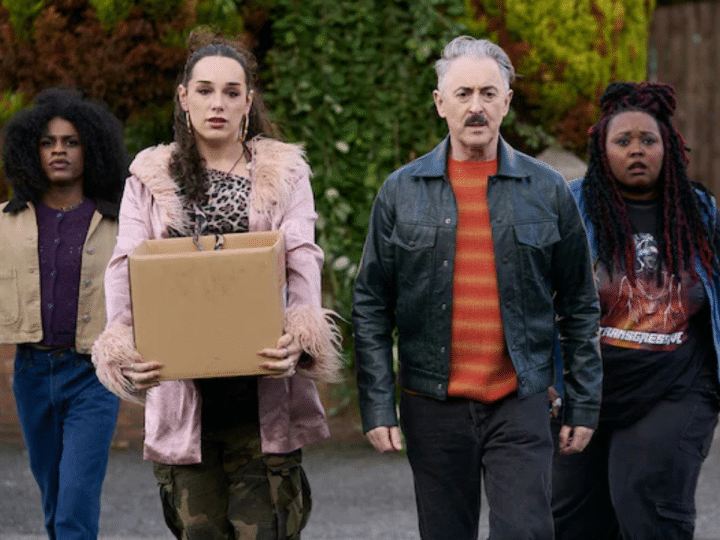
Russell T Davies‘ new Channel 4 mini-drama, Tip Toe, is an unflinching look at how not only rights for queer people are being stripped away but how attitudes are dangerously changing. If you thought this would be a gentle look at how we should just be less homophobic, the opening scene, which shows a gay man strung up on a lamp post, quickly puts that to bed.
The show tackles how social media, politicians and far-right mouthpieces have radicalised so many against queer and trans people. It’s a brutal look at how so many never really accepted us. The hatred has always been simmering away in the background and fuelled by the misinformation screaming at us online.
Overall, Leo (Alan Cumming) just wants to support and protect young gay people, but his neighbour Clive (David Morrissey) only sees that as him wanting to groom and abuse his son.
The results are extreme and violent, but just as sinister is how much the hatred creeps into people who are also supposed to be good.
Leo’s best friend, Stephanie (Elizabeth Berrington), is deeply gender critical. At several points, Stephanie blames girls getting abused on trans women, and even tells Leo that if he were more discreet in his life, he wouldn’t have this trouble.
As a bi woman living in a city that overwhelmingly voted for Reform, this show chilled me to my bones. I have a lot of privilege as a white bi woman to be able to say I’m going to loudly resist. However, I’m doing it for my trans, non-binary and gay male friends for whom it’s much less safe.
To say I enjoyed Tip Toe is almost definitely the wrong thing to say. Tip Toe is an excruciatingly hard watch, as it should be. But everyone, and I mean bloody everyone, needs to watch it. My worry is, though, that they won’t, because the people who hate gay people aren’t going to watch a show like this. Therefore, all it will serve to do is terrify queer people even more.
Rivals’ shocking mid-season finale
Rivals came to a jolting halt with its mid-season finale, which was also absolutely devastating. It’s been clear from the outset how dangerous Tony (David Tennant) and Maud’s (Victoria Smurfit) affair could be. But to see it break Tony’s wife, the long-suffering Monica (Claire Rushbrook), was particularly devastating.
The scene in Lizzie’s (Katherine Parkinson) kitchen between her and Monica, where Monica is clearly not mentally okay and discussing how her life could’ve been, was absolutely heartbreaking.
I cheered when she told Tony she would be taking him for all he’s worth, but then sobbed when it became clear that Rupert (Alex Hassel), one of her oldest friends, was having to break the news of her death to his enemy, Tony.
It must be said how gross it felt that the show killed off a fat queer woman just before she was able to reclaim her life. I can see why it was done, but killing yet another queer woman as a device to further a man’s story will never sit right. Monica deserved so much more. To see her story end like this is horrible.
I’m clinging onto the fan theory that she faked her own death, but I’m not very confident in that. I suspect Monica’s death will be used instead to justify how even more disgusting Tony is about to become.
Mandalorian and Grogu is a silly, lovely tale
On a much lighter note, I took myself to the cinema to see Star Wars: The Mandalorian and Grogu. I’m a big fan of the series anyway, but this movie was the perfect escape from the world. Just two hours of Pedro Pascal and his weird little alien baby being nuisances around the galaxy.
Mind you, be prepared to have very confused feelings for Jabba the Hutt’s son, who they gave a six-pack and is voiced by Jeremy Allen White.
Brain-free binge of the week
This section of the column is going to very quickly become a look into my brain and what I need when times are tough. A lot of the time, that’s political satire and/or Ben Willbond. Lucky for me, The Thick of It has both.
Considering my job, a political comedy-drama that skewers just how embarrassingly incompetent British politicians are might not seem like a break. Sometimes though, you just need a Scottish man inventively screaming swears at the worst MPs imaginable to make your day better.
Featured image via Channel 4

Having the occasional bad night’s sleep isn’t anything to worry about in and of itself, the NHS says.
But if the issue lasts a long time or starts to affect your day-to-day life, it could be worth speaking to a doctor, as this might be down to conditions like insomnia.
Still, those terms can be a little tough to navigate. How long is “a long time”? It feels like everyone complains about feeling tired – how can we tell “normal” fatigue from sleep-disorder-level exhaustion?
Here, doctor and Fellow at the Royal College of Anaesthetists, Dr Sunny Nayee, shared the “3-3-3 rule” he uses to tell bad sleep from a more lasting issue.
What is the “3-3-3 rule”?
“If you experience disrupted sleep at least three nights a week for at least three months, medical practitioners no longer regard it as lifestyle related but in the realm of insomnia,” Dr Nayee said.
He encourages those concerned to ask themselves three questions:
- Do you experience poor sleep for a minimum of three nights?
- Have you experienced poor sleep hygiene for at least three months?
- Does poor sleep impact at least three aspects of your day (fatigue, brain fog, changes in mood, lack of concentration).
After all, he stated, insomnia is usually measured by how you feel in the daytime, not what you struggle with at night.
“A common misconception is that people think insomnia is staring at the ceiling and not sleeping at all,” he wrote.
“However, it’s defined by the impact it has throughout the day. If you find that poor sleep hygiene is having an instrumental impact on your mood, concentration and ability to function, then it may be considered a clinical condition.”
What if I think I have insomnia?
Per the NHS, insomnia is not a life sentence: it is often linked to stress, booze, a poor sleeping setup, or rooms that are too hot or cold, and “usually gets better by changing your sleeping habits”.
The health service recommends going to bed at the same time every day, exercising regularly, ensuring your room is dark and quiet, using comfortable bedding, and unwinding for at least an hour before bed, ie by reading a book.
If changing your sleep habits doesn’t work, if your sleep issues have been going on for months, and/or if your insomnia is “affecting your daily life in a way that makes it hard for you to cope,” speak to your GP.

For dozens of Moroccan football fans, the 2026 World Cup was supposed to be another chapter in a long, loyal journey following the Atlas Lions across continents. Instead, it has turned into a financial and emotional blow, as at least 40 supporters were denied US visas despite months of preparation, thousands spent, and a spotless record of following their national team abroad.
The denials have been delivered without clear explanation. They have left fans stranded with match tickets, hotel bookings, and travel plans they can no longer use. For many, the losses run into the tens of thousands of dirhams.
World Cup: everyone saw this coming
The Sports Association of Moroccan National Team Fans, a long‑standing and well‑organized supporters’ group, saw 40 of its 42 applicants rejected. Members had applied from Casablanca, Marrakech, Fès, and Tétouan, expecting routine approvals given their travel history and the nature of their trip.
The group’s head, Azzedine Al Attaraoui, said:
No clear reasons were given for the visa refusals.
We just want to support our national team.
Hespress English reported that:
Al Attaraoui added that several supporters had already booked hotels costing between $400 and $1,000 per night, with some total expenses reaching up to 20,000 MAD covering tickets, visas, travel, and paperwork.
Many of these fans had followed Morocco to Russia in 2018, Qatar in 2022, and even the Paris Olympics but always returning home, always representing the country with pride.
Another group, same story
The Sbouaa (Lions) supporters’ group, who are known for orchestrating the noise, choreography, and atmosphere that have become synonymous with Moroccan fan culture, have faced a similar fate. Nearly 50 of their coordinators applied for visas. Only six were approved.
For a group tasked with organizing thousands of fans inside stadiums, six coordinators is nowhere near enough. They estimate they need at least 30 to recreate the energy seen in Qatar 2022 or the Africa Cup of Nations.
The rejections, they say, were largely issued under Section 214. This is a clause used when consular officers doubt an applicant’s intention to return home. The coordinators insist this makes no sense, they have stable lives in Morocco, long travel histories, and no intention of overstaying.
What stings most is the inconsistency. Moroccan authorities have previously helped facilitate visas for supporters traveling to Chile for the U20 national team. Those visas were issued quickly and efficiently. Fans expected similar cooperation for the World Cup, especially given Morocco’s rising global football profile.
Instead, they find themselves locked out of the tournament they helped energize in previous editions.
Dreams shattered
Behind the numbers are stories of sacrifice. Fans who saved for months. Families who planned entire trips around the World Cup. Supporters who have never missed a major tournament. Coordinators who volunteer their time to create the atmosphere that has made Moroccan fans famous worldwide.
Now, many of them are left with nothing but receipts and disappointment.
This is a real blow to Morocco’s footballing identity. Moroccan supporters have become one of the most celebrated fanbases in world football. Their passion in Qatar was widely praised, and their presence at AFCON tournaments is always felt.
The mass visa refusals threaten to mute that presence at the 2026 World Cup. A tournament where Morocco’s fan culture could have shone again on a global stage.
What can happen
For now, the fans are waiting. Waiting for answers, for intervention, for a solution that might salvage their World Cup dreams. They are calling on FIFA to acknowledge the issue and on Moroccan authorities to advocate on their behalf.
Whether anything changes remains uncertain, but the message from the supporters is clear, they want to be there for their team, as they always have been.
If the situation remains unresolved, the 2026 World Cup may unfold without one of its most vibrant and recognisable fanbases. For the fans, it’s a painful prospect, it’s a loss of energy and support. For the tournament itself, it’s a reminder that football’s global celebration can be derailed by corrupt politicians.
Featured Image courtesy of Francois Nel/Getty Images
By Faz Ali

Yemen’s Ansar Allah de facto government has announced the Red Sea is closed to Israeli and Israel-linked shipping.
In a statement, Yemen military said the action is “in response to US-Zionist aggression” against the country plus Iran, Palestine, Lebanon and Iraq.
The announcement comes after Yemen joined Iran’s missile strikes on Israel in retaliation for the occupation’s bombing on the Dahiyeh area of Beirut.
Statement from Yemen
In response to US-Zionist aggression against the axis of jihad & resistance in Iran, Palestine, Lebanon, Iraq, Yemen – and rejecting the Zionist project for “Greater Israel” under the “New Middle East” – the Yemeni Armed Forces have launched a missile strike.
Target: Sensitive Israeli enemy positions in occupied Jaffa area.
Missiles achieved their objectives with precision, by the grace of Allah.
The Yemeni Armed Forces announce:
Complete naval blockade on the Israeli enemy in the Red Sea. From this moment, all enemy movements are legitimate military targets.
Escalation meets escalation – our military operations will continue to rise in line with events and in coordination with the axis of jihad & resistance.
We will not stand idle against the siege on our people & the free peoples of the axis (Palestine, Gaza, Iran, Lebanon, Iraq). Enemy attempts will fail, by Allah’s will. Our operations continue as long as aggression & siege continue against us and the axis.
Allah is sufficient for us, and He is the best disposer of affairs. Victory to Yemen and all the free of the Ummah.
Hard-hitting blockade
In February, Ansar Allah responded to the US and Israel’s unprovoked attacks on Iran by striking US bases in the Gulf.
The Arab country’s 2024 blockade of the Red Sea bankrupted Eilat, Israel’s third-largest port. The US and Israel, as usual, responded to Yemen’s solidarity with their victims by bombing and murdering civilians and journalists.
The resumption of Yemen’s actions, in conjunction with Iranian attacks, is likely to contribute to a repeat of 2025 scenes of panicked European ‘Israelis’ flooding air and sea ports in an attempt to leave the colony. But this is unlikely to be reported by Western state-corporate media.
Featured image via Sana’a Center for Strategic Studies
By Skwawkbox
Politics
The House | Miles Thorpe: From Former Stationery Entrepreneur To Zack Polanski’s Morgan McSweeney

Miles Thorpe
5 min read
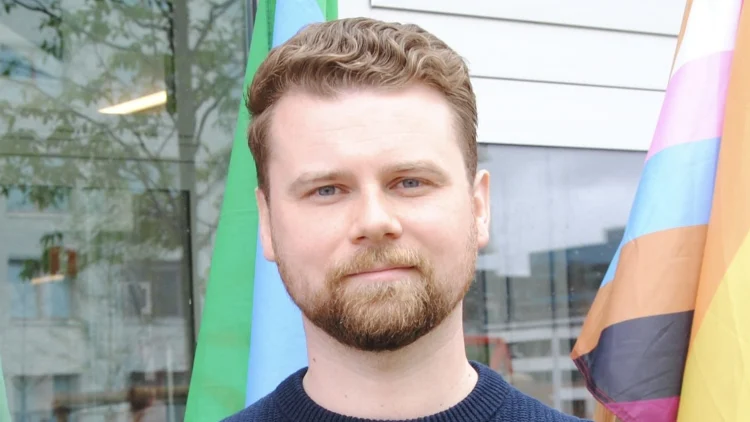
As Labour now knows to its cost, the Greens have sharpened their campaigning prowess considerably in recent years. Tom Scotson profiles Miles Thorpe – the man getting much of the credit for a series of wins
Bill Clinton had ‘ragin’ Cajun’ James Carville, Boris Johnson’s election Svengali was Lynton Crosby and Keir Starmer’s swift path to No 10 is widely credited to Morgan McSweeney. Zack Polanski has a 31-year-old former stationery entrepreneur.
Miles Thorpe, from south London, has knocked around Green Party circles for years but is now developing a reputation that might one day rival the other great campaigners. He is said to have masterminded the impressive victories of Carla Denyer in Bristol Central at the 2024 general election and the Gorton and Denton by-election in February, where Green candidate Hannah Spencer won by more than 4,000 votes.
“He is very focused, good at prioritising, great at recruiting and motivating volunteers and creating a fun team spirit,” says one Green Party source who knows Thorpe well.
Thorpe, who left school at 18, founded Skyline Office Supplies, a stationery business, after working in sales for a brief period. He then left the business world, having not found the work to be very meaningful, and off the back of that, moved to Brighton. The seaside city – where the Greens won their first parliamentary seat in 2015 – was where Thorpe set up Earners, a social enterprise focused on getting people from underrepresented backgrounds into good careers.
It was not until he became involved in the city’s oldest homeless charity that he became political and interested in progressive politics. YMCA Brighton, which works with 400 people each year who are homeless or at risk, opened Thorpe’s eyes to the level of deprivation in the UK as he saw first-hand what happens when the state does not meet people’s needs.
Thorpe door-knocked for Jeremy Corbyn’s Labour in the 2019 election but became a member of the Greens in 2021, after the pandemic and the election of Denyer and Adrian Ramsay as co-leaders. He had wrestled with the question of whether to stay in a larger party less aligned to his values, or switch to a smaller one that could move the two legacy parties by winning council and parliamentary seats against the odds.
He became heavily involved in political campaigning after identifying Bristol Central as a unique seat where the Greens had a chance of winning. For three years, he lived from Monday to Friday in Bristol, building the Greens’ presence organically and working on how they could unseat Thangam Debbonaire, then a shadow cabinet member.
During both elections, Bristol Central and Gorton and Denton, he would open the campaign office around 7am and leave party headquarters at 10pm. With no free time and eating on the move, allies say he had an uncanny ability to galvanise activists. Thorpe credits much of his success to his business background, which made him responsible for juggling data, finances and people’s egos.
He backed Polanski in the leadership race last year, giving an insight into his views in the process. “If we’re not just here to win seats but we’re here to change a country, then we can’t do that quietly,” he wrote on an internal Green Party site.
If we’re here to change a country, we can’t do that quietly
“I hear the concern – ‘We can’t spook the horses.’ The idea that, essentially, we can appeal to a wider range of voters by being ambiguous about our identity. But that has its limits. The limit being: it only works while you’re small enough for people not to notice.
“The truth is: there is space for us. As we are. A space that people are crying out for us to occupy. It’s time to step into that – and show that with the right message, the right messenger and the right policies, people will vote for us. Not in spite of who we are – but because of it.
“In my view, this election isn’t a choice between media cut-through and ground campaigning. It’s about understanding that in modern politics, you need both.”
He had the chance to implement that combination at the Gorton and Denton by-election. Green Party staffer Steve Jackson tells The House: “He operates on a high-trust model. If you are issuing a quote from the press side, he may look at it on the first couple of days, but after that, once he trusts you, he lets you crack on. He’s not a micromanager in any way.
“Miles was always on top of the detail, incredibly well-organised. I don’t think I ever saw him with a notepad, but he was constantly on his phone. If you rang him, he would always pick up, which is impressive considering during the campaign he must’ve been part of hundreds of group chats and receiving hundreds of queries each day.”
His key tip to activists during both elections was reminding them not to think too much about the result, which he believes can negatively affect people’s mindsets.
There is good news for Labour’s Andy Burnham, however: Thorpe is sitting out Makerfield. He has opted for a campervan holiday in Oslo, having travelled across Scandinavia to meet with Norwegian Greens and Swedish Greens.

McDonald’s worker in ‘excruciating’ pain after hot oil ‘attack by colleague’

Dow Jones| Nasdaq | US Stock Market Today | Live: S&P 500, Nasdaq futures edge higher as chip stocks regain footing

Bitmine’s 5.54M Ethereum bet puts its 5% supply goal within reach



-

 Fashion3 days ago
Weekend Open Thread: Evereve – Corporette.com
-

 Business7 days ago
Jade Biosciences, Inc. (JBIO) Discusses Positive Interim Results From JADE101 Phase I Healthy Volunteer Study and Development Plans Transcript
-
 Crypto World3 days ago
Jensen Huang Approves Samsung, SK Hynix, and Micron for NVIDIA (NVDA) HBM4 Memory Supply
-

 Sports6 days ago
French Open 2026 results: Alexander Zverev beats Rafael Jodar and will play Jakub Mensik in semi-finals
-

 Tech6 days ago
CryZENx Releases Fresh Playable Content Deep Inside Jabu-Jabu for His Ocarina of Time Remake
-

 Business5 days ago
Trump Taps Housing Chief Bill Pulte as Acting Intelligence Director After Gabbard Exit
-
 Business1 day ago
The Pain Points Taking a Fragile Tech Rally Down a Notch
-
 NewsBeat6 days ago
Republicans balk at Trump’s attempt to appoint a MAGA enforcer to lead National Intelligence
-
Crypto World3 days ago
LBank Surpasses 25 Million Users Worldwide as AFA Partnership Continues to Drive Global Growth
-

 Tech3 days ago
RCS Messages Between iPhone and Android Get End-to-End Encryption With iOS 26.5
-

 Tech3 days ago
Microsoft launches MXC, an OS-level sandbox for AI agents, with OpenAI and Nvidia already on board
-
 Crypto World6 days ago
Seagate (STX) Stock Surges to Record High on AI Boom and Legal Settlement
-

 Crypto World23 hours ago
Trump’s AI Ownership Plan Could Benefit Anthropic at OpenAI’s Expense
-

 Tech3 days ago
Meta steals a tactic from Tesla and builds data centers in tents
-

 Business3 days ago
(VIDEO) Justin Bieber Delivers Surprise Happy Birthday Serenade to Diners at Los Angeles Mexican Restaurant
-
 Crypto World5 days ago
EU AI Data Center Project Faces Delays as Funding Gaps Grow
-

 Entertainment5 days ago
Did The Mandalorian And Grogu Already Ruin The Next Star Wars Movie?
-

 Business5 days ago
Aehr Test Systems Stock Soars 17% Amid Surging AI Demand and Conference Spotlight
-
 Crypto World3 days ago
Merlin (MRLN) Stock Soars 32% on Major USSOCOM Autonomy Milestone
-
 Business6 days ago
Claude AI Down Today Reason: Why Anthropic’s AI is not working today? What’s the latest quota update
You must be logged in to post a comment Login