

Politics
Yemen announces Red Sea is closed to Israel-linked vessels


Yemen’s Ansar Allah de facto government has announced the Red Sea is closed to Israeli and Israel-linked shipping.
In a statement, Yemen military said the action is “in response to US-Zionist aggression” against the country plus Iran, Palestine, Lebanon and Iraq.
The announcement comes after Yemen joined Iran’s missile strikes on Israel in retaliation for the occupation’s bombing on the Dahiyeh area of Beirut.
Statement from Yemen
In response to US-Zionist aggression against the axis of jihad & resistance in Iran, Palestine, Lebanon, Iraq, Yemen – and rejecting the Zionist project for “Greater Israel” under the “New Middle East” – the Yemeni Armed Forces have launched a missile strike.
Target: Sensitive Israeli enemy positions in occupied Jaffa area.
Missiles achieved their objectives with precision, by the grace of Allah.
The Yemeni Armed Forces announce:
Complete naval blockade on the Israeli enemy in the Red Sea. From this moment, all enemy movements are legitimate military targets.
Escalation meets escalation – our military operations will continue to rise in line with events and in coordination with the axis of jihad & resistance.
We will not stand idle against the siege on our people & the free peoples of the axis (Palestine, Gaza, Iran, Lebanon, Iraq). Enemy attempts will fail, by Allah’s will. Our operations continue as long as aggression & siege continue against us and the axis.
Allah is sufficient for us, and He is the best disposer of affairs. Victory to Yemen and all the free of the Ummah.
Hard-hitting blockade
In February, Ansar Allah responded to the US and Israel’s unprovoked attacks on Iran by striking US bases in the Gulf.
The Arab country’s 2024 blockade of the Red Sea bankrupted Eilat, Israel’s third-largest port. The US and Israel, as usual, responded to Yemen’s solidarity with their victims by bombing and murdering civilians and journalists.
The resumption of Yemen’s actions, in conjunction with Iranian attacks, is likely to contribute to a repeat of 2025 scenes of panicked European ‘Israelis’ flooding air and sea ports in an attempt to leave the colony. But this is unlikely to be reported by Western state-corporate media.
Featured image via Sana’a Center for Strategic Studies
By Skwawkbox

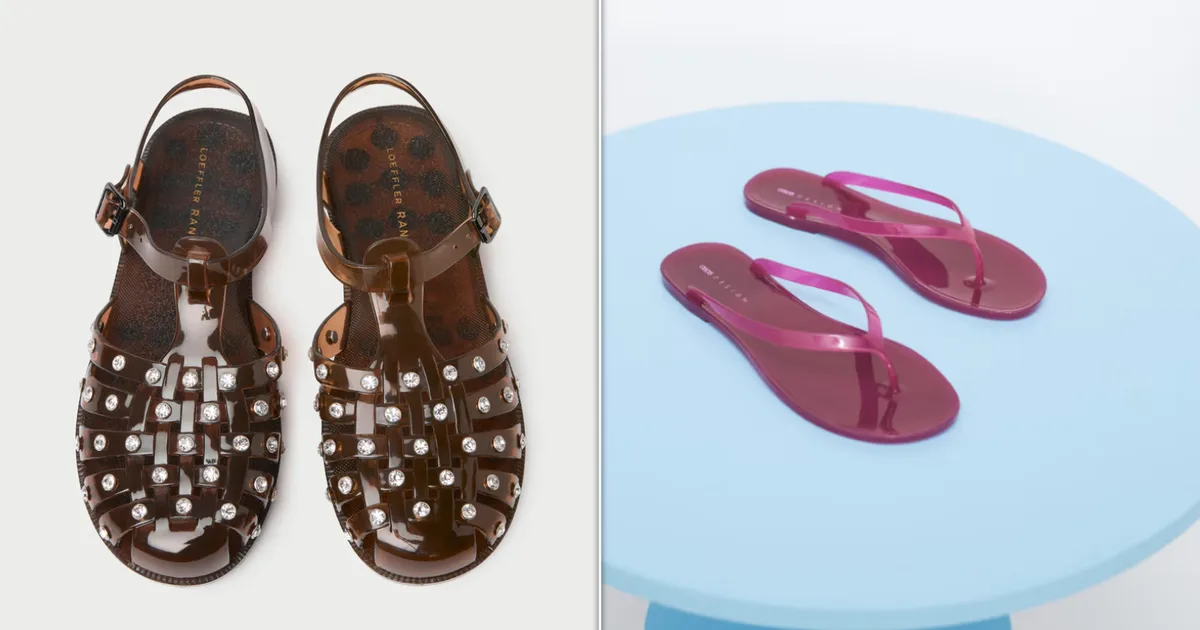
We hope you love the products we recommend! All of them were independently selected by our editors. Just so you know, HuffPost UK may collect a share of sales or other compensation from the links on this page if you decide to shop from them. Oh, and FYI — prices are accurate and items in stock as of time of publication.
It’s no secret we’re living in a nostalgia economy: from our makeup down to our shoes, there’s a nineties and noughties revival happening.
While there is seemingly a new trend emerging every week, one that’s stuck around for a couple of years now is the jelly shoe.
Yep, those shoes you wore to the beach when you were a kid are back, but this time for adults.
Recently, the internet lost its mind over Chloe’s own jelly design.
But (sobs) not everyone can afford to drop almost £500 on a princess shoe, even if they wanted to.
The good news is, there are plenty of alternatives out there that I predict will become your shoe of the season. From frilled flip flops, to jelly Mary Janes, I’ve rounded up the 11 best jelly shoes to skip through summer.
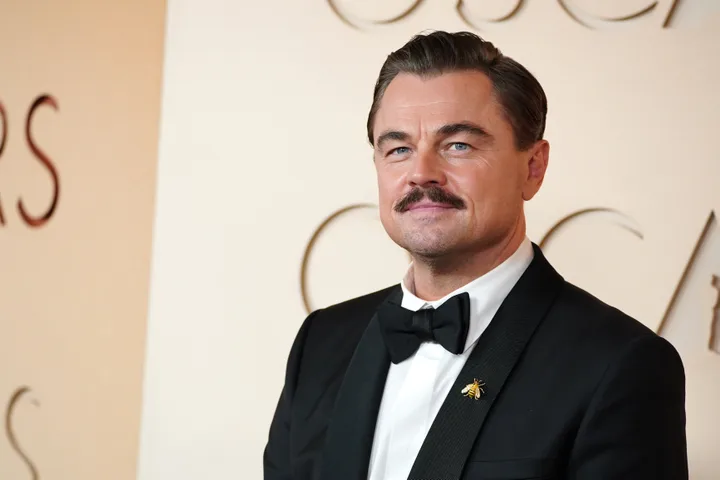
John C Reilly has admitted he once tried to give Leonardo DiCaprio some advice that would have changed the course of the young actor’s career.
The pair met on the set of the 1993 coming-of-age drama What’s Eating Gilbert Grape?, with John going on to collaborate with Paul Thomas Anderson on his movie Boogie Nights.
Before filming got underway, the future Oscar-winning director had hoped to snag Leo for the lead role of Dirk Diggler, after watching him in The Basketball Diaries.
However, the Romeo & Juliet actor had to turn the offer down as he’d already agreed to appear in a little-known indie film you may or may not have heard of… known as Titanic.
During an appearance on Ted Danson’s podcast Where Everybody Knows Your Name, John recalled: “I knew Leo. I met him when he was 17. And I was like, ‘Give me the assignment, Paul. I’ll get this guy to do your movie. I’ve known him since he’s a kid’.”

He continued: “I was like, ‘Listen, Leo, let me tell you something. That movie Titanic is about a boat that sinks. Everyone knows the boat sinks. No one’s going to give a shit about who’s on the boat’.
“I was like, ’This guy, this director, is going to be one of the most talented film directors going forward, and you should not miss this opportunity.”
Apparently, Leo wasn’t sure on this as his agents had assured him Titanic was about to become “a really big movie”, to which the Step Brothers star replied: “I’m telling you, man. I’m telling you, I wouldn’t give you a bum steer here. It’s about a boat that sinks.”

New Line/Kobal/Shutterstock
Of course, as we all know now, Leo eventually turned down Boogie Nights, recommending his former co-star Mark Wahlberg for the role instead, although he once claimed that not doing the film was his “biggest regret”.
All’s well that ends well, though – and he did finally get to work with Paul Thomas Anderson on 2025’s One Battle After Another, which was awarded Best Picture at this year’s Oscars.

On 1 June, the Starmer government banned streamer Hasan Piker from entering the UK. He blamed the ban on his criticism of Israel. And since then, he’s had ample opportunities to discuss his position with the British media.
The most recent example of this happened on 7 June with LBC host Lewis Goodall:
I started to construct a precise argument against Lewis Goodall's position here. But all that needs saying is: The only Jewish state is behaving like the Nazis. It is Israel's genocidal behaviour that is the problem, not the people making such comparisons. https://t.co/FYaLCEFSKq
— Heather Mendick (@helensclegel) June 7, 2026
Piker accused of being ‘crass and offensive’
The above conversation played out as follows:
Lewis Goodall: Do you think it might ever be better sometimes just to never compare any Jews to Nazis? It might just be wise to do that.
It’s important to note that Piker didn’t compare Jews in general to the Nazis; he compared the Israeli government and its backers to them, and he did so because of their documented:
Hasan Piker: Oh no, no, I don’t, I’m not so precious about that comparison and I’ve actually had-
Lewis Goodall: Maybe that’s easy for you to say as a non-Jewish person.
Hasan Piker: Oh for sure. At the end of the day it’s a genocide. At the end of the day, this is an apartheid state, and Zionism as an ideology is a racist ideology. And many Jewish thinkers are now also coming to terms with that, even if they had self-identified as Zionists their entire lives.
Lewis Goodall: So you would compare what’s happened in Gaza to the Holocaust?
Hasan Piker: It’s not to the same extent, no, but I have compared it to the Holocaust, yes.
Lewis Goodall: But it’s not the Holocaust, is it, Hasan?
The clip excludes Piker’s response, skipping to the following from Goodall:
I think the thing about you is you speak compellingly about many things, but you undermine your case and you open yourself to the accusation, which might not be unreasonable, of antisemitism.
It then skips to this:
My suggestion to you would be that it is crass and offensive to compare the only Israeli… Jewish state in the world. And we should, of course, be careful of eliding Israel and Judaism, of course, but it is the only Jewish state in the world, mainly comprised of Jews, comparing them to Nazis, given that Nazis literally tried to exterminate this entire race and came very close to succeeding.
The Nazis also tried to exterminate the Soviets, killing 27 million individuals, including 19 million civilians and 3.6 million prisoners of war. Should we not compare Putin to Hitler despite him literally annexing a neighbouring country?
This is what a comparison is – an act of saying ‘this thing is like another thing‘; not ‘these two things are identical‘.
Goodall’s comments are reminiscent of the meme which goes ‘yeah, I may be racist, but you were mean, and that’s worse‘:

This is a childish way of framing the issue, of course, but is it any more grossly simplistic than Goodall’s insistence of prioritising manners over human lives?
Roundly panned
Criticisms of Goodall included the following:
Kudos to @hasanthehun for managing to remain calm in front of an honestly unrecognizably and uncharacteristically angry @lewis_goodall as he goes through every single tired pro-Israel talking point, to the point of low-key justifying the UK ban, and tbh putting words in his mouth https://t.co/sWwRiBEtal
— Alonso Gurmendi (@Alonso_GD) June 7, 2026
Lewis Goodall is a classic British imperialist. He feels sympathy with colonised peoples, like the Irish, or the Palestinians, as long as they are passive victims.
But as soon as they pick up arms to actually defend themselves and challenge their oppression, he despises them. https://t.co/JBt09CKXow
— Harry Pettit

 (@HarrygPettit) June 7, 2026
Journalist Glenn Greenwald said:
There’s nothing “offensive” about comparing the actions and mentality of Israel to those of the Nazis. What is offensive is demanding that one country and only it — Israel — be exempt from those comparisons because it hurts people’s feelings, or because it seems “bigoted” to compare them.
The whole point of the Nuremberg Trials was that the precedents set there would only have meaning — i.e., be something beyond mere “victor’s justice” — if those principles applied to the actions of **all countries** in the future. Israel doesn’t have some special, unique exemption from the imperative.
Some criticised LBC for cutting out Piker’s response (something which was obvious in the transcribed clip above):
hey @LBC why did you interview hasan if you're going to cut out all his answers? what was the point of having a conversation if many of his answers wouldn't be heard? pic.twitter.com/yfec4VjxM6
— palki
 (@themeasuredtake) June 7, 2026
Goodall justified the edits as follows:
What? We played 30 mins on the radio and put the full thing out on YouTube. There was an edited social clip but we’ve put tonnes out from the interview. It was a great conversation.
— Lewis Goodall (@lewis_goodall) June 7, 2026
This shouldn’t need explaining, but people are more likely to see the clips than the full video. Therefore, the clips should not be selectively edited to remove the responses to the questions being asked.
Many accused Goodall of ‘defending Israel’ in how he presented his arguments:
Wild that Lewis repeats the lie that Hamas executes gay people, only to wheel it back to a ten year prison sentence after being challenged. Like, why lie lmao. How long it’s been and how ignorant commentariat is of the reality is staggering. https://t.co/eCnkk0zqvr
— Chłoddy (@OfSymbols) June 7, 2026
Completely inaccurate tropes used here. I’m assuming “thrown off a bridge” is a variation on the bad-faith “thrown off buildings” accusation you hear about the Muslim world when, in reality, it was ISIS that did this. It has happened nowhere else. pic.twitter.com/yL1Kgceqw5
— Barry Malone (@malonebarry) June 7, 2026
"BECAUSE ISRAEL HAS DONE AN OCTOBER 7 A THOUSAND TIMES OVER TO THE PALESTINIAN POPULATION" – @hasanthehun stands by his stance that he would vote for Hamas over Israel every single time. Also Lewis Goodall saying he's not defending Israel when he literally is defending Israel. — adri ♡ (@socialistadri) June 7, 2026
 pic.twitter.com/nVbY7Ifq5o
Unarguably, by pushing Israeli talking points, he is in fact defending Israel. And you could say he has good reason to do so.
Goodall’s wife works for the Tony Blair Institute, and Blair himself was recently in the running to become the ‘viceroy of Palestine‘. We’re not saying Goodall is working to subvert the Palestinian liberation movement so that his wife can get a promotion, but we are saying people should be aware of this connection.
Admittedly, it would be difficult for news channels to announce all of their conflicts of interest up front. There are so many in the British establishment that there’d be no time for the news.
Very easy to hate your Stephen Pollards and your Sarah Vines but ultimately they're on the same intellectual level as Tommy Robinson supporters and can't help themselves. It's people like Lewis who are smart enough to know exactly what they're doing who I truly despise https://t.co/sRiZO7wF3h
— hen (@afterwayafter) June 7, 2026
To end on a positive note (of sorts):
Nothing has exposed the British public to @hasanthehun’s ideas like @ShabanaMahmood banning him from a pretty normie tech conference and a debate society he already did last year. Instead, he got GB News, Piers Morgan, The Times, and LBC Well done! Excellent strategizing!
— Alonso Gurmendi (@Alonso_GD) June 7, 2026
“Spirited and good”
Goodall described the broader conversation as follows:
Have you watched the full interview? It was a spirited and good conversation. And I’ve spoken out saying I think the ban is outrageous.
— Lewis Goodall (@lewis_goodall) June 8, 2026
Piker himself agreed with this interpretation:
i think this was an interesting conversation, kind liberals cont to make optics arguments that center the feelings of ppl w sympathies to the state that has conducted industrial mass slaughter & maintains an apartheid. the purpose of holocaust scholarship is to never let it… https://t.co/MhKjjQGNM9
— hasanabi (@hasanthehun) June 7, 2026
Of course, the fact that the debate was overall “spirited and good” doesn’t exclude Goodall from criticism. You could say the Titanic was a very “spirited and good” voyage besides the bit that wasn’t, but that wouldn’t accurately convey what happened, would it?
It’s ultimately worth remembering that the British media doesn’t exist to accurately convey events; it exists to convey just enough information to create a narrative. You could compare them to the propaganda wing of another regime for that, but doing so would be “crass and offensive”.
Featured image via LBC
By Willem Moore

Retailer Sainsbury’s has pledged to stop selling brown eggs under their own brand as part of their sustainability program, moving to white-shelled versions instead.
The second-largest UK supermarket chain cited animal welfare and carbon emissions when announcing the decision.
But why don’t white and brown eggs have the same environmental impact, and why are eggshells different colours to begin with?
Why are brown eggs worse for the environment?
An assessment by SAC Consulting for Sainsbury’s found that brown eggs have a 12.7% higher carbon footprint than white eggs, as the hens that produce brown eggs are larger and eat more food.
Sainsbury’s said the change would therefore “indirectly reduce demand on land and water used to grow feed crops, as well as the amount of manure produced” by the chickens.
Chicken manure emits greenhouse gases, methane and nitrous oxide as well as ammonia, which can have “detrimental impacts on the environment and… animal and human health”, per Aberystwyth University’s Farming Connect.
“White‑feathered hens typically live longer, eat less feed and lay eggs for longer, cutting carbon emissions by over 12 per cent compared with hens that lay brown eggs,” the supermarket continued.
Sainsbury’s also says that the breeds which produce brown eggs are more likely to experience feather pecking (a stressful and sometimes dangerous process in which birds peck the feathers of other birds) than those which make white eggs.
The company hopes this will help them to meet their goals to meet net zero within their own operations by 2035, and across their suppliers by 2050.
“White eggs have the same delicious taste and nutritional benefits as their brown counterparts, but result in lower emissions and better welfare outcomes for the hens that lay them,” a Sainsbury’s spokesperson said.
Why are some eggs brown and others white?
Speaking to HuffPost previously, Jacquie Jacob from the University of Kentucky’s department of animal and food sciences said that all eggs start off white.
For a brown egg, “At the very end of the shell-making process, the pigment gets added, almost like you’re painting a house,” she explained.
But some hens are “just not genetically programmed to do that”.
It takes more energy to produce the pigmented layer of the brown-shelled egg, she added.
Are brown eggs healthier than white eggs?
In short, no. Healthline writes that all eggs are nutritionally pretty similar, no matter their size or colour.
In fact, the Retail Gazette said, white eggs were the norm in the UK until about the ’70s, “before brown eggs became dominant as shoppers increasingly associated them with being healthier or more natural”.
They add that the UK supermarket might have a bit of an issue: the British Egg Industry Council said white-egg-laying hens make up about 15% of our flocks, compared to the US, whereas white eggs account for 75% of all eggs consumed in the US.

Beekeeper and University of Galway Zoology Professor, Grace McCormack, has warned people to “keep an eye” on areas like their sheds and roofs this summer during a recent appearance on Irish broadcaster RTÉ’s News At One, because bees may be likelier to “swarm” near them.
The British Beekeepers’ Association (BBA) also agreed that in the UK, the pollinators usually display the behaviour on warm, sunny days from May to July.
They added that swarming is especially likely on sunny, “high teens”-temperature days, after a period of colder, wetter weather.
These conditions are expected to reach much of the UK starting at about mid-June, following our current wet spell.
What is a bee swarm?
It happens when a queen bee – the sole reproducing female of the hive – leaves her old home to allow another, developing queen to take over.
She doesn’t leave on her own, though.
Speaking to the BBC, Gavin Ramsay, the Chair of the Scottish Native Honey Bee Society, said that “about half of the bees will head off in a very organised manner and find a new home” with the original queen.
Those splinter bees form a cluster as they try to relocate, Inverclyde council added.
Before that cluster is formed, the BBA said, the bees – sometimes “thousands” of them – can buzz up in an “extremely dramatic” and noisy cloud.
This process usually only takes about 15 minutes, though.
Once clustered, bees begin to look for places to build new combs. Ramsay explained they’re especially keen on “cavities that are about the right sort of size with a smallish entrance”.
This can include your chimney, roof, wall space, or unused shed, experts like the Shropshire Beekeepers’ Association said.
If they succeed, you’ll be stuck with a sometimes very hard-to-budge established bee colony.
What should I do if I spot a bee swarm?
“Swarms are usually very mild-mannered, but if you see one out and about, especially one that’s settled somewhere, then really the best thing to do is to get in touch with a local beekeeping association,” Ramsay explained.
They will try their best to manage the situation.
While the swarm isn’t likely to sting you, the BBA has previously advised keeping kids and pets indoors if you spot one, just in case.
Sometimes, though, an early check can help you to notice upcoming swarms sooner.
If you see groups of five to 20 bees near your roof, Prof McCormack said to call a beekeeper, as odds are these are scouting out a new home.
At this point, “you still have time before the swarm arrives, and that is really the best time to act,” she said.
Shropshire Beekeeper’s Association, meanwhile, said that these scouts have usually broken off from an existing, unsettled cluster. This is the”best time for a beekeeper to collect the swarm”, they added.
Keep especially alert on warm and sunny days, particularly those following a chill.

If you’re anything like me, you’re always on the lookout for new parenting tricks and tips to help make your life calmer – and your kids happier.
I recently stumbled across something called the 7-7-7 parenting rule, where parents aim to spend seven minutes in the morning, seven minutes after school or work, and seven minutes before bed connecting with their child.
Over the course of the day that’s 21 minutes of undivided attention – and experts say it can work wonders for their behaviour.
Dr Sasha Hall, a senior educational and child psychologist, tells HuffPost UK the idea draws on attachment theory. “When children experience regular, undivided attention, it can strengthen emotional security and support regulation,” she explains.
“Over time, this can reduce behaviours linked to seeking attention, as the need for connection is being met more consistently.”
The benefits of the 7-7-7 rule
If you’re juggling work, household responsibilities and family life, carving out this time and embedding it into your routine can give you something concrete to aim for, rather than a “vague sense” that you should be forming deep connections with your child all day, says Dr Hall.
“Instead of repeatedly saying ‘just one minute’, and feeling they have fallen short, it creates defined moments where attention is fully focused,” she adds.
The timing of these moments can also support key transitions across the day. “A focused period of connection before school can help a child feel more settled when separating,” says the psychologist.
“Time after school can support decompression. Connection before bed can help with emotional settling and winding down.”
For children who have siblings, and feel like they receive less individual attention, carving out this one-on-one time can also be beneficial and reduce fights.
“Having protected moments where a parent is fully present and focused on one child can strengthen the parent-child relationship and support that child to feel seen as an individual,” says Dr Hall.
“It shifts them away from being experienced as the sibling who joins in, towards being recognised in their own right.
“When a child knows there are moments where they will have a parent to themselves, it can lessen the drive to seek attention in other ways.”
The challenges of the 7-7-7 rule
Obviously, if you’ve got multiple kids, carving out 21 minutes per kid over the course of the day can quickly become unachievable.
“Parents may find themselves trying to repeat this several times in the morning and evening, which is often when time is most limited and stress levels are higher,” notes Dr Hall.
There is also a risk that it becomes too rigid. “If parents feel they must stick to it in a very fixed way, it can add pressure rather than relieve it, particularly for single parents or those working long hours,” she adds.
What if this doesn’t feel achievable?
The psychologist suggests a more realistic approach is to build connection into routines that already exist, rather than adding extra pressure.
“For example, the school run or pick up can be used as a point of focused attention, without trying to manage other tasks at the same time,” she says.
Short bursts of focused attention, or ‘micro-moments’, can also be very effective for parents, notes Dr Hall, adding: “These might include eye contact, physical closeness or following the child’s lead in play, even for a brief period.”
Instead of choosing three points in the day, parents could narrow it down to just one or two, such as the start and end of the day.
Child psychologist Dr Becky Kennedy, founder of Good Inside, calls it “special time” and previously said it’s the “best bang-for-your-buck” parenting strategy, helping kids who struggle to listen, are being angry or rude, or having constant tussles with siblings.
She suggested even just 10-15 minutes of special time can be beneficial. The key is to give them your undivided attention – no phones, no distractions, no siblings.
“For families with more than one child, it may be more achievable to rotate one-to-one time, so each child has predictable opportunities for individual attention across the week,” Dr Hall adds.
Ultimately, every parent is doing their best with the resources they have.
Dr Hall suggests our focus can be less on meeting a fixed time target and more on ensuring children regularly experience moments where they feel “noticed, valued and responded to”.
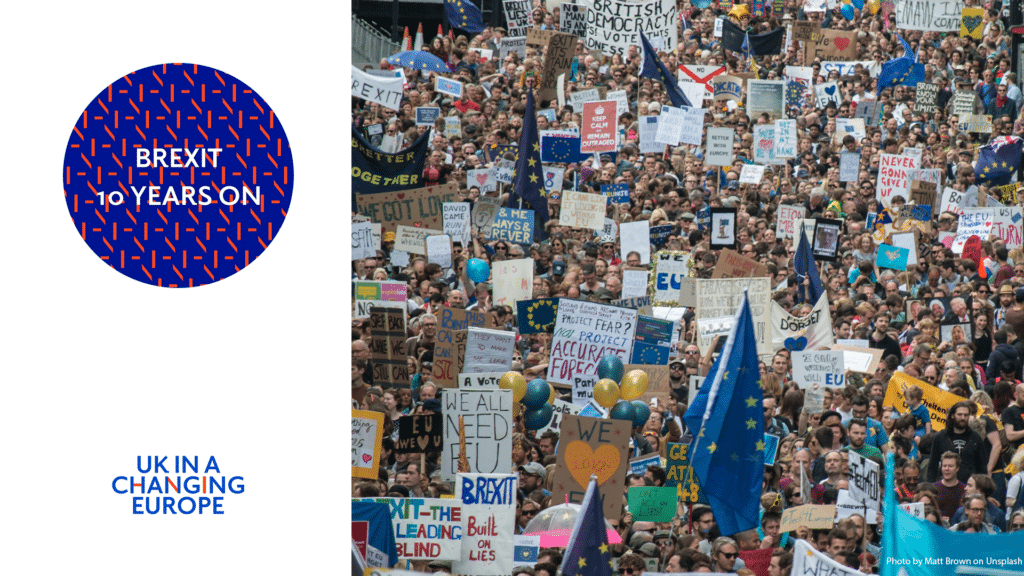
Ahead of the ten year anniversary of the EU referendum on 23 June, UK in a Changing Europe experts have written a short series of blogs reflecting on some of the issues at the heart of Brexit then and now. Here, John Curtice examines how public opinion has changed over the past decade.
In 1975, the UK voted by two to one to stay in the European Union. Yet despite that seemingly decisive outcome, the debate about Britain’s membership did not stop. By 1983, Labour was campaigning in favour of withdrawal, and for a while most voters appeared to agree with them. Then, during the 1990s the Conservative party – and many voters – became increasingly sceptical about the EU. Eventually, forty-one years after the original ballot, Britain voted narrowly – by 52% to 48% – to Leave the EU. Harold Wilson’s referendum did not withstand the test of time.
Ten years on, it is beginning to look as though the 2016 ballot will be no more successful that the previous exercise in drawing the debate about Britain’s relationship to a close. On average this year, polls that have asked people how they would vote in another referendum have, once those saying don’t know are excluded, put support for being in the EU at a record high of 60%. Just 40% indicate that they would vote to stay out. Since Liz Truss’ ‘fiscal event’ in September 2022 rocked the markets – an experience whose impact on attitudes towards Brexit has been too little appreciated – only one published poll has recorded a majority vote for staying out of the EU. Meanwhile, in response to a separate question, 56% now tell YouGov they are in favour of rejoining the EU, while just 35% are opposed.
In part, the marked change in the balance of opinion has been occasioned by switching among those who voted to Leave in 2016. On average in polls conducted this May, only 72% of Leavers said they would vote to stay out of the EU, whereas 81% of those who voted Remain indicated they would vote to rejoin. However, just as important are the views expressed by those who did not vote in 2016. They back rejoining over staying out by a margin of nearly three (51%) to one (17%).
Many of these non-voters were too young to vote in 2016. Those same polls conducted in May also indicate that two-thirds (67%) of those aged 18-24 would vote to rejoin the EU, while just one in eight (13%) would support staying out. In contrast, just 35% of those aged 65 and over would vote to rejoin, whereas as many as 53% would back staying out. The clear implication is that generational turnover could gradually serve to reduce the level of support for being outside the EU even further.
In the meantime, many voters appear to have come to the conclusion that Brexit has not worked out well. In polling conducted this April, Ipsos found that over half (51%) believe that it has been ‘more of a failure’ while only one in eight (13%) reckon it has been ‘more of a success’. More specifically, YouGov polling in January 2025 reported that, on two of the key issues in the referendum campaign, the economy (65%) and immigration (52%) Brexit is now believed to have had a negative impact. In the case of immigration, that perception is just as common among those who voted Leave in 2016 as it is among those who voted Remain, while even in the case of the economy over two in five (43%) Leave voters believe it has been negatively impacted.
Of course, that still leaves the question of who voters blame for Brexit’s perceived failure. More in Common found this April that as many as 46% are of the view that ‘Brexit could have worked well but politicians have handled it badly’, a response that is particularly common (74%) among those who voted Reform in 2024. This probably helps explain why around half of those who voted Leave in 2016 are now supporting the pro-Brexit party and why most Leave voters (71%) are still inclined to vote to stay out of the EU.
However, whereas those Leave voters who are disappointed with what has happened to immigration in the wake of Brexit may be inclined to blame politicians for the perceived failure, the same is not necessarily true of those Leave supporters who are unhappy about the economic impact of Brexit. Certainly, research conducted via the NatCen Opinion panel finds that while there is little link between perceptions of the perceived impact of Brexit on immigration and Leave voters’ willingness to vote to stay out, only two in five (40%) Leave voters who feel the economy is worse off as a result of Brexit now say they would vote to stay out, a finding replicated by the British Social Attitudes survey. Meanwhile, just over half (51%) of those who did not vote in 2016 told YouGov that Brexit has had a negative impact on the economy with only 14% stating it had had a positive impact. That outlook helps explain why there is little support for Brexit among this (gradually growing) section of the electorate.
Of course, even if Brexit is no longer a popular cause, that does not necessarily mean voters are keen to see the issue revisited in another referendum. Indeed, it is commonly asserted that this is the case. Yet this is not what the polling shows. In April, More in Common found that just over half (51%) of all voters supported having another referendum on Brexit in the next five years, while only a third (33%) were opposed. Meanwhile in polling conducted for UK in a Changing Europe in May, just under half (48%) said they supported having a referendum in the next five years, while only slightly over a quarter (27%) were opposed. In practice, as we might anticipate, those who voted Remain are keen on having another referendum (by 73% to 12% according to Ipsos) while those who did not vote in 2016 are also minded to do so (by 43% to 16%). In contrast, there is considerable resistance among 2016 Leave voters, though their opposition (by 55% to 25%) is not as marked as the enthusiasm of Remain supporters.
Perhaps another referendum will not happen in the next five years. However, unless public attitudes towards EU membership shift once again, it is difficult to believe the 2016 referendum will prove to be the final word.
By John Curtice, Professor of Politics, Strathclyde University, and Senior Fellow, national Centre for Social Research and UK in a Changing Europe.

A government minister has accused Pete Hegseth of “lacking in class” after he used a D-Day commemoration speech to attack European countries’ record on immigration.
The US defence secretary said “European beaches are [being] stormed by different, dangerous ideologies” in a speech at the Normandy American Cemetery in north-west France.
He was speaking on the 82nd anniversary of the D-Day landings, when nearly 4,500 Allied troops were killed attempting to liberate Nazi-occupied France on June 6, 1944.
He said: “Sadly, today, different European beaches are stormed by different, dangerous ideologies. Beaches in Spain, Italy, Greece and Bulgaria, boats and men arrive.
“When will European capitals do something about that invasion or is it too late? I pray not, and I believe not.”
Skills minister Jacqui Smith added her voice to the wave of criticism which has followed Hegseth’s speech.
Asked on LBC if he had been right, she said: “No, he’s not right, and no, I think it’s a bit lacking in class to raise it at a ceremony like that.”
Downing Street also hit out at the Trump ally. The prime minister spokesman said: “The D-Day commemorations this weekend were about thanking veterans of the Second World War and remembering all those who died during the Normandy landings.
“Their cause was liberation, freedom from tyranny and restoring peace to western Europe, and that should be the focus of commemorations.”
Subscribe to Commons People, the podcast that makes politics easy. Every week, Kevin Schofield and Kate Nicholson unpack the week’s biggest stories to keep you informed. Join us for straightforward analysis of what’s going on at Westminster.

Cacio e pepe is one of those dishes that seems like it should be a doddle to make – it’s made up of just a handful of ingredients, after all.
But for plenty of people, it can be hard not to end up with a watery mess or cheese clumps.
A new study by Italian Street Kitchen has revealed the Roman staple is one of the most searched for pasta recipes in the UK (alongside fellow fromage-filled dish, macaroni cheese).
If you’re hoping to make it for dinner this week, here’s how culinary pros make restaurant-worthy cacio e pepe from the comfort of their own homes.
Cacio e pepe ingredients
First things first, chef and author Chris Baber said to focus on using the best quality ingredients possible – as well as the right equipment.
“While you’ll find many variations of this iconic pasta dish, this is my foolproof method for creating restaurant-quality cacio e pepe at home,” he added.
For a two-person serving, you’ll need: 250g spaghetti, 100g pecorino, 1 tbsp freshly cracked black pepper, and (optional) a knob of butter.
Executive chefs at Italian Street Kitchen, Guilio and Enrico Marchese, said they love to use bucatini – a thicker spaghetti-like pasta – “for more bite”.
How to make cacio e pepe
First, finely grate the Pecorino cheese into a large bowl and set aside. Then Baber advises to bring a large pot of salted water to the boil.
“While the pasta cooks, toast the freshly ground black pepper in a large sauté pan over medium heat for one minute,” said the chef.
Baber, who is a HexClad ambassador, said your pan choice here is “incredibly important”. He’s a big fan of the 30cm HexClad hybrid pan, which “ensures even heat distribution, allowing the pepper to become fragrant without burning”.
If you want to add butter, now’s the time to do so. “However, I’d recommend keeping it authentic and leaving out the butter… it tastes amazing without!” said Baber.
Giulio Marchese likes to melt butter with cracked black pepper until aromatic, then adds a splash of hot pasta water and truffle salt to create an “emulsion”.
Regardless of how you prep your pepper, once the pasta’s cooked (Marchese likes to get it al dente), drain it and set some of the cooking water to the side to cool a bit.
You need starch for a top tier sauce
Setting pasta water to the side is important. Italian food blogger Pina Bresciani noted one of the secrets to a quality cacio e pepe is starch.
“Getting a good amount of starch from the pasta water and pasta itself, via a process called risottare, is key to a creamy final sauce,” she said. “It helps the sauce to not clump, and achieve that beautiful silky texture.”
Add your drained pasta to the pan with the pepper, butter (if using) and some of the reserved pasta water, suggested Baber. Turn off the heat and let the pasta cool for 30 seconds.
Culinary scientist Jessica Gavin notes you can’t use the pasta water when it’s too hot or too cold – it has to be just right.
“Avoid mixing the cheese with boiling water. The intense heat causes the proteins to firm up and expel moisture, leading to agglomeration – aka clumpy cheese,” she said in a TikTok video.
Now for the key ingredient. “Add the cheese little by little, stirring constantly until the cheese is melted and the pasta is nicely coated in a smooth, silky sauce,” added Baber.
“Add more reserved pasta water if needed to achieve the right consistency.”
And that’s that. “Transfer to serving bowls and top with a little more cheese and some coarse black pepper (if you prefer the crunch),” he noted.
Marchese said of the classic Italian dish: “When you get it right, it’s pure magic on a plate.” We couldn’t agree more.
Hello and welcome to Canary Catch Up. Each week, our resident telly addict Rachel Charlton-Dailey will bring us bang up to date with the shows she’s been obsessed with, what she’s hate-watching, and what she can’t wait to get stuck into.
Trigger warning: This article contains discussion of homophobic hate crimes and the murder of a gay man. Please take care when reading.
Pride 2026
I’ve been thinking a lot about pride and my local community this week. We, like many parts of the country, got a Reform council in May. For anyone who is disabled and isn’t straight, white and cis, that’s terrifying. What’s especially tough is knowing how many people in our city actively voted against our rights.
One of Sunderland Reform’s first acts in power was to declare that the Pride flag would never fly on government buildings. This will do absolutely nothing to improve the lives of the one in three children who live in poverty here, but the gammons ate it up. That’s why Pride this year feels even more poignant. When so many want us to be silent, we can’t be.
Tip Toe is a terrifying look at queer hate
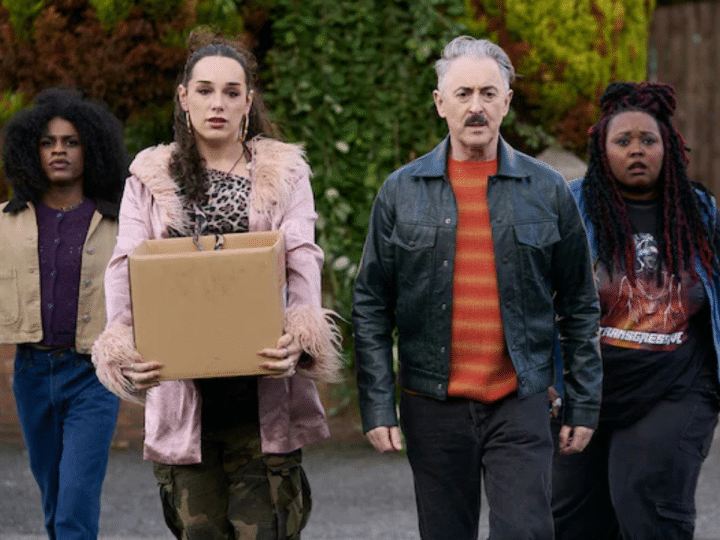
Russell T Davies‘ new Channel 4 mini-drama, Tip Toe, is an unflinching look at how not only rights for queer people are being stripped away but how attitudes are dangerously changing. If you thought this would be a gentle look at how we should just be less homophobic, the opening scene, which shows a gay man strung up on a lamp post, quickly puts that to bed.
The show tackles how social media, politicians and far-right mouthpieces have radicalised so many against queer and trans people. It’s a brutal look at how so many never really accepted us. The hatred has always been simmering away in the background and fuelled by the misinformation screaming at us online.
Overall, Leo (Alan Cumming) just wants to support and protect young gay people, but his neighbour Clive (David Morrissey) only sees that as him wanting to groom and abuse his son.
The results are extreme and violent, but just as sinister is how much the hatred creeps into people who are also supposed to be good.
Leo’s best friend, Stephanie (Elizabeth Berrington), is deeply gender critical. At several points, Stephanie blames girls getting abused on trans women, and even tells Leo that if he were more discreet in his life, he wouldn’t have this trouble.
As a bi woman living in a city that overwhelmingly voted for Reform, this show chilled me to my bones. I have a lot of privilege as a white bi woman to be able to say I’m going to loudly resist. However, I’m doing it for my trans, non-binary and gay male friends for whom it’s much less safe.
To say I enjoyed Tip Toe is almost definitely the wrong thing to say. Tip Toe is an excruciatingly hard watch, as it should be. But everyone, and I mean bloody everyone, needs to watch it. My worry is, though, that they won’t, because the people who hate gay people aren’t going to watch a show like this. Therefore, all it will serve to do is terrify queer people even more.
Rivals’ shocking mid-season finale
Rivals came to a jolting halt with its mid-season finale, which was also absolutely devastating. It’s been clear from the outset how dangerous Tony (David Tennant) and Maud’s (Victoria Smurfit) affair could be. But to see it break Tony’s wife, the long-suffering Monica (Claire Rushbrook), was particularly devastating.
The scene in Lizzie’s (Katherine Parkinson) kitchen between her and Monica, where Monica is clearly not mentally okay and discussing how her life could’ve been, was absolutely heartbreaking.
I cheered when she told Tony she would be taking him for all he’s worth, but then sobbed when it became clear that Rupert (Alex Hassel), one of her oldest friends, was having to break the news of her death to his enemy, Tony.
It must be said how gross it felt that the show killed off a fat queer woman just before she was able to reclaim her life. I can see why it was done, but killing yet another queer woman as a device to further a man’s story will never sit right. Monica deserved so much more. To see her story end like this is horrible.
I’m clinging onto the fan theory that she faked her own death, but I’m not very confident in that. I suspect Monica’s death will be used instead to justify how even more disgusting Tony is about to become.
Mandalorian and Grogu is a silly, lovely tale
On a much lighter note, I took myself to the cinema to see Star Wars: The Mandalorian and Grogu. I’m a big fan of the series anyway, but this movie was the perfect escape from the world. Just two hours of Pedro Pascal and his weird little alien baby being nuisances around the galaxy.
Mind you, be prepared to have very confused feelings for Jabba the Hutt’s son, who they gave a six-pack and is voiced by Jeremy Allen White.
Brain-free binge of the week
This section of the column is going to very quickly become a look into my brain and what I need when times are tough. A lot of the time, that’s political satire and/or Ben Willbond. Lucky for me, The Thick of It has both.
Considering my job, a political comedy-drama that skewers just how embarrassingly incompetent British politicians are might not seem like a break. Sometimes though, you just need a Scottish man inventively screaming swears at the worst MPs imaginable to make your day better.
Featured image via Channel 4
10 stocks crash up to 50% in just 100 days of US-Iran war. Do you own any?

Bitcoin Bottom Not Expected Until Q4, Five Trends This Week

Matt Damon Reveals Family Cost Of Hollywood Success



-

 Fashion3 days ago
Weekend Open Thread: Evereve – Corporette.com
-

 Business7 days ago
Jade Biosciences, Inc. (JBIO) Discusses Positive Interim Results From JADE101 Phase I Healthy Volunteer Study and Development Plans Transcript
-
 Crypto World3 days ago
Jensen Huang Approves Samsung, SK Hynix, and Micron for NVIDIA (NVDA) HBM4 Memory Supply
-

 Sports6 days ago
French Open 2026 results: Alexander Zverev beats Rafael Jodar and will play Jakub Mensik in semi-finals
-

 Tech6 days ago
CryZENx Releases Fresh Playable Content Deep Inside Jabu-Jabu for His Ocarina of Time Remake
-

 Business5 days ago
Trump Taps Housing Chief Bill Pulte as Acting Intelligence Director After Gabbard Exit
-
 Business1 day ago
The Pain Points Taking a Fragile Tech Rally Down a Notch
-
 NewsBeat6 days ago
Republicans balk at Trump’s attempt to appoint a MAGA enforcer to lead National Intelligence
-
Crypto World3 days ago
LBank Surpasses 25 Million Users Worldwide as AFA Partnership Continues to Drive Global Growth
-

 Tech3 days ago
RCS Messages Between iPhone and Android Get End-to-End Encryption With iOS 26.5
-

 Tech3 days ago
Microsoft launches MXC, an OS-level sandbox for AI agents, with OpenAI and Nvidia already on board
-
 Crypto World6 days ago
Seagate (STX) Stock Surges to Record High on AI Boom and Legal Settlement
-

 Crypto World1 day ago
Trump’s AI Ownership Plan Could Benefit Anthropic at OpenAI’s Expense
-

 Tech3 days ago
Meta steals a tactic from Tesla and builds data centers in tents
-

 Business3 days ago
(VIDEO) Justin Bieber Delivers Surprise Happy Birthday Serenade to Diners at Los Angeles Mexican Restaurant
-
 Crypto World5 days ago
EU AI Data Center Project Faces Delays as Funding Gaps Grow
-

 Entertainment5 days ago
Did The Mandalorian And Grogu Already Ruin The Next Star Wars Movie?
-

 Business5 days ago
Aehr Test Systems Stock Soars 17% Amid Surging AI Demand and Conference Spotlight
-
 Crypto World3 days ago
Merlin (MRLN) Stock Soars 32% on Major USSOCOM Autonomy Milestone
-
 Business6 days ago
Claude AI Down Today Reason: Why Anthropic’s AI is not working today? What’s the latest quota update
You must be logged in to post a comment Login