

Politics
Israel has killed more than 200 Palestinian fishermen in Gaza since October 2023


On 7 June, Israel’s occupation naval forces intentionally targeted and killed Gaza fisherman Mohammad Mousa Abu Jiyab. Mohammed Atef Al-Aqra, who was in the same vessel, was seriously injured. They were fishing off the coast of Deir al Balah, in central Gaza.
Israel intentionally targets Gaza’s fishermen
Off the coast of Gaza City, in a separate incident on the same day, four fishermen were forced to jump into the sea from their boat. They were then arrested by Israel and taken to an unknown location.
There have been many incidents of fishermen being intentionally targeted in Gaza, if not by shooting, by drones instead
He was killed today by an Israeli direct strike while in his small fishing boat off the coast of Gaza, as he was trying to earn a living for his family amid the ongoing humanitarian… https://t.co/mfb1IExAOw pic.twitter.com/UnNieiumEL
— Gaza Notifications (@gazanotice) June 7, 2026
 HEARTBREAKING: Old footage shows 18 year old Mohammad Abu Jiyab smiling and swimming at sea.
For generations, fishing has generated a dependable income, and important protein source, for thousands of Palestinians in Gaza.
Before October 2023 more than 6000 people depended on fishing as their main source of livelihood. A further 110,000 benefited from the sector through related economic activities and household support networks.
Fishing zone in Gaza continually shrinking and so is the catch
Under the Oslo Accords, Palestinian fishermen were promised by Israel access to waters extending up to 20 miles- 37 km, from the coast. But this was never implemented. Since Hamas took power in Gaza, the Israeli occupation has applied severe constraints on Gaza’s fishing industry, including systematically restricting fishing zones. And these have intensified further since October 2023.
Because the bigger, more profitable fish are found in deeper water, further from the coast, these restrictions have severe consequences. Too many boats fishing in the same small area has lead to increased pressure on coastal fish stocks.
According to Gaza Fishermen Syndicate member Zakaria Baker, before the genocide, Gaza’s fishing industry used to catch around 15 tonnes a day. But now the catch is less than 15 tonnes for a whole month. Less fish mean that fishing families are having to survive on a greatly reduced income.
Fishermen are also often left uncertain as to where the fishing areas are. Often they discover overnight that previously accessible waters have become off-limits. These limits are increasingly enforced, and fishermen are repeatedly attacked- both onshore and at sea, by the Israeli occupation forces. Every day Gaza’s fishermen have their access to the sea blocked, and risk their lives just to survive. Not only does the occupation confiscate and destroy their boats and fishing equipment. It also arrests these Palestinians, and fires live bullets at them.
Intentional decimation of a one thriving industry
But access is only one part of the problem. According to Gaza’s Ministry of Agriculture, Gaza’s port’s, fish farms and most landing sites have all been bombed or bulldozed by Israel. UNRWA reports that about 95 percent of fishing facilities and assets have been damaged or destroyed. This large scale destruction is intended to ensure that fishing is impossible.
The ongoing blockade is also affecting the entry of materials vital for boat maintenance. Items such as such as fiberglass, steel cables, and engine parts are heavily restricted because they are classified as “dual-use” items. This is because the occupation claims they could also be used for military purposes.
These restrictions have made it increasingly difficult to maintain fishing vessels, while available materials have increased greatly in price. A fisherman told Reuters that before the start of the genocide, a kilo of fibreglass cost 50- 60 shekels, approximately £12-£15. He said the same fiberglass now costs the equivalent of £200. All these factors directly impact the livelihoods of all Gaza’s fishermen, and their families.
Gaza’s fishing industry has now been decimated, with average daily fish catch between October 2023 and April 2024 falling to just over seven percent of 2022 levels. Over 200 fishermen have been killed in Gaza since October 2023, while more than 300 others have been injured. “Israel’s” deliberate and ongoing targeting of Gaza’s fishing industry, its agricultural food production system, and humanitarian aid are all part of its coordinated and intentional genocidal campaign to annihilate Palestinians.
Featured image via the Canary
By Charlie Jaay


The Scottish parliament has voted to approve a new wealth tax on high-end luxury goods, especially mansions and houses over £1m and private jet travel.
Scottish parliament leading the way
MSPs went to the Scottish parliament chamber to debate a new “fair, progressive and sustainable” approach to tax. This included the plans for a levy on private jets and houses owned by the wealthiest in society.
The motion — which passed 84-28, with 10 abstentions — highlighted the role taxes play in the delivery of essential public services. The motion welcomed all of Scotland’s recent
progress made towards the creation of a private jet tax and a mansion tax
The vote was largely symbolic, as the SNP‘s budget already outlined plans to implement a mansion tax by 2028, alongside a private jet tax. Labour’s amendment calling for an “immediate and comprehensive review of business rates” also passed by 95 votes to 27.
Posting on X, Scotland’s newly (re-)elected SNP First Minister John Swinney celebrated the vote:
In a cost of living crisis, it is right that those with the broadest shoulders contribute a bit more – while the majority of taxpayers in Scotland continue to pay less tax than elsewhere in the UK.
These are the words we head from Starmer once upon a time. How refreshing that they should actually be taken to mean something and be acted upon.
BREAKING: Parliament backed our plans for a private jet tax and a mansion tax.
In a cost of living crisis, it is right that those with the broadest shoulders contribute a bit more – while the majority of taxpayers in Scotland continue to pay less tax than elsewhere in the UK. pic.twitter.com/ABAZ0tQs7f
— John Swinney (@JohnSwinney) June 4, 2026
Call it the ‘Offord Tax’
The Scottish Greens have long campaigned for a private jet levy and other forms of wealth taxes, and joined the SNP politicians in celebrating the vote online.
However, a Greens’ amendment was defeated by 30 votes to 37, with 55 abstentions It argued that:
progressive reform of property tax could play a powerful role in wealth taxation
Nonetheless, the Greens have clear cause for celebrating the policy which they, alongside other progressives, have made the loudest case for. This is partly thanks to Zack Polanski’s bold messaging to the south.
Private jet flights are 30 times more polluting than regular flights.
After years of campaigning from Scottish Green MSPs, the Scottish Government is set to introduce a private jet tax! pic.twitter.com/WoURMlQsqc
— Scottish Greens (@scottishgreens) June 4, 2026
But it’s Scottish Greens leader Ross Greer’s sharp jibes at Reform UK’s leader Malcom Offord in the final stretch of May’s Holyrood elections which clearly captured the wealth debate.
Appearing together on the party leaders’ televised STV debate, the multi-millionaire ex-BoJo donor Lord Offord bragged about his wealth accumulation. Offord stated:
Today, I own six houses, five cars, and six boats. …
Mr Greer, in your Scotland … Do you want more people like me or fewer people like me?
To this, Greer swiftly and unapologetically replied: “Fewer people like you.” He said he was glad Offord finally admitted how many homes he owns! He also pointed out that there’s three times as many empty homes in Scotland as there are homeless children.
Reform UK’s amendment warned that increases in wealth taxes lead to “significant flight of tax revenues.” It lost by 16 votes to 94, with 10 abstentions. Perhaps with some luck, Mr Offord will take Mr Greer’s advice and flee away, taxes and all if needs be.
The Conservatives’ amendment called on the Government to “reduce income tax to stimulate growth.” It was also defeated in the Scottish parliament by 28 votes to 94. Reducing tax burdens on working people and focusing on wealth tax isn’t a bad idea — but Tories don’t support that. Let’s sort out wealth taxes before we reconsider income, eh?
Reform’s Scottish leader brags about owning ‘6 houses’ in debate
Featured image via the Canary
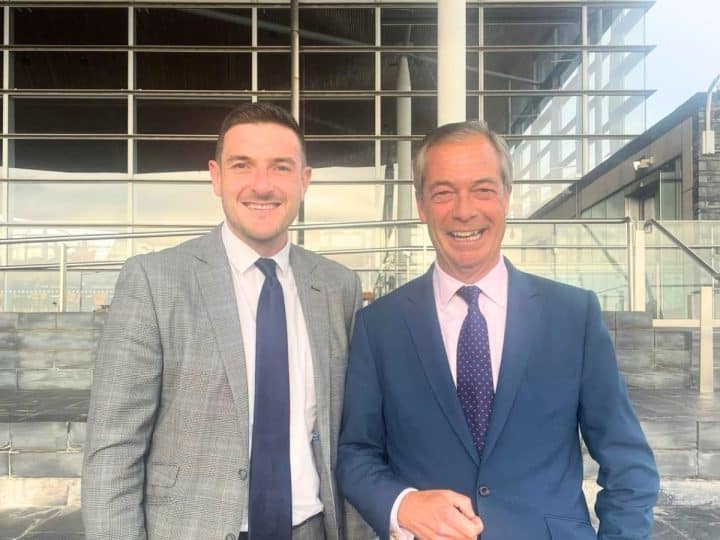

Award-winning Welsh journalist and author Will Hayward has criticised a senior Welsh Reform politician over his comments that “infantilise” the proud people he claims to represent.
The Reformer’s statement came at the Hay literary festival in Hay-on-Wye in Wales. Hayward indicated the Member of the Senedd (MS) in his post as James Evans. He’s the Shadow Minister for Health, Prevention and Sport in Reform’s Welsh cabinet.
Since May’s Senedd elections, James Evans MS has occupied that position within Welsh Reform. The comments were made in the context of significant ongoing debates around devolving the Crown Estate.
The MS stated that Wales shouldn’t have more devolved powers because:
I don’t think it should devolve, for the simple reason being: if you devolve it you’ve got to then set up an office to run it. And we’re not very good in Wales at being efficient in running things…
The crowd, presumably with a large Welsh contingent, groaned in unison at these ignorant comments. There’s at least one audible exclamation of “come on,” and certainly not a positive one.
Reform are the official opposition since Labour collapsed in Wales in May’s historic Senedd elections which delivered pro-independence party Plaid Cymru to power for the first time. It’s hardly very patriotic for a Welsh Reform politician to belittle his people in such a demeaning manner.
Reform’s three-page plea to Wales doesn’t mention ‘Wales’ once
Hayward hits back at Reform
Will Hayward makes it clear that, while he favours devolution of Wales’ land away from the English crown to its people, being against evolution is not inherently anti-Welsh. Evans’ comments, however, do seem to be.
Responding to the Reform shadow minister’s comments, Hayward wrote online:
the argument that “we are not very good in Wales at being efficient” is one of the most infantile descriptions of a nation I have ever heard, especially coming from a man/party who claimed they wanted to lead that nation. The idea that Wales and the Welsh are uniquely incapable of running something illustrates a level of self-hate and lack of confidence that we need to shed.
It’s a narrative that holds us back more than almost anything.
In Hayward’s view, this mindset makes a mockery of the idea that Welsh Reform are serious about winning power in the Celtic nation. It gives credence to the idea that Welsh Reform’s political agenda in Wales is only really ever about laundering consent for Reform in Westminster, and not about the Welsh people.
It’s a retrograde, patronising state of mind, which we should always push back on when it comes from outside of Wales. But it’s particularly damaging when it comes from politicians who claim that they want to lead Wales. …
Reform are deeply hostile to treating Wales as a thing in and of itself. They’re really hostile to the idea of Wales having devolution, of having its own parliament. … If you thought you could lead Welsh government, why would you not want that government to be equipped?
As Hayward points out in another video, Reform appear to have abandoned some major demographic groups. They need to win these around if they were serious about winning meaningfully in Wales:
- Women, who make up 51% of voters, yet lag ten percent behind Welsh male support for Reform;
- Young people, who overwhelmingly oppose Reform at both the Welsh and the UK level; and
- People who feel “more Welsh than British,” which is Wales’s largest single identity group across all other demographic dividers (ethnic background, age, gender, etc.).
To that list I’d add Wales’ Black and Brown people, since multiple Reform figures have shared vile racist posts.
Wales moves to decolonise its museums, and GB News is losing it
Time to devolve the Crown Estate?
The Crown Estate is the land owned by the King in Wales, and all moneys earned by it go to the Treasury in London. It’s not like Scotland’s estates, where money earned from royal estates remains in Holyrood.
Constitutional law wonk Gareth Evans explains the significance of the Crown Estate:
The Crown Estate holds a diverse portfolio of assets in Wales which includes 65 per cent of the foreshore, over 50,000 acres of land, and the majority of the seabed out to 12 nautical miles. It also holds general rights over the seabed and subsoil out to 200 nautical miles, including natural resources and the licensing of offshore energy projects, but excluding fossil fuels. …
The economic importance … of these assets is reflected in the recent changes in the stated value of the Crown Estate’s assets in Wales, which increased from £95 million in 2020 to £853 million in 2023.
So this sudden uptick in value has clearly made the Crown Estate a hot topic. But the issue of the Crown Estate has gained particular significance since Plaid Cymru took power in Wales.
In 2025 a Private Members’ bill was introduced by Lord Wigley, Plaid’s former leader. But it did not pass, and the UK government remains opposed to devolving the money-maker. Because of course it does.
However, in 2024, the Independent Commission on the Constitutional Future of Wales recommended that the Crown Estate should:
become the responsibility of the devolved government of Wales, as it is in Scotland.
Advocates like Hayward argue that if it’s not devolved, Wales might forgo opportunities to shape and capture value from its own natural resources. In Scotland, Holyrood’s management of their devolved Crown Estate estimate that over £90b investments into offshore wind energy could be made within 10-15 years.
Ultimately, like all of Wales, the Estate was only brought under English rule by military conquest centuries ago. It remains, like some say of all Cymru, colonised by England’s crown.
Featured image via the Canary
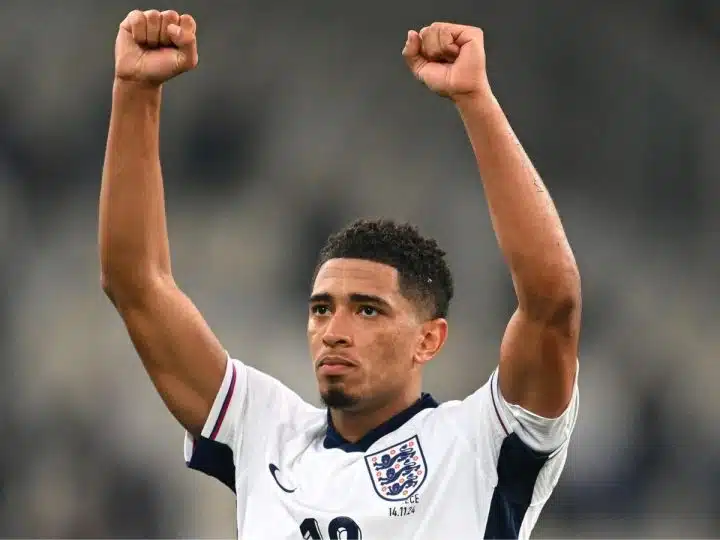
England manager Thomas Tuchel has sent a direct message to Real Madrid star Jude Bellingham, emphasising that competition for starting places in the squad heading to the 2026 World Cup will be wide open, with no guarantees for any player.
Bellingham’s place not confirmed – yet
According to Sky Sports, Tuchel emphasised that Bellingham is one of several players in contention for the playmaker role (No. 10), given the wealth of options available within the England squad.
This comes at a time when Bellingham has featured in just four matches during the qualifiers, whilst the coaching staff have relied on other players, most notably Aston Villa’s Morgan Rogers, who played in all eight qualifying matches, reflecting the fierce competition for this position.
According to the same source, Tuchel emphasised that England’s squad includes a large number of players capable of filling key roles, noting that the coaching staff have around 14 or 15 players who could be considered for the starting line-up, which means the final selections will remain open until the very last moments before the tournament kicks off.
This statement presents Bellingham with a direct challenge to prove his worth, at a time when England are preparing to enter the World Cup with high ambitions and a squad brimming with options in the attacking midfield.
Featured image via the Canary
By Alaa Shamali

Senegal enters the 2026 World Cup finals with a rare blend of ambition, experience and renewal, in an attempt to rewrite one of the most beautiful stories in African football on the world stage.
Although the ‘Lions of Teranga’ were unable to go beyond the quarter-finals of the 2002 World Cup, the signs leading up to the current edition suggest that the West African side possesses the qualities to make it one of the leading contenders to play the role of ‘dark horse’ in the tournament.
Senegal had made their way to the World Cup with remarkable consistency, topping their qualifying group with seven wins from ten matches, conceding just three goals – a statistic which the Guardian considered to reflect the enduring strength of the Senegalese school of football, which has long built its success on defensive solidity and tactical discipline.
A new generation from Senegal is knocking on the door
Since taking charge, coach Pape Tiéaou has worked to reshape the national team’s identity without completely breaking with the generation of stars that led Senegal to continental glory.
The squad set to feature in the United States, Canada and Mexico includes six players with only limited international experience, a fact to which the Guardian clearly pointed as indicative of the renewal process being led by the coaching staff. Tiaw has opted to rely on younger, faster players, giving the team a style based on possession and constant movement rather than simply relying on the physical strength associated with the national team in previous years.
This shift does not mean abandoning the pillars of experience, as captain Kalidou Koulibaly remains the defensive linchpin, whilst Idrissa Gueye and Edouard Mendy continue to play pivotal roles within the squad.
A balance between solidity and quick transitions
In FIFA’s report on the Senegal national team, which details information, statistics and analysis, it is stated that Senegal’s technical approach relies on a clear blend of traditional defensive discipline and speed in attacking transitions, with an increasing tendency towards direct play when regaining possession. The team is characterised by a strong defensive unit led by Kalidou Koulibaly, which gives the side the ability to withstand high pressure, whilst Edouard Mendy provides a key anchor at the back.
In attack, Senegal tend to exploit the flanks through the pace of Ismaïla Sarr and Nicolas Jackson’s ability to get behind the lines, relying on quick vertical passes rather than slow build-up play.
Lamine Camara also plays a key role in linking the lines and setting the tempo in midfield, giving the team the flexibility to switch between quick transitions and positional play depending on the opposition.
This balance has made the team more adaptable in big matches, but they still need to improve their effectiveness against teams that defend in deep blocks, which is the main challenge ahead of the World Cup.
The team has also reverted to a 4-3-3 formation following an unsuccessful experiment with a back three, which has given the side greater balance between defence and attack.
Mané and the final chapter
If every World Cup has a human story, Senegal’s story begins and ends almost entirely with Sadio Mané.
The star, who missed the 2022 Qatar World Cup through injury, returns this time knowing that this may be his last chance to make a major mark at the World Cup. It is true that his pace is no longer what it was during his golden years at Liverpool, but his influence on and off the pitch remains decisive, whether through his attacking leadership or his symbolic status in the dressing room.
The 2026 edition looks set to be Mané’s final attempt to lead his country to a global achievement that matches his status among the greatest African players of the modern era.
Despite the abundance of stars, all eyes are on the young talent Amara Diouf, who turned 18 just before the tournament kicked off.
The rising winger is regarded as Senegal’s most promising footballing prospect at present, having established himself in the senior squad at a very young age, thanks to his speed, dribbling ability and knack for breaking down defensive blocks, as described by the Guardian.
A group that tests ambition for Senegal
Senegal’s task will not be an easy one in a group featuring France, Norway and Iraq, as their campaign begins with a historically significant clash against France, the very side Senegal knocked out in one of the biggest upsets of the 2002 World Cup.
But what sets this edition of the ‘Lions of Teranga’ apart is that they do not rest on past glories. With the experience of Mané and Koulibaly, the dynamism of Jackson and Sar, and the daring of Diouf and Kamara, Senegal appear to be at a crossroads between a generation that made history and one trying to surpass it.
And perhaps for this very reason, many view the Senegalese national team as one of the sides most capable of defying the odds at the 2026 World Cup.
Featured image via the Canary
By Alaa Shamali

The US-Israeli imperial war machine has been hitting Iran and Hezbollah for months. That machine is a vastly superior killing implement – on paper, at least. Yet the so-called ‘axis of resistance’ is still alive and kicking as a potential Pakistan-brokered peace deal edges closer.
This all speaks to US decline, but it also outlines a deep Western misunderstanding of how the opposition functions. Faced with a US-provisioned force with a full suite of air-power, artillery, drones and cyber, Hezbollah killed 15 Israelis overnight, reports say:
[@tparsi] — Politics Global (@PolitlcsGlobal) June 7, 2026
 NEW: The US and Israel say that Hezbollah killed 15 Israeli soldiers overnight, which prompted strikes on Beirut
Even a former Israeli PM Ehud Barak has said Hezbollah cannot be conquered:
A year and a half has passed since Prime Minister Benjamin Netanyahu declared, after the cease-fire, that “We’ve set Hezbollah back decades.” What empty boasting.
He added:
We’ve indeed seen some amazing achievements – the pagers operation, the elimination of Hassan Nasrallah and other senior Hezbollah figures, the fatal attack on the Radwan forces and the missile array and its operators.
But all of this has melted away as if it never existed.
Barak, no stranger to war crime accusations himself, also lamented that fact that Israel had “no solution” to Hezbollah’s FPV drone tactics.
Hezbollah appeared to be in a pugnacious mood. According to the Cradle, they refuted Trump’s claim he was in dialogue with them:
Senior Lebanese Resistance figure, Deputy Chairman of Hezbollah’s Political Council Mahmoud Qamati, confirmed to AFP earlier today that no direct communication channels exist between Trump and Hezbollah officials, dismissing Washington’s attempts to portray a direct diplomatic breakthrough regarding the war.
Qamati reportedly said:
Trump may have intentionally mischaracterized indirect diplomatic channels, noting that Lebanese Parliament Speaker Nabih Berri’s adviser regularly communicates with the US ambassador to convey messages.
Westerns misreads and miscalculations
Meanwhile academic Trita Parsi said the West has routinely misunderstood the nature of the Iran-Hezbollah relationship. And the media has repeated these errors verbatim.
There is a surprising level of surprise in the West that Iran was serious about its demand for a region-wide ceasefire and that it would act against Israel if it continued attacking Lebanon.
I explain here: https://t.co/Rs000ZMhJM
…why Tehran was dead serious about forcing… — Trita Parsi (@tparsi) June 7, 2026
There is a surprising level of surprise in the West that Iran was serious about its demand for a region-wide ceasefire and that it would act against Israel if it continued attacking Lebanon.
He said the idea Hezbollah was simply a “proxy” for Iran was a fatal error in analysis:
Hezbollah is consistently described in the Western discourse as an Iranian proxy. And it appears that this statement was genuinely believed by Western observers.
Adding:
So if the belief is that Hezbollah is no more than a proxy, it also becomes more difficult to take Iranian threats that it will defend Lebanon seriously. A proxy, after all, is a piece on the chessboard whose fate almost invariably is to be sacrificed or consumed.
The reality is that the relationship is:
a mutually beneficial alliance in which Tehran clearly is the bigger party but not one that can simply issue dictats for Hezbollah to follow.
If this had been properly understood:
Iran’s warnings against continued Israeli attacks on Lebanon would likely have been taken more seriously.
Iran and Hezbollah still standing
The US expended $25bn in munitions, fuel and other areas in the first eight weeks of the war. This is a conservative estimate. Some sources say:
that the $25 billion estimate did not account for damage from Iran’s retaliatory attacks, which could put the total cost of the war so far as high as $50 billion.
Israel spent around $11bn.
Yet the signal achievement of the attack is a global economic crisis. Hardly something to write home about.
Even legacy media outlets like The Atlantic were withering in their assessment:
If these are indeed the conditions under which the war is concluded, the U.S. emerges from the conflict in worse strategic shape than it started, and Iran emerges in better condition in the long run.
Although the U.S. demonstrated tactical and operational excellence throughout the conflict, it was not sufficient to provide a real victory.
The ‘butcher’s bill’ of this Trumpian blunder has not yet been counted. But when it is, US – and Israeli – influence in the region will have been vastly diminished. Despite lacking any of the fancy equipment and eye-watering war budgets available to the US, Iran, and Hezbollah are intact and undefeated.
Featured image via the Canary
By Joe Glenton

Smile design blends art and dental science to improve alignment, color, gums, and bite in a single plan. By assessing facial proportions and lip-tooth relationships, dentists create natural results tailored to each patient. Digital imaging previews outcomes, supporting realistic expectations. The before-and-after difference is often striking. Many patients report higher self-esteem and social confidence after treatment.
Smile Design Results: What Kind of Changes Should You Expect?
Cosmetic dentistry before and after results demonstrate substantial transformations across multiple aesthetic parameters. Patients undergoing smile makeover smile designing before and after procedures consistently observe improvements in tooth alignment, colour uniformity, shape refinement, and proportional balance. These modifications address concerns ranging from minor discolouration to comprehensive structural irregularities.
Dental treatment before and after documentation reveals that veneers typically correct chipped edges, gaps, and uneven tooth surfaces within a concentrated treatment period. Orthodontic interventions reshape smile architecture by repositioning misaligned teeth, creating symmetrical curves and proper bite alignment. Professional whitening procedures eliminate deep staining and restore brightness levels that home treatments cannot achieve.
Before and after smile designing outcomes vary according to initial conditions. Patients with mild discolouration experience noticeable brightening, while those with severe misalignment require combined approaches involving orthodontics and restorative work. Dental Care in Turkey has documented extensive case portfolios showing composite bonding resolving minor chips and gaps, whilst full-mouth rehabilitations transform worn dentition into balanced, functional smiles.
Smile design before and after comparisons illustrate that gum contouring adjusts tissue levels to eliminate excessive gingival display, and crown lengthening creates balanced tooth proportions. Patients reviewing their transformation photographs observe enhanced facial harmony, improved confidence, and measurable aesthetic refinement. These documented changes confirm that smile design delivers predictable, substantial improvements when treatment plans address individual anatomical characteristics and aesthetic goals through evidence-based techniques.
Which Smile Design Procedures Show the Most Dramatic Before and After Differences?
Cosmetic dentistry transformations vary significantly depending on the specific procedure selected and the initial condition of the teeth. Clinical evidence demonstrates that certain treatments deliver more pronounced aesthetic improvements than others.
| Procedure | Transformation Impact | Primary Aesthetic Problems Addressed |
| Porcelain Veneers | Extremely High | Severe discoloration, chips, gaps, misalignment |
| Dental Crowns | High | Extensive decay, fractures, structural damage |
| Orthodontics | High | Crooked teeth, bite issues, spacing problems |
| Professional Whitening | Moderate | Staining, yellowing, mild discoloration |
| Composite Bonding | Moderate | Minor chips, small gaps, surface irregularities |
Porcelain veneers consistently produce the most striking transformations in our clinical practice. These ultra-thin shells completely reshape the visible tooth surface, correcting multiple aesthetic concerns simultaneously. Patients with severely stained or misshapen teeth experience the most dramatic visual improvements, with transformations often appearing to take decades off their appearance.
Dental crowns offer comprehensive coverage for extensively damaged teeth. Combined orthodontic and veneer treatments available through dental design turkey facilities demonstrate how sequential procedures amplify overall results. This strategic approach addresses both alignment and surface aesthetics.
Professional whitening procedures brighten tooth enamel by several shades but cannot alter tooth shape or position. Composite bonding provides conservative solutions for minor imperfections, though the material lacks the longevity and stain resistance of porcelain alternatives.
Combined treatment protocols consistently outperform single-procedure approaches. Orthodontic alignment followed by veneer placement creates comprehensive smile transformations that address both structural and superficial concerns. Our clinical observations confirm that multi-modal treatment strategies generate the most impressive before-and-after differences in modern cosmetic dentistry.
Smile Design Before and After Transformations: Achieving Natural-Looking Results
Modern cosmetic dentistry has revolutionised the way dental design procedures deliver transformations, with natural-looking outcomes now the industry standard. Our extensive experience working with diverse patient cases confirms that authenticity depends on several critical factors rather than a single technique.
Key elements that distinguish natural smile design transformations include:
- Facial symmetry analysis – Dental professionals assess bone structure, lip contour, and gingival architecture to ensure veneers or crowns complement individual features
- Proportional tooth dimensions – Width-to-length ratios typically follow the golden proportion (1:1.6), preventing the artificial “chiclet” appearance
- Translucency matching – Advanced ceramics replicate natural enamel properties, with IPS e.max and zirconia materials offering superior optical characteristics
- Gingival contouring precision – Soft tissue modification creates balanced gum-to-tooth ratios, eliminating the bulky aesthetic associated with poorly executed cases
Digital smile design technology enables clinicians to map transformations with microscopic accuracy. Intraoral scanners capture three-dimensional data, allowing customisation that respects ethnic variations and age-appropriate characteristics.
Professional dental design procedures prioritise harmonious integration rather than dramatic alteration. Teeth should appear proportionate to facial dimensions, with colour gradients mimicking natural tooth structure. Collaboration between restorative specialists and ceramists ensures each restoration exhibits depth, texture variation, and appropriate surface characterisation—qualities absent in overly uniform, artificial-looking transformations that lack biological authenticity.
How Long Does It Take to See Your Smile Design Before and After Results?
The timeline for observing smile design transformations varies significantly depending on the specific cosmetic procedures undertaken and the complexity of each case.
Timeline Based on Procedure Type
- Immediate transformations occur with composite bonding and porcelain veneers, where patients witness their enhanced appearance within a single appointment or maximum two weeks following final placement.
- Gradual improvements characterise teeth whitening treatments, typically requiring 14-21 days for professional bleaching systems to achieve optimal shade enhancement.
- Extended timeframes apply to orthodontic alignment combined with restorative work, where comprehensive smile makeovers may span 3-18 months before complete before and after documentation becomes possible.
Several clinical factors influence the treatment duration beyond procedure selection:
- Individual healing capacity and tissue response to dental interventions
- Complexity of malocclusion or aesthetic concerns requiring correction
- Laboratory fabrication time for custom prosthetic components
- Number of teeth involved in the comprehensive treatment plan
Our clinical experience demonstrates that patients undergoing multi-disciplinary approaches typically observe progressive improvements throughout their journey, with final transformations becoming fully evident once all restorative phases reach completion and soft tissues achieve complete maturation around new dental work.

Iran, Yemen, and Hezbollah have retaliated against Israel’s aggression, bombarding targets inside the settler-colonial state’s borders. Iran and Israel pledged to stop firing on 8 June. But Trump’s humiliation in this, his war of choice, draws closer by the hour.
Iran and Yemen push back
Journalist Jeremy Scahill captured the sheer cynicism of the Israeli government:
Netanyahu, in part, began his scorched earth bombing in southern Lebanon—and the seizure of territory north of the Litani—so that he could establish a new “yellow line” in advance of any agreement between Iran and the U.S. He wants this to be Israel's place when the music stops…
— jeremy scahill (@jeremyscahill) June 8, 2026
Israeli aggression precipitated the first Iranian strikes for a month:
Sirens sounded across northern Israel as the IDF said it detected the launches and was working to intercept the missiles.
An initial wave of two ballistic missiles fired at northern Israel was intercepted by air defenses, the IDF said. A second wave was then detected, with sirens expected to sound again in coming minutes.
Israel has cancelled schools nationwide and limited outdoor gatherings to 200 and indoor gatherings to 500 as the Home Front Command issued emergency guidelines.
The Times of Israel reported that the region had been “catapulted”:
back to the cusp of all-out war after two months of a shaky ceasefire, with Israel initially vowing to respond before US President Donald Trump attempted to limit the fallout and keep truce negotiations with Tehran on track.
Though the paper’s top line neglected to mention that Iranian missiles were a response to Israeli attacks. Those strikes caused a number of deaths in Beirut’s southern suburbs:
Israeli forces struck the Dahiyeh district of Beirut’s southern suburbs Sunday, killing at least 2 people and wounding 11 in strikes on residential apartments, according to Lebanon’s National News Agency. The strikes came after several weeks during which Israel had refrained from targeting Beirut’s southern suburbs amid Iranian pressure via its negotiations with the U.S.
So much for the ‘anti-war’ president
Donald Trump, whose assault on Iran has left him flailing to exit while claiming victory, has tried to say the war has not undermined his supposed anti-war credentials.
Trump tapped into domestic fatigue from the Iraq and Afghan wars to get elected. Any goodwill toward him on that front has evaporated.
A new poll says the Iran war is as unpopular as Vietnam – a war Trump himself allegedly dodged.
Associated Press reported:
Trump, in an interview that aired Sunday on NBC’s “Meet the Press,” said he “didn’t guarantee” there would be no wars if he were back in office.
“First of all, I didn’t guarantee no war. Why would I have built the strongest military in the world?” Trump said.
The under-pressure president said:
I didn’t promise anything.
I don’t like these endless wars. This is not an endless war. We’ve been doing this for three months.
Trump tried to claim:
he was “doing the world a service” and “doing our country a service” because he had to stop Iran from having a nuclear weapon. But elsewhere in the interview, Trump repeated a contradictory message where he said U.S. strikes last year “obliterated” Iranian nuclear sites.
The response to Israel’s latest aggression – which came despite Trump’s insistence he’d discipline Benyamin Netanyahu – came from Hezbollah and Yemen as well as Iran:
Yemen also declared a ban on Israeli shipping in the Red Sea:
➤ The Yemeni Armed Forces launched a missile barrage targeting what it described as sensitive Israeli targets in the Jaffa area of Tel Aviv, claiming the strikes “achieved their objectives with… pic.twitter.com/lGdQ5uFazJ
— Drop Site (@DropSiteNews) June 8, 2026
Yemen Strikes Tel Aviv Area, Declares Total Ban on Israeli Shipping in Red Sea
Yemeni strikes targeted Tel Aviv and central and southern Israel:
The Israeli army confirmed missile launched from Yemen toward Israel, saying defense systems are actively intercepting it. Alarm sirens sounded across Tel Aviv and large areas of central and southern Israel, with a rocket… pic.twitter.com/FValEXsB2S
— Drop Site (@DropSiteNews) June 8, 2026
 Missile From Yemen Targets Central and Southern Israel
US-Israel attacked Iran first on 28 February without provocation. Iran was offering unprecedented concessions in negotiations at the time. The Pentagon has since stated there was no imminent threat from Iran. And the UN’s atomic watchdog, the IAEA, has said there is no evidence Iran was developing a nuclear weapon.
The US has achieved none of its original war aims. Iran predictably closed the Straits of Hormuz, a vital oil channel, once attacked – creating a global energy crisis. Far from being defeated, Iran has said the war will continue until “the enemy’s inevitable and permanent humiliation, disgrace, regret, and surrender”. Trump came to power on an anti-war ‘America First’ ticket. He now faces worldwide humiliation.
Trump took to social media to say:
Both sides Israel and Iran are looking to do an immediate ceasefire in final negotiations.
Demonstrating a frankly nuclear lack of self-awareness, he added:
Peace is proceeding subject to ignorance or stupidity getting in its way.
He said:
The blockade will remain in place and in full force and effect until a final deal is reached and things should move quickly. Thank you for your attention to this matter.
With mid-terms approaching Trump is unable to get an exit out of a deeply unpopular war. And a fading US empire, driven by hubris and arrogance, is accelerating its own decline while its international rivals look on. Iran increasingly looks like Trump’s Vietnam – even without US boots on the ground.
Featured image via the Canary
By Joe Glenton
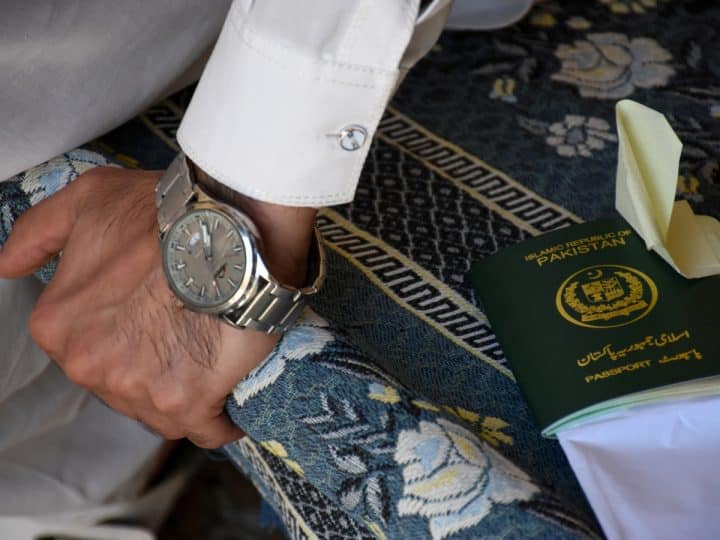
The US and Israel-allied state, the UAE, has launched an initiative calling citizens and residents to digitally “reaffirm their dedication to the nation’s core values of unity, coexistence, and tolerance,” as it has also deported 5,000 to 18,000 Shia Pakistanis recently since the US-Israel war on Iran began in February.
The two actions by the Gulf state show it is anxious to ward off working-class solidarity against its alliance with Zionism.
This follows a broader pattern of the UAE aligning with Washington. The Gulf state has reportedly joined US-Israeli strikes on Iran, requested dollar swap lines tying its economy to America, and exited OPEC as part of its “Israelification.”
Iran’s foreign minister has slammed the UAE for being “directly involved in the aggression” against his country, while Netanyahu claims he made a secret visit to the UAE on March 26th, a claim the UAE denied, though flight data suggests otherwise.
Deportation of Pakistani Shia workers in UAE
NPR reported over the weekend accounts from Pakistani Shia men who were deported from the UAE shortly after the US and Israel went to war with Iran.
Pakistani legislators told NPR that anywhere between 5,000 to 18,000 Shia Pakistanis had been deported.
They also reported that Pakistan’s government has called the accounts “vicious propaganda” and refuses to accept what is happening to its own citizens.
Pakistani Shias in the Gulf appear to have become more vulnerable to suspicion amid a regional security climate increasingly sensitive to any perceived connection to Iran, whether religious, social or political
Read more
https://t.co/qzI1ofZhFV
— MBN English (@MBNEnglish) June 4, 2026
Meanwhile, MBN English reported that Pakistani Shia deportees had their phones searched by UAE authorities for Iranian contacts, their bank accounts frozen, and were given no explanation except “We cannot tell you, but you must leave.”
MBN English reported that a Shia political organization estimated as many as 30,000 Pakistani passport holders may have been affected.
Pledge of loyalty
View this post on Instagram
Nothing says “coexistence” like an online loyalty pledge you can sign from your phone while the government deports thousands of people for being the wrong kind of Muslim.
That’s exactly what the UAE launched on May 20th.
The “Pledge and Commitment” initiative, overseen by the country’s Minister of Tolerance and Coexistence, asks citizens and residents to digitally swear “loyalty and allegiance” to the UAE President, Mohamed bin Zayed Al Nahyan, through an online form or QR code, all in the name of “unity, stability, and social cohesion.”
The launch event featured more than 4,800 leaders in attendance.
Asad AbuKhalil, a Lebanese-American professor of political science at California State University, Stanislaus, slammed the initiative by the “totalitarian despot of the UAE.”
The totalitarian despot of the UAE is now requiring loyalty pledges. You won’t hear a word of condemnation from the corrupt class of pro-Gulf Lebanese human rights poseurs, journalists, or academics. pic.twitter.com/LS7v3XitqI
— asad abukhalil أسعد أبو خليل (@asadabukhalil) June 6, 2026
He also slammed Lebanese pro-Gulf “human rights poseurs, journalists, and academics” for refusing to utter a single word of condemnation.
Tolerance, in the UAE, is short for compliance with the US and Israel. Sign the pledge, scan the QR code, swear loyalty to the despot, or get deported for being the wrong kind of Muslim.
Featured image via the Canary
By The Canary
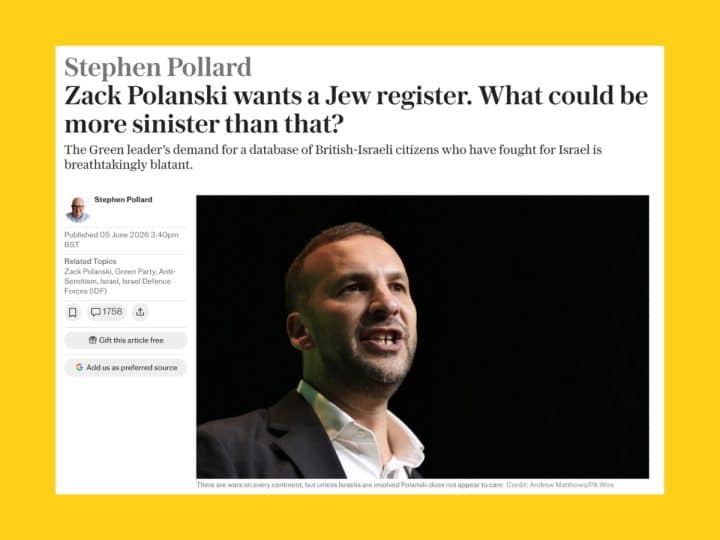
Notorious pro–Israel bigot Stephen Pollard has written a desperate, antisemitic article trying to smear Zack Polanski. He did this in response to the Green leader backing calls to hold potential war criminals to account. And he did so in the Telegraph, which has joined other right-wing rags in publishing antisemitic Polanski caricatures.
Lobby backlash as Polanski backs accountability calls for potential war criminals
Zack Polanski, along with many other Jewish people in the UK, has been vocal in his criticism of Israel’s genocide in Gaza. And hardline Zionists (whether Jewish or non-Jewish) don’t like this. So they’ve thrown their toys out of the pram following Polanski’s backing of an open letter calling on the government to start:
monitoring the entry of British-Israeli dual national citizens into the UK and investigating potential links to war crimes, in cases where they have served in the Israel Defence Forces (IDF).
Israel fanboys like Pollard have responded by antisemitically suggesting this means ‘monitoring all Jews’. As Jewish Voice for Peace has said, such treatment of “Jewish people as a monolithic group” is a ‘contemporary expression of antisemitism’. Even the controversial IHRA definition argues that one example of antisemitism is:
Holding Jews collectively responsible for actions of the state of Israel.
Pollard’s desperate, antisemitic argument in the Telegraph
We’ll talk more about Pollard in a minute. But first, let’s look at his argument in the racist Telegraph, now under the ownership of the firmly pro-Israel Axel Springer. Pollard suggested that:
- “Zack Polanski wants a Jew register”, because tracking people who have served in Israel’s occupation army during the genocide (and “just happen to be Jews”) means making a list “of bad Jews”.
- “Polanski has said not a word” about “accusations of war crimes” elsewhere in time and space. The only example he mentioned was the horrific but distant “1971 Bangladesh war of independence”. He hinted that this was relevant because “many new Green voters are drawn from those communities” (Green deputy leader Mothin Ali, for example, is a British Bangladeshi). Then, in another casual conflation of Israel and Jewish people, he added “But no Israelis were involved (let’s be honest: no Jews).” That’s why Polanski was being silent about this, he argued, rather than because it happened 55 years ago.
- Despite the overwhelming international consensus that Israel has been committing genocide, the word genocide was somehow “hotly contested” (it is by Israel and its allies, of course, but then genocidal criminals don’t tend to embrace that kind of label in public). Pollard contrasted this with the “well-founded allegation” (for which there is no overwhelming international consensus) that China’s controversial treatment of its Uyghur community may amount to genocide. (Roughly 200 people died during the July 2009 riots.)
- Polanski showing interest in the suffering of the Palestinian people was just a “strategy” to get votes from people who “only” care about the genocide in Gaza.
It's not a Jew register @stephenpollard — Mark Howell
Its a war criminal register.
Your not saying Jews are criminals again, are you?
You still can't quite kick the anti-Semite habit, can you? https://t.co/6YOugU0eOH

 (@markhowell7) June 7, 2026
You and Pollard are anti-Semites; Polanski does not mention Jews, he mentions British citizens. What you are doing is akin to saying Germans got tried at the Nuremberg trials not Nazis. It is deeply racist. https://t.co/HLqw1xeSWh
— Ashunsi Ankram (@AshunsiAnkram) June 6, 2026
Away from the Telegraph, and in reality…
Some relevant facts to counter Pollard’s assertions include that:
- Not all Israelis are Jewish, and not all Jewish Israelis serve in the occupation forces (either through exemption or refusal). As the piece itself admits, military service is also compulsory for non-Jewish Israelis like Druze and Circassian citizens.
- As Polanski himself has said, conflating Jewish people with Israeli war criminals “is both harmful and antisemitic”.
- During Polanski’s short time as Green leader, Israel’s genocide in Gaza has been the only genocide in which the UK has been openly complicit, which makes highlighting this as a priority very politically relevant and urgent – especially when the servile corporate media has failed to do so. The UK government is literally cracking down on protest rights as part of widespread institutional efforts to silence criticism of Israel. It’s not doing that for any other country.
- Polanski has called for “consistent international justice” and spoken out about the suffering in numerous global war zones. On the other hand, it’s people seeking to defend or downplay Israel’s crimes who usually show double standards about which criminals they condemn and which they don’t.
- Pollard isn’t someone we should go to if we want reliable, independent conclusions. He previously lost a lawsuit, for example, for making dodgy allegations relating to genocide.
- If anyone is being antisemitic right now, it’s the Telegraph and other right-wing rags:
Whilst senior editor @CamillaTominey is harassing Zack and defaming him, the @Telegraph have still not apologised for their antisemitic cartoon.
They need an immediate review into antisemitism. pic.twitter.com/6HTq0lZukI
— Harry Eccles (@Heccles94) June 6, 2026
You are a shameless liar: Polanski is calling for a list of British citizens who have fought in a probable genocide & possibly committed war crimes & other atrocities to be compiled. This is what any civilised lawful country should do https://t.co/RikAhqNjWL
— Andrew Feinstein (@andrewfeinstein) June 7, 2026
I'm sure those well known defenders of Jewish people though will be along with more Antisemitic caricatures before too long of which the establishment will still have absolutely nothing to say weeks later…. pic.twitter.com/CjvMf2wtYC
— Zack Polanski (@ZackPolanski) June 4, 2026
Pollard’s dangerous antisemitic rhetoric has always been all about defending Israel and smearing the left
Pollard has basically admitted previously that he thinks it’s ok to conflate Israel and Judaism. And he would, because he edited a right-wing pro-Israel rag for years that played a key role in vicious media efforts to keep Israel critic Jeremy Corbyn out of power.
The whole shtick of the Jewish Chronicle in the Corbyn years was basically to weaponise cynical antisemitism allegations against the left. And Pollard’s job was essentially to find antisemitism where it didn’t exist. The Peter Mandelson quote about working “every single day” to defeat Corbyn literally came from a chat with Pollard.
Nowadays, meanwhile, when Pollard isn’t hating on Polanski or spreading antisemitism in the Telegraph, he’s out defending actual racist Nigel Farage. That shows better than anything else that this is not about religion at all. It’s all about politics. And in particular, it’s about defending genocide and defending the war criminals behind it.
Seems Pollard is pro Farage’s racism & against Polanski’s anti racism. — Mick
Curious idea of what antisemitism is  . pic.twitter.com/V3Uw40a8b8

 (@MickCoffey2) March 30, 2026
Featured image via the Canary
By Ed Sykes

Right now, across our ‘green and pleasant’ land, thousands of tiny fox cubs are exploring a new world. Born in March and April, these tiny, vulnerable little bundles of fur are clumsy, curious and full of life. They’re finally beginning to explore the world. Chasing bugs through long glare, these iconic little cubs are totally unaware of the ticking time bomb that’s so close to going off. A shadow is creeping up on them. And in just a few weeks, their peaceful summer ends. And for so many fox cubs, so do their lives.
Trapped in the woods
August marks the arrival of cubbing season. And that is when the tranquil lives of these tiny cubs are shattered. Hunters politely call this ‘autumn hunting’ or ‘hound exercise’ to mask the reality. The reality is, this is a schooling season for new hounds, and the curriculum is blood. Hunts are not looking for the usual long, dramatic chases across open fields. This time, they’re targeting the most vulnerable animals they can find.

Come August, when these tiny little fox cubs are ready to explore the world, the hunt will strike. Huntsman will take young, inexperienced hounds into small patches of woodland called a covert where foxes live. And there, the slaughter begins. Huntsman choose late-summer fox cubs because they’re young, lacking in stamina and don’t quite yet have knowledge of their territory. This lesson for the hounds is simple. Learn the scent of foxes and gain a taste for killing innocent wildlife.
Escape is pretty much impossible. As hounds flush terrified cubs out from hiding, riders and followers line the perimeter. When a tiny, panicked cub tries to make a break for safety, huntsman slap saddles and crack whips. These monsters deliberately terrify the cubs back into the drooling jaws of the hounds.
The bloody data
And the scale of these activities are damning. A suspected 10,000 fox cubs die every single year to this cruel ‘training’. Can I ask… why the hell are they even training the hounds to kill when hunting live mammals with dogs is illegal? Because these rich huntsman, frankly, don’t give a shit about the law. When hunters claim they’re simply exercising the pack, or following a pre-laid, false trail, they’re lying. The data exposes the truth.
Because the police don’t seem to care, independent monitors watched 624 hunt meets across the country. A mere 23 of these actually showed evidence of an actual trail being laid. A pathetic 3.7% actually showed intent to follow the law.
And the violence is skyrocketing. Monitors recorded 127 incidents of illegal cub killing in just three months. Within that, they saw 106 young cubs being illegally chased by hounds. This is a wild 83% increase compared to last autumn.
This blatant disregard for our laws spills into communities. Hound hunts caused 315 incidents of havoc, targeting domestic pets and trespassing on private land. And that’s just in that same three-month window.
We need to be on the ground for these fox cubs
The Hunting Act 2004 banned this bloody cruelty two decades ago. So why is this bloodshed continuing, and in fact, ramping up? And it’s not like the hunt actually even care about the hounds that are ripping apart these innocent cubs. To the hunt, these hounds are nothing but tools. And they treat them as such. If a young dog fails to recognise scents or it’s too slow to keep up with the pack, the huntsman regularly shoot them in the head when they think no one is looking.

These baby fox cubs and discarded hounds are running out of time. Right now, the government is running a public consultation on finally closing the loophole that is ‘trail hunting’. And it ends on Thursday 18 June 2026. This is our chance to end the smokescreen that allows 10,000 fox cubs to be massacred every year. Why not join or support the Hunt Saboteurs Association who help to monitor these illegal hunts?
We can’t allow these rich, horse-riding monsters to quietly wipe out the next generation of foxes. Will we continue to look away? Or will we finally say enough is enough? Have a look at the consultation, and let’s get boots on the ground this August to end this lawlessness once and for all.
Featured image via the Hunt Saboteurs Association/Three Counties Hunt Sabs
By Antifabot

Wolves: Championship side sign Kieran Trippier and are in Raul Jimenez talks

Meta Quietly Removes Face-Recognition Code From Its Smart Glasses App

XRP BREAKING NEWS!! COINBASE SAID NO! (OVER?!)



-

 Fashion3 days ago
Weekend Open Thread: Evereve – Corporette.com
-
 Crypto World3 days ago
Jensen Huang Approves Samsung, SK Hynix, and Micron for NVIDIA (NVDA) HBM4 Memory Supply
-
 Sports6 days ago
French Open 2026 results: Alexander Zverev beats Rafael Jodar and will play Jakub Mensik in semi-finals
-

 Tech6 days ago
CryZENx Releases Fresh Playable Content Deep Inside Jabu-Jabu for His Ocarina of Time Remake
-
 Business6 days ago
Trump Taps Housing Chief Bill Pulte as Acting Intelligence Director After Gabbard Exit
-
 Business2 days ago
The Pain Points Taking a Fragile Tech Rally Down a Notch
-
 NewsBeat6 days ago
Republicans balk at Trump’s attempt to appoint a MAGA enforcer to lead National Intelligence
-
Crypto World4 days ago
LBank Surpasses 25 Million Users Worldwide as AFA Partnership Continues to Drive Global Growth
-

 Crypto World1 day ago
Trump’s AI Ownership Plan Could Benefit Anthropic at OpenAI’s Expense
-

 Tech4 days ago
Microsoft launches MXC, an OS-level sandbox for AI agents, with OpenAI and Nvidia already on board
-

 Tech3 days ago
RCS Messages Between iPhone and Android Get End-to-End Encryption With iOS 26.5
-
 Crypto World6 days ago
Seagate (STX) Stock Surges to Record High on AI Boom and Legal Settlement
-

 Tech3 days ago
Meta steals a tactic from Tesla and builds data centers in tents
-
 Crypto World2 days ago
Senator Cynthia Lummis Calls CLARITY Act the Most Consequential Financial Legislation of This Generation
-

 Business4 days ago
(VIDEO) Justin Bieber Delivers Surprise Happy Birthday Serenade to Diners at Los Angeles Mexican Restaurant
-
Crypto World7 days ago
Tether Brings Google’s TurboQuant to Production, Unlocking Long-Context AI on Everyday Devices
-
Crypto World6 days ago
EU AI Data Center Project Faces Delays as Funding Gaps Grow
-

 Entertainment6 days ago
Did The Mandalorian And Grogu Already Ruin The Next Star Wars Movie?
-
 Crypto World3 days ago
Merlin (MRLN) Stock Soars 32% on Major USSOCOM Autonomy Milestone
-

 Business6 days ago
Aehr Test Systems Stock Soars 17% Amid Surging AI Demand and Conference Spotlight
You must be logged in to post a comment Login