

Crypto World
OKX adds Magnificent 7 stocks and commodities to European X Perps offering

OKX has expanded its X-Perps offering in Europe with 13 new markets, adding futures linked to major U.S. technology stocks, commodities, and stock indices after reporting a 447% rise in X-Perps trading volume since May 1.
Summary
- OKX has launched 13 new X Perp markets in Europe, adding exposure to major U.S. tech stocks, commodities, and stock indices.
- The exchange said X Perps trading volume has risen more than 447% since May 1 as demand for the product continues to grow.
- European users can now access markets such as SPY and QQQ through OKX’s MiCA and MiFID II licensed platform.
According to a press release shared with crypto.news, retail users across Europe can now trade perpetual futures tied to Apple, Amazon, Alphabet, Meta, Microsoft, Nvidia and Tesla, alongside Gold, Silver, WTI Crude Oil and Brent Crude Oil. The exchange has also introduced SPY and QQQ X-Perps, providing price exposure to the S&P 500 and Nasdaq-100 through a regulated platform available to European customers.
Set to expand further, the product lineup will include a SpaceX-linked X-Perp on June 12 following the company’s IPO, according to the exchange. All contracts are available around the clock and support leverage of up to 10x.
Erald Ghoos, CEO of OKX Europe, said European investors closely follow earnings reports, central bank decisions, commodity prices and geopolitical developments but have lacked practical ways to react immediately through a single platform.
“X-Perps fix that. One account, every market, 24/7. And because we’re fully regulated, our customers get the protections that come with that,” Ghoos said.
Unlike traditional brokerage products that operate within market hours, the contracts allow users to maintain capital on one platform and move between crypto and traditional asset exposure without opening separate accounts, according to the company.
Volume growth and regulatory positioning
Recent trading activity suggests growing interest in the product category. Ghoos stated that X-Perps trading volume has increased by more than 447% since May 1, adding that the company expects demand to continue as additional markets are introduced.
OKX noted that SPY has returned 25% over the past 12 months while QQQ has gained 42% during the same period. The exchange also pointed to the size difference between investment vehicles tracking those indices, stating that the largest European ETF manages roughly $20 billion in assets while SPY holds about $700 billion.
For European retail investors, access to U.S.-linked index exposure has often been limited by regulatory requirements. According to the company, X-Perps provide access through a platform operating under both MiCA and MiFID II authorizations.
Regulatory compliance has become increasingly important as the European Union’s MiCA transition period approaches its July 1, 2026 deadline. Once the transition period ends, exchanges without the required licenses will no longer be permitted to offer crypto services across the European Economic Area.
The launch arrives during a period of expansion for the exchange beyond its core trading business. In May, OKX Ventures agreed to acquire a 19.6% stake in South Korean exchange Coinone through an 80 billion won ($53 million) investment, a transaction that the companies said would strengthen cooperation on security systems, risk management and user protection.
A month earlier, the company introduced its Agent Payments Protocol, an open framework designed to allow AI agents to manage commercial activities such as payments, settlements, escrow and dispute handling across multiple blockchains. OKX said the protocol was developed to support AI-driven commerce and builds on its existing blockchain infrastructure.
Those developments, alongside the latest X-Perps rollout, add to the company’s efforts to expand regulated products and infrastructure services across multiple markets.



U.S. District Judge Analisa Torres denied KalshiEX’s request for an emergency injunction pending appeal on July 27 in KalshiEX LLC v. Williams.
Summary
- Judge Analisa Torres denied Kalshi emergency relief while its Second Circuit appeal remains pending separately.
- Kalshi failed to show strong appellate prospects, irreparable harm, favourable equities, or public interest support.
- The court independently read federal law and declined to defer to the CFTC’s proposed interpretation.
The Southern District of New York also rejected Kalshi’s alternative request for short-term administrative relief. The three-page order does not dismiss Kalshi’s appeal or resolve the underlying lawsuit. It only denies protection from New York enforcement while the appellate dispute continues.
Kalshi appealed after Torres denied its preliminary-injunction motion on July 7. That earlier ruling found that the Commodity Exchange Act likely does not preempt New York gambling laws as applied to Kalshi’s sports-event contracts. The appeal was filed with the Second Circuit as case number 26-1835.
Kalshi emergency injunction failed a higher legal test
An injunction pending appeal requires a stronger showing of likely success than an ordinary preliminary injunction. Torres said Kalshi had not met any of the four factors in the earlier proceeding and had not identified unusual circumstances that justified reversing that result.
Kalshi argued that it faced a choice between violating New York law or complying with the state and risking its federal registration. Torres found the alleged registration risk speculative. She also said the expected compliance costs were largely monetary and generally did not qualify as irreparable harm.
The CFTC proposal did not bind the court
Kalshi pointed to the CFTC’s June proposed rule, which states that the Commodity Exchange Act expressly preempts state laws regulating transactions on CFTC-registered exchanges. The Commission also proposed standards for reviewing event contracts involving gaming, unlawful conduct, war, terrorism and assassination.
Torres did not invalidate or formally reject the proposed rule. Instead, she said courts must independently interpret statutes under the Supreme Court’s Loper Bright decision. She maintained her earlier view that the Commodity Exchange Act does not displace every state gambling law governing transactions involving swaps. The proposal’s public-comment period closed on July 27, but it is not a final rule.
A separate Second Circuit request remains unresolved
The district-court denial is separate from Kalshi’s emergency request at the Second Circuit. New York regulators urged the appeals court on July 27 to deny that request. As of the latest available reporting, no Second Circuit order resolving the emergency motion had been published.
The appellate court can now decide whether to grant temporary relief and later review Torres’s July 7 preemption analysis. The underlying lawsuit has not been finally decided. As previously reported, the July 7 ruling left New York free to apply its gambling laws unless an appellate court intervenes.
Conflicting rulings leave prediction-market law unsettled
Federal courts have reached different conclusions on the jurisdiction question. In April, the Third Circuit ruled 2-1 that New Jersey could not regulate Kalshi’s sports-event contracts because they fell within the CFTC’s exclusive jurisdiction. Courts in New York and several other states have taken a narrower view of federal preemption.
The split widened on July 27 when a Minnesota federal judge temporarily blocked that state’s direct prediction-market ban. The judge found that several Kalshi and Polymarket contracts likely met the federal definition of swaps, while warning that later relief could cover fewer products. In related coverage, crypto.news examined the platforms’ widening state-by-state legal battle.
Kalshi has also faced restrictions elsewhere. Washington judge blocked its sports contracts under state gambling law. The CFTC, meanwhile, has sued multiple states and continues to argue that federally registered exchanges should operate under one national derivatives framework.
The next immediate event is the Second Circuit’s decision on Kalshi’s emergency motion. After that, the court will consider the merits of the appeal, including whether New York’s laws are preempted. The CFTC may also revise or finalise its prediction-market proposal after reviewing comments, but it has announced no deadline for a final rule.


The stablecoin market contracted in June 2026 even as transaction activity reached a record.
Summary
- $7.7 billion left stablecoins in June, cutting total market capitalization to approximately $312 billion overall.
- $1.79 trillion in adjusted June transfers marked a record, rising 63% from May levels overall.
- USDC processed about $1.21 trillion, while USDT handled roughly $576 billion in June’s adjusted dataset.
CoinDesk Data reported on July 6 that market capitalization fell 2.39%, or about $7.7 billion, to $312 billion. It was the first month-end decline in five months and the largest monthly dollar reduction since the Terra-Luna collapse in May 2022.
The supply decline did not produce a matching fall in on-chain activity. Visa’s Allium-powered dashboard recorded $1.79 trillion in adjusted transaction volume for June, up 63% from May and 125% from June 2025. USDC accounted for about $1.21 trillion, compared with roughly $576 billion for USDT.
As previously reported, the market had fallen roughly $10 billion below its May peak by mid-July. DefiLlama’s stablecoin dashboard placed total capitalization at about $309.9 billion on July 28, down 0.79% over 30 days. USDT remained the largest token at roughly $183.9 billion, while USDC stood near $73.7 billion.
The stablecoin market decline was modest, not Terra-like
The phrase “biggest drop since Terra” describes the dollar amount of the June decline, not the severity of the event. A 2.39% monthly contraction was far smaller than the 2022 collapse. CoinGecko found that the leading stablecoins lost $33.9 billion, or almost one-fifth of their value, during the second quarter of 2022 as UST failed and wider crypto credit markets broke down.
June 2026 also lacked the defining feature of the Terra crisis: a major market-wide depeg. DefiLlama showed both USDT and USDC trading close to $1 on July 28. The contraction occurred through lower circulating supply rather than a comparable collapse in token prices.
Data providers report different totals because they track different assets and apply different classification rules. CoinDesk Data measured the market at $312 billion at the end of June. CoinGecko’s Q2 industry report put the quarter-end total at $305.1 billion and reported a $4.8 billion, or 1.6%, quarterly decline. CoinGecko described it as the first quarterly contraction since Q3 2023.
That distinction makes the claim that the market shrank “for the first time in four years” too broad. CoinDesk Data recorded the first monthly decline in five months, while CoinGecko recorded the first quarterly decline since Q3 2023. Both datasets show a pullback, but neither supports treating June as the first contraction of any kind since Terra.
Record volume shows faster turnover, not only payments
Visa’s adjusted transaction figure is more useful than raw blockchain volume, but it is not a pure payments measure. The dashboard removes known bot activity, intra-exchange transfers, redundant smart-contract movements and wallets that cross high-frequency or high-volume thresholds. It also counts only the largest stablecoin amount transferred within a complex transaction.
However, Visa’s adjusted categories still include exchange deposits and withdrawals, decentralized exchange trades, lending, investment funds, minting and burning, and on- and off-ramp activity. The $1.79 trillion total therefore measures filtered economic movement. It should not be described as $1.79 trillion of purchases, remittances or merchant settlement.
The June data still show a clear divergence between supply and usage. USDC moved about $1.21 trillion despite having less than half USDT’s circulating supply. USDT handled roughly $576 billion while remaining the larger token by market capitalization. As previously reported, USDC has built a sustained lead over USDT in adjusted transfer value.
A smaller float can support greater volume when each token changes hands more often. June’s record, combined with lower supply, is consistent with rising turnover. It does not identify who sent the money, why it moved or whether the activity generated payment revenue.
A separate McKinsey and Artemis analysis shows the measurement gap. The firms estimated identifiable stablecoin payments at about $390 billion during 2025, or roughly 0.02% of global payment volume. B2B payments accounted for about $226 billion, while much of the wider on-chain total came from trading, internal transfers and automated activity. Stablecoin usage is growing, but filtered blockchain movement and real-world payments remain different datasets.
Yield products may explain only part of the shift
The expansion of tokenized Treasury products offers a plausible destination for some capital leaving non-yielding stablecoins. RWA.xyz placed tokenized U.S. Treasury value at about $16.2 billion in late July. DefiLlama listed Circle’s USYC near $3 billion and BlackRock’s BUIDL near $2.64 billion on July 28.
The rotation argument has an economic basis. Payment stablecoins aim to maintain a fixed value and generally do not pass reserve income directly to holders. Tokenized Treasury funds can provide exposure to short-term government debt while remaining on-chain. Treasurers may therefore hold idle balances in yield products and convert into stablecoins nearer to settlement.
Still, public data do not prove that the full $7.7 billion decline moved into tokenized funds. Aggregate growth cannot trace every subscription. Capital may also have returned to bank deposits, funded crypto sales, moved between excluded categories or left digital-asset markets.
CoinDesk Data found that total tokenized asset capitalization rose 1.75% to $30.1 billion in June while stablecoin supply fell. That supports a broader shift toward tokenized financial products, but it does not establish a direct one-for-one transfer.
CoinGecko also found that some yield-linked crypto dollars contracted during Q2. USDS fell 16.4%, while USDe declined 24.4%. CoinGecko attributed the reductions partly to yields falling below the risk-free rate and users unstaking related products. The evidence points to selective rotation rather than a uniform move into yield.
U.S. rules and July issuance will shape the next move
The regulatory backdrop remains unfinished. The GENIUS Act was enacted on July 18, 2025 and created a federal framework for payment stablecoin issuers. The Office of the Comptroller of the Currency’s proposed rules cover reserves, redemption, risk management, reporting, custody and supervision.
The law is scheduled to take effect on January 18, 2027, or 120 days after federal regulators issue final implementing rules, whichever comes first. Regulators had not completed the full rulebook by July 28. As crypto.news reported, the one-year rulemaking deadline passed with multiple proposals awaiting final action.
One live deadline concerns customer identification. A joint federal proposal would require permitted payment stablecoin issuers to establish risk-based procedures for identifying and verifying customers. Comments are due by August 21, 2026.
The FDIC also issued proposed reporting forms on July 17, with comments due 60 days after publication in the Federal Register. These filings would establish regular financial and operational reporting for payment stablecoin issuers under FDIC supervision.
These rules may change where stablecoins are issued and held. They can also affect competition between U.S.-oriented products such as USDC and offshore-focused products such as USDT. In related coverage, industry groups disputed whether proposed rules extend yield restrictions too far toward third-party reward programmes.
The next evidence will come from issuer mint-and-burn data, month-end supply, peg stability and adjusted transaction volume. A return to net issuance would support the view that June was temporary. Continued redemptions would point to a longer contraction in on-chain dollar liquidity.
June supports two conclusions at once. Stablecoin supply weakened, but the remaining tokens moved at a record adjusted rate. Market capitalization measures the size of the float, while adjusted volume measures how actively it circulates. Neither metric can replace the other.


Kraken parent Payward entered a definitive agreement on July 27 to acquire Magic Labs’ wallet-as-a-service business through an asset purchase.
Summary
- Payward will acquire Magic Labs’ wallet business, adding infrastructure that has powered 60 million wallets.
- The wallet platform processed over $10 billion in stablecoin volume for more than 200,000 developers.
- Newton Labs will focus on pre-settlement policy checks after the transaction closes in coming weeks.
The financial terms were not disclosed, and the companies expect the transaction to close within several weeks, subject to customary closing conditions.
The deal covers Magic’s embedded, non-custodial wallet infrastructure rather than the entire company. Magic Labs has rebranded as Newton Labs and will remain independent while concentrating on Newton Protocol, its policy and authorisation system for onchain transactions.
Payward adds embedded wallets to its B2B platform
Payward plans to integrate Magic’s technology into Payward Services, its infrastructure platform for banks, fintech companies, exchanges and onchain applications. The existing platform provides trading, custody, tokenised assets, derivatives and fiat-to-crypto payment services through one integration.
Magic adds a wallet layer to that product range. Its stack combines a trusted execution environment-based signing system, an embedded integration layer and a developer software development kit. Payward said partners will be able to add self-custody wallets without managing several separate infrastructure providers.
The companies describe the wallets as non-custodial, meaning users retain control of their assets rather than placing them directly under Payward’s custody. However, the exact user experience and supported networks may vary between businesses using the infrastructure.
Magic wallet customers will move to Payward Services
Magic’s wallet infrastructure has powered more than 60 million wallets and over $10 billion in stablecoin volume. It has also served more than 200,000 developers since the company began operating in 2018, according to the acquisition announcement.
Newton Labs CEO Sean Li said existing wallet customers would begin receiving service from Payward on August 1. He said current integrations would continue without interruption and customers would not need to take action. The legal completion of the acquisition, however, remains subject to the stated closing conditions.
Magic had previously raised more than $80 million. That total included a $52 million strategic round led by PayPal Ventures in May 2023, with participation from Cherubic, Synchrony, KX, Northzone and Volt Capital.
Newton Labs will concentrate on transaction policies
Newton Labs will now focus on Newton Protocol, which entered mainnet beta on June 23. The protocol checks whether transactions comply with predefined security, identity, compliance and risk rules before they settle onchain. It then generates a cryptographic record of the policy decision.
Its first product, VaultKit, allows decentralised finance vault operators to apply policy checks to management actions. Newton said the software currently supports Ethereum and Base, with integrations involving risk, price and security providers including RedStone, Credora, Webacy and Chainalysis Hexagate.
Newton intends to expand the system beyond vaults to stablecoins, tokenised real-world assets and automated financial agents. Those plans remain company targets rather than completed product launches.
The acquisition extends Payward’s infrastructure push
The Magic agreement follows several acquisitions intended to broaden Payward beyond Kraken’s spot exchange business. As previously reported, Payward completed its purchase of CFTC-regulated derivatives firm Bitnomial in May after announcing a deal worth up to $550 million.
Payward also completed its acquisition of Hong Kong stablecoin payments company Reap in July. In related coverage, the transaction was initially valued at $600 million and added card issuance, cross-border settlement and stablecoin payment infrastructure to Payward Services.
The company previously bought retail futures platform NinjaTrader for $1.5 billion in 2025 and tokenised securities provider Backed Finance for an undisclosed amount. Together, the deals expand Payward’s coverage across trading, wallets, payments, custody, derivatives and tokenised assets.
No verified market reaction accompanied the Magic announcement because Payward and Newton Labs are privately held, while the acquisition does not involve a publicly traded token. The next confirmed steps are completion of the asset purchase, customer migration and integration of Magic’s wallet technology into Payward Services.
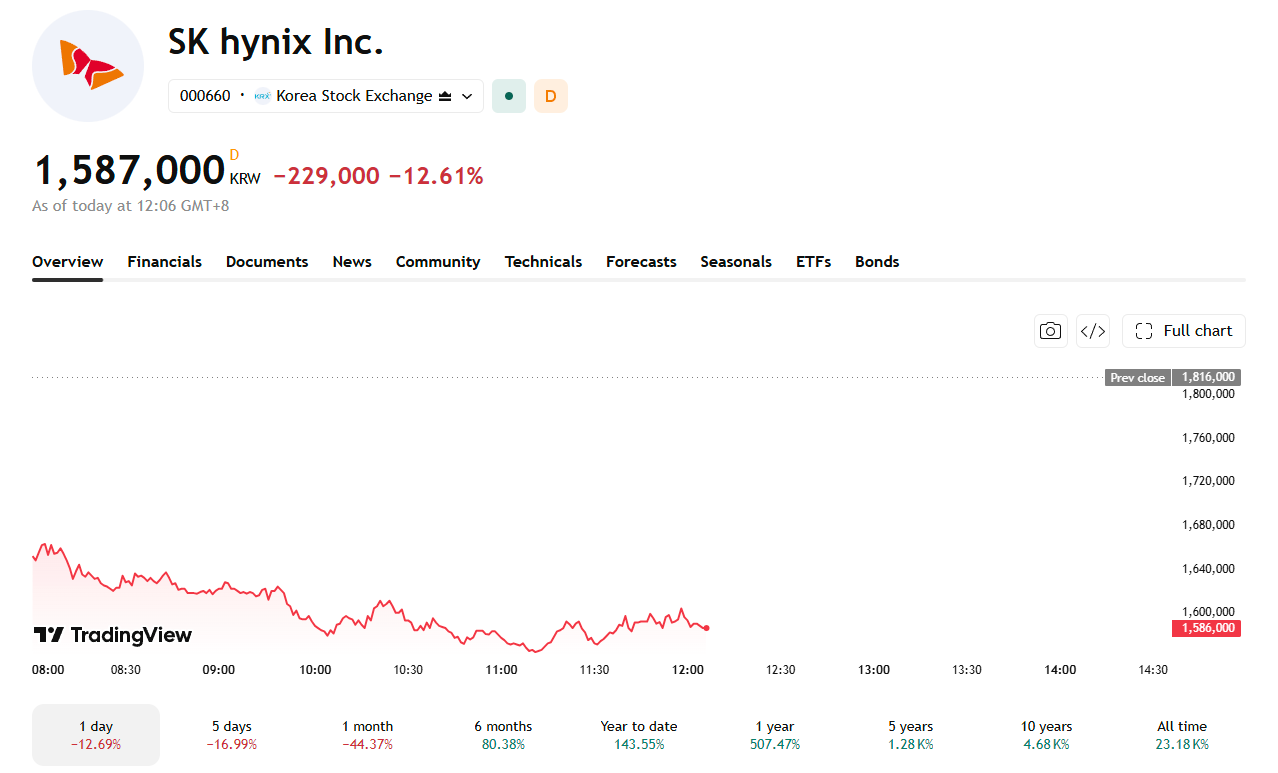
SK Hynix fell near 13% on Tuesday, July 28, in early trading. Samsung Electronics also dropped over 12% as the sell-off swept across Asian markets.
The sell-off erased billions in market value across Korea, Japan, and Taiwan in a single session. It extended a broader pullback in AI-linked chipmakers that began after Wall Street’s own chip stocks weakened.
Wall Street Contagion and Nvidia’s OpenAI Bet Spook Investors
U.S. chip stocks weakened again overnight, adding losses at AMD, Teradyne, and Micron. That weakness followed a a Wall Street Journal story on Nvidia’s financing plans.
Nvidia is reportedly negotiating a $250 billion guarantee to help OpenAI lease a 10-gigawatt data center campus in Ohio. OpenAI lacks an investment-grade credit rating. The project could cost more than $500 billion in total.
Nvidia is also discussing financing for OpenAI’s chip purchases, worth up to $350 billion more. Meanwhile, investors have questioned whether Nvidia’s financial backstop role signals fragility in AI-linked demand, not strength.
China’s CXMT Listing Sharpens the Competitive Threat
Chinese memory maker CXMT added to the pressure. Its shares rose as much as 500% from their IPO price during Monday’s Shanghai trading debut. That rally valued CXMT near $515 billion.
Separately, a state-backed Chinese firm has begun mass-producing homegrown deep ultraviolet lithography machines for SMIC, Hua Hong, and CXMT. The move reduces Beijing’s reliance on Dutch equipment maker ASML for advanced chipmaking tools.
Analysts at Seoul Economic Daily estimate the high-bandwidth memory gap between CXMT and Korean leaders has narrowed to three years. That gap exceeded five years in earlier estimates. Therefore, the narrowing threatens the AI chip deals SK Hynix and Samsung have signed with U.S. hyperscalers.

No One Knows How AI Spending Pays Off
Owen Lamont, senior vice president at Acadian Asset Management, said the uncertainty runs deeper than any single headline.
“Right now we’re facing an incredible uncertainty. No one has any idea how this AI process is going to affect our economy, and so I think it’s going to be rocky no matter what.”
Owen Lamont, CNBC
Lamont added that leveraged exchange-traded products may be magnifying the swings. He named Korea, Hong Kong, and the United States as key markets for this activity.
However, not every analyst is as bearish. Sundeep Gantori, chief investment officer for equities at Standard Chartered, argued the long-term opportunity remains intact for memory makers. He pointed to broker forecasts of a 2027 price peak.
Investors now turn to SK Hynix’s quarterly earnings later this week. The results could show whether AI-linked demand still justifies the volatility.
The post AI Memory Stocks on Rocky Ground: 3 Reasons SK Hynix Fell 13% appeared first on BeInCrypto.


Microsoft CEO Satya Nadella says any firm that gives up control of its AI data will not remain a firm.
The remarks extend a July 12 blog post where Nadella described what he calls the reverse information paradox. Companies, he argued, pay for intelligence twice: first with money, then with proprietary knowledge.
Why Microsoft CEO Says AI Buyers Give Away Their Knowledge
In the interview with Fareed Zakaria, Nadella limited his warning to businesses. Consumers, he said, trade data for free services under the advertising model.
Firms face a different decision, he said. A company that creates knowledge needs that knowledge to stay inside the firm
He told CNN that companies now hold token capital alongside human capital. The term describes the AI capability and models a firm builds and owns. Nadella outlined the concept in June.
The July 12 post spells out the mechanism behind the warning. Providers, Nadella wrote, learn from customer prompts, corrections, and agent activity. That learning flows in one direction.
“AI creates the reverse problem. In the AI age, the buyer risks giving away knowledge, just in order to use what they bought,” the executive noted.
Follow us on X to get the latest news as it happens
The Fix Nadella Prescribes for AI-Reliant Companies
Nadella told Zakaria that firms should retain the metadata from every model interaction. That data could later train a company’s own weights or model, he said.
He also called for legal change. Patents, copyrights, and trademarks all protect sellers, he noted. AI, in his view, marks the first time buyers need protective rights of their own.
Short of a new law, he offered a technical route. Companies should keep the harness, context, and memory separate from any single model. That structure lets firms use several models and stay in control if one disappears.
For companies lacking that control, Nadella framed the stakes as existential.
“(A) firm that doesn’t have this control, I will claim, will not remain a firm because you’ve essentially outsourced your thinking,” he said.
Zakaria noted the argument benefits Microsoft, whose business model relies on commoditizing the model space. Nadella responded that the issue is not firm-specific, since any company lacking that control faces the same outcome.
Subscribe to our YouTube channel to watch leaders and journalists provide expert insights
The post Microsoft CEO Says Firms That Skip This Step Stop Being Firms appeared first on BeInCrypto.


Zimbabwe’s securities regulator listed seven fintech projects as approved regulatory sandbox participants on July 24, with tokenization accounting for four of the projects.
Summary
- Seven fintech projects received SECZ approval for supervised testing, with four focused directly on tokenization.
- Sandbox admission allows live trials but does not guarantee commercial registration after testing concludes successfully.
- Approved projects span blockchain fundraising, crowdfunding, synthetic trading, asset tokenization, securities, and infrastructure markets locally.
The Securities and Exchange Commission of Zimbabwe named Zimbabwe Entrepreneurship Exchange, Ndarama Standard, Questview Brokers, Crowdaxe Capital, Procode Platforms, Financial Securities Exchange and Colmin Resources Zimbabwe.
The projects will test products under SECZ supervision rather than immediately begin unrestricted commercial operations. The regulator’s framework defines a sandbox as a controlled environment for testing eligible financial technology with live users and set operating limits.
Zimbabwe’s sandbox places tokenization at the centre
Zimbabwe Entrepreneurship Exchange will test a blockchain-based capital-raising platform. Ndarama Standard focuses on asset tokenization, while Questview Brokers will test synthetic trading. Crowdaxe Capital operates a web-based crowdfunding platform intended to connect businesses seeking capital with investors.
The remaining projects deepen the tokenization focus. Procode Platforms is testing securities tokenization, FINSEC is working on an asset-tokenization market, and Colmin Resources Zimbabwe is developing an infrastructure-tokenization project. Industry disclosures show that FINSEC and Zimbabwe Entrepreneurship Exchange had received project-specific regulatory approvals before SECZ published the consolidated participant notice.
Sandbox approval is not a commercial licence
SECZ’s Regulatory Sandbox Guidelines allow licensed securities intermediaries, prospective licensees and partnerships between the two to apply. Eligible categories include crowdfunding, alternative investment platforms, automated advice, artificial intelligence and other products accepted by the commission.
Participants must operate within an approved testing plan covering customer limits, transaction exposure, risk controls, disclosures and procedures for handling losses or complaints. SECZ can relax selected requirements during a test, but it can also revoke admission following a failed test, unresolved regulatory gaps, liquidation or breaches of sandbox conditions.
The rules state that testing must last at least 12 months. SECZ may approve an extension, although the additional period cannot exceed another 12 months. Successful testing does not automatically authorise a nationwide launch.
Tokenized projects still face separate regulatory duties
At the end of testing, SECZ may issue an existing licence, provide a conditional no-objection letter, create new product-specific requirements or deny permission to operate. Participants must also prepare an exit plan protecting customers if a trial ends without approval.
Tokenization approval under the securities sandbox should not be treated as general cryptocurrency or virtual asset service provider registration. Zimbabwe introduced separate anti-money laundering requirements for businesses that exchange, transfer, store or control virtual assets. As previously reported, crypto firms must register under Zimbabwe’s new VASP framework, which places covered activities under Reserve Bank of Zimbabwe oversight.
The distinction will matter when projects choose their underlying technology and operating model. A platform could fall under both securities supervision and virtual-asset rules if it tokenizes investments while also providing custody, exchange or transfer services.
SECZ will determine which projects can launch
SECZ says the sandbox is intended to generate evidence for future policy while supporting investor protection, financial stability and market integrity. The commission can monitor participants, impose further operational requirements and use testing results when updating securities rules.
No full commercial launch date or verified market reaction accompanied the July notice. The next formal steps will be the start of controlled trials, regulatory reporting and SECZ’s assessment of whether each project meets licensing requirements.
In related coverage, Zimbabwe sought public input on a broader crypto framework in 2024. The country has also experimented with state-backed digital finance, including its gold-backed digital token and ZiG currency. The latest sandbox programme is narrower because it concentrates on capital-market products rather than monetary policy.
A U.S. federal judge on July 27 granted Kalshi, Polymarket US and the Commodity Futures Trading Commission preliminary relief from Minnesota’s prediction market ban.
Summary
- Judge Katherine Menendez blocked Minnesota’s prediction market law before its August 1 effective date statewide.
- The injunction protects CFTC-registered contract markets while three lawsuits continue toward final decisions on merits.
- Minnesota may seek narrower enforcement because the judge questioned whether every event contract qualifies legally.
Judge Katherine Menendez barred officials from enforcing Minnesota Statute 609.7615 against entities registered with the CFTC as designated contract markets. The July 27 order arrived five days before the law’s August 1 start date and remains effective until the court reaches a final decision.
Minnesota’s measure would make creating, operating or facilitating a covered prediction market a felony. It would also criminalize certain support, data and payment services, as well as advertising products that promote prohibited transactions. The state statute covers markets tied to sports, elections, government action, legal cases, popular culture and several other events. It was the first state measure designed to prohibit prediction markets directly, rather than applying an existing gaming law to selected contracts.
Kalshi and Polymarket won on federal preemption
Menendez found that the plaintiffs were likely to succeed, at least partly, on their express-preemption claims. The Commodity Exchange Act gives the CFTC “exclusive jurisdiction” over swaps traded on federally registered contract markets. The judge concluded that Minnesota’s across-the-board prohibition would probably reach many transactions reserved for federal oversight.
The court also found that the plaintiffs faced irreparable harm and that the balance of harms supported temporary relief. However, the ruling is not a final judgment that Minnesota’s law is invalid. Menendez described it as a preliminary assessment intended to preserve the existing position while the cases proceed. She did not decide the companies’ implied-preemption or First Amendment claims.
The temporary injunction could become narrower
The injunction protects CFTC-registered designated contract markets rather than every prediction market or event contract provider. Kalshi and QCX LLC, which operates as Polymarket US, are parties in separate cases considered alongside the federal government’s challenge during the preliminary-injunction process.
Menendez also rejected the idea that registration alone resolves every contract’s legal status. She said the plaintiffs had not shown that every event contract on the two platforms meets the federal definition of a swap. A weather or crop contract may have an economic consequence, while some sports propositions may not. Permanent relief could therefore cover fewer products than the current injunction.
Minnesota will continue defending its ban
Minnesota Attorney General Keith Ellison said he disagreed with the decision and would continue defending the law. He described prediction markets as gambling and argued that Minnesota may protect residents from unlicensed activity. Kalshi said the ruling confirmed that states cannot ban products outside their jurisdiction, while Polymarket also welcomed the order.
The Minnesota result does not settle the wider state-federal dispute. Massachusetts, Michigan, Nevada and Washington have obtained orders restricting parts of Kalshi’s activity. In related coverage, Kalshi and Polymarket lost bids to halt proceedings in Nevada and Washington, while a separate Michigan order temporarily restricted Kalshi’s sports contracts.
CFTC rules could shape what happens next
The three Minnesota lawsuits now move toward final decisions on the merits. The injunction keeps the challenged criminal provisions from applying to CFTC-registered contract markets during that process. The court may later examine specific contract categories and decide whether federal preemption protects all, some or none of them.
A parallel CFTC rulemaking may also define the boundary. The regulator’s June proposal would create a contract-by-contract process for reviewing event contracts involving gaming, war, terrorism, assassination or unlawful conduct. Its public-comment period closed on July 27. As previously reported, the proposed framework could directly affect Kalshi and Polymarket by establishing formal public-interest tests for listed contracts.
Earlier on July 27, the CFTC had asked the court to rule before the August 1 deadline and indicated that it could seek emergency appellate relief if no decision arrived. Kalshi and Polymarket joined that request. The injunction removed that immediate deadline, but Minnesota’s attorney general has made clear that the underlying jurisdiction dispute will continue.
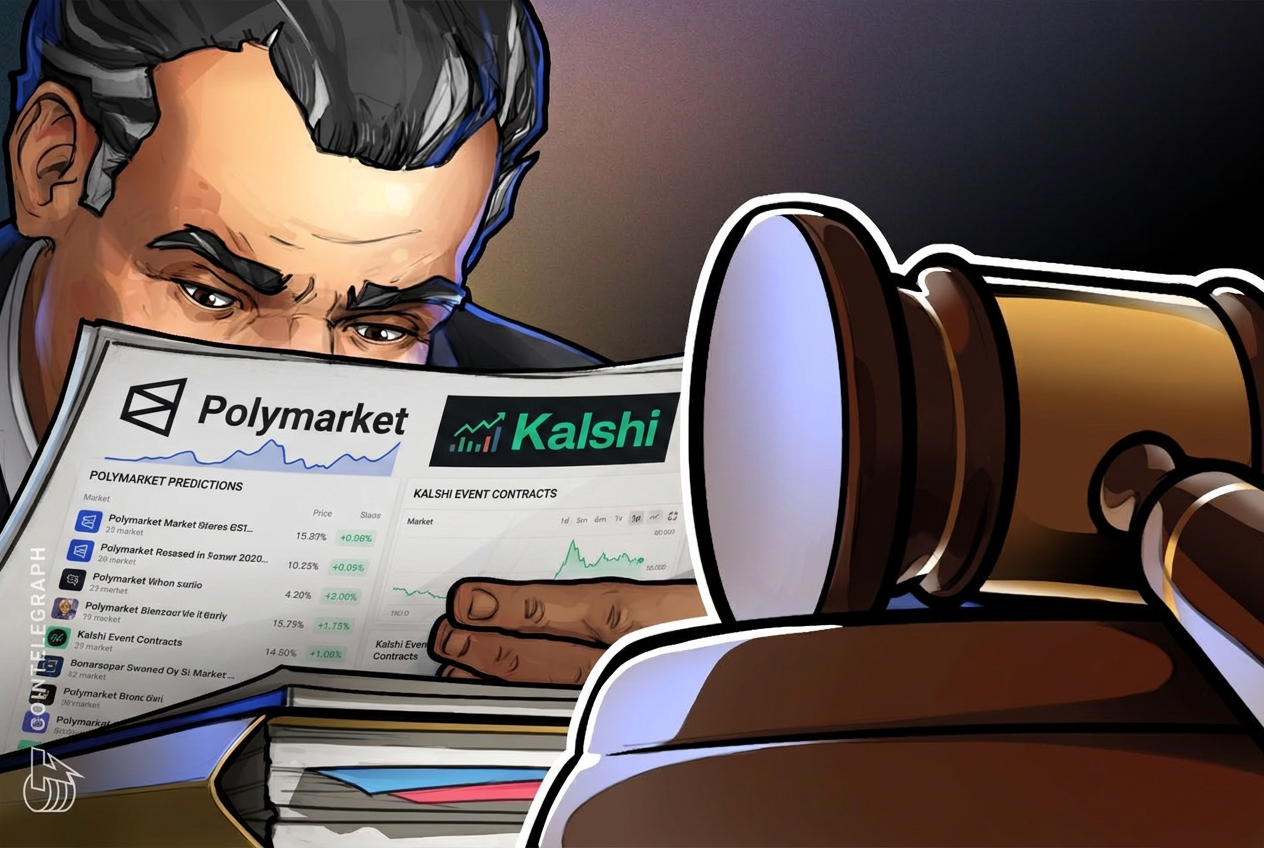
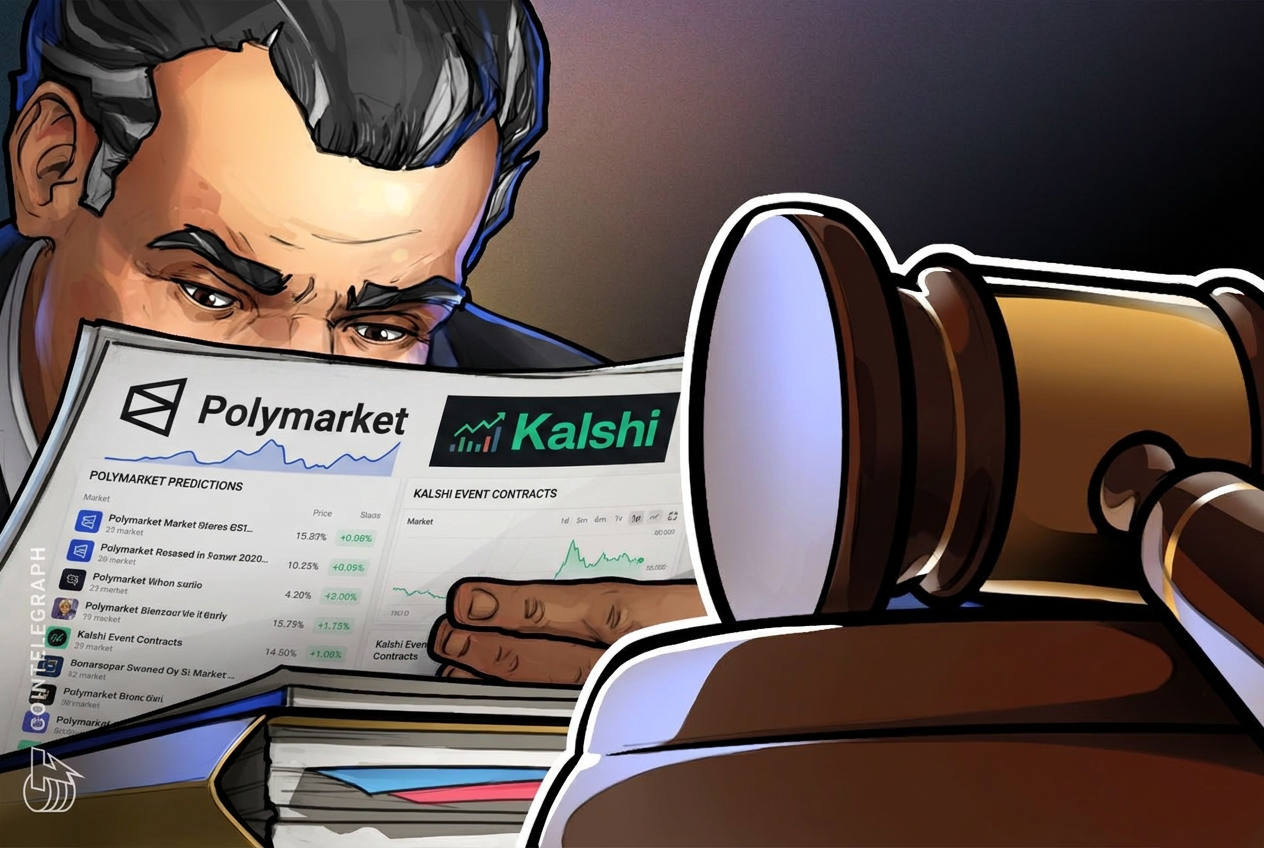
The preliminary injunction allows Kalshi and Polymarket US to continue operating in Minnesota while the court considers their challenge to the state law.


South Korea’s Korea Exchange halted trading in KOSPI-listed shares for 20 minutes on July 28 after the benchmark fell 8.02% to 6,213.51.
Summary
- 8.02% KOSPI drop triggered a 20-minute marketwide circuit breaker at 10:13 a.m. Tuesday in Seoul.
- SK Hynix ADRs closed at $143.02, below their $149 offering price for first time Monday.
- July 29 brings SK Hynix earnings and additional KOSPI shares from its U.S. ADR offering.
The Level 1 circuit breaker took effect at 10:13 a.m. local time after the decline remained above 8% for one minute. It was the eighth KOSPI circuit-breaker activation of 2026 and the 14th on record.
Selling continued after trading resumed. Yonhap placed the index 8.59% lower at 6,175.71 at 11:20 a.m., while Reuters reported a decline of about 9.4% by 12:41 p.m. Korea time. The figures were intraday and may differ from the eventual closing level.
The KOSPI circuit breaker stopped the full market
The Level 1 mechanism suspended trading and order-taking in shares on the main KOSPI market for 20 minutes. The exchange then reopened trading through a 10-minute single-price call auction. The measure followed sell-side “sidecar” curbs earlier in the session, which temporarily stopped program trading as futures and cash shares fell.
The two controls serve different purposes. A sidecar pauses program orders, while a circuit breaker stops most trading across the market. The July 28 halt followed earlier 2026 activations on March 4 and 9, June 8, 23 and 26, and July 7 and 13, according to Korean market reports citing the exchange.
The latest decline extends a period of unusually sharp moves in South Korean equities. As previously reported, KOSPI volatility in June was intensified by margin calls, high retail leverage and the heavy index weight of Samsung Electronics and SK Hynix.
SK Hynix ADR fell below its $149 offer price
SK Hynix’s Nasdaq-listed American depositary receipts closed the previous U.S. session at $143.02, down 7.5%, according to Reuters. That was their first close below the $149 offering price since regular trading began in July. Market data showed an intraday low near $139.10, explaining reports that the ADR had briefly fallen below $140.
The verified closing figure differs from the $139.45 quote circulated in some early reports. That lower number appears to reflect an intraday or extended-hours quote rather than the official regular-session close. The ADR opened at $159.61, reached $164.30 and fell as low as $139.10 before closing at $143.02.
SK Hynix priced 177.9 million ADRs at $149 and raised about $26.5 billion in the U.S. offering. Each ADR represents one-tenth of a Korean common share. The company said the listing was intended to broaden its U.S. investor base and strengthen its position in AI memory markets.
Chip concerns drove the KOSPI selloff
SK Hynix shares in Seoul fell as much as 14%, while Samsung Electronics dropped as much as 13.4%, Reuters reported. The two chipmakers together account for nearly half of the KOSPI, so their declines exerted heavy pressure on the benchmark.
The selloff followed another decline in U.S. semiconductor shares. Investors were reassessing the scale and financing of AI infrastructure spending, including questions around whether chip suppliers and technology companies are supporting customer demand through large financial commitments. Those concerns remain market interpretations rather than evidence that orders have been cancelled.
China-related developments added pressure. Reuters cited analysts who pointed to the stock-market debut of Chinese memory producer ChangXin Memory Technologies and reports of progress in domestic deep-ultraviolet lithography equipment. Details about the equipment’s performance and commercial timeline had not been disclosed, so the competitive threat remains uncertain.
In related coverage, concerns around AI valuations had already pushed SK Hynix and Samsung lower during earlier July sessions. Another report examined how Bitcoin traded alongside technology shares during a prior KOSPI-led risk-off move.
Earnings and tighter ETF rules come next
SK Hynix is scheduled to publish its second-quarter results at 9:00 a.m. Korea time on July 29. The release will give investors updated figures for high-bandwidth memory sales, margins, capital spending and demand from major AI customers.
In April, the company reported first-quarter revenue of 52.58 trillion won and operating profit of 37.61 trillion won. SK Hynix attributed the results to strong demand for AI memory, high-capacity server DRAM and enterprise solid-state drives.
July 29 is also the scheduled KOSPI listing date for the newly issued common shares underlying the U.S. ADR sale. The additional shares may affect short-term supply and index positioning, although the company has not forecast a specific price effect.
South Korea’s Financial Services Commission is also accelerating restrictions on single-stock leveraged exchange-traded products. From July 31, retail investors must hold at least 30 million won in cash to make new or additional purchases. The previous 10 million won requirement allowed some securities to count towards the minimum.
The FSC has already suspended new listings and advertising for single-stock leveraged products. Further changes covering premium controls and watchlist rules are scheduled for August 19. The regulator said it would continue monitoring demand and consider more measures if volatility remains elevated.
For markets, the next confirmed events are SK Hynix’s earnings, the additional share listing and the July 31 leverage restrictions. Investors will also watch whether the KOSPI recovers after the halt and whether SK Hynix’s ADR can reclaim its $149 offering price.


Bitcoin has come under pressure since the U.S. stock market closed Monday, with South Korea’s Kospi leading Asian equities lower and providing risk-off cues to the cryptocurrency market.
BTC has fallen to $63,200 from nearly $65,000, a 2.7% decline that has spilled over into the broader crypto market and dragged down the likes of ether (ETH), XRP (XRP), solana (SOL), and others. The drop ends the brief resilience the market showed earlier Monday as shares in NVDA tanked on Wall Street.
The Senate has shelved the CLARITY Act to prioritize a Russia sanctions bill, making a vote on the much-awaited legislation, touted to deliver regulatory clarity and unlock massive institutional buying for digital assets, unlikely before next week. This leaves only the final days before the Aug. 8 recess.
Asian stocks cracked sharply, with South Korea’s Kospi index falling 10% to its lowest level since mid-April. The index has now dropped 25% from its mid-June peak. The latest decline featured steep losses in heavyweights such as Samsung and SK Hynix. “The market is falling out of love with chipmakers at the moment and that’s been a big driver of the bull market in South Korea,” InvestingLive wrote.

10 Best ’90s Anime That Are Worth Revisiting

Inside the hare coursing groups where criminals brazenly sell dogs to hunt down and rip animals to shreds – as gangs invade farms and intimidate owners to stage illegal gatherings

Opinion: Fresh challenge for wine sector


-

 Fashion4 days ago
Weekend Open Thread: Brooks Brothers
-

 Crypto World7 days ago
Grayscale Files For Worldcoin ETF, WLD Registers Sharp Rise
-

 NewsBeat6 days ago
How a former Blue Peter presenter stunned America’s Got Talent judges
-

 Tech1 day ago
Intel is reversing course and bringing hyper-threading back to its server chips
-
 Business6 days ago
New Jersey voter registration controversy explained: How 6,600 noncitizens got on the rolls, and what happens next
-
 Entertainment6 days ago
Johnny Depp’s R-Rated Gothic Cult Classic Gets New Release Ahead of Sydney Sweeney Remake
-

 Crypto World5 days ago
Ethics, other provisions in crypto Clarity Act to be further discussed
-

 Politics19 hours ago
Luke Littler dismantles Gerwyn Price to retain title in Blackpool
-
 Sports1 day ago
Commonwealth Games boxing: Jadumani Singh seals dominant 5-0 win over Pakistan’s Sumama Rehman to enter quarter-finals | Commonwealth Games News
-

 Sports4 days ago
2026 3M Open leaderboard: Scottie Scheffler finds putter in Round 1, sits three back
-

 Fashion4 days ago
16 Dresses for the High Summer Event
-

 News Videos4 days ago
The Peugeot Family: How 200 Years of an “Old Money” Dynasty Died in A Boardroom
-

 Politics2 days ago
Spain sweeps the board at 2026 World Cup with individual awards
-
 Entertainment4 days ago
A New Post-Apocalyptic Gundam Anime Series Blasts Into SDCC
-

 News Videos1 day ago
BITCOIN JUST ENTERED THIS CRITICAL ZONE…
-

 Crypto World2 days ago
XRP Ledger adds $2.6B as RWA inflows rank second
-

 Crypto World5 days ago
Uniswap (UNI) pushes deeper into tokenized RWAs with permissioned trading pools
-

 Crypto World6 days ago
Sablier Labs Enters Maintenance Mode, Halts Development
-
Crypto World5 days ago
SEC Agrees to Overhaul Recordkeeping After Settling Coinbase Lawsuit Over Gensler’s Lost Texts
-

 Business4 days ago
Alliance Entertainment Holding Corporation (AENT) Discusses Evolution Into Omnichannel Distribution and Fulfillment Platform for Media and Collectibles Transcript
You must be logged in to post a comment Login