








Connect with us
DAPA Banner
DAPA Coin
DAPA
COIN PAYMENT ASSET
PRIVACY · BLOCKDAG · HOMOMORPHIC ENCRYPTION · RUST
ElGamal Encrypted MINE DAPA
🚫 GENESIS SOLD OUT
DAPAPAY COMING

Business

Top 10 Finance Stocks to Consider Buying in 2026 as Sector Benefits from Rate Environment

Published

on

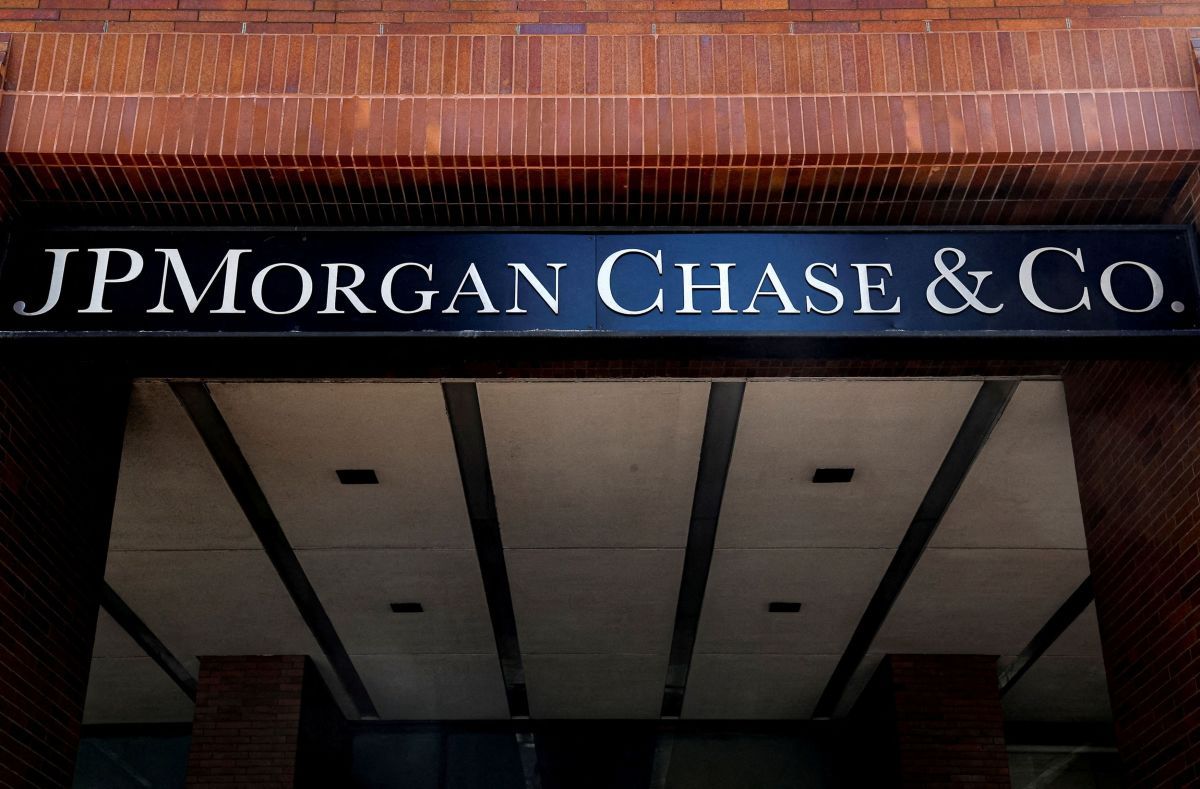
A sign outside JP Morgan Chase & Co. offices is seen in New York City, U.S., March 29, 2021.

NEW YORK — Investors exploring opportunities in the financial sector for 2026 are eyeing established banks, payment giants and diversified financial services firms that stand to gain from stabilizing interest rates, economic growth and ongoing digital transformation. JPMorgan Chase, Visa and Mastercard frequently top analyst lists for their scale, profitability and resilience.

The financial services industry navigates a shifting landscape of moderating inflation, potential Federal Reserve easing and robust capital markets activity. While regulatory and economic uncertainties remain, many firms have strengthened balance sheets and expanded into fintech and wealth management, positioning them for steady performance.

1. JPMorgan Chase (JPM) As the largest U.S. bank by assets, JPMorgan Chase benefits from diversified operations across consumer banking, investment banking and asset management. Strong earnings and dividend growth make it a core holding for many portfolios.

2. Visa (V) Visa dominates global payments with its network effects and high-margin business model. Continued shift toward cashless transactions and international expansion support long-term revenue growth even amid economic fluctuations.

Advertisement

3. Mastercard (MA) Similar to Visa, Mastercard thrives on transaction volume and value-added services like cybersecurity and data analytics. Its consistent performance and shareholder returns have drawn sustained investor interest.

4. Bank of America (BAC) Bank of America combines retail banking strength with wealth management through Merrill Lynch. Benefits from consumer spending recovery and potential rate cuts position it favorably for 2026.

5. Berkshire Hathaway (BRK.B) Warren Buffett’s conglomerate offers broad financial exposure through insurance, banking and investments. Its disciplined capital allocation and diversified holdings provide stability in uncertain markets.

6. Blackstone (BX) The alternative asset manager leads in private equity, real estate and credit. Growing demand for yield in a normalizing rate environment boosts its fee-based revenue streams.

Advertisement

7. PayPal (PYPL) PayPal remains a fintech leader with its digital wallet and payment solutions. Recovery in e-commerce and new initiatives in cryptocurrency and BNPL services offer growth potential.

8. Goldman Sachs (GS) The investment banking powerhouse excels in advisory, trading and asset management. Strength in mergers and acquisitions and wealth management supports optimistic 2026 outlooks.

9. S&P Global (SPGI) The ratings and analytics firm benefits from capital markets activity and demand for financial data. Its essential role in indices and research provides recurring revenue stability.

10. Wells Fargo (WFC) Wells Fargo focuses on retail and commercial banking with ongoing efficiency improvements. Progress on regulatory remediation and consumer lending recovery enhance its appeal.

Advertisement

Sector Outlook and Investment Considerations

Financial stocks have shown resilience in 2026, supported by higher-for-longer rates boosting net interest margins for banks while payment processors benefit from volume growth. Analysts from Morningstar and others highlight undervaluation in several names relative to growth prospects as of mid-year.

Risks include potential recession signals, regulatory changes and competition from fintech disruptors. However, established players with strong moats and balance sheets are better equipped to navigate challenges. Diversification across subsectors — traditional banking, payments and asset management — helps mitigate volatility.

Broader Market Context

Advertisement

The financial sector represents a significant portion of major indices, with performance tied to economic health and monetary policy. As the Fed potentially eases policy, banks could see increased lending activity while insurers and asset managers benefit from market rebounds. Fintech integration continues to drive efficiency gains across incumbents.

Longer-term trends such as digital banking adoption, wealth transfer to younger generations and global expansion in emerging markets provide tailwinds. Companies demonstrating prudent risk management and innovation are best positioned for outperformance.

Strategies for Investors

Analysts recommend focusing on fundamentals: strong capital ratios, consistent earnings growth and attractive valuations. Dividend yields in the sector remain appealing for income-oriented investors, while growth stories in payments and alternatives attract those seeking capital appreciation.

Advertisement

Portfolio allocation should align with risk tolerance and time horizon. Many experts suggest core positions in blue-chip names supplemented by selective exposure to higher-growth fintech or specialty finance firms. Regular review of quarterly results and macroeconomic indicators is essential.

Challenges and Opportunities

Interest rate volatility, geopolitical tensions and evolving consumer behaviors present headwinds. Yet opportunities abound in areas like sustainable finance, AI-driven risk assessment and cross-border payments. Firms adapting quickly to technological change are likely to gain market share.

The sector’s performance in the first half of 2026 has been mixed but generally positive, with several names delivering solid returns amid broader market rotation. Continued economic soft landing would further support financials.

Advertisement

Final Thoughts on 2026

The selected companies represent a cross-section of the financial landscape, offering investors various ways to participate in sector recovery and growth. JPMorgan Chase and Visa often anchor lists for their defensive qualities and scalability, while others provide targeted exposure to specific trends.

As always, individual circumstances should guide investment decisions. Consulting financial advisors and conducting personal research remains critical, as market conditions can shift rapidly. No single stock guarantees returns, but a thoughtful approach to quality financial names can contribute to diversified, long-term portfolios.

With the sector adapting to new realities of technology and regulation, 2026 presents a compelling environment for selective investment in finance. Monitoring policy developments, earnings seasons and competitive dynamics will be key to navigating opportunities ahead.

Advertisement

The financial services industry’s foundational role in the economy ensures its relevance, with leading companies well-placed to deliver value to shareholders amid evolving market conditions.

Continue Reading
Click to comment

You must be logged in to post a comment Login

Leave a Reply

Business

Shoe Station: A Small-Cap Bargain

Published

on

Shoe Station: A Small-Cap Bargain

Shoe Station: A Small-Cap Bargain

Continue Reading

Business

Norway’s crown princess undergoes successful lung transplant, palace says

Published

on

Norway’s crown princess undergoes successful lung transplant, palace says


Norway’s crown princess undergoes successful lung transplant, palace says

Continue Reading

Business

Construction costs to rise 6.7pc

Published

on

Construction costs to rise 6.7pc

The impact of the Middle East war on construction costs has been fundamentally misunderstood and exaggerated in many cases, a new study has found.

Continue Reading

Business

Japan raids ice cream giants over price-fixing allegations

Published

on

Japan raids ice cream giants over price-fixing allegations

The investigation on alleged cartel pricing of ice cream comes as Japan faces record summer temperatures.

Continue Reading

Business

The Death Of Tokenmaxxing

Published

on

The Death Of Tokenmaxxing

The Death Of Tokenmaxxing

Continue Reading

Business

Dar Global reaches $23 billion portfolio on fifth anniversary

Published

on


Dar Global reaches $23 billion portfolio on fifth anniversary

Continue Reading

Business

What is happening to UK prices?

Published

on

Why are UK prices still rising?

The war in Iran is expected to push UK Inflation further above the Bank of England’s 2% target.

Continue Reading

Business

Cyient shares crash 6% as stock turns ex-record date for Rs 720 crore share buyback. What’s ahead?

Published

on

Cyient shares crash 6% as stock turns ex-record date for Rs 720 crore share buyback. What's ahead?
Shares of Cyient crashed nearly 6% on Wednesday after the stock turned ex-record date for its share buyback worth Rs 720 crore at a price of Rs 1,125 per share, implying a premium of around 24% over the previous closing price.

The engineering and technology services company had fixed June 17 (Wednesday) as the record date for its Rs 720 crore share buyback. Only those shareholders who own the company’s shares in their demat accounts as of today will be eligible to tender shares. This means that any investor taking fresh positions in the counter will likely get the shares credited tomorrow as per Sebi’s T+1 settlement rule, making them ineligible to participate in the buyback.

All about Cyient’s share buyback

Cyient in April said it will buy back up to 64 lakh shares for Rs 1,125 per share. This marks Cyient’s first buyback since 2019. In an exchange filing released on Monday, Cyient announced that its shareholders have now approved the share buyback. The entitlement ratio and other details will be announced later.

Buyback of shares refers to a corporate action where a company repurchases its own shares from existing shareholders. Usually, the company purchases the shares at a higher price than current levels, encouraging investors to participate. Typically, a company decides to buy back its shares to increase share value, utilise surplus cash, prevent hostile takeovers or increase promoter holdings.

Also read:
Sensex rises over 250 points, Nifty above 24,000 as Dalal Street extends gains for 4th session. What lies ahead?

Advertisement

Cyient share price

Cyient shares have gained over 1% in one week but is down nearly 23% in 2026 so far. In the longer term, the shares of the company have fallen 36% in one year and 42% in three years, but recorded marginal gains in five years.The company currently has a market capitalisation of less than Rs 9,540 crore.

Also read: Brigade Enterprises shares rally 10% after bonus issue. Here’s why you can ignore the 22% plunge

Why does Emkay maintain a ‘Reduce’ call on Cyient shares?

Emkay maintained its ‘Reduce’ call on Cyient shares, while increasing its target price to Rs 900 apiece from Rs 850 apiece. The latest target price implies a downside potential of less than 1% from the stock’s previous closing price of Rs 907.65 apiece.
The brokerage said that the firm’s growth slowed in FY26 owing to macro headwinds, ET Now reported. ER&D spend continued to expand at a healthy mid-to-high single digit, it added.
While collections increased modestly, mainly led by an increase in the DET segment, the number of DLM inventory turnover days rose by 63 due to weak revenue, customer-specific programme requirements and global supply chain challenges. It added that the management aspires to deliver stronger and more profitable growth in FY27.
Also read: Sebi plans buyback via SEs again, easier MF borrowing rules

(Disclaimer: Recommendations, suggestions, views and opinions given by the experts are their own. These do not represent the views of The Economic Times)

Advertisement
Continue Reading

Business

PwC moves to new Welsh headquarters building

Published

on

Business Live

The professional advisory firm has moved its Cardiff operation into the One Central Square office building

One Central Square.(Image: Western Mail)

Professional advisory firm PwC has moved into its new Welsh headquarters in the centre of Cardiff.

The firm, which since the pandemic has seen its head count in the capital double to 400, has relocated to the One Central Square building at the wider Central Square office, residential and retail scheme around Cardiff Central Station.

The firm has taken two floors, which have been refurbished using Welsh suppliers, extending to 33,500 sq ft. It has moved from its previous Cardiff city centre offices at the 2 Kingsway building, where it was located for 25 years.

Its new office space was previous occupied by car finance company Motonovo before it relocated to the adjacent 2 Central Square office building.

Advertisement

The firm considered a number of new locations, and at one stage were linked to a new build development at the nearby Central Quay regeneration project at the former Brains brewery site, before opting for One Central Square.

The building’s close proximity to good public transport links, with Cardiff Central Station and the new bus station, were supporting factors in the decision The office provides the firm’s service lines of consulting, tax, audit and deals, as well as housing its specialist ethical hacking team for the UK.

PwC partner Stuart Couch

Stuart Couch, market leader for PwC in Wales, said: “It’s a real pleasure to finally open the doors of our new offices here at One Central Square, a building that reflects PwC’s ambitions in Wales, just as the Central Square development reflects Cardiff’s ambitions.

“There are real reasons to be optimistic about Wales’ prospects. It has proven its strength in advanced manufacturing, its fintech and insurance sectors are growing fast, and it is starting to take advantage of its natural edge in the transition to green energy.

Advertisement

” Capitalising on those strengths will require leaders to make creative decisions – new approaches to financing, complex transformation programmes, cross-sector collaboration. One Central Square gives us the platform to play our part in unlocking Wales’ potential and helping it take the next steps in its economic journey.”

PwC’s new Cardiff office.

Pontypool-born Mr Couch said its new office has been designed to accommodate further growth in head count. PwC was the first professional advisory firm requiring staff to be in the office, or with clients, for at least three days a week after the pandemic.

Carl Sizer, chief markets officer at PwC, UK, said: “We’ve been in Cardiff for over 90 years, and our move to One Central Square underlines our continued investment and focus on the Welsh market.

“Our regional strategy is fundamental to our purpose and our success; it’s vital that we live and work where our clients do, so that we can better understand their issues and work closely alongside them.”

Advertisement

One Central Square, which extends to 136,000 sq ft, is asset managed by property advisory firm Knight Frank, who, through its Cardiff office, are also the letting agents.

After the decision of Motonovo to surrender its lease on 70,000 sq ft of space in the building, which is owned by Middle Eastern investors, One Central Square is now fully let again following a number of recent letting deals. As well as PwC, they include NatWest – which is taking a floor that was occupied by law firm Blake Morgan who will remain in the building – and fellow law firm Knights. Both are fitting out their respective new offices ahead of moving in. Other new tenants to recently move into the building include law firms Browne Jacobson and Lewis Silkin.

Head of the Cardiff office of Knight Frank, Matthew Phillips, said: “The letting success at One Central Square clearly demonstrates pent up demand for best in class city centre office buildings in Cardiff served by good amenities and close proximity to public transport links.”

The terms of the letting with PwC have not been disclosed.

Advertisement
Continue Reading

Business

Appian: Tremendous Bargain As Sales Productivity Steps Up

Published

on

Appian: Tremendous Bargain As Sales Productivity Steps Up

Appian: Tremendous Bargain As Sales Productivity Steps Up

Continue Reading

Trending

Copyright © 2025